Category: MEDIA

  • Media captains in Bhubaneswar for Sambad Conclave

    By A Correspondent


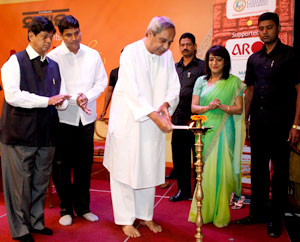
    Odisha’s first ever Media and Entertainment National Conclave 2013 was organized by the Sambad Group in Bhubaneswar last Friday (February 22) with much success. The conference was inaugurated by state Chief Minister Naveen Patnaik with Minister Arun Kumar Sahu as guest of honour. Eastern Media chairman Soumya Ranjan Patnaik (also Editor, Sambad) and Joint Managing Director Monica Nayyar Patnaik played hosts.


     

    Most of the panellists were of the view that the state offers ample potential for expansion of various segments of the media.


    The panels were:

    Print: Aritra Sarkar, Vice-President, Strategy, Anandbazar Patrika Group; K. Z Magdoom Mohamed, Managing Director, WAN- IFRA, South Asia (WAN); K. K. Goenka, Managing Director, Prabhat Khabar and Srimoy Kar, Editor. Odisha, The New Indian Express (moderator).


    Radio: Prashant Panday, Chief Executive Officer, Radio Mirchi; Nisha Narayanan, Senior Vice President, Programming and Projects, Red FM; Susmit Chandra, Cluster Head, East, Reliance Broadcast Network Limited; B. Surender, Senior Vice President, National Sales Head, Red FM and Tanaya Patnaik, Director, Radio Choklate (Moderator).


    Television: Rajiv Mishra, Chief Executive, Lok Sabha TV; Paritosh Joshi, India TV Strategist; Jajati Karan, Chief of Bureau, CNN-IBN; Sampad Mahapatra, Journalist, NDTV and Satya Prakash Nayak, News Head, Kanak TV (Moderator).


    Media: Srinivasan K. Swamy, Chairman and MD, R. K. Swamy, BBDO; Shashi Sinha, CEO, IPG Media Brands India; Ravi Kiran, Co-founder and Managing Partner, Friends of Ambition and Professor (Dr) Mukti M. Mishra, President, Centurion University of Technology and Management (Moderator).


    Brands: Ameve Sharma, President, Shri Baidyanath Ayurved Bhawan P. Ltd; Nalin Sood, EVP, Indian Snack Category, Pepsico India; Madan M. Mahapatra, Head, Media and Marketing, Future Group and Srikumar Misra, Founder MD and CEO, Milk Mantra (Moderator).


  • Marketing in the Rural


    There isn’t anything unique or different about marketing in rural. We apply almost the same techniques, use almost the same forms and expect results the same way. All that we need to understand is how the same old techniques can be improvised in an innovative manner and what form can be more significant towards marketing in rural.


    There is no specific scientific formula to plan marketing for the rural, no specific statistics that may allow you to generalize your plans, and no guarantee that the history of previous success will repeat itself. A very successful marketing campaign of the past may not work well the next time around. It is only a deep understanding of the complex characteristics that make up the people and the markets in rural India that will help corporate groups in finding their niche and do business there.


    All marketing theories ever framed

    Newer and promising forms of social congregations have redrawn the broad lines of marketing in the rural. The concepts, the ideas, and the strategies that were effective about a decade ago are almost redundant today. Each visit to the hinterland presents a new sign of change, hinting to a marketer that he will have to restrategize his promotions plan, before he visits again.


    Go direct

    It has to be conceded that no promotional campaign can match the one-on-one interaction of a brand with its target. If one can knock at every door in the village, talk in the villagers’ language, and make them appreciate the need or the significance of the product or service in question, he can term his effort as a successful direct marketing activity.


    However, there are many factors that render the simple-sounding direct marketing a complex affair, one that has its own requirements for inventiveness.


    Findings by Association of Direct Marketing Co-operatives (ADMC) suggest that direct marketing can be successfully used for effective brand-building initiatives in rural areas with a population of around 10,000. Direct marketing tools are generally impactful visuals and designs as well as engaging and simulating technology applications with less written content. They appeal to the rural audience due to the visual ease and also the capability to convey the message.


    To measure the impact of direct marketing on rural folk, ADMC had taken a sample population from the lower and middle income economic strata in the rural and also at the urban end. All of them were simultaneously exposed to mass media campaigns, and catalogues and brochures were directly handed over to them.


    When asked to jot down their impressions of the messages, most of the control group from the rural territories recorded their impressions more in favour of the brochures and catalogues in comparison to the mass media advertisements. This reinforced the proposition that direct marketing is a cost-effective way of conveying a single-minded proposition about the brand to consumers.


    Influencer marketing

    Influencer marketing is the most important new approach to marketing in a decade for those professionals trying to influence decision-making. It shows that key decision-makers in all major markets operate within communities of influencers. These “ecosystems” are full of important individuals, whose impact on purchasing decisions is both pivotal and misunderstood. Key influencers do not buy, are not obvious, and start off neutral, which is why their potential to affect sales is so great.’


    Basically, influencer marketing is all about common sense. Identify the one whose opinion matters and who has the power to influence the decisions of others. Once identified, market through him, market with him, or let him inde-pendently market for you.


    Considering the general innocence and vulnerability of rural folks as compared to their urban counterparts, influencer marketing has a larger impact in the hinterland. Many individuals, including elders and women, across rural India look up to educated and well-placed individuals for advice on all matters of any consequence.


    Herd in the mind

    Some regular, peak-hour commuters on the Delhi Metro have a unique seat-grabbing strategy. They board a metro moving in the opposite direction so that they are assured of seats when the train turns around. Over time, the number of such commuters increased to such an extent that the strategy no longer worked for most.


    Stephen J Dubner, co-author of Freakonomics, gives a similar example of his bus travel in New York and says that people may not like being part of a herd, but psychologically they are somehow comforted by it. They succumb to such mentality easily, and unthinkingly tag along, because if everyone else is doing it, it must be the thing to do.


    This human psychology is as prominent among the rural folks of India. There is the phenomenon of hordes of farmers joining the rush to grow expensive cash crops that are in vogue, only for most of them to realize that the value of a given crop was based on its rarity, a quality that is naturally lost as everybody starts growing it.


    The herd mentality is as pronounced in the rural as it is anywhere else. The rich guy in some remote village paid all cash and bought a flashy motorbike; in no time, the guy who is not so rich also bought it, and then another guy got it financed through a bank; soon, the village had more than a few of these flashy motorbikes. All of them were the same models of the same brand. The ‘if he has it, so must I’ mentality is manifestly ubiquitous.


    One’s neighbours, relatives, and peer group can serve to reinforce the group mentality with various degrees of influence. It is general predisposition to want to possess everything that the next-door neighbour owns, or even what the relatives have. Another strong influence source is the peer group; it not only acts as the pressure group that dominates decision making but also sets trends since one wants to adopt whatever his peers do.


    In 2008, Maruti, the brand that is appreciated for having penetrated deepest into the rural, created a unique campaign targeting influencers in rural hubs. The automobile company offered its cars at discounts of up to Rs 5,000 to over 2.1 million functionaries in panchayats, considered to be influential governing bodies. The offer, titled ‘Mera Sapna, Meri Maruti’, was extended to the brand’s affordable entry-level vari-ants including Maruti 800, Alto, and Omni.


    In the same year, General Motors (GM) announced limited-period discounts of up to Rs 62,000 on various models, to both central and state govern-ment employees. Under the scheme, government employees could get a discount of Rs 31,000 on Chevrolet U-VA and Rs 62,000 on Chevrolet Spark, inclusive of all discounts and special offers that already existed. Similarly, Ford zeroed in on teachers as major influencers and offered special discounts to them on its cars.


    All of these brands had a common purpose: Get their cars driven around by major influencers, so the ones who aspire to be like them will aspire for the cars, too.


    Durables major BPL identifies NGOs that operate in the hinterland. NGOs are major influencers as villagers trust them for the humanitarian and development works that they do in the rural.


    Targeting school children, who may influence parents to buy them a bicycle, TI Cycles undertook the responsibility of putting up the boards of schools and put their product branding on it.


    Focusing on groups

    A group of housewives, a group of mar-ginal farmers, a group of youth or kids, and a group of the elderly, together they all make for the larger village commu-nity. If even 5 to 10 per cent individu-als of the large groups can understand the message, they automatically become messengers among their own groups.


    For instance, an interaction with or a demonstration in the presence of 10 to 15 housewives from the same income group may be enough to spread the message among an entire group of housewives.


    BP has smartly explored the focus-group marketing idea to promote its Oorja stoves. The functionality and significance of Oorja, a small pellet stove that produces substantially fewer emissions than the traditional wood-burning stoves, had to be explained to rural women. BP realized that effec-tive communication was possible only through the medium of their focus group, specifically the village house-wives.


    BP recruited women from within the villages and asked them to conduct small social gatherings of housewives wherein they could talk about Oorja as they cooked sweets on the stove and distrib-uted the same among themselves. Much like middle-class housewives in urban India compete to outfit their kitchens with the latest European trappings (we all know of the Tupperware business model), a set of rural women are now becoming entrepreneurs selling stoves, while others are transforming their kitchens with them. These business-women, named Jyoti by the company, make a slender commission on the Rs 675 metal stoves. Jyotis have also played a vital role in educating BP about the challenges of rural marketing in a cultur-ally diverse nation.


    Mobile marketing

    We know about the potential of mobile phones and also understand how in another 3-4 years they will be available probably in the remotest parts of the country. Apart from merely being tools to connect one person to another, the mobile device also becomes an interesting communication platform for mar-keters. With text messages, generation of interesting content especially in the form of ring tomes and caller tunes has already become a trend. A newer concept that is picking up is a ‘missed call for entertain-ment’, wherein a caller makes a missed call at a particular number and gets a call in return giving him multiple option of entertainment to choose from – songs, movie dialogues or conversations.


    At the end of each such entertaining call, marketer inserts its ‘commercial’ message. A case in point is Khushiyon Ki Doli. ‘Khushiyon Ki Doli’ a rural marketing initiative of Hindustan Unilever Limited (HUL) that was launched in March 2010. Apart from using of traditional symbols such as the palki or doli (palanquin), or conducting live demos for small focused groups to increase engagement, HUL for the first time implemented a mobile marketing strategy. Considering the number of mobiles in rural, the response was commendable. While people got free entertainment on their cellphones, the purpose of the marketer – club marketing message within entertaining content – was also met.


    Interestingly, today’s famer is getting all farming-related information on his mobile. Be it updates on what to sow when and how, or what will fetch him what price in what market… all such queries of farmers are being answered through text messages, multimedia mobile content or a call to one of the helplines.


    Marketing and CSR

    Of late, a newer model is being embraced by the corporate world to strengthen brand positioning in the rural market. Companies are introducing ‘responsible’ campaigns, which also exhibit the potencies and the values that a brand holds as its own.


    Campaigns    that    revolve    around corporate social responsibility (CSR) help in the creation of a positive brand image and also start valuable word-of-mouth publicity in the area where the social activity or the campaign is conducted. Through CSR, corporate groups indi-cate their interest in the society and how concerned they are for their customers, employees, shareholders, communities, and the environment. Organizations voluntarily take steps to improve the quality of life of the community they operate in and also of the society at large.


    Colgate’s project Oral Health Month, the hygiene drive conducted along with Indian Dental Association, is credited with reaching about 60 lakh people in 20,000 villages, of which 15,000 villages had no earlier experience of the availability of toothpaste and tooth powder. The drive helped in spreading awareness about oral hygiene among the less aware people in rural regions.


    HUL, as its CSR initiative to help the rural populace, joined hands with the state-owned Khadi Board through an advisory relationship with the govern-ment of Madhya Pradesh. It helped the board to brand local produce from villages and tribal areas, such as natural honey collected from forests in the state, under the umbrella name Vindhya Valley. The product range includes edible products like papads, pickles, masala, and turmeric.


    HUL provided corporate expertise, marketing acumen, and quality param-eters, while the state government bore the marketing expenses for the brand building. The ultimate benefit went to the people of the Vindhya valley who were involved in making all the prod-ucts.


    ITC is also known for its CSR programmes. In addition to creating substantial employment opportuni-ties, it has been instrumental in various development programmes as well. Primarily, it is the CSR initiatives that are the foundation of ITC’s rural divi-sion. The company has various ongoing programmes targeted towards forestation, soil and water conservation, community development, health and sanitation, and education. In the long run, the investments in CSR activities pay back in the form of faith and loyalty of consumers.


    Nevertheless, the practise of CSR, with all its inherent goodness, has been a subject of debate and criticism. It is alleged that corporations do CSR only with eventual profit in mind. However, businesses have started to appreciate the CSR benefits with a perspective broader and longer than their own immediate, short-term profits.


    Excerpted with permission of the publishers from ‘Marketing Sarpanch’ by RC&M, a leading experiential and rural marketing firm.

    Pages 180, hardbound

    Price:  not stated

    Email: info@rcmindia.com


  • Red FM & DDB MudraMax brings ‘Bauaa Hawa Mein’ on ground

    By A Correspondent


    Take an RJ, his on-air prankster alter-ego Bauaa, a wish to connect the RJ directly with his audience, DDB Mudra Max – and you have Bauaa Hawa Mein, a series of live radio shows by 93.5 Red FM from studios fabricated on billboards.


    The objective was to popularize Red FM Delhi’s evening show host RJ Raunac’s character Bauaa through an OOH medium that allowed for live performance and face-to-face interaction with the audience and fans. The idea was to have Bauaa seen, and not just heard. With the DDB MudraMax innovation, the execution was literally from up in the air.


    To connect to the listener, live studios were set up at three different locations of the NCR. RJ Raunac along with the Bhagra Pop Singer Daler Mehendi did the entire show live from a radio booth mounted on a billboard at Rajouri Garden on January 29. Similar shows were conducted from unipoles in Noida on February 1 and Gurgaon on February 6.


    Nisha Narayanan
    Mandeep Malhotra

    Commenting on the campaign, Nisha Narayanan, Senior VP – Projects and Programming, 93.5 Red FM, said, “We always strive to think different and innovate to connect with our listeners. Thus, it is our constant endeavour to set higher standards of radio programming. Initiatives like Bauaa Hawa Mein help in bringing the brand and our jocks closer to the listeners.”


    Commenting on the campaign, Mandeep Malhotra President, DDB MudraMax, said, “It’s always a wonderful feeling to take up challenging assignments and deliver clutter-breaking work for any media brand.”


  • Franklin Templeton features on Facebook Studio

    By A Correspondent


    Headquartered in USA, Franklin Templeton is one of the leading investment management organisations in India and on Social Media, having managed to secure leadership in the social media space through their presence on various platforms like Facebook, Twitter, YouTube and LinkedIN. Their Franklin Templeton’s Children’s Day campaign has now been featured in Facebook Studio. Facebook Studio is known to feature campaigns from leading global brands like Pentacle, Nissan, Ogilvy, etc. Franklin Templeton’s CSR initiative with the Children’s Day campaign ran through the month of November in 2012 and focused on highlighting the work Akanksha Foundation is doing towards the development of under privileged children.


    Social Wavelength drove the entire campaign on Facebook and a call to action ‘Is there a Teacher in you’ was pitched. Akanksha received an overwhelming and encouraging response through the special app that was development on their Facebook page. In the duration of the campaign, Franklin Templeton’s Facebook page fan base increased to 20,446 and the likes hiked to 28,086 through 23 customized posts, images and stories.


    Speaking on behalf of Social Wavelength, Mihir Karkare, Co-founder and VP, Social Wavelength said, “Children’s Day was a brilliant initiative by Franklin Templeton and we were pleased and honoured to take it to the next level. We are thrilled that the campaign has now been featured in Facebook Studio. The fact that the campaign has received such accolades in the social media space proves that a brilliantly executed innovative idea can create a social media success story.”


  • NDTV Good Times Lifestyle Awards announced

    By A Correspondent


    Lifestyle channel NDTV Good Times has announced its first Lifestyle Awards. The awards are scheduled to be held on Saturday, March 2, at Jaypee Greens Golf & Spa Resort in Greater Noida.


    The NDTV Good Times Lifestyle Awards aims to celebrate icons who have left a lasting impression on Indian lifestyle, and will recognize people from the fields of food, travel, technology, fashion and luxury.


    The awards have an extensive short-listing process and a high-powered jury including Alex Kuruvilla, Gautam Singhania, Raseel Gujral, Sabyasachi Mukherjee, Sanjay Kapoor, Suhel Seth, Vir Sanghvi and Smeeta Chakrabarti (CEO, NDTV Lifestyle).


    The award categories:

    :: Lifestyle Destination of the Year (International & India)

    :: Hotel/Resort of the Year

    :: Home and Accessories Brand of the Year

    :: Best Designer of the Year (Indian)

    :: Lifestyle Label of the Year (International)

    :: Restaurant of the Year

    :: Spa of the year

    :: Fitness Icon of the year

    :: Luxury brand of the year

    :: Lifetime Achievement Award in Luxury

    :: Jaypee Greens Lifestyle Icon of the Year (Viewers’ Choice)


  • TRAI directive: MSOs, LCOs to implement Subscriber Management Systems

    By A Correspondent


    TRAI has issued directions to multi system operators (MSOs) and their linked local cable operators (LCOs), providing cable TV services in the notified Digital Addressable Cable TV Systems (DAS) areas, covered under the first phase of implementation of DAS to implement the Subscriber Management Systems.


    As per the Quality of Service (QoS) Regulations of TRAI, applicable for DAS areas, MSOs are required to establish a Subscriber Management System wherein all the details of the subscribers alongwith their choice of services (i.e. channels, bouquets etc.) are required to be maintained. This would bring in addressability and consequently, complete transparency in the whole system. This system enables the subscribers to exercise their choice of services and budget their bills accordingly and also facilitates the MSOs to effectively manage their accounting and billing of the services rendered.


    DAS is being implemented across the country in a phased manner, with the first phase from Nov 1, 2012 and the fourth and final phase completing by Dec 31, 2014.


    TRAI was of the view that this feature has not been implemented effectively by many MSOs. Also in many of the cases LCOs have not provided the completed subscriber application forms to their linked MSOs. Thus, the real benefits of digitization are not reaching to the subscribers.


    TRAI has directed all the registered MSOs and their linked LCOs to ensure, in accordance with their mutually agreed roles, that the Subscriber Management System is made fully operational, as envisaged in the QoS regulations of TRAI.


  • Technology, wearable and how!


    Mindshare’s “Original Thinker Series” is a series of thought pieces and PoVs from Mindshare on a range of subjects. These cover topics like digital trends, innovation and new platforms and products in the media and technology, to name a few. To subscribe or find out more, please mail Shruti Dixit (shruti.dixit@mindshareworld.com).


    By Gowthaman Ragothaman


    Apple has already transformed two industries: music and computing. Now, as the company reportedly attempts the redefinition of the watch – one of man’s oldest pieces of technology – the next phase of the techno revolution is hoving into clear view: welcome to the age of “wearable tech”, with a gadget available to cater to your every need. Inevitably nicknamed the iWatch, the Apple device, on which the company is characteristically not commenting, has the tech world in a frenzy of sci-fi speculation. But the internet revolution seems to have largely bypassed the watch, until now.


    Apple reportedly has 100 employees looking at the device that will take advantage of recent developments in high tech curved glass, cheaper sensors and better voice recognition software. The company will want to make a splash. Especially as arch-rival Google has its own “smart watch” in development and is already testing Google Glass, web-connected specs.


    Google co-founder Sergey Brin was recently snapped on the New York subway wearing the glasses and looking like a tourist in town for the marathon. Amazon, Microsoft and Facebook too are watching developments and have their own plans. Last year analyst Forrester issued a report describing wearable computing as “the new platform war”.


    “Most of all, an Apple iWatch will immediately make the behaviour of wearing your tech acceptable, just like Siri created a new social norm of talking to your phone like it’s a person,” said Sarah Rotman Epps, an analyst at Forrester Tech analyst.


    Juniper Research estimates that wearable computing will generate $800m (£500m) in revenue this year and $1.5bn in 2014. Annual unit sales of wearable computers will rise from15m this year to 70m by 2017. IMS research has claimed that wearable technology market will be worth $6bn by 2015.


    Watch out for Smart Watches

    Meanwhile, others have already blazed a trail for smart watches.


    Pebble, a smart watch company, raised a record $10.26m from funding site Kickstarter last year. The watch will link to iPhones and devices running Google’s Android mobile program, letting you know who is calling, taking text messages and showing emails. It will also run new apps, such as acting as a bike computer for cyclists.


    Former Apple CEO John Sculley and business partner Sonny Vu have a new venture called Misfit Wearables that has developed an activity tracker that will send all your data to your favoured device. Sculley has been mentoring healthcare experts in recent years, one of many Silicon Valley stars increasingly interested in the intersection between health and technology. Vu is an entrepreneur who thinks a lot about how a well-designed mobile device can affect health. As a cofounder of the medical-device company AgaMatrix, he created the first FDA-approved glucose sensor that plugs into an iPhone; it hit Apple stores this month under the brand name iBGStar. The company raised $7.6 million this year from prominent investors, including Peter Thiel’s Founders Fund and VinodKhosla, following seed investment from the Cambridge incubator IncTank Ventures. Vu says he’s even been invited to brief Bill Gates, who-like other technology leaders-is seeking to understand when, and how, computers will become wearable.


    Governments around the world are pouring money into wearable tech. US soldiers in Afghanistan have been testing a device called the shoulder worn acoustic targeting system (SWATS), developed by British tech firm QinetiQ, that can pinpoint the exact location of gunfire and display it on a small screen attached to a soldier’s body armour. Devices are also being used to monitor soldiers’ health, such as their hydration levels, and to augment their vision. Many of these technologies are likely to filter down to civilian life.


    Britain’s Cambridge Temperature Concepts has developed a portable fertility monitor that can measure a woman’s body temperature 20,000 times a day at a precision of a thousandth of a degree.


    Apps are in development that will monitor for heart attacks and strokes – wearable tech could soon be like possessing a portable doctor. Earlier this week, Under Armour officially unveiled Armour39, its next generation of wearable technology. Armour39 is an athletic performance monitoring system that measures “what matters most: WILLpower”. WILLpower is Under Armour’s proprietary measurement for how hard an athlete pushes him or herself during a workout on a scale of 1-10, taking into account heart rate, calories burned and past performances, among other things.


    Amid all the technology-driven excitement, privacy advocates are increasingly concerned. Watchdog group Privacy Rights Clearinghouse is compiling a report on the safety of data generated from mobile devices. Director Beth Givens warns that people need to be very careful about the ways in which they adopt the technology. “You need to read their privacy policy. Quite a lot of these companies just plain don’t have one. There is always an issue with secondary users of the data. Who else is seeing this? Employers? Insurance companies?” she says. Much of this data will be stored in the “cloud” – streaming to remote servers, which Givens warns, “are not inherently secure”.


    And this is just the start. Google’s glasses will potentially be watching your every move.


    Gowthaman Ragothaman is CEO South and South East Asia, Mindshare


    9 trends to watch out for
     

    1. Watches enjoy a renaissance as accessories

    A host of connected smart watches will emerge in 2013, with the phone becoming a new digital hub in this “personal body network”. Media poster child Pebble will be the tipping point for early adopters, while MuteWatch 2.0 looks likely to push functionality to new levels. But creators face tough product choices between form and functionality, making 2013 the most interesting year in watches for decades. Meta Watch, for example, has taken the path of following form instincts, while Basis chases a pure functionality route. For the past 80 years form has won – will 2013 turn things in the other direction for watches? Smart-watch makers could stumble on a killer app?


    2. Functional jewelry as armbands takes off

    The functional arm and wristbands pioneered by Nike FuelBand and Jawbone Up are setting a powerful trend and sidestepping the functional and aesthetic legacy of wristwatches. A flood of new wristbands is emerging such as Disney World’s Magic Band, which stores guest information and acts as ticket, room key, ride pass and more. The smartest bands will track a user’s pulse, sleep patterns and more, helping to paint a holistic picture of wellness. However, a high degree of style will become increasingly important as functionality becomes standardized. Luxury brands like Vertu will create iPhone accessories costing far more than any phone. But flexible or curved ultra-bright OLED screens remain in the lab for another year. Luxury brands might enter the functional armband space with Waterproof designs & Wrist-based pulse sensors


    3. Audio wearables shape luxury electronics

    Prominent headphones have become a must-have accessory of the street-smart digerati, while in-ear systems are also pushing looks and fidelity to new levels. Now the pre-existing luxury brands are taking notice of these shifts. But changing the distribution landscape will be a challenge, and the traditional pure audio brands will start to feel the squeeze. New high-end edgy brands like Monster, Jawbone and Parrot are shaping the market, while Logitech UE will continue to make a dent with a great price/quality/style ratio. The high margins of a luxury product, combined with niche tech desirability will be the goal with luxury brands marketing themselves in the electronics sector? Will the breadth of the $250+ headsets grow?


    4. Sensors will connect our everyday objects

    Retrofitting smartness into everyday objects is one of the most fascinating trends we will be living through. It’s where the Internet of Things and wearable technology converge. The beauty of this is that it gives users the power to decide which objects should be made smart, and developers can create the optimal software to track it: keys, a jacket – even your car. Pill-shaped, cube-shaped and stickers will be typical form factors. The Nike+ sensor pills were simply the “Neanderthal” stage of this development. Bluetooth 4.0 is a crucial enabler, taking everyday objects into a new world. Pioneering telecom companies to launch early solutions. Value to be unlocked in visualizing data based on objects around us.


    5. Wearables get dressed up

    The Fitbit Zip and Misfit Shine are the first generation of transformational wearables that can be “dressed” with covers and ornamentation. We’ll see this trend rapidly extend to more products: for example, footwear covers for bicycling, or watertight wristband covers for swimming, as well as styledriven covers for social situations. Initially the covers will be non functional, but eventually they will inform the wearable inside, enabling instant adaptation of sensor software. We will see covers become more valuable than the sensors they encase. Hobbyists produce covers for online sale. Jewellery partnerships for style covers emerge.


    6. Sensor platform wars begin in the bedroom

    The quantified self-movement is the living lab of the wearables business, with thousands of personal guinea pigs tracking everything in their lives. Owning a personal data platform is seen as a strategic control point, but monetization remains unclear. There is the question of who owns the habit-creating interface. Withings’ smart scale has moved into the bedroom, aiming to shape daily habits and becoming a clear trendsetter here. My data, and how can it be used, remains in flux, as handsets strive to gather ever richer levels of information. How are proprietary platforms of Nike, Fitbit and Withings opening up to developers? Will platforms like Evernote create Evernote Life? Can open source platforms gain momentum in time? Will we see context-aware phones in the second half of 2013?


    7. Apps make wearables’ data actionable

    Wearables will also begin to disrupt app development. This has already started with fitness apps, and is set to branch out to life recording and social features. And although users may perceive the cloud and the PC interface as mainly a passive back up for their data, these will also become crucial for community data analysis and social media enablement. Development platforms are now mature, and will soon provide additional sensors for data collection. The phone becomes the new digital hub, as its bigger canvas allows for more personality and a bigger overview, and high-resolution screens help enable rich data visualizations. Will Jawbone UP app overhaul? Will popular apps get sensor front ends (home sensors, scales, bike pods). Will leading app creators like RunKeeper create own line of wearables to increase loyalty? Will Facebook come to you, on a wearable?


    8. Sensors in labs reveal our souls

    Sensor development is exploding in labs and startups around the world. For example, the Muse headband provides a realtime view of the brain emotionally shaping your e-mails, while the Vibe necklace shows your stress levels – and these are just the beginning. We will see 6-axis and 9-axis accelerometers. New forms of wrist based pulse sensors will make pulse reading an everyday thing. Hacks of favorite objects will emerge in new forms like Oyster card rings. These are providing inspiration for the future and most importantly they are simply ideal platforms for learning. How will the ear be used as a sensor hub? Will we see the first flexible display? Will we change our habits from 5,000 readings per second?


    9. Google glass becomes a social transformer

    Transforming sunglasses from a fashion accessory into a functional interface will herald a social revolution. Google’s decision to build Project Glass “in public” is a brave one, as changing consumer perceptions will take years. That’s partly because the intimacy of an embedded user interface transforms all our perceptions of privacy. We can’t assume that everyone will readily accept being recorded all the time, or will welcome the idea of an interface between them and the world at every point. Hopefully Google will have the patience to persevere, while inviting early adopters to participate in 2013 should steer Project Glass in new creative directions. What will be the reactions from the earliest adopters? What will be the direction, size and profile of the privacy movement? What will be the user behaviour around recording and recollection. How will developers respond? How will Luxottica react? Some of the key companies/startups/organisations to watch out for are: Pebble, MetaWatch, Basis, Jawbone Up, MagicBand, Monster, Parrot, Logitech, Fitbit Zip (living healthier and fitter lives), Misfit Shine, Withings, Finis (Data tracking Swimming) &Impire (Sensor technology in Football)


  • IBF appoints Shailesh Shah as secretary general

    By A Correspondent


    Indian Broadcasting Foundation (IBF) has announced the appointment of Shailesh Shah as its secretary general. With over 28 years of experience in a variety of industries, Mr Shah will augment IBF’s efforts in building a robust and profitable broadcasting industry in India.


    In a career spanning three decades, Mr Shah has worked with The Hay Group, PriceWaterHouse Coopers, Watson Wyatt, Satyam Computers and the JSW Group.


    He was also involved with organizations such as The World Economic Forum, The Economic Development Board of Singapore and NASSCOM. He is a mechanical engineer, has a master in Operations Research and an MBA in Finance and has read at Bangalore University, Syracuse University, Drexel University and the Wharton School at the University of Pennsylvania.


    Man Jit Sigh

    IBF President Man Jit Singh said, “His wide experience in delving into industry fundamentals to drive value creation will be of immense value to the foundation. I, along with the rest of the members, welcome Shailesh to IBF.”


  • The 18-month horizon looks visibly good: Krishnan

    By A Correspondent


    It was a proud day for all at Neo Sports Broadcast yesterday as the network announced winning the rights to showcase all domestic and international cricket matches played in New Zealand until 2020. The seven-year deal includes 261 days of live cricket including 18 T20s, 63 ODIs and 36 Tests and also includes rights for all of Asia excluding Middle-East.


     

    The win means a lot to the network that’s been devoid of cricketing action, especially India-based, for some time now. Prasana Krishnan, COO, Neo Sports, tells MxMIndia on what the deal augurs for the network and also what is the growth being anticipated over an 18-month window.


    You outbid quite a few players on your way to acquiring the rights for New Zealand cricket matches until 2020. What does this acquisition signal for your network?

    For the Indian market, some volume of cricket is required for a sports broadcaster. While cricket prices have been going crazy and getting more aggressive in recent times, we’ve been taking a more cautious approach in terms of how and where we want make our combat and where we want to buy. So this acquisition was one of those where we felt the value was coming at a good price for us to consider and also for the fact that it is a long-term deal. More importantly, it has got 19 matches involving India and also a huge amount of cricket involving other nations.


    So on a consistent basis it provides us a couple of cricketing series every year and also provides a good volume of Indian cricket. What it also does for us is in 2014, we have India touring New Zealand followed by the Asia Cup. So we have got two Series involving India which I feel will make us a strong player in the market from a medium-term perspective. If you see the content line-up that we have, I think it is as good as any other properties that you’ll have. That again helps us in capitalizing and gaining revenues in a phase where digitization is quite active. So over the next 18 months when the digitization drive takes off, having two India Series in addition to the other events in our portfolio helps us in aggressively pushing and capitalizing on those properties.


    As a Board, New Zealand hasn’t been a hot property that’s been vied widely by many. Or is it?

    From an overall ratings and a value perspective of the deal, the key important aspect to see is how many India matches would be played. With India playing 19 matches obviously brings in a lot of value because where the Indian market is concerned, it is about where the national team is playing. Also, even the non-India cricket series also produce decent ratings so there again well-produced high-quality production that happens enables a significant recovery of revenues for the sportscaster. Not that the ratings will be on fore but one gets a decent traction from non-India matches too.


    Also, one must not forget that we have also got Asia rights that include countries like Pakistan, Sri Lanka, Bangladesh, etc who will be touring New Zealand and therefore there will be a significant buzz in those countries as well. So there are multiple benefits that will accrue from these associated opportunities as well.


    This win will be perceived as a way of bouncing back afresh given that your network was asked to give up rights of India matches a few months ago…

    I won’t want to call it a bounce-back as we were very much present in the market. We had the Asia Cup and also Euro Cup last year…which was a strong line-up for us. But yes, the volume of India matches on our network had become lesser but with the two important events lined up until 2014, it will give us an opportunity to capitalize and grow. So in a sense I am content with how things are shaping up.


    With a strong start to the year, are you contemplating bidding for the rights of other Boards in the near future?

    Whenever there is an interesting property we keep our eyes open and evaluate opportunities. Finally it all boils down to what will be the economics of scale and whether it makes commercial sense to do it. Also it is about what will be available in the market. So if you ask me: will we be looking for more, I’d say yes. But I cannot say more on what or which properties we would be going after.


    How have the other non-cricket properties delivered for your network in the recent past?

    Where our channels are concerned, viewership and growth has been quite positive on the numbers front. But it is still early stages as we expect things to leapfrog once phase 2 digitization kicks off across 38 cities. We will have a clear view of what the trends are post the roll-out of phase 2 of digitization.


    Will you be going after more properties in the coming months?

    As said earlier, we keep our eyes open for opportunities. For example, next month we are showing the Sultan Azlan Shah Hockey Tournament that will be followed by the French Open in May-June…so we do have a good mix of cricket and non-cricket properties as of now.


    From a growth perspective, where do you see your network in a year’s time from now?

    Rather than a year, if we look from an 18-month perspective that coupled with digitization and two Series taking place, I see a good level of growth coming from our channels. Also, we are expecting a decent support from the advertisers as well. We must understand that the spends on other sports other than cricket is also on a rise especially Tennis, Football etc that have been getting increased support from advertisers compared to the past. And anyways, we expect ad spends on cricket to be consistent, to say the least. So there’s a lot to look forward to in the coming months for us.


  • Network18 sells yellow pages and AskMe biz to Getit

    By A Correspondent


    The Network18 group’s divestment of stakes in non-core assets has taken another leap with the announcement of stake sale in its yellow pages and AskMe businesses to leading yellow pages company Getit Infoservices.


    The divestment is subject to shareholders’ approval.  Earlier during the current  financial year, Network18 had  divested its entire stake in Newsire18 and partially diluted its stake in Bookmyshow.com.


    Earlier today, the Network18 Group informed stockmarkets that it has entered into an agreement to profitably divest its premier local search businesses – Infomedia Yellow Pages and AskMe.  The combined operations of Getit will be referred to as ‘Getit Infomedia’ and  will be wholly owned by shareholders of Getit. Getit investors include Malaysia-based Astro group and Helion Venture Partners, a leading VC fund.


    Announcing the transaction, Raghav Bahl, Managing Director, Network18, said, “The divestiture of  Infomedia Yellow Pages and Askme, India’s leading local search businesses is a reflection of our  commitment to profitably monetize non-core assets for the  benefit of our shareholders and to also facilitate  the growth of these businesses to the next level. We would like to convey our best wishes to the team as they embark on the next phase of their journey.”


    Commenting on the deal, B. Sai Kumar, Group CEO, said, “We take pride and pleasure in having been a part of the Infomedia Yellow Pages and Askme businesses. We are delighted with this development and believe that the new operations will be a powerful solution provider for the SME space in India. We would like to wish  the team the very best as they continue to excel in their endeavours.”


  • PTC Film Awards to see much fan fare, many sponsors

    By A Correspondent


    Rajiee M Shinde

    Friday, March 1, will see the PTC Punjabi Film Awards happening in front of packed crowds at the Multipurpose Sports Stadium at Sector 78 in Mohali, near capital Chandigarh.


    The contribution of Punjab and Punjabis to the film industry is well-known, but until a few years back, the number of Punjabi films reduced was less than a dozen a year, rues Rajiee M Shinde, Director & CEO of leading Punjabi entertainment and news broadcaster, PTC.  “That number grew to 24 in 2012,” she says hinting at the contribution of the awards to evangelize Punjabi-language films.


    The event, with Coca-Cola as lead sponsor, Samsung as co-presenter and a slew of around a dozen national and regional brands, will be deferred live. But the deferment, Ms Shinde, informs will be of just 30 minutes.


    The 2013 Awards show will see feature some top names from Hindi and Punjabi cinema.  Said Rabindra Narayan, President, PTC Punjabi, PTC News and PTC Chak De, said, “The PTC Network, with the largest reach in Punjab, will not only take the awards across India, but also across the world to USA, Canada and Australia. In UK, the awards will be recorded and telecast. Viewers will be able to watch the show, making this the single largest Punjabi commercial movies’ extravaganza worldwide.” And will PTC take these awards abroad, Ms Shinde said: “We would ultimately take this abroad, but I wouldn’t like to miss out on the ground connect that we have here.”

  • Vijayavani makes an impressive debut

    By A Correspondent


    Anand Sankeshwar

    In the six-month period from July to December 2012, the Audit Bureau of Circulations figures show that Kannada daily Vijayavani has reached a circulation of more than 2.21 lakh, within the first nine months of its launch.


    Since its inception on April 1, 2012, Vijayavani launched nine editions in just 90 days. Most recently, a new printing centre has been established at Belgaum.


    Vijayavani’s operations are planned and executed by the hands-on managing director of VRL Media Ltd, Anand Sankeshwar.