Category: MEDIA

  • By Invitation | Joydip Kapadia: BARC takes its first step

    By Joydip Kapadia


    As they say “A journey of a thousand steps starts with a single step


    BARC has issued a Request For Information (RFI). The RFI seeks ideas and capabilities from varied solution vendors (perhaps Research cos as well as Tech cos) to give their inputs on how they would approach TV Measurement. This presumably sets the ball rolling for precisely why it came into existence. This is but one step in the several layers that need to be laid before the final system is set up.


    The Three Fundamental Questions

    In the design of a system as complicated and consensus-based as TV Measurement, there are always multiple facets to look at and analyze. The three critical areas to address for any joint industry initiative at this stage are:-


    1. Industry Leadership Vision (awaited)

    2. User Requirements, Feedback (awaited)

    3. Vendor Capabilities  (this is the current RFI issued by BARC)


    Awaiting BARC’s Vision

    One is also hoping for a vision statement that puts clearly on the table BARCs ambitions. What will be the expanse of coverage in terms of geography, target groups, pop-strata and many more. Is the vision also to capture TV viewing on ‘other screens’? With consumption of TV having changed and changing fast how will this dynamism be captured and with what accuracy – meaning how much would the emphasis be on R&D?


    Industry leaders represented on the BARC Board should typically build a consensus on the contours of the new system. Not defining the perimeters in this case could lead to angst and confusion among some of the stakeholders.


    Consultation on User Requirements

    The current RFI has been asked from organisations who could possibly provide data or technology or both. However, one hopes that what will also come in soon is to ask Users of the data and other stakeholders, their requirements and concerns as part of a consultative approach. The stakeholders could be asked to present their consultative papers on what they feel should be the construct of the new system. There are clearly a lot of diverse users utilizing TV Measurement and some of these folks have had all sorts of angst on sample sizes, geographical coverage, representation of certain pop-strata, analysis variables in the system, sampling methodology/ criteria, etc etc.


    A compilation and understanding of these papers would help BARC look for a option that can provide more or less what the stakeholder are looking for. Very much in line with what TRAI did before implementing digitisation. The success of BARC lies in building consensus among all the stakeholders.


    Vendor Capabilities (The Current RFI)

    BARC has issued the RFI wherein they have asked varied companies to provide their capabilities. This is critical but will be only be a partial solving of the Measurement conundrum. The other pieces mentioned in this piece are also critical to capture. One hopes to see more action in this space in days to come.


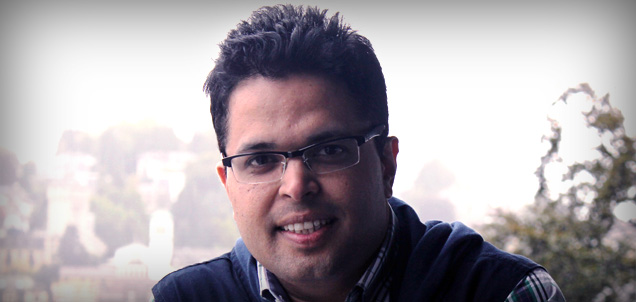
    Joydip Kapadia is Business Head, Television Street Maps. He has worked with TAM Media Research as VP Operations from October 1998 to July 2008. Earlier, he had a 14-year stint with market research firms ORG-MARG and Mode (1984-1998).


  • DB Corp posts robust revenue in Q3

    By A Correspondent


    DB Corp Limited (DBCL), print media company and home to flagship newspapers Dainik Bhaskar, Divya Bhaskar, Dainik Divya Marathi and Saurashtra Samachar, has announced its financial results for the third quarter and nine months ended December 31, 2012.


    • Consolidated Advertising Revenues grew by 5.2 percent to Rs. 9,100 million from Rs. 8,651 million in the period under review
    • DBCL achieved Consolidated EBIDTA Margins of 24.4 percent in 9M FY2013 at Rs. 2,943 million, as against Rs. 2,768 million in the last fiscal, demonstrating a growth of 6.3 percent
    • Consolidated PAT has expanded to Rs. 1,629 million (13.5 percent margin) , from Rs. 1,567 million (14.1 percent), up by 4 percent on a YOY basis


    In the radio business, it has been reported that advertising revenues have shown a robust growth of 22% to Rs. 191 million in Q3 of current period, against Rs. 157 million in Q3 of last fiscal. The EBIDTA stands at Rs. 73 million (38.3 percent margin), 68 percent YOY Growth. The PAT stood at Rs. 47 million (24.5 percent margin) in Q3 FY 2013, with 113 percent YOY growth.


    DB Corp’s digital business continued to register impressive growth with ad revenue touching almost 100% growth in Q3 YOY, on the strength of continuous impressive high volumes of unique visitors (UV) and page views per month while revenues from advertising reported a growth of 12 percent YOY to Rs. 3,412 million in current period from Rs. 3,059 million in Q3 of previous year.


    Commenting on the company’s financial performance, Sudhir Agarwal, Managing Director, DB Corp Ltd, said, “We are pleased to have once again delivered a satisfactory performance this quarter driven by several key factors. Following the past few quarters of sluggish economic growth and subdued sentiments, I believe this quarter heralds better tidings on the back of an improved economic environment that has also spurred the momentum of media ad spend over the last few months – a trend that may continue. We continue to strengthen our internal capacities and resources and remain optimistic about our progress in every region. Our efforts in consolidating pan-India readership growth especially in the recently launched areas of Jharkhand and Maharashtra that are emerging strongly, and persistent cost rationalisation – is reflected in this quarter’s performance. We are greatly encouraged by the positive feedback and the strong renewal of subscriptions of copies in Jalgaon. We are expending considerable time to conduct more focused consumer feedback, bringing in more innovation in content and further localizing it, connecting with the consumer in our emerging centres, to create differentiated products.


    “On an overall basis, the economic environment – on the back of positive measures such as policy changes, mega project clearances, a continuation of reform momentum and anticipated interest rate reduction, is poised to reflect healthier growth. We will continue in our endeavours to utilise our competitive strengths most productively, to strengthen our infrastructure, monetize our centres and thereby translate this growth to deliver greater value to all stakeholders,” he said.


  • What to watch out for in PR in 2013: MSLGroup report

    Extracts reprinted with permission from Public Relations in India: Inside the Industry’s Mind and the 2013 Outlook, Published by MSLGroup India.


    The public relations (PR) industry in India is on the cusp of a profound change. As it finds itself speeding past the Information Age and into the Conversation Age, its scope is expanding well beyond media relations. Its strategic value is finally being acknowledged. As businesses realise that one-way marketing communications have limited value and that engaging stakeholders through new tools like storytelling and thought leadership is the key now, PR is finally coming of age. Therefore, it is important to understand the industry’s state of mind, what it considers to be the biggest hurdles to its evolution, the greatest opportunities and how it sees itself. It is important to give the industry a voice.

    It is precisely this that our report aims to do. In an industry where such studies are rare, MSLGROUP India conducted an India-wide survey – and, importantly, across the executive hierarchy – to ensure that PR practitioners have their say. From growth prospects to the way new business is being generated to the hottest new trends, the study covers it all. The results, as you will see, are heartening as well as revealing.


    What to watch out for 2013

    It’s been a difficult year. The economic slowdown, amplified by policy paralysis in the government and a volatile political situation, hit the PR industry hard. Communications budgets were slashed and many corporations preferred to work on ‘project’ basis rather than on retainers. Given the tough business environment, those that persisted with retainers demanded more bang for the buck.


    While the PR industry managed to keep its head well above the water, 2012 was a tough year.


    Will 2013 be better? Given the government’s renewed vigour for economic reform and India’s inherent economic restraints, the outlook remains optimistic despite the uncertainty created by political turmoil.


    Digital communications – dominated by social media – constitute the biggest opportunity for 2013 and we’ve dedicated a separate chapter to it later in this report.


    While the survey earlier in the report identified major trends, there are others that MSLGROUP India has identified.


    Among those that you can’t miss is the evolution of content as a branding and communications tool. Industry experts believe that nothing sells better than a good story. However, they caution, it’s not just about telling a story but about engaging your consumer. The key, they say, is to make your story his/her own story. Storytelling is also important as the realisation grows that it’s not enough to have profit as your sole objective.


    Businesses need a greater purpose. The community expects that if you’re making millions, you need to make millions happy as well. Consumers today relate to brands that show heart. Social responsibility has moved from mere support for projects to working towards social sustainability.


    Brand journalism

    For PR professionals, 2012 marked a widening of the scope of work and a deepening of the partnership with business leaders, decision makers and subject experts to benefit from the new wave of communications.


    In 2013, more organisations will recognise the need to marry marketing with reputation management. Engagement has always been a key component of the PR business, but in the Conversation Age of today communicators are moving from monologue to dialogue.


    The cornerstone of this engagement is content. Not just creating it, but also managing it. Content that informs and encourages conversations is relevant to the target audience. It is shareable and it strengthens customer loyalty. Corporations as well as PR firms are now employing teams to specifically produce high-quality content.


    Shashank Sinha, general manager and head (marketing of direct sales), Eureka Forbes, said: “Communication is the fine art of ‘storytelling’. Telling a good story first involves understanding the person listening to it – their interests, worries and their lives. Listening is the first step to good storytelling. Unfortunately, most of us seem to have no time to listen. This is the key for the PR industry.”


    It is the digital revolution that has changed the way companies are communicating. Consumers today ‘experience’ products and services online before buying them. From researching a product’s specifications to looking for reviews, consumers rely on the online space.


    It gives them a sense of empowerment as they now have a forum to share their experiences and at the same time become influencers for a brand. PR firms are producing a variety of content, from social media campaigns to white papers and online games, to shape this consumer experience.


    Earned media is now making way for owned media, enabling companies to take control of their brand story rather than relying on traditional media. CNBC TV18’s Ghosh said: “A PR agency mirrors the personality of the brand it represents and is a responsible brand custodian. The need for the agency to exhibit immense agility and alertness in today’s dynamic times is critical. As disseminators of information and trends, PR needs to always be several steps ahead and demonstrate thought leadership and innovative solutions that will help differentiate their clients’ marketing efforts in a crowded space.”


    Consumer marketing and corporate reputation building will no longer be mutually exclusive as consumers have greater access to information about the companies behind the products they buy.


    Globally, we have already seen several brands, such as Volkswagen, McDonald’s, Coca-Cola and Pepsi – as well as non-corporate ‘brands’ such as NASA – using engaging content tailored to their purposes to reach out to stakeholders.

    In India, this is nascent, though automobile-to-software conglomerate Mahindra & Mahindra and the Tata Group have taken an early lead in this.


    Businesses with a purpose

    Carol Cone, global practice chair of Edelman Purpose, told the Holmes Report that ‘purpose’, which she defines as “an organisation’s values in action, manifest through a variety of actions ranging from materials sourcing, supply chain partners, CSR reporting, ethics and governance”, will be increasingly important in 2012, with companies focused on how purpose can be “strategically integrated and operationalised” throughout their organisations. This is expected to take on a much larger scale in 2013.


    MSLGROUP’s PurPle is one such initiative. The group believes that the meaning of being a good corporate citizen has changed from Green (environment) to Blue (sustainability) to PurPle (purpose + people). Tomorrow’s successful PurPle brands will be the ones that work collaboratively with communities, governments, customers and organisations to co-create solutions to the world’s toughest problems. Moving from corporate social responsibility (CSR) to collaborative social innovation will drive more rapid and meaningful change in society and in business, because with collaboration and co-creation comes shared value and a mutually beneficial shared purpose.


    The intersection of three shifts in the business environment has made it imperative for organisations to bring purpose and people together:

    •  Trust deficit: People have access to more information than ever before and there is a lack of organisational trust. In fact, trust in all organisations, including corporations and governments, is at an all-time low. Most organisations realise that corporate reputation and consumer activation are interlinked as consumers become critical of communications campaigns that are not rooted in authentic, long-term commitment.
    • People power: People have new sources of power and many believe that only they can come up with innovative solutions to our most pressing problems, not governments or corporations. Building and communicating purpose-led business strategies must put people and co-creation at the centre.
    • Quest for meaning: People are searching for meaningful connections with communities and organisations around a shared purpose and expect organisations to enable such connections. Organisations need to inspire, organise and energise all stakeholders to collaboratively work towards their shared purpose.


    In the Information Age, a product doesn’t always speak for itself. The greater a company’s transparency, the more connected its customers feel. It is this connection that makes consumers believe in a brand.


    Liz Kaplow, president of New York’s Kaplow Communications, said in the Holmes Report: “The modern consumer wants to know the brand behind the product and the company behind the brand – and they have the resources to find out. This means that companies now have to ask themselves ‘who are we and what do we stand for?’ Naturally, this has made authentic CSR an integral part of a company’s forward planning and initiatives.


    “Authentic CSR means it is integrated into the company’s corporate DNA, so that it is evident in everything the company does. This includes marketing and social media, CEO thought leadership, employee relations, and more. Authentic CSR is not about whitewashing a company’s image. It’s about supporting humanity, being passionate about a cause, and connecting emotionally with consumers who at the end of the day want to know that companies care about the world and the people in it.”


    Healthcare

    Healthcare is expanding swiftly in terms of revenue and employment in India. According to ‘Healthcare in India – Emerging Market Report 2007’, authored by PriceWaterhouse Coopers, “during the 1990s, Indian healthcare grew at a compounded annual rate of 16%. Today, the value of the sector is more than $34 billion. This translates to $34 per capita, or roughly 6% of GDP. By 2012, India’s healthcare sector is projected to grow to nearly $40 billion. The private sector accounts for more than 80% of total healthcare spending in India.”


    Globally, life expectancy is on the rise and with growing awareness about healthier lifestyles, healthcare products are striking gold. It helps that healthcare is a priority for the government


    For PR companies, there lies a great opportunity to partner with healthcare firms – as well as allied verticals, such as diagnostics and pharmaceuticals – to bring about a lifestyle change in customers.


    Pascal Beucler, senior vice-president and chief strategy officer, MSLGROUP, wrote: “Firms in the healthcare sector at large need to not only rediscover their social purpose, but to also put it at the core of their businesses, and to consider it when engaging with all stakeholders.”


    MSLGROUP recently conducted the survey ‘You Share, We Care!’ that outlined the views of 70 managers across Europe. The importance of digital communications came out strongly in the survey. Managers were aware of its impact on their industry, and believed that companies needed to become storytellers – creating contexts to explain to people what they do, and to highlight the company’s social values. These managers want to become protagonists in the debate about health. The findings showed:


    • Nearly two-thirds of the managers interviewed thought that social media offered an opportunity.
    • Most managers believed that the web will dominate healthcare conversations in the future.
    • Patients are key stakeholders in the healthcare ecosystem, thanks to the digital revolution.
    • In this vein, 61 managers out of 70 thought that digital communication offers a great opportunity to help improve medical treatment/therapeutic adherence. Twitter, in particular, can play a role in the dialogue between doctors and patients as it represents a tool for faster connections.
    • Most managers also viewed blogs as important in healthcare communications, potentially impacting how influential doctors and key opinion leaders are on the web.


    A corporate communication head (name withheld on request) observed: “Specific to healthcare, there will be more pressure because of changes in the regulations that govern the sector.


    Communication will be scrutinised even more and it will be a greater challenge to drive the PR agenda using traditional media.  Building credibility will be tougher than ever.”


    If high-level appointments are any indicator, the healthcare opportunity is clearly evident at a global level too. Recently, Shellie Winkler was named as MSLGROUP’s North America practice director for health and corporate practices, while Amanda Sefton was named global healthcare practice director at Ketchum. Meanwhile, US-based Finn Partners launched Finn Partners Health, a dedicated national practice led by Miriam Weber Miller, a 20-year veteran of healthcare marketing and communications.


    It won’t be long before high-level appointments are made in India too to lead the healthcare practice.

     

  • Jaldi 5 with Arun Sharma: Friendship will never be boring

    While Airtel has been making the right noise with its ‘Jo Tera Hai, Woh Mera Hai’ campaign, is it moving towards saturation? Arun Sharma, Vice President Marketing, Head Media & Rural at Bharti Airtel Limited, speaks to MxMIndia about this and other issues.


    01. Is the ‘Jo Tera Hai, Wo Mera Hai’ not reaching a point of saturation, though it remains the clutter-breaking communication from Airtel?

    No, I do not think so. The whole campaign is only a few months old. The campaign is around the theme of friendship and there are different renditions of it. So when ‘Har friend zaroori hai’ campaign was ongoing, we actually cut it short even when it was early to do that. The ‘friendship’ theme will remain, but every year or so we will bring out new renditions so that there is no boredom.


    02. Digital’s role in the media pie for Airtel is increasing. How is it leading to innovation in advertising on this medium?

    Digital and creativity or innovation are synonymous for me. I do not see any difference. Digital, however, is not a linear medium; people have the control of skipping your ad at any point of time. Hence, creative is very inherent to this medium. The medium, with technology seeping in, allows you to do so many things, which is not the case with so many other media. Attention span here is less when compared to others such as outdoor or television.


    03. Digital ROI: Much appreciated yet criticized. What do you think?

    ROI is getting measured. We are in the eCommerce platform and can actually track our ROI to the last decimal. But it so happens that the more the data is re-routable, the more you want. More questions are raised when there is data. In terms of outdoor, there is no data but no questions are raised. I believe the problem is the part of the solution and vice versa.


    04. Which is showing more digital growth penetration: Rural or Urban?

    Rural.


    05. Going forward, what can be expected from Airtel on the digital platform?

    It’s too early to say. But whatever we do, it will be core to the brand idea and it will be available to those audiences. What we do has to be relevant to their language, to their needs and for the devices they have. For instance, in rural areas we cannot create communication on smartphones because there the device penetration is different.


    As told to Ananya Saha


  • Bindass way to go!


    When it was launched in 2008, there was some scepticism in the trade about how it would work. The music channels with their strong pedigree were doing their bit for the youth with some shows.


    Less than five years hence and part of the Walt Disney Company’s bouquet of channels in India, Bindass has firmly established the Youth Entertainment Channel genre.


    Big sister Channel V may be the leader of the pack in ratings, but with costs kept under control, the channel has taken a bold, bindaas approach to get to the top.


    The target is a hundred GRPs, says Nikhil Gandhi, Executive Director, Youth Channels – Media Networks at Disney UTV. Gandhi, who has been heading the channel since it launch, save a bit when he stepped out to launch UTV Stars, is bullish about public lapping up its programming content. A fair amount of investments have been made on distribution and get it in shape for the demands of digitization – first in the big metros and the 38 cities in Phase 2. The youth cluster of channels in the new management structure at Disney UTV comprises Bindass and UTV Stars (the other two clusters being movies and kids).


    Specifically, in the quest to ‘Rest Less and Do More’ in 2013 and while not changing its mix of music and long- and short-form shows, the popular shows like Big Switch and Emotional Atyachar will see new seasons with Gaurav Chopra and Pravesh Rana respectively. Snacky shows like Angry Appa and What on Earth will be built on.


    Much focus is going to be laid on on-ground and digital presence.


    Excerpts from an interview:


    How has the going been for Bindass since it took off about five years ago?

    The journey has been brilliant. We were the first ones to launch as a YEC and ever since then we have only leapfrogged from one level to the next. We’ve grown as a brand. There were certain mistakes that we made along the way but those were earlier days. We sorted ourselves out in 2009-10 and that is when we gave the first slice of the positioning called ‘What I Am.’ That kind of gave us an edge as audiences started to know that this is a brand for me and that it caters to my needs. This we did on the back of research, an exercise we continuously keep doing. So understanding the pulse of the audiences has been our core DNA. That is what drives us in whatever we do.


    As you look back, do you think that the Bindass concept was ahead of its time?

    I wouldn’t say it was ahead of its time; probably I think the audiences were not ready for it. We were still struggling with single TV homes, distribution was a huge issue, the industry wasn’t as organised… Now as I look back, I wish there was a DAS regime that happened at that time or that DTH was flown in a big way… Today, we can proudly say that we were the first guys to make a concept called YAC, which has become the need of the hour for any youth channel in this space right now. We were the first ones to launch a show that time – Sun Yaar Chill Maar – which went on to complete 150 episodes, which was a first sitcom daily soap. Even today our audiences go with such shows. So clearly we were a futuristic youth brand where even the advertisers and brands loved our concepts, shows etc. But somewhere we knew that we were a new brand and that we needed time to take on MTV at that time. But the tables have now turned and we are very strong in our leadership right now.


    So was it a first-mover advantage or disadvantage? Are you happy with the decision?

    I would say it was an advantage. I am absolutely happy now as all that we did in those years is now paying off. In fact all the learnings, perceptions, tracks that we had about our audiences is now very relevant as it has started paying off. The last six months have been a clear-cut work on the product, the brand as well as where do we take our audiences along with us as we progress.


    There has been some tweaking in the brand positioning over the years…

    Yes, the first one was ‘What I Am’ in 2009-10 which gave a sharp focus to Bindass being a youth brand. It gave it attitude and the audiences also lapped it up as they could identify with it. Having done that for two years, we realised that we had to give some purposeful meaning to Bindass because it was coming out to be wholesome entertainment but that’s about it. And we gave a whole new dimension of restless to it. So it’s about having an attitude with a purpose. Bindass today is an attitude and a positive one. It’s a must-have for you. If you have four engineers and one of them has a Bindass attitude, the likelihood of him succeeding above the others is far more than the others. So that’s the whole promise of being restless. We are trying to push our viewers and telling them not to be happy with what you have done; take your limit to the next level.


    Where is this viewer of yours located?

    Honestly, we have viewers from all across the country but our heart is sitting in North-west India. That’s from North of India to the West of India including Punjab, Bihar, Jharkhand etc. That’s because we have realised that all these people who have a different standard of living have the same dream as a guy from Mumbai. But their taste and perception of what is happening on television might be different.


    Has DAS been a shot in the arm for your channel?

    Not only DAS but the distribution across the country itself, we have really bolstered it. We have been on the ground and ensured that we have enough nuts and bolts to tighten our distribution.


    By being a YAC, you are also catering to the most fickle generation who can switch tastes very easily. How do you ensure they continue to hang around you?

    Predominantly our strength has been research and even before we launched this channel we realised that there is a gap for this kind of space. The name that came to be known of our channel was born out this entire TG who came on the channel and said we want the channel to be called Bindass. The second name that was close was Dhoom, but the name Bindass cut across Bombay, Delhi, Kolkata, Chennai, Hyderabad, Amravati etc. So the name itself is an attitude on its own.


    I wouldn’t call them fickle-minded but getting-bored-very-fast generation. You have to keep them on their toes rather than them keeping you on your toes. One needs to understand what is driving them and what their ambitions are and that’s when you start getting pegs of properties that need to be created. Every show that gets aired on our channel is backed by humungous amount of research.


    The other thing that we do with this TG is that we do not talk to them; we speak with them. We engage with them so that they start identifying very closely with us. That’s what keeps us going forward. Of course there are gives and takes as far as show formats and all are concerned but largely all the shows that we have done have been in that zone and has given us the edge.


    In terms of advertiser-friendliness, how would you rate the channel since you launched operations to now? How have brand-driven shows delivered for you?

    The biggest testimony is that we are in season 4 and 5 of most shows like Big Switch, Emotional Atyachar etc. The whole thought is to take them along with us. We have now become not just a platform to be heard but also an enabler. In fact this year the change on Emotional Atyachar is about empowering. Also, our brand is very well personified across all the shows that we are doing.


    Did you face issues with the moral police in terms of content being aired?

    The moral police will be there for any show and I am sure for every show in this world if you are in the public domain you will have issues with the moral police.


    Coming back to the present, what’s the story looking like currently?

    The story today is that we are very clear that we have created an identity for ourselves. We have an edge as far as our shows are concerned. The fact that all our shows are original home-grown concepts is the biggest feather we have in our cap. There are 5-6 formats that we have originally created and which are working very well. We are even looking at licensing some of our formats to different parts of the world. We have already done that with EA last year and are looking at Superdude and Big Switch format being licensed to different countries soon. So where the freshness of Bindass is concerned, the whole new leap that we took in the last three months has paid off. Superdude has given us good GRPs and we are in the process of launching two more shows. EA has been our flagship show and that is yet to come so I think we are only going to go to the next level as far as our performance is concerned.


    As for the business perspective, we are doing it at a different cost level altogether, where programming is concerned, as compared to competition. We are trying to give audiences shows in a different manner and at a different cost.


    Since HSM is your critical market, have you looked at going Hindi for Bindass?

    We were initially 70:30 Hindi to English but the moment I stepped in I said we need to go 100 per cent Hindi. There is a Hinglish touch to it as that is what audiences also want but largely, we are doing shows in Hindi.


    With various networks looking to switch to regional feeds what is your strategy on that front?

    We too are considering that option; it is there on the cards. We are looking at the right time and moment. As for the choice, Bhojpuri and Punjabi really do not interest us and we consider South to be a different country altogether. These are markets where advertiser interest is larger than any other market. But we are still doing research around these markets and will arrive at a solution very soon.


    How is the merchandising and web business doing for Bindass given that the youth look up to these segments as well?

    The first testimony is that we have 20 lakh fans on Facebook and more than 4 crore hits on YouTube. These are large numbers. When I quote this to an advertiser they just jump at the possibility as we are given them additional eyeballs for engagement. Also, for us these are all organic growth numbers. In the last two years we have been growing significantly and the plan is to take the number further and become the largest youth brand in the country on facebook. I am also the most spoken about and engaged brand on facebook, which tells me that there is something about my brand that works with the consumers.


    Also we have developed a very strong creative team internally. The OAP team is phenomenally entrenched with what the audiences like. From the time we have been born we have always been different in terms of look and feel, colours etc. All this has evolved over a period of time and all of this is also going on the web. We also do multi-lingual multi-level campaigns through various platforms where there is media exposure. Like we had a game on the DTH platform around EA. I think the group synergies give us a lot of empowerment to start and take such steps in other avenues.


    Another thing where we established ourselves last year was the ground space. We tied up with 3-4 mega events that took place across the country like NH7. We did Lady Gaga event to David Guetta to Enrique Iglesias…we are looking at doing similar things going forward.


    How much of Events is critical where engagement with the youth is concerned?

    I think it is one of the critical aspects. Youth will keep going to such places where they get entertainment and the whole idea is to engage at a different level. For example, we have created chickipedia on the web which is about the man’s perspective on how women think. It has been lapped by HUL who have pledged support for the next 2-3 seasons as well. So it’s about engaging with the right kind of shows on the web.


    Will these ground level activities be extended to B-class towns?

    Yes. For example, there is this concept called Croaking, which is the biggest karaoking competition in the country. It’s not about you having the talent to sing but about you having the b***s to take the mic and go on the stage and sing. So that’s again about empowerment and is being held across 15 cities. So that’s one important ground level activity. Another ground event we are doing is called Bindass Buddies Project being taken to 200 colleges across 15 cities. We will engage with the TG on campus which no other brand has been able to tap. We’ve got Axe who has come onboard as sponsor. So we’ve been able to create the right kind of associations.


    In terms of GRPs what is your target for the next quarter?

    Honestly, we have exceeded our target. We’ve now revised the targets on our own because DAS was anybody’s game and we didn’t know how it would pan out. We were hoping and had put all the right measures in place. Now that it has crossed that barrier and we’ve done better than what we expected – there is a channel V sitting at 52 and we are at 46, and they have 5 shows versus our 1 show. So the whole dynamics has changed for us. We will take it to the next level by adding more shows and at least be in this zone for the next 6-8 months.


    In this genre, any specific targets that you have to get to the No. 1 spot?

    The genre is growing and there will be a new number 1 as everybody progresses. Though there will be a level at which we will get saturated – 100+. That’s where we are headed to.


    What’s the plan to expand to 38 more cities…

    LC1 is very important for us and we are happy it is happening. These are markets which you’ve never heard of earlier. It’s not that we were not there; we were there in these markets just that our focus now will get even more larger. About 18-20 per cent of the play is going to LC1. The second phase of DAS is also what we are looking forward to. The first phase of DAS has given us a good boost for three metros; so that’s going to become the play now. The more mass you get with your content that will become the booster for your channel.


  • Dish TV reports Rs 4,943 revenues in Q3

    By A Correspondent


    Dish TV India Limited has reported third quarter fiscal 2013 unaudited standalone operating revenues of Rs 5,578 million, recording 13.1 percent growth over the corresponding period last fiscal. EBITDA of Rs1,377 million registered 4.8 percent increase over the corresponding quarter last fiscal. EBITDA margin for the quarter stood at 24.7 percent.


    Highlights

    • Dish TV added 829 thousand new subscribers in the quarter ended December 31, 2012 achieving a total of 14.7 million gross and 10.5 million net subscribers at the end of the period.
    • Total standalone operating revenues for the quarter stood at Rs 5,578 million, recording a growth of 13.1 percent as compared to the corresponding period last fiscal.
    • Subscription revenues for the quarter were Rs 4,943 million, recording a growth of 16.2 percent as compared to the corresponding period last fiscal.
    • Subscriber Acquisition Cost (SAC) at Rs 2,201 compared to Rs 2,273 in the immediately preceding quarter.


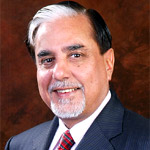
    Subhash Chandra

    Subhash Chandra, Chairman, Dish TV India Limited, said, “The Indian media industry is witnessing a sea change as it moves towards a fully digitized environment. With the government remaining committed to the cause, stakeholders across the value chain are working overtime to make the best of the opportunity. As digitization sweeps the pay-tv households in India, platforms with evolved business systems and processes having last mile reach are likely to have an upper edge. Amongst DTH platforms, Dish TV with its technological lead and superior product line-up is one of the best placed to capitalize on the digitization mandate,” he added.


    Jawahar Goel, Managing Director, Dish TV, said, “While the distribution industry remained on tenterhooks preparing for digitization, the third quarter saw the much debated compulsory switch off of analog television signals take place in key metro markets. Although lack of execution in Chennai and Kolkata was a dampener, festival demand coupled with mandatory conversion in Delhi and Mumbai brought the DTH industry back to the 1 million plus monthly run-rate. DTH garnered around 35 percent share of incremental additions post the sunset date.”


    He added, “In line with our expectation, we witnessed significant subscriber uptake around the sunset date of 31st October. Dish TV achieved the largest share of 28 percent amongst DTH platforms in the digitization territories. ‘Dish+’, India’s first standard definition recorder, played its part in differentiating and attracting consumer interest in a crowded market.”


    Commenting on the third quarter performance, Mr Goel said, “A larger base did create pressure on the average revenue per user which, primarily supported by price hike in the second quarter, increased marginally to Rs 160. In the third quarter, apart from the usual additional spends typically experienced due to the festive season, additionally this year the company’s investments to capitalize on the digitization opportunity are also reflected in higher costs during the quarter. A seasonally higher marketing expense was as per budget. Content cost for the year is expected to be within the guided range of 12 percent increase over the previous fiscal.”


  • Adland ‘Inkaar’ to film with NCD accusing agency CEO of sexual harassment

    By Rajiv Singh


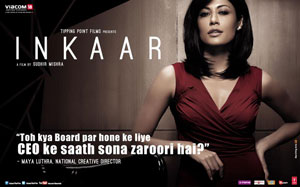
    Inkaar, Sudhir Mishra’s latest film, may have failed to set the box office on fire, but it has created quite a flutter in the advertising world, with the fraternity refusing to accept the way it depicts an ad agency.


     

    In the film, Maya Luthra (Chitrangda Singh), the national creative director of an ad agency, accuses CEO Rahul Verma (Arjun Rampal) of sexually harassing her.


    That, of course, is not the best advertising for the industry.


    Prasoon Joshi

    “Advertising is probably the only profession in the country where a woman can do what she wants to do, can speak her mind without even an iota of fear and can live her life the way she wants to be,” Prasoon Joshi, CEO and chief creative officer of McCann World Group India, says.


    Lack of knowledge and understanding about the industry could be the reason for choosing ad agency as the workplace for depicting sexual harassment, he avers. “It’s not an industry of exploitation but an industry of equality.” Almost everybody in the fraternity agrees. It’s a mad world, but not bad, they say.


    Priti Nair

    Priti Nair, director and co-founder of ad agency Curry-Nation, says the film falls to the stereotype that ad agency is glamour-laden and loose life. “You just have to show a woman wearing a nose ring, with a wine glass in hand, and yes smoking-and you have an ad woman,” she says.


    KV Sridhar, chief creative officer, Indian subcontinent, at Leo Burnett, however, believes that there’s no stereotyping. “Ad agencies have become a metaphor of progressive women and flamboyant men,” he says. Sridhar says it’s a good thing that a movie has been made on a sensitive issue. “There are not many movies dealing with sexual harassment,” he says.


    KV Sridhar

    Branding experts feel interpersonal dynamics ranging from fancy free flings to forced sexual innuendos at workplace connect with the audience because it’s a subliminal reality nearly everywhere.


    “Power disequilibrium is what fuels exploitation, sexually or otherwise,” says Smitha Sarma Ranganathan, a brand communication specialist who teaches marketing management at IBS Bangalore. “So, over-emphasising and contextualising this specifically to the advertising industry paints a biased picture of the fraternity at large.”


    Source:The Economic Times

    Copyright © 2013, Bennett, Coleman & Co. Ltd. All Rights Reserved


  • Sony goes Liv with digital entertainment

    By A Correspondent


    Multi Screen Media (MSM) has announced a new product for digital entertainment, Sony Liv. Sony Liv is MSM’s new Video-on-Demand service, which will provide viewers a world-class viewing experience of their favourite shows from the Sony stable – Sony, Sab and Max. Viewers can watch ACP Pradyuman solve the most interesting cases on CID, revisit the most hilarious episodes of Comedy Circus and watch the 1st ever episode of Taarak Mehta Ka Ooltah Chashmah, online, on their personal mobile handsets and tablets, on the go, at their convenience.


    Apart from current shows, Sony Liv also gives viewers a chance to watch past episodes of their favourite shows on Liv Classics. In addition to episodes of all-time favourites like Jassi Jaisi Koi Nahin, Kkusum, Heena, Boogie Woogie, Movers & Shakers and Office Office, Liv will also showcase a large archive going back 17 years of movies and special events like Stardust and Filmfare Awards.


    The Sony Liv application is available globally for free, online on www.SonyLIV.com, for download on major app stores iTunes and Google Play (Android).


    Man Jit Sigh

    Commenting on the new initiative, Man Jit Sigh CEO, MSM said, “Liv is aimed at providing entertainment on the go for young India on the move. With the launch of this user-friendly and highly interactive application, Sony is slated to change the way this nation consumes entertainment. It is a great platform for brands to enhance their engagement and interactivity with today’s young consumers.”


    NP Singh

    NP Singh, COO, MSM, said, “Innovation is the bedrock of business at Sony and our latest offering, Sony Liv reiterates our commitment to engage and interact with our audience in a whole new way. Sony’s shows like Bade Achhe Lagte Hai, Comedy Circus, CID and Sab’s shows – Taarak Mehta Ka Ooltah Chashmah and FIR have very high repeat value and have been rated amongst the most viewed shows online. Through Liv, we want to strengthen our viewership in the digital space and provide the best entertainment preferences to our audience.”


  • Jaldi 5 with L V Krishnan: Core viewers of genres is up

    By Ananya Saha


    Digitization is having multiple ramifications for all stakeholders: MSOs, LCOs, broadcasters and advertisers. On the sidelines of the ‘Digitization Begins’ conference convened by afaqs.com, MxMIndia spoke to LV Krishnan, CEO, TAM India to get upclose to the real picture after mandatory digitization was implemented in the three metros.


    01. What can broadcasters learn post DAS, given that the two metros (Delhi and Mumbai) have shown differential changes towards genre preference?
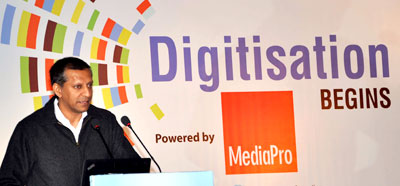
    There are two aspects to it. One, distribution is bringing order in the chaos post-DAS, where channels are getting in two metros. In a way, order that you now see will be much more systemised order and consist of core audience wanting to watch that genre than the trespass audience. This will go the long way in Phase II. The learning of Phase I is good enough to say what the next step should be. Step one is marketing: tell the consumers what the channel has and come and watch it. The second step would be much stronger content of engagement.


    02. So, do we have any surprises post-DAS?

    Overall, the core viewers of the genres have gone up. However, the overall reach of mass channels has gone down. Engagement levels have marginally increased with the genre and strong properties that are marketed are getting the audience. The core audience is still sticking to the preferred genre; it is the trespassing audience that are no longer accessing it. The broadcasters can create strong properties and communicate those properties to the audience so that the audience becomes loyal.


    03. How do you see the audience trend of Delhi and Mumbai replicating in other cities?

    Rollout of digitization will exhibit same phenomena in other markets as well. But the difference will be those markets already have strong penetration of digitization, eg MP and Gujarat. In metro markets, we see 50 percent penetration so such cities will see much smoother rollout of digitization than a Delhi or Mumbai.


    04. Many channels are claiming a spike in viewership. Have things shaken up much with digitization?

    These are the initial stages of digitization. The channels have worked hard to get their communication across to the audiences and have created better content and engagement.


    05. What is in it for the advertiser in the post-DAS scenario?

    They are getting targeted with audiences getting skewed to genres. Therefore, they can target their advertising more efficiently unlike the pre-DAS scenario. Secondly, geography is becoming clearer, especially for niche genre. Communication will be much easier in the digital era.


  • Your Mom is on FB… and other key Social Media trends for 2013


    By A Correspondent


    Leading online marketing firm ODigMa has outlined six trends that are expected to define the social media landscape in India in 2013. These trends have been captured basis the company’s analysis of the social media industry, customer usage and customer demands. Says Advit Sahdev, ODigMa’s CEO and Founder, “To lead in a competitive business environment, companies and marketers need to integrate their marketing and social media strategies. Functions within businesses need to venture out of traditional marketing and social media boundaries to realise their true potential. The year 2013 will see the emergence of various new tools and platforms which can be used to augment business objectives.”


    Trend 1: Moving beyond Likes and linking them to assess competitiveness


    Most companies on social media platforms restrict their engagements to Likes, Sharing and increasing their Fan base, but companies are maturing in their social media presence. There is an immediate need to translate these engagement tools into tangible and measurable benefits.


    What it means: 2013 will see marketers and advertisers demand an assessment of how Likes, shares and increase in fan base will affect campaigns, product innovations, pricing and market competiveness.


    Trend 2: Mobile is moving to the centre of social media campaigns


    Internet-enabled smartphones in India reached the 24 million mark in 2012, as per Federation of Indian Chambers of Commerce and Industry (FICCI) and KPMG International. The increase in smartphone usage has spurred online activities on the move. This, coupled with a slew of new smartphone launches lined up in 2013, will make the smartphone the epicentre of all social media activities.


    What it means: In 2013 advertisers and marketers will need to devise a mobile strategy to meet their marketing objectives – be it retention, conversion, or branding. Engagement platforms on the mobile phone that enhance reach, and help to explore new audiences and market will be an essential element of every marketing strategy.


    Trend 3: The rise of video content


    At a time where there are zillions of mediums which hanker for a customer’s attention words no longer have a lasting impression. 2012 saw the popularity of mediums that use pictures, including Instagram Pinterest, and even Infographic. 2013 will focus on Video content, moving pictures which will speak, express and eventually leave a more lasting impression on consumers.


    What it means: Innovation, creativity and out of the box thinking to communicate via moving pictures will rise. Marketing decision makers will need to equip themselves with video content management insights and knowledge.


    Trend 4: The magic of analytics


    In today’s competitive environment, companies irrespective of their size and industry necessarily need to employ analytics tools to improve efficiencies. 2013 will see more traditional segments employing these tools such as governments and regulatory bodies who are required to cater to a population of over a billion citizens and not just sunrise segments such retail or telecommunications.


    What it means: Analytics tools will become a standard that marketing decision makers will need understand and implement to understand how their social media campaigns impact strategic goals, be they retention, conversion, or branding. Analytics tools will help companies observe the pattern of online behaviour of customers across search engines and social media platforms. They will aid businesses in customising their marketing strategies in a manner so as to attract as well retain more customers. It will be imperative for companies to gather accurate and relevant data from all these sources and analyse it for customer insight thereby significantly improving their customer acquisition and retention strategies.


    Trend 5: Your mother is on Facebook


    There is a mindset that social media is a tool to reach out to a certain demographic. 2013 is going to bust this myth. Last year has seen a diverse age group join the social media bandwagon, from grandmothers to school kids. This audience is well poised to be targeted by marketers.


    What it means: Marketers will need to reckon with this phenomenon and move beyond the traditional mindset that suggests that social platforms reach out to the under-30 years of age population.


    Trend 6: A 360-degree integrated approach


    Offline and Online marketing cannot work in silos any more. Marketing strategies need to take a 360 approach where both these facets complement each other.


    What it means: Brands will have to create campaigns wherein online programs, such as a campaign running on Facebook, will have an offline component to maximize impact.


  • What next, now that digitization has begun?

    By Ananya Saha


    L V Krishnan

    The past two months, after the implementation Phase I of digitization, have been quite an incredible journey. From doubts about whether we would achieve 100 percent digitization at all to achieving it in Mumbai and Delhi. Of course the hiccups still remain. Probably Phase II will see less of these hiccups and more of successful implementation. This and many more issues about digitization were discussed at afaqs event in the capital titled ‘Digitization Begins’. The panellists not only discussed the ramifications of post-DAS scenario but also what the stakeholders should do to take advantage of digitization.


    Numbers game

    According to LV Krishnan, CEO, TAM India, the digitization onus is on marketing and programming. At the summit, ‘Digitization Begins’, culling facts from the data (based on eight weeks pre vs post DAS CS4+ in Delhi and Mumbai), Mr Krishnan said, “There has been 2.5 times growth in the availability of channels in the initial months but it does not match the viewing with 30 percent increase in incremental fragmentation.” He also noted how North and West markets in India are maturing faster than the Southern market when it comes to digitization. “Today channel-surfing behaviour is prolonged in digital homes, while direct landing is leading to increased reach for English entertainment, English movies, and the kids genre.” According to him, inter-genre surfing may also come down.


    Other findings that Mr Krishnan shared included: with sports channels becoming omnipresent, other sports will also get benchmarked; viewing is getting spread from primetime to other day parts, eg: youth music to the early morning band of 7-9am. However, he cautioned, “The biggest disadvantage is that DAS will hit single channels since the top seven channels garner almost 80 percent of audience in DAS-enabled Delhi and Mumbai.”


    Mr Krishnan, however, viewed digitization as a positive change and said, “The clear action step for the broadcaster to be present on distribution chain should choose between two cluster homes: home with kids, and home without kids. For the advertiser, they need to focus on cost of targeting, increase in co-creation of brands. Advertising will see a boost via paid media, and additional media budgets will get shifted from localized ground promotions to unique television content channels.”


    The next 6-8 months will also see a spike in free-to-air channels, according to Mr Krishnan, to cater to the bottom-end of the market.


    Chasing the momentum

    Roop Sharma

    Digitization was promised to bring in not only the set-top boxes (STBs) into the house of the consumer, but also digital services such as digital billing, services such as video-on-demand, broadband etc. Even though the seeding of STBs has been achieved, it is still a long way before we achieve digitization in the true sense.


    Vivek Takalkar, VP, Marketing and Business Development, MediaPro and Roop Sharma, President, Cable Operators Federation of India believe that post seeding of boxes, digitization has not achieved desired results while Ashok Mansukhani, Director, Hinduja Venture and President MSO Alliance asserted that the all the stakeholders of the digitization process should work together towards establish contact with the consumer.


    Sugato Banerji

    Sugato Banerji, COO, What’s-on-India, noted, “Content discovery will become important for operator to push channels. As digitization progresses, EPG in various languages will also be required.” While broadcasters and content creators might struggle with monetisation, the panelists were of the view that digitization will result in demand for more content.


    Giving the advertisers’ perspective, Anita Nayyar, CEO India and South Asia, Havas Media, initiated a discussion with Amit Tiwari, Country Head, Media and Digital, Philips India and Sunil Raina, Business Head, Lava International. Mr Raina emphasized content co-creation, while Mr Tiwari said, “Channels have to become brands. They have to think from a marketers’ perspective. Even though we have not changed our media plans, depending on digitization numbers, but I am sure that as digitization grows and sub-category of genres emerges, it will impact us directly. We will look at focused advertising.”


    Anita Nayyar

    Ms Nayyar noted, “When it comes to advertising, the brands prefer to go with what has been working in the past and their gut feeling. When the digitization process began close to Diwali, we did not have the numbers. But even then the brands advertised because it was the season and went with the gut feeling.”


    Even as marketers have not clearly changed their media strategy based on initial numbers, it is clear that as content becomes targeted, media preferences could change dramatically.


    Neeraj Sanan

    Neeraj Sanan, CMO and Head, Distribution, MCCS India said, “Good content will determine market share and role of distribution will reduce. Even as time spent on television has increased by 5 percent, the choice has also increased from 80 channels to 250 channels.”


    Even as business models will undergo huge changes, the panel believed that the future implications have not had any affect on their current strategies. And while DAS is believed to be a game-changer, the veterans think that more then the distribution equilibrium, it is the convergence that will have an effect on the consumption of content. As Mr Raina said, “It is important for us to integrate online and offline media to create impact. Plans are not going to change because of digitization but because of convergence. I would like to reach my consumer through the medium they prefer: it can be a television or a tablet. I have to be present where they are.”


    With competition rising, Mr Sanan noted, “There are going to be some wild implications of digitization including, local events can become content through MSOs; a good EPG search engine could take off; concept of broadcast UGC can happen; with triple play, MSOs can think of ad options with a clear-to-call action.” He also noted how MSOs will start competing with national channels for content rights.


    Though there is still a long way to go, digitization is throwing up interesting trends. How many of these will get converted, only time can tell.


  • Conf on managing media libraries & archives on Feb 4-5

    By A Correspondent


    The Association of Media Libraries & Archives (AMLA) has organised a National Conference (AMLANC 2013) on February 4-5, 2013 at the Convention Centre, JNU, New Delhi in association with Central Library, Jawaharlal Nehru University and UNESCO. The conference themed “Managing Media Libraries & Archives ” will be followed by a one-day training workshop on Capacity Building on “Digitization, Digital archiving and Digital video archiving in Media Libraries and Archives” on Feb 6.


    The conference aims to provide a professional platform to deliberate, discuss, examine and debate the various issues in managing all aspects of media libraries, across the various mass media segments such as print, TV, radio and online.


    According to Dr Ramesh Gaur, University Librarian, JNU and Chief Patron of AMLA, the conference is expected to be attended by over 200 librarians and other professionals associated with media libraries, national and institutional archives from across India. Various guests and speakers from media companies like The Times of India, The Hindu, DNA, ETV as well as UNESCO, Prasar Bharati and JNU will also be expressing their views on future of media libraries and archives in India.


    Details on the conference including registration form are available at www.amla.org.in.