Category: MEDIA

  • Hindi channels say ‘Vanakkam’ & ‘Namaskaaram’ to Southern hits


    By Meghna Sharma


    What is common between Ghajini, Wanted and Bhool Bhulaiya, apart from the fact that they were all blockbusters and starred A-listed actors? The fact that they were all remakes of popular South Indian films.


    Lately, Bollywood has been experimenting with a lot of films made down south. And since, the small screen is a reflection of what happens on the big screen, even the channels – movie as well as GECs – are cashing in.


    There has been a spate of south Indian dubbed films being shown on the television. According to the recent data, there isn’t much difference between the ratings for Hindi and dubbed films on TV. On an average, both get a 0.3TVR (HSM CS15+ on channels like Colors, Star Plus, Sony Max, UTV Movies, Star Gold in Jan -June) as compared to prime time where Hindi movies score better.


    So, it is logical to wonder, why the sudden acceptance of South Indian dubbed films on national channels? Is it a Rajnikanth effect or there is more than what meets the eye…


    Formula or freshness?

    Manisha Sharma, weekend programming head, Colors feels that the acceptance started gradually over four-five years ago with experimentation by all three stakeholders – Bollywood, broadcaster and viewer.

     

    Anilkumar Sathiraju

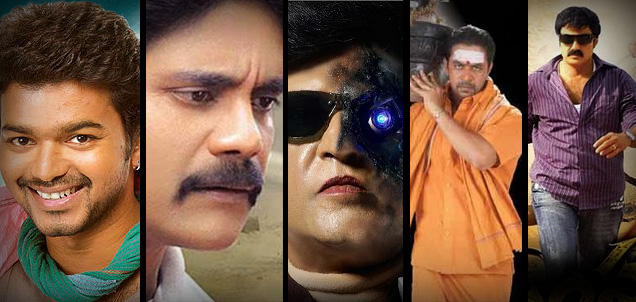
    “The viewer was getting hungry for content and the increased frequency with which Hindi blockbuster movies were being repeated ensured that he was willing to experiment with dubbed movies. The other thing that worked for the dubbed movies was the fact that the production quality of south Indian movies has gone up tremendously in the last decade. Also, the movies which were initial successes were the ones which had stars who, at some point, had crossed over into Hindi like Rajnikanth and Nagarjuna,” she added.


    According to media planner Anilkumar Sathiraju, associate VP and head South, Mudra Max, the fresh content and faces are working in favour of the dubbed movies on channels. “Movies down south, especially Telugu films, have a certain mantra – say six over-the-top fight scenes, two behind-the bushes romantic songs – which isn’t very common in Bollywood movies of late. So, people don’t mind watching something ‘different’.”

     

    Mohan Gopinath

    However, there are movie channels like Zee Cinema, which have been showing South Indian dubbed films for a long time, which feel that the trend has caught on other channels recently. “To be frank, these movies have always rated on Zee Cinema, so the appetite has always been there. Other channels have picked the trend up in the past few years and now the viewer gets South films, dubbed in Hindi, all across. Now with South Indian films being remade into Hindi films, the appetite for dubbed films has increased,” says Mohan Gopinath, business head, Zee Cinema.

     

    Manasi Sapre

    Also with broadcasters taking precautions to maintain the real essence of the film while dubbing, not much is lost in translation. So, viewers find it easy to relate to the films.


    Manasi Sapre, director programming and acquisitions, Movie channels UTV, said: “Though, dubbing is a challenging job, we make sure that the essence of the film isn’t lost in the process. Therefore, it varies – sometimes they are sourced dubbed and sometimes we do it.”

     

    Vijay Subramaniam

    “Till a decade or so ago, most regional movies were shown with subtitles which didn’t attract the viewer as much it does today, since they are dubbed. So, not only masala movies but also artistic films are able to find their way into one’s living room,” said Vijay Subramaniam, deputy GM, Madison Media.


    Apart from the content and viewer’s acceptance, Anamika Mehta, COO, LodestarUM feels that it’s the explosion of media which is behind this: “What happened with the song Kolaveri di is the finest example one can give today. Boundaries are shrinking and more and more people are coming to know about the film culture down South.”


    Cost cutting

    Vajir Singh

    Vajir Singh, editor, Box Office India accepts that freshness in content and crossover of actors – famous like Rajnikanth or lesser-known ones like Siddharth – does play a role, but feels that it is the cost of acquisition that plays a bigger part here: “If a channel can purchase entertainment at cheaper rates, then why shouldn’t it? South Indian films in comedy and action genre have always done well as they provide pure entertainment to viewers and eyeballs to the channel.”


    He’s not the only one to voice such a sentiment. Even media planners feel that cheaper acquisition rates are a main reason why suddenly these movies are being shown on television so frequently. “It is far cheaper to acquire little older or newer South Indian movies than latest Hindi movies which are showcased as premieres on the weekends by channels. So, it helps them to build a bigger library,” said Ms Mehta.


    “Broadcasters, over years, have been struggling with increased cost of acquisition, limited hits and increased competition. As compared to about a decade ago when a Bollywood star would have 2-3 releases a year, today stars prefer to do one movie at a time. Also, in a good business year the number of blockbuster movies will not cross 10. This, coupled with the fact that there are new channels getting launched in both Hindi GE and Hindi movie space, ensured that broadcasters was struggling for content and more willing to experiment with south Indian dubs,” explained Ms Sharma.


    The new experimentation seems to be working for Bollywood and it is working for the channels and viewers too. No one seems to mind it!


    Pictures courtesy: maxtelevision.com, Imaging: Rafiq


  • The Half-Year That Was


    By A Correspondent


    It’s July 2 today, and the first six months of the year have passed. While the slowdown has impacted spends in a major way, most of the 182 days from Jan to June have been eventful. On the positive side: new television channels, new agencies – media and creative, consolidation, people and account movements, government issues, digitization, awards… the list could go on. And on the negative: a channel being shut, pink slips, pay cuts, appraisals deferred, digitization delayed… the list could go on here too.


    We have already embarked on the second half of the year, but as we do that, here’s a quick look at how industry captains review the half-year. We present you the half-yearly review in two parts… the first today and the second mid-week… on Wednesday.


    As you would gather, there is much gloom in the industry, though no despair. Not yet.


    ADSPENDS:


    Nagesh Alai, President, Advertising Agencies Association of India (AAAI) & Executive Director, India Operations, Draftfcb Ulka Group

    Nagesh Alai

    If I were to summarize the indications of the economy, then one has seen softness beginning last November and December leading to a situation of downturn. The macro-economic indications like rupee falling, impact in production and fall in demands have also reflected in the consumer behaviour in a negative way. The last quarter of 2011-12 (Jan-March) has seen a fall in GDP to 5.3 per cent. All this have impacted the manufactures as well as service providers, with the mood being that of postponing a decision. While some would have thought that the situation would not impact FMCG, but that one has seen a resistance from that sector too.


    So in terms of advertising, the impact being in terms of ad outlays and remuneration; while the latter has been up for constant negotiation and any further would only impact the quality of service being provided, it’s the latter that is being hit now. I think this year one would see a growth of maximum 10-12 per cent as compared to 14-15 per cent in the past. While print and TV still comprise 80 per cent of the spends, but advertisers are looking at newer mediums, where the spends is not high and get better mileage for monies being spent.


    I personally believe that even if government were to take corrective measures, one will only begin to see the recovery by mid-2013. The mood can be aptly summarized as being that of cautious approach.


    PRINT:


    Narendra Kumar Alambara, COO, Thanthi Group

    Narendra Kumar Alambara

    In terms of the regional publications, I would say that the past six months have been good and bad. If one looks at readership and circulation, the regional dailies have seen an increase vis-à-vis the English language publications. However, there is a need to be bold and unconventional when it comes to regional publications, both by those selling this space and advertisers themselves. In today’s time when every paisa has to be accounted for in terms of returns, I think regional publications would have been an excellent answer to have targeted reach because of the value they provides for the money and reach.


    However, we have failed to do that. Today when most media houses are not restricted to being uni-dimensional and have different platforms for advertisers be it television, print, digital and even regional newspapers and channels under their umbrella; I think the solution lies in integrating various offerings, including the regional to get a better value and growth.


    Krishna Prasad, Editor-Outlook

    It’s difficult to put a number as yet on the kind of growth that has been witnessed, but you will always see print being challenged by television and other mediums. As far as the past six months are concerned, I would say the growth of print has been at par. By this I mean that even though most advertisers have huge monies, they are shying away from advertising with this medium. This is somewhat similar to what was observed during 2008, where companies didn’t have any reason to opt for cost-cutting, but were up for it. Many advertisers are seeing this downturn as a reason to go easy with their spending and not be too extravagant.


    Most newspapers today, especially in Delhi like Delhi Times, Hindustan Times and others appear chunky in their appearance, which gives you a sense that all is well but that may not necessarily be the case. Most of them are actually going slow with their spending and are trying to play it safe. I expect things to look better from October onwards – around the festival period. So largely, the growth of media will be dominated by how the economy transforms itself; it’s not operating in a vacuum. That’s the best case scenario.


    But the worst case scenario is that it may take a little bit longer for things to get better; perhaps with the elections coming up soon, with the country seeing a new Finance Minister and the markets going topsy-turvy, the print industry may still take some time to stabilise itself.


    RADIO:


    Prashant Panday

    Prashant Panday, CEO, Radio Mirchi

    The radio industry has been hit just as hard as any other segment. Maybe a little less than print and a little more than TV. The economic slow-down and the policy freeze has made advertisers a little wary. They are not exactly cutting spends, but they are demanding more from broadcasters. A broadcaster can either cut prices or offer more for the same. In some sectors, the advertising cut has been more severe like telecom, real estate and so on. But there are other segments that have done better – like core retail, and even auto.


    Given the economic conditions, and the lack of new frequencies, radio has done as well as it possible can.


    Rabe T Iyer

    Rabe T Iyer, Business Head, BIG FM

    The last financial year was alright, but the last three months have been pretty flat. The reason for that is because categories like BSFI, Auto and some of the campaigns of the usual summer categories were a bit slow. Nevertheless, we expect the next three to six months to be a good run. This is because people ultimately want to keep their goods moving, and hence the next three to six months are going to be good. The last three months were flat for the industry because the dollar exchange hit the sentiments and some categories which were expected to fire up in the month of May-June have taken some more time, mainly because of the overall economy conditions and the sentiments attached to it, and also because of the fluctuating dollar prices. This has directly impacted the ad spends, not just on radio, but across the portfolio on media brands.


    Ashit Kukian

    Ashit Kukian, COO, Radio City

    The last six months has been very good for the radio industry. One of the reasons I would say is because the core advertising categories in radio namely: Telecom, FMCG, and Entertainment channels to name a few, had increased their advertising spends on radio.


    DIGITAL:


    Chhaya Balachandran Aiyer, CEO and MD, BCWebWise

    Chhaya Balachandran Aiyer

    More and more brands are getting ready to seriously look at digital media and those who have been using it already, are increasing their spends. Digital is expected to deliver more cost-effectively. Amazingly, even production charges of films are expected to be cheaper, if they are being produced by digital agencies. It would help if brands which see real value in digital and see it delivering, also realize that results won’t come if they tighten their purse strings so much. Fortunately, there are a few clients who have realized the quality v/s quantity value and are waking up to the real digital age and extending their budgets.


    Rajiv Hiranandani

    Rajiv Hiranandani, Co-founder and Executive Director, Altruist, Mobile2win

    I think the mobile industry has underperformed in last six months, as per the overall outlook was supposed to be, in terms of number of handsets sold and amount of value-added services (VAS) consumed. Mobile industry has seen its slowest growth, and this has been also because of the negative outlook in the economy. Some of the reasons have been people waiting for better handsets models, the overall mood of economy not being good, and mobile VAS seeing a lot of restrictions in terms of TRAI guidelines.


    OOH:


    Noomi Mehta, Chairman and Managing Director, Selvel One Group

    Noomi Mehta

    The last six months have not been good for the out-of-home (OOH) industry. The month of June, however, has seen a significant improvement, which is perhaps because the IPL campaigns in the months of April and May have fructified. Otherwise, I believe, the industry figures have been down. The markets, by and large, seem to be in a depressed state, along with the economy. Going forward, one of the basic steps needed to improve the industry’s performance is the need for a common currency for measurement. OOH is part and parcel of the country’s economy, and hence it will also be subject to the same pressures as the economy.


    Image: Rafiq


  • Aamir reaches out to BIG 92.7 listeners in 45 cities

    By A Correspondent


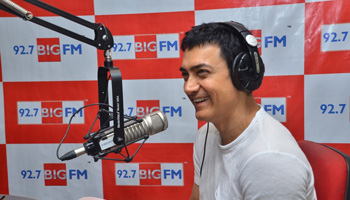
    92.7 BIG FM listeners had a special treat when Aamir Khan dropped by at the Mumbai station to interact with them on air.


    Engaging in conversations with listeners from across Tier II and III cities resulted in some interesting revelations, as they shared their feedback, the difference it has made to their lives and to the society at large and also proactive recommendations of subjects that could be taken up on the show. “People around watch the show and expect change from their society, change will happen only when one personally changes,” he said.


    Speaking on the occasion, Mr Khan said: “I am very happy to have got this opportunity on 92.7 BIG FM to connect with my audiences. With Satyamev Jayate, our endeavor has been to address key issues plaguing the nation, the show today has gone a long way in helping us get a first hand feedback about the show, how it has impacted us and how the show can play a catalyst in bringing about the much required change in our society.”


    Commenting on Mr Khan’s visit to the studio, a company spokesperson said: “We, at 92.7 BIG FM, were happy to have Aamir Khan choose our network to reach out to people across India, while offering our listeners the opportunity to speak with someone, who is working towards creating a positive change in society.”


  • IAMAI: E-commerce witnesses upward swing

    By A Correspondent


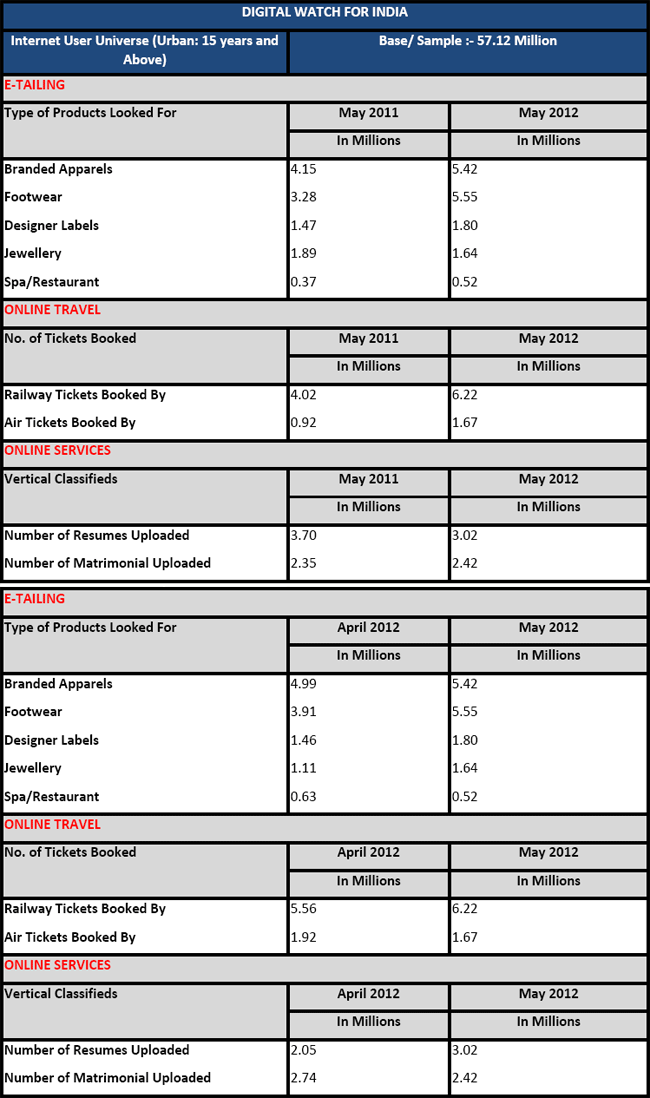
    There has been a surge in the e-ticketing category of the Indian Railway Catering and Tourism Corporation Ltd (irctc.com). In May 2012, IRCTC recorded over 6.22 million bookings as against 4.02 million bookings in May 2011, thus witnessing a year on year growth of 55 per cent.


    While there has been an increase in online railway ticketing and online air tickets, matrimonial profile uploads and activities on e-commerce sites; there has been a slight decline in the number of resume uploads on recruitment sites. These are some of the findings from the Internet Economy Watch data released by IAMAI (Internet and Mobile Association of India).


    The Internet Economy Watch data released is said to be based on absolute numbers captured from relevant sites of verticals encapsulating online usage for e-tailing, online travel and vertical classifieds.


    Besides the online railway tickets bookings, the data also reveals that there has also been an increase in the online air tickets as well. The booking of online air tickets is said to have witnessed an increase of 82 per cent year on year wherein on May 2012 online air tickets received 1.67 million in May 2012 from 0.92 million of the corresponding month last year i.e. 2011.


    Source: IAMAI/ Online Travel Portals


    Vertical Classified Sites:

    Interestingly, the number of resume uploads on recruitment sites have seen a slight decline in May 2012 as compared to the resume uploads in May 2011. Resume uploads on recruitment sites declined from 3.70 million in May 2011 to 3.02 million in May 2012. The resume uploads in April were however 2.05 million. The data captured from 28 online matrimonial sites however shows an annual increase in matrimonial profile uploads from 2.35 million in May 2011 to 2.42 million in May 2012.


    Source: IAMAI/ Vertical Classified Sites


    E- Commerce Sites:

    The study shows there has been an increase in user visits to branded apparel and footwear sites from 5.42 million and 5.55 million visits respectively in May 2012 as compared to 4.15 million and 3.28 million visits for the corresponding month last year. While the designer label segment has registered 1.80 million visits in May 2012 as compared to 1.47 million visits in May 2011. The jewelry category has witnessed 1.64 million visits in May 2012 as compared to 1.89 million visits in corresponding month last year.


    Source: IAMAI/e-Commerce sites


    Compared to April 2012, there has been a significant increase in e-ticket bookings at irctc.com, resumes uploaded on recruitment sites and visits in e-tailing of branded apparel, footwear and designer label segment in May 2012. On the other hand, there has been a notable decrease in online booking of air tickets and profile uploads on matrimonial sites in May 2012 as compared to April 2012.


    Source: IAMAI


  • [MJR] Gouri Dange: Why this silence over the noise?

    By Gouri Dange


    Since the feeding frenzy over the Saif tidbit that fell into the media shark tank is over, one is loathe to bring it up again and create more sites where the moronic incident will pop up on search engines. But there’s one thing that no one asked or discussed anywhere in any medium, earth, fire, water, or air – meaning print, Hindi news channels, English news channels and on the internet: Is it not at all legitimate and reasonable for a person to ask for quiet and decorum in a public space?


    As backward and foolish and boorish as the punching out of a diner in the Taj by Saif, is the attitude that he (and crores of his fellow Indians) display when he airily said to the man who asked him and his women and men pals repeatedly to keep it down: ‘If you want silence, go to a library’. (Fortunately he thought of ‘library’ and not ‘graveyard’).


    Ha! Is that the only place where one can expect and demand some quiet in this sub-continent, is what SOMEONE should have asked this Nawabling, when the story was being followed so closely. But, typically, all we had by way of coverage is ‘who started it’ and ‘what did the Taj have to say’ and ‘was there CCTV footage or not’, and ‘was Saif’s phone on or off’ and other such nitty-gritty matters delivered to us with such round-the-clock efficiency by every media that there is. But about the fact that he was making enough noise for fellow diners (who are not all gosh-golly about Bollywood) to find him and everyone at his table galling and bad for the digestion, no one said a thing. At least someone could have asked him that prim but significant question that our teachers asked us often: “Is this what your mummy-daddy taught you to do?”


    However, it looks like the media too (who thrive on noise of their own kind) has accepted that every Indian famous and otherwise, has an inalienable, constitutional right to make as much noise whenever and wherever he/she pleases. No one asked the Princelet whether he felt free to talk, shout, laugh and horse around in any country outside the sub-continent. I’m trying to think of him and his gang in some toney restaurant in the western world behaving this way in the first place (forget punching out a fellow-patron) and I can’t see it happening. On top of it, the media reports that 48 hours later, when he had come down off his uncha-ghoda, he admitted that he had done something wrong (as opposed to the previous day’s “mummy-tell-him-no…he-beat-me-first” stance) he said something about “We (the royal We) should set a good example as we are constantly watched…etc”. My point is, you should behave well not because you are watched but because your mummy-daddy spent good money getting you an education and some polish. And because other people have a right to be in a pleasant dining situation (outside of a library).


    It was only some voices of Facebook et al that were all a-twitter with the right questions on this ‘silence is only in libraries’ school of Indian philosophy.  And about how the same minor-Mughals behave impeccably in public places outside of this great land, where silence and not shoving people is kind of expected of everyone.


    One last point that any responsible media person must kindly caution these Beautiful People (various Khans, Aroras, and suchlike) about after such a fracas, is this: don’t get into physical brawls, because you never know, those hair weaves, that botox, the silicon, and the stitches, can all come undone right there in public, and then what a mess there will be to clean up. (And can the media possibly NOT quote a bunch of puranay-paapi ‘vouching’ for each other’s decency and honesty? I mean come on, do we really want to hear about solidarity for Saif coming from sundry blackbuck shooters and hit-and-run-drivers with infamous anger-management issues of their own?)


  • Aidem wins advertising duties for Jaya TV network

    By A Correspondent


    Aidem Ventures Pvt Ltd has announced its partnership with Jaya TV Network where the company will be handling the advertising sales duties for the Tamil television network for the next 3 years. The Jaya TV Network comprises Jaya TV, Jaya Max, Jaya Plus and J Movies.

     

    Announcing the partnership, K P Sunil, Vice President, Jaya TV Network said: “Having identified that in order to communicate with their consumers, brands need to speak to them in their language, thus national clients are increasingly adopting the regional mediums to reach their prospective clients. This is the perfect time for us to expand our sales operations in a big way to geographies beyond Tamil Nadu. Most of the major advertisers are based out of advertising and commercial hubs like Bengaluru, Delhi and Mumbai. We are looking at Aidem to complement our growth strategy with its established network and relationship across clients and agencies across India. This partnership promises to broaden our current client base and facilitate a healthy revenue stream for the Jaya TV network’.


    According to the FICCI Frames 2012,India’s regional television industry witnessed a growth of 70 per cent in 2011, as compared to the national growth of the industry which is slated at 12 per cent. The numbers clearly denote that the growth in the industry is coming from the regional markets and the future is there! With the regional channels accounting for approximately 33 per cent of all India CS 4+ television viewership, every advertiser is trying to better their foothold in the regional markets to ensure they enjoy Pan India presence.


    “Aidem is well equipped and geared to bridge the gap between the regional and national advertisers. We are optimistic that regional will be the new national and it is a strategic business decision on our part to make out foray in this market. There’s no denying that exciting times are in store for regional TV channels and we are looking forward to this business assignment,” said Vikas Khanchandani, Director, Aidem Ventures Pvt. Ltd.


    Discussing the Southern Media Market in India, Alok Rakshit, Head-Broadcast Business-Regional & News, Aidem Ventures Pvt Ltd said: ‘This market comprises various uni-lingual sub-markets, which helps the local broadcasters in terms of viewership, subscription profit, advertising revenue and building overall consumer loyalty for their channels. It forms a sizeable portion of the total Television pie after the Hindi General Entertainment Channels’ category. Among the sub-markets, Tamil genre commands the largest share in viewership. What is good news for the players in this market is the fact that the industry is now also backed by the presence of national advertisers who concede that the regional television industry is the best possible platform for them to connect with the local consumers.”


  • Paritosh Joshi joins Ormax as Strategic Advisor

    By A Correspondent


    Paritosh Joshi, former CEO-Star CJ, will now be associated with media research and consulting firm Ormax Media as a Strategic Advisor. Mr Joshi recently decided to step away from the corporate world after a 27-year career that spanned from FMCG marketing and Commodity Trading to Perfumery and Broadcasting*.


    In his advisory role, Mr Joshi will engage with the research and business teams at Ormax Media across various aspects of their work. Speaking about the association, Shailesh Kapoor, CEO, Ormax Media, said: “I am delighted to announce that Paritosh has accepted our invitation to take up the role of Strategic Advisor. With his experience in the media business, as well as his close involvement in several industry initiatives, he will bring a unique and fresh perspective to the table, that will help us, and by implication, our valuable business partners’ community.”


    Speaking about his new role, Mr Joshi said: “Ormax Media are doing some path-breaking work in developing new metrics altogether for television and film industries. I have a deep interest in audience measurement, and this engagement is another way of delving into this vast landscape, even as I get to work alongside Shailesh and his splendid team.”


    Disclosure: Paritosh Joshi writes Media Matrix on MxMIndia.com every Thursday


  • Suvarna Launches new weekend comedy show

    By A Correspondent


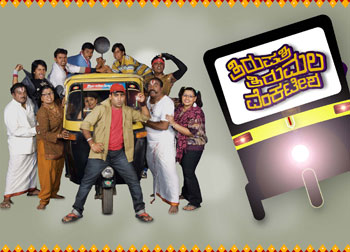
    Star Network’s Kannada General Entertainment Channel Suvarna has announced the launch of their new weekend comedy show Tirupathi Tirumala Venkatesha directed by Master Anand, who has earlier directed the comedy shows Paduvaralli Padegalu and SSLC Nanmakkalu for Suvarna.
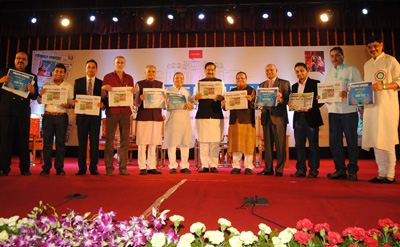

     

    This is an episodic fiction comedy and the story revolves around a family which runs a small business of home-made products.


    The show will go on air from July 7 and will be aired on weekends at 10pm.


    Anup Chandrashekaran, Business Head of Suvarna said: “Suvarna has been setting new benchmarks with every new show and Tirupathi Tirumala Venkatesha is yet another offering from us which will stand out as a high quality product. We, at Suvarna, are bullish about the comedy genre as it appeals to the entire family and resonates across age groups. I hope our viewers like this show.”


    Anil Narang, Head of Marketing & Strategy, Suvarna Channel said: “This show will further strengthen our weekend offering. We have seen in the past that viewers like light hearted comedy shows which act as a stress buster. We are confident that viewers will enjoy this hilarious comedy show.”


    Tirupathi Tirumala Venkatesha is one more addition to the many popular shows of Suvarna such as Krishna Rukmini, Preetiyinda, Amruthavarshini, Pancharangi Pom Pom, Chukki, Cheluvi and Pallavi Anupallavi.


  • 9X Tashan now also available on Tata Sky

    By A Correspondent


    9X Media Group’s Punjabi music channel 9X Tashan is now also available on Tata Sky. Commenting on the initiative,  Sandip Bansal, Managing Director, 9X Tashan, said: “We are delighted to announce that Tata Sky subscribers can now enjoy Punjabi music and humorous short format shows aired on 9X Tashan.”


    Nicola Bamford, Chief Content & Business Development Officer, Tata Sky Ltd. said: “Our endeavour has always been to provide the most relevant content to our growing subscriber base. Today, Tata Sky engages every member of the family with the most comprehensive range of entertainment and music content. The launch of 9X Tashan on our platform underscores our continued commitment to add the very best to Tata Sky’s growing portfolio of channels and further increase the entertainment value of Tata Sky.”


    Launched on August 31 2011, 9X Tashan is available across cable and satellite homes. The Channel is streamed live on the internet on the channel’s website - www.9xtashan.in and on various mobile platforms.


  • Aidem wins ad sales duties for Jaya network

    Aidem Ventures Pvt. Ltd. today announced its partnership with the Jaya TV Network where the company will be handling the advertising sales duties for the Tamil television network for the next 3 years. The Jaya TV Network comprises Jaya TV, Jaya Max, Jaya Plus and J Movies.


    Announcing the partnership, Mr. K. P. Sunil, Vice President, Jaya TV Network said, ‘Having identified the fact that in order to communicate with their consumers, brands need to speak to them in their language.  Thus, national clients are increasingly adopting the regional mediums to reach their prospective clients.  This is the perfect time for us to expand our sales operations in a big way, to geographies beyond Tamil Nadu. Most of the major advertisers are based out of advertising and commercial hubs like Bengaluru, Delhi and Mumbai. We are looking at Aidem to complement our growth strategy with its established network and relationship across clients and agencies across India. This partnership promises to broaden our current client base and facilitate a healthy revenue stream for the Jaya TV network’.


    ‘According to the FICCI Frames 2012, India’s regional television industry witnessed a growth of 70% in 2011, as compared to the national growth of the industry which is slated at 12%. The numbers clearly denote that the growth in the industry is coming from the regional markets and the future is there! With the regional channels accounting for approximately 33% of all India CS 4+ television viewership, every advertiser is trying to better their foothold in the regional markets to ensure they enjoy Pan India presence. Aidem is well equipped and geared to bridge the gap between the regional and national advertisers. We are optimistic that regional will be the new national and it is a strategic business decision on our part to make out foray in this market. There’s no denying that exciting times are in store for regional TV channels and we are looking forward to this business assignment’, said Vikas Khanchandani, Director at Aidem Ventures Pvt. Ltd.


    Discussing the Southern Media Market in India, Alok Rakshit (Head, Broadcast Business-Regional & News, Aidem Ventures Pvt. Ltd.) said, ‘This market comprises various uni-lingual sub-markets, which helps the local broadcasters in terms of viewership, subscription profit, advertising revenue and building overall consumer loyalty for their channels. It forms a sizeable portion of the total Television pie in India, after the Hindi General Entertainment Channels’ category. Among the sub-markets, Tamil genre commands the largest share in viewership. What is good news for the players in this market is the fact that the industry is now also backed by the presence of national advertisers who concede that the regional television industry is the best possible platform for them to connect with the local consumers’.


  • Lokmat Samachar’s Pune edition launched

    By A Correspondent


    Maharashtra’s Chief Minister Prithviraj Chavan launched the sixth edition of the popular Hindi daily, Lokmat Samachar in Pune. Also present on the occasion were Minister of State for Education Rajendra Darda along with media luminaries Balbir Punj (senior columnist and RS MP from Rajasthan), Prabhu Chawla (Editor-in-Chief – The New Indian Express), Tarun Tejpal (Editor-in-Chief, Tehelka.com) and Vijay Darda, Rajya Sabha MP and Chairman of Lokmat Media Pvt Ltd.


    “Lokmat Samachar will enhance the quality of life in Pune and will make it more cosmopolitan,” said Chief Minister Chavan at the launch ceremony.


    A panel discussion on “The Relationship between Media and Politicians” was organized to mark the launch. “A journalist is also a politician. Not only should the media help in shaping public opinion, it should also play a critical part in the development of the political process,” the CM observed.


    Senior journalists and editors Mr Chawla, Mr Tejpal and Mr Punj highlighted the increasing complexities of the media world, and the need to maintain a balance in giving coverage and direction.


    “Media is a fish that lives in the vast ocean of democracy,” said Mr Punj. “Hence strengthening the media will result in the strengthening of democracy.”


    Highlighting the sharp difference between the cover prices of newspapers in India and abroad, Mr Tejpal pointed out that the readers India are not willing to pay enough money to run these institutions. “This is the structural flaw due to which quality deteriorates,” he said.


    Mr Chawla decried the increasing incidences of ‘paid news’ inserted by politicians, due to which media is facing a credibility crisis. “Media has become a victim of this phenomenon,” he maintained.


    Speaking about the Pune edition of Lokmat Samachar Rishi Darda, Joint Managing Director – Lokmat Media Pvt Ltd, said: “The Hindi-speaking population of Pune, which has emerged as an education hub and IT city, was in need of a national daily. Since Hindi is our national language and therefore connects people throughout the country, Lokmat Samachar would definitely fill the gap.”


    The newspaper offering consists of the main paper of 12 pages along with a 4 pager Apna Pune that will detail the local civic issues and also leisure options for the Puneites. For You for the young, Sakhi for Women and Lokarang Sunday supplement will accompany the paper on 3 different days in a week.


    This is the sixth edition of the popular newspaper which first appeared in 1989 in Nagpur, and was thereafter launched in Aurangabad, Akola, Kolhapur and Jalgaon in that order. Lokmat Samachar has 13.56 lakh readers as per IRS 2012 Q1 AIR


    Its Pune edition has a cover price of Rs3 plus an attractive subscription scheme.


  • Nishad Ramachandran joins Hansa Cequity as VP & Head of Digital Experience

    By A Correspondent


    Nishad Ramachandran

    Nishad Ramachandran has joined Hansa Cequity as Vice President and Head of Digital Experience. Hansa Cequity, part of the RK Swamy Hansa Group, is one of India’s leading integrated customer marketing & technology services company.


    Speaking about this development,S Swaminathan, CEO, Hansa Cequity, said: “We are pleased to have Nishad lead this new and strategic initiative at Cequity. Our integrated customer marketing and analytics services has seen strong growth over the past year. For our growing roster of blue-chip clients, we enhance customer relationships and build customer value by applying data, analytics and insight-driven campaigns to every interaction. Nishad’s unique blend of digital strategy, creative and technology thinking for brands will help us enhance our digital solutions.”


    In a career spanning over 20 years, Mr Ramachandran has been in a senior leadership role, more recently with iContract (part of Contract Advertising(I) Ltd), one of India leading direct and digital marketing agency. He has worked on award winning campaigns with leading brands like HSBC, Shoppers’ Stop, Asian Paints and others and has been part of Cannes Direct Jury in 2008.


    Commenting on his new assignment, Mr Ramachandran said: “Hansa Cequity has invested in building a quality team of data scientists, customer strategists and marketing technologists. With the Digital Experience practice, we will truly leverage our promise of Customer Integrated Marketing (CIM) using digital data, mobile apps and analytics with powerful campaign ideas.”