Category: Digital

  • IMCL launches its ‘I Am Mumbai, I Am InDigital’ platform

    By A Correspondent


    IMCL, part of the global Hinduja Group, announced the launch of ‘I Am Mumbai, I Am InDigital’, a new offering that will pioneer the next era in digital broadcasting and communications. This digital initiative will provide 700+ SD and HD television channels and 40 radio stations. This upgrade has been facilitated through deployment of innovative and cutting-edge technology.


    Said Vynsley Fernandes, CEO, IMCL: “Along with NXT Digital and ONE Fiber, IMCL is the only integrated digital distribution platform in the country, connecting customers through digital cable, satellite and broadband. Coupled with next-generation devices and expansive content, we believe that our customers will get access to a world class 360-degree digital entertainment experience.”


  • Digital entertainment industry calls for joint effort to combat piracy

    By A Correspondent


    Representatives from India’s entertainment industry joined hands to discuss and dissect topics such as piracy, self-regulation, consumption patterns of new age users, evolving patterns and preference of viewers and many more such ‘need of the hour’ topics at Pixels 2018 organised by IAMAI. The speakers at Pixels 2018 were unanimous in their views that the way forward for the digital entertainment industry, which is experiencing exponential growth, would be join hands and devise ways to combat piracy.


    In his speech, Balsing Rajput, Superintendent, Cyber Cell, Maharashtra Police appealed to the digital entertainment fraternity to work together and help the government fight piracy, intellectual property threat and counterfeiting. He also highlighted the progress of ‘Maharashtra digital crime unit’ which has induced the government to create about 43 police stations to combat digital crimes. 2700 websites were found to be explicitly pirating Indian content that was monitored and among which 153 websites have already been shut thus making major savings for the industry.


  • Merkle Sokrati unveils proprietary bidding tool for eRetail Marketing

    By A Correspondent


    Merkle Sokrati, the data-driven performance-marketing agency from Dentsu Aegis Network, has introduced a proprietary smart bidding tool for retail brands selling on online marketplaces such as Amazon.in.


    The tool combines historical data with machine learning to calculate advertising budget for every product (bid) every hour 24×7. These real-time bid changes are based on user intent, seasonality and sales trends. Retail brands with a wide range of products can optimize advertising spends across product categories to individual products with this data-driven bidding tool.
    Said Merkle Sokrati CEO Anubhav Sonthalia: “Having myself worked at Amazon, I can promise that they are in it for the long haul and will end up redefining the industry as we know it. We have seen strong traction for Amazon Advertising with our Merkle US counterparts, and we expect India to do the same. With this intelligent bidding tool, we are introducing a volume- and competition-tested smart bidding tool to this geography. We believe this will become a competitive advantage for optimising Amazon’s ad inventory which is still relatively new to Indian marketers. As through our history, we continue to focus on bringing high ROI solutions for our marketers.”


  • Digital to unlock US$1tn digital economy by 2022


    By A Correspondent


    The proliferation of mobile connectivity has a significant impact on the socio-economic fabric of the county and mobile broadband has empowered millions of Indians. Today, India consumes 2,360 petabytes every month, making it the largest mobile data market globally. On an average, consumers spend four hours daily on their smartphones. By 2022, smartphone users are expected to increase 2.2X to 650 million, elevating average data usage by 5.1X to 18 GB per month. During 2017-22, broadband connections are expected to grow by 25% to reach approximately 90% of Indians[1].


    Digitalisation has uplifted the life of a common man in India by enabling on-the-go access to host of e-services, increasing affordability and accessibility (e.g. ride sharing), and move to a cashless economy (e.g. mobile payments). It is empowering a farmer with right information at the right time, enabling ways to increase crop yields and get wider access to market produce. People are able to pay bills, book tickets, order pizza or call a cab within seconds.


    Internet of Things (IoT) has the potential to address some of the basic challenges in India. IoT is expected to fundamental impact the way we live and work, reducing waste, improving health and delivering major social and environmental benefits in sectors such as agriculture (e.g. sensors for measuring soil humidity), automotive and transportation (e.g. fleet management), healthcare (e.g. remote patient monitoring), power and utilities (e.g. smart meters). In an accelerated growth scenario, IoT has the potential to reach 2 billion connections and revenues of US$11.1 billion by 2022[2].


    The advent of 5G is expected to support newer applications/use cases, imbibe innovative business models and usher in cross-industry collaboration. By 2022, India is likely to transition to a Gigabit society where citizens and businesses will equally benefit from widespread fast-broadband, reliable performance delivered by robust future-proof fixed and mobile technologies. By 2022, India’s digital economy is expected to grow to US$1 trillion and lead to creation of 10 million jobs[3].


    Prashant Singhal, Emerging Markets TMT Leader, EY, said, “India can lead the Fourth Industrial revolution. The real opportunity is to look beyond technology, and find ways to give the greatest number of people the ability to positively impact their families, organisations and communities. At the back of this, India has the potential to unlock a trillion dollar digital economy by 2022 and add up to 10 million jobs.”


  • Dhoni moves to locker room in latest Netmeds film

    By A Correspondent


    Netmeds.com has used its star ambassador MS Dhoni in another brand campaign.


    Said Pradeep Dadha, Founder & CEO, Netmeds.com: “We’ve become the online pharmacy market leader by realising the need for intelligent, far-reaching and quick healthcare solutions in urban and rural areas, and fulfilling that need. A nation battling an annual rise in chronic diseases and faced with a shortage of doctors and limited access to medicine in 3rd and 4th tier cities and towns, needed a gamechanger. That’s how we see our role and the public is telling us they agree.”


    Arun Pandey, Chairman of Rhiti Sports, the company that manages M S Dhoni’s commercial interests exclusively said. “We are happy with the way the latest TVC has come out and are glad that we have partnered Netmeds in an effort to make healthcare more accessible in India. Last mile delivery is one of the most crucial aspects of a Digital Service ecosystem and we are glad that Netmeds has taken it as a high priority to increase the accessibility of medicines especially in the semi-urban and rural areas.”


  • Network18 Digital elevates Ranadeep Chakravarty to Marketing Head 

    By A Correspondent


    Ranadeep Chakravarty

    Network18 Digital has announced the elevation of Ranadeep Chakravarty to Marketing Head of Firstpost, News18 and in.com. In his new role, Chakravarty will lead all marketing, communications and strategic partnerships for Firstpost, News18 (English) and in.com. He will also oversee the public relations and trade communication activities for the three brands.


    Commenting on the announcement, Azim Lalani, Business Head, English General News cluster, Network18 Digital said: “Network18 is strengthening its foothold in the digital space at a rapid pace. This is visible by the fact that it has acquired a very high number of unique visitors in a short period of time. By bringing the marketing activities of the three properties – Firstpost, News18.com and in.com – under one head, we plan to further align, strengthen and accelerate the growth of immensely popular news portals. Ranadeep has been instrumental in leading the marketing activities and effective brand collaborations at Firstpost. We are confident that his in-depth expertise and exceptional creativity will enable the websites to be recognized as the desired news destination that provides relevant, insightful and hard-hitting news.”


    Speaking about his new role, Chakravarty added: “I am excited to undertake the new responsibilities with Network18. It has been a great journey till now. Our efforts have got Firstpost in the Top 5 leading Indian media digital publications. In my new role, the focus will be to continue to engage a diverse set of audience with strong, relevant and original content. I look forward to leading the team and enhancing the brand resonance through innovative ideas, brand partnerships and unique properties across segments.”


  • Social Beat hosts Digital Leadership Summit 2.0

    By A Correspondent


    Social Beat organised the second edition of its Digital Leadership Summit and saw a convergence of several business leaders across industries. The first edition took place at Chennai with a focus on driving ROI from digital marketing. One of the biggest talking points of the Summit this year was innovation through Voice, Video and Vernacular with CMOs from various sectors sharing their insights and experiences.


    The keynote speaker, Omkar Rajadyaksha, Managed Partners Lead – New Business at from Google, kickstarted the event on what businesses can scale up with Google in 2019. The Summit also focused on driving business results through digital marketing with marketers and brands voicing out common challenges they face and upcoming trends. While there are around 450 million internet users in India currently, this number is set to hit 650 million by 2021. These numbers prove even more significant as the vast majority of new internet users will come from Tier II and Tier III cities. The summit highlighted the importance of tapping into India’s next billion internet users by harnessing the power of Voice, Vernacular and Video for an effective digital marketing strategy.


    The keynote session was followed by a panel discussion on building a brand through digital marketing. This session included Ajit Narasimhan, CMO of Sundaram Mutual Fund and Vipin Guliani, Group Head – Digital Marketing at Piramal Group. Moderating the panel, Suneil Chawla, Cofounder of Social Beat, said: “Digital spending is expected to grow 2.5x from $40 billion to $100 billion. This goes to show how businesses are leveraging the power of digital and how it will only continue to grow.”


    Added David Appasamy, Head – Brand and Strategy: “Digital platforms have, over the last decade, redefined the way we communicate, build our businesses or entertain ourselves at anytime, anywhere. Now artificial intelligence and augmented reality are taking it to a whole new level in terms of efficiency and experience while vernacular is opening up the platforms to native language speakers and new markets.” Appasamy was joined by Channan Sawhney, Head of Digital Marketing at Johnson and Johnson and Pratyush Kukreja, Head – Product Monetisation at Haptic.


    The next session focused on measuring return on investment through digital marketing. The speakers of the session were Prashin Jhobalia, Vice President – Marketing Strategy from House of Hiranandani, Monish Ghatalia, Founder of Focus Communications and Pradeep Nidamarthi, Head of Digital at Reliance Capital. Moderating the panel, Vikas Chawla, Co-Founder, Social Beat, said, “Today we can track not just online customer acquisitions, but also store visits, leads, calls and brand awareness lifts. This allows marketers to truly attribute how much of an impact digital has on businesses across industries.” The Summit also had a session on how brands can grow and innovate through digital by Abraham Alapatt, Group President and Head – Marketing, Service Quality and Innovation at Thomas Cook.


  • 65% of digital media to be programmatic in 2019


    By A Correspondent


    Sixty-five per cent of all money spent on advertising in digital media in 2019 will be traded programmatically, according to Zenith’s Programmatic Marketing Forecasts, published today. Advertisers will spend US$84bn programmatically next year, up from US$70bn this year, which represents 62% of digital media expenditure. We predict that in 2020 advertisers will spend US$98bn on programmatic advertising, representing 68% of their expenditure on digital media advertising. By digital media we mean all forms of paid-for advertising within online content, including online video and social media, but excluding paid search and classified advertising.


    The breadth of ad formats available through programmatic trading is improving, with more mobile, video and audio formats coming online all the time, though brands and agencies need to do more to push publishers to improve the quality of their inventory, which needs at minimum to be safe and viewable.


    Growth in programmatic advertising is slowing as it cements its position as the most important method of digital trading. We estimate that programmatic adspend will grow 24% in 2018, down from 32% growth in 2017, and forecast 19% growth in 2019, followed by 17% growth in 2020.


    In dollar terms, the biggest programmatic market is the US, where we expect US$40.6bn to be spent programmatically in 2018 – 58% of the total. China is in a distant second place, spending US$7.9bn on programmatic advertising this year, followed by the UK, with US$5.6bn of programmatic adspend.


    The US is also the market that has most embraced programmatic advertising, trading 83% of all digital media programmatically this year. Canada is in second place, trading 82% of digital media programmatically, followed by the UK, with 76%, and Denmark, with 75%. By 2020, programmatic advertising will account for more than 80% of digital media in all four markets. Canada will have almost completed the transition to pure programmatic trading, spending 99% of digital media programmatically that year.


    We expect all markets to follow Canada and use programmatic trading for all digital media transactions eventually. Indeed, it’s only a matter of time before programmatic trading becomes the default method of trading for all media. However, the transition is taking slightly longer than we expected – last year we forecast that 64% of digital media would be programmatic in 2018, and 67% would be programmatic in 2019, so we have pulled back both forecasts by two percentage points. The introduction of privacy legislation such as the EU’s GDPR has had some chilling effect by making certain data previously used in programmatic transactions unavailable, and making other data more costly to process. But we think the main reason for the slowdown in spending on programmatic media is that advertisers are investing more in infrastructure and data to make their programmatic activity more effective.


    To make the most of their programmatic campaigns, advertisers have to reorganise internally to give programmatic trading the high-level support and understanding it needs. Agencies can only extract maximum effectiveness from their programmatic strategy in a proper partnership with their clients. And a programmatic strategy can only ever be as effective as the data used to execute it.


    “Programmatic trading improves efficiency and effectiveness, and is gaining a dominant share of digital media transactions,” said Benoit Cacheux, Zenith’s Global Head of Digital and Innovation. “The scale of operational restructuring to make the most of it is both extensive and expensive, though, and advertisers are spending more carefully while they invest in infrastructure and data and review the quality of media. All programmatic advertisers need a strategy for acquiring the best and most comprehensive data available, and to treat this data as a vital corporate asset.”


    The most valuable data is first-party data, either explicitly provided by consumers or gained by tracking their activity on owned websites. It is also becoming more common to use second-party data, by forming data sharing partnerships, between – for example – brands and online retailers. Third-party data is widely available but does not give advertisers a competitive advantages, since all advertising can use it to target the same segments. Advertisers should continually vet and interrogate third-party data to ensure they are truly adding incremental reach. By combining all this data with their own CRM systems, advertisers can model consumer behaviour, and the more advanced are using machine learning to predict it. Data and new technology is enabling brands to move from tracking cookies to communicating with individuals.


    “Technology is making programmatic advertising work harder for brands,” said Jonathan Barnard, Zenith’s Head of Forecasting and Director of Global Intelligence. “Artificial intelligence promises to unlock new understanding of customers as people, as well as improving the optimisation of the trading process.”


  • Snapchat to offer local publisher content in India

    By A Correspondent


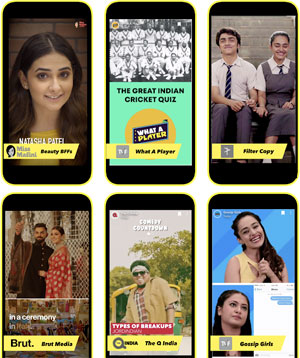
    Snap Inc, makers of Snapchat, have announced the launch of a newly localised Discover, tailor-made for the growing community of Indian Snapchatters, through partnerships with nearly a dozen media brands. This is the first time Snapchat has offered local publisher content in India, and follows recent announcements of other expanded Discover offerings within the last month in the UK, France, Germany, Norway and the Middle East.


    Onboarding leading media houses, content curators and entertainment studios, the Indian Snapchat Discover partners include news, current event, and cultural affairs commentary from Brut. India, HuffPost India, The Logical Indian, The Quint, and Vice India, featuring signature editions from each; social video and entertainment from Pocket Aces (FilterCopy and Gobble), TVF (The Timeliners, Girliyapa, and The Viral Fever), and QYOU (The Q India); music and cultural content from Saavn’s OnRecord; and Bollywood and beauty highlights from MissMalini Entertainment, featuring MissMalini and Beauty BFF.


    Said Rami Saad, Head of International Content Partnerships, Snap Inc:  “We are delighted to now offer a more customized Discover experience for the millions of daily Snapchatters in India, welcoming many of the media brands they already know and love. We are passionate about providing Snapchatters with the best content experience on mobile, featuring a diverse mix of credible, local voices alongside some of the best content creators from around the world. By engaging with our growing and creative community in India, most of whom are aged 18-24, these amazing local partners will be able to inform and entertain this hard-to-reach audience in powerful ways that are native to our platform.”


  • IAMAI to host 14th edition of Marketing Conclave in Mumbai

    By A Correspondent


    The Internet and Mobile Association of India (IAMAI) is set to host the 14th edition of the Marketing Conclave on December 5, 2018 at Taj Lands End, Mumbai. The day-long conference is themed after the famous television series ‘Game Of Thrones’.


    Based on the TV series the summit has divided into 3 houses namely House of Digital Marketing, Content & Martech, also there will be a case study room where industry experts will share their success stories. The event will have industry leaders like Ronnie Screwvala – Co-Founder, UpGrad; Ben Phillips – Vice President Of Strategic Accounts, Blis; Vivek Sharma-Chief Marketing Officer, Pidilite Industries; Ashwath Swaminathan – Head- Lakme, HUL; Pawan Singh-National Marketing Head, Deputy General Manager- Amul; UT Ramprasad – Head Marketing Communications, Tata Motors; Sandeep Verma – President Bajaj Corp Ltd among others and will have discussions around topics like ‘The art of brand storytelling’, ‘Marketing to millennials’, ‘Mobile location and audience data: The new oil’, ‘Designing digital experiences for the complete customer journey’ among others.


  • YuppTV launches Android-based hybrid STB

    By A Correspondent


    YuppTV announced the launch of its end-end OTT platform for MSOs. As part of its end-to-end OTT solution, YuppTV will extend MSOs a comprehensive suite of OTT Orchestration platform along with an Android-based Hybrid Set Top Box that supports OTT as well as traditional DVB-C and IPTV.


    Commenting on the latest development, Uday Reddy, Founder & CEO, YuppTV said: “The way we consume content and media has evolved in the past few years. To the same end, Cable TV Broadcasters have been on the receiving end of the onslaught by the digital media offerings. Users are more inclined towards OTT platforms, as they no longer have to follow a rigid timeline of telecasts and experience entertainment at their own ease and convenience. With the launch of our end-to-end OTT solution and Android-based Hybrid Set Top Box, we intend to bring the cable operators back in the mix and enable them to offer more enhanced and digital services, without significant overheads. It is equally exciting for us to partner with 7Star and make our solution available with one amongst India’s largest MSO network. As the cable operators prepare for the wave of digitalization spreading across the nation, we are hopeful that our offering will play a key role in making them present- and future-ready.”


  • Chrome executes ad for Housing.com

    By A Correspondent


    Housing.com has unveiled its latest ad campaign staring Vicky Kaushal and Kiara Advani. This advertisement has been created by Chrome Pictures under the direction of Vijay Veermal.


    Said Vijay Veermal, Director, Chrome Pictures: “Real estate as an industry isn’t one that interests youngsters. The challenge was to attract them as an audience and get them interested in something as boring as real estate. The final result of the TVC definitely helps achieve this challenge and of course the fun onscreen chemistry between Vicky and Kiara really reflects well in helping the ad be more convincing.”