

Category: PRODUCTS

  • McDonald’s innovates with menu to get numbers


    By Tuhina Anand


    Amit Jatia

    Ordering at McDonald’s was a no-brainer a few years back, with limited menu option that included burgers, french fries, cola or a McSwirl. But in the last two years, there has been an increased focus on bringing in variety to the McDonald’s menu and one has seen the launch of breakfast menu, spicy delights and McFlurry among host of other new options available in the menu.


    Explaining the rationale behind the revamped menu, Amit Jatia, Vice Chairperson McDonald’s India (West & South), said: “At McDonald’s our customers’ happiness is key in everything that we do. We aim to be relevant and offer various options to our customers. McDonald’s interacts with its customers through various platforms, be it customer feedback forms or surveys or select group discussions, all to ensure that we provide our customers with the highest quality products that are based on their feedback. McDonald’s also undertakes various innovations to provide its customers with quality products at affordable prices which are served fast and hygienically. Keeping in mind the customer needs, McDonald’s India has been very active with new menu and innovative campaigns.”


    Giving an insight into the strategy that goes behind the menu revamp, Jatia said: “We aim to provide a wide variety of offerings with the newness in flavour. We take leadership in providing choice when the customer most needs it. For example, during the recession, to provide our customers with meal options that were cost-effective, we launched and still provide the Extra Value Meal menu which consists of a burger, medium fries and a medium coke.”


    The fast food giant also believes in offering a wide variety of products such as the globally popular Chicken McNuggets, McFlurry a range of desserts introduced in 2011 and the recently introduced McFlurry Caramel as an addition to this range of products. There is also the Happy Price Menu starting at Rs25 to cater to the customers that would like a small bite that is cost effective.


    McValue Lunch has been launched this year to provide the customers an extensive variety and choice of great quality products while being pocket friendly. Another addition to the menu is the Spice Fest that was launched on April 1 where a new twist to the menu has been introduced.


    But does this increased thrust on the menu have to do anything with the jostling of space and new players in the QSR segment? As Jatia explained: “McDonald is a leader and pioneer in the QSR space inIndia, our innovations are based on our customers’ feedback and are an extension of our ‘I’m Lovin it’ experience. With regards to our menu innovations, we have a menu board that designs the new innovations that are tested and researched for a specific period of time before we introduce them in the market. We also conduct test launches to gauge customer reactions and feedback to our products before they can be introduced to a wider audience group.”


    McDonald’s introduced its breakfast menu in October 2010 as part of its all day dining options. Initially launched in Mumbai, Pune and Bangalore, breakfast menu is also available in Hyderabad today. With the launch of breakfast menu, McDonald’s is not only providing customers a completely new range of products, but is also open between 7-11am which is a brand new day part.


    Talking on the McDelivery and why it isn’t as popular as the pizza companies, where home delivery form a key to their sales, Jatia said: “Asia is the only market where McDonald’s has a delivery option and this shows tremendous commitment for the market and potential to expand it more. With regards to delivery, since its launch our delivery service has grown by leaps and bound to now include a state-of the art 24×7 live call center as well as the recently launched web delivery option which is extremely user friendly. Keeping in mind, McDonald’s commitment to quality, the company has reduced the service to the neighborhood, which is up to 7 minutes away from the restaurant, from the earlier 10 minutes. The mapping of the delivery area is such that even during peak hours, customers receive orders that are hot and fresh.  McDonald’s has taken this proactive measure to ensure the quality of food is not compromised.”


    On the advertising front too, McDonald’s has gone aggressive, especially the OOH medium. For the new Spice Fest advertising campaign, the company has tied up with their international ad director Nick, who has been working with McDonalds International on worldwide campaigns. “Again customers’ feedback plays a big role in the way we approach all our endeavours and in this regards the look and feel of this campaign has been made contemporary to relate to our customers on an international scale. The ad brings out the freshness of the ingredients used to create a world class amalgamation of mouth-watering products coming together as part of the Spice Fest. It starts with a fun face-off between three chefs from different countries like Africa, Asia and America, all trying to prove that their recipe is superior, while still coming together to produce a delicious feast for Spice Fest,” added Jatia.


    Currently, McDonald’s India has 250 restaurants serving more than 6.5 lakh customers daily. In the South and West, there are approximately 150 restaurants. Their growth phase as Jatia explains can be broadly categorised as ‘Build, Grow, and Accelerate’. He divulges that McDonald’s India, and particularly Hardcastle Restaurants Pvt Ltd (the company which runs the McDonald’s business in western and southern India), has an aggressive expansion plan – including market expansion, new customer outreach formats and menu expansion.


    McDonald’s (West and South) will be investing approximately Rs450 – 500 crore. “We’ve been opening new stores at a rate of 10-15 per cent and expect to increase that to 15 – 20per cent going forward. McDonald’s India (West & South) is expanding its reach by expanding the portfolio and access points with formats like from kiosks, drivethroughs, web delivery and petrol pumps in addition to the restaurant restaurants,” concluded Jatia.
     

  • Amul to sponsor India at London Olympics

    By A Correspondent


    The year 2011 saw Amul sponsoring theNetherlandscricket team in the ICC Cricket World Cup and Switzerland-headquartered Sauber F1 team at the inaugural Indian Grand Prix. In 2012,Asia’s largest milk brand will now be sponsoring the Indian contingent at the London 2012 Olympic Games.


    Mr. RS Sodhi, Managing Director GCMMF said: “Amul is committed to strengthening the Olympic movement in India and encourage young generation from all corners of the country to take up Olympic sports.”


    Explaining the rationale of this association, he said that milk is nature’s original energy drink and plays a pivotal role in building the physical and mental strength of the athletes. Nutritious dairy diet is an important part in the diets of athletes around the world. India is the largest producer of milk in the world and Amul is not only India’s but Asia’s largest milk brand.


    To leverage this association, GCMMF has created a TVC which shows a girl made of milk performing the sports which are part of Olympics. Liquid simulation was extensively used for generating realistic animation of milk to form the body shape and movements of the girl.


    “How many people are aware that milk is actually the world’s original energy drink…. completely natural and loaded with nutrients. The commercial effectively communicates that, while making the connection between Amul and Olympics,” said Nitin Karkare, Chief Operating Officer, Mumbai, Draftfcb Ulka.


    The TVC is scripted by Haresh Moorjani, Group Creative Director, Draftfcb Ulka. Mr Moorjani said: “As the official sponsor of the Indian team for the 2012 Olympics, Amul’s commitment to health is best defined by its signature product – milk. The film demonstrates the potency of the world’s original energy drink by its lusciousness as it transforms into the ‘milk girl’ making milk magical and appetizing for both, kids as well as adults.”


    The new campaign will be aired on more than 50 television channels. It has already started getting very good feedback in social media.


    Gujarat Cooperative Milk Marketing Federation is India’s largest food products marketing organization. It procures 4 billion litres of milk annually from 3 million milk producers in more than 16,000 villages, twice a day, and processes and markets its product range comprising butter, cheese, ice cream, fresh milk, yoghurt, milk powders, UHT milk, flavoured milk, ghee, paneer etc in 3000 cities and towns of India and 40 countries around the world. Its annual sales turnover in 2011-12 was US$ 2.4 billion.


    Credits:

    Agency: Draftfcb Ulka

    NCD: K. S. Chakravarthy

    Creative team: Haresh Moorjani, Mehul Patil

    Client Servicing: Nitin Karkare, Ruta Patel, Rohan Patil, Ruchi Agrawal

    Account Planning: Vidyadhar Wabgaonkar, Mubina Quraisshi

    Films Coordinator: Alpa Jobalia, Stanley Christian, Ganesh Iyer

    Production House: Famous House of Animation

    Producer & Director: Jayant Hadke


  • What’s ailing RIM’s Blackberry drive globally & in India?

    By Ravi Balakrishnan


    Don’t let the kid on the next seat in the train, furiously typing away on his or her BlackBerry fool you. Despite the fact that Indian youth have bonded over BBM, the performance of the parent RIM and maybe even the launch of its latest product in India have revealed a number of holes in the phone maker’s strategy. BE asks what’s troubling BlackBerry, boys?


    Minutes before Research In Motion, the makers of BlackBerry, made an announcement at a press conference in Delhi, there was a definite vibe of anticipation. Tech hacks idly wondered just what was going to be unveiled, given that BlackBerry has a fairly conservative release schedule.


    The more optimistic were holding out for a glimpse of BlackBerry’s OS 10 rumoured among the brand’s faithful to be a potential Android-slaying, iOS-wrecking killer operating system; one that would propel BlackBerry back to the top of its game. But instead, BlackBerry amid much fanfare and celebrity preening unveiled the Curve 9220.


    At the Q&A and after, the questions flew thick and fast: why only a 2MP camera? Why no 3G? And why such a stiff price tag for a phone that lacked these two features?


    The device was launched at Rs10,990; inexpensive for brand BlackBerry, but a tad pricey compared to other mobiles, even smartphones if one considers budget Android models from Samsung, LG, Spice and Lava among others.


    The Curve offered unique features like a quick access BB messenger button and, critically, long battery life, something of a rarity in the smartphone category.


    FM radio, a feature that’s bog standard even for phones that are sold at a tenth of the cost, made its way to Blackberry Curve. But to an audience weaned on revolution, having to settle for evolution was a disappointment. It was a dangerous reaction for any company to deal with; especially a tech firm that’s been gradually losing its reputation as a pioneer.


    As one of the first smartphones, BlackBerry had a dream run starting with the enterprise segment and slowly making inroads into the consumer space. ‘Sent from my BlackBerry’ soon became a ubiquitous signature; first for emails from globetrotting CEOs and later among the rank and file as well. Except of late, it has taken a beating globally, trounced by the iPhone on the one hand and a gamut of Android powered devices on the other.


    Its most recent financial results reveal a loss of $125 million. And shipments of 11.1 million, down 21 per cent from the previous quarter. Reviews for its Torch series have been unenthusiastic and the game changing OS10 is expected to show only in the latter half of 2012. An industry insider said: “They decided to step back and relax and that cost them. The engine has stopped innovating for some time.”


    In some countries like India though, BlackBerry still counts among the contenders. According to Frost & Sullivan, it’s at the third place in the Indian smartphone market with a share of 15 per cent, trailing behind Nokia’s 35 per cent and Samsung’s 40 per cent. It’s attracted a strong app developer network of 30,000 in India up from 4,000 two years ago, according to a company source.


    More importantly, for a product that’s worldwide reputation veers towards the stodgy, it has a strong traction with the youth. Abhishek Chauhan, senior consultant, ICT Practice, Frost & Sullivan, South Asia & Middle East observed: “In India, they’ve been taking segmentation seriously, targeting the youth. I don’t feel India will be a danger space for them if they launch affordable devices and data plans for their consumers here.”


    The youth connect has been built in part on the back of initiatives like the BlackBerry Boys campaign; a co-branded effort with Vodafone, currently in its second year. On the distribution front too, BlackBerry was quick to realise there was a world beyond the metros. It is currently present across 250 cities and according to RIM India’s managing director, Sunil Dutt, it continues to expand.


    However, BlackBerry India has not remained unaffected by the pressures facing its parent. The pricing strategy has changed: the jury is out on just why this is happening and what it will lead to. Of late, there have been price cuts across its portfolio.


    Coupled with the relatively ‘inexpensive’ tag on the new phone, it indicates either a thawing on part of the company or an act of desperation depending on who you ask. Mr Dutt explains the price cuts: “Sometimes when you reach economies of scale, they allow you to pass on benefits to customers.” This becomes important as the phone reaches towns and cities that want the device but find the price tags forbidding.


    Mr Dutt has a different take on discounts. He believes they are not an indication of a brand in trouble but an invitation to consumers to be a part of an ecosystem and experience. “We want to reach more consumers. A lot of them want an affordable solution and we provide just that,” he said.


    Marketing consultant Shripad Nadkarni of MarketGate however cautioned that the strategy could well be a double edged sword: “It helps garner short term sales, but the brands future depends on how they keep in synch with innovations of the competition. They can reduce the price of existing products but need to buffer up the offering to be a serious player.”


    There seem to be several options and suggestions available to BlackBerry, many offered gratis by various tech columnists. Part of the problem according to industry pundits is that the brand strayed too far away from its enterprise roots and ran the risk of being “everything to everybody.”


    The industry insider said: “It is still a high stable platform that gets jobs done in least number of steps. They need to recognise what’s driving them as a company and drive it even harder. BlackBerry 10 could change the way people think about the  company. The question is whether it will be too little too late.”


    For the longest time, BlackBerry believed the experience its products offered was good enough for it to command a premium. Even as rivals ramped up the megapixels on cameras, and made their phones more music, game and leisure friendly, BlackBerry’s phones remained on a pound for pound basis, a tad underpowered.


    But with the competition evolving at a furious pace and throwing in more for less with each generation of phone, it may be a matter of time before even the BlackBerry boys begin to wonder if the experience is worth the price.


    Source: The Economic Times
    Copyright © 2012, Bennett, Coleman & Co. Ltd. All Rights Reserved


  • Big retailers offer discounts as growth slows

    By Dipti Jain


    Just like an unusual April in Delhi when temperatures remained below 40 degress, retailers are dishing out discounts and special offers to attract buyers in early summer. From Future Group’s Big Bazaar to Lifestyle and Marks & Spencer, almost all retailers are courting buyers through special offers as growth remained muted in March and April. With the overall economy looking weak, customers are tightening their purse strings amid low increments.


    Big Bazaar just concluded its first-ever public holiday sales, while Marks & Spencer is offering 30 per cent discount to liquidate stocks. Ditto for FMCG major Godrej that has announced offers for its furniture brand. Woodland says it has intensified its promotional activities, Lifestyle Retail is offering discounts and freebies and Shoppers Stop is offering higher rewards.


    Although retailers are choosing not to talk at the moment, numbers point to slower offtake. For instance, Shoppers Stop, which reported an 87 per cent decline in fourth quarter net profit, has seen a 3 per cent rise in transaction size, despite the average selling price going up 9 per cent. Even conversion rate is down 5 per cent despite footfalls rising 29 per cent during the fourth quarter.


    Spencer’s Retail says its same store sales growth has moderated from 12-13 per cent during 2011 to around 8 per cent during January-March 2012. Same store sales is a measure used to gauge how sales have been in stores that were operational in the previous year.


    While brands are aiming to revive buying sentiments, for some the offers are intended to make up for the backlog from the last season. A store manager at a Pantaloon Retail outlet in Delhi said while it had increased prices by 12 per cent last year, in some cases the company has been forced to slash prices by around 20 per cent to boost sales.


    “Buyers are waiting for the sale period to make purchases as things have become more expensive. We have to offer some incentives to retain customers even though our profit margins have reduced,” said the Pantaloon store manager.


    “It has become more challenging for a retailer to keep his customers engaged. Buyers are now more demanding and are always looking for offers and discounts,” said Harkirat Singh, MD, Woodland.


    Godrej Interio associate VP Subodh Mehta said offers tend to get customers to purchase. With sales growth around 25 per cent, compared to the 30 per cent target, the company is not just offering discounts of up to 20 per cent on furniture but is jacking up ad spend by close to 20 per cent. Godrejs’ same store sales grew 15 per cent (3 per cent below target).


    “Buying sentiments will remain choppy due to the uncertain economic scenario. Customers need to get back disposable income to start spending again,” said Ankur Bisen, associate director (retail) at Technopak.


    Source: The Economic Times

    Copyright © 2012, Bennett, Coleman & Co. Ltd. All Rights Reserved


  • Tuborg now in an exciting new avatar

    By A Correspondent


    As part of a global enhancement program, Tuborg has announced the launch of a new packaging and visual identity, showcasing an entirely new look, tying into Tuborg’s overall ambition of pioneering innovation in the Indian beer market. This innovation is inspired by the needs of Indian consumers and aims at giving them a global experience.


    Tuborg’s new visual identity showcases a refreshing look to entice consumers in a never-before-seen packaging – a bottle that adds a cool new look to its edgy appearance with an easy to hold grip. Tuborg’s tagline: “Open for fun” represents what Tuborg aspires to do – inspire its audience to being open for more and to make most of their lives and have fun.


    Building on the existing equities of the Tuborg name and label shape, new ideas have been added such as Tuborg’s new tilted logo. Tuborg has become the number 4 brand within 3 years of its launch. The power of its innovation, quality refreshing taste and youthful imagery has created this incredible growth story, which is unheard of in the beer industry. It was the first inIndiato introduce innovative packaging in the form of a unique pull-off cap, which lends the consumers the freedom to enjoy their drink without having to look for a bottle opener.


    Currently, Tuborg is the fastest growing brand in the Indian beer market and has witnessed a significant volume growth of 60 per cent (YTD April 2012 vs. YTD April 2011) and with the new visual identity, the expectations are higher.


    “Indiais an increasingly important market in Carlsberg’s global portfolio and we aim to give our consumers a superior quality experience. Tuborg’s new offerings not only reinforce the brand image but also emphasize our commitment to innovate. The new design will be launched acrossIndiaand we are positive that it will be an exciting new experience to our consumers,” said Soren Lauridsen, Managing Director, CarlsbergIndia.


    The new Tuborg packaging will be available in 330 ml and 650 ml acrossIndiaby end of May.


    In 1880, Tuborg Breweries was established as an export brewery in connection with a private port in a small town north of the Danish capital,Copenhagen. From the outset, its green characteristic look has been very popular with the Danes, and is the leading beer brand amongst them.


    Carlsberg India Pvt Ltd (CIPL) commenced operations in 2007, beginning production in Himachal Pradesh. The product portfolio of the company includes its flagship brand Carlsberg and Carlsberg Elephant, Tuborg, Tuborg Strong and Palone 8. Carlsberg India Pvt Ltd (CIPL) focuses on developing and strengthening its brand portfolio through innovation and commitment to superior quality.


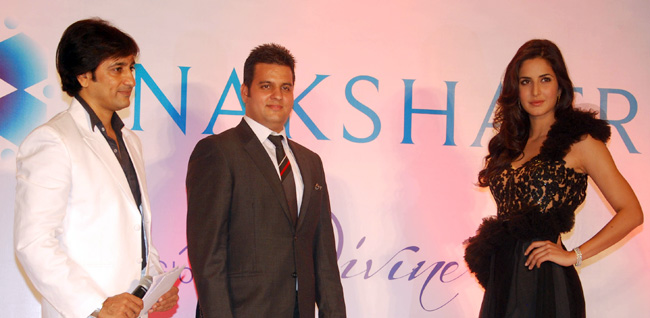
  • Katrina Kaif unveils new Nakshatra logo and new brand campaign


    By A Correspondent


    Katrina Kaif, brand ambassador of Nakshatra, the diamond jewellery brand, on Tuesday, unveiled the brand’s new logo and its latest brand campaign – Glow Divine, in a glittering ceremony at the Grand Hyatt. Also present on this occasion were Mehul Choski, CMD, Gitanjali Group, Shardah Uniyal, VP – Marketing, and Sushil Sharma, VP, International Brands, Gitanjali Group.


    The unveiling was a spectacular ceremony, accompanied by a soul stirring performance by singer Kavita Seth, followed by unveiling of the latest Nakshatra jewellery collection by Katrina Kaif and Mehul Choksi.


    Speaking on the occasion, Katrina Kaif said: “As the brand ambassador for Nakshatra, it gives me immense pleasure to be a part of this momentous occasion. The introduction of a new brand identity and logo simply enhances the divinity and immortality that Nakshatra represents; making each woman feel special and divine – almost like a Goddess. I look forward to a continued great association with Nakshatra and continue to wish the brand all the very best”


    Enhancing the existing and emerging personality of the brand, the new campaign and identity aims to recreate the heavenly hues and the divine glow connecting the brand with the inner beauty that every woman radiates. ‘Divine Force’ is one of the key attributes of the new campaign – a fresh rendition of the “Divine Luck” philosophy associated with the brand, whereby every piece of Nakshatra jewellery carries with it an exquisite beauty that can only be described as preciously divine.


    The new look, feel and thought of the campaign is inspired by the perfection and inner fire that each precious piece of Nakshatra jewellery exudes. The campaign is an expression of this ethereal, goddess like divinity – a divine energy that is sparkling, precious, mesmerizing.


    Commenting on this rebranding initiative, Shardah Uniyal said, “It is a very proud moment for us at Gitanjali, and especially for Nakshatra. The new ethereal identity and logo lends a new dynamic and divine personality to the brand. It not only reflects but profoundly enhances the brands core values and the new avenues that we intend to venture into.”


    The new brand tagline, ‘Glow Divine’, is in keeping with the inner radiance that a diamond emits whilst complimenting the inner beauty that every woman radiates. Keeping in with the philosophy of “Glow Divine” the new brand logo is inspired by the popular floral Indian motif and exhibits eternal beauty and brilliance of constellation in a graphically depicted diamond cluster. The look and feel of the brand logo represents the ethereal beauty of Goddess of divine energy.


    Mehul Choksi, CMD, Gitanjali Group said: “The new logo and identity is yet another remarkable milestone on Nakshatra’s journey in symbolizing jewellery that is beautiful, divine and ethereal, exuding divine energy of perfect creations. It reflects all the values that have been at the core of our brand philosophy as well the vision and direction in which we aim to grow.”


    Nakshatra, one of the most respected jewellery brands inIndia, epitomizes jewellery that is ethereal, infinite, immortal, beautiful and radiant. The pieces are crafted around a unique set of floral designs, using the traditional seven stone cluster. First launched in 2000, as a flagship of the Diamond Trading Corporation (DTC), it was subsequently taken over by the Gitanjali Group, and has been awarded Superbrand status since 2008.

  • Parle-G upgrades to Parle-G Gold

    By Tuhina Anand


    Parle-G, the biscuit that enjoys the unique position of being the largest selling biscuit in the world, has now launched Parle-G Gold. The variant adds the premium edge to the humble glucose biscuit, which is the USP of Parle-G and key to its success. This is Parle’s second attempt at bringing a variant to Parle-G. The product is targeted at keeping in mind the urban markets.


    Giving an insight as to why Parle decided to launch this product now, Mayank Shah, Group Product Manager, Parle Products, said: “In last couple of years, consumers have evolved across markets. The demand of premium category biscuits has gone up and as there was nothing in premium glucose category, we launched Parle-G Gold.”


    “The glucose segment has not seen any action or any significant launch in last few years, thus making it a good time to launch Parle G Gold. With the consumer preferences and needs changing with time, we would like to offer them an option of premium glucose biscuit with richer formulation. Parle G Gold offers exactly the same to them. With this new launch we are looking at increasing glucose category by 15 per cent over the next financial year,” he added.


    Replying to the question that their earlier attempt to bring in a variant in this segment did not meet with success and talking about how Parle changed their strategy this time to appeal to the consumers, Mr Shah said: “To be a successful product one has to, first, understand the consumers’ requirements. Parle-G Gold will give its consumers a richer and a better formulation along with a bigger biscuit and a better bite. I am sure the new product will do good in the market.”


    At this point of time Parle is concentrating on distribution and reaching out to relevant target group. There is no plan for any communication campaign on immediate basis. This product will be placed as premium glucose biscuit in their product portfolio.


    The packaging of this new product is done in a hazy BOPP material in a mix of red and gold connoting the premium quality of the biscuit. The colour, design and texture of the packet are clutter breaking, thus appealing to the consumers.


    Glucose is the one of the oldest category in the biscuit market, contributing close to 35 per cent in volume to the entire Indian market. Parle-G dominates the glucose segment with 80 per cent market share, catering to every spectrum of the society. The glucose category growth is 15 per cent, which is largely driven by Parle-G.


    While the first attempt to bring the premium category in glucose wasn’t met with success, probably the time is suitable now to make this entry as the consumers are more mature and look for greater variety. Also, the other players, especially Britannia with Tiger range, have come out with various variants and met with success.


    However, Mr Shah is clear that the move has nothing to do with competition. He said, “We have launched Parle-G Gold to fill the gap in premium glucose category, not because of the competition. Our focus is always to increase the reach and fill the gaps across categories. Keeping in consumer needs in mind we have launched Parle-G Gold.”


    Parle G is seen as the most loved brand of glucose biscuit category over the years and ruling the market for more than 7 decades. The overall look of the biscuit is wheatish brown with increased weight of 6.7 gms per biscuit. The new product is currently available in and around Mumbai. The company is planning to extend its presence acrossIndiain a phased manner.


    The product is currently available in pack size of 100 grams at Rs10 price point across kirana and modern trade outlets.


  • Lifestyle retail chains post weak same-store sales in January-March quarter

    By Sarah Jacob & Sagar Malviya


    Sluggish demand has led lifestyle retail chains to post weak same-store sales in January-March 2012 and lower growth estimates for this fiscal.


    Driven by new stores, most retailers clocked 20-30 per cent sales growth in January-March. But same-store sales, or sales from stores that were operational last year, grew in single digits. Same-store sales are an important indicator of consumer demand and the health of the retail industry. Retailers don’t expect things to improve this fiscal as demand is subdued.


    The downturn began after Diwali, and the increase in the prices of essential commodities, lower salary increments, adverse macro-economic conditions and government inaction dented consumer confidence.


    “We would have targeted double-digit like-to-like growth if the year looked better,” said Govind Shrikhande, MD of department store Shoppers Stop.


    Shoppers Stop’s revenues grew 27 per cent to Rs 621.35 crore in the January-March quarter, but same-store sales grew 10 per cent. Volume growth contributed just 1 per cent to the increase in same-store sales while price hikes made up the rest. “Prices have risen and imports are getting costlier. These developments start impacting consumer demand after a point,” said Mr Shrikhande.


    Rival Lifestyle International, which operates stores under the Lifestyle and Max brands, said it clocked sales of over Rs2,500 crore last fiscal and has targeted revenues of Rs4,500 crore by 2013-14.


    “The second half of last year was not good and it’s apparent in our bottom line,” said Lifestyle International MD Kabir Lumba. He refused to divulge figures as the company is unlisted. “Given the current market conditions, we have lowered our growth estimates by around 10 per cent,” Mr Lumba added.


    Pantaloon Retail posted an increase of 7.6 Pantaloon Retail in sales for the three-month period ended March 2012, but same-store sales rose just 3.6 per cent – the lowest in 13 quarters. Retailers say demand is subdued in the first two months of the current fiscal as well. “The overall sentiment has been poor and it is reflecting even in May,” said J Suresh, CEO of Arvind Lifestyle Brands and Retail. The 10 per cent excise duty on branded garments last fiscal has impacted Arvind’s value format Megamart, which posted a growth of 11 per cent in same-store sales during the quarter against an 18 per cent increase in the year-ago period. However, its lifestyle brands business – which includes Arrow, US Polo and Flying Machine brands – grew 27 per cent in the fourth quarter in terms of same-store sales.”


    Same-store sales have slowed down despite retail chains extending end-of-season discounts and advancing them by up to three weeks to liquidate inventory. “This helped them post higher sales on a sequential basis. However, margins of most retailers took a hit,” said Sangeeta Tripathi, a senior analyst with Sharekhan. Margins were further squeezed by higher interest rates, fuel and real estate costs.


    The slowdown in like-to-like sales has forced retailers to explore new strategies to drive sales. Shoppers Stop, for instance, is focusing on store events as well as new loyalty card schemes and has recently lowered prices of private label brands by 5 per cent.


    Experts say stores can boost sales by improving shelf displays and promoting private labels. “Significant work can be done to make the product on the shelf more compelling for the buyer, both in terms of merchandising and placement. Retailers can also differentiate by looking at their private labels, not just as additional margins but as brands that fill a gap,” said Devangshu Dutta, chief executive of retail consultancy Third Eyesight.


    Source: The Economic Times
    Copyright © 2012, Bennett, Coleman & Co. Ltd. All Rights Reserved

  • Beware! Walmart will not do business with corrupt businesses!!!

    By Rasul Bailay


    Walmart Stores plans to snap ties with companies that supply products to its stores if they are involved in any kind of corrupt practices, making it the first retail company to undertake such a stringent initiative in India.


    Stung by the bribery scandal that surfaced recently in Mexico, the world’s largest retailer has recently hired consultancy firm KPMG to conduct due diligence on hundreds of existing vendors as well as potential future suppliers to ensure that they are not involved in any unethical or illegal activity.


    Bharti Walmart, the equal wholesale retailing joint venture between the US retail chain and New Delhi-based Bharti Enterprises, sources supplies from vendors ranging from multinationals such as Hindustan Unilever and Colgate Palmolive to hundreds of small and medium enterprises.


    As companies in India, like in Mexico, are susceptible to pay bribes at various levels to get reams of licences required to start and operate businesses, Walmart wants to make sure they do business with only those vendors who don’t indulge in such activities.


    This is second such anti-corruption initiative launched by Walmart in India in recent months. Earlier, as reported by ET, the world’s number one retailer mandated KPMG to educate and create awareness among the Bharti Walmart’s staff about anti-corruption practices.


    As an American multinational, Walmart is bound to abide by the Foreign Corrupt Practices Act (FCPA), a US law that prohibits companies registered in that country and its subsidiaries across the globe from indulging in any sort of corrupt practices.


    A company spokesperson said this move was part of its “previously announced” worldwide review of its anti-corruption programme that was initiated in March 2011. “This includes developing and implementing recommendations for FCPA training, anti-corruption safeguards, and internal controls,” said the spokesman.


    The latest initiatives by Bharti Walmart are the direct fallout of the bribery scandal in Mexico, a person with the direct knowledge of the situation said.


    Earlier this year, a scandal surfaced in Walmart’s Mexico unit accused the subsidiary of bribing government officials in almost all the provinces in that country where the Bentonville-based retailer has operations. The US Justice Department has started its own probe against Walmart over the allegations of the systematic bribery to obtain licences in Mexico.


    In India, KPMG will scrutinise the vendors and classify them in three categories of red, amber and green, the person quoted above said asking not to be named. Bharti Walmart will continue to do business with vendors rated ‘green” by KPMG while it will immediately snap ties with retailers rated ‘red’. It will be Bharti Walmart’s choice to engage with vendors that are placed in the ‘amber’ category by KPMG.


    A KPMG spokesman said the firm does not comment on “company-specific matters”.


    The head of one of Bharti Walmart’s local vendors said his company has already passed the KPMG test more than a month ago and he added that such a scrutiny has happened for the first time in the last few years that his company has done business with the cash-and-carry joint venture.


    “It’s a very good step. It will help the retail industry if more and more companies undertake such initiatives,” says Saloni Nangia, president, Technopak Advisors, a consultancy firm. “Supplying goods to modern retailers are a huge opportunity and the vendors will not jeopardise this opportunity with companies like Walmart by not complying.”


    After unsuccessfully lobbying with various Indian governments to open the country’s closed retail sector, Walmart finally entered the country in 2007 through a joint venture with Bharti in the cash-and-carry or wholesale retailing segment, an area where India allows fully-owned overseas ownership. So far, Bharti Walmart has opened 17 Best Price Modern Wholesale stores in various cities, which sells multi-branded products, but only to other retailers and businesses.


    Source: The Economic Times
    Copyright © 2012, Bennett, Coleman & Co. Ltd. All Rights Reserved


  • Metro Tyres unveils new visual identity

    By A Correspondent


    Metro Tyres Limited unveiled a new logo along with a new advertisement campaign. The new identity is designed to profile Metro as a company that understands youth aspirations and reaches out to young people, India’s dominant demographic segment, with cutting-edge products.


    “Metro Tyres has evolved significantly over the years with a view to stay ahead of the dramatic changes in the Indian business sector. Today, our company is present in more than 53 countries and is the largest exporter of bicycle tyres and tubes from India,” said Rummy Chhabra, Managing Director, Metro Tyres Limited. “Our new visual identity consists of a re-designed Metro name, appearing in italics to represent motion and speed. Complementing the logo, our advertisement campaign is a story of transformation: from a child to a youth. In doing so, it reflects who we are today and the company we aim to be tomorrow.”


    Metro has an exclusive tie up in two wheeler tyres with Continental, Germany, one of the world’s largest tyre companies. The link with Continental provides Metro with distinct advantages: access to the latest technology in the field and exports to the most advanced economies of the world including USA, Canada and the European Union under Continental brand.


    With a market share of 24 per cent in India, Metro Tyres manufactures close to 30 million tyres and 30 million tubes annually in its seven state-of-the-art plants inNorth India. It is the supplier to Honda Motorcycle and Scooter India, Bajaj Auto, Piaggio, Suzuki, Hero Cycles, TI Cycles, Atlas Cycles, Avon Cycles, among others.

  • Marketing, Cycle-ishtyle

    By Tuhina Anand


    Arjun Ranga

    Cycle Pure Agarbathies has been finding unique ways to build connect with its consumers. One thing that stands out is the company’s attempt to invest in innovative advertising, unlike its competition that focuses mainly on trade-oriented promotions. In 2011, during the World Cup, it had very successfully launched Pray forIndiacampaign to connect with the masses.


    The brand, Cycle Pure Agarbathies, belongs to the parent company NR Group, which has a turnover of Rs650 crore. From its very inception, the company has been focusing on reaching the rural masses.


    However, three years back, it intensified its initiative and started focusing on reaching villages with a population of 10,000 and more. It modified its target in 2012 to reach places which have a minimum population of 5,000 people. In its bid to reach the interior most locales of India, the company has branded vans that move across hundreds of towns and villages in India. These vans have Cycle products that are ready to be sold to the public. The company also ensures that it participates in the community fairs and exhibitions that take place in villages and towns.


    Besides this, the company has been focusing on initiatives to preserveIndia’s dying culture and traditions. The company has been focusing on cause-related marketing activities, specifically on preserving India’s culture and heritage.


    To encourage young minds to appreciate India’s rich culture and heritage, the company has initiated a heritage quiz. The quiz is framed on many themes of India heritage including monuments, epics, mythology, origin of various festivals among others. The quiz just concluded its first session in Chennai on July 7 and will be held in Kolkata on August 25 followed by Ahmedabad in September this year.


    From 2009, the company has also been organizing the ‘Cycle Sheri Garba’ – Sheri Garba is a traditional art form of Gujarat- in its attempt to resurrect the original style of garba which is now crushed under commercialization. The organizers of Sheri Garbha have appreciated Cycle’s effort in reviving the Garba with its traditional practices.


    The company also started Rhythm Ta Ta Thai Thai to showcase the young female dance talent in and Rhythm Dhaker ladai, a contest for drum beaters in West Bengal.


    In a category like incense sticks, where building brand is difficult, Cycle has been quite successful. Arjun Ranga, Managing Director, Cycle Pure Agarbathies, elaborated: “We have unique fragrances with formulations handed down from generations that help in elevating mood for sampoorna dhyaan (complete concentration). Our prime focus is to get superior raw materials and provide consistency in quality. Besides, we have been bringing innovations across the value chain.”


    He added: “From the very inception, brand building was given priority, which was a key differential compared to competition. Well known advertising agencies were roped in. Over the year’s consistent quality, distribution, promotions and advertising have built up strong brand equity, and created a strong consumer pull.”


    While building the brand Cycle, there have been few parameters that include distinctly superior quality compared to competition, value for money offerings, exclusive fragrances, commitment and ethical practice, customer focus, constant innovation and investment in brand building and significant focus on R&D.


    The company has been launching occasion related pooja kits – like a kit for Ganesh Chaturthi. Mr Ranga also pointed out few other initiatives that include the rural marketing/saturation coverage in all parts of the country, intensifying involvement in cause-related marketing and focusing on social media and digital marketing.
    The Mysore-based NR Group was founded by N Ranga Rao in 1948. Interestingly, Mr Rao decided to call his range of incense sticks Cycle as the symbol recognized across the globe. Today Cycle Pure Agarbathies is widely known incense brand.


  • FMCGs brace for a weak monsoon

    By Ratna Bhushan & Sagar Malviya


    Consumer goods companies are busy firming up contingency plans to stem any decline in volume sales in case a deficit in monsoon rainfall hit crop yields, escalate food prices and impact consumer spend.


    Companies such as Dabur and Parle Products said they will delay price increases, emphasise on low-priced packs of Rs2, 5 and 10, explore new value price points and step up promotions to prevent possible downtrading, or consumers switching to cheaper products, in case of a crisis.


    “If there’s a monsoon deficit, we would obviously look at protecting volumes,” said Sunil Duggal, CEO of Dabur, which makes Vatika shampoo and Babool toothpaste.


    “Contingency plans could include a combination of things like putting off price increases, accelerating focus on smaller packs and allocating more spends on consumer promotions, depending on where the deficit is,” he added.


    BK Rao, general manager at top biscuits maker Parle Products said the maker of Parle-G, Monaco and Hide & Seek biscuits will focus on smaller price points if the situation is bad.


    The monsoon has revived significantly in the past week to reduce total deficit in the country so far to 22 per cent from 31 per cent and accelerated crop planting. But crop yields may still be lower as rainfall has been uneven, with some regions, including parts of Karnataka and Maharashtra, remaining practically dry for three weeks. Economists warn that food prices may rise sharply if rainfall weakens again.


    FMCG companies have been bucking the overall slowdown in the economy and posting an average 15 per cent growth, but a weak monsoon could change it.


    “A weak monsoon will naturally reflect on costs and we will have to work around that. The industry will feel the impact around September-October,” said Chitranjan Dar, divisional chief executive of tobacco-to-chips maker ITC Foods.


    While impact of inflation on the premium urban rich is not very significant, mid-rung and rural demand is strongly linked to the monsoons. Thus, top FMCG firm Hindustan Unilever, Dabur and biscuit maker Britannia, which have large rural presence, could be hurt more than Nestle and GlaxoSmithKline Consumer, which have an urban focus for their products, say experts.


    Analysts say consumer goods companies tend to push ‘magic price points’ of Rs2, 3, 5 and 10 in an inflationary scenario to minimise any negative impact on discretionary spends. Such low-unit packs account for over 25-30 per cent sales of makers of shampoos, hair dyes, biscuits and snack foods.


    Also, with local competition always posing a threat, established players would have to step up volume discounts and consumer promotions in a weak monsoon scenario. A significant 70 per cent of low unit packs are sold through kirana shops (mom and pop stores).


    “Small SKUs and distribution expansion may save the day. Downtrading too would be arrested at the small-pack level,” Shirish Pardeshi, executive director and co-head, research, at financial services firm Anand Rathi Securities, wrote in an investor note two weeks back. “Rural expansion of distribution (for example, HUL’s Project Shakti and Emami’s Swadesh initiatives – both aimed at accelerating expansion in rural markets) would help arrest drop in consumption,” the note said.


    Some analysts, however, believe the impact of a weak monsoon will be limited on rural consumption because dependence on agricultural income has been declining. “Our discussions with rural trade and consumers have always highlighted that one bad monsoon does not result in consumption declining. Instead, it leads to trade credit terms becoming more onerous in rural India,” Ambit Capital’s Anand Mour wrote in a report.


    Some companies such as Marico, maker of Saffola edible oil, say they would wait for some more time before start worrying about monsoon. “The June-July period is too early to take any decision. We will have to wait for August to check the monsoon trend and get a clearer picture,” said Marico CEO Saugata Gupta.


    Source: The Economic Times

    Copyright © 2012, Bennett, Coleman & Co. Ltd. All Rights Reserved