Category: PRODUCTS

  • Nokia unveils phone with 41 MP camera!


    By A Correspondent


    This wasn’t going to be our Big Story today. Given the launch of our smashing new journalism channel, a story on the state of scribeland was more appropriate. But, we were woken up to the amazing sounds of surprise, shock and awe on social networks. Good ol’ boy Nokia is keen on a fight to the Finnish. Pardon the pun, but let’s get on with it.


    At the Mobile World Congress in Barcelona, Spain, Nokia unveiled what’s possibly the mother-of-all-camera phones. The Pureview with a 41MP sensor.


    The Nokia 808 PureView is the first smartphone to feature Nokia PureView imaging technologies, bringing together high resolution sensors, Carl Zeiss optics and Nokia developed algorithms, which will support new high-end imaging experiences for future Nokia products. It runs on the Belle operating system and is likely to available from May 2012… just a few more months. It is rumoured to be priced at $600.


    “Nokia PureView imaging technology sets a new industry standard by whatever measure you use,” said Jo Harlow, executive vice president of Nokia Smart Devices. “People will inevitably focus on the 41 megapixel sensor, but the real quantum leap is how the pixels are used to deliver breath-taking image quality at any resolution and the freedom it provides to choose the story you want to tell.”


    The PureView should be a delight even for professional photographers. It features a large, high-resolution 41 megapixel sensor with superior Carl Zeiss optics and an innovative pixel oversampling technology. At standard resolutions (2/3, 5 and 8 megapixels), this means the ability to zoom without loss of clarity and capture seven pixels of information, condensing into one pixel for the sharpest images imaginable. At high-resolution (38 megapixel max) it means the ability to capture an image, then zoom, reframe, crop and resize afterwards to expose previously unseen levels of details. With great low-light performance and the ability to save in compact file sizes for sharing via email, MMS, and on social networks, the PureView makes it possible for anyone to take cool, pro-like images in any conditions.


    Comments Devindra Hardawar on venturebeat.com: “Nokia is well aware that such large resolution pictures will be difficult to share, so the phone will oversample pictures to a size roughly around a 5 megapixel picture. That means better picture quality without scary file sizes. And if you do dare to take a picture at the full resolution (which is actually 38 MP), you’ll be able to zoom into the picture after the fact without losing much detail.


    In addition to superior still imaging technology, the PureView also includes full HD 1080p video recording and playback with 4X lossless zoom and the world’s first use of Nokia Rich Recording. Rich Recording enables audio recording at CD-like levels of quality, previously only possible with external microphones. This is a boon for online journalism as short, clear clips can be captured clearly on the device.


    The phone features exclusive Dolby Headphone technology, transforming stereo content into a personal surround sound experience over any headphones and Dolby Digital Plus for 5.1 channel surround sound playback. In fact, the unveiling at the Mobile World Congress yesterday happened at the Nokia and the Dolby stalls.


    Check out the Pureview preview at http://www.nokia.com/in-en/products/pureview/


  • Swad of Success: Regional FMCG firms like Panjon, Bisk Farm, Mapro, raising funds to expand operations

    By Sagar Malviya


    After a gap of almost four years, TV commercial of the once popular Swad digestive candy hit the screens early this month. Swad, which is making a come back, is one of the brands owned by 48-year old Panjon, an Indore-based firm that sells candies to balm and toothpaste endorsed by Shammi Kapoor and Sonali Bendre in its glory days. The plan is to reach out to more states, expand product portfolio and grow sales ten-fold in two years.


    Panjon isn’t alone. Almost half a dozen smaller regional firms such as Bisk Farm, Mapro, Wagh Bakri and V-John, among others, are entering newer states, some advertising for the first time, while others planning to raise funds to survive a fresh salvo by large consumer goods companies that expanded into the turf of smaller rivals last year.


    “While our products are doing well in MP and UP, competition is also getting intense in these home markets,” admitted Atul Kothari, managing director at Panjon, which is in talks with a clutch of private investors to raise funds for expansion. “We are looking to enter Gujarat, Punjab, Haryana and Bihar this year,” he said. The company plans to add more than 1,400 distributors to its existing network of 600.


    So what exactly was the trigger? Well, for one, large FMCG firms have been aggressively reaching out to rural consumers through expanded distribution, which led to smaller regional players losing market share across segments in their core markets.


    Over the past couple of years, P&G has almost doubled its distribution reach and now has a direct reach of 1.3 million outlets, against HUL’s direct reach of 1.60 million outlets. Emami expanded reach by as much as 30 per cent primarily in rural areas, while HUL added more than 50,000 villages to its network just last year. Ditto, in the case of Dabur, which rolled out special rural focused sales initiatives across eight key states and widened reach in 71 high potential districts.


    However, the regional players are now plotting a counter attack, not just in their existing markets but also in newer states. The Rs 500-crore SAJ Food Products that dominatesEastern Indiawith its biscuit Bisk Farm is a case in point.


    “Last year, we entered Karnataka and are planning to reach Andhra Pradesh next month. We aim to have a national footprint by 2013,” saidVijay Singh,MDof Kolkata-based SAJ Food Products. He added that the firm has even discussed internally about coming with a public issue in the next two years.


    But it won’t be easy. And smaller rivals are aware of the fact that price competitiveness with national players would rather be futile with the latter having economies of scale. Hence, they are looking to cash on through their quality proposition rather than being price warriors.


    Maharashtra-based processed food firm Mapro Foods andGujarat’s tea company Wagh Bakri feel that they are better in terms of quality compared with rivals such as Hindustan Unilever. “Large players are very aggressive in terms of schemes and offers. But we believe that consumers want quality and not price-offs,” said Parag Desai, executive director of Wagh Bakri, that is looking to enterPunjaband Haryana.


    Some firms that already have an indirect reach nationally are also keen to distribute products directly and cut costs on intermediaries. Delhi-based Vi-John is reworking its distribution strategy by eliminating super-stockist and instead having selling agents in each state.


    “We are planning to add over 1,500 distributors and 70 stockists to have direct reach in western and southern markets,” said Vimal Pande, CEO of Vi-John Group, which has 30 stockists and 2,500 distributors.


    Modern trade is doing its bit too. “Regional brands need to build stronger consumer connect to keep their consumer franchise or they could expand distribution to add new consumers and grow base,” said Devendra Chawla, president – food and FMCG at Future Group.


    Source: The Economic Times

    Copyright © 2012, Bennett, Coleman & Co. Ltd. All Rights Reserved


  • Airtel voted India’s ‘buzziest’ brand

    By A Correspondent


    Leading marketing communications portal www.afaqs.com announced that Airtel is the number one in the results of its seventh edition of ‘India’s Buzziest Brands’ – a poll-based survey aimed at measuring the viral effect and customer conversations garnered by brands across India.


    Airtel, which has been accorded with the coveted “Buzzy Gold” title for emerging at the top, faced stiff competition from Facebook and Flipkart, which bagged the second and the third spot respectively. As per findings of this poll, Airtel is the only telecom operator to place in the top 10.


    The poll was carried out on the website from January 30 to February 7. A total of 60 brands were shortlisted for the poll. Voters were sent a link for voting on their email account to avoid digital ballot-stuffing. On visiting the Poll page on the website, the voters were asked to choose five brands that they felt had the greatest ‘buzz’ in the year gone by from the shortlist of 60.


    List of the 15 Buzziest Brands as per the India’s Buzziest Brand Poll 2012


    1 Airtel
    2 Facebook
    3 Flipkart
    4 Hero
    5 Samsung
    6 Google
    7 Snapdeal
    8 Cadbury
    9 iPhone
    10 Twitter
    11 Vodafone
    12 YouTube
    13 Blackberry
    14 Pepsi
    15 Nokia


  • Red Digital creates the second successful TweetMob for Mirinda

    By A Correspondent


    Post the announcement of Mirinda signing up Red Digital for its social media duties and in the back drop of having successfully introduced and executed the concept of a TweetMob, Red Digital yet again created a TweetMob on February 24 for Mirinda. The result this time was even better. Twice in two weeks now, Mirinda TweetMob #tags were one of the most talked about topics on Twitter.


    With the hot Indian summer approaching fast, PepsiCo has launched a new campaign for its orange soft drink, Mirinda. The campaign, which orbits around the theme ‘Pagalpanti Bhi Zaroori Hai’, is based on the thought that drinking Mirinda, this summer, is an intense and inescapable experience that leaves one breathless.


    “We think of TweetMob as a flashmob on Twitter where our intention is to take over Twitter and engage the twitterati for a certain duration while plugging the brand connect. After the successful execution of the first TweetMob on February 14, it was a challenge for us to out-do ourselves with the benchmarks we set for Mirinda and, more importantly, prove to ourselves that it was not a one-off success by repeating it in a grander manner. It was great to taste success again and take over Twitter,” said Yashraj Vakil, Chief Operating Officer, Red Digital.


    The TweetMob started at 3pm on February 24 with a simple question asking people what they thought was crazy enough around them to be called #PagalPanti. The TweetMob lasted till midnight during which Red Digital created and managed conversation around the hashtag ‘#PagalPanti’. Through the TweetMob, Red Digital helped connect Twitter and Facebook users who tweeted about the topic with various Mirinda branded hash tags, creating a plethora of endorsements for the brand.


    It wasn’t long before #PagalPanti started trending inIndia. The activity saw 3,700 tweets in the span of 9 hours for @MirindaIndia. Every 50 tweets with #PagalPanti helped the brand reach 7,990 people generating close to 0.6 million views. The brand reach this time was 5 times of what the first TweetMob generated. #Pagalpanti featured among the topics breaking globally and trended in Mumbai,New Delhi,HyderabadandBangalore. @MirindaIndia also saw itself trending in Chennai andHyderabad.


    The TweetMob will happen again on March 2 and the following Friday after that.


    Commenting on the TweetMob and its success, Harsh Jain, Founder & Managing Director, Red Digital said, “Flashmobs are suppose to be innovative, rebellious and spontaneous. With every flashmob now being represented as a Bollywood song and dance activity, we wanted to showcase their true power in other forms. We chose Twitter because it has become a platform for people to share ideas, collaborate, aggregate and explore new things spontaneously. Twitter is both a place where like-minded people can interact as well as a place for rebels to express their views. We are proud to have created and introduced the concept of the TweetMob; success was just a corollary. The independence of ideating with a bold and social brand like Mirinda has given us this opportunity to explore and innovate. We are thankful as well as determined to create and execute many more path breaking ideas through our association with Mirinda.”


    Speaking on Mirinda’s partnership with Red Digital, Ruchira Jaitly, Executive Vice President – Marketing, Beverages (Flavours), PepsiCo India said, “As marketers, we continuously seek ways to engage with the consumers via innovative means. Mirinda’s TweetMobs is a unique innovation on the digital space that utilizes the strengths of the medium effectively to communicate with our consumers on our latest initiative. The idea is fun and youthful and helped to create awareness of our new flavour campaign in a never-before fashion. It is delightful to see the results of this path-breaking idea for the second time in a row.”


  • Will Coke’s 200ml pack price cut cannibalise Thums Up?

    By Preethi Chamikutty


    Summer is still a few weeks away, but cola brands have already started feeling the heat. While most brands are closely guarding their marketing secrets for the season, Coca-Cola surprised pundits when it dropped the price for the 200 ml returnable glass bottle (RGB) by Rs2 to Rs8.


    That may not seem unusual – after all in the past, Coke has cut price. However, most of those reductions were across all brands in the portfolio, from flagship Thums Up and Sprite to Limca and Fanta. This time, however, the exercise applies only to Coca-Cola.


    Independent marketers are not convinced about the strategy as they feel that in the urge to close in on arch-rival Pepsi, Coke runs the risk of cannibalising Thums Up, its top cola brand and the country’s largest selling carbonated drink.


    So why is one of the world’s most valuable brands discounting itself in India? The official response from Coca-Cola is that the “special promotional price” will “fuel growth of the cola category. As the 200 ml pack is the entry point into the category, it will recruit new consumers into the cola segment since it is a very attractive price point,” said a company spokesperson.


    The promotional offer is being rolled out in phases across select markets; 70 per cent of markets will have the Rs8 price. Those familiar with the promotion say that this is a pilot project for three months, with an option to extend it.


    Clearly, Coke has trained its sights on Pepsi – which has yet to react to the price cut – and hopes to inch closer to it. Still, market observers wonder whether the drop in price is aimed at Pepsi or at Coke’s own brand, Thums Up, which is the leader in the cola category as well as in carbonated drinks.


    Latest market share figures are unavailable – both cola majors will not part with them – but those familiar with recent numbers point out that Thums Up has a share of roughly 42 per cent of the Rs4,000 crore pure cola market. Pepsi follows with 36 per cent, and Coca follows with a share of just under a fifth (a few regional brands account for the rest).


    An official at a beverage marketer says that Thums Up also leads the approximately Rs10,000 crore carbonated soft drinks market with a 15 per cent share. If marketers do not approve of Coke’s move, it’s with good reason. “Unless this is a global diktat, this strategy is flawed from Thums Up’s point of view,” reckoned Nobby Gupta, founder & CEO, Nobby Brand Architects.


    “In countries wherever Coke is present, it always has to be the market leader and all other brands have to follow; if that is the aim for India as well then this strategy falls in place,” he added. But he also goes on to say that this strategy will have a negative impact on the combined share of both Coke and Thums Up.


    Me Gupta’s logic is simple: Lowering the price of Coke will not put pressure on just Pepsi, it will also cannibalise the market share of Thums Up. “And if Pepsi drops price too, which is likely, there is a chance of it eating into both Coke and Thums Up,” added Mr Gupta.


    Then there are those who feel that dropping prices for short-term gain is dangerous. “Because when you go back to old prices consumers may well say: ‘Thank you very much for the discount, now I will go back to Thums Up,” said Anand Halve, co-founder of Chlorophyll Brand & Communications Consultancy. “Momentary bribing does not ensure long-term consumer loyalty,” he added.


    For a generation of Indians, Thums Up, with its relatively stronger taste, is synonymous with cola. “The preference for a strong cola continued even as new cola brands entered and are now expanding the category. Over all these years, Thums Up’s communication has remained consistent,” said Devendra Chawla, president, food & FMCG, Future Group, who is a former Coke associate.


    To be sure Thums Up has assumed almost cult brand status over the past two decades with commercials like ‘Taste The Thunder’ and ‘Toofani Thanda’ that had an international look and feel to them. Ashok Kurien, advertising guru and former chairman Publicis India, who was involved in the launch of Thums Up said: “Thums Up managed to crack the soul of Indian consumers through advertising and reached out at a deeper level. It was about struggles in life, the anxiety and determination to survive and succeed. This was probably the strongest concept in Indian advertising that connected to the young Indian male. And it still connects today.” When Coca-Cola acquired Thums Up, Kurien advised the Atlanta-headquartered company to only pit Coke against Pepsi and not touch Thums Up – as it already had an 85 per cent market share. “But Coke introduced both Coca-Cola and Thums Up in 300 ml bottle and people lapped up Thums Up, with Pepsi taking the second spot.”


    The battle between Coke and Pepsi continues, although Coke officials deny the attempt to spark off a cola war; they just want to step up per capita consumption by Indians, they say. “Indians consume only 12 200 ml bottles of beverages per year compared to 675 bottles by Mexicans – the highest consumers of Coca-Cola globally,” pointed out a Coke official.


    Source: The Economic Times

    Copyright © 2012, Bennett, Coleman & Co. Ltd. All Rights Reserved


  • Turkish Airlines looks at India as a booming market

    By A Correspondent


    Turkish Airlines has been doing exceptionally well globally and has witnessed remarkable growth, especially in the last year. With Grey as their creative agency inIndiaand Perfect Relations handling their media relations, they are looking atIndiaas a booming market and have various marketing initiatives lined up.


    Turkish Airlines has played a vital role in increasing the ratio of the aviation industry ofTurkey. One of their key achievements in 2011 was being awarded ‘Best Airline Europe’, ‘Best Premium Economy Seats’ and ‘Best Airline Southern Europe’ by Skytrax. Their load factor has been as high as 75 per cent in 2011, even on the Indian routes.


    They have also acquired brand new aircrafts like B777-300ER equipped with GCS system and A330-300, with the latter being currently operational on the Indian routes. Turkish Airlines flew around 300,000 travellers on the Indian routes in 2011 and are expecting an even higher number in 2012.


    The TAAI Convention, being hosted byTurkeythis year, will be one of the biggest B2B initiatives undertaken by Turkish Airlines as they are among the main partners for the event.


    Apart from that, Turkish Airlines has engaged in several interesting marketing initiatives inIndiato reach out to its customers and familiarize them with both, Turkish Airlines and its multiple international destinations.


    Adnan Aykac, General Manager- Northern & Eastern India, Turkish Airlines, said: “We received great feedback from our previous promotional campaigns and would like to continue with such engagement programs and capitalize on them in the best way possible. This will ensure maximum visibility for Turkish Airlines among its target audience, thereby helping them discover our refined offers and services.”


    “Turkish Airlines believes in providing the best offers and facilities to its passengers and maintaining high standards of service. This has always been our prime focus and we believe that the brand and its services speak for itself. We also believe that competitions are healthy as they give you the zeal to further improve and enhance your quality. Hence, our superior and extraordinary services set us apart and help us maintain our top position,” he added.


    Also Turkish Airlines have now signed a Free Sale Codeshare Agreement with Air India (AI) after their previous blocked space codeshare agreement. The new agreement will allow both the airlines to market each other’s flights by their own code and flight numbers on a free sale basis.


    With effect from March 1, the revised agreement will allow TK passengers a seamless connection to AI-operated flights onHyderabad, Chennai, Ahmedabad, Bangalore, Kolkata and Amritsar routes.


    Turkish Airlines witnessed a 15 per cent growth in revenues last year and with the airlines doing so well in the Indian and international markets, sky is the limit for us.


  • Kingfisher set to recount its ‘Brand Journey’ with Facebook Brand Timeline

    By A Correspondent


    Kingfisher, one ofIndia’s top 10 brands on Facebook, has proved yet again that it is one of the most digital-savvy brands in the country. It is the first brand inIndia to adapt Facebook’s ‘Brand Timeline’, giving its consumers ample reasons for a qualitative interaction with the brand.


    The switch to Facebook Timeline comes not just as a new look but a strategic move to engage with its consumers more qualitatively while also highlighting the milestones and narrating the story of the brand that was never told before.


    The Kingfisher page has been positioned as a facilitator of ‘Good Times’ and strategically does not promote beer, considering the profile of the Facebook users. The Kingfisher Facebook fan page currently enjoys more than 3.3 million likes.


    Commenting on the new move, Samar Singh Sheikhawat, Senior Vice President, United Breweries Ltd said: “In the rapidly evolving world of digital communications, the changes might be multiple but the crux remains the same – finding innovative and instantaneous ways of touching the lives of consumers. At Kingfisher, we’ve always strived to set these benchmarks by moving on to new platforms swiftly and utilizing the inherent strengths of the medium to forge a deep, meaningful relationship with our consumers. In keeping with that philosophy, Kingfisher was the first Indian brand to adopt the recently launched Facebook Timeline on February 29. Our endeavour now will be to use the key features of the format in a uniquely creative manner and make the consumer interactions on Facebook richer and more memorable.”


    Facebook Timeline went online in September 2011. It offered Facebook users the joy of revisiting their lives with a collection of photos, posts and apps facilitating a digital autobiography! Facebook has now rolled out the Timeline for brands which will transform the way brands communicate and interact with consumers drastically. The latest format provides brands with new options for self expression, allowing them to narrate their corporate story with milestones, highlight the brand’s key campaigns and so on.


    Kingfisher made its entry into Facebook in April 2008 and has been successful in constantly engaging with its consumers for the last 4 years. The numbers of fans have been growing in leaps and bounds year after year, a clear indication of the ever increasing popularity on Facebook.

    Initiating, fuelling and sustaining conversations remains to be the key challenge any brand faces on social media – Kingfisher is perceived as the benchmark in this space with consistently high levels of interactivity. As a result, currently the brand’s Facebook page flaunts more than 3 million fans, making it one of the top 5 brands on Facebook inIndia. Incidentally, this also makes Kingfisher the second largest beer brand globally on Facebook.


    On the other hand on Twitter, Kingfisher has a fair presence with about 17,000 followers. Though Twitter is a fairly new channel in the social media universe of brands inIndia, Kingfisher is perceived as a thought leader and as a brand that listens to consumers, not just talk. This is reinforced by even some of the top global blogs on social media mentioning Kingfisher’s Facebook & Twitter presence individually as amongst the best uses of social media inIndiaby brands.


  • Can flavoured & frozen yogurt replace the good ol’ dahi?

    By Preethi Chamikutty


    Dahi that went abroad and came back. That’s how Swati Jain chooses to describe the latest flavour of the season: frozen and flavoured yoghurt.


    “Flavoured is just a nomenclature,” said the head of marketing at Danone India, which recently forayed into the frozen category after debuting with the flavoured variety. Danone isn’t the only brand taking this more contemporary form of good old curd, or dahi, pan-India. Go Dahi, a frozen yogurt brand launched by Parag Milk Foods two years back, is now available in Mumbai, Pune and Bengaluru.


    And it has plans to enter North India. So what about east India then?


    “Kolkata already has mishti doi!” says Devendra Shah, chairman, Parag Milk Foods very matter-of-factly. He goes on to say mishti doi is quite entrenched in West Bengal and making consumers there switch to frozen/flavoured yoghurt could be difficult.


    It’s not just Kolkata that has a local variant of curd; Maharashtra has shrikand, Punjab lassi, Kerala taire and Tamilians still swear by curd rice.


    Flavoured and frozen yogurt is a new food category to India, just two years young. The market for yoghurt of all types, including flavoured, frozen and regular curd, is pegged at almost Rs2,500 crore by euromonitor International – and one that grew 35 per cent in 2011.


    Clamouring for a scoop of the action are a clutch of brands, from Parag Milk Foods’ Go and Amul Flaavyo of the Gujarat Cooperative Milk Marketing Federation (GCMMF); to Nestle Real Fruit Yoghurt, Mother Dairy Yoghurt and Danone Cremix Yoghurt. The second set in this space include retails brands like Cocoberry, Red Mango, Kiwi Kiss and Yogurberry which sell flavoured/frozen yoghurt through exclusive outlets that only stock the respective brands.


    Most non-retail brands are using modern trade, institutions, college, school and office canteens, airlines, five-star hotels and independent kiosks to reach out to its potential consumers. Danone is also looking at kirana stores to reach customers and Jain says they provide Danone coolers to shops for stocking products. The target customers are young, urban and health-conscious people. Ms Jain of Danone points out: “Women tend to pick it up more than men, as psychographically they are more health conscious than men.”


    Adds GCMMF managing director, RS Sodhi: “This is a new product category being adopted by middle and upper middle class people who are health-conscious.” Nestle is trying to position its yoghurt as an ‘anytime nourishing snack.’ Kumaran Nowuram, general manager – dairy, Nestle India, says: ” Consumers consider flavoured yoghurt a western concept and, as they do not quite understand it, there really is no specific consumption pattern yet.” Nestle Real Fruit yoghurt has been available in the market for the past few years and the brand will soon add Junior Daheez (for children) and Fruit Daheez to its portfolio.


    These are still early days of trial and error. For instance, Go has withdrawn its banana variant for lack of adoption. Mango, strawberry and pineapple variants, which are common to all brands, are finding takers. Mother Dairy also has yoghurt in raspberry, blueberry and plum flavours.


    Munish Soni, DGM marketing at Mother Dairy’s dairy products division, says blueberry is quite popular among its customers. The retail brands have a larger range of flavours – as many as eight in the case of Cocoberry. Cocoberry also offers the largest pack size of 300 gm and even provides the option of home-delivery. Go, says Shah, will soon launch a 400 gm pack.


    The way forward clearly is to grab share from other snacks and desserts. Ina Dawer, research analyst at euromonitor International, says: “Frozen yogurt has already started to replace ice cream to a certain extent. Consumers have also already started to look at it not only as a healthy snack but also as a healthy replacement for meals.”


    Companies tying up with corporates to target office employees, adds Dawer, will also help in increasing consumption by making it a quick, convenient and healthy substitute for meals. “I will not be surprised if frozen yogurt sees growth of 70-80 per cent each year over the next two years,” predicts Dawer.


    There are a few obstacles to such robust growth. The lack of adequate cold chain infrastructure is the biggest roadblock, which restricts distribution to cities and towns away from the manufacturing facilities. This also makes building loyalty difficult as consumers tend to lap up whichever brand they can get their hands on. Says Suman Srivastava, cofounder of Marketing Unplugged, a brand consultancy: “While there are a number of brands in the space, someday I eat one brand and the next day I pick up another. This may be because not all outlets are stocking all brands.” Srivastava also thinks for the category to become bigger there has to lot of innovation: “When Britannia showed its cheese as equivalent to a glass of milk, it was unique way to position the product. Similarly if brands are able to create some parallels for frozen/flavoured yoghurt that could help increase adoption,” he says.


    Source: The economic Times

    Copyright © 2012, Bennett, Coleman & Co. Ltd. All Rights Reserved


  • Brands focussed on men now wooing women customers

    By Amit Bapna


    Aiming iconic beauty brands at men may seem as unimaginable as Philip Morris, of Marlboro Man fame, wooing women consumers. But then Marlboro actually began life as a cigarette for women. By crossing over from one gender to another, marketers today are not looking to do a complete role reversal. Rather they’re just attempting to extend brands to a large untapped market – the other half of the species – without destroying the core proposition.


    Anglo-Dutch consumer products giant Unilever could seemingly be testing one of its most sharply positioned male brands, Axe, amongst women – a limited edition launch for now. Anarchy will be the first fragrance from the Axe brand that will have a female version packaged in a shimmering silver and glossy pink canister with floral and fruity notes – as against the men’s version with fresh and woody strains. With this new avatar, the quintessentially male deo brand that’s built recall largely on the back of its cheeky commercials extends the boldness theme to its brand extension strategy.


    This shift could mark the way forward for marketers in a world in which gender lines are merging.


    Brands across categories – from cars to personal care and from denims to alcohol – are on a gender-flirting mission. For some the affair could turn out to be a one nightstand and for others, it may lead to a happily-ever-after marriage. Michael Maedel, President, JWT Asia Pacific, feels that companies in every sector face a fundamental imperative to grow market share and sales. As lines that have traditionally separated male and female consumers – those of income, attitudes and expenditure – continue to blur, more companies that have created brands targeting one half of the species are starting to address the other half with variants, he adds.


    For instance, Bacardi has launched Bacardi +, a ready-to-drink mixer available in two variants – cola and lemonade – in the United Kingdom, some parts of Europe, China, Thailand, and now India. This marks a clear shift for the brand in reaching out to the male-drinking populace with its 8per cent alcohol content to entice the strong beer drinking segment. In contrast Bacardi’s Breezers that come in a variety of fruit flavors – and are widely consumed by women – have minimal alcohol content.


    Mahesh Madhavan, president and CEO South Asia, Bacardi India explains the logic of the new drink for men: “If you peg anything for men in this market, women will drink it, but the reverse doesn’t happen . Men will not consume a drink positioned for women for sure. It is unfortunate but that is the way it is the world over.”


    According to a JWT global research study, brands across different categories need to do more to reach out to women who are earning more, spending more and marrying later than ever before. Brands that have long focused on men – from banks to cars to property – could do a lot more to leverage this trend.


    Of course when they do, they need to think about how to make their proposition relevant and attractive to women without changing the essence of their core offering.


    Before Axe, there was Allen Solly that had made a sortie into gynic-territory. Allen Solly today is more of a unisex brand although the imagery has been predominantly male. The men’s range was launched in 1993 and the women’s range seven years later. Now, the brand is in the process of a re-branding; the new positioning will also push the gender envelope subtly.


    Says Sooraj Bhat, brand head, Allen Solly. “Our endeavour is to make the Friday Dressing concept, launched in the mid 90s, acceptable and relevant to women as well. After all nearly a fourth of the brand’s share is coming from the women’s market.”


    Conversely, skin care brands globally that were once the domain of women, says Maedel, have been successful in creating mannish lines, from a department store brand like Clarins to a drugstore brand like Nivea. Back home Garnier had been around for over 15 years as a beauty brand for women before it decided to launch a men’s range.


    India is the first market in which the L’Oreal company decided to address the male of the species. Reason: An insight that Indian consumers are less reluctant to use skincare products than in Europe, says Jacques Challes, MD, L’Oreal India. He adds that it was not very risky for Garnier to make the gender-based extension because the values that the brand stands for – efficiency and quality, in a no-nonsense manner – are easily transferable.


    Unilever brand Dove, which is present in categories like body wash, hair care, deos and lotions, has launched a Men+Care range in select markets (excluding India). Says Jennifer Bremner, global brand director, Dove Men+Care: “Our research found that many men were already using women’s skin care products, among them Dove. The range has been specifically created to deliver a range of superior products that give men the care they need without sacrificing effectiveness.” Bremner adds that for now there are no plans to launch in India.


    Over time, the definitions of what are the masculine or feminine dimensions of a society change, depending on the various factors that drive its culture. Explains Sourabh Mishra, chief strategy officer, Saatchi & Saatchi: “In terms of defining a brand’s ‘gender identity’ within that society, what is acceptable at one point in time may not be so at another time.” He cites the example of Levi Strauss that was once all about the tough all-American man exploring the wild spaces in search of his fortune. It is doubtful if it could at that time have stood for the ‘Levi’s Curve ID’ that addresses a range of feminine body shapes. But it is perfectly acceptable today because there has been a shift in culture since then.


    The decision to cross over is not without its dangers. Says Dick Maggiore, President & CEO, Innis Maggiore Group, a leading US-based positioning agency: “The greater the brand’s equity is established with one gender, the greater it should avoid brand androgyny. While a few new customers of the opposite sex could be gained, you would lose many more existing and potential customers while your brand position erodes.” He firmly believes that line extension is almost always a lousy strategy. “The key principle to a positioning strategy is that a brand can only stand for one ‘idea’ in the mind of its prospects and customers.”


    Small wonder then marketers burn plenty of midnight oil before deciding to target a new set of consumers. As Russell Taylor, global brand vice president, Axe, Unilever points out: “Even as a limited edition this is not a decision we took lightly. The one golden rule is: ‘do not break the contract you have with your core target’.”


    Rather than looking at the other sex as a vast untapped market that can set the cash registers ringing, marketers need to figure whether their brands actually meet a need of the new set of consumers. Consider Ranbaxy which recently extended Revital, a daily health supplement, to women. According to Brijesh Kapil, vice president, Ranbaxy Global Consumer Healthcare: “The product was developed to meet the special needs of women, and the product was extensively researched with consumers before launch.”


    In contrast beverage brand Thums Up, whilst claiming to have almost 30 per cent of women consumers, has for some time now been positioned as a ‘macho’ drink in all its imagery and communication. However, a new campaign, in a first of sorts, has a shapely model doing the same stunts as her male counterparts. But we’re still not sure whether that’s a gambit to woo more male drinkers – the model is ‘shapely’, remember – or to invite more women to taste the thunder.


    Source: The Economic Times

    Copyright © 2012, Bennett, Coleman & Co. Ltd. All Rights Reserved

     

  • Freecultr selected by Kolkata Knight Riders as Official Casual Wear Partner.

    By A Correspondent


    With IPL fever hitting the nation, Freecultr, ‘premium casual wear, done right’, continues to innovate by co-developing and securing partnership between the Kolkata Knight Riders, owned by Shah Rukh Khan, Juhi Chawla, and Jay Mehta. This partnership fills a glaring void in sport-inspired lifestyle apparel in India- a range that is full lifestyle, but with strong inspiration and ties to sport as a category delivered with superior fabrics at reasonable prices.


    Freecultr launches its Sport collection with an exclusive edition of the KKR Official Travel Polo’s, Graphic T-shirts, and more KKR Official products to be launched and developed throughout the year. Freecultr has used KKR’s Purple, White, and Gold as the dominant theme to launch the exclusive collection, which not only reflects the spirit of the game but also connects with the sensibilities of the cricket lovers.


    Over the next few months, Freecultr Sport will also deliver a range of exciting and stylish lifestyle sport products for all customers. This exciting new category campaign will feature the tag line “Go Play!” and “Wanna Play?” and vivid imagery as its mantra.


    “We couldn’t be more pleased to launch our Freecultr Sport collection with the Official Casual Wear products for the Kolkata Knight Riders. KKR is a pre-eminent brand that stands for excellence and we are humbled to be chosen as its first Official Casual Wear Partner. This partnership reflects the trajectory and appeal of our brand and gives us much to be thankful for as we continue to grow. Epitomizing the competitive spirit of the game, we have designed our collection for KKR with a focus on style, colours, fabric, quality and affordability. We hope the team has a stellar season and wish them the greatest success in IPL5 and hopefully the Champion’s League.” said Sujal Shah, CEO and Co-Founder, Freecultr.


    “We are excited to announce our casual wear license agreement with Freecultr,” said Venky Mysore, MD/CEO of Kolkata Knight Riders. “The Kolkata Knight Riders prides itself in innovation and differentiation, and has decided to partner with Freecultr, as opposed to working with a supplier. Our main objective has always been to continually keep our fans engaged, excited, and delighted and we believe this partnership will give our fans an added sense of pride as they become the brand ambassadors of the Kolkata Knight Riders.”


    “Being a true lover and follower of cricket for years like most Indians, it’s heartening to be associated with this first of its kind innovative partnership. We are building our brand and product architecture keeping the new age consumer in mind. Tying up with a team like Kolkata Knight Riders is a perfect fit for Freecultr, and our main focus in designing the collection was to give the fans a feeling of belonging to the team and bring out the spirit and passion in fan support for KKR this season. We wish them luck for the coming season.” said Sandeep Singh, COO & Co-Founder, Freecultr.


    This partnership was ideated and co-developed The Wild East Group.


  • Rohit Surfactants to launch mid-premium laundry brand Uni Wash to challenge HUL & P&G brands

    By Sagar Malviya


    Maker of India’s largest-selling detergent brand Ghari, Kanpur-based Rohit Surfactants plans to launch a mid-premium laundry brand to take on Hindustan Unilever’s Rin and Procter & Gamble’s Tide.


    “We want to tap into mid-priced category which has good potential as well as offer higher margins,” Rahul Gyanchandani, director at Rohit Surfactants, said. Ghari competes in the highly competitive mass-priced segment, where companies are under margin pressure due to high raw material costs. “In addition, apart from brands such as Rin and Tide, there is a vacuum in the segment which we want to fill,” said Gyanchandani.


    The new brand, Uni Wash, will be launched in the next 2-3 months and be priced similar to Rin and Tide, the company said. Rin’s 1-kg pack costs Rs50, while Tide Naturals’ 870-gram pack is sold at 30. Spokesperson of HUL and P&G said as a company policy they do not comment on competitors.


    Rohit Surfactants’ Ghari beat HUL’s Wheel late last year to become the top brand in the 13,000-crore laundry industry. The firm’s entry into the mid-premium segment is expected to make the infamous Rin-Tide fight even murkier. HUL, early this year, priced Rin lower than P&G’s Tide and released an advertisement asking consumers to choose the better brand-the latest in a series of aggressive commercials from either brand targeting the other. Some blatant ads even attracted legal recourse from the other side.


    According to an industry insider, Tide’s share has doubled in the last two years to over 13.7 per cent in 2011 while Rin’s share has grown from 4 per cent in 2009 to around 6 per cent.


    TOUGH MARKET

    Analysts feel that Rohit Surfactants’ entry could further dent margins in laundry, one of the largest segments that contribute to more than a quarter of the revenues for both HUL and P&G.


    “The category has limited pricing power already and a new brand entering will surely affect the exiting brands in the long term,” Gautam Duggad, an analyst at brokerage Prabhudas Lilladhar, said. Mr Duggad, however, added that it would not be easy for Rohit Surfactants to build a brand from scratch.


    “Launching a completely new brand altogether would be a challenge in this cut-throat market as it will take a long time for a brand to start from scratch,” he said. Rohit Surfactants has been building its distribution network to reach most of the country and believes it now has the wherewithal to compete with established brands.


    “We already have a solid platform now, which we can leverage for the new brand to push it,” Mr Gyanchandani said.


    Rohit Surfactants entered 10 new states in the last three years to expand its reach to 19 states through more than 3,500 dealers. It has 21 manufacturing units, 15 of which were added since 2006. The company now plans to expand its distribution and build manufacturing plants in markets such as Bihar, Raipur and Karnataka.


    Launched in 1987 by brothers Muralidhar and Bimal Kumar Gyanchandani, Rohit Surfactants had sales of over Rs2,500 crore in the year ending March 2012.


    But there is increasing pressure on the margins of detergent makers due to increasing prices of key raw materials such as LAB, or linear alkyl benzene,  that has increased 19 per cent, and soda ash that climbed 4 per cent in the last three months.


    HUL, the Indian unit of Anglo-Dutch Unilever, has indicated that it is facing the heat of inflation in categories such as soaps and detergents, and has tried to moderate its advertising spends to protect margins.


    At the same time, P&G is looking to expand production capacity in India so that it can make products cheaper locally.


    Source: The Economic Times
    Copyright © 2012, Bennett, Coleman & Co. Ltd. All Rights Reserved
  • All that glitters on Akshaya Tritiya is gold!


    By Tuhina Anand

    (with inputs from Shruti Pushkarna in New Delhi)


    While 5-6 years back, Akshaya Tritiya would come and go without making much noise except among few communities, but now it has become a pan-Indian phenomenon. Jewellers all across, be it branded or non-branded, have gone all out to communicate the fact that Akshaya Tritiya is among the most auspicious days to invest in the precious metal.


    One look at the newspapers of the last two weeks will show that jewellery advertising is dominating the supplements and some even taking front page advertising on the main newspapers. This definitely shows that this day has become a money-spinner for jewellers and they are leaving no stone unturned to tap maximum customers.


    After Dhanteras, which traditionally has been a day for Indians to invest in gold and silver, now Akshaya Tritiya has emerged as the second-most selling day for many players and spikes in sales is anywhere between 15-35 per cent for some players.


    There are also offers galore to lure customers like free silver coin, off on making charges or even EMI option available to help customers make their purchases notwithstanding the soaring gold prices.


    Bhuwan Gaurav

    Bhuwan Gaurav, Head-Marketing at Tanishq on the sales on Akshaya Tritiya said: “On this day we see an increase in sales of over 10-15 times as compared to any average day. We have made a conscious effort in positioning this day to our consumers and a lot of effort has gone in marketing it to people. The result being that Akshaya Tritiya has become a pan-India phenomenon and we see a spike in sale even from Punjab and the East.”


    For customers, on purchase of 8gm of gold and on diamond jewellery above Rs8,000, Tanishq is offering free gold coin of 0.25 gm. The rising gold prices have not deterred the brand and Mr Gaurav is sure that the day would see spike in the sales. In fact, the store has been decorated with flowers to welcome customers to buy jewellery on this auspicious day.


    Another leading jeweler is too confident of the sales. Vinod Hayagriv, Managing Director, C Krishniah Chetty & Sons said: “This year is the first year of price stability after three years. Hot gold rates in the previous years held back purchases. But this year the sales have been brisk and that is an indication of demand picking up for Akshaya Tritiya. We should see good demand for our new Touch Gold Collection of exclusive gold design jewellery.”


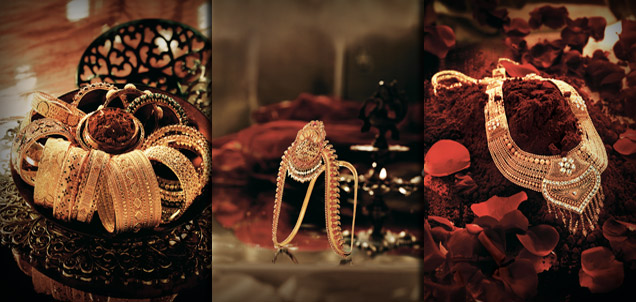
    On the high in demand products, Amit Puri, Manager, Delhi-based jewellery store chain Diamount Jewels Pvt Ltd said, “The most popular item is gold bangles, and the second is gold sets. We have a special offer where we are giving out free silver as much as the weight of gold item purchased. Our sales on Akshaya Tritiya comprise a good 30-35 per cent of the total sales. Apart from Akshaya Tritiya, we see similar purchasing pattern on Dhanteras around Diwali.”


    While at one hand communication in print, OOH and even digital has created the popular culture of investing in jewellery. There are offers that are coupled with these communications to bring more and more customers to invest. Also new collection has been introduced by few to attract customers. Although there is more demand for on Akshaya Tritiya, there is an increasing trend of many opting for diamonds.


    Harish Bakshi, Senior Manager, AKM Mehrasons Jewellers of New Delhi said, “Last year, we saw an upward trend in sales on Akshaya Tritiya, to be precise, last year sales on that day saw a 10 per cent increase than the year before. This year we can’t say anything up till now, we have our fingers crossed because of the increase in gold rates. Both diamond and gold are popular, but gold is essentially more popular on Akshaya Trithiya. Gold chains and bangles are the most common purchases. We don’t have any special offers as such but we are offering a 10-15 per cent discount on labour charges for both gold and diamond. In comparison to regular days, we see at least 35 per cent increase in sales on Akshaya Tritiya. Apart from Akshaya Tritiya, Dhanteras and Karwa Chauth are the two other high sales occasions.”


    One thing is for sure that there is an increase in sales, but the percentage may vary. Ram Kiran of Bhima Jewellers too puts the increase at 15-20 per cent during this time. He, however, adds that sales have been bit slow because of high gold rates but doesn’t rule out the possibility of increase in sales.

    Photograph: Courtesy Tanishq