
Category: PRODUCTS

  • DentsuMB wins creative mandate for TVS Raider

    By Our Staff


    DentsuMB, the integrated creative agency from Dentsu India, has bagged the mainline advertising mandate for the newly launched, TVS Raider. As per the mandate, the agency will handle the strategic planning and creative duties for TVS Raider in India.


    Aniruddha Haldar
    Aniruddha Haldar

    Commenting on the win, Aniruddha Haldar, Vice President Marketing – Commuters, Corporate Brand & Dealer Transformation, TVS Motor Company, said: “The TVS Raider is targeted at Gen Z. With dentsuMB as our creative agency, we have built signature brands like the TVS NTORQ 125 (Sporty Scooter) and TVS IQUBE (Electric). We look forward to delivering a compelling brand experience for TVS Raider in line with its outstanding product offering.”


    Samrat Chengapa
    Samrat Chengapa

    Added Samrat Chengapa, Executive Vice President, DentsuMB: “We’re absolutely delighted with this latest win, and look forward to creating some great work, which is worthy of the trust TVS Motor has placed on us.”


  • Lowe Lintas creates Pujo campaign for Tanishq

    By Our Staff


    Tanishq has launched a new campaign this Durga Pujo. conceptualised by Tanishq and Lowe Lintas, the Pujo campaign, ‘Utshob Amader, Shaaj’o Amader’, celebrates the spirit of Pujo and is an ode to all Bengali master karigors of Tanishq.


    Speaking about the campaign, Ranjani Krishnaswamy, GM – Marketing, Tanishq, Titan Company Ltd, said: “Pujo is a festival that is as much about adorning the festivities as it is about adorning ourselves and our relationships. ‘Utshob Amader, Shaaj’o Amader’, celebrates relationships in an endearing and heartwarming manner in the midst of all the festivities. It showcases our new collection ‘Shaaj’, an exquisite artistry from our Karigors who truly are the pride of Tanishq. We hope our traditional Bengali designs in gold brought to life by our master Karigors, will adorn the Durgas of today and add a little more sparkle to your Pujo celebrations as we offer our prayers to Maa Durga together.”


    Added Sagar Kapoor, Chief Creative Officer, Lowe Lintas: “In the year gone by and the unprecedented times we are living in, we see this as an opportunity to celebrate tradition and the bring alive the spirit of rejuvenation of the human spirit during the Pujo festival, one that transforms all of Bengal into an artists’ canvas. This Pujo, Tanishq celebrates all the creators who bring Pujo alive, with a collection of unparalleled beauty created by our Bengali karigors.”


  • The Advertising Police

    Image : pexels.com


    By Prabhakar Mundkur


    Prabhakar MundkurNever has marketing communication been under the scrutiny of so many, ever before in its history.


    First, there are the regulatory bodies who look over your shoulder. While working in China in the late 1990s, and when censorship was much stricter perhaps than it is today, I remember having a tough time. In a commercial of mine, a student acts cheeky with his teacher. It was intended to be tongue-in-cheek, but the humour of the situation was lost on the powers that be. We were told that it went against the norms of the teacher-student relationship which went back to none other than Confucius who had articulated with great lucidity on the subject. I even remember, Close-up toothpaste, which was then running the ‘Kisses’ campaign in the US my version of the campaign for China, had two toothpaste tubes of Close-up coming together to suggest they were kissing. At the time, it was a big hit in countries like Indonesia, which again had strict censorship rules in place.


    Coming back to the present moment, with the addition of the Department of Consumer Affairs being added in the last few years, means there are two watchdogs, a government watchdog and the Advertising Standards Council of India (ASCI) which is the self-regulatory industry watchdog. One is not quite sure what the government watchdog has been up to since they don’t publish their achievements, but the ASCI publishes every quarter the cases disposed of by them which run into a few thousand. In addition to the regular cases which come under the Advertising Code, we now have a third entity that is policing advertising and that is the consumer.


    The Culture Police


    The Tanishq ad that got shot down by social media last year would have had no objections from either the ASCI or the Department of Consumer Affairs. But the social media police is quite another story. These are typically the cultural watchdogs if one may call them that. They scan the environment for cultural misdoings like the Tanishq ad which was innocently launched during Diwali last year to promote its Ekvatam collection. The YouTube description for the ad said: “She is married into a family that loves her like their own child. Only for her, they go out of their way to celebrate an occasion that they usually don’t. A beautiful confluence of two different religions, traditions, cultures.”


    It was story of a Muslim family, with a Hindu daughter-in-law which was helping her to celebrate her own festivals. But the social media immediately jumped on to a conspiracy theory called ‘love-jihad’ which which accuses Muslims of converting Hindu girls to increase their own population.


    A lot of people were shocked with the objections but nothing doing, Tanishq was forced to take the ad off the air to appease the social media groups especially when the danger manifested itself in crowds wanting to damage their Tanishq showrooms.


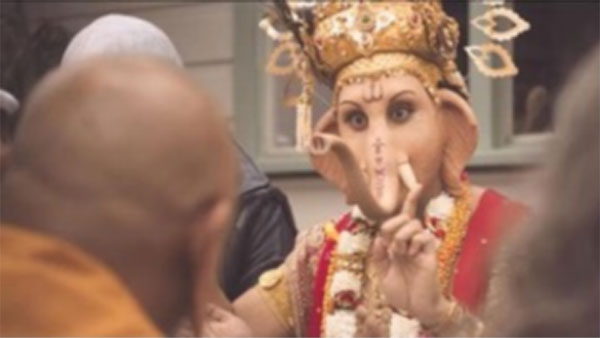
    This is not just an Indian phenomenon but the culture police also exist in other countries. This is very familiar to the Ganesha ad that got shot down in Australia. Meat and Livestock Australia put our favourite Lord Ganesha in an ad which showed meat-eating.


    This enraged the local Hindu groups who of course besides staging protests to Ad Standards, in Australia


    The ad showed Lord Ganesha sitting and enjoying the meat with Jesus Christ, Moses, Aphrodite, lord Buddha, Zeus, Obi Wan Kenobi from Star Wars franchise along with Ron Hubbard, the founder of Scientology. Ad Standards Australia upheld the complaint from local Hindu organisations and the ad went off air.


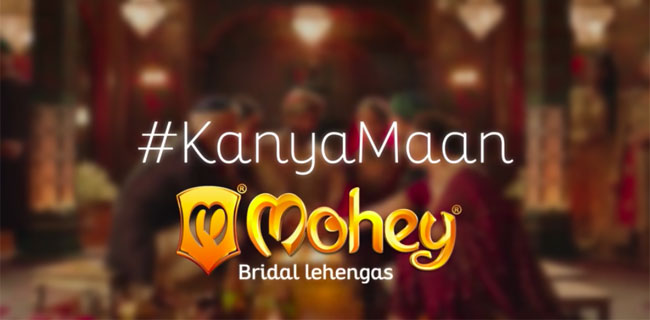
    The latest ad questioned by the Culture Police is Manyavar Mohey ad (Mohey is the brand for women) featuring Alia Bhatt which was received with mixed feelings. While the ad was trying to break away from the age-old practice associated with marriage, where the daughter like a commodity, ( kanyadaan), the ad proposed greater respect for women (kanyamaan ). Unfortunately, when celebrities like Kangana Ranaut join the culture police, the attack on ads become stronger. She is known to have said: “Don’t use religion to sell products.”


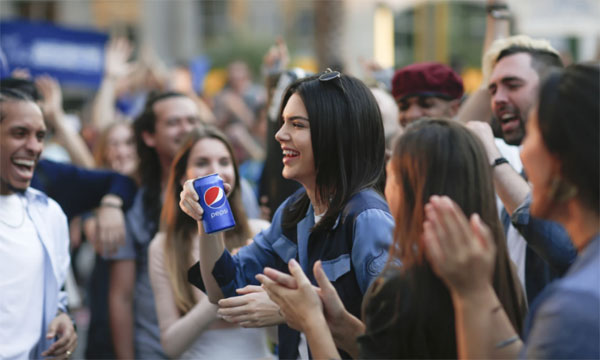
    Again, not very different from the Pepsi ad which showed supermodel Kendall Jenner leading a Black Lives Matter movement with a fizzy can of Pepsi.


    It provoked Martin Luther King’s daughter to make a blistering remark on Twitter, that read: “If only Daddy would have known about the power of #Pepsi.” Bernice King’s tweet was accompanied alongside a photo of her father being pushed back by police.


    Another ad that was forced to bite the dust. 


    The Human Rights Police


    Here the human rights police objected to the extreme conditions that Zomato delivery men are put through when they don’t even get a moment to themselves between orders. In the commercial, Hrithik Roshan goes in to get his mobile to get a selfie with the Zomato delivery man. But the delivery man is so busy that he forgoes the opportunity of a pic with Hrithik because he is getting late for his next order. Zomato was quick to appease the trollers with their tweet which read, “We have been listening intently to the chatter about gig workers and the problems associated with this part of the economy. We understand you expect more and better from us”.


    Advertising uses Figures of Speech

    A few advertising regulators coupled with public groups on social media who keep a watch, means that advertising will have to be more careful than before. Diversity and inclusion is no longer an option, it is an imperative. In 2021, it will need to become a habit for most advertisers.


    For the last 100 years or so, advertising has used figures of speech to communicate. So parody (humour), hyperbole (exaggeration ) to make a point, and metaphor (where a word or phrase is applied to an object or action to which it is not literally applicable ) are some of the main figures of speech that advertising uses to make an impact.  Advertising can continue to use them but now will have to keep away from sensitive subjects.


    A long time ago, Jerry Della Femina said: “I honestly believe that advertising is the most fun you can have with your clothes on”.


    I am not so sure it is any longer for more than one reason. The times they are a changing!


    Prabhakar Mundkur is a former advertising agency captain and has spent over four decades in marketing services across geographies. He is a prolific writer and was a few years back rated as among the top voices by LinkedIn. Other than advertising and writing, Prabs, as he is known to friends, is a very active musician and a self-taught producer of music. In the pandemic, he has performed and produced nearly 50 songs, including one with the very accomplished Usha Uthup. Mundkur’s views here are personal.


  • Insurance Dekho launches new campaign

    By Our Staff


    Insurance Dekho, an Insurtech start-up company, has announced its new integrated campaign to underline the significance of investing in various kinds of insurance – health insurance, life insurance, motor insurance, etc. The company has onboarded actor and OTT star, Jitendra Kumar, as brand ambassador in the latest campaign.


    Said Ankit Agrawal, Co-Founder and CEO, Insurance Dekho: “Our focus is on ensuring that insurance reaches people in Tier 2, 3 and beyond cities where we noted varying apprehensions about insurance. Educating the people on the importance of insurance and ease of investment is essential. At the same time, our campaign also encourages them to become insurance advisors (POSP) at zero cost to them.”


  • Mindshare launches Pujo campaign for Sunlight detergent

    By Our Staff


    Sunlight, the detergent brand, has announced the launch of its new initiative ‘Sunlight Tantir Rong’ to support Bengal’s local handloom weavers.


    Commenting on the initiative, Prabha Narasimhan, Executive Director – Home Care, HUL, said: “Since time immemorial, handlooms have been a part of local culture in West Bengal and many of these weavers who have been adding colours in our lives since generations have been hit hard by the pandemic. We are delighted to launch ‘Sunlight Tantir Rong’, an initiative which will provide the community with a platform to showcase their magical art and talent and bring them at our fingertips. This initiative is a small step towards bringing back colours to the lives of these weavers and their families.”


    Added Ajay Mehta, Head Content Partnership and Experiential, Mindshare: “For an iconic brand like Sunlight being weaved into the local culture of its bastion market is a key unlock to build a strong connect with its target audience. The campaign ‘Sunlight Tantir Rong’ allows us to beautifully bring alive the brands values & purpose by standing for the betterment of the Weaver community in Bengal. A humble attempt to bring back colours into the lives of the local weavers of West Bengal.”


  • Dentsu Webchutney bags creative mandate for Blackberrys menswear

    By Our Staff


    Dentsu Webchutney has won the creative and media duties for the menswear brand, Blackberrys.


    Gautam Reghunath, CEO, Dentsu Webchutney said: “Blackberrys is an iconic Indian brand that has been innovating in menswear for decades. A true homegrown giant in premium fashion. We want to bring the best of Dentsu Webchutney’s unique brand of creativity while also staying true to the brand Blackberrys’ legacy and ethos.”


    Added Nitin Mohan, Director, Mohan Clothing Company (MCCPL): “Blackberrys Menswear focuses on innovation, precision and a keen eye to detail. Our apparel leans heavily on being fashion forward and tailoring our clothes to the needs of our audiences.”


  • Evolution, Revolution & Mutation of Kanyadaan by Manyavar


    By Sanjeev Kotnala


    Sanjeev KotnalaMatriarchy, patriarchy, new norms and rules, purposeful intent, a lot is happening worldwide on equal opportunities and an unbiased evaluation of women’s contribution to life. Advertising is not left untouched. Brands are seeking a say in it with their camouflaged purpose-led communication.


    They are trying to pick things that are now considered unquestionably questionable. However, they result from changes in life, society, expectation, experiences through the ages. In this evolution process, the new rituals with ignorance and misunderstanding of the original thinking and real purpose have crept in.


    The evolution of societal role assignment has polarised roles. One party took a dominant seat, and the other was pushed back to such an extent that it now demands a revolution. It is no longer satisfied with the slow-paced evolution. There is a vested interest in the well-intended commercial businesses fuelling the fire.


    There is a kneejerk reaction to a situation. What one understands is simple and somewhat controversial, might even be wrong. Revolution leads typically to mutation. And one mutation cannot be the answer to another.


    Men are in a crisis and victims of the same social setup and value systems. Women are no outsiders to the deteriorated situation and misaligned understanding. It is natural for them to want a share of the material powergame. In that sense, many things are not about reversing the power gap but evolution to the desired status. Equal say, equality of opportunities and consideration for the women contribution is a result of the process. As a result, a lot of process and affirmative actions for women has been rightly introduced. Some of them are actions like the custody laws, divorce laws, triple talaq, opening of new frontiers, breaking the glass ceiling, the reduced taboo around menstruation, and laws against objectifying women. But it might not be enough or not fast enough.


    Family and marriage should not necessarily be seen as patriarchal institutions invented to subjugate women. Behind the women’s demand for revolution is a demand for equality and respect. No one can find fault at it.


    Many women readers could object to current rituals and expectations. They may rightly say, ‘I wish it was always like that, but it isn’t’, and they might not be far from the truth. The new push against female foeticide, child marriage. Parental leave. Push for education and resulting financial strength are positive outcomes. But it may take ages to happen, and hence the need felt for revolution.


    However, society too follows a bell curve. There will always be a mix of bad and good, supportive and oppressive, facilitating and barrier creators, patriarchal and matriarchal POV. The right and wrong are contextual and much complex than a simple #Kanyadaan to #KanyaMaan.


    Women have lived a complex life. They are the pivot of the family in more ways than one, juggling relations, maintaining relationships, balancing the budget, and making the  house a home. In fact, they dominate the transfer of legacy, culture, and social values to the next generation. In many ways, these contributions are so hidden that they fail to be realised. As a result, the lives seen through the societal lens of experiences are not comparable across genders.


    However, does it not give brands a right to wrongly portray the situation and rituals of only one religion and suggest corrective measures? Why are brands blind to other religions traditions and practices? Do they lack a spine to do so? Or do they fear a violent backlash?


    Yes, I am totally irritated with this appalling situation. And when brands try to define society and start commenting on it, they better be willing to share the repercussions, however well-intended their actions be.


    ‘Real-life needs a more intelligent, holistic, nuanced and science-based intervention and not one driven by ideological antagonism and resentment against patriarchy or rituals of a religion. (Comment picked up from a discussion in a closed WhatsApp group)


    Patriarchy exists, however, it did not happen overnight. It is a social evolution based on circumstances. If the situations change, the rituals and their meanings are bound to change. But a revolution that mutates the mindset due to gross misrepresentation is not the solution.


    Yes, differences exist, and they are bound to exist. Roles are assigned based on social expectations and situations, which were driven by pure biological needs, property consolidation, physical attributes, and the ecosystem. Some experiences may not be exactly right by today’s standards, and one is right to question them. It is life.


    The truth: If you fight for women, you are a hero! If you fight for men, you are a misogynist! If you defend your religion, you are radicalised! And I am happy to be a hero, a misogynist and radicalised at the same time.


    The concept of paraya dhan seems to be easily understood and exists across religions. Giving away of the bride has been wrongly established as a Daan or giving away the responsibilities.


    The lives in the urban and rural world, the world of the haves and the have-nots’, the life in Bharat and India are different. The ecosystem is different. The lives are different, and the interpretation, naturally different. Somewhere female kids are seen as a burden and an asset for social alliances and growth in other places. And in a lot many places, the Maan of the family.


    I am not against change and a brand trying to make it their purpose. In such a case, few things are essential. Authenticity and Consistency. And more than that, a proper understanding of the rituals. No lazy armchair analysis and no polarised communication emerging from a lack of misguided understanding. It will only result in poisoning the mind of the generation and further alienate them from the real meaning.


    Brands can take the right way. Project the proper understanding and meaning. Remind and revise the culture and not just try pin-pointing the wrong, if any. The biggest problem is the freedom of making choices and decisions impacting their own lives. And most of these need to have a constitutional and law-based solution, not a one-film wonder. Till personal laws remain different, till a country is not governed under the same law and grant equality, equality of gender will remain a distant fantasy.


    Having said so, I have a question for these well-intending brands. Is there no way to be good without pointing to someone else as bad? Am I been too idealistic? Or is being politically, societally and religiously incorrect the new politically correctness for the brands?


    If someone really pursues the subject, they will understand that ancient Indian thinking, the progressive variety, has complete gender differentiation but much respect for women. And here I am, not even using the term Hindu.


    Much has been said and written about this #Kanyadaan and #KanyaMaan. But the best that I read and endorse seem to be captured in the tweeted thread by @MumukshuSavitri. It correctly identifies it not as an Alia Bhatt ad- but a brand Manyavar advertisement featuring Alia Bhatt. And here, the brand is to be questioned and not the endorser.


    Can Manyavar refute that Kanyadana and other rituals of the Vivaha ceremony in Hindu marriage are not patriarchal but show immense reverence and Mana for the bride? If not, they must apologise and withdraw this highly offensive ad and stop demeaning & demonising Hindu customs.


    Can brands stop half-baked attacks and false representation of the Hindu religion? And while saying it, I am not asking the brands to look and project rituals in any other faith as wrong. I ask them to detest from interfering and objectifying, downgrading Hindus, the tolerant ones.


    The tweet takes offence to the brand Manyavar claiming #KanyaDaan in Hindu Marriage objectifies women. And I #ignorantHindu share it for a wider reach.


    …………………………………………..


    THE TWEET TEXT . I have done minor correction in the text- and the original tweet can be read above. Few brackets in the below text are my addition.


    In reality, no other marriage ceremony in the world honours & reveres the bride as wholly as the Hindu Vivaha (marriage) ceremony.


    Marriage is seen as a means of spiritual growth; the husband and wife are co-partners in religious life and function. The wife is not a mere pleasure companion of her husband for the temporal life. Manu (9.26) states; The husband is said to be one with the wife. The wife is designated ARDHAGINI. i.e. the half part of the body of the husband as constituted by the wife. Women are created, by the Atman, as equal halves of man, thereby completing them, like halves of a shell complete the whole shell.


    Undoubtedly, patriarchal distortions crept into Hindu marriages due to the dark age of Islamic rule when women were raped, molested & killed relentlessly. Social evils like child marriage & dowry arose due to the desperation of Hindus to marry their daughters & protect them. (societal evolution and mutation).


    Authoritative Hindu texts, however, expressly forbid treating the bride as a material object to be exchanged. The Manu Smriti clearly warns that anyone selling their daughter for any price & treating her like property is assured a place in Hell.


    None of these later patriarchal distortions in the Vivah rituals were sanctioned by original Hindu sacred texts. The Hindu Vivah has always based its essential rituals on the famous cosmic marriage described in the most ancient Rig Veda (Mandala 10, Sukta 85).


    The Rig Vedic verses describe the cosmic union of the Sun with the Moon. Surya Savitri is the sun bride & Soma, the moon groom. The Vivah honours this celestial marriage by reciting the same Rig Vedic Mantras as a reminder of the sanctity & cosmic significance of Vivah.


    Surya and Soma are the prototypes for all Hindu couples as human marriages follow the pattern of the celestial union. The bride & groom re-enact it to unify & elevate their lives & walk together on the path to Moksha, as Hindus believe humanity is a reflection of divine life.


    The Nirukta provides the etymological basis of Vedic terms. It defines Kanya as derived from the root “Kan”, which means to illuminate. So the bride/Kanya symbolises the illumined Sun who fulfils creation & the groom symbolises the Moon who receives & reflects her light.


    This deliberate usage of the word “Kanya” reveals the real intent of Kanyadaan. If it was about giving away a daughter, Putri or Duhita would suffice. The specific usage of Kanya emphasises the Rig Vedic view of the bride as the illuminating Sun, Surya Savitri.


    Vedic rituals were later elaborated in many Grihya Sutras, like Apastambha, Bharadwaja, Baudhayana, etc., to understand the ceremony, rituals & local customs according to the Gotras. These rites demonstrate how the Hindu bride is revered & respected in every part of the Vivah.


    From the initial betrothal ceremony (Kanyavarana) itself, tradition requires the groom to appear in his best clothes to ask for the guardian’s consent to the marriage. Once consent is given, he must first worship the bride & pray to her for good luck, health & children.


    The bride’s guardians perform Kanyadana to bestow the luminous Surya (the sun bride) to be received by Soma (the moon groom). Ignorant people understood this to mean donation (dana) of an object when it actually refers to receiving her energy as Kanya-Adana.


    During the Kanyadana, the guardians recite Mantras bestowing the bride as Lakshmi, who unites with the groom representing Vishnu. This is a symbolic transformation of the cosmic Surya & Soma manifested in earthly forms to mimic the ideal divine pair Lakshmi & Vishnu.


    Kanyadana thus treats the bride as divine energy. It shows both mana (respect) & parigraha (reverence) for the bride, so for Manyavar to coin a new term, “Kanyamana”, is ridiculous. It indicates they know nothing about Hindu marriage & even less about the Sanskrit language.


    After Kanyadana, the groom asks the guardian, “Who gives this bride to me?” And the answer is “Kama” (The God of love). This clearly shows that Kanya was not given away as an object but symbolically bestowed by the God of love when she is ready to share her life energy.


    It is only after this that the Pani Grahana (holding hands) shown in the ad follows. The groom clasps the bride’s hand to receive prosperity & divine energy. In the Ramayana, Janaka tells Rama that he is accepting prosperity by grasping Sita’s hand during this ceremony.


    After essential ceremonies such as Agniparanayana, Lajahoma, Asmarohana, Saptapadi are all performed, the couple is blessed by everyone. Then the couple does Suryadikshana (homage to the Sun) during the day or Arundhati darshanam at night.


    Viewing Arundhati-Vasishta (Alcor-Mizar) indicates Hinduism’s profound knowledge. Most binary star systems have one-star stationery as the other rotates around it. Here both stars revolve around each other. Neither dominates; both support & travel in an ideal partnership.


    Post-wedding during the Grihya Pravesh, the bride is worshipped as Lakshmi. She tips over a pot of rice at the threshold to symbolise prosperity entering her new home. With feet dipped in red lac, she walks through the home to leave auspicious footprints & bless her new family.(Will an objectified item given as Daan be accorded this respect)


    In her role as Lakshmi, she also gives charity to Brahmanas & poor people on behalf of her new family. Dressed in the best garments & jewellery, she worships the family deities & temples. The Ramayana recounts how Sita & her sisters performed these rituals on reaching Ayodhya. (Was Sita a Daan to Rama?)


    To Hindus, Vivaha is not a contract. It is a sacred process to endow the couple with abilities to refine their moral & spiritual traits as householders (Grihastha). It transforms lower desires into higher spiritual goals to attain Moksha together.


    An analysis of the rituals practised in a traditional Hindu Vivah demonstrates that the bride is not just respected but worshipped as sacred illumined energy throughout the ceremony. No other tradition comes close to giving women such prominence & reverence.


    Sanjeev Kotnala is a senior marketing and business strategist and educator. He writes on MxMIndia every Wednesdays. The views here are personal.




  • Leo Burnett rolls out new TVC for Macho Sporto

    By Our Staff


    Macho Sporto, the men’s innerwear brand, has launched a new TVC featuring actors Vicky Kaushal and Rashmika Mandanna. Conceptualised by Leo Burnett and promoted by media agency Madison Media Omega; the Macho Sporto campaign films consist of three films.


    Said Navinn Seksaria, MD of JG Hosiery, parent company of Macho Sporto: “We are reviving our iconic campaign, ‘Yeh Toh Bada Toing Hai’, with a modern and trendier avatar of our brand, Macho Sporto. Although we are advertising men’s underwear, the campaign is centred around a young and confident woman who is empowered enough to gaze at a man she feels attracted to. Breaking patriarchal stereotypes, the campaign intends to highlight how today’s women don’t hesitate in making the first move. What better than a male underwear brand to convey this message and begin a fresh conversation.”


    Speaking about the campaign Rajdeepak Das, CEO & Chief Creative Officer – South Asia, Leo Burnett added: “Through our campaign Yeh toh bada Toing Hai 2.0 – we wanted to address and break regressive old fashioned gender stereotypes. Typically innerwear brands portray conventional male dominant imagery, but our films depict a role reversal where we normalize and make the woman in control. This is probably the first time where a men’s wear brand is showing a woman taking the lead. The films are light hearted and have the brands signature tongue-in-cheek humour with Vicky and Rashmika playing their onscreen roles perfectly.”


  • Cleartrip ropes in Lowe Lintas

    By Our Staff


    Online travel company Cleartrip has appointed Lowe Lintas to manage its creative duties. The scope of the agency will primarily include “reinvigorating” the brand and crafting a “robust” communication strategy to navigate the brand in the new industry landscape.


    Prahlad Krishnamurthi
    Prahlad Krishnamurthi

    Speaking on the onboarding, Prahlad Krishnamurthi, Chief Business Officer, Cleartrip said: “We are happy to onboard Lowe Lintas as our creative partner. Our approach will be to not only build an innovative portfolio but one that is represented by a brand persona that is memorable and impactful. We will be closely working with the Lowe Lintas team and expect that their strategic, innovative, and forward-looking approach will contribute immensely to further building the Cleartrip brand and propelling our growth. We look forward to a rewarding and long-standing partnership.”


    Sonali Khanna
    Sonali Khanna

    Commenting on the win, Sonali Khanna, Executive Director and Branch Head – South, Lowe Lintas added: “The last year and a half has really taught us the true meaning of a ‘VUCA’ world. In order for impacted industries, like Travel & Tourism, to get back on track, we need to devise transformational strategies. Lowe Lintas is no stranger to bold new ideas, and we’re delighted to partner with Cleartrip to meet this challenge head-on.”


  • Ogilvy launches calorie app for ICICI Lombard

    By Our Staff


    ICICI Lombard introduced a new campaign to unveil its new feature ‘Cal Scan’ on its signature health and wellness app ‘IL TakeCare’. The new digital campaign highlights the newly launched ‘Cal Scan’ (calorie scan) feature in its IL TakeCare App, designed to track one’s calorie intake and recommend healthy calorie count and tips.  Conceptualised by Ogilvy, ICICI Lombard’s Creative agency, the ad films are being promoted across ICICI Lombard’s social media assets and digital platforms.


    Said Sanjeev Mantri, Executive Director at ICICI Lombard General Insurance: “While the pandemic has turned people towards a holistically healthy lifestyle, it is equally important to add the element of measurement to all our health endeavours. Considering the significant increase in the usage of wellness and health-oriented apps recently, we have introduced this new feature of ‘Calorie Scan’, which will act as a counter and encourage the user to stick to their recommended calorie budget. ICICI Lombard aims to offer not only comprehensive coverage to our consumers but also innovative solutions to them, thereby serving as a partner in the customer’s wellness journey.”


    Added Talha Bin Mohsin & Mahesh Parab, Executive Creative Directors, Ogilvy Mumbai: “The ICICI Lombard World Heart Day campaign has had a long history of great work aimed at making people conscious of the challenges to their good health. This year, we sought to open a new chapter by going a step further and joining them in their journey towards holistic wellness. Not just by helping them count their calories, but giving them tips on how to burn them and stay fit on a regular basis too.”


  • Grey films for Britannia Treat Stix

    By Our Staff


    Britannia Treat Wafers has launched a campaign for their new variant Britannia Treat Stix. The campaign is conceptualised by Grey, Bengaluru.


    Speaking about the launch, Badri Beriwal, Business Head, New Categories, Britannia said: “We wanted to tap into the chocolate wafer rolls segment as this is quite an exciting and growing category. The idea was to showcase the abundance of chocolate in the product. And how one can just lose themselves in a world of fun with each bite of the chocolatey abundance.”


    Added Ketan Desai, COO, Grey group: “As the young boy says in the film, an extra scrumptious snack like the Britannia Treat Stix certainly deserves some fun, child-like escapades! We hope the youngsters who watch the film take inspiration in planning their own witty get-away.”


  • Taproot & Oppo launch fresh digital campaign

    By Our Staff


    Taproot Dentsu has launched a new digital campaign for the Oppo F-series smartphone. The campaign, ‘What’s up with Varun?’, introduces the F19s, Oppo’s 4th model under the F19 series. The phone comes in a special edition colour (gold), to mark the festive season ahead.


    Said Titus Upputuru, Creative Head, Taproot Dentsu Gurgaon: “When you are creating work for the digital medium, you can do so much more than just a video. When we asked Varun to change his Instagram handle to Vroom Dhawan, he readily agreed. And then a whole lot of madness unleashed with the teaser video and the main reveal video where he donned so many roles with utmost seriousness. Oppo is a fun brand and we are happy to constantly do some whacked out stuff.”