Category: PRODUCTS

  • Julahaa Sarees signs on Parineeti Chopra as brand amb

    By A Correspondent


    Julahaa Sarees from Surat has signed on Parineeti Chopra as its brand ambassador. The association also marks the launch of their campaign – #MySareeMyWay that highlights the dynamic nature of Indian sarees establishing that there is no right or wrong way of wearing a saree –just one’s own way.


    Speaking about the development, Sudarshan Santosh Budhia, Director & Owner – Julahaa Sarees said:“At Julahaa Sarees, we believe in spotting opportunities and developing a sustainable solution for the same.In the past five years, we have worked passionately to bring ornate sarees in materials such as Art Silk, Georgettes, Linen, Chanderi, Organza and Matka Silk to special occasions, and our efforts have paid off. We have seen the same passion for good work in Parineeti. From Dimple Chaddha in Ladies vs. Ricky Bahl to Bindu Sankaranarayanan in Meri Pyaari Bindu and now Jiwani in Kesari, Parineeti has reinvented herself for every role. Her passion for her art is evident in the range of roles she has chosen for herself. We are very happy to welcome Parineeti aboard as the face of the brand.”


  • Reverse Snobbery Works & How!


    By Avik Chattopadhyay

     

    I have a friend in Paris, the tony, fancy part of Paris. He has a four-bedroom apartment in an ornate late 19th century building. Antique furniture, impressionist paintings, a pair of Mings and a Steinway among other collectibles. And he drives a Smart ForTwo! That’s a 2.6 metre two-seater car costing around Rs.5.0 lakhs that just about manages to hold him, his wife and a couple of shopping bags inside. “That’s all you own?” “Oui. That’s good enough. Easy to park. Easy to use. Easy on the environment. Easy on…” “Okay, okay, get the idea. Making a statement, aren’t you? You could afford an exotic Alfa Romeo but wish to make a certain statement with the Smart.” “Voila! You get it. I stay in the heart of Paris in my own apartment. And I use the Smart!”


    Reverse snobbery.

    That’s what it is. Plain and simple.

    Cocking a snook at the ‘wannabees’ who are desperate to flaunt their BMWs and LVs, paying their EMIs through their noses.

    This is the “rebel” brand. One that questions straight-jacketed conventions and the holy cows. One that challenges the age-old traditions as irrelevant and ostentatious.


    It works. It sure does work.

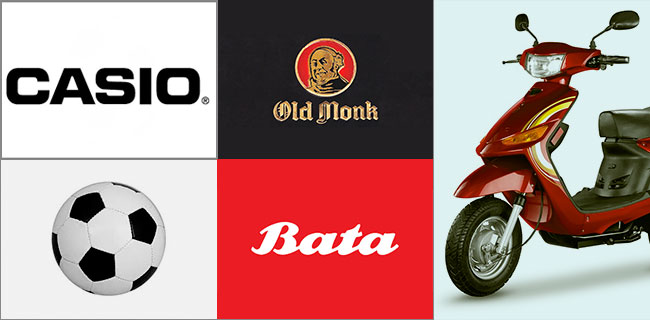
    And quite a few brands have built their raison d’etre on this very platform of standing up and smirking at the typical symbols of status and exclusivity. I have picked my favourite 5, apart from the Smart, that have proven beyond doubt that reverse snobbery is a viable and sustainable space to occupy, both as a philosophy and as a business proposition.


    Casio.

    Specifically the G-shock range that has truly transformed the digital plastic cased and strapped watch into a near icon! It goes off the shelves in no time in any part of the world, appealing across age groups. In any premium watch retailer you will see it displayed alongside far more “premium” brands like Tissot, Armani and cK. It is a rage amongst the gen-Z for its sheer larger than life physical manifestation and built in “cool” features that the premium brands do not offer. Swatch did play the same role very effectively till some time back but its absence from the smartwatch segment has seen it slip in the eyes of the beholder. Titan also missed a beat or two with Fastrack in taking it up the image ladder.


    Old Monk.

    Never could imagine a benign Benedictine padre to be a spirited confidante of millions of homes in India! And also travel across the world bringing both joy and solace to the Indian diaspora. My alma mater has something called OMAXI, the Old Monk Association of XLRI with a ‘chief’ ceremoniously elected and crowned every year! One really committed group I must admit. That glass bottle with the caramel brown liquid has given a beating to some of the biggest global spirits in terms of loyalty, advocacy and also relevance. When your customers release ads on your 60th anniversary you sure know the prayers are on your side!


    Football.

    Yes, the beautiful game came back with a bang with the English Premier League getting into our bloodstream through ESPN a decade and a half back. In a nation obsessed with cricket [still so] and sports like golf and Formula 1 catering to the “elite”, Sir Alex Ferguson came with a sledgehammer and rearranged the living room a wee bit. Football got a bigger footprint beyond its traditional following in Bengal, Kerala, Goa and Punjab. Rich kids went around chilling in Manchester United and Chelsea t-shirts. Then came the wave…La Liga, Bundesliga, Serie A, Champions League and more. It was cool to discuss Mourinho’s follies in the toniest of parties in Delhi and Mumbai. The game of the masses finally saw a fashionable following in the “class”.


    Bata.          

    The good old fuddy-duddy school shoe brand is back with a bang! After decades of meandering around directionless, they have finally hit the purple patch. Excellent product portfolio, much improved product quality and most importantly, a new customer base that sees it cool enough to wear and flaunt. The shopping experience has also been taken a few notches higher with a strong online push. The renewed self-confidence is demonstrated by the introduction of an entry-level fast-fashion brand like FootIn. The brand co-existing with the likes of Hush Puppies, Caterpillar, Scholl and Weinbrenner has actually paid off immensely for its own image makeover.


    The Scooter.

    Its no longer “sissy” to be seen moving around on a scooter anymore. You need not pass off yours as your sister’s before your friends or colleagues. The scooter is cool. Its more responsible. Its more flexible. Its more than a motorcycle. The relaunch of the Chetak by Bajaj tells you that the guys at Akurdi have realised their mistake of vacating this space to competition. The Honda Activa is the largest selling two-wheeler in India. It’s a scooter! The category today offers you a range to choose from based on your personality type – family man = Jupiter, fashionable = Fascino, speed freak = Ntorq, cruiser = Burgman and so on. The scooter looks as aspirational and adorable as any motorcycle. And the fact that it continues to cater to both men and women with consummate ease is what attracts the ‘metrosexual’ to it in droves.


    These are my top 5 picks of brands that thrive on reverse snobbery.

    Just wish the Tata Nano were also on this list.

    Had all the ingredients of being a global icon.

    Alas, that is one big lost opportunity…another story…another day…


  • The Festival of Freedom


    By Avik Chattopadhyay


    We are a land of festivals. There is a phrase in Bengali that goes like “12 months, 13 festivals”.  Just the Bengali ones, mind you. If one were to add up all the festivals across all faiths and occasions, we would end up with probably 10 times that. We just love celebrations, of all types, shapes and sizes. And most brands around us surround us with their specific pieces of communication for each festival. Wishing us health, prosperity, happiness and most of all, spending money.


    Two such festivals fall end-January and mid-August.

    The “feeling nationalist” festivals.

    Tomorrow is one.

    When as a nation we shall see a surge of nationalism and being Indian.


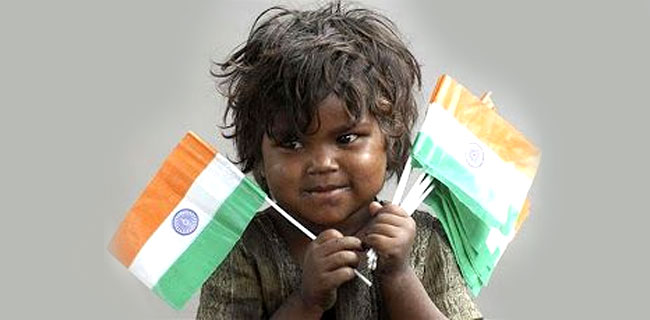
    Over the last one week many of us would have bought the national flag.

    Ones for our car dashboards. Ones for pasting on our windows.

    Ones for placing on our work-desks. Ones for our verandahs and rooftops.


    We will wear traditional clothes and gather at parks and community centres to hoist the national flag, sing the national anthem, exchange pleasantries, hear out a few speeches, and then carry a little box of a samosa and a laddu back to our world of WhatsApp, Twitter and Instagram, passing judgments, drawing conclusions, pouring vitriol and acting holier than thou.


    Brands also have this seasonal booth of national pride.

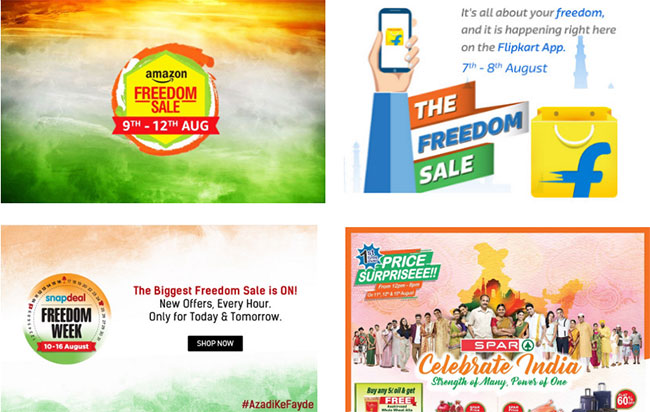
    We actually have multiple “freedom sales” going on.

    Amazon simply calls it the “Freedom Sale”.

    Flipkart says “it’s all about your freedom…”

    Snapdeal promises it is #AzadiKeFayde.

    While Spar encourages you to “Celebrate India. Strength of Many. Power of One.”

    How utterly ridiculous can the entire thing be!?

    First, you misuse the sanctity of an occasion like the Independence Day to push out a commercial activity. And then you wrap cheeky communication around it that makes you think you look smart! What about my freedom does Flipkart really deliver? And what “fayde” [benefits] of freedom does Snapdeal promise me? The Spar one actually goes one step further by saying things that are totally inane. The marketing heads behind these exercises need some brain scanning.


    Then we have lots of brands espousing national pride and the spirit of unity on television. Liberty Shoes. Benetton. Manyavar. Times of India. Lava. And so on. There are some truly ridiculous ones that you can watch on YouTube in collections called “Independence Day Ads” part 1, 2, 3 and so on. I found one by Oyo featuring actors Manoj Bajpayee and Raveena Tandon totally demented. And there is one by PayTM that claims that a cashless India will be corruption free, even if you may give people in kind. The mind boggles. Then there are quite a few that are forcing you to be misty-eyed. But then there are ones by Ambuja and Bajaj that strike the right chord.


    I have three observations to make on all the advertising that is specially prepared for occasions like Independence Day [or even Republic Day].


    Why not for the whole year?

    The values of freedom and being part of a nation cannot be restricted to only 2 weeks of a year, like any other festival. They need to be communicated through the year, in all languages, to reinforce the true meaning of being an Indian, in its inclusiveness, openness, progressiveness and the responsibility that lies in each of us to preserve, nurture and propagate these values. Only then can the message register and resonate. Otherwise we will continue to have one week of cacophony and then slip into yet another festival.


    Why always feel good and not feel disturbed?

    Every piece of communication wants to tug at your heart, create a lump in your throat and leave you misty-eyed. Like a television soap. Freedom entrusts us with the responsibility of not just sharing the good stories but also highlighting the issues of concern. The nation need not be sung to sleep but also woken up rudely with uncomfortable truths staring us in the face. Communication needs to provoke the recipient into thought, debate and positive action. Brands can take up a cause that is close to their heart and wake people up, beyond shares on social media.


    Why not encourage people to give instead of buy?

    Do not make people buy. Instead, teach them to give. To a cause. To specific sections of society. To the underprivileged. To the exploited. To the deserving. We Indians are terrible philanthropists, bordering on being downright inconsiderate and selfish. Let all the e-commerce platforms encourage their members to move beyond the donation boxes in the places of worship onto the streets where millions of our brothers and sisters could benefit from our little contributions.


    Wish brands accord the occasion its due respect and stop treating every national holiday a shopping spree. Also try to resist the temptation of melodrama in your communication as that quite ridicules the sacrifices of our forefathers for the cause. As Netaji had said, “Freedom is not given. It is taken.” Jai Hind!


  • The ICC World Cup of Brands 2019


    By Avik Chattopadhyay


    Cricket is possibly the only thing that binds India on this date. A few others like the National Anthem, the Constitution and the Flag are going through their phases of revisionism and identity-crisis. Bollywood has never been a unifier! If you feel offended, ask the movie-goer in Chennai and Cochin for the right perspective.

    So, when the ICC One-Day Cricket World Cup happens, every brand wants to ride the bandwagon. Either directly as ICC sponsors and partners or with the media vehicle Star Sports. In either case, paying top money for primetime. We were pitted against England as the favourites to win the cup, so eyeballs would be guaranteed till the 12th of July.

    The biggest sponsors of this world cup were Kohli and Dhoni.

    Kohli was on air for Uber, Shyam Steel, Google Duo and Nuvoco Vista.

    MSD for Dream 11, SRMB Steel, Orient LED, MasterCard and Bharat Matrimony.

    Pardon me if I have missed out any more.

    Through the tournament I just hoped some guy with a sense of humour would announce, “This match is brought to you by Nissan, Oppo, Coca-Cola, MRF, Virat Kohli and MS Dhoni.” But that moment never came.

    Instead, India stopped at the semis.

    And so did most of the eyeballs.

    Now that the nation is at relative peace and debating only about ICC rules and New Zealand being short-circuited [almost patronisingly], here is a good time to look at how the brands on the b[r]andwagon fared. My assessment basically from the multitude of products and services that spent oodles of money on television over the 48 matches…into 3 sets of the good, the bad and the ridiculous. They are in no ranking order, hence the alphabetical order.


    The Good 5


    Coca-Cola – adorable communication featuring Paresh Rawal and Ranbeer Kapoor. Simple story, brilliantly told. Though one might argue the open invitation to gulp down gallons of aerated sugar water, the sheer quality of the campaign pardons the sin. “Chaar saal dete hain world cup waale…” should go on to become an iconic quip over time.


    Dream 11 – in the 5 WhatsApp groups I am part of, there were at least a dozen individuals hooked on to this site. Old and middle aged people, mind you, leading otherwise responsible family and corporate lives, indulging in betting! Obviously, the communication, simple and compelling enough, made the most of the occasion. MSD kept well here…no byes and drops.


    Google Search – while the Google Duo communication was quite flaky, the one by Search was bang on! Again, like Dream 11, made the most of the occasion.


    Swiggy – they had started off during the IPL, but the excellent campaign continued through the world cup. The brilliant tie-ins with various cricketing situations through the commentary brought a smile on millions’ faces I am sure. They had quite a few stories on air but my favourite one is the “Batsmen are taking a risk here…” featuring the two old friends ordering quesadilla and lasagne!


    Uber – very tactical and topical but well communicated and that is why it is in my list of the Good 5. Virat played well, on all types of pitches, in all conditions. Disarming and to the point. Only I could not understand playing the ad on the final. But that is for another day and under another subject…


    The Bad 5 – these are brands that spent a lot of money on advertising that did not work, according to me, for various reasons, specific to each.


    Fogg – we know that “Fagg chal raha hai” but why? There was no new story…nothing on the occasion of the world cup. They are smart communicators, hence I was sure disappointed when they spent a lot of money rehashing their IPL messaging. And I just wish we stop playing up the anti-Pakistan bit any more. What is innocent fun at one time can become laboured if stretched beyond relevance.


    Kamla Pasand – this one really shook me up by the scruff of my neck. The dream of 130 crore people! Give me a break please. I expect such talk in Parliament, not for a sport catering to the middle class and above. And all that flag waving? Nope, does not work. Being a ‘pan masala’ does not help things. Do not try to be Amul or Tata Tea. To communicate like them you need to switch businesses.


    MasterCard – okay, so you got a couple new stories to tell, but do you need two celebrities to drive home your message? Also, too many messages I thought, with none clearly registering [in my mind at least, in spite of being a MasterCard user]. Visa did a much better job with a single story being driven home.


    Oppo – you are the sponsor of the Indian team and the ICC and this is all that you do…bring a pretty girl close to a prettier bird?! Did you think that just your name appearing on shirts, grounds and backdrops would do the job? Nope, according to me. That was just your name that millions saw across the cricket playing world, not your brand. Lost a big chance of doing something truly relevant and memorable.


    Pepsi – I know, I know…they were not on television but so what…they did spend a lot of money trying to out-do Coke. They thought they did this super clever “digital” campaign forcing the grand old lady Charulata Patel do weird poses with her fingers. You think that’s swag? Take a good swig!


    The Ridiculous 5 – these are the jewels that I have not figured out why they were there in the first place! I am sure they still do not have the answer themselves.


    Apollo Tyres – just because MRF is there? Huh? You think that is reason enough? “Ambush marketing” in the age of AI and ML!! Sad. Please think up a better reason. It’s a nice, feel-good ad, but totally wasted on this platform. Therefore, money well wasted.


    Bharat Matrimony – we know young immature couples do propose at the cricket ground or in flights taking them to one, but you really want to talk about all this just because MSD is your brand ambassador? This is no way to “maximise” presence and squeeze the last bit from your lemon. Lemon!


    Nissan – you are one of the world’s most respected brands and this is what you do? Make an SUV reverse into the crease, create an android hand and smash a metallic ball? Seriously? Katayama-san would commit hara-kiri on this!


    Orient LED – I was a kid once so let’s get this straight – kids do not study during summer vacations and when a world cup is on…any world cup. Period. So, stop the preaching on whether the LED light flickers or not. That’s when exams come up. Okay?


    Shyam Steel – every time I saw yet one more ad of the most loving couple in the cricketing world, I cried. For I wanted it to end as soon as it started and the only way out was to look away or quickly check WhatsApp messages. Need I say more?


    Avik Chattopadhyay is a senior brand and business strategist based in Gurugram. This is the first in a new series of columns he will write for MxMIndia.
  • What ails auto sales in India


    By Avik Chattopadhyay


    The Indian automobile industry, like elsewhere in the world, is an important barometer for the country’s economic health. And within the industry, passenger cars [including SUVs, UVs, MPVs and vans] stand on a pedestal as they are still aspirational [given a still very low penetration per household], most written about and, symbolic of status and success.


     

    When sales of passenger cars go up, everybody is happy…the automakers, the dealers, the finance companies, the service providers, the economists, the revenue collectors, the policymakers and…the consumer. Analysts say it is an outcome of “sentiment”…when the prospective new car buyer/ upgrader feels secure and optimistic about the economy therefore justifying the car purchase.


    So, after some 24 months of stunted car sales, when the overall industry numbers are looking more optimistic in terms of actual growth, everybody seems to be feeling good again. Analysts have predicted a 3-5% growth in numbers over 2013. Just that, on a closer look, the growth is being experienced by only a handful of brands and not the industry across the board. The sentiment of the customer has turned positive towards only those brands that have got their fundamentals in place. Maruti Suzuki, Hyundai and Honda have been the real beneficiaries. Mahindra seems to be getting back into action now. I am keeping the “luxury” brands out of this as that stratospheric segment is on its own roll anyway. But the others…almost 15-odd brands…made up of some truly global juggernauts and a couple local powerbases are still feeling the heat. A few have been at it for close to two decades now. And they have no dearth of “products”, the most popular punching bag cited for non-performance!


    What really ails these brands? Why do they not sell? Why do they not connect? Why are they not aspirational enough for more customers to embrace them?


    Five factors, given my experience of being part of the automotive industry.


    The 10% marketshare malady

    This is where the problem starts. Big brands have big egos. They enter the market on a high horse. Hence we hear of the “we will garner 10% of the Indian market by so-and-so year” statements from time to time by these big global brands.Nobody has really said that they aim for the most satisfied customers! Quite simply, putting the cart before the horse. Without creating relevance, articulating the promise and creating mechanisms of actually delivering it, brands think that setting up a plant and opening showrooms will ensure long term sales. After the initial euphoria dies down, the marketshare malady lies exposed.


    After-sales comes…after sales

    The service network should be the first piece in the business puzzle to be put in place, but sadly it is not. A just-released study by American Express reiterates that brand loyalty increases in India by a multiplier through better after-sales service. And this is common sense for a highly-involved product category like automobiles. However, lack of servicing capacity, incapable skills, non-availability of spares and shoddy customer relationship programmes have let down the early brand adopters, leading to negative word-of-mouth and eventual brand disconnect. One cannot give the erring brands any special ‘gyaan’ on the remedy except for requesting them to get the basics right and learn from the ones who are successful.


    Marketing = advertising + FB page + Twitter handle

    This aspect of the business could make a real difference, in terms of sustainable customer engagement in the brand’s nurturing. While the marketing function should be all-encompassing covering right from the right product portfolio to segmented promotional tactics, the reality is that the function is still seen as only an advertising arm churning our TVCs and print ads, having an FB page and running a Twitter handle. Marketing has to be both more strategic as well as on-ground, being the veritable bridge for the brand.


    Lack of internal engagement

    Companies plan and spend a lot of resources on training the salespersons at the dealerships [and rightly so] to ensure they sell better. But what about the employees? How are they inducted? What is the brand immersion programme for them? How are pride and conviction built? Are they seen as employees or stakeholders? Are they treated as headcount or potential brand ambassadors? Internal engagement is a much neglected practice. Organisations somewhere feel that working for them is something of a privilege for the employee…a feeling totally misplaced as quality manpower is precious and loyalty a sustainable asset.


    A leadership disconnect?

    The fifth and last factor may be the touchy for some, but I am of the opinion that there are too many career ‘sales’ people heading organisations. They bring a uni-dimensional approach to the business, of moving from one monthly promotional / discount scheme to another, without much focus on building brand relevance and sustainable customer management. They are not typically innovative or willing to experiment. If one analyses the brands that are successful in this market, one will notice that the leadership is well-rounded and with varying backgrounds like production, procurement, HR or for that matter, even marketing.


    Avik Chattopadhyay is a leading marketing and brand consultant. He has spent over two decades in the automotive industry and was also CEO of Saffron Brands India. This article first appeared in ‘dna of brands’ dated November 3.


  • Madison Media to manage digital mandate for Dr. Fixit

    By A Correspondent


    Madison Media Digital has announced that it will handle the digital performance mandate for Dr. Fixit’s brand in addition to the already allocated media mandate of Pidilite. The agency recently won the performance business of Dr. Fixit in a multi-agency pitch. Madison Media has been handling the Media AOR for all Pidilite brands since 2011.


    Said Vivek Sharma, Chief Marketing Officer, Pidilite Industries: “Pidilite delivers path-breaking work year after year with its agencies that understand our business and behave like partners. The commitment demonstrated by Madison towards Pidilite since 2011 made it easier for us to decide once they showcased their digital performance expertise.”


    Added Vishal Chinchankar, Chief Digital Officer, Madison Media: “We’re extremely excited that Pidilite has consolidated their digital media and performance mandate with us. We are confident that our data- driven approach will bring greater outcomes at scale. It’s indeed a great way to start the year.”


  • Dentsu India Slingshot wins creative mandate for JBL and Harman Kardon

    By A Correspondent


    Dentsu India Slingshot has bagged the creative and media duties for Harman Kardon and JBL. As part of the mandate, the agency will now handle marketing communications, campaign design and media planning for the brands won.


    Simi Sabahaney

    Said Simi Sabhaney, CEO, Dentsu India: “It was music to my ears to hear the news of winning the communication and media mandate for both Harmon Kardon and JBL. We are proud to associate with them.”


    Kunal Dubey

    In a joint statement, Kunal Dubey, VP & Head of Business, and Lucky Saini, VP Digital & Marketing Solutions, Dentsu India Slingshot added: “Harman Kardon and JBL are both iconic brands from the house of Harman. Winning the end-to-end media, communications and strategy mandate of both these brands is a big victory for us. It enables us to think holistically on brand building. We are extremely excited to partner with them on this journey. Our aim is to create iconic work that not just builds the brand but also propels the business forward.”


    Yogesh Nambiar

    Speaking on the partnership, Yogesh Nambiar, Head, Marketing, Harman India added: “We were on the lookout for an integrated agency that could manage the end-to-end marketing mandate for our key brands – Harman Kardon and JBL. In Dentsu Slingshot, we found a team that had the capabilities and unique business model to effectively manage these requirements. Our outlook for the coming future is bullish and we are excited to partner with Slingshot while we seek exponential growth for our business in India.”


  • Aditya Birla Sun Life MF launches investor education campaign

    By A Correspondent


    Aditya Birla Sun Life Mutual Fund (ABSLMF) has launched an investor education campaign across 22 TV channels that comprise broadcast news media as well as GECs of both English and regional languages. Spread over three months, the campaign covers two films conceptualised to highlight one key aspect each of investing in mutual funds. They emphasise on the core theme of #WINWITHSIP to convey how SIP as an investment tool helps to mitigate market volatility and can be leveraged for diversifying investments through asset allocation.


    Commenting on the choice of theme, Ajay Kakar, Chief Marketing Officer – Aditya Birla Capital added, “This integrated campaign is an attempt to reach out through various touchpoints and appropriate the relevance of SIP as the right instrument for any market environment. It educates investors about the nuances of investing and assists them to take informed financial decisions. We are going beyond the ‘what’ to explain the ‘how’ with a listen and learn approach. This proposition is especially relevant in today’s volatile market environment where many new investors and fence sitters are beginning to wonder if money not invested is money saved”. Directed by Soaeb Mohammed, the TVC has been created by Taproot Dentsu India with Early Man Film.


    Commenting about the film, Ayesha Ghosh – General Manager, Taproot Dentsu added: “This investor education effort strives to have the consumer work things out for himself, thus giving all the more potency to #WINWITHSIP. With skilful direction by Soaeb Mohammed of Early Man Film, we have kept the pace snappy and the questions quick-fire, evoking spontaneous answers that we feel viewers will find honest and relatable.”

  • Times OOH executes outdoor initiative for Raymond

    By A Correspondent


    Times OOH has installed a mannequin at Indore International Airport over the baggage belt to showcase the various new formal wear looks of the brand available at prominent stores across the city.


    Said Dhanraj Israni, Product Head- Airports at Times OOH: “At Times OOH, we believe in bringing world-class airport media advertising opportunities to our brand partners that enable them to capture the imagination of their target audience in the most effective yet creative ways. Raymond’s Complete Man installation was aimed at grabbing the eyeballs of business travellers of this vibrant commercial hub with its sleek look and fit while highlighting the premium feel that has always been associated with the Raymond brand.”


  • Eros Now partners with Eurostar Group

    By A Correspondent


    Eros Now has announced its partnership with UAE-based digital retail player, Eurostar Group. The association enables the large diaspora from the Indian sub-continent and locals across GCC countries to access Eros Now’s vast content library of 12,000 plus movies, music videos, original shows and more.


    Commenting on the partnership, Ali Hussein, CEO, Eros Now said: “We at Eros Now believe in constantly enhancing consumer experience and expand reach by partnering with relevant leading brands globally. The partnership with Eurostar is a testament to our endeavour in offering easy accessibility and unparalleled entertainment to the massive consumer base across GCC countries. We are confident that with a plethora of choices as well as regional languages to choose from, audiences in the GCC will find there is no better place to go.”


    Added Shaan Jethwani, Executive Director of Eurostar: “We are happy to partner with Eros Now to offer their bouquet of content to our audience. The increasing demand for Indian entertainment content in GCC markets is the driving force behind this decision. With Eurostar’s legacy on Pay TV distribution, we envisage to deliver its vast entertainment content to a massive consumer base across GCC countries.”


  • Ignite Mudra brings the Michelin Man back on the outdoor landscape

    By A Correspondent


    Tyre manufacturer Michelin is back on the Indian outdoor landscape putting its iconic brand mascot, the Michelin Man in a new brand awareness campaign. The campaign tagline ‘For those who drive the change’ focuses on safety, longevity, and fuel-efficiency of Michelin tyres.


    Ignite Mudra won the OOH mandate to strategically design and execute the campaign. The campaign has been crafted to endorse and to create awareness about the brand targeting the car owners who seek premium driving pleasure. The campaign has been executed across 15 cities including metros’ and mini- metros.


    Said Saradamani Dey, Director – Digital, Brand and Image, Communications, Africa India Middle East, Michelin: “Michelin India’s #IndiaDrivesChange is our commitment to be a reliable partner in progress. We have weaved this ethos in this 360 degree communication approach, with OOH as a key pillar. We are happy with the innovations that Ignite Mudra has been able to bring in this space,”


    Added Gour Gupta, Founder Tribes & MD Ignite Mudra: “I feel extremely proud of our association with Michelin and would like to thank the client in trusting us with their OOH mandate. Our endeavour is always to deliver beyond the expectation of our esteemed clients. A brilliant creative by Michelin and backed with superior planning and execution has created a huge impact for the brand.”


  • Happydent partners Smile Foundation to launch #HappydentSparklingSmile

    By A Correspondent


    Happydent has partnered with Smile Foundation to launch #HappydentSparklingSmile, a digital campaign under which brand is urging consumers to capture candid smiles to help support the education of underprivileged children.


    For this campaign, the brand has partnered with the Indian photographers Abhinav Chandel, Praveen Bhat, Shramona Poddar and Zaid Salman, to capture candid sparkling smiles around them. Alongside, the brand is urging its consumers to share the candid moments on brand’s social handles through a simple process detailed out in the campaign video.


    Elaborating on this campaign and partnership, Rohit Kapoor, Director Marketing, Perfetti Van Melle India said: “We are delighted to be partnering with Smile Foundation for this noble cause. As a responsible corporate, Perfetti Van Melle believes in giving back to the communities where we operate and we aim to make a difference to the lives of these wonderful children by providing them better access to education. The cause coheres with Happydent’s brand proposition of adding ‘sparkling smiles’ to people’s lives. #HappydentSparklingSmile is a simple initiative at heart to ensure we are able to light up the lives of some underprivileged kids.”


    Added Santanu Mishra, Co-Founder and Trustee, Smile Foundation: “We are quite excited to partner with Happydent on this campaign.  The idea behind this partnership is to see more and more children enrolled in schools. Despite, us having a law that makes education a fundamental right of every child between the ages of 6 and 14, the harsh reality is that at least 32 million Indian children of age up to 13 years have never attended any school, majority of them belonging to the socially disadvantaged class. As socially responsible organizations, we will together work to bring back smiles to these children.”