
Category: MARKETING

  • L’Oreal long leap


    By Dibeyendu Ganguly


    Waiting at the reception of L’Oreal India’s corporate headquarters in a new high-rise in Parel, we watch a steady stream of cool people with funky hairstyles breeze in and out the door.


    Could they be employees living their product, we wonder? Or business associates maybe? The mystery’s solved when we go in to meet managing director Jean-Christophe Letellier. “They’re hairdressers,” he says. “Our hairdressing academy is integrated into our office space. It keeps us in contact with our customers. We don’t want a closed office that is shut out from the real world.”


    L’Oreal has 50 academies across the country where it trains 1.5 lakh hairdressers annually in the art of colouring, styling, perming, straightening – all using its own products.


    In an unorganised market, the company has helped upgrade salons and even turned a few of them into chains. This high level of engagement with small salon owners and individual hairdressers has propelled it to the leadership spot in a market where other global brands (Schwarzkopf of Germany, for example) have faltered. Today, it’s normal to find even the most ordinary salons offering L’Oreal as the brand of choice for hair colour.


    “It has taken a huge effort at ground level,” says Dinesh Dayal, L’Oreal’s chief operating officer, who has been with the company for 20 years. “Education is at the heart of our operation. You need a lot of patience, resilience and staying power to succeed.” The salon segment is important, but it is still only 20% of L’Oreal India’s Rs 1,800 crore annual turnover (2013).


    The big chunk of the market is FMCG, where L’Oreal competes with the likes of Unilever, P&G and Lakme in hair care, skin care and cosmetics. One of L’Oreal’s most successful FMCG products has been Garnier Colour Naturals, a crème hair dye launched in 2002 and priced at a fraction of the global brand, L’Oreal Paris Excellence.


    Developed in L’Oreal’s Research Centre in Paris for the Indian market, the product added a new benefit that it could be stored after opening and did not have to be used in one go. It was a hit and is now the market leader in hair colours by far.


    Mr Letellier, who was earlier based in Singapore, heading L’Oreal’s FMCG business for Asia, plans to launch more products developed specifically for the Indian market. He’s spending the largest chunk of his Rs 1,000 crore investment budget for 2011-16 on research & innovation (R&I).


    L’Oreal has always had a small R&I centre at its manufacturing facility in Pune. Last year, it commissioned a larger R&I centre in Mumbai and this year it launched a phytochemistry laboratory for basic research in Bangalore. “Our only chance to be big in India is to invent new products, new categories.


    R&I is at the heart of our strategy here,” says Mr Letellier. A visit to the L’Oreal R&I Centre, spread over two floors in a high-rise in the suburb of Chembur, is revealing. One section has a number of bathrooms where people bathe using L’Oreal products.


    In another section, a group of women are being quizzed by a young lady on their experience with a new face mask while the scientists who are formulating the product monitor the interview behind a one-way mirror, much like in police interrogation rooms. Upstairs, in the laboratory, a chemist is trying out the effects of different dye formulations on strands of Indian hair.


    Another chemist is creating an array of colour options for a hair conditioner, which will later be tested on consumers downstairs. Overseeing all this is Francois Pradier, who arrived in Mumbai from Paris six months ago to take charge as director (R&I) L’Oreal India.


    “We want to attack the market with brand new technologies and products in all categories. We are not interested in making small improvements to existing products,” he says.


    L’Oreal India has just launched a new range of shampoos and conditioners for the scalp under its L’Oreal Paris brand name. Next in line is a hair oil and fairness cream with a talc-like texture, especially formulated for hot and humid conditions, which will be marketed under the Garnier name.


    Meanwhile, the new phytochemistry laboratory in Bangalore has the job of analysing the efficacy of a number of ayurvedic ingredients. Mr Pradier is especially interested in working with traditional products like henna to create ‘bridge products’ that deliver better results while using these familiar ingredients.


    “Expect to hear some breakthough announcements from me in two years,” he says. “We will use all the knowledge of L’Oreal world-wide research to develop something for the Indian consumer. We will also create totally new formulations in our laboratories in India from scratch.”


    Model Citizen

    Beauty, they say, is only skin deep. Who would know that letter than a skin care specialist like L’Oreal? Which is why managing director Jean-Christophe Letellier is seeing to it that the organisation gains inner radiance to go with its good looks.


    “India is part of our universalisation strategy. We want to leave a footprint here as a socially responsible company,” he says. A visible symbol of L’Oreal commitment to being a model corporate citizen is Emmanuel Lulin.


    A Masters in law from the University of Chicago, Mr Lulin has been with L’Oreal for 14 years, seven of which have been as global chief ethics officer. When we meet him, he’s preparing a talk he’s going to give the 300 employees at the company’s Mumbai headquarters.


    “My message is going to be: speak up. We are a very transparent organisation where nobody needs to hold back on anything. We have many new hires and they need to know about the L’Oreal culture,” he says. Mr Lulin defines ethics very broadly as practising correct behaviour, as individuals and as an organisation. “Ethics starts where legal compliance stops,” he says.


    “Ethics is about discretionary decisions and it touches every activity in the organisation.” As global corporates expand into emerging markets that sometimes have a poor record in human rights and corruption, the issue of ethics has gained importance – hence Mr Lulin.


    “We have to be extremely attentive to the local environment, whether it is Brazil, Argentina, Russia or India. Business practises may be different here, but we have to send a message that L’Oreal has zero tolerance for any kind of unethical behaviour,” he says.


    Bribery, discrimination, inadequate safety, conflict of interest, sexual harassment – these have always been problematic issues. The difference now is that information travels much faster nothing stays hidden for long. “If society believes an organisation is unethical, it will sooner or later lose its licence to operate. In today’s world, it will happen much sooner,” says Mr Lulin.


    It has taken a huge effort at ground level. Education is at the heart of our operation. You need a lot of patience, resilience and staying power to succeed.


    Source:The Economic Times

    Copyright © 2014, Bennett, Coleman & Co. Ltd. All Rights Reserved

    Licensed to republish

     

  • Timex modifies positioning to ‘Wear it Well’

    By a correspondent


    Poised as the largest marketing and rebranding exercise ever taken, Timex has unveiled a multi-million dollar marketing campaign that focuses on its American heritage and its portfolio of watches which feature classic styles that stand the test of time.


    The multi-platform ‘Wear it Wellâ„¢’ campaign acknowledges that men and women no longer wear a watch to simply tell time – they wear a watch to make a statement about themselves.


    “Our objective in developing our new positioning and advertising campaign was to help this generation rediscover Timex,” said Paolo Marai, President, Timex Business Unit. “We wanted to communicate that our brand is relevant by leveraging what has made us great for the past 160 years – that Timex is truly timeless and that Timex watches are classics and never go out of style. Wear it Well does exactly that.”


    Created by Toth + Co, an award winning marketing agency based in Cambridge, MA, the campaign is centered around a series of black and white photographs that provide insights into the character of the people who wear Timex watches. Various executions of the ads will appear in print, on-line and outdoor media throughout the world.


  • Brands and retailers team up to offer 0% EMI schemes

    By Writankar Mukherjee


    Zero percent EMI schemes are back. Not that they’d gone away altogether, but offers had dwindled as banks got cold feet after the Reserve Bank of India frowned upon the practice because it seemed to be a way of concealing charges. However, with customers staying away, retailers are entering into business arrangements with brands to draw them back to showrooms, bypassing the banks.


    Under the new arrangement, retailers and manufacturers will share the interest cost on such offers that were earlier taken on by banks and brands. All such offers will be on the (lower) market operating price and not the maximum retail price (MRP) as it often used to be earlier, another grey area that the central bank had pointed out in September last year.


    The country’s largest cellphone retail chain, Essar Group-owned The Mobile Store, launched a zero percent scheme 10 days ago in partnership with Samsung, Sony and Nokia on smartphones bought through credit cards.


    Other chains such as Next Retail, PlanetM Retail and Future Group said they are in the process of launching such schemes, while Tata-owned Croma and Reliance Digital said they would be evaluating such programmes. Sony has re-launched a scheme for its televisions, but it’s taking on all of the interest cost.


    The Mobile Store CEO Himanshu Chakrawarti said there has been a sudden pickup in sales, up 30-35% in the last seven days, through the plan. “Sales are at par with Diwali. A bridge such as interest-free EMI (equated monthly installment) was required and hence we re-launched the zero EMI offer across all brands and banks,” he said.


    Before the RBI notification, zero percent EMI plans accounted for 20-30% of sales of electronic products such as mobile phones, laptops, tablets, LED televisions and home appliances.


    Banks withdrew the credit card schemes in October and started to focus on consumer goods loans, but this failed to pick up the slack as the formalities were cumbersome and interest rates were high. Also, consumer demand has been slack since Diwali with just an occasional bump on special sale days.


    Videocon-group owned cellphone chain PlanetM Retail CEO Sanjay Karwa said the retailer will launch its zero percent scheme by April. “We have got a positive sign from the brands who would share the interest burden and are talking to NBFCs (non-banking finance companies) so that the EMI scheme can also be availed of by those who don’t have credit cards,” he said.


    A senior Sony India official said the company’s scheme has been launched with NBFCs without any processing fees. “Post the RBI diktat when we re-launched the scheme, we strictly informed our trade partners that they won’t charge anything extra and offer it on the market price to comply with the advisory,” he said, requesting anonymity.


    RBI said last year that the schemes “only serve the purpose of (luring) and exploiting vulnerable customers.”


    The central bank had said the interest component was being camouflaged and passed on to consumers in the form of a processing fee. Besides this, such loans were mostly on MRP, which was always higher than the actual market price.


    RBI mandated banks to offer loans on the market price of the product and be open about interest costs and the final price mechanism. The new zero interest schemes will ensure transparency with the credit card statement of the consumer showing how brands and retailers have subsidised the interest cost.


    Ajit Joshi, chief executive officer and MD at Infiniti Retail, which owns the Croma chain of stores, said the company would seek legal opinion before re-launching zero percent EMI schemes.


    “Of course, such a scheme would help to boost demand of premium products but we would evaluate it thoroughly before re-launching it,” Joshi said.


    A senior Reliance Retail official said that the company would be interested in re-launching such schemes now that the brands were picking up the interest cost.


    Source:The Economic Times

    Copyright © 2014, Bennett, Coleman & Co. Ltd. All Rights Reserved

    Licensed to republish


  • Bata goes ‘waist down’ with its new TVC

    By a correspondent


    Leading footwear retailer and manufacturer Bata announced the launch of its new Spring Summer’14 marketing campaign for its entire range of footwear, accessories, bags and glasses. The campaign features a 360-degree multimedia integration of TV commercial, radio, cinema, print, innovative outdoor, events, promotions and digital platforms.


    The TV commercial has been innovatively shot to capture slice-of-life situations in the lives of people through a literal focus on the footwear. The film uses a unique technique of following those real life moments by showing the action only from knee down. The situations captured include from the nervous to the dramatic to the adventurous, including a group of students eagerly looking at their exam results, colleagues watching a cricket match in office and a group of young girls enjoying their ‘day out.’ The film also showcases all the leading brands in their latest styles from Bata in an aspirational way. Shot in a contemporary manner and stitched together using fast-paced music, the film reiterates the brand’s presence in the lives of individuals, cutting across the barriers of age, a necessity considering the eclectic portfolio of Bata.


    The campaign is yet another remarkable milestone in Bata’s journey of symbolizing that shoes can be lifestyle led, young, vibrant and yet comfortable. The campaign’s “waist down” TVC treatment captures how the shoe line’s range covers the gamut of shoes from business indoors to comfortable outdoors.


    Sumit Kumar, Vice President and Head of Marketing and Customer Service, Bata India said, “Drawing on our vast experience and understanding of the Indian consumer, we have designed our latest 360-degree marketing campaign to appeal to the sensibilities of the Indian consumer across age groups and demographic profiles. We have a fantastic range of stylish, on-trend and contemporary products that will appeal not only to our loyal customers but also to a wider audience. We intend to communicate the brand as aspirational and yet comfortable. We are continuing our external marketing journey with fabulous in-store environment featuring our new global concept stores to make shopping a pleasurable experience for our customers.”


    Sonal Dabral
    Sonal Dabral

    Sonal Dabral, Chairman & CCO, DDB Mudra Group said, A whole generation of Indians have grown up with Bata and it’s an inseparable part of everyone’s growing up memories. The strategy and the idea behind the new campaign is to build on this equity and to also help the brand make a fresh connect with the youth. I am really excited for the TVC we have worked on. A story told by the stylish Bata shoes themselves which I’m sure will do its bit in helping make this iconic brand a vibrant and colourful brand of today transforming it from just a shoe to a destination where life meets style.”


  • And now the Sau Crore ad campaign

    The Big Bazaar and DDB Mudra teams while announcing the campaign to the media. Sonal Dabral was travelling


    By A Correspondent


    If their offices aren’t buzzing with business cards from television adsales folk, they will do so now. Future Group’s Big Bazaar and its Media AOR Allied Media (of the Percept group) will see budgets for television adspends zooming from 10 to 40 percent. Printwallahs needn’t despair: while the allocation will go down from the current 70 taka to 40, in value terms the moolah isn’t going to go down.


    The purse of Rs 200 crore on adspends is going to expand by another Rs 75 crore. Rs 100 crore is going to be spent on the TVCs alone, with another Rs 20 crore on allied activities around the expanded purse of Rs 275 crore now earmarked for TVCs.


    Inspired by Swedish homestore Ikea’s 365 ads in 365 days campaign, the Big Bazaar bosses commissioned its creative agency DDB Mudra to craft a strategy which the agency’s Group CEO and Managing Director Madhukar Kamath says is the biggest ever marketing campaign he has seen in his near four-decade-long career. “We were commissioned five weeks back, and produced the commercial within days,” said Kamath.


    For Future Group CEO Kishore Biyani, the attempt is to adapt to changing times. He isn’t fazed by the extra marketing spends with Rs 120 crore on this year-long blitz. “The increase in sales will take care of the enhanced spends,” he told MxMIndia. Added Sandeep Tarkas, President, Customer Strategy (Future Group) and CEO (Future Media): “We hope to see sales grow by 20 per cent on the back of this campaign.” Until now, the hypermart thinktank’s strategy has been on tactical advertising, but this 52-TVC campaign which goes on air on March 24 takes one product every week from Big Bazaar and through them demonstrate how these products are making the lives of Indians more beautiful. The campaign will be backed by outdoor, radio and in-store visual merchandising. Print will not be a part of the campaign, though.


    Each TVC is a light-hearted commentary on the changes that are happening in Indian society, and make for interesting stories of the role that products play in making people’s life more beautiful and enriching. Added SonalDabral, Chairman & CCO, DDB Mudra Group: “In terms of tonality, we have kept it real because that’s the voice of Big Bazaar. These are not ad films they are closely observed 52 sparkling stories of the small changes Big Bazaar and its products are bringing to everyday India.”


    Added Mr Kamath: “It is a unique, never done before and a brave campaign which can only come from a leader like Big Bazaar. The brand has been at the forefront of innovation and leading change. This campaign redefines the step-change that Big Bazaar is making in its relationship with its current and prospective shoppers. It will further establish Big Bazaar as a company that sells products which enable and inspire every Indian to make their world look beautiful on the outside, as well as on the inside.”


  • PC to work her magic for DS Group

    By a correspondent


    Rajnigandha Silver Pearls has announced Priyanka Chopra as their brand ambassador. The actor features in the new TVC announcing the launch of saffron blended, silver coated cardamom seeds, ‘Rajnigandha Silver Pearls’ from the house of DS Group.


    The new 60-sec TVC celebrates the little gestures of goodness that we make despite our hectic day-to-day life, with the slogan ‘Achai ki ek Alag hi Chamak hoti hai ‘. The new catchphrase re-emphasizes the brand’s belief that real goodness always shines through in our words and deeds, and sets us apart as heroes of real life.


    Commenting on this occasion, Rajeev Jain, Senior General Manager, Marketing, Dharampal Satyapal Ltd. said, “Rajnigandha brand has always been a hallmark of achievement and our new product ‘Rajnigandha Silver Pearls’ that shares the same brand’s DNA, can be seen as symbolic of individuals who are successful and yet uphold a strong humanistic approach to life. Priyanka Chopra has been appointed as the brand ambassador as she is an epitome of a global achiever, and at the same time a grounded and humble person who is always ready to give time and effort for a good cause. The TV commercial highlights exactly this aspect of her life”.


    The film has been created by Dentsu Marcom and narrates the story of a successful film-star who has a massive following because of her inherent goodness. It shows interwoven scenes that narrate examples of little acts of goodness — Priyanka Chopra is seen performing an Indian classical dance, making a moment special for a little boy, throwing a scarf at the screaming sailors and surprising an old woman with a birthday cake.


    Finally we see the classical dance performance culminating in her final act of goodness where Priyanka Chopra calls her team for the final bow in front of the audience to acknowledge their contribution to the applause that she has received. It is in the journey back home, that she tastes Rajnigandha Silver Pearls and her chauffer looks through the mirror to realize that ‘achchai ki ek alag chamak hoti hai’.


    Titus Upputuru, National Creative Director, Dentsu Marcom said, “Rajnigandha Silver Pearls is saffron blended silver-coated cardamom seeds (Elaichi) Cardamom  is good for health, silver has shine, so we came up with ‘goodness shines’. At the same time we also considered the lineage of Rajnigandha which stood for success and achievement. When we decided to go ahead with Priyanka Chopra as the face of the brand, we thought let’s show stardom in a new light. Thus was born ‘achchai ki ek alag chamak hoti hai’”.


  • Nestle urges consumers to ‘share your goodness’

    By a correspondent


    Nestlé India has unveiled a couple of emotional campaigns with an aim to connect with the consumers with a simple message – ‘Share your goodness’.


    According to a statement issued by the company, the campaign originates from the belief that each one of us has an element of goodness and it comes from the values, beliefs, strengths, ideas, understanding, and capabilities that we have learnt through others. All of us are capable of sharing this goodness. When we share these with others around us, we make their lives richer and our world more harmonious. As the leader in Nutrition, Health, and Wellness, Nestlé understands that food is often the most effective way to share our goodness.


    In our culture in India, consuming food goes beyond the pleasure of consumption and nutrition, and is a natural opportunity to share our lives and build healthy relationships with our family and the community. We have all grown up in family environments. We have sat together over meals, shared stories and our experiences, learnt of joy and pain, developed our values and created our dreams. Our lives became richer in those moments of preparing, serving and eating together, and experiencing the Goodness that everyone shared.  Today unfortunately, we are so involved with the routine and stress in our lives that we are forgetting this simple act of sharing our goodness. If we want our world to be harmonious and healthy, and become better, then we need to keep the cycle of goodness moving by continuously sharing our Goodness. Nestlé’s promise is ‘Good Food, Good Life’ and since it also reflects our own traditions and culture in India, our effort is to make everyone refocus on the cycle of goodness.


    In this campaign, Nestlé seeks to motivate people to look into their own experiences, share their goodness, recognize the goodness of others, engage with each other, and create conversations that bring alive the values and emotions that spread warmth. In its first phase the campaign has been launched on the digital media with two films that touch upon instinctive human emotions and values, and is also visible on television.


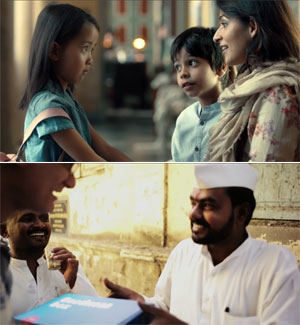
    The first film is a story of two siblings and their insecurities, and how they bond with each other while the second film is about the Dabba-walas of Mumbai and how Nestlé India showed its appreciation for these precious people who have delivered hot home-made food to Mumbaikars every-day, and thanked them for their values of dedication, punctuality and commitment. Each of the 5000 Dabbawalas was given a ‘Goodness Box’ filled with our products.


    The campaign will be rolled out across media platforms in a sustained manner and will encourage people to share their goodness with others and recognize the goodness that they see. Nestlé India has also activated #ShareYourGoodness on Twitter to help enable conversations and sharing of ideas, experiences and personal stories.


  • Chingles unveils campaign for new gum variety

    By a correspondent


    Confectionary brand Chingles, from the house of Dharampal Satyapal Group has announced the launch of a new campaign for the ‘Tutti-frutti’ variety of the refreshing mini gums. The 30-sec long TVC is in line with the existing campaign of the brand and introduces the new flavour by pulling a prank and asking, “Aaj Lee Kya?”


    The new flavor is also available in Rs. 1 sachet, Rs. 5 zipper and Rs 10 fliptop packs, just like the other existing Nimbu, Saunf and Mint flavours of Pass-Pass Chingles.


    Speaking on the occasion, Mr. Rajeev Jain, Senior General Manager, Marketing, Dharampal Satyapal Ltd, said, “At DS Group, we are committed to creating new and refreshing products & variants to provide innovative tastes to our customers. Our new flavor Chingles ‘Tutti Frutti’ has been developed keeping the same in mind.”


    He further added, “Chingles, has always been positioned as a lively brand that aims to bring friends and family together by playing fun filled pranks on each other to enliven their lives. The new TVC for ‘Chingles Tutti Frutti’ is packed with the same joy that will bring smile on the viewer’s face.”


    Positioned as an antidote to seriousness, the new campaign introduces a new character LiLee who turns the tables on the Lee brothers- UngLee, KhujLee and GoogLee, by playing a prank on them. Created by Dentsu Marcom, the commercial is set to foot-tapping music and pays a tribute to the golden age of retro in the 70’s which had heroines dressed up in dazzling costumes and living in lavish houses.


    Titus Upputuru, National Creative Director, Dentsu Marcom, and the director of the film said, “The idea was to announce a new flavour. However, since the new variant is a continuation of the legacy of the existing Chingles mini gums, we decided to do it the Chingles way– pull a prank. It was fun shooting the film.”


  • ixigo bets big on content, apps post revamp

    By a correspondent


    Travel portal ixigo.com has announced a major revamp to its trip planner product with new content and social features.


    Some of the new features include street view of monuments that will offer 360-degree views of historical monuments. Through this feature, ixigoers will be able to get panoramic views of key monuments and historical sites in India, providing a real virtual tourist experience of what the place actually looks like. This will help travellers in planning their trips better by knowing in advance what to expect at these historical sites. Other feature includes expanded content coverage where the website will cover tourist information over 5000 cities, towns and hill-stations in India. It will provide detailed information including names, addresses, locations, photos, opening timings, prices, detailed tourist guides etc. for over 63000 places to visit, 17000 activities and things to do, 16000 hotels, 5000 nature and wildlife spots and over 5,000 tips from travellers.


    Announcing the revamp, Aloke Bajpai, CEO & Co-Founder said, “Thanks to the ever-expanding content coverage on trip planner and our unbundled approach to solving specific travel use cases on mobile apps, we have registered a 2x year-on-year growth. We now have over 2.5 million active users every month and have seen almost 2.5 million app downloads across our five apps. We think this is just the beginning.”


    Other features include finding restaurants across the country where the website will showcase over 65,000 restaurants across India on its website and apps. It will also offer the useful ‘Near Me’ location-based mobile feature in its app that helps people explore great local places to eat at, stay or explore in whichever city they are. Ability to add new places and pictures that will allow travellers to add interesting places to visit, hotels, restaurants and even photos making the website more comprehensive, and in turn more informative for fellow travellers.


  • FMCG product launches dry up in a tough market

    By Ratna Bhushan & Sagar Malviya


    Consumer product companies drastically cut down on product launches in 2013 to avoid additional cost pressures in a year when sales growth slipped to a decade low. Growth in product launches in the fast moving consumer products (FMCG) segment dropped to just 5 per cent last year from 35 per cent in 2012, according to data shared by research firm IMRB. Consumer product companies confirmed the slowdown in product launches and said they will bring out new variants and products once overall market improves.


    “This is not the best time to launch new products. We are waiting for consumer sentiment to improve, which we believe will be in the second quarter of the next financial year,” Sunil Duggal, chief executive officer at Dabur India, said. Dabur restricted its new products, Real drinking yogurt and premium chyawanprash Ratanprash, to select markets instead of a national rollout.


    Companies want to keep their expenses low even as they increase ad spends to protect existing brands and roll out higher promotional offers or price cuts to mop up volume growth. “Any FMCG company will have to take into consideration the high expense of taking a new launch national. The second half last year was bad in terms of cost perspective,” said Anil Chugh, senior VP at Wipro Consumer Care and Lighting.


    Consumer product companies have been facing relentless rise in the prices of raw materials such as crude and palm oil that went up by 19 per cent and 32 per cent, respectively, in the last 12 months. Consistent demand pressures weakening margins also resulted in the BSE FMCG Index underperforming Sensex by 10 per cent in the past six months. Some experts, however, feel marketers are making a mistake by not exciting a dull market with new launches. “It’s an irony that marketers take upon themselves to open consumers’ purse strings while they themselves tighten theirs,” Devendra Chawla, CEO at Future Group’s Food Bazaar, said. He said companies that continue to invest and innovate in a slowdown will benefit once the economy rebounds.


    According to IMRB’s group business director Manoj Menon, categories such as tea, breakfast cereals, hair, washing powders and noodles drove the slowdown last year while skincare and oralcare products saw higher launches.


    Several product launches in the past three years have been in the premium category – a space which slowed down the most as consumers cut back on discretionary spends.


    Some companies said the slowdown in product launches is temporary and it will pick up in the coming months as raw material prices stabilise and food-inflation is controlled. That’s already happening in some cases. L’Oreal has introduced a hair care range called 6 Oil Nourish, ITC has launched Sunfeast Farmlite and Procter & Gamble has rolled out a shampoo for men -Head & Shoulders Men. A recent Goldman Sachs report said marketers expect things to improve after the general elections. “Most companies pinned hopes on improved consumer sentiment post elections,” it said.


    Source:The Economic Times

    Copyright © 2014, Bennett, Coleman & Co. Ltd. All Rights Reserved

    Licensed to republish
     

  • Mary Kom endorses campaign for Tata Salt

    By a correspondent


    Five-time World Boxing Champion and Olympic winner MC Mary Kom will be seen endorsing a campaign for Tata Salt. The campaign carries the brand philosophy of ‘Desh ka Namak’ forward and celebrates contemporary icons that are going beyond their own success and giving back to the country in their own areas of work.


    The ad campaign tells the story of the inspirational icon, Mary Kom – an Indian pugilist who hails from a poor, tribal family from Manipur. Mary Kom’s journey is a humble and powerful human story that the TVC captures. She rose against several hardships to achieve success for herself and the nation in the international arena. Her vision of success however didn’t stop at medals and accolades; it encompassed her community and the nation.  She nurtures the dream to create many more Mary Koms who will put India on the world sports map.


    Speaking on the new campaign, Ashvini Hiran, COO – Consumer Business, Tata Chemicals said, “Tata Salt is honored to be an integral part of 80 million households and it is the brand’s persistent effort to sustain this faith by providing a product of the highest quality. ‘Maine Desh Ka Namak Khaya Hai’ is reflection of the brand’s unflinching faith in the people of the country who are living the values of loyalty and are engaged in the holistic development of the nation.”


    Speaking of the brand’s new campaign, Shalaka Kamat, Head Marketing – Consumer Product Business, Tata Chemicals said, “Tata Salt has evolved from being a packet of salt to being known as ‘Desh Ka Namak’. The new campaign celebrates people who compose the moral fabric of the country. There is none better than MC Mary Kom to illustrate the brand values. She exemplifies the commitment of every Indian towards the country. Her journey of becoming a global icon and working towards creating future icons is truly inspirational. ‘Maine Desh Ka Namak Khaya Hai’ aims to give people a platform to bring forth stories of other inspiring individuals doing their bit for the betterment of the community and the nation. With this initiative, ‘Desh ka Namak’ means to connect people through the core values of the brand making it a collective movement.”


    K S Chakravarthy

    KS Chakravarthy, National Creative Director of FCB Ulka said, “The new campaign ‘Maine Desh Ka Namak Khaya Hai’ will reinforce the brand’s core belief, “Every Indian believes that he/she is making a difference to the country. We wanted to carry the legacy of this iconic brand forward with the new campaign to illustrate the brand credo, ‘Maine Desh Ka Namak Hai’ we zeroed upon the story of MC Mary Kom. Hers is a story of courage and loyalty to the community that has the potential to inspire many. She literally lives the Tata Salt brand values.”


  • Daddy Cool does it for Blue Star

    By a correspondent


    It vowed the consumers with its ‘Get office like cooling at home’ proposition last summer. AC brand Blue Star has once again taken that route to get the consumers to take a liking to the brand.


    This time around, the TVC shows a serious looking boss dancing around in the office, to the Daddy Cool tune by Boney M. The music stops abruptly when he steps out of the office and so does his ‘cool’ dance. When he reaches home, the song and dance resumes. With the voice over saying: “Cool in the office, cool at home.”


    Girish Hingorani, GM – Corporate Communications & Marketing, Blue Star, said, “The market for inverter ACs is showing promising signs of growth. Significant power savings, intelligent features and perfect cooling are likely to make this technology the future of room ACs. Being leaders in office cooling, we realise that it’s a matter of time before this category catches the fancy of the home buyer. This ad highlights the sheer delight of experiencing the Blue Star inverter AC and will help us reinforce our expert image.”


    Robby Mathew

    Robby Mathew, National Creative Director, Interface Communications said, “Blue Star’s advertising has always been quirky. And this one is no different. A corporate type who can’t dance to save his life, breaks into some ‘ludicrously cool’ dance steps in the office and then at home. All to make the point that Blue Star is the company that offers office like cooling at home!”