Category: MARKETING

  • It’s IPL time and the Zoozoos are back!

    By Deepali Gupta


    It’s IPL time folks… and the Zoozoos are back! The poofy-loveable white creatures, Zoozoos, return this Indian Premier League (IPL) season, participating in familiar TV shows, promoting personalised services that Vodafone India can offer.


    The first two advertisements that will be released on Wednesday will feature a Zoozoo coming back for performances in a competitive dance show until the three judges give him a Perfect 10. The message: Get the number you want. The second is a quiz show in which the contestant uses ‘Phone a friend’ but runs out of credit to avail an instant small recharge.


    The entire campaign that will run till the finale of the IPL cricket tournament on June 1, will promote a number of other such services which “address customer pain-points,” said Vodafone’s senior vice-president, brand communications, Ronita Mitra.


    In India’s intensely competitive telecom industry, ease of usage often termed as customer experience is the biggest differentiator, apart from cost, for users while choosing between two mobile phone operators at a time of increasing popularity for mobile number portability (MNP). Customer experience assumes even more importance as operators like Bharti Airtel, Vodafone India and Idea Cellular target people who spend more, and not just focus on user additions.


    Harish Bijoor

    Brand consultant Harish Bijoor, who runs his own firm, however thinks the Zoozoo property is now jaded and it is time for it to be retired. “The point to remember is that the audience watching the IPL is a young audience. It is irreverent, wanting change. They (viewers) tend to tire when they see the same creative again.”


    Bijoor said if the first appearance of Zoozoo’s scored a nine on a scale of 10, in his assessment by last season that rating had already halved and is likely to fall further this time around. “There is definitely a blip (in brand value) after every IPL.”


    This marks the fifth season for the Zoozoos since their debut in 2009. The campaign that continues to account for nearly a quarter of the company’s annual brand spends also yields results.


    When the Zoozoo’s came, Vodafone had broken away from its runaway success campaign with the Pug (dog), which was initiated by its predecessor. It was the first conspicuous change in advertisement campaigns for Vodafone that made an entry into India after buying the existing operations of Hutchison Whampoa in a $11-billion deal.


    Then Vodafone embarked on replacing all Hutch branding with its logo, but kept all other communication in sync with Hutch’s activities.


    The Zoozoo’s were another runaway success for ad agency Ogilvy and Mather. In 2012, the agency had proposed to break away from the Zoozoo campaign in the IPL season and replaced it with Internet promos through a series of tele-matches. The Zoozoo’s have been used to communicate service-specific messages in the past and similar to their second season, this time around too they will be promoting products across segments like voice, internet, and customer service.


    Source:The Economic Times

    Copyright © 2014, Bennett, Coleman & Co. Ltd. All Rights Reserved

    Licensed to republish

     

  • Playback: Where is the authenticity, asks Wally Olins


    This interview was conducted on the sidelines of the IAA Global Markeing Summit held on September 30, 2013.


    By Fatema Rajkotwala


    Wally Olins

    “Where is the authencity? What does your product stand for and why should I buy it?” These are some of the deep-ringing questions that Wally Olins, Chairman and Co-founder, Saffron Brand Consultants, UK raised at the Global Marketing Summit 2013 organised by the Indian Advertising Association India Chapter.


    The Global Marketing Summit, 2013 held at the Taj Lands End, Mumbai were treated to an insightful presentation from Mr Olins on “What a brand really is”.


    Mr Olins, a veteran in the field of brand-building and someone who have been closely associated with India over the years, defined what makes a brand a brand. Citing examples of clearly defined brands such as Harley Davidson and Loius Vuitton, he explained that a brand’s identity begins at the nature of human condition. “I do not believe the idea of branding floated from Harvard Business School on a bubble. It is about us. It is demonstrating what the company does visually. Emotional factors profoundly affect the way we think about brands. A brand is not a logo, a tagline or a slogan. It is what you stand for visually. It expresses feelings in a consumer. For example, Nike is equal to winning. If there is no empathy and warmth with the brand then you cannot choose. A brand idea is projected in everything you do through the product and services, communication, environment and behaviour.”


    Speaking about the illusion of brand valuation, Mr Olins spoke next on what is a brand is worth? He explained how while a brand’s valuation is governed by numbers; it is not absolute and final. It may rise or fall.


    Looking at the Indian journey towards globalization so far, Mr Olins took us back to how we view ourselves and our products as Indians. Be it with a revolt during our political movement with Swaraj, Mr Olins reminded us how our belief about western products being better demonstrates a constant lack of confidence by Indian brands. Even the way brands use multiple celebrities for endorsements, seems to dilute the very identity of a brand, he pointed out. “It seems that you are trying to be everything to everyone. What does the product stand for? Why should I buy it?”


    Within a globalised market, which has led to increased competition, he emphasized authenticity as the new zeitgiest. Mr Olins highlighted how more brands are relaising that we like authenticity. “In a culture of shouting the loudest, to compete globally, where you come from is more important than ever. That is why major brands, directly or inferentially, emphasise their origin. This presents a huge opportunity for India to create authentic Indian brands.”


    How can Indian brands use this global consumer attitude shift to their advantage? Mr Olins advised Indian brands to get their brand idea right. In certain spaces such as health, food, Bollywood pop culture, IT, frugal technology, textiles or scents, Mr Olins said that Indian brands have an inherent perceived advantage. “Be proud of your governance; exploit and develop it. Start building it; the world is waiting. It’s a slow burn but if you don’t other will.”


    Speaking on how Indian companies cannot expect to achieve the kind of growth that a Coca-Cola, a market player for over 100 years, has seen. Except for a few such as Apple, if you are an Indian company with an FMCG product or a product that is not software related, brand building is a long process over 10, 20, 40, 50 years. You have to invest money and be patient. You cannot try to enter markets by cutting prices all the time. You don’t pretend to be somebody else you’re not.


    Talking about advertising, Mr Olins said, “Advertising and promotion is one part of what a brand is. The key is to work out who you are and what you are trying to say and to whom and then work out how you are going to say it. The constant talk about advertising undermines these basic issues.”


    And some final words of wisdom from the Brand Guru: “Be who you truly are. Stand for something. Look at the big picture. Show your unique personality. Be consistent, coherent and speak with one voice. Use your leading Indian brands. Be self-confident.”


  • Parle Products unveils new campaign for Parle Milk Shakti

    By a correspondent


    Parle Products has launched an ad campaign for one of its latest offerings in the cream category – Milk Shakti Milky Sandwich. The product and the TVC are inspired by childhood playfulness and the fun that is associated with the iconic set – Tom & Jerry.


    The TVC begins with the duo in a kitchen, whipping up a batch of the cream biscuits. Preparing the mixture of the mouth-watering milk cream for the centre and waiting for the cookies to bake. Off course, the process also includes rivalry between the two characters. Jerry is seen eager to contribute and playfully drops the mixture from a height while Tom uses his reflexes to catch the falling mixture between the freshly baked cookies, the accident which turns into the delicious cream biscuits. A child then enters the kitchen, excited to see his favourite cartoon characters is greeted with a high five and devours a biscuit.


    Mayank Shah

    Speaking about the campaign, Mayank Shah, Group Product Manager, Parle Products said, “The product and the TVC revolve around the popularity of Tom & Jerry to connect better with kids and their parents as well. Parents are usually wary of cream biscuits but Milk Shakti Milky Sandwich is one that is coupled with the nutritional goodness of milk and wheat, a perfect combination of fun and health. The ad perfectly embraces the camaraderie of the characters while highlighting the key attributes of the biscuits. The TVCs appeal spreads across all target markets.”


  • Jabong goes for Bang in the Middle

    By A Correspondent


    Online fashion store Jabong has awarded its creative mandate to Bang in the Middle.


    With very ambitious growth plans and a desire to redefine the way India buys fashion, Bang in the Middle (BITM) would create a series of campaigns across offline and online medium to accelerate Brand Jabong’s journey to market leadership. BITM has already started the work on new Summer Campaign slated to be released soon.


    Prathap Suthan

    Commenting on the win, Prathap Suthan, Managing Partner and CCO, Bang in the Middle said “Jabong is truly a leader brand in the online fashion space, and we are delighted that they found merit in what we shared. More than anything else, there’s a warm, honest and wonderful chemistry in our relationship. I know Jabong is driven by people who know the e-com space inside out, and are open to latitude. I do know our experience will work quite efficiently, and I look forward to a stretch of brilliant and good looking days at work.”


    Arun Chandra Mohan, Founder & CEO, Jabong.com said, “We had a clear mandate for the creative pitch and BITM presented a differentiated strategy and a modern approach towards communication that stood out and matched our business focus. We will focus heavily on marketing in the coming years for the overall brand and we look forward to their participation in establishing Jabong as a leader in the industry and the most preferred online shopping fashion destination in India.”


    Bang in the Middle currently handles Zee News, Zee Business, Dulux Paints, Veen Waters, Alpha One Amritsar, Diva’ni, Vimal, Tupperware, Bhima Jewelers, Meridian Hotel Kochi among other brands, and has offices in Gurgaon, Kochi, Trivandrum, Kolkata, Chicago and New York


  • For Lacoste, ‘Life is a beautiful sport’

    By a correspondent


    By unveiling a new theme ‘Life is a beautiful sport’, lifestyle brand Lacoste brings about a new era by reinstating its founding values into the core of its message.


    Whether on playing fields or in everyday life, Lacoste’s heritage is rooted in a quest for authenticity, performance and elegance. Each item of clothing is designed in order to allow men and women to feel emancipated in their mind and bodies, with clothes that enable confidence and ease by being adapted to an ever-changing life. It’s this vision of optimism and courage that is promoted by the new campaign: “Life is a Beautiful Sport”.


    The visuals and posters are Jacob Sutton’s creation; they poetically portray men and women elegantly proceeding “above” the city and life’s tribulations. These urban and minimalist visuals represent the “Lacoste spirit” stripped down to a simple metaphor, remaining sporty and relaxed when confronted with challenges. The visuals convey man’s courage when faced with the big leap. A feeling of dizziness as he runs headlong into the unknown. The contrast of daring a small action to face up to the emotional vastness, crossing one meter in order to gain a kilometre and winning the game of a lifetime.


  • Ranveer to preach #DoTheRex theme for Durex

    By A Correspondent


    Durex has announced an exciting consumer campaign featuring Bollywood’s youth icon, Ranveer Singh, as their brand ambassador. Ranveer has been brought on board to promote the message of safe sex amongst the youth in the country. Introducing a unique concept called ‘Rexing’, Durex’s new campaign reinforces the brand’s belief that ‘great sex moves you’.


    The campaign has emerged from the insight that true love and great sex together create a singularly spectacular and magical experience that deserves to be celebrated by everyone, every day. Durex together with Ranveer Singh and a team of accomplished choreographers has developed a dance move called the ‘REX’ – a physical expression of joy and ecstasy experienced after a wonderful sexual experience has moved them.


    A brand with a very strong focus and presence on digital medium, Durex has launched the music video “Do The Rex” on www.durexindia.com/dotherex.


    Nitish Kapoor, General Manager of RB India said, “As a global category leader, Durex is passionate about sexual wellbeing and understands the importance of connecting with youth in the country. Through our partnership with Ranveer, who is a hugely popular figure and loved by young people across the country, we will be able to positively engage in a discussion around the subject of sexual well-being and safe sex inIndia. Great Sex Moves You is the language Durex is speaking across the globe and we are extremely excited to launch our first campaign with Ranveer Singh – Do The Rex.”


  • Reebok unveils inspirational #LiveWithFire ad campaign

    By A Correspondent


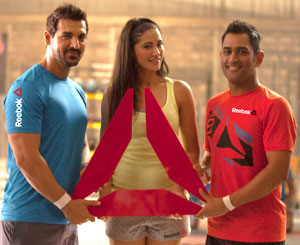
    Continuing its global mission to change how people perceive and experience fitness, Reebok India announced the launch of its new, fully-integrated marketing campaign – “Live with Fire”. Featuring the fitness trio of MS Dhoni, Nargis Fakhri and John Abraham, the campaign encourages people to stay ‘fit for life’ through a series of cult activities.


    The “Live with Fire” campaign was globally rolled out in 2013 and highlights Reebok’s core pillars of Training, Running and Studio. Being customized to the Indian market, the new 360 degree campaign focuses on celebrating people whose lives have been transformed through their active lifestyle and aims at pushing them beyond their set goals.


    The TV commercial will be released across India on April 26, 2014. MS Dhoni takes the technologically advanced Reebok ZQuick running shoes for a spin amidst traffic on a busy road in the city and also undertakes the challenging and adventurous Spartan race while shooting for the campaign. John Abraham adds a wow factor to regular ab crunches by doing them while hanging from the edge of a building and Nargis Fakhri amazes viewers with her sassy and spunky Zumba moves atop a towering building.


    Somdeb Basu, Brand Director at Reebok India said, “At Reebok, our mission is to empower people to be ‘fit for life’, but we don’t want people to move for the sake of movement; we believe movement is the path to becoming physically, mentally and socially stronger. This philosophy translates well in our new brand mark logo – Reebok Delta. We are thrilled to present three of our strongest assets in a never-seen-before ‘avatar’ and are certain that their fitness moves will inspire people to embark on this new journey. Our creative visuals are interactive, inspirational and imaginative!”


    With this campaign, Reebok officially unveils the new brand mark – Reebok Delta, and inspires people to live their lives with passion, intent and purpose. The Reebok Delta has three distinct parts, each representing the physical, mental and social transformation that people experience through embracing an active lifestyle.


  • Kansai Nerolac unveils HD paints concept

    By A Correspondent


    Kansai Nerolac Paints Ltd has introduced a first-of-its-kind High Definition (HD) paint technology. Nerolac Impressions is the first range of premium interior emulsions in India that comes with a ‘High Definition’ color technology.


    To showcase the new product and its value proposition, Kansai Nerolac has unveiled the campaign comprising of a TVC and digital campaign. With this campaign, Nerolac reinvents its positioning through a new creative punch-line: “Jab Nerolac Impressions ka HD Paint lagega, toh ghar ke saath aapka bhi Impression badhega!”


    Enhanced with Micro-Embedded Brightness Boosters (MEBB’s), Nerolac’s Impressions range of interior emulsions offers a sharper look and superior finish. This technology makes the color of walls look brighter, richer and cleaner than other standard emulsions.


    “High Definition has become synonymous with our lifestyle today. Based on this insight, we aim to extend this technology to homes as well through HD Paints. Having launched several innovative products under the Impressions brand in the past we hope to provide customers with a larger than life experience and take our offerings to the next level,” said Anuj Jain, Director (Decorative), Kansai Nerolac Paints Ltd.


    Bobby Pawar

    Bobby Pawar – Director – Chief Creative Officer, South Asia at Publicis Worldwide said, “We wanted to change the conversation that the category leader was having, and we had a product that could do that. So for Nerolac Impressions HD paint we shifted the conversation from emotions and the effect of the color on relationships to the impact a great paint can have on the perceived value of your home and you. A great way to do it was a side-by-side perception demo.”


    The entire campaign is based on the insight of ‘how one’s home is an extension of one’s lifestyle and personality’. To reinforce this message, the TVC features brand ambassador Shah Rukh Khan, highlighting the difference between Nerolac Impressions HD Paint and Standard Definition Paint. It uses the humour element to subtly showcase how individuals living in HD Homes vis-a-vis standard definition homes are perceived. These HD paints replicate the color quality difference one would observe between a standard definition TV and a HD TV.


    Conceptualized and executed by Publicis Ambience, the film is also dubbed in Hindi and other regional languages and is currently being aired across all national channels.


  • Garnier’s ‘blind use test’ woos consumers across India

    By A Correspondent


    With a keen understanding of the needs of Indian women when it comes to hair, Garnier Fructis recently engaged in another initiative by reaching out to college students, women from housing societies and bloggers in a unique manner by getting them to experience the new Garnier Fructis Long & Strong shampoo and conditioner through a ‘blind use test’ campaign.


    The on-ground and online activation of the campaign was conducted in various cities across the country including Pune, Patna, Guwahati, Ludhiana, Lucknow, Jaipur, Coimbatore and Vijayawada.


    Conceptualized and executed by digital marketing agency FoxyMoron, the online campaign kicked off with over 50 top beauty and lifestyle bloggers across India experiencing and reviewing the new Garnier Fructis Long & Strong shampoo and conditioner. Bloggers received a package of the ‘Love Long Hair’ shampoo and conditioner and used it for a period of two weeks. Upon revealing the name of the brand within two weeks across Facebook, Twitter and YouTube, their reactions were captured on video.


    Commenting on this activity, Rupika Raman, General Manager, Garnier said, “We were very excited to undertake this consumer outreach activity as our aim is to educate consumers about the Garnier Fructis’ new and improved formula and also to capture real experiences and feedback of consumers. Our formula has changed and it is important for us to reach out to consumers and get them to try the product and see and feel the difference themselves. After the activation, it is wonderful to see such an overwhelming response from our consumers, which also means that new generation Garnier Fructis has met its consumer expectations.”


    Harshil Karia, Co-founder & Digital Strategist, FoxyMoron commented, “Quality perception is highly related to a consumer’s purchasing behavior. Hence, the ‘Love Long Hair’ campaign aimed to generate trials for the new, improved Garnier Fructis shampoo and conditioner and simultaneously, also develop loyalists through advocates of the brand who influence consumer preferences.  The biggest learning for us has been the importance of developing a deeper and strategic connection with influencers on the digital platform.”


  • Mahindra unveils sequel to original Centuro film

    By A Correspondent


    Mahindra Two Wheelers Ltd. (MTWL) has unveiled its new television commercial for its popular motorcycle, the Mahindra Centuro. It is an engaging sequel to the Centuro launch film that was released last year.


    The new campaign showcases the sensuous girl’s second attempt at trying to get to him; only to be thwarted by the Centuro’s unique advanced features like the internationally patented Anti-Theft Alarm (with engine immobilizer) operated by the encrypted remote flip key. 


    Speaking about the campaign, Sarosh Shetty, Vice President – Marketing, Mahindra Two Wheelers said, “Our highly impactful launch communication campaign last year had generated high consumer demand for the award winning Mahindra Centuro. Developed as an interesting sequel to the original launch film, this new television commercial further accentuates the core values of being macho, tough and confident that one expects from the Mahindra brand.”


    He added, “it also brings alive the unique features that customers loved in the Centuro, namely its differentiated styling, the anti-theft alarm and remote flip key. The unique twist in the engaging story line is sure to grab the attention of viewers.”


    The new television commercial is aimed at highlighting the differentiated brand positioning and building familiarity with the innovative features of the Centuro. It reinforces the solid and masculine imagery of the bike built by the launch advertising campaign. The new television commercial features a woman trying to steal the Centuro with a duplicate key when the alarm gets triggered and she is confronted by the tough Centuro man, thus creating an interesting story around the brand.


  • Anushka to enhance Nivea’s deo range further

    By A Correspondent


    Nivea India Pvt. Ltd, an affiliate of Beiersdorf AG and world’s largest skincare brand has appointed Anushka Sharma as the face for its Whitening Sensitive Deodorant TVC.


    This new offering from Nivea is the first sensitive deodorant in the category. It has zero per cent alchohol and licorice extracts that cares for one’s skin making it more toned.


    Speaking on the campaign, Rakesh Menon, Director of Interface said, “The creative idea came from the consumer belief that alcohol-based deodorants can damage underarm skin. By marrying this insight with the brand’s already-established ‘Go Sleeveless’ platform, we simply wanted to encourage women to go sleeveless by using a non-alcoholic deodorant instead.”


    Rakshit Hargave, MD of Nivea, “Nivea has always been a pioneer in innovation in female deodorants. We focus on addressing real issues and making lives simpler for our consumers. Our products are designed to make women confident and comfortable in their skin.”


    The product is available across stores and is priced at Rs 199 for 150 ml.


  • Summer Blues: Sales dip for retailers, FMCGs


    By Writankar Mukherjee & Rasul Bailay


    Top fashion retailers in the country plan to cut down on discounts and sale durations this year, after resorting to extended discount season last year to clear inventory pileups and create demand.


    Retailers such as Future Group, Arvind Brands, DLF Brands and Adidas say they have rationalised their buying patterns and inventory management to reduce dependence on discount sales.


    FMCG market growth dips during January-March quarter


    By Ratna Bhushan & Sagar Malviya


    Global consumer companies, which consider India as one of their last bastions for growth, saw demand taper off during the January-March quarter despite a low base last year. Top multinationals including Unilever, Yum Brands, L’Oreal, SABMiller, Nestle, Coca-Cola and Pepsi-Co have all reported slower growth in India in the quarter ended March compared to a year ago period, as Indian consumers remained cautious about spending amid high inflation and a slowing economy.


    While most of these firms had reported slower growth in every quarter last calendar year too, it was against a relatively high growth of 2012. “What we were experiencing in terms of the FMCG market growth slowing down has continued this quarter, both in terms of volume and value,” R Sridhar, Hindustan Unilever’s CFO, said while announcing the firm’s quarterly performance on Monday.


    “Premium segment and discretionary categories were really under pressure. The markets are still growing, but the pace of growth is slow,” he said. The overall FMCG growth has come down to 6per cent in the quarter ended March from 18per cent a year earlier. Experts said continuing slowdown in formerly fast-growing emerging markets such as India has dimmed multinationals’ prospect at least for the next few quarters. Yet, India is better than developed markets.


    “The India growth story is muted but it (India) is still growing faster than developed markets,” Debashish Mukherjee, partner at consulting firm AT Kearney, said. “There are structural headwinds in some sectors and downtrading across categories, but the overall macro outlook is steady,” he added.


    In the Jan-March quarter Yum! India, which owns KFC and Pizza Hut quick-service restaurant (QSR) chains, saw its same-store sales growth decline 1per cent. While consumer demand continues to remain subdued, top QSR players such as Yum! have maintained a high level of promotional intensity to enhance customer footfall.”Understanding the market sentiment, we have doubled our efforts to increase variety in our menu and hence increase ‘relevance’ to attract new customers,” a Yum! Restaurants India spokesperson said.


    Coca-Cola has reported 6per cent volume growth for its Indian operations in the quarter, impacted to some extent by a prolonged monsoon season, while its rival PepsiCo India delivered high single-digit organic revenue growth for its India operations. Companies’ performance also indicated that growth has been harder to achieve with most of them focusing on high-margin premium products even as consumers downtrade to lower prices products.


    Some companies feel that support from India is fading. For instance, Nestle SA in its Q1’14 sales release highlighted that trading conditions in India remained weak due to the weaker economy and consumer sentiment. Nestle India will announce its first quarter result next week. World’s second largest brewer SAB Miller also noted that India group revenue declined by 3per cent due to a volume decline of 7per cent, partially offset by robust realisation growth of 4per cent. “Volumes were impacted by regulatory changes made in the earlier part of the year in several key states, coupled with the prolonged monsoon season during the year,” said SABMiller in its investor update.


    Source:The Economic Times

    Copyright © 2014, Bennett, Coleman & Co. Ltd. All Rights Reserved

    Licensed to republish

     

    “Last year, retailers went overboard and the discounts went really deep. This year, the retailers are having a re-look at the strategy and might cut back on the discounts,” said Dipak Agarwal, chief executive at DLF Brands, which markets global brands such as Mango and Mothercare in the country. “Last year was best for consumers but this year will certainly be not going to be like last year,” he said.


    Some retailers have already taken the lead. Adidas AG, which used to run four-five weeks of discount sales in January, restricted it to just two weeks this year.


    According to Tushar Goculdas, brand director for Adidas India, the firm plans to have only short duration season discount, not exceeding two weeks, this year.


    “We support our partners to ensure a more effective merchandise mix and sharper demand planning. As a result of these measures, our need to clear inventory at discount has been steadily declining,” he said.


    Over the years when consumer spending soared in a booming economy, most fashion retailers started stocking heavy in anticipation of even higher demand. But an economic slowdown hit consumer sentiment in late 2012 and suddenly retailers were saddled with piles of stocks. To clear that inventory, retailers resorted to extended discount season last year.


    Industry insiders say fashion retailers are now working hard on managing their inventory to avoid such a fate this year.


    “Most of the retailers have become very smart and careful in terms of stock they hold and they currently hold very lean stocks,” Kumar Rajagopalan, chief executive of the Retailers Association of India, said. “It is also a matter of maturity of retailers. As they become mature their buying becomes more careful,” he said.


    According to Rajagopalan, till some three-four years ago retailers would start the spring-summer discount season only in August; but more recently many retailers have been going on sale as early as in June and the discounts went on all the way till August.


    Retailers say that such extended discount season hurt their businesses as sales have gone down substantially post-discount months.


    “The sales seasons have stretched from four weeks to six weeks to eight weeks, so the actual season for fullprice is coming down, particularly the spring-summer which is a shorter season,” said J Suresh, chief executive at Arvind Brands, which sells various global brands including USPA and Gant here.


    “There is a consciousness among everyone today that we should not unnecessarily get into too much discounting, but what happens (is that) if someone has extra stock they start (discount sales) and how the whole thing spreads,” he said.


    Future Group, ITC Wills Lifestyle and Woodland too have decided to cut down the number of discount days and margin of discount they offered. “The problem of discount-led demand generation has been a self-created problem of the retail industry and the industry is now trying to solve the problem together,” said Rachna Aggarwal, CEO at Future Lifestyle Fashions. She said Future Group has decided to reduce the number of discount days and discount mark-up, and also to finish the discount period at least two weeks before main buying seasons.


    “We are also placing fresh merchandise alongside the discounted products which has spurt sales of the fresh merchandise to almost 30% of the total sales during the last end-of-season sale in January,” Aggarwal said.


    ITC-owned Wills Lifestyle has decided to reduce the discount markdowns by 5%-10% this year and will also put less number of stock keeping units or SKUs up for sale, said Atul Chand, ITC’s lifestyle retailing business chief executive. This will help ease the pressure on margins, he said. “We are rolling out six collections this year as compared to four collections before to drive sales without promotions,” Chand said.


    Harkirat Singh, MD at Woodland, said the shoe and apparel retailer wants to reduce the share of discount-led sales on its total revenues to 15% this fiscal from 22% last year by cutting down on discount days as well as merchandise put on sale. “However, it is not possible and neither is it desirable to completely eradicate discount sales since in the fashion industry it is the best way to clear out old stock,” Singh said.


    What gives retailers confidence to reduce discounts and improve sales of fresh merchandise is that many of them clocked double-digit growth in March-April without offering any discount. Also, consumer demand is expected to pick up once a new government takes office later this month.


    Source:The Economic Times

    Copyright © 2014, Bennett, Coleman & Co. Ltd. All Rights Reserved

    Licensed to republish