Category: MARKETING

  • Whisper launches fifth edition of Keep Girls In School programme

    Feminine-care brand Whisper, from the house of Procter & Gamble, is raising awareness about– the early onset of menstruation among young girls — as part of the fifth edition of its #KeepGirlsInSchool (KGIS) movement.

    Said Rajdeepak Das, Chief Creative Officer, Publicis Groupe – South Asia and Chairman Leo Burnett – South Asia: “Our ongoing research about the changing conversations around menstruation identified a glaring anomaly – girls today are getting their periods much earlier than before. However, they are being educated about periods at a much later stage or oftentimes not at all. Whisper and Leo Burnett have been on a journey to keep girls in school for a long time and we wanted to bridge this gap. Our latest work talks to the 8-year-olds in a language they can understand, with a heartwarming song that teaches them that getting periods means they are healthy. The goal is to not just teach the little girls but also use the song as a tool to equip her ecosystem- parents and educators, enabling them to teach periods in an empowering manner.”

    Added Girish Kalyanaraman, Vice President & Category Leader – India Feminine Care at Procter & Gamble: “There is a seismic shift happening in period biology. This heightens the need to educate girls early on and to prepare them to embrace this biological process. Through this initiative, we strive to educate them about how periods are healthy and how they can take care of themselves on their period days. Every year, Whisper goes to more than 60,000 schools to create period education programmes and we are now also going to younger standards. Consumers too can do their bit buying a Whisper Ultra pack which will help us educate and donate pads to one girl to keep her in school.”

  • Ceat unveils new Strategic Timeout board in IPL

    As part of the newly launched campaign, Cat, the tyres company, has leveraged its decade-long association with Tata IPL Strategic Timeout to deliver its brand message. It has been transformed in line with the new positioning, notes a communique.

    Said Arnab Banerjee, MD & CEO of Ceat Limited: “Ceat’s transformation underscores our dedication to staying in tune with the aspirations of our consumers. Our new brand communication emphasizes our support for the explorer mindset of discovering hidden gems which are accessible during their travels. This move represents our ongoing commitment to exceeding consumer expectations and delivering high-quality products that inspire confidence in every journey, whether on road or off road.”

    Added Lakshmi Narayanan B, CMO of Ceat Limited: “Our new approach incorporates partnerships with prominent travel influencers to showcase the versatility and durability of our tyres in various unexplored yet accessible locales. This series of two-part campaigns is not just a visual treat, but also ignites intrigue and curiosity among our consumers through the novel interactive QR element embedded in the ads. Our high-performance products have been crafted for the curious enabling their passion for adventure and discovery.”

  • Air India Maharajah 1946-2023


    Prabhakar Mundkur

    By Prabhakar Mundkur


    When I read the obituary of the Air-India Maharajah this morning, I couldn’t but shed a tear. After all, he was mortal like the rest of us. Ailing for the last 20 years, and in and out of hospital, many of his detractors were not able to overcome his strong will. And in spite of the many attempts on his life, he just kept coming back like the strong royal Maharajah he was. In fact he just laughed it off in his inimitable style.


    While plenty has been written about him and his escapades through the decades through various lands, the end was solemn and brief. Just an unemotional announcement that his life had finally ended. There were no flowers. No prayers. No tears. No celebration of a life well-lived.


    Which makes me wonder whether all mascots have a life of their own and like us mere mortals have to finally bid a goodbye.


    Remember Gattu of Asian Paints? And the Murphy baby? Gattu, the mischievous Asian Paints mascot, was created by none other than the famous RK Laxman and enthralled us for a good 50 years. Murphy, another Indian favourite, was a brand born in Britain and founded in 1929 by Frank Murphy and EJ Power. The Murphy brand now belongs to the Shirodkar Group of companies but they don’t sell radios any more.


    It is interesting to examine why the Maharajah was so successful. For one his commentary was on our day to day lives and the life of the nation. He became the social mirror of Indian society. He reflected our happy and unhappy moments with a touch of philosophy and wit.


    Ivan Arthur, earlier National Creative Director of JWT, and now educator and author, when asked about the Air India advertising, said: “Conceived as a letterhead design, the Maharajah broke the fetters of the line drawing and became flesh with a personality and DNA of his own: the double helix of gracious exotica. That DNA did not permit him to stand in the street corners of conventional media and tout his destinations like a cheap ticket salesman. His famous romps on those hoardings were not advertising. They were non-advertising: parlour talk, one-liner points of view, camaraderie, provocation and good humour, all of which did not ask you to buy an Air India ticket. In fact, in many of the hoardings, he refused to have the Air India logo as sign-off. He was the sign-off. He was no commercial mascot. He became a national figure. Much loved and respected.


    The Maharajah was always accompanied by another symbol that belonged to Air-India and that was the Centaur. Equally old, it has played an equally significant role in the branding of Air-India.


    The Centaur had its own life as an alternative Air -India mascot. It flew around the world as the airline’s insignia, appeared on the inflight livery and even cutlery, was embroidered on some of its crew’s uniform, stood proudly on the top of the company’s impressive headquarters and became a brand name for its hospitality subsidiary!


    Hopefully the Centaur carries on, unless the new adopted parents of Air-India have another strategy in mind.


    In the meantime, let us mourn the loss of our favourite Maharajah once more. As the Byzantine Empress Theodora said “ For a King death is better than dethronement and exile”


  • Truecaller – Jamming the Scam Calls


    By Prabhakar Mundkur


    Prabhakar MundkurPerhaps in any other country, Truecaller would not exist. Because other countries respect the privacy of their citizens. I recently spent a month in the UK and my family did not get even one unsolicited call.


    Unfortunately, in our country, all our details are an open book. We all no doubt get at least a few scam calls a day. If they are not scam, they are at least greedy marketers who are aggressively calling you to sell their wares. I have noticed a new trend now. Some of calls are mechanised and as soon as I pick up the odd unknown caller, a pre-recorded voice is trying to sell me something. These recorded calls in many ways are the most irritating because you can’t be rude and insult the mechanical voice as you can do with a real person at the other end.


    It is not only our phone numbers that are available freely. Our car registration numbers are available not only on the official Government app Parivahan but on a score of other private apps. At least the government app tries to hide the complete details of your name, but the private apps don’t even bother to do that.


    If that were not enough, our car insurance details are also an open book. I get a score of emails from various insurance companies every time my car insurance is nearing its expiry date. Recently, I read about a well-known person who got scammed on life insurance. The victim had an insurance policy that had lapsed in 2014. The scam caller called the victim and offered to not only reinstate his policy but offered to redeem the policy, trapping the victim who could naturally do with a little more money. It is only when he reached the end of the call and the scammer started asking for his bank details and offered him an OTP did the victim realise that it was a scam call. These activities are being done openly in our country in spite of the fact that both telephone calls and insurance have government entities supervising the industry – IRDA for Insurance and the TRAI on telecom. It is strange that these government bodies are doing nothing to protect the privacy of the Indian citizen.


    But coming back to Truecaller. I was in the UK and I must have received at least 30 scam calls. Thank you Truecaller because I would immediately get the notification that they were scam calls and I could safely leave them alone.


    Though no one is writing much about it, I also like the Truecaller advertising. For one, it is entertaining. And they seem to have proved me wrong that Indian advertising has lost its humour. Truecaller uses humour to show how the app can frustrate the scammer. It also demonstrates the stages of the scam and makes fun of the account numbers and OTPs that scammers normally demand as the call progresses. Some of you may remember how Netflix exposed the entire process that scamsters employ in their movie on Jamtara – Sab Ka Number Ayega. 


    Truecaller has in some ways also exposed the process of the seamster but with a humorous twist. I particularly liked their Diwali ads. I believe scam calls are at their highest during the festival seasons because this is when most people are looking for deals and are therefore most vulnerable.


    I also thought that their sign-off line is quite interesting Scam ka Jam is quite appropriate.

    Well done, Truecaller. Here is wishing you the best in protecting Indian citizens from scams.


  • Advertising and the Two Indias


    By Prabhakar Mundkur


    Prabhakar MundkurAdvertising like the other arts of cinema, music, is the perfect mirror of an emerging society. Often the arts can lead society, and at other times, it may just be a mirror of where society is today. It’s important for a brand to constantly search for cues from our daily living. So, a brand can often be a mirror of where we are but equally a brand may lead society into their own future.


    But advertising like cinema is good at constantly exploring emerging societal trends. Of picking up something that exists today but may not still be big. I think it is brave for any art to pick up an emerging trend that is not necessarily popular or fits societal norms. Titan is one brand that comes to my mind which is constantly leading from the front. Unfortunately, it has also meant that it has often come under fire for being experimentative. You will remember how it got trolled for the Tanishq ad last year which showed a real situation which revolved around an inter-faith couple and the husband’s family. One can’t deny that inter-faith marriages do exist in India and perhaps they are only growing. But that ad was from one of the Indias and trolled by the other India.


    Another ad that got into trouble with one of the Indias, was the Manyawar ad featuring Alia Bhat. Because of a play of words that the ad engaged in where the ritual of Kanyadaan was interpreted as Kanyamaan.


    And now comes another ad from Tanishq again in the area of marriage and relationships. And I can’t help feeling that it has done a good job of appealing to both Indias. Or has is?


    The conversations between the couples in the ad are very real, honest and portray the trust and confidence that two partners can place with each other by sharing their innermost doubts, desires and thoughts with each other. But equally I think it portrays a certain equality between a man and a woman in a relationship.


    For years, we have portrayed the Indian woman as subservient, something that is backed by the new GenderNext report (https://ascionline.in/gendernextreport/2/index.html) from the ASCI which says:


    “Women being featured in care-taking roles, placing the good of the family and friends as their primary focus and concern

    :: Women being targeted for beauty products featuring an unrealistic and unobtainable standard of beauty

    :: Women being informed and educated by the voice of a male authority figure”

    The Tanishq ad I thought breaks the traditional stereotype of how women have been portrayed in advertising. It is steering the portrayal of women in a very positive direction, while simultaneously exploring the deep relationship and trust that life partners can place with each other.


    Is the real India like this one may ask? Yes and No. I think, that in urban centres we can see man-woman relationships like the ones in the ad, but I can’t help feeling that as we move down the population strata, it may still be quite unrealistic.


    This ad may still be appealing to only one of the Indias and most probably this is the Tanishq target audience. What is different and perhaps a lesson for advertisers in the future is that it is possible to talk to only one of the Indias without upsetting the other!


  • Coke’s ‘Real Magic’ casts a new spell!


    By Prabhakar Mundkur


    Prabhakar MundkurCoke and Pepsi have been at it for half a century, trying to outsmart each other both for marketing share and advertising that makes the brand relevant to the youth. Real Magic, the new commercial by Coke, I think has taken a giant leap and  does manage to outsmart Pepsi.


    Firstly, it is rooted in Gen Z passions by basing the idea on gaming. The gaming market is expected to reach USD 398,950 million by 2026 growing at an annual rate of 11%.  Secondly, the Coke commercial is based on a philosophy that makes more sense than ever before.


    Says Manolo Arroyo, marketing lead at Coca-Cola: “The ‘Real Magic’ philosophy is rooted in the belief that dichotomies can make the world a more interesting place-a world of extraordinary people, unexpected opportunities and wonderful moments.”  The philosophy itself is not new – the hippie revolution believed in this more than anyone else right since the 60s.  The world is growing more apart as we celebrate our differences rather than our similarities. The real idea behind the wave of globalisation was to embrace our dichotomies.


    ” ‘Real Magic’ is not simply a tagline or a one-off campaign,” says Arroyo. “It is a long-term brand philosophy and belief that will drive and guide marketing and communications across the Coca-Cola trademark.” Maybe it was about time for Coke to try something new given its sluggish sales in the recent past.  Real Magic then succeeds ‘ Taste the feeling’ which was first introduced in 2016. BETC London, along with director Daniel Wolfe made the film.


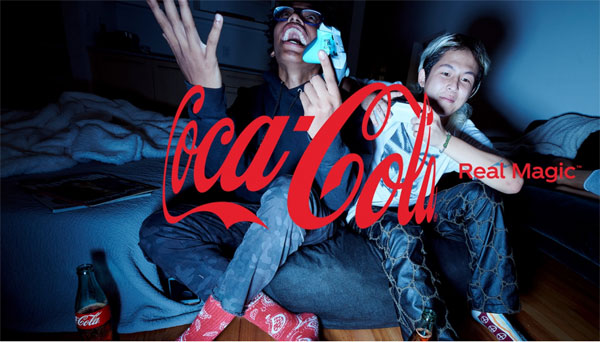
    The campaign also uses the Coca-Cola logo to wrap around the campaign images.  I thought this was a pretty unique treatment of the logo given that the curvature of the Coke bottle or can always makes the logo seen this way.


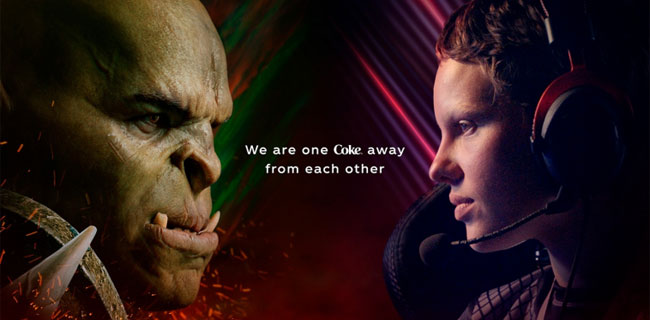
    Also the tagline ‘We are one Coke away from each other’ is reminiscent of the six degrees of separation theory first propounded in 1929 which said that we are on an average six or fewer social connections away from each other. With the expansion of the internet and social media to cover people around the world has often meant that we might very often be just one connection away from each other.  Or one coke away from each other.  Clever!


    The commercial shows a World of Warcraft type of battle in progress until one of the contestants opens a can of Coke. After the contestants first sip, Orc in the game is overcome with feeling and throws away his battle axe, picks up his opponent and there is suddenly peace in the gaming universe. A metaphor for World Peace?


    There is a lesson to be learnt here for the world. After all we if we all threw out our weapons nuclear or otherwise, one of the principles of nuclear disarmament, we might be all less threatening to each other.


    Having grown up as a teenager in the 60s, all these little nuggets of philosophy make great sense to me, although it is supposed to appeal to Gen Z.  And if Gen Z does think like this maybe we can hope for World Peace as eulogised by John Lennon in his immortal song Imagine!


  • Cadbury ad. Overdependent on Nostalgia?


    By Prabhakar Mundkur [updated]

     

    Prabhakar MundkurAs I write this, I am sure the latest Cadbury’s ad has already gone viral if that is a measure of its success. The latest message I got on WhatsApp went like this:


    “In 1994, Ogilvy India made an ad for Cadbury Dairy Milk.

    In 2021, Ogilvy India made the same ad for Cadbury Dairy Milk, with a difference.

    Check both out!!!”


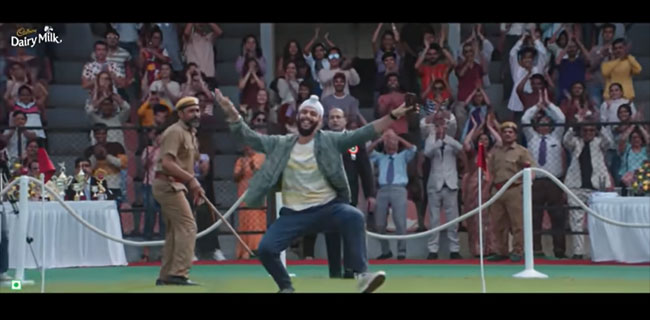
    The praise showered on it has had no bounds over the last two days.  One of the comments went like this: “It’s a follow-up to the ad the great Piyush Pandey wrote in 1994 which catapulted him to advertising fame.”  No doubt Piyush is a shining star in the advertising firmament, but I am not sure this criterion can be used to judge an ad, both by commoners or 50-year-old advertising executives. I never thought of an ad as great only because David Droga or Bruno Bertelli wrote it. In any case, I am getting used to the hysteria and adulation India accords its heroes. Just yesterday, we saw a union minister likening our Prime Minister to God.  And later, the Prime Minister’s Report Card handle on Facebook posted the Cadbury ad, giving it record likes and shares. God himself then has endorsed this ad.  So, who am I, a mere mortal to even start evaluating it?


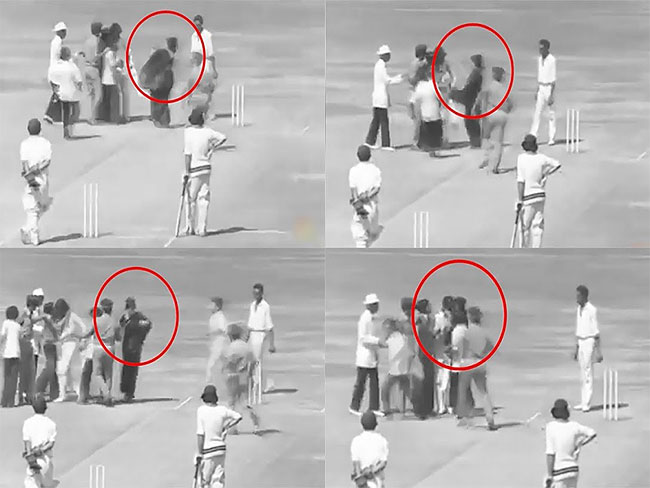
    I must admit I am an aberration of the Indian consumer because I spent the better part of the 90s working overseas and could not use the 1994 ad as a reference. It seemed like just another cricket ad to me, or simply put just a typical scene from Indian cricket which we have seen repeatedly, for much longer than the Cadbury ad. After all, didn’t a woman do the same thing to Brijesh Patel when he scored a century in 1975?  She went past the security (India’s disrespect for the law is legendary), right until the pitch and then planted a kiss on Brijesh’s cheek. I know cricket is a hot button in this country, but the 99 runs on the scoreboard with a sixer coming up is both a bit trite and hackneyed.


    Which brings me back to one basic question: if this ad was trying to capitalise on nostalgia marketing, was it aimed at people who were over 50 years old? We don’t know Cadbury’s strategy, but it could well be that they no longer wanted their brand to be seen as a young person’s brand. If the target audience were expected to have seen the ad in 1994, it does mean that this ad is talking to people who are in the age group of 40-50 years at least or even more.


    Of course, while arguing my way through the merits and demerits of the ad, many people stoutly defended the ad saying that it was brilliant, even as a standalone, and even if people had not watched the 1994 version. Maybe, but I would imagine that the people who had seen the 1994 ad would rate it 5x times better than the people who hadn’t seen the 1994 ad. People who first posted the ad on social media were mostly older, but the overall hype was so overcoming that I believe the youth had taken to sharing the ad later, on Instagram. Take this tweet for example which got a rousing response. I don’t know Karthik personally, but I am willing to wager that he is at least 40 years old to have seen and remembered the 1994 ad.
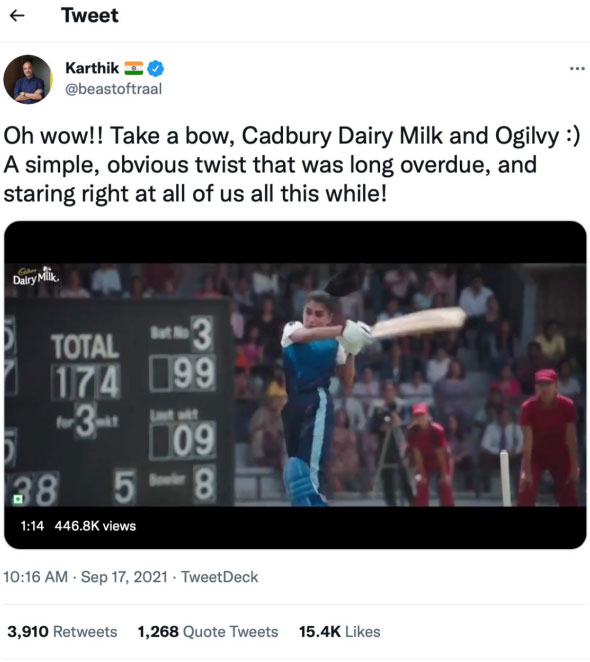


    But somehow the Cadbury ad seems to have touched a chord and has got accolades for showing a woman in the lead role. Many people have commented that this was a long time coming. Of course, any ad like Cadbury’s is a welcome addition to the tirade against gender discrimination. India for centuries has discriminated against women, and there is still scope to do much more. India ranked 131 in the 189-country survey on the Gender Development Index. So, any commercial or full-length movie that goes towards portraying the importance of women is welcome because it can help to change the status quo. I see advertising and cinema as important influencers in pushing the envelope for social change.


    Oscar Wilde in his 1889 essay ‘Decay of Lying’ posed the rhetorical question, whether Art imitates Life or Life imitates Art. I firmly believe that Art must do its bit to change society so that Life can start to imitate Art. The Cadbury ad from that point of view is a step in the right direction.


    Except that as I said earlier, the Brijesh Patel incident also raises the question if this is Art Imitating Life?  It could well be!


    Oscar Wilde was right in posing this queer and difficult paradox.


    Prabhakar Mundkur is a former advertising agency captain and has spent over four decades in marketing services across geographies. He is a prolific writer and was a few years back rated as among the top voices by LinkedIn. Other than advertising and writing, Prabs, as he is known to friends, is a very active musician and a self-taught producer of music. In the pandemic, he has performed and produced nearly 50 songs, including one with the very accomplished Usha Uthup. Mundkur’s views here are personal.


  • It’s Mera Bharat Mahaan for Micromax


    By Prabhakar Mundkur


    In light of the Tanishq controversy, the new Micromax commercial provides an interesting counterpoint.


    The larger  truth that I am missing in all the marketing discussions on Tanishq is that ‘brand purpose’ came about because Millennials and Gen X in the West were looking for authenticity, honesty and purpose in brands.  In other words, they were looking for brands to mirror their own feelings and their higher purpose.  And this higher purpose took the form of say ‘Real Beauty’ for Dove as a proof of authenticity or the higher purpose took on a higher social responsibility to support some cause: sexism, racism (for us it is casteism), climate change, sustainability, poverty, domestic abuse, climate change and a host of other causes.


    I don’t know if the big brands have done a study of what this greater social responsibility might mean for Millennials and Gen X in India. I don’t think it is any of those that I mentioned for the Western audiences above.


    But the important point here is a that it is not marketing directors who sit in their ivory tower offices and determine brand purpose or the language a brand speaks. For brand purpose to be real, it must coincide with the people’s aspirations. Just as an example if the higher purpose of our targets in the country is to prevent “love-jihad” they may want to see brands that reflect that higher purpose. And Tanishq’s higher purpose was at odds with the higher purpose of a section of the public that engaged in the destruction of their commercial.


    After all, brands are not allowed to have a purpose that excludes the people it is talking to unless it wants to be altruistic or idealistic, which I am sure is not what Tanishq wants to be.


    Moving on, I found a useful counterpoint in this Micromax commercial.


    https://m.youtube.com/watch?v=aRo69b1wTNg


    The commercial essentially announces that they are back in the game after having taken a beating at the hands of the several Chinese mobile handsets in the market.


    In its ‘come back’ commercial appropriately titled ‘Micromax is Back’, the brand touches all the hot spots of the new Indian. Look at the various subtle inflections.  The story of an Indian entrepreneur who came from the ‘gullys’  of middle class India after borrowing Rs 3 lakh from his father.  A brand that was the No 1 brand in India and in the top ten brands in the world.  Stirring the new sense of ‘nationalism’ in the Indian.


    Then look at the skillful way in which the brand provokes anger against China by saying he was put down by Chinese brands. And that too in his own country? Oh, the injustice of it all!


    Then invoking the border conflict with China, invoking the Prime Minister were all briiliant strokes in a campaign that reeks of Made in India.  And to cap it all the new series being marketed by the marketers is ‘IN’. Another stroke of brilliance to use the first two letters of the country name. What could be more Indian, more desi that?


    Now go back to the Tanishq commercial and think for yourself whether it invoked the right feelings in the target audience. Or did it provoke mob anger by touching on a raw nerve that people are most sensitive about.


    For me this is a case study that brands cannot speak a language that does not strike the right chords among the people. Brands can’t hold beliefs that are in insolation without consulting the people they are talking to. Brands need the permission of the people before they speak.


    We have a choice now.  Either conform to the feelings of the new India that has been emerging for the last six years or continue to live in the past.


    Lofty ideals for brands must be examined in the light of the current mood of the nation.


    Prabhakar Mundkur is a veteran advertising professional and commentator. And also a musician. He has worked across geographies. His views here are personal


  • Prabhakar Mundkur: While the world is rising for unity, are we digressing?

    By Prabhakar Mundkur


    2020 is a year of huge upheavals not only because of Covid, but because of the huge social uprisings for unity.


    The killing of George Floyd, a 46-year-old black man in Minneapolis, by the police sent a sweeping shock wave of social change the world over.


    Racism of any kind just went out of the window this year. And the impact on brands was tremendous. Almost every brand worth its salt pledged to be fair and non- discriminatory. Brands asked people to stand against racism. Even the stoic Hindustan Unilever joined the tirade against discrimination of any kind when it decided to change the name of one its most profitable brands in country Fair & Lovely to Glow and Lovely. Such were the sweeping forces of an unprejudiced world. I sometimes wonder if Covid might have helped because it didn’t discriminate either between rich and poor, black and white or rich and poor.


    So, when Tanishq one of India’s favourite brands put out a commercial about the unity between two religions the uprising on Twitter felt unfair and the height of discrimination. After all India has been a pot pourri of various races and religions for centuries.


    https://twitter.com/beastoftraal/status/1315848777123598337?s=20

    Tanishq has pulled the creative off YouTube. The ad can be viewed here on a tweet by @bestoftraal – Ed


    Another common practice has always been to celebrate each other’s festivals and cultural practices. After all who can but help to eat biryani at Id, order a Sadya menu for Onam, or offer tilgul for Makar Sakranti. Somehow India has grown up celebrating every festival irrespective of which state, language or community it belonged to. Following this pattern, the commercial shows the mutual respect for each other’s customs.


    So, the outrage on Twitter seemed a little misplaced. Unless it was not representative of the feelings of the population at large.


    Should brands give in?


    I think when brands have done no wrong they should stick to their guns. And not get cowed down the mass hysteria on Twitter? Why do Twitter mobs behave in such extreme ways? Mob anger can be strange, pathological and monstrous. Behaviour of a larger group is known to have a big influence on individual behaviours and have been an area of interest in social psychology for years. Psychologists have found that group behaviour tends to be more extreme and amplifies the typical behaviour of its individual members. Mobs are known for losing their self-awareness. Sociologists refer to the process as de-individuation where individual personalities become dominated by the collective mindset of the crowd. Gustave Le Bon an early explorer of this phenomenon viewed crowd behaviour as “unanimous, emotional, and intellectually weak”.  The other reason is that twitter anger dies down as quickly as it is ignited. The half-life of a tweet ( average lifespan ) is 24 minutes or thereabouts.


    So, a kneejerk reaction to take your commercial off the air might well be unfounded.


    What else can brands do?


    Companies need to figure out strategies for dealing with social media manipulation with respect to their ads. After all a pattern seems to have been established of cyber bullying to pull out movies and ads.


    It can’t be difficult to gauge the reaction to your ads. Research should warn you about cultural inflections, and if there is an ad that has even a small probability of inciting twitter mob anger it might be better to go in well prepared. If social media and twitter can be manipulated by politicians and religious groups can’t they be manipulated equally by the biggest and best marketers in the country?


    Maybe we are seeing the dawn of a new era. Where brands can use their marketing power to do what politics and the law can’t do. Right the wrong. Tell television channels to stop doling out trash to the public. Tell Twitter mobs to shut up. Hail brand power! We might well be at the edge of a new era in marketing!


    Prabhakar Mundkur is a veteran advertising professional and has led agencies in various geographies, including India. He is a prolific writer and also a prolific musician. He comments frequently on MxMIndia, as on LinkedIn and other platforms. His views here are personal

  • Cheil India unveils campaign

    Cheil India has launched a campaign showcasing features of Galaxy A55 5G and A35 5G. The campaign films featuring the duo of Shanaya Kapoor and Rohan Gurbaxani encapsulate the spirit of Generation Z .

    Commenting on the campaign, Aditya Babbar, Vice President, MX Business, Samsung India, said: “Galaxy A series democratizes innovations by making them accessible to all. With the introduction of Galaxy A55 5G and Galaxy A35 5G, we are democratizing flagship-level features, experiences and affordability. In our new campaign, we are proud to showcase how Galaxy A55 and A35 5G continue to push boundaries, delivering cutting edge technology that empowers creativity and elevates user experience.”

    Talking about the campaign, Vikash Chemjong, CCO, Cheil India, added: “We believe that everyone deserves awesome—whether it’s awesome meetings, awesome memories, awesome ambitions, or simply an awesome life. And, when you finally get an awesome phone, you get one step closer to achieving the rest.”

  • Mankind Pharma launches campaign

    Mankind Pharma has launched a nationwide campaign on the occasion of World Hypertension Day called ‘Limit White India’. This initiative aims to raise awareness about the dangers of excessive salt and sugar consumption which with other factors like sedentary lifestyle and obesity can be a major risk factor for hypertension.

    Said Dr Sanjay Koul, Chief Marketing Officer, Mankind Pharma Ltd: “Hypertension is a silent killer, and Mankind Pharma is committed to tackling it head-on through the ‘Limit White India’ campaign. Excessive salt and sugar are significant contributors to uncontrolled blood pressure levels and blood sugar levels. Studies have shown Indians on average consume five times the WHO recommended quantity of sugar annually. By raising awareness and promoting lifestyle modifications, we aim to empower people to make informed choices for their well-being.”

  • Mahindra collaborates with Santanu Hazarika and Nought One

    Mahindra & Mahindra has  teamed up with artists Santanu Hazarika and Abhishek Paatni of Nought One to showcase a  streetwear collection that draws inspiration from the design and colours of the Mahindra XUV 3XO.

    Said Pratap Bose, Chief Design and Creative Officer, Mahindra & Mahindra Ltd: “Today, we are  excited to showcase a collection that brings together our passion for innovation across our authentic  SUV range with the dynamic world of fashion. The new XUV 3XO is the latest expression of Mahindra’s  HEARTCORE Design philosophy. Designed to stand out from the crowd, the XUV 3XO takes the  premium compact SUV to new heights of Design, Technology, and Innovation. This collection not only  reflects the bold and distinctive features of the XUV 3XO but also complementsthe lifestyle and values  of our younger consumers. Through this collaboration with Santanu and Nought One, whose work is  always at the cutting edge of design and fashion, we are reaching out to new audiences and exploring  new forms of expression.”

    Added Santanu Hazarika and Abhishek Paatni: “We are thrilled to partner with Mahindra on this  unique project. This collaboration with the XUV 3XO is a perfect blend of our streetwear aesthetic with  the standout design of this modern SUV. It’s an exciting challenge to translate automotive innovation  into fashion, and we believe our customers will appreciate the creativity and authenticity behind each  piece. This partnership reflects futuristic, functional clothing which blends with the aesthetics of the  new age and a progressive future.”