Category: MARKETING

  • Perfetti Van Melle India launches solar electrification project with TERI

    By A Correspondent


    Confectionery manufacturer Perfetti Van Melle India (PVM India) has announced the launch of its Solar Electrification Project in Uttarakhand, a project to provide clean, affordable and sustainable lighting to people in remote areas of this state.


    Under this project PVM India has collaborated with TERI and effectively implemented one solar charging station at Dugari Khatta 1, which comes under Gram Panchayat of Biriya Block, Khatima District of Udham Singh Nagar. For these villages, Perfetti has supported the distribution of LED lanternsfor 50 households.This project is expected to light up the lives of over 250 people and to positively impact their livelihood, health, and education.


    Perfetti Van Melle India decided to initiate a solar electrification project, under which one centralized solar charging station in Dugari Khatta 1 has been set-up with a provision for 50 solar lanterns. The LED lanterns work for approximately six hours and provide a clean lighting solution. The centralized solar charging station is run by a woman entrepreneur, from the community, who has been trained by TERI on the basic operation and maintenance of the solar charging station. She will be responsible for monitoring and maintaining log books and faults/rectification status, daily upkeep of the lanterns and solar panels, maintaining contact with the energy enterprises for the service of lanterns etc. The programme is structured to provide her livelihood, thus providing an additional benefit to the community.


    Commenting on the occasion, Stefano Pelle, Executive Vice President and Chief Operating Officer of the Perfetti Van Melle group, said, “Lighting is a key issue in such remote parts of the country, and can truly transform lives. Through this programme, the productive day is effectively being stretched by 6 hours, thus providing more time for domestic chores and education. Solar energy is a great way to provide electricity in such areas, since it is eco-friendly and self-sustainable. We are very happy to launch this project and bring about a positive change in the community.”


    I H Rehman, Director, Lighting a Billion Lives Campaign, The Energy and Resources Institute, added, “One of the major challenges faced by the world today is providing sustainable energy. The task is massive but solutions need to meet specific basic needs in an efficient manner. Lighting based on solar energy is very effective for areas which are deprived or have poor access. Lighting a Billion Lives Campaign of TERI is a step in the direction of making clean lighting available to poor households”.


  • We want to bring stories alive: Adlabs Imagica’s Pooja Shetty Deora

    By Johnson Napier


    News of a new and state-of-the-art theme park along the Mumbai-Pune Expressway is making audiences take the long drive to sample the new offering. Much of the credit to the enthusiastic response being drawn could be owed to the mammoth marketing exercise being undertaken currently by Adlabs.


    Pooja Shetty Deora, Joint Managing Director at Adlabs Entertainment Limited discusses the marketing strategy and roadmap behind making Adlabs Imagica a ride to remember.


    The thrust around the marketing campaign seems to be very loud and extensive that one has seen in recent times. Are you content with the way the strategy is being implemented on ground?

    The entire campaign has been developed keeping in mind a couple of key objectives:

    – To announce the launch of India’s first and only international standard Theme Park

    – To educate customers about the concept of a ‘Theme Park’ which has otherwise been loosely used


    Different media vehicles have been used to achieve each of these objectives. While Digital and Social Media has been used to engage with customers and spread word of mouth, OOH has been purely used to drive impact and reach. Print has been a mix of impact and bringing alive the concept of a Theme Park. Radio has done the job of sustaining, engaging and ensuring enough recall amongst the consumers. A month-long campaign on key television channels will only add to the scale, reach and internationalness of the overall campaign and the product.


    Primarily all mediums that matter have been tapped for this initiative. Do you expect the returns to be as productive across all channels?

    Each media has been carefully used at different stages right from pre-launch to launch to sustenance. A clear role has been given to each media vehicle and various innovations have been implemented across media from time to time. We have already seen enough traction being generated on our e-commerce enabled portal www.adlabsimagica.com. Extremely encouraging returns have also been seen through our B2B channel with more and more travel organizations wanting to partner with Adlabs Imagica.


    What is novel about the communication strategy being currently implemented to popularize the theme park?

    We developed our first phase of communication to drive intrigue about the concept by giving away just enough information. The 2nd phase of launch will see various aspects about the Theme Park unfold one after another; living up to our promise of bringing stories alive.


    While the campaign would be running across multiple metros, is there a city-specific campaign that you’d be running or would it be national in approach?

    At this stage we want to send out a single message to all our consumers nation-wide; hence from a communication point of view the campaign remains consistent pan India. However we have phased out our reach plan with Maharashtra, Gujarat and Delhi NCR in the first chapter, followed by other key metro’s and rest of India a couple of months down the line.


    Would you elaborate a bit on the marketing spends being rendered across the multiple mediums that the campaign would be running over?

    We have allocated spends across different media at different phases of launch. While we kick-started with a heavy burst on Digital and Radio in the pre-launch phase; we made use of heavy Print and Outdoor communication at launch. This will be followed by a high impact burst on Television. We have spread our monies judiciously across all mediums at different phases to drive maximum impact, reach and scale.


    Is there a defined TG that you’d be focusing on through this initiative?

    In any communication that we do, the core TG for Adlabs Imagica will remain the family. We have been extremely prudent about all our communication being focussed to our core audience.


    Do you intend taking the campaign across other cities/states located closer to the theme park?

    We have already been extremely strong in our communication all over Maharashtra and Gujarat which are in closest proximity to the Park. Our campaign will soon talk to audience at a national level through our Television campaign. We see ourselves as a holiday destination for anyone across the country and the next phase will also see a pan India communication.


  • Mindshare & OgilvyAction partner for rural marketing solutions

    By A Correspondent


    Media conglomerate WPP’s Mindshare and OgilvyAction have come together to create the first full suite of communication solutions aimed at rural and low-income consumers across Asian markets. Operations are being carried out across India, Vietnam, Indonesia and Thailand. Under this partnership, Mindshare will be responsible for strategy and OgilvyAction will work on activation.


    In India, Mindshare and OgilvyAction presently partner with Dialogue Factory (the experiential marketing division of GroupM) to provide a full suite of communication solutions targeted at rural and low-income consumers. This includes strategy, ideas and activation through customized communication programmes.


    The framework for approaching this large-scale communications plan is mapped out in six steps. The first four steps cover groundwork and rural research using Mindshare proprietary tools. These tools include task maps, ethnographic studies, brand health parameters and 3D Rural. 3D is a proprietary Mindshare tool – it is a comprehensive quantitative study that covers brand relationships, consumer demographics and media consumption.


    The last two steps focus on activation and campaign tracking. Mindshare has developed tools including Rural GRPs (a system that captures rural TV viewership as opposed to the popularly used Peoplemeter in urban areas), mAllocator (allocates budgets based on campaign KPIs), Mindware (measures brand awareness) will be used to closely monitor the campaign.


    Said Ashutosh Srivastava, chairman, Asia Pacific and CEO for Emerging Markets of Mindshare, “This is an extension of our partnership with Ogilvy into one of the most promising growth engines. It is relevant to all our stakeholders who want to leverage insights on low income consumers and deliver breakthrough media innovation and activation.”


    John Goodman, President of OgilvyAction Asia Pacific said, “We know low-tier consumers are an increasingly important segment for our clients and we are thrilled to partner with Mindshare on this endeavour.”


    This partnership has been launched across ASEAN with activation and planning solutions being provided for select clients already. This includes fully realized rural specific research expected to be available in the next six months across all ASEAN markets.


  • Is negative publicity a positive for brands?


    By Meghna Sharma and Ananya Saha


    The Indian Premier League had more than its share of negative publicity this season. Did the brands associated with IPL get affected too? And is it possible for brands associated with an event to avoid negative publicity around the event? Or is any publicity good publicity? MxMIndia spoke to industry professionals to find out what brands can do in such a negative scenario.


    Harish Bijoor, Marketing & Brand strategy specialist and CEO, Harish Bijoor Consults Inc

    Brands are like human beings; they are born, they live, they thrive and then they die. In this entire life-cycle, if a brand has a slur cast onto it, this slur lasts as long or as short as the memory of the brand-audience. A controversy is both good and bad for the brand. It is good as it keeps the brand in public mindsets longer, it is bad because it is a canker that affects the image of the brand at large.


    Brands that are active, dynamic, have large mind-shares and market shares alike, cannot really stay away from controversy. The silver lining is the fact that public memory is proverbially short. Very short. Irreverent brands love all kinds of publicity. Possibly IPL is on the cusp of being an irreverent brand. All controversy is good for such brands.


    Vandana Das, President, DDB Mudra Group, Delhi

    I do not think that any brand associated with IPL got affected with the recent controversies. Brands have their own long-standing equity. Controversy is the pivot, but not necessarily everything in the periphery will get affected. What is important to note is that controversies are short-lived and brands have a longer life than a controversy. While one can say that IPL is in trouble, one cannot say that the brands are in trouble. It is not that the brands knowingly get into controversy. Brands do not have the control or have influence over such controversies. The brands tend to tide over it. At that particular moment, controversies seem big but brands tide over it.


    But this in no way means that any publicity is good publicity. At the end of the day, even short-lived negative publicity can affect a brand. And if a brand is not strong enough, it can even dilute its equity. Just like people, brands also need to avoid any negative publicity around them.


    Sachin Kapur, Chief Marketing Officer, Groupon India

    I particularly do not think that brands associated with IPL will get affected by negative publicity, primarily because it is not in the brand’s or brand manager’s hands. Yes, there are brands riding on the popularity of the event, the association is more to do with individual team or player. The overall interest in the IPL might go down, and while brands might have associated with the event to gain from it, it is still a long shot to say that it might have affect on the brands.


    Today, with active social media, even one negative blog post or tweet spreads like wildfire. It will reach your customer.


    There are times when there are situations, negative situations, surround a brand. These are times that challenges or reactions from the brand do not go down well with the consumer or audience. But no brand, whether six-sigma complaint or not, can stay down for long. The strategy of every brand should be to focus on customer.


    Amitabh Khona, Communication Consultant

    Today, crisis management is very important. Everyone knows about the Cadbury and Coke controversies, but have people stopped eating or drinking them? No. It depends on how a brand strikes back. For instance, Cadbury changed its packaging after worms were found in one batch. Also, another factor is the short memory of people. We will talk about something for a few days or months, but forget about all of it later and move on with our lives. Same can be said about IPL, although the recent events are all over the news channels and newspapers, people haven’t stopped watching the matches.


    Also, today where there are too many brands, one can say that any publicity is good publicity. No one will go out of business because of negative publicity or controversies. Such things keep happening and will continue to happen, everywhere in the world.


  • Marco Paracciani is CMO, Apollo Tyres

    By A Correspondent


    Marco Paracciani

    Marco Paracciani has been appointed as the Chief Marketing Officer (CMO) at Apollo Tyres Ltd. Mr Paracciani will spearhead the global marketing efforts of Apollo’s key product brands, in terms of product strategy, marketing communication and product mix management. He will be assisted by a team of product managers responsible for individual brands across all geographies.


    Neeraj Kanwar, Vice Chairman & Managing Director, Apollo Tyres Ltd, said, “In a rapidly growing organization like ours, Marco will bring in the much-needed synergy across locations, and at the same time, add enormous value by building each of our product brands with their distinctive value proposition. Given his strong track record in new product development and market share growth across geographies, Marco would be a key asset for us going forward.”


    Mr Paracciani’s last assignment was with Electrolux, where he served as the Senior Vice President, Product and Brand Marketing, Asia Pacific, and Senior Vice President, Global Product Line. Prior to this, he had spent a significant part of his career with Colgate-Palmolive in Europe, US, Latin America and Thailand. Having worked with various organizations across a multitude of geographies and cultures, Marco brings a wealth of experience and a clear performance track record to Apollo Tyres which will prove valuable as the company continues on its growth trajectory.


    Mr Paracciani will be based out of London and report to Mr Kanwar. Mr Paracciani said, “I have seen Apollo Tyres taking giant strides in the past few years. With two overseas acquisitions in the past, the company now has a bouquet of product brands. We will look at creating a synergy between our different product brands where they need to co-exist, and at the same time, continue to be a market- and customer-driven company.”


  • Navratna Cool Talc becomes Emami’s first Rs-100cr ‘hero’ sub-brand

    By A Correspondent


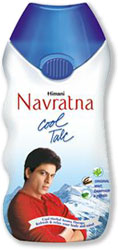
    Navratna Cool Talc, a brand extension from the house of Emami Ltd, has emerged as the first sub-brand to join its list of Rs 100 crore “hero” brands. Navratna Cool Talc which has created a separate “cool” sub-category in the talc segment recorded an 80 percent growth in FY 2012-13. The brand expects to hit a minimum of 25 percent Y-o-Y growth despite the talcum powder segment in India having hit a near saturation point. The success of Navratna Cool Talc further exemplifies Emami’s strategy on building a robust brand portfolio through brand extensions. Navratna Cool Talc currently enjoys a sizeable market share of 18 percent in the Rs 4,300-million-worth Cool talc and PHP sub-segments of talcum powder.


    As a part of its aggressive marketing strategy to achieve the targeted growth, Navratna Cool Talc is going to roll out a brand new TVC strategically positioning the brand as ‘Bina Bijili ka Sabse Chhota A C’. Cosmetic products and talcum powders generally play around the concept of beauty, fragrance and physical discomforts due to natural extremities. Navratna Cool Talc has made a category expansion initiative as a FMCG brand to build a campaign as a relief provider around the concept of extreme physical discomforts during painful long hours of power cuts faced by people in various parts of the country. Developed by Leo Burnett and produced by Conred, the film for the load-shedding campaign has been directed by Gajraj Rao of Code Red Films.


    The roll-out of the new campaign in early-June this year would be done through press ads, TVCs in all major Hindi GEC channels, radio spots and in-theatre commercials targeting the markets of UP, Bihar, MP, Maharashtra, Jharkhand, Chhattisgarh and Tamil Nadu.


    This brand communication will be coupled with the brand new ‘Thanda thanda Cool Cool’ TVC campaign featuring Bollywood Badshah Shahrukh Khan. As a leg-up to the expansion drive in the Southern market, Southern superstar Jr NTR has been recently roped in by the brand to feature in the same campaign. For the very first time, the brand is also going to use Jr NTR’s image on the product packs down south to provide more thrust to the region-specific communication.


    “Navratna Cool Talc has been growing at 40 percent year on year since 2006 although the growth of the talcum powder category as a whole has nosedived. Our strategy to focus on building robust umbrella brands with strong and consumer relevant sub-brands is giving us the envisaged results. The success of Navratna Cool Talc is testimony to this,” said N Krishna Mohan, CEO, Sales, Supply and Human Capital, Emami Ltd.


  • Dentsu Marcom gives clarion call for Pass Pass

    By A Correspondent


    DS Group launched a new campaign for its confectionary brand Pass Pass, the branded mouth freshener. Pass Pass leverages the opportunity of bringing people and relationships closer once again. And that became the centrepiece of its positioning: Human bonding and Closeness. It’s new. But it’s also timeless.


    The new campaign, with TV playing the pivotal role, creates imagery stemming from the positioning of closeness. The brand creates a world that enables these many moments in many different ways for all kinds of people, using different touch points in the ecosystem: social media, radio, real-world experiential engagement, and point of sale activities.


    The TVC drives home the point, through collection of visual montages shot in scenic locations, that closeness isn’t limited by age and shows both young as well as old people sharing moments of closeness.


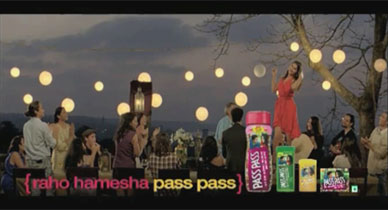
    The film opens with a young woman opening the window of a car and letting the sunshine in. Next we see a young woman walking away after having opened a door. Then we are shown a man and a woman whose hands touch as they are passing by and the woman turns around and walks away smiling. After this, we see a man coming up and greeting a young lady who is holding a Pass Pass family pack seated with her friends who is very happy to see him and beams widely. We cut to a middle-aged man picking up his woman, almost suddenly, in an open field. We then see a bunch of young men and women holding hands on a terrace and grooving to music, as one of them passes on a sachet of Pass Pass.


    We see more people coming together and connecting like a young man teaches a much older woman how to ride a scooter, youngsters bonding over a bonfire and a guitar tune. The film ends with people from all age groups coming together and sharing moments over a dinner on a terrace lit by lamps.


    The film has a duet of a male voice over with an interlude of a female singer. The male voice over beckons us to ‘khidikiyan kholdo, darwaazon ko khula chodh do, haathon ki phire se haathon mein daalo, kisi ko gudh gudao, kisi ko gaud uthao, dosti karo, mohabbat karo, gale milo, aankh milao, kisi ko phir apna banao, taaya taayi mausa mausi sab se pyaar karo, raho hamesha pass pass’. In between this warm friendly voice over, the female singer takes off with the lyrics ‘pass pass aao, mahaul mehkao’.


    “The film celebrates human bonding. You don’t have to be young to enjoy moments that you are spending together. The world seems to be drifting apart with technology pulling people into lives that are largely individual. Today people are caught with themselves, their own lives, more than ever before. Increasingly, people are spending time with gadgets like laptops, cellphones and their work lives. Facebook, Twitter, Whatsapp etc do bring people together but limits physical interaction. You can’t shake hands with a laptop or tickle a cellphone can you?” said Titus Upputuru, NCD, Dentsu Marcom.


    The campaign has a lyrical quality to it. “We have had jingle based films and we have had films led by voice over. Seldom do we have them coming together in the same communication. We have had this combination in films like Silsila where Amitabh Bachchan’s deep voice over is interspersed with Lata Mangeshkar’s Ye kahan se aagaye hum. The Pass Pass film attempts to recreate the magic of voice over and song to leave the viewers wanting more,” he said.


    Rajeev Jain, Sr General Manager, Marketing, DS Group said, “Pass Pass has built its equity from its ubiquity and has established itself as a brand that inspires togetherness and stands for ‘Human bonding and Closeness’. The campaign also focuses on the message that Pass Pass has become a part of the lives of many Indians’ as their favourite branded after mint and it encourages people to come together, no matter what the age is. It also says that family is the new friend. Generation gap is now a gap too thin and is a myth in today’s world.”


    Each element of the campaign invokes people to come together and get close to each other. The print and POS shows people coming together with evocative lines like ‘Haathon ka tanha tehelne na do’.


    Credits:

    Client:Dharampal Satyapal Ltd

    Creative Agency: Dentsu Marcom Pvt Ltd

    Account management: Sunita Prakash, Payal Dhawan

    Planning: Narayan Devanathan, Rabia Sooch

    National Creative Director: Titus Upputuru

    Creative Team: Jitendra Kaushik, Richa Sharma, Anees Aazar

    Director (of the film): Shashank Chaturvedi (Bob)

    Production House: Good Morning Films

    Music: Anandh

    Working title of film: Pass Pass - Raho Hamesha Pass Pass

    Duration: 45sec, 30sec, 20sec and 10sec

    Campaign breaks as of: May last week (27th May)

    Exposure (mediums used): Television, Digital, Radio and BTL activations & POP materials.

    Broadcast duration: 8 Weeks


  • Ajay Chandwani appointed Chairman, DMA Echo Awards- India

    By A Correspondent


    Ajay Chandwani

    DMAi (Direct Marketing Association: India) has announced Ajay Chandwani, Director, Percept Limited  as Chairman, DMA Echo Awards, India 2013. Mr Chandwani is currently Member on the Board of Governors, DMAi and was Co-Chair for the maiden DMAi Convention.


    DMA is the world’s premier body of Marketing Response professionals in US and has since extended to over 40 countries including India in the form of DMAi. The ECHO Awards of DMA US are the gold standard worldwide in marketing response and cover creativity, effectiveness and innovation. The Echo Awards are now in India as part of the initiative of DMAi. This year, DMA US has accorded full alliance status to the DMA India awards programme.


    Entrants in DMAI Echo India this year get a unique benefit. All entrants get in DMA International ECHO Awards at no extra cost saving of US $ 495 or approx Rs.26,000 per entry. Further, all Gold winners in India will go into semi final round of ECHO International thus bypassing the short list round there.


    Commenting on the appointment, Sanjiv Swarup, Director DMAi said, “We are proud to have Ajay Chair the very prestigious awards program once again and welcome his continued support. We are confident that Ajay will once again rope in an equally prestigious jury comprising of Client side Marketers and agency side leaders. Ajay’s familiarity with the awards process will help in strengthening DMAi Awards & Recognition programmes as the only comprehensive awards programmes in the country.”


    Mr Chandwani said, “Marketing response is the most crucial metric for effectiveness of a campaign. Clients and agencies are today hard pressed to deliver effectiveness in every campaign spend with so much pressure on return of investment. The DMA ECHO Awards recognizes and rewards Creativity in Effectiveness and Innovation in response strategies, which is why both agencies and clients worldwide value the ECHO so much in the crucial Direct and Digital domains. Agencies and clients in India must support this cause with enthusiasm.”


    He further added,”It’s good to have DMAi champion the cause of Response Marketing in India through it’s access to Indian and global thought leaders in strategic marketing. Through the Annual Marketing Convention planned for June 4 and 5 in Mumbai and subsequently the Master Classes and Interactive sessions planned in Engagement Marketing, Cyber Safety and ethics and Big data Management and Analysis, DMAi will be doing the Indian marketing fraternity proud in these specialized spheres.”


    Last year the DMAi awards, saw 135 entries from Indian and international companies alike with 52 entries were submitted in full. This year over 200 clients directly or through their agencies have expressed interest in participation and have collected the forms and expressed interest. The jury will meet over the weekend for the judging of these entries. The winners will be felicitated at the Awards Gala on June 4, 2013 that happens on the sidelines of the DMAi 2013 Convention on June 4-5 at the Leela Mumbai.


  • Celkon Mobiles is Title Sponsor of Tri Nation Series

    By A Correspondent


    The West Indies Cricket Board (WICB) has announced Hyderabad based Celkon Mobiles as the Title Sponsor of the Tri Nation Series to be played by West Indies, India and Sri Lanka. The series will be known as the Celkon Mobile Cup and will be played in Jamaica and Trinidad from June 28 to July 11, 2013.


    Celkon Mobiles, one of leading manufacturing companies in India, is a pioneer in mobile phone solutions and wireless technologies in the Country. Celkon caters to the increasing smart needs of mobile users across the world.


    Commenting on the occasion, Y Guru, Chairman and Managing Director, Celkon Mobiles said, “Celkon Mobiles is delighted to be associated with WICB in the Tri-series as the Title sponsor. Cricket, as we all know is like a religion in India and connects instantly with the youth, a huge target audience for our brand. As a brand, and we believe cricket is right platform to connect with the youth of today that represents high energy, competitiveness and innovation. We look forward to an exciting series and a great association with all partners in making this series a huge success”.


    WICB CEO, Michael Muirhead commented: “We are delighted to have Celkon Mobile on board as the sponsor of the Tri Series. The Celkon Mobile Cup is a high profile series for us with the participation of two of the ICC Cricket World Cup champions – India – and the World Cup finalist Sri Lanka in addition to our own ICC World Twenty20 champions West Indies.”


    The title sponsorship of the series is part of the WICB’s granting sponsorship and marketing rights for the series to Technology Frontiers, an Indian based company and ITW Consulting which will be marketing the series to potential brands. Technology Frontiers acquired title sponsorship rights to the series, which includes on field, stump, sightscreen and some perimeter advertising.


    WICB Commercial Manager Nelecia Yeates said West Indies cricket will benefit from the association with Technology Frontiers and ITW. “We have leveraged the expertise of Technology Frontiers and ITW in the Indian market which have accrued benefits to the WICB and West Indies Cricket. This arrangement has become common practice in the sports business and we are pleased that Technology Frontiers have been able to bring Celkon on board along with other mega-brands in India,” Mr Yeates said, adding, “What is most exciting for us as a region is that for the first time in the Caribbean we will have fully digitized perimeter advertising for all the matches, which is now the norm in the IPL and Premier League football in England. This initiative takes us into a whole new realm of maximizing our cricket branding for international matches and is one in which we will be looking to repeat and expand for future series as well.”


    Managing Director of Technology Frontiers, Muralidharan Srinivasan commented: “Technology Frontiers is pleased to partner with WICB for the upcoming Tri Series with West Indies, India and Sri Lanka. At Technology Frontiers we have constantly endeavored to bring in innovation and technology into sports to elevate the brand experience and this series will be the first Tri Series to have 100% digital branding on ground similar to IPL. We look forward to an exciting tournament and partnership with WICB.”


  • Integer Group wins Fujifilm shopper marketing mandate

    By A Correspondent


    The Integer Group India has announced its appointment by Fujifilm to handle the retail and shopper marketing mandate for its new brand, Instax.


    Based in Mumbai, Integer India will create a shopper experience through below-the-line marketing activities including retail, activation and one-on-one contact programs. The specialist agency will use spaces and touch points evolving around Instax.


    Instax is Fujifilm’s brand of instant still cameras and films, which come in two formats – the original ‘wide’ format, which produces an image approximately 60mm x 99mm in size, and a ‘mini’ 62mm x 46mm size picture.


    Ketan Desai, Managing Director of The Integer Group in India, explains, “Integer has been chosen to convert the affinity towards the brand into purchase of the product. It is imperative to understand the shopper consumer mindset before beginning that conversation.”


  • Rapid climb from Direct to Big Data Marketing


    By Ananya Saha


    Direct/data marketing has evolved in the Indian market. Given that traditional media is getting expensive, are brands returning or increasingly considering the option? What are the challenges that this form of marketing faces, especially in India? Will direct marketing grow on a healthy path in the coming years? We ask industry seniors what they think.

     

    Ajay Chandwani, Director, Percept Ltd

    Direct Marketing first started as a coupon response action device in media like print and worked as a direct response to one to one communication. This extended to other media like radio, TV and today digital has redefined the potential of direct marketing. Classical direct marketing based its importance to developing one to one relationships with customers which evolved to CRM or customer relation management. It was the tool for high ticket consumer and service products like durables, cars, banks and credit cards.


    Efficiency in results has always been a feature of direct marketing with pin point targeting its great advantage.


    Brands are increasingly turning to direct marketing for more efficient returns on their marketing investment. Today’s engagement and loyalty models are based on the traditional direct response principles. Even Facebook and Twitter campaigns are inspired by the tenets of direct marketing.


    The big challenges are:

    a. Offline advertising is still needed to provide a cover to direct campaigns and this is expensive.

    b. Response levels of success are small and maturity is needed from client users on the slow build up of sales through this route.

    c. Databases are often not accurate and building accurate relevant data bases can be a tedious process.

    d. The power and immediacy of mass media will always influence clients to treat Direct Marketing with a pinch of salt.


    The age of Direct Marketing is finally here…never before has big data analysis and loyalty/engagement marketing provided such exciting ways to meet marketing goals. Indeed Direct Marketing has finally moved into a spot where the sun is shining on it brilliantly as the lines between Direct and Digital blur and convergence of media is taken priority.


    Vikram Menon, Country Head, OgilvyOne WW

    The recent years have seen huge changes in the Direct Marketing model in India. The Digital Era is here, led by technology, data, smart phones and social media. In many ways these are the perfect media for one-on-one Direct Marketing. We now have the ability to have real and relevant conversations with our consumers, an ability that we never had before.


    Brands now have the tools to do the two things that make them successful in Direct Marketing – The ability to stay real, relevant & authentic AND the ability to give their consumers the platform to talk about them to the rest of the world. Brands today can look at customers and prospects not as just potential consumers but as a marketing channel by providing them the content and the platform to become true and vocal advocates.


    The reason isn’t because traditional media is getting expensive, it’s because brands now realise that digital is where the customer lives. Whether its on computers, their tablets or their phones. The digital space also allows real-time interaction and conversation with customers and prospects.


    It’s the lack of penetration and bandwidth. Just 15% of India today has access to the internet. And under 10% use smartphones. This coupled with the perception that digital should be cheaper.


    Loyal customers today expect unrestricted & personalised access and conversations with brands they adopt and Direct Marketing and CRM is the way to do that. It’s inevitable that brands will begin taking Direct Marketing, Data and Digital extremely seriously. We’re seeing more clients everyday asking for Direct and Digital-led campaigns. Something that was just an add-on to a television or a print campaign a couple of years ago. And we do expect this growth to get stronger with more people having access to the Internet and Smart phones.


    Satish Ramachandran, Sr Vice President Digital, Draftfcb Ulka Interactive

    The principle of direct marketing is a one to one communication to an individual or to a group of individuals based on common factors vis a vis a mass marketing, its is now imminently possible to digital and web.


    With the advent of digital medium, direct marketing programs have really evolved they are now easier to implement, sharper, smarter and measurable with quick turnaround times.


    At Draftfcb Ulka Interactive we were amongst the earliest to set up a traditional direct marketing agency, we were among the earliest to realise the potential of the digital medium and developed skills, tools and processes to maximise the opportunities provided by this medium. We are able to target niche audience like CXO’s, HNI, B2B audiences etc. some of work have been recognized and have received industry awards as well.


    In fact with some of our clients we work on a pay-for-performance model which is a win-win situation for all. Every medium has a role to play instead of thinking mediums we must think consumer, his habits and behaviour and evaluate touch points and apply accordingly.


    It’s also important to set objectives and metrics both long term and short term. Marrying the two will result in identifying the mediums, its impact and response. While brands are increasing investments in direct marketing, it’s still a small fraction of overall marketing spends. Hence it’s not a significant spend. Few marketers are using direct marketing effectively others are still experimenting. But we there is traction now and most importantly marketers belief on this medium it will grow henceforth.


    Direct Marketing is a scientific method and there are no quick and easy solutions. One has to be patient, test different scenarios and build the program over some time. Some of the biggest challenges we face are:

    1. Databases: We lack organised databases vendors and whatever is there is suspect and mostly junk. A marketer has to build database and clean up etc., this hampers the quality of the program.

    2. Metrics: Today the currency for mass media is accepted GRP’s and readership etc., so no one questions. Whereas in direct marketing once can measure 15 metrics. While it’s very exciting because data is available and everyone has his/her point of view. As a result brands are getting distracted and whole exercise is meaningless and confusing.

    3. Commitment: Senior management has to get involved and it should not be seen as a short term tactical activity.

    4. Remuneration: Direct marketing is high effort activity unfortunately the remuneration is not commensurate to effort. A good agency has to invest on tools, talent and technology. None of this is cheap. Direct marketing will grow faster than mass marketing as more and more consumers are using digital devices and accessing the net, we also believe that the younger generation spends more time on digital domain than mass media. Thus marketers are now realizing the value of direct marketing and the investments in direct marketing are growing. in some of the western markets 40% of marketing spend is on direct marketing we are 2 – 7% range.

     

    Kunal Jamuar, Executive Director, West, Havas Media India

    Direct marketing is today a technique increasingly adopted by brands across scale to talk to their potential customers. It is no longer the tool of only niche or small scale brands. Improved technology allows more targeted communications to isolated audience segments over plain vanilla blanket emailers in data marketing. We also see the language evolving – it is not only direct mailers but also local theatre, competitions, events, etc ; even in regional markets for a large scale brand. It is increasingly becoming a considered tool for brand marketing.


    It is a tradeoff between scale and cost per contact. Mass media certainly has a vital role in brand messaging. However direct marketing is perceived as being easier to gauge or test the response in real time but is a more expensive process. Niche brands use the direct route more frequently but we are increasingly seeing mass brands also adopting this format to a particular segment of their audience or a particular locale. The richness of the engagement contact and context makes it a valued proposition. It is expensive in the sense of cost per contact reach and resulting ROI from it. Also TG selection must be spot-on and then you need to collect a critical mass of TG at one point for the activation.


    Then the vastness of India’s culture needs customized messaging to relevant TG , the one size fits all does not always work. For mass brands with scale this could be a greater challenge.


    Yes, certainly direct marketing when used correctly is an arsenal for a brand. With the number of growing products and services this has the scope of creating immediate experience recall. It will increasingly become an essential part of the marketing mix especially for certain brands or their customers.

     

  • Can the NaMo magic work for the BJP?


    By Johnson Napier


    The Congress party in India may have been doing all it can to stay away from the negative noises created by Opposition. Led largely by the BJP, the foes from the other end are leaving no stone unturned in making sure that the Congress faces its toughest test yet as the country heads into election mode in 2014.


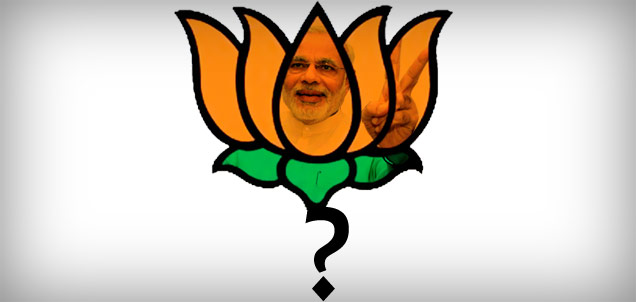
    While this may have been a daunting task until five years ago, led by the man of the moment, Narendra Modi, the BJP is set to face the task ahead. After silencing his critics and assuring his huge fan following that he has what it takes to rule the country with an iron fist, the NaMo chant has been growing louder as the days pass.


    The immediate impact of his appointment as head of the BJP’s election offensive was the resignation of party leader LK Advani and the consequent withdrawal of the same. But with news of infighting and internal differences being the order of the day, the picture may not be as rosy as it seems. MxMIndia spoke to a few professionals who have been associated with image-enhancing initiatives or track the way politics is run in the country and presents the viewpoints.


    Sushil Pandit

    Sushil Pandit, Director & CEO of Hive Communications, which has done campaigns for the party in the past, sounded optimistic as he said that Narendra Modi has today emerged as a locomotive for the BJP; the engine for the party’s growth and acceptance. “He represents the best of BJP – its potential, its performance and credibility. He brings a lot of incremental approval to BJP’s existing support base. So brand Modi complements brand BJP and is all set to propel it much further from where it is today,” he said.


    Highlighting the game-changing dynamics being witnessed, Mr Pandit asserted, “Today, a whole host of key determinants have changed in Indian politics including the way the youth of today perceive the leadership, their aspiration, their demand, their definition of what kind of a leader they expect…it has risen far above from the earlier narrow consideration of dynasty, caste, etc and has focussed more on the performance aspect and what is possible. Narendra Modi therefore has emerged as a huge force in converting such aspirations into approval and work for the party.”


    According to him, with a year left before the elections in 2014 there is a great deal of hope and a lot of fervour amongst the masses – factors that should see the party through in the 2014 elections.


    Sanjay Mehta

    Sanjay Mehta, Founder & Joint CEO, Social Wavelength, put forth a prudent outlook for the party as he said that the happenings at BJP are a natural outcome of a major change. He affirmed, “It was always suspected to be a challenge for Narendra Modi to move into top position, and be the party’s PM candidate, given his legacy in Gujarat, from 2002. That over the years, he has managed to create a change in the manner in which he is perceived and reached a point where the party sees their best hope in projecting him as their leader, is a huge achievement.” Adding further he said, “In the face of this, to enable the change from the old to the new, and one which is largely acceptable within the party, still has its share of friction, and the Advani resignation etc. are a part of that. All these are an integral part of Indian politics and I do not believe that these impact the party’s brand image to a large extent. It is unlike major corruption or other scandals that have plagued parties too in recent days! More importantly, this has happened several months before the elections,” he reiterated.


    Presenting his stance on the impact being created on brand BJP, Mr Mehta highlighted, “What I hope is that the short-term impact on the BJP brand will not affect the longer term prospects. Assuming that the necessary compromises are made within the party, and thereafter, as a whole, the party is willing to position Modi as their leader, unanimously, that is a strong plank for the party to take forth, into the 2014 elections.” But sounding a word of caution, Mr Mehta said that with LK Advani taking back his resignation, “the only fear is that closer to the elections, he doesn’t again raise his ambitions for the PM position, and create a ruckus then. If that happens, it will hurt BJP much more than the current hiccup.”


    Harish Bijoor

    Not holding back his thoughts, brand consultant Harish Bijoor of Harish Bijoor Consults Inc. was forthright as he said, “I do believe brand BJP is hit for sure. The hit is seen clearly in television footage of the leaders of the party and their really overtly saddened faces. This is not good for morale.” However, Mr Bijoor does believe that this is a temporary setback. “The party will bounce back with vigour after the dust settles and the old guard has given way to the new. Modi is a brand man in reality. He is a very savvy leader who uses every modern tool there is in branding. I do believe he will revive the morale for sure.”


    Knowing what it takes for a brand to enhance its image offering, Sridhar Kondiparthi, Chief Creative Officer – India Sub Continent of Leo Burnett asserted that everything that is happening within the BJP and RSS, including a sulking Advani, will only benefit the BJP and Narendra Modi. But sounding a caution, Mr Kondiparthi said, “A reluctant old guard will have no sympathy with the younger voters; India wants a younger and more ambitious leadership.”


    Naresh Gupta

    While it is still early days, there is a lot at stake for brand BJP for it to win back the confidence of the masses. It could begin by getting its basics about branding itself right. As Naresh Gupta, Managing Partner, Bang in the Middle, asserts, “Elections and political branding are a bit different from usual brands and consumers do consume them differently. The perceptions are transient and a lot depends on how the competition plays the game. Currently it is affecting the brand. The controversy is not adding to the appeal of BJP. What matters now is what does the market do?”


    As for the way ahead for the party, Mr Gupta affirms, “The elections are still some time away and we can’t say what may happen by then, though going by what’s happening now it will strengthen the brand in a small core but weaken in large potential audience.”


    Mr Gupta may be critical of the party’s success as yet but for the ardent believers of brand NaMo, also the driving force behind brand BJP as of now, the moment certainly seems to be favourable for it to make an impression in the minds of the people.