Category: MARKETING

  • Love makes for good business


    By Meghna Sharma


    If a price can be put on love, it is put in February. From hoardings on the urban landscape to the countless offers on products and services, everyone is looking to cash in on Valentine’s Day.

     

    Mohit Joshi

    “Valentine’s Day has become an important youth touchpoint over the years. It is almost like a ‘festival of youth’. This is why relevant brands cash on this unique opportunity through various consumer-connect programmes,” says Mohit Joshi, managing director, Havas Media India.


    For a brand which caters to various age groups and especially youth, which is usually scattered in their choice and opinion, the day acts as a perfect solution to catch their attention through the message of love.


    “The concept of Valentine’s Day mostly revolves around the idea of gifting, and hence we see many consumers opting for gift vouchers for their loved ones. It’s still not as big as New Year’s Day, wedding season, Diwali, etc, but we see a lot of traction towards our ‘beauty-oriented’ services. The demand for such services is much higher in this season and we see a surge of almost 15 percent especially when we run attractive promotions,” says Chhavi Sharma, marketing Manager, Kaya Ltd.


    Online shopping websites which cater mostly to youngsters are also reaching out to their TA with attractive offers. A spokesperson for Myntra.com says, “Festive seasons such as Diwali and Christmas have a mass appeal across all age groups, but Valentine’s Day is especially popular with the youth who constitute a large part of Myntra.com’s TG. This Valentine’s Day, Myntra.com is not only looking at giving shoppers great deals but is also trying to engage with them as a brand. With the Love Connection contest, the brand is engaging with its audience in a two-way conversation and giving them a chance to win prizes.”


    TimesMobileLtd. (TML) has launched a greetings and gifting mobile app, GreetZAP. The app introduces the concept of voice cards, which enables users to record a message and send it to their loved ones through physical Voice Cards, which are home delivered. Speaking about this new initiative, Ajay Vaishnavi, Director – Telecom, TML, said, “With Voice Cards, we have brought a new way to express feelings which today’s youth, who are very connected and tech-savvy, will love to use. With the GreetZAP app, they can do a lot more than sending plain text messages while greeting their near and dear ones.”


    However, many brands feel that age has nothing to do with it and are leaving no stone unturned to reach out to various age groups, as the Idea Valentine’s Day ad shows. SBI Life has launched a marketing campaign riding on the Valentine’s Day mood through their latest ad – Valentine Gift at 60 – across national and regional channels.


    Chandramohan Mehra, VP and Head – Brand and Cross Sell, SBI Life Insurance, says “High on emotional engagement, the campaign reinforces our promise of enabling customers to ‘Celebrate Life’. The idea is to trigger the thought of planning for post-retirement needs. Consistently, we continue to anchor our brand communication on positive emotions, to drive across the point that customers need to plan today so that they can continue to live life to the fullest.”


    Not only brands, but media too isn’t shying away from making the most of the opportunity. This Valentine’s Day, 92.7 BIG FM has announced the launch of a special campaign to rekindle romance among married couples. The campaign, named ‘Phir Pyaar Ho Gaya’, celebrates the season of love dedicated to married couples.

     

    Nikhil Gandhi

    “Given its place in the lives of our viewers, the day is an important one for us at Bindass since we are a 360-degree youth entertainment brand,” says Nikhil Gandhi, executive director, youth channels, media networks, DisneyUTV. The channel has partnered with Close-Up for their ‘Bindass Come Fall In Love’ initiative to give 10 couples a chance to go skydiving with their partners at Amby Valley.


    Arunabh Das

    Notwithstanding all the hype, the general feeling is that though the day has come up tremendously and is an interesting advertising opportunity for many, it’s still a small event. “If we compare the event with others like Diwali, it has a long way to go. Newspapers do get advertisements related to the day, but since not major economic activities take place around it, brands don’t take it that seriously,” says Arunabh Das Sharma, president, BCCL.



    Neel Kamal Sharma

    “Diwali and New Year have much more mass appeal and a larger opportunity for business as compared to Valentine’s Day which is still limited. So, by figuring out the relevance of these days for a product/ service, we work out suitable customized communication which will be more effective,” adds Neel Kamal Sharma, COO – Buying, Madison Group.




  • Hero exits cricket, game poorer by approx 1.2k cr a year

    By K Shriniwas Rao


    Cricket seems to have lost its Hero. The leading two-wheeler manufacturer, led by the Munjal family, has consciously decided to move out of all cricket sponsorships. After exiting as global sponsors of the International Cricket Council (ICC), and also from the Indian Premier League’s (IPL’s) central pool of sponsors, Hero Moto Corp, last week, called it quits with IPL’s Mukesh Ambani-owned franchise Mumbai Indians too.


    But the $4.5-billion automobile giant will stay associated with other sports. Earlier this year, Hero had signed a multi-year title sponsorship deal with the recently floated Hockey India League. Recently, Hero also entered into a new four-year sponsorship agreement with the International Hockey Federation (FIH) to sponsor all their events scheduled to be held in India, including the 2013 men’s junior world cup, the 2013 men’s World League Final, 2013 Champions Trophy and the 2015 Hockey World League Final. Hero has been associated with the FIH for three years now.


    Hero is also associated with two of golf’s premier events in India – the professional women’s tour and the Indian open – as title sponsors. However, where cricket is concerned, the New Delhi-based company has decided to stay away.


    Their exit leaves Indian and world cricket poorer by a collective approximate sponsorship of Rs 1,200 crore. Along with LG, Vodafone and Pepsi, Hero had renewed its contract with the ICC as one of its global sponsors – learnt to be for $25-30 million a year for three years – and were associated with cricket’s world governing body until last year.


    Hero was also part of the IPL’s central pool of sponsors until last year. In 2007, it had signed up with the BCCI-run Twenty20 league as associate sponsors for $22.5 million a year for a five-year period that ended in 2012. Hero was also associated with Mumbai Indians (MI) for the last two years as lead sponsors, coughing up approximately Rs 65 crore a year. MI confirmed Hero’s exit but refused to divulge details of a new sponsor. “Many national and international brands are interested but it’s not right for us to divulge details now because we’re still in talks,” an MI spokesperson said. The ICC, it is learnt, is already looking for a replacement for Hero.


    When contacted, a statement from Hero Moto Corp said: “We have been associated with cricket for over two decades and it is not correct to say we are moving away from cricket. Our decision to not renew IPL contracts does not dilute our commitment to cricket. We will continue to remain engaged with cricket along with other sports.”


    Source:The Economic Times

    Copyright © 2013, Bennett, Coleman & Co. Ltd. All Rights Reserved


  • It’s an era of brand experience, not of product branding: D Shivakumar

    By A Correspondent


    All India Management Association (AIMA) kickstarted its two-day 3rd World Marketing Congress in the capital. The congress, themed Marketing Myopia 2.0, aimed to explore the future of marketing and to identify the challenges that marketers face due to the changing market scenario.


    Srinivasan K Swamy

    Inaugurating the event, the congress chairman and R K Swamy BBDO Chairman & Managing Director Srinivasan K Swamy said, “The consumer today wants more for less and quickly, which is making product lifecycle progressively shorter. Also, there is a lot of media today but not enough consumer engagement. The marketers face significant challenges in this age of digital media.”


    The congress took up several marketing issues for discussions, including the new age customers and grabbing their attention, extending product lifecycles, defining business based on customers and not products, using the internet to gain competitive advantage and the rising importance of earned media.


    Making a presentation on the occasion, D Shivakumar, President, AIMA and Senior Vice President, IMEA, Nokia Ltd, said, “Marketing has changed fundamentally. It’s an era of brand experience and not of product branding. Also, today, space is no longer only the physical location of business but any space where consumers can access it.” He also stressed that marketers could no longer treat the digital media as a niche. “In fact, digital media is becoming the main media to reach out to the youth,” he added.


    Mick Gordon, CEO, Ipsos highlighted that with digital platforms converging, it is important that brands start dreaming in digital. Anisha Motwani, Director and CMO, Max Life Insurance was of the view that brands need to connect with consumers every day. Concurring with Ms Motwani’s view BCCL President Arunabh Das Sharma said, “In the digital age, the concept of product life is dead and thus, one should focus on brand life cycle and values.”


    Gyan Gupta, CEO, Dainik Bhaskar, Digital Business, IMCL said, “The need for news has not changed, only the way people access the content has changed. Paper is not the mainstay, it is the content.” He further added  brands need to adapt themselves according to how the consumer wants to see the brand.


    Talking about earned media and paid media, Bhaskar Sharma, Director and GM, Red Bull India said, “Earned media for any brand remains distinct and credible, it is cool to share on all platforms. It results in high level of reach and engagement. The only issue being there is no control on how, and where it would appear.” Suhel Seth, Managing Partner, Counselage India said, “Earned media is about hinging on credibility of the brand. Earned media adds as a short buffer. What is more important for brands is that they remain relevant to their brand promise.”


    More than 250 marketers attended the Congress on its first day. The highlight of the event was the presentation of the AIMA’s R K Swamy High Performance Brand of the year Award, which was bagged by Apollo Tyres this year. Rajesh Dahiya, National Head, Sales & Marketing, Apollo Tyres received the award. Speaking on the occasion, Rekha Sethi, Director General AIMA, said “It is perfect time to debate marketers’ response to the revolutionary changes in the technologies and consumer behaviour.”


  • Pulp Strategy named ‘Youth Marketing Agency of the Year’

    By A Correspondent


    Pulp Strategy was given the ‘Youth Marketing Agency of the Year’ award at the Global Youth Marketing Forum by CMO Asia. The Youth Marketing Forum is the largest rendezvous of youth experts, marketing professionals, cool hunters and brand marketing specialists, with the focus of 2013 being on bold vision and brand ideas for the youth audiences.


    Pulp Strategy creates and develops engagement initiatives with youth communities and works with over 4,000 campuses across India, including the premier business and engineering Ivy League campuses. A substantial chunk of the agency’s body of work is centred on youth marketing. Having taken an unconventional approach to experiential marketing, Pulp Strategy has built expertise in peer-to-peer marketing, ambassador-led programmes, influencer marketing and community seeding in addition to traditional experiential marketing and brand activation campaigns.


    Ambika Sharma

    “Youth is a much sought after consumer segment as they are early adopters and value brand engagement when in the correct perspective. We utilize a strong social media connect as part of the relationship building process in addition to using experiential marketing to create seamless engagements with the audience,” said Ambika Sharma, MD and CEO, Pulp Strategy Communication.


  • Reckitt Benckiser’s Dettol Kitchen ad takes on HUL’s Vim

    By Ratna Bhushan and Sagar Malviya


    In a first for Reckitt Benckiser, the launching commercial for its Dettol Kitchen dishwashing and kitchen cleaning gel shows rival Hindustan Unilever’s Vim dishwash liquid clearly, in a move that may trigger a new advertising war between the two European multinationals.


    The commercial, first aired on Friday, marks the first time the Indian arm of the British consumer good major has directly attacked HUL in its advertising.


    Skirmishes between the two firms have been veiled in the past, although both have repeatedly taken each other to court and advertising watchdog Advertising Standards Council of India (ASCI).


    Officials of Reckitt Benckiser were not available for comment on the campaign. An HUL spokesperson too did not offer any comment on the subject. An official close to the developments said it was only a matter of days before HUL takes action against the disparaging ad.


    Experts say that even if HUL files a complaint to ASCI on Monday, the Dettol Kitchen ads released on Friday would have created maximum impact over the weekend.


    “Such ads gives a very strong message psychologically that it’s not just another product and they can compete with the market leader. While HUL almost has a monopoly in the segment, there could be more action now in an otherwise dull segment,” Nitin Mathur, consumer research analyst at Espirito Santo Securities, said.


    ASCI chairman Arvind Sharma, who is also the chairman & CEO of Leo Burnett in Indian subcontinent, said that featuring a rival brand in a campaign alone does not break advertising codes.


    “In general, the consumer complaints council code allows ads to show a rival brand as long as the claims made in the ad are fact-based,” said Mr Sharma who is also the president of Advertising Agencies Association of India.


    The consumer complaints council checks violations in advertising and initiates action as and when necessary.


    With this move, Reckitt Benckiser seems to have given HUL a taste of its own medicine.


    Two years ago, HUL’s ads for Rin detergent took a dig at rival Procter & Gamble’s Tide, clearly showing pictures of Tide in the Rin ad. P&G had moved the court within a day of the ad going on air, and the ad was stopped within days.


    As reported by The Economic Times last week, Reckitt Benckiser, which also makes Cherry Blossom shoe polish and Airwick air-fresheners, has taken its battle over germ-protection with HUL to the kitchen with the launch of Dettol Kitchen. India is only the second country after Korea to roll out Dettol Kitchen, a global innovation led by India.


    Reckitt Benckiser has positioned Dettol Kitchen as a ‘complete kitchen cleaner’, for use as a dish-washing gel and cleaning other kitchen surfaces like sinks and slabs.


    HUL’s Lifebuoy and Dettol have been rivals for close to three decades.


    The 80-year-old Dettol brand, launched first as an antiseptic liquid in 1933, has subsequently been launched across different categories including soap, plaster, handwash, shaving cream, hand sanitiser, and now kitchen cleaner.


    Vim, also an HUL power brand, has been dominating the dishwashing space for close to 100 years. The liquid dishwash segment is estimated at close to 300 crore, which is about 15% of the 2,000-crore overall dishwashing market that includes bars, powders and liquids. Growing at a rapid 40%, the liquid segment is the fastest growing among dishwashing formats.


    Apart from Vim, Dettol Kitchen will compete with Henkel-Jyothy’s Pril and Exo. Dettol has some 53% of the 300-crore handwash category, followed by Lifebuoy at a share of about 30%. But in soap, Lifebuoy has close to14% share, against Dettol’s 8.2% market share.


    The UK, Slough-based firm over a year ago named India as the headquarters for its South East Asia region, and placed India chairman and MD CM Sethi at the helm of 12 countries including Singapore, Malaysia and Thailand.


    The Dettol Kitchen commercial may trigger an aggressive ad war between British firm Reckitt Benckiser and Anglo-Dutch firm Unilever in India ahead of UK Prime Minister David Cameron’s visit to India from today (Feb 18).


    Source:The Economic Times

    Copyright © 2013, Bennett, Coleman & Co. Ltd. All Rights Reserved


  • AIMA World Marketing Congress pinpoints marketing myopia in digital age

    By A Correspondent


    All India Management Association (AIMA) Third World Marketing Congress concluded recently. It highlighted the need for a fundamental change in marketing in the age of digital media and empowerment of the consumer. The theme of the congress was “Marketing Myopia 2.0”.


    On the second and the final day of the event, the speakers shared their insights on many urgent marketing issues, including big data and analytics, future relevance of the traditional media, the role of NGOs in marketing social causes and the relevance of advertising agencies in the new era.


    Speaking about the relevance of traditional media in the current scenario, Shefalika Saxena, CMO, Microsoft India said, “Traditional media is not at all losing relevance. Media is only media and not new or old, which is constantly changing and evolving. It’s not about newspapers or television or any other media but it’s how one uses that media to engage with the customers to sell or to market a product.”


    “As world of marketing is changing rapidly every day, traditional media has to change ways of communicating with people and have to go where the audience is going rather than where media wants to take them,” Ashok Venkatramani, CEO, ABP News, said while commenting on role and relevance of traditional media in current scenario.


    Talking about the importance of analytics in marketing, Clifford Patrao, Director and Leader, Strategy & Transformation-Global Business Services, India/South Asia, IBM India Pvt. Ltd, said, “Analytics are for enriching customers experience and to make product branding more user friendly. We are seeing an era where data is empowering marketing and marketers.” The delegates also discussed the new age consumers, extending product lifecycles, defining business based on customers and not products, using Internet to gain competitive advantage and the rising importance of earned media.


    Koichiro Shima, Co-CEO, Creative Director and Editor, Hakuhodo Kettle Tokyo and Yasuharu Sasaki, ECD, Dentsu Network, New York presented five tips to avoid myopic campaigns. Co-presenting the tips, they said, “The agencies need to design the experience that people have never experienced. Creative rectors must be good facilitators and allow people to discover message on their own rather than follow directives. It is important that agencies are flexible and are ready to tune the content and budget anytime.” The fourth point they shared was to “forget digital’ since agencies focus too much on digital making it myopic. “It is not the technology but the idea that attracts people. We need to design human touch behind the technologies.” The last tip they shared was to create social significance with the digital medium, as it offers many opportunities.


    The Congress attracted more than 350 participants. The Congress afforded the delegates an opportunity to learn from the experts and share branding experience and insights with their peers.


  • IMC 2013: Being creative and loving it

    By A Correspondent


    While brands do acknowledge the big role that the medium of print essays in getting them to speak to their audience, the task has become more daunting in recent times what with the advent of multiple mediums. At such times, being innovative and creatively unique is what may make them stand out from the clutter.


    In the session on ‘Advertising Creativity and Magazine Media’ at the Indian Magazine Congress 2013, the panellists took turns presenting their viewpoints on how print could still remain a preferred medium for brands going forward.


    Lutz Kothe, Chief General Manager, Marketing & PR, Volkswagen, India began by saying that advertising in India has come a long way. “While for the magazine industry 2013 is about niche and genre-based publishing, the times are also changing and turning out to be challenging. The onset of several new mediums especially digital has provided an array of choices for the advertiser to choose from. In a couple of years from now, integration with digital technology will be the way forward. But while 360 degree would be the way forward, an important thrust would continue to be given to magazines.”


    Josy Paul

    Josy Paul, CCO & Chairman, BBDO India compared a magazine to that of an infant as he said it is all about touch, feel and involving sensorial feelings. He went on to demonstrate some examples of some fine print ads that captivated the attention of the audiences. But he also agreed that the ad agencies of today did not resort to using the medium as effectively as it could and rather depended heavily on other mediums like television and digital.


    Satyaki Ghosh, Director, Consumer Products, L’Oreal India said that his organisation was highly appreciative of the medium of print. While we are the seventh largest advertiser on the medium of television, our percentage of spends on the medium of print is still high. Print is the only medium that enables us to educate our audiences and also gives us the premium that we desire. “But what I expect from the medium especially magazines is partnerships that would allow us to make our core idea bigger.” Ghosh also cautioned the publishers that they should not engage in innovation for the sake of it; the readers should not be confused with what we are trying to tell them.”


    When asked on how open his organisation is to incorporating new ideas, Ghosh said “We are open to ideas from wherever it comes but usually it is the domain of the creative agency, and even the media agency to transform thought into reality.”


    Kothe had a slightly different approach as he said that it doesn’t matter from where the ideas come as long as it is effective. “Where magazines are concerned, we do get ideas from the editorial teams as well and if we like it we go ahead and incorporate them.”


    As for Josy Paul, it is all about looking at how they can maximise media and the answer lies with innovation. The other aspect that readers look forward to from magazines is for it to deliver news-worthy content.


    Sonal Dabral
    Sonal Dabral

    Sonal Dabral, Chairman & CCO, DDBMudra, put forth his observation as he said that each time he is confronted with a problem there are chances of finding part-solutions to it. Where the medium of magazines is concerned he said, “The medium of magazines allows us to write or explain stories, something that that the television or other mediums do not offer. With the onset of multiple mediums the going will be a bit challenging going forward.”


    The panellists agreed that the way forward would be for creative firms to work alongside brands and produce work that would be educative, appealing and informative.


  • Scholastic India launches ‘Nova’ to target young adults

    By A Correspondent


    Scholastic India, a subsidiary of Scholastic Corporation that has been running a dynamic publishing programme for children since 1997, has launched Nova, a new initiative for the Young Adult segment. The genre will feature books around a variety of themes, with the focus being on ‘coming of age’ themes, science fiction, crime fiction, fantasy and romance.


    Nova is being introduced to the market with Rahul Srivastava’s murder mystery, ‘What Happened to Regina that Night’, and two collections of short stories, ‘Music of the Stars and other Love Stories’ and ‘Saleem on Earth and other Stories’.


    Scholastic India will launch Nova through a series of bookstore promotions across the country in February and March. Activities will include author interactions and book signings, special branded display racks, handouts and posters across chains such as Landmark, Crossword, Oxford Bookstores among others. Other special initiatives to popularize titles under the Nova list will include a major campaign for Suzanne Collins’ book Catching Fire, in The Hunger Games series, in tandem with the release of the film in November 2013.


    Commenting on the launch of Nova, Neeraj Jain, Managing Director, Scholastic India said, “The launch of Nova heralds a very exciting time in the journey of Scholastic India. We are keen to expand the Nova list year-on-year and are aggressively seeking new Indian authors who appeal to the 13-30 audience. While our children’s book division continues to do extremely well and grow every year, we expect Nova to add significantly to our revenues almost immediately.”


    Tina Narang, Managing Editor, Scholastic India added, “Scholastic India, after successfully publishing children’s books for over a decade, is now ready to target the older reader or the Young Adult. What makes this a greater challenge and more exciting is the fluid nature of this new segment of readership – both in the target age group which could be anything from 13 years and up and in the range of genres that can be picked from. For authors of adult fiction and non-fiction, who find writing for children more restrictive by virtue of language, story and form, this is an easier fit, and a bridge between the two very well defined readerships, that of children and adults.”


  • Times Internet and HDFC launch Times Card

    By A Correspondent


    Times Internet, the digital arm of The Times of India Group, has partnered with HDFC Bank, India’s second largest private sector bank, to launch Times Card, an exclusive, co-branded credit card that provides customers the widest range of discounts and deals on dining, movies and shopping. This credit card has been specifically designed to cater to the lifestyle and entertainment needs of young professionals between the ages of 24 and 38 years, and offers value for money in the movies and dining space.


    The Times Card comes with a specially crafted rewards program and year-long discounts. This includes 25 percent off on movie tickets, 20 percent discount on dining, and best-in-segment deals. Users also have the exclusive option to redeem accumulated points against air miles in addition to the usual catalogue based redemption options. Another first in the credit card space is the presence of the QR code on the Times Card plastic. The QR code can be scanned using any Smart phone to reach www.hdfcbank.timescard.com, where customers can view the latest offers and also apply for the Card.


    “The association with HDFC Bank helps us create a unique product in the entertainment space that is in line with our goal to consistently deliver unique products and services to our customers. We are sure the co-branded credit card will provide superior customer experience, enabling us to deepen our relationship with our wide customer base,” said Archana Vohra, Vice President and Business Head, Times Internet Limited.


    ” We now have a premium product of the highest quality and great customer value for the discerning youth of India and young at heart as they enjoy exclusivity. HDFC Bank’s partnership with Times Internet will further enhance our product offering and provide young Indians with an unrivalled entertainment experience,” said Parag Rao, Senior Executive Vice-president and Business Head, Credit Cards & Merchant Acquiring Services, HDFC Bank.


  • Nutrela launches ad campaign to tap Bengali market

    By A Correspondent


    Ruchi Soya Industries is set to target the West Bengal market with an aggressive marketing campaign for their premium brand, Nutrela Kacchi Ghani Mustard Oil. Bengal alone accounts for over a third (around Rs 110 crore) of the Rs 300-crore mustard oil market in the country. With an intent to reach out to Bengali masses, the company is also planning to launch a 35-second TVC and a 25-second radio jingle.


    With this campaign, the company is trying to create a bridge between the brand and true ‘Bangaliaana’, using a thoroughly Bengali concept ‘Jagai Bangaliana’, which aims at evoking the authentic taste of food every time they use Nutrela Kacchi Ghani mustard oil.


    The idea revolves around reviving and rejuvenating this ‘Bangaliaana’ and brings back the fading Bengali persona and spirit, reminding them of their roots. The campaign largely aims to reawaken authentic taste of Bengali food. It evokes the rich culture and tradition of the state and exhorting the people of Bengal to rediscover the pride of eating authentic Bengali food.


    “Bangaliyana”, a tradition involves inviting friends and family to the house and discussing music, literature, politics, food, culture, history and then savoring authentic home cooked Bengali cuisine together. Strengthening this connect further, the company has roped in veteran Bengali actor Soumitra Chatterjee to sing a jingle for the new radio campaign.


    “We are sure that the campaign will rejuvenate the fading spirit of “Bangaliyana” and the need for kacchi ghani mustard oil as the predominant cooking medium. We are extremely excited about reviving ‘Bangaliyana’ and more so being able to make Soumitra Chaterjee partake in bringing the idea alive by singing a song for us,” said Sandipan Ghosh, Assistant Vice-President Marketing, Consumer Brands Division, RSIL.


    The television and radio campaign has been conceptualized and developed by Hammer Communications based out of New Delhi.


    The TVC and radio campaign will be simultaneously rolled out in Bengal and Assam. The 360-degree marketing campaign is the company’s first campaign centered around the three-year old mustard oil brand. Bihar and Jharkhand are next in the company’s radar.


    Meanwhile, Madison Media has just announced the win of the Ruchi Soya Industries, Consumer Brands Division account in Mumbai. Madison Media Sigma will handle traditional media planning and buying for the client with an approximate spend of Rs 30 crore. The account was previously handled by Mec.


    Gautam Kiyawat, Group CEO, Madison Media, said, “We are delighted with this new win and confident of taking Ruchi Soya group and Brand Nutrela to greater heights. We are looking forward to a long and mutually beneficial partnership.”


  • Elephant refreshes Lacto Calamine

    By A Correspondent


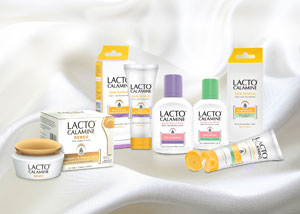
    Piramal Healthcare’s popular range of Lacto Calamine skincare products has seen a refresh by Pune-based Elephant Strategy + Design.


    Speaking about the exercise, Supratik Sengupta, GM Marketing Innovations – Piramal Healthcare Consumer Products said “Elephant has brilliantly amalgamated three key elements; the brand legacy, the present brand core & the future roadmap, while creating the design identity of the entire Lacto Calamine range architecture. It is always very comforting to work with such creative partner who can imbibe the strategic aspect in the creative rendition”


    “Our insight was that a self-assured woman likes to buy products that transparently tell her who they are, what they do & how they do it for her. We took the minimalist, no-frills approach to the packaging communication and design,” said Ashwini Deshpande, Co-founder Director, Elephant.


    Lacto Calamine, by Piramal Healthcare, has a 25-year history and equity as a trusted skincare solution. With rebranding exercise done in 2009 (also by Elephant), it had expanded into two skincare categories with solutions for different skin types from being just one moisturizer product brand.


    The challenge: While Lacto Calamine had established credence with the woman who equated beauty with simplicity, it was time to ladder up to a larger and aspirational space. It was time to connect with a “self-assured” woman who makes informed decisions. This was seen possible as Piramal team was ready with unique mix of skincare solutions with compelling propositions.


    The brand needed alignment with the new positioning without losing its core of simplicity that had enjoyed unparalleled trust. From being present in basic categories like moisturizing & face wash, the trade-up was also about introducing newer products in sun protection and skin renewal space that came with definitive promises and differentiations. The challenge was to create packaging that carried simplicity from the past and also looked believable as an advanced skincare solutions expert with a growing portfolio.


    With the latest launch of Lacto Calamine Reneu, the range is out there and being well-received, notes a communique.


  • Brand ‘Being Human’ has high awareness: Ormax study

    By A Correspondent


    In a recent study conducted by media & entertainment research firm Ormax Media, Salman Khan’s initiative Being Human scored high on awareness amongst consumers in Mumbai. The research was conducted to understand the awareness of the newly opened Being Human store in Mumbai.


    Of the respondents, 72 percent were aware of the initiative called Being Human. Almost all of them (92 percent) could associate Being Human with Salman Khan. Amongst those aware of Being Human, there was a high awareness (51 percent) that Being Human has opened a store in Mumbai, with about two-thirds of this section being able to even name the actual location of the store (Linking Road).


    Speaking about the results, Gautam Jain, Research Head – Films, Ormax Media, said, “Salman Khan’s popularity has increased consistently since the release of Dabangg in 2010. In January 2013, his share on our star popularity-tracking tool Stars India Loves was his highest till date. The high awareness of the launch of the Being Human store is a testimony to the star’s equity.”


    The research was conducted amongst movie viewers in the age group 15-34 years (SEC AB) in Mumbai city.