Category: MARKETING

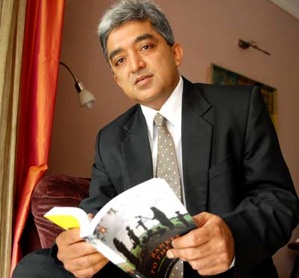
  • The anchor: Harish Bijoor on 6 lessons today’s marketers can learn from Salman Khan

    # 1 Hold your sense of humour and your panache even when the chips are down. It’s the reverse of what we have all grown up with: What goes down has to come up some day or the other! Oops!

    One needs to learn from every downside the star has gone through. The Chinkara, Aishwarya Rai, Vivek Oberoi, Amercian Express Cleaners not withstanding. Listen to the way he cheekily (pun unintended) describes his latest health downside as a flaming affair between his nerves and his veins, giving him an electric shock in his brain.


    #2 Think young, as the market is young

    Never mind that you are on the wrong side of 40. Think 25. That’s the median age of the country 56 percent of the population of India is below the age of 25. You might be an old marketer, but think the age of the nation. Don’t try to get the young nation of consumers think your age. Get contemporary in your marketing.


    #3 Stay fit

    The market is young. Youngsters themselves may not be fit, but everyone loves to live vicariously fit lives through the lives of their brands and stars. Keep your brand looking contemporary, young, with-it and trendy. Invest in those small little changes forever. Keep your brand looking different all the time. Don’t get cast into a stereotype. Gone are the days when a brand needed t look just the same. Today, visually, brands need to evolve. Evolve as fast as the consumer is evolving. The marketing problem today is that marketers are changing far too slowy as compared to consumers.


    #4 Poke the other brand in the eye and make him blink

    Brands that maintain the status quo with the competition are boring. Poke the competition in the eye. Wake it up. Make it react and make it make all those mistakes as well. Be seen as the market-mover. Be seen as the one who is the gold standard on everything around. Be the hero brand. The hero is forever on the prowl.


    # 5 Stay naughty

    Every consumer has a child in him and her. Most are pushed to suppress this side altogether. Life and the rat-race at large makes one suppress it all. Wake up this naughty side of your consumer through your own naughty brand stances. Do it all the while. Make your consumer live his life vicariously through the brand he uses. Stay naughty in your brand stances and push the gauntlet one step at a time.


    #6 Be Human. Be faulty

    This is not a pun on Salman’s Being Human! It is all about he fact that Salman is the first to accept all his faults. No point in hiding the fact that you love your drink. Be real. Be open. Be transparent. Be human. Consumers love the fact that the brands they franchise are alive as well. Good to think that everyone is faulty at large. Brands with foibles will be the new trend. Brands that falter just as you the consumer falters, will be the new trend of the future. Marketers can learn much from this. Brands that are level with the consumer and speak form the same level as the consumer will be loved. Gone are the days when brands spoke top-down language with the brand on top and consumer below. Today is the day and age of level peer-to-peer communication. Brand Peer to Consumer Peer communication, if you will!

    Harish Bijoor is a brand expert and CEO of Harish Bijoor Consults Inc. You can follow him on Twitter @harishbijoor

  • Facebook at a touch with Vodafone Blue handset

    Accessing Facebook on the go is the latest craze, no matter the amount of indignation over users in public places oblivious to traffic and pedestrians. It’s a need that Vodafone Essar has taken to the next level with the launch of the Vodafone Blue. Designed to put the Facebook experience into the heart of the handset, Vodafone Blue allows users to easily share and connect with their friends, as Facebook starts as soon as the phone does.

    The Vodafone Blue, developed in collaboration with Facebook, brings the qualities of a classic Smartphone together with popular social networking functions – from status updates to sharing a photo at an equally attractive price of Rs 4,950, inclusive of taxes.

    Vodafone Blue is launched in India with unlimited access to Facebook for a year from the date of its purchase. The phone has a designated F button that lets the user upload pictures, visit profiles and update status at a single click. It also provides other updates such as counters and notifications, and displays Facebook posts regularly in the background.

    Speaking at the launch, Mr Kumar Ramanathan, Chief Marketing Officer, Vodafone Essar said, The mobile internet plays a central role in the daily lives of millions of Vodafone customers, many of whom are avid Facebook users. Vodafone Blue is the answer to mobile social networking needs.

    Commenting on the launch of the phone, Mr Henri Moissinac, Head of Mobile Business, Facebook said, Facebook wants to make every phone social. We are really happy that Vodafone has brought the phone to India and enabling people to experience Facebook free of charge from the mobile device for a year.

    Photos taken using the phone’s 2-megapixel camera can be shared at a single click. The phone has 2.4 landscape display, QWERTY keypad, Opera Mini 5 Web browser, Bluetooth 2.1, GPRS/EDGE, email client with POP3 and IMAP support, microSD card slot, 32 GB expandable memory, 40MB internal memory, microUSB port, 3.5mm headphone jack and a 1000 mAh battery.


  • Eco awareness spurs green choices among consumers

    By A Correspondent

    Consumers are increasingly choosing to buy green, and insights from the 2011 Green Brands Global Survey indicate how green brands can connect with their customers

    As more countries gather speed on greener policies and organisations increasingly adopt the organic growth path, is the consumer’s support for going green translating into action at the supermarket and the department store?

    The answer seems to be a heartening Yes, as the annual ImagePower Green Brands survey among consumers in India, China and Brazil shows.

    The 2011 survey, capturing the perspective of over 9,000 consumers across eight countries, reveals that an increasing number of people desire to go green and are willing to pay relatively more to buy a green product.

    However, with transparency and choice being the key decision influencer for consumers, a lot more is expected from the policy-makers and organisations in pushing green products ahead in the supply chain. Some of the key findings from the study:

    Indian consumers want more

    Indian consumers do care, and the green brands survey, which is amongst the largest surveys on consumer perceptions of green brands and corporate environmental responsibility, shows that 64 percent of Indian consumers plan to spend more on green products in the next year. More importantly, nearly 48 percent of Indian consumers and 55 percent of Chinese consumers said they were willing to spend over 10 percent more on a product simply because it is green. The survey showed that 28 percent of Indian consumers in the survey expressed the intent to purchase green automobiles in the next year, as against the 16 percent who purchased green automobiles in the previous year.

    Package it right

    While consumers show a clear inclination towards green products, the challenge for companies is not just in creating greener products but following a marketing strategy that showcases their green side. The green brands survey shows that packaging and publicity both figure high on the consumer mind as important parameters for choosing green products.

    Absence of proper labelling was seen as one of the critical reasons for people not choosing green products. Nearly 56 percent of consumers in China and 33 percent in India felt the green labelling or product information was confusing, which impacted their decision. Along with going green with their products, companies need to improve packaging and labeling by including information such as ingredients and origin, food testing and safety as well as environmental impact. Expanding the distribution to increase the accessibility of green products in shopping venues is another important step.

    Cost considerations

    Price is yet another important consideration for consumers wanting to buy green products. Their lower accessibility and higher prices make consumers see green as a luxury purchase rather than a sensible and sustainable one. This is further accentuated by the inability of consumers to gauge the actual value of the product due to the absence of proper labelling that informs them about its eco-friendly qualities and benefits.

    Advertise green power

    The survey shows that as far as Indian consumers go, nearly 57% would be influenced by TV advertisements to buy green. The green survey shows that consumers in emerging countries are more trusting of advertising compared to their counterparts in developed countries. Clearly, companies must leverage this opportunity to establish their green credentials through awareness and education.

    Regulate responsibility

    Showing a similarity to the global trend, the green survey had 95 percent of Indian consumers wanting the government to support green innovation and regulation. With regard to household goods, consumers want the government to mandate producer responsibility and greater label clarity. Currently, India does not have a consistent standard on packaging and labeling, which leaves unable to make informed decisions. The Indian consumers made a clear indication that they wanted the government to play the role of regulator and ensure the private sector provides consumers with clear and consistent information on their products.

    It’s time for Indian companies to get their green credentials right.


  • High-end car brands cash in on innovation

    First it was the talking newspaper, now its the shiny happy newspaper The Volkswagen glossy experiment in the newspaper has certainly created a buzz. In the past two days we have seen two high-end automobile brands come up with visible print advertising, first was the launch of all-new Volkswagen Jetta which has garnered enough reaction and opinion from the fraternity and then the full front page ad on the all-new BMW X3. It is said that the Jetta innovation would have cost anything around Rs5-7 crore though what is debatable is whether spending that amount will reap results in proportion.


    The automobile advertising especially in the premium segment has gone all out to capture its customers and the method especially in the case of Volkswagen has been innovative advertising be it the roadblock marking its entry into India or the talking newspaper for the launch of Volkswagen Vento, these innovations have been happening at regular interval and has definitely managed to pique the curiosity on the brand.


    Print is the preferred medium to showcase the high-end launches as its gives a decent exposure of the brand and manages to capture eyeballs.


    Anilkumar Sathiraju, Associate VP and Head South, Mudra Max, said, These types of innovations help in staying on TOM (Top Of  Mind). Today’s consumer is very smart, educated, well-aware and informed, especially in this category. They would do their complete homework, talk to people, take test drives before making any choice so its important to give the image of `I am a big player. VW as a brand always believes in being the first to innovate and truly believes in innovation as ideally doing something that has never been done before.


    I strongly feel that the advertising has definitely not got out of the readers’ mind. Ask people, and they would remember the innovation done by VW. Even the industry to that extent has recognized it and in some categories, innovation and especially in print works, added Mr Sathiraju.


    Naresh Gupta, Chief Strategy Officer at iYogi Technologies, is of the opinion that the timing of the advertising is because the car brands are beating the Shradh deadline by creating the connections early. He said, All brands want to catch the Diwali season, and cars involve long drawn-out decision-making. Both brands are pitching early to be on the shopping list.


    Mr Gupta explained, These big noise advertising initiatives helps to create bigger desire and also to grab eyeballs. Car brands have to be desired by new buyers and they need a pat on their back from their peers and friends. High-end cars can get tuned out of the mindset due to the perceived premium, and sometimes this needs to be broken. VW does not spend more than anybody else, but spends in one burst and this has helped to grab eyeballs. I would dub this as very smart strategy.


    With India seeing more new entrants like Peugeot and old players launching their new variants, the sector is likely to see lot of visibility in terms of advertising. There have been players like Honda who have in the past relied on the digital to showcase their launch but VW has been consistent in its innovation in print which then leads consumers to digital. In Jetta’s case it has meant getting people on Twitter with the #anything4jetta contest. Definitely, a sector which needs close monitoring especially with the festive season coming soon.

  • Sanofi turns to Facebook for flu prevention

    Sanofi Pasteur, the vaccines division of Sanofi, has chosen the social media route to create awareness on protection of children against influenza.


    The pharma major created a page on Facebook, Mothers Against Flu, very recently. As of yesterday[check if needed to update] evening it had 710 fans on the page.Film star Raveena Tandon has been roped in to give the campaign an extra edge.


    The objective of the exercise is to unite mothers from different parts of India with the single aim of protecting their children from the flu virus. The campaign seeks to do it by creating awareness about the steps they can take to protect against and prevent flu.


    The company states that as social media is rapidly growing in India and young mothers often connect with their friends on social media websites,Sanofi Pasteur India has launched this engaging and exciting flu awareness campaign for mothers.


    Sanofi Pasteur India Executive Director Joselito Sta Ana said:For the first time, we are initiating a public awareness campaign in India through a social media platform, which would not only give information about flu, but is also a platform for mothers to exchange views on childcare in general.


    The company believes that this is the right time to launch this campaign, as influenza tends to peak during monsoon and winter.

  • Gili Signature unveiled

    By A Correspondent

    Gili, the name that pioneered branded diamond jewellery in India over a decade and a half ago, has taken another major step with the introduction of Gili Signature, its first sub-brand.

    Gili Signature caters to the young urban woman, be she a professional, a housewife, or mother. The brand will offer a wide range of jewellery at varied price points, suitable for all occasions, cultures and tastes, and available in metros, Tier I and Tier II cities.

    The loveable, unassuming and pretty Ms Prachi Desai was an apt choice as the Brand Ambassador of Gili Signature – the girl next door, who is an independent, young achiever and has made her mark at a young age. She has been television’s golden girl and continues to stun audiencea with her aura of freshness and charm on the silver screen. Though modern in style, Ms Desai is traditional at heart and perfectly personifies what the brand is all about – refreshing, charming, contemporary with a touch of tradition. She’s somebody every young girl in India can identify with, and reflects the freshness that Gili Signature will offer through its new and intricate designs.

    Said Mr Rahul Vira, CEO, Gili, “Gili is now progressing into affordable luxury and the sub-brand seeks to reach out to a larger audience pan India with designs that will satisfy every woman’s taste. Crafted in 18k gold and diamonds of clarity SI and colour GH, Gili Signature is our offering to fulfil every woman’s dream of possessing a sparkling piece of diamond jewellery.”

  • Visual impact: Kyoorius DesignYatra 2011 draws to a close

    By A Correspondent


    There is design in everything. So two days for discussing design may seem like too little, but the seventh edition of Kyoorius DesignYatra packed a good deal into those 48 hours.


    The design, branding and visual communications conference featured workshops, sessions and an exclusive documentary screening of a short film, produced by Kyoorius and directed by award-winning web designer and documentary director Mr Hillman Curtis featuring an interview with Mr Massimo Vignelli by Ms Debbie Millman.


    Day One saw the conference begin with an opening by Mr Michael Johnson, founder, johnson banks. Anomaly London’s creative director Mr Nathan Cooper was next, and he spoke about the different ways in which his agency approaches the issue of compensation models.


    Independent publisher and design commentator Mr Adrian Shaughnessy spoke about his own personal journey from being a graphic designer to becoming an independent publisher, and explained how the internet had enabled him to bypass the traditional publishing model and turn into an independent publisher. Typeradio’s Donald and Liza explained what their radio show is all about.


    Ms Irma Boom showcased some of her most legendary work at the session and had the audience warming up to her passionate hour-long talk about her work and her convictions.


    Mr Jeroen van erp spoke about the relationship between the designer, the concept developer, the strategist and the entrepreneur and how they can impact each other’s work.


    Mr Sandeep Khosla and Ms Tania Singh Khosla showed how the duo collaborates as an architect-graphic designer team.


    Troika’s Ms Eva Rucki and Ms Connie Freyer explained the creative process behind some of their best work, which combined installations, exhibition and technology.


    The day ended with a screening of a special documentary Design is One- The Vignellis, featuring the life and times of Lella and Massimo Vignelli.


    Day two began with the Young Blood session featuring Ms Novi Rahman and Raw Color.


    Perfect Fools Mr Mark Chalmers’s talk was about how technology could be a great enabler for some brilliant creative ideas.


    This was followed by a digital panel discussion which questioned whether or not in the age of social media, there was a place for craft. The panel was moderated by Mr Max Hegerman, president, Tribal DDB India and consisted of Anomaly’s Mr Nathan Cooper and Mr Chalmers.

    Mr Peter Higgins drew from his experience of designing interactive spaces and walked the audience through his body of work.


    The Brand panel discussion focused on the conflict between design and branding and was chaired by Landor’s country head Ms Lulu Raghavan and the panel included Saffron Consultant’s Mr Bill Darling, Landor Dubai’s Mr Bengt Eriksson and johnson bank’s Mr Michael Johnson.


    Mr Hermann Vaske showcased some of his work and asked the audience to write on the sheet of paper provided to them on why they were creative.


    This was followed by the short film screening. Devilfish’s Mr Richard Holman followed next and spoke about the things that are important to him in his work, and the simple rules that have helped him internalize that in his work.


    Said Mr Rajesh Kejriwal, founder, Kyoorius, DesignYatra has served as a valuable meeting point for agencies from India and abroad in the sphere of design, branding and visual communications. It has been an opportunity to understand and learn from some of the finest minds in the field, delve into their creative process and be inspired by their work.

    Added Ms Bindu Nair Maitra, editor, Kyoorius Design magazine,This year, we embarked on a special initiative, which we plan to sustain the whole year. It’s our Tumblr blog, Road to DesignYatra, conceptualized by Dutch agency Addikt, where we plan to document all the special memories and images from previous editions of DesignYatra and build an online conversation about how the ways in which the conference has influenced professionals, students and speakers alike.


  • HUL, Titan Xylys, UB Group rope in Farhan Akhtar as brand ambassador

    By Meenakshi Verma

    Farhan Akhtar is the new star in the celebrity endorsement circuit, having cut five deals since the runaway success of his latest flick Zindagi Na Milegee Dobara released in July.
    The actor-director-producer has signed 4-5 deals with companies including Hindustan Unilever, United Spirits and Titan, two executives in the media planning industry said.
    Celebrity management firm Bling! Entertainment Solutions CMD Atul Kasbekar, who manages Farhan’s endorsement deals, said the actor has signed up with five brands, but refused to name them or share other details.
    Akhtar-who is nowadays fulltime engaged in editing of Shah Rukh Khan-starrer Don 2, which he is producing and directing, said he will be selective about the brands he endorses.
    “It is important to remember that I am not lending just my face to a brand, but my reputation as well,” he said. “It makes sense to endorse products that I use in my everyday life,” he said.
    Hindustan Unilever, the country’s largest advertiser and FMCG player, has signed Akhtar for its water purifier brand Pureit, the two media buyers said. Vijay Mallya’s United Spirits, the country’s largest alcohol firm, has roped in the actor-director for one of its liquor brands, while watchmaker Titan has signed Akhtar for its high-end Xylys range, the media buyers said. A Japanese healthcare brand is also in talks to make him its brand ambassador.
    Media buyers say Akhtar is charging an estimated Rs 4 crore per year and most deals are for two years. Hindustan Unilever and United Spirits did not offer any comment.
    The trigger for India Inc’s newfound interest in Akhtar is standout performance as a casual, chilled-out young poet Imran in Zindagi Na Milegee Dobara. Celebrity management firm Kwan Entertainment & Marketing Solutions COO Indranil Das Blah says that there is a renewed interest among brands for Farhan Akhtar after the success of this movie. “He is an actor, singer and director, which makes him unique but whether he can emerge as big as some of the other big actors on the brand endorsement space remains to be seen,” Blah said.
    Lyricist and McCann Worldgroup Executive Chairman Prasoon Joshi says the Indian youth will connect with Akhtar who is an unusual star.”He is intelligent, exceptional and effortless and very real unlike the usual Bollywood stars. I believe youth connects with stars who are real,” he said.
    Akhtar’s breakthrough in the endorsement world comes exactly a decade after the son of Javed Akhtar and Honey Irani stormed the film world with his directorial debut Dil Chahta Hai, a super hit that won the national award for the best feature film. “Farhan is someone who stops at nothing and appeals to the youth or anyone who is young at heart,” said Mayank Pareek, managing executive officer, marketing & sales, of Maruti Suzuki. The carmaker had signed Akhtar for its A-Star compact car.
    But Akhtar is choosy. “I will represent the philosophy of the brand to the consumer, so it is imperative for me to agree with it.” His criteria for choosing a deal include “aesthetic, social responsibility, my conscience and on a creative level, the clarity of the idea and its ability to be communicated as simply as possible”.

    Source:The Economic Times
    Copyright 2011, Bennett, Coleman & Co Ltd. All Rights Reserved

  • Suzlon goes for youth connect with green message

    Why would a wind turbine supplier’s campaign target the youth? That’s just what Suzlon has done with p.a.l.s (Pure Air Lovers Society). The campaign, which was kickstarted with a teaser and culminated in highly visible print advertising, aims at driving audiences to its website (http://pals.in/) which indicates that it is looking at bringing the young population into its ambit as they are the ones most active on the digital platform. The website too is unlike what one would imagine from a company that’s into wind power, as p.a.l.s is young, refreshing and interactive  in short, everything that would seem inviting to the youth.


    If one were to look at the link between Suzlon and p.a.l.s, it is really the issue of clean and energy-efficient quality of air. The inspiration for the initiative came from the truth that air pollution and the quality of air in our cities is becoming a serious issue today. This, coupled with research which suggests that Indians are concerned about this and address it as their number one environmental concern, was reason enough for the crusade exhorting people to stop air pollution. The company in fact quotes that more than 5 lakh people a year die of air pollution-related ailments in India.


    Ms Dharini Mishra, Global Head for Brand, Suzlon Group, explains, Suzlon has always been committed to sustainable development of the country. Since we are in the business of clean, pollution-free energy from the wind, we thought Pure Air was the best way to connect our philosophy with the youth of India and the country in general.


    The timing of the initiative is well thought of, as Indian wind energy is attracting global attention. Also, Suzlon’s order books are looking strong and giving the company the confidence of being well placed in the Indian market.


    Suzlon is India’s leading wind energy company for more than 13 years now. We already

    had a cause which is inherent to our business but we were waiting for the most

    engaging manner and right time to take it to the people, that’s how Ms Mishra explains the timing of the initiative.


    The youth connect may not be apparent at the outset but it’s clear when one understands the vision of Suzlon, which is all about a better tomorrow, a change for the better and renewable energy. Ms Mishra added, These attributes are directly related to the young. India’s

    youth is bringing in wide sweeping changes to the way we live and do business. We strongly feel that connecting our brand with people of a young mindset will see a revolution of change across this country which is very critical for our sector and our business as a whole.


    The campaign, which is conceptualized by LoweLintas, has seen a huge response with the number of p.a.l.s growing by more than 1,400 a day. The website has stories, videos and real-time updates on what pals are up to, besides other engaging and interactive features. The company sees it as one of the most successful social cause campaigns for the youth. In the first phase the advertising managed to create awareness about the cause, but now Suzlon will move on to activations and tools that encourage p.a.l.s to make a tangible impact. In this phase the focus will be on partnerships, school connect programs and creating a digital stir.


  • O&M, OMD get Bosch Home Appliances mandates

    By A Correspondent

    Bosch Siemens Home Appliances (BSH Group) is all set to launch in India. Their new TVC created by the creative team of O&M will be launched today.

    The company has appointed OMD as their media agency and O&M as their creative agency.

    The company will address the media today to officially announce their India entry and launch of their home appliances product range

    Mr Marc Hantscher, Managing Director and CEO of BSH Home Appliances Pvt Ltd will discuss the new product range to be launched and the company’s retailing strategy for India.

    BSH Bosch und Siemens Hausgeräte GmbH, (or Bosch and Siemens Household Appliances, BSH) is manufacturer of home appliances in Europe and one of the leading companies in the sector worldwide. The group stemmed from a joint venture set up in 1967 between Robert Bosch GmbH (Stuttgart) and Siemens AG (Munich) and posted annual sales of 9,073 billion Euro (13,000 billion US Dollars) in the year 2010. Today, BSH operates 41 factories in 13 countries in Europe, the USA, Latin America and Asia. Together with a global network of sales and customer service firms, the BSH  today is made up of about 70 companies in 46 countries, with a total workforce of close to 43,000 people.

    The BSH product portfolio covers a wide spectrum. It includes large home appliances for cooking, dishwashing, laundry (washing and drying), refrigeration and freezing, as well as a multitude of high-quality small appliances, such as fully automatic espresso machines, floor care and hot water appliances (consumer products). One of BSH’s particular areas of expertise lies in built-in appliances.

  • The Anchor: Pradeep Chopra on 8 mistakes marketers make about social media

     #1 Marketers treat social media like a short-term advertising campaign.

    Social media is all about building a lifetime relationship with your audience. However, marketers are still to understand and acknowledge that. It requires more of unlearning vs new learning.


    #2 Marketers measure ROI of social media like other digital marketing avenues.

    Unlike SEO, PPC or even email marketing, social media is not just about driving traffic to a website and measure the contribution in a typical funnel approach as used in SEO or PPC advertising. Leveraging FB ads for lead generation will be an exception.


    #3 Marketers underestimate the value of content and quality of conversations.

    Unfortunately, even today a significant percentage of marketers are focusing on metrics such as number of fans on Facebook. While the number of fans is necessary, it’s not sufficient.


    #4 Marketers don’t put required effort into defining objectives.

    While social media requires constant experimentation, laying down the objectives lays down the framework to think, execute and measure appropriately.


    #5 Marketers believe social media is about technology.

    A large number of marketers still consider social media more of a technology and less of a marketing activity. Thus, they don’t put the right resources in at the right place.


    #6 Marketers think that listening to their customers is optional.

    In the fear of confronting negative conversations about their brand, marketers don’t realise that they don’t control what others are saying about them. Hence, listening to their customers on social media is not a choice.


    #7 Marketers believe that they’ll jump in when it gets settled.

    It’s been over seven years and the only thing which is constant about Facebook is change. By the time social media reaches a stage of stability, the opportunity will be proportionally low of newer players.


    #8 Marketers still feel that social media is timepass.

    Unfortunately, a large number of marketers still feel that platforms such as Facebook are only for socialising or passing the time. While Facebook started as a social network, today it has taken the shape of a hybrid (social + professional) network and there are global case studies of B2B companies, such as Intel, Dell and GE, which have been leveraging Facebook to fulfil various business objectives.


    Pradeep Chopra is co-founder and CEO of Digital Vidya, and co-founder of dvBytes

  • Rally of the dolls for Parle

    By A Correspondent

    Parle Products, India’s largest biscuits and confectionery brand, is all set to enter the Guinness World Records, aiming to reach there with the Parle’s Golu Galata, the first festival to feature over 1 lakh Golu dolls at one place in Chennai.

    Over the last six years, Parle has been at the forefront of trying to revive the dying tradition of Golu Dolls prepared by people in Tamil Nadu during the Navratri festival. This year, Parle has asked all participants to come together to participate in a community Golu by displaying their Golus at a common location in Chennai’s Island Grounds during the festival. More than 1 lakh people are expected to participate – creating a world record. Officials from the Guinness World Records have confirmed that they will attend the event.

    Navratri Golu, is celebrated actively during nine days of Navratri festival in Tamil Nadu, Andhra Pradesh and Karnataka. In Tamil Nadu, traditionally, women decorate various dolls (called Golus/Kolus) made of clay during Navratri celebrations by setting up odd numbers of steps and keeping Golus on it. This display is well decorated and friends and relatives are invited to witness the same. Through a detailed research, Parle found that due to time pressures, this tradition is slowly dying and is getting restricted to a select few households. Thus, to revive the fading tradition, Parle introduced this novel promotion called Parle Golu Galata contest in 2005 (Galata means a festival or a celebration).

    Mr Mayank Shah, Group Product Manager, Parle Products said, “It is a proud moment for us to be able to get to this rare record. When we started the Golu Galata festival our aim was to make the youth revisit our age-old customs and traditions. More than the achievement of a record, being able to view over one lakh Golu Dolls at one place showcases the fact that we have been able to create awareness among the youth of Tamil Nadu about this festival.”

    During the month Parle is also planning to organize several promotional activities to generate a buzz around the event, and has created a website for the event – www.parlegolugalata.com.