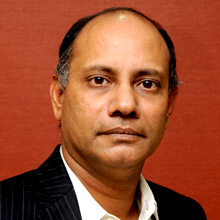
Ramesh Tainwala believes that “women kindergarten teachers tend to be more confident mothers.” As analogies go, this one may border on the stretched but what the chairman of Planet Retail is attempting to convey is that retailers like him can pick up learnings by partnering with marquee brands, and then use them to boldly build labels of their own.
Planet Retail, which has brought brands like Debenhams, Acceorize, Nautica and Next into the country, has begun flying solo with handbags brand Lavie. It’s not the only domestic retailer following a learn-and-launch strategy.
DLF Retail, which has tied up with brands such as Claire’s and DKNY, launched in-house home decor chain Pure Home + Living a year ago. It is now set to flag off another format called Pure Kitchen Studio by November. Or take Lalit Kishore, master franchisee of sports footwear brand Lotto in India, who has launched his own brand of footwear called Globalite. And then there’s Devyani International, a franchisee for Pizza Hut, KFC and Costa Coffee in India, which has introduced South Indian fast-food chain Vaango independently.
“It is easy to open outlets on your own. But international partnerships help in understanding the economics, food preferences and processes for standardised delivery,” said Virag Joshi, president & CEO, Devyani International.
Alliances can provide the domestic partners with a slew of insights across the entire retailing process. Rohit Aggarwal, promoter of Lite Bite Foods, which started as a franchise for Subway, gives an example. “One takes for granted that the freezer or chiller is cold, but (working with an) international brand teaches you that the temperature needs to be checked every 30 minutes.” Lite Bite is now a Rs100 crore operation running not just Subway outlets but home-grown chains like Punjab Grill and Street Foods of India.
International partnerships also help build a sophisticated team with focused skill sets. “Skills that the management feels can be leveraged without an additional cost to build their own brand in parallel with the primary brands,” said Gaurav Marya, president of Franchise India Holdings, which helps brands partner franchisees in India.
There are plenty of synergies that can be availed of from sharing support functions and the supply chain. Economies of scale come into the picture on the advertising front, distribution, hiring and office space, too.
Devyani International, for instance, has a common production unit or commissary in Gurgaon for brands across its portfolio. And Mr Kishore’s Globalite rides on the wholesale supply chain that is used to retail Lotto across multi-brand stores.
Companies say that in the initial stages having international brands in the kitty helps with prospective trade partners. “A foreign partner carries a lot of weight,” said Mr Aggarwal.
Kanchan Lall, associate VP at management consulting firm Tecnova, likens this trend to the development of private labels by retailers. “Once you grasp the understanding of a business, you look for avenues with higher margins and decision-making flexibility,” she said.
The domestic brand builders rule out potential conflicts of interest, pointing out that the local labels typically operate in a different market segment. “Globalite would not matter to Lotto as the two cater to different price segments,” Mr Kishore explained. While Lotto retails at Rs2, 300 a pair on an average, Globalite is priced around Rs1,500 a pair.
The seven-store handbags chain Lavie gains by being bundled with international brands in Planet Retail’s portfolio. “At the same time, Lavie also helps refine the strategy for the premium and super-premium brands in the portfolio and supports them with assurance of higher footfalls when negotiating with a mall,” said Mr Tainwala.
Starbucks Coffee Co and its Indian joint venture partner Tata Group have plans to open around 40 stores by December, half of those in hotels and the rest in high-street malls, a person with the direct knowledge of the plans said.
The person said the 50:50 joint venture, Tata Starbucks, has so far lined up 14 properties in malls and high streets in the New Delhi capital region, Mumbai, Bangalore and Chennai and will make its India debut in September or October from the commercial capital, Mumbai.
The firm will adopt a cluster approach to simultaneously open three to four outlets in each city they initially go to. Mumbai will be followed by the National Capital Region, Bangalore and Chennai. The properties finalised in hotels include the Ambassador and President hotels under the Vivanta by Taj label, a contemporary luxury chain just notch below the super luxury Taj brand of the Tata group.
“We are looking at both Tata properties as well as non-Tata properties and will focus on how we can become part of the local community where we do business,” a Starbucks spokesperson said in an e-mail reply. The alliance is also in talks with non-Tata hotel chains such as Marriott Hotels to open their outlets.
The joint venture will invest Rs100-150 crore this year alone and has a total budget of $100 million (around Rs 550 crore) to invest in India in the next two to three years, the person familiar with the plan said.
He added that the Seattle-based coffee chain – the largest in the world – will manage the business and source many of its staff from the Tata-owned Taj Hotels. All the stores in the initial stage will have a combination of the lounge as well as takeaway facilities, he said.
Starbucks operates more than 17,000 stores in almost 60 countries. The coffee titan has been exploring possibilities to enter India for many years. Earlier it had made an abortive attempt to foray into India before it called off a joint venture involving its Indonesian franchise and Kishore Biyani of the Future Group. In 2007, the joint venture withdrew its foreign investment proposal with the Indian government without citing any reason.
Now, Starbucks is back with a new partner and is bullish on India, a country with one of the lowest rate of coffee per capita consumption in the world.
Local chain Cafe Coffee Day and global chains such as Barista Lavazza, Costa Coffee and Gloria Jeans are among others currently operating around 2,000 outlets in the country.
Industry estimates that the Rs 1,000 crore coffee-through branded outlets sector is growing at an annual rate of 20 per cent. “I don’t see Starbucks as a competition… I see them as a player who will make drinking coffee through outlets a routine business,” said Virag Joshi, chief executive of Devyani International, which operates more than 100 Costa Coffee stores in India.
The company plans to invest Rs400 crore to add 400 more outlets in the next five years. “The market will keep evolving and will keep growing over the years,” he added.
Unfazed by the economic slowdown and talks of policy paralysis, Muhtar Kent, global chairman and CEO of beverage maker Coca-Cola, on Tuesday announced a fresh investment of $3 billion (approx Rs17,000 crore) over an eight-year period for expanding its bottling, cooling, and distribution operations as well as accelerating its pace of growth in India.
“Whether or not the government makes policy changes, we continue to announce investments in India,” Mr Kent said, adding that the company’s focus would be on ‘continuing to be flexible, and work with more speed than ever before’.
“Yes, there are some issues in the world economy. But it’s wrong for us to say that India, or China, or Brazil or any emerging market is slowing down. As you go up, the oxygen gets thinner. What’s being created today at 6-7 per cent GDP is incrementally much higher than it was some years back… what’s more important is sustainable growth and not growth that can’t be controlled, ” he added.
The $3-billion investment is over and above the $2 billion, the maker of Thums Up cola and Kinley water had announced last November. The company has invested $2billion in India since 1993, when it-entered the country.
Mr Kent said he expects India to be among its top 5 markets soon’, up from its current No 7 ranking. “This is a realistic goal. India’s demographic, economic and social trends are all huge drivers of growth. Six years ago, we were not strong here, not at all… but India has been a remarkable turnaround story,” he said.
The CEO, who got a pay package of $21.2 million last year, up 10 per cent from the previous year, flew down in his private jet with close family and friends on what is his first India visit as Chairman on Monday night. During his three-day India stay, he is visiting the Taj Mahal in Agra, making a flying visit to Amritsar to meet a handful of key bottlers and attending a Coke Studio concert in Delhi. Thrown in between is a town hall meeting with Coca-Cola employees, a few market visits and a visit to the beverage giant’s headquarters in Gurgaon. Unlike rival PepsiCo’s Chennai-born global CEO and Chairman Indra Nooyi who’s a frequent visitor to India – a key growth bastion for both cola majors – Turkish American Kent had not visited India since he took over the corner office at Coca-Cola’s headquarters in Atlanta in 2008.
Coca-Cola’s portfolio in India includes aerated drinks Coke, Thums Up, Fanta, Sprite and Limca, Kinley water and Minute Maid juices. Even after two decades of being here, the beverage maker’s top-selling drink here remains Thums Up, which it acquired from Ramesh Chauhan-owned Parle Bisleri.
But Mr Kent said the choice depended on ‘the consumer’. “We remain “constructively discontent and we believe we are just getting started. We need to make sure we provide choices to consumers… responsible choices. And help create solutions for over-nutrition and under-nutrition,” he said.
Like most food and beverage firms worldwide, Coca-Cola too is trying to transform itself as a ‘health and nutrition-focused company’. But over three-fourths of Coca-Cola’s revenues continue to come from sugary aerated drinks . “We let the consumer decide what he wants…. and we label our products responsibly.” said Mr Kent.
Like its American rival PepsiCo, Coca-Cola too, has been depending on India for driving double digit growth. For fiscal 2011, for example, Coca-Cola said its global volume grew 5 per cent, aided by key emerging markets such as Latin America, India and China. A consistent growth performer, Coke’s India business has been growing for the last 23 quarters, of which 17 were in double digits.
It’s July 2 today, and the first six months of the year have passed. While the slowdown has impacted spends in a major way, most of the 182 days from Jan to June have been eventful. On the positive side: new television channels, new agencies – media and creative, consolidation, people and account movements, government issues, digitization, awards… the list could go on. And on the negative: a channel being shut, pink slips, pay cuts, appraisals deferred, digitization delayed… the list could go on here too.
We have already embarked on the second half of the year, but as we do that, here’s a quick look at how industry captains review the half-year. We present you the half-yearly review in two parts… the first today and the second mid-week… on Wednesday.
As you would gather, there is much gloom in the industry, though no despair. Not yet.
ADSPENDS:
Nagesh Alai, President, Advertising Agencies Association of India (AAAI)& Executive Director, India Operations, Draftfcb Ulka Group
Nagesh Alai
If I were to summarize the indications of the economy, then one has seen softness beginning last November and December leading to a situation of downturn. The macro-economic indications like rupee falling, impact in production and fall in demands have also reflected in the consumer behaviour in a negative way. The last quarter of 2011-12 (Jan-March) has seen a fall in GDP to 5.3 per cent. All this have impacted the manufactures as well as service providers, with the mood being that of postponing a decision. While some would have thought that the situation would not impact FMCG, but that one has seen a resistance from that sector too.
So in terms of advertising, the impact being in terms of ad outlays and remuneration; while the latter has been up for constant negotiation and any further would only impact the quality of service being provided, it’s the latter that is being hit now. I think this year one would see a growth of maximum 10-12 per cent as compared to 14-15 per cent in the past. While print and TV still comprise 80 per cent of the spends, but advertisers are looking at newer mediums, where the spends is not high and get better mileage for monies being spent.
I personally believe that even if government were to take corrective measures, one will only begin to see the recovery by mid-2013. The mood can be aptly summarized as being that of cautious approach.
PRINT:
Narendra Kumar Alambara, COO, Thanthi Group
Narendra Kumar Alambara
In terms of the regional publications, I would say that the past six months have been good and bad. If one looks at readership and circulation, the regional dailies have seen an increase vis-Ã -vis the English language publications. However, there is a need to be bold and unconventional when it comes to regional publications, both by those selling this space and advertisers themselves. In today’s time when every paisa has to be accounted for in terms of returns, I think regional publications would have been an excellent answer to have targeted reach because of the value they provides for the money and reach.
However, we have failed to do that. Today when most media houses are not restricted to being uni-dimensional and have different platforms for advertisers be it television, print, digital and even regional newspapers and channels under their umbrella; I think the solution lies in integrating various offerings, including the regional to get a better value and growth.
Krishna Prasad, Editor-Outlook
It’s difficult to put a number as yet on the kind of growth that has been witnessed, but you will always see print being challenged by television and other mediums. As far as the past six months are concerned, I would say the growth of print has been at par. By this I mean that even though most advertisers have huge monies, they are shying away from advertising with this medium. This is somewhat similar to what was observed during 2008, where companies didn’t have any reason to opt for cost-cutting, but were up for it. Many advertisers are seeing this downturn as a reason to go easy with their spending and not be too extravagant.
Most newspapers today, especially in Delhi like Delhi Times, Hindustan Times and others appear chunky in their appearance, which gives you a sense that all is well but that may not necessarily be the case. Most of them are actually going slow with their spending and are trying to play it safe. I expect things to look better from October onwards – around the festival period. So largely, the growth of media will be dominated by how the economy transforms itself; it’s not operating in a vacuum. That’s the best case scenario.
But the worst case scenario is that it may take a little bit longer for things to get better; perhaps with the elections coming up soon, with the country seeing a new Finance Minister and the markets going topsy-turvy, the print industry may still take some time to stabilise itself.
RADIO:
Prashant Panday
Prashant Panday, CEO, Radio Mirchi
The radio industry has been hit just as hard as any other segment. Maybe a little less than print and a little more than TV. The economic slow-down and the policy freeze has made advertisers a little wary. They are not exactly cutting spends, but they are demanding more from broadcasters. A broadcaster can either cut prices or offer more for the same. In some sectors, the advertising cut has been more severe like telecom, real estate and so on. But there are other segments that have done better – like core retail, and even auto.
Given the economic conditions, and the lack of new frequencies, radio has done as well as it possible can.
Rabe T Iyer
Rabe T Iyer, Business Head, BIG FM
The last financial year was alright, but the last three months have been pretty flat. The reason for that is because categories like BSFI, Auto and some of the campaigns of the usual summer categories were a bit slow. Nevertheless, we expect the next three to six months to be a good run. This is because people ultimately want to keep their goods moving, and hence the next three to six months are going to be good. The last three months were flat for the industry because the dollar exchange hit the sentiments and some categories which were expected to fire up in the month of May-June have taken some more time, mainly because of the overall economy conditions and the sentiments attached to it, and also because of the fluctuating dollar prices. This has directly impacted the ad spends, not just on radio, but across the portfolio on media brands.
Ashit Kukian
Ashit Kukian, COO, Radio City
The last six months has been very good for the radio industry. One of the reasons I would say is because the core advertising categories in radio namely: Telecom, FMCG, and Entertainment channels to name a few, had increased their advertising spends on radio.
DIGITAL:
Chhaya Balachandran Aiyer, CEO and MD, BCWebWise
Chhaya Balachandran Aiyer
More and more brands are getting ready to seriously look at digital media and those who have been using it already, are increasing their spends. Digital is expected to deliver more cost-effectively. Amazingly, even production charges of films are expected to be cheaper, if they are being produced by digital agencies. It would help if brands which see real value in digital and see it delivering, also realize that results won’t come if they tighten their purse strings so much. Fortunately, there are a few clients who have realized the quality v/s quantity value and are waking up to the real digital age and extending their budgets.
Rajiv Hiranandani
Rajiv Hiranandani, Co-founder and Executive Director, Altruist, Mobile2win
I think the mobile industry has underperformed in last six months, as per the overall outlook was supposed to be, in terms of number of handsets sold and amount of value-added services (VAS) consumed. Mobile industry has seen its slowest growth, and this has been also because of the negative outlook in the economy. Some of the reasons have been people waiting for better handsets models, the overall mood of economy not being good, and mobile VAS seeing a lot of restrictions in terms of TRAI guidelines.
OOH:
Noomi Mehta, Chairman and Managing Director, Selvel One Group
Noomi Mehta
The last six months have not been good for the out-of-home (OOH) industry. The month of June, however, has seen a significant improvement, which is perhaps because the IPL campaigns in the months of April and May have fructified. Otherwise, I believe, the industry figures have been down. The markets, by and large, seem to be in a depressed state, along with the economy. Going forward, one of the basic steps needed to improve the industry’s performance is the need for a common currency for measurement. OOH is part and parcel of the country’s economy, and hence it will also be subject to the same pressures as the economy.
Reclusive Indian-born Irish tycoon Pallonji Mistry, 82, officially bequeathed the chairman’s role of the $2.5-billion Shapoorji Pallonji Group (SPG) to eldest son, Shapoor Mistry, 47, in early June.
The change of guard was in keeping with the way the low-profile diversified conglomerate and its promoters go about their task – without ceremony and any announcement from the rooftops.
Shapoor will continue to be managing director, and Pallonji may take on the mantle of chairman emeritus, suggest two senior group officials on the condition of anonymity.
When contacted, a group spokesperson confirmed the move. “Pallonji Mistry has stepped down as chairman of Shapoorji Pallonji Group and Shapoor Mistry has taken up this role. The group companies will continue to get Pallonji Mistry’s advice as and when required,” he said.
Shapoor has taken charge as chairman & MD of SPG a little over six months before younger brother Cyrus Mistry, 43, is slated to succeed Ratan Tata, who will retire as chairman of the Tata Group at the end of the year.
In November 2011, Cyrus was appointed deputy chairman and chairman designate of Tata Sons, the holding company of the over 100-company group.
Prior to that, Cyrus was joint managing director of the SP Group, besides being a director on the Tata Sons board since August 2006.
Pallonji is the single largest shareholder of Tata Sons, the holding company of the salt-to-software Tata Group, and was called the ‘Phantom of Bombay House’ (headquarters of the Tatas) for his reclusive nature. The patriarch had split his 18.5 per cent stake in Tata Sons equally between his two sons a few years ago. Cyrus’ shareholding has been moved into a trust as a part of an agreement between SP and the Tata Group before Cyrus was appointed deputy chairman at Tata Sons.
Shapoor is seen by insiders within the group as a ‘big picture strategist’. Group officials point out that the new CMD has initiated a massive revamp of the SPG brand, which will soon complete 150 years.
The rebranding – to SPG – is part of Shapoor’s ambitious plan to realign group companies to create a powerful combined entity that can compete globally, top group officials said.
The rebranding exercise saw various group companies operating without the SP brand – like Afcons Infrastructure and Forbes Gokak, to name two – being brought under the mother brand.
A new logo, with the slogan ‘Built to Last’ below it, seeks to convey trust and dynamism, and the group’s forward-looking nature even as it seeks to remind clients and consumers about its 150-year heritage, explains a company spokesperson. “The elements of the Shapoorji Pallonji brand have not changed. The group has rich values that have got re-emphasized with the new brand,” the spokesperson added.
Shapoor is keen that the group, which is primarily B2B with businesses such as construction, engineering and infrastructure, show more of its consumer-facing side. The group has retail-driven businesses such as residential real estate (including luxury as well as affordable housing), home cleaning, security systems and air and water purifiers. Currently, construction and real estate account for over 60% of the group’s revenues.
“Shapoor is looking at the branding and marketing aspect of the SP brand very closely. He wants the brand to be more visible as an interface to the consumer,” a top official said on condition of anonymity.
Meantime, Shapoor has begun strengthening his management team by roping in professionals as part of his globalisation plan. He is working on consolidation of various group companies into manageable entities within the group’s core businesses. Along with mergers, he is also understood to be working on buying assets – overseas and local.
Shapoor has identified a few global and domestic businesses for acquisition, officials close to the management said. SPG has also verticalised its various businesses such as real estate, construction and infrastructure according to the recommendations of management consulting firm The Boston Consulting Group.
It is not just small traders and kirana stores who are worried over loss of business if foreign direct investment (FDI) in multi-brand retail is allowed. Even international chains such as German retailer Metro Cash & Carry believe that the reform move may impact local businesses.
While the influx of international retail giants will bring in investments in back-end and supply chain management, the Indian arm of Metro Cash & Carry said this will decrease the importance of small traders in the country as consumers would shift to large format stores from the local kirana shops.
“Consumers will shift to large format stores, so the relevance of small traders will decrease. Because of substantial increase in disposable income due to a growing economy, the focus has today shifted from small to large format stores,” said Rajeev Bakshi, managing director, Metro Cash & Carry, India.
The statement by the German company comes as a surprise especially after international chains have been waiting for the opening of FDI in the sector as they reason it would benefit smaller players by way of technological enhancements as well as creation of new jobs, besides giving them an opportunity to tap into the growing retail market in India.
The government and other retailers have argued that the entry will help local outfits get more efficient and innovative and also check wastage as nearly 40 per cent of the farm produce is lost due to poor storage and distribution facilities in the country. Several global giants such as Wal-Mart and Carrefour are waiting for the government to finally permit FDI in the multi-brand segment, an area that Metro does not intend to enter immediately.
In recent weeks, the government has pitched for opening up multi-brand retail and even cited the backing it has received from several states.
The government allowed 100 per cent FDI in single brand retail last year. However, the permission for 51 per cent FDI in multi-brand retail had to be put on hold after widespread protests by Congressmen as well as UPA allies, including Trinamool Congress.
While the impact on small traders would affect Metro’s business in the country, the company is betting on a growing business from hotels, restaurants and caterers (Horeca) for continued growth. “This will indirectly impact our business, but then the other business takes off. People are eating out much more than before. So our Horeca business will go up. The net effect on us is balanced,” Mr Bakshi said.
However, Mr Bakshi added that it is not just foreign retail majors, even large cash-rich domestic players have the capacity to exploit the market. Despite discussions that modern stores and wholesale chains would make the local channels irrelevant, Mr Bakshi said with the demand pattern shifting, these models are becoming irrelevant themselves. Metro Cash & Carry entered India in 2003 and currently has 11 wholesale distribution centres.
The company has already invested close to Rs1,000 crore and plans to open six to eight stores annually, each entailing an investment of around Rs 60 crore. The company recently opened its store in Delhi and Jaipur and is planning two more stores in Chandigarh and Indore.
Greeting and gifting major, Archies Ltd has unveiled a new logo to make the brand more relevant amongst the target group of consumers from early teens to mid 40s.
Archies says the logo change is to make the brand relevant to customers to ensure that it is not the same brand with whom their parents grew up with. The logo change will also involve a change in store decor and retail experience. However, the logo change will not involve any change in the brand’s tagline of ‘the most special way to say you care’.
The new logo has both the colour red and the heart, which the company says will help them communicate better with consumers, who today fall into various categories.
“The new look Archies will reflect in the stores, which will have a brighter, fresher look. The stores will sport the new logo and exude warmth, with the liberal use of the new house colours, in decor and internal signages. The attempt is to communicate to the customers that the Archies store is the fresh, new, rejuvenated kid in town,” the company said in a press release.
Till 3 pm on Monday, the Archies stock went up by 3 per cent at Rs25.45 in the Bombay Stock Exchange.
The raid by the social service branch of the Mumbai police dominated dinner chatter at Cafe Zoe, a hip restaurant in Lower Parel a few days ago. Affluent diners whispered about the people who were stuck in the restaurant on the day of the raid, how rudely the police behaved and even made bad jokes about what to do if they should turn up again mid-meal.
All this was a bit much for Rahul Da Cunha, ad man and theatre person who was having dinner at the joint recently. “Mumbai’s brand has taken a bad beating,” he complained.
“The spirit and hustle that defined the city is ebbing away.” Over-reaching law enforcement tangling repeatedly with the city’s commercial capital is hardly the sole factor battering its brand. Living in a city of 15 million people – give or take a couple of million hapless immigrants – has become increasingly impossible.
Narinder Nayar, chairman, of NGO Bombay First, has worked with four chief ministers and five chief secretaries, and a raft of other politicians and bureaucrats to try to rejuvenate India’s commercial capital, but has rarely seen his forum’s ideas get beyond the stage of conceptualisation. “Everyone is receptive to ideas and suggestions,” said Mr Nayar in his office in the commercial district of Nariman Point. “There are lots of ideas but the thought behind them is poor and their execution tardy.”
He points to the Bandra-Worli Sea Link, initially planned as a Rs400 crore proposal to connect the suburb of Bandra to Haji Ali towards the southern tip of the city. While the sea link up to Worli in central Mumbai helps decongest some of this north-south traffic, commuters will have to slog through jams for some time more, since the second leg of this sea link has been scrapped.
“Mumbai has 15 different agencies responsible for its upkeep …some are based in the city and some like the railways in Delhi and they rarely talk to each other,” said Mr Nayar. The city’s infrastructure as a result has struggled to keep pace – no new railway lines have been added to the existing network in over four decades and monorail and metro plans are behind schedule.
Mumbai’s perception only takes a further beating when you look at other factors that influence a city’s brand image. For example, it has few open spaces and gardens for its inhabitants to relax in, antiquated laws, exorbitant rentals for matchbox housing and once a year during the monsoons they prepare for the worst as clogged insufficient drains usually bring India’s capital of commerce to a standstill.
“We are a city living with 19th century infrastructure and 21st century population,” said Mr Nayar. While the administrators of Mumbai may seek to position it as a global business nerve centre, the likes of Shanghai, Dubai, Hong Kong and Singapore have stolen a giant march on it.
Sanjay Nayar, who returned to India a decade ago – after stints in the US and Europe – to run Citibank’s India unit and then moved to private equity giant KKR, is incensed at the state of affairs.
“As a city to live in, Mumbai’s reputation has crumbled,” he said. “There is little governance and the city is in total neglect.” Hobbled by two different parties controlling Mumbai and the state administration, few sweeping civic reforms have been possible and the patience of corporates is beginning to wear thin. “There is a lack of direction and conviction with the people running this city and that’s adversely affecting its perception,” he added.
Some corporates have even begun to work out of Singapore and Hong Kong, even though they live in India, he claims. It is these over-the-top solutions that are hurting Mumbai’s reputation and its brand on the global stage the most.
Luis Miranda, a veteran investor who lived in south Mumbai before moving to the tony suburb of Bandra, said overall the city’s no longer the same.
“There is a sense of lawlessness in this city and a breakdown in civic sense everywhere,” he said. The result is that characteristics that defined Mumbai – like lifestyle and diversity have vanished. For instance, the city was always one that welcomed outsiders and despite the odds, gave them a fair opportunity to start from scratch.
“This is no longer the can-do city where you can get your job done and then relax without being worried that you’ll be thrown in jail,” said Rahul Akerkar, managing director and director, cuisine of de-Gustibus, a hospitality business which runs the popular Indigo chain of fine-dining restaurants.
Jacques Challes spent four years in India as managing director of cosmetics and personal care giant L’Oreal’s country operations and has seen the city evolve in that time. While he lived a cushy life in south Mumbai, he began to increasingly look forward to heading out on an Enfield motorbike to take in the Indian countryside.
“I was happy as an expat, although I could understand the desperation of my Indian friends with a city that is evolving so slowly and maybe in the wrong direction,” said Mr Challes who returned to France in May this year to take up a bigger role at L’Oreal. For a multinational, the opportunity for growth in India may outweigh valid concerns pertaining to quality of life. “As long as there is growth and potential in India, people will live with these conditions,” Mr Challes admitted.
Agnello Dias
Agnello Dias, co-founder of Taproot, says the city may be paying a price for its commercial success. “Mumbai’s economic rise has resulted in its spirit being taken away,” said the long-time resident who has seen the character of the city transform over the past decade or so to a point where people have little ownership of it and therefore, take little interest in its upkeep.
“Mumbai has become a cash cow for the country,” he added. “Bombay has been broken up into many Mumbais.” Mumbai is doubtless a struggling brand, and ad folk have a few suggestions on how to renew its jaded brand.
Josy Paul
According to Josy Paul, chairman & chief creative officer of BBDO, Mumbai should focus on its people, arts, culture and heritage. “Mumbai is a melting pot of talent,” he said. “People can make cities great.”
Mr Paul also says that as part of a re-branding exercise, the city’s administrators can use existing natural resources to brighten brand Mumbai. At the end of the day, Mr Paul says, Mumbai is like the world’s largest piece of blotting paper, willing to absorb an astonishing amount of people. “The key to fixing Mumbai’s brand is building a sense of belonging among everyone who call the city home.”
The proposal to permit FDI in multi-brand retail may have come a cropper but as technology becomes the next big battleground for retailers, India may well be where these battles are fought.
Tesco, the world’s third-largest retailer, is building a crack team in Bangalore as shopping goes online and supply-chain efficiencies become more critical in keeping prices affordable.
From scheduling transportation in Thailand to floor planning for its stores in UK, there’s a bit of Bangalore in everything Tesco does, and its Chief Information Officer (CIO), Mike McNamara, only sees that growing in the days to come. “Digital and technology will be big battlegrounds within each of the markets,” McNamara told ET in an exclusive interview, and he sees the Bangalore office playing a central role in giving it that competitive edge.
The centre started in 2004 and Tesco was one of the first retailers to set up a captive unit here. The world’s largest retailer, Walmart, also followed setting up Walmart Labs in Bangalore but only a few years ago. Both of them, as well as other global retailers, use Indian service providers for parts of their IT and analytics.
Mr McNamara himself is averse to calling Tesco’s centre a captive because he finds it subservient. “We’ve watched it blossom from a fairly solid operations centre into something that’s doing this very sophisticated work,” he said.
The centre employs over 6,000 people, who work on functions as varied as online advertising, mobile applications, store design and transport scheduling, in addition to IT and back-office functions.
A team of mathematicians in Bangalore and UK work on algorithms for sophisticated supply chain systems that take into account everything from weather patterns to sporting events and seasonal variations. “If we don’t get the mathematics exactly right for the fresh foods, it goes waste. Getting it right is a tricky business – it’s a huge leverage on profitability,” said Mr McNamara.
Mr McNamara, who is on Tesco’s executive committee, wants to centralise all the skills Tesco has learnt from its 100 years of retailing experience in UK at its facility in India and run the supply chain for its Asian markets from here. These markets are relatively newer for Tesco but they are already key markets from a revenue point. Korea, where it is the second-largest retailer, is also its second-largest market after UK.
In US, where its business is struggling, the Bangalore office helped to launch a loyalty scheme, which is entirely digital. Most of the IT for US is done entirely from Bangalore. “The US team is very small,” said Mr McNamara. Overall, 70 per cent of the IT across the Tesco Group is from India and that’s likely to increase rather than decrease, he added.
The centre currently services every single country in the Tesco Group, including new businesses such as banking, where it has built new systems and completed a massive programme to migrate over 2 million credit card customers. Over time, he expects the banking business, which is relatively younger, will do more work out of India.
As CIO for Tesco, most of Mr McNamara’s time is now spent in marketing and commercial functions as compared to five years ago when it was mostly operations and productivity. “It’s not so much a digital strategy any more but a retailing strategy that is becoming digital. And that’s a very important distinction,” he says, “It’s not just about applications selling things on the internet but about helping people buy things in shops as well.”
While many global companies are looking to cut down on IT spending, retailers such as Tesco are increasing it. “It’s a good time to be an IT guy in retail. In other industries, IT budgets are under more pressure. In retail, because we need to meet the consumer need for mobile apps, for social views, for all of these things, spending is on the rise.”
Tesco has switched investments from property to technology, says Mr McNamara.
“We would typically invest in the billions in property. You don’t have to shift too much of that into technology to make a difference. We have increased our technology spends quite significantly. And much of that increase is going into customer facing technology,” he added.
Tesco is also unique because it is one of the companies, which has a former CIO, Philip Clarke, as its CEO. Mr McNamara describes Mr Clarke as a retailer by background who’s a technophile and himself as technologist who loves retail. “He (Clarke) has a very deep understanding of what technology can do for business. It’s a huge positive when there’s somebody else in the executive team who speaks the same language as you.”
In retail, the tough part is to get economies of scale in operations, says Mr McNamara. “You can get them in buying, no doubt. But to leverage your operational skill across countries, that is difficult. Just because you manage supply chain well in UK, doesn’t mean you can do the same China,” he said.
And this what Mr McNamara is trying to do through Tesco’s India centre – put the skills in one place where it can service Europe and China and leverage the operational skill across the entire group, rather than teach it in every country. The battle lines are being drawn.
Continuing with the feature we carried on July 2 (Link: http://www.mxmindia.com/2012/07/the-half-year-that-was/), we bring in more views from the industry on the six months gone by. This half-yearly report card is again a mixed bag – while some have had an excellent run, others had few hitches on the way. Here’s bringing views from some leading players of the industry.
Broadcasting:
Rohit Gupta
Rohit Gupta, President, Sony Entertainment Television
So far, it’s been an excellent year for Sony network. And I’m sure it’s been same for the industry, at large. The industry is still growing and there have been no cuts in spends. People are still putting their money in the medium. I’m sure there is no gloom surrounding this industry. Even the 2008 slowdown didn’t affect us. So, there is nothing to worry about too.
Sunil Lulla
Sunil Lulla, MD and CEO, Times Television Network
I would say, it has been testing six months for the broadcast industry. The biggest set-back has been the extension of the digitization implementation. The IBF ran a very good campaign for it but since MSOs couldn’t fulfill the requirements, unfortunately it has to be postponed. My advice to the ministry now would be to take strict actions and make sure the new deadline is met. It is important for the industry since it will shape the industry and help us understand it better too.
By and large, important events in the broadcast industry like IPL, Indian Idol did well and a new show like Satyamev Jayate was launched. However, there is still a gap between how a show performs and what the viewers really want. Hence, I think TAM needs to be more clear and needs to increase its sample size too.
But what really shocked the industry was the new adult timings and ‘A’ restrictions on television. What happened with Dirty Picture’s telecast was regrettable. Nevertheless, after the self regulation imposed by various channels – news and GECs – the quality of content has improved.
As from the business point of view, from January till April, it was good; but May onwards the marketers have had a watchful attitude. It might not impact the industry at large, but a certain sections might get affected. Also, given the current economic climate, one will have to keep a very watchful eye for the near future.
The last six months have been eventful for the broadcast industry. First it was the whole discussion regarding digitization – from notifications to it finally getting delayed. Hopefully, the new deadline will be met as it is positive for the broadcast industry. Also, the new advertising guidelines set by TRAI will make sure that the market doesn’t get diluted.  Such moves will only benefit the industry and help it grow.
However, there has been a slowdown in ad sales and revenue generation. Everyone knows what happened during an event like IPL. It is a slow phase right now, but the costs of purchasing rights are still high. So, it won’t be wrong to say that testing times are ahead.
K Sriram
K Sriram, GM, Vijay TV
The last 6 months in the Tamil GEC space has seen a dramatic change in programming. KBC travelled into Tamil Nadu and with actor Suriya donning the role of anchor. The barrier between the big screen and television was truly breached for the first time. KBC Tamil ensured that prime time television in TN was redefined, as it not only cut across audiences, but also surged ahead of the power cuts and the IPL fever and eroded into SUN TV’s prime time shares. Vijay TV saw a growth of 41 per cent in the year in a market which was otherwise declining. Content came to the fore.
Tamil television also saw the movie acquisition game being taken to another level with Nanban, the hit Tamil adaptation of 3 idiots, being screened within 100 Days on Vijay TV. Another path breaker given that A+ titles before were insulated for a year. Loud and clear in the Tamil GE space – the game just got bigger and in the last 6 months there was only one player playing the game. Competition is sure playing catch up.
Marketers:
Harkirat Singh
Harkirat Singh, MD, Woodland
The overall market in the branded retail segment has been seeing growth. The biggest change that one sees in this segment is that now the growth comes from smaller towns. In the earlier phase, the growth came from metros; and if one ventured into smaller towns in branded retail say a decade back, most likely, things would not fall in place. Now the risk factor in venturing into the smaller towns is much less and there are many players in branded retail who are turning towards these cities knowing that growth opportunity lies there.
For Woodland, last six months have seen steady growth and we intend to open 60 stores this year, though the rider is to expand but be selective. The market, I would say, has been slow. But that is the trend I would say during a particular time of the year where each year business is slow and picks up only later. As for retail, I think the market is vibrant and the sector has been seeing activity and is slated to see increased activity with FDI in retail being relaxed.
Vikas Jain
Vikas Jain, Executive Director and Co-Founder, Micromax
For the mobile phone industry there has been no concern about consumption, as the demand for new sets continues to be on rise. The change being that now the customers are well-educated on the mobile sets they want to buy and with change in technology there have been change in the preference on the type of mobile sets. The key, therefore, is to recognize and anticipate the product in demand and meet the needs of consumers. The players need to create a roadmap of the products to be launched rather than get carried away by technological changes. Keep an eye on the changing trends and tweak the launches accordingly.
On the flip side, the devaluation of rupee has put pressure on the margins and Micromax being a player that vouches for being cost effective will not yield to increasing prices of the phone sets. As for following any trend on cost cutting on the marketing and communications front, we have not done any. We continue to be associated with Bollywood and Cricket and would associate if any good opportunity came to us.
Media Agencies:
PM Balakrishna
PM Balakrishna, COO – Allied Media
I think the months of April-May were on par but June was not so great. The feeling is that of a slowdown for sure. But an advertising perspective there is cause for worry. It’s a reflection of the economy not looking good in the past few months with petrol prices seeing a hike, inflation seeing a rise and other such factors. These factors play a part in the way media spends pan out.
Where television is concerned there were some properties that did well like the Euro Cup recently and also the IPL before that, but then there are signs of slowdown with advertisers not being too keen to be associated with properties and also with the rates coming down. With Print, which sees ads from sectors like Real Estate and so on, there was a sudden upsurge that was seen in June with most property dealers advertising a lot in dailies and magazines. But that may be a sheer sign of desperation because transactions are not really happening or consumers are not really picking up stocks. There has not been a surge from other sectors as well and they are treading cautiously. So if one were to do a quarter to quarter analysis, one would see that there has been a decline in April-June this year compared to the same quarter last year.
As for the revival, what I have observed recently is that clients have been drawing up plans which they might want to unveil soon, probably around the festival season. But I think overall, the growth will meander along in the next quarter also. Probably the last four months of this year may turn out to be good but whether it is enough to offset the slow-burn over the first six months – I am not too sure.
Anamika Mehta
Anamika Mehta, COO – Lodestar Universal
Although we are six months into the year, I do not think the industry will record the original projections that were forecasted. We are just into the first quarter and therefore we cannot conclude much but overall some categories are seeing a slowdown. Sectors like real estate and finance have seen a slowdown in the spends but FMCG companies are yet to go slow. They are playing a cautious game though.
Also, much of the growth is also the result of the current economic conditions which do not look good at the moment. But it will not be all gloom and doom as is being witnessed in Europe but it will also not be a great story as was being propounded forIndia. Also, one cannot predict the exact figure beyond a point but the approach is going to be that of caution.
Sundeep Nagpal
Sundeep Nagpal, MD, Stratagem Media
I would say the media industry in India is already feeling the effects of the economic gloom that has been in the works for some time now. From what I have been given to understand the first quarter of this fiscal has been reasonably difficult. In fact nothing can be said about the trend that will emerge in the next six months as there is some amount of scepticism in the industry. Unfortunately, in our industry fluctuations are happening faster than what we have witnessed before – whether up or down. It takes a lot of deeper understanding and attention to details if one has to figure out what the current media scenario correlates to. Frankly, even I do not have an answer to that. It’s very easy to say that it is dependent on the overall global or Indian outlook but that is too macro a view to attribute to. If I was a media planner, I would be looking at ways to look out for the early signals and accordingly find out the relevant methods to adopt. Overall, the industry may just about see a decline in its growth numbers for 2012 than what was originally anticipated.
Advertising:
Arvind Sharma
Arvind Sharma, Chairman, Indian Subcontinent, Leo Burnett
As the GDP numbers have been showing a slowdown, one can see that it is getting reflected in the advertising spends too. While at peak the advertising industry was showing a growth of 25 per cent, it would be somewhere around 7 per cent in the first half of 2012. At individual agency level, while we have seen a growth on 40 per cent in 2010 and 25 per cent in 2011, in the first half of 2012 we would see a growth of around 15 per cent. But I think at an individual agency level we still can manage fairly good growth as India has close to Rs35,000 crore advertising expenditure hence the need of the hour is to get aggressive and lay claim to the bigger pie from that budget. This will happen from organic growth from current clients to acquiring new businesses. This growth will also come from making our offering robust.
If one were to look at growth, then in our case, I would say that we have seen growth from our existing clients but growth from new clients or from new major initiatives have been significantly less. However, I would say that the mood currently is to be cautious.
PR:
NS Rajan
NS Rajan, Managing Director, Ketchum Sampark
While we have grown by about 20 per cent in the first half, we are witnessing headwinds gathering across various sectors which can in turn affect growth in these segments and consequently the PR business in the second half.
Also margins could be under pressure in the coming months as the increased cost of servicing may not be compensated by incremental revenues unless the economic environment changes significantly which can lift up sentiment.
Presenting the concluding part of our feature asking some business leaders to review how the January to June 2012 period was for the industry as a whole and/or their specific sectors and organizations.
Read the earlier parts at: Part 1 Part 2
Mohit Joshi
Mohit Joshi, MD, MPG
There has been a marginal growth (under 5 per cent) in adex in Jan-June 2012, as when compared to the same period in 2011. Some sectors that have been slightly depressed are auto and cellular phone service while sectors that have gone up are education/ institutes, jewellery and insurance.
Jaideep Shergill, CEO, Hanmer MSL
Jaideep Shergill
I would say the PR space is growing but it has not been a year where there have been some big pitches that one would expect. That was what 2010-11 was all about. Although there has been some business, it has been more of an organic one. One of the factors that led to the sluggish growth is the economic scenario which has been going through a hard phase recently. But I would want to think of it as otherwise – when there is a general lack of trust in the market, I think that is where PR has a larger role to play. But that is not what usually happens. For our group too, it has been a good year but it could have been better.
As the market conditions get more complicated, clients are looking at other streams to expand their business. And that’s where social media is playing a huge role. Our social media unit itself has been seeing some tremendous traction and we have hired more people in the unit. So the medium will continue to see some good growth. But the other thing about social media is that it is evolving continuously – what was happening a year ago and what is happening now is completely different. The medium has been evolving at a good pace.
Pankaj Raj
Pankaj Raj, Director, Search Value Consultants Pvt Ltd
I would summarize hiring as still being slow and sluggish in this space. There are 2-3 observations that I would like to bring across. The first is that most organisations today are in ‘sensible hiring’ mode. This is really about replacement, immediate benefit kind of hiring. The second trend that I am seeing is that there is a huge sense on cost consciousness, whose effects are seen in the hiring space as well. The third trend that I am seeing is that increments haven’t been really good. So there is a level of concern amongst employees in the M&E sector. But having said that, some organisations are still hiring and not in standstill mode.
As for the next six months, it’s a function of revenues – on how the September quarter turns out for the advertisers. Also, the December quarter is a peak season from an advertiser point of view; a lot of advertisers are active during this period. But to predict growth for the March quarter next year is a bit difficult. We will have to wait and watch how the growth pans out till then.
Abha Kapoor
Abha Kapoor, Executive Director, K&J Consultants
The Media and Entertainment sector is not an island. This space is as affected as any other by the global and national environment. What’s going on in the rest of the world, and in our own country – the economic indices, inflation, governance or the lack of it, have a universal effect on all sectors, not just Media. So if the indices and sentiment are looking southward, then we are as affected by it as any other sector. You have to consider the macro perspective as also the ones specific to us to probably understand the lull in the hiring market.
There is likely to be a spike from September-October onwards, during the festival period. That’s when you see brands spending more. Therefore, there is likely to be a more optimistic/feel good factor and an expansion (need-based) in hiring. But it is not likely to be at the rate and scale that we have seen in the past.
In our case at K&J – we are used to working on three start-ups simultaneously like television, radio and digital – which used to be the case a couple of years ago, but no more! So the pace has definitely slowed down. Digital is the new kid on the block, so there is a lot of activity happening in that vertical.
K Jayaraman
K Jayaraman, MD and CEO of Hathway Cable and Datacom Limited
The industry is been focused on digitization, as its on the anvil and the Indian broadcasting space is in the process of witnessing the dawn of a new digital era with its implementation proposed by the Government of India. With this, the government has paved the way for transition to a Digital Addressable Cable TV system (DAS).
For the average Indian family, the TV is the primary source of news, entertainment and education. The liberalization of the Indian economy starting 1991 has led to what it termed as an explosion of channels catering to different genres. Today we have more than 550 channels broadcasting leaving out the count of local channels specific to regions.
As per The Cable Television Networks (Regulation) Amendment Bill, 2011, the cable TV industry is required to migrate all subscribers from analog signals to digital. The overall objective of the industry has been to expose every television viewer to an experience which will invariably give consumers the opportunity to resolve some of the issues they have faced with analog cable systems.
At Hathway our aim has always been to providing consumers with enhanced viewing experience.
Sanjay Dua
Sanjay Dua, CEO, Network18 News Media
This year has been a mixed bag for the industry quite frankly. On the advertising front, the decline in economic sentiment has created a challenging environment, especially for some genres. So, while growth continues to exist, its pace has been muted and variable. However, given the positive move towards digitization, a possible revival in outlook and the impetus of festival spending, the second half holds a lot more promise for broadcasters. We are cautiously optimistic about the scenario going forward.
Rahul Razdan
Rahul Razdan, President – ibibo Games & Mobile
The gaming industry in India witnessed a concerted shift towards mobile gaming on the iOS and Android platforms. Games are now ubiquitous across platforms.
Games exploiting the touch and tilt features of smartphones were very well received. Our game – Can You Draw, which we’d made for our web platform two years back – became one of the top games on the Android platform within weeks of being launched there.
While the first phase of web social games plateaued out, live multiplayer games maintained their growth and continue to be the top games on our platform.
Dr. Subho Ray
Dr Subho Ray, President – Internet & Mobile Association of India (IAMAI)
I would say that the year began with a bang. Between January and April there were serious hopes that that this would be a bumper year for the industry. However, in the last two months, there have been some caution and apprehension. The very positive performance was the result of key factors like secular growth of traffic both in urban and rural areas, investments coming in on time and some friendly regulatory announcements like removal of service tax on digital advertisement. The more recent sentiment of caution is led by primarily European crisis. However, so far it is only a caution and alert stage.
Jogi George
Jogi George, CEO, Percept Sport & Entertainment
To be frank, the first half wasn’t as it was expected to be. There was business, but it was more about collections. Also, for our company, some of the major projects have been moved to the second half. Hopefully, this trend won’t continue and things will improve once the rupee stabilizes. As for the overall industry, it’s not that people aren’t ready to spend, but they have become more cautious and selective as some of the sectors are experiencing a gloomy outlook. Hence, there is a wait and watch attitude.
Hemal Thakkar
Hemal Thakkar, producer, Playtime Creation
It’s been a mixed year so far, a major setback was Imagine shutting down and a big welcome was Life Ok. Lot of new format shows have been launched this year – the biggest being Satyamev Jayate. Inflation has put lot of pressure on the industry, and with rising cost of programmes, we have to put together a skilled team to manage our shows within budgets. In future, rising expenses are going to be major burden for the industry. Playtime Creations has had good start with Ruk Jana Nahi and as a company, we feel that this show has given us the opportunity to experiment with new content. There are couple of other projects in the pipeline which we are excited about. The best aspect of our industry is it keeps us on our toes and so we expand rediscover and reinvent and keep breathing.
Metro Tyres Limited unveiled a new logo along with a new advertisement campaign. The new identity is designed to profile Metro as a company that understands youth aspirations and reaches out to young people, India’s dominant demographic segment, with cutting-edge products.
“Metro Tyres has evolved significantly over the years with a view to stay ahead of the dramatic changes in the Indian business sector. Today, our company is present in more than 53 countries and is the largest exporter of bicycle tyres and tubes from India,â€Â said Rummy Chhabra, Managing Director, Metro Tyres Limited. “Our new visual identity consists of a re-designed Metro name, appearing in italics to represent motion and speed. Complementing the logo, our advertisement campaign is a story of transformation: from a child to a youth. In doing so, it reflects who we are today and the company we aim to be tomorrow.â€
Metro has an exclusive tie up in two wheeler tyres with Continental, Germany, one of the world’s largest tyre companies. The link with Continental provides Metro with distinct advantages: access to the latest technology in the field and exports to the most advanced economies of the world including USA, Canada and the European Union under Continental brand.
With a market share of 24 per cent in India, Metro Tyres manufactures close to 30 million tyres and 30 million tubes annually in its seven state-of-the-art plants inNorth India. It is the supplier to Honda Motorcycle and Scooter India, Bajaj Auto, Piaggio, Suzuki, Hero Cycles, TI Cycles, Atlas Cycles, Avon Cycles, among others.










 Greeting and gifting major, Archies Ltd has unveiled a new logo to make the brand more relevant amongst the target group of consumers from early teens to mid 40s.



 The proposal to permit FDI in multi-brand retail may have come a cropper but as technology becomes the next big battleground for retailers, India may well be where these battles are fought.