Category: MARKETING

  • Of Haldi, Chandan & all that makes Santoor

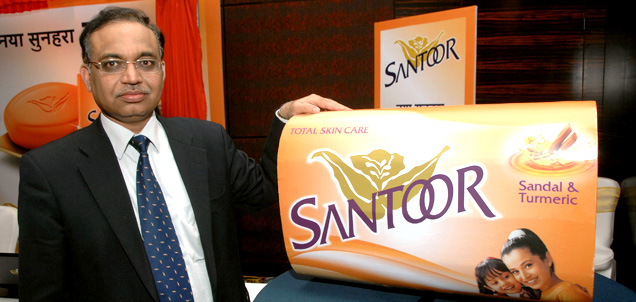
    Consistency in Communication: Anil Chugh, Senior VP, Wipro Consumer Care with a Santoor signage


    By Tuhina Anand


    Did you know that Santoor is the third largest soap brand in India? The brand, belonging to Wipro Consumer Care, has done well for itself by beating the international biggies and carving a niche for itself since it was launched in 1986. In the past 25 years, the run for the brand was not always so good, but a consistent and strategic communication has played a pivotal role in its success. Santoor is a Rs1,000 crore brand and has been growing at a CAGR of 23 per cent for the last five years.


    The communication has always focused on ‘younger looking skin’, but the portrayal has changed with the times to appeal women, who were earlier seen as homemakers to now those who excel in various professions – mirroring the changing aspirations of Indian women.


    Giving an insight into the Santoor story, Anil Chugh, Senior Vice President, Wipro Consumer Care, said: “Santoor is the third largest soap brand in India and the largest selling brand in the South + West India (value MS – 13.5 per cent). The ‘ageless skin’ campaigns and innovative marketing strategies have helped Santoor grow faster than the industry and gaining share over the years. One of the reasons for this is the consistency in communicating our core proposition of younger looking skin while keeping the message contemporary over the years. Also, our focus on providing the right value to the customer has contributed significantly to the brand’s success. The growth was also achieved on the back of a strong distribution network and communication in rural areas.”


    He added: “The strength of Santoor has been its promise which is consistent, powerful and eternally relevant to consumers. For over 25 years, the brand has delivered on the promise of ‘younger looking skin’ through superior product offerings which have used deep acting and trusted natural ingredients. Our campaigns have reinforced this message consistently. Over the years, Santoor has carefully chosen celebrities to endorse the brand and it has worked well for the brand.”


    While factors like distribution cannot be overlooked in the success of Santoor, the communication has been one of the key pillars. However, this was not the case always. MG Parameswaran, Executive Director & CEO, Draftfcb + Ulka elaborated: “When Ulka Advertising was assigned the brand in 1988, it was in a bit of a limbo, growth had stalled. The agency evolved the ‘younger looking skin’ and ‘mistaken identity’ as the key pillars for the brand. The advertising created history of sorts. The brand growth picked up momentum and Wipro has ensured that marketing money was well spent, through judicious correction in the messaging of the brand.”


    “In 1989, Santoor was basically selling in two states of Kerala and Karnataka. It was selling a fraction of what brands like Hamam, Rexona, Cinthol and Liril were selling. By focussing advertising on one promise and evolving it over time, Santoor has become one of the top three soap brands in the country.


    The advertising has evolved in many ways, but the core message of ‘natural ingredients for a young looking skin that will get you accolades’ has not changed. But the Santoor woman has evolved from being a pretty woman at a wedding to a confident woman who is doing aerobics, to a woman who plays cricket with her daughter, to a dress designer, to a TV anchor to a choreographer to a photographer. In a sense, the brand has reflected the aspirations of the new Indian woman,” added Mr Parameswaran.


    He is very clear that the success of its communication is purely because it tells a timeless story that always appeals. As he puts it succinctly, Santoor is about consistency in communication that adds a new layer with every new piece.


    In fact, as Santoor completes its 25 years, it has come out with a new campaign that is the Santoor anthem, giving it a contemporary look and feel yet telling the same story about a mother and daughter. The new advertising campaign features two ads – an anthem film that celebrates the achievement and pride of millions of Santoor women and a new theme film with new brand ambassadors – Saif Ali Khan and Mahesh Babu.


    Over the past few years, Santoor has grown from a single soap brand to talcs, deodorants, soap variants, liquid soap, facewash and so on. Mr Chugh said: “We will continue with our quest to keep the brand relevant and contemporary even in the future. The aim of new campaign is to take the Santoor brand to the ‘next level’. We are constantly looking at consumer needs and expanding/enhancing the brand to meet such needs. The brand has grown ahead of the competition in its core states and is now trying to break out of its traditional stronghold and make quick gains in other markets.”


    As a concluding note, Mr Parameswaran, who has been associated with the brand for almost two decades, said: “I am proud to have been associated with the brand for almost two decades. What is unique about the Santoor story is the great trust and regard this brand has spawned between the agency and client. It is has been a wonderfully rewarding experience and all of us in Draftfcb Ulka are proud of the association. It is not easy to take on large well-heeled multinational FMCG behemoths; we took them on and managed to find a place for Santoor under the Indian sun. The story is far from over. Santoor won against all odds and it will keep winning. I am sure of that.”

     

  • Dutch retailer Spar to end ties with Max

    By A Correspondent


    Dutch retailer Spar International and Dubai-based Landmark Group’s Max Hypermarkets have decided to part ways in India by the end of this year after the two developed differences over expansion strategy.


    While Spar was keen on partnering multiple national and regional retailers to expand in the country, Max Hypermarkets wanted a strategic investor for the business, Dr Gordon Campbell, managing director of the 31-billion euro (approx Rs2 lakh crore) Spar International said. The companies will now pursue separate growth plans in the country, they said in a joint statement. The two have decided not to renew the licence after it expires in December.


    Max Hypermarkets operates 13 Spar Hypermarkets across Karnataka,

    Maharashtra, Andhra Pradesh, New Delhi and the national capital region under a licence agreement signed in 2007.


    Viney Singh, MD of Max Hypermarkets India, said the company will rebrand its hypermarkets (large-format food & grocery stores that also stock general merchandise, electronics and apparel) once it decides on its future course. “We believe that it is good to have, in the long term, strategic investor partners to run the hypermarket business in India,” he said.


    Spar, which has 12,000 stores across 35 countries, does not financially invest in any market, but signs license agreements with independent retailers in different markets to use the Spar brand name.


    It also provides technical know-how and expertise for the front-end and supply chain for its partners. In fact, it had first entered the Indian market with Mumbai-based  Radhakrishna Foodland in 2004.


    Spar is now looking for multiple partners in India. “Given our experience now, we believe we have the opportunity for other partners to develop it (stores) at a quicker speed. We would be interested in tying up with 4-5 partners for different regions,” said Mr Campbell, on a call from Amsterdam.


    He said Spar has established contact with a few partners across regions, but refused to clarify whether they were corporates or standalone chains. Mr Campbell said Spar is willing to open supermarkets in India. The size of its supermarkets are around 1,000-2,000 square metres, while hypermarkets are above 4,000 sqm.


    Spar aims to finalise new relationships quickly so that its brand does not have to wind down. Campbell said this would be possible if new partners have operational stores that can be converted into Spar.


    Analysts say there is limited risk to brand Spar if it is absent from the Indian market for a few months because its footprint is limited. “Food and grocery is bought within a limited radius. As long as the brand’s reappearance is handled well, there is no real damage expected,” said Devangshu Dutta, chief executive of retail and consumer goods consultancy Third Eyesight.


    He added that it would not be difficult for Max Hypermarket to find a foreign partner, given Landmark Group’s presence in India and international retailer interest in the market. Landmark Group operates department store Lifestyle International in India.


    “They could also come up with their own brand and partner a financial investor as they would have the operational expertise now,” said Mr Dutta.


    The $12-billion organized food and grocery retail market that is projected to grow at a compounded rate of 30 per cent over next five years, according to estimates by Technopak Advisors.


    Source: The Economic Times
    Copyright © 2012, Bennett, Coleman & Co. Ltd. All Rights Reserved


  • Mehmet Akay takes over as GM, Southern & Western India, Turkish Airlines

    By A Correspondent


    Turkish Airlines has announced that Mehmet Akay as the new General Manager for Southern & WesternIndia. In his role, Mr Akay will be taking charge of Turkish Airlines’ strategic success in this region and will be responsible for driving growth and expansion of the company’s market share inIndia.


    Mr Akay started his career with Turkish Airlines inIstanbulin 1999 as a reservation agent. He was engaged in various responsibilities within the airline, including revenue management & pricing specialist. He also had a brief stint as Regional Commercial Manager inVietnamwhere he was posted for 2 years. With a proven record of dynamic leadership, winning attitude and the ability to drive goals and initiatives, Mr  Akay will guide the airline’s journey towards achieving new heights in sales and brand building.


    Speaking on the occasion, Mr. Mehmet Akay said: “Turkish Airlines has witnessed outstanding growth in the Indian market in the last few years and is now perfectly poised for a sharp take-off. I am pleased to be in a dynamic and vibrant country likeIndiaand strive to take the company to newer heights in the days to come”.


    Established in 1933 with a fleet of only five airplanes, Star Alliance member, Turkish Airlines is a four star airline with 179 aircrafts flying to 193 destinations around the world. Turkish Airlines has received several “Passengers Choice Awards” from the consumer ranking group, Skytrax.

  • Tuborg now in an exciting new avatar

    By A Correspondent


    As part of a global enhancement program, Tuborg has announced the launch of a new packaging and visual identity, showcasing an entirely new look, tying into Tuborg’s overall ambition of pioneering innovation in the Indian beer market. This innovation is inspired by the needs of Indian consumers and aims at giving them a global experience.


    Tuborg’s new visual identity showcases a refreshing look to entice consumers in a never-before-seen packaging – a bottle that adds a cool new look to its edgy appearance with an easy to hold grip. Tuborg’s tagline: “Open for fun” represents what Tuborg aspires to do – inspire its audience to being open for more and to make most of their lives and have fun.


    Building on the existing equities of the Tuborg name and label shape, new ideas have been added such as Tuborg’s new tilted logo. Tuborg has become the number 4 brand within 3 years of its launch. The power of its innovation, quality refreshing taste and youthful imagery has created this incredible growth story, which is unheard of in the beer industry. It was the first inIndiato introduce innovative packaging in the form of a unique pull-off cap, which lends the consumers the freedom to enjoy their drink without having to look for a bottle opener.


    Currently, Tuborg is the fastest growing brand in the Indian beer market and has witnessed a significant volume growth of 60 per cent (YTD April 2012 vs. YTD April 2011) and with the new visual identity, the expectations are higher.


    “Indiais an increasingly important market in Carlsberg’s global portfolio and we aim to give our consumers a superior quality experience. Tuborg’s new offerings not only reinforce the brand image but also emphasize our commitment to innovate. The new design will be launched acrossIndiaand we are positive that it will be an exciting new experience to our consumers,” said Soren Lauridsen, Managing Director, CarlsbergIndia.


    The new Tuborg packaging will be available in 330 ml and 650 ml acrossIndiaby end of May.


    In 1880, Tuborg Breweries was established as an export brewery in connection with a private port in a small town north of the Danish capital,Copenhagen. From the outset, its green characteristic look has been very popular with the Danes, and is the leading beer brand amongst them.


    Carlsberg India Pvt Ltd (CIPL) commenced operations in 2007, beginning production in Himachal Pradesh. The product portfolio of the company includes its flagship brand Carlsberg and Carlsberg Elephant, Tuborg, Tuborg Strong and Palone 8. Carlsberg India Pvt Ltd (CIPL) focuses on developing and strengthening its brand portfolio through innovation and commitment to superior quality.


  • Katrina Kaif unveils new Nakshatra logo and new brand campaign


    By A Correspondent


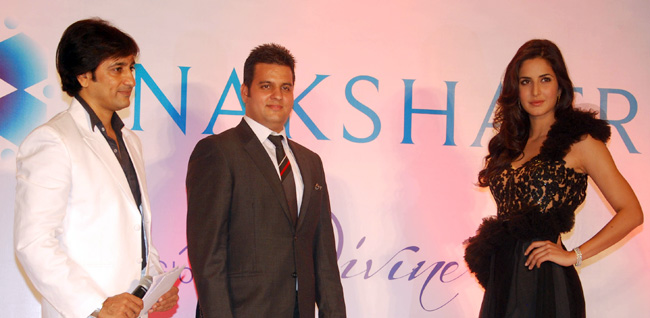
    Katrina Kaif, brand ambassador of Nakshatra, the diamond jewellery brand, on Tuesday, unveiled the brand’s new logo and its latest brand campaign – Glow Divine, in a glittering ceremony at the Grand Hyatt. Also present on this occasion were Mehul Choski, CMD, Gitanjali Group, Shardah Uniyal, VP – Marketing, and Sushil Sharma, VP, International Brands, Gitanjali Group.


    The unveiling was a spectacular ceremony, accompanied by a soul stirring performance by singer Kavita Seth, followed by unveiling of the latest Nakshatra jewellery collection by Katrina Kaif and Mehul Choksi.


    Speaking on the occasion, Katrina Kaif said: “As the brand ambassador for Nakshatra, it gives me immense pleasure to be a part of this momentous occasion. The introduction of a new brand identity and logo simply enhances the divinity and immortality that Nakshatra represents; making each woman feel special and divine – almost like a Goddess. I look forward to a continued great association with Nakshatra and continue to wish the brand all the very best”


    Enhancing the existing and emerging personality of the brand, the new campaign and identity aims to recreate the heavenly hues and the divine glow connecting the brand with the inner beauty that every woman radiates. ‘Divine Force’ is one of the key attributes of the new campaign – a fresh rendition of the “Divine Luck” philosophy associated with the brand, whereby every piece of Nakshatra jewellery carries with it an exquisite beauty that can only be described as preciously divine.


    The new look, feel and thought of the campaign is inspired by the perfection and inner fire that each precious piece of Nakshatra jewellery exudes. The campaign is an expression of this ethereal, goddess like divinity – a divine energy that is sparkling, precious, mesmerizing.


    Commenting on this rebranding initiative, Shardah Uniyal said, “It is a very proud moment for us at Gitanjali, and especially for Nakshatra. The new ethereal identity and logo lends a new dynamic and divine personality to the brand. It not only reflects but profoundly enhances the brands core values and the new avenues that we intend to venture into.”


    The new brand tagline, ‘Glow Divine’, is in keeping with the inner radiance that a diamond emits whilst complimenting the inner beauty that every woman radiates. Keeping in with the philosophy of “Glow Divine” the new brand logo is inspired by the popular floral Indian motif and exhibits eternal beauty and brilliance of constellation in a graphically depicted diamond cluster. The look and feel of the brand logo represents the ethereal beauty of Goddess of divine energy.


    Mehul Choksi, CMD, Gitanjali Group said: “The new logo and identity is yet another remarkable milestone on Nakshatra’s journey in symbolizing jewellery that is beautiful, divine and ethereal, exuding divine energy of perfect creations. It reflects all the values that have been at the core of our brand philosophy as well the vision and direction in which we aim to grow.”


    Nakshatra, one of the most respected jewellery brands inIndia, epitomizes jewellery that is ethereal, infinite, immortal, beautiful and radiant. The pieces are crafted around a unique set of floral designs, using the traditional seven stone cluster. First launched in 2000, as a flagship of the Diamond Trading Corporation (DTC), it was subsequently taken over by the Gitanjali Group, and has been awarded Superbrand status since 2008.

  • HUL on a roll with Nitin Paranjpe at wheel

    By Kala Vijayraghavan & Sagar Malviya


    When Nitin Paranjpe took over at the helm of Hindustan Unilever Ltd (HUL) in April 2008 at 44, he became the youngest chief executive to head the Anglo-Dutch consumer products giant’s Indian operations. Now Mr Paranjpe has another one for the record books – he is the only CEO in the past two decades to be recommended by the board for a second stint.


    The man, who joined HUL way back in 1987 as a management trainee, has been reappointed managing director & CEO for another five years beginning April 2013. The longest serving head of HUL was Ashok Ganguly, who was chairman from 1980-1990.


    Of course, there is little guarantee that Mr Paranjpe would continue as CEO till 2018, what with previous CEOs – from Keki Dadiseth to MS Banga – going on to assume larger responsibilities at the parent company, during their stints.


    Paranjpe’s imminent second stint is just what the doctor – Unilever CEO Paul Polman – ordered. In 2010, Mr Polman, the first outsider to head the $40-billion consumer goods giant, mandated longer tenures for the top and middle management. Polman’s directive was to ensure greater organisational stability while tackling increasing competition and business volatility. The CEO’s view was that management stability would ensure quicker decision-making and accountability.


    That’s certainly been the case at HUL; and those benefits have translated in creation of shareholder value. When Mr Paranjpe took charge in 2008, the HUL stock was quoting around 230 levels. Today it is 87per cent higher at a little over 430; the benchmark Sensex has fallen 2.8per cent during the same period.


    Over the past two years, Mr Paranjpe added some 4,500 crore – quite literally the size of some mid-sized rivals – to its top line by increasing sales from Rs17,873 crore in fiscal 2010 to Rs22,394 in fiscal 2012 – a compounded annual growth of 12 per cent. “We want to set goals that are so audacious that, even if they are missed, the performance is still heroic,” Mr Paranjpe told ET.


    “There is an obsessive focus on the consumer that goes beyond just slogans and ensures execution. We are now gearing the organisation to future-proof the business through innovation, improving product quality, dramatically raising execution capability and ruthlessly focusing on costs,” he added. And then there’s the supply chain where the CEO says he “wants to be the best at both ends of the market, the top and bottom. There will be no compromises at any end.”


    The relentless consumer focus – the shareholder cannot be ahead of the consumer, avers Paranjpe – manifests itself in initiatives like Mission Bush Fire, an employee-led market execution and customer interaction exercise initiated in 2010 to get the home & personal care giant to connect with the market place. HUL CEO Nitin Paranjpe and every member of the company’s management committee participate in this project to get direct feedback on how HUL brands are faring.


    “Bush Fire has resulted in a 40 per cent spike in sales in stores wherever the initiative has been implemented, according to internal company estimates. And HUL managers say Paranjpe has led from the front. “There is nothing he expects us to do that he has not done himself. Nitin is out on the road making customer visits almost 15 days a month,” said a senior company official.


    Analysts are calling it a dream run. Abneesh Roy, associate director, institutional equities, research, Edelweiss Securities said: “HUL is in a growth phase with Paranjpe leading from the front with vigour and stability. His reappointment is a move by Unilever to reward his performance and execution capabilities as CEO.”


    HUL’s sales have been growing not just by value over the past several quarters, but also consistently recorded volume growth that is ahead of the market. Despite a spurt in input costs and aggressive spends in ramping up distribution, HUL has maintained its 2008 operating margin at 14.1 per cent during the last fiscal year.


    Company watchers say Mr Polman too deserves credit for HUL’s outperformance as it was the global CEO who injected a sense of aggression and put in place a performance culture across Unilever globally by linking rewards to results. For instance, it was Mr Polman’s decision to hike variable pay to as much as 50 per cent of total salary from 30 per cent as this would lead to hefty bonuses for those who deliver and penalise those who don’t. “We want to strengthen our performance culture and be intolerant of incompetence. Consumer centricity must be a non-negotiable in business and so we have put a lot of pressure internally so that we delight externally,” said Mr Paranjpe.


    Source: The Economic Times
    Copyright © 2012, Bennett, Coleman & Co. Ltd. All Rights Reserved


  • Parle-G upgrades to Parle-G Gold

    By Tuhina Anand


    Parle-G, the biscuit that enjoys the unique position of being the largest selling biscuit in the world, has now launched Parle-G Gold. The variant adds the premium edge to the humble glucose biscuit, which is the USP of Parle-G and key to its success. This is Parle’s second attempt at bringing a variant to Parle-G. The product is targeted at keeping in mind the urban markets.


    Giving an insight as to why Parle decided to launch this product now, Mayank Shah, Group Product Manager, Parle Products, said: “In last couple of years, consumers have evolved across markets. The demand of premium category biscuits has gone up and as there was nothing in premium glucose category, we launched Parle-G Gold.”


    “The glucose segment has not seen any action or any significant launch in last few years, thus making it a good time to launch Parle G Gold. With the consumer preferences and needs changing with time, we would like to offer them an option of premium glucose biscuit with richer formulation. Parle G Gold offers exactly the same to them. With this new launch we are looking at increasing glucose category by 15 per cent over the next financial year,” he added.


    Replying to the question that their earlier attempt to bring in a variant in this segment did not meet with success and talking about how Parle changed their strategy this time to appeal to the consumers, Mr Shah said: “To be a successful product one has to, first, understand the consumers’ requirements. Parle-G Gold will give its consumers a richer and a better formulation along with a bigger biscuit and a better bite. I am sure the new product will do good in the market.”


    At this point of time Parle is concentrating on distribution and reaching out to relevant target group. There is no plan for any communication campaign on immediate basis. This product will be placed as premium glucose biscuit in their product portfolio.


    The packaging of this new product is done in a hazy BOPP material in a mix of red and gold connoting the premium quality of the biscuit. The colour, design and texture of the packet are clutter breaking, thus appealing to the consumers.


    Glucose is the one of the oldest category in the biscuit market, contributing close to 35 per cent in volume to the entire Indian market. Parle-G dominates the glucose segment with 80 per cent market share, catering to every spectrum of the society. The glucose category growth is 15 per cent, which is largely driven by Parle-G.


    While the first attempt to bring the premium category in glucose wasn’t met with success, probably the time is suitable now to make this entry as the consumers are more mature and look for greater variety. Also, the other players, especially Britannia with Tiger range, have come out with various variants and met with success.


    However, Mr Shah is clear that the move has nothing to do with competition. He said, “We have launched Parle-G Gold to fill the gap in premium glucose category, not because of the competition. Our focus is always to increase the reach and fill the gaps across categories. Keeping in consumer needs in mind we have launched Parle-G Gold.”


    Parle G is seen as the most loved brand of glucose biscuit category over the years and ruling the market for more than 7 decades. The overall look of the biscuit is wheatish brown with increased weight of 6.7 gms per biscuit. The new product is currently available in and around Mumbai. The company is planning to extend its presence acrossIndiain a phased manner.


    The product is currently available in pack size of 100 grams at Rs10 price point across kirana and modern trade outlets.


  • Is Brand SRK losing sheen due to controversies?

    By Samidha Sharma


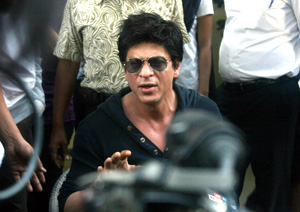
    He was, arguably, the biggest Bollywood superstar not long ago but with a few unsuccessful releases, a night club brawl and now a scuffle with officials at a Mumbai cricket stadium to his credit, Shah Rukh Khan’s brand is losing sheen.


    In the last couple of years the actor has not signed any big brand endorsement deals, although his portfolio still boasts of more than a dozen brands. People in the endorsement industry say that SRK’s image has suffered in the last couple of years not only due to the controversies that have surrounded him but also because he is an ageing celebrity.


    “Controversy does not make for good brand endorsers and any marketer will keep away from a celebrity like that. Besides the controversies that have courted him recently, what is a bigger concern is that he is ageing and that does not bode well for multiple brands in India that want a youth connect,” said Manish Porwal, MD, Alchemist, a talent management agency.


    Cola major PepsiCo, for which SRK was a brand ambassador for a long period, dropped him in 2009. In a move that was veering towards the youth, the cola major got on board Ranbir Kapoor. Later, telecom major Airtel did not renew its contract with SRK, although, they have not officially announced their disassociation with him.


    LOST IN TRANSITION?

    Endorsements: Tag Heuer, Hyundai, Belmonte, V-jon, Navratna, Dabur sona chandi, Lux Cozi, Linc pens


    SRK’s endorsement rates haven’t come down though as he charges around Rs 1.5 crore per day. But it’s 50 per cent less than what Aamir Khan commands.

    Today, his roster of more than a dozen of brand endorsements include Belmonte, V-jon, Navratna, Dabur sona chandi, Lux Cozi, Linc pens, besides a few marquee names such as Tag Heuer and Hyundai. SRK’s endorsement rates haven’t come down though as he charges around Rs1.5 crore per day.


    However, it’s 50 per cent less than what his contemporary Aamir Khan commands, but the latter has largely been off the endorsement market of late, say industry people.


    “What you are seeing is something that a lot of stars have gone through. It’s a transitional phase which all celebrities go through; while some bow out gracefully, some do not. It is an inevitable shift of power and it has not been a smooth ride for him,” said Santosh Desai, CEO at Future Brands.


    However, some of the brands that he endorses are sticking with him. DTH player Dish TV, which has him as a brand ambassador for over five years, says these incidents have had no rub-off as far as his brand appeal among masses goes. “There is no dent that has been made on Brand SRK, we will continue to have our association with him,” said Salil Kapoor, COO, Dish TV.


    Source:The Economic Times

    Copyright © 2012, Bennett, Coleman & Co. Ltd. All Rights Reserved


  • FMCGs like HUL, Dabur, Godrej, Marico on consumption-driven growth

    By A Correspondent


    India’s fast-moving consumer goods, or the FMCG sector, has been able to weather the impact of an economic slowdown and rising input costs yet another quarter, as firms led by HUL beat street expectations both on top line and bottom line growth.


    A study of the aggregate financial performance of the leading 10 FMCG companies over the past eight quarters shows that the industry has grown at an average 16-21 per cent in the past two years with average operating margins being 22 per cent.


    Very few other industries can boast of having such a performance track record. “The consumer sector typically is the last and the least to suffer during a slowdown,” said Manoj Menon, senior analyst at Kotak Institutional Equities.


    Most companies are reaping the benefits of the direct distribution expansion mostly in rural India. HUL, for instance, has tripled its rural penetration in the last couple of years. Sales from modern trade have also been a strong growth driver for companies. Marico has posted a growth of over 45 per cent in revenues from its rural and modern trade businesses during FY12.


    The quarter to March performance of FMCG companies like HUL, Dabur, Godrej Consumer Products, Marico, Asian Paints, GSK Consumer Healthcare, Procter & Gamble Hygiene and Healthcare and Jubilant Foodworks is also a reflection of consumption-driven growth.


    Half of HUL’s 20 per cent revenue growth during the March quarter was volume driven. Dabur’s domestic sales rose 19.2 per cent with volumes rising 9.5 per cent. Godrej Consumer Products logged 30 per cent sales in soaps in India – 17 per cent of which was volume-driven. Asian Paints registered 29 per cent growth in its revenues from domestic business, of which 15 per cent was volume growth.


    The company had raised prices by close to 12 per cent on its portfolio during the quarter. Jubilant Foodworks, owner of the Dominos Pizza franchise in India, reported 26 per cent same store growth, which was almost entirely volume-driven despite the company raising its menu prices by 10 per cent. Marico has been able to achieve a 17 per cent volume growth for the March quarter from a total revenue growth of 23 per cent for the quarter.


    GSK Consumer Healthcare registered 14.5 per cent increase in net sales – 7 per cent of which was driven by volume growth and the rest through higher realisations on account of price increases. Nestle was probably the only company to have a largely value-driven revenue growth of 13 per cent during the March quarter.


    Exceptional value growth always carries the risk of hurting volumes. Till now, most FMCG companies have been able to perform well while balancing between volume and value growth. “Over the long run, we see consumer demand being resilient,” Nitin Paranjpe, chief executive officer of HUL, had said at the press conference following the company’s results. According to Mr Paranjpe, the secular trend of consumers is towards uptrading rather than downtrading.


    “The demand for consumer goods is relatively inelastic compared to that of other products,” explained Milind Sarwate, group chief financial officer, Marico. An earlier ETIG analysis of the growth in revenues and profits of leading FMCG companies revealed that companies registered a much faster growth in revenues and profits during periods of high inflation (in 1994-98 and again from 2006 till date) compared with periods of low inflation (1999-2005).


    “During an inflationary period, there is a likely market share gain for organised players from the unorganised regional players,” Mr Menon explained. Larger firms enjoy economies of scale on account of bulk buying and higher pricing power on their reputed brands.


    The ET FMCG Index has a price to earnings multiple of 36 against the Sensex P/E of 16.1. Stocks of Godrej Consumer Products and Asian Paints hit a new high ahead of the companies’ result announcements. Stocks of HUL, Marico, Dabur, Glaxosmithkline Consumer Healthcare and Jubilant Foodworks are hovering near record high levels.


    However, their current valuations are still lower than their all-time record levels. In case the broader economy is sluggish, analysts fear that the going may not be good for the sector in the coming quarters. “Moderation is very much on the anvil,” cautioned Mr Menon. For now, FMCG companies continue to live up to their reputation of being a defensive investment play.


    Source: The Economic Times

    Copyright © 2012, Bennett, Coleman & Co. Ltd. All Rights Reserved


  • DMAi announces co-chairs for convention

    By A Correspondent


    DMAi, the forum for integrated direct marketing in India, has appointed co-chairpersons for its first of its kind global convention in Mumbai in August. Ajay Chandwani along with Winnifred Knight will function as co-chairpersons of the DMAi Convention and work with DMAi to ensure that this maiden event is a grand success. Their role will entail selection of content and speakers, overseeing strategic goals of DMAi, networking with industry thought leaders, as well as promotion for the convention.


    Commenting on the selection, Sanjiv Swarup, Founder Director of DMAi said: “We are very proud to have both Ajay and Winnifred as Co-Chairpersons of the convention, and are certain that they will bring a plethora of acclaim and stewardship to this entire event. Both are very well respected in their industries and bring expertise, knowledge and revolutionary thinking to their ideas and execution. We are certain that the convention will reach renewed heights with their guidance and leadership.”


    The global convention by Direct Marketing Association: India (DMAi) will be the first ever conclave that will feature global learning in strategic marketing with special focus on direct marketing including traditional, interactive and futuristic channels; with a participation from over 100 global and Indian companies.


    On being appointed as Co-Chairman of the Convention, Ajay Chandwani said: “I am honored to be bestowed with this new role and look forward to working with Winnifred, to ensure that this Convention reaches the great heights it truly deserves. As co-chairpersons of the DMAi Convention, our role will be to bring to life the knowledge and experience of top notch Indian and global speakers, who have a huge standing in their markets. These thought leaders will share their valuable insights and experience of brands handled by them. Further, my personal involvement over many years in brands and interaction with leading marketers will enable me to get access to thought leaders in Marketing, Creative and Media and get them motivated to share their knowledge. Our key objective is to make Direct marketing the next big thing that everyone is talking about.”


    “My familiarity with the Awards Process will help in working with the maiden DMAi Awards event which will require the support Direct Marketing specialists, Clients who use Direct Marketing, Ad Agencies and Media Companies. The biggest challenge will lie in garnering sponsor and delegate support for the Convention.”


    Commenting on her selection as Co-Chairman of the Convention, Ms. Knight said: “As a knowledge junkie and passionate traveler, Incredible India has been on my bucket list for many years, and this opportunity to be in the midst of business and pleasure is a dream come true. Needless to say the DMAi Team has made it easy to like and respect them for their professionalism and warmth. I’m delighted to be part of the program and content planning in advising on relevant topics and tracks, suggestions for international speakers and other specialists, networking opportunities and more. Together with Ajay’s extensive experience we look forward to present an awesome knowledge-sharing and Insightful Convention.”


    The convention, to be hosted by DMAi at the Renaissance Convention Center Powai in Mumbai from August 1-4, will be a 2 day event spread over 4 key tracks and several sessions and will include keynote presentations from leading practitioners from India and abroad, panel discussions of eminent professionals, expo centres for actual business, award presentations in the direct marketing industry and an opportunity to network with the crème de la crème of marketing practitioners. There will also be 2 days of Masterclasses in specialist functional areas.


  • The Six Ps of Data Driven Marketing


    By Rishad Tobaccowala


    Samuel Taylor Coleridge in his famous poem “The Rime of The Ancient Mariner” has a stanza describing what it is like to be stuck in a salty ocean under a withering sun:

    Water, water, every where,

    And all the boards did shrink;

    Water, water, every where,

    Nor any drop to drink.


    Today we live in a data driven, data infested, data diarrhea world where we may plaintively wail:

    Data, data every where

    So much data that we will sink

    Data, Data every where

    Pray who will help us think?


    It is clear that data itself is being created in such piles that data itself is close to meaningless and information from it is often not too meaningful. What we really need is to be able to make this torrential flow yield a waterfall of actionable insights and maybe even wisdom.


    This is unlikely to come from yelling “big data”. ” we need to own the data”, “data is critical” and other data shibboleths that the most data challenged companies and individuals brandish like some magic sword.


    A better way is consider the six Ps of Data.


    1. Perspective: What perspective do you expect to get from the data ? What connections are you hoping to see? How do you plan to use this data? Asking the questions before you collect or cull through the data can be very helpful. There are times that the data itself may yield the answers but to do so you will need the next P which is people.


    2. People: The shortage in data driven marketing is clearly not the data or the storage capacity or even the computing capacity but of this rare bird called the “data scientist”. John Rauser of Amazon in this fine talk explains how this species combines applied math and engineering with a layer of curiosity, skepticism and good writing skills.


    3. Punctuality: The half life of a tweet is probably 8 minutes and of any piece of data probably less. Collecting data is like building a museum to the past in a real time world. What is critical is to have data arrive where you need it, and when you need, both from some past archive and some just in time magic. As the world gets more mobile and place and time-based relevance increases in importance so will the punctuality of data.


    4. Privacy: As data scientists glean insights such as the likelihood of you being a valuable pet food buyer is if you celebrate/promote your pets birthday on Facebook , and combine it with the amazing technology of just in time, things may get all creepy and icky. And to ensure that this privacy issue will become a critical factor one can look to the Government. Not just the Europeans but of every country whose political structures are being disrupted by technology armed citizens. To make an example of things the Government  will come after the big companies and so data policies and transparency will be key going forward to keep things all nice and elegant.


    5. Pooling: We are living in a connected world. The Internet is a connection engine. Data APIs and access to databases from all over will be critical to make data driven marketing a reality. Here is a simple example of how Google Trends data and retail location allowed for some superb marketing. It’s not the data you have but the data you can access. Access to rather than ownership of data is key and therefore the ability to partner and leverage platforms and portholes into data clusters will be key.


    6. Partnering: As large companies like Google, Amazon, Facebook, Experian, IBM and several others around the world build data stacks, warehouses and tools,  the key will be to partner with these platforms that allow companies to process, pool and pull their own information. There are huge economies of scale that come with data collection and processing and therefore it will be key to decide what platforms to partner with rather than build a complete vertical stack.


    The age of data driven marketing arrived some time ago. Now companies and people have to catch up with how best to thrive in such an age and collecting data and running algorithms are unlikely to yield much without the six Ps.


    Rishad Tobaccowala serves as Chief Strategy and Innovation Officer of VivaKi which combines the media and digital assets of the Publicis Groupe including Starcom, Zenith, Mediavest, Optimedia, Digitas, Razorfish, Moxie Interactive, Performics and Denuo. Mr Tobaccowala can be reached at @rishadt


  • Lifestyle retail chains post weak same-store sales in January-March quarter

    By Sarah Jacob & Sagar Malviya


    Sluggish demand has led lifestyle retail chains to post weak same-store sales in January-March 2012 and lower growth estimates for this fiscal.


    Driven by new stores, most retailers clocked 20-30 per cent sales growth in January-March. But same-store sales, or sales from stores that were operational last year, grew in single digits. Same-store sales are an important indicator of consumer demand and the health of the retail industry. Retailers don’t expect things to improve this fiscal as demand is subdued.


    The downturn began after Diwali, and the increase in the prices of essential commodities, lower salary increments, adverse macro-economic conditions and government inaction dented consumer confidence.


    “We would have targeted double-digit like-to-like growth if the year looked better,” said Govind Shrikhande, MD of department store Shoppers Stop.


    Shoppers Stop’s revenues grew 27 per cent to Rs 621.35 crore in the January-March quarter, but same-store sales grew 10 per cent. Volume growth contributed just 1 per cent to the increase in same-store sales while price hikes made up the rest. “Prices have risen and imports are getting costlier. These developments start impacting consumer demand after a point,” said Mr Shrikhande.


    Rival Lifestyle International, which operates stores under the Lifestyle and Max brands, said it clocked sales of over Rs2,500 crore last fiscal and has targeted revenues of Rs4,500 crore by 2013-14.


    “The second half of last year was not good and it’s apparent in our bottom line,” said Lifestyle International MD Kabir Lumba. He refused to divulge figures as the company is unlisted. “Given the current market conditions, we have lowered our growth estimates by around 10 per cent,” Mr Lumba added.


    Pantaloon Retail posted an increase of 7.6 Pantaloon Retail in sales for the three-month period ended March 2012, but same-store sales rose just 3.6 per cent – the lowest in 13 quarters. Retailers say demand is subdued in the first two months of the current fiscal as well. “The overall sentiment has been poor and it is reflecting even in May,” said J Suresh, CEO of Arvind Lifestyle Brands and Retail. The 10 per cent excise duty on branded garments last fiscal has impacted Arvind’s value format Megamart, which posted a growth of 11 per cent in same-store sales during the quarter against an 18 per cent increase in the year-ago period. However, its lifestyle brands business – which includes Arrow, US Polo and Flying Machine brands – grew 27 per cent in the fourth quarter in terms of same-store sales.”


    Same-store sales have slowed down despite retail chains extending end-of-season discounts and advancing them by up to three weeks to liquidate inventory. “This helped them post higher sales on a sequential basis. However, margins of most retailers took a hit,” said Sangeeta Tripathi, a senior analyst with Sharekhan. Margins were further squeezed by higher interest rates, fuel and real estate costs.


    The slowdown in like-to-like sales has forced retailers to explore new strategies to drive sales. Shoppers Stop, for instance, is focusing on store events as well as new loyalty card schemes and has recently lowered prices of private label brands by 5 per cent.


    Experts say stores can boost sales by improving shelf displays and promoting private labels. “Significant work can be done to make the product on the shelf more compelling for the buyer, both in terms of merchandising and placement. Retailers can also differentiate by looking at their private labels, not just as additional margins but as brands that fill a gap,” said Devangshu Dutta, chief executive of retail consultancy Third Eyesight.


    Source: The Economic Times
    Copyright © 2012, Bennett, Coleman & Co. Ltd. All Rights Reserved