Category: MARKETING

  • Can Facebook, the marketer’s online best friend ever become its ace salesman?

    By Delshad Irani & Ravi Balakrishnan


    In 2009, Facebook terminated the ‘Whopper Sacrifice’, Burger King’s social experiment cum marketing activation. Created by Crispin Porter Bogusky, the campaign’s premise was the more ties you sever the closer you get to your BK Whopper. The application as it turned out was a whopping success.


    Within a week 200,000 ‘friends’ were virtually burned out of existence from various lists. Facebook couldn’t handle the loss of those hard-earned friendships. Burger King, on the other hand, proved the point it set out to make – Americans sure do love their burgers. That same year, Swedish furniture giant Ikea spent practically nothing to create a campaign to promote its newest store.


    The agency Forsman & Bodenfors created a new Facebook account for the manager at the store in the city of Malmo and posted catalogue pictures of furnished rooms.


    Users could win furniture and other items in the photos if they beat their friends to the punch. All they needed to do was tag the pieces with their names first. Needless to say the prospect of first-to-tag-wins drove Facebookians crazy. The campaign was hassle-free, cheap and effective, just like the Scandinavian furniture it was advertising.


    Fast-forward to a few weeks ago. General Motors, the world’s fourth-largest advertiser and spender of $3.9 billion globally on advertising in 2010, haunted by questions related to effectiveness and ROI, pulled out its pretty penny, all $10 million of it, from Facebook’s paid-ad kitty just days before the social network’s stock went public.


    In addition to that sum, the automaker spends a reported $30 million on content creation for social media. These examples make Baccarat-crystal clear what we know already – you don’t have to pay big to make an impact via social media.


    In India, most marketers love talking about the worth of a campaign by the number of fans, or likes received on the most recent post. But even they are starting to ask a tricky question: what’s the real worth of their campaigns on Facebook? Worth more than a burger, eh?


    The site itself has been trying to tell advertisers that no longer will mere presence and innovative social media campaigns cut it. If they want scale, they’ll have to shell out the hard cash for offerings like “sponsored stories”, not to be confused with “sponsored ads”.


    For instance, products like Reach Generator guarantee that posts by a brand stand to be seen by 75 per cent of its fans every month or an estimated 50 per cent every week. Non users of the tool will have to settle for an average of only 16 per cent of fans viewing posts on a weekly basis. Not everyone’s buying though, believing that compelling content will win any day of the week.


    Anuradha Aggarwal, senior VP, brand communication and insights, Vodafone India said: “Since having high engagement scores is our goal, we focus on creating content on our Facebook page rather than on advertising. We focus on creating posts and apps to enable our 3.2 million fans to create conversations and experiences around the brand.”


    PepsiCo’s approach is to use a combination of both, posts/promotions on brand pages and display advertising. One of the cola maker’s prominent campaigns on the site was ‘Meet Messi in Miami’ where fans had to complete a series of tasks to win a chance to meet The Atomic Flea.


    During the 2011 ICC Cricket World Cup, Pepsi launched an online progamme as part of the ‘Change the Game’ campaign where fans could win a dream trip across the country for all India matches. The latter initiative was listed as one of the 19 best campaigns in the world by Facebook on their success stories blog, the only Indian effort to feature on the page.


    According to Homi Battiwalla, category director – colas, hydration and mango based beverages, PepsiCo India, it is too early to give a conclusive opinion on new advertising properties like sponsored stories and other offers. So the bottom line when it comes to the marketing on the social network is the game hasn’t quite changed. “The primary focus remains on organic content as we believe it results in better consumer connect,” said Mr Battiwalla.


    For automakers like Mahindra & Mahindra, Facebook is good for what it was born to do in the first place. Well, that and to spy on “old acquaintances”. According to Vivek Nayer, senior VP, marketing, automotive division, Mahindra & Mahindra: “Rather than looking at Facebook for advertising reach, we’ve leveraged it for what the platform is inherently good at; building communities. Today at 5 million, we are the largest automotive community on Facebook in India”


    In the case of Unilever, the company moved from almost accidentally stumbling on the power of the site – after noting a lot of action on its first Cornetto Luv Reels page long after the promotion was over – to it being a key pillar to the launch of Fruttare, its new range for the summer. Sapan Sharma, general manager – ice creams, Hindustan Unilever, said: “There’s an advertiser login where you get all the details. In the first 10 days of launch, 1.2 lakh fans signed up and there were 1.2 to 1.5 lakh conversations.”


    Arch-rival P&G is not lagging either. According to a company spokesperson: “In just less than two months, we have over 690,000 fans for our Thank You, Mom campaign. This makes it the largest, most engaged-with Thank You, Mom community globally.” For the launch of Olay’s premium skin care range, Olay Regenerist, a Facebook waiting list was created, with both fashion journalists and consumers signing up for an exclusive trial on the site; in less than three weeks, over 11,400 people had registered.


    But as the eight-year-old Facebook enters a new league as a listed company, it needs to, and rather urgently, scale its revenues to sync with its audience. Minute, often ineffective, right-rail ads aren’t exactly a juicy bone to dangle in front of existing and potential advertisers; thus the introduction of premium ads and better placement.


    According to Siddhart Rao, CEO of digital agency Webchutney, the sweet spot between organic and paid promotion is the one that will yield maximum benefit to brands looking to extract value from social media marketing platforms like Facebook. “One cannot work without the other,” he said.


    S Yesudas, managing director – Indian subcontinent, Vizeum, said: “I do not think all marketers know what to expect from the medium. The hurry to be on to the bandwagon gets them there. The fact that Facebook offers free advertising inventory for brands to test the medium gets overlooked. In my opinion, the medium can be successfully used to build relationships with the consumers.


    Targeting can be done based on profile information, relationship status, interest or based on certain words in profiles or status messages. But the truth is the brand communication will always compete with the updates, videos, etc from friends.”


    Indeed, it’s complicated; the relationship between advertisers and Facebook. Especially when one moves from the fluffy world of engagement to hard sales. Many retailers in the West like JC Penney, Gamestop and Gap pulled the shutters on their stores on Facebook this February.


    Chhaya Balachandran Aiyer – founder – MD, BC Web Wise said: “Ironically Wade

    Gerten, the founder of 8thBridge – the flower store that was responsible for the coinage of the term F-commerce as it was the first to open shop on Facebook for 1,800 Flowers – has admitted that sales never really materialised for their first or other F-outlets, adding that F-commerce deserved an F. Given the fact that F-commerce (Facebook commerce) has failed in the west for retailers, it appears that Facebook would be an engagement vehicle. Peer recommendation and product ratings are not integrated. Should it launch a brand intelligence tool which can be used by consumers – which exposes peer comments and recommendations that can be accessed by the FB community – then the ball game will change.”


    Venkat Mallik – president, Tribal DDB & Rapp India says Facebook’s ability to deliver sales impact has been a bit of a mixed bag: “There need to be more strong case studies demonstrating the sales or brand impact from the use of Facebook led engagement.”


    However while Facebook may not itself be a platform to sell it can impact sales according to some of its satisfied customers. Unilever’s Mr Sharma for instance believes there’s a definite co-relation between high levels of engagement and products sold.


    According to Carlton D’Silva, chief creative officer, Hungama Digital Media, “Opinions of family and friends matter when making purchase decisions decisions and Facebook activity will provide a lot of data to consumers, which can be leveraged in places where they make these decisions, causing a significant, if not direct impact on purchase behaviour.”


    “GM is slashing its advertising budgets by $ 2 billion, of this only $10 million or 0.5 per cent was on Facebook. They have also announced they won’t advertise on Super Bowl, either. Further, what should be noted is that GM has 8 million fans already. I am sure that they are going to continue with the engagement plans for acquired fans. It would be foolish to assume anything beyond, or assume Facebook has failed for GM, it would be just that advertising further is currently not the best bet in its media plan,” said Ms Aiyer


    The users of Facebook both on the agency and the marketer side each have their wishlist ready.


    “The analytics are available at a lag of 7 to 15 days; I’m sure it can come earlier. I’m sure there will be a time when we can talk to people from a specific city or market,” said Mr Sharma


    “They are hugely data rich. If in some way they get to using some of the data millions of people put in their hands on a minute to minute basis, sky will be the limit for them.This will surely come in with resistance from the users, unless they persuade them. They have to walk this path very carefully,” added Mr Yesudas.


    Most brands have a clear agenda from marketing spends on social media platforms like Facebook – greater outreach among target audiences through personalised interaction and engagement, leading to higher impact on conversions and sales.


    “It’s a perfectly reasonable expectation from a social communication platform with 900 million members,” said Mr Rao of Webchutney, “but whether brands invest enough thought, time, resources and action to engage audiences meaningfully is another question.” And one helluva question it is. Because for every whopper of a Scandinavian success story, there are at least a dozen marketing campaigns that have fallen flat on their face. So, ask not what you can do on Facebook but what Facebook can do for you.


    Source: The Economic Times
    Copyright © 2012, Bennett, Coleman & Co. Ltd. All Rights Reserved
  • Will marketers now woo KKR?


    By Tuhina Anand


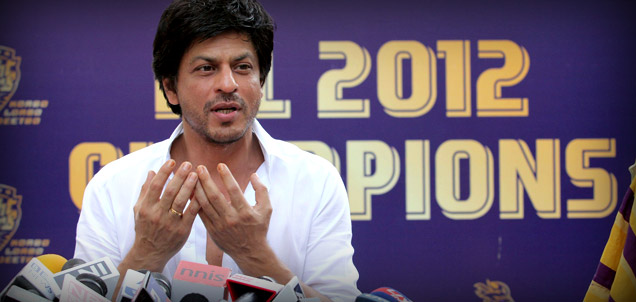
    They have pocketed the trophy, and as celebrations continue, one wonders if Kolkata Knight Riders’ (KKR) win will help them in upping their brand value. There is a direct relation with success in any sport and for a sportsperson, and how suddenly the sportsperson becomes the flavour of the season.


    Mind you, it’s just season, meaning a good series and one might bag few endorsements here and there, but offers from bigger brands don’t come pouring in unless you are the one on whom marketers can bet their monies for long-term. And in KKR’s win, the case gets even more complex as the players are completely overshadowed by the owner who is a super star, Shahrukh Khan. Though one might frown at his shenanigans, the truth is that people still like to know what SRK did when KKR won and not what Gautam Gambhir, Manoj Tiwary, Manvinder Bisla or Yusuf Pathan did as they lifted the trophy. Not to forget that co-owner Juhi Chawla too brings in a bit of star element to the show.


    Harish Bijoor

    Harish Bijoor, Brand expert & CEO, Harish Bijoor Consults Inc felt that from the lot, the one darling face that will emerge for endorsements will not be of any cricketer from KKR, not the team KKR, but the owner, Shahrukh Khan. He said: “I think this win and the subsequent hype and hoopla will benefit Shahrukh on the endorsement circuit for sure. It is a great boost at a much needed time for him. In many ways, in a completely diametrically opposite manner, what Satyamev Jayate is doing for Aamir Khan, IPL does for Shahrukh. Odious, but true!”


    Bijoor also pointed out that both SRK and Juhi Chawla will gain in terms of brand value, however the gain will be more for SRK than Juhi.


    However, Indranil Das Blah, Chief Operating Officer, Kwan Entertainment & Marketing Solutions has a different take on SRK and Juhi’s rise in brand value. His opinion is that it’s highly unlikely that both the owners would gain in terms of brand endorsements as he points that the triumph was on the pitch, and if anyone will see a rise in brand value, it will be the players, and not the team owners. Jagdeep Kapoor, MD, Samsika Marketing Consultants too agreed: “I don’t think the owners will gain as they are known for performances on screen and off-field. People who will benefit are those who have performed on field and off-screen.”


    Indranil Das Blah

    So who is the KKR player who will gain most after the win? Manish Porwal, Managing Director, Alchemist Talent Solutions rightly pointed that the KKR skipper Gautam Gambhir will be the winner here: “Gambhir has shown that he is consistent, delivers and is a leader. Having played on the national level, he already is a known name and with some murmur on him being seen as potential TeamI ndia captain, his brand value will definitely rise. Brands that have used Sachin Tendulkar and MS Dhoni in the past and want a younger icon, Gambhir fits the bill perfectly.”


    Mr Porwal also pointed that Gambhir does not have a flamboyant personality and has been fairly neutral in his approach which might be an added advantage for brands wanting to hook him.


    A similar view is voiced by Mr Blah: “The one player who will probably get quite a few new offers from marketers would be the KKR captain, Gautam Gambhir. Not only was he amongst the most successful batsman of the IPL and led from the front, but he also stood out as a captain. He is now being talked about as a future Indian captain and that is bound to have a positive impact on his brand value.”


    So while Gambhir emerges as a winner here, especially because of his personality traits like stability and performance, he could be a good catch for young MNCs or for financial and banking clients.


    However, brands will definitely fall for for KKR team members like Bisla who shone in the IPL. As far as other players are concerned, they may get a couple of regional or local endorsements but nothing on a national scale unless they are actively and constantly playing for the Indian team. “You need to be playing international cricket and be constantly in the media eye for a brand to want you as a brand ambassador; just performing in the IPL for two months out of 12 won’t result in endorsements. Examples from past IPLs include players like Swapnil Asnodakar and Paul Valthaty who performed brilliantly in the IPL but couldn’t sustain their forms and hence, didn’t get any endorsements,” added Mr Blah.


    But Mr Kapoor of Samsika has found another ace for marketers. He picks Sunil Narine and thinks that he would benefit from the win and from his excellent bowling performance and get endorsement offers as a thinking, clever, successful sportsman.


    While Mr Bijoor is not too optimistic about KKR future with marketers, he says that the problem with sports fervour and fever is that it is short-lived. Sporting success such as the one achieved by KKR diminishes very fast. With the next cricket tournament round the corner, everything will be forgotten rather swiftly, therefore the potential to leverage is really a mirage.Indiahas a surfeit of cricket as of now.


    Rahul Jauhari

    Some see rise in brand value for SRK or Juhi Chawla, others have pointed that Gambhir will gain the most, however, Rahul Jauhari, National Creative Director, Everest Brand Solutions has a slightly different take: “I have largely a pessimistic view on the rise in brand value for KKR team and its owners and its future with marketers. IPL is not the same as the World Cup, so the passions are divided and not national in its strength. Bisla should benefit post IPL, but I think it’s too early to say he can be the next darling for brand endorsements. The fan following post IPL is largely limited and regional. He could be rocking in Kolkata, but not in Chennai.”


    “Somewhere I feel the KKR win has been sadly overshadowed. It’s been played out as SRK win, not a KKR win, be it in terms of media bytes, attention or simply footage consumed. SRK’s brand value is already high. The IPL isn’t going to push it up. In a rather pessimistic view, I’d say the IPL has dented his image. I didn’t like the SRK I saw during this IPL. And a lot of people think the same way,” concluded Jauhari.


    However Mr Blah of Kwan feels that KKR has managed to establish itself as a successful brand.  He said: “Nothing succeeds like success. The team previously had all the trappings of a successful brand (star players, influential and high profile owners, a tremendous and diverse fan base and a plethora of sponsors). The main ingredient they were missing was success. Now they have that and it will have a direct and positive impact on how the team is perceived. As defending champions, they should be able to command a premium when they are out scouting for sponsors for IPL 6.”


    Mr Kapoor concluded: “KKR is a successful brand and would attract more advertisers. They can be a bigger brand if they show great performances on the field, rather than off the field.”


    Photograph: Fotocorp


  • Luxor signs Deepika Padukone as brand ambassador for Pilot

    By A Correspondent


    Luxor Writing Instruments has signed on Deepika Padukone as the brand ambassador for Pilot for two years.


    Announcing the new face of Pilot, Pooja Jain, Executive Director, Luxor Group, said: “We understand that young consumers today are very discerning of the brands they use. The brands have to match their aspirations, ambitions and personality. Deepika comes across as a go-getter who has made it on her own, is confident of her choices and works hard to achieve what she desires from life. She rightly represents the youth who is passionate and seek excellence in their endeavors. Our association with her is the right fit with many common factors between Pilot and Deepika which appeal to the youth instantly. I am sure this alliance will emphasize the positioning of Pilot series as a choice of young achievers.”


    Deepika Padukone would be seen in an aggressive multi-media campaign which will be created by Lowe Lintas. Speaking about the advertisement campaign, R Balki, Chairman & Chief Creative Officer, Lowe Lintas, said: “Deepika is a confident person and represents the youth which is aware and determined. Her personality perfectly matches with Pilot and reflects the achievements of the young generation. The ad campaign for Pilot will keep this synchronicity in mind and will have a young feel.”


  • Kishore Biyani not to sell stake in Big Bazaar & Food Bazaar chains

    By Chaitali Chakravarty


    Retail magnate Kishore Biyani said that he is not in talks with anybody to sell stake in Big Bazaar and Food Bazaar chains because his Future Group has sorted out its debt crisis after three back-to-back deals in the past one month.


    “We are not in discussions with anybody. I don’t want to divest my core retail business now. I want to run it,” Mr Biyani told ET. “Our debt levels are very comfortable and divestment, if any, will only be in non-core assets,” the Future Group chief said.


    In recent weeks, the retail industry has been abuzz with speculation that the Future Group was in talks with India’s richest man Mukesh Ambani to sell stake in its flagship Big Bazaar hypermarket network, which contributes almost 65 per cent of revenues of Pantaloon Retail (India) Ltd, the listed entity of Future Group.


    Reliance Industries operates a nationwide network of retail chains under Reliance Retail and Mr Ambani sees this segment as one of the engines of future growth for the conglomerate.


    A Reliance Industries spokesman denied any negotiations with Biyani. “We deny that Reliance Industries has ever been in talks with Future Group or Mr Kishore Biyani for any stake sale,” he said.


    A person aware of developments in Future Group, however, said Reliance Retail and Future Group had explored the possibility of a partnership about three months ago. But the talks did not proceed because the AV Birla Group moved faster and agreed to buy Pantaloons department chain, helping Future Group improve its precarious financial situation.


    “At that time the priority was to bring money into the company and the Pantaloons deal addressed that issue,” the person said.


    The Future Group, which has been in an aggressive expansion mode, ran into a crisis with consolidated debt of Rs7,800 crore that weighed on its profitability. Pantaloon Retail has been spending more than Rs100 crore in interest over each of the past three quarters. This started to pinch as consumer spending slowed. That was when Mr Biyani started looking to sell assets to pare debt.


    Last month, the Future Group sold a majority stake in Pantaloons department chain to AV Birla Group’s Aditya Birla Nuvo for Rs1,600 crore that included Rs800 crore of debt transfer.


    Then, last week, the Future Group announced sale of its 53.67per cent stake in Future Capital Holdings to US-based private equity firm Warburg Pincus for Rs4,250 crore, which included Rs450 crore of cash payout and Rs3,800 crore of debt transfer. Pantaloon Retail also raised Rs 200 crore through a preferential share allotment last week.


    “In the past one month, Biyani has managed to reduce his debt by Rs 6,000 crore. Now, he is in no hurry to sell any of his core businesses,” the person close to Future Group said. A senior official of a rival retailer, however, said Mr Biyani will ultimately get a partner for his value chain. “The only question is if he will tie up with an Indian company or wait for foreign direct investment to be allowed in the sector so he can find an international partner,” the person said.


    Meanwhile, Mr Biyani plans to sell more non-core assets in a bid to make the Bombay Stock Exchange-listed Pantaloon Retail debt-free by March 2013.


    He plans to raise Rs1,650 crore by October by offloading shares in his insurance and stationery joint ventures, the consumer electronics chain and home furnishing network. This would include raising Rs1,000 crore by divesting stake in Future Generali insurance. This will help prune Pantaloon Retail’s standalone debt, which stood at about Rs5,500 crore at the end of March.


    The group also plans to shed 40 per cent stake in the electronics retailing business eZone when it merges it with Noida-based InTarvo Technologies, which specialises in providing technical support to large corporations and retailers. InTarvo could not be contacted for comment despite repeated attempts.


    Mr Biyani also plans to sell a minority stake in home furnishing and do-it-yourself chain Home Town network for about Rs 300 crore in the next two months.


    He said his group’s May deal to cede controlling stake in Pantaloons chain to AV Birla Group was a one-off transaction. The company will only sell minority stakes in any future deals in its core retailing business and will maintain majority stake in such ventures, he said.


    Mr Biyani added that he doesn’t want to touch Future Value Retail, which operates Big Bazaar and Food Bazaar, as the group’s debt situation can be controlled.


    The only way he wants to touch Big Bazaar is by undertaking some tweaking in the profitable 150-strong chain by introducing improved services and consumer-centric approaches, underscoring with a new tagline ‘Aapki Sewa Mein’ (or, ‘At Your Service’). Big Bazaar is changing its tagline months after it adopted ‘New India’s New Bazaar’.


    Source: The Economic Times
    Copyright © 2012, Bennett, Coleman & Co. Ltd. All Rights Reserved

     

  • Beware! Walmart will not do business with corrupt businesses!!!

    By Rasul Bailay


    Walmart Stores plans to snap ties with companies that supply products to its stores if they are involved in any kind of corrupt practices, making it the first retail company to undertake such a stringent initiative in India.


    Stung by the bribery scandal that surfaced recently in Mexico, the world’s largest retailer has recently hired consultancy firm KPMG to conduct due diligence on hundreds of existing vendors as well as potential future suppliers to ensure that they are not involved in any unethical or illegal activity.


    Bharti Walmart, the equal wholesale retailing joint venture between the US retail chain and New Delhi-based Bharti Enterprises, sources supplies from vendors ranging from multinationals such as Hindustan Unilever and Colgate Palmolive to hundreds of small and medium enterprises.


    As companies in India, like in Mexico, are susceptible to pay bribes at various levels to get reams of licences required to start and operate businesses, Walmart wants to make sure they do business with only those vendors who don’t indulge in such activities.


    This is second such anti-corruption initiative launched by Walmart in India in recent months. Earlier, as reported by ET, the world’s number one retailer mandated KPMG to educate and create awareness among the Bharti Walmart’s staff about anti-corruption practices.


    As an American multinational, Walmart is bound to abide by the Foreign Corrupt Practices Act (FCPA), a US law that prohibits companies registered in that country and its subsidiaries across the globe from indulging in any sort of corrupt practices.


    A company spokesperson said this move was part of its “previously announced” worldwide review of its anti-corruption programme that was initiated in March 2011. “This includes developing and implementing recommendations for FCPA training, anti-corruption safeguards, and internal controls,” said the spokesman.


    The latest initiatives by Bharti Walmart are the direct fallout of the bribery scandal in Mexico, a person with the direct knowledge of the situation said.


    Earlier this year, a scandal surfaced in Walmart’s Mexico unit accused the subsidiary of bribing government officials in almost all the provinces in that country where the Bentonville-based retailer has operations. The US Justice Department has started its own probe against Walmart over the allegations of the systematic bribery to obtain licences in Mexico.


    In India, KPMG will scrutinise the vendors and classify them in three categories of red, amber and green, the person quoted above said asking not to be named. Bharti Walmart will continue to do business with vendors rated ‘green” by KPMG while it will immediately snap ties with retailers rated ‘red’. It will be Bharti Walmart’s choice to engage with vendors that are placed in the ‘amber’ category by KPMG.


    A KPMG spokesman said the firm does not comment on “company-specific matters”.


    The head of one of Bharti Walmart’s local vendors said his company has already passed the KPMG test more than a month ago and he added that such a scrutiny has happened for the first time in the last few years that his company has done business with the cash-and-carry joint venture.


    “It’s a very good step. It will help the retail industry if more and more companies undertake such initiatives,” says Saloni Nangia, president, Technopak Advisors, a consultancy firm. “Supplying goods to modern retailers are a huge opportunity and the vendors will not jeopardise this opportunity with companies like Walmart by not complying.”


    After unsuccessfully lobbying with various Indian governments to open the country’s closed retail sector, Walmart finally entered the country in 2007 through a joint venture with Bharti in the cash-and-carry or wholesale retailing segment, an area where India allows fully-owned overseas ownership. So far, Bharti Walmart has opened 17 Best Price Modern Wholesale stores in various cities, which sells multi-branded products, but only to other retailers and businesses.


    Source: The Economic Times
    Copyright © 2012, Bennett, Coleman & Co. Ltd. All Rights Reserved



  • Sheran Mehra quits Dhanlaxmi, joins Mahindra Holidays

    By Shubhangi Mehta


    Sheran Mehra who was SVP & Head, Marketing, Dhanlaxmi Bank will now be Head-Marketing, Mahindra Holidays. Industry sources close to the development have confirmed the news to MxMIndia.


    Sheran Mehra is a marketing and advertising professional with strong brand management credentials. She began her career in 1998 in advertising with a stint at SSC& B, Lintas and Ogilvy, handling several large brands across categories including HLL’s Huggies, Kotex, ICICI Direct, Amex and Pfizer. At Ogilvy, she was part of the account management team that was rated as the best by Kimberly Clark Lever Ltd (KCLL) in the Asia Pacific region. She has also won the prestigious Effies award for Huggies.


    Later, she moved to HSBC, where she managed their brand portfolio in India. Mehra had launched the popular brand campaign ‘Different People, Different Views’ and was part of the team that won the Best Brand Activation Award at the HSBC Annual Asia Pacific Regional Awards.


    She moved to a bigger challenge of launching UK’s biggest bank in India – ‘Barclays’. As Head of Marketing at Barclays, Mehra was responsible for devising and implementing marketing and corporate communications strategy for the bank. True to Barclays essence of ‘inventive spirit’, the launch of brand ‘Barclays’ and its products and services, including the first ever mobile banking service – Hello Money – were consistently innovation driven.


  • Who’s better for brands – mascots or celebs?


    By Shubhangi Mehta


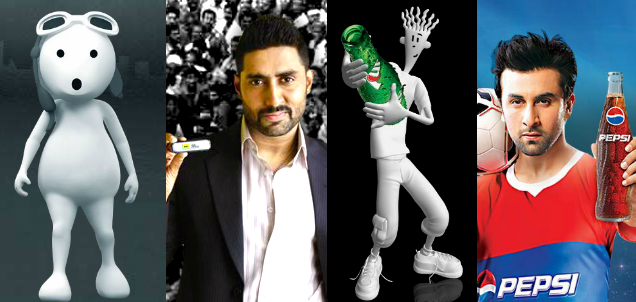
    Mascots can be regarded as the face of a brand. Be it the ‘Amul Girl’ who is a part of every household since 1967, ‘Chintamani’, 2005, the common man ‘RK Laxman’, 1954, ‘Maharaja’ 1946 or the latest ‘ZooZoo’. Mascots provide an identity to a brand which is equivalent to the brand itself.


    It was in the late ’90s when the advertising industry gained pace with more and more brands wanting to endorse themselves to reach out to the consumer is when the brands started associating with celebrities to create a mass appeal.  With Sachin Tendulkar, Amitabh Bachchan, Shahrukh Khan and every other celebrity promoting not one but half a dozen brands.


    So what does a consumer gets hooked to Sachin’s Pepsi commercial or Fido’s 7UP? Abhishek Bachchan for Idea or Zoozoos for Vodafone?


    Sameer Satpathy

    Says Sameer Satpathy, EVP & head, Marketing, Marico Ltd, “Choosing a celebrity or a mascot depends on your brand strategy. Both are a legitimate way to communicate your message.  The celebrity route has higher risk as you get both the positives & the negatives of your brand ambassador, but you can get results quicker as it only depends on the ability of your brand to leverage the equity of the celeb. The mascot needs to be built, invested into and in time can become a powerful and exclusive property. Also, certain categories lend themselves better to brand ambassadors like beauty brands and some categories to mascots for example brands targeted at children. For me the most memorable celebrity for a campaign would be Tiger Woods! J But for the wrong reasons.”


    Abhijit Avasthi

    According to Abhijit Avasthi, NCD, Ogilvy &Mather, “There is never a set rule whether a brand should go with a celebrity or a mascot. It mainly depends on the nature of the campaign. A well known celebrity face has its respective positives and so does a mascot. Though there is a great chance of a brand being lost in the clutter while using a celebrity. Mahendra Singh Dhoni is presently endorsing over 20-25 brands but when it comes to recalling a brand I can only think of 5-6 of those. Hence it is very important that the celebrity, if used, is used perfectly. For me the ‘Amul Girl’ and ‘Zoozoo’ are two of the most memorable mascots. When it comes to celebrities, I think Titan and Coke have used Amir Khan perfectly and so has Pepsi used Sachin.”


    It may be noted that a mascot is created by keeping in mind the brand whilst a celebrity being a mortal, may be a perfect choice to endorse a brand at a particular time but with time the image of the celebrity may change, which in return may or may not fit with the brand image.


    Ajay Kakar

    Says Ajay Kakar,CMO – Financial Services,Aditya Birla Group,, “It is true that a brand can ‘own’ a mascot. While a celebrity is an asset shared by many brands. But I do believe that both these mnemonics or devices are not necessarily interchangeable. Both of them have a unique role that they can play in the life of a brand. Now it depends on the specific brand, as to what is the desired role.


    “A celebrity can definitely create a more immediate pull for a brand, because the celebrity is already well known and has a fan following. On the other hand, a mascot may take time to ‘grow’ on its target audience. Similarly, a celebrity can help create a more emotional or personal connect, due to the ‘human’ factor. So, it is a question of horses for courses.


    “The Amul girl is a ‘mascot’ that immediately comes to mind. It has withstood the test of time, across ‘generations’. “As far as a celebrity-brand partnership is concerned, regrettably, today’s celebrities tend to take-on one too many brand associations, so it is difficult to associate them with any single brand. The two exceptions that do come to mind are Abhishek Bachchan and idea. And Yuvraj Singh and Birla Sun Life Insurance.”

    The fact also remains that a celebrity can give instant boost to a brand whereas a mascot needs time investment before it becomes a household name. At times a mascot may not click with the audience but the ‘non-click’ risk remains minimal in the case of a celebrity.


  • E-shopping hits busy young mums too

    [youtube width=”400″ height=”200″]http://www.youtube.com/watch?v=5zi9nBtflKY[/youtube]

    By Shubhangi Mehta


    Babyoye.com has come up with its first advertising campaign and it aspires to convey a series of messages to the new and young working mothers who are pressed for time. Babyoye.com gives consumers more than 120 brands and over 30,000 products to choose from. With just a click of a button mothers can avail the best products for their children.


    The current campaign was worked internally by them along with the production house. Their media agency is OMD.


    The biggest innovation that Babyoye.com is, by bringing world class baby and kids products at the click of a button thus enabling parents to spend quality time with their baby. By providing a wide variety of choice, parents can make an informed decision.


    [youtube width=”400″ height=”200″]http://www.youtube.com/watch?v=biWxrRxGsio[/youtube]

    Arunima Singhdeo, Director & Co- Founder Babyoye.com said, “We had initially been focusing on the digital medium which still remains to be a big promotional tool. However, we have recently started experimenting with offline mediums also and if the response is good, we will definitely continue with the same”.


    Babyoye.com is focusing on digital-led campaigns which are generally product-led. They have recently launched their own line of baby apparel. The collection has been designed very thoughtfully keeping in mind the new born essential needs.


    Apart from that, the brand campaign is currently being run on the offline mediums – TV and they are evaluating using other mediums as well. They are also in the midst of tying up with various brands that target kids to run a few co-branded campaigns.


    The focus area for babyoye.com in 2012 would be to add more and more product range and catering to higher age group of kids as well and building the brand name would remain a priority.


    On the association, Karisma Kapoor comments, “I was thrilled to shoot for this campaign. As I personally indulge in shopping from Babyoye.com, I truly believe that Babyoye is a convenient platform for new mothers with hectic schedules who can shop while baby is sleeping or while watching TV.”


  • The road ahead for Excluzen.com

    By Shubhangi Mehta


    The e-commerce boom has attracted a new player, Excluzen.com, a Delhi-based company offering luxury brands on the web. Launched in Jan 2012, the company aims to offer exclusive, tailor-made and personalized experiences to its members.


    The current size of the e-commerce industry is $11.2 billion with 8-10 million transactions a year. A lot of international luxury brands are providing their products and services in India through e-commerce channel. In November 2011 itself, 27.2 million online users in the age group of 15 and above accessed retail category from home. The fact that nearly 3 out of 5 internet users shop online speaks volumes about the impact and growth prospects of this industry.


    Excluzen not only provides premium brands but also lays emphasis on experiences that no other e-commerce portal offers, such as personalized charters, yachts, or group and individual coaching with pro golfers around the world. Also, some of the offers which are solely made for Excluzen members are not available under the respective brands.


    Urvashi Bahuguna Sahay, CEO & founder, Excluzen.com, said, “We don’t believe in the word ‘competition’. Excluzen is not a regular discounted portal. Even though online, it can customize and personalize services, right down to individual customers needs. The key target audience for us is HNIS, Corporate, SMEs, NRIs and Expats. Excluzen provides exquisite experiences for the customers.our major focus area is to position Excluzen as the finest brand and lifestyle experiences on the web. We have roped in Perfect Relations for our media relations and India Bulls for Digital ”


    The marketing and ad spend for the company is 30-35 per cent of its investment cost. They are also looking at magazine advertising. Excluzen has been doing below-the line activities like running a contest on its Facebook page. Online advertising is geared towards a user base outside India. They are targeting 50,000 transactions by end of next fiscal. The company is not following any advertising model but function on profit sharing with their partners where they charge 10-20 per cent of the product value as commission. They also have an ‘exclusive’ offering every month where a select partner can promote a limited edition product at a premium price and for this service, they charge higher margins.


  • Quadrant creates Tiger Balm’s new TVC

    [youtube width=”400″ height=”200″]http://www.youtube.com/watch?v=gA4LTXqDMos[/youtube]

    By Shubhangi Mehta


    The latest Tiger Balm campaign created by Quadrant Communications portrays that Tiger Balm is so popular that most people across the world recall the balm brand and not the animal. The setting of a language class has been used to accentuate this. It’s a 30-second commercial in Hindi, Kannada, Tamil, Telugu and Marathi.


    The Indian balm market is dominated by heritage brands like Zandu and Amrutanjan. Tiger Balm too enjoys good brand recall in minds of the consumers, however it is more back of mind memory than top of mind memory. The brand has been away from media hence the motive of the campaign is to let the consumers recall the brand.


    On the TVC, Rajan Narayan, President, Quadrant Communications said, “During the researches conducted, following things clearly came across, Strong awareness of Tiger Balm as an international brand association of Tiger Balm as a strong balm, its unique packaging and logo. Recent communication by competitors within the category had not communicated anything new to grow the category. The fallout are new formats like gels and creams eating into the balm market share. Hence we devised this campaign which can be regarded as clutter breaking due to its approach”.


    The strategy was to leverage the fact that Tiger Balm is the trusted pain relieving balm in most countries across the world.


  • Renaissance Hotels launches first global advertising campaign

    By A Correspondent


    Renaissance Hotels has announced its first global advertising campaign – Live Life to Discover. The new multi-faceted campaign, which comes to life through print, digital and on property experiences, provokes today’s lifestyle-oriented business traveller to explore a hotel or destination’s hidden gems through recommendations from on-site Renaissance Hotels ‘Navigators’ (the brand’s hospitality lifestyle concierge service).


    The campaign was created in partnership with Anomaly, a global marketing and communications agency with an extensive list of impressive clients including Nike, Budweiser, Diageo and Converse. The campaign aspires to ask today’s modern business traveler the question, “If you are traveling to a destination for business, why not make the most of your free time and discover something exceptional and unique?”


    The visually stunning print advertisements depict off-the-beaten path recommendations from various hotel navigators who curate unforgettable moments for guests around the world.


    The global print campaign will run in 32 countries and be featured in lifestyle, business and travel print media, as well as key out-of-home sites in the US and China. The wide-ranging lifestyle campaign was photographed by award-winning photographer David Black across four countries and three continents.


    In addition to the print flight, Renaissance Hotels will bring the campaign to life through a full scale digital re-invention of the brand, including a re-launch of the website, enhancements to the brand’s social media channels, and a powerful digital advertising campaign; all inspired by unique discoveries from around the world.


    “There is a discoverer in all of us, and we challenged ourselves to create a powerful campaign that speaks to our guests in a meaningful way and reflects the brand today,” said Tina Edmundson, senior vice president of lifestyle brands for Marriott International, Inc.  “Live Life to Discover embodies the global spirit of Renaissance Hotels and today’s lifestyle-business traveller and their eagerness to explore the world beyond their everyday routine.”


  • Disney India eyes in-home segment

    By A Correspondent


    Disney Consumer Products (India) announced its association with Sunteck Realty Ltd, a Mumbai based real estate company to launch Disney-inspired homes in Mumbai. This will be DisneyIndia’s first foray to bring Disney-inspired interiors and exteriors in the Indian real estate market for Indian kids and families at the proposed property in Goregaon by Sunteck Realty.


    “We are pleased to be working with Sunteck to offer Indian families an opportunity to bring a piece of Disney magic into their homes. Disney’s beloved characters and stories have inspired multiple generations of fans,” said Roshini Bakshi, managing director, Consumer Products, Retail and Publishing, Disney UTV. “Our Disney Home products span across total home solutions  and we look forward to bringing more Disney inspired home environments and décor to kids and families inIndia.”


    “Our association with Disney in Mumbai helps us differentiate our offering from the other players in the market and breaks through the clutter to offer families their dream home. We are excited to be the first ones to bring Disney inspired homes toIndia,” said Kamal Khetan, Chairman & Managing Director of Sunteck Realty. “This association with Walt Disney reiterates our commitment to deliver niche living spaces to discerning customers.”


    Disney fans can choose from their favourite Disney stories or its beloved characters and own family spaces that are colourful, timeless and inspiring. Disney inspired homes will have Disney branded furnishing, home décor products, colour palettes, bedding products, bath fittings and more to bring alive the Disney experience for the family.