Category: SHAILESH KAPOOR

  • Shailesh Kapoor: 2.0 and the Power of 3D

    By Shailesh Kapoor


    Last week, Shankar’s ambitious film 2.0 released worldwide in three languages. The film has managed to do well, especially in the Hindi dubbed version, even as the original Tamil version has been a notch below expectations. At about Rs 140crore (nett domestic) business in the Hindi version in the first extended week of eight days, the film has a chance of crossing the Rs 200cr mark, to become only the third Hindi film this year after Sanju and Padmaavat to do so.


    It’s now popularly agreed that the film lacks the screenplay quality or the emotional depth of many good Hindi films released this year. Even compared to the first film in the franchise (Enthiran in Tamil, Robot in Hindi), 2.0 is over-simplistic in its conflicts and its layering of its characters and their conflicts.


    But there’s an aspect that has clearly worked for the film. And that’s the third dimension in the 3D version of 2.0. The film’s 3D execution is immaculate, providing for much fun and spectacle, hitherto seen as the exclusive domain of Hollywood films in India. Much of the film’s first half, and its long climax, is watchable, and often eminently so, because the visual effects keep you engaged because of their imaginative constructs and flawless execution. Be it the use of mobile phones (in millions) as a visual device, or the graphics work on Akshay Kumar’s character Pakshi Rajan, 2.0’s 3D version is fertile with creative ideas in the VFX space.


    No wonder, then, that the 3D version has far outperformed the 2D version. The 2D version got almost 40-45% shows in the multiplexes, but has contributed to less than 20-25% of the multiplex business in the first week. Conceptualising and shooting a film in 3D is rare for Indian filmmakers, who have used 3D in the past as a marketing gimmick than a content form, converting films into 3D in post-production, leading to 3D visuals that are often irritatingly distracting to your viewing experience.


    But if there was any doubt one had about the power of good 3D cinema experience, 2.0 puts it to rest. With the advent of digital, cinema has increasingly become a spectacle-driven medium, with only high-content films offering immense uniqueness surviving at the other end of the spectrum. 3D, too, has become an integral part of the spectacle. There have also been experiments with the fourth and fifth dimensions, to create a sensory experience. But the 2.0 example proves that only when the experience is organically built into the concept at the very onset, it has the potential of giving worthy returns.


    Will India make more conceived-and-executed-in-3D films now? Only time will tell. A great story and canvas like Bahubali worked without 3D support. But every filmmaker is not a Rajamouli or a Hirani. And that’s why, relying on technology can be a safer, though more expensive, bet than relying on creating characters, deep emotions and genuine conflicts. That may not make cinema better off than before. But if that’s what cinema needs to survive over the next few years, so be it.


  • Shailesh Kapoor: The Mediocrity of Election Results Coverage

    By Shailesh Kapoor


    Earlier this week, on Tuesday, election results from five states were on the news agenda. The cliffhanger in Madhya Pradesh and the close contest in Rajasthan, combined with the story of Congress’ resurgence in the Hindi heartland, made for an irresistible news day by the end of it. But while the content proposition was delightful, the television coverage itself was terribly underwhelming.


    Election results have been event-like days for the news genre for decades now. With the advent of EVMs, the counting process got crashed from 1-2 days to 1-2 hours. Anything that’s in the T20 format works, and this format too is a television channel’s delight – it’s fast-paced, exciting, unscripted and unpredictable. The natural tendency, then, should be to hero the format and let it do all the heavy-lifting.


    But trust our news channels to complicate simple things. The Tuesday coverage across most Hindi and English news channels was like a T20 game where the cricket is good but the commentary and the graphics are terrible. You will still watch it for the cricket, even if the viewing experience s. It made me wonder what has made it come down to this. How has a collective community of topline channels forgotten how to cover election results over the last few years?


    There are many concerns with how such days have now started to pan out, but let’s focus on a few key ones. The first issue is the unnecessarily busy feel of the election shows, with multiple talking heads, both inside and outside the studio. As it is, the pace of results unfolding is breakneck. The various talking heads can be heard and seen jostling for attention, even as the anchor(s) attempt to balance the results with the commentary, which invariably is lost in the din anyway. Why do election results in their first hour have to be handled like a noisy primetime debate on a slow-news day?


    The second issue is about the graphics. In an attempt to outdo each other, channels have started investing in complicated, often non-intuitive, graphics that add little real value to the analysis. English news channels have been particularly guilty of it. Psephologists are one camera, jumping around big screens like energised bunnies, presenting data that is irrelevant, to use a mild word, when they should actually be behind the scenes, like a cricket statistician, arming the anchors with material that’s compelling and insightful.


    In my growing-up years, when the word “psephology” was first introduced into my vocabulary, I understood it as a fine balance between statistics and political insight, in context of election results. This balance has gone awry now. There is an overdose of statistics, but very little insight. In fact, the ‘insight’ part today seems to have an anything-goes approach. Comments are increasingly banal, often factually inaccurate.


    Seat-level leads, which were always a much sought-after aspect of election results coverage, especially in the General Elections, has been sidelined over the last decade. Even the 2014 elections had lesser emphasis on individual seats than 2004 and 2009. There is some token on-screen coverage, but very few channels have anchors and panelists who are actually aware of too many candidates by name and background. This robs the coverage of the classical personal touch. On Tuesday, it was rare to spot a local panelist across channels who knew the political faces in any of the five states.


    Then there is this confusing issue about multiple sources of results. Half an hour into counting, you will see at least five different results across various channels put together, some of which are in direct contradiction with each other. Till one hour after the results started trickling in, which way you thought Rajasthan is going was a function of which channel you were watching.


    Next Thursday, the ratings will be released and news channels will slice the data to do their share of emailers on how well they did on December 11. It will be an endorsement of mediocre coverage at a category level. And we shall see a repeat in the summer of 2019.


    Shailesh Kapoor is Founder and CEO, Ormax Media. The views here are personal


  • Top 5 Category-Defining Hindi GEC Shows of 2018


    By Shailesh Kapoor


    Even if only in relative terms, 2018 has been a better year for Hindi GECs than the last 2-3 years. The category, on a share decline since 2015-16, did not see a further downward trend, and there was some recovery too by the end of the year.

    In a year when original content in the OTT space, led by Netflix and Amazon Prime Video, grabbed most headlines, the Hindi GEC category tried to find its footing back. And though the ‘success’ achieved can only be considered partial in nature, it sets a good base for 2019 to emerge as a revival year for the category.

    Here is my list of five Hindi GEC shows that drove the category and its perceptions this year, eventually leading to a respectable year.


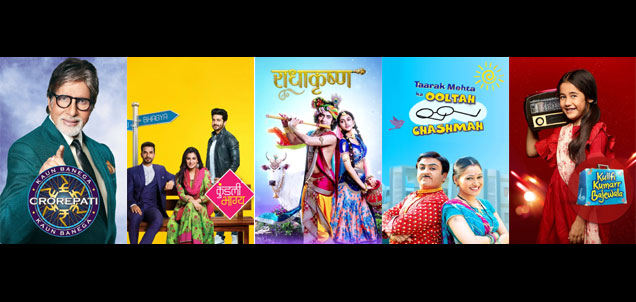
    5. Kaun Banega Crorepati

    KBC had another successful season, both in terms of viewership and its revenue impact on the channel (Sony), with the latter benefitting considerably from the digital revenues that have become a strong force for the show since the last season in 2017. All the classical elements remained, and the show was virtually a replica of the successful one last year. KBC is emerging as India’s comfort family viewing in the prime-time year-on-year. And you don’t mend what’s not broken.


    4. Kumkum Bhagya-Kundali Bhagya

    The 9-10 PM block on Zee TV has emerged as a fortress of sorts, owing to the two Balaji Telefilms shows that continued to thrive in 2018. In times of content fatigue being a real concern among viewers, Kumkum Bhagya managed to stay fresh and relevant. Kundali Bhagya, the more recent of the duo, found its peak towards the end of 2017, and held on to it through this year. The combo delivered a solid package of traditional and the modern, covering wide-ranging and engaging characters and emotions between them. How long can Zee-Balaji milk this double bill remains to be seen. But in 2018, the combination was rock-solid.


    3. Radha Krishn

    Star Bharat’s RadhaKrishn launched at the start of the last quarter of the year, and immediately propelled the channel’s viewership. It is bizarre to think that Indian television has not had a TV series of Radha and Krishna’s love story till this show came in. The idea was a winner at the get go, and the visual execution, supported by top-level music, made the show a quick audience favorite. Mythological shows tend to have a shorter shelf-life than family dramas. But RadhaKrishn has just about taken off and should have a good early 2019 at least.


    2. Taarak Mehta Ka Ooltah Chashmah

    Taarak Mehta Ka Ooltah Chashmah (TMKOC) is the KBC of television comedy. Nothing else that happens in the category can seem to shake up the staunchly-loyal viewer base the show has built. The difference, of course, is that unlike KBC, TMKOC is on-air all year. Now, that should make it doubly hard for a show to stay fresh and relevant. But no such concerns with TMKOC. Aided in no small measure by its immensely-popular lead character Jethalal, TMKOC may be a fixture of the Indian viewers’ watchlist for another 2-3 years at least, if not more.


    1. Kullfi Kumarr Bajewala

    Star Plus adapted its very successful Bangla show Potol Kumar Gaanwala into Kullfi Kumarr Bajewala in an early-2018 launch. The show found its real footing after the IPL, finding levels of viewership that were out of reach of new shows for the last 2-3 years. The endearing Kullfi even usurped Jethalal briefly to become the No. 1 fiction character in the category (Ormax Characters India Loves). Differentiated stories, when rooted in viewer relevance, can be runaway successes. And with Kullfi Kumarr Bajewala, this combination was achieved by a mainstream (read non-mytho-historical) Hindi GEC fiction show after a long time.


    Shailesh Kapoor is Founder and CEO, Ormax Media. He reviews trends and insights on MxMIndia every week. The views here are personal


  • Ranveer Singh: A Star Like No One Else


    By Shailesh Kapoor


    The last Bollywood release of 2018, Rohit Shetty’s Simmba, is buzzing at the box office. The film’s extraordinary run in its first week puts it in a firm position to be the third-biggest Hindi language grosser of the year after Sanju and Padmaavat. While the full-blown mainstream entertainment package delivered by the film works as its biggest plus, Simmba benefits in no small measure from an inspired no-holds-barred yet mature performance by its male lead Ranveer Singh.

    If there is such a thing as taking a role by the scruff of its neck and owning it completely, Ranveer Singh has done that twice over last year. His January performance as Alauddin Khilji in Padmaavat had the audiences and the critics applauding him. Simmba is arguably a more towering performance, where Singh plays to the gallery for most part, delivering comic punches and clap-traps by the minute, till the film enters a certain emotional space, into which he transforms seamlessly, almost like he’s living the character’s journey – an incredible feat to achieve in a film that’s essentially designed to be larger-than-life and hence definitionally unreal.

    But it’s not just these two performances that have set up Ranveer Singh as the potential No. 1 Bollywood star in the coming years. There’s an off-screen persona that’s so unique and effervescent that it makes him stand out in a crowd of vain stars living in their bubble of (often self-fulfilling) stardom.

    Watch Ranveer Singh in this Actors Roundtable with Rajeev Masand. He’s clearly the biggest star on the table. But he’s also the most generous and fun-loving one of the lot. Early in the discussion, he praises Rajkummar Rao and Pankaj Tripathi for their film Newton. Towards the latter half of the show, he develops a rapport with the much-respected Tripathi. Watch them bond and you know Ranveer Singh doesn’t wear his stardom on his sleeve. Or anywhere for that matter. He goes on to compliment Tripathi on his film Gurgaon. The 2017 indie film got a limited release and hardly any takers at the box office, though it has since been discovered by many on Netflix. In an industry where people are too busy and self-occupied to watch other people’s work (some even say so proudly!), here’s a top star who’s had a busy year with two films, a high-profile marriage and several endorsements, but has somehow managed to watch a film many others may not even have heard of.

    This accessibility and generosity are such uncommon celebrity traits that you actually wonder if this is all a charade the man could be putting up to project a certain image. But the more you see and learn about him, you know that’s him for real. He’s a genuine, one-in-a-million outlier. And one with immense talent.

    In this episode of ETC Bollywood Business, watch (from 4:07) Simmba’s dialogue writer Farhad Samji respond to a question by anchor Komal Nahta on how Ranveer Singh responded to the script narration of the film. Or watch him on any reality show. Or watch him speak about Deepika Padukone. Or watch him dress bizarrely and then talk nonchalantly about his ‘fashion sense’. Watch him anywhere, doing anything. It’s a curious case of talent meets energy meets humility.

    Only time will tell how big a star Ranveer Singh turns out to be. But one thing is already certain: He’s a star like no one else. And he shall shine bright for that reason alone.

  • Shailesh Kapoor: Koffee with Kricketers: Much to Learn & Fix

    By Shailesh Kapoor


    The last three weeks, while this column was on a break, saw the out-of-the-blue eruption of a cricket controversy. Hardik Pandya and KL Rahul landed into trouble over their comments (especially Pandya’s) in the January 6 episode of Koffee With Karan. Trying to project a cool image, Pandya ended up coming across as brash, uncouth and misogynistic on the show.

    When I watched the episode that night, I found it distasteful. But like the three protagonists of the show, including its anchor, I didn’t see the controversy coming. A social media attack on the three was expected, even reasonable. But within hours, BCCI (or COA to be more precise) had sprung into action. The issue continued to heat up and soon lost all sense of proportion. The cricketers were recalled from the Australia tour before the ODIs. And the mess got so convoluted that it even reached the Supreme Court.

    The incident can be a seen as a case-study-like commentary on at least three areas:

    Boys will be boys

    The nature of comments by Pandya and Rahul are in the same league as those made by several politicians and other celebrities in the past, where deep-seated misogyny, probably a function of an upbringing and a culture that normalizes such a thought process, is on full display. It’s what one would call ‘locker room’ talk, except that we have seen it happen in the Parliament, in election rallies, on TV debates, in films, and now on a much-celebrated TV chat show. There have been some comments suggesting the cricketers should have known better what not to say on a public platform. But from the various previous incidents of this nature, none less than the much-publicised ‘Boys will be boys’ comment by Mulayalam Singh Yadav, it is apparent that locker room talk will make it to public platforms some time or the other, no matter how careful you are. Because locker room talk reflects your true mindset and values, and it’s difficult to hide it when you are in public glare all the time as a celebrity. The need is to address this mindset aspect. But very little debate over the last three weeks has focused on the mindset being the real problem, of which the Koffee With Karan episode is only a symptom.


    Confused cricket administration

    Cricket now has fairly evolved rules to handle on-field controversies. Match referees get involved and things follow a laid-down rule-book. The one-year ban on marquee Australian cricketers Steve Smith and David Warner last year, over a ball-tampering incident, is a good example of how effective on-field controversy handling generally is, if the quality of umpires and match referee is good. But cricket administrators, either at BCCI or ICC, have little by the way of rule-book or experience when it comes to handling off-field controversies such as the one involving Pandya and Rahul. As a result, the decisions taken are often arbitrary and knee-jerk. In 2000, Shane Warne was removed by the Australian Cricket Board from the Vice Captain’s position in the national team after a controversy about his obscene calls to a British nurse. Even then, the Australian media and public were divided in their opinion on whether Warne’s ‘indiscretion’ (their word, not mine) deserved such a harsh punishment. While ICC is not expected to write this rule-book, individual national boards will do well to set up internal committees that are equipped to handle such incidents, if and when they arise.


    Trial by social media

    The incident also highlights how social media plays a pivotal role of an influencer in such cases. In the absence of social media, the said episode would have gone largely unnoticed. I don’t envisage how a news channel or a newspaper would have picked this up as a topic of debate the next day if reactions on social platforms were hypothetically non-existent. As social media becomes bigger by the year, it also runs the risk of fuelling the lynch-mob syndrome in such cases, where public opinion, erstwhile restricted to living rooms and water coolers, is now for everyone to see and get influenced by. I’m quite certain decision-makers at BCCI/ COA read up on the comments on the episodes to update themselves of what the nation thinks, and most certainly, got influenced by it too.

    There’s a lot to learn from the incident, which now seems to have lived its course, with the ban being lifted. While Pandya, Rahul and Johar would have their share of learning, it’s also for the cricket administrators to do their bit.


  • Shailesh Kapoor: TRAI’s Tariff Order: What Lies Ahead?

    By Shailesh Kapoor

    There’s a buzz in the television industry over the last few weeks. TRAI’s tariff order set the ball rolling end 2018, and as the date of implementation nears, there’s high anticipation of how things will eventually pan out. The situation is fairly untested for the Indian market, and no one knows the exact outcome for sure.

    Today (February 1) was the day when it all comes into effect, but the date seems to have been extended to February 6 now. But it’s only a matter of days when we enter a new regime that’s more subscription-driven than ever before.

    The biggest challenge that is evident already, and will manifest itself fully once the critical date arrives, is consumer comprehension. In a market where consumers have traditionally been handed down a standard packaged offering, barring some premium channels available on a stand-alone basis, the comprehension of Pay vs. FTA itself is fairly low. Add to it the complexity of selecting packs and estimating one’s total spend for various possible scenarios and plans, and you have chaos waiting to erupt. The complicatedly phrased NCF (Network Capacity Fee) will worsen matters, as most channel communication handle this aspect too well. It can be that rude shock in their final cable bill calculation that consumers are still not prepared for.

    Channels have been aggressive in their communication, but consumer understanding of the detailing remains low. In reality, it may then come down to people taking the minimum basic packs or channels they need initially, and with time, adding the ones they realize are missing on their TV, but need to be watched. The two key questions here are: How soon will things stabilize, and who will lose out and who will gain?

    The answer to the first question is easier to estimate. Confusion borne out of lack of comprehension will create about 3-4 weeks of disruption. But Indian consumers are fairly savvy, especially when it comes to aspects that involve price sensitivity. While customer service executives at many DTH and MSOs are still all at sea, YouTube videos and WhatsApp forwards educating viewers are now in circulation, aiding comprehension. Once the date is there, things can gain momentum very fast. After all, it’s an Indian thing to do things right at the end. So, expect about eight weeks for full stability.

    ‘Who will lose and who will gain’ is a tougher question. Even the most popular pack (one of the top four Hindi GEC packs) may not get more than 30-40% subscription after things settle down (but for the impact of key cricket events like IPL and the Cricket World Cup). But eventually, the TV viewing time of 2.5-3 hours per day is going to hold firm. Hence, channels that are low on appointment viewing will probably tend to lose, while those high on appointment viewing will benefit.

    Appointment viewing has been the Holy Grail of television for years now. But very few in the industry actually understand this term in its truest sense. Often, high ratings are equated with appointment viewing and vice versa. This myth is likely to be shattered soon.

    Smart packaging is a key, and packs that lack a marquee channel, like a leader or no. 2 GEC, movie or news channel, may be at distinct disadvantage. That could change some of the dynamics of the industry, and even encourage alliances, if not acquisitions, of some of the smaller players in the category.

    Irrespective of how things pan out, the next few weeks are going to high on excitement and anticipation. Be prepared for some surprises along the way too!


  • Election Battleplace: Social or Traditional Media?


    By Shailesh Kapoor


    The buzz is unmistakable. We are in an election year, and we can feel it. While specific dates will be out soon, the April-May period has been confirmed by senior leaders of the ruling party as the broad window in which 2019 General Elections will be held. The speeches have started, and alliances have started taking shape. After all, we are only two-three three months away from the first polling day.


    2019’s will arguably be the most bitterly-fought elections ever in independent India’s history. With social media being a prominent marketing tool to woo voters, it seems there is no room for subtlety or grace in election campaigns anymore. Personal attacks, accusations and rough language will be par for the course. We saw a glimpse of this in 2014 too. But there was a certain wave around Narendra Modi that became the dominant theme of those elections. This time, the opposition looks stronger and the fight can be tougher. The politicking may go on well after the election results are out, because a hung verdict seems the most likely outcome as of today, if one goes by recent opinion polls by leading media houses. But then, three months is a long time in politics.


    These will possibly be the first General Elections where the agenda is driven more by social media than traditional media. While social media was used to great effect by NDA in 2014, TV was still the lead medium. Things have changed significantly on the digital front over the last five years, and social media is no longer the bastion of the urban affluent and semi-affluent class. Social media will set the agenda and drive it, and effective use of social media can effectively swing the verdict in a close contest.


    Where does TV even stand in all of this, then? Over the last few years, the rise of digital news has meant that TV has taken the form of an opinion-centric medium, than one that breaks news. Channels and anchors put their stand upfront on issues, and don’t hesitate to take clear ideological positions. While this is a far cry from the classical definition of journalism, there seems to be a growing feel in the traditional journalist community that having a viewpoint is the only way for TV and print to counter digital news.


    We see that in the primetime everyday, across news channels across languages. And the polarisation of media, including some digital sites and apps, will get only more apparent in the coming weeks.


    It is easy to get frustrated with all the lowbrow politics and crass marketing that is sure to be on display. I’ve decided to focus on the “entertainment of politics” in these elections. I’ll be watching out for those silly one-liners, those foot-in-the-mouth quotes, those jibes that can be remixed into a YouTube video, and so on. Watch this space for more!


  • Shailesh Kapoor: 2019 and the Politics of Entertainment

    By Shailesh Kapoor


    It’s the election year, and we can feel the vibe. Politicization of entertainment has been a tactic used by our politicians for decades now. But as we get closer to the General Elections, we can sense more and more of it.

    Over the last few years, politics of entertainment has impacted all categories, ranging from films to television to OTT. Each such incident is usually passed off as a one-off. But no longer. The incidents get too frequent, and it’s a continuum at play now. Here are four recent incidents, from 2019 itself, that show how political influence on entertainment is spreading wide, very wide.

    1. The Sidhu ‘Sacking’

    Navjot Singh Sidhu has been a notorious politician for the Congress to handle, since he shifted from BJP to the party. Those who have followed cricket over the years will recall how Sidhu left the Indian squad on tour to England in 1996 in a huff, because he could not get along with the then captain Mohammed Azharuddin. Sidhu’s contrarian, almost problem-child-like, ways continue. But now, Pakistan is often a subject of his comments, which obviously does not go down well with most people in India. His recent ‘sacking’ from The Kapil Sharma Show was triggered by his comments on the Pulwama attack, which were seen as pro-Pakistan in their stance. That he is still a part of the Congress party spells the irony around this instance.

    The sacking demand started on social media, in what seemed like an orchestrated anti-Sony campaign, whereby users put up screenshots and videos of them uninstalling the Sony LIV app from their devices. Yesterday, IFTDA (Indian Film & Television Directors’ Association) issues a pledge to not work with ‘Navjot Singh Sidhu and Pakistani artists and singers as a homage to the martyrs’.


    2. India-Pakistan World Cup Match

    Call for boycott of all things Pakistan seems like a reasonable one in the current circumstances. But not playing Pakistan in a multi-nation tournament on a neutral venue can be questioned as a far-fetched extension of this boycott idea. If neutral, multi-nation interactions are a no-no, we should not even be in the United Nations with Pakistan. Will we let go a Gold Medal at next year’s Olympics in Tokyo if we have to play Pakistan in a final match in an event? And what happens if India forfeits its league match against Pakistan in the World Cup and then ends up facing Pakistan in the final? Will we forfeit that too, and let Pakistan win the World Cup in a no-contest?

    The pressure on current and former cricketers to support a boycott publicly is understandable. In a world of false binaries, any call against such a boycott can be quickly classified as pro-Pakistan and hence anti-national. Full marks to the select few like Sunil Gavaskar for bringing in a sane perspective. I hope better sense prevails over the next few days on this topic.


    3. Political Films

    Less than eight weeks into the year, we have already seen three ‘political’ films releasing in the Hindi language alone. Uri, a fictionalized account of the surgical strikes, has been a runaway blockbuster. The Accidental Prime Minister did not get much success, but set an important precedent of using real character names while not being an account endorsed by those characters. The family-endorsed Thackeray biopic completes the trio.

    When PM Modi used Uri’s now-iconic ‘How’s The Josh’ line at a film event (launch of the National Museum of Indian Cinema) in January, it made for great copy. The selfies that followed were instant hits on the social media. Coming close on the heels of the decision to drop the GST slabs for movie tickets, the current Government has done well to build some sort of a fan base in the film industry.


    4. Azaadi, the Gully Boy way

    The most random and unexpected controversy has been the one around the Azaadi song in the film Gully Boy. The song has been criticized for trying to be politically sterile, compared to the original Kanhaiyya Kumar speech, from which the idea of using the word ‘Azaadi’ emanated. I’m not even sure if I get the exact issue here. A filmmaker and her team liked a word and felt it fitted a situation in their film, and then went on to write words that fit the context of that situation and the characters therein. And it’s not as if ‘Azaadi’ is such an esoteric, Tharoor-like word. The filmmaker Zoya Akhtar, and her lead actors, have been very mature in handling questions related to this criticism in the various interviews, before and after the release of the film. Let’s hope a great film is not remembered for something as silly as this!


    So, as we progress closer to April-May, expect this list to get longer. As they say, often like a cliché now, picture abhi baaki hai mere dost!


  • Shailesh Kapoor: 2019 Likely to be Hindi GEC’s Worst Year Ever?

    By Shailesh Kapoor


    We are now in the third month of an already eventful year. It’s the year of the elections and the World Cup. But while the excitement around those two events builds up, a busy news phase has already started, from the Pulwama attacks in mid-February to the events around it thereafter.

    Specifically from a television perspective, the news and sports genres should make significant gains this year. The election dates are likely be announced soon, and one doesn’t expect there to be a dull moment on the news front for 3-4 months at a stretch. Similarly, there’s the IPL and then the World Cup, which will collectively run for a similar period of 3-4 months too. Match timings in the World Cup are highly conducive to Indian audiences, with the second innings in most matches coinciding with India’s prime time. That India will be one of the favorites in the tournament makes it even more luring.

    Where does this leave the rest of the television genres, especially the General Entertainment Channels (GECs)? Not in a very strong position. The Hindi GEC category, in particular, has had a torrid period over the last 3-4 years, losing category share to news, movies, sports and regional GECs. 2018 saw some stability in the genre, but the general symptoms of category fatigue still exist, and it’s taken big-ticket reality shows to bail out the category time and again over the last two years in particular.

    With the IPL, the World Cup and the elections season, reality shows themselves will have competition from outside the genre, not to mention how fiction shows can struggle even more with so much other topical content available.

    Usually, one would see such a period as a blip, and expect that the Hindi GEC category will show a temporary drop from April to early July, and then recover to current levels thereafter. But this can be tougher than it seems. Three to four  months is a long period, and news and sports collectively can break the consumer habit of watching daily soaps as a routine. Even if this happens in a small fraction of households, its impact will be felt on viewership numbers once normalcy is restored after the World Cup final on July 14.

    It’s also the year of TRAI’s new tariff order, and that can further complicate things on ground, though the exact impact will be known only as things settle down by April-end (assuming no further extensions are given).

    You cannot sympathise with a category that should have seen this coming from at least two years ago. Deadwood content has no place in an entertainment ecosystem that’s driven by an overload of options. This column is now in its seventh year, and the topic of Hindi GEC content inertia has been a regular feature for at least five of those seven. And now, a year has come where it could all spiral down further in a hurry. Be prepared for some very poor numbers from the Hindi GEC category this year. They could be worse than you think.


    Shailesh Kapoor is Founder and CEO, Ormax Media. This column appears on MxMIndia every Friday. The views here are personal


  • OTT: Ride Along, Because It’s Buzzing!


    By Shailesh Kapoor


    It’s all buzzing on the original content front in the OTT space. The five-year-old category in India began to find its feet in 2018, as covered in this column written in September 2018. Since then, over the last six months, the buzz has got stronger by the month. Hotstar is the latest entrant in the big-ticket original content play in the digital space, with the much-publicised launch of shows under the umbrella ‘Hotstar Originals’. Netflix and Amazon Prime Video continue to scale up their India offerings, while Zee5, ALT Balaji and others continue to launch shows by the week. There’s another new entrant in MXPlayer from the Times group, and of course, the guys who started it all, TVF, are very much in the mix too.


    The original OTT content ecosystem in India can no longer be called nascent. Over the last 12 months, its broad contours have evolved in a definitive way. The column linked above spoke about the need to prioritize ‘quality over quantity’. While quantity still dominates, quality is slowly beginning to come our way too. And as someone who has had the opportunity to get a peek into some of what’s lined for later this year, I can say with some confidence that 2019 will be the best year for the category quality-wise.


    No one is currently bothering themselves too much with the question on where the money (revenue) is going to come from. It’s apparent now that there’s a sound future in this category, and eventually, its economics will work themselves out as the category settles down, maybe by 2021. But you need to be an early entrant and have a substantial subscriber base by then, and that’s what the top players, most of which have deep pockets, are prioritising.


    The myth that OTT will kill mainstream television still prevails, and keeps coming up in coffee machine conversations across media houses. It’s the only genuinely-misguided piece in the OTT story. Over the last two weeks, in the aftermath of Pulwama and then Balakot, news ratings have more than doubled. As mentioned in this column last week, sports and news may gain big this year, at the cost of general entertainment. But television will survive alright. Cord-cutting is still a hugely niche metro phenomenon, and there isn’t much to say on it in a country as large as ours.


    The intriguing question, then, is: Where are people getting all this additional time in their lives to watch digital content, especially in an age when ‘fast life’ and ‘not enough time’ are commonly-expressed grouses? The answers may not please social or medical experts. It seems that this time is being created at the cost of more ‘developmental’ activities like reading, spending time with family and friends, and… sleep. But that’s another topic for another day.


    Last week, Akshay Kumar, currently Bollywood’s most popular male star, walked onto a stage after setting himself on fire, to announce the launch of his new Amazon Prime series (working title: The End). That visual, coming within days of the launch ad of Kumar’s 2020 cop flick Sooryavanshi, sums up where the OTT category is heading. It’s going to be about big guys and big bucks. It’s going to be quite a ride over the next two years, and I, for one, am not blinking.


  • Elections & IPL: Both Battlefields are Ready


    By Shailesh Kapoor


    The elections are here! Sixty-two days from today, we will know the outcome, when the results are announced on May 23. And over these 62 days, we will see a political battle unfold across electronic, print and digital media. A battle bigger than anything we have seen before in Indian politics.

    General absence of class and dignity in this political face-off is expected. The standards have dropped over the last decade, and one can expect more degeneration over the next two months. When both sides are willing to lower their standards all the time, the new low can be a really low one.

    In such a scenario, it’s the media that could potentially play a pivotal role. That of being the sane voice of fact and truth, and bringing a sense of calm and balance in the political cacophony that will go on uninterrupted for more than two months. But practically speaking, there is little chance of that happening.

    The media is politically polarised more than ever before, and there’s a general feeling, especially in the electronic media, that unless you are at one end of the spectrum, you will not be a popular option for your target audience. Whether that’s true or not is a matter of some deep and layered analysis. But for now, that’s the perception with which all news channels, and most newspapers and digital platforms, begin their respective ‘campaigns’, leading towards May 23, 2019.

    I’ve always found the behind-the-scenes coverage of elections more interesting than the in-the-face variety. Speeches, rallies and one-liners are for everyone to see and interpret. It’s the strategy that goes into aspects like seat allocation, alliances, political messages, media plans etc. that is rarely covered in any depth. And this is where the fascinating stories often are.

    Good election coverage is not about reporting speeches and debating them with a politically-polarised panel. Good election coverage is not about being the fastest on the results day either. Good election coverage is about providing an insight into how political parties approach elections and the key decisions they take during this period. More of this is what I’d wish for in the next 62 days.

    On a different note, a new season of IPL starts tomorrow. Unlike the previous election years (2009 and 2014), when IPL had to be shifted outside India (to South Africa and UAE respectively) in part or whole, there has been no such talk this time. The season that kicks off tomorrow is important for its pre-World Cup timing. On the media front, we can expect digital consumption to grow further, to make IPL 2019 the most-watched digital content in India’s history by a comfortable margin.

    Digital media has already warmed up to IPL 2019. Earlier this month, Netflix launched Cricket Fever: Mumbai Indians, a fascinating behind-the-scenes view of the Mumbai franchise from the 2018 season. And then, earlier this week, Hotstar launched Roar Of The Lion, a documentary series based on the journey of Chennai Super Kings in the season following the two-year ban on the franchise.

    With these two series (which are worth a review here in the coming week or two), IPL has found great content extensions beyond actual live cricket. One hopes to see more such interesting content roll out in the coming years. Because cricket, for the immense popularity it enjoys in India, has been a grossly under-leveraged sport when it comes to mainstream entertainment content.

    But that can wait a few weeks. For now, let the games begin. Of the political and the sporting kinds.


  • Shailesh Kapoor: IPL 2019: Language-led Growth & more…

    By Shailesh Kapoor


    The 2019 season of IPL has taken a flying start. Ratings for the first week have come in and they look better than ever before. The reported Hotstar numbers are an all-time high too. Even at a conservative level, we could be looking at a 25-30% jump in the total (TV + digital) viewership over the last season by the time this season reaches its finale.

    There hasn’t been anything particularly different about the cricket itself compared to last year. There have been close matches and some high-scoring ones too, but the first week of IPL 2018 had more thrills and actions cricket-wise. This makes the jump in ratings even more significant. The league opener this time was a low-scoring and one-sided game, with CSK chasing only 71 against RCB. Yet, the game has rated way higher than last time’s opener, which was a high-quality thriller penned by Dwayne Bravo.

    The regionalisation of IPL is one of the definite contributing factors at play. Weekend games are on air on 20+ channels, including the HD ones. This is more than double (perhaps triple) of the number of channels last year. Cricket has no language, but for casual viewers (and IPL has loads of them), the commentary experience can be a key engagement driver, and that’s why the multi-language initiative by Star is so relevant. With the benefit of hindsight, Sony may be wondering if they missed the bus on this one all these years.

    The IPL story on Hotstar may take a few more weeks to emerge clearly. But it will not be surprising if growth upward of 40-50% is seen. Timed well with IPL, Hotstar has launched its new slate of shows under the umbrella Hotstar Specials. Roar Of The Lion, a docudrama on CSK’s 2018 journey, and Criminal Justice, an adaptation of the acclaimed BBC series, are the first two out, the latter having launched this morning.

    Hotstar has also launched Hotstar VIP, a more affordable subscription service compared to Hotstar Premium. All this action leaves one wondering what will happen when Disney’s global OTT platform launches. Will Hotstar continue to exist as an independent brand? But that’s at a least a year away.

    While Star has done so much right this year around the IPL, the Select Dugout initiative that they started last year has been the big dampener this time. It seems like a classic case of overthinking a good idea and tinkering with it needlessly. The audio is awry on Star Sports Select HD this year. You just don’t get the stadium feel watching the channel because of the audio mix. And there is way too much going on between the commentators, who seem to have been over-briefed to come across casual and funny, along with being knowledgeable. Hope someone at Star is working on fixing this soon.

    But that apart, the cricketing season has taken off to a very good start. There’s only an 18-day gap between the IPL final and first game of the ICC World Cup in England. So, from now till July 14, when the World Champions are crowned, it’s a non-stop cricket feast.