Category: COLUMNS

  • Ranjona Banerji: When the media’s wrongs get exposed…

    By Ranjona Banerji


    Four senior judges of the Supreme Court call a press conference to tell the people of India that something is very wrong with the judiciary. And the first thing that happens media-wise is that you realise something is very wrong with the media. For one thing, the need for an instant sensational response leads one into the same old waters, where you search immediately for the usual suspects.

    The first response therefore is that Nehru, Rahul Gandhi, Arvind Kejriwal or “The Left” are responsible for what has happened. Something they did or did not do in 1911, or three years ago or yesterday. The second response is to try and protect the government and the BJP at all cost. The third response is to get really angry that people are trying to “politicise” the issue. At no point should one try and understand the issue itself.

    Once again, it is television which comes up short because that is the nature of the medium. But why it has to make us all ridiculous is harder to fathom. There was outrage on patriotic news channels that senior journalist Shekhar Gupta was at the press conference called by the judges. Who else is supposed to attend a press conference, if not journalists? Our venerated news anchors may be glued to their bombastic chairs but that is by no means any sort of law of journalism.

    The other topic of outrage, and echoed by TV anchors is that the judges “rushed to the media”. In fact, they used the media in its most basic sense, as a method to reach the people of India. That is one of the purposes of the media, is it not? That we are a conduit of information and views to the people? And if the matter is of such importance, indeed the judges discussed “danger to democracy”, then how else are they supposed to reach out?

    To be fair, the issue is difficult. And as newsrooms cut back on their senior staff and on specialists, they have to rely on generalists, interns and outside experts. There is a breed of editor who keeps a firm eye on the be-nice-to-owners-for-promotions route and who argues vehemently that all a news organisation needs is a few trainees and subscriptions to agencies. Obviously, this species has done very well for itself.

    Luckily, although we have destroyed institutional memory, media houses do have recourse to experts. Many of India’s best lawyers have been out full force, interpreting events for the people, in newspapers and on TV when they were given a chance to speak. Nidhi Razdan on NDTV did an excellent show immediately after the judges’ press conference.

    But these are small mercies. On the whole, the media’s inadequacies were revealed when India faced – still faces – a Constitutional crisis.


    **


    Media solidarity is a fine thing. We need it, to try and help each other through bad times. However, there is an interesting little twist happening right now. Newly elected Gujarat MLA Jignesh Mevani had a squabble with journalists from Republic TV. As this column has highlighted several times, Republic TV does not always practice journalism. But here’s the conundrum: When Republic TV is sought out by politicians and removed from press conferences, what does the media fraternity do?

    Currently, the trend is to support Republic T​V

    because if you support X you must also support Y. However, this is just a merry little game being played by Republic TV to play victim. Support the channel’s right to attend press conferences, by all means. But attending press conferences is not in fact an inalienable right. Republic TV might also consider, having been given this little “gift’ of support, whether it has any duty to practise journalism or not.


    ​Ranjona Banerji is a senior journalist and commentator. She is also Consulting Editor, MxMIndia. The views here are her own​


  • Shailesh Kapoor: Padmaavat: The Week Ahead

    By Shailesh Kapoor


    Film censorship was the hot topic of debate in the media for an extended period over 2015-17, when PahlajNihalani was at the helm of affairs at CBFC. The ad hoc, almost anarchic, ways of CBFC during his tenure got much bad press. It has been a subject of some of my columns here too, including this one at the time of Udta Punjab.

    A committee headed by veteran filmmaker ShyamBenegal was formed in early 2016. By mid-2016, the committee had submitted its recommendations on structural changes in the certification process in India. Eighteen months hence, the report is gathering dust in the corridors of I&B ministry at ShastriBhawan in New Delhi. Meanwhile, in 2017, Nihalani was replaced by a more known and celebrated personality, Prasoon Joshi. So far, he hasn’t pushed the reforms agenda either.

    But even as the film industry waits in hope of a more liberal certification policy, CBFC has turned out to be the least of its worries of late. The release of Padmaavat (earlier Padmavati), scheduled for January 25, has been under threat in large parts of India. After the film’s December release was postponed, the film got its due certification from CBFC, with bizarre changes recommended, such as the change in the title, and digital work to cover DeepikaPadukone’s midriff in the Ghoomar song.

    Not left with much choice, and choosing to give up the smaller battles for the bigger war, makers of the film conceded to these changes, paving the way for the film’s release.

    But the alacrity with which several state governments jumped in, banning the film one after the other, was fascinating. The banning spree started with Rajasthan but travelled across North and West like a raging forest fire. Yesterday, the Supreme Court put an end to this farce, suspending the proposed ban, basing their judgment entirely on constitutional premises.

    But it’s not the end of the woes for the makers of Padmaavat. The will to enforce the Supreme Court decision will evidently be missing, and ‘soft instructions’ can be sent to exhibitors to avoid releasing the film. One hopes that the bigger national chains, such as PVR and INOX, do not buckle under pressure. But when you run the risk of property damage with tacit support to the goons from the local police and administration, it may seem a bit too brave, even foolhardy, to not buckle under pressure.

    News channels have remained silent on the issue in recent weeks, even after the Supreme Court judgment, with token coverage on select channels. One cannot rule out another ‘soft instruction’ playing a role here.

    The next six days will bring in their share of twists in this matter. In an ideal scenario, the states that banned the film should now officially welcome the film, and reiterate that it’s their “duty” (as described by the Supreme Court) to ensure a safe release of the release.

    But we don’t live in an ideal world. And no such announcements will happen. The only thing we have heard from the states since yesterday is a vague. we-are-studying-the-judgment response. I predict no action over the next 3-4 days, leading to a free-for-all situation on Jan 24-25, which the states will then “step in” to control. If private or public property is damaged in the process, or human lives are lost, you can expect a ‘that’s why we banned it in the first place’ type of response.

    After messing up with sports in the country, politicians have now taken to films in full force.They have six days to surprise many like me, and handle this differently from what we think they will do.


  • Ranjona Banerji: Journalists as dogs, sniffing around for info???

    By Ranjona Banerji


    The stance of the judiciary to the media has become very interesting recently. In geneak, court proceedings in India are open to the public. It is rarely that cases are heard in camera, usually in exceptional circumstances. But ever since the Justices J Chelameshwar, Ranjan Gogoi, Madan Lokur and Kurian Joseph spoke to the nation about the problems within the judiciary, the question of “speaking to the media” has become like a giant horrific spectre, an act of treason to the family honour of the courts as it were.
    How much sense does this attitude make for an institution which upholds and ensures freedom of speech and expression? The courts, we imagine, understand more than anyone else, that the fundamental right of freedom of expression includes the media. Yet, ever since the four judges disclosed what they thought was wrong with the functioning of the judiciary, they have been chastised for “going to the media” on par apparently with breaking the oath of Omerta.
    The judges however did not “go to the media”. They went to the people of India through the media. Why the media – by definition, a conduit, an agency for transmitting something, an intermediary substance through which experience or force or impressions are conveyed – is being portrayed as the enemy is not new but in the context of the judiciary, interesting. Or, do some legal luminaries feel that it is not just the media itself as a series of news organisations and journalists, but the public of India themselves who must be kept in the dark about what’s happening in the judiciary?
    This is a quote from a former judge in an article on the matter in The Times of India:
    “There was a time when judges spoke only through judgments. No one would have dared to park a van carrying live telecast equipment outside a judge’s residence earlier. But once judges made themselves available to the media, it gave journalists an opportunity to attempt sniffing out details of what is happening even within the innermost chambers of the judges,” a former judge said.
    This is extremely interesting as a comment itself – “no one would have dared to park a van”. That is, judges are outside the purview of media scrutiny. And that journalists have now been give “an opportunity to attempt sniffing out details…” because journalists are just dogs running about smelling lampposts and leftovers. I am not certain if the former judge has worked out his analogy properly because if journalists are sniffing dogs, why is he or she scared of what they might find in “the innermost chambers of the judges”?
    Others have spoken about washing “dirty linen in public”, letting out “family problems”, all of which would make anyone wonder what exactly happens in the judiciary. And why the people of India must be kept in the dark about it. The Supreme Court owes all of us, citizens of India an explanation. It is not a stern grandfather to a nation full of pre-adolescent naughty children. Its power comes from us.
    The funniest part of all this is that all the information which has come out in the media since the for judges spoke “to the media”, does not seem to have come from the four judges themselves. It appears to have come from those very people who have been chastising the judges for speaking to the people of India through the medium of dogs. If indeed the judiciary’s secrets were so sacrosanct, then all this leaking against the four senior judges is intriguing and amusing.
    In fact, the murmurs in the judiciary mean that journalists must look with even more scrutiny at the case of Judge BH Loya’s death and all the points of conflict of interest being mentioned. With proper journalistic work, and even without sniffing lampposts and judges’ chambers or parking vans here and there or starting a laundry service, it is time to hold a mirror to the judiciary.
    To that extent, those who fear what the senior judges have done are correct: we now know that too much secrecy just leads to more lies.
    Freedom of expression is a fundamental right, right?

    Ranjona Banerji is a senior journalist and commentator. She is also Consulting Editor, MxMIndia. The views here are personal.

  • Ranjona Banerji: The Great, Exclusive ‘PR’ Interview

    ​By Ranjona Banerji​


    True confession: I did not watch the “great” “exclusive” “interview” which Prime Minister Narendra Modi gave to Zee News and to Times Now. For several reasons. The first being I do not watch Zee News. The second being that once Modi spoke to Zee News, Times Now was an also-​ran. The third is that neither Rahul Shiv Shankar nor Navika Kumar impress one as sparkling interviewers who will draw out the person they speak to or put them on the spot or ask them difficult questions. This was a PR exercise because of a fair amount of flak that the PM had not spoken to the media. The channels were carefully chosen for their non-confrontational nature when it comes to the Prime Minister and the ruling dispensation. The exact opposite in fact of their nature when it comes to anyone else. And what the critics wanted was a press conference where the Prime Minister would face the media in general, national and international.

    What was I doing one might ask, if not watching The Interview? (Where are India’s Seth Rogens, by the way?) As it happened, I did the unforgiveable, when it comes to being a media watcher. I had very little to do with the media all of last week. Instead, I was travelling, talking to people and trying to answer questions on why the media is so bizarre. The questions of course had more to do with television than the print but because I was in Silchar, there were several concerns on how that part of India got so little space in the national media.

    There is no way to answer those concerns without covering oneself in embarrassment. The sheer depth of our ignorance about our own country is astounding. The local-global argument takes a big hit when you stand back and observe the national media and how it functions. Newspapers at least pay some attention but just try and cast your mind back to the number of times any of our English news channels have focused on the North East or even the South.

    It’s only when there is political turmoil (like ​in ​Tamil Nadu recently) or a national party has some run-in with opponents in those areas that the eye of Mordor ventures anywhere. Therefore, Assam is about defeating the Congress, Meghalaya and Arunachal Pradesh about supporting the eating of beef while banning it elsewhere, Nagaland about making false claims about peace between warring factions and so on. Kerala is in the news because of violence between the Left and the BJP.

    More serious and everyday matters get left behind as do human stories. Development and employment – or more correctly, lack of – get forgotten. Several students said to me that we voted for a change of party hoping that things would improve but nothing has changed around us. This is what the media needs to focus on, regardless of the party in power. Promises made and then not kept are brushed under the carpet. The state of the tea gardens in tea-growing districts is dire as far as workers are concerned, but how much media attention has that got?

    **

    Meanwhile, the threats before India and the media continue to be serious. The functioning of the Supreme Court, the ongoing arguments over Aadhaar, the death of Judge BH Loya, the problems with a movie about a fictional character. Instead, we are going to see lots of Alpine snow and photographs of Modi hugging people in Switzerland. Anything for a good distraction.


    ​Ranjona Banerji is a senior journalist and columnist. She is also Consulting Editor, MxMIndia. The views here are personal​


  • Sanjeev Kotnala: 11 Rules for Freedom from Professional Stress for Ad & Marketing Professionals

    By Sanjeev Kotnala


    Life in  Media, Advertising, Marketing and Technology has always been stressful. In fact, stress is an integral part of it. Here are some hard truths to help you out from chakravyu of professional stress.

    You may agree, disagree, debate or discard them at your risk. However, some of you will smile with me. These truths will resonate with episodes in your professional life. They will revive fading memories, bring back faces and names you would have forgotten. Take it with a dose of sincerity… after all, life is nothing but ‘Perception Adulterated with Reality’.


    1. Your Life Is Not A Campaign. And Campaign Life Is Getting Shorter.

    It is an absolute truth. Mostly campaign life is shorter than the time spent developing it. Few campaigns see a second inning. Some by their karma get re-born in another category. Is this worth the stress? Don’t be afraid of not giving your best all the time. Or experimenting without perfection. No point getting emotionally hyper. Be courageous to voice your opinion and stop calling a mere observation an insight. And remember, there is always another grand campaign around the corner, only if you let go of this one.


    2. Awarded Get Awards. Enter The First Awards Of The Season.

    The first award function in the year defines who wins in the future award functions. Limited creative pops up with regularity and walks away with the trophy in award functions. After that, they get further strengthened with richly textured post-rationalised insights. You talk of biasing the jury. This is the way to do it.


    3. Don’t Drown Yourself By Emotionally Marrying The Campaign.

    You can count the number of stars in the sky, but it’s tough to keep track of campaigns. So many  TVCs, print ads, radio spots, digital intervention, activation engagement, OOH innovation, events highlights, virals are created in the ecosystem. Many contribute to the Creative Pollution!

    Audiences forget your winning campaigns, and you are discussing that silly campaign which bombed. The brands themselves have a tough time remembering a three-year-old campaign. But you carry the scars of caffeine and darker liquids, fried foods on damaged kidney


    4. Awards Have Many Owners.

    Your life is yours alone, but your campaign is yours until it wins. Then suddenly even the office boy who got you a hot cup of coffee and the Uber driver who dropped you home one late night will have a story and share in the credit.

    You fail alone, and you win as a team.


    5. Insights Are Dead.

    Controversies help win awards. Such campaigns pop up uninvited in the digital shadows of our beloved screens. Judges don’t like explaining their decisions. So, stop looking for brand insight. Start looking for possible controversies, virality and the Bot farms for digital engagement.

    Remember you are not gunning for the hall of fame or the lifetime achievement award.


    5. Being Busy Is Not Being Productive Enough.

    Decades back in the era of facetime, busy people were in demand. Crazy schedules, strict juggling timelines, multi-tasking, lips darkened with smoke and extra-marital affairs were indicators of a busy person; the efficient highly productive person.

    No longer, it is true. Bold and inspiring is respected. It is ok to be stretched but not okay to be constrained. You are for the finished work and results not plans and strategies. Everyone wants your piece to complete the puzzle. And that’s the only thing you should focus on.

    Busy means: you are either ineffective, or the organisation has given you more than you can chew. Either way, you are screwed. You are unable to have a healthy work-life balance. You are perpetually seeking quality-time you promised the family. And you are by default getting branded hardworking, dedicated, over-burdened person who is damn good in the position he holds. Say goodbye to any upward movement.

    Wake up and give yourself the time you deserve. Invest in self and relationships.


    6. Failure Before Success Is A Possibility, But A Certainty Afterwards.

    Learning is in our DNA. That’s what we do. We learn from mistakes, hopefully, from errors, other’s made. However, many of us are not so intelligent.

    As early as possible, learn to accept failure and to forgive. Do it before getting successful. Don’t let success raise the benchmark so high or give wings to the thought of corporate immortality that will frustrate you in life.

    Be assured; a failure waits for you on the next turn. Be ready for it.


    7. Map And The Territory Are Two Very Different Things.

    Remember, you are the results of yesterdays plans. Ideas count for nothing. Career is all about merit. It is the result of how well you are branded in the mind of decision-makers and influencers. Hence, take charge. Learn to keep a distance from negative results and flow with the limited positivity in the organisation.

    Surround yourself with ambitious people with a dream. Get your ‘Brand-i’ right, and you will never be held responsible for a failure. Remember, the map is not the territory, but you must marry the two to get the result. And a right map helps.


    8. Learn To Forgive Without Waiting For An Apology.

    When you forgive someone, you are making a promise not to hold the events of the past against them. You are freeing yourself from the burden of being a victim. It is all about you and your life. So, screw it. Stop taking offence to every possible thing.


    9. Find The Right Circle To Work With.

    You are as good as the company you keep. Be strong enough to let go of people. You should be with people who make you feel great, not who emotionally drains you and make you feel uncomfortable and insecure.

    Listen to your instincts. Get out of the circus you are in. Find the people and activities that energise and inspire you to deliver the best.


    10. You are not your social profile.

    Surrounded by screens contsnatly sharing or creating content and personas. We say things we regret later. We waste quality time we were searching for. If you can’t wean yourself away, form these, at least slot your social and email shots.

    Redefine your media consumption. You don’t have to be the audience for all the content being generated. It is time you took care of your life the way you want it.

    LIFE is right now. Life is about the present. It is about the moment. Get ready to live and enjoy the moment. Don’ let the distant dreams, and future expectations kill your today.


    11. Proactively Change.

    Wean yourself away from the fear of change, recognise it will happen. You can’t control everything. You are the net result of your past choices and actions. You are today defining your tomorrow. So why not take charge and proactively identify the change you want.


    NO WAY TOLERATE MEDIOCRITY. BE SELFISHLY DEVOTED TO  EXCELLENCE.  YOU OWE IT TO YOURSELF. #DoYourBit

    Being selfish is about finding time for self to enjoy the life in the present.


  • Ranjona Banerji: When journalists become the biggest blots…

    ​By Ranjona Banerji​


    A journalist says that “they” should be killed first, before they kill us. Another journalist claims that two people died and that these deaths were being justified because provocative slogans were raised. A third, very senior, journalist puts out five names and says that these are responsible for the attack on a school bus in Gurugram, Haryana.

    Welcome to the world of journalism by Twitter, where it is mandatory to practise journalism by never checking the facts, or yourself, and for ensuring that you pander to the basest instincts while you do so. Or is that a simple, pat explanation for what is going on here? All three of these journalists are targeting Muslims as perpetrators of crimes, with no proof and a clear sense of fomenting trouble.

    Is it necessary to go through what happened at Kasganj, which is the event that TV journalist Jagruti Shukla and Mail Today editor Abhijit Majumder were tweeting about? Or to go back to the attack on the school bus by the Karni Sena, protesting against the film Padmavat, where Madhu Kishwar decided that Muslims (she even had five names) were responsible?

    The reports from Kasganj, in the Bareilly district of Uttar Pradesh, saw clashes between local Muslim communities and ABVP and VHP activists on Republic Day. The local Muslim communities were celebrating Republic Day and had put up the National Flag and chairs for the occasion. A group of ABVP-VHP men on motorcycles, carrying saffron flags, insisting on riding in procession – for which they had no permission – through the Republic Day celebration. The tension escalated in the larger area, someone took out a gun, one man was killed and another injured.

    For this, Jagruti Shukla felt that all Muslims should be killed: “Always carry lethal weapons. Kill them before they kill us. #Monday Motivation,” says a tweet she put out. People have complained to Twitter India about the tweet, but that apart, what does it say about us journalists? Having a personal belief is one thing but inciting murder is quite another (see pic).

    Meanwhile, there’s Majumder. We have been colleagues in a couple of organisations over the years. Of late, his persona on Twitter has become increasingly Islamophobic. As news of the Kasganj violence broke, his tweets revealed not just Islamophobia and a provocative stance, but a complete lack of responsibility for someone who is editor of a newspaper. Why not just check the facts before tweeting? How difficult can that be with someone who has more resources at hand than most?

    Instead, in his tweet (see pic) he implies that those who called out his lies were “justifying” the death of Chandan Gupta. Let us not ignore the fact that Majumder decided to “kill” Raul Upadhyaya as well. Upadhyaya however is alive and quite upset that he is being used to “incite violence”.

    I don’t think there’s any point in getting into a lecture on journalistic ethics or calling on the bosses of such journalists. We have gone beyond that. Instead, why assume that these bosses do not know what is going on? In fact, I would say it seems reasonable to assume that the bosses are happy. But this deliberate blanking out of facts and calling for violence and retaliation is dangerous for all citizens. When journalists think it is all right to start sectarian violence, are they in fact journalists at all?

    The only saving grace is that these two were called out by other journalists. Abhisar Sharma of ABP News, reporters at Aaj ​Tak (part of the India Today group where Majumder also works) both lied and then told the truth about what happened. Majumder deleted one tweet and then resorted to classic “whataboutery” to defend his outright lie about the events and the deaths, by snidely referring to some attacks on churches that happened a while ago to somehow blame “liberals” for his lies. Being too clever by half can be amusing but in times like this, it is childish, idiotic and dangerous.

    That leaves us with Madhu Kishwar, once the formidable editor of the feminist magazine Manushi. She is now a well-established devotee of the prime minister as well as of what is now called the “WhatsApp university”. Therefore, it is only natural that she should retweet and spread any lie that vilifies the Muslim community.

    From the Times of India’s Hyderabad edition, this is from an article based on comments made by the District Magistrate of Bareilly, Raghavendra Vikram Singh​:​

    “A very strand trend has started of late. Take out processions by force through Muslim-dominated localities and raise anti-Pakistan slogans. Why? Are these people Pakistani? The same think happened in Jhailam village of Bareilly. Then stones were pelted and FIRs lodged.” U​P​ Governor Ram Naik, of the BJP, has called the Kasganj incident a “blot” on UP.

    People and officials know exactly what is happening. Sadly, it is us journalists who have become the biggest blots.


    Also read:

    Kasganj violence: Journalist Abhisar Sharma exposes ‘lies’ of Aaj Tak even as demand to boycott India Today grows

    Mail Today editor Abhijit Majumder spreads fake news on Kasganj violence

    http://indianexpress.com/article/india/man-declared-dead-in-kasganj-speaks-up-people-were-using-me-to-incite-violence-5044154/lite/?__twitter_impression=true


    Ranjona Banerji is a senior journalist and commentator. She is also Consulting Editor, MxMIndia. The views here are personal


  • Sanjeev Kotnala: Tapping Creative Confidence the Kelley brothers way

    By Sanjeev Kotnala


    I like the book ‘Creative Confidence’. I am impressed with its simplicity in presentation. It avoids jargon and keeps the narrative very conversationalist.

    It is not a book that I am going to uncage soon. The Kelley brothers — David: co-founder Ideo (the global innovation and design consultancy, founder Stanford D. School ) and Tom author of ‘The Art of Innovation’ — present a simple framework of action-oriented thinking to jumpstart the creative process.

    The book sites examples of innovative thinking led product sprinkled throughout the book. It does make it engaging.  The Kelly brothers share few of the processes one could adapt, but that seems to be an afterthought. The book makes a strong case of all of us being creative, and that we can think differently.
    Talking about the book, the authors say: “Creativity comes into play whenever you have the opportunity to generate new ideas, solutions or approaches. And we believe everyone should have access to that resources.” It seems logical.

    It is our self-imposed constraints and underestimation of capabilities that pull us back. “Creative confidence is like a muscle – it can be strengthened and nurtured through effort and experience.” It seems like most of us fail to exercise these muscles.

    The need to be action-oriented, multiple iterations, moving in early with the users are all part of the process. In one of the chapters, they share few strategies to help one get from a blank page to insight. Some of them choose creativity, think like a traveller. Engage relaxed attention, empathise with your end-user, make observations in the field, ask questions starting with why re-frame challenges and build a creative support network. In a way, none of them is a new strategy.

    There is nothing new for a serious reader and followers of the subject. It reiterates the need to be human-centric in your creativity and solutions. “Being human-cantered is at the core of our innovation process. Deep empathy for people makes our observations powerful sources of inspiration. We aim to understand why people do what they currently do, with the goal of understanding what they might do in the future. An empathetic approach fuels our process by ensuring we never forget we’re designing for real people. Design thinking relies on the natural and coachable human ability to be intuitive, to recognise patterns, and to construct ideas that are emotionally meaningful as well as functional. We’re not suggesting that anyone should base a career or run an organisation solely on feeling, intuition, and inspiration. However, an over-reliance on the rational and the analytical can be just as risky.”

    There is a definitive tilt towards start-up culture; if you are in that space, it may be a book to read.

    “If you want to make something great, you need to start MAKING. Striving for perfection can get into the way during early stages of the creative process. So, don’t get stuck in the planning stage. Don’t let your inner perfectionist slow you down. All over, planning and procrastination, and all the talking are signs that we are afraid, that we DON’T FEEL READY’. Kill this feeling and go and make.

    Here I must share something that one keeps hearing in the corridors of power discussions and mostly tend to over-ride and overlook. And just this insight will help your cause more than anything else.

    ‘No matter how high you rise in your career, no matter how much expertise you gain; you still need t to keep your knowledge, and your insights refreshed. Otherwise, you may develop false confidence in what you already “know” that might lead you to a wrong decision. Informed intuition is useful only if it is based on information that’s accurate and up to date.”

    There is too much ‘I’ in the book, and in few pages, it reads like a brochure for the D-School. I understand a book can have many reasons to exist. But then please that could have been better camouflaged, that is the intent.

    So, if you have read a few books on innovation and design thinking, then maybe it a good idea for you to drop give this book a miss. Otherwise, it is a decent introductory self-help book on the subject.


    CREATIVE CONFIDENCE. Unleashing The Creative Potential Within Us All by Tom Kelly (best-selling author selling author of Art Of Innovation) And David Kelly ( Founder Ideo & Stanford School Of Design). William Collins an imprint of Harper Collins Publishers. Rs 399. Pages 260.


  • Jaisurya Das: How #IRS2017 is good for the economy!

    By Jaisurya Das


    I am not sure if you have noticed, but the post IRS2017 campaigns have been quite something. All that I knew of media statistics just went out of the window and quite unceremoniously.


    I am an avid mediawatcher as readers would know and hence at the receiving end of several mails and data, coming in on a daily basis.


    Every State now seems to have multiple leaders overnight and this, Ladies and Gentleman, is exceedingly confusing. I did try and down a few cans to understand this better, but, it didn’t help one bit except to add an inch to my august waistline.


    However, since I am now at this respectable age, I decided to double-check if my learned friends in media actually know which newspaper leads each market but alas, the reaction was quite similar.


    One actually named one and called back in seven minutes saying he has just received a fresh mail and now it is this other paper who is the new #1.

    I did of course tell him to await the next few mails in this regard before he added that to his domain knowledge.


    So, my dear readers, this currency has also been systematically eroded thanks to this raving and ranting by competitors calling themselves #1 using a SEC (or NCCS) classification in one, against AIR in the other and so on…


    Well, so be it. This is an issue for the MRUC to look into and as far as I am know, their policy guidelines and rules mean nothing if they aren’t enforced on the ground to prevent such obvious dissonance.


    But I must give credit too where it is due and if there is one thing that has worked well, it is the boost that the IRS study has given to the Indian economy.


    Think of it my readers, just think of it.


    Numerous team meetings, closed door board meetings, reviews, ad briefs, creative overnighters, mailshots, drinks flowing every night, food being consumed, taxis being taken, shoots being done.. The list is endless.


    Imagine the increase in sales, Taj Mahal chai (or green tea), Brooke Bond, Wagh Bakri, Nescafe, Good Day cookies, Parle-G, Monaco, Old Monk, Absolut, Budweiser, Uber, Ola, Durex to relieve all the stress and so much more.


    I believe besides Reliance Energy and the electricity major that clocked up great usage over the few days post release, and a Swiggy, Zomato and Domino’s also saw marked increase in sales. Coming to think of it, vada pav is quite a stimulant.


    I suspect the creative chaps at agencies across the country also gave a bucketload of business to ITC and others. I am still trying to ascertain the huge spike in volumes noticed by vendors for green chillies during this period.


    Am sure the Levers and others are still figuring how their sales has skyrocketed overnight. Online media companies are of course enjoying the multiple mailshots that is raking in the moolah every day. Yes, this site included.


    But the point of the story as you can see my readers, is the boost to the economy thanks to this entire ecosystem. After all, they worked round the clock to decipher the IRS and arrive at these wonderful messages of unquestionable leadership. This is no laughing matter. One readership study and hundreds of brands and companies have benefited.


    Now if this isn’t a truly national interest initiative, then what is!


    And yes, do let me know once there is a final list of leaders. I can then sit back, put up my feet and sip a good beer.


    Jaisurya Das, senior industryperson and serial entrepreneur is based in Pune. Pssst! He still loves crunching numbers and dreaming up strategies based on them.


  • Ranjona Banerji: Budget 2018: From ‘A-ha’ to ‘Uh-oh’ moments

    By Ranjona Banerji


    Given the lacklustre

    ​B​udgets from Union Finance Minister Arun Jaitley for the last four years, was there really any expectation from this one? The last ​Budget before India goes into election mode? Several predicted that this would be an election ​Budget and to some extent they were correct. But more than anything else, at the end of the day, this was neither an election ​Budget nor a very effective ​Budget.
    It took our brave news channels some time to figure this out. First it was all about whether Jaitley would speak in only English or Hindi or both or this or that. In the New India much loved by our news channels, anything that reeks of token nationalism must be applauded. After some time, Jaitley seemed to stick to English so that was the end of that Vande Mataram moment, which don’t tell anyone, is not in Hindi and was not written by a Hindi-speaking person.

    Some were so excited by the new announcement of a National Heathcare scheme. Others were upset by the reintroduction of long-term capital gains tax on investments after 13 years. Almost everyone was upset by the fact that not enough was done for farmers. A few brave people pointed out that not enough had been done for manufacturing or job creation either.

    On NDTV, Prannoy Roy (the rare occasions that one of India’s most popular anchors appears on TV,

    ​Budgets and elections) was first all about the “A-ha” moment but later in the day added quite a few “Uh-oh” caveats to the healthcare idea. Primarily because no one knew where the money was coming from. To counter Roy’s criticism – and this is my conjecture – anchor Vikram Chandra cut short anyone who criticised the ​Budget or was not from the BJP to allow a pro-BJP person or member to have their say. In fake journalism gobbledygook this is known as being “balanced”.
    Rahul Kanwal on India Today for the short while that I watched that channel was reasonably balanced. Times Now also had a few critical numbers floating the TV screen about in the morning but by the evening, some of the anchors had that look of beatific gratification whenever someone from the BJP spoke. If you turn off the sound – in any case, no one says anything worthwhile anyway – it is a fun game to play because you will know when the anchor receives benediction from the BJP and when it is some devilish person from another party or persuasion speaking. Arnab Goswami of Republic TV looked very smug at some point and that is when, dear reader, I gave up and started reading the various analyses instead.

    Agricultural distress will not be alleviated, manufacturing has no impetus, job growth was barely mentioned in the Budget, the rising fiscal deficit is worrying and no one understands where the money for the healthcare scheme will come from. It was pointed out that similar schemes exist all over India so there was nothing new in this one either. Across all TV channels by the way, the word “jumla” was liberally used. I beg forgiveness from rightwing bigots for my use of the word “liberally” but in this context, it has a slightly different meaning than the red

    ​-f​​lagged “liberal”.
    The long-term capital gains tax was a downer, the fact that the middle classes had been ignored was another and as far as I’m concerned, the use of the term “grandfathered” led me into the dark areas of management and fiscal jargon that I usually avoid. The mangling of language in these sectors could do with a drastic budgetary cut as far as I’m concerned.

    Meanwhile, after the dust settles, India’s media has to figure out how to play the five poll results which also came out on February 1, running alongside the Budget. The Congress won all three in Rajasthan, the Trinamool Congress won both in Bengal. The small consolation for Bhakt News Channels is that the BJP came a distant second in Bengal, ahead of the Left and the Congress. Don’t tell them I said this but eventually someone will factor in the possibility of Opposition coalitions against the BJP and look at the results in Bengal in that light. Nidhi Razdan had a very civilised show on the elections results on NDTV, a welcome break from all the Budget coverage.

    **

    Lastly, the new allegations that two people who Judge BH Loya confided in about his misgivings about the Amit Shah case died mysteriously, and one just managed to survive a freak accident, have received little traction in the media and especially very little on television. Given that the Supreme Court hearings into Loya’s death begin today, that is indeed surprising or is it?

    No prizes for guessing that one right. I only know this much. Both my grandfathers would have been surprised and that is ample proof that I don’t understand what I’m talking about. Or do I?


    ​Ranjona Banerji is a senior journalist and commentator. She is also Consulting Editor, MxMIndia.​ The views here are her own


  • Ranjona Banerji: Introspection for communal friends in media?

    By Ranjona Banerji


    A young man is brutally killed. His girlfriend says that he has been killed by her family because the man was a Hindu, she is a Muslim and her family disapproved. These are commonly referred to as “honour” killings because the murderers claim they have killed for clan or tribe or community honour. Obviously, there is nothing honourable about murder no matter what excuses the murderer makes.

    Nor was there much honour in the way the media covered the death of Ankit Saxena. Given the fact that a Hindu had been killed by Muslims, and coming on the heels of unprofessional news channels being showed up in their skewed coverage of the events at Kasganj on Republic Day, Saxena’s death was treated almost like a bonanza for some news outlets. One can understand pro-Hindutva forces jumping with excitement. And the cynical may well ask, why should one be surprised by their lapdog news outlets following suit?

    Instead of treating Saxena’s murder as a news event, it immediately became a chance to inflame communal hatred which seems to be the main purpose of some journalists. It reached a situation where Ankit’s father, while dealing with his grief, had to beg the media not to communalise his son’s death. The young man’s family and friends have also implored people not to forward photographs of Ankit’s body.

    https://www.ndtv.com/delhi-news/yes-my-son-was-killed-dont-link-it-to-religion-delhi-photographer-ankit-saxenas-father-1808791

    As usual, all our pro-Hindutva tweeters, columnists, commentators on social media used the murder to target liberals, because what else is the best way to mourn a cruel death? This scoring of brownie points has two immediate reasons. On the whole in India, in current times at least, Muslims and Dalits have been on the receiving end of violence perpetrated in the name of Hindus, usually by affiliates of the ruling BJP. This has upset BJP supporters within the media, not because Hindus have killed or lynched or beaten people, but because of the media focus on these incidents by evil secular liberal anti-national journalists.

    The events at Kasganj, where several media outlets from Aajtak to Mail Today, tried to blame the violence on a local Muslim community backfired when other reporters filed contrary reports, video evidence surfaced of quite a different story from the Hindutva-BJP narrative and local officials set the record straight. Abhisar Sharma of ABP News wrote this impassioned article on the behaviour of pro-BJP elements within the media:

    https://thewire.in/220897/kasganj-hindu-muslim-riot-tv-anchor-channels/

    Should one suggest the practice of BJP’s favourite word “introspection” for our dear communal friends in the media?

    **

    Rajdeep Sardesai, senior journalist and anchor of a show on India Today TV has filed a police complaint against lawyer Prashant Patel for his “blatantly fake inciting tweets”. Patel is a serial offender but like such offenders has some sort of divine protection from social media owners like Twitter and Facebook, which remove or silence people for writing about Indian history but will take little action against those inciting murder and genocide.

    Journalist Rajdeep Sardesai files police complaint against lawyer Prashant Patel for ‘blatantly fake inciting tweets’

    **

    Given that the stock markets have not reacted well to the Union Budget’s re-imposition of the Long-term Capital Gains Tax and that experts have panned the new National Healthcare scheme, life is difficult for some of news channels and anchors. So what else could Anand Narasimhan on Times Now and Pallavi Ghosh on News18 (amongst others) do but get really angry that the Congress has made a joke of the prime minister’s latest little cutesy acronym? Narendra Modi said Tomatoes Onions Potatoes were his TOP priority – get it? Divya Spandana, head of the Congress IT Cell asked in a tweet, “Is this what happens when you are on POT?”.

    That’s it. Modi has been insulted, will Rahul Gandhi apologise, how dare blah blah and who cares about any other real news that happened that day?

    Vegetable acronyms flew thick and fast on Twitter thus proving that the PM and his Acronym Cell are not the only ones who can be creative with kanda-batata.


    ​Ranjona Banerji is a senior journalist and commentator. She is also Consulting Editor, MxMIndia. The views here are personal


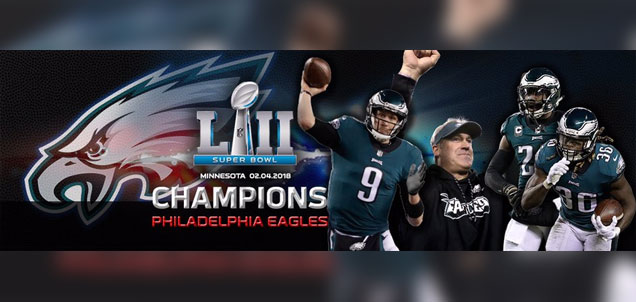
  • Will IPL ever attain the status of a Super Bowl?


    By Sanjeev Kotnala


    The kind of frenzy Super Bowl generates on social media on Indian timelines, it is safe to presume it is one of the most followed sporting events within the advertising-marketing fraternity.

    Everyone seems to experience, read and comment on the TVCs that the brands especially preview at the Super Bowl.

    The teams salivate at the quoted production budget, which is way above marketing budget of many brands. They read about Super Bowl TVCs in multiple B2B sites and blogs to understand the intent, insight, integration and implementation. And they are ready to declare and defend their favourites. But, it is not just it.

    This hyperinterest demonstrated by the global and Indian MAdTech fraternity is unique to Super Bowl, America’s most-watched event. Initial reports for 2018 suggest 103 million viewers. There are other more significant sporting events with a far broader global audience not getting this attention from brands or advertising fraternity.

    Look at few of these sporting events.

    • FIFA 2014 averaged 187 mn viewers per game. The Germany-Argentina championship game had 913 mn viewers.
    • UEFA 350 mn viewers.
    • Cricket World Cup 2015. India Pakistan match had 313 mn unique viewers.
    • Tour de France 2016. 1.5 bn viewers in 3 weeks.
    • FIFA World Cup 2015. 750 mn viewers. 61 mn just for the US-Japan Match.

    IPL 2017 first three matches got 185 mn viewers.  The whole tournament sees 1.25 bn impressions and the average impression per game was a decent 21.9 mn.

    However,  in our  cricket crazy nation,  desi Super Bowl IPL fails to get the same attention. It’s not about buying and paying big for time on IPL.

    There have been sporadic cases of clients investing a large part of their marketing budgets on IPL, smartly buying properties or pushing media to a create a fresh one. Amazon, FreeCharge, Ola, Oxigen Wallet, Zomato, Foodpanda, Faasos, Swiggy, and AskMe from e-commerce have used the platform efficiently. Voltas, Ploycab wires, Vodafone and MakeMyTrip, have used the platform for previewing TVC or created new properties to leverage the tournament.

    No denying that there is an overcrowding of brands fighting for space and audience attention. Many of them inefficiently use the opportunity and do not adequately amplify the association. Time the client-agency re-evaluated their investments in the game.

    There are far too many trying to find their say. There is utter confusion.  The brands need to work extra hard to be counted and associated with the property.

    If you have money, IPL is a safe bet to reach cricket-fanatic male population but also has a sizeable female audience. In a way, it demands to be treated as a separate media season.

    The situation suggests that only a disruptive engagement with the audience will give desired returns. Sponsorship is not good enough. Associating with multiple teams to gain visibility not disruptive enough.

    Most brands, unfortunately, are interested in protecting their share of exposure. They end up treating it as another reality show or serial,  and wait for TRPs to do the magic. Very few brands in the industry focus on milking the opportunity.

    The brands and communication agencies must evaluate IPL differently. Otherwise, it will remain just another Reality Show.

    ………………………………..

    Super Bowl Commercials

    Tide TVCs humorously convert every Clean TVC to become just another Tide TVC. I loved it. Will we see it in an Indian context, only time will tell? But, it is something that the Indian audience may appreciate.


    Alexa lost its voice. Simple, straight and honest. It takes the integral feature and players with it to get the point across. Don’t think brands in India consider the audience smart enough and hence stay clear of poking fun at themselves.


    NFL Touchdown Celebration hugely liked by the audience in America and is the best Superbowl TVC by some portals. I believe it may not get appreciated by Indian audience. And that will be the sole reason that we will be spared a crude copy of it in some sports premier league in India.


    The new 2018 KIA STINGER and legend star rock and roll icon Steven Tyler? Now just imagine this spot with Amitabh Bachchan, Aamir Khan, Salman- who would be the best bet in India.


    Something that you may positively end up seeing in India is Pepsi – This is Pepsi generation. The brand is yet to outgrow its fascination with generations and montage.


    EMBEDDED PEPSI COMMERCIALS

  • Ranjona Banerji: Watch the media allow PM Modi to get away with his diversionary tactics

    By Ranjona Banerji


    The first leader in the edit page of February 9’s Deccan Chronicle, is headlined, “Clear bid by government to avoid accountability”. It ends with these words: “In specific terms, the PM’s parliamentary reply is proof of a massive diversionary exercise to enable the government to duck answering questions that affect the lives of ordinary humans.”

    In essence, this is the crux of Prime Minister Narendra Modi’s speech in Parliament, in response to the President’s Address. Modi concentrated on everything that was wrong with the Congress, played up on his pet subject of Nehru versus Patel, made his now characteristic number of factual errors and skimmed over his government’s achievements since 2014.

    In any other media universe, the concentration would have been on the Budget, the repercussions of the Budget, the fact that the PM was off-subject in his Parliamentary speeches, the pointlessness of this constant hammering on the past and the deliberate attempts to ignore or gloss over the achievements of his government. Instead, most of the Indian media either focused on Modi’s oratory or on his attack on the Congress or skimmed over Parliament and concentrated on the Supreme Court hearings on the Babri Masjid-Ram Janmabhoomi case.

    A ready distraction to the media was provided by Renuka Chowdhury of the Congress who laughed during Modi’s speech in the Rajya Sabha, when the PM mentioned the word “Aadhaar”. Vice-President Venkaiah Naidu, as Chairman of the Rajya Sabha, when Chowdhury said she had a problem, retorted, “If you have a problem go to a doctor”. Modi asked Naidu not to reprimand Chowdhury (for laughing) and instead said that such laughter had not been heard since the Ramayana was shown on TV. The Treasury Benches then thumped their tables and laughed uproariously. Union minister Kiren Rijiju later put out a tweet making it clear that Modi’s Ramayana reference was to Surpanakha, Ravana’s sister, who has her nose cut off by Laxman.

    The intricacies of Hindu mythology apart, this was an ideal sidestep for an Indian media, particularly television, to avoid any criticism of the Modi government or to question Modi’s speech. Instead, we have gone into several explanations about laughter, about kinds of laughter, about sneers and jibes, blatant misogyny and Modi’s eternal cleverness.

    Modi’s various factual errors, about Nehru and Patel and about who signed the Simla Accord (Modi claimed it was Indira Gandhi and Benazir Bhutto when it fact it was the Simla Agreement signed by Indira Gandhi and Zulfikar Ali Bhutto (Benazir’s father, for our millennials and colleagues in TV) in 1972 (he Simla Accord dates back to 1914), were also skimmed over. In fact, given our lack of history, some very childish discussions took place on this. I thought that TV was no longer a millennial pastime but maybe TV journalism has not twigged that it has been replaced by an online universe.

    Swati Chaturvedi lays the speech in perspective here, with more gumption than most of the TV media:

    https://www.ndtv.com/opinion/with-gandhi-bashing-speeches-pm-modi-sets-agenda-for-next-election-1810105

    **

    The Rafale deal has several questions around it, but once again, there is scattered TV media scrutiny on it. On a show on NDTV earlier this week, the focus was on the Congress’s accusations but not on the questions themselves. As journalism is normally practised, the journalists themselves would ask the questions. Instead, we frame the discussion around the Opposition’s questions and allow the Government to get away with no answers.

    Hearings on Aadhaar are on in the Supreme Court but get more coverage on Twitter than in the media.

    Times Now obviously prefers to focus on the Babri Masjid-Ram Janmabhoomi case because it fits in with its new Hindutva image and allows it to ignore everything else including Parliament.

    **

    Meanwhile, back to the Deccan Chronicle and the local Times of India, since I am currently in Hyderabad. The main focus obviously is on the anger against the BJP within the Telugu Desam Party and on how Andhra chief minister Chandrababu Naidu is handling the matter. The alliance is still up in the air although the BJP is trying to patch things up.

    Check where the national media is going on this.


    ​Ranjona Banerji is a senior journalist and commentator. She is also Consulting Editor, MxMIndia.​ The views here are her own