Category: COLUMNS

  • Bollywood’s Week of Nightmares… And Silence!

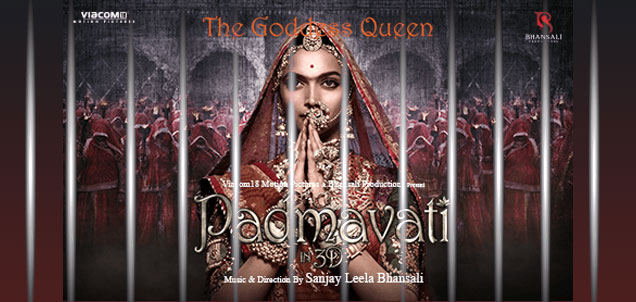
    Photo imaging by Rafiq Barak. Original picture: Viacom18 Motion Pictures website


    By Shailesh Kapoor


    It’s been a terrible week for Bollywood, one whose long-term implications that can be terrible for the industry. On Sunday, 12 days before the film’s slated December 1 release, Padmavati’s producers announced an indefinite postponement. They didn’t have a choice. Central Board of Film Certification (CBFC) rejected the film’s application on technical grounds, because the film was submitted without a due disclaimer.


    In normal circumstances, this should not have been an issue. The film was apparently submitted to CBFC three weeks before its release, much before many films are submitted. Usually, CBFC is known to prioritise films that are due for release, and finish the process, especially if there are no major cuts suggested, within a week. Here, they took almost a week to even reject the application.


    This slowdown, evidently influenced by political interests, was justified through a CBFC “rule” that no one in the industry or the media even knew of till then. Curiously enough, details of the said 68-day rule are now firmly placed on the CBFC website homepage (here).


    For years, films have been certified in the lead up to their release, often a week or two in advance. This archaic rule was never even in the consideration, till it was dug up conveniently for Padmavati. But it would look a bit odd if you apply the rule only to Padmavati. Hence, a go-slow approach has been taken for some other films as well.


    Two films originally scheduled to release today (Nov 24) – Firangi and Tera Intezaar – have shifted to next week because they couldn’t be certified in time for their schedule release. The difference is that unlike Padmavati’s case, they have announced a release date (Dec 1), with the confidence that the process will be complete within this week. That’s a much shorter time than 68 days.


    This newly-discovered rule is set to become a convenient defence when CBFC wants to act tough on a film. In hindsight, they could have used this rule on films they had issues with, in the recent past, such as Udta Punjab. But Pahlaj Nihalani probably didn’t know of the rule himself. It would be insightful to know who dug up this rule, and whether it was a person from the CBFC or the government.


    Faced with an indefinite certification delay, which could last till early-2018, Padmavati’s producers had to delay the film’s release. Meanwhile, during the last five days, four state governments have “banned” the film, citing law and order concerns arising out of cultural sensitivities. This ban should be easily challenge-able in the Supreme Court, which is the only neutral party remaining in this entire fiasco. But to even approach the Supreme Court, Padmavati needs a CBFC certificate, which is still away by the best part of 68 days!


    As an interesting way of countering the protests against the film, Sanjay Leela Bhansali organised a special press screening for select news editors. Arnab Goswami and Rajat Sharma covered the film extensively on their channels, highlighting how it has none of the concerns expressed by the protestors. Bhansali’s choice of personalities was a bold one. Both are known to lean towards the right wing, and will take a liberal stance only when all logic leads in that direction. The endorsement from Goswami and Sharma, hence, should have been definitive even for the political powers in various states. Instead, it was ignored, and the film “banned”, without any of those banning having actually seen it.


    CBFC Chairman Prasoon Joshi reacted to the controversy in a manner that was surprisingly immature for a man of his stature. He seemed to be upset about the makers showing the film to editors before the CBFC clearance. This makes little sense for anyone who knows how the industry, of which Joshi is a part too, functions. Private screenings of films are a well-established form of gathering feedback from various constituents, ranging from family and friends to cast and crew to regular audiences. We have conducted more than 800 test screenings of various films over the last seven years as a part of our work. All such screenings are legal, because they are not ticketed and hence not an “exhibition”. But Joshi was not quoting the law. He was making just another attempt to attack a film, which is the victim of a major political operation currently.


    All these years, in Pahlaj Nihalani’s domain, CBFC was this villain out there to curb creativity. It was repeatedly debated that their role should be limited to certification, with no power to censor, except in extreme cases, such as threat to national security. In Padmavati’s case, CBFC has acquired powers that will make Nihalani look like a paper tiger. CBFC can now delay any film by almost a quarter, throwing the entire release calendar in a tizzy.


    The entire happenings of the last two weeks can spell big trouble for the industry. Kangana Ranaut’s Jhansi Ki Rani biopic is scheduled for a 2018 release. I’m predicting we will see this cycle being repeated again, though maybe at a smaller scale. Making political films was a no-no all these years. Now, even making historical films could enter that taboo list. More generically, the political control over the business of cinema is now out in the open. And that’s the problem that should affect every maker, writer, actor, distributor and exhibitor in the business.


    But the industry is largely silent, even as they see the drama unfold around them, with threats to behead one of their own, and an impact on their business which is not of their own making. Will they pay the price for this silence over the long-term? That’s another topic for another day.



  • Ranjona Banerji: Further media investigations into Judge Loya’s death have only muddied already murky waters

    By Ranjona Banerji


    The Indian Express finally “investigated” allegations into the death of Judge Brijgopal Harkishan Loya, as many were exhorting the mainstream media to do. To recap, the judge was presiding the trial of BJP president Amit Shah in the death of Sohrabuddin Sheikh, when Shah was home minister of Gujarat, at special CBI court in Mumbai. Loya died in Nagpur of a heart attack in 2014, a few days before he had called Shah to appear before him.

    Caravan did a detailed investigation, based on the questions and testimony of Loya’s father, two of his sisters and a niece (some are on video) and found several discrepancies between the official version and the family’s version of events.

    http://www.caravanmagazine.in/vantage/shocking-details-emerge

    http://www.caravanmagazine.in/vantage/loya-chief-justice-mohit-shah-offer-100-crore-favourable-judgment-sohrabuddin-case

    http://www.caravanmagazine.in/vantage/video-testimonies-late-judge-bh-loya-family-raise-disturbing-questions-regarding-death

    The Indian Express story as well as a report by NDTV’s website have now added to the confusion rather than providing any clarity into the events of the night of December 1, 2014.

    http://indianexpress.com/article/india/cbi-judge-bh-loya-death-amit-shah-sohrabuddin-case-nothing-suspicious-say-two-bombay-hc-judges-4956115/

    https://www.ndtv.com/india-news/from-nagpur-to-latur-retracing-last-few-hours-of-justice-loya-1780039


    The name of the judge is different in various reports. The time on the ECG is clearly erroneous. The versions of the judges present at the Nagpur guest house and the staff at the guest house do not match. Details about the hospital to which Judge Loya was taken when he complained of chest pain do not match. Indian Express says Dande hospital is a trauma centre. NDTV says it is an orthopaedic hospital.

    And most important of all, the family which was brave enough to make their suspicions public, have now gone into hiding. This is not surprising either.

    Unfortunately, in the public discourse, the death of Judge Loya has turned into “x” media version versus “y” media version, even among journalists. But a careful reading of all the stories still do not provide any answers to the apprehensions of the family as expressed to Caravan. The family told Caravan that the body arrived alone. A judge tells Indian Express that the body was not alone only the accompanying car had an accident along the way and therefore arrived alone. Therefore, the family is correct: the body did arrive alone.

    The role of RSS worker Ishwar Baheti, as alleged by the family, has not been investigated further. The fact that Loya’s mobile phone was returned days later with data deleted has not been investigated further. It is impossible to understand from the Indian Express version when the judges quoted arrived and at which hospital – Dande or Meditrina. If they were not at Dande, then how do they know what happened there? If the hospital authorities declared Loya dead at 6 am on December 1, how did the family get calls at 5 am informing them of his death?

    Loya’s sister Dr Anuradha Biyani found several problems with the state of her brother’s body when it arrived home. She feels that standard post-mortem protocols were not followed. These have been glossed over with some general remarks about bloodstains on clothes being normal. The post-mortem accessed by Caravan says Loya’s clothes were “dry”. Which version is correct?

    The family says the person who received Loya’s body is not known to them, although he called himself a cousin. Indian Express and NDTV find the man who is “related” in the most tenuous Indian way possible, with no blood shared. More questions therefore about the gentleman’s exact legal position.

    All in all, the subsequent “investigations” have been disappointing. They have further muddied already murky waters. I cast no aspersions on any of the journalists involved. But it appears, at face value, that some more due diligence was required perhaps at senior editorial level. (Unless that is where the confusion has been created, which is not unusual. What is usual is that those given the byline face the flak.) The discrepancies are such that anyone can spot them. One can understand that the silence of the members of the family who spoke to Caravan makes clarification difficult. One can understand that it is fair to give a chance to those accused to offer their version.

    But when the result is even more confusion, that it is unclear what purpose is served. The temptation to attribute motive and question reasoning becomes stronger. We live in difficult times with the media under greater scrutiny than normal. This requires more rigour from the media rather than less.

    Unfortunately for Judge Loya and his family, the most glaring questions into his death remain unanswered and no suspicions have been cleared. Perhaps the probe has to move further, in other hands.


    ​Ranjona Banerji is a senior journalist and commentator. She is also Consulting Editor, MxMIndia. The views here are personal.


  • Sanjeev Kotnala: Have you been Amul-ed yet?

    By Sanjeev Kotnala


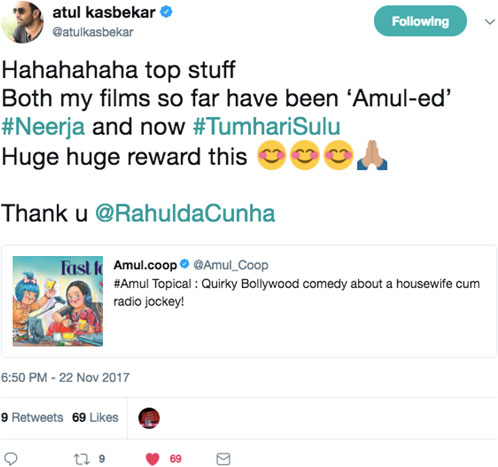
    I am not sure, if anyone else has ever used the term Amul-ed as Atul Kasbekar did in his lovely tweet of success. Even Big B has commented earlier that ‘My films on Amul Hoarding mean public endorsement’ but the word Amul-ed was not coined then. .

    It’s the power of concept that leads to treating of an act as a verb. Like Googled in digital representing search, ‘Mankaded’ in Cricket for running out a batsman that is backing up more than what is fair or ‘Bhaskared’ in newspapers, representing Dainik Bhaskar launching a newspaper in your territory and becoming number one with its Orbit Shifting Innovative approach to subscription. A new one ‘Patanjalied’ or ‘RamDevEd’ could be joining this club.

    I like this powerful representation of buzz and topicality that Amul has been showcasing in its hoarding through ages. However, thanks to Atul Kasbekar, now we have a term for it; Amul-ed.

    The PR agencies have something to learn from Amul campaigns, and they can consider Amul campaigns as a new tool to depict the buzz, interest and engagement. In fact, the use of Amul hoarding, print rendition across newspapers and digital presence represents another layer of earned media. It naturally gives the event a nationwide coverage, and the same gets amplified in social media with 1.4 million fans of Amul creative on Facebook.

    Hahahahaha top stuff
    Both my films so far have been ‘Amul-ed’#Neerja and now #TumhariSulu
    Huge huge reward this 😊😊😊🙏🏽

    Thank u @RahuldaCunha https://t.co/NcEJjhYn0B

    — atul kasbekar (@atulkasbekar) November 22, 2017

    The problem or rather the advantage is that in a week ONLY one event, topic, thought that is Amul-ed. Maybe the clients will start asking question if the event, idea is powerful enough to be Amul-ed. And surprisingly Rahul da Cunha and team which run one of the most trusted brand-agency creative relationship will be the only one to have the answer for it.

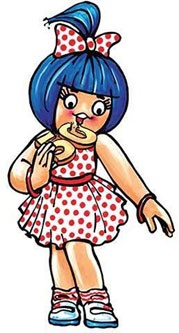
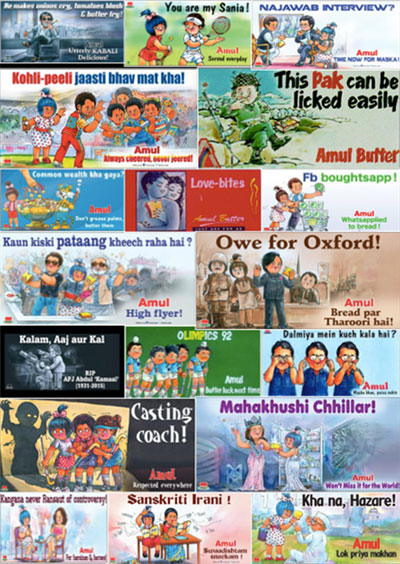
    The so-loved little girl of Amul in her own way is a spokesperson of India. It never fails to make a cheeky and at times satire dripping comment on the topical situation and links it to the utterly butterly brand thought. The spectrum is really wide from Politicians, railways, infrastructure, sports, religion, films, legends and even passing away of celebrities.

    It’s tough to pick favourites from the rich archives of Amul-ed happenings, But sharing some which examples that demonstrate the spectrum and the competition one faces before being Amul-ed.

    Once you have been Amul-ed, there are chances that the creative maybe immortalised in the next AMUL INDIA book which is available at INR 299.


  • Ranjona Banerji: Gagged?!

    ​By ​Ranjona Banerji


    How far have we gone on the story of Judge Loya’s death? The general feeling is that while the judge may or may not have died a natural death, many people are hoping that the story about him will. Enormous deflection tactics have been at work, from US President Donald Trump’s daughter, Ivanka’s visit to India to some truly bizarre quarrel over whether Rahul Gandhi is a Hindu or not. India’s election fever trumped over Ivanka Kushner’s visit in the sense that her comment that Narendra Modi rose to prime minister from being a tea boy was conflated with the Congress’s refusal to acknowledge Modi’s greatness and more such contusions.

    But to get back to Judge Loya’s death. The special CBI court in Mumbai which is now sitting on the trial into the death of Sohrabuddin Sheikh has stopped the media from reporting on the case. An appeal of this nature was made to the court by the defence lawyers. The judge said, “Considering the sensitivity in the matter, likelihood of happening of any untoward incident and likelihood of effect on the trial of this matter, in case of day-to-day evidence that may be brought on record. I am of the view not to allow media to make publication of any of the proceeding during the trial in the matter until further order.

    “It may happen that the publication may create security problem for the accused persons, prosecution witnesses, the defence team, the prosecutor as well.”

    It is worth remembering that the accused are the police of Gujarat, Rajasthan and Andhra Pradesh. It is also worth remembering that after Judge Brijgopal Loya’s death in December 2014, BJP president Amit Shah was discharged as an accused. DG Vanzara, former head of Gujarat’s Anti-Terrorism Squad has also been discharged.

    Regardless of whether day to day reporting is allowed or not, there are enough indications in the judge’s order to remind the media of why this case is important. The silence on the part of some of the media on the death of Judge Loya notwithstanding, the judge referred to the media reports on the death of Judge Loya.

    Although this is not the first time that the media has been silenced by the courts, the very fact of this gag order is significant in itself. As the judge pointed out, this is a sensational case. We would do well to remember that rather than limit ourselves to press release journalism to please the government in power.

    **

    This cheerleading aspect is of course always in evidence. The discourse around Ivanka Kushner’s comments had some sections of the media, especially television, behaving like campaign managers for the BJP and Modi in Gujarat. Add to that the ridiculous – I find no other word for it – discussions on whether Rahul Gandhi of the Congress Party is a Hindu or not. Does it matter? Is there any provision in the Constitution of India which lays down that politicians have to belong to any particular religion?

    The topic came up because of a report that Gandhi was signed in as a “non-Hindu” at some specific register when he visited the Somnath Temple in Gujarat. After our news channels and their various experts pontificated on a non-issue, the Economic Times carries a report quoting temple officials which says that Gandhi only signed a visitor’s book saying the temple was “inspiring”. Clearly, no homework was done before this asinine and polarising debate was put forward before the nation.

    https://m.economictimes.com/news/politics-and-nation/rahul-gandhi-signed-only-visitors-book-somnath-temple-trust-official/amp_articleshow/61853996.cms

    **

    Similar cheerleading was seen when the GDP rate was put at 6.3 %, up from before. However finance secretary Hasmukh Adia later confirmed that the figure may change. So what was the excitement about? Agriculture by the way has not shown a growth but still we in the media behave like growth figures are some “us versus them” battle where true Indians and patriots applaud government claims regardless of ground evidence and everyone who disagrees is anti-national.

    A tweet from an anchor at News18 put this non-application of mind in perspective when she asked “naysayers” what they had to say about this great achievement, adding a hashtag that India is unstoppable.

    Because nowhere in journalism school do they teach you that your first job is to show a mirror to the government and hold it up to scrutiny. It will be interesting to see that if another party ever rules India, whether these cheerleaders will effortlessly switch sides… I am guessing yes. Because sycophancy is a trait that is often inborn, not always acquired.


    Ranjona Banerji is a senior journalist and commentator. She is also Consulting Editor, MxMIndia. The views here are personal​


  • So Zomato Gets the Tomatoes!


    By Sanjeev Kotnala


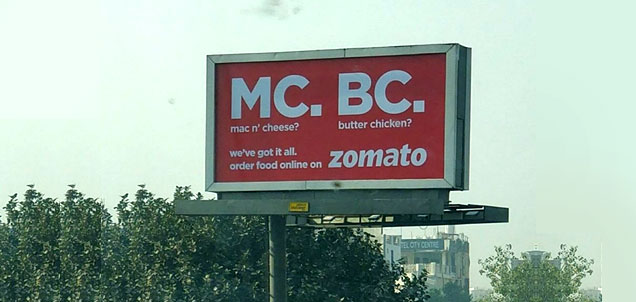
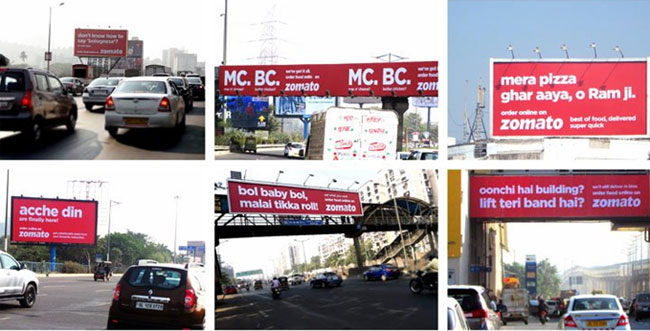
    Dear Zomato, I have been wondering what made you do the MC. BC. hoarding. It is now a public property. So, it is okay to believe that the agency/ individual presented many options, and you picked up this one along with the rest of equally good creative in Red & White to go.

    It was a conscious call! If I as an outsider see the set of creative, this does not fit the template. And that’s where it gives me an idea that you went along for the buzz and social media hype. It would be hard to believe that the agency, and the client did not understand the way they were pushing the boundary. You did and even when you were taking the decision to bring it down, there is a little smile playing on your face. Hopefully, I am absolutely wrong in this statement.

    Hopefully, and that is tough to think that you were diligently naive to the statement you were using. MC-BC is one of the most commonly used abuses above the tropic of cancer. It’s so prevalent that one of my friends Mahendra Chandola never could allow to use his initials to be playfully called M.C. I have another friend M C. Anand Kumar and what do you think happened; he was okay when fiends called him MCee.

    Or was Zomato saying we have got enough of ‘MC. BC.’ for our service, so believe you must order online. Then it is definitely a comment on the user subgroup. I pray that is not right.

    So, that brings me to another thought. Just like ‘Beauty lies in the eyes of beholder’, ‘Dirt lies in the mind of the thinker’. You as a brand consciously went ahead with the campaign. Unfortunately, the agency forgot to add Dahi Chana to the list, which would have made it B.C., M.C, and D.C and the whole issue would have vaporised. But then there would not have been Google Naresh and Suhel Seth ( 4.5 Mn followers on Twitter) trashing it upfront. The latter for whatever it was worth even tagging Hon. I&B ministe,r Sniriti Irani for no reason. Someone wanted to go and complain to ASCI on the subject.

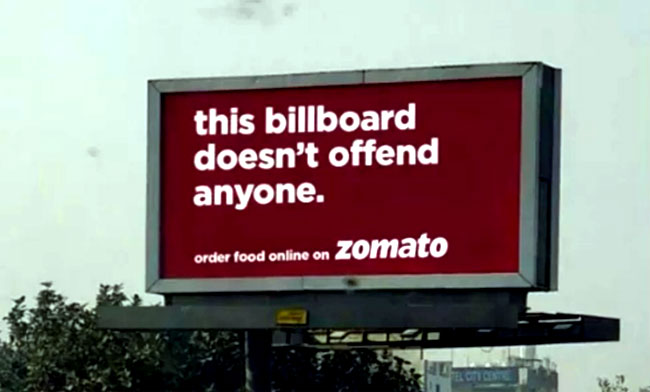
    It’s different that Zomato Co-founder Pankaj Chaddah apologised for the ‘offensive’ ad saying that the company will take it down. “We can see why it can be offensive to people, and we apologize for it. We will take this ad down with immediate effect,” he tweeted. It came after commentator Suhel Seth took to Twitter to call out Zomato for the same. I can understand what Pankaj is saying.

    In effect, he is letting down few of the people who were not so much culturally socially nose in the air type. Here is what one of them said Arjun Pal @pal_arjun said ‘@pankajchaddah, hats off to the creativity of your Marketing Team @Zomato . Don’t pull down the ad coz of some moron. This way @suhelseth will ban all historical Hollywood movies when they write 36 BC or 69 BC’

    Let me share the fact that in F&B, there are acronyms that get popularised. I remember that once in HTA Delhi, while working on the roof-top-restaurant at ‘ITC-welcomegroup Maurya Sheraton’, the agency came with a beautiful name ‘West Court’, and the client (Nakul Aanad) rejected it for a valid reason. He said, soon it will be known as W.C and then who would want to eat there. I still believe that the reason was not strong enough to justify losing a good name. But then that is history.

    Meanwhile, as always we have people with a different take on the campaign. If you give it time and see all the creative, you will realize they have a sense of cheeky take on the subjects. They are harmless. They are interesting. They are something you read and smile. Including the one that is the centre of the conversation.

    There is no point in Badi Goldflake ( Prathamdev- Recently mastered the art of being misunderstood- with 399 followers on twitter J ) , Mihir ( 61 – followers on twitter), Akshar Pathak (1.3 Mn Followers on twitter) comment. We are taking life too seriously. MC and BC are in your mind, there is no explicit mention. There are far freer to be wrongly interpreted contextual advertising that no one seems to object.

    Here is a tongue in cheeky playing by the word comment by Mohita @ReineDeDeniers that sums most of the feeling ‘Hey, @Zomato, you didn’t have to apologise for this. You didn’t hurt anybody’s sentiments or anything. Trust me. I’m from Delhi and if I’m not taking offense at BC, then it’s not offensive BC!’

    I am not sure, that this hoarding exists, but it sums up the whole thought process. And I stand corrected, There is definitely a mixed reaction to the campaign.. Because Opinions are like Asshole, everyone has one. So the strong belief; ‘Dirt Really Lies In The Mind Of Thinker’. Some people are more right than others and hence the poor Butter Chicken cannot be called BC. To round off- I don’t find anything wrong in the campaign, but then that may not count for anything.


    Sanjeev Kotnala is a senior marketing and strategy consultant and trainer. He writes weekly for MxMIndia and whenever there’s an issue that merits more immediate attention. The views here are his own

  • The Demolition, 25 years after


    By Ranjona Banerji


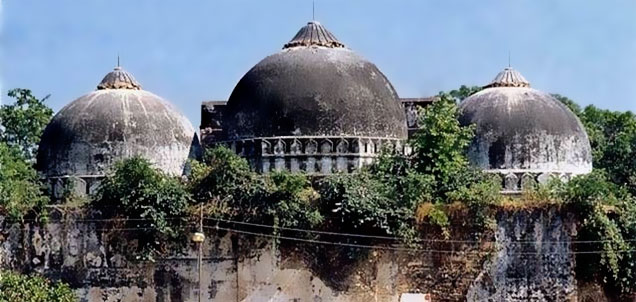
    Tomorrow marks the 25th anniversary of the demolition of the Babri Masjid. Sitting here today, you can see the aftershocks of that calamitous event have not yet left us. India has not been the same, nor will be, by the likes of it. The fissures that tore into India’s social fabric have not just remained, but they have widened. The actual destruction began with the Ram Janmabhoomi movement in the late 1980s. But it was December 6, 1992 that cemented the end.

    And for the India media, that was a watershed moment, in more than one way. Although the world’s media were gathered at Ayodhya, as “kar sevaks” and BJP and RSS workers thronged around the mosque, ostensibly for one more rally, there were no Indian 24-hour news channels. If it is possible to imagine such a world. For another, Indian broadcast news was still controlled by the government. Mobile phones did not exist either.

    However, the 1991 Gulf War had brought satellite television to India and it was through the BBC World Service that most people saw or heard about the mosque coming down.

    But to backtrack. As fissures of Hindu-versus-Muslim started again in India on a major scale since 1947, with the LK Advani-led Rath Yatra or Carriage Procession (in a car) across India towards Ayodhya, the Indian media began to separate itself into Hindu versus the rest. Until then, journalists were perceived as largely left-leaning and the general trend was to examine the government and for managements, usually to give in to the government. The Emergency in 1975 was a big lesson about the dangers of giving in, not that everyone has learnt from that.

    But the sort of all-out sycophancy that one sees in today’s new channels was largely missing. It owes its existence to the changes that developed in the media after the demolition of the Babri Masjid. It is not that India had not had Hindu-Muslim riots before that. Since Partition, there were eruptions, large and small. The scale post-Babri however was horrific and to everyone’s surprise, the main focus of this hatred from Bombay, India’s commercial capital until then considered to be a city apathetic to India’s political upheavals.

    The riots that broke out in December 1992 in Bombay – as it still was then – were an eye-opener for journalists. It was one thing to have arguments of “us” versus “them”, to have colleagues wearing badges which read “Garv se kahon hum Hindu hain” (Declare that you are Hindu with pride). It was another to have colleagues who celebrated communal bigotry. The other shock to the media was that no one saw it coming. Bombay was the sort of the city, one believed, where everyone lived together, jostling for space and giving up identity to make a living. Clearly not.

    The January 1993 riots were a different story. They were a planned, calibrated attempt to change the city, to carefully attack its Muslims. It was also a push by the Shiv Sena (and riding on Bal Thackeray’s coattails, the BJP), to further establish itself in Bombay as not just the champion of Maharashtrians but also specifically Hindus.

    However, when you compare the media then and now, it definitely covered itself better then. The riots were reported, at great personal risk. The government was taken to task for its inaction, from the Centre to the states. Even without relentless TV coverage, the chief minister of Maharashtra was replaced.

    For those of us who lived through those times, the future was evident, even for those of us who refused to acknowledge it. Today, one is amazed by the lack of knowledge and of a sense of contemporary history among young journalists. Even 10 years ago, I have had young journalists explain to me that the riots were a direct consequence of the bomb blasts of March 1993. They were unimpressed that I was an eye-witness, as they were absolutely certain of their facts, having been brought up on a diet of Hindu-Muslim hatred and the enormous and dangerous romanticisation of Bombay’s underworld by Bollywood. You can still see it in the obsession of some news channels (and newspapers) with gangster Dawood Ibrahim even as India faces more real and very dire challenges.

    The demolition of the Babri Masjid legitimised sectarian hatred in India and all those who had held back on their communal thinking now felt free to air their prejudice and bigotry. And now, 25 years later, we see it around us and accept it as normal, even in the media.

    Lest we forget, once, we were better than this.


    Ranjona Banerji is a senior journalist and commentator. She is also Consulting Editor, MxMIndia. The views here are her own.


  • News or Outrage?


    By Shailesh Kapoor


    It’s elections time, yet again. This is when politicians go into overdrive mode. But the pre-elections period used to be more engaging till a few years ago. Over the last decade, media coverage leading up important elections has become increasingly vitriolic, and arguably less interesting and enriching as a result.


    Over the last month, for instance, the entire coverage of Gujarat elections has been about name-calling and personal attacks. It does not help matters when the Prime Minister of the country campaigns like a Chief Ministerial candidate or a Party President would. By him doing so consistently, state elections have now acquired ‘national’ status by default.


    But even if state elections become ‘national’ in their status, they can still be about real issues. But no such luck as far as the media coverage goes. After all, who’s interested in facts, figures and objective analysis? Headlines day after day pick issues that may have very little to do with the real influencers on ground, which decide which way the common man votes.


    But the real influencers do not make for good copy. They do not provide the context for “outrage”, which is now the default mode in which most television and digital news operates.


    If you travel across the country and ask aamvoters about their views on the politics and governance in the country, both at the Centre and in their own state, the lack of depth in perspective can sadden you. It’s not as if people do not want to have an informed opinion. They just don’t have access to good information anymore.


    Yes, you could hardwork your way through good information, by identifying a handful of independent media platforms that remain. But that’s now how television works, at least. People sit in front of the TV and expect the TV to do things to them. No one wants to “figure things out”. So, if you hear outrage on irrelevant issues, you will play back outrage on irrelevant issues.


    Take some of the spokespersons of the top parties, for instance. The way they project themselves, and hence the politicians community, on the prim time is nothing short of embarrassing. Forget class or grace, even their basic education and upbringing can come under the scanner. And more often than not, seasoned anchors who know their stuff sit back quietly and enjoy insults being exchanged. It makes for good “entertainment”, after all.


    The role of media in nurturing a throbbing democracy like ours is well-known and appreciated. However, we are currently in a situation when this role has been relinquished by most mainstream media houses, either in pursuit of “entertainment”, or because of their political alignments, or both.


    When there were a series of scams during UPA 2, the outrage in the media seemed fair and justified. But today, it’s a default setting that’s damaging news media at a root level. Because the human pursuit of knowledge and intellectual development is the original premise on which the idea of “news” had thrived. If we lose that, we may as well as find another word for “news”.


  • Ranjona Banerji​: Times Now ko gussa kyun aata hai?

    By Ranjona Banerji​


    Has social media domination over the news cycle been detrimental? I’m taking a small example here of Mani Shankar Aiyar’s comments to journalists on the ​P​rime ​Minister and Narendra Modi going to town over them while campaigning in Gujarat. This episode ran like wildfire through social media, especially Twitter, with comments, jokes, outrage, counter-name calling and the usual hysterics that is common these days.

    The other big social media event of the day was a horrific video of a man being hacked to death and the burned and the perpetrator issuing a warning that this is what will happen to all those who are involved in “love jihad”.

    Which of these two needed more mainstream media time?

    I will be fair and say that the video did get air time. Almost as much as the Mani-Modi squabble. In my opinion, the video was worse, the squabble was an aside. However, sensationalism must win at all times over more serious news. But that’s television for you and let’s leave it at that.

    http://indianexpress.com/article/india/rajasthan-labour-hacked-burnt-alive-as-accused-killed-and-burnt-his-teen-nephew-filmed-hate-murder-say-cops-4973263/lite/?__twitter_impression=true

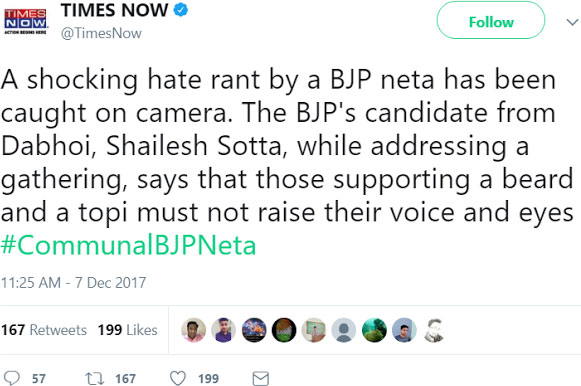
    On another note, it was very amusing to see a tweet from Times Now full of anger about a clip of a BJP politician making a hate speech against Muslims. Why Times Now was so outraged is hard to fathom. The channel has been doing somersaults to outdo Republic TV in its communal anti-Muslim pro-Hindu stance. Every bit of news is manipulated in the light of religion. Rahul Gandhi must tell us if he is Hindu or not. Is Mamata Banerjee against Hindus. Kapil Sibal has let Hindus down. Hindutva forces on the other hand are often projected as “patriotic”.

    Having built itself up as a “Hindu” channel and thus presented the Muslim as “The Other”, why on earth is it surprised that a BJP politician should be anti-Muslim? Methinks the Old Lady’s children doth protest too much.


    **

    Much as US president Donald Trump hates all media except Fox News and claims everyone else is biased against him, CNN International, for instance, was no less tough on Democrat Senator Al Franken’s resignation speech on sexual harassment charges against him than it has been on Republicans. On Quest last night, Franken’s attempts to deflect and duck were called out. That the conversation was only between Richard Quest and a political correspondent of course made life much easier for the viewer.

    **

    All props to Time Magazine for its Person of the Year 2017. The magazine has called them the “Silence Breakers” – all those who spoke out on sexual assaults made on them by famous people. It started with Hollywood mogul Harvey Weinstein and the #MeToo campaign has now spread speedily across the world. It is a long time before there is any resolution to this but at least the more the media brings it out rather than covers it up, there is hope.

    The more shameful story is that there have been cover-ups as they always are when the rich, famous and influential are involved. You can see it in the way Indian celebrities are covered. If you are old enough, you will remember how film magazines like Stardust were far more courageous than today’s film journalists. You might even remember that stars like Amitabh Bachchan refused to speak to film magazines because he did not like the way he was written about. Imagine any media outlet today celebrating such a boycott and doing well nonetheless!

    I cannot end better than using Time’s own words on the current situation:

    “We’re still at the bomb-throwing point of this revolution, a reactive stage at which nuance can go into hiding. But while anger can start a revolution, in its most raw and feral form it can’t negotiate the more delicate dance steps needed for true social change. Private conversations, which can’t be legislated or enforced, are essential.

    “Norms evolve, and it’s long past time for any culture to view harassment as acceptable. But there’s a great deal at stake in how we assess these new boundaries—for women and men together. We can and should police criminal acts and discourage inappropriate, destructive behavior.

    “At least we’ve started asking the right questions. Ones that seem alarmingly basic in hindsight: “What if we did complain?” proposes Megyn Kelly. “What if we didn’t whine, but we spoke our truth in our strongest voices and insisted that those around us did better? What if that worked to change reality right now?” Kelly acknowledges that this still feels more like a promise than a certainty. But for the moment, the world is listening.”


    http://time.com/time-person-of-the-year-2017-silence-breakers/


  • Ranjona Banerji: Fly to Italy to run away from it all?​

    ​By Ranjona Banerji


    What was the biggest news event this week? Come on, obviously it was the wedding of India’s cricket hero Virat Kohli and Bollywood actress Anoushka Sharma. They went to a foreign land, senior editors chased them all over the world (what a job, man and stolen from those who cover cinema for a living) and tracked them down to Italy where they looked all pretty in pink. I only know this, I confess, from hearsay evidence and from a photograph I saw on Twitter.

    If I was a senior editor of a patriotic news channel and a man had been hacked to death for being a Muslim and the ​Prime ​Minister has accused a former ​Prime ​Minister of being a traitor, I would also fly to Italy to search for a cricketer and a film star. This would save me from getting involved in Indian politics and bombastically declare that anyone who is not a Narendra Modi fan is a Pakistani spy.

    In some journalistic worlds, glamourous stuff like celebrity weddings is best left to people who cover it every day and who deserve a little treat. And in this case sports correspondents need to be in on the chase too. But there have always been those editors, even in print, who want to grab the shiny assignments for themselves. This is the best way to create resentment in the newsroom and guarantee that you do not build an effective second and third line of good journalists. If you have ever been unfortunate enough to watch a senior news anchor interview a celebrity, you know how gaga they are and how cringeworthy the whole exercise is.

    **

    Okay, back to the rest of it. Although Mohammed Afrazul being hacked to death was shown on television, we must forget it as fast as possible because it shows the BJP, Hindutva bigots who have invented “love-jihad” and Rajasthan in bad light. Instead, we must allow Union Finance Minister Arun Jaitley to waffle on with any number of unchallenged excuses in defence of Prime Minister Narendra Modi’s allegations that Manmohan Singh colluded with Pakistan.

    The glory of “false equivalences” is now embedded in Indian journalism and even very senior journalists will try and conflate two complete apposite ideas like a dinner party and the despicable polarising of Indian society, in order to be seen as “objective”.

    The upshot however is that Modi has accused the Congress party of treason and has also made it clear that it is traitorous to imagine that a Muslim can ever became chief minister of an Indian state. This creates all kinds of horrors in the universe of Indian nationalistic journalism. Do they agree with Modi and continue with their obsession with Rahul Gandhi or do they fly to Italy? Well, duh. Though the implications of going to, “gasp”, Italy would not be lost on nationalistic minds, even as they munch on Jain pizzas.

    **

    Meanwhile, stories have appeared with those complicated TV ranking calculations which imply that Republic TV’s rankings are falling in six major Indian cities. And, consequently, Times Now has “overtaken” it in viewership terms. As we know, there is no love lost between the two channels. But all this means is that the people who run Times Now (it is hard to call them journalists) have just become far worse than Republic TV. They have taken all Arnab Goswami’s antics and gone further with them. If a person so much as looks at a cow, Times Now will run a hashtag saying, “X wants to eat a steak and is anti-Hindu”.

    Poor Goswami must be weeping. Does one feel sorry for him?

    Indeed, the rumoured “decline” of Republic TV was inevitable since running a news channel is an expensive business. Instead, feel sorry for the people who watch Times Now.


    ​Ranjona Banerji is a senior journalist and commentator. She is also Consulting Editor, MxMIndia. The views here are personal​


  • Sanjeev Kotnala: Condom ad restriction. I am as confused as the government

    By Sanjeev Kotnala


    The government has done it again. Banned television channels from airing condom advertisement between 6am (Prayer Time) to 10pm (lights switch off time). The channels have been asked to strictly adhere to the provisions contained in the Cable Television Networks Rules, 1994.

    They have bulldozed into the decency of your mostly private life curtailing possible damaging exposure to indecent material. I am sure the government has logic, rationale and deeply researched consumer behaviour behind the decision. It is a powerful statement of adherence to the old classically traditional media thinking in an era of smart phone and digital invasion of senses.

    The industry watchdog ASCI (Advertising Standards Council of India) in its proactive self-regulation stance based on repeated objections on condom advertising demanded I&B Ministry directive. With condoms as a context, the content was hardly objectionable but the timing was. It seems the ad was aired on programmes with high children viewer-ship. Can someone from BARC help with data and clear the mystery?

    Something changed between 2015 and 2017, then too the government considered such an action, but then it did not restrict the telecast hours for condom ads. It must have been with the recent Playguard ads, which have pushed the envelope a bit more with Bipasha Basu steaming the screen.

    The ministry quoting rules 7(7) and 7(8) of the Cable Television Networks Rules, “no advertisement, which endangers the safety of children or creates in them any interest in unhealthy practices or shows them begging or in an undignified or indecent, manner shall be carried in the cable service” and “indecent, vulgar, suggestive, repulsive or offensive themes or treatment shall be avoided in all advertisements,” banned them for 66% of the day. In fact, they extended it from ASCI suggested 11pm to 5am timeband to 10am to 6am.

    The argument that condom ads could be indecent and inappropriate for viewing by children seems genuine. I agree with them.

    KS to Manforce to Playguard advertisements have shown us how audiovisual can artistically exploit the carnal desire for pleasure. It is natural the brands sidestep government-supported cultural stance of pregnancy, prevention and protection from STD as the main use of condoms while visualising the script.

    That leads to a simple question. Is it media or the audience? Why is traditionally media that is targeted for a controlled assault? Is this about what you can control vs. What must be controlled vs. what we should keep away from the kids?

    There will be differential point of view and arguments that will further confuse me.

    Though I sometime too squirm in my seat when Bipasha moans or Sunny suggests something on the screen, I believe that time-slot censoring is archaic and must be done away with. It has to be fair to all.

    Nevertheless, it does not answer my doubts.

    When condom advertising is being deregulated globally, why are we stepping back? When we should be answering the impressionable minds about pleasure, pain and precautions, why we are pushing them to other sources for unverified content. Not that one can control it.

    Will it help to air the ad only when the kids are sleeping?

    If the Myntra ad ( Visit ) with a different sexual orientation could be aired in a country where same-sex marriage is not legalised, why not allow traditional knowledge of KamaSutra be shared artistically. I know; this line of thinking is just a diversion. I welcome advertisement, which reflects more of today.

    What about the kid who digitally accesses content, including the condom ads? They laugh and share things like ‘10 funny condom ads’. What about Bipasha, Sunny and Bedi being shared on whatsapp and featured in Magazine and newspapers?

    On outdoor, harmless ad from Manforce was questioned during Navratri in Gujarat by people who abstain from sex during the period.

    If the same logic of impressionable mind was used to censor movies with intense shots and suggestive item numbers, the industry will have to close down.

    What about OTT platform and digital arena where the condom ads can be screened repeatedly? It is available, accessible and now with JIO and others affordable.

    Nothing much changes. Brands have been forced a media choice. No way have we stopped the impressionable minds from seeing these ads.

    So what could be done other than certifying ads for time slot.

    ‘U’ for anytime viewing, ‘UA’ for between 6 to 10pm, ‘A’ after 10pm and A+ only between 2am and 4am. And for a moment why not do what we don’t want. Necessarily certify certain categories of ads for time slot and ASCI could form a guideline and do the job. This kind of self-regulation should be okay.

    At the same time, we request and require I&B ministry to ensure the kids do not access such material digitally. It is impossible for kids not to do so and impossible for the ministry to stop.

    Can the ministry ensure that these ads are no longer reviewed before Maggi, Rasna, Dinshaw or Complan commercials on YouTube?

    There is one solution. What if we link internet access to Aadhaar Card? Yes, that is brilliant. Then ask Google, Facebook, Instagram and such access platforms to adhere to Indian guidelines.

    I told you, I was as confused as my government sending out mixed signals to the industry.

    Do share your point of view and help remove this confusion.


    Sanjeev Kotnala is a leading marketing and strategy consultant and educator. The views here are personal


  • Ranjona Banerji: The Morning After: Winds of change for some, for others ‘chamchagiri’

    By Ranjona Banerji​


    Philosophers, theologists, psychologists, anthropologists, archaeologists have all ruminated and pontificated for years on why and how humans believe in various or one deity. But I have another question for my journalist friends, and it has bothered me for years, far more than the God dilemma: why do you believe in exit polls?

    The existence of one or many Gods is out of my ken at least because the stories, myths, beliefs cannot be scrutinised by whatever means we have at our disposal. But just on empirical evidence, prayer has a better returns policy than the money spent, in India at least, on exit polls. Heck, so does the belief in alien abduction. The margin of error is so immense that the neighbourhood parrot has a better chance of getting this forecast correct. If you can claim victory with give or take 10, 20, 30 seats, well then, we all can.

    So where does this faith come from? Friends in the exit poll business need a leg up? Commissioning a poll cheaper than sending reporters to the ground? Incalculable optimism that one day they will get it right? I will grant you that pompously named “psephologists” are somewhat better than exit pollsters if only because their margin of error is a tad less extreme. But there too… never mind.

    As the results for the Gujarat and Himachal elections trickled in on Monday December 18, I did not watch television news. Instead, as usual, I went to the Election Commission website and tracked leads and results there. Even until late on Monday evening, I saw on Twitter that news channels had made up their own figures while the EC had stuck to BJP 99 and Congress 77. Which is where the results remain this morning. Ah, well.

    This morning I see that Times Now has called 99 seats to “80” a “saffron wave resonates in Gujarat”, which should earn them several lollipops from the Central government, though am not sure of the 80. NDTV says “BJP wins Gujarat but misses century, sweeps Himachal”. (That’s 44 to 21 and a defeat of the incumbent Congress government.) CNN News 18 says, “Narendra Modi still rules polling booths but Rahul Gandhi’s challenge is now for real.” I honestly did try to find out what Republic TV’s website had to say but all I got were ads, so I got bored after Mercedes something-something. NewsX also said Congress “80” in Gujarat but the main headlines were about the prime minister going to Lakshwadeep to inspect cyclone damage. Of course, such a visit could not have been expected while campaigning was on, although cyclone Ockhi struck South India on November 29.

    Interestingly, India Today TV’s website asked visitors to watch live coverage of the results, so I suspect someone has not woken up yet at 10.09 am as I write this.

    The Hindu’s main headline on its website is “Sixth straight win in PM’s home state.” The Indian Express says, “Modi’s December Spring”. The Times of India puts Congress at 79 and its headlines say. “Why BJP got more votes but fewer seats” and “Congress puts up its best show since 1985”. The Hindustan Times decided to be edgier than the rest (surprise, surprise) with: “Make no mistake, the contest in PM’s home state was really close” and “In close defeat for Congress, a win for Rahul Gandhi”. The Telegraph says, “BJP wins Gujarat and Himachal but…”. Deccan Chronicle has, “BJP wins Gujarat for sixth time, but tally down by 16” and “Rahul Gandhi loses Pappu tag, emerges 2019 challenger for Modi”.

    This is just a sampling of the morning’s websites. For some in the media, winds of change, for others chamchagiri.

    The big story – and some have commented on that as well – is the challenge to the BJP from three young men in Gujarat: Hardik Patel, Alpesh Thakor and Jignesh Mevani. They are to be watched closely in the future. Also, the BJP’s win in Himachal was expected but the loss of its chief ministerial candidate Prem Kumar Dhumal, father of BJP MP Anurag Thakur, will be considered. Plus, the change in vote share.

    How many media houses will, as times goes by, look on the Gujarat results as a BJP “sweep” and how many as a “Congress challenge”. Some have become so used to being “His Master’s Voice” that they have forgotten all their journalism. But if governments change, as they do, will they shift masters or remain loyal?

    That’s my “burning question” of the day!


  • Sanjeev Kotnala: Why you should be at Pattaya this March

    By Sanjeev Kotnala


    It is not a pre-sell for Adfest Pattaya, an advertising festival attended by 1200-plus delegates from more than 50 cities. It is not even a recommendation. It is a definitive suggestion worth considering.

    Adfest Pattaya claims to be the longest running ad show in Asia Pacific and the Middle East. It is the first show to be judged in the year. However, most of Indians in Marketing, Advertising and Technology (MAdTech) have not given it the importance it deserves. In past few years though, the number of entries, awards and speakers of Indian origin (SIO) have shown dramatic improvement at the Pattaya Adfest.

    Industry captains Arun Iyer, Bobby Powar, Dinesh Swamy, Josy Paul, Prasoon Joshi, Pratap Bose, Rahul Mathews, Raj Kamble, Rohit Ohri,, Roopak Saluja, Senthil Kumar and Sonal Dabral are few of the Indian advertising and marketing influencers, who have been jury members or have spoken at the AdFest. However, when it comes to delegates from India, the needle has hardly moved.

    Is it because it is too close to Goafest? Hardly three weeks separate AdFest Pattaya and Goafest. Naturally, Indian companies tend to prefer Goafest, which works out economical!

    Is it because Pattaya is more known for the other Sin?
    Is it because, must have already been to Pattaya, and it is no longer attractive destination for them?
    Is it that they do not know more about Adfest Pattaya?
    Is it because they do not think, they have more to learn from that part of the world?

    ADFEST is ADFEST is ADFEST.

    It’s not true. Seniors in the industry know it better. It is easy to differentiate between Cannes, AdAsia, Kyoorious, Adtech and Goafest. Why add one more to the list?

    This is best answered by Tim Lindsay, CEO of D&AD: “We believe that Award shows challenge and stimulates the industry to do better. They set a bar and a standard. They reward and motivate creative people. They encourage new talent to join our industry and help that talent prospers. They train and nurture our practitioners. They encourage innovation, experimentation and risk taking. They are woven into the fabric of our industry and deliver enormous value.”

    Let me differentiate Pattaya Adfest ( 21-24th March 2018) from another adfest. Maybe it will help some of you to re-consider it; it is after all a perfect place to relax, learn, and network!

    1. Get exposed to Asia-Pacific advertising
    2. AdFest 2018, theme is “TRANSFORM”, championing how creativity can help businesses connect, succeed and remain relevant in the fast-changing digital economy. It sounds interesting.
    3. Watch all the entries. Yes, that’s true. It is a bonus and definitely the reason to be there. Even if you miss out on every session and just invest time to see all the displayed entries, it is time and money well invested.
    4. Listen to Jury debate and get insights into their deliberations, right there in the open, before all delegates. They speak and share what and how they chose the winner.
    5. Watch for the unique Lotus Roots Awards, celebration of richness of ideas that draw from its local cultures. Get enthralled by the simplicity of ideas and creativity unleashed.
    6. Participate and attend the Young Lotus Workshops that aims to encourage and educate new entrants to the industry,
    7. See how the new generation is shaping up. Watch the interaction and wining films at “Fabulous Four Directors.” It is a free to enter programme. It is one of the world’s most respected platforms for kickstarting the careers of commercial directors. The deadline for the entry is January 5, 2018.
    8. This year for the first time, shortlisted entries in INNOVA Lotus will present their works to juries and delegates. The Chairman of ADFEST believes that ‘Not only will it give them the opportunity to explain their thinking directly to our judges, but our audience will learn so much from the case studies they present’.
    9. It’s an inclusive Adfest. Anyone with an idea worth sharing can submit it. If found worth of the Adfest and interesting enough for the delegates, you could be invited as a speaker.
    10. Hopefully, some of you have entered straight 8 industry shootout @ ADFEST 2018,
    11. And yes, they START THE DAY AND END THE DAY ON TIME, a class on event management.

    NON-ADVERTISING REASONS. I am not referring to the most talked attractions of sin-city. Pattaya is more than just the ‘walking street’, ‘Fish Bowls’and massage parlours. It is a silly case of being branded wrongly..

    1. For the people interested in adventure, you can do a Tandem Sky Dive from 12000 feet or take basic Scuba Diving lessons or fire real ammunition and feel the Mangum or colt jump in your hold.
    2. I must remind you that once you get tired, its time to go for the excellent Thai foot, shoulder or body massage. Rejuvenation is guaranteed in no extra time.

    IT IS A BIT COSTLY

    The delegate fee for the two-day creative adfest is THB 30,000 (INR 57, 000). Even if you were to make bookings well in advance, it will cost approximately INR 85,000 on the twin-sharing basis. For Goafest, it is around INR 50,000. Both cost considers staying at the hotel complex where the fest is held.

    YOU STILL NEED CONVINCING. Here is what Raj Kamble and Santosh Padhi have to say about AdFest Pattaya.

    RAJ KAMBLE in 2015 in an article titled ‘Pattaya makes the gutter bar seem like it’s for the kids’ told this to Campaign: “I’ve been hearing for a while that there are ‘no silly ideas’ in advertising, and now I have realised that the expression is so true. It’s good to see entries from Asia, Australia and New Zealand. When one is at awards such as D&AD, Cannes Lions and The One Show, we see a lot of the same work across these shows getting awarded. Here, we’re getting to see local entries of great quality. I’d go to the extent to say that work is ‘crazy’, and it has really surprised me..

    And Santosh Padhi, has to say about ADFEST Pattaya: “Many things go into making Adfest the remarkable event that it is. To begin with, it is one of the oldest, most reputed and celebrated awards shows this region has. It values all things uniquely Asian – be it Asian culture, traditions, insights or behavior. It’s a delightful venue, near the beaches of Pattaya, which just adds to its charm. It provides a great platform for the next generation of communication professionals to interact and absorb what is happening in their field. Not only is one enriched by seeing a fantastic body of work, it also provides a chance for cultures to intertwine and intermingle. To have one’s work applauded in such a vibrant atmosphere is amazing indeed.”

    If you are interested and planning, let’s connect and see what is the best we can do.