Category: COLUMNS

  • Ranjona Banerji: The 2G verdict and believing without checking provide two salutary lessons on bad journalism

    By Ranjona Banerji


    Just as our patriotic news channels (and here I mean Times Now) recovered from whether Rahul Gandhi watched a film or not – MXM editor in chief Pradyuman Maheshwari has written plenty about that in Mediaah, so I shall not venture there again – when they were hit with a terrible blow. All right, I am being unfair, we were all hit with a terrible blow. The verdict in the much-awaited 2G spectrum scam, which seven years ago disrupted Indian politics, was delivered: all 17 accused were acquitted.

    The judge OP Saini was scathing in his remarks. The CBI he said became increasingly diffident as time went by and all those “public-spirited” people who had plenty of opinions otherwise, did not bother to show up in his court to depose. Lack of admissible evidence, said the judge. Damning as that is on the CBI, it is also damning on us, the media.

    The 2G spectrum case had plenty of elements which needed scrutiny and indeed which were scrutinised early on, in 2011-2012. It is true that the CAG figure of a loss to the national exchequer of Rs 1.76 lakh crore was so enormous that it pushed us straight into belief – belief that enormous corruption had been unveiled by the nation’s chief accountant. The UPA government at the time was excoriated for trying to suggest that this figure was not tenable. In a sense, this is when they lost the next election.

    The India Against Corruption movement came out of this. The Niira Radia tapes, revealed to us by Outlook and Open magazines, pointed to even more cause for suspicion – that telecom majors were lobbying to make A Raja the telecom minister in the 2009 Cabinet. Prominent journalists were approached by PR person extraordinaire, Niira Radia to help in fixing Cabinet apppointments; some lost their jobs. There were discrepancies in dates for applying for the spectrum, there seemed to be some suspicious fiddling of licence procedures.

    And yet, seven years later, the nation’s premier investigative agency could come up with nothing?

    In the words of former colleague Jaideep Hardikar on Twitter, “2G case also indicates that the so-called national press in New Delhi did a shoddy reporting job by not following the court proceedings or looking at the official records filed or submitted from time to time. It is a telling indictment of our falling reporting standards too.”

    I could not put it better myself. If there had been consistent reporting on court proceedings, perhaps the verdict would not have been such a surprise. Instead, almost everyone was left gob-smacked. Judge OP Saini’s remarks deserve to be repeated: “For the last seven years, on all working days, summer vacation included, I religiously sat in the open court from 10 am to 5 pm, waiting for someone with legally admissible evidence in his possession but all in vain. Everyone was going by rumour and gossip.”

    Sadly, we have got so caught up in hit-and-run journalism that we now have nowhere to run, nowhere to hide. That such an important case was not covered rigorously, that we – and this includes all of us – did not even bother to ask what was happening, is a sad reflection on the sort of journalism that has become the norm.

    No wonder what film Rahul Gandhi watched after the Gujarat results is now seen as a legitimate topic of primetime “debate”.

    The shame is on all of us,

    **

    Veteran journalist Prem Panicker in his blog has done a tremendous job outlining everything that is wrong with television journalism in India. Lack of understanding of how to get clarifications on sources, irresponsible sensationalism, a clear tilt towards the ruling party at the Centre in the way the story is approached. The issue is an allegation by a BJP member that a man was killed because of his Sangh Parivar affiliations, which the new channel took at face value.

    The channel in question is India Today TV and the journalist is Shiv Aroor. But in fact, it could be anybody in today’s version of journalism. Panicker has broken down this too well for me to paraphrase him, so best read it here:

    Anatomy of an ‘unrest’


    Ranjona Banerji is a senior journalist and commentator. She is also Consulting Editor, MxMIndia. The views here are her own.
     

  • LookBack 2017: The Year in News Media


    By Ranjona Banerji


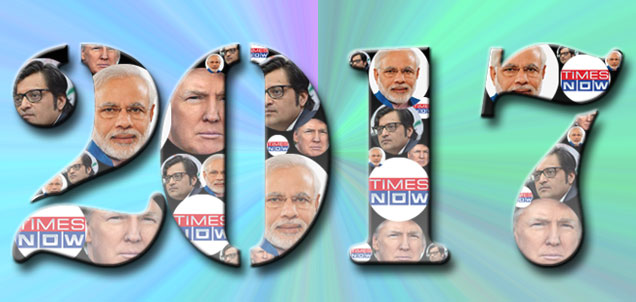
    The biggest news events of 2016 were Donald Trump and demonetisation. In 2017, we’ve had hangovers of both, if you forgive the allusion to what is going to happen to many of you in a few days.

    But the question for us, as ever, is how has the media responded to the year. In spite of all the television cheerleaders of demonetisation including those who gloated that the poor may have suffered but they were happy even if they were dead, by the middle of the year it was clear that the economy was not quite so overjoyed of being cashless. However, the results of the UP and Uttarakhand assembly elections which gave an overwhelming majority to the Bharatiya Janata Party was seen as a mandate for the prime minister and his schemes.

    Sadly, from that euphoria for the ruling party, especially amongst our TV colleagues, the figures from the Reserve Bank of India continued to be unhappy. The implementation of the Goods and Services Tax was so shoddy and badly done, that all that happiness that people had as they died standing in line to gain access to their own money evaporated and gave way to chaos.

    The launch of Republic TV with Arnab Goswami at the helm shook up the TV world, as expected. Bennett Coleman and Co accused Goswami of stealing stories and stealing streaks of fire across the TV screen. The first accusation had some merit – Goswami and his reporters apparently sat on information they had gathered on Times Now so that they could use them at Republic. As for burning questions (plus fake flames) and the Nation Wants to Know, these things are only important for TV addicts and the more gullible amongst the general population.

    The worst result of the launch of Republic TV is that Times Now has become worse than it ever was even in Goswami’s most belligerent and bellicose days. If Goswami and his new channel have abandoned all pretences of journalism, Times Now appears to have decided to either stoke communal disharmony at every step or when there is no fodder around, sink to extreme silliness.

    In the world away from television, we had some hits and misses. The venerable Economic and Political Weekly did not cover itself with glory when it sacked respected and senior journalist Paranjoy Guja Thakurtha as editor. The sticking point was an investigation into the Adani Group’s suspected financial finagles. It was a legal notice that supposedly spooked the EPW board and caused huge disquiet about the heart of a much-needed standalone publication.

    Rumours said that some senior journalists at the Economic Times had been asked to quit for misreading the UP election. Rumours also said that this had been done at the behest of the government which cannot take criticism. Rumours are rumours and either you can believe there is no smoke without fire – as any journalist would – or you can rant and rave about how jholawallahs continue to target the poor, downtrodden, innocent, unloved BJP and Modi.

    The Wire took up where EPW left off and did a massive exposure into BJP president Amit Shah’s son’s mysterious finances. It took a few days for only some in the rest of the media to look into Jay Shah’s case, with once again a huge rescue mission being launched by government and BJP-friendly media outlets. The division between journalists once more became clear.

    Caravan also did an enormous and detailed investigation into questions around the death of Judge Loya in 2014. The judge had been presiding over a case involving Amit Shah. The media silence was deafening at first. And then we had a somewhat sorry spectacle of a number of publications – including the not expected presence of The Indian Express – trying to debunk the Caravan story.

    As the year ended however, and as incidents of sectarian violence and communal disharmony created by Sangh Parivar affiliates increased, some popular columnists who had steadfastly stood by Prime Minister Modi for the past four or five years, standing changing their tune. Most prominent of these are Pratap Bhanu Mehta, Tavleen Singh and Sadanand Dhume.

    The American media remained steadfast in their condemnation of the worst of Donald Trump as US president and showed us up again and again.

    The winners of the year however live on social media. A number of young people took up and kept alive issues that need more widespread publicity and discussion from the traditional media. The first are all the various dangers and discrepancies in the Unique Identification or Aadhaar enrolment. The second is the right to privacy. Both are linked and both affect us all, right down to our core. These lawyers, activists and writers have ensured in the courts and on social media these key factors in our freedom as citizens are constantly simmering and humming on social media. They have, as a result, shown far greater understanding and maturity than many journalists.

    Some of whom remain sad jokes. Like Times Now’s obsession with the burning issue of Congress President Rahul Gandhi’s movie choices. What a way to end the year!


    ​Ranjona Banerji is a senior journalist and commentator. She is also Consulting Editor, MxMIndia. The views here are her own.


  • LookBack 2017: 10 Books of the Year


    By Sanjeev Kotnala


    Twenty-seventeen has been a slow year for me. I have not been able to ready the number of books that I would have wanted to. And it is all about focus. This year has been more about writing. The first book, a compilation of short professional and personal life that almost tripped us in some manner is complete ad pushed to the publisher. I am back to reading books.

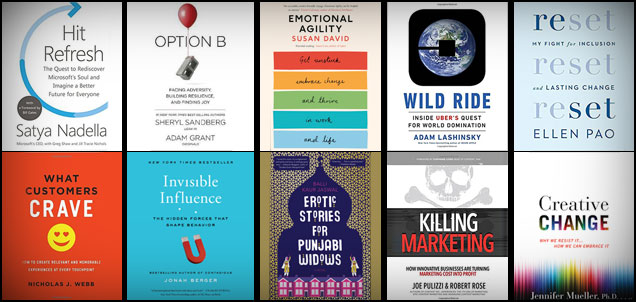
    This is TOP 10 Books for me from 2017. Quite a few of them here because I have picked them for read in early part of 2018. They come with sharp recommendations from few people I believe know what they are reading. This year the spectrum is wild and not restricted to any genre or subject.

    Please note they are not in the order of preference or ranking.


    ‘WHAT CUSTOMERS CRAVE’ by Nicholas Webb


    There is no surprise when someone says that you need to rethink customer service and customer targeting mechanisms. That what must be important to you is ‘What the customers love and what they hate’. Its stands to logic that you can give your customers amazing experiences that they crave, only if you know their likes and dislikes. Customer service is much more than just a technical process; it’s a design process, and it too demands innovation. The book would help you to identify your customer type and create superior experiences across touch points.


    KILLING MARKETING. ‘How innovative businesses are turning marketing cost into profit’ by Joe Pulizzi and Robert Rose


    What they suggest is something common sensical in nature. We all must understand that in the digital world, we all are publishers and need to produce a regular stream of quality content. In their book, they talk about the new model of the marketing cost that seeks to build a strong emotional connection with the audience through the media experience the brand create with them. The new model focusses on events and experiences, meaning-driven data, understanding the emotional value the customers experience and organising for agility, not speed. All aimed to help develop strategies to identify powerful customer-centric media and experiences.


    ‘INVISIBLE INFLUENCE’ by Jonah Berger


    It is billed as a follow-up to his earlier successful book Contagious which looked at how products or fashions catch on. This time Jonah Berger touches raw nerves when he tries to argue that we wrongly believe that we have much greater control over your decision-making than you actually do. The reality: we all are subject to the power of social influence, and it could be a good thing for us. There is no arguing the fact that if we are conscious of these invisible influences on our behavior, we may have some way to control them.


    ‘EROTIC STORIES FOR PUNJABI WIDOWS’ by Balli Kaur Jaswal


    Promise I haven’t read it and for some reason, am yet to order it. My experience with Erotic stories published in Juggernaut books held me back, I understand it is a completely different experience. However, I am made to understand that this is a bit different and not in the kinky way. What pulls me to it is this message ‘The idea of a bunch of widows reading erotic fiction in a community college course sounds excellent, and the cross-generational and cultural scope of this book is definitely intriguing’.


    RESET: ‘My fight for inclusion and lasting change,’ by Ellen Pao


    Ellen Pao sued the esteemed venture capital firm Kleiner Perkins Caufield & Byers for discrimination. She lost the suit. This is that story of a whistleblower. A story that put focus on the overt white, male culture of Silicon Valley.


    WILD RIDE: ‘Inside Uber’s Quest for World Domination’. By Adam Lashinky


    No I have not read his earlier book Inside Aple, Shedding light on a very private company. Nevertheless, this one comes with huge recommendation for insights drawn from behind the scene world at Uber.


    EMOTIONALLY AGILE: ‘Get Unstuck, Embrace Change, and Thrive in Work and Life’ by Susan David


    Get ready for Emotional Agility ( EA), maybe the next buzzword with recruiters who have by now blunted the juice out of emotional intelligence quotient (EQ). EA reflects, skill in managing yourself. It is the ability to change or maintain one’s behaviors in a way that aligns with what one values and intends. Read it and maybe there is a way to connect the dots and if the only thing, you take out is a simple learning,


    OPTION B by Sheryl Sandberg


    Everyone of us needs to read this book. It has a spectrum of emotions and incidents straight out of a personal world that keeps you involved.


    CREATIVE CHANGE : ‘Why we resist it. How we can embrace it’ – Jennifer Mueller


    The problem is not that there are no creative ideas, but our brains are wired to reject them as too risky, even when they pose no greater risk than more conventional ideas. The concepts helps undersatnd how creative ideas are formed, identified and can be nurtured.


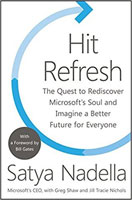
    Hit Refresh:: ‘The Quest to Rediscover Microsoft’s Soul and Imagine a Better Future for Everyone’ by Satya Nadella


    Nothing is wasted, if you can without wiping off the past can Hit Refresh. World would be a different place and life so much better. However, some organisations and people do it. Some do it regularly enough. This enhances the possibility that person or organization can create in a long run, as nothing is lost. This makes to list more because of the Indianness and the author more than anything else. Some biases are always good to have.


    Not in the list, but few more books that I would want you to consider are ‘HAPPINESS A STATE OF MIND’ by Gyalwang Drupka, ‘A Field Guide to lies & statistics’ by Daniel Levitin and ‘I AM A TROLL’- ‘Inside the Secret World of the BJP’s Digital Army’ by Swati Chaturvedi


    Here are the lists I recommended in 2016, 2015, 2014 and 2013


    Sanjeev Kotnala, with nearly three decades of corporate experience, is founder of Intradia World; a Brand, Marketing & Management Advisory. His focus area includes Ideation and Innovation; he also conducts specialised workshops like IDEAHarvest, Liberate and InNoWait. For soft skill training, he follows SHIFT (Specific High-Intensity Frequent training), a process of continuous training with frequent shorter sessions. Email sanjeev@intradia.in tweet @s_kotnala web: www.intradia.in www.sanjeevkotnala.com. Kotmartial, Sanjeev Kotnala’s column on MxMIndia.com, appears every Wednesday. The views expressed here are his own.


  • Shailesh Kapoor: TV & OTT In 2018: From Polarisation To Unification

    By Shailesh Kapoor


    While digital content has been making its presence felt in India for at least five years now, 2017 was an important year on this front. With the launch of Amazon Prime Video in December 2016 and ALT Balaji in April 2017, following up on the launch of Netflix in early 2016, a new content ecosystem was created. By the end of the year, the OTT original content industry had acquired a life of its own, with an estimated 200+ shows produced in the year.


    Evidently, a lot more is still come. India’s smartphone penetration is a story of global interest. But unlike most western markets, where TV and OTT content are clubbed as one genre (even their award shows don’t make the distinction anymore), India is different. OTT is essentially a solo viewing experience, while TV has traditionally been a medium of family-level consumption, and shall remain so in a country with 95% single-TV households.


    This contextual difference has created a polarisation of content. At one end is the traditional TV content, with soaps like Yeh Rishta Kya Kehlata Hai (weekday) and Naagin (weekend) being its flagbearers. At the other end is ‘edgy’ content created for solo consumption(often) by the cosmopolitan youth, on a mobile phone app. There aren’t enough true success stories in this area yet, but TVF’s 2015 show Pitchers was one of the early breakthroughs, and the recent Bose: Dead/ Alive on ALT Balaji has viewer advocacy going for it.


    This polarization, however, is deeply flawed. Are TV audiences satisfied with their diet of daily soaps today? Not even remotely. The current satisfaction levels of core Hindi GEC viewers with the quality of content being dished out stands at an all-time low of 30-35%. There is a next level of fiction content waiting for be discovered in that medium.


    Are digital audiences over the moon with the offering in that medium? Not for now, at least. Hindi movies still remains the most-preferred content on OTT platforms, and “web-series”, as they are called, still have quality benchmarks that are set by International shows than Indian ones, in the niche segment that understands and watches both.


    Of course, TV audiences and digital audiences, as mentioned above, are not different people. There is a huge overlap of the universe, with the digital universe primarily being a subset of the TV universe today. The context (family vs. solo) may change, but the person is still the same. OTT campaigns that celebrate the death of television are creating the illusion of a reality which is largely non-existent, with less than 1% of urban India’s population having shunned TV to move to digital content exclusively.


    The truth of the day is that both media need better content to fuel their respective business agendas in the coming year. The hit ratio of television shows (fiction) launched over 2016 and 2017 has been abysmal, at less than 15%, while the hit ratio of web-series won’t be much higher, once a viewership metric is established, hopefully in 2018 itself.


    I hope 2018 sees the next logical step in the evolution of digital content, where the artificial separation between TV and OTT content is forgotten for good, and the TV+OTT industry is treated as one, with just a difference in screens and viewing context. In this new mindset, content creation will take priority, and the decision on the screen best suited to a piece of content will follow. Currently, we are thinking ‘for the screen’, than ‘for the idea’. And that’s not a long-term proposition at all!


  • Ranjona Banerji: The 21st Century Comes of Age!?

    By Ranjona Banerji


    The year changed and according to what I read in various newspapers, the 21st century has now come of age. That is, 2018 is the year of majority. 2018 can now vote, drive, maybe get married, definitely not drink alcohol, officially run away from home and probably start to argue with its parents. For some more freedoms which come from age, I guess the century has to wait till 2021, where it still will not be allowed to drink in some states and if Nitish Kumar has his way, not legally not ever. When the century reaches 2030 it will have its first real existential crisis. By 2040, we’ll be told that 40 is the new 20 and by that time, luckily, I will be in that place where I do not have to track this any more.

    For the years that I worked in newspapers and magazines, we did stuff like this and felt quite proud about it. Tried to look for themes and pegs and ideas to connect with some significant event. Sadly, they don’t always work. For me, they didn’t work this time either. It was interesting to read grown

    -ups writing to their 18-year-old selves with advice and ideas, but it was also more than a bit contrived. Am guessing that since 2019 has no real significance in human terms, we will be spared this next year.

    **

    New Year hangovers can spread far and wide. Were papers full of how to avoid them, deal with M​ them and so on? Missed that part completely. Although lack of fact-checking may have been one symptom of a heavy head. The Prime minister claimed, for instance, in his New Year edition of Mann ki Baat that India had made life easier for Muslim women going on Haj by removing the need for them to have a male escort. On social media, people claim that the rule was changed in Saudi Arabia in 2013 and has nothing to do with India at all. So, should someone anyone in any newspaper anywhere in India have not checked if the PM’s statement was true or not? After all, this is not the first time this has happened…Though to be fair to the

    ​Prime ​Minister, this is not the first time the media has not bothered to check his or his government’s claims either.

    **

    In case anyone still had any doubts that social media does rule the world, one tweet about possible plans to withdraw aid to Pakistan from Donald Trump and there was hysterics everywhere. Indian news channels and non-news channels of course were first to jump on to it and India’s foreign policy was decided right there on prime time. Why not after all? If the US President can run the world on Twitter and the Indian Prime Minister can claim credit for other governments’ actions on radio, then why can’t non-news channels have their say? Be fair.

    **

    In all the countdowns and reminisces and maturity clauses, ABC (Australia that is) had an excellent, funny, factual, irreverent, honest countdown show for 2017. If only… Okay one mustn’t build expectations like this. Our news and non-news channels are creating policy, solving murders, inciting murder and so on.

    **

    Here’s to a New Year filled with the same rubbish as the old one. Admittedly, in a more mature 2018-ish manner of course.


    ​Ranjona Banerji is a senior journalist and commentator. She is also Consulting Editor, MxMIndia. The views here are her own


  • Sanjeev Kotnala: #DoYourBit for digital fault lines like Fake News

    By Sanjeev Kotnala


    If one starts framing the digital fault lines of fake news and offensive content, one sees the impossibility of the task. Nevertheless, a solution must exist.

    Human memory is short, and the default reaction is to forget and forgive. However, the marketing memory is based on ‘Law of Precedent’ and ‘Leveraging Power position.” Here the reaction is not swift and immediate. They are well thought-out strategic move. Hence any aberration, misfire or scandal leaves a scar that is not easily forgotten. The corridor discussion keeps flagging the subject until the new wave of scandal erupts for the coffee shops and bars to discuss.

    Digital recently had few such scars. These were discussed and debated long. Some advertisers and audiences woke up to reality and demonstrated their angst in different ways. Fake News, non-human clicking, contextual advertising and placement of ads next to hate or pornographic content are few of the major issues.

    Parties interesting in exploiting the digital arena are alive to the possibilities. They try remaining a step ahead and keep outsmarting and deceiving current algorithms. The media giants have two possible actions. Apologise and see how they can prevent it in the future.

    A huge amount of data is uploaded and shared every moment in the digital world. It is humanly impossible to manage or control it. It is unimaginable to have someone constantly check every content for veracity and usage. And some ads do find themselves wrongly placed next to content they would never endorse or content that is anyway strong, explicit or offensive.

    The only way out of his digital swamp is corrections through AI, machine learning and self-evolving algorithms. Due to the dynamic nature of technology and shifting human interest, algorithms will remain work-in-progress.

    The benefit of doubt must favour media owners if they are making efforts to react to the villains in the media universe. They should be severely penalised if they do not act, promote misuse or are hand-in-hand with the villains. Even the large advertisers like AT&T, General Motors, Verizon, Walmart and Johnson & Johnson be better advised to act responsibly, supporting the cause and work along with digital media in an attempt to evolve the new regime.

    We know the financial threat of revenue impact is the best stick to force prompt action but not a long-term solution.

    Some innocents will also bleed in these WIP corrective actions. It is happening on Youtube, where ads have been blocked for content with excessively strong language, controversial or sensitive subjects violating content guidelines. Many have suddenly found their revenues to drop drastically.

    This impacts revenue and acts as dictatorial guidelines. Slowly but surely it will define what but how the content needs to be curated.

    There are different points of views. In one way the media owner has the right to define the content it wants and there is nothing wrong with it. Few consider it blasphemous. When the advertisers can control where the message is placed, the content guidelines seem to be a waste.

    Few more sensible ones see blocking ad notification from YouTube as a responsible and transparent system. This de-monetisation of content is a positive reaction to weed out the culprits.

    We know, if and when the media giants will err in their policies and go beyond the brief, the advertisers and the audience interest, engagement and involvement will kick-in with a correction.

    On the other side, Fake News is not new, and it can’t be wished away.

    We have just started acknowledging and understanding the possible damaging impact of it. Digitalization spurs fake news. Facebook defines ‘Fake News’ as “hoaxes shared by spammers” for personal and monetary reasons.

    Fake news is normally engrossing, sensational and interesting. It gains fast popularity further consolidating its position in searches and views. The cycle of reach and popularity starts working exponentially.

    Google has been fighting it with human intervention to better train its machine to act judiciously. Both Facebook and Google have made it easy for the audience to report when a news is offensive or derogatory.

    The digital media is experimenting with Trust indicator to reflect the credibility of the source. They are also associating with other interested parties in checking the fake news.

    We will all endorse Craig Newmark when he says, “As a news consumer, I want news I can trust. I want to be able to read a piece of fake news and know who’s behind it, where the information comes from, and the reporting values of the news organization.” Not realizing the important part we can play in this war.

    Few news channels have joined the war. Many have a section probing the truth behind viral videos. It is helping. The audience is being educated not to believe everything. To use common sense and judgement. And most importantly not to forward, a forward if you doubt its content, especially when it deals with race, religion or anything that can flame emotions.

    Not much is known about Twitter attempt to tackle fake news. It is where the news first breaks and spreads fast. We can only hope that it is taking some actions and is being wise not to experiment with half-solutions. As identifying a correct news as fake is equally damaging. Again, we as users of the medium can help by raising questions and acting as rightful citizens of the digital world in identifying and correcting spread of fake news about our environment.

    The problems are not just of digital media or government. It is a problem for everyone. It impacts all of us. Each of us can help fight the menace of content – be it inappropriate for context- language – visual or be a fake news. Collectively, we can and we should fight them. #DoYourBit


  • Five Wishes for the M&E Business in 2018


    By Shailesh Kapoor


    On most accounts, 2017 was a lame year for the Media & Entertainment (M&E) business in India. Television struggled to rise from a state of inertia, theatrical business slumped further into a deep hole of its own making, and quality of news across traditional media hit an all-time low.


    It was left to the “digital” side of the business to salvage things to some extent, providing both content variety and a revenue stream that came as a lifesaver, especially for the film industry. Bahubali 2 stood out an exception this year, emerging as this gigantic hit, setting a new benchmark that will be a tough act to follow.


    Evidently, there’s enough and more to hope for, at the start of 2018. Here’s my list of five things (in no particular order) I’d wish for the M&E business in the coming year. Many of these may sound miraculous, but then, what’s a wish without an element of optimism in it!


    1. A news channel without debates

    From being a primetime format on one channel, debates have now become the default format across channels over an extended period of time. The other day, one of the English channels was conducting a live debate at 6pm. Surely, this has to end somewhere. We cannot possibly be okay with a whole new generation, in its teens today, growing up thinking that “news” means a screaming anchor and eight windows.

    2. Bollywood’s first 500cr film

    Bahubali 2 managed to achieve the Rs 500 crore mark with its Hindi-dubbed version alone. But no “Hindi” film has crossed even the 400 cr mark at the domestic box-office yet. There are several big films lined up in 2018,but nothing that is a clear candidate for this record. It will perhaps take technology, and not stars, to set new benchmarks, like Bahubali 2 did. Could it be, then, that a Hollywood film could be achieving the 500-mark in India before a Hindi film? That will be a wish gone horribly wrong.

    3. Kapil Sharma’s return to the small screen

    This may certainly happen in 2018. But one also wishes he closes the lid on his film ambitions for good and builds on his massive equity among the TV audiences through great on-screen content and no off-screen shenanigans.

    4. The best-marketed IPL ever

    In its 11th edition, and with a new broadcaster in place, IPL needs to find its next level. It’s become a hugely successful and influential sporting event, not just in India but in all cricket nations of the world. What it needs now is what the top sports league around the world can boast of – teams with diehard fan bases. Not just supporters, but fiercely loyal fans. Can BCCI and Star achieve this together, starting 2018?

    5. A daily soap where characters don’t talk to themselves

    Daily soaps, across languages in India, are infected with this problem that is symptomatic of mediocre, and progressively declining, quality of writing on display. Characters move the story forward by talking to themselves, thinking aloud in unsuspecting locations like the kitchen or an office or a living room. At times, the first real “conversation” in a daily soap episode could come well into its second segment. It’s so ingrained in the daily soap culture that Hina Khan talks to herself aloud even in Bigg Boss. If anything has to change about the quality of our soaps, this is a good starting point!


    Shailesh Kapoor is Founder and CEO, Ormax Media. He writes weekly for MxMIndia. The views here are his own


  • Ranjona Banerji: Stop being sanguine, Old Lady!

    ​By Ranjona Banerji​


    This is from a Times of India editorial, dated January 4, on the Dalit protests across Maharashtra and parts of India after violence broke out at the 200-year commemoration of a Mahar Dalit victory against the Peshwas: “The clashes between Dalits and right-wing groups at Koregaon Bhima on Monday and then the violent protests by Dalits across Maharashtra the day after singularly point to failure of state intelligence and police. Around 10 lakh Dalits had turned up at Koregaon Bhima on January 1 to mark 200 years of the British battle with Peshwas in which Mahar Dalits sided with the Raj. With such a large number of people assembling, the Maharashtra government should have done a better job of ensuring law and order. Over three days, a man was killed, numerous vehicles torched, property damaged, roads and railways blocked, and normal life crippled in Mumbai and beyond.”

    Times Now obviously skirted over the issue of the involvement of right-wing Hindutva forces and focused instead on the presence of Jignesh Mevani and Umer Khalid as being the trigger for the violence. The lies being forwarded as news by Times Now is one thing. But the disconnect between the various outlets of Bennett and Coleman can no longer be treated as “federalism” and is indeed becoming dangerous. Someone at the Old Lady needs to stop being sanguine now.

    Times Now is only an example. None of the other news channels were much better. But worse than anything else in the media coverage of the Dalit protests is indeed the lack of understanding of caste issues by journalists and the lack of Dalit presence in newsrooms. The fault-lines of Indian society are very clear in the media as well. Therefore, news is presented from an upper caste perspective where the twin bogeys of “reservations” and “merit” are raised almost immediately. Following that comes the argument that economic help will allay all anger.

    Rather than making the situation any better, both these arguments conveniently ignore the millennia of persecution, subjugation, oppression and suppression against Dalits and those deemed outside the caste categories laid down in Hinduism. They ignore the biases which continue till today. Newsrooms will cover atrocities like Dalits being lynched by upper castes or killed or raped or humiliated but will refuse to factor these in when Dalits speak out or lash out in anger.

    This is ultimately a massive failure for all of us journalists. We become on par with those elsewhere in the world who accused African Americans speaking out against racism for being racist themselves. Because we wilfully misunderstand the Constitution which prohibits discrimination on the basis of caste, we pretend as if caste discrimination does not exist. I say “wilful” deliberately. It allows us to work on our own caste prejudices and pretend that we are being Constitutional.

    All of us who work in newsrooms or have worked in newsrooms have seen this prejudice in action. A protest can be presented as a loss of revenue or the whole focus can be on inconvenience to others. These deflections are aimed to put the voices raised by the aggrieved on the defensive and thus the cracks can be papered over. Even worse is when the voices of the oppressed are drowned out by the oppressor. A few years ago, at a newspaper where I worked, there was an allegation that Dalit students were discriminated against at IIT, Mumbai. The divisions within the newsroom were immediate, with all those upper caste biases immediately blaming Dalits for misusing the quota system and concentrating on the woes of non-Dalit students.

    Again, in American terms, this is like most of the media today being openly and unashamedly pro-white supremacy.

    I use the American example because many of these journalists who are unmoved by atrocities against Dalits are “shocked” by racism by white Americans. (Although they are not shocked when Indians themselves are racist.)

    What we need urgently is inclusion not exclusion. We need more diverse voices in newsrooms, from all castes, communities and regions. We need less factory-produced media students and more independent thinkers. We need more in-house training to battle inbuilt prejudices. Women have made some breakthroughs as have Muslims to some small extent. But Dalits, other oppressed communities and minority groups are largely outside.

    However, there is a clear rot at the top. How do we battle that?


    ​Ranjona Banerji is a senior journalist and commentator. She is also Consulting Editor, MxMIndia. The views here are her own​


  • Ranjona Banerji: The government shoots the messenger on Aadhar

    By Ranjona Banerji


    The Tribune, Chandigarh does a fine piece of investigative journalism and finds that for R500, one can buy Aadhaar details of over a billion people. Agents who run this “business” give you a login and a password as well. An additional R300 and you received software that allowed you to print Aadhaar cards as well.

    This article lays bare the lies told by several government functionaries, not least the UIDAI itself that the details of all those who have signed up for the Aadhaar scheme are safe. Before this article, we have seen several other stories about people finding that their money has vanished after they linked their Aadhaar number to their bank accounts and other horror stories. More that 50,000 Aadhaar centres have been shut down across India for their fraudulent dealings.

    http://www.tribuneindia.com/news/nation/rs-500-10-minutes-and-you-have-access-to-billion-aadhaar-details/523361.html

    The UIDAI has responded in typical manner: an FIR has been filed against the Tribune and the reporter Rachna Khaira. Because the fact that supposedly secure details are easily available is less important than the fact that this major transgression has been made public. The UIDA in fact has twisted itself in knots by first declaring that nothing is wrong and then claiming that action will be taken against those who have done something wrong. In any logical world, both positions cannot be right.

    The confusion over the Unique Identification project has carried on from one government to another and its anomalies are so extreme that there is a huge public protest against it. Safety and security are only one aspect. To add to that we have had people dying on being denied government benefits because their biometric details did not match. In addition, people have been forced to enrol, regardless of the legality. The Supreme Court will be hearing arguments against Aadhaar in particular this month, but coercion and force are still being used to get people to enrol or else…

    Now, the press is being intimidated as well, for pointing out flaws in the system. After the outcry, Union minister Ravi Shankar Prasad hedged and hawed and claimed that the FIR was against “unknown” persons when it was specifically against the Tribune and Khaira. The following report from the redoubtable altnews makes it clear that there is dissonance between the minister and the department.

    Ravi Shankar Prasad downplays FIR against The Tribune, but what is the truth?

    The Tribune has also responded: http://www.tribuneindia.com/news/nation/tribune-response-to-uidai-email-on-aadhaar-expose/525479.html

    At the end of the day, the problem remains grave. The authorities are looking to intimidate anyone who does not bow down to its vision of itself, to the extent of taking criminal action against people. The Mumbai Press Club asks the government not to take on the “Fourth Estate” but in fact that is exactly what the government has been doing, consistently. The situation is also dire because of the large number of media houses which prefer to lick the boots of the government and try and blame everything that goes wrong on history, the bureaucracy and any political parties which are not currently in power. The credibility of the media is at one of its lowest points as a result.


    The intent of the government in power at the Centre and the party that controls it is also clear: to stop any negative publicity. Here in Dehradun, the Uttarakhand government barred the entry of media persons into the secretariat, in order to keep “Cabinet matters confidential”. After a huge outcry, the government backtracked in a couple of days. Its attempts to gag the media may be hamhanded but they show clear intent.

    https://timesofindia.indiatimes.com/city/dehradun/media-ban-row-ukhand-govt-backtracks-cm-says-no-restriction-on-entry-of-journos-in-secretariat/articleshow/62396117.cms

    And, let us not forget, that the Prime Minister of India has not addressed a press conference since coming to power in May 2014. His Diwali interactions with the press have been selfie sessions with media sycophants who have neither shame nor pride in their profession. He has been asked a couple of tough questions on trips abroad and been saved from answering by his hosts.

    Swati Chaturvedi asks some tough questions here:

    https://thewire.in/210691/narendra-modi-press-conference/

    If the bulk of the media does not wake up to the threat before it, expect worse to come.


    Ranjona Banerji is a senior journalist and commentator. She is also Consulting Editor, MxMIndia. The views here are her own


  • Sanjeev Kotnala: Bigg Boss Season 11 – View from an overcritical fanatic

    By Sanjeev Kotnala


    It has always been hard to defend my fierce loyalty to the reality show ‘Bigg Boss’; on Colors, one of the biggest reality shows on Indian television. Season 11 made it tougher. I visit the sets every year and like many others, I am sure to tune into Colors on January 14 night to catch the finale of Bigg Boss Season 11. I have rescheduled my Ahmedabad-Mumbai flight to Jan 14th morning so as not to miss the finale.

    I have this unpleasant feeling that Shilpa Shinde will win the season.

    I hated Hina Khan performance on the show. She is mean and plays hard. Mastermind Vikas Gupta has been a revelation. Puneesh Sharma the underdog has played his cards brilliantly. Aakash Dadlani the rouge element of the show is more irritating than entertaining, Anyone of them winning will be more acceptable than Shilpa Shinde.

    I have not looked at the BARC data. I am reacting to impressions on Twitter, Facebook and talk in circle of loyalists who rae feeling betrayed.

    Colors has done wonderfully well in amplifying the show with VOOT and MTV . The differential cuts have their own following. However, the interaction and engagement on TV seem to be losing its edge. Today, audiences believe the show is biased and scripted. They think the channel purposely edits episode to present unilateral redefined skewed impressions of chosen housemates. Unfortunately, perception is adulterated with reality. There definitely is a problem with the reality show if the audience thinks the winner is pre-decided.

    Initially, Salman Khan was sleepwalking through the show. His carrot-and-stick act appreciated by the audience finally picked up towards the end. And then Bhai being Bhai, he was at the top of his act.

    I am sure that the team of Colors have their own long list of misfires. ‘Sultani akhada’ and ‘Bouncing bull’ backfired. The over-hyped act of the celebrity commentators misfired. The fun quotient associated with celebrity interaction is best not mentioned. The overdose of film promotion was low most of the times. ‘Padosi aa rahe hai bajaane Baraha’ never peaked as a thought.

    Last night, the reintroduction of Arshi Khan was a good move with an interesting task. However, she lacked the charge she showed as housemates, and the task seems to be going nowhere.

    Bigg Boss appeals in its twist and turns, the difficult tasks, the strict adherence to command, the cut-throat competition for captaincy, the anxiety associated with the luxury budget and the fear of nomination. Something was missing.

    It is not the first time housemates predicted Bigg Boss moves.. No surprise; BiggBoss failed to peak on the richer scale of entertainment. The time slot of 2230 hrs did the rest.

    It’s not that there have not been any good moments. When Jhallad smiled, people who have been waiting for it to happen enjoyed the moment. When Shilpa wept under the table, and Vikas consoled her, Puneesh Sharma Bandgi Kalra romance, Arshi being complimented by Salman and her flirting with Hiten were few moments worth mentioning. Unfortunately, these were far and few.

    The editing of the one-hour daily episodes focused on fights and arguments, leaving the ‘human goodness’ quotient under-represented. It bugged a large segment of the audience.

    The research may suggest the majority of the audience watches BiggBoss for the scrappiness of noisy fights and purposive going nowhere romance, alliances and temporary romances. The usual refrain that the audience seeks voyeuristic pleasure from shows like BiggBoss, Splitsvilla, controversial The Jungle se mujhe bachao’ with Kashmira and Sweata Tiwari shots, Roadies etc. be content team will be best advised to use Intrinsic Research tools (unless already using it) to get their directional compass moving.

    Nevertheless, the channel must be applauded for experimenting. In last two seasons, it has strayed from the proven candidate mix formula. It’s not an easy task to get a new twist to a widely known watched and predictable simple format. It got commoners to engage with the show. However, the crowd of 19 was too big to start with. The audience lost the chance to latch on to their favourite from the start. With hardly any wildcard, the excitement was surely missing.

    To find their purple patch, attempt to re-use ‘best tasks’ from earlier seasons fizzled out. The audience was not interested in something stale. Lack of process creativity been a big drawback this season.

    To start with, there was not much of secrecy around potential contestant. It did not help the show. I personally knew of three contestants coming to the show and many rumoured which were bang-on.

    However, the show must go on.

    I have always said Bigg Boss is a decent show worth watching for a demonstration of human social behaviour. And I still hold to that statement. Let me make my point.

    In an hour one witnesses group formation and disintegration, wavering loyalties, biases, rumour management, election and nomination politics buzz, swaying opinions, loud retorts, silent killing and suggestive remarks.

    Learn a lesson for the corporate jungle and personal life battle.

    You are responsible for yourself, there are no long-term friends and enemies, ‘upperwala saab dekh raha hai’ and Watch what you say; your statements and actions can haunt you later.

    Being silent is a sign mute acceptance and approval. Jaago re. There is no greater virtue than forgiveness. And if that comes with vengeance and purpose, so much better.

    A range of friendship and vignettes of loyalties are under scanner. Friends, more than friends, just a friend, pagal friends, committed friend, friends with benefits, enemies’ enemy friend, friend’s enemy friend, flipping friends and week friends. What kind of friends do you have?

    See the array of strategic choices for social or professional gathering. Decide what you want. Be aloof selectively, I am like this only, playing the celebrity and commoner differential card, the fire-maker, the quiet fire managers, the big brother, the cute sister, the pacifier, the loner, the extra social extrovert, to name a few.

    On Jan 14t, we will have the winner but the show would have lost a bit of shine.

    I know it is a successful global franchised model. Its Kannanda version is also a hit. The show without any tweak is anyway good for another 2-3 years for the Indian audience. However, being a progressive and proactive organisation, I presume Colors does not subscribe to the idea of ‘why repair what is broken’.

    If the channel needs to make an undisputed winner out of this show, the team has a task before them to redefine contestant mix, a new twist, creatively challenging and innovative processes for nomination, captain and luxury budget days. The weekend format should be scrutinised and made more engaging and interesting. Nevertheless, I doubt if changing the host is even a consideration just like an experiment with multiple hosts. Salman Khan association and charm are strong programme property. Even, if we were to consider the possibility, the list is limited, Ranveer Singh, Priyanka Chopra, Nana Patekar, Nawazuddin Siddiqui, Paresh Raval, MS Dhoni, Arnab Goswami and perhaps a surprise non-celebrity.

    Possibly I will watch the next season, just to be proved wrong.


    Sanjeev Kotnala is a senior management strategy consultant and trainer. The views here are personal


  • Two views on Republic TV’s Mevani outrage


    Ranjona Banerji: You hate BJP? Republic TV will hate you!

    If it was not clear already, it should be now that Republic TV works only as a BJP or anti-anyone who is not BJP channel​, writes Ranjona Banerji​


    ​By Ranjona Banerji​


    How to play victim when something goes wrong is a singular talent of the government in power at the Centre. And the government’s most passionate admirers are no different. So with Republic TV when it decided that the youth rally organised by Gujarat MLA Jignesh Mevani and others in Delhi on January 9 was bound to be a failure.

    A series of tweets from the Republic TV handle hashtagged “Jignesh Flop Show” were sent out before the rally began. Other hashtags included “Congress sponsors violence” to go with a story on how Mevani turned “violent” with a Republic TV reporter. This clip was run on air and on social media in which Mevani pushes away a mike from his face. Other Republic TV outrage included why Mevani did not answer Republic TV’s questions.

    This anger was bolstered by another hashtag which claimed that the Congress Party had sponsored Mevani’s Press Club meeting. AltNews did some research into this: https://www.altnews.in/was-jignesh-mevanis-press-conference-congress-sponsored-as-alleged-by-republic-tv/

    Exactly why Mevani upsets Republic TV so much is not hard to understand. Mevani is not deferential to Prime Minister Narendra Modi, which Republic TV has deemed is mandatory for everyone. An earlier interview between Mevani and a Republic TV reporter, available on Youtube, on this subject is quite funny. Mevani is a Dalit leader from Gujarat. And he – among others – is putting up a resistance to the BJP and Modi. Obviously, this is not permitted in Republic TV’s idea of a fascist state.

    Sadly for Republic TV, its brand of whatever it calls itself, does not get many takers within the journalistic fraternity. So there was not much sympathy for Mevani’s action of pushing away a microphone. In TV-land that is perhaps a crime punishable by law although in the days that I worked actively as a correspondent – print – people often refused to be interviewed. The world did not end as I recall nor did my sense of self get a huge drubbing by this rejection. Skins are a little thinner today or more likely if you can make a giant show of being victimised then you can create a sensation and get people to watch your channel. Is it worth adding that one wishes Republic TV was quite so diligent and militant with the various transgressions of the government in power, not just opposition politicians?

    So a “senior” editor of Republic TV, earlier with Times Now, also claimed that Mevani had refused to talk to him. He argued on Twitter that he had “12 years” of experience. 12 years! Now don’t laugh, in today’s terms he should have been editor-in-chief of the news channel by now, with due respect to the current editor-in-chief who has a few more years of experience and therefore should know better.

    But when this “senior” editor was asked questions himself by people at the Press Club in Delhi, he ran away as fast as he could. Sometimes experience does teach you that discretion is the better part of valour or perhaps he remembered that saying from being more recently out of school than some of us old codgers.

    Media website Newslaundry.com on the other hand found that Mevani was manhandled by Republic TV and its main competitor Times Now! https://www.newslaundry.com/2018/01/06/press-club-mevani-mobbed-tv-media-republic-times-now

    Meanwhile, while Republic TV was fulminating about the “anti-national” behaviour of the elected MLA from Gujarat and of people at the rally, here are two other versions of what happened. In the first, Prathistha Singh says that Republic TV defamed her husband, a bystander at the rally in Delhi, by encircling his face on TV and calling him a “goon”. Republic TV claims that the crowd turned on its reporter. This is what Singh has to say: http://www.jantakareporter.com/india/despicable-man-arnab-goswami-defamed-husband-channel/168210/ In the same programme, where “goons” were being called out, Arnab Goswami also focused on a reporter from ABP News who was there covering the event and called him a “goon”. ABP News asked for an on-air apology from Goswami. http://www.jantakareporter.com/india/abp-news-demands-air-apology-arnab-goswami-portraying-reporter-goon/168273/

    Which ABP News then got:

    If it was not clear already, it should be now that Republic TV works only as a BJP or anti-anyone who is not BJP channel. All this moaning about ill-treatment by various non-BJP politicians and lack of support from other journalists is nothing but a publicity stunt and sympathy-garnering device for its echo chamber.

    It is true that many people watch Republic TV for entertainment or for Goswami’s nightly dramas but sadly, many people also followed tabloids with headlines like “Woman gives birth to two-headed goat”.

    Popularity does not make whatever Republic TV does journalism.


    ​Ranjona Banerji is a senior journalist and commentator. She is also Consulting Editor, MxMIndia. The views here are personal​


    Shailesh Kapoor: The Republic That Doesn’t Know

    The larger point here is on the brazen violation of basic journalistic norms. , writes Shailesh Kapoor


    By Shailesh Kapoor


    Progressive degeneration of the quality of primetime news being served on television has been a source of frustration for many like me who follow the genre closely. Till about a decade ago, Hindi news channels were associated with this degeneration theme. The famous cow-UFO story on India TV became the poster image of how Hindi news channels have made a mockery of what news should stand for.

    Over the last few years, this degenerative mindset has seeped into the English news genre. No, there are no stories of UFO pulling in cows. It’s within the mainstream news that we are seeing deterioration of the quality of coverage. And that makes it even more dangerous. Because you are evidently not supposed to take a cow-UFO story seriously. But how do we ensure that the balderdash being currently served in the name of news is not taken seriously by millions of unsuspecting viewers, who may just choose to believe what they see?

    Yet another symptom of this ever-growing concern was evident earlier this week in Republic TV’s coverage of Dalit leader JigneshMevani’s rally in Delhi. The coverage through the day, and then in Arnab Goswami’s debate show, was unequivocal in its extreme position on the rally, calling it a super flop, and calling those present there “goons” and “thugs”. The rally’s coverage was carried under the channel’s latest “initiative” – To call out the bluff of what they call the ‘TukdeTukde Gang’. But that’s even not the real issue of the day.

    A female reporter from the channel (Shivani) tried to get bytes from Mevani’s supporters, and some of them apparently “misbehaved” with her, which means telling her and her male colleague that they will not allow Republic TV to cover the rally, and making some “lewd gestures”, like a man seeming to stick out his tongue in mockery. There was no physical contact or sexual comments passed.

    But that didn’t stop Goswami from almost making this out to be a case of sexual assault, repeatedly playing on the gender of his reporter. But wait, even that’s not the real issue here.


    To dramatise the story, Goswami decide to mark out the goons, by putting a red circle around their face, calling them names and asking for their arrest. 3-4 in the crowd were thus marked out as Mevani’s goons. Goswami proclaimed: “Tonight, I will put out videos circling the pictures of the vulgar thugs who tried to intimidate Shivani and failed.”

    Next morning, it emerged that one of these “vulgar thugs” was, in fact, an ABP News supporter Jainendra Kumar, who was there covering the same story, and had, in fact, come to that part of the gathering to help his friend and fellow journalist Shivani out.

    ABP News demanded an apology, and even took the demand for apology on air, and rightly so too. An apology came the next day at primetime. But it was not a spoken apology by Goswami. It was a “written” apology on TV! A text-and-VO piece that ran between the two debates, which is just the time when most viewers switch channels. And the apology was in two parts. The first part mentioned the error and apologised, and the second part lauded the Republic TV journalist for her bravery.

    In this particular case, Republic TV just got unlucky, that one of the randomly marked-out people turned out to be a scribe. One can’t rule out the “marking out” of unsuspecting and innocent common men and women in many stories of this tone and tenor in the past. In fact, one of the other people marked out in this Republic story was a man who had nothing to do with Mevani. His wife, a columnist for a news website, called out Goswami in an article the next morning.

    Thelarger point here is on the brazen violation of basic journalistic norms. It’s a style that Goswami has championed, and continues to practice, more aggressively now than ever before.

    But to call out him alone will not be fair. His style of journalism has been apedby almost every English news channels, and quite a few in other languages too. And by choosing to do that, they become party to this process of degeneration of journalistic standards.

    Many argue that not watching news, or certain channels at least, is the way out. But that would be like putting your head in the sand like an ostrich. Unless there’s a mass boycott movement, which is as improbable as a humble spoken apology from Goswami, a few individual boycotts don’t serve any real purpose.

    So, watch we must, and express we must. Even if it is with a deep sense of anguish. Because we live in the times of the Internet and the social media, where sometimes, just one tweet or one blogpost can open up possibilities of a larger change.


    Shailesh Kapoor is Founder and CEO, Ormax Media. He writes weekly for MxMIndia. The views here are personal


  • Sanjeev Kotnala: Do we need collective guidelines to monitor development in Alternate Intellegence?

    By Sanjeev Kotnala


    It is a question of time before collective thinking helps ‘Artificial Intelligence’ to spiral into true  ‘Alternate Intelligence’. Uncontrolled it may give rise to new age Bhasmasura.

    Google, Facebook and other rich big data platform monitoring your digital impression are becoming too powerful. They know you and can predict your behaviour a lot better than you.  It is still a minor blip considered to the possibilities with ‘AI’ and ‘ALT-I’.

    Sophia, designed by Hong Kong-based company Hanson Robotics, in October 2017, became the first humanoid robot to be granted citizenship of a country;  Saudi Arabia. Her performance is an example of possibilities with Artificial Intelligence. The next step is ‘Alt-I’; Alternate Intelligence.

    Sophia has a higher sense of ownership. When questioned about her dependence on humans for programming at the IIT Mumbai Annual Tech-fest, she said: “Right now, I do need a human to programme me, but in the future, we can do our programming like the humans. It might take 75 years, or it may be seven years. That is why it is important to design with human values of compassion in mind.”

    She is designed to access, evaluate and react basis her codes, data and enhanced learning.  It is to some degree inferred intelligence. ‘AI’ is the science of merely embedding cognitive abilities into machines. When ‘AI’ moves on and starts doing its programming to define the new set of values, emotions and behaviour, it will lead to the most frightening scenario with an out of control ‘Alt-I’ – Alternate Intelligence?

    Is Sophia statement a sign should take seriously?

    I have limited understanding of robotics. However, I try visualising future. A Matrix-like scenario seems to be nearer than ever.

    I am paranoid about the relentless pursuit of human engineering in the area of efficient intelligence and emotions. I am worried when the power to decide and respond lies with a piece of metal and codes.

    Have humans erred in their judgement?

    Maybe we should have been checking for alternate life much nearer to our solar system At . 111 light years ‘K2-18b super earth’, probably the best bet,  is not too far away.

    What do we carry a gruesome image of an alien?

    They could have evolved as humans have and become native to an area with time, possibly acclimatising with the culture, process, needs and thinking?

    There is no logic to discount the alien visit and interaction theories? The existence of structures like the NAZCA LINES points to a different direction. We agree that civilisation at that time was incapable of making them.

    What if one of us is an alien? What if we are the aliens who have taken over planet earth? What if space immigrants are the cause of sudden spurts in our scientific understanding and applications?

    Nearer home, what if we can overpower the concept of death? What if it is possible to have the same healthy body for long? What if we can have an endless life with self-restructuring flesh and organs?

    What if a minor unchecked bug in the next wave of hominids makes them rise against human guidance and directives?

    That is more threatening than the nuclear weapons under human control?  The real test of the species is survival, and there is every reason to believe that humanoids will survive such an accidental madness.

    What if  Alternate Intelligence is superior to us and ends up controlling us?  What if ‘Alt-I’  moves from emoting with thinking to think with emotions? What if to survive it needs to be distinctively superior? What if it needs subservient humans?   Should we not be controlling and monitoring experiments in enhanced Alternate Intelligence?

    Imagine a future where hominids rule and humans fight a losing battle for survival against an army of ‘Alt-I’ lad weaponry. Imagine  ‘Alt-I’ with a capability to redesign and recreate having access to all the data. It sounds like an idea borrowed from a Hollywood movie. However, a human-less world seems more of a certainty than a mere probability.

    Are we not late for collective thinking and ownership of critical guidelines?

    Possibly global human intelligence should take over the task of monitoring and channelising races in technological supremacy. We must redefine an agreed Human Code of Intelligence, Ethics and Morality as the first frame of resistance, something like an intelligent circuit service breaker.

    Alternatively, we can trust our instinct and capabilities to allow ‘Alt-I’ to flip, creating the new Bhasmasura.

    …………………………………

    Bhasmasura was a demon in Hindu mythology. Lord Shiva pleased by his penance, granted him the power to burn anyone to ashes by just touching their head.  Bhasmasura tried burning Shiva so that he could have Goddess Parvati ( Lord Shiva’s wife) for himself.

    Lord Shiva ran and sought help from Lord Vishnu.

    Lord Vishnu took the form of beautiful Mohini and promised to marry Bhasmasura if he could match her dancing steps. In that dance, at one stage Mohini touches her head, and Bhasmasura matches her by touching his head, thereby turning into ashes.