Category: COLUMNS

  • Shailesh Kapoor: The Kimmel Monologue: The Power Of A ‘Comedian’

    By Shailesh Kapoor


    It may have been a week of slow news in India, but at the other end of the world, in the United States, the Vegas shooting incident on October 1 has been at the centre of news and debates. Normally, news from the US does not hold much interest for me, but over the last decade, as such incidents continue to happen, I have struggled to comprehend how the world’s most developed country can actually put its own citizens at risk because of (the absence of) gun laws which any sane human being will question.


    I’m no expert on this topic, but the incident this week was particularly disturbing, purely from a humane perspective. The Indian media glossed over it, and perhaps rightly so, as it has limited relevance for us. We may have other issues related to public safety plaguing us, but this is an area where we are a million times safer.


    The part of the coverage that caught my attention was not on the various news channels beaming out of the States. It was the 10-minute monologue from Jimmy Kimmel, with which he opened his Monday episode a day after the shooting, that I found deeply moving. If you haven’t watched it already, you can watch it here.


    If you have watched Kimmel’s show, you would know that he’s all humour and wit. While he has a sharp political take on the goings-on, it’s always served in a light packaging, without being didactic, or even emotional.


    The Vegas monologue thus came as a pleasant surprise for me. And immediately, it left me wondering if our comics, including those online, would be able to even come close. I don’t mean ‘come close’ here as a matter of matching wits, but as a matter of having the political awareness to truly influence the public opinion on issues of national importance.


    There are two reasons why our comics probably can only gape in awe at Kimmel’s moving speech, and never hope to match its towering standard. The first reason is to do with the freedom of the press. Political humour is par for the course in the States. Kimmel himself has spent a good 30% or so of his opening stand-ups over the last year mocking President Trump. That would come to about five hours of content where one comedian is talking about one politician. Add to that several other such TV shows, news channels and the various online shows, and you have hundreds of hours of content out in the US media over the last year, taking digs at the top politicians of the country.


    Trump can be very nasty with the media, but the lines are clearly drawn. The media can talk their mind, and that’s going to be cool. India, of course, cannot fathom such freedom of speech. Even a line or two can lead to consequences ranging from social media blocking to troll attacks to potential life threats. And while this feeling may have escalated in the recent past, it has always been there over the years.


    In such an atmosphere, how will a comedian even build political viewpoints? Wouldn’t they rather stay away from politics and stay safe? Hence, comedy in India has acquired a default positioning of being apolitical. Which is such a pity, because comedy can probably be more effective in shaping up the political consciousness of the country, than any other art sub-genre.


    The second reason is to do with the Indian entertainment industry itself. A monologue of the level of Kimmel’s requires a deep sense of knowledge and command over the subject matter. We don’t have comedians or artists who would invest in that depth. Here, everyone seems to be overworked. If one show does well, you want to sign up a few more, take up film projects, and do whatever else it takes to spread yourself out across domains. It’s a mindset of leveraging the popularity to the fullest at the peak of one’s career. Kimmel’s depth comes up with a sense of commitment to one show, to that one thing he can do, better than most others. Even if that means letting go of other high-paying work.


    So, we may have to make do with sterile and apolitical comedy for a few more years, at least. Our comedians may be funny, but they will not play a role in shaping up the nation’s political views. And that’s an opportunity lost.

  • Ranjona Banerji: So how did our media cover the ‘Wire’ expose?​

    By Ranjona Banerji


    On Sunday, October 8, 2017, The Wire posted an investigation on its website by Rohini Singh. The story, using data from the Registrar of Companies (which is under the Ministry of Corporate Affairs), revealed that BJP president Amit Shah’s son Jay Shah, owned a hitherto loss-making company which grew 16,000 times in the financial years 2014-15 and 2015-16, from Rs 50000 to Rs 80.5 crore, got unsecure loans including from a Reliance connection and then shut down.

    By any counts, this is a pretty explosive story. So how did the brave, upstanding, objective Indian media respond? While The Wire’s website crashed several times on Sunday because of increased traffic and social media was buzzing with it, most “news” channels decided to ignore the story. The Congress’s Kapil Sibal held a press conference on the matter, which was only shown by AB

    ​P​ News and NDTV. But in the evening, when Union Railway Minister Piyush Goyal appeared in his other capacity as​’ spokesperson’​ for Jay Shah, and announced that Shah Jr would be filing a criminal defamation suit for Rs 100 crore, every “news” channel covered his announcement live.

    Once again we see how fear of this government affects media decisions. When a similar investigation was done by Singh and Sruthijith KK for the Economic Times into the financial connections of Priyanka Gandhi’s husband Robert Vadra, with DLF in 2011, every news channel, newspaper, news agency, website took the story further. The UPA was in power then and like the BJP now, pulled out its big guns to defend Vadra. The opposition, especially the BJP, went to town – understandably – and those reactions were not censored or blanked out. Vadra was followed and questioned by journalists. No defamation suit was filed against Singh, Sruthijith or the Economic Times.

    On Monday October 9, the newspapers which followed up on The Wire story, concentrated either on Shah Jr’s defamation suit or on the Opposition’s demand for a probe. The actual change in Jay Shah’s fortunes was not taken further – unlike in Vadra’s case. This focus continued to those news channels which covered the story that evening as well. Our most patriotic “news” channels focused on the more important subject of the week – a fight between Bollywood stars Kangana Ranaut and Hrithik Roshan.

    News websites were the only media outlets which did credit to journalism. For most of the rest either ideological considerations or fear of legal action or fear of some other form of retribution made them play safe or run away and hide.

    Personal attacks on Rohini Singh became the order of the day on social media which is now a fallout of every anti-government statement made by anybody. Her career was dissected and she was vilified by members of the BJP’s IT Cell. One of the worst attacks came from Opindia.com, a subsidiary of Swarajya.com, which showed the essence of petty viciousness which marks the rightwing reaction to criticism. On a personal note, I find it appalling that the editors of Swarajya, who should know better, would promote this sort of bile.

    Singh, who is not on Twitter, issued a statement on Facebook, where she stated: “My primary job is to speak truth to power. To question the government of the day. In 2011, when I wrote the story on Robert Vadra’s dealings with DLF I do not remember the sort of backlash that I see now.”

    Ultimately, journalism is encapsulated in Singh’s words: “… to speak truth to power. To question the government of the day.” That is practically lost today. From May 2014, we have seen a gradual but relentless degradation of the essence of journalism. Television media bears the brunt of the blame for their spineless capitulation to the “government of the day”. But newspapers have also succumbed, whether by pulling stories or sacking editors and staff. The climate is vitiated and the fear is real.

    In this miserable state, two sorts of “journalists” have made matters worse. Those who have given in completely and those who consider themselves “neutral”, which means that they try and co-relate every transgression by the government in power with some similar action made earlier, thus ensuring that the current offence is diluted.

    Forget taking sides. We’ve gone beyond that. Right now, it’s become who is willing to stand up. And I see the media space littered with cowering, craven, lily-livered, gutless worms.

    Ooo, are you upset by that? I’m glad. Because you deserve it.


    Ranjona Banerji​ is a senior journalist and commentator. She is also Consulting Editor, MxMIndia​. The views expressed here are her own.


  • Time there’s solidarity to save advertising


    By Sanjeev Kotnala


    I am a happy-go-lucky person. Very few things bother me. Mine is a life of peaceful co-existence within the highly competitive and inconsistent advertising –media-marketing industry. Nothing is permanent here. The brotherly love exhibited over drinks does not even last the hangover. However, I must note that things have changed a bit.

    One can never be sure in the era of new violent wave of religious, cultural and social censorship. Anyone, anywhere at anytime can take offence to an extremely logical and sensible communication. And you have to fight it alone. No one within the industry comes to support.

    We are after all an industry of armchair activists. Masters of mind-burning thought-numbing 140- characters. We can start a discussion on any subject that we don’t want to close. However, we fail to find long-term, visibly demonstrable, vocal support within the industry.

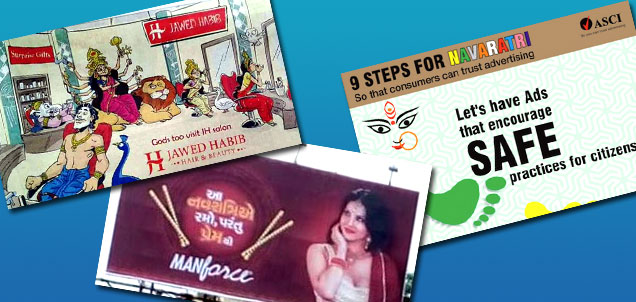
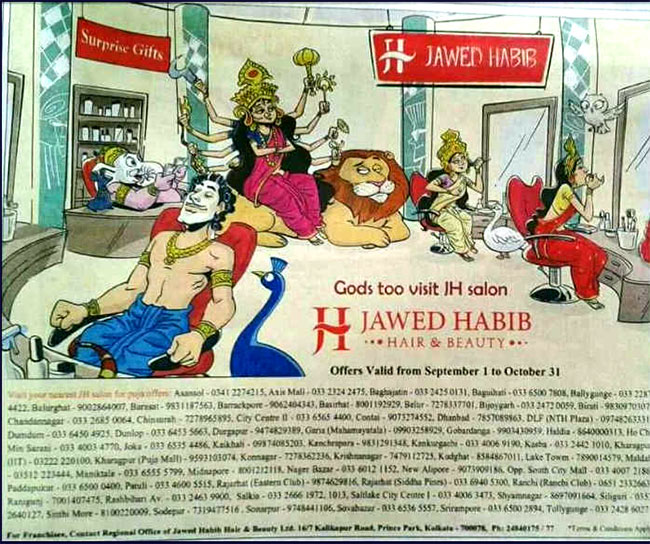
    A few days back, a simple communication from Habib (the hair guru) was the centre of debate. It was completely harmless. Far more play is visible on Bengali magazines’ covers and pandals fronts. Maybe his only fault was being part of a minority. He was instantly trolled. Few rare voices of sanity were drowned under threat. He had to beat a hasty retreat.

    Not a big advertiser. With the creative not carrying weight of a large advertising agency, Habib remained isolated. No one really found time to debate or support. Oh, yes, we don’t support a losing debate, in spite of valid arguments. It is just not right for the industry.

    Next in line was an ice cream brand. It was grilled and trolled by gender-sensitive women power gang. How dare they show celebrating the simple playful act of a young girl making her first round chapati?! Where was the son? What was she doing in the kitchen? The din was too high. Bad even if that was a buzz-creating strategy.

    By ignoring such acts, we definitely constrain creativity, interpretation and innovation. We are not far from a time that the brief for a campaign will go through the list of don’ts. It may be easy to send a list of do’s as it is expected to be shorter.

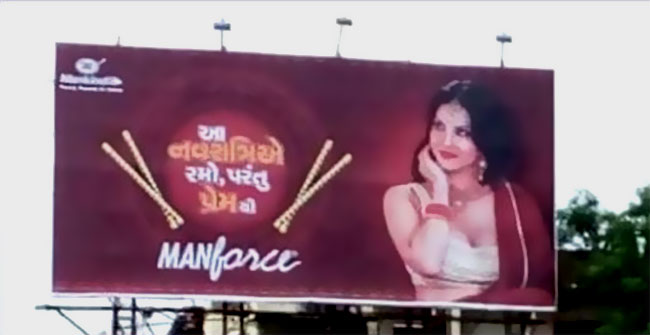
    During Navratri, this time big advertiser Manforce Condoms learnt the same lesson. They did the most blasphemous act of taking Sunny Leone to drive home the importance of safesex. ‘Yuva Vahani’ took offence ‘Aa Navratri a ramo, parantu premthi’ (this Navratri, play but with love). It was insulting. Dandiya-rass was equated to sex opportunities and pleasure. Instead of celebrating womanpower the brand was purposely offending festival sensibilities. Come on!Ultimately, Manforce could not stand against the demand; the hoarding was promptly removed.


    Meanwhile, in my inbox was a visual from ASCI promoting safe advertising. And in my view, ‘Manforce’ was clearly promoting safe practice.

    Manforce ended up apologising for erring and hurting sentiments. I am yet not sure which sentiments were hurt. Was it saying aloud the worst kept secrets? That Gujaratis don’t have sex, definitely not during Navratra. The abortion figures in December, January is just statistical aberration.

    I would suggest that Manforce submits the advertisement to ASCI for guideline violations. Let’s understand where they went wrong.

    What would have happened if some progressive Garba mandals were to place in easy-access boxes of condom? And if Uber or Ola were to place some in their cars? Great activation ideas addressing a segment, but…

    If such a treatment was given to a film, the film industry would find ways to support and visibly demonstrate the intent. In case of books, the authors support by debate walks and protest. Even the frequently abused press behaves with far more solidarity.

    Meanwhile, Baba Ramdev continues with his stance on ASCI and self-regulation. And the industry remains a silent spectator.

    I have no solution but a few wild thoughts.

    ASCI’s role is to stop exposure to an advertisement that does not follow the guidelines. Is it not natural, then to expect it to support and protect campaigns that follow the guidelines?

    How long must the industry suffer such threats? There is a need of collectivism and solidarity.

    We must ensure that all stakeholder organisations are a member of relevant associations. And they must toe the line. The rouge agencies, media and marketers must be penalised – boycotted and not supported in their initiatives.

    It’s a crazy thought, but an advertiser with more than a Rs 2 crore budget must be a member of ASCI otherwise the media refuses to run its advertisement. Any agency with Rs 50 lakh-plus billing must be a member of AdClub and AAAI. These are random figures with no logic. Maybe it will work. However, I have my doubts if it ever happens but no harm in dreaming.

    The associations in addition to being busy with calendar events awarding excellence and creating those wonderful engaging evenings need to find focus on industry issues too. Work on creating a totality of approach and even lobbying for a protected environment for legally valid- guideline following campaigns. It is a collective force of Ad clubs, ASCI, ISA, IMA, AAAI, IAA and other association that may help.

    Remember the appeal for solidarity.. Today it was Habib, Kwality and Manforce. Tomorrow, Man you can in place of them. You will need the collective power of the industry to do what is rightfully right. So, next time onward when something like this happens, speak up and act.

  • Ranjona Banerji: Journalism, RIP?!

    ​By Ranjona Banerji


    You get overwhelmed sometimes by the apparent collapse of journalism in India. It seems that nothing else is happening except owners, managements and greedy journalists kowtowing to the powers-that-be or even worse, stoking the fires of hatred and bigotry. There is enough evidence of this, visible every day.

    It is undoubtedly true that some of the stories are as old as journalism itself. There have always been greedy, rapacious, power-hungry people who have exploited their connections to get ahead. Or made connections to get ahead. Or failed to scrutinise their connections to get ahead. Personal ambition has trumped professional pride over, and over, again. The great concept of journalistic ethics is sometimes a custom more honoured in the breach.

    But this argument itself is fallacious in the current context. Because the sheer volume of bad journalism appears to have broken all earlier records. In India, The Emergency is held up as the best example of the worst of journalists. Craven bootlickers who crawled when they were asked to bend, paraphrasing BJP leader LK Advani’s words.

    And in what way have we become any better today? The size of the media has expanded incalculably since 1975 and so has its power, accessibility and influence. Therefore, when we watch the sort of calculated bootlicking of today’s journalist, unable to do even one story against the government in power or unable to take a stand when Indians are denied their rights and their dignity, then what else can you feel but despair. It’s worse though. There are media groups which have taken it upon themselves to profit from our social weaknesses and fissures. They go out of their way to foment sectarian violence and hatred. I don’t really know what this phenomenon is called in journalistic terms.

    Then there’s the jealousy by belittling brigade, out in full force. Earlier we just shut up about good stories done by rivals or shamelessly copied them or “followed up” to try and get some reflected glory. In all three reactions, the story remained the focus and possibly benefitted from additional work. But now, in large quantities, we have bile and spite from writers who for some inexplicable reasons are considered “journalists” or are made editors.

    They denigrate work done by others, but only if it questions the government in power. Take The Wire’s story on Amit Shah’s son Jay Shah. Any number of these sarkari editors have called it badly researched. Yet the figures have come from the government. They were available to anyone who chose to look. Just because you did not, is it not interesting that you waste so much effort in downgrading the effort of those who did? Why not expend your considerable (if self-declared) skills in either proving the story wrong, although alas, that does not guarantee a Padma award or official position, or show off your editor’s skills in taking the story further?

    Spite is one thing in a school room. In adult life, it just exposes you as incompetent.

    So yes, journalism has never been as bad as it is now. Some of what is practised is not journalism at all. Editors who take stands become jobless. Others are buried in legal cases. Everywhere the long arm of the government tries to stop all criticism. And at the forefront of the rubbish heap of history are all you so-called editors and journalists who helped them.

    O ya, some of us will remember.

  • Sanjeev Kotnala: Want to be happy?Read the book by HH Gyalwang Drukpa

    By Sanjeev Kotnala


    I’m never going to be good enough, so I’ll just have to grab happiness where I get the chance. ( From the book)

    It was late at night on September 19, 2017, at some 30,000 feet in Indigo 6E 404, flight from Nagpur to Mumbai when I finished reading the book ‘Happiness is a State of Mind’ by His Holiness Gyalwang Drukpa. I picked this book at Hemis monastery, on my trip to Leh last month.

    We were hovering over Mumbai airport, and we were asked to go back to Nagpur. Mumbai airport was closed due to rains reducing visibility and a Spicejet flight skidding off the runway.

    Next day, I was expected at MICA. I was to take a morning flight from Mumbai to Ahmedabad. Surprisingly, this entire disturbance of schedule, and uncertainty did not lead to any panic or stress on me. In fact, I acted as stressbuster and guiding other passengers when we landed back at Nagpur. I was not worried. Where was food or when we get hotel accommodation? I was appreciating the effort of limited staff of Indigo at Nagpur, which was not prepared for such a situation. This I Believe Was The Impact Of The Book. I Recommend It To Everyone.


    The book has its own definition and interpretation of happiness. The steps prescribed to achieve happiness are simplified and not tough to adapt. They have been broken down into easy to understand sections. As normal, the narration is iterative, but it adds to the understanding.

    I write this note 15 days after finishing the book. I wanted to check the longevity of impact I think I am still feeling. I am happy to share that there is clearly a change. It Is About Change Of Perspective If Not The Behavior.

    I quote Mark Williams, Emeritus Professor of Clinical psychology, University of Oxford:‘The book guides us through practices that can help us reconnect with life as it is rather than as we wish it to be, and re-discover the deep pace, immeasurable and indestructible, that has been with us all along, hidden in plain sight’.

    Go pick and read it. Discover what may work for you. Get a differential perspective to your chase of happiness.

    ………………………………………………………….

    To back my recommendation here I present few excerpts from the book:

    Happiness is a state of mind- is all about developing a sustained sense of happiness from within. It talks about ‘nurture your mind to loosen its grip on worries or fear, pressure to succeed resentment or regrets, and instead look with love and generosity, embracing the potential in uncertainty, letting others be themselves, finding your inspiration. (Page 09)

    I strongly endorse, and most of you would agree that ‘we human beings seem to find complications even suffering to a degree easier to deal with than happiness: it is easier to complain than to celebrate; it is easier to list what we didn’t get done today, then to acknowledge everything we accomplished. We wrap ourselves in anticipation and ideas about how we think things should be; and we worry that contentment, and peace will bring laziness’. (Page 35)

    Here is another thought that is important, ‘It might sound morbid, but when we truly accept the certainty of death, we truly appreciate life. This is why Buddhist teachings encourage people to reflect on death, rather than hide it away in the corners of their mind. If we don’t accept today that we might die, at any moment, then how we can use this one certainty in our lives to inspire us to release all the conditions we place on happiness. There is no need to put off happiness; you can allow it into your mind and your heart today’. (Page 88)

    ……………………………………………….

    ‘If you think, you are too small to make a difference, try sleeping with a mosquito.’ His Holiness The Dalai Lama.

    ………………………………………………….


    HAPPINESS IS A STATE OF MIND; By his holiness Gyalwang Drukpa. Hatchette India Publications. Rs 399. 253 pages full of happiness.

    Net net. ‘You have to tread the path for yourself. Everything is totally in your hands. Believe and trust in yourself to allow a little more space in your life for happiness’.

  • Ranjona Banerji: NDTV: Brave, but not brave enough?!

    ​By Ranjona Banerji​


    The gossip mills, which is today practically the same as the internet, is full of all kinds of doings and shenanigans at media houses. On the serious side, Sreenivasan Jain of NDTV, who has been holding governments to account on his TV show by checking how their claims hold up against fact, went public with the news that a programme on BJP president’s son Jay Shah was taken off the NDTV website.

    No sooner had he done this than former NDTV star Barkha Dutt jumped in with stories about how NDTV was not as liberal as everyone or the channel itself claims, because of how the channel had treated her. This “liberal” argument is very popular on the internet and is also convenient for some commentators and journalists, because it shifts the focus from the essence of good journalism which is newsgathering and news presentation and concentrates only on political positioning. No proper journalist would contend that it is all right to be liberal and never work on any stories. Across the world, many conservative media houses do very good work journalism-wise, regardless of their political position.

    But the Indian chatterati – and one see the same thought process in Trump’s USA – have created an odd sort of argument about liberal versus the rest which has coloured and influenced even experienced journalists.

    NDTV is in an odd position as far as news channels go. It is braver than its television peers when it comes to taking on government, especially the BJP at the Centre, but it is nowhere near as brave as many newspapers and websites. Some news anchors and journalists are far more courageous than others. Some are meek, some give in easily to government hectoring, some attempt to be “objective” which is another term for allowing the BJP spokesperson to have a free run in every “debate”.

    However, Jain’s problem is serious because he still works there and there have been strong rumours that NDTV is being bought by BJP supporter, Ajay Singh of Spicejet. As for Dutt’s complaint, one might argue that NDTV was very kind to her after the contents of the Radia Tapes were made public, so…


    **


    Equally “exciting” if not quite so serious journalism-wise, is a long, accusatory resignation note by a Republic journalist on how she had to quit Arnab Goswami’s news channel because of how badly she was treated. Unfortunately for her, the story sort of turned on her when Udayakumar, a prominent anti-nuclear activist, revealed how the same reporter had used questionable journalism tactics to hound him and his family.

    To give her the benefit of the doubt, maybe she saw the error of her ways?

    All this sordid finger-pointing led to another lively internet discussion on whether someone who ever worked for Republic TV can be anything but an inveterate sinner or whether one should show compassion. If you look at the argument “objectively” it is the same as the one used for and against NDTV.

    However I will concede that more journalism as she is understood is practised by NDTV than it is by Republic TV!


    **

    Meanwhile in Malta, Daphne Caruana Gazilia, a courageous journalist who exposed political corruption in Malta using the Panama Papers, was killed in a car bomb. The 53-year-old had exposed both the government and other political parties for corruption and was greatly admired for her anti-corruption blog. Thousands took to the streets to demand justice for Caruana Gazilia.

    One more casualty in the shrinking group of journalists who would rather “speak truth to power” than kowtow for favours and awards.


    ​Ranjona Banerji is a senior journalist and commentator. She is also Consulting Editor, MxMIndia. The views here are personal.​

  • Will the new gold standards work for digital advertising?


    By Sanjeev Kotnala


    It had to happen. It is a need of the hour. It is a well enacted drama with no future. The digital industry ad sales is under tremendous focus and pressure. Fake clicks and counts are dominating with fake ads. It is too little too late.

    The advertiser and audience experience has worsened over time. The consumer is frustrated with the digital invasive advertising and has no where to complain.

    Hence, it is no surprise that 23 major tech and media companies, including Google, Facebook, Microsoft and Twitter together signed an ‘open letter’ by the Internet Advertising Bureau ( IAB, UK). This is being referred as the ‘New Gold Standard Initiative’. It aims to raise standards across the digital advertising industry and address the key issue facing the industry in UK.

    It is media companies telling the brands and the advertisers that they matter. A small gesture to say we were in the wrong, and now we are committed to address the issues that should have never been there in the first place.

    The three key initiatives of Gold Standard are:
    ADDRESSING AD FRAUD by Implementatng IAB’s ads.txt initiative. All sites selling digital ads will list companies authorised to sell inventory on a specific site. It will improve transparency and prevent the sale of fake ads.

    ‘TWELVE BAD ADS’. The signatories will follow the LEAN principles, and the standards set by the Coalition for Better Ads. They promise, never to use the “12 bad ads,” such as invasive and pop-up ads, auto-playing-video ads with sound, prestitial ads with countdown, more than 30% ad density, flashing animated ads, etc. across a desktop and mobile.

    BRAND SAFETY: Increasing brand safety by working with JICWEBS to ensure that the Display Trading Standards Group (DTSG) Brand Safety Principles are valuable, applicable and continue to evolve with market expectations.

    These are clearly early first steps and the dateline for implementation yet to be finalised.

    The question remains: what took them so much of time to identify the issues and suggest solution? Are these not things that should have been done? So, what is great about signing an obligatory letter?

    It will remain a toothless paper tiger unless the organisations convert their capabilities and intent to reality.I don’t have much hope. I suggest you too wait and watch.

    We in India know how many industry bodies, associations and self-regulation obligatory guidelines make no difference. The large advertisers and media houses flout rules and break expectations. Everyone lives on hope of some magic and miracle.

    Will ‘Digital Ad Gold standard’ follow the same pattern of disappointing like other industry initiatives, or we will see a much-needed shift? Only time has the answer!

    The 23 board member signatories are AppNexus, Bauer Media, ESI Media, Facebook, Google, Guardian Media Group, GroundTruth, Immediate Media, Mail Brands, Microsoft, News UK, Oath, Quantcast, RadiumOne, Teads, Telegraph Media Group, TripAdvisor, Trinity Mirror Solutions, Twitter, Vevo, Viant, Videology & Weve.

  • Brand Refresh: Indian TV’s Favourite Pastime?


    By Shailesh Kapoor


    On October 15, Zee TV went through what has come to be known as a “brand refresh” in television industry parlance. A brand refresh typically entails a change in logo and packaging, but more importantly, a change in the stated brand positioning, which is often accompanied by a brand campaign, a change in tagline and a channel theme song.


    Over the last decade, brand refreshes of this nature have been rampant on Indian television. Every other month, you see a one of the big channels going through this process. The Hindi GECs have been particularly hyperactive in this area.


    Star Plus had a major brand refresh in 2010, when they unveiled the ‘RishtaWohiSochNayi’ proposition. They followed it up with another round in 2016, where they zeroed-in on just ‘NayiSoch’ as the new interpretation of that thought.


    Sister channel Star One relaunched into Life OK in 2011. Life OK itself then went through a brand refresh or two, before giving way to another relaunch this year, Star Bharat.


    Sony has been through a three brand refreshes in eight years, in 2009, 2013 and 2016. SAB TV has had its share too, with two if not more (It becomes difficult to keep track beyond a point). Zee TV has been through at least two refresh exercises in the last five years, around the ‘Umeed’ thought.Colors probably is the only Hindi GEC that has stayed away with this ‘brand-wagon’, though they have tweaked their logo a few times over the last decade.


    The irony in this hyperactivity on the brand front is not difficult to spot. Over the last five years, Hindi GEC content seems frozen in time and thought. Most positioning changes in brand refreshes are supposedly based on consumer insights that capture what the next ‘level’ of television, or at least GEC fiction content, should be. But almost none of these brand refreshes, with the exception of Star Plus’s 2010 one, have been able to marry the positioning and the content.


    A token show or two are launched to coincide with the brand refresh, but if you look for content being in sync with brand messaging, you will struggle to make sense of it. It’s as if the brand campaign is being created by people who have nothing to do with content, and vice versa. It’s surprising though, because that’s not how TV channels are structured.


    Perhaps the only explanation then could be the gap between intention and action. When a brand is refreshed, there would be an intent to stay true to the idea. But as weeks progress, ratings begin to govern decision-making, sidelining a brand refresh that was, till a few months ago, the biggest thing ever for the channel.


    Which begs the question: Why should ratings and the brand refresh not be in sync in the first place? And that’s where the real problem perhaps lies. Some of the attempted positioning ideas are so off-key that they can possibly never become content filters. While it’s fine to position a channel on attributes that are not just product attributes but capture a consumer insight that’s more personal and emotional, there has to be a path through which the positioning can feed into the product. In television’s case, that path is often forced and non-intuitive, sometimes even absent altogether.


    To avoid being too hard on Hindi GECs in these troubled times for the category, let’s take examples from another genre: Hindi Movies. Star Gold relaunchedin 2011 with the tagline ‘KaroDil Ki’. The new content line-up was fantastic, and the channel took the No 1 spot on the strength of a slate of blockbuster and mass-performing titles. But where did ‘KaroDil Ki’ feature in all this? Nowhere! Even a mapping of the channel’s FPC to the positioning thought, to see if they are running films that encourage people to follow their heart, at least in key slots like prime time and weekends, revealed no such connect.


    Not very different is the case of &Pictures, which did an elaborate launch campaign around a thought that said ‘Sapno Ki Udaan’. It’s just a feel-good line that rests below the logo on the brand material, but has no content play at all.


    Good brand messaging must provide a sharp content filter, which at least 80% content on the channel should be able to adhere to. If this is a “restrictive” thought, then the positioning idea selected was restrictive in the first place and should not have seen the light of the day.


    If you speak to seasoned marketing professionals in the FMCG category, they would scoff at TV industry’s idea of a ‘brand relaunch’. I suspect many in TV know this themselves by now. But somehow, the temptation to relaunch and re-relaunch doesn’t go away.


    It’s a bit early to say if Zee TV will be able to live up to its promise of ‘AajLikhengeKal’. It suggests they should be doing programming that’s supposed to shape the future, and hence, must be ahead of the evolution curve. By early 2018, we will know if that actually happens. Or if this was another brand refresh that existed in its own vacuum, with little impact on the actual product.

  • ​Ranjona Banerji: Many ‘shitty’ men in media?!

    By ​Ranjona Banerji​


    The Harvey Weinstein sexual assault/harassment scandal in Hollywood has had a cascading domino effect across the world. Women enthusiastically joined the “#MeToo” campaign across social media either to show solidarity with those who had been raped, assaulted, groped, harassed, humiliated or to say that they had gone through the same thing, one way or another.

    The conversation has moved on from the film and glamour industries. Academia has been exposed and now a former US president, George Bush Sr, has had to apologise for his behaviour. The media has reported on these aspects and accusations of sexual harassment most conscientiously. Various opinions have been put forth – some in support of the women who are “naming and shaming” predatory men, some pointing out that “naming and shaming” is a sort of an unjust hit and run tactic, men have tried to say they are sorry or that they are not all bad.

    A particular list of Indian academics who have preyed on women has been made public. Author and Pakistan expert C Christine Fair wrote a detailed and painful account of how she has been abused and harassed through her life, which Huffington Post published and then took down from its site, although it is available on her own blog. US-based academic and activist Raya Sarkar who put up a list of abusive Indian academics has created an enormous controversy which has roiled people tremendously. Her Facebook profile was even suspended, although it has since been restored.

    A list of “Shitty Media Men” in the US has created its own problems, with same accusations of justice and unsubstantiated allegations.

    And this is where we reach the crux of our own media problem: the media itself. Across the world, regardless of the number of women who now work in the media, the story of predatory men is largely left unspoken and “tolerated”. Men who are greatly “admired” for the journalism often have a horrific reputation of targeting and abusing women who report to them. The Tarun Tejpal case is a rarity, where a young journalist had the courage to actually make him accountable and demand a court case. You will recall the amount of support that poured in for Tejpal from his colleagues – some female – and one notably dangerous piece written by a man from the point of view of the elevator where the abuse happened.

    Although we write about gender abuse elsewhere, we in the media would rather not tackle it. This is in spite of any number of instances which are reported within media organisations. The whole debate over Visakha guidelines has died down now. The stories continue. Although the Indian media has more women in leadership positions than its counterparts elsewhere, the top job is still most likely to go to a man. The old prejudices of “features” for women continues, although much less. Verbal abuse is tolerated as “banter”.

    Some older women, who identify as feminists and have fought for the cause, however have been acclimatised over the years to try and “be fair” and also see the “man’s point of view”. In a sense, without knowing it, they have been co-opted into old patriarchal systems. Like those cliched women who will swear their daughters-in-law’s main roles are to produce male children and make round chapathis.

    The argument also gets lost into the “not all men are bad” territory which in fact is nothing but a diversion to let the men who do get away with murder, off the hook.

    It is heartening to see that today’s younger feminists are breaking some old rules and shibboleths and becoming more aggressive. I would argue that although their actions are neither “fair” nor “just”, they speak to the decades of change that have not happened. Perhaps in fighting to ensure that women get plum assignments or are allowed to work the night shift, some harassment was brushed under the carpet, or this battle was chosen over that.

    It looks like we have reached another crossroads. If “name and shame” is unfair, the media has to find some other effective method to deal with the demons within. If not, all these exposes and follow-ups are nothing but a hypocritical sham.


    ​Ranjona Banerji is a senior journalist and commentator. She is also Consulting Editor, MxMIndia. The views here are her own.


  • ​Ranjona Banerji: Damned if you damn the government?!

    By ​Ranjona Banerji


    The most frightening news of the week has been the arrest of journalist Vinod Verma from his home in Ghaziabad last Friday. The charge is of blackmail, by Verma of Chhattisgarh PWD minister Rajesh Munat over a “sex CD”. Verma claims this CD has been available for over a year in Chhatisgarh and on the internet and that further, no such CD was found by the police when they searched his house. In spite of this he has been booked under the CrPC.

    The most problematic aspect of this case is that Verma, a well-respected journalist, was part of a fact-finding group set up by the Editors Guild of India, to look into attacks on journalists in Chhatisgarh. The situation for journalists and activists is grave and dangerous in Chhatisgarh and Verma’s arrest only confirms this. To question the government is seen as tantamount to treason and to be a Maoist supporter and worse. Journalists are regularly threatened and harassed.

    There are several loopholes in Verma’s arrest which make it clear that all is not as it appears. The journalist community however has perhaps not been as supportive of Verma as it could have. Perhaps that will come later. It could be because some journalists are preoccupied with being government PR agents, as the next section of this column proves.

    http://indianexpress.com/article/india/chhattisgarh-journalist-vinod-verma-police-custody-raman-singh-sex-cd-case-4912935/


    **


    I didn’t watch it but I gather that CNN

    ​-​

    News18 held a “debate” at 9 pm on Monday night on whether the Congress Party was anti-national. I only know this because a senior journalist from the news channel tweeted about it.

    CNN News18, much as it has been castigated and mocked for being Ambani-owned, has on the whole been less adulatory to the ruling dispensation than say India Today TV or Times Now or NewsX or of course Republic TV. But eventually, most of the media falls into the same pattern: following the agenda set by the government. Some do it to steady their platform and ensure that they don’t get into trouble for too much criticism. Others decide that it is better to become an informal government spokesperson rather than a critic in case of a backlash from the powers that be.

    In some cases, it is the journalists themselves who become cheerleaders. And very often, it is the management which sends down the diktat.

    Whoever is responsible, you cannot but wonder at what constitutes journalism in this TV world. “Is the Congress anti-national” sounds ridiculous, no matter how much you dislike the party or feel contempt for Sonia Gandhi and Rahul Gandhi. Even yellow and tabloid journalism is not this idiotic. I really don’t know what other word to use.


    **

    The enormous battle between millennials and old-style feminists continues over “the list” of predatory male academics and several newspapers and websites have carried opinions on it. However, similar predators in the media have remained safe and secure. The fear of ruining reputations and of naming friends is at work; god knows we are all guilty of that.

    If we cannot go as far as “name and shame” then perhaps journalists need to take on some old-fashioned legwork: how many media organisations have followed the Visakha guidelines and set up committees to deal with accusations of sexual harassment, how many of these are functional, how much action has been taken on so on.

    This is the least that can be done. No?


    ​Ranjona Banerji is a senior journalist and commentator. She is also Consulting Editor, MxMIndia. The views here are her own.​


  • Sanjeev Kotnala: Do you have the courage to change? #MeTooGUILTY

    By Sanjeev Kotnala


    The Harvey Weinstein episode forced many people to re-examine sexual harassment at workspace. Many women shared their experiences with the hastag #MeToo.

    It was apparent that silence and escapism have fuelled the behaviour. There is no surprise at the spectrum, depth and width of this malice that seems to engulf every profession.

    The inappropriate behaviour finds rampant support and encouragement within the extended work environment. For the women, there are no escaping jokes and conversations with sexual overtones. There are gestures and suggestions, demand and implication of sexual nature. Normally, the victims fail to muster courage to report.

    Unfortunately in the power-centric male-dominated space, the woman is still branded guilty or instigator. The predator roams free. It has been going on for far too long.

    Sexual harassment is partially about sex and exploitation. It is more about power and control. Gender inequality in power, freedom, pay and expectations creates an environment where it flourishes.

    It is not a question of Hollywood, Bollywood, MNCs or Indian Companies. Marketing, Advertising, Media and research. More prevalent in paces where people work long hours in close proximity and where the gender divide is big. Organisations know of the possible action they must take. Hence, I am not talking about them. I am talking of the other half.

    ‘MeToo’ coined by Tarana Burke to support ‘women of colour surviving sexual abuse’ in its new avatar of ‘Sexual Harassment in work space’ in 2017 got a million shares on Twitter in 48 hours. On Facebook, it crossed 12 million comments and share in 24 hours.

    The collectivism of sharing personal experience gave many a courage to speak. Lot many found ways to come to terms with their experiences and to stop blaming themselves. While sharing experiences in first person has overall failed to impact the degree and frequency of such incidences it is still an effort worth applauding. Unfortunately, it has every chance to fizzle out like #YesAllWomen, where women shared their experiences with male entitlement and violence.

    #MeToo showed how common sexual harassment at the workplace was. No profession from films, sports, politics, medicine or even teaching was left untouched. In such a scenario, it is not unreasonable to assume that a huge number of predators and silent supporters of sexual harassment at workplace exist. Their salience, like the silence of the victims the predator continue with inappropriate behaviour.

    This brings me to my agenda, A one-on-one discussion with men. Though I here address men, many women may find themselves to be equally guilty of the act.

    The change needs to happen within the MALE of the society.

    Use #MeTooGuilty,

    In case you have in the past covertly, overtly supported or indulged in sexually inappropriate behaviour in the workplace.

    Use #NotMe,

    If you seriously believe you has never been part of it. Your actions have not encouraged the in appropriate behaviour. I have doubt if someone can seriously honestly use it. And here ‘Men will be Men’ is not an excuse or a thing to laugh at.

    We all know what is an INAPPROPRIATE BEHAVIOUR that makes women uncomfortable at the workplace. So, question yourself.

    Have you ever knowingly or unknowingly contributed towards creating an environment that accepts and suggests attitudes and behaviours around sexuality?

    Has your behaviour or silence helped propagate sexual harassment at the workplace?

    Share #MeTooGuilty in case you have indulged in such behaviour like…

    • A behaviour that you know could be termed sexual harassment.
    • Have you knowingly shared explicit sexual jokes in presence of women? Doing so with the intent to make her feel uncomfortable or use that joke as a pretext and lever to push for future actions and control.
    • Stared at the legs, cleavages and looked up the skirt making the colleague uncomfortable.
    • Not speaking out when you knew that of an incidence of sexual harassment.
    • Have you suggested sexual favours?
    • It does not matter if you used the cover of drinks or used your position and power to group, kiss, brush and press against, caress, touch, feel, dance or hold women colleagues against her wishes.
    • Used or encouraged the use women body to close the sale.
    • Suggested and or commented on women character without any evidence.

    Be honest in your thinking and intent.

    To start, here is me #MeTooGuilty


  • General Elections 2019: The Media Battle Within The Political Battle


    We are about 18 months away from the next General Elections, which are likely to happen in the summer of 2019. With the Gujarat elections in December this year, the atmospherics have started to build up. 2018, then, is set to be the most politically-charged year in India’s history, especially from a media perspective.


    2014 were the first General Elections where the true impact of the social media was prominently felt, and since then, there has been a further surge in how digital media – not just social but digital news platforms too – have begun to impact the political sochof the nation.


    Till about a year ago, it seemed that 2019 will be a no-contest, with a non-existent opposition to challenge the might of the Modi government. However, things turned interesting on November 8 last year, when demonetisation was announced. That move, followed by the implementation of GST this July, has led to considerable debate about the government’s economic adventurism, and its pros and cons.


    The Opposition is also slowly putting its house in order. Though it’s nowhere close to being a serious challenger for now, 1.5 years gives them some more time to set things in place. Rahul Gandhi is probably in the best phase of his otherwise-unflattering political career so far, and state-level opposition, such as Mamata Banerjee is Bengal, is vocal too.


    This sets up things nicely for 2019. Irrespective of how close or one-sided 2019 is, we are sure to have a pitched battle in which the media, both traditional and digital, will be used in a way even 2014 didn’t witness.


    Most television and print media houses have evident political alignments now. This has put the credibility of traditional media to test over the last year or two. And it’s in this backdrop that digital media has emerged as the stronger force in shaping up the political opinion of the voting public at large.


    It’s not as if digital media platforms do not have political leanings. But unlike traditional news, digital news is a matter of discovery, with Whatsapp, Facebook and Twitter being the platforms for organic dissemination. And that’s where diversity of exposure comes in. You could be reading a highly government-skewed take on the state of the economy in the morning, and then one that squashes all government claims on the same subject in the evening, both via your Facebook newsfeed. This could be confusing at times, but in general, the diversity of views available in the digital media has empowered the voter to make more informed choices.


    2018, then, is ready to be the watershed year for news media, where traditional media will have to be on the top of its game to match up to digital media. It’s a contest within a contest. Will traditional media stand up to digital, even as the country’s top politicians fights the bigger battle? 2018-19 will tell us.