Category: COLUMNS

  • Guest Comment by Jaisurya Das: There is no option really… It’s cerebral or nothing for brand sustenance!

    By Jaisurya Das


    Fresh bathrooms are just a whiff away… or so we were told.  Godrej Aer, the freshener brand, gave The Times of India readers in multiple cities a great whiff of what sensory branding is about. I discussed this in Dear MxM a little over a month ago and was pleasantly surprised to see a great example on the ground.  No, I don’t consult with Godrej or its creative agency but, I certainly think they have taken the best step forward considering the brand category.


    What better than sensory sampling in such a category?! Nothing can match the sheer delight of the audiences when they start the day with a delicately fragrant newspaper. I am reminded of how I pounced on issues of Vogue, Cosmopolitan etc decades ago since I was so enamoured by the  lovely perfumes infused in their pages. From one perfume brand to the other, little scratch-n-sniff patches on the advertising delighted the readers. I still distinctly recollect how I cut those patches and actually put them under my primitive microscope to get to the bottom of this magic!


    The perfumers carried through this experience to their ‘point of sale’ giving customers a whiff of all their variants, not to forget the periodic spraying of their counters to attract the shoppers walking by Well planned strategy, though it comes across as just matter of fact.


    From great smelling aircraft to the tantalising aroma of a seething hot tandoor, every detail is carefully charted in a great marketing plan.


    Our senses define our experience and thus the immense potential of sensory branding in a fiercely competitive marketing environment. Mind you, this works both ways and hence a bad sensory experience can result in permanent boycott of a product / service. A musty hotel room for instance is an example of how shoddy housekeeping can result in customers being turned away for good.


    I must confess, I use this principle even at my modest office in Pune where fresheners are put to use couple of times a day. For long I imagined that I was the only one who realised the office had a pleasant aroma to it till very recently when two frequent visitors remarked “Your office always smells nice, JD!  Wonder if it’s something in your air-conditioning?” I smirked, most thrilled!!


    It’s not just the sense of smell, it’s about and experience beyond the ordinary… the sense of touch when you run your fingers over a shirt and decide if it’s comfortable enough or the taste of the melting milk chocolate telling you that it’s the finest Swiss you can get…


    Can a chocolate ever seem this nice without tasting it? No. Experience is about sensing characteristics, deeper quality and its compatibility with the individual.


    Earlier this month, I met a packaged food major in Bengaluru who believed that instant food is predominantly the traveller’s delight and thus his focus was on this community. Good thinking but myopic since instant gratification in the food segment is actually a mass need.


    Volumes will drive growth and not value. Availability and reach will make the difference. Variety and palatability will govern repeat purchase. Defined mass for many categories must emanate from the larger overall mass or pie. Hence chasing a niche thats success will be defined by volume would be outdated strategy and will not stand the test of time.


    Can sensory branding elements be the answer here? Is popcorn mass or niche? Think…


    Unfortunately we tend to take decisions on marketing strategy for a brand basis what we think is right; Exponential growth doesn’t come from gut feeling. It needs research, deep audience understanding and most importantly the ability to think beyond POP ( point of purchase ) danglers and hoardings! An open mind works best for a futuristic marketer and this is simply because no one in their senses can predict tomorrow. Unfortunately, we don’t have Nostradamus either.


    Consumer behaviour is the most misunderstood thing of our time and will only get tougher to fathom as we go along..


    If I can hazard another prediction: It would take less than a decade for technology to deliver touch and smell to our computer screens. Yes, I strongly believe this will happen and we will soon be enveloped in delectable aromas when we browse through food and food products..


    This is the future. Consumers will demand more for their buck and each buying decision will be governed by much more than variety, price, availability and peer review..


    Buying is an impulse for over 75% of online shoppers or so I believe; On the ground a bare 25%. of buying happens on impulse. Most buying decisions are taken before you step out into the sun and yet when it comes to sitting back and shopping online, it’s sensory branding again which governs your decision to hit the ‘buy’ button.You see images flashing before your eye, each one better than the other. All skewed to your basic need to fulfil your innate desire..


    The desire to own, to conform, to match and to surpass!


    And to think it’s just a fancy algorithm running background that requires no human interface to understand your need to buy that is making you salivate at the screen.


    Well, all this may just seem like ramble of a brand maverick but the fact of the matter is that there is a lot of essence in the need to understand audiences of the future.


    To leave my fellow marketers with food for thought here is my bucket list for the future…
    1. Consumers will not behave the way we do. They will follow their mind, not norm.

    2. Buying will be triggered by an innate desire to own and surpass.

    3. 75% of all advertising will be focussed on reminding, not triggering interest or purchase.

    4. Purchase decisions will be based on an innate experience with the product or service.

    5. Repeat purchase will be a million dollar guess !

    6. Flirtatious behaviour with brands will progress to completely flippant infatuations.

    7. Love and sustained relationships with brands will only stem from their ability to deliver an almost orgasmic experience time after time.

    8. Content/ copy will be judged basis their capability to titillate our senses. Not necessarily the kind with sexual overtones but enticingly engaging one way or the other.

    9. Well, the bottomline is that our senses will remain governed by the impulses our brain receives and records, be it brand imagery or just emotion.


    There is no choice really; Brands of the future will need to connect on a cerebral level.


    Jaisurya Das, the maverick media-evangelist eats, sleeps and romances brands !

    His cerebral consulting interventions are aimed at making brands powerful and sustainable.

    He is also Contributing Editor, MxM India and writes a weekly counseling-based column titled ‘Dear MxM’.  For more information on his work visit www.xanadu.co.in
     

  • Sanjeev Kotnala: Handle with care, Tender Tinder?

    By Sanjeev Kotnala


    What is happening in this world? Brands are blatantly disregarding current perceptions and looking at a digital exposure challenging regional biases and rituals to create the desired shift. Nothing wrong with it.


    So, Tinder (yes, Tinder) in its digital film for India has a mother very sportingly approving of her daughter’s dating by swiping right.


    Meanwhile, in a parallel development, foreigners are warned that dating is not prevalent. They should be ready for a polite ‘no’ to an offer of coffee or movie.


    One of then is right, and it may be Tinder.  Nevertheless, I believe that it is not the film idea, but the brand name which created the hyped viewership.


    In public understanding and may be the brand’s understanding, a ‘Lot more can happen over Tinder’. Tinder is so tender . You can make anything from it. Would it be happy seeing itself as yet another platform where meet people meet or the marriage angle is just a strong wink at the culture?


    Romantic relationships or one-night stands all in the swipe of the user, after all ‘Tinder. It’s how people meet.’ Yes, you got it right #SwipeRight to a world of possibilities.’ So, is the app trying to revolutionise or has it read the situation better?


    It may be quite foolish to see it as a woman’s empowerment process, where the woman decides what she wants out of life. For a brand to be working in the regional context, there definitely is a need to adapt to Indian rituals. Even so, it is more needed in the app than the communication alone. On the other hand, are we the one reading it totally wrong.


    Neither do I know how many of the readers above 35 are on Tinder, nor I know what the younger generation is making out of it. There is a palpable shift happening. People are meeting beyond the familiar family, college, social events, festivals. Such stories are also taking shapes in the contemporary India, but the shift is not tectonic. Are we ready for the new Tinder?


    Nevertheless, everyone is cautious not to be seen using the app. Forget people are worried about someone noticing the app on their mobile. A confession: I did venture to create a profile on it, but held back. The apprehensions are more than justified.


    It has the ‘TO MATE’ signboards as much in bold as ‘Adult friend finder’. Will this film edge it towards the desired platform of ‘TO MEET’ is a moot question?


    If one was to believe the social media, it is too much to expect. It seems, the brand has misread the cultural influences and is bound to create more confessional confusion. May be, I and other marketing professionals are out of sync.


    This silly exercise may go a long way in making the older generation. The influencers in family level drop their guard. Consistency will be the key. God forbid if there are Uber moments arising from this app.


    If you watch the film, the gestures and the dialogues with a heavy dose of localisation, you may feel it depriving you with the testosterone and adrenaline of excitement.


    We currently have few layers of morphed dating.

    • Family alliances- limited meeting and not dating.
    • Non-family alliance with family approval- semi dating.
    • Cross-religion/ language alliance with a higher degree of dating.
    • A semi metro searches for a life partner – true dating.


    As a culture, we are in a trap, as the younger generation is willing to experiment and take decisions to forge alliances on a hit-and-trial basis. The ever-changing status on Facebook a reflection of these changes. However, we have this ‘purdha’ that everyone seems to go logic-blind. May be it is time for the purdha about meeting-mating and alliances to leave its opaqueness and become a bit more transparent and acceptable. Could it be that Tinder understands the new generation better than many of us working in ivory towers and making our assumptions based on the multiple youth studies?


    It is true that the brand is in a trap.


    The excited users see it as an FLIRTING and SCORING app, which is an activity on the sly. The brand wants a much more OPEN ACCEPTANCE which is no where near the current perception. However, can you fault it in trying. It is a well-thought-out strategy. Success over here will multiply subscription from the generation it wants to address.


    The film may have done its job in opening a dialogue and discussion. Tinder is a tender subject trying hard to be accepted. Theoretically, it may have been better for it to have remained in the consumer’s perception leading to higher excitement.


    I do not see ‘We met on Tinder’ as an acceptable alternative to ‘We met at a college/ social event, garba or cousin’s marriage’. But then I have been proved wrong a few times.


  • Two reviews of Results Day 2016


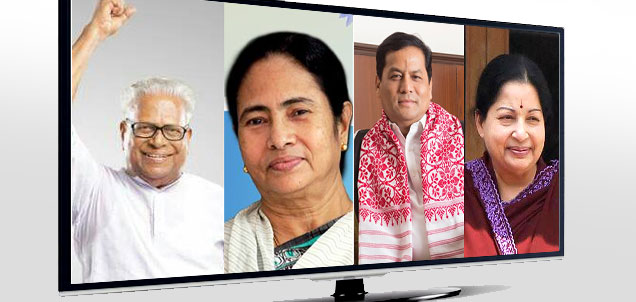
    Election Results Coverage: A Mix Of Hits & Misses 

    By Shailesh Kapoor


    There are very few tentpole days in television news these days. The debate format has homogenised the genre, bringing it down to personalities rather than the news or its coverage itself. And if you are a regular news viewer, you would get the feeling that something of utmost national or global importance is happening everyday. There are no slow news days anymore.


    The only real tentpole days left are those of election results coverage, which is just about one day every year. 2016’s election results day just passed by, this Thursday. Four states and the Union Territory of Puducherry went to polls over a couple of months, and it all came down to May 19, the day of the counting and the results.


    The results themselves did not have the edge-of-the-seat element or kahaani mein twist. Tamil Nadu was not as close as some had predicted. West Bengal, Kerala and Assam went on expected lines. Early trends held on till the end, and no Bihar-like moment happened, where several channels, including NDTV, wrongly predicted the outcome in favour of BJP, much too early, based on very thin and almost irrelevant data.


    The English news coverage itself was a case of hits and misses. Over years, election results coverage has started testing the multitasking skills of viewers, which is never a great idea. At one point of time, you may have to pay attention to five things – the ticker with the state-level seat leads, a second ticker with seat-level details, the graphic on the screen trying to analyse a key trend, the anchor talking you through all of this, and a voice, often of a panelist (one of many waiting patiently to get themselves heard), trying to add value to it all.


    When there is no major excitement in the results, like this time, this format exposes its weaknesses. It puts the onus of comprehension on the viewer, instead of the channel taking the responsibility of simplifying things for its viewer, in a way that’s easy to comprehend yet not dumbed down.


    Times Now used some new graphics, under the fancy branding of ‘Data Journalism’. There was too much branding and build-up to it all, but the actual content of these innovations ranged from mildly interesting to banal. While these new properties, with names borrowed from a math class, were a bit of a miss, the channel relied on Arnab Goswami’s unrelenting energy and enthusiasm to have another good day. His gentle rebuking of his panel members, when they entered side conversations, was particularly endearing.


    NDTV was the only English news channel that did not expect you to multitask. They typically had (like always) limited data on the screen, and spoke at a pace (like always, again) that needs to be fast-forwarded 4X to match Goswami. Much as this idea of de-cluttering has merit, there is something soporific, Doordarshan-like about the NDTV coverage over the last few elections. That roundtable set and the casual style just doesn’t bring purpose to the proceedings. In contrast, their analysis shows in the evening have a lot more going, with the best talking heads and some interesting, often lateral, questions.


    One of the more interesting segments of the day featured Arjun Jaitley and Shashi Tharoor debating the results on India Today in the evening. While Tharoor had the tougher job to do (defending Rahul Gandhi is never easy), the debate had depth and civility that’s a scarce commodity these days. Perhaps because the more eloquent talking heads have stopped appearing on television debates barring an odd day like this. Can you really blame them?


    We have a few key states lined up for elections in 2017-18, led by UP, Punjab and Gujarat. Hope we see more hits and less misses in that coverage.


    Why waste monies on Exit Polls 

    By Ranjona Banerji


    Most exit polls showed Mamata Banerjee winning a second term in Bengal. And indeed, the Trinamool Congress and Banerjee did win. But there’s the thing. On May 16, at around 7 pm, the ABP-Ananda poll said she would win 163 seats, C-Voter said 167, India Today said 243, Chanakya said 210, News Nation said 153. As everyone knows by now, Banerjee won 211 seats, higher than her majority of 184 in 2011, when she had formed a government in alliance with the Congress.


    In Tamil Nadu, on May 16 at 8 pm, here were the exit poll predictions: India Today DMK 132, News Nation DMK 116, C Voter DMK 78, NewsX DMK 140, ABP Nielson 132. That is, incumbent chief minister J Jayalalithaa of ADMK was losing, except according to C-Voter who said she would win 139 seats. J Jayalalithaa won 134 seats.


    In Bengal, we see confusion over the number of seats with only Chanakya coming close to reality. In Tamil Nadu, other than C-Voter, we see the exit polls getting it completely wrong. I am using only two examples but they should be enough to bring up once more the point of this exercise. Newsrooms spend a lot of money on exit polls, now almost essential it seems in the hysterical run to be first with breaking news. The range of seats for the Trinamool and the absolute distance from reality in Tamil Nadu are only two examples of how either the process or the presentation is faulty.


    This is not a critique on polling agencies. But it is an indictment of newsrooms which tend to rely so much on them, especially since so many of these exit polls go so wrong. More reporters on the ground may perhaps be a better way of balancing these surveys. The Bihar assembly elections of 2015 and the general elections of 2014 both quite drastically showed that exit polls cannot be fully reliable.


    As far as television coverage of the election results themselves are concerned, we were back to nothing different. You could argue that there is no other way of doing it. But it is still much of a muchness. TV is what most people depend on at times like this and yet there is a limit to how much of the same old stuff the viewer can handle.


    Is it necessary for instance for anchors and experts to start jabbering at a TV studio from 7 am? As usual I opened the Election Commission website at 8 am and tracked the results there. As usual, the EC was at variance with news channels since it showed nothing till around 8.30 am. TV channels by this time were running ahead with all kinds of numbers all different from each other. However, after the Bihar assembly debacle of last year where exit polls, TV pundits and trends on screen had no connection with reality, all our experts and commentators were far more circumspect this year.


    There is a tendency amongst some loyal TV viewers to stick with NDTV and Dr Prannoy Roy for election results and budget coverage. And since NDTV got it so wrong in early in the day for Bihar, this time they ran a script saying that early trends included postal ballets which are not always reliable. A sensible move at some damage control.


    If TV is about the way the way things look and sound – if not necessarily whether it makes any sense – then CNN-News18 was the most sober. Not hundreds of numbers and talking heads vying for attention. Times Now wins that battle hands down as usual — sound, fury and symbols clashing ceaselessly. NewsX remained copycat, as it must. India Today TV was in the middle.


    By the end of the day, they all looked really tired but I must admire the way guests and anchors talked and talked all day though I have no idea what they said. I watched Masterchef, I cannot tell a lie.

  • Ranjona Banerji: Lies, Damned Lies and Data Journalism

    By Ranjona Banerji


    Data journalism is the big thing in this digital age, they tell me. Basically, this means interpreting numbers to present a picture to the reading or viewing public. Alternatively, it is about revealing what is hidden in the crevices between “lies, damned lies and statistics”. You might argue, as I did to myself when I started writing this, that “data journalism” is not therefore new. It has existed long before it got a suitably trendy name. I use the word trendy advisedly and slightly mockingly because in this “digital age” you have to sound both trendy and important. I explain what I mean because in this “digital age” you are also regularly in touch with some of humanity’s most dense specimens.


    There, now that I’ve insulted enough people, let’s get on with it.


    How did data journalism or attempts at data journalism present the recent Assembly election results (Assam, Bengal, Kerala, Puducherry, Tamil Nadu)?


    “On the face of it data journalism” is simple: The Congress lost Assam to the BJP and Kerala to the Left; Mamata Banerji and J Jayalalithaa retained Bengal and Tamil Nadu respectively and the Congress got Puducherry.


    The takeout from this: The BJP is on the rise, having also won three seats in Bengal and one in Kerala, not their normal hunting ground. The Congress’s decline continues since it has lost two states. The Congress-Left alliance did not work in Bengal although the Congress did better than the Left. However, the Left far overtook Congress in Kerala. No one seemed to be bothered by what happened in Puducherry.


    And then there’s “behind the scenes data journalism”. This tells you that the Left contested 452 seats, won 124 and therefore had a success rate of 27.4 per cent. The Congress contested 363, won 115 and had a success rate 31.6 per cent and the BJP contested 696 seats, won 64 and had a success rate of 9.1 per cent. Data will also show you that the BJP’s vote share has come down compared to the general elections of 2012. Further, 450 BJP candidates lost their deposits in these assembly elections.


    You can also compare the BJP’s strike rate in 1984 and now and conclude that it has improved dramatically since then. You can also compare Congress in 1947 to now and conclude an even more dramatic fall.


    Therefore, these numbers can mean anything you want them too. And that is why “data” is not enough – although it is vital – and some real journalism is required for perspective and interpretation. One of the fallouts of social media is that every other person you come across is an expert on journalism without having read a newspaper let alone spent 10 minutes in a newsroom. To them, being a journalist means being a TV anchor or a columnist.


    I would put forward the reporter as the star journalist in this context. Reporters with their noses twitching, ears tingling and their feet stomping on the ground are invaluable. They can present an accurate picture on how people think, feel, act and this helps in interpreting data. The reason why opinion polls – especially when it comes to voting in India – can go wrong is that people lie. But the rigour in the practice of journalism and the advantage of a vigorous and experienced newsroom means that you have to root out the lie and corroborate the facts.


    I should not however have to tell any journalist all this. Journalism is not economics where you can claim all is well with the economy because the Wholesale Price Index has come down even though the price of everyday pulses has gone through the roof and there is drought everywhere.


    And at the end of the day, the BJP won more in real and perception terms than the Congress. And Mamata Banerjee and J Jayalalithaa won more than the BJP most emphatically and dramatically. Data journalism or otherwise.


  • Sanjeev Kotnala: Training without competency gap analysis is like Shooting blindfolded

    By Sanjeev Kotnala


    Organisations are expected to meet their objectives efficiently, and be ready for the new challenges the market could throw. To achieve that they bank on competent trained employees.


    Competency benchmarking and gap analysis help in recruiting right candidate, succession planning, growth and higher retention of qualified talent. They focus on development plans to decrease the bridge the gap of talent/ skill in a role against what the organisation can pick by hiring. Unfortunately, most organisations have no competency gap measurement.


    Properly mapped competency’s status and gaps identify skillsets, knowledge, behaviour, functional expertise and capabilities needed in short or long-term. Organisations then use effective processes like mentoring, training, buddy, e-training and other to bridge the gap at an individual or group basis.


    Organisations looking at competencies must differentiate between the ‘required competency’ at the hiring level which can be proved by certificate and experience and ‘acquired competency’ which may need to be demonstrated. Both are essential for proper results.


    In case of a regular formal competency-based training system, the recruiter can identify skillsets that can be enhanced post-recruitment and concentrate more on the ‘required competencies. Competency gap analysis sounds complicated and time-consuming, but it is simple and quick to administer. Most of the competency gap analysis at a department and location level can be done in two days. And the impact is long term.


    The four steps for an elementary competency gap analysis are.

    • Competency assessment; determining the exact skill sets for the job.
    • Creating a competency map for the role.
    • Using the competency map as the foundation the employees should self-analysis and rank themselves. They must share why they have chosen the rating they have given and how have they demonstrated their expertise level within the competency area.
    • Senior employees should verify, tweak or rank the employee on the competency map.


    This provides a good foundation to developing a formal training module. Planned training not only overcomes the barriers within organisations but also enhances training ROI.


    Competency mapping leads to a skill / functional and behavioral checklist. It is a useful tool at the recruitment level. It can be used to create benchmark training programmes customised for the organisation. Such standards and benchmark are used to identifying employees ready for the next level.


    Competency gap analysis defines skill set benchmarks across levels. The benefit of training is further amplified by measuring training impact on pre-agreed success matrices. This iterative process fine tunes the competency map and gap analysis of the organization.


    To do so, organisations define the competency level at every stage along the three dimensions of Competency, Proficiency and Context. For example, ‘Actionable B2B Ideation’ or ‘Exemplary Business Development Presentation’ which has the context if ‘B2B’ or ‘Business development’ is far more focused and measurable than ‘Ideation’ or ‘Presentation’. Usually, organisations fail to record the context. Properly done, it is transparent and easy to understand. It motivates the employees to gain capabilities in the desired area.


    Proficiency level must be graded in an acceptable framework. Defining just five stages like Beginning, Developing, Practitioner, Accomplished and Exemplary is a good process. By doing so, associating an appropriate training program with the right candidates becomes easy.


    If one adapts SHIFT (Specific High-Intensity frequent Training) as a process, then it is suggested that the mother competency is broken into multiple sub competencies. A ‘Business Presentation’ competency may be broken into; Business speak, Writing presentation, Public speaking, Slide designing, Presentation delivery, audience engagement techniques and Q&A session. At individual, group and department level, it can be identified whether competency can be enhanced just by achieving sub competencies, at what level, in which sequence and, which are the parts that are important. An employee already Exempleray in slide designing may not need to be trained in it. And two employees at practitioner and Beginer level must not be trained together. At the same time, an excellent senior salesman may need training in speaking English before being pushed upstairs.


    Competency mapping is essential to enhance ‘Training ROI’ and get the best out of Learning and Development programmes, So, decide if you still want to hit blindfolded or would want to make a fresh start.


    Sanjeev Kotnala is founder of Intradia World; a Brand, Marketing & Management Advisory. His focus area includes Ideation and Innovation; he also conducts specialised workshops like IDEAHarvest, Liberate and InNoWait. For soft skill training, he follows SHIFT (Specific High-Intensity Frequent training), a process of continuous training with frequent shorter sessions. Email sanjeev@intradia.in tweet @s_kotnala web: www.intradia.in www.sanjeevkotnala.com.


  • Shailesh Kapoor: GECs in a Promotional Traffic Jam Post-IPL

    By Shailesh Kapoor


    We are just two games away. This Sunday night, the ninth edition of the IPL will be out of the way. Out of the way for the rest of the mainstream media, especially GECs and big-budget Hindi films, who stay away from taking panga with the league. Since 2008, when the IPL started, this has been the tradition, barring a few exceptions.


    The Friday after the IPL final has become a key week for Bollywood releases. Only five new Hindi GEC shows have gone on-air since the IPL started, two of them in non-match hours (before 8pm). A typical month over the last five years sees six launches. At that rate, we should have seen at least 11 launches in the IPL period.


    Clearly, IPL is the thing to avoid. After all, most shows do not come with an expiry date, and shifting a launch by a few weeks only means extending a long-running show by the same period. Piece of cake!


    The thought process of avoiding IPL is based on sound marketing logic. When there is disruption and distraction around, you can get lost in the noise. IPL certainly impacts the viewing patterns in a predominantly single-TV India, shifting the control over the remote, with complex negotiations that families have worked out for themselves over the years. In such a scenario, a new launch could be easily given a skip.


    But is it as simple as that? Nine to-be-launched Hindi GEC shows are being promoted aggressively by various channels currently, all slated to go on-air from this Monday (May 30) till the end of June. At least three others may announce their June presence soon. So we have two months’ quota being delivered in one month. Add to that the various events and movie premieres, and you realise the problem is back!


    Part 2 of the problem is equally important to state. Many existing shows will plan a major plot point in the month of June, leading to promotional focus. IPL is out of the way for them too. We may see a couple of leaps, some new characters and a few maha-episodes and maha-sangams.


    The very disruption and clutter that led to the IPL being ducked is going to be on full display in June. The viewer’s appetite to handling new shows is fairly limited. Even the most seasoned viewers cannot recall more than two upcoming shows unaided. In such a scenario, the more high-profile launches on bigger channels like Colors and Star Plus will still make the cut, but the problem multiplies significantly for the next set of channels, who do not have that kind of daily reach or equity currently.


    The GECs will be caught in a promotional traffic jam this June. Time for one of them to come up with a fresh, almost lateral, approach to manage the IPL in 2017?


  • Ranjona Banerji: Has Times Now’s News Hour gone totally beyond journalism as we know it?

    By Ranjona Banerji


    Times Now remains India’s favourite English language news channel, or so it seems. And much of this popularity has to do with Arnab Goswami, its editor-in-chief and star anchor. Goswami has evolved a very particular combative television style, full of the sound and fury of the righteous. Often, he asks the moral question: should people behave like this, should we tolerate that and so on. Often it works. But more and more regularly, especially recently, Goswami has ventured into territory that is no longer strictly journalism by usual standards and is more a combination of a hectoring pulpit preacher, a government spokesperson and Jerry Springer-type talk show host.


    We realise that almost all “prime time” debates on news channels are platforms for cacophony and bad manners. We realise that little is to be gained or learned from watching these except the enjoyment of drama and spectacle. Many people I know, myself included, have stopped watching Times Now because of the noise and nonsense. However, there are times when we need to take stock.


    According to Asad Ashraf, a journalist who has done stories on the Batla House “encounter” and studied at Jamia Milia University, he was invited to Times Now for a discussion on the encounter after a recent IS video was made public. However, according to his report, the discussion turned into the usual yelling match – so far so normal. But then Ashraf was accused by Goswami of being a cover for the terrorist group Indian Mujahideen. Other guests on the show also agreed. Ashraf was not allowed to defend himself. Now, the video of the debate has been taken down from the website.


    This is Ashraf’s account of what happened:

    When Arnab Goswami called Muslim journalist cover for Indian Mujahideen


    This is what I found when I went to the Times Now website:
    http://www.timesnow.tv/Debate-BatlaManInISIS/videoshow/4489589.cms


    This is not the first time that Goswami has let loose on his own panellists or encouraged his guests to attack each other beyond all norms of civilised behaviour. But each time, it is getting more and more dangerous and less and less convincing as any form of journalism. It seems a bit over-the-top to call the programme “News Hour”…


    **


    The Guardian has issued an apology to its readers about the work of a freelance contributor accused of fabricating quotes and information. Unfortunately this remains a problem for all newspapers and news agencies, even those with fact-checking departments. A person’s opinion is one thing. But a person’s ethics is quite another. It is sad and indeed problematic for all good freelancers when these bad apples spoil the pool.
    Incidentally, what is taught in journalism schools these days?
    http://www.theguardian.com/commentisfree/2016/may/26/open-door-column-note-to-readers


    **


    Since the Narendra Modi government completed two years in office on May 26, every news channels scrambled to get any Union minister they could to talk about the government’s achievements. As usual, no perspective, more like PR efforts. As some wag on Twitter pointed out, the only way you could escape a politician was by watching a sports channel!


    Newspapers and websites concentrated more on editorials, columns and analyses to assess the government but here too, we were treated to BJP president Amit Shah and Venkaiah Naidu, Urban Development minister, extolling the party’s and government’s virtues. Still, better than those loooooong TV interviews.


  • Ranjona Banerji: No news is not good news

    By Ranjona Banerji


    A severe storm on Saturday took with it several power lines in Dehradun. The result was a power outage that lasted over 48 hours. The further result was that all regular channels for news and information slowly trickled down to word of mouth, hearsay, rumour and gossip. No electricity leads to phones running out of charge – obviously. What little you have, you save for emergencies.


    So how much did we miss the news? Well, we did want to know what has happening to us. But we got no newspapers on Monday, whether because of the power outage or the local vendor’s inefficiency, we have no idea. According to word of mouth news and the electricity department, prominent areas of Dehradun city had no electricity at all for between 24 and 50 hours. Empirical evidence showed trees and electricity poles uprooted all over.


    Yet, Tuesday’s newspapers – Tribune, Times of India – which usually have extensive city coverage had nothing at all in them about Dehradun’s plight. There was one story about the damage in Uttarkashi and Tehri regions in Tuesday’s edition of the local TOI as well a box about the possibility of more heavy rain. The Tribune had even less than TOI and concentrated on the heavy rain warning.


    I expected nothing from The Hindu, Indian Express and Asian Age because they do not present themselves as local papers although they did cover the rain warning. I have met some of the Times of India reporters and find them to be committed and on-the-ball. So who does the news editor’s job? Any rookie will tell you that local news is paramount and when you are suffering locally, you do not really care about general and political news of “national importance”!


    The Hindustan Times which has some excellent reporters and good Dehradun coverage also fell short as far as Dehradun news is concerned. Here again the focus was Uttarkashi.


    The Pioneer, again with good reporting staff in Dehradun, is the only newspaper website which mentioned Dehradun’s problems on Monday morning. On Tuesday however, the power outage was not mentioned and instead we were told that Doon residents were happy with the fall in temperature after the rain and that jaundice cases were rising.


    It is not surprising that Uttarkashi got prominence, given that there was extensive damage and casualties. Even more important for the rest of India is the fact that the Char Dham Yatra is on and therefore pilgrims from all over India are affected.


    But what does it cost any newspaper to have a small 400-word story on how the citizens of parts of Dehradun suffered after the storm? After all, local news pages told us on Tuesday about the following vital news stories: officials in Udham Singh Nagar were unhappy with the transfer of the district magistrate, a fight over the Uttarakhand Rajya Sabha seat, a boy who did well in his board exams, a woman who climbed Mount Everest, writer Bill Aitken’s birthday plans, traffic jams thanks to political rallies, apart from the Uttarkashi damage. You know what? Barring Uttarkashi, I don’t really care.


    I know that my gardener got hit on the head by a flying tree and the local grocer had to throw away Rs 15,000 worth of ice-cream. I know that hundreds of trees fell down or were damaged, some on buildings and others on roads and power lines. I know people were who trapped inside their homes for 24 hours because of debris and related damage. This is what I’m interested in. And I suppose I have to go back to my days as a reporter to write my own story!


  • Sanjeev Kotnala: Will Bigg Boss call me for an audition?

    By Sanjeev Kotnala


    The Bigg Boss ‘India- Isse Apna Hi Ghar Samjho’ registration for audition closed yesterday. It is a carefully thought out strategic move from Colors. A move that for being successful will require a lot more efforts than just selection of interesting common people.


    The selected ones will live with the celebrities. Creating space for new interesting characters and stories with potential for align the viewers. How far will it go depends a lot on the ratio of common man to celebrity.


    I am an ardent student of ‘Bigg Boss’ and have repeatedly questioned the use of celebrity as prop to attract audience. I believe the real test of the format is when it can stand on its own.


    If it is just one or two common persons then it is no different than the initial seasons. Taking all residents as common people is possibly too big a risk for the channel. Nevertheless, they can start with a cross-cultural and geographical mix of people across social strata. Later on, if required to correct the fabric, the famous the magic wand of wild card entries and forced evictions can be used.


    So what does Bigg Boss does to a viewer. It creates a 24×7 open zoo scrutinising every possible move by the animals (people) inside. It gives the audience a really high voyeuristic pleasure of seeing helpless residents of the house survive using of Saam Daam Dand Bhedh. It is not just the romantic relationships that get seeded but also human emotions that get challenged. It is not easy but essential to sacrifice friends and enemy at the altar of nominations and evictions.


    Every year residents discover a new formula for survival. Forget the last year, the last episode, the last day or the last moment is no guarantee of future performance. The twists are more viscous than in the snake-and-ladder board game. The fragile emotions and at times boomeranging initiatives are all part of excitement for both the resident and the audience.


    Is it survival of the fittest? I am not sure.

    To me, Bigg Boss is a real challenge for anyone to participate. It takes sheer mental strength to go in and meet few strangers and spend time with no normal intervention and escapes provided by TV, newspaper, radio and the social media. It is a task of self-discipline and individual strength to partner and create new fragile equations fully knowing that the future is everything but stable. ‘Change is the new constant’ is something well 0xperienced in the house. There is a huge entrepreneurial streak that is evident in every action.


    The culmination and the last few weeks are the real test of moral strength. Whatever one could say, truth remains is not different. If two fairies were dancing on a pinhead with fire burning around them, there will come a stage that one of them will push another. And these are just mere mortals living through their own vision and unsaid strategies for survival and win.


    So, before the application gates closed, I put my hat in the ring. The 3-minute video and the short 500 character (not words) answer to ‘why I want to be in Bigg Boss’ was more like filling a university application form. The social media handles (Twitter and Instagram) will provide the team an insight, and help them decide if they should call for the audition.


    Well, this is the area I fail. I am a dedicated domesticated husband with no affair outside marriage. My wife is my girlfriend, and we are in love. I have grown-up disciplined kids with no problems. There is no fight in the extended family. I have no court cases or police record. There are no controversies, and I am loved by all I have worked with (Hope that’s true!).


    I do not make for an exciting story. After all, I am a mere engineering graduate from Jabalpur, a sleepy little Tier-II town in Madhya Pradesh and a IIM Ahmedabad alumnus with corporate experience in advertising and media. Now an independent brand and marketing advisor, trainer and facilitator. This does not make an intoxicating cocktail that could excite the team at Colors auditioning for the future residents.


    Now, this is where the selectors and their algorithms could go wrong. They need a person who will be disruptive in thinking. One who is capable of playing the game-like chess. One who thinks that it is like golf, where you play the game more with yourself. A team leader who knows how and when to morph into a team member. A person who is genuinely concerned about others. And the biggest drawback, a person not so vocal in his demands and conscious of the imagery that he will project from the screen.

    May be, they will ignore my application for audition at their own risk.


    Colorswaalon, please do not select Monsieur Kotnala. MxMIndia readers can’t do without ‘Kotmartial’ for three months! 🙂  – Ed


  • Ranjona Banerji: Fun and games on news telly

    By Ranjona Banerji


    Last night (Thursday) on English television news, between 7.30 and 9 pm, was all fun and games as usual. That is, both Times Now and India Today TV had exclusive sting operations on how MLAs can be bought and sold, with a focus on Karnataka. It’s deeply embarrassing when two news channels have done “exposes” on the same subject and when they are placed next to each other by the cable operator or satellite dish service. O dear.


    But perhaps what is more interesting is what was not covered in this time frame by most channels – the allegations of a corrupt land deal against senior BJP leader from Maharashtra, Eknath Khadse and the verdict in the Gulbarg Society case. This was one of the more vicious attacks during the Gujarat riots of 2002, when 69 people were killed by rampaging mobs.


    Barring Karan Thapar on India Today, who hosted a sharp and no-holds-barred discussion on Khadse, what did we have?


    There was lawyer Indira Jaising and the BJP’s GVL Narasimha Rao – who has evidently been told by someone he should smile more – on Barkha Dutt’s show, discussing how Jaising’s NGO has had its licence cancelled.


    Times Now was very angry about corruption in politics over its exclusive but shared with India Today expose on the MLA market. Ads scrolling at the bottom of the screen promised us that Arnab Goswami was going to be even angrier. Rajdeep Sardesai appeared on screen with sombre gravitas – unlike Times Now’s shrill invective – to discuss political corruption and greedy MLAs.


    CNN-News18 was on another tangent with people complaining about how they haven’t got their flats on time. A most welcome show of helpfulness perhaps better suited to the daytime. NewsX had star anchor Rahul Shivshankar screaming at some panellist to take a stand – it looked so absurd that I did not bother to wait to find what he was supposed to take a stand on. Probably never to appear on NewsX again.


    CNN-News18 did however take on Khadse and Gulbarg in its 9 pm show.


    **


    As usual though, some TV journalists were obsessed with allegations about Khadse’s purported calls to gangster Dawood Ibrahim rather than the political outfall of his land deals – which are likely to be extremely significant for Maharashtra.


    It is intriguing though that while corruption consumes our self-righteous TV colleagues they stop suddenly when it comes to going further. They have some pet subjects. Like MLAs and horse-trading. But accusations of financial irregularities by Maharashtra minister Pankaja Munde are easily forgotten. It was The Indian Express and my former colleague Sandeep Asher who investigated Khadse’s land deal, so once again, hard work requires more than waving a few papers in viewers’ faces and showing us grainy videos with garbled voices.


    I am not drawing the obvious inference of fear of government anger but…


    **


    Meanwhile I’m starting to feel really sorry for government spokespersons. How long can they keep saying what amounts to: “I know nothing but I am sure the government/party will do something”. Also interesting is the trend of having a “BJP supporter/Modi fan” as part of a television panel. (Do they do this with other parties?) Either these supporters know more than the government spokesperson also on the panel or they are there as ballast to prove that no one knows anything.


  • Shailesh Kapoor: Highly Non-troversial: When Snapchat Videos Become News

    By Shailesh Kapoor


    Pointless controversies have kept our media buzzing for about a decade now. When Indian celebrities started taking to Twitter a few years ago, using social media as a source of news collection and reporting became an acceptable proposition. Slowly but surely, such news made its way into the primetime and on the first page. Then, it became a topic of news debates.


    But nothing beats the silliness of the ‘non-troversy’ of this week. The Tanmay Bhatt Snapchat video spoofing Lata Mangeshkar and Sachin Tendulkar offended many Indians. Being allowed to take offence is a sign of a thriving democracy. But calling for arrests and giving primetime importance to something that shouldn’t have made it to television in the first place is a sign of our times.


    It’s a sign of how news-starved our channels are, and how publicity-hungry several celebrities, starlets and politicians are. What’s there to even debate on the said video? It’s a piece of humour with no social or national security ramifications. And this is not the first time we have seen celebrities been spoofed. Why should the idea of a whether a spoof is acceptable or not depend on who’s being spoofed? The constant use of ‘Bharat Ratna’ in the argument made us non-Bharat Ratna-winners seem like worthless algae.


    In a mature society that respects its art, the response of an artist who felt disgusted at the video would have been to put up a piece of work (a Snapchat repartee or an open letter, perhaps) to counter the one that offended him or her. But we have no such luck, do we? Our model is simple enough. Our ‘celebrities’ will tweet their disgust against something like the video in question. News channels, forever on a Twitter prowl, will handpick the most interesting tweets, and a taskforce will be put to get them to appear on the primetime show. Not that it’s a challenge. The other side is ever eager anyway.


    Yet, there are some appearances that can perplex you. How would Rakesh Bedi, an actor who’s largely inactive now and hasn’t tweeted for two months, make it to a primetime debate? Who would even come up with the idea? Answers to questions like these can make for fascinating reading in a book called “How TV Channels Run”.


    If you thought this was a controversy big enough, brace yourself for what’s to follow over the next three weeks. Udta Punjab is coming up, but a messy mix of certification board, courts, state governments and religious-cum-political ‘activists’ will thwart its flight. And Udta Punjab’s battle to get a fair release will only be a trailer to what is likely to happen to Dangal later this year.


    Enjoy the chaos. For it is a reflection of what we have become.


  • Ranjona Banerji: Is it right to expose Bihar ‘toppers’ on news television?

    By Ranjona Banerji


    Of all the news stories that have grabbed our attention in the last few days – the inexplicable cult at Mathura being top of the list – one has stood out as an example of media overreach, to me at least.


    At first glance, you might consider the TV interviews with students from Bihar who “topped” their Class XII a great scoop of a story. By demonstrating on camera how little these students know about the subjects they studied – prodigal science for political science which is about cooking, not knowing the connection between H2O and water – this report proved that exam results are likely fudged, that undeserving students become “toppers”, that the Bihar education system is in the doldrums. The photograph of parents, friends and relatives scaling up the walls of a building in which exams are being held to help students cheat comes to mind.


    But you probe a little deeper and what has this “expose” achieved but to publicly humiliate young people who are themselves the victims of a system. There may have been many ways to do the same story without making nationwide laughing stocks out of these students. Their public takedown is going to live on the internet forever. It could be argued that the students were intimidated by TV cameras, that their minds went blank at the excitement of being interviewed for their “achievements”, it could be that they were genuinely ignorant. To me at least the journalists posing the questions sounded very intimidating and judgmental. A set-up most likely.


    And since when is either ignorance or stupidity such a big crime? The bigger criminal to me seems to be the education system that they went through. Why not put the teachers and examiners through the same TV interview test as these students.


    There was also an underlying tone to the first story and several subsequent ones that the education system in Bihar was particularly to blame. But come on. Almost every state and central education system is faulty, destroyed by political will and administrative apathy. First tackle why such a small percentage of every budget is spent on education and then have some national chest-beating on the stupidity of students.


    But as every journalist with half a conscience knows, no one is really interested in such stories. And in a typical inversion of logic, we spend much time and effort on higher education, asking for more and more. But without sound primary and secondary education, what else will you get but duffers? Again, we in the media will focus on scores and toppers and when we go beyond that, we make students the target of our scorn.


    A short visit to village schools in India will demonstrate that often it is a miracle that anyone gets educated at all. One teacher for all classes who usually hasn’t been paid for months, if the students are lucky two teachers, teachers who have to make the mid-day meal so cannot teach, toilet blocks which are blocked and locked, no equipment, buildings which most likely have no chairs, tables, windows and doors.


    I don’t want to sound like a hypocrite about this. There is nothing wrong with journalists putting people on the block. But there is a difference between being tough with the head of the Maharashtra Navnirman Sena Raj Thackeray, which as we saw with Times Now does not really happen, and taking on some poor kids.


    Here’s a welcome follow-up story from The Indian Express, which underlines the cruelty of this “expose”:

    http://indianexpress.com/article/india/india-news-india/a-child-who-faces-camera-for-the-first-time-can-get-nervous-bihar-topper-ruby-rais-grandfather-2836594/


    **


    As a last comment, as a person who conducted entry level tests and interviews for journalists in more than one newspaper, do I have some stories to tell about the stupidity of journalists! O boy!