Category: COLUMNS

  • Sanjeev Kotnala: You’ve come a long way Baba!

    By Sanjeev Kotnala


    The image does not leave easily. It is imprinted. Baba leaving the ground in the dark night to a stage where his trump cards Ayurveda and Yoga find the biggest sponsor.


    The images are a bit hazy, but the impressions are stark and clear. It is a strategic marketing move, that has been rarely analysed. There are companies worried at the uneven playing field. It is a Baba and his uncertainties and not MBAs that are dictating the game. They are forced to play a game where the rules are still being written.
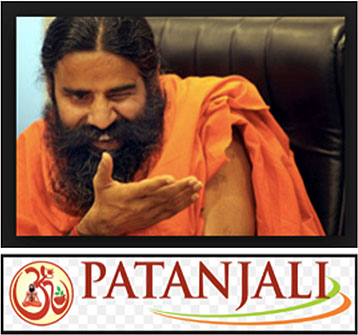


    Leveraging simple trust and faith in old Indian traditions and science is Baba’s empire. Building up to exploit the suspected modern processes as unhealthy, harmful and possibly adulterated. The open-chested, eyes squinting and the passionate Kapal Bharthi are an integrated part of Baba storytelling.


    When a brand moves high on popularity, spoof and jokes also find their way. Rajnikant, Babujee, Alia Bhatt, Rahul Gandhi can take a deep breath of temporary relief. There is a new toy in the market. The jokes and spoofs will get back to their favourites but as of now it is the time of Patanjali.


    The last tweet that I read before writing was from a friend: ‘What do u call a girl who falls on a hot tar road and gets burns? Patan-jali.’


    There have been many jokes about ‘Putra Beejak, Patanjali Helmet, Patanjali Daal and Beer’



    Jokes aside, brand also finds its naysayers.

    There was unsubstantiated finger-pointing when Maggi was banned.


    There is a huge question mark regarding Patanjali product quality, consistency and approval. Baba has been on TV defending the position.

    Patanjali on a targeted Rs 5000 cr revenue talks of spending Rs 10,000 cr on Yoga Research, which is known to be a derived, research led complete science. Where is the money, honey?


    It is rumoured that there are more than 300 products being manufactured and distributed under the brand name. Baba is on record in stating his intent to enter dairy and dairy products beyond the already available ones.  Keeping in sync with the new-age consumer and distribution demands, brand products are marketed through e-commerce sites, including patanjaliproducts.net


    Patanjali as a brand has grown strong. It aims to work in six verticals: natural medicine, natural food, natural cosmetics, dairy products, cattle feed and natural manure, each of them a two-word umbrella covering a wide spectrum of possibilities.


    The brand is a case of simple boundaries and well articulated position. It is one of few clearly defining its intent not to be in meat, liquor, non-vegetarian items, or things that may be known or considered harmful.


    It has a well-defined clear target than many established corporate. Babajee does not intent fighting Zandu, Dabur, Hamdard. These are the domestic Indian companies that Babajee and gang will like to see grow. They want to fight international FMCG companies.


    There is a section that believes that ‘World Yoga Day’ is a clever government-aided marketing lever for Patanjali. The reason why they believe is not tough to see. Patanjali product architecture is built around traditional knowledge and Yoga. Babajee, the default brand ambassador or the posterboy is strongly associated with it. He was known and supports the new government, though at some times, he has mildly questioned current givernment efforts in bringing back black money. That sounded more of playful bantering than a strong opposition like Ramleela ground agitation.


    So, when the brand gains strength, stands for a very polarised unconventional approach, a set of consumer and pseudo intelligent start taking potshots. Is it really a sign of brand having arrived?


    A heightened focus and high consistency observed in behavior, promise or failure becomes the lever for spoofs. Nothing has changed. Only life of a spoof has reduced, which has nothing to do with decreasing technology cycle.


    Social media in its own peculiar democratic way allows for unfounded discussions. It encourages wannabes to post amplified comments and share content. Nothing else but a new toy can rein it.


    Beg, Borrow or steal, in addition to Like, share and tweet are today’s norms. These are picked up by the traditional media. Highly comic circus aping news channels and wanting to be in sync topical entertainment channels play to the gallery. Nowadays, the whatsapp phenomenon works as an independent catalyst to such content, helping Babajee further spread the message and reinforce its unique branding?


    Meanwhile, Baba keeps writing new chapters. The back of the pack becomes the front of the pack. The internal stakeholder becomes the prime celebrity endorses. A chain of doctor-clinic-shops emerges. This is followed by brand’s shop-in-shops in bigger retail formats. The converted are reconverted to the faith. People running after modern amenities and pleasure take a u-turn to start endorsing Babajee products as a justified counter to their modern life-style.


    On the other side, many are waiting for the brand to fail on quality and consistency parameters and its attempt to expand at an unbelievable speed, spreading itself thin, or so they believe. Most are surprised at the pace of growth and sudden creeping of a mysterious Baba on the corporate marketing world. For them, it is scarier than a Stephen King’s story.


    It is debatable, if an IPO was to happen, how far it will help Babajee scale new heights. What is the really leverageable worth of the brand or is it just smelling the initial euphoria?


    There are questions that remain unanswered. Why worms in Cadbury were such an issue, but insects in Patanjali Atta is not. When ‘Indian Samvad’ reported that samples of Patanjali’s desi cow ghee failed test because of added colour, the news did not travel far, and media silence in such cases is confusing. Is there a muffling of media or is there some deal?


    Why women who are highly sensitive to the chemicals in cosmetic brands and possible associated risk, willingly accept Babajee offerings. Is it because of a predominant belief in goodness and no side effects of Ayurvedism. Don’t think (not sure) if any ASCI code is being violated.


    The advertising of Panatjali is slowly getting aggressive. No longer are the plain island and banner sponsoring news. The Patanjali 3.0 advertising plans are already showing their new-found knowledge and marketing acumen. The product brand architecture is creating new synergy and is very contemporary in its appeal. The white coat debate, the honeybees on honey, the crisp grains and much more, makes for a very emotionally rational approach.


    The brand clearly plays on the unhealthy aspect of other products. In an isolated case of Kacchi Ghani oil advertisement being withdrawn, Babajee justifies it with: “We just said that oil made through the chemical process is not good for people. And our Kacchi Ghani oil was made without any chemical process, and it is a healthy product.”


    Babajee will never lie. He does not want political position. He is all for the benefit of the society. He will keep the cost low. He will never bleed people and fleece the common man. When you have such a strong belief supporting the brand, you can become complacent but that is something Baba is aware of. The learning of Lal Qila is not lost.


    Meanwhile, the consumer is willingly believing in it. They swallow the decently camouflaged pill of selling products at no-profit, no-loss. Why not when the CEO of the company, Acharya Bal Krishna holding 94% of the stake is known for not taking a single rupee as salary!



    The emergence of another quirky face on the brand is not lost. It is ego of the owner’s face or a strategic path to decrease the risk associated with a singularly focused franchise. Baba in the past is known to suffer from the same foot-in-the-mouth disease like Salman Khan; however, it seems to be under control.


    So, what next, a chain of Yoga Gym chain, publishing with so many books and other information to distribute, performance in IPL or even the rumoured regional airline. It is anyone’s guess, as the mystic Baba always plays his cards close to his open naked chest.

     

  • Ranjona Banerji: The Interview: A press release from govt-run PIB?

    By Ranjona Banerji


    So “The Interview” has not been as well-received by other news organisations as Times Now might have imagined (hoped?) it would. Before we get into the “jealousy” factor, which I gather has been raised by Times Now, its own sibling newspaper The Times of India was mildly critical of the Prime Minister’s contention that the media should not make “heroes” out of people within his party who make objectionable comments. As TOI pointed out, it is the media’s job to bring such comments to public notice. And it is the party’s job to correct those who step out of line.


    Unless of course, the party imagine the line is elsewhere…


    Most editorials pointed out that the “Interview” in fact achieved nothing and that the questions on Subramanian Swamy and the comments by other BJP leaders were not tackled strongly enough. You could add to that the NSG fiasco, the way the drought was dealt with, rising prices, the false election promises, rise in communal attacks, the condition of farmers, relations with Pakistan, terrorist attacks…


    A little more homework and a little less self-preening may have led to a better job When you read the transcript of the interview between Arnab Goswami editor-in-chief of Times Now and Narendra Modi, Prime Minister of India, the flaws are even more apparent. The theatrics and optics – to use today’s jargon – are missing. And what you are left with is reality, stripped of all its makeup. The questions were either anodyne or leading or contained the answer within them. There was also all that mandatory sucking up (O, you have a lovely sense of humour) which unfortunately (for the interviewer) looks so obvious without tone and sound.


    “The interview” now looks like a press release from the government-run Press Information Bureau. It may well have been a speech by a Prime Minister who is very good at giving speeches. This was an interview as a public relations exercise. Many PR companies today will in fact provide you with such an interview with a film star or a sports star if you want. You attend a press conference, pick up your goodies and the Q&A and get back to office, story in hand.


    When the Prime Minister says that it is a matter of concern that there is a lack of humour in public life, the interviewer needs to take it further. A “matter of concern” in what manner, one may ask, when it is people who are opposed to the BJP who pay the price for their humour. Instead, the PM made himself into the victim, where even he is afraid of using his remarkable sense of humour. Perhaps that would have been a good time to talk about rising intolerance in the country.


    The answers about Raghuram Rajan and Subramanian Swamy’s attack on him were marginally higher than bland, about as gentle as the questions. Incidentally, soon after the interview was aired, Subramanian Swamy was back on Twitter attacking Arnab Goswami and calling all journalists “presstitutes”, which is the BJP’s favourite term. So much for being chided publicly on air.


    Some commentators have postulated that Goswami was angling for the job of government spokesperson and they may well be right!


    I can only add to that the idea that Seth Rogen would not be able to make a film out of this “Interview”.


  • Ranjona Banerji: No one cares for locals in Dhaka attack?

    By Ranjona Banerji


    A friend in Bangladesh got understandably upset when, after the horrific terrorist attack in Dhaka on Friday, international news channels BBC World, CNN International and Al-Jazeera concentrated only on Italian and Japanese victims, as if no Bangladeshis had died in the attack.


    This unsalutary practice is a form of what? – racism? tribalism? nationalism? nativism? – and is seen across all media organisations no matter how enlightened or how many times the word “behove” is used in edits. As a former edit writer myself, I posit that this tendency does not “behove” journalism. The Friday of the attacks, Indian news television for instance concentrated on the one Indian woman killed by the terrorists as if the others did not matter, as if 20 people had not been butchered.


    For some years, the media has been told by those within it to “think global and act local”. However that is, as is evident, harder to practise than to preach. In an emergency, journalists tend to think of those closest to themselves or look for connections which they think will interest their readers.


    Therefore, in the Indian subcontinent, the Dhaka attacks got front-page attention but the attacks in Baghdad where at least 90 were killed was on the world pages. We are perhaps inured to violence in Iraq since the beginning of this century. One more attack and you turn the page and check to see what happened at Wimbledon. That is our reality.


    The excuse for international news channels however is harder to find. Both BBC World and CNN International supposedly cater to a larger audience than their home nations. And Al-Jazeera has positioned itself as local to the Gulf but in some sense larger in its understanding of our part of the world than its immediate competition. The logic therefore fails. Are the deaths of Italians and Japanese more important than those of Bangladeshis? How many Bangladeshis are equal to one white European? Does that sound needlessly harsh? Remember, this is not the first time this has happened. Whether by class or race, people are divided all the time.


    As to my friend in Bangladesh, I can only apologise for this insensitive behaviour of fellow journalists.


    **


    Twitter’s role as a platform for abuse requires some thought from its administrators. Bollywood singer Abhijeet Bhattacharya is known for his foul language and somewhat questionable views. He crassly tweeted about how people who slept on pavements deserved to die like dogs, in a bid to support Bollywood star Salman Khan, for instance. He has also taken strong positions about Pakistani singers performed in India. And sent some very disgusting tweets to a woman who accused him of sexual assault.


    His latest is an attack on journalist Swati Chaturvedi. Bhattacharya tweeted that the man who killed a woman at a Chennai station last week was a Muslim and that this was part of some “love jihad” plot. Chaturvedi responded by saying that the man arrested for the murder was a Hindu called Ram Kumar, accused Bhattacharya of “fomenting communal tension”. She also called him a mediocre singer.


    Bhattacharya’s response was as usual filled with filthy language and sexual innuendo. Chaturvedi however is not easily cowed down and has reported his tweet to both the Mumbai police and to Twitter.


    Not all journalists – especially women journalists who bear the brunt of such attacks – are as brave so more power to her.


    The world of Twitter remains extremely misogynistic – many followers of Bhattacharya, most of whom proudly announce that they are “Hindu”, started a campaign to attack Chaturvedi even further, to either display their fragile masculinity or their even more fragile idea of spirituality.


    This same glee at attacking women journalists was evident when the hashtag “Arnab Slaps Sagorika” – over some conversation between the two about Goswami’s interview with Narendra Modi – started trending, presumably to prove how manly TV anchor Arnab Goswami and his fans are when it comes to journalist Sagorika Ghose.


    Is that one point for mankind’s glorious future, would you say?


  • Sanjeev Kotnala: Read this before you read the next self-help book

    By Sanjeev Kotnala


    Self-help books are big business. It is approximated to be worth $11 billion. There are always more people under stress, underestimated potential waiting for that motivational kick that will change their lives. That is their belief. They seek self-help books like a honed pigeon. They keep picking one book after another. It must be doing something right for them otherwise there is no reason for them to buy them.  Or there is a possibility of getting addicted to self-help books.


    Once you dig deep, you will find self-help books provide temporary relief, a conduit of confidence and possibility of feeling good. They do have their placebo effect. Their impact is really short-lived. Once trapped in this cycle, the addicted reader keeps on venturing out to get a different drug or a higher dose. They externally seek induced motivation to correct what is wrongly wired inside.


    Self-help is an ancient tradition and tool. However, to get the real advantage, one needs to practice what one reads. And the reader needs to be selective in adapting what will suit a situation.


    Reading a self-help book is nothing new. It is nothing to be ashamed of. It is estimated that in the current generation, every adult at some stage would have read, sourced or flipped through the self-help books on subject of their interest.


    There is a wide spectrum of subjects on which books are available or possible. Subjects spectrum range from ‘How  to become a Millionaire’, ‘Gaining confidence’, ‘How to flirt’ to  ‘How to convince and close sales’. Weight loss, dieting, yoga, health and better sexual pleasure dominates the arena.


    There are two things that matter in case of self-help books, One, to decide which book to read and two, how to implement what you read.


    This is where your need to be selfish. It is more than investment of time and


    So, start with your SWOT analysis and identify the areas you want to address with the help of books. Scan the market for the same. Read reviews. Check author’s credentials and experience in the subject. If it is spirituality and religious spectrum, it is adviseable to follow writers of your faith. Check which you are included in its core target group. Do not restrict yourself to a fix set of authors or genre. Sometimes you will find the answers in a different category. Maybe write your need, in terms of ‘I wish someone had a book that can help me ……….’


    Now that you have a shortlist, on the internet or in a shop, read few pages and see if the writing style is in sync with your way of reading. If it is, chances are you will enjoy adapting some part of it. Do not pick anything that makes a hugely impossible promise. Do not have over expectations. Be prepared for long haul and gradual change.


    Pick up from the latest set or an updated reprint incorporating development in understanding of human behavior. Once you finalise on the book, don’t procrastinate, pick it up and read it.


    This is the stage where the second issue of how do you adapt the self-help book learning into your life becomes critical.


    Go ahead and take few more books on the same subject. Pick books allowing moderation and adaptability. Avoid books promoting ‘only my way’ kind of philosophy. Assimilate tips and create your recipe that will work for you.


    Take baby steps. Look at gradual changes. Find the simple tips that you can adapt to without many problems. This will build in self-confidence and enhance your capability to implement tips. Be strict with yourself and give it time to demonstrate the effect.


    Be wiling to fail and learn. Be ready for few lapses and to restart. There is ample possibility of lapse and initial failure, Be prepared for it.


    Set your target and create your own matrix of measuring success.

    Finally set yourself rewards that you will give to yourself when you succeed or see the change.

    Self-help books can be of help but only to people willing to experiment and implement learnings. So, be selfish and be very wise in shopping for the self-help book.


    Sanjeev Kotnala with 28 years of corporate experience is the founder of Intradia World; a Brand, Marketing & Management Advisory. His focus area includes Ideation and Innovation; he also conducts specialized workshops like IDEAHarvest, Liberate and InNoWait. For soft skill training, he follows SHIFT (Specific High-Intensity Frequent training), a process of continuous training with frequent shorter sessions. Email sanjeev@intradia.in tweet @s_kotnala web: www.intradia.inwww.sanjeevkotnala.com.


  • Dear MxM by Jaisurya Das: I am a visulaiser… it is better to work in an ad or design agency?

    By Jaisurya Das


    Ladies and Gentleman, Welcome back to yet another edition of Dear MxM, India’s premier counselling column for the adverting, media and marketing world.


    Thank you readers for your amazing warmth and valuable feedback. This week’s column is dedicated to all my younger readers who are making great careers in branding..


    Over the past few months, I noticed the somewhat flippant use of the term “iconic brand’ be it an marketing collaterals or huge billboards. Often for brands that are far from occupying this hallowed space. Maybe it’s time we examine the essence of iconic branding albeit form my own perspective!


    So what makes a brand iconic after all?

    Let’s examine a few examples(in random order)before we get into the mechanics of ‘iconisation’…

    Harley Davidson, Rolex, Amul, Rolls Royce, Zippo, Heinz..

    Ever wondered what makes a brand iconic?


    Here are some attributes that go into iconisation of a brand:

    *  Age and the Test of Time

    *  Sales volumes

    *  Audience, Psychographic profile of the customer

    *   Its Intrinsic value to the customer

    * Cult image enjoyed

    * Status symbol

    * Peer pressure

    * Quality and physical attributes

    * Persona


    Interestingly, most of these iconic brands have been around for a while (read three decades or more) and enjoy a global customer base.

    One of the significant triggers for iconisation is probably the cult image that these brands occupy in terms of positioning. The aspirational emotion of ‘I want to own and be part of the elite group’ is more than established with most legendary brands.

    Having said this, I was particularly curious to study the reasons behind why India is home only to a handful of iconic brands. The Ambassador (Hindustan Motors ) is a great example of how a brand has stood the test of time or the Maruti Gypsy for that matter and yet, we don’t seem to value for reasons best known to us.

    I often wonder if this has something to do with our innate desire to gravitate towards international brands more than our home grown ones. Or is it the lack of expertise and marketing talent to build an iconic brand of our own? I guess a lot of these questions will remain unanswered and yet somewhere most of us know it’s nothing more than rhetoric.

    I know I would be committing professional harakiri if I were to get into the mechanics of brand ‘iconisation’, however it’s important to you a peep into what this involves. Honestly, it’s no rocket science but just a well-calculated deep understanding of the process of buying. It’s just that the practitioners (me included ) make it sound so confusing..

    In my opinion, the starting point is believing in the brand. I say this out of experience. Often one finds brand heads who don’t believe in their own product end to end. Belief is the root of passion bereft of which this relationship is nothing more than an infatuation. I know I may be ruffling many a feather with my candid remarks but this is the truth. If you don’t believe in your brand, you have no damn business to manage it.

    Start by believing, and follow this with miles of walking the streets to connect with your consumers, Befriend them, and listen to what they have to say about your brand and its pros and cons. Don’t ever forget that the biggest critics are your catalysts to create the perfection required to become iconic.

    Iconic brands are born of a mettle that is difficult to replicate. Quality that is unparalleled, attributes to die for, perception that is higher than its price and the ability to strike a chord with any race, any geography across the globe.

    There is a defined process for every facet of marketing, Its a science after all.

    Iconic brands are created, not born. Use the science of effort and deep understanding and soon enough you will be running a winning brand. Once an icon, always an icon.

    Ramble done. Here’s our weekly Q&A this week from our readers in the South of India; Chennai, Hyderabad and Bengaluru. Read on…


    Sir, I am a visualiser and have done an advanced course from an art school. Is it better to look for a job in an ad agency or design agency?


    Good to hear, my friend! Since you are well-armed with all the creative academics it would be prudent to join a company that will give you enough room and freedom to experiment.

    Having said this, I must add that an advertising agency may not be entirely design or art-focussed but they can certainly give more than room for creative freedom! 

    It’s really greatly dependant on the company and its leaders. You may find a great design agency but that doesn’t necessarily mean that you will get the room to display your talent.

    Tread this path with caution. Speak with people who work there or have dealt with them in some manner. This feedback can really help you take a sensible decision.

    Do remember that great work isn’t about big names or positions. Creativity and the ability to adapt to the changing environ is the crux. Go where your heart takes you. Believe me, most often it’s right.


    Sir, you wrote about Mr Samir Jain being a true media pioneer while discussing a question on who would make it as the Father of the Indian media? But hasn’t Mr Jain’s Times of India group also introduced questionable practices such as Medianet?


    Absolutely. May I with your permission, reproduce an extract from my column of June 30, 2016…

    “This changed the face of Indian Media once for all! No, Samir Jain isn’t the father of Indian Media. No one person is, or will be. But yes, he did what many couldn’t imagine doing, no matter if his moves are debatable, questionable or otherwise.”

    I think it’s also important to go into the thinking and basic objective of this move. From what I understood, Medianet came into being in order to legitimise paid content. Hitherto, this was the unstated prerogative of many an unscrupulous journalist in Indian media. Well, you have a rotten egg everywhere.

    Machiavellian thinking is at times called for. For me personally, Medianet was a strategic move such. Quite simply, the business of media…!


    As a marketing professional, I have tremendous respect for such ideation. Yes, as an individual and a writer of sorts, this seems unethical and highly questionable.

    But does it really matter when most content has already been reduced to

    doctored handouts?

    I have learned to live with mediocrity. You must too.


    I am looking for placement next year but want to be ready career-wise. I am a journalism student but don’t know which city I should work in? Please help 

    Great! Welcome to the wonderful world of media and content ! To be honest, a good journalist will find space in any town..

    Yet, a few good media markets can help build a good foundation for your career. I would advise you to research the media active markets and then zone on the one that suits you well.

    Mumbai, Bengaluru and Pune are markets that offer great learning and interesting opportunity for content professionals. However, as I mentioned, scan the environment and take a call.

    It would be inappropriate on my part to weigh one against the other when it comes to building your career.

    I would however be more than help you should the need arise ! All good wishes to you for a great journalistic career! 


    Sir, I am an MBA student from a top business school in Pune. I am interested in advertising but I was told that ad agencies pay horribly and generally don’t come to B-school campuses? Why so?


    Thanks for writing in to Dear MxM!

    Let me at first allay your fears on placement opportunities in advertising. Interestingly, most mass communication schools find it easier to place their ‘advertising major’ students over the rest.

    Agencies do hire from media schools that are worth their salt. I can say this from experience since my own daughter was hired on campus by an international advertising major.

    Ad agencies aren’t great pay masters as you rightly said however this is essentially only at the point of entry. Bright adverting professionals get rewarded well agencies or elsewhere.                                                                                                                                                                                                                                                                                                                                                                                                                                                                                                                                                                                                                                                                                                                                                                                                                   

    Go for it, my friend. Focus on building great craft and the career will follow you no matter what the rest of the world thinks or says!


    On that note, Ladies and Gentleman, the time has come for me to say goodbye! Wish you all a very happy Eid and a wonderful weekend.


    Do keep writing to us on editor@mxmindia.com while we prepare to be back next week, same day, same space.


    Jaisurya Das, the maverick media-evangelist eats, sleeps and romances brands..

    His cerebral consulting interventions are aimed at making brands powerful and sustainable. He is a co-founder of www.pune365.com; Need more information on his work? Visit www.xanadu.co.in, Jaisurya Das is is also Contributing Editor o, www.mxmindia.com.  The views expressed in this column are his own.

  • Ranjona Banerji: Chronicles of Death Unknown

    By Ranjona Banerji


    This is about the deaths of two friends, very different and met under very different circumstances.


    Veteran journalist Lajpat Rai died a few months ago and most of us only heard about from a sensitive and informative Facebook post by senior journalist Vidyadhar Date, from end-June:


    “Am sorry to report the passing away of Mr Lajpat Rai, a consistent campaigner for secularism, veteran journalist and a very active voice in the cultural Left, in IPTA, Indian People’s Theatre Association. I sent him a greeting on Facebook on his birthday today and then rang up only to hear from his daughter that he had passed away two months ago. Such is life. His death has remained unknown even in Left circles.


    “He introduced me to reputed poet Kaifi Azmi and several other Urdu writers and artistes. He also made several prominent writers politically aware in their early days. Gulzar was among them. Gulzar was born a Sikh and Lajpat Rai used to tell me that he cut Gulzar’s long hair and beard as part of the secularizing process: “Maine, Gulzar ke Baal Katwaye…


    “Lajpat wrote a column in Mid-Day for several years consistently attacking communalism. There were hundreds of activists like him for decades who consistently fought for secularism silently without claiming any spotlight for themselves. Our democratic movement owes them gratitude.”


    I met Lajpat Rai in the 1990s when I worked at Mid-Day. We made an immediate connection, perhaps by our commitment to secularism. But also perhaps because Lajpat was an irrepressible force, a repository of endless inside stories about India’s intellectuals, politicians, film stars and just about everybody. He was also a keen analyst of political events. And he was, at all times, unequivocally against religious bigotry. In the 1990s, some may remember, we saw the relentless rise of Hindutva and a concomitant rise of open prejudice against religious minorities in India. Lajpat was fearless in his condemnation of Hindutva, even amongst allegations of his Communist leanings which in fact he did not hide at all.


    He was a free spirit in many ways and the essential journalist, unbound by shackles of position and post. His kind will not walk again.


    **


    The suicide of Saumit Sinh, former colleague at DNA and friend is a far more tragic story. For a fun-loving and hard-working journalist to reach such a low point that he had to kill himself at 40 is unimaginable.


    Sinh also tried to buck the trend and set up for himself. After he left the last newspaper he worked for, he created a website where he did hard investigative stories on the glamourous side of life, unusual in the current scenario where fluff is almost all that most journalists can provide. But it was a hard ask and Sinh, it appears, paid a heavy price.


    As in the case of Lajpat Rai, where so many of us who knew him had no clue that he had passed away, so in the case of Sinh’s problems.  The following blog by our DNA colleague and friend Soumyadipta Banerjee makes it clear how much Sinh had to suffer and how he was abandoned in his hour of need by us, his friends.


    I last met Sinh a couple of years ago where we had a meal together and squabbled over our political differences. I had no clue that he went through hell since then. This is from Soumyadipta’s blog:


    “On March 31st 2016, I received a message from his wife that Saumit has been admitted to Cosmos Institute of Mental Health and Behavioural Science at Vikas Marg, New Delhi.


    When I called Sushma, she told me that Saumit had been missing for two days and when he was finally found, a doctor advised that he be hospitalised immediately.


    I send out WhatsApp messages to all common friends on my contact list, especially former colleagues of DNA with whom we have worked. I also asked Sushma to tell me if Saumit had any friends in the Mumbai “page three” circuit. I took down the names from her and sent out a message to them too.


    Only three people responded positively and immediately — 1. Ayaz Memon 2. Parvez Damania and 3. Nandita Puri. All of them did whatever they could in that hour of crisis.


    Others just ignored my message.


    Some of my journalist friends sent me a sad smiley in return and most of them didn’t even respond to the WhatsApp message even though I know that they had read it. The “page three” celebs about whom Saumit had written so many “positive” articles couldn’t be less bothered.


    We tried to put out the message that he is sick and he needs help. Nobody, I repeat, nobody even responded to my call.”


    There are several tragedies in these words, not least that you can depend on so few. And as a journalist you can almost never – and should not – depend on people you write about. But you should at least be able to depend on your friends in your hour of need. But for Lajpat and Saumit, as Soumyadipta scathingly puts it, none of us were there.

    https://soumyadipta.com/2016/07/05/when-saumit-singh-needed-help-none-of-you-were-there/


  • The Dark Age of Indian Television?


    By Shailesh Kapoor


    History is defined by eras, and it’s no different for the entertainment business. If you look at Hindi cinema, for example, every decade has its own story to tell. The ’70s was the glorious decade, offering a mix of sensible commercial cinema and a new age movement called parallel cinema. The ’80s, in contrast, was the Dark Age, with meaningless potboilers dominating for most part, and music that would make you cringe today.


    In the ’90s, Indian cinema found its family audiences back, offering tradition wrapped in modernity. In the new millennium, the language of Indian cinema started becoming young and semi-Western, as if to compensate for the overdose of tradition in the ’90s. In the decade we are in, the identity is still blurred, but we have four more years to go, and a unifying idea will surely emerge.


    If we look at the Indian television business, the history is much shorter. We are only in our fourth decade. The ’80s can be called the Golden Age, when, despite limited content hours on offer, the quality was par excellence. The best minds in the country were involved with creating television, and the storytelling was on the lines of the cinema of the 70s in many ways.


    Some may argue that this view of ’80s television being glorious is an erroneous one, because there were no options at that time and you were bound to like what you get. If that had been the case, those shows would have been forgotten by mid-’90s. But those of us who lived in that era fondly remember it even today. And in any case, history has to be judged for how things were at the time of it all happening.


    The ’90s saw the advent of satellite television and a much wider variety, including international content, on offer. This variety would be the defining theme of this decade, as the plethora of choices took attention away from the content for a while. Yet, the content remained interesting, albeit less consistently than the 80s.


    Barely had the new millennium started when we saw the advent of daily soaps. July 3, 2000 is when Kyunkii Saas Bhi Kabhi Bahu Thi went on-air. It was new-age television then, even though many failed to recognise its significance at that time. It mirrored the traditional tones of the cinema of the ’90s, but without the modernity wraparound. Many call the last decade regressive, but for the audiences that content targeted, it was a window to a vibrant world they had never seen. A world of big joint families, ceremonies, opulence, designed clothes, jewelry et al.


    At the turn of the last decade, when this soap machine was running out of ideas, Indian television got a fresh lease of life with the advent of social, semi-realistic storytelling, led by Balika Vadhu.


    And then, that was it. And here we are, in a decade that’s well on its way to become the Dark Age of Indian television.


    To Be Continued…

    Part 2 of this column will feature next week


  • Ranjona Banerji: Getting to know your readers by listening and responding

    By Ranjona Banerji


    The role of an ombudsman (woman/person?) is one of the most neglected in the media. In India, The Hindu is the only news organisation which has been consistent with this post. The Hindustan Times used to have a “readers’ editor” – a recent name for the same post – for its Mumbai edition but has now discontinued it.


    The Wire (thewire.in) now becomes the first digital publication to have a readers’ editor, the very experienced, delightful and redoubtable Pamela Philipose.


    This is from The Wire’s announcement:
    “Despite the enormous value they bring to news organisations, public editors, readers editors or ombudsmen are still relatively rare in the media world. The concept was pioneered by the Asahi Shimbun in 1922 but has only gained traction in recent years. The New York Times, the Guardian and the Washington Post are some of the news organisations that have put in place public editors. In India, the office was first introduced by The Hindu in 2006, though The Times of India briefly flirted with the post of an ombudsman in the 1990s.”


    Philipose will join The Wire in September and will work independently of the digital publication’s “editorial structure and her mandate will be to examine and, where appropriate, investigate complaints and concerns that readers may have about its coverage,” says the announcement.


    It is difficult to understand why a media organisation would not want a public or readers’ editor. One can of course point out the obvious – that they do not want to be open to public scrutiny, that the media thinks too much of itself, that editors do not want to hand over control and so on.


    However, these are childish, egotistical reasons. A news organisation that keeps its readers views in mind is a news organisation that is in touch with its main constituency. Readers always complain that editors are not interested in what they think and that their suggestions and letters do not get enough space. This is true, without a doubt. There is a distasteful contempt for the reader that runs through all newsrooms.


    In the days before the internet, there was a distinct slump in letter-writing so one could make the excuse that enough people just do not bother to write to newspapers. Personally, I have handled letters in just about every newspaper organisation I have worked for and I have always found it a fascinating, exasperating, educational experience. But since the internet and social media, there is enough feedback at all times.


    Many feel that Comments sections on websites are enough interaction with the public. But as any journalist knows, comments are often just a platform for vicious abuse. The Guardian’s former editor Alan Rusbridger was very firm that journalists must pay attention to comments but it is usually a thankless job of trawling through personal attacks. A readers’ editor – which The Guardian does have – provides a more workable interaction with readers.


    There are also a number of misconceptions floating around about how a newsroom works. Television news, by bringing journalists into your home, has made everyone into a media commentator and expert, with neither knowledge nor experience.


    A readers’ editor works both to dispel that ignorance as well as to make it clear to readers that they do matter.


    The Hindu’s current readers’ editor AS Panneerselavan is a great example of how the post can work. He takes on readers’ complaints but he does not get caught up in the nitty-gritty. He explains the philosophy behind an article or a position or a newsroom angle. He draws distinct lines on how far a reader can accuse a newspaper but always with dignity and respect.


    Television news as we can see need public or viewers’ editors really badly. One might argue that they need editors in general but I have decided not to be nasty.


    Congratulations to The Wire and to Pamela and may all news organisations in India take a cue from this.


  • Sanjeev Kotnala: Is the use of analogy depriving the audience and the brand its aha moment?

    By Sanjeev Kotnala


    Let me explain it to you, said the nervous marketer. I know it may be tough for you to understand and me to explain. However, I will take an example out of your life experience, something that you are able to relate to and then may be you will be in a better position to appreciate my offering.


    The agency guy stood up wanting to add his two bits to the client’s idea. By the way, knowing that different people in the target segment may not have the same reaction to the situation, just for the safety, we must layer it with humour.


    The creative team, which was still grappling with the vague service description, decided to take the leap. It is just like standing in a lift …


    It may not be wrong to presume such an act of strategic importance must be taking place across many conference rooms in the country, if the spate of analogy and metaphor-based communication in the industry is any indicator.


    Analogy is a perfect device for conveying similarity between two domains sharing relational structure despite arbitrary degrees of differences. The audience is expected to structurally align its understanding and appreciate the suggested analogy. The creative teams facilitate the process by use of clever words and action.


    Unfortunately, at times, the analogy becomes the pivot for the communication. There are no subtleties. There is a missing possible aha moment and even the smile is a result of audience questioning the wisdom of the creative team. Personally, I am not sure of the effectiveness of such communication. Sometimes they are so ‘A for apple’ that they miss the fun completely.


    Sincerely and seriously, the use of analogy in advertising is far more rampant than one would want to believe. For me, falling back on analogies and metaphors represent a definitive lack of creative leap and understanding of the offer.


    On the other hand, analogy is a strong device to provide the experience, redefine space and help adding visual framework to the concept. The more closure the analogy is to a common experience and stated in the social and cultural language, better it is in helping cognitive understanding and referencing.


    There has always been a strong case for use of analogies. There is a comparison of a familiar experience and picture to the brand promise, thus speeding up the cognitive process. It takes advantage of the familiarity to transfer or transform the meaning, structure and the experience with the new domain.


    Analogies traditionally have been one of the basic approaches in knowledge transfer and development through generations. It makes an early impression and helps the recipient to relate to the offering as on the hook of familiarity hangs the promise being shared.


    Analogies and conceptual metaphors in many ways are part of most of the advertising and remain a powerful dominant device. In fact, our mind uses the analogy path when faced with a new stimulus. It compares it with earlier experiences and learning. It tries to collate and compartmentalize similar experiences for better understanding and referencing. Not surprising that quite a lot of advertising banks on this phenomenon and sees it as a logical extension to communication process.


    Analogies and metaphors are definitively an easy and potent way for new product, brands, service that defies current categorisation. It helps them explain their offering by banking on other familiar experiences. I have nothing against it.


    The problem arises when the example and experiences are over simplified to an extent that the audiences get irritated. They want the brand to get over with it. They most likely reject this over simplification challenging their intellect. I am sure the audience hate being deprived of the aha moment.


    I am unsure about is the level of understanding that the creative teams, and the brand custodians have of the cognitive learning process and its impact. Trying to maximise message comprehension and not waste precious seconds on the analogy, the client wants to use an easily understood analogy in its most simplified format. The research in cognitive learning demonstrates that on one side, a slightly complex analogy produces stronger immediate learning and on the other side novelty of the analogy significantly enhances complexity in processing. So, there is a balance point where the impact must get maximized. I am not sure if there is a process with which the teams aim to hit this sweet spot, or it is still the biases and focus groups that are selecting analogies by rejecting the unfavorable ones.


    Next time you are planning to go down the analogy route, my humble request is to give it a second thought. Do not over simplify. Do not treat your audiences as stupid people. Let them complete the loop and let them have their Aha moment.


    You know understanding, and better use of analogy is like….


    ……………………………………..

    Sanjeev Kotnala with 28 years of corporate experience is the founder of Intradia World; a Brand, Marketing & Management Advisory. His focus area includes Ideation and Innovation; he also conducts specialized workshops like IDEAHarvest, Liberate and InNoWait. For soft skill training, he follows SHIFT (Specific High-Intensity Frequent training), a process of continuous training with frequent shorter sessions. Email sanjeev@intradia.in tweet @s_kotnala web: www.intradia.in, www.sanjeevkotnala.com.


  • Ranjona Banerji: Can a checklist save journalism’s many boo-boos?

    By Ranjona Banerji


    Reading Atul Gawande’s Checklist Manifesto has put me in a nostalgic as well as interrogatory frame of mind, especially about how newsrooms operate. Dr Gawande’s contention is remarkable in its simplicity and its good sense: how having a checklist helps or hinders a process. He found, through research, trial and error that five minutes spent on checklists can save lives, prevent accidents and reduce human error. His main objective was to reduce deaths on the operating table. But it took him on a journey that included flight and construction checklists – two areas of human endeavour where checklists are the norm rather than the exception – and several others where so many simple mistakes should make checklists mandatory.


    I have worked in a number of newsrooms, all different. Some totally chaotic, some regimented by years of experience, some bound by alchemy, some riven by professional antipathy. But all them I realise could have done with that simple checklist. In all of these newsrooms we were trapped in the fallacy of our own knowledge and experience in spite of all the mistakes being made around us.


    Some newsrooms had some simple rules, some even put up on notice boards, mainly for sub-editors. Check headlines, captions, intros before releasing a page for instance. But that is now one of those customs more practised in the breach, as Shakespeare put it. One age-old practice was the post-mortem where the editor went through the previous day’s or week’s or month’s issue marking out all the errors. Over the years, even this vital input appears to have been abandoned. And this is evident to any close follower of the news media.


    I can hear editors saying that they are too busy. But that is hogwash. For one, the editor’s role has been marginalised and diminished by managements and owners and today’s editors have played along with it just to keep their positions. For the other, it is just sheer laziness. Some newsrooms outsource the analysis, which sounds okay but is in fact a waste of time. The correction has to come from the top.


    I have no knowledge of how news television operates. But this much is clear from the outside – it appears to be almost systemless in its breathless hysteria to get everywhere first. Often those in the studio have no idea what the reporters on the field are talking about, almost all the competitors try and mimic each other and when they get their collective teeth into one news bone, it is as if nothing else is happening in the Universe. I believe those in charge of news programming are called “producers” which seems apt because I doubt that they know what “editing” means.


    As Gawande puts it, “We don’t study routine failures”. And that is the crux of the matter.


    **


    I did not watch Rajdeep Sardesai’s interview with tennis star Sania Mirza on India Today TV. But reading the transcript, it is clear that even a journalist of Sardesai’s experience can fall into a facile patriarchy trap. Or even just a facile trap. I don’t know if this is an intrinsic failing of the TV interview where you lose good sense in trying to be all chummy with the interviewee or just a massive error of judgment.


    Sardesai asked Mirza if she is going to “settle down” and about motherhood.


    Mirza had a sharp reply, asking “You don’t think I’m settled?” and then going on to talk about how she is asked this all the time as a woman: “No matter how many Wimbledons we win or world number ones we become, we don’t become settled.”

    Sardesai apologised immediately.


    But perhaps here’s a good reason for a checklist before you interview someone: Yvonne Goolagong Cawley and Kim Clijsters are only two female tennis players who won major titles after motherhood. And current male tennis stars like Roger Federer, Novak Djokovic and Andy Murray are all fathers.


    Of course, patriarchy is a blight that will possibly never be “settled” in my lifetime at least no matter how many checklists I make.


  • Shailesh Kapoor: The Dark Age of Indian Television? (Part 2)

    By Shailesh Kapoor


    Read Part 1

    Look at what Indian television has done to itself, over the last five years in particular. In meetings with non-television executives, it’s a topic of ridicule. A gorilla falling in the love with the lead protagonist of a show is the latest metaphor of this discourse (for the record, that didn’t actually happen on the show). The metaphors may change, but the ridicule has gone stronger by the day. Because there are at least a dozen bizarre sub-plots playing out at any point of time, across channels and shows. And I’m not even counting regional content here.


    But then, why should one worry about what a senior FMCG, media agency or film executive thinks of GEC content? They are not the target audience after all. Fair point, but the problem extends to the consumers (the target audience) too. They enjoy a hearty laugh on this topic, often dismissing it as something that’s done “TRP ke liye”. In the near future, they would be less forgiving.


    In any case, the “TRPs” are not going up. The Hindi GEC genre has lost about 10% of its viewership since early this year. While this can be attributed to BARC India settling down and its measurement getting more robust, that’s an easy fig leaf to hide the viewer disenchantment behind.


    The single-most telling evidence of the viewer-side problem has been discussed here before – that new shows have stopped opening. None of the 22 Hindi GEC weekday shows launched this calendar year opened at a first-week average rating of even 2%. And this problem has been magnifying over the last 2-3 years, with its first seeds sown even before BARC India ratings existed.


    Some tend to pass the “blame” to digital and social media, suggesting that television is losing its significance because the Internet is taking over. While that may be true for a small section of audiences, when projected as a larger idea, it becomes a gross exaggeration. And cricket, film premieres and certain shows have continued to rate very well, highlighting that content deficit, more than anything else, must take the blame.


    Naagin is one such show that has rated very well in its first season. It pains me when Naagin is clubbed with other examples of silliness on our television. Naagin was anything but that. It was an out-and-out fantasy show, well-produced and true to its promise. It did not start as something and then becoming something else. Our mythology and folklore has rich and imaginative stories to get inspiration from. Many of them have supernatural elements in them. Adapting them for television can surely not be a no-no.


    The problems are largely with the dailies, and it’s a systemic problem. Episodes are conceived, written and shot on the fly. There is no real “development” on a running show – that precious word is reserved for new shows. But even there, ideas are increasingly moving away from what India wants.


    If you are a television executive today, think of how you will be remembered three decades from now. “I worked in the dark age of Indian television, when nothing made sense and content was a subject of public mockery, for its unparalleled idiocy” can surely not be a good story to tell your grandchildren. Come to think of it, it can be a funny story though.


    Yes, there are some exceptions that exist. But when an entire category gets branded in a particular way, the exceptions need to work that much harder to stand out.


    Call it creative bankruptcy or just inertia, the problem is magnifying with every passing month. These are ideal signs for disruption waiting to happen, when someone enters (or redefines) the game, changes its rules, and walks away with all the glory.


    I want to know who that “someone” is. And I look up to all good television executives, some of whom I truly respect, to find that someone within themselves.


  • Ranjona Banerji: Media gag in Kashmir: Crawl, Bend or Stand Firm?

    By Ranjona Banerji


    Is it not ironic that a government full of people who fought against Indira Gandhi’s Emergency and its brutal attack on India’s fundamental rights should now be part of a media gag in Kashmir? LK Advani, BJP founder, had made that classic comment about the media crawling when it was asked to bend.


    So if the media now protests this gag, is it anti-national or upholding the Constitution?


    In fact, from all accounts, the State has used no constitutional methods to stop the production and distribution of newspapers in Kashmir. It was all apparently done “verbally”. Midnight raids were carried out at newspaper offices, newly printed papers seized, people intimidated. This forced newspaper owners to suspend publication.


    Let us also remember that in times of crisis, every government in India, state or Centre, finds it necessary to suspend the flow of information. The ostensible reason is to stop troublemakers from either gaining access to information or to spread misinformation. This is not the first time that mobile, SMS and internet services have been stopped in Kashmir.


    However, it is only common sense that if you stop legitimate sources of information from reaching the public what you will be left with is gossip, rumours and misinformation. This is a very “nanny” approach to people – as if they are not mature enough to understand or analyse what they read or hear. You may argue that some people are not but that is not your or mine decision to make.


    I do know from personal experience that people did not behave any better when there was a gag on the flow of information. In 1984, India was not informed when Indira Gandhi was assassinated. Rumours flew around the country, even in the days before mobile phones, the internet and 24-hour news television and when very few even had access to landlines. There were stories about how Sikhs “celebrated”. Across India, Sikhs were targeted. Everyone knew that something had happened and rumours fanned those flames of half-baked facts, which seemed to justify attacking innocent people. I am not sure that that was a better situation to be in.


    There are many such examples of misinformation ruling when legitimate sources are blocked. The recent coup in Turkey forced the president to “facetime” with the people after TV studios were closed down.


    It is important to make it clear that the freedom of the press has nothing to do with TV shows, opinions and media outlets that you or I do not like or with allegations of terrible journalism or with bad judgment calls. The “media” is not one entity in the way it operates. But the “media” is one entity when it comes to its rights and privileges. The freedom of the press is an integral part of a democracy and any government which cannot show good faith with its people has failed to uphold democracy.


    Most media associations had condemned this gag. The Editors’ Guild statement says, “We are also aghast to note that the media censorship will continue, for a minimum of three days if not more. This is a direct assault to the freedom of the press in India and the Guild strongly condemns this unwarranted muzzling of the media.”


    How does one build faith with people if your first reaction is to deny them their fundamental rights? It is a question which has unfortunately dogged us over and over again in India. To crawl or to bend or stand firm – what do our politicians and governments really want?