Category: COLUMNS

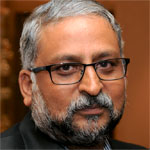
  • Shailesh Kapoor: FTII Row: The Chauhan School of Delusions

    By Shailesh Kapoor


    The student strike at FTII, in protest against some key appointment, in particular that of Gajendra Chauhan as the institute’s chairperson, has found its way to primetime news, after almost a month of cursory headline coverage. It took a YouTube video by Ranbir Kapoor for mainstream media to take up the matter in all earnestness. It may not be a burning issue of national importance, given the killer scam that’s being unearthed in another part of the country, but with an unmistakable political slant, the FTII story should not be restricted to the entertainment sections either.


    There aren’t too many layers to the story. It’s like the proverbial open-and-shut case. You have an actor who has played supporting parts or bit roles in about 300 films and 700 serials (I’m sure he means episodes when he says serials), and has no fraternity support worth talking about, no previous academic experience, not even writing or directorial experience. In the merit list of probable FTII chairpersons, he would struggle to make it to the first million. But here he is, a BJP hand, at the helm of the film school, with the blessings of the Government.


    Last night, on The Newshour, Gajendra Chauhan decided to make an appearance in person to field questions. He came up with some gems, which only worsened his position:

    1. You are questioning my body of work (which he also called ‘body of stature’). I’ve worked with Salman Khan. (I’m sure that doesn’t win him any support at FTII!)


    2. If a film is a hit, it is an A-grade film. (That hit Jungle Love was a silver jubilee was spoken with great pride too as an example)


    3. I refuse to answer that question (when repeatedly asked what, according to him, is good cinema)


    That he has never attended MAMI or any other International film festival was also admitted candidly, perhaps fearing another GK Test if he said he had. At the end of it all, Anupam Kher had clear advice to give Chauhan, asking him to just step aside with dignity. Just leave it, he said.


    Chauhan’s false sense of confidence on the show, as indeed over the last few weeks, is not surprising. The film and TV industry can be a delusional world, we all know. There’s little room for reality check when you have an ecosystem that’s populated with people telling each other how good they are.


    One can make some sense of the delusion if the big stars, producers or directors were to display it.But in all my experience, they are the most grounded, at least in relative terms. Perhaps because they have seen the highs and the lows. It’s the bit players who try and hide their insecurities, sometimes mediocrity, by portraying success, almost demanding to be respected at times. It’s an archaic idea that has little foothold in this day and age.


    I’ll be surprised if Chauhan can hold on for too long. He has nothing going for him. Stepping down from FTII and taking up a Bigg Boss invitation will be a good idea. But he may tell you that the former is not a pre-condition for the latter anyway!

     

  • Ranjona Banerji: Imagine if the media had ignored the Vyapam scam in Madhya Pradesh completely?

    By Ranjona Banerji


    The Madhya Pradesh examination and recruitment scam remains the top media story this week. It has overshadowed almost everything else and even made the international media. This is hardly surprising, regardless of how upset people get when their favourite political party is targeted.


    Arnab Goswami of Times Now for instance is now a ripe target for BJP supporters for going hammer and tongs at both Lalit Modi and now the “Vyapam” scam. The interesting allegation being made is that TV news stopped discussing Lalit Modi the minute the Gandhis of the Congress were mentioned. Short-term memory loss is very useful when you make suggestions like this. Because then you can forget how angry Congress supporters were when Goswami reduced Rahul Gandhi to a gibbering mess in a pre-general election TV interview while being far less aggressive with Narendra Modi.


    Also, in Modi’s first six months as prime minister, every TV channel lovingly followed him around the world, tracked every finger wag, eulogised every comment, bless-youed every sneeze and called him everything from a rock star to a pioneer who has changed the course of Indian history like no one else before him. No complaints were made by the BJP and its supporters then even if the Congress and other parties were frothing at the mouth.


    This is a sad reality of life if you live it by the media. It can turn on you for not fulfilling you promises or potential as it did with the India Against Corruption and its metamorphosis into the Aam Aadmi Party. Or it can wait for you to trip up as it has done with the BJP. As it happens, the national media and especially television got to the Vyapam scam very late. It was only after Aajtak journalist Akshay Singh’s sudden death while investigating the scam that TV cameras and star anchors landed in Bhopal. Before that it was the local media and to some extent the print media which was highlighting the story.


    It is therefore very unfair to blame the media for doing its job, in this case. Imagine if the national media had ignored this scam completely. Even without the scary inexplicable death toll when it comes to witnesses and accused, the exam and recruitment manipulations themselves are frightening.


    It is not internet trolls that I am talking about here. It is well-known columnists, veteran journalists most of them, who actually believe that Sonia Gandhi and the Congress party control the media. If that was true, then Goswami would have been the purring pussy cat he was with Raj Thackeray with Rahul Gandhi too. Besides, from a cynical point of view, what does the Congress have to offer the media, powerless as it is?


    Taking media gossip and making it part of your informed commentary is a bit, well, tacky.


    **


    Although I have liberally attacked them in the past in these columns, must congratulate Star Sports India for its coverage of the ongoing Wimbledon tournament. Two channels on the two main courts (four if you count the HD channels as well), enough information on what was happening elsewhere and even a little bit of Indian doubles action.
    Well done!


    **


    Reading through all the various articles on the Greek crisis, realised sadly that those of us who do not regularly read the business pages or the pink papers are at a severe understanding deficit when it comes to management and economic jargon. I forgo the oft-repeated comment from Casca in William Shakespeare’s Julius Caesar except to say that most of it was in a foreign language…


  • Ranjona Banerji: Are journalists taking the shortcut of gathering news via social media?

    By Ranjona Banerji


    Is social media important when it comes to newsgathering? Are journalists using social media to bypass traditional means of newsgathering? Is this laziness? Or is it keeping track of an essential new medium?


    The answer most likely is yes to all the questions. It is impossible to ignore social media but it is encouraging too many journalists, young and old, to take shortcuts and the easy way out. This does not have to do with the social class or the educational levels of a society. It has to do with the lazy belief that social media represents such a large swathe of society that it has to take front and centre compared to all groups.


    Strangely, all of us who are very active on social media know very well that this importance is not fully justified. To quote that much quoted line from TS Eliot, we all prepare a face to meet the faces that we meet and never more so than on social media. Few people are ever themselves. The focus is often on anonymous internet trolls for their abuse or their hidden and/or open agendas. But internet trolls might well be the most honest creatures out there. They reveal more about themselves than most of us who use open forums like Twitter to share information or links or opinions.


    Either way, the masks people wear make can make social media a false god at the altar of truth. This is what journalists have to be wary of as they collect information and opinions. Sadly, there is no better way of finding out how people think than by talking to them face to face.


    Of course, Twitter is not the villain in all this. Years ago, we came across the breed of telephone journalists and their dial-a-quote respondents. This lot never left office to do their stories. Some rather foolish editors – unfortunately many of them were promoted mediocre sub-editors or management stooges or both – felt that reporters were wasting time on the field and needed to be seen (by them) in the office. The landline telephone was pushed forward as the best newsgathering device. I have seen this policy being implemented to the great detriment of the newspaper I worked in then and have heard enough horror stories about similar policies in papers across the world. In most such cases, some MBA had done some kind of a study and decided that it profits a newspaper or journal more if a reporter does all his or her work in office. You do not have to be a genius to see the extreme folly of such an idea: just a proper journalist.


    Imagine the fun you can have with a mobile phone. Produce byline after byline just by going through social media, never meeting anyone. Most of this criticism is aimed at the print media. TV dances to a different drummer and 24-hour news television cannot survive if all reporters are forced to sit in their offices.


    It is hardly surprising in India at least that websites like scroll.in and the now thewire.in gained readers just by sending people out to do stories. Few newspapers still follow that path. And yet one of the best stories I read this Sunday was in the Indian Express headlined “Dabang Didi”, about a woman who had turned into a sort of Robin Hood vigilante for her area. She refused to play victim after she was raped. Not exactly possible via Twitter.


    ***


    The anatomy of an internet troll remains an amusing subject though. Bestselling author Chetan Bhagat wrote a column about why pro-BJP trolls abuse some women on Twitter. This caused hysteria amongst Bhagat’s supporters and detractors. And led to a discussion on Nidhi Razdan’s Left Right and Centre on NDTV.


    However, as was evident from the TV show and the reactions on social media, the troll is less dangerous and but far more pervasive and a fitter survivor than the fairy-tale creature after which it is named.


    I have a simple solution to them: mock or block.


  • Sanjeev Kotnala: Do you have the Yellow Umbrella?

    By Sanjeev Kotnala


    I was sitting in the office of Ashrafbhai, an understated person well known for his ability to create wealth. He had invited me to help him recruit a candidate for his go-to-market strategy. Like many owner-driven organisations, in his office too the master colour control screen of the CCTV cameras was mounted on the wall facing him. The frames kept changing from time to time.


    I was busy drinking the lovely tea that is served in his office when he suddenly asked ‘So, who do you think will get recruited today’?


    I had not seen the complete set of resumes. We were yet to start interviewing and here was the sharp-eyed Ashraf Bhai was asking me a predictor question. I raised my eyebrows saying how would I know.


    ‘It will be that guy with the yellow umbrella’ Ashraf Bhai announced to no one in particular.  He clicked on one of the many remotes that were on his table and one of the smaller screens got enlarged. It was now covering the complete TV screen. I could see a frigidity semi nervous well-dressed young person sitting among the candidates. I was not sure of what and why did Ashraf pointed him out. There was nothing much there for me to observe.


    When we closed in the evening we had two finalists before us.


    One was the man with the yellow umbrella and another the girl with a transparent umbrella. It was natural for me to now ask Ashraf, what made him bet on them before start of the interview rounds.


    Even at the risk of handing Ashrafbhai the talking stick for the next half an hour or so, it was me being real polite and selfish. I had learnt a lot of my marketing in his office and respected his observations. Here was he again sharing something that will some day could come handy.


    “The yellow umbrella was the reason the person stood out from the rest. I am sure that whenever that umbrella was bought, this young man had a lot many options to buy from but he chooses the yellow one!


    “Tell me Kotnala,” Ashraf continued, “which young man buys and uses a yellow umbrella. More so, even if he has one, which person would want to take that to an interview.  Only one with high self-belief! A person who measures himself with is own action and performance and not with others. Only who is willing to go against the grain.”


    “Yet his umbrella was not only yellow, it was of the regular size and not the foldable variety. It to me symbolises that he is cautious and takes extra precaution as per the situation. More over he willing to even take few along with him.”


    “To be truthful, Kotnalaji, I was already biased with that yellow umbrella.”


    “But Ashraf, what if it was an umbrella presented to him and he did not buy it, or it was the only option he had.”


    ‘Oh that will be better, Kotnala… It will only mean that even people understand him perfectly well, they understand him to buy him a yellow umbrella… Wow, that will be great… do you want to call him back and check’


    “And what about that girl with transparent umbrella, what’s your logic there?” I asked, the logical rationally-tuned professional in me wanted more.


    “Well, you do disappoint me there (I could hear, it is elementary dear Watson in the air), it is clear, umbrella to a girl is more than just a protection from rain.  Hence they are mostly dark, short, easy to handle’ I nodded and that gave him the licence to continue. ‘Her’s was transparent, as if she was willing to be evaluated by everyone, there is nothing to hide for her and she is the one who will live in her own terms’


    I got my answers and was leaving when Ashraf bhai called me.


    ‘Do you know, even if I want or not, he will now always be the yellow umbrella man for me, won’t be surprised if he is known like that in the organisation and outside. We get branded and these things that stick with us becomes our identifier and the calling card’


    I was slowly starting to understand what Ashrafbhai was hinting at.


    “Kotnalaji, I remember you used to have a few yellow umbrella yourself. But for the last one year, I have not seen you with one. Baarish ki kya Zaroorat, Yellow Chaata toh jab chayeh tab khol loo, aapki pehchaan hoti hai woh’. (what is the need for waiting for the rains to get your yellow umbrella out that is your identity).


    I decided to go home and after due deliberation pick one yellow umbrella that I will move around with, One yellow umbrella that I will be known for.


    Meanwhile, go ahead close your eyes and try remembering if you and your brand have a Yellow Umbrella. As impressions are being created while the audience distort, delete and generalise your messages according to their model of the world.


    If you don’t have a yellow umbrella, time you acquired one. 


  • Shailesh Kapoor: Online Fiction Content: The Promise, The Challenges

    By Shailesh Kapoor


    There’s been incessant talk over the last few years about non-linear and on-demand television replacing linear television viewing. By now, there’s enough evidence from across the world to suggest that linear television is not going to become irrelevant anytime soon, at least note for the next decade, even two. It still accounts for more than 85 percent of television content viewing in the developed markets. In India, it’s the only way to watch television for more than 99 percent viewers.


    However, percentages may not always tell their story. In 2013, Netflix premiered House Of Cards as its first original series. The conventional, linear television broadcast industry had to sit up and take notice. The Netflix Originals model is scaleable, and has since proven to find its diehard fans.


    In India, we got the first real taste of an equivalent, at a much smaller scale though, when The Viral Fever (TVF) launched their fiction series Permanent Roommates late 2014. The five episodes, available on YouTube and TVF’s own platform, clocked more than a million views each. Of course, that the content is free fuelled this reach. But the numbers are remarkable nonetheless.


    Encouraged by the success of Permanent Roommates, TVF launched Pitchers earlier this season, a quirky take on the corporate world and start-ups. Both the shows offer content that’s conspicuously absent on mainstream, linear television, which caters to the lowest common denominator of audiences. The characters you see in these two shows demand your attention. It’s not content for everyone’s palate, but it doesn’t aspire to be that either, which is why it can work in a world of its own. We are a big country and niches are available, contrary to what our mass television may sometimes make us believe.


    But it’s not been a smooth ride for TVF Originals either. The third episode of Pitchers has been delayed “due to production hassles out of our hands.” I’m not too sure what to make of the “out of our hands” part in this update on the TVF website. The moment you play the game of providing original content, you need to live upto a schedule. One episode a fortnight is not a good idea as it is, but one episode a month is a mini-disaster.


    The TVF Originals journey should help other aspirants of original online content learn a thing or two. On the positive side, you can make engaging and finite fiction series in reasonable budgets and not look tacky.


    But on the side of caution, you need to be consumer-oriented, like any other good offline business. There’s no harm in aspiring to break the rules of mainstream television production in India – endless episodes being shot the evening before telecast, and at times being uplinked almost in real time for broadcast. Those are problems of linear television. You have an FPC and you have to deliver to it all the time. But the absence of one in non-linear television does not absolve you of your commitment to viewers and their viewing habits.


    We want to see more content from TVF. We also want to see other content providers like TVF entering this space. Stand-up comedy, sketch comedy and spoofs are hugely popular, but real growth in any medium comes from fiction content, where storytelling is the hero.


    The online medium in India needs more stories of it own. But before that happens, there’s the small issue of the missing Pitchers Episode 3 to be taken care of.

  • Ranjona Banerji: Face it. If you’re not a journalist you don’t know how a newsroom functions. You only think you do.

    By Ranjona Banerji


    There is a commonly held belief that Indians as a society are permanently craving for heroes, heroines, idols. Therefore, we make role models of just about anybody and then damn and excoriate them when they don’t live up to our expectations. One can understand sports stars, film stars and even politicians. But this old adage must be true because we have also made the most ridiculous heroes and villains out of our star television anchors.


    With due respect to everyone, it is not possible to fully understand how a newsroom functions unless you have worked in one, as a journalist. No matter how closely you follow the media and how many journalist friends you have, you cannot know. This is not because journalism is some magical unknowable quantity or newsrooms are like Hogwarts protected by Dementors. It’s because unless you are one, you don’t know how a chartered accountant’s office works or a science lab works and so on.
    But of course, when it comes to journalism, everyone’s an expert. And television, by bringing journalists into your homes, by carrying “citizen journalist” shows and by reporters and anchors mentioning “sources” all the time, has made many members of the public feel that they are part of the process.


    I read a rather sweet if desperate blog the other day by a young man who was very upset that he had been “blocked” on Twitter by Barkha Dutt and Rajdeep Sardesai. He was also upset with Arnab Goswami though I am not aware that he has a Twitter account or if he is active on Twitter. These there TV anchors are known together as “BAR” by the way, by those who are obsessed with them and usually hate them. However the blogger pointed out that he had “blocked” these people first because he didn’t care about their opinions or disapproved of them. But he was clearly upset that they had “blocked” him. So upset in fact that he wrote paragraph after paragraph on how he didn’t care.


    One of the conclusions you can reach here is of a strange obsession with the doings of the media by people who do not fully understand the doings of the media. Talk to a young student who wants to be a journalist and you will find that it is all determined by what he or she has seen on television. Grunt work is not on the agenda because the assumption is that there is no grunt work at all. It’s all glamour and creating public opinion. I met a young journalism student a while ago who reacted with horror when I said that early on in my career I opted to be a sub-editor rather than a reporter. She asked, astounded, “You had the chance to be a journalist and you decided to be a sub-editor?”


    I had no choice but to react with miserable silence.


    But as usual, I am amused at the terrible anger that “BAR” and other TV anchors generate – most of course for falling on the wrong side of the angered person’s political spectrum. The actual work that goes on even in a TV newsroom remains hidden and that is why you, as a media person, have to sift through the views of both admirers and detractors. I often get lectures from people on what the media should or should not do from people who are well-meaning but ignorant.


    And as usual, what amuses me is when people within the media feign ignorance and point fingers for all sorts of transgressions at people who work in other newsrooms but are so delightfully silent on their own faults. Now those are the ones who need to feel the hatred directed at “BAR”, in my book…


    Meanwhile, I suggest people look for heroes outside our noble and ignoble profession.


  • Ranjona Banerji: Teesta Setalvad & Yakub Memon cases expose lack of institutional memory in newsrooms & laziness of today’s journos

    By Ranjona Banerji


    Two recent stories in the news, connected as it happens, demonstrate not just the impossible divides between Indian media persons but more importantly and dangerously, the lack of institutional memory in most newsrooms today.


    The first story is the slew of cases for financial impropriety and fraud, not to mention promoting social disharmony, against activist Teesta Setalvad. The second is the decision to hang Yakub Memon, one of the accused in the 1993 Bombay bomb blasts.


    Let’s take Teesta Setalvad first. Soon after the 1992-93 post-Babri Masjid demolition riots in Bombay (as it was then), Setalvad and her husband Javed Anand (both journalists), started the Sabrang Trust and a magazine called Communalism Combat. Helping riot victims and taking the conversation about communalism and secularism forward was their main agenda.


    Being journalists both helped and hindered Setalvad and Anand. They got support from some friends, colleagues, well-wishers and like-minded journalists. But equally, there were mumblings about them rising above their so-called given status and rumblings about money coming from Dubai. The links to the mumblings were easy to find. In those days, it seemed that Dawood Ibrahim, Bombay gangster and mastermind of the bomb blasts lived in the Gulf. He was often seen at cricket matches. And who else would fund an NGO that fought for Muslim riot victims?


    I am not discussing the general public here. But the attitude of journalists, all of whom at the time had access to information about the riots and later to the Justice BN Srikrishna Report, which named the Shiv Sena and its members as directly to blame. Some of these journalists even knew how the then NDA government at the Centre and the Sena-BJP government in Maharashtra squashed and then ignored the report. As did the subsequent Congress-NCP government.


    The current government harassment of Setalvad however only began after she took on the case of the riot victims of Gujarat 2002. Setalvad has been far more successful here than she ever was in Bombay and Mumbai. So the anger directed against here is even stronger. It says a lot for our society than when you speak out against communalism by state actions or fight for justice, you are seen as “spreading social disharmony”. Once again, it is the attitude of journalists that is being discussed here.


    That journalists can be so wilfully ignorant is one matter. The other is the lack of professionalism in the community. Of course media gossip is a thriving institution and it is a feeding trough that we all contribute to and eat from. But sharing media gossip is not the same as exercising professional judgment. And in Setalvad’s case there are too many unprofessional people running wild with their allegations.


    Some of it has to do with institutional memory. Today’s journalists are too young to remember either the Bombay riots or bomb blasts. And apparently too lazy to do any research. They are also easily swayed by popular opinion and culture. I have met several who did not know that the riots preceded the bomb blasts.


    Which brings us to the case of Yakub Memon, an accused in the 1993 bomb blasts and subsequently sentenced to death for his role. All reports at the time made it clear that Memon, brother of Tiger, one of the chief accused in blasts, came back to India of his own accord and it was based on his testimony that the case was cracked.


    All kudos to rediff.com for running an unpublished piece by the late B Raman of the R&AW, with an explaining intro by Sheela Bhatt. He had written it after Memon was sentenced to death:

    “The cooperation of Yakub with the investigating agencies after he was picked up informally in Kathmandu and his role in persuading some other members of the family to come out of Pakistan and surrender constitute, in my view, a strong mitigating circumstance to be taken into consideration while considering whether the death penalty should be implemented.”


    Details of the Memon case were known at the time. However I see that journalists today are unable to distinguish between “mitigating” circumstances and innocence. The arguments being made by those who know about the case are about whether Memon deserves the death penalty, not about his innocence.


    Yet I see journalists frothing at the mouth and screaming for blood. Again lack of institutional memory and laziness are at work.


    I am, to be honest, appalled.


  • Sanjeev Kotnala: ‘A’ Content In Radio. Should there be programme grading?

    By Sanjeev Kotnala


    Radio as a medium is a delight for audiences. It is easily accessible, affordable and available. With Phase III licensing next up in time the situation will hopefully further improve on this front. Radio can be accessed on mobile, pocket transistor, vehicle and even stand-alone simple headphones. The cost of accessing is a big fat zero for the audience and its available across the licensed areas. Phase III will take that reach to 90% of population and give a thrust to the medium.


    I wish it the best of times ahead. Soon multiple radio stations will fight for the advertising pie that would not have grown in ratio to the growth in number of stations. Product differentiation will be the initial mantra of engagement. Innovation and creativity will define the distance between success and a station also heard.


    In this the decisive part played by the RJs and the content other than the standard release Bollywood music cannot be underplayed. May be in preparation of Phase III, some of the networks are trying to test the boundaries and their strategies. Like the real innovative ‘Kahani Aisi Bhi’.  Sincerely phenomenal good content and perfect time of braodcast. ‘UP Ki Kahaniya’ and ‘Maliska  Bajatey Raho’ are examples of excellent work in the radio space. The lovable ‘Mawali Bhai’, ‘Bakara‘ and  ‘Babber Sher’ are something you can listen again and again.


    I mostly listen to ‘Red FM’ and ‘Radio Mirchi’ and hence my experience, the credits and brickbats are limited to them. They are doing a decent job in audience engagement, interaction and impact.


    But, radio at times ends up breaching an unsaid ‘Lakshman Rekha’. I trust audience choice and have confidence in market forces to control the content delivered by media. But I fear that a sub-segment of audience may drastically impact the DNA of content in radio, just like the have done in TV News.


    My reaction is experiential.


    On Monday, July 19, between 12:30 and 1:30 pm, I was tuned in to ‘PRITAM PYAREEY- Bhabhi Ka Show’. I continue t o appreciate the harmless flirty banter that is on display. Though my wife believes that the caller is not the real Bhabhi. Anyway in that comes a section ‘BHABHI HOT LINE’ when audience dials in and then has a conversation with Pritam and this is where the edges gets tested the most.


    That day, in this segment, some lady called and shared her biggest wish and her secret ambition of acting. Now on a normal day, this should allow an RJ of Pritam’s calibre a small opening for getting into conversation that would bring smile on your face. That afternoon, Pritam decided to check the limits – literally. He suggested that the caller Bhabhi and Pritam Pyareey should play Ranjeet; you know what he did and ABLA BHABHI. The set-up needs no further explanation. You know what will happen.


    As expected, soon the radio waves were shamefully burning with such audio furry.


    Kuch aur pass aao na. (Come a bit closer). ‘Mainey tumey aacha dever soch kar ander aaney diya aur yeh tum kya kar rahey ho’. (Thinking you to be a good brother-in-law, I allowed you to come in and now what are you doing). ‘Nahi Nahi, Kya tumhaari maa bahen nahi hai’ (No, No, do you not have sister and mother in home) and the famous line  ‘Bhagwaan key liyeh mujhe choodh do’ (In god’s name, please leave me). Trust me, radio if handled well, is a powerful visual medium.


    Not that a radio station is not within its right to interpret desire and demand from the audience and create what they think the audience wants and will appreciate.  But this was definitely not cool. I found the choice revolting and cheap. Hence I raise the lone voice against it.


    Saying this is common and acceptable in current times is unacceptable. These radio station ant to be treated as a real societal change agent. Then they need to behave far more responsibly.   In this case there was a spectrum of possibilities than to play the Raple of An Abla Bhabhi


    May be, this is desperation. May be audiences want it this way. But as a marketer,. the question that haunts is – does the radio brand sincerely believe that this is what the best they could do! This is the Manohar kahaniya and soft porn is what they want to be known about.


    Trust me, in this socially vibrant and sensitively alive media world, if the guard is lowered and self-regulation is absent at the radio station, then asking for external regulation and identifying programmes or stations with ‘A’, ‘UA’ will be one of the option worth exploring.


    Sanjeev Kotnala is Founder and Head Catalyst at Intradia. A Brand, Marketing and Management Advisor. He conducts specialised workshops in the area of IDEATION (Harvest and Liberate) and Innovation (InNoWait). His focus energy in enhancing client’s internal team’s potential and capabilities. In process decreasing their dependence  on external resources. To contact email sanjeev@intradia.in  or tweet at s_kotnala visit www.intradia.in  www.sanjeevkotnala.com.


  • Ranjona Banerji: Intelligence failure on News TV

    By Ranjona Banerji


    Two films that I saw recently highlighted the role of the media in our lives, but in very different ways. Jon Favreau’s Chef demonstrated how social media, particularly sites like Youtube and Twitter can make or break us or at any rate, bestow both fame and popularity in ways that someone unfamiliar with this phenomenon cannot fathom.


    But David Fincher’s Gone Girl shows us the ugly side of mainstream media, of how journalists run with the pack and like a pack, ignoring facts and playing up the drama. The media, although not integral to the gripping main plot, was always there at the edges and in the subtext. The hysterical TV anchor who decided on guilt and demanded blood regardless of the state of the police investigation, the nonstop presence of screaming reporters and running photographers, the jam of OB vans and long wires – we see them or people like them on our TVs every day.


    However, Hollywood is hyperbole. And the media is a convenient whipping boy. As a journalist I am not denying the media’s right to be where it wants to be and cover what it wants to cover. But I am decrying the media’s tendency to abandon good sense when a little bit of thought or discussion might serve you better than leaping into the mindless chasm of “they’re doing it so I must follow”.


    When terrorists, suspected to be from Pakistan, attacked a bus and then a police station in Dinanagar, close to Gurdaspur in Punjab early on Monday morning, news channels decided that they would not report on India’s police procedures or have live coverage of the shootout between terrorists and the Indian forces which lasted for hours or reveal operational details. Well and good. This was because TV news received a lot of flak for the way it covered the Mumbai terror attacks on November 2008, giving away vital information to the handlers of the terrorists.


    I decided to follow updates on Twitter rather than put on the TV on Monday morning, to spare myself any more cardiac infarctions than TV news normally causes. By the evening, it was business as usual though. Instead of giving the viewer details of what had happened, how many casualties, how many terrorists, we had high-decibel jingoism, facts at variance with each other, repetition of information between anchor and reporter and no clear picture. How many dead? 3? 5? 10? How many terrorists? 3 or 4? 5 or 6? Different channels had different numbers. How difficult is it to say, “We are awaiting clarifications from the authorities but we can confirm that there are casualties?”


    An interview with an eyewitness, who was shot in the shoulder, as the scroll below informed us, had the reporter asking the man the same questions again and again. Why not just edit what is extraneous or unnecessary? The questions included where he had been injured, more than once. More importantly, he had nothing substantial to add to what was already known at the time. It was as if the channel wanted to prove to the viewer that its staff had actually gone to the hospital. Well, thanks.


    After an attack like this, the viewer might expect to hear from terrorism experts or defence and geopolitical analysts or retired police and army officers who have dealt with such attacks to throw light on what had happened or offer their ideas on the whys and wherefores. Can we do something as simple as that? Of course not, when there is a simpler option at hand. Dial someone from the BJP, someone from the Congress and set up a pointless battle on nothing on your TV screens.


    There are intelligence failures and there are intelligence failures.


  • Sanjeev Kotnala: So where did Salman Bhai go wrong?

    By Sanjeev Kotnala


    We all know Salman Bhai and his hyped flawless heart. Salman Bhai carries many tags planted by media. ‘Being Human’, ‘Bajranagi Bhaijaan’,  ‘Giver’, ‘Helper’, ‘Most-safe-bachelor’, ‘Bhai ka Bhai, ‘Bakery run over’, ‘Black Buck’ are a few of these polarity tags. There are no prizes for guessing that Bhai is yet again in news for obviously the wrong reasons.


    He is someone who has been desperately trying his acts to be taken seriously. He has remarkable influence on people who do not exercise cerebral parts to infer, refer or empathise. Yet, it is the people claiming to be rational, logical and somewhat intellectual who are the one who easily get instigated by his nonsensical experimentation and ‘tweet-into-you-know-where’.


    Their reaction is volcanic. They very subtly and silently pass on the flaming baton of unquestionable hatred to the people down in the chain.  Result: a not-so-peaceful protest that needs large police bandobast to contain.


    May be his father failed to share with him the story of the king and two astrologers.


    The first astrologer, after having done all his calculation with absolute surety, told the king: ‘King, all your relatives will die before your eyes’. Hearing this the king was furious, he immediately got the astrologer arrested and asked the guards to make arrangements to hang him before the sun sets.


    Now it was the turn of the second astrologer. He too read the horoscope and did his calculation. He knew that the learned astrologer before him has said truly what the stars foretell. And he could not lie. But this guy was smart and he did not want to die. He said: ‘King, there is a good news for you; you have the longest life among all your relatives’. The king was happy. He presented the second astrologer with precious stones as gifts.


    Now, we know that both the astrologers were saying the same thing. Yet, one was punished and the other rewarded. That’s how fickle the mind is and how subtle the language.


    May be there is learning for celebrity like Salman Khan, the ever-favourite punching bag of the media. On the one side, we have people protesting against him and on the other, he is being lauded for being pragmatic and sensible.


    I do not subscribe to his perceived intent of his tweet. Or the way they have been interpreted.


    We are a nation that is slow in its justice. We are definitely late. We have followed a procedure and now the verdict been pronounced. The accused had a long time to prove his innocence. Most of us will agree that there is no harm in allowing every other possible opportunity to the accused to prove his innocence.  But the public sentiments are loud and clear.  They want the blood. They want Yakub to be hanged. It is no simple case. It is a case of treason and terrorism.


    Other than Salman, no one can be sure what he really meant to say. One would believe he never meant that we should let Yakub go free. May be he wanted to say that Yakub should be given life imprisonment. May be like many others he opposes death penalty. May be he believes that Yakub surrendered and hence deserves a different treatment. May be he was trying to make a valid point and asking us not to celebrate this legal victory till we get Tiger in the net.  None of the above if expressed properly with the right context and build-up would have elicited the response he is getting.


    He has the same right of expression and freedom to voice his views like us. He is in that way no different from the political leaders voicing similar thoughts and not being challenged.


    Yet, Bhai should have noted that unlike the common man discussing it at a paan-chai stall or at a kitty party, he is a celebrity. And that comes with responsibility to behave and accountability for the words that expression thoughts and emotions. ‘Thinking before tweeting’ is something that will definitely help him.


    Salman Bhai needs to watch his steps. More so when his emotional, nifty fingers not accustomed to resistance tends to fly under external influence. He is known to think and act from heart.  And I am sure that in spite of repeated lessons and tutorials from his father, this is not the last controversial or  ‘I am sorry for it’ tweet from his side.


    Here are few things Bhai and people like Bhai can consider doing in future.

    1. Keep away from controversial subjects. More so if they challenge his feelings and intellect.
    2. Keep thinking and keep those views and reactions to himself.
    3. Only share with a close set of people who are known not to get offended.
    4. Realise the importance of building context and foundation for a statement.
    5. Value time and right representation over speed an action.
    6. Get tweets checked by dad every time he wants to tweet
    7. Take classes from Amitabh Baccchan , Deepika and Priyanak in how to use tweet to advantage.
    8. And if anyone from his team advises him that his movie will do across border with the utterances, he should sack that person.


    Till that time, let’s not hang Salman till we understand his point of view


    Sanjeev Kotnala is Founder and Head Catalyst at Intradia. A Brand, Marketing and Management Advisor. He conducts specialised workshops in the area of IDEATION (Harvest and Liberate) and Innovation (InNoWait). His focus energy in enhancing client’s internal team’s potential and capabilities. In process decreasing their dependence  on external resources. To contact email sanjeev@intradia.in  or tweet at s_kotnala visit www.intradia.inwww.sanjeevkotnala.com.


  • Ranjona Banerji: What is the primary duty of a journo? To ask uncomfortable questions of course!

    By Ranjona Banerji


    What is the primary duty of a journalist? To ask uncomfortable, difficult, impossible, exasperating questions of course. We have to be able to examine the role of those who are in power, and those who wield both authority and influence. How far should a journalist go? This is often an individual or a newsroom choice. And it is not as easy choice.


    Some journalists decide to take the line of least resistance. They play it safe by regurgitating what they are fed by press releases and officialdom. Others believe that it is alright to play along with those in charge provided they get an inside view – like “embedded” journalists during recent wars and conflicts. Many (or hopefully most) decide to skirt along the danger mark. They dip their toes into territories that are verboten and run the risk of legal notices or other actions against them.


    Some resort to “tabloid” style journalism where they probe into the lives of people, often ordinary people for no reason at all except that they can. The phone-hacking scandal in the UK, involving the News of the World and the Sun are best examples of this. The newsrooms felt it was correct to hack into the cell phones of glamour and entertainment celebrities, the royal family as well of a teenage girl who was missing, later found murdered. This was direct interference in a police investigation and because the newsroom deleted messages, the police and the family assumed the girl was alive since the phone was active. It later turned out that she had been dead – murdered – all along.


    This sordid episode perhaps comes under criminal interference. However the other side of the same coin is the sort of journalism practised by Julian Assange and Wikileaks. By believing that nothing is sacrosanct if the public is kept in the dark or fooled, Assange shamed all those journalists who genuflect to the official line. He paid the price and is a hounded man. One of his sources is Chelsea (Bradley) Manning, a young soldier who has been sentenced to 35 years for releasing classified files to Wikileaks. The greater public good was seen as more important than government rules.


    The reason for this long diatribe is that when it came to the death penalty of Yakub Memon, convicted for his role in the 1993 Mumbai bomb blasts, journalists in India showed us this entire range of journalistic choices, barring those of the News of the World and Wikileaks. We had embedded journalists, official journalists, questioning journalists and play-it-safe journalists.


    And then we had several displays of the worst kind of journalists. Those who decided to embed themselves with officialdom and use patriotism as a basis to attack those who exercised the right to question. I reiterate once more that I am not talking about members of the general public or even to bloggers who think they are journalists. I am referring to people who should have known better and people who refused to do their homework. The only heartening factor in this is that many of the young journalists were in questioning mode while their seniors resorted to calling their peers traitors and so on.


    Anyone who has worked as editor has had to contend with this sort of a journalist. Those who parrot the police line, those who will never question politicians they know for fear of losing sources, those who will give undue publicity to certain police officers or bureaucrats to further their own ends, whether professional or personal. We all know them.


    I would repeat here celebrated American journalist Katherine Boo’s rejection of source-based journalism in favour of right to information based research. It is worth thinking about for some of our brethren.


    I must also raise a toast to my fellow journalists who did not live and work through the riots and bomb blasts in Bombay in the 1990s and still decide that they are experts on the matter. I would accept their expertise if they had dedicated their careers to studying those events. Better stop before I start laughing.


  • Ranjona Banerji: Rumours that Jaggi may have to quit Network18 thanks to an anti-Jaitley article

    By Ranjona Banerji


    The Hoot, India’s premier media watchdog, carried an item this week hinting of problems at firstpost.com, the news and views website which in effect did to the web space just a few years ago what rediff.com had done decades ago – became people’s first choice for quick news and analysis.


    Since its inception though firstpost.com has gone through both editorial and management changes, the most significant being the sale of its owner Network 18 to Reliance. There were expectations from then on that the website would become management-controlled but not too many indications for the average reader.


    Now we have the first one. An article by R Jagannathan, who has been largely in favour of the Narendra Modi government at the Centre, was removed from the website. Jagannathan is a very prolific writer with a very quick response time. He is also head of all print and web editions of Network 18. The ostensible reason for this killing of his article seems to be a criticism of Union finance minister Arun Jaitley, questioning whether the PM should keep him on as FM. This is the tweet that announced the article:

    And this is what happens when you click on the link:

    http://www.firstpost.com/politics/land-bill-stuck-in-the-parliament-pm-modi-may-have-to-rethink-jaitley-as-fm-2351720.html


    To do such a thing to such a senior person and veteran journalist is unacceptable. It is also indicative of a management which determines how much criticism is permissible and make it impossible for any journalist to function. And if this is the way someone who is largely sympathetic to the government, then you have a very difficult situation on your hands.


    Now although firstpost.com has had a definite rightwing slant from almost the beginning, it did encourage and carry a number of different viewpoints. One of those counter voices was that of Lakshmi Chaudhry, a fine writer with a humane perspective. Recently, she was made executive editor. Now according to The Hoot she has submitted her resignation citing management interference.

    This is The Hoot:

    http://www.thehoot.org/

    And this is the article that was taken down:

    http://rjagannathan.in/2015/08/03/the-modi-governments-achilles-heel/

    Anyone who has any little knowledge of the last time Reliance ran newspapers in the 1990s would have known that this was inevitable. The group bought the Sunday Observer, started the Business and Political Observer and after a small pretence towards journalism turned them both into Only Vimal PR rags and ran two products, one excellent and one potentially excellent, into the ground, with company man Tony Jesudasan in charge and Pritish Nandy and his team out of the door.

    There are some former journalists who are part of some sort of overseeing team at Reliance. It is still not clear whether they are part of this fiddling with firstpost.com or not. There are rumours that there are now pressures on Jagannathan to quit. The editorial staff, according to The Hoot, is very disturbed.

    One could argue that there is overt and insidious management influence in every newsroom and it is the job of the editors to deal with it. You could also argue about the question of degree – that managements, corporations, government, politicians, bureaucrats and so on wield some influence within newsrooms and some have now become accepted practice.


    But these are not arguments so much as copouts. No matter what your political slant, if you are to remain remotely credible as a news organisation, criticism is imperative. If you block that, then you have in effect sounded the death knell.


    **


    There has been plenty of online criticism about The Times of India’s decision to devote more first page space to bomb blast accused Yakub Memon’s hanging than to former president APJ Abdul Kalam’s funeral. I myself wondered at that.


    But how about the contrarian view? For one thing, it is the editor’s decision to decide on what to focus on. The New York Times for instance famously refused to lead with Princess Diana’s death unlike just about every other newspaper in the world.


    On careful consideration of the TOI’s decision, you might argue that Kalam’s death was extensively covered when it happened. The funeral therefore did get the front page but only a small portion of it. And that for what started life as a Bombay newspaper, Memon’s hanging was the end of the line for a series of events which completely shattered Bombay: in which case there is some logic at work here.


    I have no inside knowledge here. But I am willing to be logical and not hysterical about it.


    Ranjona Banerji is a senior journalist and commentator. She is also Consulting Editor, MxMIndia.com. The views expressed here are her own.