Category: COLUMNS

  • From the Editor: We need to change!

    From the Editor: We need to change!

    When I watched the Exit Poll results over the weekend, I was dismayed. How can the masses be such asses, I wonder. Should I go in for a Vipassana-like self-exile for a week after the results and figure what I should be doing in life, and with MxM?


    Yes, I am a Hindu, and am proud of my religion, but I am of the firm belief that majoritarianism sucks. Especially of the form that has existed over the last three decades and that reached a crescendo in the last five years. I have seen some close friends and even members of my family turn aggressive (if not rabid) Hindutva propagators. That India or Hindustan is meant for Hindus. I have seen a vulgar exchange of trash in many WhatsApp groups.


    Over the years, MxM has paid a very heavy price for its journalism. We’ve been castigated just because we believe in commenting on the editorial policies of media entities. Even now – and the absence of any ads on our homepage is testimony to this, we don’t get too many ads, because we refuse to call a spade a rose.


    But this article is not about MxM. It’s about how the Indian media catapulted. MxMIndia was the first to flag off a clear bias that was creeping into the narrative of our news channels. Senior journalist and friend Ranjona Banerji has been at it – scanning the print, television and digital media. Her columns are an integral part of MxM, and are by far the most read on our website and across the media spectrum. Some of our other columnists have also been fairly critical of the news media.


    There have been times when I’ve been embarrassed when they have written about someone known to me, or a channel with whom I am set to close an advertising deal. But I have never disagreed with them, and I’ve never ever asked them to change their views.


    The election results have been amazing. Amazing in the way the BJP fared, and the margins in many of their wins – including that of Prime Minister Narendra Modi in Varanasi – have dipped. That despite all the frenzy around the building of the Ram temple, the BJP lost in Ayodhya indicates a clear anti-BJP wave. Yes, a wave, just as there was one in 2014 for the BJP.

    Coalition politics can be quite a bitch. Be ready for a fair bit of action over the next few years.

    So what do we do now: We will continue the way we are. Applaud and Damn. Offer bouquets and brickbats, wherever necessary. The election results have given us hope that despite the negatives of various political formations, there is hope in Indian democracy.

    The masses aren’t; asses after all.

    Meanwhile, MxM will change. Our business model is advertiser-dependant. That can’t continue given the kind of journalism we love to practise. In the next few months, we will move to a platform that will only be available if you pay for our content.

    Thank you for keeping the faith,

    Pradyuman Maheshwari

    Editor-in-Chief

  • Ranjona Banerji: Journalism of Courage? Really???

    Ranjona BanerjiThe Indian Express calls itself “journalism of courage”. For many years, we believed this pat on the back because as long as the Congress Party was in power, and at some points even when the BJP was in power, the Indian Express showed a lot of courage. It took on Indira Gandhi, India’s most powerful prime minister – present company excused – and did it fearlessly. It took on Dhirubhai Ambani – who was soon to become India’s most powerful industrialist, present company excused – and did it fearlessly. It even managed to cover the Gujarat riots of 2002, held in the domain of then chief minister Narendra Modi, with some level of courage.


    It even did a most remarkable investigation into how the Indian Army in 2012, under then General VK Singh (now in the BJP and until lately a minister in the Modi Cabinet) had possibly planned a military coup on Manmohan Singh’s government. The investigation was done by Shekhar Gupta and Ritu Sarin.


    https://indianexpress.com/article/news-archive/web/the-january-night-raisina-hill-was-spooked-two-key-army-units-moved-towards-delhi-without-notifying-govt/


    Since Modi became PM in 2014, the Indian Express has remained extremely courageous, one cannot deny that, but largely when it comes to the Opposition, Sonia/Rahul Gandhi and so on. Taking on the ruling BJP, Modi, Amit Shah, er, not so much. It has practically handed over its column space to the BJP fan club, with a mere nod to the other parties.


    But this is not actually about the Indian Express. This is about the statements it has carried by Mohan Bhagwat, the RSS chief or sarsanghchalak as they call their boss. Bhagwat, who has got elevated status from Modi with a dedicated Doordarshan spot for his Dassera speech, was apparently somewhat contained in that space by Modi and Amit Shah. JP Nadda, now Cabinet minister but former president of the BJP, had even said during the election campaign that the BJP did not need the RSS or words to that effect.


    Bhagwat has spoken to the Sangh about how arrogance in a “sevak” is wrong, that Manipur was neglected for a year and now had to be dealt with immediately and that “decorum was not maintained” during the election campaign. Is this a return to “journalism of courage” where elliptical criticism of Modi – albeit from the BJP’s boss organisation the RSS – is given prominence?

    Who knows, eh?


    There is a short clip of a podcast going around social media. It shows, amongst a group of senior BJP/right wing “thinkers”, one self-declared Congress supporter, and Smita Prakash, the editor and owner of ANI, which is apparently Asia’s largest multimedia news agency. This growth and reach is no mean feat, especially given that of all the various legacy media RW/BJP TV channels and journals, hers is the most efficient and at the forefront of BJP/Modi propaganda.


    Prakash declares in the podcast that the RW content from the BJP was “minuscule” unlike the Opposition which had trucks broadcasting videos from Youtuber Dhruv Rathee and TV journalist Ravish Kumar. This claim is ludicrous in itself and even more so when it comes from the editor of ANI. Prakash herself went out of her way to promote Modi. As did every major mainstream TV channel, from India Today and News18 to Times Now, NDTV and the Hindi channels. Modi gave “interviews” to some of these where no one questioned or corrected his absurd claims that he was not biological but divine origin and that no one had heard of Mahatma Gandhi until Richard Attenborough’s 1982 film.


    And let us not forget Modi himself. His election campaigning – as Bhagwat politely pointed out – was brazen, Islamophobic and filled with falsehoods. No one in the India gets more prominence or publicity than Modi. If he did not do well enough in these elections, which has upset these sections of the RW, it is not because the RW did not do enough.


    Maybe Prakash and others might ask themselves why they did not do enough to represent the people of India. Many of whom did not vote for Modi and the BJP precisely because the media’s endless propaganda did not reflect ground realities.


    Naah, I joke. Self-awareness is not amongst the RW media’s dominant traits. Otherwise, why would they…


  • Marketing Lessons from the Polls

    Marketing Lessons from the Polls

    Avik ChattopadhyayThe dust has settled down. The celebrations and cribs are over. The oaths have been administered. And the machinery is getting into action once again.


    More or less, the country at large is pretty pleased with how things have emerged. Democracy clearly demonstrated who calls the shots. For some, it has been a fresh lease of life while for others it has been a wakeup siren. All in all, the utopian idea chosen by us close to 80 years ago seems to have been the right decision. Conceptually, India could never have been a monarchy of one or an amalgam of principalities like the 16 Mahajanapadas. With all our imperfections and paradoxes, democracy seems best placed as the individual impoverished and ignored voter does have the power to shake up comfort zones.


    For a marketer, in any industry and from any part of the country, a gargantuan event like the parliamentary elections, in its implementation and outcome, has important lessons to learn and remember in one’s own professional life.


    None of them are new revelations. All are one more round of reinforcing and reiterating deep ground truths that we sometimes tend to forget.


    1. Never underestimate your target segment. S/he she is far more intelligent and mature than what marketers typically would like them to be. S/he can spring surprises at the most unexpected of situations to drive home a point.


    1. What was very good for yesterday is not good enough for tomorrow. You need to consciously stop charting strategies for the future based on what you did in the past. You are where you are today based on what you did day before yesterday. The day after tomorrow depends on what you do today.


    1. Numerical targets are meant for internal communication. They are never to be used to communicate to your external stakeholders. Slip a little and they will hold you to them or even have a good laugh at your expense. And competition will definitely find ways of using them against you.


    1. Local leaders are needed for local issues. Your regional leaders are to be brought to the forefront to connect better with the local populace or potential customers. They speak the language the locals understand and know what specific buttons to press. The national level CEO or MD has to be selectively used and not overexposed.


    1. Nobody is an untouchable. In the market, you have no permanent enemies when it comes to channels of trade, regional collaborators and technology partners. While long-term relationships are always helpful, sudden reality checks may require you to reach out to facilitators tomorrow whom you has severed ties with yesterday.


    1. Never ever abuse competition. That is a sure sign of anxiety before both network partners as well as the potential customers. a minimum level of professional decorum requires you not to concoct lies about competition or be derogatory towards specific competitors.


    1. Mere edifices do not convert prospects. The target needs personalised experiences and promises. S/he is not enamoured by large showrooms or display zones just by themselves. S/he expects to be catered to one-on-one.


    1. Appeal to both left and right brains. Always try to maintain a healthy balance in your narratives and ownership experiences. While raising emotional issues, support them with ground level demonstrations of your intent and abilities. Those actually help create unique emotional bonds.


    1. Focus on yourself. Do not obsess with competition. Make sure your target knows all the right things about you, your offerings, your promise and your capabilities. Wasting time over discussing competition actually shifts the narrative towards them and the target spends more time researching your competition than you.


    1. Never sell fear. Whether you are selling a water tank or a luxury automobile, do not make the mistake of stoking the target’s inner fears and apprehensions as your route to success. Fear leads to unexpected reactions of the reptilian brain and rapid negative word of mouth which will be much beyond your control.


    Market well. Sell wise.

    Jai Hind. 


    Avik Chattopadhyay is a Gurugram-based business strategist and commentator. He is currently also working along with XLRI to set up the Indian School for Design of Automobiles. He writes on MxMIndia every other Thursday. His views here are personal.

  • Sanjeev Kotnala: Elections 2024: No one to blame for collective failure..

    Sanjeev KotnalaThe country’s deep-seated polarisation at the individual, regional, and caste levels has set the stage for a coalition government, reflecting the nation’s collective indecisiveness and failure to make up its mind. The results have surprised everyone: the elected candidates, the parties, the losers, and the voters. It has been unique and hugely secular in that way.

    Will it be the end of mandir-masjid politics and the start of a more focused economic development that is beyond colossal government infrastructure investment? No one knows. No one other than the voters can be blamed for this fiasco of a coalition government. On the other side, you can’t blame anyone.


    In the past, many governments have failed in their duty of collective, inclusive development at the social level and have trained to ingrain these segmental understandings in our brains.


    Ironically, we have a weak government when the economy is on the cusp of a significant leap. This is a government that, by its very nature, must contort itself to accommodate divergent agendas and respond politely with kid gloves to protests and dissent, even if they challenge established laws.


    We have voters who have not voted, voters who have voted without much thinking and finally, voters who have voted after enough deliberation. Who has been right in their decision is a moot question. And it is not so simple to answer.


    Many did not vote, thinking the election was a sham as the ruling party is so confident of 400+ seats. Many did not vote, thinking there should be some truth in the opposition coalition’s claim of EVM tempering. And many did not vote- assuming they didn’t make a difference. Many did not vote, knowing their vote could make a difference, but there was no right candidate. Who is right is debatable. And nothing would change unless we made voting compulsory. However, it may not be enough to change the structure and quality of representatives at the parliament level.


    Many voted on a party basis. Many who would have voted on a party basis failed to vote. Many voted for a face, and few for the name and the person. No one can be blamed.


    Many rightly believed that a strong opposition is a need for an excellent democratic setup. These voters never believed their collective thoughts could result in a hung parliament. No one can be blamed for having such thoughts. And nothing would change unless we have a two- or three-party system. Which anyway is not going to happen.


    Many wanted reservations abolished and believed that it was their right and must continue. We as a nation have failed to bite the bullet of reservation. Many thought the minority would be penalised further, and many believed that the appeasement of the minority would be detrimental to the rights of the majority.


    As a nation, we have never attempted to define what direction the country plans to take cohesively. No one can be blamed.


    A massive chunk of the population still lives under the strong impression of well-directed miscommunication campaigns that projected possible constitutional changes. A dictatorship in the making. And possibly the last democratic election in the country. The political ego- confidence and complacency have been confusing for many. So, who can be blamed for all of it?


    A substantial minority group egged by the greed of power politics was almost sure that a skewed win for one party would end their freedom. A uniform civil court will challenge their internal laws. On the other side, a vast majority believed that the other part would reconstruct and possibly redefine the wealth and end up blocking opportunities for the silent, fragmented majority. Unfortunately, this majority never voted in blocks. No one can be blamed, but they must introspect and understand the damage they have inflicted on their Wishlist.


    Politics is an arena where everything seems to be justified. There are winners and losers, and that is all that matters. Value-based politics is a misnomer across party ideologies. The crosscurrent of protective turf politics far more dictates the candidate choice than the idea or thought of country benefit.


    No one can be blamed individually, but we, the country’s citizens, must introspect and decide where we are headed and want to go. What is right for the country, even if that questions our desires and wants? It would be good to use the time to understand our agenda, politics, and politicians a lot. We should put them in the crosswire and continue questioning what is happening.  Maybe the next election is where the country would give someone – most probably the right individual and party a strong mandate. Maybe if the political parties and politicians also raise similar questions, it could help redefine the agenda. Because they, too, don’t know who to blame or who to credit for their vignetted performance and reversal at many places.

  • Exit Polls: A ‘No Confidence’ Motion

    Exit Polls: A ‘No Confidence’ Motion

    AI generated image showing an abstract representation of the discrepancies between the Exit Poll results and the actual results declared on June 4.


    Shailesh KapoorThe marathon elections are finally past us. But not without a result not many saw coming when the elections season started three months ago. The results on June 4 came as a surprise to many, particularly because a plethora of exit polls funded by mainline news channels of the country had predicted a resounding victory for the Narendra Modi-led NDA, with almost all of them giving the alliance 350+ seats, and some even predicting ‘400 paar’.

    As we know now, even ‘300 par’ didn’t materialise. Since then, there has been intense debate about exit polls, and whether their inaccurate predictions are simply a case of incompetence on the part of multiple agencies, or a result of malafide intent to influence the stock market. I have been asked this question more than a few times over the last 10 days, in my capacity as the head of a media research firm.

    While I’m no stockmarket expert, the scam allegations seem a bit far-fetched. It would take multiple agencies to comply with the perpetrators of the scam, put their reputation on the line, and hope that they make some illegal money off it. The history of scams suggest they are ‘designed’ in a way that they are under the radar, far from the public eye. Exit polls were anything but that. In any case, I don’t see how we will know any more on this topic anytime soon.

    The incompetence argument is a lot more persuasive one. Despite large sample sizes (while not all polls reveal their methodology and sample design, some do), and the claim to have covered all 543 constituencies, and represented different demographic segments adequately, how do so many polls get it wrong? In my opinion, the incompetence doesn’t lie in their ability to conduct field surveys, but in their lack of confidence to look at the findings dispassionately. All quantitative research that comes with the responsibility of predicting an outcome will operate on ranges, rather than exact numbers. And it’s now evident that the exit polls were leaned towards the higher ends of their ranges, and probably stretched them further. One poll made sure its upper end was 401, and another went for the round figure: 400!

    Over the course of this year’s election coverage, we have seen many pollsters become election experts, going beyond analysing their data, and entering domains of political analysis that’s best left to journalists with their ears to the ground. Bafflingly, many editors of mainline news channels have encouraged this, by giving pollsters a platform on their shows every night, even during the period when the Election Commission embargo on exit poll results was in play.

    It may be hard to resist fame, but if it comes at the cost of objectivity, a pollster must examine if it’s worth it. As it is, our news channels operate like echo chambers, and it is hard to not get influenced by their narratives if they are platforming you as an important talking head.

    So, the pollsters have gone wrong in their minds, probably working backwards from a pre-decided outcome they talked themselves into believing. It’s impossible to say what conclusions a more objective analysis on their data would have led them to conclude.

    In any case, exit polls seem to quite a wasteful indulgence for news channels. But it’s a vicious loop, because no channel wants to miss out on an evening’s hype. Just like no pollster wants to be the only one who got it wrong!

  • Shruti Pushkarna: Does Modi Ki Guarantee extend to Persons with Disabilities?

    Shruti PushkarnaWe are experiencing a rather hot June this year. For one, Delhi is simmering with soaring temperatures. And the political atmosphere has been mercurial since the beginning of the month. The newly elected cabinet of ministers are gearing up to operationalize their tall campaign promises.


    Sadly, the fun is over. We have traversed to the other side of number games, trend analysis, mudslinging, and finger pointing. It’s down to the basics of governance. I have honestly enjoyed all the print punditry around headlines and catch-phrases in the past ten days. One of the less critical and more practical ones was what I read in The Indian Express, “Continew”. Keeping constancy in action, setting some new order in motion. Change and continuity for the greater good I assume.


    With Modi 3.0 set to roll out the 100-day action plan for various ministries, the Social Justice and Welfare Minister, Dr Virendra Kumar assured stricter implementation of Accessible India 2.0. The Sugamya Bharat Abhiyan or Accessible India was one of the initial flagship campaigns launched by Prime Minister Modi in 2015. The government vowed to create a barrier-free environment for independent, safe, and dignified living of Persons with Disabilities (PwDs).


    Have we achieved what we set out for? Hardly. However, there’s been progress that deserves acknowledgement. But like my Math teacher would say, ‘no marks for steps, what counts is cracking and solving the problem all the way.’ The ruling party too needs to adhere to a strict agenda for inclusion and stop distracting PwDs with stimulating sloganeering.


    Here are 10 key areas calling for the newly elected government’s attention. 


    1. Legal Framework

    India has a progressive legislation, the Rights of Persons with Disabilities (RPWD) Act 2016. But till date the law hasn’t been fully implemented. We are lagging with respect to formulation and enforcement of state-specific policies in line with the RPWD Act. We also need detailed regulations and guidelines pertaining to different types of disabilities. Some states like Telangana and Tamil Nadu still don’t have the rules in place to recognize disabilities like Multiple Sclerosis, which is one of the 21 disabilities mentioned in the Act. We need State Advisory Boards with adequate stakeholder representation to drive policy and implementation.


    1. Infrastructure and Accessibility

    One of the top priorities in the BJP Manifesto released in April this year, is building world-class infrastructure. The government’s overarching goals of economic development and infrastructural improvements have the potential to support disability inclusion. But only if they ensure that public buildings, transportation and digital platforms comply with accessibility and universal design standards outlined in the Act.


    1. Healthcare and Rehabilitation

    That’s another area dear to the Prime Minister’s heart. Over and above the acclaimed Ayushman Bharat Yojana, reports indicate that the Ministry of Health and Family Welfare is working on a preventive healthcare scheme for the elderly. The government needs to ensure all healthcare facilities are accessible with a provision of disability specific services. PwDs also require mention in the preventive healthcare schemes, with a focus on expanding early detection and intervention programs as well as rehabilitation services.


    1. Emergency Response

    In a world shrouded in natural disasters, climate change and waging wars, it’s pertinent to build inclusive disaster management plans and emergency services catering to the needs of PwDs. Whether it is Covid-19, Ukraine-Russia war or seismic disturbances around the globe, persons with disabilities don’t receive timely and appropriate assistance. We need specific provisions issued and enforced by the central as well as state governments.


    1. Data Collection

    For the current or future governments to track progress and formulate effective policies, we need accurate and updated data on persons with disabilities. The government needs to allocate funds for research on disability issues, services and solutions. True that the Unique Disability ID or UDID project is designed to build a national database of PwDs but there are serious gaps in implementation across states. More specifically, we need disability data with regards to gender, income, employment, education, et cetera.


    1. Social Security

    The Indira Gandhi National Disability Pension Scheme was introduced in 2009. The central government provided INR 300 as monthly pension and the states contribute an equivalent amount to provide assistance as per RPWD Act. But in the absence of a mandate, the amount varies from INR 300 in Bihar to INR 3000 in Andhra Pradesh. Also difficulties in acquiring UDID or disability certificate prevents potential beneficiaries from availing the scheme. The government needs to revise the provision to make it relevant to the current scenario as well as ensure timely disbursements.


    1. Digital Inclusion

    Given the rapid adaptation of all things digital, the government needs to ensure all websites, services, documents etc. are fully accessible. There are many non-profit organisations working in silos to promote digital literacy among the disabled. But given its outreach and resources, we need a push towards digital inclusion of PwDs by the government. And this cuts across ministries. In fact last year, the Ministry of Social Justice and Empowerment took a step forward with the enforcement of IS 17802 standard. This Indian Standard aligns with the global accessibility standards and guidelines such as Web Content Accessibility Guidelines (WCAG), Section 508 of the US Rehabilitation Act, and the European Standard EN-301 549.


    1. Inclusive Education

    Persons with Disabilities need access to quality education to reduce dependency on state sponsored benefits. True to the spirit of empowerment, RPWD Act 2016 emphasises on reasonable accommodation for equal access to education, employment and other mainstream activities. PwDs require accessible infrastructure, trained teachers and learning material in accessible formats. Scholarships, grants and financial aids extended to students with disabilities need regular audits to close gaps in last mile implementation.


    1. Social Inclusion

    In some parts of India, disability is still seen as a result of bad karma. The stigma attached to disability prevents social inclusion, pushing PwDs to the peripheries. The RPWD Act cites grievance redressal mechanisms to be established at the district and state level. The government needs to extend legal support to PwDs willing to claim their rights. We need robust measures against discrimination in all spaces like schools, offices, public service and so on.


    1. Awareness Drive

    The RPWD Act 2016 emphasises the importance of awareness initiatives as a means to combat stigma and discrimination. Section 39 mandates the central and state governments to conduct awareness campaigns to lessen the attitudinal barriers towards disability. Government needs to initiate drives to promote a positive perception and wider acceptance in the majority population. Section 42 calls for the use of media including television, radio, print, and digital media to create public awareness on disability issues. Governments should collaborate with media organisations to ensure fair representation with a focus on potential rather than pity. We also need sensitization targeted to law enforcement agencies, healthcare professionals, educators, and other service providers.


    With jumlaa season behind us, what remains to be seen is whether Modi Ki Guarantee extends to Persons with Disabilities.

  • Daddy downgraded to daddy!

    Daddy downgraded to daddy!

    Ranjona BanerjiThe Indian mainstream media is still grappling with the election results of June 4, 2024. You might imagine that they’d have grown up by now but no. The children are still weeping that Daddy may have downgraded himself to daddy. One TV person is bereft that the opposition keeps opposing and won’t allow daddy’s government to “breathe easy”. Another wonders why anyone would call for the resignation of the railway minister after a rather bad train accident in Bengal.


    An investigation by Alt News looks at how Meta “allowed” policy violations of its own codes (put in place after the Cambridge Analytica scandal) by proxy pages put up by political parties. Most of these proxy pages supported the BJP and pushed their Islamophobic messages on social media. Meta is the parent company of Whatsapp, Facebook, Instagram and Threads.


    Often when Meta is investigated, the tables have somehow been turned on investigators by this very powerful corporation. Meta has also denied the content of this investigation by Alt News. It is however worth reading, just to understand the layers that run in social media, without the understanding let alone knowledge of lay people. As in most consumers.


    Exclusive: How Meta allowed policy violations by proxy pages running pro-BJP ads


    If even a small percentage of this is true, it gives the lie to the on-air weeping by media giants like Smita Prakash of ANI and other right-wing functionaries about how the BJP and the rightwing did not do enough on social media to make sure it won the general election with a massive majority.


    The upshot of the success of various social media influencers and sites which highlighted the shortcomings of the last Narendra Modi government is a possible renewed attempt by the new Modi government to double down and get its controversial broadcast bill through. This bill will severely impact all “content creators” which do not get their entire content from the BJP IT cell. One can expect no support from the legacy media when freedom of expression is curtailed. Remember, according to stalwarts of the legacy media, the opposition must not oppose and to demand accountability from elected representatives is unfair.


    The fact that the mainstream media did not want to listen to their own boots on the ground underlines just how deep the dependence on propaganda has become. From all accounts, reporters knew, in UP and Rajasthan for instance, that the BJP would not do as well as projected. In spite of this, mainstream TV channels ran exit polls which rammed up the BJP’s chances well above the ground reality. The BJP may have believed this: but why did the media?


    Sadly, this malaise is not limited to the Indian media. As evidence mounts of Israel’s brutality against Palestinians, the bulk of the Western media is still unable to call out Israel’s transgressions. Even today, eight months after the Hamas attack which began the bombardment of Palestinian civilians by Israel, big names in the media are unable to fearlessly attribute responsibility to Israel. These names include The New York Times, the Guardian and the BBC, some of the most trusted and respected entities – so far – in the world.


    If you look for media reports on allegations of torture by the IDF on Palestinian prisoners, and by some Palestinian armed groups of Israelis, media outlets like Le Monde and Al-Jazeera are most likely to provide the information. It is easier to go to the United Nations websites than to the media.


    On which sad note…


    Ranjona Banerji is a senior journalist and commentator. She writes on MxMIndia on Tuesdays and Fridays. Her views here are personal

  • Ranjona Banerji: Let’s watch hyper-dramas unfold

    Ranjona BanerjiWrong as it is in the ethics quotient, the meltdown of India’s mainstream media after Narendra Modi and the BJP did not do as well in the general elections as they expected, is very amusing.


    TV anchors and assorted TV people are in a state of anger and shock. Rather than scream at their guests as they usually do to invoke anti-Muslim feelings or provoke anti-Opposition rage, some are turning on each other; others bemoan their fate and still others remain bemused and bewildered.


    One TV person commented on X (formerly Twitter) that the new “exuberance” of the Opposition was just not allowing the new government (almost the same as the old government) to “breathe easy”. In the land of TV, it is the job of the Opposition to let the government breathe easy and the job of the media to encourage and support the government as much as possible.


    It’s toss up though as to which factors of this general election upset these media cartoons more: the fall in total BJP seats especially in the state of Uttar Pradesh, or the fall in Prime Minister Modi’s personal standing. Add to these two sad facts the further ignominy of the BJP’s loss in the temple town of Ayodhya, and the sense of loss and despair makes them inconsolable.


    Not too long ago, Kallie Purie, vice-chairman and executive editor-in-chief of the India Today group said this at an India Today conclave: “The media cannot play the role of the Opposition. Expecting it to do it leads to unfair charges of Godi or Modi media. If the Opposition is in disarray, the media cannot be blamed for it. We cannot present another side equally strongly if it doesn’t exist. We are observers in this boxing match. We are not the players.”


    This was the situation in March 2024. By June 2024, the mainstream media finds that there is an Opposition and that the Modi government has been, in some small way, humbled despite the overwhelming support of the “Godi” media. The term was coined by TV journalist Ravish Kumar, who quit NDTV when it was bought by the Adani Group, and means “lapdog” media, for those who came in late.


    The fact that a media mogul can make such a clear, confident defence of bias demonstrates once again how completely the Modi-verse had dominated and controlled the media.


    In the latest issue of India Today magazine, this is what Aroon Purie, Kallie’s father and the overall boss of the group when I worked there a few lifetimes ago, had to say about the election results:

    “Besides all these factors, there is the intangible. The pervasive sense of fear in society. People talk in whispers in drawing rooms. When meeting government ministers, even in private conversations, they switch off their phones and ask you to do the same. Business people fear getting on the wrong side of the government. Academics are afraid of expressing their opinions freely. NGOs face a hostile environment. Since all the exit pollsters were wrong in one direction, I suspect they got their predictions messed up because people did not tell them the truth about who they were voting for out of fear and said ‘yes’ to the ruling dispensation. A free press is essential for a vibrant, functioning democracy. If the press is closely monitored and ‘guided’ to cover countless government events and criticism is muted in fear of retribution, then we all get far removed from ground reality. This is true of other ruling parties too. Perhaps the past regime would not have faced this electoral fate if it hadn’t lived in its echo chambers. The autonomy of institutions has been undermined. Enforcement agencies are being used as instruments of terror. Loosely drafted, draconian laws like PMLA and sedition are being used casually. With countless rules and regulations, cases can be filed without much substance. It is well known that, in India, the process is the punishment, and very few cases are ever closed. This is not new, but has been accelerated and adopted as routine practice.”

    Make no mistake, Purie Pater Familias, is clear at the end of his editorial that he still believes that Modi is the best man for the job. But his comments on the importance of a free press are quite entertaining as is his assertion (not quoted here) that we also now have an Opposition which has to be accepted.

    Purie Sr’s comments on the disastrous exit polls – which his own TV channels promoted quite shamelessly – are also good fun.

    There is no call to extrapolate anything from this. India Today and the others in TV’s Lala Land are very likely to continue with their adulation of Modi and their promotion of Islamophobia. But it is also slightly likely that they will be forced to occasionally jump off their master’s lap and go and have a sniff and lick elsewhere.

    For us, who have no hope from them, sit back, get yourself some popcorn, and watch hyper-dramas unfold.


    Ranjona Banerji is a senior journalist and commentator. She writes on MxMIndia on Tuesdays and Fridays. Her views here are personal.

  • Ideas for Ethical Practices in the Client-Agency Ecosystem

    Ideas for Ethical Practices in the Client-Agency Ecosystem

    Sanjeev KotnalaSelf-declaration is Self-Regulation 2.0, but it is there because many agencies and clients have repeatedly defied the guidelines. The industry is trying to sort out the ambiguity on the process, coverage, and practicality of self-declaration. It is time to address some other issues, or a third-party intervention to regulate them is a sure possibility. These are issues the advertising-marketing industry has grappled with little success.

    Issues of ethical behaviour and fair play issues. These include unethical practices like plagiarising content, releasing unpaid-for work, exploiting ideas sourced through pitches without compensation or promoting concepts developed by previous agencies without agreed proper credit or payment. Trust me, the problem is far more significant than the small number of cases that get noticed or reported on public platforms.

    The faith in the senior clients and industry stalwarts to act ethically and responsibly has repeatedly proven to be misplaced. After all, it is usually the very literate, aware clients who take calculated chances in full knowledge of their internal system and approval processes.  The unjustified actions show their trust in their unethical actions going unchallenged. There is a definite absence of deterring penalties, and the slow pace of arbitration exacerbates the situation, turning these acts into one of smartness rather than infractions.

    Industry associations have not been entirely passive observers. However, they have been unable to impose penalties or ensure compliance due to their limited mandate. We need a paradigm shift towards practical solutions that promote ethical behaviour within the industry. Self-regulation without outside intervention is preferable. A robust self-regulatory initiative with a broader scope, wider acceptance and compliance is required.

    Here are some crowdsourced ideas. They are not fully practical or tamperproof, but they are an excellent place to start the internal Manthan.

    REWARD THE IDEA.  Reward the creative agencies for their ideas, even if they have been executed/implemented by some other agency. This will ensure the originating agency receives recognition and reward for its intellectual property and the client does not run away with a Big long-term idea paying a short-term engagement fee.

    REWARD WITH 10% OF THE INCREASE IN BRAND VALUE. The agency that creates the branding idea gets 10% of the increase in brand value published as an asset in the client company’s annual report. Brand value is monitored by an independent firm of CAs. To help agencies retain their top talent 5% of these ‘brand success fees’ go to the team that created the branding idea as long as the team members stay with the agency. (Sumit Roy, Univbrands)

    CMO & BRAND ETHICAL SCOREBOARD. A process-led, publicly accessible, transparent system and process is maintained at the industry level. Everyone starts with equal points. Points are deducted for guidelines violations, unfair play and non-adherence to guidelines. The scores are available for anyone to check. It becomes a strong point and process if the brands refer to it as a checkpoint before hiring, and consumers can check while making their product decisions.

    UNIONISED MARKETING ADVERTISING PROFESSIONALS. Mandatory union membership is required for all marketing advertising professionals. Companies can and should only hire union members. The union has the power and the authority to sanction non-compliant members. The members must remain updated aware, and follow all the processes and guidelines, including ASCI.

    BLOCKCHAIN-SUPPORTED CREATIVE VAULT: All creative work is timestamped and stored in the blockchain-supported creative vault. A verifiable record is available to combat plagiarism and protect intellectual property.

    PITCH TRIBUNAL: An industry body or part of an industry association that oversees pitch processes. It ensures fair compensation for ideas and pressurises clients to adhere to ethical pitch practices.

    APOLOGY WITH AN IMPACT: Apologies for guideline violations must be released, and a minimum of 30 per cent of the media weight of the executed media plan must be obtained. It can help rebuild trust and maintain transparency, ensuring the apology is an apology of substance and a warning to others. Ensures the client does not get away with a token apology for a large campaign. Ensures that the audience exposed to misleading communication has equal chances of being exposed to the apology and be better aware/warned.

    ADLAUNDRY: Like Newslaundry, an independent watchdog led by experienced advertising professionals who act as fact-checkers and myth-busters, ensuring accountability within the industry. (Rajiv Shukla, Partner Resonance Consulting)

    Self-regulation remains the best approach, but it must be enforced with more robust measures, including reprimands and penalties. Saurabh Mathur, an entrepreneur with 30+ years of experience, aptly captures the ethical debate by suggesting the four fundamental rules that the industry must ensure: Nothing is Free. Pay for What Isn’t Yours: Fair Co-Creation Compensation and Credit Where Due.


    NET-NET: While these ideas may not be foolproof or practical, and some may sound silly, they represent a possible starting point for a more ethical and compliant industry. The challenge remains to craft a most agreeable, accepted solution and implement it in all fairness. It may foster a culture of fairness and respect in the client-agency relationship. The other challenge is to have a robust system, and the industry will creatively find escape routes and loopholes to exploit.

    The industry must act and take it into the discussion for an early solution; otherwise, it may be too late, and it may not be able to resist a third-party intervention- which may kill it.

    Meanwhile, on the issue of SELF-DECLARATION, I must add and reiterate that if your ads are not misleading information or false claims and comply with the ASCI and other category regulators’ guidelines, there is nothing to worry about.

  • Can Indian Brands Go Global?

    Can Indian Brands Go Global?

    Ashoke AgarrwalCan India become an economic superpower without some of its homegrown brands going global, whether in the B2C or B2B space?

    Probably not.

    The Germans reconstructed a shattered war economy and became an economic giant, building global B2B and B2C brands like Siemens, BASF, Mercedes and BMW. The Japanese did with mid-market, high-volume brands like Sony and Toyota and the Koreans with value brands like Samsung and Hyundai.

    A brand is a multi-dimensional complex entity.

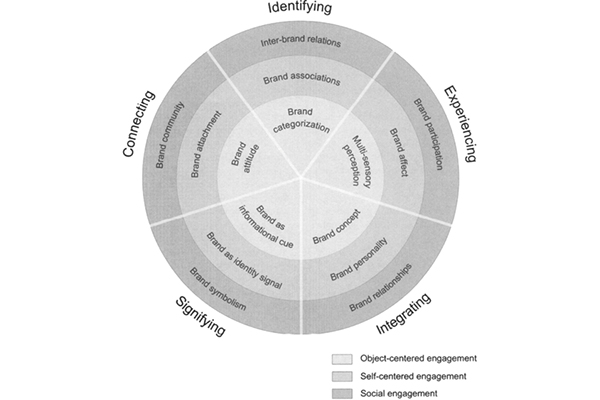
    Bernd Schmitt of Columbia Business School posited a model delineating a brand into fifteen dimensions.

    Figure 1: Consumer Psychology Model of Brands

    For a brand to succeed in India and establish itself globally, it must build on all 15 dimensions of its markets.

    However, one dimension is critical for a brand to become global.

    It is ‘Brand symbolism’ under the ‘Signifying’ triad.

    Schmitt writes, “Brands must be used to signify not only individual selves; they may also represent a group, a society, or a culture. As cultural symbols, they can stand for nations (McDonald’s), generations (the Gap), and cultural values (Marlboro, Harley-Davidson). As exemplary symbols worthy of admiration and respect, they can assume the role of cultural icons and assume mythic qualities.”

    In writing about Brand Symbolism, Schmitt refers to D.B. Holt’s 2004 book, “How brands become icons: The principles of cultural branding”.

    In his book, Holt explains how brands become icons by creating “identity myths” that connect with culture and help people make sense of their lives. He argues that iconic brands cannot be built using conventional branding strategies focusing on benefits, brand personalities, and emotional relationships.

    Iconic brands do not target specific consumer segments or psychographic types. They do not mimic pop culture but instead lead it. They speak with a rebel’s voice. They don’t try to mirror their customer’s thoughts and emotions. They speak into a cultural conversation in a relevant way and take on meaning beyond their categories.

    The global brands of the US, Germany, Japan, and Korea became global icons because they took a slice of their country’s cultural identity and gave it global resonance.

    Indian brands that aspire to global success must do the same. They must capture India’s soul and make it relevant to people’s lives worldwide.

    India has done it before with Yoga. Yoga is an iconic practice across the world that captures Indian asceticism and gives it relevance to the day-to-day lives of people.

    I have worked, in their foundational years, on two Indian brands that have lately begun to enter global markets – Amul and Tanishq.

    Both brands have the DNA to become global successes.

    Amul, a food brand focused on dairy products, can build on the Indian cultural concept of Satvik. Satvik is a powerful cultural concept that elevates dispassion and purity as the keystones to blissful happiness. This will find global resonance in the world looking to embrace “less is more” to combat environmental degradation and an epidemic of greed. Specifically in the area of food, there is growing disgust with cruelty to livestock to overstuffed, overdosed, and over-mechanised meat farms, leading to a counter-culture movement towards vegetarianism.

    Tanishq, as a jewelry brand, can build itself on the Indian cultural concept of ‘Shringar’. Shringar is one of the Navarasa – nine emotions, moods, or feelings that govern life. Shringara, in Sanskrit, means love, romance, decoration, beauty, attractiveness, and an aesthetic sense. Shringar can give rise to all kinds of love, be it romantic love, love between siblings, parental love, holy love, or even love towards a pet.

    Tanishq can build itself as the Shringar that creates, and nurtures love in an increasingly stressed and alienated world.

    I know that both brands–Amul and Tanishq–are currently in a conventional brand-building stage, focused on the 14 other dimensions of the Schmitt model. However, it might be helpful for them to chart their course to becoming global icons starting today. In that journey, they must identify a cultural strand that underlines their Indian identity while resonating with universal concerns and values.

    Other categories offer India the opportunity to build brands with the potential to become global icons. I’m fortunate to be working with one such brand. It operates in the fabric space–a natural fabric unique to India and resonant with the very Indian value of non-violence–Ahimsa–while being equally strong on Shringar. Someday, over the next few years, I hope to share the global success story with this very Indian brand.

  • Journalism of Courage??!!

    Journalism of Courage??!!

    Ranjona BanerjiThis June, the International Women’s Media Foundation awarded Palestinian journalist Maha Hussaini with their Journalism of Courage award for her coverage of Israel’s war on Gaza.


    This week, the IWMF withdrew that award for comments made by Hussaini in the past. The IWMF’s position is that it is opposed to intolerance and it cannot compromise on that.


    Hussaini writes in the Middle East Eye about being subjected to smear campaigns after the award, from Israeli sources, demanding that the award be withdrawn. She makes the important point that the IWMF has not mentioned what these objectionable comments are.


    What is courage in journalism if it is not protesting against the intolerable?

    Writes Hussaini: “During this period (since October 7, 2023), I was forcibly displaced three times, moving from one shelter to another. My home was bombed, and I endured months of starvation, blackouts and ongoing bombardment. At times, I had to resort to using a pen and paper to send my reports via text messages after Israel cut fuel and electricity supplies and bombed the infrastructure of Gaza’s main telecommunications companies.”

    https://www.middleeasteye.net/opinion/palestinian-journalist-gaza-take-away-award-will-not-take-away-my-voice?utm_source=twitter&utm_medium=social&utm_campaign=Social_Traffic&utm_content=ap_wlfqanvigg


    What we have seen consistently since Israel’s bombardments on Palestinians, first in Gaza and now elsewhere began, after the Hamas attack on October 7, 2023, is the failure of journalism. Especially western journalism. Thousands of Palestinian civilians have been killed, women and children in large proportions, medical staff and UN workers have been killed. Hospitals and universities have been targeted and destroyed. And now suddenly we have found that the release of numbers has dried up. Now we do not know how many people are being killed every day by Israeli forces.


    In such circumstances, what is “journalism of courage”? Is it standing on a rooftop from a distance asking an Israeli politician to identify missiles raining down on another country? Or is it being on the ground, in the midst of battle fire, reporting on events as they happen?


    https://www.middleeasteye.net/news/israel-gaza-war-education-students-fight-keep-learning


    https://www.middleeasteye.net/news/israel-gaza-war-famine-mothers-struggle-feed-babies-starvation-returns


    It is not a sufficient excuse for media organisations – where I include media houses and associations – to hide behind the curtain of funding and the threat of withdrawal of funding for their actions. Yes, money is important, but if we are going to give in to rich people pulling the strings then we might as well give up now and stop pretending that our work has any meaning.


    Why didn’t the IWMF do due diligence on Hussaini before giving her this award, if her crimes were so terrible? That the IWMF cannot even be clear about Hussaini’s transgressions, gives credence to the allegation that the award was taken back because of Israeli pressure. It is difficult for anyone to take their excuse seriously. Every murderer after all is entitled to a defence in a just world, where organisations claim to have core “principles”.


    **


    Meanwhile in India, the Modi-led BJP government demonstrated its intolerance of foreign journalists once again. Sebastien Farcis of Radio France found his work permit had been cancelled on March 17 and he was forced to leave India on June 17. Farcis had lived in India since 2011, is married to an Indian and has OCI status.


    https://www.livemint.com/news/india/home-ministry-refuses-to-renew-visa-of-french-journalist-sebastien-farcis-says-uprooted-overnight-with-no-reason-11718870004826.html


    https://www.telegraphindia.com/india/french-radio-journalist-leaves-india-adds-to-exodus-of-foreign-correspondents/cid/2028481


    Although we are now in the regime of the BJP-led NDA government, and Farcis’s departure predates the new ascension to glory, the message to the media remains the same: criticise us and you will pay the price. Even if there appears to be marginally more courage from some journalists and newsrooms, the bulk of the media is still in worship mode. And possibly applauds this decision taken by their lord and master. No doubt his three set not very taxing yoga poses will get maximum coverage today. Because who cares for a few public examination scams, destruction of lives of thousands of students, train accident, fallen bridges and so on when you can stay blessed in permanent worship-asana?


    https://www.livemint.com/news/india/home-ministry-refuses-to-renew-visa-of-french-journalist-sebastien-farcis-says-uprooted-overnight-with-no-reason-11718870004826.html


    Ranjona Banerji is a senior journalist and commentator. She writes on MxMIndia on Tuesdays and Fridays. Her views here are personal.

  • Why are we building products and not brands?

    Why are we building products and not brands?

    With apologies to none at all


    Vikas MehtaA very interesting article popped into my inbox this morning. It spoke about the role of product managers in consumer-facing tech companies. The article was triggered because Zomato had placed a live order count which a consumer can see after s/he places an order. You can see it here.

    It seems that the feature was dissed on social media, mostly by the Product Manager types. Most were questioning the use of this feature. Did it help the consumer? How does it add value? Why is Zomato wasting time on features which do not help the user? You get the drift.

    The author of the piece moaned the fact that product managers are becoming too bureaucratic. Everything that is build into a product today, has to be justified with metrics or some quantitative outcome. Everything has to be about productivity and efficiency. Unlike, say, Google which in the 2000s encouraged its employees to spend 20% of their time working on things, besides their projects which may benefit Google. Or the Google Doodles which are an intrinsic feature of the brand today.

    The author said that product managers forget that some things can be done for fun. Or to give the product a cool quotient. That’s what the Zomato live order count was doing.

    Fun? Cool? Let the consumer have an emotional connect?

    Sounds familiar?

    I may be a bit old-fashioned but isn’t that what a brand does regularly.

    The problem is that new age products are just products. Not brands.

    That’s why they are being run by product managers. Not brand managers.

    That’s why the obsession with product feature which creates a better value for the product. Never mind if it will be copied soon.

    You don’t believe me.

    Ok, then. Here is a small test.

    You prefer Ola or Uber?

    Do you use only Zomato or Swiggy too.

    Can you actually differentiate between Blinkit and Zepto?

    I bet you use all these products that I mentioned above.

    You have all these apps installed on your phones.

    And you use all depending upon an offer or a cheaper option or just because someone gives you a better loyalty programme.

    And I am not even getting into Vivo or Oppo!!!

    So, the question is why are we building better products and not great brands?

    Why are the new age products not building brands?

    The easy answer is that the obsession with data and quantitative metrics, while being a welcome change from the days when marketers would struggle to gauge the efficacy of an advertising campaign due to lack of data, has made us jump to the other end of the spectrum. If anything cannot be explained by data then it’s of no use.

    A product differentiates with its features. All the new age products and the products which have thrived due to the proliferation of data focus on this aspect.

    But a brand differentiates in many other ways. It could differentiate with its pricing or distribution strategy. Air Deccan or Indigo and sachets do it well.

    It could differentiate with its advertising and emotional appeal. Remember Amazon with Aur Dikhao campaign or Flipkart with kids acting as adults? Remember the Vodafone Zoozoo campaigns? Or Abhishek Bachchan with what an idea sirjee for Idea.

    Or brand can differentiate with its service. In appliances, Philips has done an amazing job by harnessing local electricians to start service centres available in every nook and corner of the country.

    And brands also differentiate on the basis of their personality. Coke is fun but more in a family way. It’s a bit more mature. A bit more real. Pepsi on the other hand is fun which is rebel. Fun which appeals to the non-conformist. Fun which is flamboyant and maybe even in your face.

    That’s why the shift happened from product management to brand management. That’s why a Hindustan Unilever could have more than four brands of soaps. three brands of detergents, four brands of tea, three brands of skin care……… The difference was what each brand stood for and whom it targeted. And that helped HUL gain leadership in each of the product categories.

    By having brand managers and not product managers.

    These brand managers would build differentiating brands.

    But the new age products, and I cannot bring myself to calling them a brand, are too focused on building better products.

    Let me tell you for brand managers also the big challenge was to innovate their product regularly. In categories like soaps and detergents. And they would.  But because they would focus on brand and not just a product, they would look beyond the packaging, or the fragrance or an enticing offer. Sometimes it would be just memorable advertising.

    Fun anyone? Cool anyone?

    Or sometimes it would be combination of packaging and pricing.

    Godrej No1 launched Buy-3-Get-1 free, not as a promotion but as the only option available. It was a win-win for everyone. The retailer would gladly tear the combined pack and give individual soaps to consumer. Remember, he had one soap free so on that he would get full MRP as his margin. Or he could sell the one piece below MRP. So, even the consumer was happy.

    Brand building is also strategic. Jio launched not with the conventional pricing strategy of talk time plus sms plus some data but with data-led pricing. Calls and smses were free. The strategic thinking was that data was the real deal, not talk time. So, the whole product was built around data. And the product was turned into a brand with data lead pricing. And with the brand being free for first nine months, data users were happy to buy a new sim. The total nine-month free offer coupled with the earlier cheap plans created a perception that as a brand, Jio was cheaper. Today, when Jio is not really the cheapest, the brand perception of being inexpensive persists. And sponsoring IPL year after year helped gain massive exposure

    Phew! See the well-thought-out strategy that covered almost all aspects of marketing.

    To me, building products and not brands is also the sign of times.

    Brands take a longer time to build. Products can come and go. Already Zomato is saying that its revenues from Blinkit will overtake Zomato this year. So, why build a brand when new products can be arrived at. Why worry about brand extensions or line extensions when one can just name a new product and call it a brand.

    Avoiding brand building is being lazy. Quick results. Not necessarily in terms of profits. But in terms of valuations, Gross Merchandising Value or even IPOs. Targetting a focused customer is not the deal but targetting VCs is.

    So, will the new age products change?

    They better. Because the first new age product Google, built a brand and is still going strong. But Yahoo search and many such others built products which just disappeared.

    Will Zomato, Uber and Blinkit survive by the time your children grow up? That is the million-dollar question.