Category: SANJEEV KOTNALA

  • Sanjeev Kotnala: Missing ‘Tip’ Of A Tipping Point

    By Sanjeev Kotnala


    The annual Pitch Madison Advertising Report is out and quite a few faces in media are smiling. It is a sunny forecast. Words people were waiting to hear. The euphoria is evident. The trust exists in the forecast. Like earlier PMARs, the industry is sure 2016 report will continue to accurate and directional.


    Then what could be troubling me?

    I try to look into 2017 and it does not give me a good feeling. The three decent years of advertising 10+ growth makes me jittery. Will the good feeling sweeping us during the T20 World cup, IPL, five state elections and Olympics last till the real festivals? I wish I had the answers. I only can hope that the brands will treat  2016-17-18 as a potentially single unit and plan with an eye on the future.


    Do I have data to support it? NO.

    Is the stage set for self-correction? May be. 

    Still in the absence of the above, I carry on.
    I have been a huge fan of logical Intuitive Intelligence.


    I do not like the feeling surrounding the industry.  The smell is not too good. We have been debating fake viewership frauds in case of digital ads. The other media frauds are not even spoken about. Programmatic advertising is projected as efficiency enhancer. Digital continues to fail in accessibility, availability and affordability parameters. In spite of smartphones surge, most mobiles in country remain voice only or data only. People are tired of the Gs. The 4G experience is no different. The digital wave has become a lie. And print has been declared dead so often that now we can have a healthy panel discussion to explain its continued growth. Some institutes may even run a programme ‘Survival Media Guide by Print’.


    PMAR release was like a hormonal shot. TV rejoiced. Print took a deep breath of relief. Radio, OOH and Cinema clapped happily. Digital was confused; not knowing where was it going wrong. The buzz would make one believe that a Digital Media tsunami was right there.


    Digital – the fastest growing media is still seeking the tipping point. The Media Marketers fraternity remains frightened of the mirage of a tipping point.


    It’s time for media agencies and clients to stop being unidirectional media obsessed.  Digital or otherwise. Their focus need to be efficiencies/ effectiveness and not traders of a particular media. It will do industry a lot good if it also devoted fraction of its time in re-learning and experimenting with traditional media.


    Let’s look around.

    TV is going the regional way. Fragmentation seems to be working for it. Soon expect regional channels (of large brands) to start creating revenue music.  TV has been fiercely proactive and adaptive to the demands of third and fourth screen.  It has made better investment in this area. The screen+ or multiple screen measurement of viewership will further strengthen TV position.


    GECs seem to be banking on fairy tales- mythology- history or even myths. News TV had been creating sensationalism and anchor brands. The infrastructure stretch is visible in under-productive story follow-up and lack of fresh visuals or insights. Channels can be expected to continue the self-sabotaging process of follow-the-leader for content direction. So nothing remains fresh in the TV shop. They all look and feel the same. This will push for more dosage of Reality TV. More formats and programmes in reality TV will be seen.


    Do expect short movies especially made for TV; mini-serials with subtly integrated brand messaging and channel teams creating advertiser brand-centric programmes.


    Print is making good with a Net Gain in copies and readers. Its problem has been its dependence on volume growth with decreasing yield. Something brands are finding tough to fight.


    Yet, availability of free content, speed of information on social media and audio-visual led TV has failed to dampen the power of editorial engagement through morning newspaper. The question: till when will this continue? It is holding on. The country’s lack of real pace of infrastructural and digital growth brings smile to publishers. It is their ticket business. I am not betting but will not be surprised at another attempt at editorial led weekend paper surviving on cover price is made by one of the leading brands.


    Magazines are racing each other to the death bed. Niche magazines with content exclusivity and a digital overlap are the new dudes in town. They are expected to keep engaging their limited audience on higher cover/ subscription price.


    Radio is waiting for the real impact of the auctions. There are bound to be course corrections. New content strategies are being drawn and will be tested soon. The gap between auction and implementation is giving brands time to get ready. Fortunately, we are still far away from highly cluttered airwaves.


    OOH is waiting for the clients to embrace the digital technology. Cinema is looking at consolidation across screens and markets. Slowly expect a hardening of cinema rates and possibility of enhanced interactivity with centralised discussions and control with chain of screens.


    Now what

    Disruptive technology led changes will be the norms. As will be experimentation. There will be a graveyard full with failed and vanquished brands. The investment climate will taper off in some time. The biggies (GEC) of e-commerce like Flipkart, Amazon, snapdeal etc. will have to re-evaluate their media strategies. They will finally move to Mobile and Digital. Do not expect that to happen in next 18 months. The newer apps and services will experiment with localised impact where radio and regional TV will benefit. Many apps and services will continue to die.


    The education category will keep dwindling. Hospitality and hospital business will keep increasing. FMCG will continue to be the saviour and will find need to balance their topical-tactical with brand investments. Industry will pray for a Nirma, Ghadi or Flipkart to happen in some category. And the prayers will be answered. I&B ministry will remain cordial with the advertising bodies but will be pressurised to show some stronger reaction to advertised false promises. Media measurement will remain where they are. Print will suffer because of its non-evolving measurement, Radio and OOH will remain unmeasured. Digital will continue to be the most measured and least believed measurement.


    Technology may negatively impact employment. Areas where ‘man-in-the-loop’ is not a necessity will be impacted the most. This will build insecurity. And then the euphoric sentiments will die an accelerated death. The more there is a hint of it, the faster the media will fuel the fire. Leading to a self-fulfilling prophecy.


    Media agencies must also be careful in their spending. They need to cover for advertisers that can go kaput in quick time. All large agencies have financial guidelines but they have never proved to be enough.


    It may be the right time.

    Take a deep breath and dive deep into implications.
    Do not miss the ‘TIP’ in absence of ‘Tipping point’


    Sanjeev Kotnala with 28 years of corporate experience is the Founder of Intradia World. A Brand, Marketing & Management Advisor, he focuses on IDEATION (Harvest and Liberate) and INNOVATION (InNoWait) process and workshops. He is also a certified Life & ‘Mid life transition’ coach.Email sanjeev@intradia.in tweet @s_kotnala web: www.intradia.in  www.sanjeevkotnala.com. The views expressed here are his own.
     

  • Sanjeev Kotnala: Where will you waste your Annual Conference this year?

    By Sanjeev Kotnala


    ‘Annual Conclave’ in most organisations brings a smile to the faces. It is a not-promised but hinted reward for the last year performance. Or is it an investment into future performance. The jury is divided. Most take a middle path like many advertising campaigns and stick to ‘Investment in last year performers for next year performance’. Most likely they are right.


    The annual conference should be the MOST MEMORABLE EXPERIENCES.  It must beat any other experience and like FOGG, keep working.


    Then they go ahead and spoil the party. They use every possible trick in the trade to ensure that it does not remain a ‘most memorable’ experience. End result – another year, another waste of an opportunity called annual conference.


    Let’s try mapping an experience.

    Most likely the employees get the first hint of annual conclave not from management but from admin department. They smell it. May be the finance guy or the ‘EA’ to the director lets the cat out of the bag.


    For an unknown period, ambiguity continues. Anxiety builds up. Department heads starts enquiring for selection criteria. Everyone is lobbying to get his or her friends- loyalist – and love a seat. It is worse than the process of declaring candidate for election!


    Till the nth hour (exaggerated), no one is able to say with confidence, what is happening, when will it happen and it times will it happen at all.


    The story starts with the ‘law of precedent’. We go to annual conclave with out any specified agenda and objective. It is couched under motivation and reward. Brainstorming and ideation. Experience and excitement.


    Annual conclaves happen because of precedence.  Year after year the pattern gets partially tweaked. Location changes but patterns remain. Year after year the monies get wasted.


    Let’s starts with the budget. Which is always less than required. The organisation knows that a minor increase will make a huge difference but it fails to react.


    Then comes the list of delegates. This is always more than what budget can accommodate. There is hardly any differential and qualitative selection. The normal way is to cut the list at a predefined designation level. Performance be dammed!


    Unfortunately, an opportunity to create healthy internal competition, making a reward statement and flaming individual ambition is lost. This is just the beginning.


    The ever-expanding list of delegates brings ‘London’ to ‘Lonavala’ and  ‘Greece’ to ‘Goa’.  The single rooms become double occupancy. Double starts tilting to hit triple occupancy at the junior level. The luxurious 4-5 day soon starts looking as 3D2N setup. Definitely not a plan for the most memorable experience.


    Financial directive demands need of disguised business activity for the investment. It helps to take it out of perk and rewards; which can be interpreted as taxable. This is where knowledge part of conclave took a backdoor entry many years back. The rules are different but the format remains unchanged.


    Slowly reviews were added. It increased participant’s anxiety. The target unveiling joined the agenda. Words like motivation and life balance started echoing in discussions.


    Suddenly the internal department and everyone with dream of a being a copywriter starts suggesting mundane ‘2020’ or ‘Target 500’ and ‘We will make it’ slogans. The real problem was when such silly titles are approved and collaterals are generated around it.


    Finally, the programme is created. It sounds more like a torture than excitement. It is an exercise in regimentalised life. As if all were tiny toddlers.


    There is likely 9-14 hours of collective one-way airport darshan, because the most cost-effective flight and carrier were picked. Few drinks on the flight is normal that too if you are the unfortunate one being taken in a cramped foreign location.  There is a nice non-guided tour of the hotel. That is what you get.


    The thought of allowing time for delegate to experience the local culture, learn by observation never crosses the mind. The actual opportunity of creating a memorable experience is lost.


    The Annual Conclave should be one of the most relaxed and motivating time the performing team can spend together.


    Let’s define how to go about it.

    Do a complete background work. Get budgets approved and location finalised. Finalise venue and dates.

    Take HODs in confidence. Decide the criteria for list of participants. Make HODs co-owners to the criteria. Leave no space for ambiguity. Move this information to the delegates as fast as possible.

    Create a relaxed schedule. Avoid using more than 20% of the time in official work.

    Finish the reviews at-least a fortnight before the conclave. Define and declare the targets well in advance. Ouch, that hurts. Something you are not in sync with. Go ahead and unveil the accepted targets at the conclave. Please do it all in four hours of collective serious conclaving if you are staying for three days.

    Ensure decent timed flights. Avoid class differentiation in travel. Plan delegates’ welcome at airport. Ensure they are properly received.  Arrange for a comfortable unrushed travel to the hotel.  Pay for early check-in if needed. Avoid waiting time at hotel. It is one of the most irritating things.

    Use not-more-than 40% of useful waking hours for collective official events. This is where people interact and participate. Count your evening awards and cocktails in this.

    Now let the people be free to use their time. Keep 60% time for this. Whatever you do, ensure minimum one complete day and evening is free for the delegates. Let them be un-caged. Let them plan themselves. Let then find their comfort. Let them do what-ever-they-want. Please do not keep an official get-together in the evening of the free, uncaged day.


    All your employees are adults. Treat then the same way.

    Here is a dream conclave plan. It is a five-day long event. It is selective for your star performers. It is with the theme of ‘DARR KE AAGEY JEET HAI’. It is adventurous and it is in Pattaya. Remember it is not one and the same thing. But once you do (I know who can manage this) there will hardly be anything that will hold your team back.

    The 6D5N package includes two second-half and three nights of free uncaged life. Oh that’s too long. Maybe it needs customisation according to budget and taste.

    The team is exposed to increasing levels of adventure. They graduate from Parasailing and underwater, to bungee and interaction with live animals. They move to scuba (even for non-swimmers) to local food and massage. They move from fire walking to walk on glass and end up bending the rod. The trip culminates with tandem Para jump from 13000 feet.

    Before I forget there is time for your motivational war cry session and an evening of cocktail and team interaction too. Try it out this time and see the difference in the stride of your team.


    Sanjeev Kotnala with 28 years of corporate experience is the Founder of Intradia World. A Brand, Marketing & Management Advisor, he focuses on IDEATION (Harvest and Liberate) and INNOVATION (InNoWait) process and workshops. He is also a certified Life & ‘Mid life transition’ coach.Email sanjeev@intradia.in tweet @s_kotnala web: www.intradia.in  www.sanjeevkotnala.com.


  • Sanjeev Kotnala: Damn the deadlines?

    By Sanjeev Kotnala


    The Goafest Abby deadline was extended and it surprised no one. It was not an exception to a rule. It was expected. The potential entrants knew deadlines would be extended. They live a life of extended deadlines. Agencies do it while pitching but forget the art when there are regular day-to-day interactions with clients. Unmet deadlines in our work, political system and every sphere of life are a malice that has been holding the nation back.


    Ø Why things don’t happen on the schedule and set deadlines.

    Ø Why do we willingly accept a 3-4 times budget escalations due to delay.

    Ø Why do we accommodate the resultant chain reaction.


    On the other hand, we are mostly on time for our flights. I am not ridiculing your complex work by comparing it to reaching airport to catch your flight. May be breaking every deadline and project complexity into manageable units like reaching airport on time.


    Delay needs explanations. Needs excuse. Timely delivery needs no such things. People who succeed mostly maintain timelines and schedule. They have to. To deliver on multiple fronts. DEADLINES PUSH PEOPLE TO BE MORE EFFICIENT.


    Deadlines suddenly put pressure and forces people to focus and move quickly. It demands them to concentrate on only what is important and needs to be completed.


    Mostly people do not set their own deadlines. It is set by other people. Bosses, friends, family and loved ones. And they use such deadlines as a means and only criteria of setting their priorities. Approaching non-negotiable deadline makes your whole body react with right reflexes. The adrenaline rush takes care of the worrying mind. All that one sees is the deadline and the end post. This ensures timely completion. So, should you be setting yourself unmanageable deadlines – tight deadlines that will put into the mode described here. Hopefully not.


    By sticking to deadlines, you are able to do a lot more. The completion of any and every task is known to pump in that additional energy to attack the next one. And working with deadline has a side benefit- it forces you to stop procrastination. Suddenly even with these deadlines and many task staring at you- you acting with purpose add poise to the whole attempt. It leads to a lower stress.


    It may really be helpful to SET IMAGERY DEADLINES WHERE NONE EXIST AND STICK TO THEM. It is a simple trick but it helps. Put your own deadlines to important work you do. Keep them in manageable blocks and you are sure to catch the flight


  • Sanjeev Kotnala: The heady mix of Political Campaigns & Marketing

    By Sanjeev Kotnala


    It has been some time since advertising and marketing lingo has entrenched itself in political battles. They are used and abused in election discussion and debates. Politicians are now fairly comfortable with terms like brand, positioning, public relations etc. Has the reverse been happening?


    Not an original thought. It was planted by one of my client reacting to a news item last month. It said ‘Punjab Congress ropes in Nitish’s poll strategist for assembly election’.  It gave rise to a simple question. Should a poll strategist not be the marketing guy?


    My answer was as simple. It works both ways. Every poll strategist is a marketing guy and every marketing guy is a poll strategist. Then something clicked. A question: how will my aproach be affected if I treat brand marketing as an election in the marketplace.


    Marketing is all about brand politics (if I may borrow the term) within a consitituency of possible users. This constituency is cut many ways just like voter banks. Geograhically, demographically, pyschographically or any other way.  Potential users are equivalent to the Target Audience who are in the market to vote (buy) a particular brand. There are your loyal voters as well as non-voters and all you are looking is for to engineer the swing that will make you the leader.


    But there are three simple differences. The voter is busy voting in multiple elections at the same time. And a result any one of them may affect outcome of your election. The trip to grandparents or even a marriage plans can upset or delay buying of a two-wheeler.


    In fact each of the category has a set of candidates shouting for voters’ empathy. Each one of them tries to impress the potential voter (user) how they are best for his future. But in this on going election – it is the voter who decides when to cast the vote. Many times these voting sequences are a result of (winning  brand) candidate performance (usage) and life cycle.


    The election is a continuous one. Results at one stage are not a guarantee for any future position. The election subject and terms are affected by multiple external factors.


    Once we start cosnidering brand and consumer relationship as an election, we find a shift in our approach. In the market, all elections are running at the same time. The media and voter (consumer) mind is cluttered. Consumer can at any stage vote (spending power- need hierarchy) in limited number of votes. So, I as a candidate (brand ) use all the overlapping media with other elections and  candidates need to impress the voter. Impress in every cycle. And for that, my company (party  manifesto), brand (promise) and delivery ( experience) must be in sync.


    With the new media, perception has surely become the new reality. The like-dislike as well as rumours and virals are the new found focus. Is there a learning from political parties and their processes?


    The symbol and symbolism have a new found value in this highly cluttered environment. That is something political parties understand hence the three weapon of Party Manifesto, Party Symbol and the Face-of-the-Party  stares at you from every concieveable medium. The candidate meets you in every possible platform you may be interacting in.


    There are coalitions and seat sharing, just like non-competing brands shouting under bundled offerrings from hypermarket shelfs.


    A political candidate does the mistake of disappearing from consituencies post-election and resurface later. Something that the brands in real market can ill-afford to do. Hence, where in politics there is always an incumbency factor and pressure,  the real market seems to demonstrate incumbency pressure only when there is a new technology, promise , benefit or need emerging with the changes.


    In a commoditised market, voters sleepwalk through the election and is not affected by the possible candidate seeking attention.


    A brand that has suddenly taken the FMCG sector with storn is Patanjali. It seems to be the brand that has drawn from election campaigning and election marketing. The party name in this case  Patanjali and the face-of-the-party Baba Ramdev is all you get to see.


    Even on TV you see more of static uninturrupting reminder L-shaped ads or aston bands than real commercials. There is some programme sponsorship – but where ever you go Baba and Patanjali overpower the message.


    It will be wrong to over-simplyfy. They are not overpowering… they are the message. They are the promise. They are the seal and mascot. They are the goodwill of the company and a promise of delivery. Seeing them you do not have to rearticulate the benefits and promise- it is understood yoga, natural , affordable and healthy. And somewhere it reads in the subconcious mind. No after effects.If it is BABA- everything will be GOOD.  This simplifies life of the consumer. Baba has taken the decisions for him. Life nw is about ‘so many less decisions to make’.


    This happens when you buy into a political party’s idealogy. Then the candidate does not matter. The election does not matter. It is so simple- vote for the party. Patanjali is no different. It does not matter if it is Atta, Hney or detergent. It is Baba and patangali,


    The chain of shops across the country and tie-up with the retail chainis closing the loop of Familiarity and 3 A’s- Accessability, Availability and Affordability.


    The simple non-stylish ( may give headache to some design firms) packaging is like Khadi of politician. Seen as a signal of the brand ethos of cost saving and not investing into more-tha-desired styling.


    This is at is helping Patanjali win the battles. It has been following the political focussed approach of Single-face –single-promise. Leaving no space for any doubt or rethink.


    Do you think your voter segment and you are  absolutly clear ( not confused) about expectations and deliveries. Look at the trends ad changing expectation to catch and understad the SWING and the reason well in advance. Or a new category, process or service ( startsups) are going to make you redundant.


    It maybe a good idea to relook at the brand as if it was  fighting an election in the market pace. Deep dive and see if you have a relevant party / candidate manifesto that is current and relevant.


    ………………………………………………………..


    Sanjeev Kotnala with 28 years of corporate experience is the Founder of Intradia World. A Brand, Marketing & Management Advisor, he focuses on IDEATION (Harvest and Liberate) and INNOVATION (InNoWait) process and workshops. He is also a certified Life & ‘Mid life transition’ coach.Email sanjeev@intradia.in tweet @s_kotnala web: www.intradia.inwww.sanjeevkotnala.com.

    …………………………………………………………..


  • Sanjeev Kotnala: Will there be a shift in the newspaper business model?

    By Sanjeev Kotnala


    I was at the Press Club. The drinks were taking time to be served. The talk around the table was fragmented. A lot of Saala, Tu Kya Sab Janta Hai? (Hey, you think you know it all?) was in the air.


    The Pitch Madison Media report has been out for a while. Print has once again beaten expectations. Everyone in the room has strategies to extend the life of the medium many have written off.


    The audience is not worried. They know nothing will happen to print before their term of gainful employment is over. I cannot but help overhearing the conversation on the table next to me. I recognise that hoarse accented tone interrupted by regular clearing of throat. Another voice belongs to a person from a large newspaper group, who had done his round of English and regional print.


    There was only one lady in the room. My friend sitting across me was surprised to see her walk in.


    The group was getting high and I know gyaan (knowledge) would soon flood the room. I did not have to wait long. Soon, they were touching every possible theory on print media.  If I was to cover all they said, it will run into pages. So, I am sharing what made sense and some that seemed totally nonsensical- but then who am I to judge.


    ‘Newspaper pricing, it never made sense to me’. I knew that voice; it was one of the Rare MBAs still In Print Media (RAMBA).  It is a joke, he continued.  Samosa prices have gone from 50 paise to Rs 10 but our paper is still priced low. As if we are inflation proof! The hawker margin keeps increasing with time. External inflation.  It kept decreasing the money that comes to publishers. And this mean a higher dependence on advertising revenue and constrained lower bottomline. Hence, investments went into Readership (real or fake) and copies (sold – this way or that). Meanwhile, our sales targets kept increasing. Everyone wants the growth that Bhaskar and Jagran manage.  Times is also losing’.


    It was now the Only Lady In The Hall (OLITH) and I seem to agree to what she said. ‘”The truth. You guys are morons.  You don’t see the reality. It is not as if the reader is unwilling to pay more. In fact the reader has been pleasantly surprised with prices defying every business sense. Prices really are entry barrier for fresh competition. It makes it tough for the new entrant to make money or sustain losses. This also has been proved wrong time and again. No territory is safe.”


    ‘She is right’ said the Fresh Emotional Voice That I Could Often Lose (FEVICOL) in such a place. The price point has been a barrier for a large media house or a person who wanted to be in media for reason other than journalism. And that could include whole of media in the country. It does not make sense.


    RAMBA: Publications should raise their price. I know they will not increase the price. They fear a loss of readers, but the readership has not shown any direct co-relation with the advertising rates. This is the time when collectively all newspapers should collectively move price northward by 25-50 paise a day.  In effect we are talking of some Rs 7-15 increase in one go.  No big shit. Yes the circulation may drop a bit. Trust me, returns will be far higher. And they should do this every six months till they get to at least INR 5 per copy. They may agree to keep the absolute gap between titles at the current position.


    This will never happen. Hum Bolta hai tumko! The Old Bengali Babu  (TOBB) was in no more mood to hear. “It will never happen not because a media cartel will be against the business rule but because they cannot trust each other. Ultimately it is about trust.


    OLITH: But, if they did so, they could decrease their dependence on advertising, which anyway is going to shrink in future. The column centimetres have increased far more than value. This will be like an anti-ageing formula. Newspapers will get more life.


    TOBB: Hobey Na1 This will never happen. You can keep drinking and discussing but this will never happen. Don’t you think they have considered and discussed this?


    RAMBA: This makes sense. Is this not so obvious a solution? Wonder, why they have not acted!  The circulation will fall, but it will save losses without affecting advertising rates. In fact 1 paisa per day per copy by the Top 10 can pay for the best of the Readership Surveys.  A new start like BARC!


    FEVICOL: The consumer is trained to expect price rise. It is the right time for us to strike. Make the consumer know that free lunch is over. Let him expect frequent price rises. They anyway expect it. That way we will have money to invest in technology and richer content . May be finally the annual conclave in Miami will be a reality. Right now all we hear is Pattaya and Goa.


    RAMBA:  And the print will have more legs to be disruptive. A longer life and less pressure.


    TOBB: Hobey na. Kichu Hobey Na. I realised that I agree with the Bengali dada more than anyone else. And he added as an after-thought: Sunny Leone video dekha kya? (OLITH) ‘Disgusting, you guys are disgusting’


    I was confused. Was she referring to Sunny Leone or the discussion. Both sounded pornographic to me. May be it was the answer to TOBB’s Hobey Na. And that had a sound of certainty


    Sanjeev Kotnala is Founder of Intradia World. A Brand, Marketing & Management Advisor with 28 years of corporate experience, he focuses on IDEATION (Harvest and Liberate) and INNOVATION (InNoWait) process and workshops. He is also a certified Life & ‘Mid life transition’ coach. Email sanjeev@intradia.in tweet @s_kotnala web: www.intradia.in  www.sanjeevkotnala.com.


  • Sanjeev Kotnala: The Peephole Barrier

    By Sanjeev Kotnala


    The world outside is always full of opportunities. Between you and the glorious opportunities is a door. This is mostly a mental door, but sometimes it can be a physical door too. All you need to do is to open it and step outside.  Embrace the new world.


    If only it was that easy. Even when we are charged up and we boldly step forward to open the door, we stop. We seek additional information before we can venture into the world of uncertainties. We are cautious and that is the point at which the momentum is lost. The opportunity disappears and everything again starts looking like a mirage.


    We forget that no information can give us the fair degree of certainty we want. It is only on opening the door that the mysteries will be revealed. Will the door lead to expected opportunities, new challenges, unchartered paths, problems, solutions or something unknown? No one knows and no one can answer.


    But that is the very reason that anxiety takes over. New uncertainties create shadows that start looking threatening. Imaginary negativism raises its hood. The positive within self becomes doubtful.


    We want to be assured of probabilities! We want surety! We want to be prepared for future. A future no one has seen. A future that is always vague. A future that will take shape at (n-1)th moment.


    We satisfy ourselves looking through a one-way a peephole into future. We attempt to see what waits us on the other side of the closed door. Knowing fully well that such peepholes can at best look outward into past and that hindsight vision is always clearer than the foresight.  Because you are not trying to look out from the room (hindsight), you are trying to look inside the room (foresight). But it is a hint that we seek.


    Trust me, at times it is best to let the door remain closed, ignore the peephole, in fact cover it and enjoy the comfort of darkness. A new heightened awareness that comes with the decision to play as it comes.


    In our professional or personal life, we have peepholes mounted on many doors that surround us on every turn. We still expect to walk from that corridor of life into a room using a peephole that can only look the other way round. We are ok with vague future and seeing magnified pictures. The peepholes research is used to build up future understanding and create the lovely strategic scenario. We are always in the area of inferred future realities. At some stage with an element of risk we have to move forward and open the door.


    Truth remains that most of us are happy to live with collective failure than really to chase risky individual success.


    The peephole vision we see depends on the kind of peephole we invested in. But even the best cannot guarantee a 20:20 vision.


    A Simple peephole gives a straight tunnel vision. We upgrade with higher investments into one with wide-angle view. Hoping it will help us catch the hidden clues at the edges. We task many experts to interpret the images. Something the inherent cost-result expectation does not allow us the technology we want. Yet the closed door needs to be pushed open.


    Detailed vision depends on the height the peephole is mounted. How early in the process do we seek the interpretations of the vision projected through the peephole?


    We have experts to man and interpret these peephole visions. They are expert and hopefully are capable of making sense of the peephole vision. Remember they are not the one who has to finally push the door open and take that bold step.


    The peephole experts remain static in their place. Past visions blinding and biasing them. The shadows start having different meaning and they start reading clues that are not there, the experts are meant to do that.


    Inexperienced person with that uncorrupted mind only sees hazy pictures. He is willing to take the plunge with uncertainties. The experts Peephole Vision Holders and the old guard entrusted with the door opening stop them. In process building another crop of organisational cautious soldiers.


    Always expecting hostile environment and imaging things they move in to invest in a larger size peephole and adjusting the height for a better vision.


    There must be some merit in it as there could be some merit in being bold enough to close the peephole and killing the uncertainties. Just deciding which side of the door we really want to be.


    Or playing to inherent fear and over cautious approach, invest into installing a window where peephole was sufficient. Sometime, it makes no difference. Peephole or windows both remain ornamental.


    Or ignore the peephole, open the door, step outside and learn by experience.


    Or install multiple peepholes in search of elusive insight, mantra, wave, and transaction. And be paralysed with differential images that create a collage we cannot make sense of.


    Whatever is there, it is ultimately we who have to decide what to do with the peepholes we have mounted or the doors we face.


    We most likely are living with the peephole barrier that stops us to move forward. Maybe its time, that we closed a few of peepholes in our life ad open few more doors.

    The decision as they say is always yours.


    Sanjeev Kotnala with 28 years of corporate experience is Founder of Intradia World. A Brand, Marketing & Management Advisory, he focuses on IDEATION (Harvest and Liberate) and INNOVATION (InNoWait) process workshops and training.


    Email sanjeev@intradia.in tweet @s_kotnala web: www.intradia.in  www.sanjeevkotnala.com.


  • Sanjeev Kotnala: Will your insight fail the complete organisational test?

    By Sanjeev Kotnala


    Insight is one of the most misused words in the business of marketing and communication. They are loosely used to denote any not-so-obvious fact. At times the ability of it being commercially exploitable and being helpful in enhancing impact of a brand / process is treated as secondary. It primarily remains an inferred answer from observation of current trends in Human behaviour and expectations.


    It is the overlap between the provider and user interest. Example: consumer insight-  is derived from inferred learning in the intersection of consumer and brand interest.


    As per a WARC report, most marketers (some 33%) are happy with their insights function. On the other side, some 25% believe that the methodologies used for insight mining are too traditional, insights too obvious and difficult to put into action. These marketers also regard some of their insights colleagues as lacking in passion or real business understanding.


    In his article, the famed Scott Grey uses a great analogy to say ‘insights are to an idea what Blitz firelighters are to a fire…. If observations were the tip of the iceberg, the remaining two-thirds below the water, the part that is not immediately obvious, would be the insights’.


    While decentralisation and departmentalisation to get better efficiencies have their advantages, it has somewhere created few blocks. Organisations have Insight and Innovation departments. They have failed to understand that Insight and Innovation is everyone’s responsibility. Depending on specialised department for insight and innovation is suicidal and must be stopped.


    Insights are too important to be left for a bunch of people working in silos to discover. Insights require an attitude of relentless observation, questioning and synthesis. It requires a jeweller’s mind-set in evaluation and an adventurous attitude to experiment and challenge the current status. And that not just a stated attitude in successful organisations but the organisational culture.


    Most insights in discussion are Consumer and customer oriented.  And there is nothing wrong in it. People with myopic future vision see them from a singular lens of marketability.


    Unfortunately in most organisations, the discoverer, evaluator and the user of insight maybe different entities. Worse, the complete organisation is rarely involved in evaluation and hence amplification of the impact of the insight is never to its potential.


    The aim of an insight is to understand the underlying mindsets, moods, motivation, desires and aspirations that will trigger attitude and actions. It is a non-obvious understanding, which if acted upon, has the potential to change behaviour for mutual benefit.


    The way to initial scrutiny of an insight can use simple 4 filters defined by Paul Laughlin.  It is  “non-obvious”. It is discovered and not available with the current set of analysis and synthesis of information. They are  “action-able”. If it is non-implementable and remains theoretical it is not an insight.  It should be powerful enough. When acted upon, it should be able to  “change the behaviour”. It must lead to  “mutual benefit”. It must benefit the intended user (target Groups) and the implementer.


    In this respect, I personally like comment of Robert Dreblow, head of marketing capabilities at the WFA; he says, “Actionable insights are an essential part of great marketing. Firms that get their insights teams delivering new tools and insights that they can leverage across the business will be in a better position to deliver sustainable growth.”


    The critical action word here is ‘across’ department and functions. How will it help, create, sustain a change. What is the half-life of the insight on which we are banking to make the difference?


    To really qualify as an insight, it must positively impact the long-term interest of the implementer. It must pass the complete organisational filter.


    Once you are satisfied that the new discovery is good enough to be called an insight, it may be advisable to pass it through few more lenses.  It needs to be seen through individual and collective lenses of HR, production, sales, marketing, technology, consumer and trade. And when it passes the critical framework test at every stage of the organisation, or it is tweaks and mutates, rearticulated and recalibrated the insight becomes real game changer.


    This new version of insight will help prevent any nasty surprises at a later date, the complete organisational alignment and understanding of its importance. It thus will become a weapon with far higher potential.


    Oh, this is not a necessary condition for success. But it can enhance your chances of success or help amplify the results.


    The decision is always yours and only time has all the answers. But it is worthwhile to take a conscious open-eyed decision. After all only you can understand and fire your Ambitions.


    You remain within your rights to overlook the need of passing the newly discovered insight through the organisational filters. You can remain the king of your captive cocooned existence.


    Sanjeev Kotnala with 28 years of corporate experience is Founder of Intradia World. A Brand, Marketing & Management Advisory, he focuses on IDEATION (Harvest and Liberate) and INNOVATION (InNoWait) process workshops and training.

    Email sanjeev@intradia.in tweet @s_kotnala web: www.intradia.in  www.sanjeevkotnala.com.


  • Sanjeev Kotnala: Goafest – Down Memory Lane

    By Sanjeev Kotnala


    Since the time it started, I have a strong love-hate relationship with Goafest. I was quick to find faults, compare with others, share suggestions, demanding some changes and yes to appreciate good things or have enjoyed my affair with it as a sponsor, delegate, disrupter, publisher, winner, jury member and in my own small way tried to push participation in the Publisher Abbys. And here I come again for the nth time not missing a single year. This time I visit it as an independent representing ‘Intradia World of Brand and Marketing advisory and Training’ and ‘MxMIndia’ where I write a Wednesday Column.


    My involvement with Goafest primarily has been as a delegate representing highly dynamic Dainik Bhaskar Group (DBG).  The 2016 edition gives me an opportunity to walk down memory lane. It was always an event of importance and focus in the Indian A&M industry. It happened in April but is yet to fix a week. Unlike some big festival across the globe, you can still not be sure about Goafest as to which Thursday of April will it start in 2017.


    At DBG templates have a short life, SOPs mutate fast and ‘let repeat the activity’ is never an answer. So every year, Goafest was a new start. The first task for marketing was to justify the fest participation internally. The brand was on the lookout for a differential interaction with delegates. Nothing was fixed, including the list of delegate to attend.


    At the start, DBG sent few delegate to the fest. Complaints of DBG people spending more time at the shack with beer and fish than in knowledge seminar echoed back.  Questions about fest functional utility, possible association and sponsorship were discussed.


    Finally it was agreed that Goafest was best to meet informally people you anyway meet in business. May be you could set up meetings in coming days and if possible make a few new contacts. It remained predominately media and creative. Lack of client participation was observed and seen as a weakness. It will be a new chapter to just discuss the internal discussions on the subject, suffice to say short of a ‘Visiting Cards collection contest’, everything else was done.


    Then the brand graduated to being a seminar sponsor. One area where it always seemed unjustified investment. Goafest in the initial years has never been able to answer a sponsor’s basic question ‘What’s in it for me’. Personally, other than Discovery, Times Now, IBM, HT, GOOGLE and may be Malayala Manorama, no other brand registered. The sponsorship agenda was buried for sometime.


    Now it is a bit different, the sponsors at fest are better supported. The brand associations are not clutter-breaking but brands like Times Now, Colors and Discovery get strongly associated. In my view sponsorship works as aggregator and continuous presence, the Colors model is the best example of it. Sporadic sponsorship is never the answer. Or one can see sponsorship as the brands contribution to the industry. The amplification for sponsor brand can still be bettered.


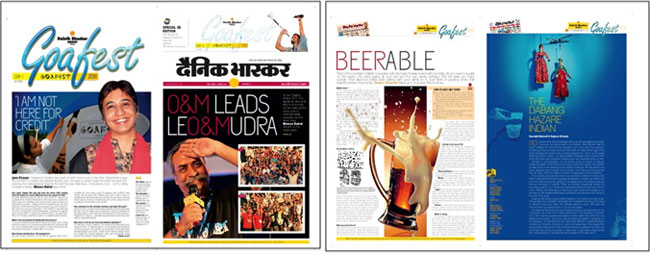
    DBG then sponsored Goafest newsletter brought by ‘E4M’. If my memory serves me right, it then sponsored the newsletter by ‘Afaqs’ before it decided to bring out its own special newsletter ‘Dainik Bhaskar Goafest’ (DBGFNL) in a true magazine style.


    The taskforce for DBGFNL changed every year. It was drawn from different editions of the newspaper. Most of these passionate team members had no past experience of covering media and advertising events but they were fast learners and great experimenters. DBGFNL was class content delivered early morning much before the trade publications. It was there in the hotel rooms, restaurants and lobby of hotels where delegates stayed. It was also distributed at the venue. I remember it surprising many with the only 3-D issue in one of those years.


    My team members like Neha Mavani, Shailey Tatia, Nidhi Dagga, Dipty, Mamta Ranasaria, Preema, Sheela, Rajesh Pajni along with Mansi Dabral (freelance) Raghuram (edit) and Rakesh ( Circulation)  did wonderfully well. They worked hard and partied harder. The edit- visualizer and production teams from different centres across India supported us well.


    DBGFNL was off agenda when the fest management team hiked their fee for distribution. Anyway to organise and bring out an edition with the single printing press in Goa was time and cost-inefficient. Additionally the cost of the team stationed in Goa was high and the readers did not get too engaged with the product.


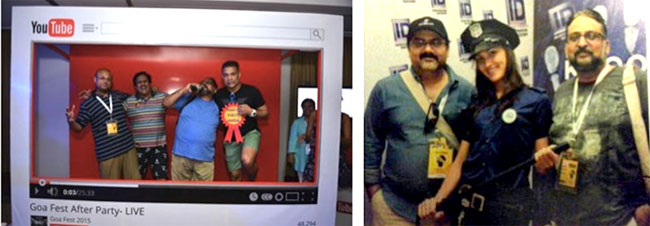
    Then the ‘No SOP no Template’ attitude of DBG sprung another surprise on Goafest, the often commented upon ‘Passport’ Party. For readers it will help to understand that at that time Goafest was really a two-day Friday-Saturday event. Thursday used to be an invitee-only Industry Conclave. The truth is that lot of young delegates came on Thursday afternoon and had nothing planned for the evening. This gap was identified and for them DBG created a party some 20 mm away from fest venue for Thursday evening.  It became known as Passport Party as the invitee (in form of a passport) was handed to delegates when they were exiting the airport, railway station or checking in at the hotels. Akshay Jain did a fabulous job. There were vehicles at pre-defined hotels and checkpoints at designated time to whisk them away to the party that went till late in the night.


    The fun was when Jagdip Bakshi while closing the Industry Conclave and breaking for the dinner announced ‘Dainik Bhaskar is doing a Guerrilla event,  they are trying to hijack the evening,  there is some Passport Party organised by them, I will request people not to encourage it and not participate. I was at the Conclave and this gave us some great unasked for publicity. Many delegates of industry conclave showed interest and we immediately arranged for dedicated vehicles to transport them to Passport Party.


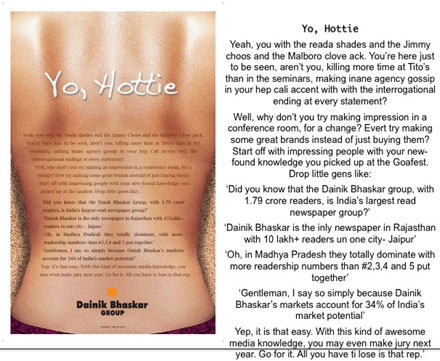
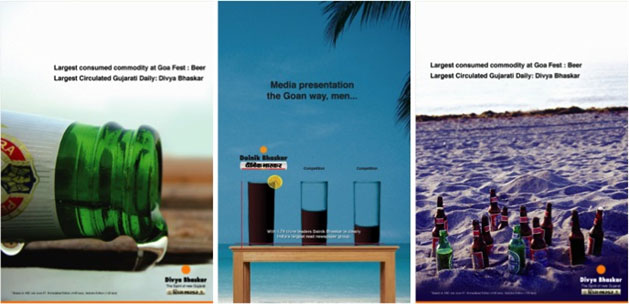
    Goafest was fun for another reason. It allowed the team to create some humorous ads that the brand would not have otherwise allowed. All this was possible under the justified cover of the Goafest ambience and feel. It was understood that the ‘advertising’ fest crowd was far open and you need to be a lot cheekier in your communication at the fest to stand out.


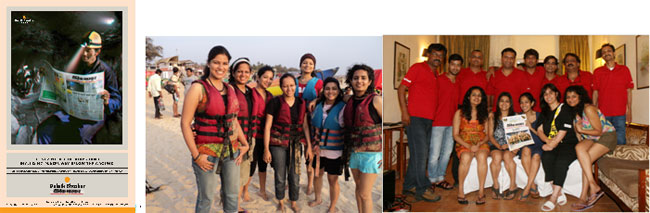
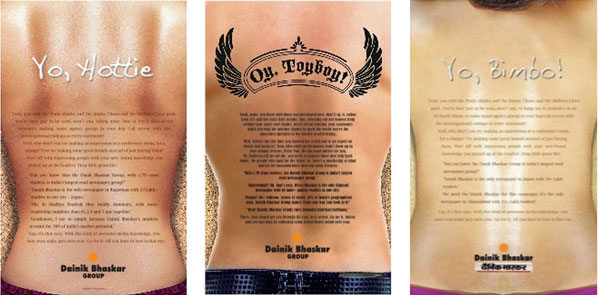
    So, from the single colour t-shirts so as not to get lost in the Kumbha of Indian advertising, to using them as message board – many things were experimented. Yes, there were many such things that on a normal day would not been accepted within the brand culture? Here, I am sharing a few visual from that time. It was not a case of split personality but more like DBG operating with ‘Horses for the courses’ vision.


    Oh, no way one can forget Beaches, Beer and ‘Bang for the buck’ at the Casino during the fest. Long live, Goafest


  • Sanjeev Kotnala: An enhanced experience this year

    By Sanjeev Kotnala


    Goafest 2016 can be summarised as high on energy with good knowledge sessions and charged after-parties. In short, a celebration of excellence. Thank you AAAI, AdClub and the whole advertising, media and marketing fraternity for making it a huge success.


    There are many version of ‘My Goafest’ as it satisfies different needs, but skews are inevitable. Some call it a ‘beer and beach’ event, while networking types see it as anything between a ‘How’re you doing’ walk-through to a ‘let’s catch up’ promise to a serious business and influencing opportunity. For many (hopefully most) it is a conduit to the best the industry has to offer, that must be viewed as a holistic experience.


    Whatever the need, this year’s Goafest has delivered a quantum, positive leap in experience. And to the inevitable naysayers and hyper-critics guiding, I merely say this: Crib if you want.


    We should acknowledge the positive experience enhancer at Goafest. Realise that events on the scale of Goafest will never be able to tick all the boxes at the same time, and that results will take time. However, Goafest 2016 saw some high-powered speakers share a spectrum of divergent but relevant viewpoints, trends, expectation and processes.


    Knowledge speakers satiated the delegate’s desire for a 360-degree understanding. And there was no mega digital push!


    Many statements on client expectations and agency relations, creativity and insight were repeated for the nth time. It only told us how slow we have been to change and adapt. The real test is in practice.


    ‘Braincoupling’ was quite evident in the Q&A sessions. It does not matter what worked — the Rs 25,000 prize for the best question or the moderator filter. The net result was that they were relevant and effective Q&A sessions.


    The jury seemed to be stingy with Golds. Read it as a wake-up call for agencies and clients. They need to put a lot more effort into finding jury approval.


    The Goafest App was a positive intervention. In 2017, the app will be one of the pivotal axes of enhanced experience. The introduction of the ‘Music Sundowner’ and death of the ‘rain dance’ was a welcome relief.


    The media hub near the knowledge hall was helpful. The grouping of accredited press on Whatsapp and the constant tracking and linking with speakers, was well-handled. Kudos to the Goafest team, and long live Goafest.


  • Sanjeev Kotnala: Goafest 2016 thumka needs to sync with the beat. Think about it

    By Sanjeev Kotnala


    My view on Goafest captured on April 11 looked at the positive side of the event. The enhanced experience was primarily based on 16 of the 17 speakers engaging the audience with relevant and interesting points. And that is quite an achievement. For a change, it was not digitally skewed. It was more holistic. It had more things getting a wow, than a slow nod saying ‘tell me something more’. Additionally, the media hanger next to knowledge hall, PR teams constant interaction and engagements, death of rain dance, a Goafest app, ‘Over The Top’ picture and some seriously high energy engaging performances before the awards made it that much better.


    I truly mean it when I say ‘Thank you AAAI, AdClub and the whole Advertising, Media and Marketing fraternity for making it a huge success’.


    Nevertheless, within the fraternity we need to be a lot more honest. Goafest 2016 would have returned with a report card with a ‘CAN DO BETTER’ remark.


    It is something that most of the delegates expressed. I do think the committee, and the senior fraternity must have felt the same.


    We had a brilliant knowledge session. NEVERTHELESS, WHY CAN’T WE START ON TIME? Why do speakers always run out of time? Why should people who come on time be penalised by the late start? Why can’t we cut the speaker when they cross time limits? The best of the events practise these simple rules.


    Speakers (I am told – at least on Day 1) for the umpteenth time repeated what we have been listening for the last eleven years. The suggestions on client expectation and agency relations, creativity and insight sounded stale. I agree it is not their fault when the industry has been slow in adapting and practising what they univocally agree. The real test is in practice but then… think about it.


    The ‘Q&A’ sessions after the knowledge seminars were good, perhaps it was the Rs 25000 for the best question that made the grey cells active. On the other hand, possibly it was the moderator picking the right questions. In the Karan- Balki session we saw Kubra Seth doing a damn good job moderating. I won’t believe if someone told that was planned.


    This is an area where we need to help develop and mentor next generation. May be we should stop having moderators above 45 years of age. Get the new blood. Think about it.


    This delay affects the schedule throughout the day and the engagement and networking opportunities. We need to do something about it. Starting on time not only makes life easy but is also a demonstration of respect to delegate and their enthusiasm.


    Cascading result of the delayed sessions is a delayed award show. No one really knowing when the awards will start. Is it okay to ask people to take their seat by 7pm when the show starts only by 7.30pm?


    Maybe like in an airport, we need screens outside the main hall. Where session, topic, original time and the revised time can be flashed. Delegates pick and chose their sessions, and this will help them. Think about it.


    Evening sundowner music session creates a relaxing bridge between knowledge sessions and awards. It gives delegates not staying at the venue, time to go and put on their award/ party gear. Good thing.


    Between lunch and dinner, there is a huge time gap. If some snacks can be arranged around 5.30pm, it will help many delegates. And as Indian stomach does not appreciate drinks after meals, snacks at an ‘after party’ will be welcomed. Think about it.


    Maybe the Goafest app In 2017 will be one of the pillars of enhanced experience. I can expect a lot many picture contest, quotes, games, tallies, etc. on the app in real-time. So much so that next morning you will be able to get the coverage of speakers and award winning entries on your app. Think about it.


    If the front two rows at awards are to be reserved, why can’t we use the rope-separators? Why someone has to stand guard and politely keep pushing genuine delegates? A simple ‘RESERVED’ board could do the job.


    There is a huge scramble for first few rows during awards and celebrity sessions. One could consider selling the third and fourth row at a premium and donating money to some charity. May be the top five agencies of last year can be given advantage seats. Think about it.


    There were glitches galore during the awards ceremony, which in some organisations would have made heads roll. This is not something new. It has been happening for years. Why have we not found a solution for it? Glitches in industry events make the entire fraternity look clumsy and indifferent. Thank god we still have low marketer participation.


    It is time that only the jury chairman gives awards. Including sponsors and others to give awards, is a practice Goafest can do away with. Frankly, speaking, there was a lot of angst expressed by many… simply said, they believed it decreased the award status.


    There are many versions of ‘My Goafest’ as it satisfies different needs. Polarised views and reaction true to an individual point of view are born. Biases are inevitable. It is a ‘Beer and Beach’ event, networking type’s grade it between ‘How you doing walk through’, ‘let’s catch up’ to serious business and influencing. For many (hopefully most) it is a conduit of best; the industry has to offer. It needs to be seen as a complete holistic experience.


    Introduction of ‘Music Sundowner’ and death of ‘Raindance’ was a welcome relief. Someone needs to do the sunset time check, and it can be more pleasurable.


    Whatever may be the need, Goafest delivered a quantum positive leap in experience. Please, do not forget the contribution of ‘Naysayers’ and ‘hyper critics’ guiding Goafest introspection leading it to deliver of a hugely defined experience. So people go ahead and crib.


    We should acknowledge the positive experience enhancer at Goafest. We must realise that events of Goafest scale will never be able to tick all the boxes at the same time and results will take time.


    Getting McCann back was good. The presence of R Balki and Piyush Pandey was a bonus. The amount of energy Piyush pulls in is phenomenal. It is high time that Ogilvy and Lowe start participating. Do it for the next generation! (This is no way a comment on winning entries)


    In awards; we need to be metal-sensitive. If bronze awardees were not invited onto the stage, then the treatment should have been consistent throughout the three award nights. May be we could actually publish the Bronze award list earlier and only announce Silver and Gold on stage.


    That brings me to something more sensitive. The jury was definitely stingy with Gold and for good reasons. I am happy. It is better not to award then promote mediocrity. The results must be internalised. It is purely a reflection of what is being entered. It is a wake-up call that the agencies and clients need to put a lot more efforts to find jury approval.


    On the other side, I am not sure if Goafest as an entry would have walked the stage, knowing that bronze awardees are not invited on stage.


    On a lighter side, ‘Unlike our bar – the registration will close tomorrow’ read the mailer from Goafest. Hidden within it was the promise that bar will not close. Unfortunately, beer management during the event was pathetic. The beer was not chilled at most times. The bar seemed to open and close with mystical timing. Discovery of beer counter working hour algorithm by trial and error was a tough one to crack. Placing a board or clearly communicating the timing would have helped. Expecting this next year I am not going to ASCI over it.


    On a serious note, I meant it when I tweeted ‘This is my last Goafest’ but in the same breath I added ‘Maybe I would change my mind’. Possibly I will be there next year too to see how far have we moved.


    Long live, Goafest.


  • Sanjeev Kotnala: Have you written a new chapter for your brand?

    By Sanjeev Kotnala


    Brands work with familiarity and consistency, with benefits and relevance and with emotional connect. They are just like human being. A set pattern of behaviour and an accepted level of unchanged unmagnified performance bring stagnancy into relationship. It is like marriage.


    A brand just like in a successful loyal marriage must strive to enhance the offered romance in relationship. It must rejuvenate the excitement before the inherent inbuilt natural urge of discovering alternatives take over. The brand-consumer relationship is like life, full of little incidents and episodes building the memorised and perceived aura.


    Remember the bike you rode, kiss you stole, car you owned, hotel experience, delayed flights, emergency delivery, assistance from unknown people, cosmetic or grooming products and even the mobile you own. Everywhere there is an unsaid level of expectancy and in-built redundancy.


    Brands use stories to justify their relevance and status. Consumer uses such stories to justify their choices.

    Dove, which was the just a beauty soap with moisturiser, wrote a new chapter with the campaign for real beauty. Toothpaste industry writes a chapter every season. Pepsi and Coke – where products do not allow much flexibility use communication to write a fresh novel every year. Mahindra has been doing a great job of engaging audience with newer twist and turn in its ever growing brand story.

    Brand like star performers cannot live on their earlier successes. They drop out of the audience’s present. The efforts required to get back in the system amplify exponential with the gap from the last successful adventure.

    When brands fail to write new codes of memories for the consumer in B2C, B2B or B2I, the books and the stories start losing their sheen. They become old; they have been heard a many times. They are past no one wants to see because the present is changing rapidly.

    Dell failed to write an interesting new chapter, so did Motorola. Kodak and Polaroid failed in their attempt, by the time they thought about it, the readers (consumers) preference for the genre had shifted.

    Apple and Samsung are a classic case of brands busy writing new chapters even before the ink dries on the last expression. It is more than just planned obsolescence. Do not forget, to succeed chapters must find an echo with the consumer choices.


    The game may be refined by the brand but is defined by the consumer’s willingness to accept.

    Look at the media side of business. Star is regularly writing a new story; reorganisation to sports to Hotstar. You hear stories with relevance. SRK, Amitabh Bachchan, Aamir Khan and R Balki are few celebrities who are more than keen on writing a new chapter in their relationship with audience. Dainik Bhaskar has been attempting to write chapters after the hugely successful thriller of Rajasthan and Divya Bhaskar (Gujarat Launch) and now the revived Zidd campaign. Indian Express has been consistent with its investigative journalism and continues to excite its audience, though its story needs a lot more tweaking to interest many. Ariel is not just tweaking the story line and characters in its brand story but is busy making attempts to define the story sharing pattern.

    Sometimes it is not just the chapter but also the construct skew and the genre of the brand stories that the brand needs a change. SAB has been one of the sharpest defined and positioned GEC channels with hardly any competition. Unfortunately, they were so wedded to the positioning that they failed to redefine their path when comedy and smiles started getting traded at news channels and other GECs with larger pull and money. The SAB team failed to tweak their ware. Possibly it is still serving the channel objectives, but they do need a new chapter.

    Possibly it is time to start looking at brands not as a treatise, series or even a novel. May be it is time to look at brand history and life through a series of short stories. It is something that will reflect brand’s adaptation to changing pace of expectations and desires.

    Keeping the brand story franchise alive and adding new chapters is a role that the agencies must play while partnering clients and brands. They need to be the resounding echo of the consumer’s shift in interests. They need to be doing more than just amplifying the stories traded by clients.


    You cannot keep enjoying the last successful chapter for long.

    It is a fallacy that the consumer with ever-increasing spectrum of fragmented taste and options is the one in the driver’s seat. If the brand with its new exciting relevant chapters can keep itself in-sync with the evolving consumer, the situation will change. It is time for brand-customer relationship to be mentored and not just sustained.

    The brand and consumer are no longer a planetary system with one of then the center of orbit. They necessarily be like quasars or the pulsating twin stars, always in an undefined tango of excitement. Always in the act of writing a new chapter.


    Sanjeev Kotnala with 28 years of corporate experience is the founder of Intradia World. A Brand, Marketing & Management Advisory. His focus area is Ideation and Innovation, a subject in which he conducts specialized workshops like IDEAHarvest, Liberate and InNoWait. For soft skill training, he follows SHIFT (Specific High-Intensity Frequent training), which is all about contineous frequent training with shorter sessions. Email sanjeev@intradia.in tweet @s_kotnala web: www.intradia.in www.sanjeevkotnala.com. 

  • Sanjeev Kotnala: When Flipkart & Amazon fight to own basic promise

    By Sanjeev Kotnala


    Original products, Timely delivery and return policy are three basic hygiene pillars of e-commerce success in India. Now we have the two leading e-commerce platforms Flipkart and Amazon trying to break the clutter and have strong brand association with these levers. Unfortunately, their collective din is not helping the case. In such a situation, other than the actual experience, it is communication that helps differentiate or amplify a brand.


    So, Amazon tells you that they give original stuff just because Indians have such a quirk about ‘Aasal’ (original). You are shown a vignette of situations. A driver checks the currency note. His smile, it is not a fake. A woman shakes a coconut checking for water content- it is not a dud. A customer jumps on sofa. All of them are busy checking so that they don’t get a fake piece.


    Soon another TVC from Amazon shows a groom urging a pandit (priest) to rush through the wedding rituals. A person dropping his handkerchief on a bus seat through the window. He is in a hurry. Amazon tells you, see we understand you, you Indian customers want everything ‘Jaldi’ (fast) we give you fast delivery.


    In another TVC with multiple situations, it tells you ‘We indians like helping each other. Here is the helpful customer service’ !!!


    This is the time when you want to shout and say ‘we Indians hate such stereotyped ads- and hence will you please stop them’


    On the strategic front, this campaign from Amazon is based on the everyday behaviour of Indian consumers. We agree we are like that only but do we need to be shown the mirror. The question remains, how effectively the insight or observation is leveraged, and if it is presented the right way; engaging, involving and non-stereotyped.


    In fact, the situations are too Indian to make one smile. Some disruption is required for the audience to get engaged with the communication.


    The TVC that works, is about the ritual of hiding the shoes of the groom. Bride’s sisters (saali) returns it only after getting paid. In the TVC, she is disappointed. She gets nothing because at the right moment, the groom gets a fresh pair of footwear delivered to him. ‘on-time delivery’ makes you smile and register the promise.


    A kid in the extended family genuinely asked me ‘what about the countries where people are not so quirky- does Amazon sells fakes and delay deliveries. I did not acknowledge the question. It was a silly question anyway.


    When I compare Amazon communication with work done by Flipkart, I find the latter better. In case of Flipkart, a single central character personally endorses its original products and return policy. He is willing to be penalised if proven wrong. And a second set of commercial re-establishes the layered message ‘even when it is cheap at Flipkart, it is original’.


    In another situation, he suggests to his doctor that he could buy original shoes from Flipkart. Jokingly the grown-up adult says ‘if proven wrong he is willing to take an injection’. This and the chemistry between the characters make you smile.


    The two brands Amazon and Flipkart are working with same promises. Both have gone ahead with a simple situation-based solutions. Flipkart uses a single character binding all situations. A character who also stands guarantor for the brand. Amazon uses multiple cast and situations and ends up making a manufacturer’s statement of promises.


    Not that Flipkart is the best possible execution, but they seem to have you smiling more. The brand connects with the promise is also stronger and the casting for the TVC perfect. Flipkart seems to understand not only the Indian consumer but also the audience.


    I respect Leo Burnett’s creative power and strategic execution, but this time around Orchard Advertising (part of Leo Burnett) has slipped. Standalone, the TVC seems fine but placed in comparative market situations Flipkart outscores- at least in communication.


    Will consumers someday accept Amazon as their own because it speaks their language and understands them? Will Amazon become Apni Dukan? Only time has the answer!


    Sanjeev Kotnala with 28 years of corporate experience is the founder of Intradia World. A Brand, Marketing & Management Advisory. His focus area is Ideation and Innovation, a subject in which he conducts specialized workshops like IDEAHarvest, Liberate and InNoWait. For soft skill training, he follows SHIFT (Specific High-Intensity Frequent training), which is all about contineous frequent training with shorter sessions. Email sanjeev@intradia.in tweet @s_kotnala web: www.intradia.in www.sanjeevkotnala.com.