Category: SANJEEV KOTNALA

  • Sanjeev Kotnala: Are you missing the Kumbhortunity?

    By Sanjeev Kotnala


    Waking up early morning at 4am, I watched the spectacle unfold in my TV screen. DD was telecasting the first Shahi Snaan (Royal Bath) from Simhasth Khumb, Mahapura at Ujjain, the city of Mahakal, also known as Avantiuri (named after King Kartveeryarjun’s son Avanti) and Ujjaini. Other ancient names include Padmavati, Swarnashringa, Amravati , Vikrampuri ( capital of King Vikramditya) Pratikalpa, Kumudvati and Churmani.


    The celestial lineup of planets occurring every 12 years is in place. The planet Sun is in Mesh (Aries) and Brahaspati ( Jupiter) in Simha (Leo) zodiac sign. The Kumbhortunity welcomes you at Ujjain where the tropic of cancer passes, also called the ‘Greenwich Mean time of India’.


    If I know you well enough, I am sure that your connect with this Kumbhortunity will be at an arm’s length. You will watch it unfold through the eyes of the news channel cameraman and discover it on newspaper pages. You will miss one of the largest spiritual gatherings on earth. You will miss being at one of the holiest places in the world at the right time. It is said in Puranas that Kurukshetra is 10 times more sacred than Prayag, Kashi is ten times holier than Prayag, Gaya is ten times holier than Kashi and Ujjain is 10 times holier than Gaya.


    You will miss the holy dip that is equated to thousands of Ashwamedh Yahya (Horse Sacrifice), Hundreds of Vajpaya Yagya (Fire sacrifice) and lakhs of journey around the world. You will miss taking a dip on the banks of holy river Kshipra. The river that originates from the womb of earth and not any mountain. Kshipra is the only uttargami river traveling straight from south to north. The river in which spilled few drops of Amrit (Nector – found during Samudra manthan) during the conflict between God and Demons.


    You will miss the sight of thirteen Akharas (Sadhus) coming here. And you will miss the spiritual, religious and cultural grandeur that Kumbhortunity is.


    It will be like any other Kumbh you have missed, experiencing the great gathering. Watch culture and religion at peak. Watch events are being managed. Learn from processes, discipline and unavoidable chaos. You will miss meeting people, sharing stories, learning from incidences and episodes that are bound to be lifetime memories. You will miss seeing how brands try exploiting this, how services get affected and again reinstated. How things happen where we believe systems do not exist. You will be pressed for time. You may hate the traffic. You will learn to avoid, adapt and move. Even a simple journey fr the holy dip without any detailed observation will teach you movement planning and stress management.


    You will have time later to relive the experience and emotions in your mind and create your own learning. You will see how the spectrum of divided religion joins together cutting across geographical and language boundaries. You will be at a place to watch the basic human behaviour and reactions.


    You will watch how the media is interacting and being consumed. You will experience. How digital is digital India. You will confront the real realities that the common man faces. You may find opportunities to hear stories and share his pie of happiness or sorrow. Can you think any place else can give you this high intensity of experience?


    So why miss the opportunity, the clients and the agencies; all of them, the creative, media, OOH, BTL- send your teams for this experience. Capture a slice of the nation for which you have been peddling your talent.


    Catch it right there. Create an experience schedule and do it now.


    On the other hand- on a personal note, you still have time for the dip and visit the Mahakaleshwar Jyotirlinga. The dates that you can still visit are: 15th May (Vrishabh Sankranti) , 17th May (Mohini Ekadashi), 19th May (Pradosh), 20th May (Nursingh Jayanti ) and 21st May (the third Shahi Snan). As for travel- it is simple. Indore (55km) is the nearest aiport (Bhopal  is 172km ) and is well-connected with Delhi, Mumbai, Hyderabad, Nagpur and Bhopal. Ujjain is a major junction and uniquely placed with connections to all parts of India.


    And if you are going to be there, see if you watch Bhasma Aarti at Mahakal, Visit the Kal Bhairava temple, See the new Iskon temple, Bharitihari caves and Chintan Ganesh.


  • Sanjeev Kotnala: Handle with care, Tender Tinder?

    By Sanjeev Kotnala


    What is happening in this world? Brands are blatantly disregarding current perceptions and looking at a digital exposure challenging regional biases and rituals to create the desired shift. Nothing wrong with it.


    So, Tinder (yes, Tinder) in its digital film for India has a mother very sportingly approving of her daughter’s dating by swiping right.


    Meanwhile, in a parallel development, foreigners are warned that dating is not prevalent. They should be ready for a polite ‘no’ to an offer of coffee or movie.


    One of then is right, and it may be Tinder.  Nevertheless, I believe that it is not the film idea, but the brand name which created the hyped viewership.


    In public understanding and may be the brand’s understanding, a ‘Lot more can happen over Tinder’. Tinder is so tender . You can make anything from it. Would it be happy seeing itself as yet another platform where meet people meet or the marriage angle is just a strong wink at the culture?


    Romantic relationships or one-night stands all in the swipe of the user, after all ‘Tinder. It’s how people meet.’ Yes, you got it right #SwipeRight to a world of possibilities.’ So, is the app trying to revolutionise or has it read the situation better?


    It may be quite foolish to see it as a woman’s empowerment process, where the woman decides what she wants out of life. For a brand to be working in the regional context, there definitely is a need to adapt to Indian rituals. Even so, it is more needed in the app than the communication alone. On the other hand, are we the one reading it totally wrong.


    Neither do I know how many of the readers above 35 are on Tinder, nor I know what the younger generation is making out of it. There is a palpable shift happening. People are meeting beyond the familiar family, college, social events, festivals. Such stories are also taking shapes in the contemporary India, but the shift is not tectonic. Are we ready for the new Tinder?


    Nevertheless, everyone is cautious not to be seen using the app. Forget people are worried about someone noticing the app on their mobile. A confession: I did venture to create a profile on it, but held back. The apprehensions are more than justified.


    It has the ‘TO MATE’ signboards as much in bold as ‘Adult friend finder’. Will this film edge it towards the desired platform of ‘TO MEET’ is a moot question?


    If one was to believe the social media, it is too much to expect. It seems, the brand has misread the cultural influences and is bound to create more confessional confusion. May be, I and other marketing professionals are out of sync.


    This silly exercise may go a long way in making the older generation. The influencers in family level drop their guard. Consistency will be the key. God forbid if there are Uber moments arising from this app.


    If you watch the film, the gestures and the dialogues with a heavy dose of localisation, you may feel it depriving you with the testosterone and adrenaline of excitement.


    We currently have few layers of morphed dating.

    • Family alliances- limited meeting and not dating.
    • Non-family alliance with family approval- semi dating.
    • Cross-religion/ language alliance with a higher degree of dating.
    • A semi metro searches for a life partner – true dating.


    As a culture, we are in a trap, as the younger generation is willing to experiment and take decisions to forge alliances on a hit-and-trial basis. The ever-changing status on Facebook a reflection of these changes. However, we have this ‘purdha’ that everyone seems to go logic-blind. May be it is time for the purdha about meeting-mating and alliances to leave its opaqueness and become a bit more transparent and acceptable. Could it be that Tinder understands the new generation better than many of us working in ivory towers and making our assumptions based on the multiple youth studies?


    It is true that the brand is in a trap.


    The excited users see it as an FLIRTING and SCORING app, which is an activity on the sly. The brand wants a much more OPEN ACCEPTANCE which is no where near the current perception. However, can you fault it in trying. It is a well-thought-out strategy. Success over here will multiply subscription from the generation it wants to address.


    The film may have done its job in opening a dialogue and discussion. Tinder is a tender subject trying hard to be accepted. Theoretically, it may have been better for it to have remained in the consumer’s perception leading to higher excitement.


    I do not see ‘We met on Tinder’ as an acceptable alternative to ‘We met at a college/ social event, garba or cousin’s marriage’. But then I have been proved wrong a few times.


  • Sanjeev Kotnala: Training without competency gap analysis is like Shooting blindfolded

    By Sanjeev Kotnala


    Organisations are expected to meet their objectives efficiently, and be ready for the new challenges the market could throw. To achieve that they bank on competent trained employees.


    Competency benchmarking and gap analysis help in recruiting right candidate, succession planning, growth and higher retention of qualified talent. They focus on development plans to decrease the bridge the gap of talent/ skill in a role against what the organisation can pick by hiring. Unfortunately, most organisations have no competency gap measurement.


    Properly mapped competency’s status and gaps identify skillsets, knowledge, behaviour, functional expertise and capabilities needed in short or long-term. Organisations then use effective processes like mentoring, training, buddy, e-training and other to bridge the gap at an individual or group basis.


    Organisations looking at competencies must differentiate between the ‘required competency’ at the hiring level which can be proved by certificate and experience and ‘acquired competency’ which may need to be demonstrated. Both are essential for proper results.


    In case of a regular formal competency-based training system, the recruiter can identify skillsets that can be enhanced post-recruitment and concentrate more on the ‘required competencies. Competency gap analysis sounds complicated and time-consuming, but it is simple and quick to administer. Most of the competency gap analysis at a department and location level can be done in two days. And the impact is long term.


    The four steps for an elementary competency gap analysis are.

    • Competency assessment; determining the exact skill sets for the job.
    • Creating a competency map for the role.
    • Using the competency map as the foundation the employees should self-analysis and rank themselves. They must share why they have chosen the rating they have given and how have they demonstrated their expertise level within the competency area.
    • Senior employees should verify, tweak or rank the employee on the competency map.


    This provides a good foundation to developing a formal training module. Planned training not only overcomes the barriers within organisations but also enhances training ROI.


    Competency mapping leads to a skill / functional and behavioral checklist. It is a useful tool at the recruitment level. It can be used to create benchmark training programmes customised for the organisation. Such standards and benchmark are used to identifying employees ready for the next level.


    Competency gap analysis defines skill set benchmarks across levels. The benefit of training is further amplified by measuring training impact on pre-agreed success matrices. This iterative process fine tunes the competency map and gap analysis of the organization.


    To do so, organisations define the competency level at every stage along the three dimensions of Competency, Proficiency and Context. For example, ‘Actionable B2B Ideation’ or ‘Exemplary Business Development Presentation’ which has the context if ‘B2B’ or ‘Business development’ is far more focused and measurable than ‘Ideation’ or ‘Presentation’. Usually, organisations fail to record the context. Properly done, it is transparent and easy to understand. It motivates the employees to gain capabilities in the desired area.


    Proficiency level must be graded in an acceptable framework. Defining just five stages like Beginning, Developing, Practitioner, Accomplished and Exemplary is a good process. By doing so, associating an appropriate training program with the right candidates becomes easy.


    If one adapts SHIFT (Specific High-Intensity frequent Training) as a process, then it is suggested that the mother competency is broken into multiple sub competencies. A ‘Business Presentation’ competency may be broken into; Business speak, Writing presentation, Public speaking, Slide designing, Presentation delivery, audience engagement techniques and Q&A session. At individual, group and department level, it can be identified whether competency can be enhanced just by achieving sub competencies, at what level, in which sequence and, which are the parts that are important. An employee already Exempleray in slide designing may not need to be trained in it. And two employees at practitioner and Beginer level must not be trained together. At the same time, an excellent senior salesman may need training in speaking English before being pushed upstairs.


    Competency mapping is essential to enhance ‘Training ROI’ and get the best out of Learning and Development programmes, So, decide if you still want to hit blindfolded or would want to make a fresh start.


    Sanjeev Kotnala is founder of Intradia World; a Brand, Marketing & Management Advisory. His focus area includes Ideation and Innovation; he also conducts specialised workshops like IDEAHarvest, Liberate and InNoWait. For soft skill training, he follows SHIFT (Specific High-Intensity Frequent training), a process of continuous training with frequent shorter sessions. Email sanjeev@intradia.in tweet @s_kotnala web: www.intradia.in www.sanjeevkotnala.com.


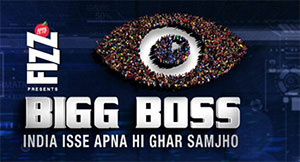
  • Sanjeev Kotnala: Will Bigg Boss call me for an audition?

    By Sanjeev Kotnala


    The Bigg Boss ‘India- Isse Apna Hi Ghar Samjho’ registration for audition closed yesterday. It is a carefully thought out strategic move from Colors. A move that for being successful will require a lot more efforts than just selection of interesting common people.


    The selected ones will live with the celebrities. Creating space for new interesting characters and stories with potential for align the viewers. How far will it go depends a lot on the ratio of common man to celebrity.


    I am an ardent student of ‘Bigg Boss’ and have repeatedly questioned the use of celebrity as prop to attract audience. I believe the real test of the format is when it can stand on its own.


    If it is just one or two common persons then it is no different than the initial seasons. Taking all residents as common people is possibly too big a risk for the channel. Nevertheless, they can start with a cross-cultural and geographical mix of people across social strata. Later on, if required to correct the fabric, the famous the magic wand of wild card entries and forced evictions can be used.


    So what does Bigg Boss does to a viewer. It creates a 24×7 open zoo scrutinising every possible move by the animals (people) inside. It gives the audience a really high voyeuristic pleasure of seeing helpless residents of the house survive using of Saam Daam Dand Bhedh. It is not just the romantic relationships that get seeded but also human emotions that get challenged. It is not easy but essential to sacrifice friends and enemy at the altar of nominations and evictions.


    Every year residents discover a new formula for survival. Forget the last year, the last episode, the last day or the last moment is no guarantee of future performance. The twists are more viscous than in the snake-and-ladder board game. The fragile emotions and at times boomeranging initiatives are all part of excitement for both the resident and the audience.


    Is it survival of the fittest? I am not sure.

    To me, Bigg Boss is a real challenge for anyone to participate. It takes sheer mental strength to go in and meet few strangers and spend time with no normal intervention and escapes provided by TV, newspaper, radio and the social media. It is a task of self-discipline and individual strength to partner and create new fragile equations fully knowing that the future is everything but stable. ‘Change is the new constant’ is something well 0xperienced in the house. There is a huge entrepreneurial streak that is evident in every action.


    The culmination and the last few weeks are the real test of moral strength. Whatever one could say, truth remains is not different. If two fairies were dancing on a pinhead with fire burning around them, there will come a stage that one of them will push another. And these are just mere mortals living through their own vision and unsaid strategies for survival and win.


    So, before the application gates closed, I put my hat in the ring. The 3-minute video and the short 500 character (not words) answer to ‘why I want to be in Bigg Boss’ was more like filling a university application form. The social media handles (Twitter and Instagram) will provide the team an insight, and help them decide if they should call for the audition.


    Well, this is the area I fail. I am a dedicated domesticated husband with no affair outside marriage. My wife is my girlfriend, and we are in love. I have grown-up disciplined kids with no problems. There is no fight in the extended family. I have no court cases or police record. There are no controversies, and I am loved by all I have worked with (Hope that’s true!).


    I do not make for an exciting story. After all, I am a mere engineering graduate from Jabalpur, a sleepy little Tier-II town in Madhya Pradesh and a IIM Ahmedabad alumnus with corporate experience in advertising and media. Now an independent brand and marketing advisor, trainer and facilitator. This does not make an intoxicating cocktail that could excite the team at Colors auditioning for the future residents.


    Now, this is where the selectors and their algorithms could go wrong. They need a person who will be disruptive in thinking. One who is capable of playing the game-like chess. One who thinks that it is like golf, where you play the game more with yourself. A team leader who knows how and when to morph into a team member. A person who is genuinely concerned about others. And the biggest drawback, a person not so vocal in his demands and conscious of the imagery that he will project from the screen.

    May be, they will ignore my application for audition at their own risk.


    Colorswaalon, please do not select Monsieur Kotnala. MxMIndia readers can’t do without ‘Kotmartial’ for three months! 🙂  – Ed


  • Sanjeev Kotnala: Seriously psychopathic! Why the 89 cuts in Udta Punjab?

    By Sanjeev Kotnala


    I had seen the powerful trailer of Udta Punjab. I was eagerly waiting for release on June 17. Udta Punjab ( can’t even shorten to UP as someone else may take offence) is, as the nation knows by now, a Drug Crime thriller exposing drug problem and is currently locked in a battle with the Central Board of Film Certification (CBFC). Now it may get delayed. Guess what we will finally see will not be Udta Punjab given the desired 89 cuts in a 123-minute movie. Watching it will be like watching a body without soul. The fabric will be in broken.


    What are these cuts? IndiaTimes reports that ‘The committee demanded the filmmakers chop off all the references to politics and elections and all references of expletives and visual substance abuse to be dropped from the film’.


    It is said that the producers are planning to move the Bombay High Court against the panel’s verdict. For whatever it is worth, I’m with the producers. They must take the battle forward to its logical end. If this truancy is allowed to continue, then viewers will never be able to experience the film the way the director conceived and wanted us to see. It will be a shame.


    People in the know call it the most honest movie. If what I know, read or have been told, in fact, Udta Punjab is a movie with a relevant message for the young audience. An ideal candidate for tax-free label, the movie is fighting for release.


    Is CBFC even bothered about such small matters? NO. The chairman is known for political unilateral decisions and don quixotic behaviour. The CBFC board members and the review committee members have publicly questioned the wisdom of chairman. The government has no inclination of the angst being created. Co-producer Anurag Kashyap has compared it to living in North Korea, and he may not be far from truth. However, he must watch, there is something called ‘insulting a foreign dignitary’ under which he may be hassled.


    This takes us back to the good old Doordarshan (DD) days, where the agencies submitted the TVC script for DD approval before they went for the shoot. India is a democratic country which proudly sees itself as the protector of independent views and freedom of expression. However, now it appears, the producers will be better advised to send a fully bound script to censor board for approval before starting shooting.


    CBFC was constituted for CERTIFYING the film for viewing by a certain set of audience. It was never meant to ask for changes and cuts. However, it did. No one objected, and it became the tradition. And this role of cuts and changes is anyway and undesirable irritant in the information parity world. The time is right where the industry must stand together.


    The objection is as stupid as the reason. Remove Punjab from Udta Punjab. Remove all references to Punjab cities, places, people from the movie. Or it may tarnish the image of Punjab. Oh, by the way, elections are some nine months away, so, this silly movie gives some prominent parties sleepless nights by bringing up a valid issue and throwing all the punches.


    I am certain this CBFC would have not allowed Salaam Bombay (Prostitution), Bombay (Riots) etc. And the esteemed Board believe that by removing Punjab from the title and its audio references from the movie, the illiterate, information-starved, simple citizen will never be able to guess which state it was talking about.


    What is show in the film is a grim reality. The problem exists. You release, or you do not release the movie. Keeping Punjab in or out of it is not going to change it. Even an Ostrich will be ashamed of such thinking.


    Drugs are a national malaise. Punjab is taken as an example to demonstrate the extent and its hugeness. And there is no reason for anyone to feel prosecuted. This way never ever will Indian film producers be able to explore realism in cinema.


    Social media had its own show on the side. Thank god a bit of freedom still exists. Though there are rules to operate within. I hope I am not crossing any.


  • Sanjeev Kotnala: The Indian Express’ soft touch to rejuevenate newspapers… but does it work?

    By Sanjeev Kotnala


    On June 13 when I boarded my flight to Nagpur, I was in for a small surprise. There was Indian Express placed on the aisle seats. The surprise was short as the cover was Jet Airways proudly selling its services. And then the last two pages of the wrap had the ad from Indian Express. The ads carried Creativeland Asia’s key line.


    I read and experienced Indian Express after a long time and realised I was seriously missing something. I am serious thinking of switching to the Express. Think such a good product undersold itself in the communication it carried.


    First let’s take a detour to a flashback. In 2015, Indian Express ran short films titled ‘Death of a newspaper’ . They started with a bold statement. ‘First things first, the newspaper is dead’ and went on to say that the Newspaper died when people started watching the news on TV. However, Indian Express is ‘More than a newspaper’


    A year later; the brand was presenting a positive side to a newspaper and sharing why it is still important- and well it has every right after the Panama Papers, the biggest investigative report in an example of multi-country journalism.


    The first ad headline from Indian Express- for the Intelligent Indian was

    ‘Does news always
    have to be breaking?

    And the second read:

    You heard the news last night.
    But, do you know it.


    Both ads were signed off with ‘Indian Express- Journalism of courage’.


    Now I do appreciate Indian Express taking on and defining what and why newspaper is still the best way to have the news. Such an approach will always benefit from a collective approach from newspapers, but then we know that it is a phenomenal statement but a fantasy in current situation. I remember the initiative from teh magazine association and the recent work by outdoor association, which are far more outreaching.


    The copy is good, bordering on excellence for the simplicity of the message, and if the argument has to be taken at face value. However, is that all what the newspaper is all about? Is that all that ‘Journalism of Courage’ could muster? In this tonality, I found the Mumbai Mirror campaigns had more impact.


    When I read the copy and reread it, it did nothing much to me as a reader.


    I present the copy of ad-I for reference. (Italics within brackets is my reaction)


    ………………………………………………

    Headline


    Does news always
    have to be breaking?


    Bodycopy


    When a child falls into an uncovered bore well it can’t be breaking news ( agreed). It’s a heart-breaking news
    (agreed and even Arnab Goswami agrees with this point of view )


    When a nation of billions fails to bring back a single gold medal from the Olympic games it’s disappointing news 

    ( yes, it is and maybe some time soon we all in news will be again rehashing and discussing this)

    When a developing country puts a spacecraft in the Martian orbit.
    It’s hopeful news

    (So).

    A newspaper is about pursuing news. Getting to the bottom of it. Making sense of it.
    (Agreed… don’t know where you are getting to)


    It is about answering every question. Questioning every answer. 

    ( Yes, yes, come on, that’s something so close to climaxing- build it up)


    And having it served on the breakfast table as infuriating news, moving news, eye-opening news, reassuring news, or shaking news. 

    (Good and here was I thinking that news was always just news. However, I am willing to go with you on this )


    It is never just about breaking news. 

    (One rarely gets an opportunity but yes, Indian Express still manages to break news)


    It is about breaking news down. 

    (And yes only Indian Express does that, so much honest to the brand statement, love the interplay of words. Someone is really having fun)


    Signoff


    TheThe Indian Express, for the Indian Intelligent
    (WTF! After all that build up, a let down – almost sounded like Rashtra Praharai, guardians of the nation)
    Let me present the second ad… it reads better:


    Headline


    You heard this news last night.
    But, do you know it.


    Bodycopy


    News breaks quite often these days
    (Yeah, I agree, and I hate when it breaks at such a frequency)


    Its pieces are hurled at us from our TV screens
    (Oh no that is not the only medium)


    The hastag on our Twitter feeds and trends on our Facebook. 140 characters of information, enough to feed a two-minute conversation
    (Oh, oh, how simplistic is this getting and how basic )


    Open your mouth and parrot it out. Did you see? Did you hear? Did you share? 

    (Oh now you have taken it emotionally)


    But did you read? Did you read through the pages? Into the paragraphs, between the lines 

    (Now this is nit picking, oh no- who reads and why must i read)


    Did you turn it n its head? Did you search for new perspectives? 

    And if you entered the third minute of that conversation.
    Did you stutter, or did you pleasantly surprise?
    Did you close and argument?
    Did you open a mind?
    (Oh, yes, you asked the similar questions last year too. Nothing has changed. What changed is the duration of conversations, nowadays they are rarely more than two minutes. We chat on What’sapp and share on Facebook- and there it’s cut and paste, share and be shared, like and dislike, comment and be commented on. Nevertheless, your perspective is welcome. I am not convinced if this need is satisfied only by newspapers.)


    I may not be the part of Indian Intelligent. However, I question if there is a lot left unsaid in this fight of newspaper against digital and TV. Will someone stand up and take the call? Newspapers are so much more than breaking news. They are more intelligent and deeply pursue the news to its ultimate end. They give you all the points of view, create impressions, mould perceptions and understand the readers a lot better.


    The question remains and here I am questioning the answer. Is this all that the newspaper needs to do to get the non reader or lapsed readers?


    Sanjeev Kotnala is founder of Intradia World; a Brand, Marketing & Management Advisory. His focus area includes Ideation and Innovation; he also conducts specialized workshops like IDEAHarvest, Liberate and InNoWait. For soft skill training, he follows SHIFT (Specific High-Intensity Frequent training), a process of continuous training with frequent shorter sessions. Email sanjeev@intradia.in tweet @s_kotnala web: www.intradia.in www.sanjeevkotnala.com.


  • Sanjeev Kotnala: Will your chapter change the story title?

    By Sanjeev Kotnala


    The past is just a story. You can do nothing else but learn from it. And future is vague, undefined but intended. So today is when you are nearest to the reality, ready to write the next chapter. Today or for that every moment of your life has been the opportunity to write the chapter that can give your story a new direction. However, maybe you have been working on a default mode or your conscious and subconscious has not been in sync.


    Writing a new chapter starts with the passion and intent to define something and make a mark. To be constructive and proactive. With this intent, you invest time and energy to read the story. You understand the situation; you understand the support cast, their capabilities and potential. This is what will be the foundation, barrier and the catalyst for writing the next chapter.


    The story exists and most likely it has a title. Title that did justice to the story. It is usually a working title until it hits the press. And here you are, determined and destined to write the next chapter.


    Now the new chapter you write can possibly do one of the two things.  It can help move the story forward in the intended direction towards its destiny, or it can re-evaluate and decide the direction the story should be taking. What will happen, depends upon few definitive alignmentsdefined by the author. Why is the chapter being written? Is the author of a follower or a leader, an execution specialist or a strategist, committed to the cause or just a fellow passenger?


    In case of Apple, the chapters written by Steve Jobs not only changed the title to the story called Apple, but it went further and redefined the title to the story of information technology, telephony, music, camera and marketing. When MK Gandhi started the chapter of non-cooperation in Indian freedom movement, he did not rewrite his story, he wrote the story of an Independence movement and gave a new tool to fight. When Verghese Kurien started the white revolution with village cooperatives, he redefined his story, image and many more lives. When E Sreedharan the metro man first took the project, the story of Metro rail was hazy but with his actions, he has written a completely new story. Many of them have not been happy with the story that was pushed to them.


    The impact of the new chapter can be felt on the front page, the cover of the book. Does the chapter (revision or an update) in the story is powerful enough to demand a new title? Is it so revolutionary and disruptive that it is reorienting organisational resources and redefining how it is known and perceived? If your actions impact the equation organization has with its stakeholders and the way it syncs with its ecosystem. This will need a change of Title.


    Don’t be awed by the names like Messrs Kurien, Steve Jobs and Gandhi and believe that you do not have the opportunity to read the story, forget about writing the chapter. Look closer home and you will see the Bansals rewriting the chapters, Kishor Biyani, Subash Chandra, Ronnie Screwvala. R Balki is writing a new chapter in his own story. See the students who have secured good marks in schools or have made to IAS coming from a background that only said, you should not dream. But they dared. Instead of accepting the constraints that were better defined than the possibilities, they moved on; they pushed themselves because they had the passion and conviction not to be part to the story they found themselves in.


    Write a powerful chapter or change the story you are in.


    Once you write the chapter and change the title, do not for a moment think that the job is over. The new title became a reality when you wrote the chapter is just another working title. A co-author at a later date and time through action and inaction will redefine and give the story a fresh title.


    It is rare that a chapter completes a story. ‘The end’ is not a chapter in the story of organizations. In professional life, it is the day you stop contributing and not necessarily the day you stop working of retire. In personal life, ‘The end’ is the universal truth- death.


    However, when you do write a new chapter that is powerful enough to change the title of the book, you can be assured that when ever the book is read, referred, discussed or published- the Chapter, you wrote will have the title you intended. After all, all you were interested in was not the past, that was just a story ad future was always intended and vague. You were and are the present, and that is what should be the focus, writing the current chapter that will change the title of the story.


  • Sanjeev Kotnala: You’ve come a long way Baba!

    By Sanjeev Kotnala


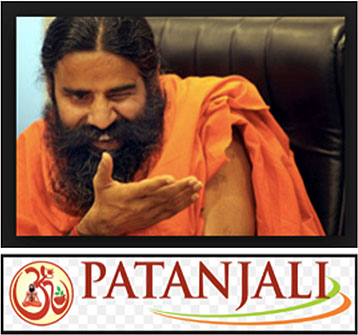
    The image does not leave easily. It is imprinted. Baba leaving the ground in the dark night to a stage where his trump cards Ayurveda and Yoga find the biggest sponsor.


    The images are a bit hazy, but the impressions are stark and clear. It is a strategic marketing move, that has been rarely analysed. There are companies worried at the uneven playing field. It is a Baba and his uncertainties and not MBAs that are dictating the game. They are forced to play a game where the rules are still being written.


    Leveraging simple trust and faith in old Indian traditions and science is Baba’s empire. Building up to exploit the suspected modern processes as unhealthy, harmful and possibly adulterated. The open-chested, eyes squinting and the passionate Kapal Bharthi are an integrated part of Baba storytelling.


    When a brand moves high on popularity, spoof and jokes also find their way. Rajnikant, Babujee, Alia Bhatt, Rahul Gandhi can take a deep breath of temporary relief. There is a new toy in the market. The jokes and spoofs will get back to their favourites but as of now it is the time of Patanjali.


    The last tweet that I read before writing was from a friend: ‘What do u call a girl who falls on a hot tar road and gets burns? Patan-jali.’


    There have been many jokes about ‘Putra Beejak, Patanjali Helmet, Patanjali Daal and Beer’


    Jokes aside, brand also finds its naysayers.

    There was unsubstantiated finger-pointing when Maggi was banned.


    There is a huge question mark regarding Patanjali product quality, consistency and approval. Baba has been on TV defending the position.

    Patanjali on a targeted Rs 5000 cr revenue talks of spending Rs 10,000 cr on Yoga Research, which is known to be a derived, research led complete science. Where is the money, honey?


    It is rumoured that there are more than 300 products being manufactured and distributed under the brand name. Baba is on record in stating his intent to enter dairy and dairy products beyond the already available ones.  Keeping in sync with the new-age consumer and distribution demands, brand products are marketed through e-commerce sites, including patanjaliproducts.net


    Patanjali as a brand has grown strong. It aims to work in six verticals: natural medicine, natural food, natural cosmetics, dairy products, cattle feed and natural manure, each of them a two-word umbrella covering a wide spectrum of possibilities.


    The brand is a case of simple boundaries and well articulated position. It is one of few clearly defining its intent not to be in meat, liquor, non-vegetarian items, or things that may be known or considered harmful.


    It has a well-defined clear target than many established corporate. Babajee does not intent fighting Zandu, Dabur, Hamdard. These are the domestic Indian companies that Babajee and gang will like to see grow. They want to fight international FMCG companies.


    There is a section that believes that ‘World Yoga Day’ is a clever government-aided marketing lever for Patanjali. The reason why they believe is not tough to see. Patanjali product architecture is built around traditional knowledge and Yoga. Babajee, the default brand ambassador or the posterboy is strongly associated with it. He was known and supports the new government, though at some times, he has mildly questioned current givernment efforts in bringing back black money. That sounded more of playful bantering than a strong opposition like Ramleela ground agitation.


    So, when the brand gains strength, stands for a very polarised unconventional approach, a set of consumer and pseudo intelligent start taking potshots. Is it really a sign of brand having arrived?


    A heightened focus and high consistency observed in behavior, promise or failure becomes the lever for spoofs. Nothing has changed. Only life of a spoof has reduced, which has nothing to do with decreasing technology cycle.


    Social media in its own peculiar democratic way allows for unfounded discussions. It encourages wannabes to post amplified comments and share content. Nothing else but a new toy can rein it.


    Beg, Borrow or steal, in addition to Like, share and tweet are today’s norms. These are picked up by the traditional media. Highly comic circus aping news channels and wanting to be in sync topical entertainment channels play to the gallery. Nowadays, the whatsapp phenomenon works as an independent catalyst to such content, helping Babajee further spread the message and reinforce its unique branding?


    Meanwhile, Baba keeps writing new chapters. The back of the pack becomes the front of the pack. The internal stakeholder becomes the prime celebrity endorses. A chain of doctor-clinic-shops emerges. This is followed by brand’s shop-in-shops in bigger retail formats. The converted are reconverted to the faith. People running after modern amenities and pleasure take a u-turn to start endorsing Babajee products as a justified counter to their modern life-style.


    On the other side, many are waiting for the brand to fail on quality and consistency parameters and its attempt to expand at an unbelievable speed, spreading itself thin, or so they believe. Most are surprised at the pace of growth and sudden creeping of a mysterious Baba on the corporate marketing world. For them, it is scarier than a Stephen King’s story.


    It is debatable, if an IPO was to happen, how far it will help Babajee scale new heights. What is the really leverageable worth of the brand or is it just smelling the initial euphoria?


    There are questions that remain unanswered. Why worms in Cadbury were such an issue, but insects in Patanjali Atta is not. When ‘Indian Samvad’ reported that samples of Patanjali’s desi cow ghee failed test because of added colour, the news did not travel far, and media silence in such cases is confusing. Is there a muffling of media or is there some deal?


    Why women who are highly sensitive to the chemicals in cosmetic brands and possible associated risk, willingly accept Babajee offerings. Is it because of a predominant belief in goodness and no side effects of Ayurvedism. Don’t think (not sure) if any ASCI code is being violated.


    The advertising of Panatjali is slowly getting aggressive. No longer are the plain island and banner sponsoring news. The Patanjali 3.0 advertising plans are already showing their new-found knowledge and marketing acumen. The product brand architecture is creating new synergy and is very contemporary in its appeal. The white coat debate, the honeybees on honey, the crisp grains and much more, makes for a very emotionally rational approach.


    The brand clearly plays on the unhealthy aspect of other products. In an isolated case of Kacchi Ghani oil advertisement being withdrawn, Babajee justifies it with: “We just said that oil made through the chemical process is not good for people. And our Kacchi Ghani oil was made without any chemical process, and it is a healthy product.”


    Babajee will never lie. He does not want political position. He is all for the benefit of the society. He will keep the cost low. He will never bleed people and fleece the common man. When you have such a strong belief supporting the brand, you can become complacent but that is something Baba is aware of. The learning of Lal Qila is not lost.


    Meanwhile, the consumer is willingly believing in it. They swallow the decently camouflaged pill of selling products at no-profit, no-loss. Why not when the CEO of the company, Acharya Bal Krishna holding 94% of the stake is known for not taking a single rupee as salary!


    The emergence of another quirky face on the brand is not lost. It is ego of the owner’s face or a strategic path to decrease the risk associated with a singularly focused franchise. Baba in the past is known to suffer from the same foot-in-the-mouth disease like Salman Khan; however, it seems to be under control.


    So, what next, a chain of Yoga Gym chain, publishing with so many books and other information to distribute, performance in IPL or even the rumoured regional airline. It is anyone’s guess, as the mystic Baba always plays his cards close to his open naked chest.


  • Sanjeev Kotnala: Read this before you read the next self-help book

    By Sanjeev Kotnala


    Self-help books are big business. It is approximated to be worth $11 billion. There are always more people under stress, underestimated potential waiting for that motivational kick that will change their lives. That is their belief. They seek self-help books like a honed pigeon. They keep picking one book after another. It must be doing something right for them otherwise there is no reason for them to buy them.  Or there is a possibility of getting addicted to self-help books.


    Once you dig deep, you will find self-help books provide temporary relief, a conduit of confidence and possibility of feeling good. They do have their placebo effect. Their impact is really short-lived. Once trapped in this cycle, the addicted reader keeps on venturing out to get a different drug or a higher dose. They externally seek induced motivation to correct what is wrongly wired inside.


    Self-help is an ancient tradition and tool. However, to get the real advantage, one needs to practice what one reads. And the reader needs to be selective in adapting what will suit a situation.


    Reading a self-help book is nothing new. It is nothing to be ashamed of. It is estimated that in the current generation, every adult at some stage would have read, sourced or flipped through the self-help books on subject of their interest.


    There is a wide spectrum of subjects on which books are available or possible. Subjects spectrum range from ‘How  to become a Millionaire’, ‘Gaining confidence’, ‘How to flirt’ to  ‘How to convince and close sales’. Weight loss, dieting, yoga, health and better sexual pleasure dominates the arena.


    There are two things that matter in case of self-help books, One, to decide which book to read and two, how to implement what you read.


    This is where your need to be selfish. It is more than investment of time and


    So, start with your SWOT analysis and identify the areas you want to address with the help of books. Scan the market for the same. Read reviews. Check author’s credentials and experience in the subject. If it is spirituality and religious spectrum, it is adviseable to follow writers of your faith. Check which you are included in its core target group. Do not restrict yourself to a fix set of authors or genre. Sometimes you will find the answers in a different category. Maybe write your need, in terms of ‘I wish someone had a book that can help me ……….’


    Now that you have a shortlist, on the internet or in a shop, read few pages and see if the writing style is in sync with your way of reading. If it is, chances are you will enjoy adapting some part of it. Do not pick anything that makes a hugely impossible promise. Do not have over expectations. Be prepared for long haul and gradual change.


    Pick up from the latest set or an updated reprint incorporating development in understanding of human behavior. Once you finalise on the book, don’t procrastinate, pick it up and read it.


    This is the stage where the second issue of how do you adapt the self-help book learning into your life becomes critical.


    Go ahead and take few more books on the same subject. Pick books allowing moderation and adaptability. Avoid books promoting ‘only my way’ kind of philosophy. Assimilate tips and create your recipe that will work for you.


    Take baby steps. Look at gradual changes. Find the simple tips that you can adapt to without many problems. This will build in self-confidence and enhance your capability to implement tips. Be strict with yourself and give it time to demonstrate the effect.


    Be wiling to fail and learn. Be ready for few lapses and to restart. There is ample possibility of lapse and initial failure, Be prepared for it.


    Set your target and create your own matrix of measuring success.

    Finally set yourself rewards that you will give to yourself when you succeed or see the change.

    Self-help books can be of help but only to people willing to experiment and implement learnings. So, be selfish and be very wise in shopping for the self-help book.


    Sanjeev Kotnala with 28 years of corporate experience is the founder of Intradia World; a Brand, Marketing & Management Advisory. His focus area includes Ideation and Innovation; he also conducts specialized workshops like IDEAHarvest, Liberate and InNoWait. For soft skill training, he follows SHIFT (Specific High-Intensity Frequent training), a process of continuous training with frequent shorter sessions. Email sanjeev@intradia.in tweet @s_kotnala web: www.intradia.inwww.sanjeevkotnala.com.


  • Dear MxM by Jaisurya Das: I am a visulaiser… it is better to work in an ad or design agency?

    By Jaisurya Das


    Ladies and Gentleman, Welcome back to yet another edition of Dear MxM, India’s premier counselling column for the adverting, media and marketing world.


    Thank you readers for your amazing warmth and valuable feedback. This week’s column is dedicated to all my younger readers who are making great careers in branding..


    Over the past few months, I noticed the somewhat flippant use of the term “iconic brand’ be it an marketing collaterals or huge billboards. Often for brands that are far from occupying this hallowed space. Maybe it’s time we examine the essence of iconic branding albeit form my own perspective!


    So what makes a brand iconic after all?

    Let’s examine a few examples(in random order)before we get into the mechanics of ‘iconisation’…

    Harley Davidson, Rolex, Amul, Rolls Royce, Zippo, Heinz..

    Ever wondered what makes a brand iconic?


    Here are some attributes that go into iconisation of a brand:

    *  Age and the Test of Time

    *  Sales volumes

    *  Audience, Psychographic profile of the customer

    *   Its Intrinsic value to the customer

    * Cult image enjoyed

    * Status symbol

    * Peer pressure

    * Quality and physical attributes

    * Persona


    Interestingly, most of these iconic brands have been around for a while (read three decades or more) and enjoy a global customer base.

    One of the significant triggers for iconisation is probably the cult image that these brands occupy in terms of positioning. The aspirational emotion of ‘I want to own and be part of the elite group’ is more than established with most legendary brands.

    Having said this, I was particularly curious to study the reasons behind why India is home only to a handful of iconic brands. The Ambassador (Hindustan Motors ) is a great example of how a brand has stood the test of time or the Maruti Gypsy for that matter and yet, we don’t seem to value for reasons best known to us.

    I often wonder if this has something to do with our innate desire to gravitate towards international brands more than our home grown ones. Or is it the lack of expertise and marketing talent to build an iconic brand of our own? I guess a lot of these questions will remain unanswered and yet somewhere most of us know it’s nothing more than rhetoric.

    I know I would be committing professional harakiri if I were to get into the mechanics of brand ‘iconisation’, however it’s important to you a peep into what this involves. Honestly, it’s no rocket science but just a well-calculated deep understanding of the process of buying. It’s just that the practitioners (me included ) make it sound so confusing..

    In my opinion, the starting point is believing in the brand. I say this out of experience. Often one finds brand heads who don’t believe in their own product end to end. Belief is the root of passion bereft of which this relationship is nothing more than an infatuation. I know I may be ruffling many a feather with my candid remarks but this is the truth. If you don’t believe in your brand, you have no damn business to manage it.

    Start by believing, and follow this with miles of walking the streets to connect with your consumers, Befriend them, and listen to what they have to say about your brand and its pros and cons. Don’t ever forget that the biggest critics are your catalysts to create the perfection required to become iconic.

    Iconic brands are born of a mettle that is difficult to replicate. Quality that is unparalleled, attributes to die for, perception that is higher than its price and the ability to strike a chord with any race, any geography across the globe.

    There is a defined process for every facet of marketing, Its a science after all.

    Iconic brands are created, not born. Use the science of effort and deep understanding and soon enough you will be running a winning brand. Once an icon, always an icon.

    Ramble done. Here’s our weekly Q&A this week from our readers in the South of India; Chennai, Hyderabad and Bengaluru. Read on…


    Sir, I am a visualiser and have done an advanced course from an art school. Is it better to look for a job in an ad agency or design agency?


    Good to hear, my friend! Since you are well-armed with all the creative academics it would be prudent to join a company that will give you enough room and freedom to experiment.

    Having said this, I must add that an advertising agency may not be entirely design or art-focussed but they can certainly give more than room for creative freedom! 

    It’s really greatly dependant on the company and its leaders. You may find a great design agency but that doesn’t necessarily mean that you will get the room to display your talent.

    Tread this path with caution. Speak with people who work there or have dealt with them in some manner. This feedback can really help you take a sensible decision.

    Do remember that great work isn’t about big names or positions. Creativity and the ability to adapt to the changing environ is the crux. Go where your heart takes you. Believe me, most often it’s right.


    Sir, you wrote about Mr Samir Jain being a true media pioneer while discussing a question on who would make it as the Father of the Indian media? But hasn’t Mr Jain’s Times of India group also introduced questionable practices such as Medianet?


    Absolutely. May I with your permission, reproduce an extract from my column of June 30, 2016…

    “This changed the face of Indian Media once for all! No, Samir Jain isn’t the father of Indian Media. No one person is, or will be. But yes, he did what many couldn’t imagine doing, no matter if his moves are debatable, questionable or otherwise.”

    I think it’s also important to go into the thinking and basic objective of this move. From what I understood, Medianet came into being in order to legitimise paid content. Hitherto, this was the unstated prerogative of many an unscrupulous journalist in Indian media. Well, you have a rotten egg everywhere.

    Machiavellian thinking is at times called for. For me personally, Medianet was a strategic move such. Quite simply, the business of media…!


    As a marketing professional, I have tremendous respect for such ideation. Yes, as an individual and a writer of sorts, this seems unethical and highly questionable.

    But does it really matter when most content has already been reduced to

    doctored handouts?

    I have learned to live with mediocrity. You must too.


    I am looking for placement next year but want to be ready career-wise. I am a journalism student but don’t know which city I should work in? Please help 

    Great! Welcome to the wonderful world of media and content ! To be honest, a good journalist will find space in any town..

    Yet, a few good media markets can help build a good foundation for your career. I would advise you to research the media active markets and then zone on the one that suits you well.

    Mumbai, Bengaluru and Pune are markets that offer great learning and interesting opportunity for content professionals. However, as I mentioned, scan the environment and take a call.

    It would be inappropriate on my part to weigh one against the other when it comes to building your career.

    I would however be more than help you should the need arise ! All good wishes to you for a great journalistic career! 


    Sir, I am an MBA student from a top business school in Pune. I am interested in advertising but I was told that ad agencies pay horribly and generally don’t come to B-school campuses? Why so?


    Thanks for writing in to Dear MxM!

    Let me at first allay your fears on placement opportunities in advertising. Interestingly, most mass communication schools find it easier to place their ‘advertising major’ students over the rest.

    Agencies do hire from media schools that are worth their salt. I can say this from experience since my own daughter was hired on campus by an international advertising major.

    Ad agencies aren’t great pay masters as you rightly said however this is essentially only at the point of entry. Bright adverting professionals get rewarded well agencies or elsewhere.                                                                                                                                                                                                                                                                                                                                                                                                                                                                                                                                                                                                                                                                                                                                                                                                                   

    Go for it, my friend. Focus on building great craft and the career will follow you no matter what the rest of the world thinks or says!


    On that note, Ladies and Gentleman, the time has come for me to say goodbye! Wish you all a very happy Eid and a wonderful weekend.


    Do keep writing to us on editor@mxmindia.com while we prepare to be back next week, same day, same space.


    Jaisurya Das, the maverick media-evangelist eats, sleeps and romances brands..

    His cerebral consulting interventions are aimed at making brands powerful and sustainable. He is a co-founder of www.pune365.com; Need more information on his work? Visit www.xanadu.co.in, Jaisurya Das is is also Contributing Editor o, www.mxmindia.com.  The views expressed in this column are his own.
  • Sanjeev Kotnala: Is the use of analogy depriving the audience and the brand its aha moment?

    By Sanjeev Kotnala


    Let me explain it to you, said the nervous marketer. I know it may be tough for you to understand and me to explain. However, I will take an example out of your life experience, something that you are able to relate to and then may be you will be in a better position to appreciate my offering.


    The agency guy stood up wanting to add his two bits to the client’s idea. By the way, knowing that different people in the target segment may not have the same reaction to the situation, just for the safety, we must layer it with humour.


    The creative team, which was still grappling with the vague service description, decided to take the leap. It is just like standing in a lift …


    It may not be wrong to presume such an act of strategic importance must be taking place across many conference rooms in the country, if the spate of analogy and metaphor-based communication in the industry is any indicator.


    Analogy is a perfect device for conveying similarity between two domains sharing relational structure despite arbitrary degrees of differences. The audience is expected to structurally align its understanding and appreciate the suggested analogy. The creative teams facilitate the process by use of clever words and action.


    Unfortunately, at times, the analogy becomes the pivot for the communication. There are no subtleties. There is a missing possible aha moment and even the smile is a result of audience questioning the wisdom of the creative team. Personally, I am not sure of the effectiveness of such communication. Sometimes they are so ‘A for apple’ that they miss the fun completely.


    Sincerely and seriously, the use of analogy in advertising is far more rampant than one would want to believe. For me, falling back on analogies and metaphors represent a definitive lack of creative leap and understanding of the offer.


    On the other hand, analogy is a strong device to provide the experience, redefine space and help adding visual framework to the concept. The more closure the analogy is to a common experience and stated in the social and cultural language, better it is in helping cognitive understanding and referencing.


    There has always been a strong case for use of analogies. There is a comparison of a familiar experience and picture to the brand promise, thus speeding up the cognitive process. It takes advantage of the familiarity to transfer or transform the meaning, structure and the experience with the new domain.


    Analogies traditionally have been one of the basic approaches in knowledge transfer and development through generations. It makes an early impression and helps the recipient to relate to the offering as on the hook of familiarity hangs the promise being shared.


    Analogies and conceptual metaphors in many ways are part of most of the advertising and remain a powerful dominant device. In fact, our mind uses the analogy path when faced with a new stimulus. It compares it with earlier experiences and learning. It tries to collate and compartmentalize similar experiences for better understanding and referencing. Not surprising that quite a lot of advertising banks on this phenomenon and sees it as a logical extension to communication process.


    Analogies and metaphors are definitively an easy and potent way for new product, brands, service that defies current categorisation. It helps them explain their offering by banking on other familiar experiences. I have nothing against it.


    The problem arises when the example and experiences are over simplified to an extent that the audiences get irritated. They want the brand to get over with it. They most likely reject this over simplification challenging their intellect. I am sure the audience hate being deprived of the aha moment.


    I am unsure about is the level of understanding that the creative teams, and the brand custodians have of the cognitive learning process and its impact. Trying to maximise message comprehension and not waste precious seconds on the analogy, the client wants to use an easily understood analogy in its most simplified format. The research in cognitive learning demonstrates that on one side, a slightly complex analogy produces stronger immediate learning and on the other side novelty of the analogy significantly enhances complexity in processing. So, there is a balance point where the impact must get maximized. I am not sure if there is a process with which the teams aim to hit this sweet spot, or it is still the biases and focus groups that are selecting analogies by rejecting the unfavorable ones.


    Next time you are planning to go down the analogy route, my humble request is to give it a second thought. Do not over simplify. Do not treat your audiences as stupid people. Let them complete the loop and let them have their Aha moment.


    You know understanding, and better use of analogy is like….


    ……………………………………..

    Sanjeev Kotnala with 28 years of corporate experience is the founder of Intradia World; a Brand, Marketing & Management Advisory. His focus area includes Ideation and Innovation; he also conducts specialized workshops like IDEAHarvest, Liberate and InNoWait. For soft skill training, he follows SHIFT (Specific High-Intensity Frequent training), a process of continuous training with frequent shorter sessions. Email sanjeev@intradia.in tweet @s_kotnala web: www.intradia.in, www.sanjeevkotnala.com.


  • Sanjeev Kotnala: Be Selfish: Prioritise yourself over everything else

    By Sanjeev Kotnala


    Life has always been demanding. The demands increase with time. You have been misguided if you believe that finally there will be a day when you will have more time at hand.


    It is tough to find a balance, and it is very easy to let life get out of control. Chaos, anxiety, stress are the unwelcome guests ever willing to visit your life. Nevertheless, you always have the choice to lead a life of balance. You can do so, only if bringing balance to life is a priority with you.


    If you cannot find balance in your life within the current ecosystem and environment then there is no surety if your attempts to do so will succeed in the future.


    It is not a exempalary talent to lose the whole day trying to chase your targets and objectives. We all are good at it. At the end, many a time, we feel that we have achieved nothing. The balance slips away, and you lose the control.


    It is only for you to decide if you really want balance in your life. If you do, you may want to try following strategies to make your busy life a lot more meaningful, interesting, and invigorating.


    While I share the strategies for a balanced life, I presume that you have taken time to define what “balanced life” means to you.How much of your waking hours will you willingly spend at work? How much of your time would you spend at home? How many leisure hours do you need each week? How would you spend those hours?


    Be Patient:

    If you are impatient, then it is always tough for you to analyze your life. In truth, your life is a lot more balanced than you think, and your impatience is tinting the observations. Being impatient is a sure way to agitate you. It leads to you being incapable of any action in that agitated state. Being patient helps in better managing challenging situations.


    Simplify:

    Only we are to blame for the way we have given a new meaning and definition to progress. You have been in a race to buy more things than you need and take on more responsibilities than you can manage. Remember every single little unnecessary item in life is creating imbalance. It is for you to take charge, eliminate the superfluous and bring more harmony into your life.


    Make Health a Priority: 

    Stop sacrificing for everyone and everything in your hectic life. This is one mistake that you must avoid. Without good health, there is no balance possible in life. If for any reason, you fail to give health the priority, it deserves, sooner or later bad health will make you focus on it. At that stage, it will be more complicated and create more imbalance.


    Stop Attempting to Multitask: 

    Hope you understand what is real multitasking. It is not about doing too many things simultaneously. It means in doing the right thing at the right moment, doing one thing at a time and moving to another task. When you work in such a way, you finish many things rather than leaving things partially completed. Try out.


    Plan Slot Downtime:

    ‘Saving’ is not what is left but what you take out of available funds at the start, ‘Downtime’ is not the time that is left over after responsibilities are completed? Downtime must be planned and slotted on purpose. You must plan for it. It also becomes a motivator when you know there is a planned break ahead. It funnily ends up enhancing the efficiency of your actions.


    Start Early:

    Procrastination is easier than going through the day’s work and taking decisions. Time is a valuable resource that you cannot create. You too have the same 24 hours. Once you fall behind, the entire day is out of balance. Starting your day with a clear purpose makes it easy. Once you take this step. The rest falls in place.


    Focus on what means most to You: 

    Oh, yes, your family and job are priority for you. Then what comes next? What is that is meaningful? Is it adventure sport, trekking, movies, painting, writing? Remember working never should be the ONLY priority in your life. If you are able to devote and focus on activities, you enjoy and, which mean a lot to you, you will enjoy life to its fullest.


    Give relationships the time they demand:

    When I say this, I am not necessarily and definitely not just referring to the romantic relationships. You must add friends, family and extended family to it. These relationships demand time that you must find. Analyse, if you are not wasting time on something less meaningful, for example, watching television. Hopefully, that is not your way of spending quality time with someone dear to you.


    Get enough Sleep:

    Proper sleep of minimum seven hours can help you do better. There is enough research to show that performance improves in the both physical and mental spaces when one gets seven-hour sleep. If not, it is time for you to re-examine your life and priorities.


    Be Selfish. Prioritise yourself over Everything:

    You can take better care of other, only if you have taken good care of yourself. When you are at your best; you perform at your peak. Being selfish in this case is a positive as everyone in your life benefit’s from it.


    Not everything will work for you. You will have to find the strategy that works for you. You will still have to find a balance in above strategies before you find balabce in your life. Hence here is a hort cut, the final advice and it is simple. Create a well-balanced life by choosing your priorities wisely. Please prioritize yourself over everything else.


    Sanjeev Kotnala with 28 years of corporate experience is the founder of Intradia World; a Brand, Marketing & Management Advisory. His focus area includes Ideation and Innovation; he also conducts specialized workshops like IDEAHarvest, Liberate and InNoWait. For soft skill training, he follows SHIFT (Specific High-Intensity Frequent training), a process of continuous training with frequent shorter sessions. Email sanjeev@intradia.in tweet @s_kotnala web: www.intradia.in, www.sanjeevkotnala.com.