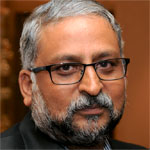
Category: SANJEEV KOTNALA

  • Sanjeev Kotnala: ‘Be bad and don’t hold back when it comes to creativity’

    By Sanjeev Kotnala


    Adfest 2015, held recently in Pattaya, Thailand, was a like well-choreographed dance sequence. As session after session delved into the theme of ‘Be Bad’, the event stood out as a very region-focussed festival. A kind that is, surprisingly, not quite popular with Indian delegates yet. My take, though — if you get a chance, do attend it.


    It’s tough to try and repackage the three-day fest. But here are some key learnings from it. First, as the sessions showed, the theme of ‘Be Bad’ urges agencies and creative folk to not take things for granted, or give in to constraints. They should explore, question and stretch the boundary of possibilities. The idea is to do something unexpected; because you will never get marks for doing just what is expected of you.


    The fear of loss of business is a very real one. As is the question of lack of trust and honesty between the client and the agency. Clients will go to anyone who is willing to invest in, and understand, their business, and they see this as a lever to elevate them to the next level. But an agency ‘ivory tower’ attitude does not help either. Agencies need to get out in the field as well, and try to connect with their target audience, the consumers. Understand and draw on insights, and study consumer behaviour. What, for instance, are the threats and opportunities present in the situation? Then provide your client the best connect and understanding, and that will be the best service you can provide.


    Today, everything is about multimedia or cross-media, and now things are moving towards trans-media. Your target audience is no longer as patient with your brand message as they used to be — unless you serve up a story that both engages and involves them. The art of storytelling, therefore, remains the same but must take on a slightly different form. Every story has a beginning, an introduction of characters, some issues or problems that complicate the situation, and a twist in the tale and, finally, a satisfying end. This is how audiences define a story, and agencies must be mindful of this.


    In this age of dependency on technology, we have crippled the art of execution. The way out is to do better than your best. Plan things in detail, and then try to execute them as brilliantly as possible. Get the postproduction team synced and  involved in  the initial stage and you will get benefit a lot.


    As the agency, you are the people with the ideas. Remember an ‘idea’ is really big, if it can be carried out by just about anyone, draws on easily-available technology, does not need huge budget commitments and can be adapted across categories. For that to happen, you need to get in deep with the consumer and try to stay on top of ever-changing technology. The idea, to ‘Be Bad’, and perhaps also fail every now and then in the process, are a part of the job.


    Lastly, do not expect to be guided about skill upgrades or the changes one needs to make. The agency has to be the ‘hero’ and drive the change. But the first change should come from within you.


    Do attend Adfest with me next year. You will realise how a simple step of displaying all entries (as a mark of respect) amplifies experience many fold.  Be a part of the ‘Jury Crossfire’ sessions, where jury presidents defend and articulate their thinking behind selecting winning or special work. This is a highly educative exercise.


    ……………………………………………………………………………………..

    Sanjeev Kotnala is Head Catalyst at Intradia and believes the best way forward for an organisation is to enhance its interanal team’s potential and capabilities instead of depending on external resources. He is a Management, Marketing and Braand consultant and conducts specialised workshops in the area of IDEATION (Harvest and Liberate) and Innovation (InNoWait). To contact email sanjeev@intradia.in  or tweet at s_kotnala visit www.intradia.in  www.sanjeevkotnala.com.


  • Sanjeev Kotnala: How to max it at Goafest. A frequent Goafest Traveller’s Guide

    By Sanjeev Kotnala


    Goafest is in its 10th edition and I have attended each one that does make me carry the FGT (Frequent Goafest Traveller) tag. I have witnessed the initial euphoria, blatant cribs, complaints, boycott, free beer to paid beer to lovely parties that are very much part of it, and yes the knowledge seminars and the conclaves.


    The high expectations have been tempered through the years. The dream of high participation from neighbouring countries remains a distant dream. The template has been working and no one has really bothered other than minor cosmetic changes.


    Now we have foam in the rain dance, the beer is still free, the parties indoor and they do last longer, April becomes a bit tolerable by event being indoors. In spirit and in action, Goafest has retained its character in spite of living through umpteen committees and challenges.


    So, if you are new at Goafest or been a FGT read this now to Maxit at Goafest.?


    I will not duck behind the planner’s standard answer: ‘It depends on what you want from Goafest’. Nor I would claim that the experience and research has any scientific basis.  Yet, I will acknowledge that it matters to question; why you are there in the first place? Who is paying for the registration and TBL? Who are you accountable to? Are you single, single ready to mingle or in a group? What is your age and gender? Do you smoke and drink? Do you like seafood? Are you grass-dependent and can you hold a Glass?


    Kicking these possible permutations out, here is the simplified guide. A personal consultation for media brands to best utilise GoaFest can only be arranged by prior appointment.


    MAXIT at Goafest is simple- just keep these 11 things in your radar.

    1. PACKING FOR THE FEST
    a. Pack Disprin, ENO, Digene , Highlighter and suntan. Then according to gender, pack shorts, shorter tops, deep cuts, sleeveless t-shirts, three-fourths, t-shirts, crocks, after-shaves and mouthwash. Optimists pack protection, pessimists Google nearest Chemist. Do not pack alarm clocks, high heels and hairbands. Do not pack specialised camera unless you are a photo-enthusiast.


    2. HOTEL

    a. Ensure you are at staying at the fest venue. That will most likely not be possible until unless you have links, you are a speaker or a senior industry face. Then look at the next best option, places within easy distance. And if you fall in this category, dump all your formals.
    b. Reach there well in time. A day earlier is acceptable.  At your own pace get the registration completed. Suggest you do that on Day 1 afternoon when all the goodies are available.


    3. SESSION MAXIT

    a. Very thoroughly scan the schedule. Now ask if the sessions will add to your professional growth. Then highlight sessions you are going to NOT ATTEND. Use a highlighter (that you should have packed) to clearly visualise your own window of opportunities. Each session highlighted is a NASU (Not-attending-session-unit). If you have less than 12 such units: re-check.

    b. If you are diligent, you could take Step 4 now and pre-feed your Tweets in buffer. So that no one is wiser where you are. Do update in case sessions are cancelled.

    c. Attend few sessions and live-tweet with the right hastag. You can be super witty or foolish and the fraternity will understand.

    d. In the first session, you attend take lots of  selfies (no stage in frame) with different friends. Avoid PYT’s or the dude/stud in selfie unless you are looking at hitting like buttons and answer comments. Now you can up that whenever you want. The background will remain the same.


    4. OPTIMISE NAAU

    a. One NASU should be used to collect all free items by participating at the various brand stalls. Do it on the first half of Day 2. The stocks are available then. The stall guys still fresh and willing.
    b. Use 2 NASUs for seeing the entries displayed at the fest.
    c. Use a max of 4 NSAUs to go sightseeing. Do it on Day 2 and be back by lunchtime. On Day 3 there are chances you will oversleep and miss reporting time.


    5. NETWORK. Do some work? Target a certain number of new faces that you will meet and a number for of known ones. Check your count. Strategically stalk them to chase your targets


    6. BEER. Ask your friends to keep check on the number of beers you enjoy. Around 1-2 per presentation is considered par at Goafest. In case you feel otherwise just leave the venue. You don’t want anyone seeing you in that condition.


    7. Get some strange fashion statement dress. This helps to feature in newsletters.


    8. Q&A

    a. for the serious-minded: For you self-brand is very important. Go through the sessions you plan to attend (if any). Read the LinkedIn profile of the speaker. Read the first 3-4 Google hits on the topic. Prepare a mast question. Introduce yourself and ask that question during Q&A. Pace it to allow cameraman to pan and catch you in frame.

    b. For lazy ones. You have no questions to ask. Master the art of paraphrasing speakers thoughts and make an arbit contribution. Do it early in the Q&A or you risk the chance of being booed by the crowd.
    c. For uninterested. 99.9% of audience.  It’s your time to get yourself another beer.


    9. SMOKERS:

    a. Do not show that you carry any light.  Remember asking for light is a good way to start a conversation. If someone asks you for a light be helpful and when he/she is taking first drag to light, its time for you to start a conversation. No need to mention that smoke only in the designated area.


    10. SMARTPHONE MANAGEMENT.

    a. Start a rumour that your phone battery has been draining fast. It helps to escape unwarranted calls or ‘can I use your phone’ requests. Do not flash your smartphone at the awards nite. And never praise its megapixels and picture quality in dim light or be ready to become unofficial photographer for your team.


    11. AWARD NITES

    a. Do not be bogged down by the award nite unless you are one of the finalists
    b. If you are one of the finalists, check and cross-check which award nite includes your category. You don’t want to be sitting in a wrong award nite. Ensure your team has the right Noise Making And Amplifying Gadgets. Make one of team member reach early and block seats so that you can sit in groups.
    c. Join your gang on stage even if the only thing you did on the project was say congrats. You are a veteran if you could collect your trophy alone discouraging other team members.
    d. Ensure someone clicks your photographs with the trophy and you immediately upload that.


  • Sanjeev Kotnala:Destination #1 for ad,media & mktng pros

    By Sanjeev Kotnala


    Since its inception in 2006, Goafest been something of an annual pilgrimage for me. Its birth had all the excitement of a baby being born in the extended family of advertisers, media and advertising agencies. It was an event everyone was looking forward to.


    It took off in style at Cavelossim beach. My own introduction to Goafest was nothing short of shocking. When I checked into the hotel room at the venue in 2006, I found a mystery pouch from one of the sponsors (I think it was MTV). The pouch, kept next to the pillow, claimed to have the three most essential items one might need at the fest – a mouth freshener for managing foul, beer breath; an antacid to deal with the next day’s hangover, and a condom for the opportunities that may come. That was a trend being set. Since then, Goafest has evolved in many ways, but somehow the ‘beer and rain dance’ have continued as its brand identity.


    This three-day fiesta has fought many a battle, but lived to create its own niche. Goafest started as an independent property of the AAAI with an aptly-designed Dolphin trophy, to remind people about its roots. It got a boost when, in 2008, when ‘Ad Club’ came on board and the Abby moved to Goafest. The Dolphin trophy, sadly, became history.


    In the eyes of the industry, the Creative and Media Abby became the main attraction of Goafest. It survived the 2014 boycott of the awards by some agencies. It withstood the high-decibel complaints about jury bias, internal awards trading and scam ads, like the JWT fiasco with Ford, the withdrawal of radio spots by Leo Burnett or the local politics. It outlasted the controversy of a business daily publishing the names of the winners ahead of the awards ceremony. Goafest has only emerged stronger after all these challenges.


    The beer had started flowing from the very first year. Indeed, Kingfisher has remained the one, stable sponsor for the event. Initially, with free beer being served between 10 am and 4 pm, the beach would be littered with empty bottles the following day. When people complained about too much beer being consumed, a Tughluq-like decision was implemented offering the beverage only with coupons. Fortunately, good sense has prevailed and the fizz is back at Goafest, though the beer is no longer as easily or widely available.


    The knowledge seminars have experimented with Indian speakers as well as speakers – legends in their field – from abroad. Now the fest seems to have acquired a touch of ‘spirituality’ and contemporaneity: The young start-up icons are now also invited to the seminars, alongside tried-and-tested creative and media speakers.


    To engage both the young and energetic, as well as the young-at-heart, water sports were introduced. An unfortunate incident in 2010 when a delegate plummeted 200 feet during a parasailing event has made the organisers stop this. In its new avatar, Goafest offers sailing and kayaking instead.


    The late-night parties at Cavelossim beach were one of the most happening, raucous and full of energy. But the heat, the need to set up hangers on the beach every year and some obliquely-referenced local issues have forced Goafest to move to a hotel instead. Parties now take place in relatively cramped halls, but they go for much longer.


    The move to relocate Goafest indoors took away the discomfort of walking in the blazing sun, but it also brought the curtains down on the lively, though informal, fashion and glamour quotient of the delegates that held a charm for some participants.


    One year, the India chapter of the International Advertising Association joined the Goafest gang. It held its debate and the first Olive Crown awards here.


    The industry conclave, which started out as an ‘invitee only’ event, has evolved into a more democratic meeting today, being now open to all delegates. But one might argue that that has made it lose some of its seriousness and importance. Goafest also experimented with a two-and- three-day delegate registration, but then reverted to the single-registration package. Thankfully, the hugely-successful ISA-associated, and the hugely-subsidised young advertiser registration packages continue.


    The awards have increased with Digital and Activation being added. In 2014, the Public Relations, Publisher and Broadcasting category was also added.


    Transport arrangements for the delegates, with buses plying between the main hotels, is a boon. It is well-managed and adds to the success of the fest. But when you sometimes see empty halls, it raises questions about whether there is a mismatch between the selection of speakers of what they would speak on, and what the delegates actually want.


    An industry event like Goafest is possible only because of its sponsors. Media companies have always acted as the prime sponsors. Hopefully, we will soon see brands taking on that role, and thereby showing their willingness to reach out to this hugely-influential prosumer population. Meanwhile, Goafest will keep evolving and remain a useful platform for media, advertising and marketing professionals to come together.


    Sanjeev Kotnala is a leading marketing and brand consultant and trainer. He is founder of Intradia. The views expressed here are his own. A shorter version of this appeared in ‘dna of brands’ dated April 13, 2015


  • Four Shades of Goafest 2015


    By Sanjeev Kotnala


    Goafest is in a time warp. Not much has changed in design and yet it seems to be evolving in the right direction to become a destination fest in more ways than one. The shades I share are reflections of various delegates. So before we go ahead, the shades cover the places and pieces of GoaFest I personally interacted and experienced.


    SHADE 1- THE EXCELLENT. Something that was paisa vassol and made attending at 10.30 AM  the late morning sessions, that too  after late-night parties and free-flowing beer.


    Arnab Goswami (Editorial Director & Editor-in-Chief, Times Now ) played the classical debate trick. Pleaded guilty to expected area of suspect like playing up a story, being an activist, getting too involved in the story and not allowing others to speak. Then systematically attacked, broke down charges and ruthlessly crushed them. He craftily leveraged selective pieces of delegate memory moments like the Prince borewell story, the Rahul interview, 26/11 and other stories to draw attention and reflect on his passion.  In the process, justified his actions and get absolved of the charges.


    He left few thoughts for the audience to reflect upon. Vehemently voicing his passion for what he does, he reiterated his stance: ‘Neutrality is a crime, when something is wrong’, ‘Journalism of neutrality is a waste, it has no impact’,  ‘There is nothing like a story for a Hindi or an English channel; a story is a story’. And he majestically added:  ‘I am here neither for a PR job or be part of the cocktail circuit or be gratified… I am a journalist’.


    He did interject some humour and here’s are a few samples: ‘I have the propensity to go for 2.5 hours, I hold the record for the longest one-hour show on TV’, ‘It became a news not because of content but because PM decided to speak’, ‘Once I have given someone a chance to speak and that was Rahul Gandhi and see what happened’.


    The one I liked best was ‘Rahul is like a submarine, he surfaces and then does the deep dive and disappear, he has beaten my best team of investigative journalism an we don’t know where he is’.


    Playing the  ‘Chamatkar’ game of 3 Idiots, I contextualised his speech in reference to brand and communication. And it made sense. Sample: A neutral campaign that creates no impact is a waste’. ‘I am not in advertising and marketing to just sell the product, I am there to ensure that the product is safe and creates an impact in the life of its users’.  Suddenly Arnab started to make more sense.


    DEVDUTT PATTNAIK (Leadership Coach, Consultant, Mythologist) was a different league. He banked on Santosh Desai’s definition of ‘Brand is a pattern of expectations’ and that Shiva, Vishnu and the temple system in Hindu religion were not too old. Everyone then wanted to be a monk and these were introduced 2000 years back to help the ambitious rulers to find soldiers. Devdutt took delegates through a journey in iconography and symbolism in Hindu mythology. He restricted discussion to Vishnu and Shiva in poster art form (visual form) and temple art form (experience form) and slowly built the case for deliberate planned consistency in brand messaging. He presented how brand message and its consistency flowed through out the elements in the garments, ornaments, body application, location, dance, weapons and even the animal associated as their vehicles. The net result of messaging by hermit Shiva said that it is not essential to leave worldliness and that completeness is only possible with the female form. The householder Vishnu, never seen with his children, pointed that progressiveness. Vishu is seen with his wives in the human avatar form but is never seen with the children.  He is the one who participate and escape, enjoys and breaks heart, is never complete. That is how life is. Vishnu in Krishna avatar gives hermit message: ‘Keep doing your karma and responsibilities- do not fear or desire rewards’. How complex the things are and yet the messaging of not leaving but fulfilling the roles remain alive. All mythological branding has happened without any media or intended push, it impacted us, as the brand message is hugely consistent across time and form. And that is what brands must follow.


    THE EASE of registration, movement. The ever helpful crew and the organising committee members working round the clock on their toes to deliver a seamless engaging experience


    SHADE 2- GOOD. Things that made other incidents and sessions bearable.


    CHETAN BHAGAT (Bestselling English Author) attempted a forced demystifying of his work. He agreed that he might not be the best author but pointed out that he definitely was the bestselling author. And in his own way that proved that you need not to be the best to be successful.


    He impressed that his main agenda is change. To make impact. To show progressive way to the Indian youth.  And hence he is using diverse transmedia, multimedia and newmedia opportunities at zero budget to amplify and be everywhere. His engagement runs from books, TV shows, films, digital, writing articles, social media and much more.


    EAST INDIA COMEDY performed twice, once during the knowledge session and second during the awards function. In the knowledge session, the group shared ‘how the brands could use the new wave of Comedy and Comedians’. Making relevant points they said: ‘Comedians are influencers and brands should consider tapping into their fan following’, ‘Comedians can make anything funnier, almost anything’, ‘You need to find the best-fit comedian for the brand- so that their core value as and content design does not conflict’ and the best advice ‘Internet audience is smart and takes very less time to decide what to watch and what to trash and hence the rand associations should be subtle. Content remains the king across formats. People may willingly watch a shabbily produced video if the content is funny and good’.  And a warning that ‘Low self-esteem and desperate need to seek attention is the prime requirement to be a comedian’


    SUHAS GOPINATH (Founder CEO Global Inc) mesmerised the audience with his story of passion and focus in a candid talk. The sheer enormity of his stature, approach and success made an impact. He proposed starting early but also to complete education. His advice is being seriously passionate about what you want to do and have higher goals.


    ASHISH HEMRAJANI (CEO, Bookmyshow) presented the challenges and the changing landscape in e-commerce bsiness amid often shared annecdotes from his own life that helped delegate relate to the lfe and expectation in entrepreunial e-commerce service  space. He predicts a bubble burst in the e-/m-commerce industry.  Hope he is wrong about it.


    Alan Moseley (President & Chief Creative Officer, 180 Amsterdam) said there is a need for us to have a different perspective to the things and that the best way to find solutions is to face it.


    The SHUTTLE SERVICE had decent frequency connecting few of the associated hotels. The THREE POST AWARD PARTIES were simple and good. They were rocking late in the night. The SAILING experience that few enjoyed during the fest was also good.


    SHADE 3- NOT-SO-GOOD. Being polite but they were not bad either.


    Film-maker VIKAS BAHL’s interaction with Sonal Dabral was a decent feel-good session. The chemistry between the speaker and the moderator was clearly visible but what is tough to understand is why they chose the path they did for their discussion.


    Guy Abraham (Global Strategic Planning Director, ZenithOptimedia Worldwide) moved around the thought that it is about continuously thinking about the brand and called that a 365 degree thinking. In his vie, this minor (to me a major) shift in thinking could make all the difference in brand health and returns. He asked the industry to look for Longer Ideas that can last long. The most valid point shared was that ‘use the paid media to catch them in a moment of connect and not to change the habit’. He complimented Lifebuoy’s ‘Clean and wash hand’ efforts and how they now own the thought.


    NEIL STEWART (Head of Agency, APAC, Facebook ) true to Facebook style focussed in sharing what was happening at facebook and what could be expected, how the brands could leverage it, why ‘likes’ were never and now are definitely not the currency to go after. He was worried that the agencies are on the way to kill the golden geese by over-empthasising advertising in digital sace and this may cause disconnect. He said and pushed at the thought that facebook=reach and that is how the brands should be approaching it,


    Johny Stark (SVP, APAC, Razorfish ) emphasised the need of great content and adapting to a fast paced working and campaign concept cycles to really take advantages of opportunities in real-time marketing.


    ONLY TWO BARS to pick beer during the day. They were many times non-operational. The FOOD during lunch and dinner.  RAIN AND FOAM PARTY, seems it is loosing its charm.  The music and infrastructure was excellent but participation going south.


    SHADE 4 – UGLY. Things that have their own reason to be the way they are. But something that one would want rethought.


    Starting on time. Waiting for the hall to fill… Goafest needs to set example. What stops us starting on time like the rest of the international awards and seminars. The gap between lunch and dinner extending to 8 hours. Would supose that is bad and disturbing for a lot of people. Many laptops at media centre not working


    The post-lunch session on Day Three (Ted Lim of Denstu Asia) was cancelled for some reason.  I am afraid that no announcenet was made or if it was made the delegates were not aware of the same.


    Bronze winners called on stage on award night on Day 1, but denied the pleasure of picking the trophy on Day 2 and 3. I propose that there should be consistency in Goafest approach.


    The incident involving a habitual interrupting delegate during Arnab Goswami’s session. There was a clamour for his eviction, but graceful Arnab said he was okay with him being in the hall.


    No comment on Industry Conclave with Anand Kripalu, D Shivakumar, R Chandrasekar and Sanjeeb Chaudhuri in sessions moderated by Arunabh Das Sharma. I could not attend it. Most who attended found the Conclave  useful, relevant and well-presented. Session not attended but comments are  basis delegate feedback – Ashish Hemrajani Jonny Stark , Niel Stewart and Guy Abraham


  • Sanjeev Kotnala: Goafest is too democratised, says Sonal Dabral

    By Sanjeev Kotnala


    Sonal Dabral

    I met Sonal Dabral, Chairman and Chief Creative Officer, DDB Mudra at the Adfest at Pattaya where he was Jury President for the Direct Lotus and at Goafest earlier this month. In a freewheeling chat, he gave him me his sharp and straight-from-the-heart views. Read on…


    JURY PROCESS AND ETHICS.

    Adfest Pattaya is regional-focused but the criteria of judging remain same. There must be a big/great idea.  It must be relevant to the audience it is talking.  Each place with its own setup comes with its own character. Cannes has a much larger jury. Which has its own pros and cons. At Adfest, there is a smaller jury. It has its own advantages, and challenges. There are more things common across festivals than there are differences.


    Sonal believes that the jury has to be dispassionately ruthless. They do not have to award just because there is a need to promote or awards needs to be given. Awards are after all an encouragement. Juries must not have a hidden agenda and must be able to clearly speak their mind. Jury must not be worried how their comments will be interpreted.


    In Adfest Pattaya, the jury was Badly Ruthless.


    INDIAN DELEGATION OR THE LACK OF IT

    When I spoke with him about the abysmally low count of delegates from India, which has been propped up by their promotional activity by Dainik Bhaskar group, Sonal was equally shocked. But he recovered fast.


    All of us are guilty of it, he said. “I do believe that this being a regional festival and an important one, we all should have been sending delegates. Give the young professionals a chance to be exposed to such a spectrum of work.   Even I should be sending some from Mudra.”


    I just did a simple math and told him that a senior abstaining from Cannes can send eight juniors to Pattaya. He did not bite and side-stepped. But he was absolutely clear that the participation must be enhanced. In his view, Adfest needs to be marketed in India. May be some roadshows need to happen.


    ON INDIA’S LOW AWARDS AND FINALIST STATUS.

    This was a loose ball for Sonal and he gave it the treatment it deserved. He pounced on the subject and like a saint in an unbiased observation added words of wisdom.  My grouse has been that we don’t push ourselves. As people we are not diligent enough. Our thinking is good. We do world-class work and that is not even from award point of view. But when it comes to execution we do not reach the level it should.


    It is not that there is a lack of talent. We are one of the best, if not the best. There is lot happening in India and maybe ‘Lot’ is a problem. We are not diligent enough to take the idea to its logical end, exploit it and amplify it. We somewhere get trapped in doing too many things


    On my comment that we adapt easily and have a ‘chalta hai’ attitude, he objected to my trying to put words in his mouth. But he shared the sentiment by saying ‘we lose interest and we shift focus too early. We are not BAD ENOUGH as we do not take it to the next level’.


    We in India always work under pressure and deadlines that seem want things yesterday. Remember a good idea needs time, time to think, time to create, time to incubate and time to implement. Till we don’t give it the time it needs, we will never be able to take ideas to next stage. For a certain piece of work be it the print, website, TVC, event or anything else, the tussle between marketers agencies continues as to how much time will it take. And then there is always the budget issue. As a fraternity, we are equally to blame along with clients for not taking ideas to the level we should.


    ON DIRECT.

    I used the bait of Direct as a medium not getting its due and Sonal took me on. He said “I do not agree that Direct is decreasing.  Direct used to be a mailer that went to a specific identified audience to evoke a response. Now you can get that audience from targeted TV, Web, installation etc. There are many many more channels to reach the audience directly. It is a function of the technology, time and budget. Its up to you how well you use it.”


    Sonal suggested that it might really be a good idea for the agencies and the clients to see what has won across categories. It will help us identify and visualize many opportunities and mediums available for us to reach a targeted audience to evoke the desired response.


    Direct is bubbling with possibilities. Gone are constraints of envelope and mail. There is a wide canvas outside to play with. It is about addressing an identified specific audience directly to get a predefined response. It can happen by events, web, outdoors, activation, connect, melas, augmented reality or what you have. This is field that has opened new opportunities and has a new set of challenges. Exciting times are ahead.


    GOAFEST

    Sonal believes Goafest is the original festival and award show for Indian advertising industry, so it’s a part of a whole generation of Indian advertising professionals. It has heritage and history is one of its big pluses.


    I could not hold myself asking his comments on Goafest and he said the timing of Goafest has always bothered him. In its bid to make it affordable it is held in the summer. If it has become India’s premier advertising show, it has to behave like one., he says. This year at least the quality of speakers was very high, so that’s definitely a step in right direction.


    “Any festival still have a sense of gravitas around it. If I am sending people or a company sends someone, it is an incentive. It is a reward for something you did. It should not be so democratized that anyone can go. Then everything gets affected. To democratise, you need to meet certain budget and hence it needs happen in certain months and scale. Thankfully it is now held indoors. Adfest also happens at a beach resort and can be a good learning.”


    ON TOO MANY AWARDS AT GOAFEST.

    “Right, there are too many awards and too many categories. But, let’s not complain. No one is forcing anyone to enter all the award shows and all the categories. We all need to decide what is right for us and what we can afford and chill. I would rather have more awards than have none!”


    That was Sonal Dabral, speaking straight from heart.


    Sanjeev Kotnala is Founder and Head Catalyst at Intradia. He believes the best way forward for an organisation is to enhance its interanal team’s potential and capabilities instead of depending on external resources. He is a Management, Marketing and Brand consultant and conducts specialised workshops in the area of IDEATION (Harvest and Liberate) and Innovation (InNoWait). To contact email sanjeev@intradia.in  or tweet at s_kotnala visit www.intradia.in  www.sanjeevkotnala.com.


  • Sanjeev Kotnala: More For Less Only Works At Fashion Street

    By Sanjeev Kotnala


    In today’s world, the client-agency relationship is perpetually in flux. Agencies have been trying to extend the life of their last formula ‘More for Less’ as a tool to protect business. There is a constant fight to grow and be the biggest, not necessarily the best. The agencies failed to realise creation of this Bhasmasur as is self-defeating proposition.


    Size was a considered a necessity to insulate agencies from threat of disintegrating. It is now the cause of making them too slow an elephant to own. The organisation and the individual remain spectators while business gets realigned or shifts due to under quoted retainer ship. They can do nothing when idea from a lost pitch gets executed. The wait for the next avatar of Vishnu to fight this system is a wasted dream.


    The first mover advantages, the creative awards, the IPR on processes disguised, as differentiators are not even discussed now. On the other side, all parameters like understanding client business, speed of operation, level of innovation, being in sync with global trend and technology and an innate desire to experiment and innovate, the agencies and advertising business seem to score low.  This makes the client seek out willing partners, anyone who will take them to the next level, much beyond the traditional decreasing marginal growth. The orgasmic pleasure of creatively well delivering campaign been replaced by the new high one gets from a well delivering campaign that is involving, engaging and use the technology of today.


    The client is shouting ‘more’ and the agency willingly keeps delivering more. Unfortunately, the client is not saying more quantitatively but more qualitatively. They want to reinforce trust and the agencies been giving no reason to reinforce it. The agency has stopped treating the client as a girlfriend. They have stopped experimenting and surprising the client. They have stopped investing in the relationship and trying to keep it on a high.


    May be it is the time not to say ‘No More No less’. It is understandingly a tough decision. But there are other ways the agency-client relationships need to explore. They need to retry enhancing ‘Trust’ that has slowly but surely been eroding. The Brand Custodian instead of investing in the brand was busy keeping business safe from rival agencies.


    Agencies have forgotten that the basis of the relationship was the expectation of being   surprised, differentiation and unexpected moves that were always based on new insight or trigger. The impotency of insights driven from similarly defined TG and uniquely mirroring research techniques is not unexpected. More so the industry talent pool is genetically corrupted. These are the forgotten promises and IOUs that are due. Life on borrowed and half-baked analyses is over. Half-knowledge and faked passion may still win pitches but they definitely kills brands and relationships.


    Today, information and technology is parity, the advantage may come by marrying Neurosciences or Semiotics and cultural understanding. Unfortunately, in a hurry to be one-up, agencies have been serving half-baked tools and fully fried concepts, topped with nice looking charts and cool sounding research that are more post rationalisation of the concept. A sure recipe for brand disaster


    Clients are clients. It is in their DNA to drive home the bargain. They have to get that extra shot at no cost. They want to extend the pleasure from every encounter. Throw in dreams of future possibilities and pretend appreciating agencies point of view. If you still believe that the trust level between you and the client is high, wake up and act. You are no longer protected by keep giving More for Less, that is definitely not the next high your clients are looking for.


    Sanjeev Kotnala is Founder and Head Catalyst at Intradia. He believes the best way forward for an organisation is to enhance its interanal team’s potential and capabilities instead of depending on external resources. He is a Management, Marketing and Brand consultant and conducts specialised workshops in the area of IDEATION (Harvest and Liberate) and Innovation (InNoWait). To contact email sanjeev@intradia.in  or tweet at s_kotnala visit www.intradia.in  www.sanjeevkotnala.com.


  • Sanjeev Kotnala: Kyoorius: Awarding the Work, not the Organisation or the Individual

    By Sanjeev Kotnala


    I like the way Kyoorius Awards has been shaping up. The team behind it is doing everything possible to build it as a more relevant and engaging platform for the Industry. Rajesh Kejriwal definitely has a good team and counsel of  friends surrounding him.


    I am impressed the way the entries have increased and with the Jury process. Last Saturday, I made a small detour to Nehru Centre where I caught up with Rajesh and saw the Jury in action. I liked what I saw. I thank Chaitanya for taking me through the iPad-based jury app that is making the process easier and smoother.  There is a helluva lot of backend work done that now allows the team control process control. I do hope we will see a much wider cross-section of the fraternity at the award show towards the end of the month.


    Communication solutions, campaigns are a result of teamwork and this thought finds echo in the awards. At Kyoorius, it’s work that is awarded and not the agency, client or the production involved in it. Let me clarify.  It recognises and awards every one listed in the credits for an awarded entry. And any and all of them can be on the stage to collect the Elephant. Later, if desired, every one of them can order their own Elephants. In addition to being part of the reception or the conference room ego wall, many replicas find their way to cabins and cubicles. Having your personal Elephant is such a pleasure.


    Behind the scene, the team has been working to enhance the industry interaction. I am told that there were instances when the jury has changed the category of the entry, where Team Kyoorius called to suggest entering a work in more categories. Much before the jury meet work been scanned and doubtful case rechecked.


    This year the awards have expanded in their approach. On May 21-22, Kyoorius Melt will be held at Nehru Centre. It is a highly relevant format affordable to all organisations and self-driven professionals. A space where the sponsoring brand will be interacting with the advertising- marketing professionals in tailor-made seminars. I personally am a firm believe that if the organising body can take care of the sponsor need by creating such relevant opportunities, they will in some time will have no need to ran annual marathons chasing sponsors.


    The award on May 22 will be held at NSCI stadium. Last year, it pleasantly surprised us with scale and style and it promises to be much bigger this year.


    Sanjeev Kotnala is Founder and Head Catalyst at Intradia. He believes the best way forward for an organisation is to enhance its interanal team’s potential and capabilities instead of depending on external resources. He is a Management, Marketing and Brand consultant and conducts specialised workshops in the area of IDEATION (Harvest and Liberate) and Innovation (InNoWait). To contact email sanjeev@intradia.in  or tweet at s_kotnala visit www.intradia.in  www.sanjeevkotnala.com.


  • Sanjeev Kotnala: Mass Exodus: Are you the next victim?

    By Sanjeev Kotnala


    It is neither the first nor is the last time that the news of collective exodus of employees from an advertising agency is being reported. Just like an earthquake, it is unpredictable but bound to happen if the built-up pressure fails to find a release. The signs of stress building need an HR and or a management seismologist to read them right. I am not referring to an exodus of employees when the ship is sinking or when a company/category is collapsing.


    Mass exodus of employees availing a unique and newly developing opportunity is never an overnight phenomenon. There is always pressure building with time. Be it the senior taking loyal dependable foot-soldiers to new organisation, a new brand/ product being launched in a category and employees being poached. Whatever may be the timing or reason, it is tough to negate that the main cause is the organisation turning blind eye to the emerging signals and stress building in the employees. Such an event reflects a long continued negligence in nurturing and managing desires and ambition of the talent.


    Ultimately, a set of employees are willing to gamble with the new opportunity and mostly it has not much to do with money.


    It is not a new environment where there is lack of emotional connect with the organisation. The average age of employment within an organisation is ever-decreasing. It’s a time that organisations need to have an employee exodus strategy.


    But, before that  organisations must attempt to emotionally connect with the employees. That requires the organisation to ensure interesting work profile, being transparent in its management evauations, develop a  leadership that employees look up to and  believe in, keep the top-management politics restrained, stop rumours and provide autonomy to the employees in their role.  A restructuring and slimming workforce lead to extra pressure for foot-soliders without commensurative freedom, life balance and monetary insecurities. The employees  seeing a new opportunity emerging with an erstwhile respected leader within the organisation is a sure case of exodus possibility.


    The mass exodus can be a boon or a curse, but in the short run the organisation pays the price in terms of over-stressed workforce, lower productivity, low moral and corridor rumours that pull it further down. Still the biggest cause is not reading the potential exodus signals like enhanced rumours of people planning to leave, aggressive competition moving in, fake performance reviews, low performance-benefit linkages, lack of internal promotion and changes of executive leadership.


    As an employee, if you are always hiring externally, lacking charismatic leadership, enforcing rigid working hours, neglecting training, not helping employees becoming future proof, lacking transparency in communicating future possibilities, ignoring recognition, not nurturing loyalty, have hostile and demanaing work envirounment,  over micro managed work processes, not leading with example, blowing bloom news or saying no to merit compensation, you are laying the foundation for an eventual mass exodus.


    Time you stop and evaluate your organisation and see what the situation is and at the same time try evolving a strategy to mitigate the risk as well as to firm up your post-exodus strategy.


    Sanjeev Kotnala is Founder and Head Catalyst at Intradia. A Management, Marketing and Brand consultant. He conducts specialised workshops in the area of IDEATION (Harvest and Liberate) and Innovation (InNoWait). His focus remains enhancing client’s interanal team’s potential and capabilities and decreasing their dependence  on external resources. To contact email sanjeev@intradia.in  or tweet at s_kotnala visit www.intradia.in  www.sanjeevkotnala.com.


  • Sanjeev Kotnala: Cross Media Matrix – Time for Indian Publications to take the leap

    By Sanjeev Kotnala


    Why should anyone be interested the latest report of EMMA, the Enhanced Media Matrix Australia? The answer could be a wishful thinking and the necessity of future. We are probably at the right point to leap forward. Today, in complexly fragmented multi-title and multi-screen media engagement, a study like EMMA, the cross-platform audience insight survey makes ample sense. There is chaos and as truly Indians we have adapted to the situation of mistrust of data. A rival rebel league is definitely into making as a section cries for relevant data. In TV mapping, BARC is already talking of multi-screen measurement. It is absolutely the right time for a disruptive jump.


    For the uninitiated, EMMA surveys “54,000 people in a year, seven days a week using sophisticated techniques”. For the survey part it uses a mix of 90% Computer Aided Phone Interview (CATI), 10% Computer Aided Personal Interviews (CAPI) and supplements with 8% door-to-door.


    EMMA measures readership across print, website, mobile and tablet. It covers AIR, Average Day of week readership, Reach and frequency data, cross platform audience for major newspaper and magazines and Newspaper inserted magazines. Additionally and interestingly it captures branded sectional data within the newspaper and provides contemporary segmentation and insights into 40 product categories down to brand level. Taking it a step further it covers Media Engagement data (Media Consumption and media most useful), Print engagement (Source, Loyalty, Motivation connection and action) and Demographics including Geo-demographics Segmentation.


    It covers 600 newspapers and magazines including 250 regional titles. The media fraternity in Australia sees it as an enabler for the advertisers and the media agencies to project a more realistic current size and profile of readers. It provides a Monthly report and uses a quarterly databases to project.


    The game of such readership or cross media matrixes is all about transparency and independence, rigour of methodology, collaborative efforts, dedicated unbiased body, better & deeper insights, industry acceptance, keeping pace with the change in media matrixes, support of Industry bodies and confirmed delivery on committed frequency. Seems like too many variables but who said it will be easy. These are essential for any new report sustainability.


    To battle the disputes and allow publications selective inclusion in the report, EMMA entertains new request for title inclusion in a quarterly cycle. Interestingly, the way out to publication is also open and transparent. A running title can request being dropped from EMMA coverage by providing a six-month notice along with an explanation, but EMMA can elect to continue measuring a title despite having received a publisher request to withdraw from the measurement. I personally like this simple framework.


    Independent Research Company ‘Ipsos MediaCT’ (IPSOS) developed the EMMA report in Australia. They have experience of conducting surveys in 40 other countries. This EMMA report is not too old or a very recent development.  Work on it started with the contract awarded by The Readership Works (TRW) in 2010. The first report was out in 2013 and the current report reflects a continuum of 18 months data with trends and comparative data.


    It is interesting to note that the first report of EMMA in 2013 showed huge surge in newspaper readership compared to the earlier ‘Roy Morgan’ reports. It resulted in news captions like ‘Time to fix buyer’s distorted views of newspaper’ and  ‘Publication giants swoon over EMMA data’. But it had strong support of publishers who believed in the process and that the data was just few reports away from stabilising. Somehow we find this kind of trust missing in our part of the world.


    TRW and Ipsos created EMMA with the sole aim to help advertisers make fast decisions with greater accuracy. It in process consulted with leading industry bodies like Media federation of Australia (MFA), Magazine Publishers of Australia (MPA), Australian Association of National Advertisers (AANA) and leading researcher & experts. Wish for an Indian game unveiled in some time cannot be just a dream.


    EMMA is delivered on a pre-defined release timetable. The dates for reports delivered over a Desktop software and cloud till Oct 2015 ares already announced. This predictability has been missing in Indian readership reports.


    For the cross media matrix to become a reality, we need someone with initiative and passion and belief. A wishful thinking. We are united in our division.


    But, if it was to somehow happen, the industry will benefit. It will be a leap forward. It would allow media agencies & planners to provide highly effective and efficient media investment plans for their clients. And efficient planning always favours the industry by enhancing belief and an urge to increase investment. Something the print industry needs at this stage


    ……………………………………………………………………….

    Sanjeev Kotnala is Founder and Head Catalyst at Intradia. A Brand, Marketing and Management Advisor. He conducts specialised workshops in the area of IDEATION (Harvest and Liberate) and Innovation (InNoWait). His focus energy in enhancing client’s internal team’s potential and capabilities. In process decreasing their dependence  on external resources. To contact email sanjeev@intradia.in  or tweet at s_kotnala visit www.intradia.in  www.sanjeevkotnala.com.


  • Sanjeev Kotnala: Comparing apples with oranges. Why you must compare Goafest & Kyoorius

    By Sanjeev Kotnala


    It is bound to happen. And my telling otherwise is not going to help. Comparisons are inevitable. The industry remains divided between the two. No one has taken sides. They are waiting and watching further development.  Will they become two iconic award properties? Will Kyoorius replace Goafest? Will delegates attend both or will they sacrifice one of them? If yes, then who will lose.  Their being less than seven weeks apart adds to the conflict.


    Goafest, the event supported by the industry bodies like AAAI, Ad Club, ISA and IAA is 10 years’ old. It is held in Goa, the fun capital in the peak of the summer, something not everyone is comfortable with. But it helps to keep costs under control and attract more delegates. It may be credited to have brought the industry together on many subjects, yet it is the cause of divided too. On an average, on twin-sharing basis a delegate spends Rs 36,000.


    Kyoorius is two-year-old industry function in the advertising arena, run by an independent organisation. It extended itself to include partner events this year. It is held in Mumbai, the advertising capital of the country, which gives it advantage of reach. To attend the awards and ZeeMelt15 you spent on an average of 5,500 inclusive of travel to and fro from home.


    Here is disclaimer. I attended all editions of Goafest, first edition of Kyoorius Awards and missed this year’s edition + ZeeMelt15. The comments here are based on conversation with statistically significant number of delegates. As the rule goes ‘Perception is bigger than reality’, I did not contact any official, promoter or sponsor at the two shows.


    Kyoorius may have failed to generate the desired heat with so many seminars, workshops and talks but its contet been appreciated. Yet, an overall feeling remains that it lacked the buzz, the fun and the glamour associated with the industry. This was the real first year: give it time. Goafest wins hands down in area of buzz, excitement but definitely need to reinvent itself on content. Unfortunately, no one really knows what the fault with Goafest content is. Seems media verdict and conversation over tea and smoke shape perceptions.  Maybe it refers to parallel tracks, India-relevant talks and workshops. My belief: all it needs is to get the non-participating agencies back into game.


    This is where Kyoorius won. It had the agencies missing in Goafest participating. With its stated objective of awarding the work, jury gallery, transparency and the dazzle of the award function, it looked more popular, serious and inviting.


    Kyoorius defined its intent. It created space for  some relevant practical sessions with partner brands. Goafest seemed doing more of a lip-service to its ever-changing themes. If one believes  all the talk then it seems the partner brands with their relevant category / brand-centric events  are getting more buck for theuir money in Kyoorius than the sponsors in Goafest. Something that need serious rethink.


    Goafest seems more like what advertising events are. Fun-and-work together. Away from work. Immersion into complete festivity. The true Goa feel you can only get in Goa.  This was missing in Kyoorius. The delegate from Mumbai always had work in their backyard and many attended it for only one-half. The number of registered delegates can not be debated but there is doubt on how many really turned up at Kyoorius. Anyway it was far short of the target.


    Both awards have the capability of becoming Asia-Pacific events. One of them seems to be in a hurry and  has a headstart. It is speaking with the other regional awards for partnership. Goafest currently does not have much to show much other than few entries and delegates from neighbouring countries.


    Oh, on the party, Goafest outscores Kyoorius many times over. Though the party in Goa are really one banqet hall affair and very cramped for space. The party at Kyoorius was termed serious and no fun.


    Net net, even though we may say more the merrier and that space exists for more than three or four such events spaced out thrugh the year, the truth remain that finally there maybe  space for just two national level awards, but only one regional award festival. So, with time, one award function will have to supersede the other. Merger is out of question. Kyoorius has cleary stated its intent to be THE SHOW in India’s advertising calendar. There is nothing wrong with it but for the small hitch that is Goafest’s ambitions are the same. Having left few flanks open and allowed this to happen Goafest has its work cut out for the 2016 edition.


    Sanjeev Kotnala is Founder and Head Catalyst at Intradia. A Brand, Marketing and Management Advisor. He conducts specialised workshops in the area of IDEATION (Harvest and Liberate) and Innovation (InNoWait). His focus energy in enhancing client’s internal team’s potential and capabilities. In process decreasing their dependence  on external resources. To contact email sanjeev@intradia.in  or tweet at s_kotnala visit www.intradia.in  www.sanjeevkotnala.com.


  • Sanjeev Kotnala: The Sponsor’s Gita in Sports Mahabharata

    By Sanjeev Kotnala


    Mahabharata, the epic war between two polarised views happens in every yug. Kalyug is a bit different. Here it happens every year, maybe a new Mahabharata every moment, many of them at the global level.  The Kauravas and Pandavas are decided not on ethics and attitude but who wins. Pandavas always win and hence winners are Pandavas, it is that simple in Kalyug.


    FIFA maybe the (n+1)th Mahabharata. Where titans clashed for position. Where it is still tough to say who are the Kauravas.  Time and again, naive media (Sanjay) has been trying to report unbiased. Unfortunately, it takes its job far more seriously than needed. The audience (Blind Dhristrashtrya) is just a silent witness. There is no real option for them. They are addicted and misguided.   They think that the game is played for them. How interesting a thought that is!  They keep themselves busy with stars and  teams who parasitically feed on the psychological frenzy created.


    Unknown to them there are puppeteers that hold the strings. They are ‘the-know-all’ consultants, the Titans or the new Muraris of the game. In Kalyug, there is not one, but many Muraris. They fight their own battle and have their own self-defined dharma.


    Then there are the five pillars. They think they are the Pandavas and we wish they were.


    Yudhister, the top administrative body knows dharma and its role. In Kalyug, the definition of Dharma is more like drama. They are busy collecting Punya (good deeds) of hard currency. They see no wrong and lives by that order.


    Bhīma, the player, is there for his performance. Many Bhīmas in this yug have unsuccessfully tried creating newer versions and challenge the craft and Yudhister. But they have failed miserably


    Arjuna, the sponsor, is detail-oriented and very focussed. He is the saka (friend) of Murari. He has time and again tried to stand in his own. But he is powerful. Every time there is a new plan of Khandavprastha the doubt of house of wax creeps in his mind


    Nakul, the regional sports body, just follows and does what Yudhister tells them to do. Sahadev, the team and franchise-owner, is happy till the time they remain protected of their interest. They never have dreams so large that they would upset the cart.


    These Pandavas remain united for the world. But in Kalyug, there is no sharing of Draupadi, the lusty exciting life that is full of Maya and corruption.  And this fight remains between the top three Pandavas. Favours are traded, and every time the new Bhisma, the instigator and the whistle blower are silenced.


    Every time a new Mahabharata starts, the war to corruption takes centrestage. Arjuna, the sponsor, feels tremors and trembles with fear.  How will he make a difference? Then the Kalyug Murari consultant show him the complete mega-swaroop (physical representation) and gives him the Kalyug Gyan (Knowledge).


    ‘Who are you. You are transitory to the game. You did not create the game.  You do not own it. You do not live it. You are just one of the many visitors in this journey of growth which will some day end. Every product and a game have a life cycle, Acharya Procter said so but you are the immortal. You will leave this game and find another. Will that be better or bad is a fear that holds you. If you think you brought anything to this franchise. You are a fool. What you will take from here. Nothing. Because you came with nothing and once this link is broken Parth (friend), sponsor you will go with nothing. Every thing is transitory. Will your fighting make any difference? Not. Will your not fighting make any difference? No. See me, I bring them along. All of you are part o me. When I am there, you fear nothing.


    Sponsor Kiye ja. Corruption Ki chinta na kar. Tu nahi karega. Toh koi aur karega. Game eek maya hai. Nirantar anandikal say chalti aa rahi hai. Tere jaisey kahi sponsor aaye aur chalegaye. Ek din tu be jayega. Yeh satya hai. Par jab tak tu ish mahayudhya mai hai. Karm kiye za. Tu sponsor varna ka hai. Tera dharma hai brand association and audience linkages. Corruption sey tere kya lena dena.


    Keep sponsoring. Do not fear corruption. Do not think about it. If you will not sponsor, someone else will do. But game will get sponsored. That is also a truth. Games are just an illusion. It has been happening from centuries. Like you, many sponsors came and went. One day you will also leave. This is the truth. But till the time you are in this battle and this game, keep doing what you do the best.  You belong to the caste of sponsors. Your accountability and responsibility is brand association and audience linkages. You got nothing to do with the corruption.


    Now it is up to you. If you wish to strip off the mega-marketing arsenal of sponsorship and leave this ground open for your competition to own. It is your wish. Relationships are transitory, sponsorships and ownership of associations permanent.


    Arjuna the sponsor acknowledges the truth and he bows his head to the knowledge he has just gained. He has made his customary sound of disturbance. He has showed his willingness and desire to play the game as defined in his dharma.  Now he is free form his obligations. What he sees is stadium filled blind Dhrstrashtras. There are many more in their house waiting for Sanjay to start his coverage.


    And then there are few sponsors like Karna, coming from the same mother marketing (Kunti), but they are the losers.


    The Games are played at many level and few of them are on the pitches. Life continues and so does the games and successful Murari opens his bed in the first class cabin of the new flight. There are many fires that he must douse.


  • Sanjeev Kotnala: Appreciating contribution in creating highly untrained leadership in advertising

    By Sanjeev Kotnala


    The classic quote “Our assets go down in the elevator every night” still reflects advertising and communication organisations and highly people-centric professions. Yet, the practice defies logic. Surprisingly, beyond learning on the run, they do nothing in terms of organised training. Throwing in the deep end seems to be the only formula the top management and poor HR believe in.


    No surprise that employees lack loyalty and find it necessary to look at outside opportunities to expand their scope and relevance in ever competitive environment.


    Continued training, learning and development process can provide leverage in talent acquisition and retention in addition to enhance human capital and efficiencies at work.  Motivate employees infusing them with the skills and knowledge sets that make them future proof and more attractive to hire. Expect no change till the top management continues to see HR as a recruitment cell and an expense.


    The management is happy doing lip-service with yearly annual conclaves punctuated with few nominations to industry forums and seminars. That is neither training nor coaching. The knowledge pedalled in such sessions is easily available to the proactive smart employees without organisations intervention.  No one is voicing their concern, raising the voice or ask for it. HR is busy filling the gaps created by loss of employees failing to realise that lack of training could be one of the cause for the situation.


    There is a shocking lack of investment in identifying training needs. There exists no set process for evaluation of the content, process and partners that can help train. Training, if any, never ventures outside the tactical job requirement restricting its scope and impact. Unfortunately, the new generation looking for wider exposure is not satisfied with on-the-job training. They are looking for complete cross-functional area training, involvement in their employees’ development and discussion, policies that provide support for sabbaticals, support on going education.


    “A average Starbuck Barista employee gets more training than the average communication employee,”  commented Arnold Bennett on a 4As worldwide survey.  Truth may not be different. Organisations are not realising that this apathy is creating a future untrained management and talent pool. Yet, we are surprised when clients go hunting with consultants, niche agencies and freelancers who as a practice invest a lot more in their training, knowledge acquisition and keeping pace with new business realities.


    If you agree that employees are your best assets and bet, if you agree that the ratio of new employees to old will always be miniscule and if you agree that the existing employees have a stronger understanding and are in sync with the process and culture, then it makes absolutely no sense in creating a future management team of highly untrained leaders.  May be you need to rethink your training and L&D policies and plans.


    Sanjeev Kotnala is Founder and Head Catalyst at Intradia. A Brand, Marketing and Management Advisor. He conducts specialised workshops in the area of IDEATION (Harvest and Liberate) and Innovation (InNoWait). His focus energy in enhancing client’s internal team’s potential and capabilities. In process decreasing their dependence  on external resources. To contact email sanjeev@intradia.in  or tweet at s_kotnala visit www.intradia.in  www.sanjeevkotnala.com.