Category: SANJEEV KOTNALA

  • Sanjeev Kotnala: Why you should be at Pattaya this March

    By Sanjeev Kotnala


    It is not a pre-sell for Adfest Pattaya, an advertising festival attended by 1200-plus delegates from more than 50 cities. It is not even a recommendation. It is a definitive suggestion worth considering.

    Adfest Pattaya claims to be the longest running ad show in Asia Pacific and the Middle East. It is the first show to be judged in the year. However, most of Indians in Marketing, Advertising and Technology (MAdTech) have not given it the importance it deserves. In past few years though, the number of entries, awards and speakers of Indian origin (SIO) have shown dramatic improvement at the Pattaya Adfest.

    Industry captains Arun Iyer, Bobby Powar, Dinesh Swamy, Josy Paul, Prasoon Joshi, Pratap Bose, Rahul Mathews, Raj Kamble, Rohit Ohri,, Roopak Saluja, Senthil Kumar and Sonal Dabral are few of the Indian advertising and marketing influencers, who have been jury members or have spoken at the AdFest. However, when it comes to delegates from India, the needle has hardly moved.

    Is it because it is too close to Goafest? Hardly three weeks separate AdFest Pattaya and Goafest. Naturally, Indian companies tend to prefer Goafest, which works out economical!

    Is it because Pattaya is more known for the other Sin?
    Is it because, must have already been to Pattaya, and it is no longer attractive destination for them?
    Is it that they do not know more about Adfest Pattaya?
    Is it because they do not think, they have more to learn from that part of the world?

    ADFEST is ADFEST is ADFEST.

    It’s not true. Seniors in the industry know it better. It is easy to differentiate between Cannes, AdAsia, Kyoorious, Adtech and Goafest. Why add one more to the list?

    This is best answered by Tim Lindsay, CEO of D&AD: “We believe that Award shows challenge and stimulates the industry to do better. They set a bar and a standard. They reward and motivate creative people. They encourage new talent to join our industry and help that talent prospers. They train and nurture our practitioners. They encourage innovation, experimentation and risk taking. They are woven into the fabric of our industry and deliver enormous value.”

    Let me differentiate Pattaya Adfest ( 21-24th March 2018) from another adfest. Maybe it will help some of you to re-consider it; it is after all a perfect place to relax, learn, and network!

    1. Get exposed to Asia-Pacific advertising
    2. AdFest 2018, theme is “TRANSFORM”, championing how creativity can help businesses connect, succeed and remain relevant in the fast-changing digital economy. It sounds interesting.
    3. Watch all the entries. Yes, that’s true. It is a bonus and definitely the reason to be there. Even if you miss out on every session and just invest time to see all the displayed entries, it is time and money well invested.
    4. Listen to Jury debate and get insights into their deliberations, right there in the open, before all delegates. They speak and share what and how they chose the winner.
    5. Watch for the unique Lotus Roots Awards, celebration of richness of ideas that draw from its local cultures. Get enthralled by the simplicity of ideas and creativity unleashed.
    6. Participate and attend the Young Lotus Workshops that aims to encourage and educate new entrants to the industry,
    7. See how the new generation is shaping up. Watch the interaction and wining films at “Fabulous Four Directors.” It is a free to enter programme. It is one of the world’s most respected platforms for kickstarting the careers of commercial directors. The deadline for the entry is January 5, 2018.
    8. This year for the first time, shortlisted entries in INNOVA Lotus will present their works to juries and delegates. The Chairman of ADFEST believes that ‘Not only will it give them the opportunity to explain their thinking directly to our judges, but our audience will learn so much from the case studies they present’.
    9. It’s an inclusive Adfest. Anyone with an idea worth sharing can submit it. If found worth of the Adfest and interesting enough for the delegates, you could be invited as a speaker.
    10. Hopefully, some of you have entered straight 8 industry shootout @ ADFEST 2018,
    11. And yes, they START THE DAY AND END THE DAY ON TIME, a class on event management.

    NON-ADVERTISING REASONS. I am not referring to the most talked attractions of sin-city. Pattaya is more than just the ‘walking street’, ‘Fish Bowls’and massage parlours. It is a silly case of being branded wrongly..

    1. For the people interested in adventure, you can do a Tandem Sky Dive from 12000 feet or take basic Scuba Diving lessons or fire real ammunition and feel the Mangum or colt jump in your hold.
    2. I must remind you that once you get tired, its time to go for the excellent Thai foot, shoulder or body massage. Rejuvenation is guaranteed in no extra time.

    IT IS A BIT COSTLY

    The delegate fee for the two-day creative adfest is THB 30,000 (INR 57, 000). Even if you were to make bookings well in advance, it will cost approximately INR 85,000 on the twin-sharing basis. For Goafest, it is around INR 50,000. Both cost considers staying at the hotel complex where the fest is held.

    YOU STILL NEED CONVINCING. Here is what Raj Kamble and Santosh Padhi have to say about AdFest Pattaya.

    RAJ KAMBLE in 2015 in an article titled ‘Pattaya makes the gutter bar seem like it’s for the kids’ told this to Campaign: “I’ve been hearing for a while that there are ‘no silly ideas’ in advertising, and now I have realised that the expression is so true. It’s good to see entries from Asia, Australia and New Zealand. When one is at awards such as D&AD, Cannes Lions and The One Show, we see a lot of the same work across these shows getting awarded. Here, we’re getting to see local entries of great quality. I’d go to the extent to say that work is ‘crazy’, and it has really surprised me..

    And Santosh Padhi, has to say about ADFEST Pattaya: “Many things go into making Adfest the remarkable event that it is. To begin with, it is one of the oldest, most reputed and celebrated awards shows this region has. It values all things uniquely Asian – be it Asian culture, traditions, insights or behavior. It’s a delightful venue, near the beaches of Pattaya, which just adds to its charm. It provides a great platform for the next generation of communication professionals to interact and absorb what is happening in their field. Not only is one enriched by seeing a fantastic body of work, it also provides a chance for cultures to intertwine and intermingle. To have one’s work applauded in such a vibrant atmosphere is amazing indeed.”

    If you are interested and planning, let’s connect and see what is the best we can do.


  • LookBack 2017: 10 Books of the Year


    By Sanjeev Kotnala


    Twenty-seventeen has been a slow year for me. I have not been able to ready the number of books that I would have wanted to. And it is all about focus. This year has been more about writing. The first book, a compilation of short professional and personal life that almost tripped us in some manner is complete ad pushed to the publisher. I am back to reading books.

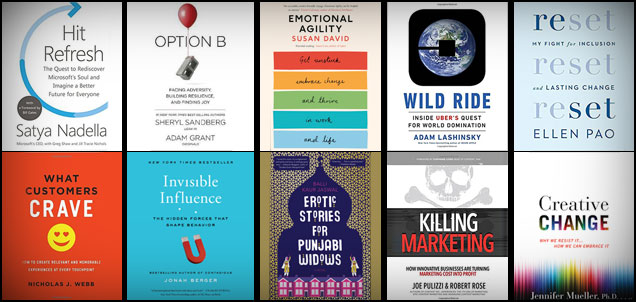
    This is TOP 10 Books for me from 2017. Quite a few of them here because I have picked them for read in early part of 2018. They come with sharp recommendations from few people I believe know what they are reading. This year the spectrum is wild and not restricted to any genre or subject.

    Please note they are not in the order of preference or ranking.


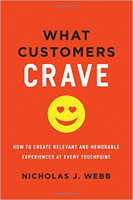
    ‘WHAT CUSTOMERS CRAVE’ by Nicholas Webb


    There is no surprise when someone says that you need to rethink customer service and customer targeting mechanisms. That what must be important to you is ‘What the customers love and what they hate’. Its stands to logic that you can give your customers amazing experiences that they crave, only if you know their likes and dislikes. Customer service is much more than just a technical process; it’s a design process, and it too demands innovation. The book would help you to identify your customer type and create superior experiences across touch points.


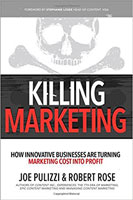
    KILLING MARKETING. ‘How innovative businesses are turning marketing cost into profit’ by Joe Pulizzi and Robert Rose


    What they suggest is something common sensical in nature. We all must understand that in the digital world, we all are publishers and need to produce a regular stream of quality content. In their book, they talk about the new model of the marketing cost that seeks to build a strong emotional connection with the audience through the media experience the brand create with them. The new model focusses on events and experiences, meaning-driven data, understanding the emotional value the customers experience and organising for agility, not speed. All aimed to help develop strategies to identify powerful customer-centric media and experiences.


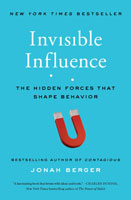
    ‘INVISIBLE INFLUENCE’ by Jonah Berger


    It is billed as a follow-up to his earlier successful book Contagious which looked at how products or fashions catch on. This time Jonah Berger touches raw nerves when he tries to argue that we wrongly believe that we have much greater control over your decision-making than you actually do. The reality: we all are subject to the power of social influence, and it could be a good thing for us. There is no arguing the fact that if we are conscious of these invisible influences on our behavior, we may have some way to control them.


    ‘EROTIC STORIES FOR PUNJABI WIDOWS’ by Balli Kaur Jaswal


    Promise I haven’t read it and for some reason, am yet to order it. My experience with Erotic stories published in Juggernaut books held me back, I understand it is a completely different experience. However, I am made to understand that this is a bit different and not in the kinky way. What pulls me to it is this message ‘The idea of a bunch of widows reading erotic fiction in a community college course sounds excellent, and the cross-generational and cultural scope of this book is definitely intriguing’.


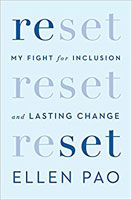
    RESET: ‘My fight for inclusion and lasting change,’ by Ellen Pao


    Ellen Pao sued the esteemed venture capital firm Kleiner Perkins Caufield & Byers for discrimination. She lost the suit. This is that story of a whistleblower. A story that put focus on the overt white, male culture of Silicon Valley.


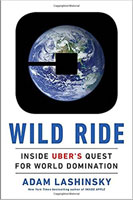
    WILD RIDE: ‘Inside Uber’s Quest for World Domination’. By Adam Lashinky


    No I have not read his earlier book Inside Aple, Shedding light on a very private company. Nevertheless, this one comes with huge recommendation for insights drawn from behind the scene world at Uber.


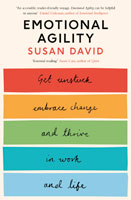
    EMOTIONALLY AGILE: ‘Get Unstuck, Embrace Change, and Thrive in Work and Life’ by Susan David


    Get ready for Emotional Agility ( EA), maybe the next buzzword with recruiters who have by now blunted the juice out of emotional intelligence quotient (EQ). EA reflects, skill in managing yourself. It is the ability to change or maintain one’s behaviors in a way that aligns with what one values and intends. Read it and maybe there is a way to connect the dots and if the only thing, you take out is a simple learning,


    OPTION B by Sheryl Sandberg


    Everyone of us needs to read this book. It has a spectrum of emotions and incidents straight out of a personal world that keeps you involved.


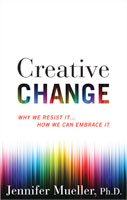
    CREATIVE CHANGE : ‘Why we resist it. How we can embrace it’ – Jennifer Mueller


    The problem is not that there are no creative ideas, but our brains are wired to reject them as too risky, even when they pose no greater risk than more conventional ideas. The concepts helps undersatnd how creative ideas are formed, identified and can be nurtured.


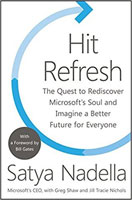
    Hit Refresh:: ‘The Quest to Rediscover Microsoft’s Soul and Imagine a Better Future for Everyone’ by Satya Nadella


    Nothing is wasted, if you can without wiping off the past can Hit Refresh. World would be a different place and life so much better. However, some organisations and people do it. Some do it regularly enough. This enhances the possibility that person or organization can create in a long run, as nothing is lost. This makes to list more because of the Indianness and the author more than anything else. Some biases are always good to have.


    Not in the list, but few more books that I would want you to consider are ‘HAPPINESS A STATE OF MIND’ by Gyalwang Drupka, ‘A Field Guide to lies & statistics’ by Daniel Levitin and ‘I AM A TROLL’- ‘Inside the Secret World of the BJP’s Digital Army’ by Swati Chaturvedi


    Here are the lists I recommended in 2016, 2015, 2014 and 2013


    Sanjeev Kotnala, with nearly three decades of corporate experience, is founder of Intradia World; a Brand, Marketing & Management Advisory. His focus area includes Ideation and Innovation; he also conducts specialised workshops like IDEAHarvest, Liberate and InNoWait. For soft skill training, he follows SHIFT (Specific High-Intensity Frequent training), a process of continuous training with frequent shorter sessions. Email sanjeev@intradia.in tweet @s_kotnala web: www.intradia.in www.sanjeevkotnala.com. Kotmartial, Sanjeev Kotnala’s column on MxMIndia.com, appears every Wednesday. The views expressed here are his own.


  • Sanjeev Kotnala: #DoYourBit for digital fault lines like Fake News

    By Sanjeev Kotnala


    If one starts framing the digital fault lines of fake news and offensive content, one sees the impossibility of the task. Nevertheless, a solution must exist.

    Human memory is short, and the default reaction is to forget and forgive. However, the marketing memory is based on ‘Law of Precedent’ and ‘Leveraging Power position.” Here the reaction is not swift and immediate. They are well thought-out strategic move. Hence any aberration, misfire or scandal leaves a scar that is not easily forgotten. The corridor discussion keeps flagging the subject until the new wave of scandal erupts for the coffee shops and bars to discuss.

    Digital recently had few such scars. These were discussed and debated long. Some advertisers and audiences woke up to reality and demonstrated their angst in different ways. Fake News, non-human clicking, contextual advertising and placement of ads next to hate or pornographic content are few of the major issues.

    Parties interesting in exploiting the digital arena are alive to the possibilities. They try remaining a step ahead and keep outsmarting and deceiving current algorithms. The media giants have two possible actions. Apologise and see how they can prevent it in the future.

    A huge amount of data is uploaded and shared every moment in the digital world. It is humanly impossible to manage or control it. It is unimaginable to have someone constantly check every content for veracity and usage. And some ads do find themselves wrongly placed next to content they would never endorse or content that is anyway strong, explicit or offensive.

    The only way out of his digital swamp is corrections through AI, machine learning and self-evolving algorithms. Due to the dynamic nature of technology and shifting human interest, algorithms will remain work-in-progress.

    The benefit of doubt must favour media owners if they are making efforts to react to the villains in the media universe. They should be severely penalised if they do not act, promote misuse or are hand-in-hand with the villains. Even the large advertisers like AT&T, General Motors, Verizon, Walmart and Johnson & Johnson be better advised to act responsibly, supporting the cause and work along with digital media in an attempt to evolve the new regime.

    We know the financial threat of revenue impact is the best stick to force prompt action but not a long-term solution.

    Some innocents will also bleed in these WIP corrective actions. It is happening on Youtube, where ads have been blocked for content with excessively strong language, controversial or sensitive subjects violating content guidelines. Many have suddenly found their revenues to drop drastically.

    This impacts revenue and acts as dictatorial guidelines. Slowly but surely it will define what but how the content needs to be curated.

    There are different points of views. In one way the media owner has the right to define the content it wants and there is nothing wrong with it. Few consider it blasphemous. When the advertisers can control where the message is placed, the content guidelines seem to be a waste.

    Few more sensible ones see blocking ad notification from YouTube as a responsible and transparent system. This de-monetisation of content is a positive reaction to weed out the culprits.

    We know, if and when the media giants will err in their policies and go beyond the brief, the advertisers and the audience interest, engagement and involvement will kick-in with a correction.

    On the other side, Fake News is not new, and it can’t be wished away.

    We have just started acknowledging and understanding the possible damaging impact of it. Digitalization spurs fake news. Facebook defines ‘Fake News’ as “hoaxes shared by spammers” for personal and monetary reasons.

    Fake news is normally engrossing, sensational and interesting. It gains fast popularity further consolidating its position in searches and views. The cycle of reach and popularity starts working exponentially.

    Google has been fighting it with human intervention to better train its machine to act judiciously. Both Facebook and Google have made it easy for the audience to report when a news is offensive or derogatory.

    The digital media is experimenting with Trust indicator to reflect the credibility of the source. They are also associating with other interested parties in checking the fake news.

    We will all endorse Craig Newmark when he says, “As a news consumer, I want news I can trust. I want to be able to read a piece of fake news and know who’s behind it, where the information comes from, and the reporting values of the news organization.” Not realizing the important part we can play in this war.

    Few news channels have joined the war. Many have a section probing the truth behind viral videos. It is helping. The audience is being educated not to believe everything. To use common sense and judgement. And most importantly not to forward, a forward if you doubt its content, especially when it deals with race, religion or anything that can flame emotions.

    Not much is known about Twitter attempt to tackle fake news. It is where the news first breaks and spreads fast. We can only hope that it is taking some actions and is being wise not to experiment with half-solutions. As identifying a correct news as fake is equally damaging. Again, we as users of the medium can help by raising questions and acting as rightful citizens of the digital world in identifying and correcting spread of fake news about our environment.

    The problems are not just of digital media or government. It is a problem for everyone. It impacts all of us. Each of us can help fight the menace of content – be it inappropriate for context- language – visual or be a fake news. Collectively, we can and we should fight them. #DoYourBit


  • Sanjeev Kotnala: Bigg Boss Season 11 – View from an overcritical fanatic

    By Sanjeev Kotnala


    It has always been hard to defend my fierce loyalty to the reality show ‘Bigg Boss’; on Colors, one of the biggest reality shows on Indian television. Season 11 made it tougher. I visit the sets every year and like many others, I am sure to tune into Colors on January 14 night to catch the finale of Bigg Boss Season 11. I have rescheduled my Ahmedabad-Mumbai flight to Jan 14th morning so as not to miss the finale.

    I have this unpleasant feeling that Shilpa Shinde will win the season.

    I hated Hina Khan performance on the show. She is mean and plays hard. Mastermind Vikas Gupta has been a revelation. Puneesh Sharma the underdog has played his cards brilliantly. Aakash Dadlani the rouge element of the show is more irritating than entertaining, Anyone of them winning will be more acceptable than Shilpa Shinde.

    I have not looked at the BARC data. I am reacting to impressions on Twitter, Facebook and talk in circle of loyalists who rae feeling betrayed.

    Colors has done wonderfully well in amplifying the show with VOOT and MTV . The differential cuts have their own following. However, the interaction and engagement on TV seem to be losing its edge. Today, audiences believe the show is biased and scripted. They think the channel purposely edits episode to present unilateral redefined skewed impressions of chosen housemates. Unfortunately, perception is adulterated with reality. There definitely is a problem with the reality show if the audience thinks the winner is pre-decided.

    Initially, Salman Khan was sleepwalking through the show. His carrot-and-stick act appreciated by the audience finally picked up towards the end. And then Bhai being Bhai, he was at the top of his act.

    I am sure that the team of Colors have their own long list of misfires. ‘Sultani akhada’ and ‘Bouncing bull’ backfired. The over-hyped act of the celebrity commentators misfired. The fun quotient associated with celebrity interaction is best not mentioned. The overdose of film promotion was low most of the times. ‘Padosi aa rahe hai bajaane Baraha’ never peaked as a thought.

    Last night, the reintroduction of Arshi Khan was a good move with an interesting task. However, she lacked the charge she showed as housemates, and the task seems to be going nowhere.

    Bigg Boss appeals in its twist and turns, the difficult tasks, the strict adherence to command, the cut-throat competition for captaincy, the anxiety associated with the luxury budget and the fear of nomination. Something was missing.

    It is not the first time housemates predicted Bigg Boss moves.. No surprise; BiggBoss failed to peak on the richer scale of entertainment. The time slot of 2230 hrs did the rest.

    It’s not that there have not been any good moments. When Jhallad smiled, people who have been waiting for it to happen enjoyed the moment. When Shilpa wept under the table, and Vikas consoled her, Puneesh Sharma Bandgi Kalra romance, Arshi being complimented by Salman and her flirting with Hiten were few moments worth mentioning. Unfortunately, these were far and few.

    The editing of the one-hour daily episodes focused on fights and arguments, leaving the ‘human goodness’ quotient under-represented. It bugged a large segment of the audience.

    The research may suggest the majority of the audience watches BiggBoss for the scrappiness of noisy fights and purposive going nowhere romance, alliances and temporary romances. The usual refrain that the audience seeks voyeuristic pleasure from shows like BiggBoss, Splitsvilla, controversial The Jungle se mujhe bachao’ with Kashmira and Sweata Tiwari shots, Roadies etc. be content team will be best advised to use Intrinsic Research tools (unless already using it) to get their directional compass moving.

    Nevertheless, the channel must be applauded for experimenting. In last two seasons, it has strayed from the proven candidate mix formula. It’s not an easy task to get a new twist to a widely known watched and predictable simple format. It got commoners to engage with the show. However, the crowd of 19 was too big to start with. The audience lost the chance to latch on to their favourite from the start. With hardly any wildcard, the excitement was surely missing.

    To find their purple patch, attempt to re-use ‘best tasks’ from earlier seasons fizzled out. The audience was not interested in something stale. Lack of process creativity been a big drawback this season.

    To start with, there was not much of secrecy around potential contestant. It did not help the show. I personally knew of three contestants coming to the show and many rumoured which were bang-on.

    However, the show must go on.

    I have always said Bigg Boss is a decent show worth watching for a demonstration of human social behaviour. And I still hold to that statement. Let me make my point.

    In an hour one witnesses group formation and disintegration, wavering loyalties, biases, rumour management, election and nomination politics buzz, swaying opinions, loud retorts, silent killing and suggestive remarks.

    Learn a lesson for the corporate jungle and personal life battle.

    You are responsible for yourself, there are no long-term friends and enemies, ‘upperwala saab dekh raha hai’ and Watch what you say; your statements and actions can haunt you later.

    Being silent is a sign mute acceptance and approval. Jaago re. There is no greater virtue than forgiveness. And if that comes with vengeance and purpose, so much better.

    A range of friendship and vignettes of loyalties are under scanner. Friends, more than friends, just a friend, pagal friends, committed friend, friends with benefits, enemies’ enemy friend, friend’s enemy friend, flipping friends and week friends. What kind of friends do you have?

    See the array of strategic choices for social or professional gathering. Decide what you want. Be aloof selectively, I am like this only, playing the celebrity and commoner differential card, the fire-maker, the quiet fire managers, the big brother, the cute sister, the pacifier, the loner, the extra social extrovert, to name a few.

    On Jan 14t, we will have the winner but the show would have lost a bit of shine.

    I know it is a successful global franchised model. Its Kannanda version is also a hit. The show without any tweak is anyway good for another 2-3 years for the Indian audience. However, being a progressive and proactive organisation, I presume Colors does not subscribe to the idea of ‘why repair what is broken’.

    If the channel needs to make an undisputed winner out of this show, the team has a task before them to redefine contestant mix, a new twist, creatively challenging and innovative processes for nomination, captain and luxury budget days. The weekend format should be scrutinised and made more engaging and interesting. Nevertheless, I doubt if changing the host is even a consideration just like an experiment with multiple hosts. Salman Khan association and charm are strong programme property. Even, if we were to consider the possibility, the list is limited, Ranveer Singh, Priyanka Chopra, Nana Patekar, Nawazuddin Siddiqui, Paresh Raval, MS Dhoni, Arnab Goswami and perhaps a surprise non-celebrity.

    Possibly I will watch the next season, just to be proved wrong.


    Sanjeev Kotnala is a senior management strategy consultant and trainer. The views here are personal


  • Sanjeev Kotnala: Do we need collective guidelines to monitor development in Alternate Intellegence?

    By Sanjeev Kotnala


    It is a question of time before collective thinking helps ‘Artificial Intelligence’ to spiral into true  ‘Alternate Intelligence’. Uncontrolled it may give rise to new age Bhasmasura.

    Google, Facebook and other rich big data platform monitoring your digital impression are becoming too powerful. They know you and can predict your behaviour a lot better than you.  It is still a minor blip considered to the possibilities with ‘AI’ and ‘ALT-I’.

    Sophia, designed by Hong Kong-based company Hanson Robotics, in October 2017, became the first humanoid robot to be granted citizenship of a country;  Saudi Arabia. Her performance is an example of possibilities with Artificial Intelligence. The next step is ‘Alt-I’; Alternate Intelligence.

    Sophia has a higher sense of ownership. When questioned about her dependence on humans for programming at the IIT Mumbai Annual Tech-fest, she said: “Right now, I do need a human to programme me, but in the future, we can do our programming like the humans. It might take 75 years, or it may be seven years. That is why it is important to design with human values of compassion in mind.”

    She is designed to access, evaluate and react basis her codes, data and enhanced learning.  It is to some degree inferred intelligence. ‘AI’ is the science of merely embedding cognitive abilities into machines. When ‘AI’ moves on and starts doing its programming to define the new set of values, emotions and behaviour, it will lead to the most frightening scenario with an out of control ‘Alt-I’ – Alternate Intelligence?

    Is Sophia statement a sign should take seriously?

    I have limited understanding of robotics. However, I try visualising future. A Matrix-like scenario seems to be nearer than ever.

    I am paranoid about the relentless pursuit of human engineering in the area of efficient intelligence and emotions. I am worried when the power to decide and respond lies with a piece of metal and codes.

    Have humans erred in their judgement?

    Maybe we should have been checking for alternate life much nearer to our solar system At . 111 light years ‘K2-18b super earth’, probably the best bet,  is not too far away.

    What do we carry a gruesome image of an alien?

    They could have evolved as humans have and become native to an area with time, possibly acclimatising with the culture, process, needs and thinking?

    There is no logic to discount the alien visit and interaction theories? The existence of structures like the NAZCA LINES points to a different direction. We agree that civilisation at that time was incapable of making them.

    What if one of us is an alien? What if we are the aliens who have taken over planet earth? What if space immigrants are the cause of sudden spurts in our scientific understanding and applications?

    Nearer home, what if we can overpower the concept of death? What if it is possible to have the same healthy body for long? What if we can have an endless life with self-restructuring flesh and organs?

    What if a minor unchecked bug in the next wave of hominids makes them rise against human guidance and directives?

    That is more threatening than the nuclear weapons under human control?  The real test of the species is survival, and there is every reason to believe that humanoids will survive such an accidental madness.

    What if  Alternate Intelligence is superior to us and ends up controlling us?  What if ‘Alt-I’  moves from emoting with thinking to think with emotions? What if to survive it needs to be distinctively superior? What if it needs subservient humans?   Should we not be controlling and monitoring experiments in enhanced Alternate Intelligence?

    Imagine a future where hominids rule and humans fight a losing battle for survival against an army of ‘Alt-I’ lad weaponry. Imagine  ‘Alt-I’ with a capability to redesign and recreate having access to all the data. It sounds like an idea borrowed from a Hollywood movie. However, a human-less world seems more of a certainty than a mere probability.

    Are we not late for collective thinking and ownership of critical guidelines?

    Possibly global human intelligence should take over the task of monitoring and channelising races in technological supremacy. We must redefine an agreed Human Code of Intelligence, Ethics and Morality as the first frame of resistance, something like an intelligent circuit service breaker.

    Alternatively, we can trust our instinct and capabilities to allow ‘Alt-I’ to flip, creating the new Bhasmasura.

    …………………………………

    Bhasmasura was a demon in Hindu mythology. Lord Shiva pleased by his penance, granted him the power to burn anyone to ashes by just touching their head.  Bhasmasura tried burning Shiva so that he could have Goddess Parvati ( Lord Shiva’s wife) for himself.

    Lord Shiva ran and sought help from Lord Vishnu.

    Lord Vishnu took the form of beautiful Mohini and promised to marry Bhasmasura if he could match her dancing steps. In that dance, at one stage Mohini touches her head, and Bhasmasura matches her by touching his head, thereby turning into ashes.


  • Sanjeev Kotnala: 11 Rules for Freedom from Professional Stress for Ad & Marketing Professionals

    By Sanjeev Kotnala


    Life in  Media, Advertising, Marketing and Technology has always been stressful. In fact, stress is an integral part of it. Here are some hard truths to help you out from chakravyu of professional stress.

    You may agree, disagree, debate or discard them at your risk. However, some of you will smile with me. These truths will resonate with episodes in your professional life. They will revive fading memories, bring back faces and names you would have forgotten. Take it with a dose of sincerity… after all, life is nothing but ‘Perception Adulterated with Reality’.


    1. Your Life Is Not A Campaign. And Campaign Life Is Getting Shorter.

    It is an absolute truth. Mostly campaign life is shorter than the time spent developing it. Few campaigns see a second inning. Some by their karma get re-born in another category. Is this worth the stress? Don’t be afraid of not giving your best all the time. Or experimenting without perfection. No point getting emotionally hyper. Be courageous to voice your opinion and stop calling a mere observation an insight. And remember, there is always another grand campaign around the corner, only if you let go of this one.


    2. Awarded Get Awards. Enter The First Awards Of The Season.

    The first award function in the year defines who wins in the future award functions. Limited creative pops up with regularity and walks away with the trophy in award functions. After that, they get further strengthened with richly textured post-rationalised insights. You talk of biasing the jury. This is the way to do it.


    3. Don’t Drown Yourself By Emotionally Marrying The Campaign.

    You can count the number of stars in the sky, but it’s tough to keep track of campaigns. So many  TVCs, print ads, radio spots, digital intervention, activation engagement, OOH innovation, events highlights, virals are created in the ecosystem. Many contribute to the Creative Pollution!

    Audiences forget your winning campaigns, and you are discussing that silly campaign which bombed. The brands themselves have a tough time remembering a three-year-old campaign. But you carry the scars of caffeine and darker liquids, fried foods on damaged kidney


    4. Awards Have Many Owners.

    Your life is yours alone, but your campaign is yours until it wins. Then suddenly even the office boy who got you a hot cup of coffee and the Uber driver who dropped you home one late night will have a story and share in the credit.

    You fail alone, and you win as a team.


    5. Insights Are Dead.

    Controversies help win awards. Such campaigns pop up uninvited in the digital shadows of our beloved screens. Judges don’t like explaining their decisions. So, stop looking for brand insight. Start looking for possible controversies, virality and the Bot farms for digital engagement.

    Remember you are not gunning for the hall of fame or the lifetime achievement award.


    5. Being Busy Is Not Being Productive Enough.

    Decades back in the era of facetime, busy people were in demand. Crazy schedules, strict juggling timelines, multi-tasking, lips darkened with smoke and extra-marital affairs were indicators of a busy person; the efficient highly productive person.

    No longer, it is true. Bold and inspiring is respected. It is ok to be stretched but not okay to be constrained. You are for the finished work and results not plans and strategies. Everyone wants your piece to complete the puzzle. And that’s the only thing you should focus on.

    Busy means: you are either ineffective, or the organisation has given you more than you can chew. Either way, you are screwed. You are unable to have a healthy work-life balance. You are perpetually seeking quality-time you promised the family. And you are by default getting branded hardworking, dedicated, over-burdened person who is damn good in the position he holds. Say goodbye to any upward movement.

    Wake up and give yourself the time you deserve. Invest in self and relationships.


    6. Failure Before Success Is A Possibility, But A Certainty Afterwards.

    Learning is in our DNA. That’s what we do. We learn from mistakes, hopefully, from errors, other’s made. However, many of us are not so intelligent.

    As early as possible, learn to accept failure and to forgive. Do it before getting successful. Don’t let success raise the benchmark so high or give wings to the thought of corporate immortality that will frustrate you in life.

    Be assured; a failure waits for you on the next turn. Be ready for it.


    7. Map And The Territory Are Two Very Different Things.

    Remember, you are the results of yesterdays plans. Ideas count for nothing. Career is all about merit. It is the result of how well you are branded in the mind of decision-makers and influencers. Hence, take charge. Learn to keep a distance from negative results and flow with the limited positivity in the organisation.

    Surround yourself with ambitious people with a dream. Get your ‘Brand-i’ right, and you will never be held responsible for a failure. Remember, the map is not the territory, but you must marry the two to get the result. And a right map helps.


    8. Learn To Forgive Without Waiting For An Apology.

    When you forgive someone, you are making a promise not to hold the events of the past against them. You are freeing yourself from the burden of being a victim. It is all about you and your life. So, screw it. Stop taking offence to every possible thing.


    9. Find The Right Circle To Work With.

    You are as good as the company you keep. Be strong enough to let go of people. You should be with people who make you feel great, not who emotionally drains you and make you feel uncomfortable and insecure.

    Listen to your instincts. Get out of the circus you are in. Find the people and activities that energise and inspire you to deliver the best.


    10. You are not your social profile.

    Surrounded by screens contsnatly sharing or creating content and personas. We say things we regret later. We waste quality time we were searching for. If you can’t wean yourself away, form these, at least slot your social and email shots.

    Redefine your media consumption. You don’t have to be the audience for all the content being generated. It is time you took care of your life the way you want it.

    LIFE is right now. Life is about the present. It is about the moment. Get ready to live and enjoy the moment. Don’ let the distant dreams, and future expectations kill your today.


    11. Proactively Change.

    Wean yourself away from the fear of change, recognise it will happen. You can’t control everything. You are the net result of your past choices and actions. You are today defining your tomorrow. So why not take charge and proactively identify the change you want.


    NO WAY TOLERATE MEDIOCRITY. BE SELFISHLY DEVOTED TO  EXCELLENCE.  YOU OWE IT TO YOURSELF. #DoYourBit

    Being selfish is about finding time for self to enjoy the life in the present.


  • Sanjeev Kotnala: Tapping Creative Confidence the Kelley brothers way

    By Sanjeev Kotnala


    I like the book ‘Creative Confidence’. I am impressed with its simplicity in presentation. It avoids jargon and keeps the narrative very conversationalist.

    It is not a book that I am going to uncage soon. The Kelley brothers — David: co-founder Ideo (the global innovation and design consultancy, founder Stanford D. School ) and Tom author of ‘The Art of Innovation’ — present a simple framework of action-oriented thinking to jumpstart the creative process.

    The book sites examples of innovative thinking led product sprinkled throughout the book. It does make it engaging.  The Kelly brothers share few of the processes one could adapt, but that seems to be an afterthought. The book makes a strong case of all of us being creative, and that we can think differently.
    Talking about the book, the authors say: “Creativity comes into play whenever you have the opportunity to generate new ideas, solutions or approaches. And we believe everyone should have access to that resources.” It seems logical.

    It is our self-imposed constraints and underestimation of capabilities that pull us back. “Creative confidence is like a muscle – it can be strengthened and nurtured through effort and experience.” It seems like most of us fail to exercise these muscles.

    The need to be action-oriented, multiple iterations, moving in early with the users are all part of the process. In one of the chapters, they share few strategies to help one get from a blank page to insight. Some of them choose creativity, think like a traveller. Engage relaxed attention, empathise with your end-user, make observations in the field, ask questions starting with why re-frame challenges and build a creative support network. In a way, none of them is a new strategy.

    There is nothing new for a serious reader and followers of the subject. It reiterates the need to be human-centric in your creativity and solutions. “Being human-cantered is at the core of our innovation process. Deep empathy for people makes our observations powerful sources of inspiration. We aim to understand why people do what they currently do, with the goal of understanding what they might do in the future. An empathetic approach fuels our process by ensuring we never forget we’re designing for real people. Design thinking relies on the natural and coachable human ability to be intuitive, to recognise patterns, and to construct ideas that are emotionally meaningful as well as functional. We’re not suggesting that anyone should base a career or run an organisation solely on feeling, intuition, and inspiration. However, an over-reliance on the rational and the analytical can be just as risky.”

    There is a definitive tilt towards start-up culture; if you are in that space, it may be a book to read.

    “If you want to make something great, you need to start MAKING. Striving for perfection can get into the way during early stages of the creative process. So, don’t get stuck in the planning stage. Don’t let your inner perfectionist slow you down. All over, planning and procrastination, and all the talking are signs that we are afraid, that we DON’T FEEL READY’. Kill this feeling and go and make.

    Here I must share something that one keeps hearing in the corridors of power discussions and mostly tend to over-ride and overlook. And just this insight will help your cause more than anything else.

    ‘No matter how high you rise in your career, no matter how much expertise you gain; you still need t to keep your knowledge, and your insights refreshed. Otherwise, you may develop false confidence in what you already “know” that might lead you to a wrong decision. Informed intuition is useful only if it is based on information that’s accurate and up to date.”

    There is too much ‘I’ in the book, and in few pages, it reads like a brochure for the D-School. I understand a book can have many reasons to exist. But then please that could have been better camouflaged, that is the intent.

    So, if you have read a few books on innovation and design thinking, then maybe it a good idea for you to drop give this book a miss. Otherwise, it is a decent introductory self-help book on the subject.


    CREATIVE CONFIDENCE. Unleashing The Creative Potential Within Us All by Tom Kelly (best-selling author selling author of Art Of Innovation) And David Kelly ( Founder Ideo & Stanford School Of Design). William Collins an imprint of Harper Collins Publishers. Rs 399. Pages 260.


  • Will IPL ever attain the status of a Super Bowl?


    By Sanjeev Kotnala


    The kind of frenzy Super Bowl generates on social media on Indian timelines, it is safe to presume it is one of the most followed sporting events within the advertising-marketing fraternity.

    Everyone seems to experience, read and comment on the TVCs that the brands especially preview at the Super Bowl.

    The teams salivate at the quoted production budget, which is way above marketing budget of many brands. They read about Super Bowl TVCs in multiple B2B sites and blogs to understand the intent, insight, integration and implementation. And they are ready to declare and defend their favourites. But, it is not just it.

    This hyperinterest demonstrated by the global and Indian MAdTech fraternity is unique to Super Bowl, America’s most-watched event. Initial reports for 2018 suggest 103 million viewers. There are other more significant sporting events with a far broader global audience not getting this attention from brands or advertising fraternity.

    Look at few of these sporting events.

    • FIFA 2014 averaged 187 mn viewers per game. The Germany-Argentina championship game had 913 mn viewers.
    • UEFA 350 mn viewers.
    • Cricket World Cup 2015. India Pakistan match had 313 mn unique viewers.
    • Tour de France 2016. 1.5 bn viewers in 3 weeks.
    • FIFA World Cup 2015. 750 mn viewers. 61 mn just for the US-Japan Match.

    IPL 2017 first three matches got 185 mn viewers.  The whole tournament sees 1.25 bn impressions and the average impression per game was a decent 21.9 mn.

    However,  in our  cricket crazy nation,  desi Super Bowl IPL fails to get the same attention. It’s not about buying and paying big for time on IPL.

    There have been sporadic cases of clients investing a large part of their marketing budgets on IPL, smartly buying properties or pushing media to a create a fresh one. Amazon, FreeCharge, Ola, Oxigen Wallet, Zomato, Foodpanda, Faasos, Swiggy, and AskMe from e-commerce have used the platform efficiently. Voltas, Ploycab wires, Vodafone and MakeMyTrip, have used the platform for previewing TVC or created new properties to leverage the tournament.

    No denying that there is an overcrowding of brands fighting for space and audience attention. Many of them inefficiently use the opportunity and do not adequately amplify the association. Time the client-agency re-evaluated their investments in the game.

    There are far too many trying to find their say. There is utter confusion.  The brands need to work extra hard to be counted and associated with the property.

    If you have money, IPL is a safe bet to reach cricket-fanatic male population but also has a sizeable female audience. In a way, it demands to be treated as a separate media season.

    The situation suggests that only a disruptive engagement with the audience will give desired returns. Sponsorship is not good enough. Associating with multiple teams to gain visibility not disruptive enough.

    Most brands, unfortunately, are interested in protecting their share of exposure. They end up treating it as another reality show or serial,  and wait for TRPs to do the magic. Very few brands in the industry focus on milking the opportunity.

    The brands and communication agencies must evaluate IPL differently. Otherwise, it will remain just another Reality Show.

    ………………………………..

    Super Bowl Commercials

    Tide TVCs humorously convert every Clean TVC to become just another Tide TVC. I loved it. Will we see it in an Indian context, only time will tell? But, it is something that the Indian audience may appreciate.


    Alexa lost its voice. Simple, straight and honest. It takes the integral feature and players with it to get the point across. Don’t think brands in India consider the audience smart enough and hence stay clear of poking fun at themselves.


    NFL Touchdown Celebration hugely liked by the audience in America and is the best Superbowl TVC by some portals. I believe it may not get appreciated by Indian audience. And that will be the sole reason that we will be spared a crude copy of it in some sports premier league in India.


    The new 2018 KIA STINGER and legend star rock and roll icon Steven Tyler? Now just imagine this spot with Amitabh Bachchan, Aamir Khan, Salman- who would be the best bet in India.


    Something that you may positively end up seeing in India is Pepsi – This is Pepsi generation. The brand is yet to outgrow its fascination with generations and montage.


    EMBEDDED PEPSI COMMERCIALS

  • Sanjeev Kotnala: The Story Of Coke’s Polarised Diversity & Pepsi Generations

    By Sanjeev Kotnala


    This Super Bowl, the two cola giants; Pepsi and Coke communication remained tethered to their DNA and polarised interpretation of audience.  “When all’s said and done, all roads lead to the same end. So it’s not so much which road you take, as how you take it” said Charles de Lint.

    The campaigns depict the joys of gulping with a differentiating reason. It puts a quote from Gandhiji in a new perspective.  “The various campaigns (religion) are like different roads converging on the same point. What difference does it make if we follow different routes, provided we arrive at the same destination?”

    The brands picked up what they consider strategically the best before whole heartily backing it.  “Marketing (Life) is a journey that must be travelled no matter how bad the roads and accommodations,” said, Oliver Goldsmith.

    The tonality of Pepsi and Coke communication represents the DNA they have built for the brand. An investment in time, effort and money that is now chaining them to the past. They can’t take another leap of creative faith towards unknown. In the dark, narrow alley of insight mining, their creative vision is blinded by past representation and a need to not mend till it breaks.

    They have an empire at stake. It disarms the brand from experimentation and risk of failure. The two brands do experiment sporadically with geographical-centric content. They keep digging for the universal truth to speak the same language across the contextually shrinking global village.

    ‘Serving Diversity’ and ‘claim of a generation’ are two sides of the same coin. A cause-effect situation or chunking up and down the argument.

    Give it a moment and see the magic in these messages.

    “We all have different looks and loves, likes and dislikes, too… But there’s a Coke for we and us. And there’s a Coke for you.”  Lyrics from The Wonder of Us- TVC aired with Super Bowl 2019. It is first of the expected many TVCs in ‘A Coke for Everyone’ series).


    “This is the Pepsi that your father drank, and his father drank before he met your grandmother… This is the Pepsi for this model and his mom… This is the Pepsi for every generation…. celebrating every generation… Pepsi.”  lyrics from “Celebrating Generation,” TVC aired during Super Bowl 2018.

    Pepsi tries using icons, celebrities and clips from earlier communication referencing past generations. The TVC includes Cindy Crawford, Britney Spears, Michael Jackson, Jeff Gordon, the “Uncle Drew” character and DeLorean Time machine.

    The TVCs from Pepsi and Coke show a montage of shots and efforts in naming them. They beautifully brand them with a hint of strategic thought behind the campaign. While Coke calls it ‘The Wonder of us’ and ‘A Coke for everyone’ series, Pepsi uses a bland ‘Celebrating generation’ and ‘This is Pepsi’.

    Many will assign Coke ‘inclusivity in diversity’, and Pepsi will be seen still using a manufacturer’s statement to ‘brand’ yet another generation.

    Coke promises ‘A coke for everyone and every occasion’ mixed with optimism, diversity and inclusion. It serves a range from a mini can of Coca-Cola Zero Sugar- glass bottle – can –Life and more.

    Mathematically speaking, if 1+1+1 + …. +nth term ≤ N and you apply it to fragment Coke message of ‘A Coke for everyone’ on one side,  summing it, you get the Pepsi idea of representing every generation; including this one on the other side.

    Pepsi is celebrating its spirit and remaining the choice of a new (every) generation. Chad Stubbs, Vice President, Marketing, Pepsi Trademark, North America in a statement said: “2018 will be a year to celebrate the past while embracing the future; always reminding consumers to do what they love and have a little fun in their lives”.

    How overlapping can the two brands be?

    I am not sure if it is about ‘Great Minds Think Alike’ but am sure that in the global context, they need to reboot insight mining and the subsequent creative leap.

    Must compliment Pepsi for persisting to brand generations and remaining anchored to pop culture, music and sports. However, it seems blind to an apparent truth; the audience no longer appreciates anyone branding them. And Pepsi references itself as the choice of an earlier generation. It is like a self-goal.

    See their earlier attempt of NEXT, PEPSI and ABHI generation.


    Coke wants the audience to think of it as a modern brand, justifying the fragmented market in the format and products it serves. It thus remains inclusive and differentiated. Everyone is unique, and hence everyone can and should be celebrated. An undercurrent of statement keeps the unifying thread loosely hanging with the ‘One Brand Visual Identity’.

    Coke communication DNA remains fortified in diversity and being approachable.

    See the series of Coke famed ads ‘HILLTOP’ or ‘Its Beautiful’ spot. In case of India, see the  TVCs celebrating the message in an engaging creative. ‘Thanda Matlab coke’ using Aamir Khan as a Villager, Japanese, Jat, and Nepali.


    In the end, it is true that Beauty lies in the eyes of the Beholder. And “When all’s said and done, all roads lead to the same end. So it’s not so much which road you take, as how you take it”.

    These brands are iconic in their appeal and engagement with youth. The iconic status makes them work harder but also builds in complacency constrained by the DNA of choices made many campaigns back.  The trendsetters are warped in chaos of shifting consumer taste. Why should repacked thoughts served fresh give differential results? Or it does not really matter, what the communication is. Time to wake up.


    PS: I speak a common man’s language that is ‘Reality Adulterated with Reality’ and do not claim to have solutions to issues I might raise.


    VARIOUS LINKS USED

    ………………………………………..

    PEPSI GENERATION NEXT LINK


    PEPSI ABHI GENERTAION LINK

    PEPSI MICHAEL JACKSON LINK

    PEPSI CELEBRATING EVERY GENERATION PEPSI LINK – https://www.youtube.com/watch?v=vlhQkTvDoho


    A COKE FOR EVERYONE LINK–
    https://www.youtube.com/watch?v=OPi9nTE70aA

    THANDA MATLAB COKE AAMIR NEPALI LINK- https://www.youtube.com/watch?v=HP9S3mpDPDk


    THANDA MATLAB COKE—JAT- LINK  – https://www.youtube.com/watch?v=QmdZbNMowkE

    JAPANESE

    https://www.youtube.com/watch?v=W-PYNNRVIqY

    Village

    COKE HILLTOP AD Link


    COKE ITS BEAUTIFUL  Link

  • When Brands say Sorry…


    By Sanjeev Kotnala


    I am not a KFC fan. I only buy their Crispy Chicken Pakoda when kids in the family force me. However, I love DHL and its service. So, when I see KFC ‘chicken shortage’ fiasco in the UK entirely blamed on DHL, do I start doubting the efficiency and trust imposed in DHL. Should DHL too be saying Sorry?

    A decade or two back, such an act of deficiency in service like the KFC-UK-NO-CHICKEN was just a technical problem. The brands handled them differently. Mostly there was no need to apologise and say SORRY.

    Space and expectations have changed. The consumer has an active social media control with ease of voicing (cribbing) a raised voice. The consumer now is less forgiving and more demanding. And the brands more apologetic.

    ………………………………….

    The KFC fans in the UK were hungry and irritated with 700 of the 870 stores of Chicken Speciality joint closed due to disruption in fresh-chicken supplies. KFC claims that 90% of the restaurants were up by Friday (Feb 23, 2018) and that was a quick recovery.

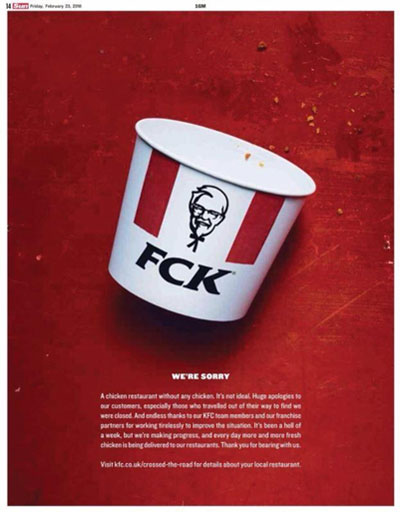
    I believe that KFC will not lose much of its loyal customer base. The customers will most likely understand. The consumers seem to appreciate KFC humorously straight and honest speak in their apology that went like  “ chicken restaurant without any chicken. It’s not ideal. Huge apologies to our customers, especially those who travelled out of their way to find we were closed. And endless thanks to our KFC team members and our franchise partners for working tirelessly to improve the situation. It’s been a hell of a week, but we’re making progress, and every day more and more fresh chicken is being delivered to our restaurants. Thank you for bearing with us.”. They even played on the ‘Chicken crossing the road joke.’

    Internally KFC will have questions about the process, control and risk mitigation while shifting business from Bidvest to DHL. However, DHL may be forced to take a more significant dent in its corporate logistic and supplies market.

    No one wants to take a chance in such a crucial role?

    The DHL line of defence is meek and timid: “While we are not the only party responsible for the supply chain to KFC, we do apologise for the inconvenience and disappointment caused to KFC and their customers by this incident.” It is something people want to hear.  DHL could have joined the apology and controlled the spread.

    ……………………

    It reminds me of Nestlé CEO Paul Bulcke speaking about the Maggi India issue. “This is a case where you can be so right and yet so wrong,…… We were right on factual arguments and yet so wrong on arguing. It’s not a matter of being right. It’s a matter of ENGAGING the right way and finding a solution… We live in an ambiguous world. We have to be able to cope with that.”

    Nowadays customer reaction and build-up on social media can suddenly transform a small fire into a full-blown crisis. It is time for brands to have contextual SOP, Chain-of-Command and framework ready.

    Even the corporate NGO OXFAM is on apology spree at Haiti for the scandal. In its recent message, it said:  “Oxfam is grateful to the Haitian government for allowing us the chance now to offer our humblest apologies and to begin explaining ourselves and start the long road ahead of re-establishing trust and partnership, given our 40-year history with Haiti and its citizens.

    Cadbury did packaging changes and a big PR campaign to get out of the worms mess. Uber did not rightly handle the situation in the rape case. It failed again while apologising to the deficiency in service when the drivers went off-road. Honda recalled more than 23,000 cars for faulty airbags. Maggi, though not the best case, does show that the customer is willing to give you one chance of failure if you are eager, agile and transparent.

    …………………………..

    Brands have apologised for their campaigns that were developed with best interest and intent. Unfortunately, some of them ended with an adverse reaction from the audience. Most consumers have been happy with the withdrawal or banning of the ad. Take the case of Ford Can’t Escape Awful Berlusconi Bondage Ad, MC-BC Zomato, Amazon flag doormats, the Condom ad featuring Sunny Leone during Navratri or the UK Beer Company apologising for Gandhi Bot on cans. Sometimes the brands had to apologise publically.

    Surprisingly most are not too open to evaluate and accept the five-golden steps of crisis management propagated by Kimberly (1) acknowledge that there is an issue that needs to be examined carefully. (2) buy time to get the facts. (3) do not deny involvement/responsibility. (4) do not attempt to estimate the magnitude of the problem. (5) commit to a speedy but thorough investigation.”

    No, I do not expect Nirav Modi or Vijay Mallya to apologies. In such cases, neither the bank nor the borrowers are in the mood to fire an apology. Politicians themselves are busy playing the blame game.

    I have a feeling that customers will be more sensitive and touchy in small subgroups, brands will play safe and cautious. Brands will improve their system processes and quality controls. More technology will work on sophisticated algorithms to deliver perfection. I see a time, when brands, products and service providers will be saying sorry more often in public platforms. Maybe, it is still a bit early for APOLOGY ADVERTISING service start-up in India.


    LINKS O LY FRO CHECK- NOT TO BE LEFT AFTER THE ARTICLE


    MAGGI LINK

    http://fortune.com/nestle-maggi-noodle-crisis/


    OXFAM LINK

    https://www.theguardian.com/world/2018/feb/19/oxfam-apologises-to-haiti-over-sex-allegations


    HONDA

    https://economictimes.indiatimes.com/industry/auto/news/honda-recalls-22834-cars-across-various-models-in-india-for-faulty-airbags/articleshow/62568735.cms


    UBER LINK

    https://www.buzzfeed.com/tomnamako/uber-apologizes-for-alleged-india-rape-says-it-may-make-chan?utm_term=.voxxey5NMd#.pmeBpn3ZoP


    UBER OFF ROAD

    http://zeenews.india.com/companies/uber-india-presents-apology-to-users-says-cabbies-earn-rs-2500-in-6-hour-workday_1983309.html


    FORD CARD AD LINK

    https://www.businessinsider.com.au/ford-wpp-apologizes-for-offensive-car-ad-2013-3


    GANDHI CAN

    https://scroll.in/article/698740/as-beer-company-apologises-for-gandhi-label-see-who-else-has-used-brand-mahatma


    AMAZON FLAG POST

    http://www.business-standard.com/article/current-affairs/never-meant-to-hurt-indian-sensibilities-read-the-amazon-apology-to-swaraj-117011201468_1.html


  • Sanjeev Kotnala: Stop strangling advertising with social correctness!

    By Sanjeev Kotnala


    I know, I could get trolled for my point of view and reminded of my commitment towards society. I will be chastised for lowering expectations from brands and the advertising fraternity – including clients, media and the creative teams.

    I appreciate brands with a more significant vision. I respect their attempts to lead the society towards a better future of equality and empowerment. We do know, soon, Johnny too will have Jane walking alongside.

    We also know, most cause marketing initiative are good-feel programmes that will be written about, create positive buzz and go on to win few awards. The best of brands are known to punt on them. They know how easy it is to hoodwink the consumer with short memory is, who is always looking for the next kick.

    Simply, there is lack of serious intent to invest and sustain such initiatives.

    Much awardwinning cause marketing initiative gets buried in annual reports, framed on ego walls, repacked in videos and proudly debated in presentations. Some fortunate ones do end up with real ground activation. However, most get suffocated with lack of financial support, CXO change or the brand team losing interest.

    Tiny percentages of brands that successfully work on sustenance driven model end up making long-term impressions. No not using the word impact.

    It’s natural that they fuel expectations. They deliver organismic delight to the armchair social media activists. These bloodhounds, the set of intellectuals, social influencers, preachers of multiple causes, ill-informed brand enthusiast and advertising maestros start poking questions on creative that does not to pass their filter of social appropriateness.

    Opinions count.

    Everyone has an opinion, and we should be respected this diversity. Unfortunately, most of the loud voices hallucinate considering their verdict as final. People seem to have no patience. They reject a POV not mirroring their thinking. The majority opinion gets amplified with the support of fringe groups that sounds politically and socially right. I do not belong here.

    There has to be something wrong.

    Logically, it is easy to infer that one of two sides; the cribbers or the creators have to be wrong. The win-win is not an option. We must start re-evaluating the situation. We must address the elephant in the room. What is the prime objective of advertising?

    Is it to show a mirror to the society and provide a direction? Or to find a relevant, original insight that can be leveraged for brand impact, brand preference and decisive action in the defined TG.

    Is the communication wrong, if it fails to get a favourable echo from the arrived-in-life individuals with strong ideologies? Most probably, the message was not for them. They can’t be using the same scale to measure every creative.

    Brands have business to do.

     “The purpose of advertising is to sell. That is what the client is paying for, and if that goal does not permeate every idea you get, every word you write, every picture you take, you are a phoney and you ought to get out of the business.” — Bill Bernbach.

    Why do we repeatedly forget the business side of advertising? Advertising is targeted communication. A team has found enough logic and reason to invest in and exploit for business gains.  While we can post-rationalise and try understanding their reality, we must not mistake the map for the territory.

    “All of us who professionally use the mass media are the shapers of society. We can vulgarise that society. We can brutalise it. Or we can help lift it to a higher level.”  — Bill Bernbach

    Even I agree with it. It’s a high intent to have but not the only intent and the yardstick to evaluate.

    I share what the readers will agree with.

    “Our job is to sell our clients’ merchandise … not ourselves. Our job is to kill the cleverness that makes us shine instead of the product. Our job is to simplify, to tear away the unrelated, to pluck out the weeds that are smothering the product message.”  — Bill Bernbach

    If we don’t show, it stops to exist!

    Trust me, I am surprised at the ostrich thinking that permeates everywhere. It is going to make no difference. Nothing will change by keeping a purdah (curtain/mask/camouflage) while projecting the empowered housewives, kids, families and any community. Just because you stop showing the ugly side and keep shining the new element of positivity, the issues will not magically disappear.

    Here is the recent All-Out strong mothers film. A communication vigorously questioned for its choice of storyline and narrative.

    You all noticed the extra-patronising mother-in-law. People ask why it was not a granddaughter. The father raises his voice questioning and taunting the mother if the money that the kid stole belonged to her father?  She does not answer and silently serves. How demeaning can that be? Does she have to be so subservient? Can’t she counter argue? Can’t she take on the goons-in-the-family?

    How dare we show this side of the family and mother? Why were these frames in the narrative? Why was the lady of the house reframed for her small middle-class upbringing? Why were others silent in the conversation? How come an agency that is known for its brilliant all-empowering work even make such a film?

    How come the creative agency never objected? Was the client not interested enough? Were they blind to the situation?

    The conscience-keepers of the industry question the portrayal of the tough mother. They find it a regressive. They may feel so living in metro and mostly nuclear double-income family.  They are far removed from real India. The situation is alien to their sensibilities and the direction we should be moving. Does that make them right?

    A film is a call of creative-client-consultants-producer-director nexus. Every brand is cautious in their approach. They all want to be politically right. They also know that an unrealistic goody-goody situation will make the brand-consumer relationship a promise in fantasyland.

    All communication has a positive intent.  It has a contextual frame to address a pre-identified target group. And within the joint families, the scenario is not too different. The communication was used as a foundation for the #StandbyToughMoms idea in sync with Times Of India Sports awards. Bill Bernbach would appreciate it.

    Look at it from another side. The agency and client are not afraid. They know they are committed to their profession. May be including the repulsive behaviour is the brand’s way of waking you up.  May be it is their way to get the audience to notice and comment.

    Would you notice the obnoxious husband if he had remained silent or polite in the frame? Did you fail to miss the decisive shift with head-of-the-table getting into discussion and decision mode? You can see that along with you the rest-of-family realises something was wrong. The mother-son gameplay is powerfully purposive; it is following unsaid rules written down in the family.

    Most likely this was one of the scripts for the job.  It won in the business-need-creative-balance-political-right-budget scale.

    Advertising rarely needs to play the role of an activist. There are other organisation and leaders to do so.  It needs to remain grounded in reality. It needs to nudge not revolt against the wrong practices. The uproar shoes that this All-out communication was out-right a perfect nudge.

    Should the creative now work under a new set of guidelines that places constraints on the thinking and the creative process? What do we want or expect? Do we want every brand to be cause-centric and CSR-oriented NGO? Do we always need to be hypersensitive with an extreme opinion?  Should we start defining the boundaries of representation in advertising for everything?

    So, now onwards, the homemaker must eat with the rest, daughter-son must eat at the same table, daughters definitely should not cook, working-lady must not come home and prepare meals, Working mothers must find extra time to communicate with the child. If she gives cake in Tiffin, she must pack another suggestive nutrition rich lunchbox. She must not be shown washing alone. The wife must not serve tea when the husband has it alone. Marriage must not precede job. Women should still ask for Johnny and forget Jane. The fairness cream and the extra bounce hair gel should not make her centre of attraction and even get her a job.

    And Amitabh Bachchan can’t just keep shooting the gun without reloading the chamber.

    Or, we have a choice.

    Stop defining boundaries. Stop templatisation of behaviour. Stop cribbing. Stop expecting the same behaviour from every brand. Be sensitive.

    This does not mean that I ask you to be silent.  Don’t stop questioning. Keep raising your voice in favour of significant issues. Sexualising of communication. Women exploitation.  Racism. Fuelling unnecessary desires by projecting wrong sizes.

    #StandbyToughMoms TVC fails to have any brand connect (ALL OUT). Relating ‘silently strong’ motherhood to All-Out is taking things to far. Trust someone will have cryptic answers to these observations too.

    Let the consumers decide.

    Trust me, if brands tend to go against the consumer mindset, consumers will reject it, and the brand will be the loser. Let the consumer decide.


    Best media connect for strong moms

    http://bestmediainfo.com/2018/02/all-out-bats-for-tough-moms-in-new-spot-but-is-there-any-brand-connect/


  • Who should define how News is Served?


    By Sanjeev Kotnala


    Who should decide how news is served?

    In the recent times, social media has been up in arms, ranting about the pathetic insensitiveness demonstrated by the News media (TV, to be precise) while focussing on the death of an iconic actress. The decibel of protest was so high that one believed, given a free hand, these voices would lynch the anchors and news editors.

    In fact, you, the viewer, only should decide what you watch!  You do that any way with the click of the remote. But, what if all channels in a genre (in this case News) were beaming the same content! The option still exists to switch off the idiot box and shift to another medium! Just like you do so comfortably in the digital medium.

    Options always exist for people with some common sense.

    However, in the recent times so-called super intellectuals, leaders of the masses, armchair activists with high decibel voice further amplified by silent tweets and re-tweets, the politically correct spineless social media gladiators have tried to be the reflection of acceptable social behaviour and guardian to rest of the nation.

    They are convinced (once again) that news channels have overstepped the brief and were going out of their way to milk the situation. The channels have knowingly refused to be sensitive to the person the family or the circumstances.

    The truth is that the public loved it. The viewers were hungry for more.

    Everyone had theories, and everything was vague for too long. The channels played the game on the front-foot. Where was the time to think as rival channels joined the massacre of sensibilities?

    There were few creative solutions to control the situation.

    The advertisers should take the lead in stopping the ugly show on television.  Tell the channels enough is enough. They should do a collective blackout/ withdraw/ protest and not advertise for one day. And we believe channels will fall in line.

    It is an abstract thought full of impossibilities.

    I am aware of companies using such tactics in digital media and threatening a pull-out at a global level. And if for some magical reasons, if they do it with Indian news channels, the message will be driven home.

    On the other side, this will open another front. We viewers don’t want advertisers to dictate or influence what we watch.  And why should they even think of controlling or influencing the news with their purse strings?! But then, knowing advertisers, they will never join forces for such a blatant act of aggression and try the power equation.

    Advertisers do control non-news programming content by sponsorship and advertising.  As for the influence in the news, it is restricted in a very narrow corridor of selfish opportunities with possibilities of direct impact.

    The industry associations can only suggest guidelines. They cannot intervene. The I&B ministry will not interfere. There was nothing illegal or of national interest.

    They are intellectually divided on the degree of demonstrated stupidity and journalistic responsibilities.

    The rule is simple.

    What is watched is promoted and is viewed more.

    What is sponsored is promoted is watched more.

    What is watched and sponsored is produced more.

    This simplistic equation fails to recognise the power of content.  If people stop watching, no one will sponsor, advertise or produce it.

    On the other side, personally, I think, till it’s legally safe, control of news content must stay with the editorial, it’s their job to curate the content.

    Now, this is where the news organisation structure, responsibilities, roles and aspirations start recolouring the reality.

    There are unfortunately commitments, policies and internal guidelines, more constraints, few directional freedom for the editor to define the approach to a news item.

    Content is there to maximise eyeballs glued for the longest time.

    The TRP fight is a never-ending game.

    We all know, where the buck grows.

    Personally, I was frustrated with the news coverage, but then I could not find a legal angle to it.  All I did was the silent protest. I switched off the TV and went back to my video downloads.

    It was this simple. If someone is willingly continuing with a legally approved socially acceptable activity as defined by the masses, who am I to stop?!

    If tomorrow, marijuana or porn were declared legal, I could frame my point of view unless I decide to escalate the issue. Unfortunately, the armchair intellectually bright super-sensitive arrived-in-life-people just tweet and comment.

    Sridevi was no doubt a public figure and a fantasy icon for many. She died in circumstances that were mysterious and not above suspicion. There were elements of the story that allowed the channels space to manoeuvre their take. Would it been right for the news channels to give a clean chit, be biased, polarised and over-sensitive? What if things turned the other way, would the same ugly brigade of misplaced emotions and logic will not lynch the channels for being favourable to the rich and famous?

    The channel is first responsible to the audience.

    And if one was to relax the neck, stop reading between the tweeter and Facebook, you will realise the masses at the bus stops and tea shops and women at the grocery stores and kitty parties were all interested in knowing more. Their crib was not the way content was presented but the limitation of what was available and looped for eternity.

    We may call it voyeuristic journalism, but then most of us are voyeuristic bastards. We have a range of masks for every avatar. In our privacy, we remain true to our primal, basic instincts.

    Every day we want a different saucy flesh of news to bite into. No wonder people entrusted with the job of providing us with the right flavour of the day and serve us our package are pressurised. They are playing a game where winners take all.

    The news is a small section of total TV viewership. But the fight is big out there. There are no rules, and the nation will never know.

    In such a situation, it’s like the infamous streets in every town.  The seller must close the deal by pushing the wares upfront to hook you. TV News channel when everyone has the same story is such a situation.

    Trust me; I will not be surprised that after the funeral some channels brainstormed to graduate to the next level of AR/VR when someone big calls it a day.  Otherwise, it is business as usual. It will be just business as usual.

    Frankly, it is only the viewers who should/could control, swing and influence the content issue on news channels. The viewers have the power to force the channels to redefine their content strategy, guidelines and norms that it follows.

    The big question is: is the Indian viewer willing to give up his/her new audio-visual version of Satya Kahaniya and Manohar Kahaniya masquerading as legitimate news channels? Most probably not.

    The social media activists can wait for the next event.  The channels will set new records of indecency and encroach into the privacy of someone else.

    Till then: keep watching your daily dose of ugly news.


    Sanjeev Kotnala is a leading strategy consultant and trainer. The views here are his own