Category: SANJEEV KOTNALA

  • Sanjeev Kotnala: Sensitive about Stereotypes!

    By Sanjeev Kotnala


    I am not sure where this piece is going. It has unstated directions. It is in a flux, waiting for thought traffic to settle in my mind. No, I am not going to take the blame any more.

    We are a country of major differences, minor alignments, dramatic impressions and uncontrolled trolling and aggression. We live with a polarised understanding of ‘freedom of speech and expression’ supported by religious zealots and provokers. We have definitely pushed boundaries. We have then failed to question if the boundaries or openness as defined in the western way of living was right for us. No, I am not the feudal types.

    We have graduated from simple slogans like ‘Jai Jawan Jai Kissan’, ‘Garibi Hatao’ to highly futuristic promising ‘Make in India’, ‘Girl Power’, ‘Digital India’ and many more. We have dams that break apart before inauguration and Prime Minister proudly dedicating to the nation a dam that took 56 years to build. We aim to catch Dawood when Hanipreet beats our best plans. We have a current list of fake Babas in public space but none of the largest loan defaulters. No, I am not against Narendra Modi.

    We are in the mythological space where chalta hai, adapt, adjust and please rule the lingo of opportunists. A fantasy land absolutely comfortable with slips between the cup and the lip. We live in a haze of ambitions amidst undefined uncertainties silently expressed with ‘If’, ‘but’, ‘maybe’, ‘Hojayega’, ‘kintu’ and ‘lekin’. No, I am not a pessimist.

    We are a country with rich tradition of storytelling and peaceful defiance. Hence, advertising industry seeing self-regulation as a promise of controlled future and delayed governmental interference is no surprise. So what if one of the largest and fastest-growing companies distances itself from it. Don’t get paranoid when highly trained and experienced professionals in complete know of the system, processes and guidelines end up mocking the toothless tiger. They take pride in playing new games with the norms and expectations. No, I think I am not one of them.

    Moreover, today, we have a new breed of social-cultural warriors holding the country and its citizen hostage to their ideologies. They are nimble and agile warriors. They don’t have to answer anyone. They easily shift from one point of agitation to another without any worries. They are hard believers with firm lines of arguments. You don’t want to mess with them personally or professionally. No, I would not want to think of all of us as cowards.

    That leaves the intellectual segment armed with social media. They are busy blowing their trumpets in TV debates. However, they do not manage more than 300 words in an hour on any argument. They are happy with the facetime and social leverage it provides them. We are the meek spectators with subdued voices. We are lost within in the jungle of over-reported, analysed and amplified unintelligent cacophony in the media. No, I don’t waste time at 9pm debates on TV.

    So, why am I sharing all this?

    Somewhere, I have a sense of being let down. The industry is still working from ivory towers and strong metro-centric mindset. The major communication initiatives are being delivered on observations masquerading as insight. Planners are happy with risky propositions that guarantee buzz and viral potential. No, my life is mostly not threatened by such communication.

    Here is what I have observed in Tier-II and III towns and even in Tier-II and III, which exist within metros

    While the consumer appreciates the young woman preparing her husband’s favourite dishes after coming home from office. This is the same woman who is senior to her husband in office and has given him a late assignment to complete. They smile. The brigade calls it blatant exploitation. The debate dies its natural death till someone scratches it like a dried old wound.

    While consumers smile watching the young girl proudly present her first round roti, the brigade jumps in questioning gender equality and why is advertising strengthening the stereotype. They want the brand to answer stupid questions like; what was she doing in the kitchen when the brother was on dining table? The debate will also die after some time.

    While the consumer frowns at the girl introducing her girlpartner to her parents, the brigade appreciates and applauds it. A minority pushes in the question of non-representation of society status and current construct, but they are silenced. We adapt and soon see many such bold communication from unknown brands trying to make their place. They will find the path is not so easy.

    The same brigade never questions only mothers over indulgence in milk additive advertisements. Where is the dad? Why is it that only mother has to take care of the kid? Why she has to be the one to silently relentlessly put efforts to realise her and her children dreams? These questions don’t want answers.

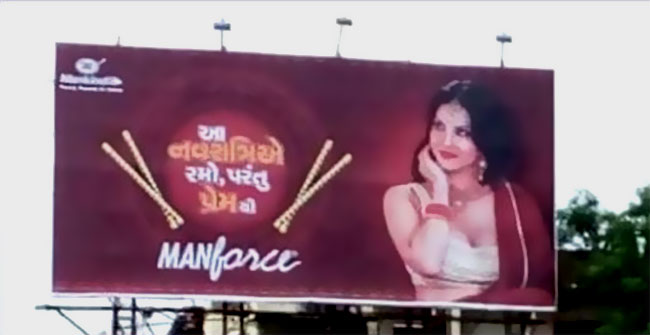
    The brigade forgets stereotypes and gender equality. It conveniently reframed the context and took offence to Sunny Leone promoting ManForce condoms during Navratri Garba celebration in Gujarat. . Even a kid knows she is doing absolutely the right thing. Unfortunately, there is no protection for this creative.

    On the days promoted by card making companies, we find a series of touching communication. Son and daughter finding time to visit old parents more out of guilt then love and care. They bond over conversations happening over the fastest network. Taking care of their bill is seen as a job well done and reducing the guilt. The masala can anyway help deliver maa key hath ka tatse. No brigade objects to this depiction of uncultured overtly corrupted sentiments as per Indian standards. Maybe agitating against it would not give high return on buzz and news.

    Why even worry about all this?

    Soon there is going to be a situation at home. I can’t have Maa making the meal as nuclear family is the way of life. She is old anyway. The brigade may question the intent. Wife should not be forced to make the meal and be confined to the kitchen. She has a world she must conquer. Daughter in the progressive family is not meant to do it. We are busy commenting and reflecting on the unreal India. I understand. I should cook my own meal.

    In this period of Darwinian evolution, we have moved from ‘Ready to cook’ to ‘Ready to eat’ and from leftovers in the fridge to ordering meals on mobile. However, somewhere we miss the aroma wafting its way from the kitchen, the inquisitive looks and the anticipation of what is cooking. It ensures that the love within the family was more than just an early morning ‘I Love you’. No, I am not worried when I see the consumers in non-metro confused at these signals.

    Maybe we will find a way out just like revival of Aryuveda after prolonged chemical products. It may be late for us to put into practice our ancient cultural knowledge and learning’s. Once we fail to transfer it to the next generation, there will be no return. No, I am not a Bababhakt.

    We can see the direction we are moving in. How the new stereotyped progressive representation is being forced into the name of gender sensitivity, and equality are shaping the coming generation! The wheel is already moving in that direction. The social media support and discussions, hate mails and trolls are accelerating the process of fueling hatred and prejudiced biases.

    Many of us are confused. Unsure if we are moving in the right direction. Before writing anything in public domain, we worry about the brigade. We know we are not strong enough to put our life and reputation on line.

    The last question.

    I have another question. If the watchdog of self-regulation is worried of advertisements not following follow the guidelines and work to ensure they are taken off the media, should it also not work or lobby to ensure safe passage and right to communicate for the brands not violating the guidelines.


    Sanjeev Kotnala is a senior marketing and strategy consultant and trainer. The views here are his own.
  • BiggBoss Season 11: Watch it for your advanced learning & entertainment

    By Sanjeev Kotnala


    On September 30, while people were busy celebrating Dassera, I was watching Salman Khan at the ‘Bigg Boss 11’ set in Lonavala sending 18 contestants to the BiggBoss House, where everyone of them will try to be the last one to leave. Today, it is two days old.

    There is no point hiding my addiction and love for Bigg Boss. It is a perfect voyeuristic peep-in into an adventurous sports called life.

    This year is no different. The overpowering host commands an unasked for respect from participants. He tries to maintain house decorum and the balance by questioning actions, expressions and behaviour of the participants.

    You can’t fault the participants, who in the absence of any entertainment, information and newness endup tracking their daily activity by following the Azaan from the nearby mosque, the trains whistling by the Lonavala station and the position of the sun.

    This absence acts as a catalyst and instigator for all the games we watch on the show.

    Participants have to create their own time-wasters. There is nothing new other than the differential tasks they have to do or a wildcard entry bringing in news from outside. All of them are in the lookout for the possible double bluffs that BiggBoss can run. The team at Colors and Endemol Shine is busy devising new ones. This act of Salman Khan being a temporary neighbour (audiences don’t believe it!) is one such surprise. The push for the four Padosi (neighbours) to create and master the story that they themselves are to weave around them is loaded with interesting possibilities and high entertainment potential.

    One cannot discount housekeeping tasks. They are the prime source of irritation and fights among the group. The barter system of favours and obligation develops in no time. The situation is already ripe with open nomination in ‘BiggBoss Season 11’. Soon predictably trading of blames will be replaced with beeps in the telecast. Every possible emotion finds its expression in the house. You just have to watch and follow it.

    This is the ripe ground for perceptions, biases, polarity, expectations and disappointment triggering the staple diet of volatile interaction that most of BiggBoss followers wait and die for. Opening the house to the commoner has added a new dimension; however, the channel has failed to exploit it. The commoners themselves have a kind of complex and the celebrity an air of unfounded superiority.

    The fun is in playing the strategic game of human understanding. People in HR, marketing, strategy and direct people interaction should concentrate here.

    The participants, celebrity or the commoner (as called by the channel, and I hate it) are not known to most of us. Definitely, we cannot claim to know them inside out, though we have our own perceptions that get further strengthened or weakened during the show, new ideas take shape, and we re-establish benchmarks. Our favourites change by episode and on the weekend show.

    If you watch it religiously which I believe you should, there is fun in knowing how well one can read the churn of a fluid social lab called the BiggBoss House. For example, if you were to recruit one of them, who will it be? Which participant can best replace you in the organisation? Don’t forget to provide your flimsy reasons for it. Remember BiggBoss always wants to know why. With which participant will you want to go out for a coffee? Play this as an icebreaker or a way to understand your teams. In fact, the channel if they want- can start an outside poll for this and even arranges to meet the participants in the activity area.

    The participant mix is standard. The teams need to think of the future possibilities in Indian context. The possibilities in the construct of the house, staying arrangements, newness of tasks, possible heightening glamour quotient across gender, punishment and the voting system are a hygiene factor. One is yet to see really disruptive creative thinking in the programme. I will be happy if the team soon proves me wrong.

    Every participant promises to remain true to himself or herself, be open in their conversations and being a no-nonsense person with dignity! My experience of 10 seasons says none of them will be able to maintain it- other than possibly Hiten and Hina Khan. It is being human. Just like me wishing to see the house from inside.

    The creative team is the indirect instigator of interaction between the participants. The opening night ‘Padosi Aarahey Bajane Baraha’ is an indication of the intent. However, at the end of the day, it is individuals who must decide how they will respond to the triggers. BiggBoss is where theory and practical class happen simultaneously.

    The fun is in taking stance and putting your judgement in line. Fun is in watching and correcting your choices and alignments. Fun is in reading and sometime reacting to the uncalled comments made the followers on social platforms. It is a space to study growth of with time and action. It is interesting to see how it soars, stabilises and dips. The fan club swiftly coming into existence on strong personal, cultural and regional lines. I would love to collaborate in a study that can focus on this aspect of BiggBoss.

    Looking from the managerial point of view, BiggBoss is a great learning workshop. The 90 cameras continuously capture every movement, but most of the audience take the purposive selected superbly edited 60 minutes of feed to base their judgement. There are few who watch the live feed too.

    Is it an apt representation of managerial problems? There is always a dearth of information and yet decisions have to be made, sides need to be taken and reaction needs to be served. There is no sound, camera, and action in the house. You only hear ‘Cut’ when you are being evicted from the house. Till them – the act must go on. Tune in at 1030 PM on weekdays and 9 PM on the weekend. Free classes for everyone on Colors TV. Do share your comments with #BiggBoss11 or #BB11 and converse with me on twitter at S_kotnala

    Meanwhile, I remain satisfied being a fan than a participant. Don’t think, the channel will call me after the brilliant experience at the last year auditions. Maybe this is one adventure I may miss out in. But then one can always hope….


    P S:Do watch out for Akash Anil Dadlani, Hina Khan (saved from the nomination by the padosi a great plus), Hiten Tejwani, Sabyasachi Satpathy, Sapna Choudhary and Shivani Durga. I think Arshi Khan and Bandgi Kalra, both nominated by padosi and not the housemates have started their stay on a wrong foot. I predict that Benafesha Soonawala, Luv Tyagi, Priyank Sharma, Shilpa Shinde (Nominated), Puneesh Sharma and Vikas Gupta will fail to live to expectations. And finally, unless they have some unexplored magic; Jyoti Kumari (Nominated), Lucinda Nicholas, Mehjabi Siddiqui and Zubair Khan (Nominated) will be lost in no time. Bet on Akash Anil Dadlani, Arshi Khan, Benafesha Soonawala, Mehjabi Siddiqui and Sabyasachi Satpathy to deliver entertainment.


    Sanjeev Kotnala is a senior marketing and strategy consultant, and an educator. The views here are his own.

  • Time there’s solidarity to save advertising


    By Sanjeev Kotnala


    I am a happy-go-lucky person. Very few things bother me. Mine is a life of peaceful co-existence within the highly competitive and inconsistent advertising –media-marketing industry. Nothing is permanent here. The brotherly love exhibited over drinks does not even last the hangover. However, I must note that things have changed a bit.

    One can never be sure in the era of new violent wave of religious, cultural and social censorship. Anyone, anywhere at anytime can take offence to an extremely logical and sensible communication. And you have to fight it alone. No one within the industry comes to support.

    We are after all an industry of armchair activists. Masters of mind-burning thought-numbing 140- characters. We can start a discussion on any subject that we don’t want to close. However, we fail to find long-term, visibly demonstrable, vocal support within the industry.

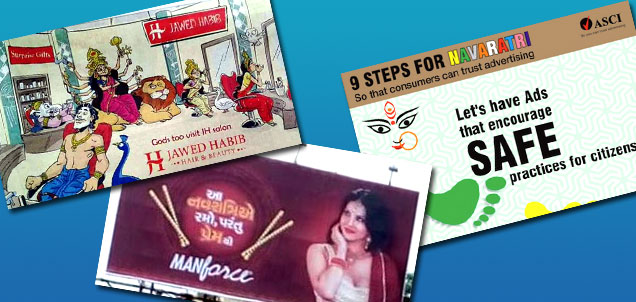
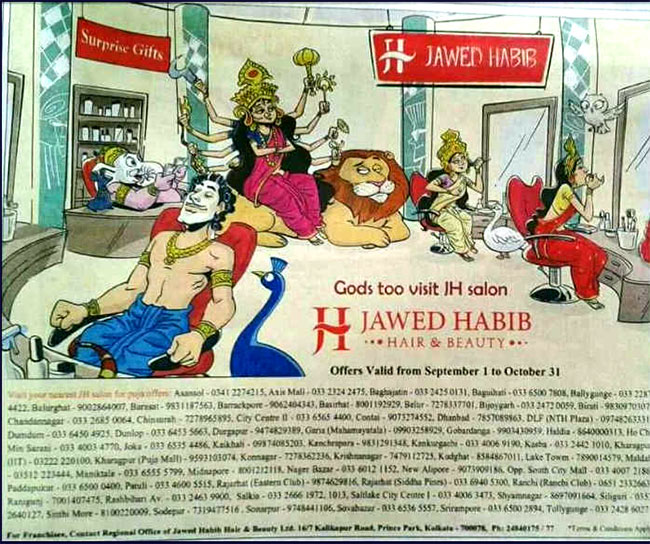
    A few days back, a simple communication from Habib (the hair guru) was the centre of debate. It was completely harmless. Far more play is visible on Bengali magazines’ covers and pandals fronts. Maybe his only fault was being part of a minority. He was instantly trolled. Few rare voices of sanity were drowned under threat. He had to beat a hasty retreat.

    Not a big advertiser. With the creative not carrying weight of a large advertising agency, Habib remained isolated. No one really found time to debate or support. Oh, yes, we don’t support a losing debate, in spite of valid arguments. It is just not right for the industry.

    Next in line was an ice cream brand. It was grilled and trolled by gender-sensitive women power gang. How dare they show celebrating the simple playful act of a young girl making her first round chapati?! Where was the son? What was she doing in the kitchen? The din was too high. Bad even if that was a buzz-creating strategy.

    By ignoring such acts, we definitely constrain creativity, interpretation and innovation. We are not far from a time that the brief for a campaign will go through the list of don’ts. It may be easy to send a list of do’s as it is expected to be shorter.

    During Navratri, this time big advertiser Manforce Condoms learnt the same lesson. They did the most blasphemous act of taking Sunny Leone to drive home the importance of safesex. ‘Yuva Vahani’ took offence ‘Aa Navratri a ramo, parantu premthi’ (this Navratri, play but with love). It was insulting. Dandiya-rass was equated to sex opportunities and pleasure. Instead of celebrating womanpower the brand was purposely offending festival sensibilities. Come on!Ultimately, Manforce could not stand against the demand; the hoarding was promptly removed.


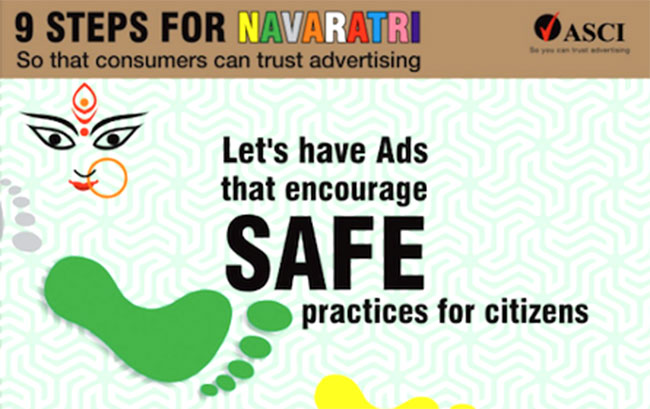
    Meanwhile, in my inbox was a visual from ASCI promoting safe advertising. And in my view, ‘Manforce’ was clearly promoting safe practice.

    Manforce ended up apologising for erring and hurting sentiments. I am yet not sure which sentiments were hurt. Was it saying aloud the worst kept secrets? That Gujaratis don’t have sex, definitely not during Navratra. The abortion figures in December, January is just statistical aberration.

    I would suggest that Manforce submits the advertisement to ASCI for guideline violations. Let’s understand where they went wrong.

    What would have happened if some progressive Garba mandals were to place in easy-access boxes of condom? And if Uber or Ola were to place some in their cars? Great activation ideas addressing a segment, but…

    If such a treatment was given to a film, the film industry would find ways to support and visibly demonstrate the intent. In case of books, the authors support by debate walks and protest. Even the frequently abused press behaves with far more solidarity.

    Meanwhile, Baba Ramdev continues with his stance on ASCI and self-regulation. And the industry remains a silent spectator.

    I have no solution but a few wild thoughts.

    ASCI’s role is to stop exposure to an advertisement that does not follow the guidelines. Is it not natural, then to expect it to support and protect campaigns that follow the guidelines?

    How long must the industry suffer such threats? There is a need of collectivism and solidarity.

    We must ensure that all stakeholder organisations are a member of relevant associations. And they must toe the line. The rouge agencies, media and marketers must be penalised – boycotted and not supported in their initiatives.

    It’s a crazy thought, but an advertiser with more than a Rs 2 crore budget must be a member of ASCI otherwise the media refuses to run its advertisement. Any agency with Rs 50 lakh-plus billing must be a member of AdClub and AAAI. These are random figures with no logic. Maybe it will work. However, I have my doubts if it ever happens but no harm in dreaming.

    The associations in addition to being busy with calendar events awarding excellence and creating those wonderful engaging evenings need to find focus on industry issues too. Work on creating a totality of approach and even lobbying for a protected environment for legally valid- guideline following campaigns. It is a collective force of Ad clubs, ASCI, ISA, IMA, AAAI, IAA and other association that may help.

    Remember the appeal for solidarity.. Today it was Habib, Kwality and Manforce. Tomorrow, Man you can in place of them. You will need the collective power of the industry to do what is rightfully right. So, next time onward when something like this happens, speak up and act.

  • Sanjeev Kotnala: Want to be happy?Read the book by HH Gyalwang Drukpa

    By Sanjeev Kotnala


    I’m never going to be good enough, so I’ll just have to grab happiness where I get the chance. ( From the book)

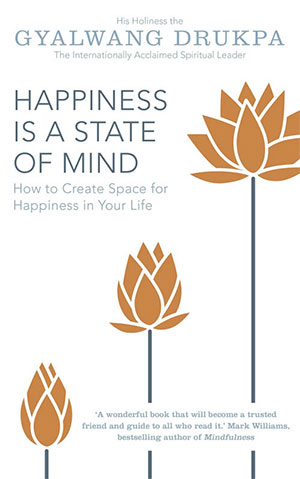
    It was late at night on September 19, 2017, at some 30,000 feet in Indigo 6E 404, flight from Nagpur to Mumbai when I finished reading the book ‘Happiness is a State of Mind’ by His Holiness Gyalwang Drukpa. I picked this book at Hemis monastery, on my trip to Leh last month.

    We were hovering over Mumbai airport, and we were asked to go back to Nagpur. Mumbai airport was closed due to rains reducing visibility and a Spicejet flight skidding off the runway.

    Next day, I was expected at MICA. I was to take a morning flight from Mumbai to Ahmedabad. Surprisingly, this entire disturbance of schedule, and uncertainty did not lead to any panic or stress on me. In fact, I acted as stressbuster and guiding other passengers when we landed back at Nagpur. I was not worried. Where was food or when we get hotel accommodation? I was appreciating the effort of limited staff of Indigo at Nagpur, which was not prepared for such a situation. This I Believe Was The Impact Of The Book. I Recommend It To Everyone.

    The book has its own definition and interpretation of happiness. The steps prescribed to achieve happiness are simplified and not tough to adapt. They have been broken down into easy to understand sections. As normal, the narration is iterative, but it adds to the understanding.

    I write this note 15 days after finishing the book. I wanted to check the longevity of impact I think I am still feeling. I am happy to share that there is clearly a change. It Is About Change Of Perspective If Not The Behavior.

    I quote Mark Williams, Emeritus Professor of Clinical psychology, University of Oxford:‘The book guides us through practices that can help us reconnect with life as it is rather than as we wish it to be, and re-discover the deep pace, immeasurable and indestructible, that has been with us all along, hidden in plain sight’.

    Go pick and read it. Discover what may work for you. Get a differential perspective to your chase of happiness.

    ………………………………………………………….

    To back my recommendation here I present few excerpts from the book:

    Happiness is a state of mind- is all about developing a sustained sense of happiness from within. It talks about ‘nurture your mind to loosen its grip on worries or fear, pressure to succeed resentment or regrets, and instead look with love and generosity, embracing the potential in uncertainty, letting others be themselves, finding your inspiration. (Page 09)

    I strongly endorse, and most of you would agree that ‘we human beings seem to find complications even suffering to a degree easier to deal with than happiness: it is easier to complain than to celebrate; it is easier to list what we didn’t get done today, then to acknowledge everything we accomplished. We wrap ourselves in anticipation and ideas about how we think things should be; and we worry that contentment, and peace will bring laziness’. (Page 35)

    Here is another thought that is important, ‘It might sound morbid, but when we truly accept the certainty of death, we truly appreciate life. This is why Buddhist teachings encourage people to reflect on death, rather than hide it away in the corners of their mind. If we don’t accept today that we might die, at any moment, then how we can use this one certainty in our lives to inspire us to release all the conditions we place on happiness. There is no need to put off happiness; you can allow it into your mind and your heart today’. (Page 88)

    ……………………………………………….

    ‘If you think, you are too small to make a difference, try sleeping with a mosquito.’ His Holiness The Dalai Lama.

    ………………………………………………….


    HAPPINESS IS A STATE OF MIND; By his holiness Gyalwang Drukpa. Hatchette India Publications. Rs 399. 253 pages full of happiness.

    Net net. ‘You have to tread the path for yourself. Everything is totally in your hands. Believe and trust in yourself to allow a little more space in your life for happiness’.

  • Will the new gold standards work for digital advertising?


    By Sanjeev Kotnala


    It had to happen. It is a need of the hour. It is a well enacted drama with no future. The digital industry ad sales is under tremendous focus and pressure. Fake clicks and counts are dominating with fake ads. It is too little too late.

    The advertiser and audience experience has worsened over time. The consumer is frustrated with the digital invasive advertising and has no where to complain.

    Hence, it is no surprise that 23 major tech and media companies, including Google, Facebook, Microsoft and Twitter together signed an ‘open letter’ by the Internet Advertising Bureau ( IAB, UK). This is being referred as the ‘New Gold Standard Initiative’. It aims to raise standards across the digital advertising industry and address the key issue facing the industry in UK.

    It is media companies telling the brands and the advertisers that they matter. A small gesture to say we were in the wrong, and now we are committed to address the issues that should have never been there in the first place.

    The three key initiatives of Gold Standard are:
    ADDRESSING AD FRAUD by Implementatng IAB’s ads.txt initiative. All sites selling digital ads will list companies authorised to sell inventory on a specific site. It will improve transparency and prevent the sale of fake ads.

    ‘TWELVE BAD ADS’. The signatories will follow the LEAN principles, and the standards set by the Coalition for Better Ads. They promise, never to use the “12 bad ads,” such as invasive and pop-up ads, auto-playing-video ads with sound, prestitial ads with countdown, more than 30% ad density, flashing animated ads, etc. across a desktop and mobile.

    BRAND SAFETY: Increasing brand safety by working with JICWEBS to ensure that the Display Trading Standards Group (DTSG) Brand Safety Principles are valuable, applicable and continue to evolve with market expectations.

    These are clearly early first steps and the dateline for implementation yet to be finalised.

    The question remains: what took them so much of time to identify the issues and suggest solution? Are these not things that should have been done? So, what is great about signing an obligatory letter?

    It will remain a toothless paper tiger unless the organisations convert their capabilities and intent to reality.I don’t have much hope. I suggest you too wait and watch.

    We in India know how many industry bodies, associations and self-regulation obligatory guidelines make no difference. The large advertisers and media houses flout rules and break expectations. Everyone lives on hope of some magic and miracle.

    Will ‘Digital Ad Gold standard’ follow the same pattern of disappointing like other industry initiatives, or we will see a much-needed shift? Only time has the answer!

    The 23 board member signatories are AppNexus, Bauer Media, ESI Media, Facebook, Google, Guardian Media Group, GroundTruth, Immediate Media, Mail Brands, Microsoft, News UK, Oath, Quantcast, RadiumOne, Teads, Telegraph Media Group, TripAdvisor, Trinity Mirror Solutions, Twitter, Vevo, Viant, Videology & Weve.

  • Sanjeev Kotnala: Do you have the courage to change? #MeTooGUILTY

    By Sanjeev Kotnala


    The Harvey Weinstein episode forced many people to re-examine sexual harassment at workspace. Many women shared their experiences with the hastag #MeToo.

    It was apparent that silence and escapism have fuelled the behaviour. There is no surprise at the spectrum, depth and width of this malice that seems to engulf every profession.

    The inappropriate behaviour finds rampant support and encouragement within the extended work environment. For the women, there are no escaping jokes and conversations with sexual overtones. There are gestures and suggestions, demand and implication of sexual nature. Normally, the victims fail to muster courage to report.

    Unfortunately in the power-centric male-dominated space, the woman is still branded guilty or instigator. The predator roams free. It has been going on for far too long.

    Sexual harassment is partially about sex and exploitation. It is more about power and control. Gender inequality in power, freedom, pay and expectations creates an environment where it flourishes.

    It is not a question of Hollywood, Bollywood, MNCs or Indian Companies. Marketing, Advertising, Media and research. More prevalent in paces where people work long hours in close proximity and where the gender divide is big. Organisations know of the possible action they must take. Hence, I am not talking about them. I am talking of the other half.

    ‘MeToo’ coined by Tarana Burke to support ‘women of colour surviving sexual abuse’ in its new avatar of ‘Sexual Harassment in work space’ in 2017 got a million shares on Twitter in 48 hours. On Facebook, it crossed 12 million comments and share in 24 hours.

    The collectivism of sharing personal experience gave many a courage to speak. Lot many found ways to come to terms with their experiences and to stop blaming themselves. While sharing experiences in first person has overall failed to impact the degree and frequency of such incidences it is still an effort worth applauding. Unfortunately, it has every chance to fizzle out like #YesAllWomen, where women shared their experiences with male entitlement and violence.

    #MeToo showed how common sexual harassment at the workplace was. No profession from films, sports, politics, medicine or even teaching was left untouched. In such a scenario, it is not unreasonable to assume that a huge number of predators and silent supporters of sexual harassment at workplace exist. Their salience, like the silence of the victims the predator continue with inappropriate behaviour.

    This brings me to my agenda, A one-on-one discussion with men. Though I here address men, many women may find themselves to be equally guilty of the act.

    The change needs to happen within the MALE of the society.

    Use #MeTooGuilty,

    In case you have in the past covertly, overtly supported or indulged in sexually inappropriate behaviour in the workplace.

    Use #NotMe,

    If you seriously believe you has never been part of it. Your actions have not encouraged the in appropriate behaviour. I have doubt if someone can seriously honestly use it. And here ‘Men will be Men’ is not an excuse or a thing to laugh at.

    We all know what is an INAPPROPRIATE BEHAVIOUR that makes women uncomfortable at the workplace. So, question yourself.

    Have you ever knowingly or unknowingly contributed towards creating an environment that accepts and suggests attitudes and behaviours around sexuality?

    Has your behaviour or silence helped propagate sexual harassment at the workplace?

    Share #MeTooGuilty in case you have indulged in such behaviour like…

    • A behaviour that you know could be termed sexual harassment.
    • Have you knowingly shared explicit sexual jokes in presence of women? Doing so with the intent to make her feel uncomfortable or use that joke as a pretext and lever to push for future actions and control.
    • Stared at the legs, cleavages and looked up the skirt making the colleague uncomfortable.
    • Not speaking out when you knew that of an incidence of sexual harassment.
    • Have you suggested sexual favours?
    • It does not matter if you used the cover of drinks or used your position and power to group, kiss, brush and press against, caress, touch, feel, dance or hold women colleagues against her wishes.
    • Used or encouraged the use women body to close the sale.
    • Suggested and or commented on women character without any evidence.

    Be honest in your thinking and intent.

    To start, here is me #MeTooGuilty


  • Sanjeev Kotnala: Is the 6-minute digital luxury killing brand association?

    By Sanjeev Kotnala


    When the digital wave started, it created a luxury of time for audio-visual brand expressions. The creative teams and brand custodians were no longer constrained by the 30 – 45 second capping due to cost of advertising on television.

    It gave birth to short films, where brand message and experiences were delivered in 300-360 seconds. Every brand wanted to exploit this new opportunity. There was now available all the time to create the mood, lay the message context, build up on it and deliver a consumer engaging revenue-enhancing message. Additional seconds were available if someone wanted to extend it a wee bit more.

    Many 30-second experts were caught off guard. They have invested their lives in understanding how to deliver a message in the shortest possible time frame. They had no idea of what to do with the sudden expansion of time. The industry was banking upon them to deliver. It failed to appreciate that it needed a differential treatment and mind-set.

    So, the 30-second craftsman graduated to 300-360 seconds.

    Now, the films were definitely better crafted. However, many of them failed to deliver the connect for the normal viewer. A viewer that is not a student or professional in the filed of marketing, communication or creativity.

    I know most of the creative and strategic minds will laugh at my over-simplified misdirected analysis of the issue.

    They will have an array of data and strategic insights to defend every move and tilt of the camera. I respect them for their craft, experience and expertise. I would have appreciated if they were open to, listening to an point of view that is based on live viewing and discussions with real audiences.

    I am not questioning their intent and collective boardroom wisdom. A viewer is not privy to the discussion and the strategies. The viewer just has the final product to judge.

    The creative guys know it. They have understood the problem but over corrected the deviation. The films are hugely engaging. The audience is deeply involvement. They get so engrossed that the brand association gets lost. And that is the problem.

    Advertising to me is a business proposition.

    Hence, it is a waste if the viewer fails to link the message to a relevant brand attribute or cause, it is pure indulgence. The viewer must understand the relationship and get the brand association in the right perspective.

    Long film format, is not a quickie but a prolonged foreplay. It has to build expectations leading to extreme but not necessarily loud pleasure.

    So, when one encounters some really nice work, the natural instinct is to share it with fellow professionals. And if one was missing a point, appreciate the debate.

    In few of the films, the brand seems to be incidental, perhaps an after thought. In few of the films, it is just a sign-off reminding the audience who to thank for the experience.

    Personally, I like them. They are great examples of story telling. The cast and the craft are almost perfect. But… What about you?

    So, take your time, put on your swanky earphones and enjoy the story. And then check your reaction to each one of them.

    ORIFLAME. Definitely, it is a beautiful message; a #BeautifulChange. If you dig deep, it dovetails into Oriflame’s vision of ‘being the #1 Beauty Company’ and the mission to fulfil dreams, for people all over the world. Did you get it?

    FORD. It is brilliant story telling across three films. Do watch it in the right order. It addresses the rising divorce rate and inserting some hope in the familiar family scene. The treatment is very mature and sensitive. Brand is present throughout the film. However, I have to double-check the brand name before I listed the brand! Good they signed off with the logo. Why take chances?

    VOLKSWAGEN. Better of this set. A brand that has long played with father-son relationship and again gets is absolutely right. It is an example of brilliant story telling with a far stronger product presence in the film. Message is communicated beautifully. Because the brand is so easily identifiable, there is less strain on the viewer to associate with the brand.

    JOHNNIE WALKER. Dear brother, Keep walking. It is a fabulous piece of work. It is extremely emotive. A very purposive and strong brand association.

    And then compare it with another brilliant 6 minute from the brand.

    I have placed them in an order of increasing brand association. That is my take. What’s your take? The question is subjective. Nevertheless, I believe it needs to be raised.

    As a creative person, these are films one would want to be associated with. Find conviction and confidence to present to the client and get them approved. The responsibility must extend to ensure establishing of relevant brand associations and messaging.

    Do you think as a brand custodian, you would put money behind them? Remember, there is no right or wrong answer. The debate will never end; However, it will be nice to know your POV. And if you have more such examples, please share them with me.


  • Get ready to get your creative expressions censored!


    By Sanjeev Kotnala


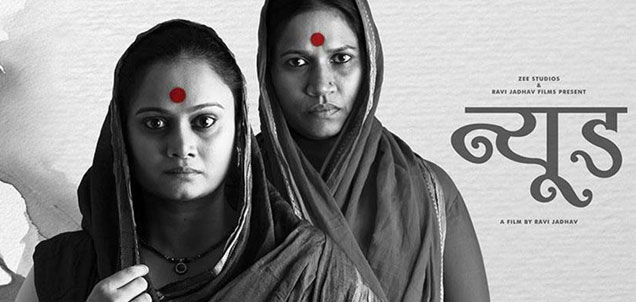
    No, I have not seen Ravi Jadhav’s Marathi movie ‘Nude’. However, that does not stop me from questioning the I&B Ministry’s decision to remove it from the list of films to be screened at the 48th International film festival (IFFI). That too, after jury constituted for the purpose selected it.

    The jury unanimously named ‘Nude’, a story about a mother working as a nude model and her attempt to hide the fact from her son, as the opening film of the festival.

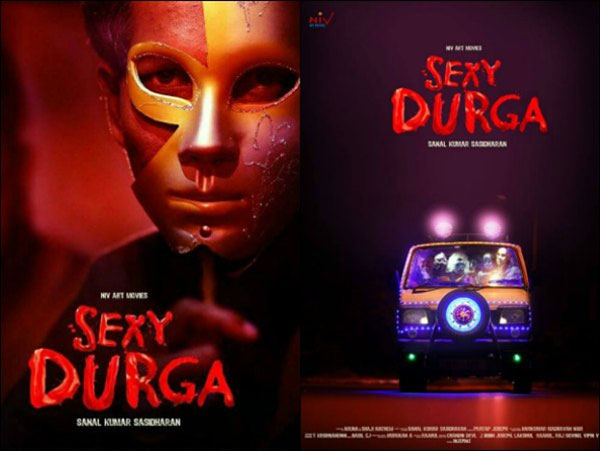
    Additionally, they have also dropped another film, Sanal Kumar Sasidharan’s awardwinning movie ‘S Durga’; originally title ‘Sexy Durga’ and ‘sexy’ was something not favoured.

    S Durga is a story of experience of two hitchhikers, a man and a woman, in the dead of the night. The director Sasidharan even complied with the requirement of few audio beeps as desired by the board.

    By removing the film, I&B Ministry superseded the expert jury body decision. Whatever I have heard and read about the movie ‘Nude’ is something that should be promoted for viewing. Reacting to the ministry overriding the jury, Kahaani director Sujoy Ghosh’s decided to step down from the post of Jury Chairman of 48th IFFI to be held at Goa. I personally applaud this act of Sujoy Ghosh.

    Is the nation so deprived of the expression that the word ‘nude’ will be largely misinterpreted?

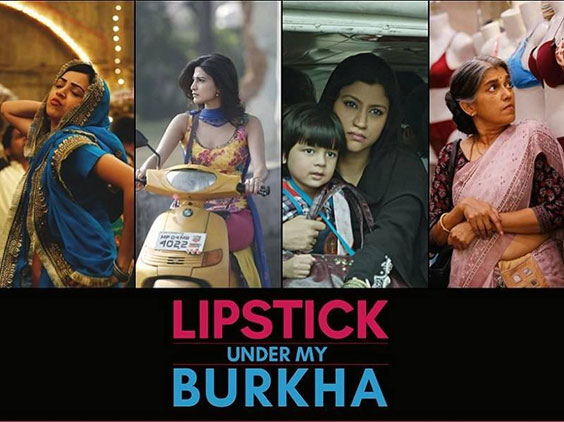
    I have seen the film ‘Lipstick Under My Burkha’. In the past, CBFC denied the film a certificate because “the story is lady oriented … there are sexual scenes, abusive words, audio pornography and a bit sensitive touch about one particular section of society.” Such a ridiculous statement!

    At that time, director Alankrita Shrivastava rightly questioned CBFC decision. “Why should a film that tells a story of female desire be stifled? Don’t women have dreams? Why is it okay for women to be shown as mere objects of male fantasy, but not women with agency over themselves? It is about the continued stifling of women’s voices in our country.”

    For a change, the film later found its way to limited release in theatres and was well appreciated by everyone.

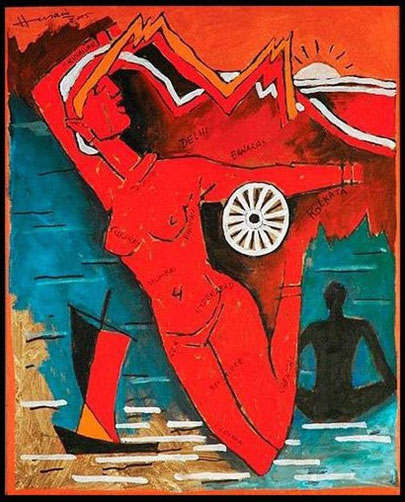
    There have been many protests against paintings by MF Husain. Some paintings took on names he never gave. These names were good to fuel controversies. His painting “Bharatmata” (“Mother India”) is a classic example. MF Husain never gave it the name it is known by.

    His many exhibitions have been vandalised and lawsuits been filed against him. A Padma Shri, Padma Bhushan and Padma Vibhushan awardee at the end opted for citizenship of Qatar and stayed away from the fundamentalists who questioned and protested against his art.

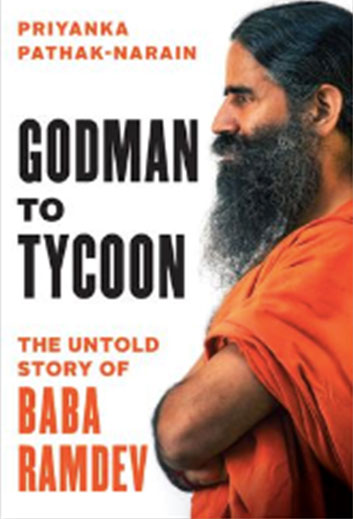
    I have read the book ‘Godman to Tycoon’ by Priyanka Pathak Narian. I don’t understand why it was banned. By banning the book, a doubt has been raised. The complexities sprinkled all over the book get strengthened. Who is gaining out of all this?

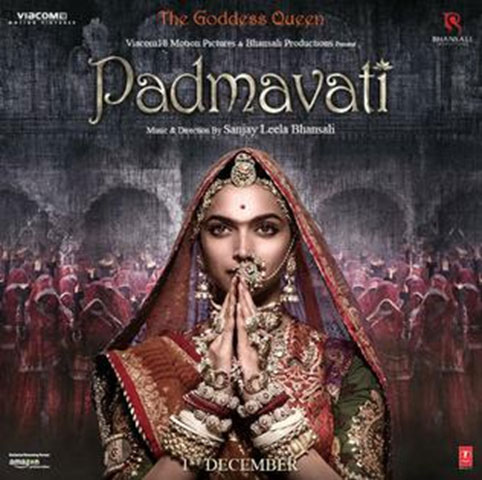
    I have not seen yet to be released Hindi movie ‘Padmavati’. However, few select regional bodies have raised demand of banning the film. I have a strong point-of-view against these objections. Earlier in the year, they vandalised Padmavati sets forced the director to shift his shoot location. The vote bank politics prevented the government to take any strong action.

    If the censor board certifies the film, why should this mini unauthorized proponent of cultural protection be allowed to prevent screening?  Should it not be the responsibility of government and its law and order machinery to ensure a safe release of the film?

    By asking to ban the film, the agitation leaders accept fragility of the legacy of Padmavati! Can her story, character and icon’s status be challenged and diluted by creative interpretation and representation? Director Sanjay Leela Banshali has assured that they have taken care of cultural regional sensibilities. There is no wrong projection of Padmavati. Frankly, there is no reason to agitate before first seeing the film.

    If Padmavati is certified for release and Govt tries to ban it. Will Prasoon Joshi, Chairman CBFC set an example?  Who will bell the cat? Who will stop this?

    When will we stop threatening people for differential creative expression? Will Padmavati finally be released in the problem state?

    I know my raising the voice against these biased acts may not count. Nevertheless, I will continue to voice my concern. It is not impossible that in future my creative expressions in form of stories, books, blogs, paintings, doodles and social media may be scrutinised and censored.

    Do we really need these polarised radical cultural groups in addition to the CBFC to approve a film for screening? Should we, in this digital era, continue to ban physical copies of the book?

    Should we hold back paintings and songs we interpret differently?

    Should we get the scripts and manuscripts approved before hand?

    If, the things continue, I will not be surprised if we get back to the old days when Doordarshan insisted on storyboard approval. Will we soon have censorship for the TV serial and short films?

    When will we grow up as a nation?
    When will freedom of expression stop requiring a third party affirmation?
    When will government stop listening to insensible sensibilities of radical groups?
    When will creative expression be allowed to be expressed freely?
    When will government be powerful enough not to be swayed by the vote bank politics?

    I don’t think we have any answer to the above questions. However, we have an option and a responsibility to raise the question.

    We need to speak up. Otherwise, tomorrow it will be your expressions and decisions that will be censored.

    P S: It will be foolish on part of us, the advertising, marketing and communication people to believe that this does not concern us. We must speak up or be ready for a day when this cultural and bureaucratic censorship dictates what and how we think.

  • Sanjeev Kotnala: Tumhari Sulu does no justice to the Radio

    By Sanjeev Kotnala


    Tumhari Sulu is a nice simple sweet movie. You can watch it with the family. On second thoughts, I will definitely want couples to watch the movie. It has those strong moments of happiness understanding and confused emotions that make the married life what it is. Do watch it.

    It has excellent performances by the talent cast lead by Vidya Balan (Sulochana – Sulu) as the middle-income homemaker with a ‘Can Do’ attitude. It revolves around her wanting to do something in her life. She has a list of hobbies that can fill pages.

    Neha Dhupia has always been under-estimated, and she plays her role as the radio station boss perfectly. A lot of credit should go to Manav Kaul, playing the role of Sulu’s caring husband and father who is cramped in a job but is always dreamed of better life. Maliskha Mendonsa, the real-life RJ with, plays RJ Albeli Anjali at Wow Radio and has suitably impressed audience with her short role. Vijay Maurya is a fire band poet and revolutionary. His act as a programme producer is a hit. The transition in him through the movie is worth appreciating.

    Let me get back to Sulu, the character played by Vidya Balan. So, Sulu visits Wow Radio as the winner of a contest to collect a pressure cooker that could be a good gift in next family function. Here she sees a poster of ‘search for an RJ’. Her ‘Can Do’ attitude kicks in, and she would also want to try her hand in being an RJ.

    Her relentless frustrating push for it and her attempts are the smartest sweet part of the film. But then I don’t think there was a story in it for another 50 minutes. So, the film suddenly takes on a more situation-driven moralistic turn. The protagonist is made to question work-life balance and responsibility of a parent (more so mother) towards their child.

    Finally, like most of Indian films, it again finds a solution with suggestions from the lead cast- and then everyone is happy. You leave the theatre with s a smile on your lips.

    Does the film do justice to Radio as a medium and its understanding in audience?

    So what does a common viewer takes out of the film. To compile this, I am banking on conversation with family, friends and few representatives of the highly vocal young generations.

    RADIO

    1. It is a great place to work for. People are overall nice. The ambience is energetic and vibrant.
    2. The organisation is responsible and alive to the needs of employees.
    3. Late-night workers get pick-up and drop facility.
    4. You have parties to celebrate success. People are friendly.
    5. Anyone can be an RJ. Being an RJ is very easy. Sit before a mike, play songs and chat with people. It got nothing to do with the education.
    6. There is a role called producer of the programme who always sits in your studio and keeps raising suggestions on a white board.
    7. People have stereotypes and they have their own set of reservations, understanding and expectation. People see the actor and the RJ in light of their performances.
    8. Jobs are like ‘Kal sey kaam par aa jana’. Station HR is not interested in any contractual obligations, and station head will allow a successful RJ slot to leave without much care.
    9. Radio listeners are not from the upper segment of the society. They are more loners, perverts, and emotionally drained or clamped for expression.
    10. You must visit radio station to collect your prize.
    11. Radio stations also create jingles and ads for their clients. It is about putting words into phrases.
    12. It is NOT OK to shout on the face of clients. They are the business or revenue providers. You can’t insult them, their intelligence and intentions. However, if you do so and create a scene at the office, saying sorry and promise of mending broken bridges can still help you to get your job back.
    13. Nepotism is part of business. Being good friends with people in places of power and influence can get you a job. I don’t think that is a revelation in our life.

    Beyond Radio:

    1. The new generation must be watched and properly guided.
    2. Raising a child, installing sanskar is a joint role of both the parents. However, it’s ok for us to expect just that bit more from the mother.
    3. Family is family and will be with you in need of crisis. At the same time, it is for you to check and realise if they are having a positive or a negative impact on you.
    4. You need to take your own decisions and not be pulled down by unsolicited criticism of your dreams and action.
    5. Indian married men are still unable to adjust to a working wife and her ambitions.
    6. A bit of quirkiness and kinkiness can spice up married life.

    Life-Enhancing Inferences:

    It’s your life. You are responsible for what you do with your life. It’s you who has to define and nurture your ‘Brand-i’. Every action is strengthening, weakening or creating new perceptions about you. Life is a maze and has its own ups and downs. Be happy and grateful for what you have. Be positive.

    Have the right attitude. Believe in yourself. Look out and its your job to identify opportunities.


  • Sanjeev Kotnala: Have you been Amul-ed yet?

    By Sanjeev Kotnala


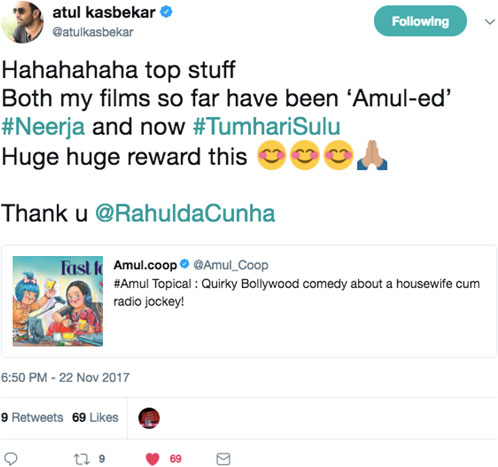
    I am not sure, if anyone else has ever used the term Amul-ed as Atul Kasbekar did in his lovely tweet of success. Even Big B has commented earlier that ‘My films on Amul Hoarding mean public endorsement’ but the word Amul-ed was not coined then. .

    It’s the power of concept that leads to treating of an act as a verb. Like Googled in digital representing search, ‘Mankaded’ in Cricket for running out a batsman that is backing up more than what is fair or ‘Bhaskared’ in newspapers, representing Dainik Bhaskar launching a newspaper in your territory and becoming number one with its Orbit Shifting Innovative approach to subscription. A new one ‘Patanjalied’ or ‘RamDevEd’ could be joining this club.

    I like this powerful representation of buzz and topicality that Amul has been showcasing in its hoarding through ages. However, thanks to Atul Kasbekar, now we have a term for it; Amul-ed.

    The PR agencies have something to learn from Amul campaigns, and they can consider Amul campaigns as a new tool to depict the buzz, interest and engagement. In fact, the use of Amul hoarding, print rendition across newspapers and digital presence represents another layer of earned media. It naturally gives the event a nationwide coverage, and the same gets amplified in social media with 1.4 million fans of Amul creative on Facebook.

    Hahahahaha top stuff
    Both my films so far have been ‘Amul-ed’#Neerja and now #TumhariSulu
    Huge huge reward this 😊😊😊🙏🏽

    Thank u @RahuldaCunha https://t.co/NcEJjhYn0B

    — atul kasbekar (@atulkasbekar) November 22, 2017

    The problem or rather the advantage is that in a week ONLY one event, topic, thought that is Amul-ed. Maybe the clients will start asking question if the event, idea is powerful enough to be Amul-ed. And surprisingly Rahul da Cunha and team which run one of the most trusted brand-agency creative relationship will be the only one to have the answer for it.

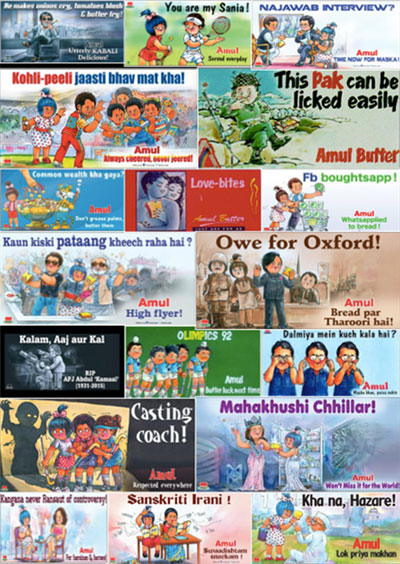
    The so-loved little girl of Amul in her own way is a spokesperson of India. It never fails to make a cheeky and at times satire dripping comment on the topical situation and links it to the utterly butterly brand thought. The spectrum is really wide from Politicians, railways, infrastructure, sports, religion, films, legends and even passing away of celebrities.

    It’s tough to pick favourites from the rich archives of Amul-ed happenings, But sharing some which examples that demonstrate the spectrum and the competition one faces before being Amul-ed.

    Once you have been Amul-ed, there are chances that the creative maybe immortalised in the next AMUL INDIA book which is available at INR 299.


  • So Zomato Gets the Tomatoes!


    By Sanjeev Kotnala


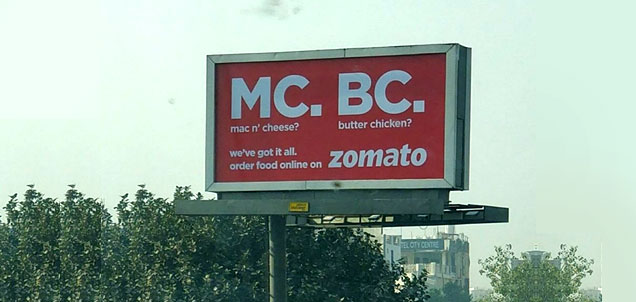
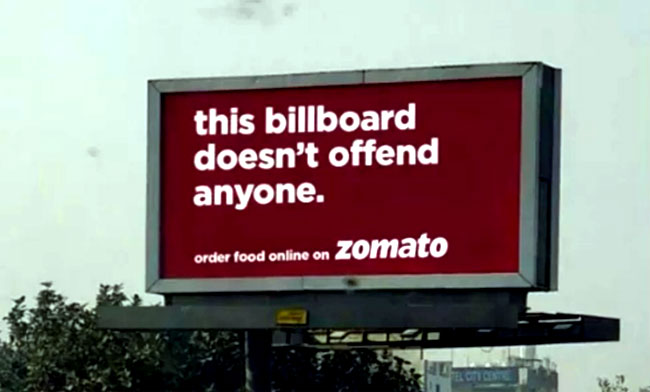
    Dear Zomato, I have been wondering what made you do the MC. BC. hoarding. It is now a public property. So, it is okay to believe that the agency/ individual presented many options, and you picked up this one along with the rest of equally good creative in Red & White to go.

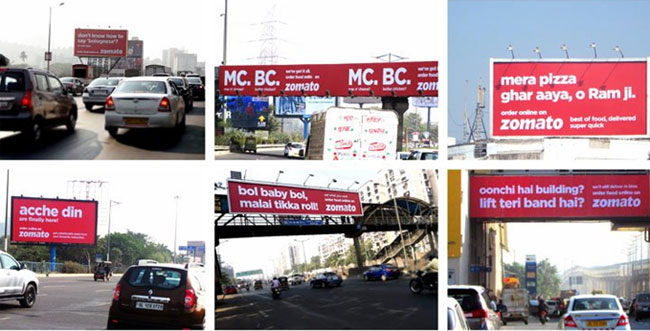
    It was a conscious call! If I as an outsider see the set of creative, this does not fit the template. And that’s where it gives me an idea that you went along for the buzz and social media hype. It would be hard to believe that the agency, and the client did not understand the way they were pushing the boundary. You did and even when you were taking the decision to bring it down, there is a little smile playing on your face. Hopefully, I am absolutely wrong in this statement.

    Hopefully, and that is tough to think that you were diligently naive to the statement you were using. MC-BC is one of the most commonly used abuses above the tropic of cancer. It’s so prevalent that one of my friends Mahendra Chandola never could allow to use his initials to be playfully called M.C. I have another friend M C. Anand Kumar and what do you think happened; he was okay when fiends called him MCee.

    Or was Zomato saying we have got enough of ‘MC. BC.’ for our service, so believe you must order online. Then it is definitely a comment on the user subgroup. I pray that is not right.

    So, that brings me to another thought. Just like ‘Beauty lies in the eyes of beholder’, ‘Dirt lies in the mind of the thinker’. You as a brand consciously went ahead with the campaign. Unfortunately, the agency forgot to add Dahi Chana to the list, which would have made it B.C., M.C, and D.C and the whole issue would have vaporised. But then there would not have been Google Naresh and Suhel Seth ( 4.5 Mn followers on Twitter) trashing it upfront. The latter for whatever it was worth even tagging Hon. I&B ministe,r Sniriti Irani for no reason. Someone wanted to go and complain to ASCI on the subject.

    It’s different that Zomato Co-founder Pankaj Chaddah apologised for the ‘offensive’ ad saying that the company will take it down. “We can see why it can be offensive to people, and we apologize for it. We will take this ad down with immediate effect,” he tweeted. It came after commentator Suhel Seth took to Twitter to call out Zomato for the same. I can understand what Pankaj is saying.

    In effect, he is letting down few of the people who were not so much culturally socially nose in the air type. Here is what one of them said Arjun Pal @pal_arjun said ‘@pankajchaddah, hats off to the creativity of your Marketing Team @Zomato . Don’t pull down the ad coz of some moron. This way @suhelseth will ban all historical Hollywood movies when they write 36 BC or 69 BC’

    Let me share the fact that in F&B, there are acronyms that get popularised. I remember that once in HTA Delhi, while working on the roof-top-restaurant at ‘ITC-welcomegroup Maurya Sheraton’, the agency came with a beautiful name ‘West Court’, and the client (Nakul Aanad) rejected it for a valid reason. He said, soon it will be known as W.C and then who would want to eat there. I still believe that the reason was not strong enough to justify losing a good name. But then that is history.

    Meanwhile, as always we have people with a different take on the campaign. If you give it time and see all the creative, you will realize they have a sense of cheeky take on the subjects. They are harmless. They are interesting. They are something you read and smile. Including the one that is the centre of the conversation.

    There is no point in Badi Goldflake ( Prathamdev- Recently mastered the art of being misunderstood- with 399 followers on twitter J ) , Mihir ( 61 – followers on twitter), Akshar Pathak (1.3 Mn Followers on twitter) comment. We are taking life too seriously. MC and BC are in your mind, there is no explicit mention. There are far freer to be wrongly interpreted contextual advertising that no one seems to object.

    Here is a tongue in cheeky playing by the word comment by Mohita @ReineDeDeniers that sums most of the feeling ‘Hey, @Zomato, you didn’t have to apologise for this. You didn’t hurt anybody’s sentiments or anything. Trust me. I’m from Delhi and if I’m not taking offense at BC, then it’s not offensive BC!’

    I am not sure, that this hoarding exists, but it sums up the whole thought process. And I stand corrected, There is definitely a mixed reaction to the campaign.. Because Opinions are like Asshole, everyone has one. So the strong belief; ‘Dirt Really Lies In The Mind Of Thinker’. Some people are more right than others and hence the poor Butter Chicken cannot be called BC. To round off- I don’t find anything wrong in the campaign, but then that may not count for anything.


    Sanjeev Kotnala is a senior marketing and strategy consultant and trainer. He writes weekly for MxMIndia and whenever there’s an issue that merits more immediate attention. The views here are his own

  • Sanjeev Kotnala: Condom ad restriction. I am as confused as the government

    By Sanjeev Kotnala


    The government has done it again. Banned television channels from airing condom advertisement between 6am (Prayer Time) to 10pm (lights switch off time). The channels have been asked to strictly adhere to the provisions contained in the Cable Television Networks Rules, 1994.

    They have bulldozed into the decency of your mostly private life curtailing possible damaging exposure to indecent material. I am sure the government has logic, rationale and deeply researched consumer behaviour behind the decision. It is a powerful statement of adherence to the old classically traditional media thinking in an era of smart phone and digital invasion of senses.

    The industry watchdog ASCI (Advertising Standards Council of India) in its proactive self-regulation stance based on repeated objections on condom advertising demanded I&B Ministry directive. With condoms as a context, the content was hardly objectionable but the timing was. It seems the ad was aired on programmes with high children viewer-ship. Can someone from BARC help with data and clear the mystery?

    Something changed between 2015 and 2017, then too the government considered such an action, but then it did not restrict the telecast hours for condom ads. It must have been with the recent Playguard ads, which have pushed the envelope a bit more with Bipasha Basu steaming the screen.

    The ministry quoting rules 7(7) and 7(8) of the Cable Television Networks Rules, “no advertisement, which endangers the safety of children or creates in them any interest in unhealthy practices or shows them begging or in an undignified or indecent, manner shall be carried in the cable service” and “indecent, vulgar, suggestive, repulsive or offensive themes or treatment shall be avoided in all advertisements,” banned them for 66% of the day. In fact, they extended it from ASCI suggested 11pm to 5am timeband to 10am to 6am.

    The argument that condom ads could be indecent and inappropriate for viewing by children seems genuine. I agree with them.

    KS to Manforce to Playguard advertisements have shown us how audiovisual can artistically exploit the carnal desire for pleasure. It is natural the brands sidestep government-supported cultural stance of pregnancy, prevention and protection from STD as the main use of condoms while visualising the script.

    That leads to a simple question. Is it media or the audience? Why is traditionally media that is targeted for a controlled assault? Is this about what you can control vs. What must be controlled vs. what we should keep away from the kids?

    There will be differential point of view and arguments that will further confuse me.

    Though I sometime too squirm in my seat when Bipasha moans or Sunny suggests something on the screen, I believe that time-slot censoring is archaic and must be done away with. It has to be fair to all.

    Nevertheless, it does not answer my doubts.

    When condom advertising is being deregulated globally, why are we stepping back? When we should be answering the impressionable minds about pleasure, pain and precautions, why we are pushing them to other sources for unverified content. Not that one can control it.

    Will it help to air the ad only when the kids are sleeping?

    If the Myntra ad ( Visit ) with a different sexual orientation could be aired in a country where same-sex marriage is not legalised, why not allow traditional knowledge of KamaSutra be shared artistically. I know; this line of thinking is just a diversion. I welcome advertisement, which reflects more of today.

    What about the kid who digitally accesses content, including the condom ads? They laugh and share things like ‘10 funny condom ads’. What about Bipasha, Sunny and Bedi being shared on whatsapp and featured in Magazine and newspapers?

    On outdoor, harmless ad from Manforce was questioned during Navratri in Gujarat by people who abstain from sex during the period.

    If the same logic of impressionable mind was used to censor movies with intense shots and suggestive item numbers, the industry will have to close down.

    What about OTT platform and digital arena where the condom ads can be screened repeatedly? It is available, accessible and now with JIO and others affordable.

    Nothing much changes. Brands have been forced a media choice. No way have we stopped the impressionable minds from seeing these ads.

    So what could be done other than certifying ads for time slot.

    ‘U’ for anytime viewing, ‘UA’ for between 6 to 10pm, ‘A’ after 10pm and A+ only between 2am and 4am. And for a moment why not do what we don’t want. Necessarily certify certain categories of ads for time slot and ASCI could form a guideline and do the job. This kind of self-regulation should be okay.

    At the same time, we request and require I&B ministry to ensure the kids do not access such material digitally. It is impossible for kids not to do so and impossible for the ministry to stop.

    Can the ministry ensure that these ads are no longer reviewed before Maggi, Rasna, Dinshaw or Complan commercials on YouTube?

    There is one solution. What if we link internet access to Aadhaar Card? Yes, that is brilliant. Then ask Google, Facebook, Instagram and such access platforms to adhere to Indian guidelines.

    I told you, I was as confused as my government sending out mixed signals to the industry.

    Do share your point of view and help remove this confusion.


    Sanjeev Kotnala is a leading marketing and strategy consultant and educator. The views here are personal