Category: BLOGS

  • One Big Idea by Mandeep Malhotra: Digitization and technology will help innovate

    By Mandeep Malhotra, President & Head, Mudra Max


    It’s a difficult time for the Indian economy with slowing consumer demands and rising interest rates impacting the overall growth. This has subsequently led to cuts in the advertising budgets with the OOH sector taking the hardest hit compared to any other advertising sector. The absence of aclear tool to measure ROI’s, has led to OOH being a residual recipient of the media spends. The big thing that will shape the out of home space in future is “Digitization”. Though it is at a nascent stage in India, it is evolving. The pace of switch to digital will be significant inside the airports, railways stations shopping malls and other controlled environments. The falling prices and improving quality of flat screen display mean that static posters can be replaced by snazzy digital commercials with moving pictures, sound and sometime interactive features.


    Technology will be a key ingredient in the progress and I foresee a future where the messages will be contextual to the audience. Digitization and technology has to be increasingly used to drive the media and help innovate. We hope to see a future where billboards would be intelligent enough to guess the profile of the audience by sampling through visible data and catering to ads that are relevant to the audience for example, the “make” of the car (pattern recognition) passing by will play a key role in assessing the profile of the audience.


  • One Big Idea by Atul Phadnis: TV search poised to be the big game changer!

    By Atul Phadnis, CEO, What’s-On-India


    Digital TV homes in India will soon in the next few months, overtake analogue TV homes. Besides the digital TV wave via cable and DTH, we are also seeing mobile TV and OTT as new modes of TV distribution. In this environment, the one big idea that never ceases to amaze me is TV content search!


    As channels proliferate and increase in existing and newer genres including regional, adventure sports, crime, science, education, etc, we are seeing a dramatic consumer dependence on the EPG for navigational and search purposes. The EPGs are set to evolve and become more ‘Indianised’, with increased coverage and regional focus via translations into Indian languages.


    Newer STBs and DVRs have improved search

    In newer STBs, viewers will be able to search by actors, moods, genres – leading to a richer user experience. However, the day is not far where viewers will be able to save their preferences via an individual, personalized login. Search is set to get personalized…


    Effect of abundant choice on viewers

    A host of studies that we have conducted reveal a fall in appointment viewing and an increase in unplanned or random viewing due to a bigger basket of choice per each average viewer.


    So how will viewers find their favourite shows in the future, especially when they get more than 500 channels?


    Search is one step from consumption

    In all the observations we are seeing with viewer behaviour, one consistent insight coming through is that viewers are always searching for TV shows before viewing/consumption. Whether that search is on the EPG or a crude search via channel surfing or a very intuitive search on our apps, we as viewers like to sift through options before we settle on the programmes that we watch.


    In the future, we expect that search will explain consumption to a great extent.


    Game changer?

    TV search will continue to play a key role in shaping viewership and channel choices in the coming days. The funny thing is these changes are happening so seamlessly – so much so that very soon, we will be asking ourselves how such a major transformation could take place in just one blink!


  • Ranjona Banerji: Rowdy in the headline and ‘fearer’ underarms

    By Ranjona Banerji


    I saw in The Times of India the other day a headline which said that “a rowdy” had been arrested in the Ghatkopar area of Mumbai. This is an interesting use of an adjective which is normally only seen in South Indian newspapers. In fact, I think some states even have a “Rowdy Act” and I remember a film called “Rangoon Rowdy”. This makes some interesting cross-cultural sharing which enriches the language. I suppose I should not be a whiny in this instance and if Americans can make verbs into nouns every other due, the rest of us have full licence to switch grammatical uses into any way we feel is appropriate. I tried to write that sentence breaking all the rules but I have clearly failed. I promise to try harder next time.


    **


    I made a commitment to watch TV news when I started writing this column for MxMIndia. But I have lately taken a break from that commitment, largely for my own piece of mind. The lack of depth in reporting, the insane repetition of every bit of information by reporter and anchor, the trivial editorialising and the nightly ritual melodrama have not added substantially to my life as a TV viewer except to increase my blood pressure. For instance, just yesterday I saw a young anchor frothing at the mouth that the Central Bureau of Investigation had said they could not work on media reports in the Agusta-Westland case. The TV journalist was horrified perhaps that journalistic effort was not picked up by the authorities and codified as gospel. Should a government agency be allowed to get so cheeky with journalistic effort? Shocking!


    My understanding of the media I have to say has much increased and there is little doubt in my mind that the print and television operate in two parallel universes. Since I’m nit-picking about grammar today, let’s look at the word “should”. How often do you see the word in headlines in print journals? Should the prime minister always wear a blue turban? Should Amitabh Bachchan be brand ambassador for Gujarat tourism? Should the earth revolve round the sun or do we deserve a better star? This endless judgemental self-righteous frenzy can work sometimes but it does get tiresome surely?


    **


    Just to be perverse, I have a “should” question: Shouldn’t the media do more for the three minor sisters kidnapped, gangraped and murdered in the Bhandara district of Maharashtra? Having done such a wonderful job after the gangrape in Delhi on December 16, 2012, the media might consider the other women who are brutalised everyday in India. The police have made no breakthrough in the case although the girls disappeared on February 14 and their bodies were found on February 16. The media attention on that particular case did make a difference and certainly turned a much-needed spotlight on crimes against women. Even sending a few reporters to the area would be enough…


    **


    A few more spoofy programmes about the news media would be a good idea. The Week That Wasn’t does a superb job spoofing the news, no doubt about it. But it has to be constrained by the fact that it appears on CNN-IBN and therefore famous TV journalists appear to be out of bounds (though did I see Cyrus Broacha almost do an Arnab Goswami the other night?). It cannot have the same freedom as The Daily Show with Jon Stewart for instance or even sketches on Saturday Night Live, which we get to see on Comedy Central. Fox News and CNN are common targets. In fact, the Comedy Central spoof of an angry journalist in the promos for its new show Anger Management is quite spot on… Arnab again, I reckon…


    **


    A short break to advertising: is it just me who is tired of seeing Anushka Sharma’s “fearer” underarms? And why does Cadbury Silk have to sell us its chocolate by smearing it all over the face of the model?


  • Anil Thakraney: Oscar Disaster

    By Anil Thakraney


    First, let me vent my frustration with Star Movies. Their Oscar capsule, which was telecast from 8pm on Monday, ran for five long hours. The over-the-top Filmfare guys haven’t sunk this low. And that was mainly because of the zillion ad breaks. Now, I know the channel would want to maximize revenues on a blue chip show, and yet, surely there has to be a healthy balance between content and commerce. Surely there’s no gain in pissing people off. There has been talk of limiting advertising time on television programming, Star Movies has made me hope that becomes a reality.


    Having got that off my chest, let’s discuss the show itself. I have been faithfully watching the Oscars for donkey’s years, and I have to say this: This year’s event was most definitely the worst show put up by the Academy Awards organizers. It was intolerably dreary, very, very wannabe, they tried too hard to please, and ended up with a mighty egg on the face.


    Host Seth McFarlane’s ‘jokes’ (who the hell is this dude? Did they pick him up from an NYC street theatre group?) were sick and desperate. It was almost like he was begging, pleading with us to laugh. What I badly wanted was to swat his silly face. Hope never to meet this guy ever again on television.


    Most of the live performances were insipid (aside from Adele, who’s always good). I have often dissed item numbers at desi award fests, but after watching the Oscar sham, I am having second thoughts. Perhaps they should have invited Angelina Jolie to shake with ‘Sheila Ki Jawaani’. Yes, it was THAT boring.


    Lastly, and this isn’t the organisers’ fault… it’s in keeping with their poor run this year… even the award acceptance speeches were utterly disgusting. Only Daniel Day Lewis was witty, all others should have said ‘thanks’, and then vamoosed.


    Here’s the key problem, as I see it: The Oscar suits are trying too hard to connect with the younger audiences, and that’s why all those sick sexist jokes and the ‘We Saw Your Boobs’ sort of trash. This is exactly like the 58 year old Chairman of a large company, an otherwise prim and propah gentleman, arriving at an office party dressed in Bermuda shorts and floral shirt. So that younger colleagues can treat him as a friend, as one of them. Doesn’t work Sirji, it never has! Stay serious, dear Mr Oscar, keep the suit on. We like you thataways.


    ***


    PS: Haha. Very, very cute ad for Volkswagen Jetta, I love the idea. Which is that when you are facing death, your entire life flashes by you. Except that in this case the protagonist is a newly born baby, and this makes the TVC hilarious.

    [youtube width=”400″ height=”220″]http://www.youtube.com/watch?v=LcF5Y7WIRVM[/youtube]


  • One Big Idea by Nitin Mantri: Reinvention will be the name of the game

    By Nitin Mantri, CEO, Avian Media


    Somebody asked me the other day will you have a PR business in the next 10 years? My answer was no – definitely not one similar to what we have today.


    Reinvention is the name of the game in a cut-throat, competitive world. The PR industry, often dismissed as a business of fluff, realizes this survival mantra more than any sector. There are roughly around 8,000 PR agencies in this country. Imagine the number of press releases sent to newspaper offices. No wonder most end up in trash bins. Newspapers can’t be blamed for not getting excited about our client’s activities, but we have to ensure that the key messages reach the target audience. So, high time we change the way the industry works.


    Imagine for a moment a world where PR professionals can circumvent traditional media altogether – take the clients’ messages directly to the consumer and engage with them without third-party endorsements. In today’s world you can’t just shout at people about your brand, you have to engage with them cleverly. Why can’t we create our own videos and text-based digital content on behalf of clients and connect with consumers on social media platforms? We don’t need to depend on advertising or television companies for that.


    PR agencies are already utilising social media platforms and the interactivity they offer consumers. The time has come to go full throttle. Danny Rogers, editor of PR Week, aptly summed up the situation when he said, “The age of advertising is dead – when you built these big expensive campaigns and expected people to buy your product. In order to engage with large groups of consumers you have to create a different type of content. There’s this idea that PR is the medium for the age of dialogue and social media.” Bang on! You can these days run an entire PR campaign on Facebook and Twitter.


    Frankly, who has the time to read lengthy articles about products, launches and events. People are on the go and they get all their information from the web, which can be accessed on mobiles. PR professionals need to understand that the mobile has changed the way we consume information. There is this exciting, technological boom happening out there, with smartphones, iPads and mobile applications spoiling consumers with options. According to research firm Gartner, the worldwide sale of mobile phones declined 2.3 per cent to 419 million units in the second quarter of 2012, but smartphone sales, which accounted for 36.7 per cent of total mobile phone sales, grew 42.7 per cent in the second quarter of this year.


    PR agencies cannot afford to ignore this tech revolution. It would be naïve to restrict ourselves to writing boring press releases, tearing our hair over story pegs to sell the client’s products or persuading journalists to attend news conferences when consumers are on a different information-gathering level. India may not have as many smartphone users as the US (over 100 million at last count), but the number is rising in urban centres. Then there are tablet users. In fact, smartphones and tablets are the current media consumption devices. A smartphone user spends more time surfing the web, visiting blog destinations and browsing social media accounts like Facebook, Twitters, Instagram, Pinterest and other mobile apps than making phone calls and sending text messages! That’s a veritable treasure trove for PR pros to not only reach out to consumers, but also engage with them through high-quality content, visually-appealing images and entertaining videos.


    To believe that we can do without traditional media in India is utopia. Clients will need the third-party endorsement of newspapers and channels. But, the fact remains that the PR industry in India will go through the change and to cut through the clutter, social platforms will be the utilised more and more. We have to use this opportunity to raise the bar and do something different and exciting.


  • One Big Idea by Vijay Subramaniam: Betting on children-led family entertainment

    By Vijay Subramaniam, Executive Director, Kids Network, DisneyUTV


    Kids today have gone from being just ‘influencers’ to playing the role of ‘active consultants’ to parents on most household purchase decisions, be it automobiles or real estate to content that is being watched on television.


    Kids speak and parents listen without prejudice, mirroring a significant opportunity for kids-led family entertainment.


    Disney is committed to building a family entertainment brand in India and is consciously focused on showcasing memorable stories and wonderful characters that are locally relevant, wrapped with engaging experiences, all of which appeal to the entire family through strong emotional connections.


    Disney Channel has kept the creative momentum going to effectively tap the opportunity in this space. Our efforts have been led by record-breaking successes in the locally produced fiction space with family comedies in the kids’ genre, original animation and Disney movies. Shows such as Best of Luck Nikki and Suite Life of Karan and Kabir have performed incredibly well for us – immediately and dramatically improving performance of Disney Channel and reinforcing the vision that we have had of kids-led family entertainment in India. Disney Channel is the only channel in the kids’ space thus far to have touched the 200 GRP mark propelled by these successes.


    Today, along with creative content, it’s extremely essential to take television out of the box and create simple yet unforgettable engagements for consumers, which take their favourite narratives forward to build a memorable experience, emotional connections for everyone in the family including kids, parents and grandparents. And this is precisely what has been at the heart of our brand philosophy. Our most recent campaign, Disney Channel’s Jet Set Go, is an example. The campaign saw an unprecedented 6 million entries from all parts of the country, took a plane full of kids and their families to Disneyland, giving them a lifetime full of magical memories, and culminated with a first-of-its kind billboard in the sky – the first ever Disney branded aircraft in the country.


  • Debrief: Havells Fans: Stupid pun

    By Anil Thakraney


    Havells Fans’ advertising usually shines, but their new ad makes you squirm. No, they haven’t done anything safe, the ad still tries to stand on the legs of an offbeat idea, but on this occasion the idea sucks.


    The TVC is set inside a marriage registrar’s office. A just married couple has arrived to ‘regularize’ their shaadi. The clerk is noting down their details, and she assumes that the bride will now adopt her in-law’s family name. But the ‘forward thinking’ groom corrects the lady. He declares, quite proudly, that it is he who shall change the family name, and not his newly minted missus. As you begin to wonder where this is going, we are introduced to Havells Fans. The connect? It’s in the punch line: Hawa Badlegi.


    Now that’s a really desperate pun if there ever was one. It’s forced, it’s juvenile. I can imagine a trainee copywriter being put under pressure to come up with something funky, and he/she pulls a stunt with ‘winds of change’. The fact that this nonsense turns into an ad is a compliment to the ad agency’s selling abilities.


    Don’t get me wrong, I am all for crazy stuff. But the crazy must fit into the brand promise smoothly, else it’s a waste of time. And punning, to my mind, is usually the work of a lazy creative person. People, break the clutter by all means, but break it with an intelligent method.


    By the way, it’s an excellent ad for a marriage counsellor.

    Rating: (On a scale of 1-5): 0. Forced pun. Doesn’t work.


  • One Big Idea by Rahat Beri: Digital media is gamechanger

    By Rahat Beri, Chief Operating Officer, Percept Profile


    I think digital media is a game changer and will continue to be, not only in the PR industry but in overall Marketing & Communication space.


    With the communications convergence and technology innovation, PR is pushed forward at a faster pace than ever before. Everybody knows how social media is impacting today’s communications landscape. It is at the heart of companies’ public relations and marketing initiatives. Increasingly firms are leveraging social media to get an edge, generate Media Coverage and improve brand sentiments. Indian Businesses are embracing this new-age medium. Marketers and brands are increasing the advertising spend on digital platforms to reach out to all relevant brand stakeholders.


    I strongly feel the success in Public Relations lies in integrating social media into a larger PR strategy. Social media is becoming a vital, fully integrated part of PR. It will be essential to understand the digital marketing space effects. I foresee the dramatic growth of digital communications within the PR Industry in the coming years. PR just isn’t about business-to-journalist anymore, it’s about consumers, friends, fans, followers – everyone! It’s a two-way communication and engagement now. It’s all about the relationships and flow of information. Search and social media optimization are keys for the future.


    Digital media and the social channels provides instantaneous communication power, this allows PR pros to stay ahead of the curve and provide more value to sales and marketing efforts like never before. Social media will continue to define PR. Measurement and strategic communications will be other top areas where more effort will be seen in the near future. The speed at which information, good or bad, travels in the online world today, strongly indicate towards the importance of monitoring and engaging with consumers greater than ever before.


    Social media has changed the way we communicate. Whether you’re tweet-crazy, technophobe or addicted to Facebook, everyone will agree that Twitter makes newsworthy stories into headlines much before journalists sit down to pen them for traditional media. Everyone from Amitabh Bachchan to Shashi Tharoor to Anand Mahindra are able to update an avid fan base of followers at the click of a button. Today widely available user-generated content not only benefited brands immensely but introduces a level of consumer engagement that was impossible earlier.


    But let me caution, social media is not a one-size-fits-all solution. A social media campaign might work for a majority of demographics but might not yield the desired results unless combined with other media channels as part of a cohesive and integrated communications plan.


    I think, in the coming years public relations and social media will continue to become more intertwined as marketing and communication channels. Public relations agencies must adapt to social media trends and must learn the power of social networking to stay competitive.


  • One Big Idea by Vivek Bhargava:Need to shift CXOs to digital

    By Vivek Bhargava, Managing Director, iProspectCommunicate2


    One Big Idea? CMOs realizing that it is not about digital marketing any more and that India has now transitioned into a digital age.


    I believe it is no longer about the reach of the internet – with about 32 million PANcard holders and 120 million internet users, the connected individuals control a lion’s share of the disposable income of the country. In less than three years the number of internet users is expected to reach 400 million.


    The connected individuals are already spending more of their leisure time on the internet when compared to TV, radio and print. However, marketers continue to allocate a majority of their budgets to conventional media – I believe the primary reason for this is because most CMOs think digital marketing is only useful for customer acquisition.
    The realization that we are now living in a digital age, and that digital delivers branding, community creation, information dissemination and consumer trends, is happening fast amongst the CXOs of India. This is demonstrated by the fact that I have met more promoters, CMOs and CEOs of large enterprises in the last two years than the first 13 years of my digital journey. Digital evangelists such as I are now getting more time with people who wield the power to move the needle.


    Many of iProspectCommunicate2’s partners are already allocating more than 40% of their total marketing budgets to digital, and I believe that the same is expected with enterprises which are still using digital for only acquiring customers online. And I believe that all infrastructure needed for the digital tipping point has been laid, the only change required is the shift for CXOs of India onto digital.


  • Anil Thakraney: Budget: The Hard Ground Realities

    By Anil Thakraney


    I am no Nani Palkhivala. Therefore, if you are looking for insights on fiscal deficit and other such financial jargon, you are at the wrong place. Regardless, here’s my vishesh tippani on some of Chiduji’s outstanding proposals, all based on street logic. Which is actually the best way to analyze a budget.


    10 percent super tax on the super rich: Good. As I said in an earlier post, if our bada seths won’t be generous voluntarily, they have to be compelled. The sad reality, of course, is that this will be a super tax on the super rich on their ‘white’ income. So you can well imagine what the fat cats’ POA will be to counter this new menace.


    Cigarettes will cost more. Wow, that’s a new one! How imaginative, Chiduji! I think time has come to thank our smoker pals. Year after year they help to narrow India’s fiscal deficit. And we keep kicking them out of public places. Unfair!


    India’s first All-Women Bank: Well, I can already see the bank robbers smiling. Jokes apart, this is not what India’s aam aurat needs. What she needs is things like public toilets, especially ladies from the lower strata.


    Nirbhaya Fund of Rs 1000 crore for women’s safety: Firstly, it’s injustice to the dead girl that this is not being drafted in her own name, but in a pseudonym coined by a newspaper sub. Secondly, I don’t know if the fund will go into keeping our women safe, but it does sound like a lottery win for some netas and babus. Both, male and female.


    TDS of 1 percent on property sales exceeding Rs 50 lakh: This will take us right back to the ‘B&W’ era. Even high end apartments will go for 49.5 lakh rupees.


    Service tax in air-conditioned restaurants: You are all welcome home. And please invite me too.


    My dream of owning an SUV now looks more unreal than ever. Nano, here I come!


    One last thing: My maid was swabbing the floor when Chiduji was busy delivering his address to the nation. She asked how the budget will change her life. I said she’ll now have her own bank, so no need to mingle with us lecherous men. Her swift response (which I have politely translated from her Marathi): “But where’s the money to deposit, sahib? I am okay with lecherous men, give me some money instead. That’s more important.”


    Good luck to the UPA for the 2014 elections.


    ***


    PS: While on the subject of budgets, I have just one thing to say on the railway one: The mantri forgot an easy revenue source. He should find a way to penalize passengers who litter the compartments and dirty the loos. This will result in many of us ditching air travel and returning to the trains. Make no mistake about this: Railway is the most beautiful way to travel in this country. Unless you own an SUV, which, thanks to Chiduji, is now way out of my league.


  • Reviewing the Reviews: The Attacks of 26/11

    The Attacks of 26/11

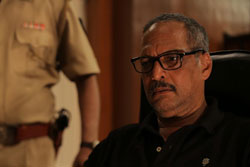
    Key Cast: Nana Patekar, Sanjeev Jaiswal

    Directed By: Ram Gopal Varma and Rommel Rodrigues

    Produced By: Parag Sanghvi


    Ram Gopal Varma did it again – aimed too high and crashed. He has his devotees who started the buzz that The Attacks of 26/11 would be his return to form, after hilarious misadvenures like Department. But RGV crashed and burned spectacularly again, with a film so insensitive and gruesome that it hurts to watch.


    Incidentally, only Karan Anshuman of the Mirror got it right – Nana Patekar plays Hassan Gafoor, not Rakesh Maria, and the commission for which he deposed was indeed the Pradhan Commission. Take a bow, Karan!


    Most critics stayed with 2 stars; even the usually generous Times of India could not manage a 3 on this one.


    Wrote Madhureeta Mukherjee, “It’s evidently researched; yet, we’re left as observers, watching the rampage rip the soul of the city. While the thought is poignant, the horror isn’t palpable throughout and the execution doesn’t cut as deep as the actual tragedy. No hard steel of emotion ripping into your gut stemming from cinematic brilliance.”


    Sanjukta Sharma of The Mint commented, “To take a surreal, unforgettably, mind-boggling event like the attacks on Mumbai on 26 November 2008, and turn it into a movie of dramatic power is, in one sense, pure exploitation and titillation. In another sense, it is a realization of the story’s limitless dramatic potential. Perhaps both these factors are at work in this film that begins as an act of remarkable ambition and ends as a wishy-washy and tacky work. Truth be told, it was impossible to not feel the surge of fellow feeling and soaring heart rates in the audience when Varma shows Kasab and his gang shooting down human beings with their AK-47s with impunity. Five years on, it is too soon, and Varma knows it. The immediate reaction on reliving it aside, the thin storyline lapses into banality.”


    Shubhra Gupta of the Indian Express correctly analyzed the voyeuristic tendency of the film. “Varma loses the advantage by slipping into familiar treads. People being killed, and limbs being turned into bloody colanders on screen need to be treated, in this kind of a film which demands respect because it claims veracity, with respect. Here the director sheds restraint, and becomes a voyeur, and turns us into voyeurs too. Adults being butchered are bad enough, but children, and babies? You do not show me multiple close-ups of tots about to be shot. No, no, no. And then we are treated to long treatises on religious edicts and what’s good and bad, which are just plain tedious. It had the potential to be both smart procedural, and spiffy action, but ’26/11′ sinks somewhere in the middle.


    Rajeev Masand of IBNLive was left cold too. “It’s not often that you go into a movie knowing exactly what to expect, but The Attacks of 26/11 is that rare exception. The plot and the end of this movie are no secret because the 2008 terrorist attacks on Mumbai, and the way the horror unfolded on the night of November 26, is still fresh in public memory. Unfortunately, in the hands of director Ramgopal Varma, these unprecedented events are portrayed in a one-dimensional, jingoistic, and almost hysterical tone. The Attacks of 26/11 often resembles a tacky B-movie. Even if there’s a voyeuristic fascination in observing how 10 men managed to lay siege to a city like Mumbai, this film is so lacking in genuine emotion and original perspective that despite the carnage, you’re hardly moved.”


    Karan Anshuman of Mumbai Mirror was scathing. “To begin with, the film is less about 26/11 and more a biopic on Ajmal Kasab’s life after he got onto the boat that brought him here. The screenplay completely skips two out of three days of the attack, which invalidates the idea that you’re watching a movie relevant to 26/11 and is relentlessly focused on Kasab. Instead of giving us valiant moments of the real champions of the hour, the NSG, revealing to us how they save the day and take out eight of ten terrorists one at a time, we’re limited to witnessing Kasab’s participation, capture, and conviction for his role in the massacre. A biopic would’ve been fine if that was RGV’s intention to begin with and if he visually delved into Kasab’s past and reasons. But that’s not what the film is about. In fact, so much more information has been unearthed since, but the writers ignore all of it.”


    Mumbai-based critics could, perhaps, not delink emotions from the film – they had experienced what the city and its people went through. How does a writer in another city see it? Sudhish Kamath of The Hindu writes, “The Attacks of 26/11 is probably the most definitive modern Ram Gopal Varma film. It’s the epitome of inconsistency. Of crassness. Of insensitivity. Of horror. Of atheism. Of audacity. Of voyeurism. And it also has momentary flashes of brilliance. And understatement. The good, the bad and the ugly – all at the same time…. You could argue that the filmmaker wants you to see this as a horror film (listen to the score for proof) because there is simply no other explanation for what happened – a bunch of men on a killing spree, staging one massacre after another in crowded landmarks of the city, leaving the police and public helpless. Only that this helplessness is shown with an almost sadistic glee and gratuitous detail that the terrorists may actually be pleased with this depiction.”

     

  • One Big Idea by Anil Machado: Being different is not niche, it’s purely ‘Mass’

    By Anil Machado, Associate Vice President – National Programming, Radio One


    It’s the age of customized content. Everyone accepts this in the online space – using data available online, users are profiled to the littlest detail and then offered content. The concept of customized content has existed from as long as radio has been around. The industry however, has clearly forgotten the basics of radio; it’s a one to one medium and not one to one billion medium.


    Audiences differ from place to place. What works in Mumbai rarely works in any other city. The one big idea that is the game changer is differentiated products. Keeping the audience in mind, we must offer differentiation in the product, not only from a network point of view, but from city to city.


    Advertisers look for a vehicle that has a well-defined audience irrespective of the data from any research software. There is a huge network of players fighting for the largest share of the listener pie, or the bottom of the pyramid. There are five or more large media players fighting for 60% of the pyramid. The middle part of the pyramid has over 30% of well defined listeners and the only way to target them is by being different. Our research indicated that listeners were bored with what they heard on radio and hence we decided to take the plunge. While everyone in Bangalore had moved into the Kannada space, we took our station into Bollywood, and we saw tremendous success.


    Keeping ‘being different’ in mind, we decided to redefine the radio industry in India. Our Mumbai and Delhi stations went International; in Kolkata and Ahmedabad we played Bollywood retro and in Chennai we became a 100% listener request station.


    We look back at Bangalore as the place where it all began. Now everyone looks at us as the stations, that has a well-defined listenership and has achieved success by offering a product that is different, yet relevant to our audience. Our content is unique, yet appealing to a large share of the listeners. Mind you, being different is not “niche” it’s purely “Mass — with well-defined listeners.”