Category: BLOGS

  • One Big Idea by Anisha Motwani: ‘Research’ is the word

    By Anisha Motwani, Director and Chief Marketing Officer, Max Life Insurance Co. Ltd.


    It is necessary that the broadcasters and advertisers work in tandem to create something that will steer the big game changer for FM Radio. The most important measure that will leapfrog the business of Radio if carefully thought and implemented is research.


    “Research” is the word.

    Research – To prove that the money spent is spent wisely. The stakeholders – Broadcasters, Advertisers and the Ministry should come together to create a fool-proof research system that will determine the rupee spent and listeners reached out to effectively.


    Can we create a home grown research model with assistance from the best minds rather than waiting for the Western influence? Research can drive satisfaction, can drive confidence – which is at a low, can drive tangibility, can drive acceptance of the medium among regular and new advertisers.


    Research is the dimension which needs focus from all the stakeholders, an aspect which is currently missing. These are some of the reasons on why it is important for this medium to grow and be a game changer in the future.


    Accordingly, appropriate steps could be taken to shape the overall landscape of this growing medium.


  • Anil Thakraney: Be a cool feminist

    By Anil Thakraney


    While one is all for feminism, I am allergic to militant feminists, the sort who are convinced that every single male walking the earth is a bloody misogynist, and the creep deserves to be immediately annihilated. Obviously this kind of thinking is counterproductive. And what worries me is this, and I state this from firsthand experience, having spent a number of years in the world of media and advertising: More and more young women seem to be growing into the militant mould in the world of communication.


    How did this come to happen? Well, if the mother hen, so to speak, is virulently anti-male, the chicks, so to speak, who work under her, are sure to emulate the example. And this leads to the mushrooming of hard-edged feminists in media companies and advertising agencies. Let me tell you this very candidly: There’s nothing more off-putting and repulsive than a woman who’s convinced of male inferiority, and whose mission in life is to go one up on us men.


    On this Women’s Day, here’s a thought for my fairer friends: The reason women make for better team leaders is because of the feminine values they bring to the table, apart from the obvious gender-neutral leadership skills. She can be tough and compassionate at the same time. She can be extremely focused yet sensitive to her people’s needs. She brings in a great deal of commitment to the job, and yet gives poor performers in her team a long rope. This makes for a deadly combination of professionalism and humanity, and this is why I strongly believe the CEO ratio, which is currently skewed in the favour of men, will swing the other way in the coming decades. Yes, women make for better leaders, that I am entirely sure about.


    However, the militant sort fritter away their natural advantages by trying to constantly score over men, by being intolerant of any criticism of feminism, and by being dogmatic in their set beliefs. And ironically, when they do this, they make the same mistakes we men have been making for centuries. In fact, they become exactly like us men!


    As the Indian corporate world stands on the cusp of change, I urge my beautiful colleagues to be proud feminists. But to not lose their innate feminism in the process. That would go directly against what they are trying to achieve. Be strong. Be sexy. Be cool. Be kind. And we cave men will love and respect you even more.


    Happy Women’s Day!


  • Ranjona Banerji: Tokenism at its worst

    By Ranjona Banerji


    International Women’s Day is upon us once again and as ever females are meant to be fooled into thinking that this day – March 8 – is about us. We are so lucky – governments have come up with special schemes for us, newspapers and now television are full of inspiring stories about women who have done extraordinary things and so many advertisements telling us that today is the right day to buy diamonds. I suspect that tomorrow is also the right day to buy diamonds as far as the diamond seller is concerned but for the rest, tomorrow we can get back to business as usual and put the inspiring women stories which could not be used into the folder for next year.


    Do I sound nasty and bitter? The short answer: yes. This tokenism and these sweet little gestures around March 8 began to ring hollow quite a few years ago. I am grateful at least that this year no newspaper that I read has done the most token nod of all to women’s day: pulled a number of females out of features or wherever, patronisingly patted them on the head and made them editors for the day. On March 8 itself, they would have climbed down into their usual roles and write inspiring stories about how to suck a man’s toes in 16 different ways.


    The gangrape in New Delhi on December 16, 2012 revealed to us just how shockingly patriarchal and anti-women our society was. In those days, I must concede, the media did a splendid job in focusing on women, women’s rights and the underlying prejudices in India. This year’s Women’s Day had plenty of scope to take that narrative further. Instead, the only piece I found worth reading was Mrinal Pande in The Indian Express trying to kill the myth of feminists and bra-burning.


    **


    There are a couple of things the media could do within to redress gender discrimination – starting with their newsrooms. Stop restricting women to features and women’s sections. And remove that glass ceiling that exists in many – though not all – newsrooms. I myself have benefitted from gender equality in some though not all jobs but there’s a long way to go, baby. How many women editors-in-chief do we have in Indian newspapers? All right, next question! News channels, it must be admitted, have done better than newspapers in India.


    The other immediate task for the media should be to introduce workable and sensible sexual harassment laws in the work place and provide a suitable climate for people to complain, be heard and not be discriminated against later. While pointing fingers at everyone else’s shortcomings is an essential journalistic principle, a few penetrating glances at the media’s own misdemeanours would not come amiss.


    **


    Having said all that, here’s this. In just under 30 years of working in the media in India, the worst sexual discrimination I have experienced or seen was a World Association of Newspapers conference in Vienna in the 1990s. The theme was how editors and marketers could and could not work together. Raju Ramchandani was the publisher of Sunday Mid-day and I was editing Sunday Mid-Day at the time so we were sent as a marketer-editor team. Of the 150-odd delegates, over 95 per cent were white men from European newspapers. Raju and I were the only females in senior marketing and editorial positions. Most of the men initially treated us with great scepticism as if there is no way we could have achieved these posts through non-nefarious means. The only other women there were a senior PR person, a female reporter who had accompanied her male editor and a secretary.


    I could add that there were also about six people of “colour”, apart from us, two men from Hong Kong and two men from Africa. The media as far as WAN representatives were concerned was evidently the domain of the White Man. Have things changed? I would be interested to know.


    **


    Prasoon Joshi of McCann Erickson has clearly told us that advertising cannot do anything but reflect what’s in society so no change can be expected from them, regardless of how many poems he writes or how much he weeps about the plight of women on public platforms. At least Josy Paul of BBDO has taken the bit within his teeth and his agency has come up with the “Soldiers for Women” campaign for Gillette.


    **


    So buy your diamonds, give your mother a call (though you could do that on Mother’s Day if you like), get some pink life insurance and enjoy the pap movies that will be shown on TV.


  • Reviewing the Reviews: Saheb Biwi Aur Gangster Returns

    Saheb Biwi Aur Gangster Returns

    Key Cast: Jimmy Sheirgill, Mahie Gill, Irrfan Khan, Soha Ali Khan

    Directed By: Tigmanshu Dhulia

    Written By: Tigmanshu Dhulia, Sanjay Chauhan

    Produced By: Tigmanshu Dhulia, Rahul Mittra, Nitin Tej Ahuja


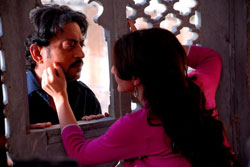
    From wild 4-star enthusiasm to mild 3-star disappointment, reviews of Saheb Biwi Aur Gangster Returns seem to have been more on the positive side. Almost all critics found it losing steam mid-way, deplored the item number, but admired the dialogue and adored Irrfan.


    Tigmanshu Dhulia is an interesting, original filmaker, who came into his own mid-career with Paan Singh Tomar and the original Saheb Biwi Aur Gangster, which was a clever retake on the Guru Dutt-Abrar Alvi classic. Part two is all his own


    Anupama Chopra of Hindustan Times wrote, “But you can have too much of a good thing. Saheb Biwi aur Gangster Returns just becomes more and more overwrought and, eventually, unconvincing. The plot contortions stop feeling organic and start to feel forced, as though Tigmanshu were simply moving pawns on a chessboard. The film’s length starts to weigh on you; an unnecessary item song doesn’t help. By the end, I was no longer enthralled by the many twists. I was exhausted. Which is a shame, because there is much to be enjoyed here.”


    Rajeev Masand of IBNLive commented, “With Saheb Biwi Aur Gangster Returns, director Tigmanshu Dhulia delivers another earthy cocktail of power games, bedroom politics, and palace intrigue. Only the stakes are higher in this sequel; the love is tainted from the start, and there’s even vengeance thrown in for good measure. Indeed the film is gripping for the most part, if you’re willing to overlook some convoluted stretches.”


    Raja Sen of rediff.com gushed, “The new film is much sharper, more assured, and, unencumbered by a classic to stand beside, a far better film. Like the crooners aware of which guests to keep away from the tipple and the aides who wait till the master’s lips touch drink before letting their own, it is clear Tigmanshu Dhulia knows what he’s doing. It has, in fact, never been clearer. Which itself is worth drinking to. Besides, how could one resist a film where even drawers opening and closing sound like guns being cocked?”


    Karan Anshuman of The Mumbai Mirror was very impressed too: “Sequels. Always tricky. Rare is the second instalment that surpasses the original. And Bollywood has a particularly dismal record. So expectations were strictly under check for Tigmanshu Dhulia’s grammatically suspect Saheb Biwi aur Gangster Returns. But it’s the director who returns with aplomb. Keeping much of the original’s spirit intact, even surpassing it in many ways. It is not critical to recall or have seen the prequel. The story does continue, but the reward for a viewer who encounters these characters and the setting for the first time will perhaps be even greater.”


    Madhureeta Mukherjee of the Times of India commented, “Tigmanshu Dhulia has created an intriguing world with rajas fighting for their kingship; politicians watching porn, gangsters sleeping with the enemy, and women unapologetic about adultery in the ballroom and bedroom. The setting and story is vibrant, dramatic, dark and humourous at the same time. Once again, he scores with his characters – intelligently sketched, with dichotomous layers – dark, brooding, loving and lustful. The editing and the screenplay in the second half lose steam, and the item number (courtesy Mughda Godse) punctures the pace. The climax passively surrenders without the satiating feel of bittersweet revenge.”


    Saibal Chatterjee found much to commend it for. “Flush with vibrant colours and cinematic flourishes, Saheb Biwi Aur Gangster Returns is a riveting and buoyant film that, despite being nearly two and a half hours long, manages to keep the viewer interested in the strange, strange ways of men and women bent upon pressing the self-destruct button. The dramatic narrative core of the film is suffused with a delirious quality that is both delightful and disorienting. The film has many wonderfully written sequences followed by stray moments that aren’t that convincing. But the dialogues, penned by director and scriptwriter Tigmanshu Dhulia himself, are never less than sparkling.”


    Shubhra Gupta quite rightly pointed out, “The ‘return’ is a better film, but it stops short of being excellent. The smooth build-up in the first half leads to a confused, too-crowded second, which lets the film, and us, down. But while the going is good, it is all most gripping.”

     

  • Anil Thakraney: Little Bitti Madness

    By Anil Thakraney


    I was travelling all of last week, and therefore I caught up with news television in small doses. And the comedy circus I saw over convicted Odisha rapist Bitti Mohanty’s arrest left me guffawing. Times Now was busy trying to grab credit for the arrest, as were, I suspect, a few other channels. Perhaps that’s the reason I spotted a faint smile on the rapist’s face, I can think of no other reason for this, the chap faces a hard time in prison.


    Two messages I want to send to editors of news channels. One, the media had absolutely no role to play in young Mohanty’s capture. From what I could gather, the Kerala police received a tip-off from an unknown source, they investigated and found the absconder. So then why were some channels gloating? It completely beats me. If you have been raising the issue of the rapist’s disappearance on your silly chat shows, and if that had put pressure on the security agencies across the nation to launch a desperate manhunt, then perhaps you have some reason to gloat. How can you take credit over a chance capture? It’s beyond belief.


    In fact, I would say the man’s sudden disappearance into thin air presented an opportunity for the media to conduct a large-scale, nation-wide investigative story. This was not done for seven long years. All that the channels did was indulge in a lazy rant, so why all the chest-thumping now? Is Times Now expecting a Pulitzer for this ‘grand success’? All I can do is snigger away.


    The other thing I wish to say to the editors is this: Even if you DID conduct a huge investigative campaign which led to the discovery of the vanished man, it’s extremely distasteful to gloat on air. Shows you in a very poor light. Confident people and brands don’t pat their own backs, they wait/hope for others to do it for them. Hope my colleagues in the television media remember this truth when they actually contribute in a crime expose. In Mohanty’s case, they were caught napping. Gloating over this one is a ROFL moment for their viewers.


    ***


    PS: A good example of how to make technology get out of its cold environs, and come alive with fun and games. At least in the advertising. Dell says you have to create an alternate universe. I say you need fertile imagination. After all, what is high tech minus imagination? Must-watch for creatives who get bogged down by briefs on hardware and software products/services.

    [youtube width=”400″ height=”220″]http://www.youtube.com/watch?v=qBETjUv0iXk[/youtube]


  • One Big Idea by Veena Gidwani: Working together for a robust long-term industry growth

    By Veena Gidwani, Independent Strategic Consultant, (Former CEO of Madison PR)

     

    Public Relations, which enables organisations to communicate effectively with all their stakeholders, has over the past decade evolved from largely being media relations to a strategic communication discipline. Today, PR is vital to the success of any brand or organisation, because of its intrinsic credibility, creativity that can be brought in and the ability to strategically synergise it with other communication routes like advertising, digital communication, below the line etc.


    However, in spite of making a huge contribution to building brands, the PR industry continues to grapple with lack of recognition, low fees and inadequate trained talent, all of which need to be addressed for the industry to take the next big leap. In my view, as a first step the key players i.e. the top 30 to 40 PR consultancies /agencies should come together on a common platform and agree to lay down and abide by a common set of standards in the areas of servicing, pitching, measurement of PR delivery, fees, credit policy etc. Clients/Corporates can also be involved in the process. The advertising industry did this many, many years ago with the AAAI. The PRCAI (Public Relations Consultants of India) has been trying to work on some of these issues, but the whole effort needs wider participation and a determination from agency heads to make it happen.


    This will make clients be willing to pay fees that are fairly linked to scope of work and dissuade agencies from the current practice of undercutting each other. Also clients who have unfairly held up fees of an incumbent agency, would not get the interest of any other member agency. Once agencies get better revenues and improve their profitability, they will be able to invest more in their people. The other areas that this platform/body can be involved with are showcasing the industry’s performance through yearly awards for excellence and contributing to modernising the syllabus of PR colleges and institutes, in tune with the changing industry needs. Once corporates/clients experience the growing professionalism across the industry, they will treat PR agencies as strategic partners who play a crucial role in long term image building for them.


    With more and more Indian brands going global, more global brands establishing a presence in India and more Indian entrepreneurs servicing the growing consumer aspirations with innovative offerings, managing corporate and brand reputation will continue to be a major need for corporates… the need for strategic PR will only keep growing. It’s a good time for the industry to come together.


  • One Big Idea by Shashi Sinha: Cross-leveraging digital and print is essential

    By Shashi Sinha, CEO, IPG Mediabrands India & CEO, Lodestar UM

     

    Nowadays, everyone is talking about convergence taking place between the mediums of print and digital, but is it really happening? Lots of publications today do have a digital existence but newspapers and digital tend to work as parallel streams and therefore there is no real convergence that can be seen.


    For instance, leading publications like The Times of India and Hindustan Times have major presence in the digital space, but as different entities. Traffic to one is not really facilitating traffic to the other – cross-leveraging is not there. Globally, the collaboration between online and newspapers is big, and that is the future.


    Indian publications need to act towards this now. More so the regional press. The need of the hour is for digital and print to be inter-related and inter-dependent. While everyone seems to have understood the power of digital they have done so while treating it as a separate entity compared to the others.


  • One Big Idea by Suraj Nambiar

    By Suraj Nambiar, Partner, Digital, Mindshare

     

    One big idea that will be a game-changer is when the digital strategist truly embraces brand communications planning. Currently we still look at digital as a different medium that will deliver some magical result as compared to the other mediums. This starts from the briefing stage where most brands will have a different digital brief tagged along with the mainline. True integrated planning will start with one brief for all mediums and the strategy will merge different communication touchpoints to deliver the brand objective.


    Today, users are evolved in consuming content, and they look at the web either on their laptop, PC, pad or smartphone as just another screen. Content has moved from airing to sharing and these touchpoints that have the capability to engage audience through interactivity also have the power to deliver a brand story just like TV or print. It is up to the strategist to frame it and make the brand promise social by design.


    With increase speeds and merging of technology and screens it is imperative that clients and agencies will have to look at communications planning without a lens to meet the brand objective.


  • Debrief: Tata Tea: Good use of Women’s Day

    By Anil Thakraney


    Tata Tea, the brand that favours public service advertising, did a special number for Women’s Day. They roped in Shah Rukh Khan, I guess because of his popular persona of a ‘ladies man’. Well, at least they had some logic going, usually SRK is used mindlessly in all ads.


    So this lady journo has gone to interview Shah Rukh on Women’s Day. The hero belts out the usual stuff about the need for women to stay ahead of us ghastly men in all walks of life. The reporter stumps him with a deadly question (wow, that’s unusual for TV journos!). Why does the heroine’s name appear after the hero’s name in the movie credit titles? An unnerved SRK reaches for his cup of Tata Tea to clear his thoughts, though am sure he would rather have a smoke. And then our gallant hero makes a promise that from here on the lady actor’s name will appear ahead of his. Change made. Small change, and that’s the message from Tata Tea: Make small changes.


    It’s a good ad. For two reasons. One, we are talking real change out here, unlike the gassing that usually goes on over women’s issues. Two, for a change, SRK has been used correctly in an advertisement. He plays himself, and this interaction with a journo can easily be happening on the lawns of Mannat. Therefore the communication is credible. And credibility is a rarity in SRK ads. High marks just for that.


    However, what the star promises isn’t a small change, it’s actually a pappu change. He should have been compelled to promise that actresses in his movies will now get paid as much as he does. Now that’s the equality we want! Think it’s time for me to interview Mr Ladies Man. 🙂


    Rating: (On a scale of 1-5): 3.5. SRK used well. Good, topical idea.


  • One Big Idea by Joydip Kapadia: Digitization, a game changer!

    By Joydip Kapadia, Executive Vice President, What’s-On-India
     

    “I hate television. I hate it as much as I hate peanuts. But I can’t stop eating peanuts.”

    – Orson Welles


    Orson Welles said it right; you just cannot stop watching television, be it analogue or digital. Even TV’s inventor, Philo T Farnsworth, would never have imagined what his invention would have to go through in this age.


    Television in India is at a threshold of change in the way content will be delivered, searched, consumed and measured. This will make all the stakeholders to look and understand television consumption differently that itself is going to be a game-changer.


    A simple media research design will have to be now looked at very differently for a simple reason that a lot of data will be available readily at the click of a button which in earlier days was collected by foot soldiers going house to house.


    Digital makes automation a lot easier. There is nothing to stop operators from providing STBs that can track which household is watching what on television, and the same box can also allow consumers to surf the web.


    Soon there will be smart devices that will enable viewers to search and select content they want to watch, and use the same device to go to that content on their TV sets without bothering what channel it is aired on.


    And what will stop the consumer from watching content on that same smart device? And can the device enable viewers to post a comment about the content on social media using the same device? The options are never-ending.


    All these connected devices will be strong sources of information to understand consumption habits. At a conservative estimate, the data and information in the TV business is set to increase by almost 75-100 times over the next three years.


  • Ranjona Banerji: Gang-rape accused Ram Singh’s “mysterious” death up-ends TV news

    By Ranjona Banerji


    The death of one of the accused in the Delhi December 16 gang-rape case sent news channels into a frenzy. Ram Singh was found hanging in his cell on Monday morning and it is not yet clear whether it is murder or suicide. The concern of news channels for Ram Singh’s well-being in jail is both heartening from a presumption of innocence point of view and confusing from any remotely logical or sensible point of view. After the gang-rape, viewers may remember, most news channels seemed quite willing to bypass a trial altogether and set up a gallows in their TV studios. On Monday it seemed as if TV channels were feeling the pain of Singh’s weeping parents – shown to us again and again – as they outraged over the “mysterious” death of Singh.


    Custodial deaths are indeed a shame and they happen all over India all the time. Often – as in the Khwaja Yunus case in Maharashtra – the police themselves are responsible. I suppose one must now feel grateful that TV journalists have discovered this shocking occurrence and perhaps all their self-appointed kangaroo courts will help make a difference to the criminal justice system in India. I have to agree with Hindustan Times journalist Madhavan Narayan here as he bemoaned this “public prosecutor” style of journalism on twitter.


    Most newspapers led with the story but also gave readers perspective. However the little box on the front page of The Times of India was intriguing to say the least – it told us how the international media also led with this story on Monday. I could not tell whether the paper was rejoicing at how the world was paying attention to us (yaaay!!!) or feeling ashamed that this sort of story was getting international attention (boo hoo…).


    **


    If indeed Times Now is responsible for getting rape convict Bitti Mohanty re-arrested after he jumped parole in 2006, well done to them. This is a story worthy of plenty of journalistic effort and seems like a movie script or an episode of a TV crime serial. Orissa (now Odisha) director general of police’s son convicted for raping a German friend is convicted by a Jaipur court and sentenced to seven years in prison. He gets permission to go home to meet his ailing mother and then vanishes. His family say they have no idea where he is. He turns up seven years later working in a bank in Kerala under an assumed name, after an anonymous phone call tipped off his employers and the authorities.


    When you consider the fact the Mohanty’s father was an influential and powerful man at the time, it is not hard to imagine just how family and friends managed to hide and protect “Bitti”. Just another day in India where the system is easily manipulated by those who have access and know-how? If the coverage of the case by Times Now indeed helped to nab Mohanty again, nothing like it!


    **


    Well done Mid-day for remembering that March 12 is the anniversary of the Mumbai bomb blasts of 1993. For those of us who were there, it seems like yesterday and just for the record, the blasts followed the riots.


    **


    The sacking of four Australian cricketers just before the third Test against India at Mohali was the subject of much hilarity in twitter. Here’s a compilation of all the tweets of the day by espncricinfo: http://www.espncricinfo.com/page2/content/story/624547.html


  • Anil Thakraney: The Ram Singh conspiracies

    By Anil Thakraney


    And so, as you would expect, the media (mass and social) is buzzing with conspiracy theories over rapist-cum-killer Ram Singh’s death. Every single bizarre theory is being propounded, but no one is willing to wait for the inquiry committee to do its job. Why? Well, because conspiracies make for juicy gossip sessions. No one, not even the Tweeters, is willing to even accept the possibility that Singh may have simply killed himself in the dead of the night.


    Think about this: The whole world is baying for your blood, you have been identified by the key witness, there’s no chance in hell of getting out of this mess. Every other day you are being forced to eat shit, or being sodomised by fellow inmates. And the jail staffers aren’t really keen on stopping the torture, they are, in fact, delighted at the free entertainment. Also, if it took them four long years to get rid of a hardcore terrorist like Kasab, you may have to live in this hell-hole for a much longer time. So what’s the best option? Get the bloody f*&k out. I or you would do the same thing in these circumstances; we would find crazy methods to eliminate ourselves. I can imagine Singh convincing himself every other day with this compelling logic: Katle bhaiyya, isi mein samajhdaari hai.


    In other words, it’s entirely possible the undertrial invented an ingenuous method to commit suicide. Therefore instead of indulging in wild conspiracy theories, the media should spend all its time and energy in questioning the Tihar officials for their gross negligence. Here was a man dying to kill himself, they ought to have known.


    One other thing: Once again the so-called human rights activists are out of the woodwork. All vociferously defending the rights of the scumbag called Ram Singh. It’s funny how these guys always rise for the rights of criminals, but never for the victims and their families. If you suffer from a low blood pressure problem, watch these folks in action. You’ll heal without any medical help.


    ***


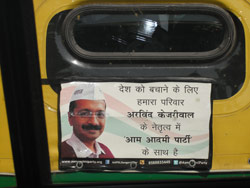
    PS: Spotted Arvind Kejriwal smiling at me from the back of a Delhi auto rickshaw. Poor man, guess he needs to find low cost avenues to fund his party’s promotions. Kejriwal certainly won’t be able to afford a full page ad in the TOI. Anyway, do hope the ‘aam aadmi leader’, while buying space from the rick drivers, convinces them to stop denying their aam aadmi passengers. After all, it is these dolts who, with their refusal to ply, triggered the horrific Delhi gang rape and murder.


    Â