Category: BLOGS

  • The Anchor: 10 TAPROOT! TVCs that you want to watch over and over again

    By A N Chorrea


    [youtube width=”400″ height=”220″]http://www.youtube.com/watch?v=nIuGHTAwi1g[/youtube] Airtel: Jo Tera Hai Wo Mera Hai


    The new Airtel ad may seem a little inspired from the original and hence not as refreshing, but it has caught on with the youth, and guess that’s what matters.

    [youtube width=”400″ height=”220″]http://www.youtube.com/watch?v=pIAKKtlyi6g[/youtube] Fox Movies: Subtitles


    Okay, it may take a second for you to get it, but when you do, you can’t help wanting to watch it over and over again.

    [youtube width=”400″ height=”220″]http://www.youtube.com/watch?v=v2FviMZkX5s[/youtube] Nirma Ambulance (New)


    Woman power at its best… in fact it may want you to sock those men where it hurts most. (Pssst: now would you really do what the women did if you were in your finery?)

    [youtube width=”400″ height=”220″]http://www.youtube.com/watch?v=xeg27rv__04[/youtube] A Day in the Life of India – The Great Indian Circus (The Times of India)


    It’s part of the Day in the Life of India series… nicely crafted.

    [youtube width=”400″ height=”220″]http://www.youtube.com/watch?v=WWq3101hotA[/youtube] Mountain Dew – Dam


    How did he do it!? We bet every time you saw it, you had a new theory on how the young man would’ve overcome fear.

    [youtube width=”400″ height=”220″]http://www.youtube.com/watch?v=rVb01vfbVEw[/youtube] Mumbai Mirror


    Award-winning ad… need we say more.

    [youtube width=”400″ height=”220″]http://www.youtube.com/watch?v=kxz4WvGG7uA[/youtube] TOI Chennai – Wake up to The Times of India


    This is the ad that woke up The Hindu… guess that’s what matters.

    [youtube width=”400″ height=”220″]http://www.youtube.com/watch?v=hZIFj3VF9KU[/youtube] Pepsi World Cup Cricket 2011 promos


    These were fun, weren’t they… remember the Helicopter Shot?

    [youtube width=”400″ height=”220″]http://www.youtube.com/watch?v=dz6YylorUGM[/youtube] Aman Ki Asha


    Tears roll down our eyes every time we see this.

    [youtube width=”400″ height=”220″]http://www.youtube.com/watch?v=P9BlCyTD-sw[/youtube] Airtel – Har Ek Friend Zaroori Hota Hai


    Huge hit. Earned cult status as you don’t mind seeing it over and over again.

  • Debrief: Cadbury Shots: Good shot!

    By Anil Thakraney


    Cadbury has launched another little choc bomb called Shots. And keeping in line with their mother positioning of ‘Kuchh meetha ho jaaye’, this one says: Mann mein ladoo phoota.


    The commercial is great fun, and that’s the way it should be for a low-cost candy. It features Bollywood director Anurag Kashyap seated inside a restaurant. He’s screaming over the phone at his casting director who isn’t able to locate the faces Kashyap wants for his new flick. As luck would turn out, the girls he describes are seated at the adjoining table. And of course, the end result is ladoos (Shots) phooting all around.


    [youtube width=”400″ height=”220″]http://www.youtube.com/watch?v=gzndy0hWa1c[/youtube]

    Good stuff. The idea is rooted in Indian culture; many desi youngsters would kill for a break in them movies, and this makes the communication rock. Mann mein ladoo phoota is again a very colloquial, oft-used phrase, and this will establish immediate connect. The treatment is very cute, you would want to see this ad again. And the best part is that the brand doesn’t get lost in all this drama, it plays an intrinsic part in the situation.


    I have just one little doubt: While Anurag Kashyap does appear a lot inside Page 3 pages these days, how many people in India can actually recognize him? And Cadbury Shots is a mass brand. In which case, there was no need really to pay big bucks to a celebrity, a regular bloke would have been good enough. The power totally lies in the idea in this TVC.


    Rating: (On a scale of 1 to 5): 3.5. Entertaining with good brand connect.


  • The Anchor: 5 musts that will give government-led channels an edge over commercial counterparts

    By Rajiv Mishra


    #1 Continue providing strong alternatives to commercial channels:

    Broadcasters funded out of the public purse have historically formed a vital component of the broadcasting sector in most countries. The rationale for these broadcasters, which can offer alternative programming to that provided by the commercial sector, remains strong. Some countries support public service broadcasting more enthusiastically where the public service broadcasters (PSBs) are seen as more informal, modern, and informative than before, without having lost their reputation for quality.


    #2 Encourage public sector broadcasting partnership with government funded telecom companies:

    Broadcasting is changing. Rarely a day goes by without more news of an innovative way to access audiovisual content over the internet, mobile phone networks, hand held devices or other new media. In television, meanwhile, we have moved rapidly from one network to hundreds of competing channels, and will soon move to a digital only television environment.  It is with the development of new media platforms that this conflict has deepened. We no longer have an environment with a small number of providers. The internet and digital television represent near limitless forums for broadcasting content, whether news, entertainment, sport, movie, music, live events or anything else, and competition for audiences is much more intense. The benefit to the public service broadcasting in India is that government funded telecom companies is having the pan India presence and PSB’s can join hand for seamless delivery of content in triple play environment as well.


    #3 Public sector broadcasters can experiment and provide alternate programming more often:

    The vast library and archival footage are also a major strength of PSB’s. Further the private companies face much tougher financial constraints. One may think, public service broadcasting has no role in the contemporary media and may argue that state funded broadcasters should not replicate services that the market can already provide. This weakness is actually the strength of the public service broadcasters as they can experiment and provide alternative programming frequently in very innovative manner.


    #4 Encourage private-public sector partnership in broadcasting:

    The private and public sector have co-existed peacefully since the emergence of modern broadcasting, even providing similar services. There seems no reason why this should not continue in an expanded media environment. One has to suspect that the repeated emphasis on the newness of the new media suggesting that wholly reformed approaches to content are needed is perhaps a little exaggerated.


    #5 Public sector broadcasting must develop a new relationship with the audience:

    The long-term future of public service broadcasting in the context of a rapidly changing media landscape and with intense competition between private players is to remain extremely focused on long term goal to strengthen our economy, our culture and our democracy. The public service broadcasting must in the future both retain its basic characteristics and change very significantly. Public service broadcasting can and should aim to develop a new relationship with their audiences, this will be vital as expectations as well as the technology are fundamentally changing.


    Rajiv Mishra is the CEO of Lok Sabha TV and anchors a weekly show – ‘Special Guest’


  • Ranjona Banerji: Why focus on Asaram Bapu’s copter crash?

    By Ranjona Banerji


    On the one hand, TV did as good a job as it could in its reporting on the twin verdicts on Wednesday – confirmation of terrorists Ajmal Kasab’s death sentence and 32 people, including a former minister and prominent Bajrang Dal leader, found guilty in the Naroda Patiya massacre during the Gujarat riots.


    However, being TV, they are easily distracted. The continued focus on the CAG report and coal allocations is understandable as is the disruption of Parliament by the BJP. But was it necessary to focus quite so much on Asaram Bapu’s helicopter crash considering injuries were minor? For some reason, the acquittal by the Supreme Court of two suspects in the November 2008 terror case was overlooked by TV. Kasab’s guilt was self-evident – he was seen by millions on TV and captured on film by newspaper photographers. But the other two were caught later by the Mumbai police and have been acquitted by three courts for insufficient evidence. The first time they were acquitted, the inefficiency of the Mumbai police was pointed to by former IPS officer and now activist lawyer YP Singh to a young anchor on NDTV, she was quite upset. She asked shocked, “How can you say that? They work so hard?” It was Singh’s turn to be shocked as he was stunned into silence.


    **


    By Thursday, the news cycle for television had changed. Karan Thapar on The Last Word on CNN-IBN was worried about whether NAM was still relevant and Sagorika Ghose also on CNN-IBN was asking about education and sports after St Stephen’s College in Delhi did not allow India’s Under-19 cricket captain Unmukt Chand to sit for his exams.
    But the widest search for a subject to save India from itself came from Arnab Goswami of Times Now. He wanted to know why some MLAs from the Karnataka Assembly were travelling abroad on study tours when Karnataka was in a drought situation. The first rule of responsible journalism: first report extensively and comprehensively on the drought situation. After that, look for sensational subjects to shore up your viewership.


    **


    Newspapers remained more circumspect and traditional and they reported on the two judgments, analysed them and wrote editorials. Most slammed the Modi government in Gujarat, all accepted that the Kasab verdict was inevitable and there was comprehensive explanation over death row procedures. Some debate over capital punishment ensued as well. Nothing untoward or unusual in the papers.


    **


    However it was unusual that television did not go to town on Narendra Modi’s comments that Gujarat’s malnutrition figures are high because beauty-conscious girls don’t eat enough. Now that would have been an exciting debate to watch on Times Now. Really, India wants to know.


  • The Anchor: 5 old-school rules for today’s writers

    By Vidya Heble


    #1 Your story got laughed at.

    You wrote that fancy intro – and the editor read it out, mockingly, to the rest of the newsroom staff who chuckled while you stood there red-faced. This is exactly what happened to me, and I remember which story it was as well as the lavender prose that I thought made a great opening paragraph. Lesson: There’s a difference between lyrical and laughable, and the quicker you learn it, the better.


    #2 Your story got mangled.

    Maybe your language wasn’t clear. Did you try to write fancy? If so, the sub-editor didn’t get it. The end result – your story ends up very different from what it was supposed to be. Lesson: Write simply and clearly.


    #3 Your story died.

    There were times when your carefully composed prose just vanished. Was there a black hole into which it had gone? Yes, it was called the news editor’s dustbin, and if you asked why that had happened, you got sat down for a lecture, if you were lucky, or more likely ridicule. Lesson: If you want it to survive, write it well.


    #4 Your big story of the day was an obituary.

    Newbies were taught the hard way, and the deceptively simple obituary or death notice was among the starting courses. You had to get it right, and if you didn’t, you got – yes, ridiculed. Lesson: No job is too small, no story too simple.


    #5 You rose the hard way.

    You worked your story well, you wrote it well, you cooperated with the editing desk to make it look good. And when it shone, you got that boost. Not like today where one rises at the job almost as easily and quickly as one rises in the elevator. (By “pushing the right buttons”? Wicked.) Lesson: It may seem as if hard work doesn’t pay, but you get a reward that the easy risers don’t.


    Vidya Heble is Deputy Editor at MXMIndia.com.


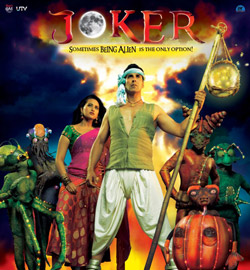
  • Reviewing the Reviews: Joker

    Joker

    Key Cast: Akshay Kumar, Sonakshi Sinha

    Written and Directed By: Shirish Kunder

    Produced By: Farah Khan, Akshay Kumar


    Joker jokes had started making the rounds on the net when the first promos came out. By then Shirish Kunder’s stock had already hit a low in Bollywood (for reasons other than his filmmaking) and it was as if people wanted to hate the film… and to make it easier, Kunder delivered a custom-made dud of epic proportions. No wonder everybody connected with the film deserted the sinking (space)ship. It’s an embarrassment the makers won’t be allowed to forget in a hurry.


    It got panned universally with one or 1.5 star ratings. Karan Anshuman of Mumbai Mirror was one of the few relatively kind ones with 2.5 stars. He wrote, with uncharacteristic generosity . “I’ll give credit to Kunder for attempting to execute new (strictly relative to a mass Indian audience) ideas in a commercial set up. I found his last directorial venture Jaan-e-Mann good fun as well for its experiment in the mainstream. Unfortunately it didn’t work at the BO, and now I wonder about Joker. Let’s be perfectly clear that Joker is not for you if you’re over 12. This is a kids’ film and must be considered, ie reviewed, as one. That it has not been promoted as a children’s movie is confounding because surely the producers did not mean for it to be seen and enjoyed by thinking adults. Once you accept this, at a breezy 105 minutes, some sense can be made of this Joker.”


    Anupama Chopra of Hindustan Times wrote, “Joker testifies to the power of the star in Bollywood. It is staggeringly inept. I can’t imagine that it was persuasive even as a concept. Yet it got made, in all likelihood because Akshay Kumar said yes. (Curiously, after making it, he disengaged from the project and didn’t do any promotion)….. The humour is so lame that it physically hurts and, by the second half, the film loses all semblance of coherence. The White House, the FBI, the Indian Army and aliens who look like vegetables with limbs make appearances.”


    Rajeev Masand of IBN Live commented, “It’s easy to write off Joker as a complete failure, but to give credit where it’s due, the film is less offensive than many Akshay Kumar films we’ve seen recently. Devoid of double-meaning dialogues and sexist jokes, there is stuff here that might have made for an engaging children’s film, had Kunder not fallen prey to that oldest mistake – of treating his audience like fools…. Joker unfolds briskly and predictably. Alas, just as you’re confronted with an unpredictable twist in the tale, the film comes to a screeching halt. Once again, an opportunity wasted. ”


    Shubhra Gupta of the Indian Express was left aghast. “At one point, a character in Joker says : sweet mother of god, what the hell is going on? In my humble opinion, he leaves it too late. I tried saying much the same as soon as the film opens, but I couldn’t get it passed my dropped jaw. Within a couple of minutes, the films establishes that it will connect the dots between a NASA scientist in search of aliens, and a village that fell off the map somewhere in the middle of India, and a bunch of ‘mad’ people. A NASA man in search of aliens? A village populated by ‘maniacs’ that fell off the map somewhere in the middle of India? Seriously? Could this be the film that would really be completely and entertainingly out of the box? I was all set to be regaled. But it was not to be, not once in its mercifully short run time of less than two hours.”


    Raja Sen of rediff.com scoffed, “So what happens if a film — one ostensibly in the guise of a comedy — doesn’t try too hard? The humour here isn’t grating, overdone, outrageous, offensive, excruciating, unwatchable. This, then, may just be an approach that could be called a step forward in an Akshay Kumar comedy if only the aforementioned humour wasn’t also nonexistent. There isn’t a single line in Kunder’s film that actually works, leaving us with a film that, while commendably brisk in a 100-minute package, refuses to get going at all.”


    Saibal Chatterjee of NDTV ranted, “Joker is a crude joke of a film that will leave you in tears unless you have a stomach strong enough to digest such unmitigated junk. Occasionally, trash does have its uses in the domain of entertainment. But when it decomposes and turns into putrid garbage, it stinks. Yes, Joker is a load of rubbish that belongs in the dump yard.


    The single star that the film gets is for the fact that Joker is probably the first mainstream comic fantasy made in Mumbai. That apart, it has nothing that remotely resembles a redeeming routine. Pity, even Chitrangada Singh’s Kaafirana dil can make no dent. What Joker delivers in the garbled guise of the genre plumbs such depths of vapidity that it stands no chance of ever coming up for air. The run time of the film is an hour and forty-five minutes. Thank God for small mercies. But even at that length, Joker is difficult to deal with.”


    Even Taran Adarsh of bollywoodhungama threw up his hands and called it a disaster. “Although the title may give an impression that it’s all about a funny guy trying to make people laugh, the fact is that this one’s about guys pretending to be aliens and how, eventually, they face an actual alien in the end. On the brighter side, the setting and structures look magical and to build an entire story around a desolate village must have been enchanting. But interesting concepts don’t necessarily translate into interesting films. Joker runs out of gas as soon as director Shirish Kunder establishes the plot, because neither does the comic quotient work, nor do the aliens [fake and actual] salvage the show. In fact, the film makes a mockery of everything you may have seen or heard of UFOs and aliens.”


    There’s always the TOI’s 2.5 to salvage egos. Srijana Mitra Das write, “Straight up - Joker arouses extreme passions. You’ll love it or hate it. It’s a totally off-the-wall entertainer powered by corny jokes, OTT filmi characters and tongue-in-cheek sequences. If you like that sort of thing, you’ll laugh out loud. If you don’t, it’s not for you.”


    The question then is: who is it for?

     

  • Anil Thakraney: Sur Kshetra of commerce & politics

    By Anil Thakraney


    Raj Thackeray’s party has announced that they will disrupt the shooting of the new musical reality show called Sur Kshetra. And the VIP juror, Ms Asha Bhosle, has sweetly turned down their demand to exit from the show. All this tamasha because some Pakistani performers will do their number on the said reality show. At the time of writing this piece over the weekend, there’s a stalemate.


    So then what must the channel, Colors, do? Well, they can’t alter their programming at this stage, that’s for sure. Not just because costly contracts have already been signed, am quite certain a whole lot of the shooting is already completed. Also, and the channel CEO won’t admit to this for obvious reasons, secretly they might be thrilled with Raj’s diktat. Solid, free publicity is always welcome. Especially for a super expensive entertainment TV show.


    Anyway, this is not the first time an agitation has been threatened against TV shows that feature Pakistani artists. And it’s not going to be the last time either. The view that the channels always take, that these shows promote peace and harmony amongst the two nations, is bunkum. If music and sports could have solved the Kashmir dispute, then it would have happened a long time ago. The only reason the Pak artists get invited here, is because they sell. We may not love our neighbour very much, but we are quite curious about them, and are keen to see more of them. So there’s only commerce behind the idea of inviting the ‘enemy’.


    Now, let’s assume for a second that this situation is worrisome for the channel chiefs, that they don’t really want this recurring headache. In which case, what’s the way forward? Because this issue will keep cropping up again and again. In my view, the answer is very simple: They must threaten to shift their shoot locations out of Maharashtra. Perhaps a threat of that sort would panic the ruling state government into some kind of action.


    And where might they choose to go? Very simple! Motabhai Narendra Modi, India’s only business-savvy CM, is waiting with open arms. He loves taking in businesses booted out by politicians in other states. Ask Mamata Didi.


    ***


    PS: This one is especially for all the underpaid, overworked, harried young account executives in advertising agencies. Who are made to do all those thankless, ridiculous chores. Including putting the boss’s glitzy presentation together. 🙂


  • AdStrat: Birla Sun Life leaves nothing to fate

    The Campaign: Birla Sun Life Insurance Protection Solutions Campaign

    The Client: Birla Sun Life Insurance

    The Agency: JWT

    The Brief: The campaign objective is to reiterate the philosophy to leave nothing to fate. The communication would center around the proposition of fulfilling responsibilities towards one’s loved ones. The tonality and messaging of the TVC and the campaign throughout is both empathetic and a friend who knows what’s best for you, thereby attempting to move him into action, more effectively

     Any specific advisory from the client: Manage the task of sensitizing the consumer to the uncertainties or fragility of life without putting them off.

    Research insights:  Consumers today are becoming more confident and optimistic about their achievements. They have the zest to achieve everything, however there are little efforts towards securing or insuring these achievements against any unforeseen circumstances. Thus it was observed that there is a further need to infuse a sense of urgency towards insurance planning and protection in the otherwise optimistic, confident Indian consumer who tends to leave his dreams to fate/destiny. The average Indian’s apathy and inertia is evident from the fact that the pure protection category merely contributes to just 3% of the total industry premium. This brings to fore the reality that a large population base is leaving their dreams to fate or destiny.

    The thought process behind the creative: The communication aims to create an emotional connect and empathy with the aam aadmi, by showing a slice of life situation which can happen with any young couple staying in metros or small towns. They share each other’s dreams and are thinking about their future, which they are eagerly looking forward to – just when they come face to face with the unpredictability of life.

    Media vehicles chosen: The TVC has been on air since November 04, 2011 and is being played across all leading television channels. In the time to come you will witness an array of initiatives that will help BSLI reach out across the country with the theme of ‘safety, security and protection’. These will span television, radio, outdoor, below the line and digital media.

    Key issues kept in mind while executing the ad: The attempt here is not to challenge the consumer’s confidence (and switch him off), but sensitize them in a thought provoking way that spurs him to act.

    Does the treatment do justice to the brief? The commercial certainly breaks clutter through its neat execution. It is based on a very thought- provoking insight – can you leave your dreams to fate? There is a moment in the film that shakes the viewer into thinking. On a day just like any other, a young couple narrowly escapes a brush with death. Call it luck by chance, destiny or fate; it does shake up the couple in the film and the viewer. The differentiating factor of the ad is its very real and slice of life feel. There is absolutely nothing ‘ad-dy’ about the ad. The couple are just like any young couple with dreams, the day is just like any other, but then something happens that makes it a day very unlike any other.

    Differentiating factor: Everything about the ad is natural and candid, and it still succeeds in driving home the point. Natural acting,  no stars, a sudden realization through the shock and a simple message ‘Kahin aap apne sapno ko kismet par to nahi chor rahe’ towards the end, makes it an appealing and relevant communication. The ad carries an emotional realization for everyone including individuals from towns and villages who come to cities with big dreams and aspirations but tend to ignore something like insurance and their own protection

    Campaign credits

    Creative Agency:                                         JWT India

    Director for the film:                                    Amit Sharma

    Production House:                                      Chrome Pictures

    Media Planning:                                          Mindshare

    Language:                                                   Hindi / other regional

    Duration:                                                     45 seconds

    National Campaign Launch:                         4th Nov, 2011

    JWT Team that worked on the film:

    Creative: Tista Sen, Nandita Chalam, Dipesh Kowarkar, Siddharth Joglekar, Kunjika Talpade

    Servicing: Samarth Shrivastava, Swati Bobde, Vineeta Sukhija, Amita Servaia

    Planning: Rajesh Mehta

    [youtube width=”400″ height=”250″]http://www.youtube.com/watch?v=0RTwNe38qls[/youtube]
    [vimeo width=”400″ height=”250″]http://vimeo.com/31714764[/vimeo]


  • Debrief: Rajasthan Tourism: Bahut ghuma diya!

    By Anil Thakraney


    The Rajasthan Tourism folks have come up with a cool idea for their new ad. And it’s the traditional ‘Ghoomo’ dance. This is a good thought. Always best to dig deep into your local culture for tourism ads. So that’s fine.


    The TV commercial features a whole lot of locals doing the ‘ghoomo’ number. The camera focuses on a single spinning dancer, as the images and people change. Quite naturally, the background track is Rajasthani folk music. In the backdrop of the dancer are shots of fast moving locales and symbols of Rajasthan… the desert, the colours, the elephants, the rustic settings, etc. And all this ties in very well with the slogan: Ghoom ghoom ke dekho maaro pyaaro Rajasthan.


    [youtube width=”400″ height=”220″]http://www.youtube.com/watch?v=UfSluToqMWg[/youtube]

    So, yes, it’s all working correctly here. There is the local flavour and there are the festivities. However, there’s a fundamental problem with the treatment, and this directly hurts the communication. What they seem to have overlooked is actually a basic lesson in television advertising: When you have close up shots of human beings against a backdrop, the eye naturally stays focused on the human being. Especially when it comes to fast moving imagery. That’s the way our mind and eye function, it’s a basic human trait.


    As a result, the scenery in the backdrop, the stuff that would attract us to Rajasthan in the first place, gets lost. And that, obviously, is not a desirable thingy for any tourism ad.


    Rating: (On a scale of 1 to 5): 2.5 Good idea, let down a bit by the treatment.


  • The Anchor: Six Smart Screen marketing challenges in India

    By Anuj Kumar


    #1 Fragmentation across smart screens. There are too many devices. Varied screen sizes, running multiple operating systems, form factors and soon. Only the very top publishers and premium publishers have their content optimized for access across all smart screen – tablets, mobiles, PCs and Smart TVs. It requires awareness and investments to ensure smooth presence across all. Publishers, app developers will have to invest in smart screen presence, which comes with its share of increase in expenses. Solution can be the use of standard formats like html5, tools and products to enable publishing & curating content experiences across smart screens.


    #2 Monetization options on smart screens are limited. Smart screen ad spends is a small part of the total ad spends but this is one of the fastest growing segments. Monetization of contents thru ads on smart screens would enable more publishers to invest in smart screen contents and apps in India. Specialist advice is needed for smart screens; specialized smart screen ad networks for publishers and smart screen ad solutions for brands.


    #3 Lack of seamless & integrated experience across smart screens. Acceptability among consumers and greater off-take will drive pervasiveness of mobile content innovations. This does not exist now. Users want content they can share and access their apps, profiles and contents seamlessly across smart screens. This takes time for the industry to establish. This can be fixed by the use of cloud computing, user identities and use of standard OS platforms.


    #4 Mass adoption and affordability. Costs of buying devices with smart screens and the cost of connectivity is a very important factor. Consumer numbers have to reach high levels for marketers to start targeting consumers with smart screens. Rate of adoption is typically driven by telco plans for data connections, price of smart devices going down, plans for buying devices and so on. All these are going down but can certainly be made more affordable. At another level availability and awareness of apps drives mass adoption. Apps can entice consumer from productivity, engagement, entertainment and other perspective to drive adoption. Solutions come from the lowering cost of devices, consumer schemes and building awareness on the benefits of smart screens and their corresponding value.


    #5 Ad challenges. Most ad agencies are not ramped up or fully equipped to advice on smart screen media & creative plans. They are used to working on the conventional media. Large agencies running large businesses on conventional media treat mobile marketing as a poor secondary marketing platform. Primarily because of the volume of spends and lack of expertise. Specialized agencies will change that. They will create innovative engagement solutions to attract consumers, in turn attracting brands and growing the ‘smart media’ marketing and time spent pie.


    #6 Complex ecosystem and ad formats without independent media monitoring & performance metrics, which restricts ad spends.


    Anuj Kumar is Co-Founder and CEO of Affle.


  • Ranjona Banerji: Slanging matches over coal continue

    By Ranjona Banerji


    The talking heads on TV went on with their slanging matches over coal. So far, the understanding of the general public about coal allocations has not been helped by television. Newspapers tell us that people are battling viruses but these have not affected the voice boxes of participants in panel discussions. Many senior journalists are worried about the bad manners of “trolls” on the internet. They should also be worried about the bad manners of VIP guests on TV debates. Noted columnist Swaminathan S Anklesaria Aiyar looked quite puzzled on Times Now last night as Renuka Chaudhury, Swapan Dasgupta and a handsome young BJD man and a not-so-handsome BJP man battled away. I have no idea what they were saying, mainly because I confess I was also watching Masterchef Australia and the US Open but I do know that the decibel levels were so high that you could not distinguish between the sense and the screams.


    I did catch Chaudhury getting irritated at Arnab Goswami’s signature “India wants to know” line and she acidly pointed out that those on the panel were Indians as well. I only saw Aiyar looking bemused.


    After that, even Goswami had enough of coal and switched to his pet subject: the fun-loving MLAs of Karnataka and their South American holiday. He even called the study tour “macabre” which is quite a stretch of imagination, even if there is drought in Karnataka.


    On CNN-IBN, Sagorika Ghose tried to battle with Raj Thackeray and his verbal attacks on Bihar. Novelist Kiran Nagakar said that the biggest threat to Maharashtrian culture came from Marathis and not outsiders and Rahul Navrekar of the Shiv Sena tied himself in knots trying to say that Maharashtrians included not just Marathis but also people who live in the state but it was about ethnic origins but it was not and so on.


    In Saamna meanwhile – the mouthpiece of the Shiv Sena – Bal Thackeray came out on the side of his estranged nephew over the Bihar issue. The final result was nothing at all, as usual.


    **


    Ghose meanwhile has written an impassioned piece in Outlook about the need for net etiquette rather than censorship because of the rude behaviour of “trolls”. It is true that the anonymity of the Net makes people behave quite wickedly and Ghose has quite candidly listed the terms used against women journalists by trolls: rape is a common threat, as are words like bitch, cunt, whore and so on. I am specifically not using asterisks and dollar signs to blank out the words – why hide the ugly truth?
    But I would recommend that senior journalists should take all this in their stride. Even before the internet was invented, there was a certain kind of person who wrote letters to the editor full of hate and sexual taunts and threats. The first time it was a shock, after that it was just crass and idiotic.) http://www.outlookindia.com/article.aspx?282107)


    **


    Mumbai’s massive rainfall on Wednesday caused the usual problems and TV gave it some coverage. It was left to the newspapers on Thursday morning to give us the complete picture, without the hysterics. This is the first time in many years that I did not see Sreenivasan Jain of NDTV stand at Milan Subway in Santa Cruz under an umbrella talking about Mumbai being flooded. As everyone in Mumbai knows, Milan Subway is below the road level and therefore, if someone pours a bucket of water into it, the water will collect. Maybe no one went there because Jain is no longer in that part of NDTV. What a relief.


    Most disappointingly, the morning TV shows did not come back to the rain although, happily, there was lots of US Open news. Even more, dare I say it, than cricket!


    **


    Since we have 800,000 news channels in India, I’m now hoping that someone starts a weather channel. Without the format of panel discussions. The idea of Chandan Mitra and Manish Tiwari fighting over low pressure weather systems fills me with horror!


  • The Anchor: 5 benefits of loyalty marketing

    By Siddharth Reddy


    A loyalty programme is a long-term strategy to identify, retain and grow profitable customers. Every enterprise should understand this and must put in place a strategy to achieve these objectives. The benefits of a loyalty programme are many but these are five key benefits:


    #1 Know your customers better – The starting point of implementing a loyalty strategy starts with gathering knowledge about your customers; their purchase preferences, value potential, personal traits etc. Knowing your customers better allows you to communicate 1-to-1, set up a listening post, personalise your products and services and continue to be relevant to them.


    #2 Retain your best customers – Not all customers are made equal. Identifying your most valuable customers (MVCs) and retaining them drives long-term sustainable revenues.


    #3 Increase Lifetime Value (LTV) – The total potential spends from a customer over his lifetime is defined as LTV and maximising this potential through a loyalty programme drives increased revenues and higher ROI on customer acquisition costs.


    #4 Lower your costs – Loyal customers understand your processes and products better, are less costly to serve and less prone to competition lures, and try new products faster, thus ensuring lower costs in maintaining sustainable revenues.


    #5 Increase profits – According to Fred Reichheld of Bain & Company, it costs 6 to 7 times less to retain a customer than to acquire a new one. Reducing customer churn reduces overall costs and increases profits.


    Siddharth Reddy is the MD of BI Worldwide, India, a loyalty marketing, recognition and incentives service provider. He can be reached at Siddharth.reddy@biworldwide.com