
Category: BLOGS

  • The Anchor: 5 ways to build trust among e-consumers

    By Prasad Shejale


    #1 Your Image – Your Website

    Your ecommerce website should contain quality content and images. It is best to offer relevant content and display minimum advertisements as far as possible. At the same time, company profile and ‘about us’ content on the website adds to the trust factor of the consumer. The entire look and feel of the website should reflect a high degree of genuineness which in turn builds up the trust of the consumers.


    #2 Service & Support

    Customer service and support are the vital keys to build up trust and support. With many customer support options available such as email, chat, and phone support expert advice, do offer as much of them live as possible. The idiom ‘Striking when the iron is hot’ stands true and definitely goes a long way in building up customer support and loyalty too!!


    #3 Fortifying Customer Relations

    Social media and consumer trust are directly proportionate to each other. Along with your social media presence, offering genuine and consumer friendly advice and tips through an article, Facebook post or a tweet is what really counts. These efforts generate a feeling of trust and reliability which can be ascertained when these blogs/articles/posts are further referred by customers.


    #4 Know Your Market’s Vibe

    Grasping the pulse of the market and being very dynamic to adapt to the latest market trends is essential. Offering just what the customer wishes to purchase is one of the most preferred trust building efforts you can undertake. Always remember ‘Customer is King’, and this mantra does hold true even today.


    #5 Respect Privacy

    Don’t spam your customer’s mailbox. Just because he has bought once doesn’t mean that he wants your mail every day. Give him an option to unsubscribe or at least decide on the frequency.


    Prasad Shejale is Co-Founder & CEO (India), Logicserve Group

     

  • Sanjay Mehta lists 8 ways how brands can handle real and false negativity on social media

    By Sanjay Mehta


    1. By setting up listening posts (“social media monitoring”) so they are not taken by surprise and can deal with issues proactively, once they discover them


    2. By having a well-defined protocol and a workflow to manage normal responses to negativity


    3. By also having a plan to handle and manage a potential PR crisis, while praying hard that such crisis actually do not happen at all!


    4. By ring-fencing the brand well to ensure that miscreant activity is curtailed and as and when it happens, it is dealt with, firmly


    5. In the event of false information that cannot be recognized easily by people, going out with the correct information, with proof, with details, with credibility, to give “their side of the story”


    6. By owning up to their own mistakes once in a while, being honest to admit those, not hesitating to say ‘sorry, we screwed up, but we are working to fix it’


    7. By creating their own content on social media, giving out interesting, lesser known information, so that consumers have a peak at the real story


    8. Most importantly though, by being out there, ‘talking’ to the consumers, engaging with them, establishing a dialogue with them, winning their confidence, in normal times, and not just when there is a crisis!


    PS: Governments also need to follow the same strategy. Yes, governments are no different to brand managers, in this respect. The earlier that they understand and accept this, the better it is for them.


    Sanjay Mehta is Joint CEO, Social Wavelength


  • Anil Thakraney: IndiGo: because on-time is everything

    By Anil Thakraney


    A recent report in the TOI announced that IndiGo has replaced the Jet Group as the nation’s No 1 airline. This is no small achievement for IndiGo. Jet has been around for a long time, and runs both, full and low cost service. IndiGo, a more recent player, has, from the start, been a budget airline. So how did they achieve this unexpected feat? Especially considering that there are other low cost airlines in the Indian skies? And what is the learning in this?


    Here’s what I think: This is a clear indication that the market in India prefers budget, no-frills travel. This could be because of the not very rosy economic situation at present, but it does indicate what the average desi flier wants. This is also a wake-up call for Dr Vijay Mallya. I have said this before, and will say it again: Kingfisher ought to have been a low cost airline. Mallya and gang went overboard on service and frills, made their airline financially unviable, and burnt their fingers in the process.


    There’s another reason IndiGo has become the market leader. Their single-minded and very desirable positioning: Punctuality. I haven’t done a market research study to support this claim, but it’s common sense to me that for a domestic flier, reaching there on time takes top precedence. For a flight of one and a half hour duration, I don’t really care if the chicken biryani is lip-smacking or if the air hostess arrives decked up in a rising hemline. And a movie on board is a silly idea, because I won’t be able to complete it in time. Therefore, punctuality is everything.


    Indeed, IndiGo puts its money where its mouth is. They are almost always on time, and I say this from experience. On all personal travel in the last three years, I have only flown IndiGo, and they have never left me twiddling my thumbs in the airport lounge. Clearly, there is some good leadership at work; the company’s core ideology seems to have percolated down to the lowest level. (And this is often not the case in Indian business organizations.)


    On a recent flight from Bangalore to Mumbai, I discovered that the airline was celebrating its sixth anniversary. I airily asked the airhostess: “Hey, no chocolates or pastries for the passengers?” She smiled: “Sir, we’ll celebrate by getting you to Mumbai on time. Isn’t that great?” I agree. It is.


    ***


    [youtube width=”400″ height=”220″]http://www.youtube.com/watch?v=G0HwiPHyenI[/youtube]PS: Malaysian rice distributor BERNAS released this ad on the occasion of Eid. It’s a heart-rending tale of two orphans. BERNAS runs a charity program, as part of which they donate rice to various orphanages. Keep a hanky on standby.


  • The Anchor: Carlton D’Silva on 5 reasons why marketers must take digital seriously

    By Carlton D’Silva


    #1 Keep up with the times. To be in tune with the changing milieu it has become imperative for a brand to be present in the digital medium. The brand else would look historic as digital presence is essential for any brand today. It is a way forward for the brands and a way to keep up with the new generation. In fact, the digital presence of a brand and its various innovations is what makes the brand different from the various traditional communication media.


    #2 Connect where its TG hangs around. If one is targeting youth, which most marketers today do, then digital cannot be ignored. Data shows that 70 percent of the Indian youth are today online hence it is ‘the’ medium where your TG is and definite should be high on the radar of any marketer who is focusing on this segment.


    #3 Cross-function ability. I don’t think any other medium is so agile as digital, which has the ability to extract the good parts of other media and then take it forward. Like an on-ground activation can be recorded and put up on digital and it could go the viral route, thus the restriction of place that an on-ground activity provides can easily be overcome when the same can be viewed by people across. Digital helps in enhancing a traditional medium and can help it make a massive idea.


    #4 Quantifiable. No other medium can be tracked better than digital. It can help in specific targeting while being non-intrusive, unlike spillages that happen on traditional media. Also its ability to lead to immediate transactions, like seeing an offer online that leads to purchase there and then, makes it the best option for converting an ad into a sale immediately.


    #5 Last but probably the biggest reason why the marketers should adopt digital medium is that it facilitates conversation with consumers. The medium helps to connect instantly with the consumers and no other medium provides that. Also, if there is negative talk around the brand, the medium allows you to listen and then help in taking steps to amend the negatives.


    Carlton D’Silva is the Chief Creative Officer at Hungama Digital


  • Debrief: Godrej Security: Good use of humour

    By Anil Thakraney


    Godrej Security Solutions has released a new TVC. And I must say it’s quite hilarious.


    An elderly couple is dozing in their bed. The lady hears a strange sound, and asks her hubby to investigate. He does, and discovers that some thieves are trying to break open the safe. Instead of panicking and calling the cops, he quietly goes back to sleep. And so does the missus. No worries. There’s no way the chors will break open their safe vault.


    I like this ad. Because Godrej Security Solutions continues with the humour approach, and that, when done well, always works for a serious product category. Better to make the consumer smile rather than make him suffer a heart attack. Also, this particular TVC is single-minded and simple, which is its strength. I am a fan of advertising that is witty & simple, and in my book, the best ideas are those which don’t demand a huge ad budget. Godrej’s ad scores high on all three parameters. Even on repeat exposure, you will find this commercial entertaining.


    [youtube width=”400″ height=”220″]http://www.youtube.com/watch?v=3kTwTObrKrw[/youtube]

    Perhaps the execution could have been a trifle better, perhaps the expressions of the protagonists could have been sharper, but that’s a very small blemish. The ad shines, and it makes you want to invest in Godrej.


    Good one.


    Rating: (On a scale of 1 to 5): 3.5 Simple and effective.


  • Mediaah! | Ratings controversy: Too little too late

    By Pradyuman Maheshwari


    That the meeting last week where the ISA and AAAI met with TAM did not have the IBF in attendance made one wonder whether all was still not well between the three bodies on the constitution of BARC, and perhaps television measurement itself. This despite the fact all key officebearers from the three apex bodies of advertising, ad agencies and broadcasters have been working overtime to make it happen.


    The controversy that’s erupted thanks to NDTV taking TAM and its principals to court is the biggest that Indian commercial television has faced thus far.


    And the governmental threat of setting up a TRAI-like Broadcasters’ Regulatory Authority of India is for real. Ideally it ought to be a Media Regulatory Authority of India which will also include newspapers, radio and the digital media in its fold, but successive governments and bureaucrats are too scared of taking on newspaper barons and editors. It’s the threat of a government-imposed regulator that got warring Hindi news channels Aaj Tak and India TV to smoke the peace pipe. If a TRAI-like regulator happens, all media entities know that could face a tough time.


    I don’t want to get into the merits of the NDTV v/s TAM, etc case. The matter’s sub-judice and discussed to death.


    The action points that TAM came up with on Friday may buy some peace for the moment, but it’s a case of too little too late (link: http://www.mxmindia.com/2012/08/tam-offers-6-action-steps-in-meeting-with-isa-aaai/). Ensuring security measures and an internal audit team are measures that ought to have been taken (and insisted on) from Day 1. The communiqué quoting Messrs Bharat Patel and Arvind Sharma says: “We look forward to speedy implementation of the six action steps outlined by TAM. With the formation of Broadcast Audience Research Council-BARC on the anvil, it will be appropriate for us to request BARC to review if these steps are adequate.”


    Note the statement says the formation of BARC is on the anvil. Given the extent of time the print readership council took to happen (note the appointment of the research company/alliance awarded the contract has still not been announced), my guess is that it will take it around 12-18 months for any alternative to be set up.


    None of the stakeholders – at last week’s meeting or outside of it – have announced stopping their subscription to the current system. So if they haven’t done it, and in fact still sport TAM numbers whenever the ratings are favourable to them, isn’t it time that stop having double standards?


    Already the ownership structure of BARC is not a healthy one. Advertisers ought to be paying the lion’s share since any research will help their money being better utilised. The broadcasters could’ve contributed to the corpus that will facilitate the operations of BARC and the research process (the boxes et al). But now all of this is history. Broadcasters will own 60% of BARC, and advertisers and ad agencies will own 20 percent each.


    Thankfully for the broadcasters, the I&B ministry is busy elsewhere (Assam, social media etc). One wrong move, you can be sure that the government will flex its muscles.


    My guess (and information) is an announcement on BARC will happen sooner than that.


    Mediaah! is written by Pradyuman Maheshwari, senior journalist and Editor-in-chief, MxMIndia. He can be reached at: pradyumanm[at]mxmindia.com, Gtalk pradyumanm@gmail.com, BBM 29FEA79C. Twitter @pmahesh.  The views expressed here are his own.


  • Anil Thakraney: TV research needs BARC. And bite

    By Anil Thakraney


    I am aware the debate on television ratings studies must be pouring through your eyes and ears. More thoughts have been expressed on this issue than there are metered households in India, hehe. Anyway, I just want to make a couple of quick points. So bear with me.


    There are two things that need to happen, now that most constituents accept that the current measurement system has failed. (And not just failed, the process is ridden with ugly controversies.) What the industry needs to do is to go back to square one and start the process all over again. If BARC (Broadcast Audience Research Council) is going to be looking into this, so be it. But they need to hire personnel who are respected for their integrity and intellect, and they need to make the process totally transparent. The NDTV court case should be used as an opportunity to show the whole world how TV viewing data can be collected honestly and effectively. There are enough brains in the Indian media to make this possible.


    The other issue concerns funding. When I met Lodestar’s Shashi Sinha earlier this year, we discussed the problems associated with TV research. This is what he said, and I quote: “Someone has to put money on the table, it’s as simple as that. The solutions are all known, I know very bright and talented people in research, what needs to be fixed is known. The problem is: No one is wiling to invest. Today, if television measurement costs Rs20 crores, what if Rs100 crores was spent on it? So it’s nothing but lack of funds.”


    Sinha is a veteran in the world of media buying, so we have to listen to him. And he makes sense. If the industry wants lakhs of households to be metered (as against the current figure of a few laughable thousands) so that the viewing pattern of a nation of billion plus is adequately recorded, the industry needs to get ready to loosen its purse strings. Clients, agencies, media houses… everyone needs to contribute generously. Carping from the sidelines is going to be of no use.


    Because without adequate funding, there will be BARC but no bite.


    * * *


    PS: A compelling ad by PETA. If this doesn’t motivate you to switch to a veggie diet, nothing will. Bring out the mooli, the lauki, the baingan and the sprouts, I say!


  • Anil Thakraney: The disunited ad world

    By Anil Thakraney


    In my recent interview with Prasoon Joshi of McCann for mxmindia, we discussed the key problems the ad world faces today. According to Joshi, it’s time the clause on ‘Intellectual Property Rights’ is enshrined in contracts with clients. So that the ad agency is adequately compensated for its idea, and doesn’t lose revenues after the client changes his agency while continuing to use the original idea in the brand communication. It’s a good suggestion, it makes a lot of sense, but I can assure you nothing will happen in this matter. As nothing ever does happen on all the problems that dog the desi ad world.


    In fact, each agency chairman states his/her own area of concern when I meet him/her for an interview. Piyush Pandey is very unhappy with the current agency remuneration structure. Balki continues to have serious issues with the way awards are given in the ad world. All these problems remain unresolved.


    What’s the reason for this inaction? It’s simple, and most industry leaders will agree with this view: There is disunity in the ad business. These guys will never come together and sort out their issues. Perhaps it has to do with fat egos. Or perhaps it has to do with some degree of immaturity. Or both. The disconnect cannot be because of intense rivalry, that happens in other industries as well. But their leaders do come together now and then to debate common issues, and, in fact, they sometimes form those nefarious cartels!


    I think all it takes is for one large-hearted agency chief to stand up, make some calls, and get everyone together under one roof. I am certain a number of issues will get sorted out in time if they put their heads together. It needs just one individual to bell the fat cats.


    Having said the above, let me hasten to add that some amount of bitchiness, mud-slinging and jealousy in a creative industry is fine. That happens in Bollywood as well. In fact, it can be fun at times. But if it’s coming in the way of solving pressing industry issues, then that’s not healthy at all.


    Grab some beers, people. At least break the ice. Cheers!


    ***


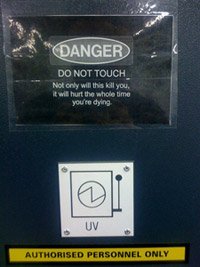
    PS: Haha. What a kickass warning sign! If this doesn’t prevent you from fingering around with switches in public places, nothing will!



  • The Anchor: 5 things that make OTAs tick among consumers

    By Rajiv Malhotra


    #1 Be ‘smart’.

    Having active apps on mobile platforms is an absolutely must for OTAs. Penetration of internet and mobile broadband services is on the rise in India, the number of smartphone users has increased exponentially and so has the usage of smart apps. Today there is an app for just about everything and the benefits of these apps are being experienced in various ways. Travel apps by OTAs help to connect with customers on an additional platform other than the web portal. They also provide convenience and enable travellers to make their booking while they are on the go or even at the last minute.


    #2 Be social.

    Social media, digital networking, YouTube are the buzzwords at the moment. Social media is an effective platform to connect and engage with the target audience. It is important for OTAs to monitor and participate in consumer conversations on social networking sites to manage and leverage their brand. Consumers read reviews, posts, recommendations, etc. shared on social websites which actually influence their buying decision. Also brands can engage with their audience through innovative and interesting activities on social media to create stronger recall for the brand. One example is Hotels.com’s recently-launched 2nd Xtreme Bookingvideo, which shows a person booking a hotel through the Hotels.com iPad app while running with the bulls in Pamplona.


    #3 Have an engaging website.

    It is important to have a website which is customer friendly and easy to browse. It should seem like a two way conversation wherein the customer has space to post his views or recommendations on the portal. The website should carry destination pictures, hotel views and a city map or similar information which make it easier for the consumer to take a decision. Also, there should be unbiased content on the website which will help travellers take an informed decision.


    #4 Offer multiple payment options.

    Consumers like to be spoilt for choice. Very often booking process comes to a startling halt due to lack of payment options. Providing multiple payment options gives travellers the freedom to choose the mode of payment they are most comfortable with. This also leads to more travellers making bookings through the website and helps expand the customer base.


    #5 Other ‘must-have’s.

    Having a loyalty programme helps to further connect with customers and encourage repeat bookings. Welcome Rewards, the loyalty programme by Hotels.com is an example of a simple and straightforward one. Additionally, OTAs must acknowledge that Indians still prefer phone interactions over the internet. Hence, adding that personal touch is necessary.


    Rajiv Malhotra is Head of Marketing, South East Asia, Hotels.com


  • Ranjona Banerji: Was TV news reckless in covering 26/11?

    By Ranjona Banerji


    On Wednesday evening, after the Supreme Court upheld the death sentence of Mohammed Ajmal Kasab, the lone terrorist caught in the November 2008 terror attacks on Mumbai, I received a tweet saying that no TV panel discussions would ever be held on the way the court indicted TV channels for their “reckless” coverage.


    Perhaps they will and perhaps they won’t. Certainly newspapers have reported on the apex court’s comments.


    “The shots and visuals that were shown live by TV channels could have been shown after all the terrorists were neutralised and all the security operations were over. But in that case, the TV programmes would not have had the same shrill, scintillating and chilling effect and would not have shot up the TRP ratings of the channels,” said the two-judge bench of Justices Aftab Alam and CK Prasad.


    There was much discussion during and after the attacks about the sensational coverage of the attacks by TV channels and whether or not security had been jeopardised. There now seems to be evidence – conversations between the terrorists and their handlers in Pakistan – that certainly the terrorists knew what was going on because of the TV coverage.


    There was also the anger against NDTV for revealing the hotel room of a witness on live TV during an excited conversation. This was more fuel to a latent anger against NDTV and its celebrity anchor Barkha Dutt which started during the Kargil War over the perhaps injudicious use of a satellite phone.


    However, as any journalist knows covering a live event is not easy. There are instant decisions to be made under very stressful circumstances. Some mistakes are inevitable. This is not an excuse: rather it is a way to explain why mistakes will happen. Times Now, for instance, has to be commended for the way in which it decided not to give away important positions or reveal the status of those still trapped inside the two hotels and Nariman House. It was the coverage of this event which catapulted Times Now to the status it now has. Editor Arnab Goswami resisted the temptation to jump into the fray himself — unlike Dutt of NDTV and Rajdeep Sardesai of CNN-IBN who turned themselves into field reporters – and instead behaved like an editor by staying in the newsroom and directed his people.


    But the phenomenon of editors wanting to grab plum reporting assignments is a critique for another time.


    It also has to be pointed out that the print media not only has a better system of checks, balances and filters than TV but also that print editors usually get their celebrity status by pontificating in opinion pieces rather than stealing the thunder from their reporters. Print also has the time to sort out how a breaking event has to be presented.
    Unfortunately for Indian TV news, the notion of how an “editor” functions has still not penetrated into its functioning. There is too much breathless excitement and immaturity in the way events are covered. And four years ago, a vicious, ruthless and audacious terrorist attack in India’s commercial capital was one such event. Rather than indict the medium of television news itself, it might be a better idea to punish those particular channels which compromised national security. But it is also time for Indian news channels to adopt some more practical journalistic systems so that this argument does not come up again and again.


    Even if a live event is being covered, there has to be time for considered judgment about what can be shown and what cannot: a little more editorial discretion and a little less immature hysteria. Was it necessary, for instance, for Headlines Today to show godman Asaram Bapu’s helicopter crashing on a continuous loop for five minutes?
    But after all the indictments and criticism, this has to be said. TV news gave India the chance to see what was happening and the extent of Pakistan’s assault on India. We also Kasab creeping past VT station and that image is one of the many which ensured his sentencing. For this, we have to thank the medium. It made compelling viewing and I for one watched it for almost three days running.


    Can TV news get better? Certainly. Does it have to be damned unequivocally? Certainly not.


  • TAPROOT! | Anil Thakraney:Talent & values rewarded

    By Anil Thakraney


    Ordinarily, I would envy Aggie and Paddy. They have landed up with mind-numbing sums in their savings bank accounts following the acquisition by Dentsu. In fact, I don’t even want to hear the numbers… that would make me feel like a very small man. Am certain this must be the feeling inside every single creative director’s heart in the Indian ad world, even if they don’t admit to it. And most importantly, Taproot has pulled off this financial coup within just three years of starting out. This is beyond dreams coming true.


    However, instead of feeling jealous, I actually feel very happy for them. I have never met Paddy, but Aggie I have, on more than one occasion, and I can tell you I am yet to meet a more simple, down-to-earth creative director. He is the kind of bloke who you want should win. His success will inspire a whole generation of advertising people, and not just a few eager hot shops.


    It’s a win-win marriage. Dentsu, which is not a name one usually associates with sparkling creative work, has bought itself a nice creative powerhouse. They must be elated. Taproot gets the scale, the logistics and the bucks they need, so they must be obviously thrilled. And for sure the Dentsu suits will leave Aggie and Paddy alone to do their own thingy. Only a silly parent would meddle with a brilliant child. So all is well, as they say.


    The only area of concern is this: What happens when Aggie and Paddy decide to offload their shares and retire to a beach house? There must definitely be a lock-in period of at least five years, I suppose. But what happens after that? Will Taproot be the same agency minus the two Big Brains? This is the only thing Dentsu must keep a sharp eye on. Remember, Taproot is a baby agency, it has no legacy. And if Aggie and Paddy don’t create their clones in the agency, if they don’t cultivate talent that is equally bright and hungry for success, five years down the line this acquisition may not look as rosy to Dentsu.


    For now, dear Aggie, bring out the bubbly. And please hire a bubbly secretary for yourself. No need to figure out airline tickets on your own anymore. You can afford her now.


    ***


    [youtube width=”400″ height=”220″]http://www.youtube.com/watch?v=mpWmowUtn5M[/youtube]

    PS: This is the last TVC directed by Tony Scott, the ace Hollywood movie director who recently killed himself. Incidentally, Scott directed many commercials in his career. Nothing special about this one, it’s typical soft drink trash. Only, it’s difficult to imagine suicide was on Scott’s mind while he was working on such lively stuff. Complex and unpredictable is the human mind.


  • Anil Thakraney: Unbundling of creative

    By Anil Thakraney


    In my interview with Taproot’s Agnello Dias for MxMIndia, the creative director made a stunning forecast for the future. He feels the typical ad agency will only consist of thinkers and strategizers. And that all creative work will have to be outsourced. This will mean specialized press ad shops, film script shops, digital design shops, and so on. And what he says makes a lot of sense. Here’s why.


    In the good old days, advertisers would use only press and TV as the key media, and the rest would consist of ‘supplementary’ stuff. And this resulted in ad agencies hiring copywriters and art directors. Writers would write storyboards and press ad copy, and the art directors would design the ads and other packaging material. So that was fine.


    However, in the last decade, the media has boomed big-time, and now clients look for special effort for a multitude of media platforms. Digital work, for instance, is being outsourced. Because agency’s creative personnel don’t get this space. As time goes by, and as technology unleashes more platforms, there will be serious pressure on ad agencies to find the right talent. And the agency shall not be in a position to hire all the staffers on its payroll; it would go bankrupt in months. The digital outsourcing will have a backlash on the traditional agency. It will mean that one day ALL work will have to be done by outsiders. In fact, radio, an old medium, has been crying out for specialists for decades. With the unbundling, we would see specialized radio script shops, and the quality of the creative work will dramatically improve.


    And most importantly, it will allow creative people to focus on their core competencies. It serves little purpose for a JJ Arts School grad to be breaking his head over internet videos. Likewise for fine English prose writers battling with Hindi television ad scripts. Specialization makes enormous sense.


    Yep, I hope Aggie is a good crystal ball gazer, and that what he predicts will come true. Personally speaking, I am all ready for the future. I have decided to start a specialized scam ads shop. Which to me sounds like a really lucrative business. 🙂


    * * *


    PS: A horrifying window display. Shocking is too mild a word. But it makes a strong case for stopping cruelty against animals. And hats off to the woman who volunteered for this campaign.


    Link: http://www.dailymail.co.uk/news/article-2134555/Lush-animal-testing-protest- Woman-subjected-experiments-horrified-shoppers.html?ICO=most_read_module