Category: BLOGS

  • The Anchor: Sandeep Bomble on four ways agencies can attract top talent

    By Sandeep Bomble, founder, Palasa


    1. Money! The obvious five letter word that is expected to shoot up once the above question is fired. Let us first dig and understand the working of an advertising industry. Innovation is the crux of any agency. One must know that every department, be it creative, media, client servicing should possess the ability to compete with latest innovative ideas and ways to explore. But at the same time, a lot of them prefer sticking to the age old methods or ways of going about, and not take the risk of capitalizing energy, money or time by going off the track. And sadly a talent hits a dead end, driving it off. It is here, where a fine bait to attract a great talent lies.


    2. Of course, there can be zillion ways to source talents but, personally I believe, there is only one way an agency can hook a ‘great talent’ in their team and that is ‘The agency has to go Gutsy!’ An agency that has the courage to go bold and brazen in their thoughts and actions, is like a charged magnetic field. It automatically attracts to it unexceptionally talented people. A great talent is hungry and is constantly on a lookout for an agency which is in the position to explore ideas. They believe the agency will do justice to their ideas and will churn out the best from the deepest crevices of their mind. The gutsy agencies act as catalyst to the effervescing minds of ever-fangled talented guns who are ready to venture into a territory that will facilitate their ideas and take them to a next level altogether.


    3. Money is certainly an important part when you look to feed yourself but it is very subjective in this case. It is surprising but true that a great talent will least care about money and not look at it as their first priority. And if one delves deeper into the psychology of these people, one understands the logic behind their motive of not being money minded. They are confident of what shall follow next, once they find their base to breed their creative energies. They are self-assured and positive that visibility through good work only, can win them fame, that’ll get them noticed in the industry. Money and perks are the next obvious that will follow. When a talent believes in agencies good work and ability to take forward the idea, he/ she won’t be bound by any limitations then. Their minds are free to explore realms unexplored. They soar high to think big and different. And an agency should know that investing in a great talent is any day much viable option than having hundred workers with lack of talent.


    4. Today, it’s a pitiful state that a lot of agencies are simply satisfied with their cash registers ringing and look at work through business perspective and are not inclined towards exploring newer ideas; they play ‘safe’. With every passing day one can only hope that an agency dares to hone its powerful magnetic field. We are an industry that has courage to defy the conventional and passion to take a leap of faith in ideas we believe in. And what more can a great talent want than to truly, madly, deeply be in love with an agency that harbours such a principle.


    “Great Talent Will Never Ask For Money”


    Sandeep Bomble is founder, Palasa

     

  • Debrief | Fox Movies: Brilliant!

    By Anil Thakraney


    Haha. Real cool ad. Will keep you in splits and very entertained because it’s delightfully salacious. FOX Movies decided to offer cinema dubbed in regional languages for the Thai market, and their ad agency turned it into an idea for subtitles-free communication.


    The fun commercial features a young male exec whose eyes are shamelessly trained on his pretty lady boss’s breasts. And the dude gets a couple of tight slaps as his just reward. Poor chap, not his fault. He’s used to reading subtitles in the foreign language movies he watches. And is unable to kick the ‘bad’ habit.


    Yup, it’s super stuff. The TVC packs in all the ingredients of a good ad film. It is entertaining, surprising, engaging and single-minded. And there’s cool lateral thinking at play to highlight what is otherwise a very uninteresting product promise. Full marks!


    As a naughty aside, this particular treatment will not work in the Indian market. Only because the average Indian male’s eyes are fixated ‘out there’ in any case, and it has nothing to do with watching foreign films that carry subtitles. 🙂


    Rating: (On a scale of 1 to 5): 5. Fabulous advertising


  • The Anchor: Upen Rai on 5 reasons why online videos are important for marketers

    By Upen Rai


    1. Video gets undivided attention

    Web pages are full of hyperlinks, images, advertisements, and so on which distract the user. When a video plays, the user is fixated on the audio and video with undivided attention. What better medium to get your message across to the user?


    2. Video is ubiquitous 

    The web is full of conflicting standards and making things work across device form factors and browser quirks can be frustrating. Video playback is ubiquitous and works equally well on all device form factors – so it is easy for online marketers to ensure that their message gets conveyed like it was meant to be!


    3. Video increases engagement

    Ever since web analytics were measured, website owners have struggled to keep bounce rates low and engage the user with interesting content. Video automatically increases engagement by keeping the user busy, while advertising and other messaging can be shown non-intrusive to the user experience.


    4. Video enables a higher call to action

    With the right mix of audio and compelling visuals, it is easier for brands to create a call to action and on the online medium, even lead a user into then completing a task. Video raises emotional connect with the brand and eases the user into completing actions like supporting a cause, liking a brand’s social media page, sharing the message with more users, and so on.


    5. Anybody can make online videos

    Whether it is a large corporate or a small group of non-profit volunteers, a compelling brand message is easy to create, produce and distribute in the online space. It is the best way for viral marketing and to gather more eyeballs.


    Upen Rai is Director, Times Internet Ltd


  • Mediaah: Should Ambika Soni delay digitization?

    By Pradyuman Maheshwari


    Yes, she must. There’s no point making a charade of it when the on-ground reality is not what it should be with just 23 days left for the scheduled compulsory switch to digitally transmitted television in the four metros of Chennai, Kolkata, Mumbai and New Delhi.  Over the last five months, MxMIndia has been speaking to various stakeholders on digitization. In fact right from the day our countdown started when there were 100 days to go for the June 30 Sunset Date, key stakeholders have been telling us that the deadline is unachievable.


    The government has itself to blame. The digitization deadline has been known for a while, and one would’ve expected it to have moved faster if it was serious about the Sunset Date. The tariff order came in rather late, and one would’ve expected the babus to have worked backwards and establish a foolproof schedule.


    Now, we have a situation that’s going to embarrass all.


    A senior industry professional told me that after the June 1 taskforce meeting it was clear that deadline will be pushed by at least two months, if not three. Some influential cable professionals have been rooting for six months, but I think three months is fair, with a diktat that within six months, it ought to be total.


    I also believe that there ought to be a significant incentive for early birds. Those who’ve switched subscribed and those who will in by September 30. The government must cut its levies and ask for these to be passed on to subscribers. Something like: buy a set-top box and get free connectivity for six months! Ensure this offer is only for the first three months, and after that it should be withdrawn. Also, subscribers should be allowed to pay in instalments.


    Today, Anil Thakraney’s maid asked him for a thousand-buck loan. I am sure I am going to be asked for the same soon. It’s critical that the lowest common denominator in our country – and there is a sizeable population that can’t make ends meet – is finding it tough to embrace digitization. There’s of course the argument that no one likes to pay for software in India, but there is no denying that the move will impact the household budgets of crores of Indians.


    So what’s the solution. Extend the deadline, yes, but just by two or three months. Offer an incentive for this period, and then bring back the taxes. Let this be the first deadline and have a final one of six months and ensure that all comply post that. A ‘Good Night’ date after the ‘Sunset’.


    Buzz me if you have a story to tell. Confidentiality assured. There are various ways you can reach me:

    pradyumanm[at]mxmindia.com, BBM 23050B5D, Gtalk pradyumanm@gmail.com, Twitter @pmahesh and of course the mobile: 98338 76278.


    Disclaimer: Although he is CEO and Editor-in-Chief of this site, Pradyuman Maheshwari’s views in Mediaah! are not necessarily those of the rest of the team and MxMIndia.com.


  • Ranjona Banerji: Why I criticise Times Now most

    Ranjona Banerji

    By Ranjona Banerji


    Is the cacophony of television news adding anything substantial to the dissemination of news, views and information? In fact I should make that “substantive” since this seems to be the new fashionable word. I repeatedly hear people saying it on TV and since there is no editing provision for live TV debates, mistakes are exaggerated and emphasised. A man who was introduced as a Supreme Court lawyer (I cannot remember his name but he also hates the BCCI, if that’s a clue) said this repeatedly and I would have liked to have been a fly on the wall if he had ever appeared before Markandey Katju. Sadly, the print media is also unable to see the difference between “substantial” and “substantive” even as it continues to mis-spell “minuscule” as “miniscule”, probably because it doesn’t register on spell check in Microsoft Word. The dictionary has not been spotted in newspaper offices for over a decade now and sits high on the endangered species list. And of course the difference (or as they say on TV “differential”) between “less” and “lesser” is a lost cause as far as the print media is concerned.


    This segue from irrelevant debates to bad spelling is now over. This week, Times Now spent half an hour discussing a proposal by Air India to give special favours to MPs. The problem was that no one except the anchor, editor-in-chief Arnab Goswami, knew anything about the plan. So the discussion – if it can be called that – never went anywhere.


    There are events which are offensive and annoying. But not all of them have enough substance – substantial or substantive – to merit a debate. A little discretion is advised if you do not want to drive viewers away.


    **


    I have to admit that I watch more Times Now at primetime than any other English TV news channel . And that is why I criticise it the most. But even in all the seemingly manufactured outrage, it appeared that Times Now had a finger on the pulse of its viewers. Now I wonder – drama for the sake of drama gets boring after a while, even in a country which thinks that Rowdy Rathore is a good film.


    CNN-IBN is dull, NDTV I have ambivalent feelings towards and I stopped watching Barkha Dutt after her reaction to the Radia tapes, Headlines Today remains a channel for babies and NewsX appears to have not paid its carriage fees to over half the country’s operators. The best programmes on CNN-IBN are probably Cyrus Broacha’s The Week That Wasn’t and Karan Thapar’s Devil’s Advocate and Last Word.


    **


    The problem for TV of course is that issues like the economy, drought, government inaction, female foeticide – which newspapers have focused on today – have no visual or dramatic traction. Indian TV news does not seem to have as yet worked out how to develop a story. If everything has to be breaking news, then at best you have raw data which can move in any direction and at worst, you have nothing.


    The Indonesian connection to Madhu Koda is a case in point. For such a story to have maximum impact, it would have made better sense for Times Now to construct a story and then air it. By just running with what they had, they only confused and bored people.


    This lack of direction and journalistic skill is why they keep running to people for reactions, whether it is a tree that has fallen or a road accident. Or indeed, a proposal by Air India to treat MPs like kings.


    Ranjona Banerji is a senior journalist and commentator. She is also Contributing Editor, MxMIndia. The views expressed here are her own.


  • Anil Thakraney: Dude, who moved my analogue?

    By Anil Thakraney


    Today morning my maid asked for a loan of a thousand bucks. And when I gently enquired about the reason behind the urgent need, she very sadly replied: “Sir, set-top box lene ka hai. Nahin toh TV band ho jaayega.”


    Yes, she’s alarmed. Because the threatening ads keep pouring in. And as the D-Day gets closer, their frequency has shot up. We in Delhi, Mumbai, Kolkata and Chennai are warned that if we don’t go digital by the end of this month, there will be a black out on the idiot box. And as you can imagine, there’s a mad scramble for the set=top boxes. Given the wayIndiaoperates, there will be mayhem in the last week of June, because most of us do things at the last moment, that’s our culture. And I shan’t be surprised if cable operators start hawking the boxes in black. That too is our culture.


    Here’s the link to the detailed story on this subject done by mxmindia, which indicates the threat may be pushed by a few months:

    http://www.mxmindia.com/2012/06/ready-steady-go-or-delay


    On the face of it, the government is desperate for a switch from analogue to digital for technical and aesthetic reasons. And because the very sensitive government of ours (ROTFL!) wants us to enjoy better picture quality. (To be honest, it’s best to watch most of our heavyweight netas via inferior quality transmission.) And all this even as a vast majority of the people in this nation is quite cool with the analogue signal. Not just that. The poor are struggling to pay for the set-top boxes. And the elderly citizens are worried about having to learn new tricks in their sunset years.


    Now, I don’t quite understand the technological reasons behind digitization becoming mandatory. What I do want to know is this: Why can’t the citizens of this free country be given the option? So that people desirous of better picture quality can switch to the digital mode. And those who are happy with analogue, can stay with it. As far as rate structures goes, surely the concerned ministry and TRAI can work out rate cards in consultation with the various cable operators.


    Here’s my own feeling: I suspect digitization is being made compulsory because the set top-box makers are about to run into some serious dosh. How all that moolah will be divided, I leave for you to imagine.


    PS: A fantastic way to demonstrate the might of the aam junta. Created by TBWA Paris for Amnesty International, the film highlights how signature campaigns work effectively in fighting crimes committed by those in positions of power. Hard hitting!


    Anil Thakraney is a senior journalist, commentator and adman. He is also Editor-at-Large, MxMIndia. The views expressed here are his own.


  • Ranjona Banerji: Cartoons as weapons of mass destruction!

    Ranjona Banerji

    By Ranjona Banerji


    All efforts are now being made to wipe out India’s most dangerous weapon of mass destruction: the political cartoon. This awful instrument of power, if it falls into the wrong hands (ie, cartoonists), can end up doing the most terrible damage to reputations, thin skin and “sentiments”.


    In recent times cartoons have caused incalculable damage. But strangely – and this is their enormous reach – the cartoons have emerged from the past where they had been lurking. It is not enough to imagine that because today’s newspaper is tomorrow’s sev puri wrapping, the power of the cartoon is diminished. It has an insidious way of reappearing in other forms – like those other lethal objects, books. And even worse, textbooks.


    Young minds, while they can easily absorb news of war and cruelty and indeed thrive on the vulgarity which passes for entertainment in India, would be irreparably tainted if faced with a political cartoon. And yet, by stealth for what else could it be, these cartoons have managed to inveigle themselves into textbooks.


    It started however with that other source of free expression, the Internet. Someone committed the most heinous act of forwarding a cartoon making fun of West Bengal chief minister Mamata Banerjee. But in spite of the strict action taken against the transgressor, the cartoon has only got bolder.


    Soon after a cartoon from 1949 was discovered being satirical about the delays in putting the Constitution together. Not only did it show the Constituent Assembly as a snail but it showed Dr BR Ambedkar sitting on the snail, with a whip in hand and then Jawaharlal Nehru whipping the snail. This is wrong on so many levels and particularly to snails. What have these fat sluggish creatures done to deserve whips? They have no feet and they cannot move any faster. There are no records about the action taken against the cartoon in 1949 by the Royal Society for the Protection of Animals but one can only hope that People for the Ethical Treatment of Animals will soon be holding a mass agitation at the Ramlila grounds in Delhi to increase awareness about this subjugation of snails. Good luck with getting hundreds of naked girls to agree to have snails crawling all over their bodies – a normal PETA method of agitprop. But protests there have been and there must be.


    And now we have a cartoon from 1968 implying that students in Tamil Nadu knew neither Hindi nor English. Now what could be more insulting to the education system of the past? Implying that students had been taught nothing is most unfair. How can the education system from 1968 possibly stand up for itself? It is therefore only right that the protests should happen in 2012.


    The other way of course is to put the cartoon on the endangered species list and wait for the World Wildlife Fund to step in…


  • Anil Thakraney: You can’t curb the Net, Mr Minister!

    By Anil Thakraney


    Do you know what is similar between terrorism and technology? It’s impossible to control either. You can do all you can to put curbs on them, but these folks will eventually find a way to outwit you. We have all heard about how a banned terror outfit in Pakistan simply changed its name and returned (literally) with a bang. The same thing is happening with the movie download sites that were recently blocked. The pirates have changed the site URLs, and are back in roaring action. I am not kidding about this… you can download the latest Bollywood film, Shanghai, which got released only this weekend! Such is the audacity of technology. Which is why this whole ‘site blocking’ business is a bloody sham.


    Likewise, you will recall, very recently, the portly Minister of Communications and Information Technology, Shri Kapil Sibal, was threatening to curb the social media. What triggered the mantri’s outrage was not that people where generally misusing freedom of expression, but that some sods had been busy illustrating funny cartoons of his bosses, Soniaji and Manmohanji. So, not law and order, but loyalty seems to be at the core of Sibal’s anger. Well, the debate immediately died down because as Sibal (and everyone else) knows: It’s just not possible to gag technology. It’s seamless and flows like a river across the world, continuously re-inventing itself.


    In a sense, I suppose it’s a battle between the old world and the new world. The old worlders, used to living a controlled existence, aren’t able to deal with the rapidly changing world. And the new world, armed with its technology weapon, is determined to smash the shackles the old world is desperate to impose. And this is one battle the oldies are bound to lose. Because technology has outsmarted them. And sooner the fossil ministers of India accept it, the better. Now there’s no going back.


    So deal with it, people! This is the new world order. Where videos, opinions, news, cartoons, etc, flow like a smooth stream, across the globe. And no dam will be able to control their movement. The various mantris only make fools out of themselves when they talk about curbs. They should instead spend all their energies monitoring terror activities. Though even there they will find the going very, very difficult.


    * * *


    PS: Interesting read on which book to rush to when you feel creatively burnt out, and want to throw in the towel. When the ideas aren’t coming. Some of the global ad industry’s best minds tell you which book inspired them and made them start firing on all cylinders all over again.


    Link: http://creativity-online.com/news/whats-the-best-book-on-creativity-youve-ever-read/234040


  • The Anchor: Ruby Bana on 6 reasons FMCGs need to look beyond TV

    By Ruby Bana


    For years I hear again and again from FMCG clients that 90 per cent of our budget goes into TV first, we need to handle that well. Sure we DO! TVCs are what helps us stay in place (unless a brand is a new entrant). TVCs help us maintain SOV, and hence market share by helping remind consumers close to purchase that we are still there. But TV is such a passive medium and consumers are becoming active. They are educated, demanding and skeptical…. So to complete our communication we need to look beyond TVCs


    1. Tell the whole story: Nothing does it better than magazines.


    2. Immerse the consumers in the brand experience: Nothing does that better than the events.


    3. Interact and engage them: Nothing does that better than online website or social networking and consumer forums.


    4. Win credibility: Nothing does that better than Socially Responsible Marketing.


    5. Become local: Nothing does it better than newspaper or radio.


    6. Become part of lifestyle: Nothing does it better than ambient media.


    All of these add competitive advantage to our brands and help us get noticed, remembered and enrich our interaction with our consumers. The older and better established a FMCG brand becomes, the lesser and lesser must it rely on TV. It’s a fundamental truth… the strategies/tactics that get us to the top are not necessarily those that keep us there OR help us evolve to the next level.


    Ruby Bana is Chief Strategy Officer, Madison


  • Debrief: Skoda Laura RS: Totally off the mark

    By Anil Thakraney


    I am assuming RS is a new upgrade of Laura, and that the car packs in some new features. What those features are I have no idea after watching the commercial because the ad goes on a bizarre tangent.


    In the TVC, a sexy woman pulls some silly stunts with her Laura outside what looks like a night club. She then wears the ‘scent’ of the burnt rubber, and has all the men swooning. That’s pretty much all that happens.


    Now, to be fair to the makers of Skoda Laura RS, they have at least stayed away from the thakela shots of macho men speeding the machine. That they have used a woman as the motorist is quite a brave move because ladies at the wheel don’t really inspire much confidence (militant feminists to please excuse). Or at least that’s the popular perception inIndia. But what they have done with this idea sends the brain for a toss.


    Many problems out here. The expensive luxury car Skoda Laura RS is most likely to be bought by rich Indian men. Would the sight of a woman fooling around with the car appeal to them? I doubt it. In fact, I was left with the impression this is a woman’s-only car, ergo, not for me. Next: Smell of burnt rubber. I don’t know if that’s a turn on for men in the upper income bracket, but a burning tyre puts negative imagery in my head. It subliminally tells me this is a fragile car. Add to that a woman driving it, and it confirms that Skoda Laura RS isn’t my scene. And lastly, the script is loose, it leaves you with a feeling of incompleteness. Maybe a little story was called for out here.


    Nopes, this won’t work at all. Back to the drawing board, I say.


    Rating: (On a scale of 1 to 5): 1. Tries to be different but loses focus.


  • The Anchor: Jagdeep Kapoor on 5 things brands often forget & fail to create an impact

    By Jagdeep Kapoor


    1. Service: Brands may be good products.  However, good products may not be good brands.  This is because, without the element of ‘Service’ a brand is incomplete.


    2. Relationship: My Brand mantra is ‘Sambandh Nahi Toh Sab Bandh’. Relationship with your customer and consumer is essential for a brand to grow and develop. Transaction might get sales, but it is relationships that build brands and businesses.


    3. Brand Experience: The brand experience in terms of quality of the product or the pleasant interaction with the brand will be remembered.  A consumer always remembers a pleasant brand experience leading to repeats.


    4. Visibility: Invisible brands die.  Many years ago in my book 24 Brand Mantras, I had written “Joh Dikhta Hai, Woh Bikhta Hai”.  Visibility whether in the media or at the trade level is important for the growth of brands.


    5. Distribution: My brand mantra is “Distribute or Perish”.  Without availability and distribution, whether online or offline, brands cannot survive. With distribution, brands will thrive.


    Jagdeep Kapoor is Chairman & Managing Director at Samsika Marketing Consultants


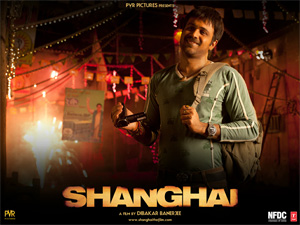
  • Reviewing the Reviews: Shanghai

    By Deepa Gahlot


    Shanghai

    Starring-Emraan Hashmi, Abhay Deol, Kalki Koechlin, Prosenjit Chatterjee

    Produced and Directed by Dibakar Banerjee

    Produced by Ajay Bijli, Sanjeev K Bijli,  Priya Sreedharan

    Screenplay by Dibakar Banerjee & Urmi Juvekar


    In what seems to be case of a one-eyed man leading the blind, most critics went totally overboard praising Dibakar Banerjee’s Shanghai.  It cannot be denied that he is one of the most exciting filmmakers in Bollywood today, but remaking a 1969 Costa Gavras film just shows up his film as vastly inferior. Just because it is better than most Hindi films, does not make it a masterpiece that some 4 and 4.5 star ratings have indicated.


    Karan Anshuman of Mumbai Mirror led the rah rah pack with 4.5 stars. “I found myself unable to move as the end credits started rolling. Shanghai had surprised and startled. It had me involved, it had me thinking. I had to tell myself that there would be other chances to watch it again. This is what a perfect film does to you,” he gushed.


    Aniruddha Guha of DNA gave it 4.5 too and wrote: “Shanghai, Banerjee’s fourth film, is his best. It’s also a very important film, in addition to being consistently engaging and extremely satiating. Why just make a good film, when you have the wherewithal to make a powerful one? A film that can change perception; one that can make a statement, and push the envelope. Shanghai does all of that, and does it well. Banerjee brings together great plot (inspired by Greek writer Vassilis Vassilikos’ political novel, Z) some very good actors and a bunch of able technicians in a movie that clocks just a little under two hours, but occupies your mind for many after.”


    Anupama Chopra of Hindustan Times gave it 4 stars and raved: “Shanghai doesn’t provide the comfort of answers or happy endings. But it forces us to ask urgent questions. It is the best Hindi film I’ve seen this year. I strongly urge you to make time for it.”


    Madhureeta Mukherjee of the Times of India was slightly subdued with 3.5. “Director, Dibakar Banerjee’s adaptation of Greek writer Vassilis Vassilikos’s book ‘Z’ is impressively Indianized. The story-telling is embossed with naked realism, rawness and brutal honesty. Be it blood stained bodies, close-ups of blackened faces, or ugliness (of body and soul) – he bares it with gut, grit and gore. But it’s not the first time we’ve seen the struggling aam aadmi made scapegoats by mantris who go back to plush seats in their power hubs. It’s not the first time chapters on humanity and morality are shamelessly ripped from political text books. The story is predictable (expect for a few scenes), and the revelations that follow, don’t send shockwaves or make your bellies churn. Yet, reality stings. Sometimes more than the ‘dengue and malaria’ in our very own hinterland.  Whether Shanghai is off-beat or mainstream is debatable, but if you thrive on rustic realistic cinema, however heavy-duty – this is your pick.”


    Shubhra Gupta of The Indian Express gave it 3.5 too, but found enough flaws. “Shanghai’ is fashioned as a political thriller, but it could just as well be a strong treatise on how much of today’s India functions. If you have a powerful ‘haath’ on your ‘sar’, as the propulsively small man Pitobash boasts, you can do anything, even knock a living man down and leave him for dead, without a twinge of conscience. Banerjee builds up the layers unerringly, (please note the by-play between the lowering, intimidating senior cop and the wanting-to-do-his-best ‘babu’) assembling a terrific cast that is mostly played to its strengths. Mostly.”


    Rajeev Masand of IBN found it watchable, but not great. He gave it 3.5 stars too and wrote: “Dibakar Banerjee’s Shanghai is a crisp, take-no-prisoners drama about seeking justice in the complex landscape of the Indian democracy. The film benefits from the compelling performances of its cast and the director’s sharp eye for detail while narrating a simplistic, and at times, predictable story that traces the inevitable nexus between Indian politics and crime.”


    Throwing a spanner into the works with his well aimed criticism is upperstall.com’s blogger who goes by the handle Punjab da Puttar. He nailed it when he snapped: “Shanghai might just be the last straw that broke this camel’s back. It is a sad but well-known fact that we are perfectly ok with mediocrity in this country at every level. An ‘Andhon Mein Kaana Raja’ gets away with being brilliant and repeatedly drives people into raptures simply because everything else is so bad. Shanghai, to me, is a very average film and little else and I feel this even more so because I have watched Z, which, though made by Costa Gavras way back in 1969, is still miles ahead of Shanghai in terms of its cinematic craft and storytelling. Everything Dipakar Banerjee has tried here has been done better in the Costa Gavras film 43 years ago! For those who don’t know, both films are adaptations of the novel Z by Vassilis Vassilikos.”