Category: ADVERTISING

  • Mirae Asset Financial Services partners with WhyNot Advertising

    By Our Staff


    Mirae Asset Financial Services has partnered with WhyNot Advertising to unveil a campaign on Mumbai Metro trains. This initiative introduces and promotes Mirae Asset’s loan against mutual funds and shares (LAS) offerings, thoughtfully designed to cater to the diverse financial needs of the urban populace.


    Distinguished by its ingenious visuals and creative concepts, the campaign strategically captures the attention of daily commuters, igniting conversations about the showcased financial products. The imaginative designs are crafted to pique curiosity and underscore the practicality of these offerings, especially in times of unexpected financial emergencies.


    Said Krishna Kanhaiya, CEO of Mirae Asset Financial Services: “In a landscape where the awareness of Loan Against Mutual Funds & Shares (LAS) among retail investors remains surprisingly low, our paramount focus has been on crafting communication that not only seizes attention but also explains the compelling rationale behind embracing LAS. This financial solution has the transformative ability to streamline and enhance one’s life. Therefore, our communication approach is centered around addressing the simple short-term money requirements that resonate with retail investors.”


    Added Khushi Joshi – Founder, WhyNot Advertsising: “We are truly excited about the triumph of this collaborative endeavor. Through this campaign we have tried to master a blend of artful creativity and strategic communication, showcasing the fruitful partnership that emphasizes the paramount significance of sound financial planning and investment. This collaboration reinforces the shared dedication of both organizations to foster a financially enlightened society.”


  • Human bags branding & comms mandate for Co2Exist

    By Our Staff


    Human integrated agency bags its first branding and communication mandate for Co2Exist. Co2Exist is an Indian startup that helps companies and individuals realize their climate commitments. The agency’s mandate includes working on the brand’s identity and digital communication strategy, and implementing clutter-breaking ideas that effect change.


    Commenting on the partnership, Menaka Pohani, Director at Co2Exist said: “Human, founded by Chirag and Imran, was a logical choice for Co2Exist’s communications partner. Their approach, work ethic and professionalism stood apart and is what helped us make our decision to partner with them for our communications plan. Their innovative strategies and expertise in creating impactful marketing campaigns align seamlessly with our commitment to promoting sustainable practices and reducing carbon emissions. Our decision to appoint Human was driven by our mutual vision to raise awareness and take effective action in combating climate change. By engaging with Human, we aim to amplify our message, reach a wider audience, and inspire behavioral change on a global scale.We believe that this collaboration will enhance our efforts in building a more sustainable future.”


    Commenting on the logo, Imran Khan, Co-founder and Director at Human added: “Sustainability is a very broad idea, and capturing the intent of the brand is always crucial. I’m glad we found a genuine depiction of the brand’s purpose, and hope to extend it in many different ways going forward.”


    Said Chirag Raheja, Co-founder and Director at Human on the partnership: “Co2Exist is an idea whose time has come. Their business resonates deeply with our ethos of creating work that’s good for the people, and the planet at large. So when we were offered a chance to be their communications partner, we leaped at it. We feel honored to be their partner of choice, and intend to fully repay the trust placed in us through work that drives meaningful results.”


  • Air India- let’s not confuse logo with a mascot


    With apologies to none at all


    By Vikas Mehta


    Vikas MehtaOk, let’s begin with a question. What is the current Air India logo before the unveiling of the new logo? Simple question and the answer should be simple too. While we are all ranting about the new logo or mourning the demise of the Air India Maharaja, we must not forget to compare like to like.
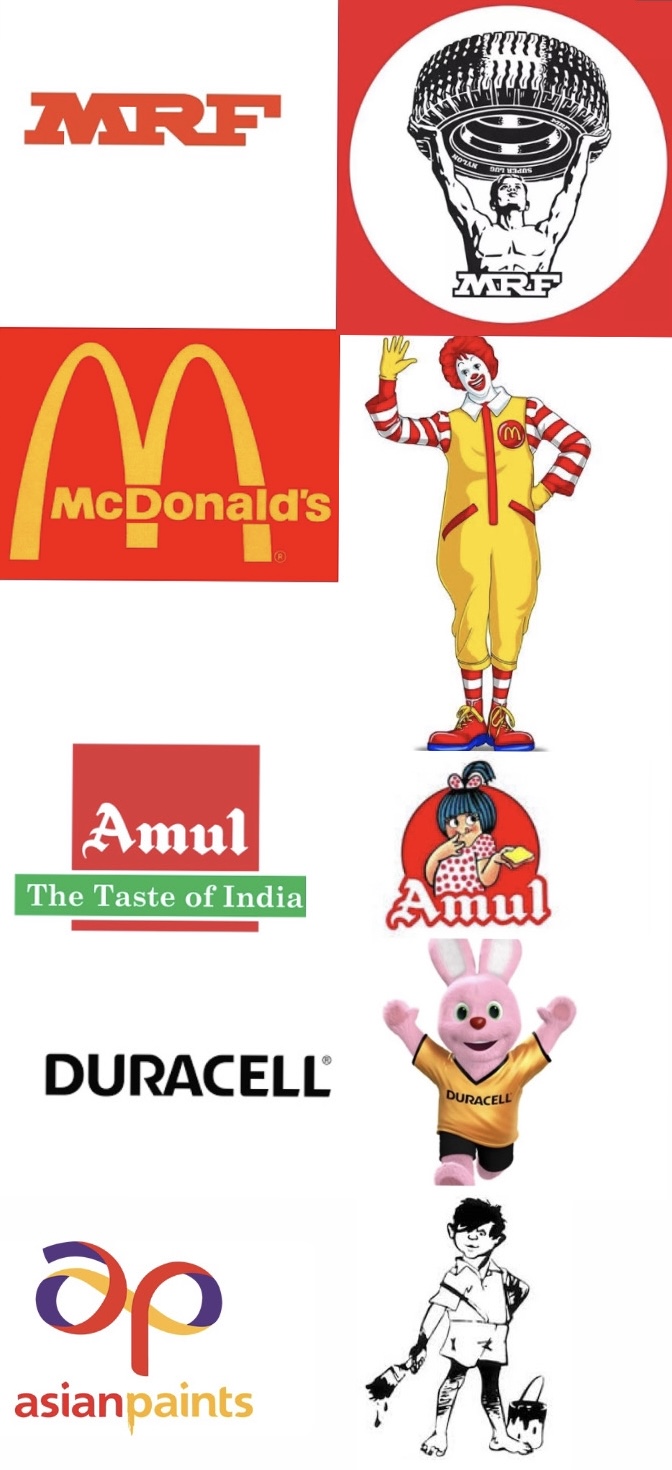

    Let’s get this very clear. Maharaja is not the current Air India logo. It never was. At best you can call it a mascot. I would prefer to call it brand personification. Every mascot, be it the Asian Paint Gattu or the Amul girl or KFC Colonel Sanders or the Michelin man for Michelin Tyres were not brand logos but mascots. Amul’s logo is the way it writes Amul in a distinct registered typeface. McDonald’s logo is its famous M arch. But its mascot is the clown, Ronald McDonald which you will find outside its outlets. Duracell Bunny is its mascot. Not its logo.

    Below are some examples of logos and some examples of mascot of the same brands.

    So, what is the difference between the two and can they be used interchangeably?

    Let’s dive in.

    Simply put, the logo is the identity of the company. It’s a reminder of the brand or company. The name. The mascot defines the value, personality and sometimes even the culture of the company. In a way, a mascot is the extension of a logo. Many companies incorporate the logo in the mascot or make it a part of it. KFC is a good example of the same. So is the Duracell bunny.

    Earlier, brands strived to have a mascot. Even in India, MRF had the muscle man. Cherry Charlie for Cherry Blossom shoe polish. Asian Paints Gattu. Air India Maharaja. These mascots told a story. They were the brand personified. Gattu was the personification of Asian Paints. It was a mischievous boy, maybe a brat who could not stop painting. And in old ads, Gattu painted anywhere. Even used a bald man’s pate. And the tag line that went with Gattu was ‘any surface that needs painting needs Asian Paints’.

    In India, all these mascots worked because the also transcended the literacy barrier. Specially in rural areas Gattu, MRF Muscle man etc stood out as they identified a brand and also what the brand stood for.

    But we must not forget that for all brands with a brand mascot, there were always two elements to play with. Twin identities. One was the brand logo. In many cases it was just the way the brand was written, with a tag line. And the second was the brand mascot. As media proliferation started and media started becoming more expensive with a premium on space or time, something had to give. Mostly, it was the mascot. Because the logo was the brand identity. Indispensable. And over a period of time most brand logos were just the way you write the brand. No separate design element also.

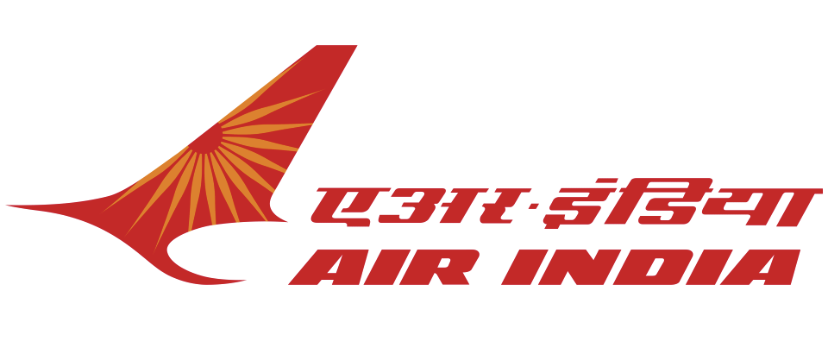
    So, coming back to my initial question. What was the last Air India logo? And in categories like airlines, logos become more important because that’s what you see on the planes. The airlines is recognised by its logo. Air India also went through various logo transformations. I think its most famous logo was the centaur.

    And its last logo, which is in current use, is the swan with the konark wheel inside it. Remember this?

    The new design that Air India has released is therefore a replacement of the same. The vista along with the way Air India is going to be written now is the new logo of Air India. It is not replacing the Maharaja. For all you know, the brand may continue to use the Maharaja as a property in a limited way. Or maybe a different version of the Maharaja which imbibes the thinking behind the new logo.

    I raise this point because I was dismayed to see not just marketing pundits but even national media announcing the death of the Maharaja when the new logo was unveiled. It may still happen. But it will not happen because a new logo has been designed. It’s not about a logo vs a mascot.

    And let’s not forget another point. Logo is not just a design to be seen in isolation. Logo cannot be judged immediately just because of a design element. Logo is what the company makes of it. And it evolves, registers and rules, over a period of time.

    The famous Nike swoosh. When Nike launched it, it was not exactly the current design but close to it. It evolved to what it is today. I am sure, if it was presented to the world then it would have met with outrage as a failed design. Nike was the name of the Greek goddess of victory. So, what had the swoosh to do with that? What Nike did over a period of time was identify the swoosh with its tagline, “Just do it”. Indeed, today the logo is so strongly identified with the brand that the brand name is not necessary when the logo of swoosh is around. Even Nike outlets today just have the swoosh logo outside. The brand name sometimes appears very discreetly in a small corner. Who would have thought of it, then? As I said, it’s what you make of the logo.

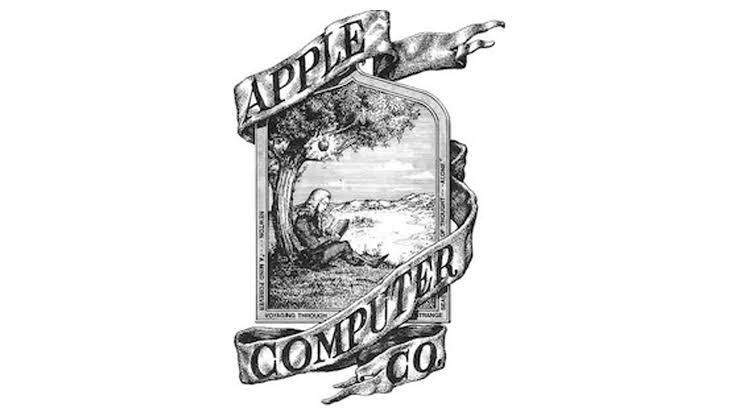
    Or take Apple. Imagine calling a technology company with the name of a fruit. And that too a half-eaten one! But today, Apple is the ultimate in technology and design. And the Apple logo is ubiquitous. Indeed, it’s so famous that in India I have seen the logo being used by even a potato chip manufacturer and as a garment brand too. This logo also evolved and was used in an iconic way on its products too. The logo is so important that a cursory check on Amazon and Flipkart reveal that most of the iphone covers have a punch at the back which reveal the logo. Full covers or covers without the punch are not many. For, who would want to own a iPhone without flaunting its logo. I am also amused that Apple still gives in its product boxes 2 stickers of its logo. And people use it. On their laptop bags, back packs, indeed even on cars and scooters. Again, it’s what you make of the logo.

    I would therefore not pass any judgment on the vista logo. It’s too early to make anything out of it. Even the critique that it’s not Indian is hollow. The brand is owned by a private company. It no more represents India. It’s as private or global as is British Airways or Air France. Why should it stick to representing India?

    How will Tatas use the logo? Will they be more creative with it? Will they strive to make it standout? Or will they just let it be one anonymous airline logo? Indigo has done very well with its logo of the dots as a plane, its typeface and the colour indigo.


    Indeed, even its airline code. It’s not 6E. It’s to be read as sexy. And all that has contributed to the brand personality. But that story is for another day.

    The ball is now squarely in Air India’s court to make the new logo count.


  • Mullen Lintas collaborates with Manipal Hospitals

    By Our Staff


    Mullen Lintas has unveiled a new advertising campaign in collaboration with Manipal Hospitals, aimed at inspiring individuals to prioritise their own wellbeing. The campaign encourages audiences to adopt a proactive approach to their health, ultimately preventing the need for reactive critical care situations.


    Said Karthik Rajagopal, COO, Manipal Health Enterprises Pvt. Ltd: “In today’s fast paced world, we often neglect our well-being in the pursuit of success, losing our quality of health. Following this insight, we decided to launch a brand campaign ‘The best gift that we can give to our near and dear ones is the gift of our own good health.’For this, I would like to applaud the efforts of Mullen Lintas and Director, Gauri Shinde, in bringing this idea to life. We’re grateful for this partnership and hope everyone will appreciate this message.”


    Sharing thoughts on the campaign, Hari Krishnan, CEO, Mullen Lintas added: “Healthcare communication has for a long time been about brands talking about themselves to consumers, almost in a one-way approach, about their expertise, facilities, infrastructure etc. We felt that the time is right to elevate the conversation. As one of the pioneers in modern healthcare in India, the onus of exemplifying thought leadership rests with Manipal Hospitals. With this as our guiding light, we conceived a campaign which, at its heart, is all about encouraging people to take care of their health so they never need to be taken care of in a hospital. It’s very bold in that sense, for a brand to consciously decide to not talk about themselves and the team at Manipal Hospitals deserves all the credit for taking this leap.”


  • ASCI launches academy

    By Our Staff


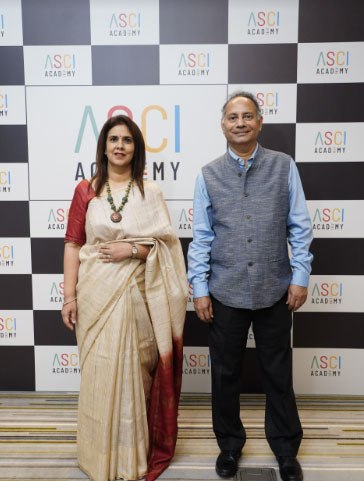
    (L-R) Manisha Kapoor, CEO and Secretary General and NS Rajan, Chairman, ASCI at the Academy Launch

    The Advertising Standards Council of India (ASCI) has unveiled the ASCI Academy, an initiative poised to amplify the advertising industry’s capacity to create more responsible and progressive advertising campaigns.


    The Academy has over 50 founding partners and supporters including Cipla Health Limited, Coca-Cola India Private Limited, Colgate-Palmolive (India) Limited, Diageo India, Hindustan Unilever Limited, Mondelez India Foods Private Limited, Nestlé India Limited, PepsiCo India Holdings Pvt Ltd., Procter & Gamble Home Products Private Limited, several leading universities and colleges, prominent Civil society organizations such as Mumbai Grahak Panchayat, Consumer Voice, CUTS, CMS and others, and, industry bodies like the ISA, AAAI, IAA and ISWAI, as well as research insight organizations.


    Said Rohit Kumar Singh, Secretary, Department of Consumer Affairs: “I congratulate ASCI on the launch of the ASCI Academy. In the digital age, preventive actions need strong impetus and encouragement, and the training of industry professionals – current and future is an important systemic intervention. The Department of Consumer Affairs is supportive of such efforts by the advertising self-regulator to foster a culture of responsibility in the advertising industry. We hope that the advertising industry engages deeply with the Academy programs to make their teams better trained and educated on the aspects of advertising regulations.”


    Added Vikram Sahay, Joint Secretary, Ministry of Information and Broadcasting, who is part of the ASCI Academy’s Apex Council: “Many congratulations to ASCI on the launch of the ASCI Academy. The Ministry of Information & Broadcasting has always supported self-regulatory mechanisms in the media and entertainment industry. We hope that the resources and support by the Academy would be extremely useful for the online advertisers and platforms.”


    Addressing the opening of the academy, NS Rajan, Chairman, ASCI, said: “While ASCI has always had a strong corrective mechanism, we also wanted to harmonise the dynamic interplay between creativity and responsibility and address the broader consequences of advertising on society at large. The ASCI Academy is a big step in this direction which will facilitate a preventive footprint and shape an advertising ecosystem to help the industry to get it right.”


    Added Manisha Kapoor, CEO and Secretary General, ASCI: “With short campaign durations, it is important that attention is directed at the point of creation of ads, not just after they are published. When the only ads to hit the market are responsible and compliant, it is a win-win for both consumers and industry. Over the next three years ASCI Academy aims to train 100,000 current and emerging professionals through self-learning and on-campus workshops and sessions, besides programs for research and consumer education. This is a new chapter in self-regulation in India, and we are grateful to all our founding partners for supporting this vision. We hope to add several more believers in this agenda- this is just the beginning”.


  • Criteo collaborates with Flipkart

    By Our Staff


    Criteo, the commerce media company, held its first flagship event “Criteo Commerce Forum”. The event revealed the importance of commerce media and brought some of the industry’s top speakers and influencers on the stage including Flipkart, Dentsu International, and Omnicom Media Group.


    Said Sankalp Mehrotra, Vice President – Monetisation, Flipkart: “Our collaboration with Criteo helps advertisers to prospect, retarget and generate awareness amongst online shoppers. Campaigns across verticals have seen disproportionate gains through better targeting and full funnel measurement at scale.”


    Taranjeet Singh, Managing Director, Enterprise, APAC, added: “We’re very excited to welcome our clients and partners to Criteo Commerce Forum for the first time in India. Interacting with various players in advertising, e-commerce, and marketing will further help us understand their key challenges and how we can bring powerful solutions backed by sophisticated AI technology to help them maximize their commerce outcome. The success story with Flipkart showcases the effectiveness of Criteo’s commerce media capabilities that can unlock value for all players in advertising.”


  • LKSS appoints Samir Shanbhag as Biz Head & EVP

    By Our Staff


    L&K Saatchi & Saatchi (LKSS), part of the Publicis group in India, has appointed Samir Shanbhag as its Business Head and Executive Vice President. Based at the agency’s Mumbai office, he will report to Paritosh Srivastava, CEO of L&K Saatchi & Saatchi and Publicis Worldwide.


    Said Shanbhag: “I am excited to embark on this journey with L&K Saatchi & Saatchi which is driven by the ‘Nothing is Impossible’ philosophy. The growth demonstrated in both business and quality of work over the past few years serves as a testament to this belief. I am confident that we will continue to build upon these success stories, leveraging the ‘Power Of One’ for our clients. I look forward to contributing to the agency’s growth and reputation.”


  • Ideacafe appoints Ritesh Chaudhary as CCO

    By Our Staff


    Ideacafe, the creative agency founded by Nabendu Bhattacharyya, has appointed Ritesh Chaudhary as Chief Content Officer (CCO) to head its integrated creative offering.


    Said Bhattacharyya: “Ritesh has spent a substantial part of his early career with my earlier venture Milestone Brandcom, and I am happy to have him back at Ideacafe. I am of the firm belief that creativity, ideas, and an innovative approach to everything we do, will set us apart in an industry that is most conducive to disruptive thoughts, and Ritesh has a proven repertoire of award-winning creative work that positions him uniquely to be an important part of our integrated communication journey. At Ideacafe he will align with the company’s overall vision, striking a balance for through-the-line content and communication.”


  • Havas’s Conran Design partners with PEP Technologies

    By Our Staff


    Conran Design Group Mumbai has announced a collaboration  with PEP Technologies, the parent company of mCaffeine, and celebrity, co-founder, and Chief Customer Officer, Kriti Sanon to launch everyday skincare label, Hyphen.


    Speaking about the launch, Vaishali Gupta, Co-Founder and Chief Growth Officer, Hyphen said: “Conran Design Group Mumbai shines with unique expertise and creative thinking. They blend design and strategy flawlessly, giving Hyphen’s brand logo a distinct edge.”


    Added Geet Nazir, Managing Partner, Conran Design Group Mumbai: “At Conran Design Group, we’re constantly looking for challenges and opportunities to demonstrate our capability in designing simple and effective brand-led solutions to complex business problems, that make a meaningful difference to clients and their businesses. We leverage our proven global methodologies to craft insight-led, differentiated design solutions, and Hyphen is a perfect example of how we delivered a clutter-breaking and ownable brand grammar in the beauty industry.”


  • Journalism awards in memory of Ram Jethmalani

    By Our Staff


    Nominations have been invited for journalism awards with a prize purse aggregating Rs 14 lakh. The Jethmalani Prize in Journalism, under the Will of Steel Awards, has been constituted to honour the birth centenary year of veteran lawyer Ram Jethmalani.


    The Jury for the Awards includes; Justice Sharad A Bobde, Former Chief Justice of India (Jury Chair), Dr Harivansh Narayan Singh, Deputy Chairperson, Rajya Sabha, Dr Sasmit Patra, Rajya Sabha MP, Kiran Mazumdar Shaw, Founder, Biocon, Prof Madhav Nalapat, Editorial Director, The Sunday Guardian, Raghu Rai, Photographer, Shekhar Mehta, Former President, Rotary International, Kalyani Shankar, Senior Journalist and Atul Kasbekar, Photographer.


    The awards ceremony will be held at the NDMC Convention Centre, New Delhi on September 15, 2023. The deadline for submission of nominations is  September 10, 2023. The Award is open to individuals and organisations under the following categories:


    Category 1 – The Jethmalani Prize for Journalism in Service to Humanity

    With Gold Medal & Award Purse of ₹ 14,00,000 ($ 17,000)


    To be awarded for ‘rare and noble contribution for the promotion of democracy, good governance in the spirit of ‘Vasudhaiva Kutumbakum’ – one world, one family’.


    Category 2 – The Jethmalani Prize for Legal Journalism

    With Copper Medal & Award Purse of ₹ 1,11,000 ($ 1,400)


    For the most effective use of mass media to disseminate accurate information in public interest of legal proceedings, judgments and legislations.


    Category 3 – The Jethmalani Prize for Empowerment

    With Copper Medal and Award Purse of ₹ 1,11,000 ($ 1,400)


    For the most effective promotion of gender empowerment, social upliftment of tribals and marginalised groups.


    For Nominations and Details: www.willofsteel.org


  • Noshir was always the ever-smiling jovial human being: Tribute by Ajay Chandwani

    By Ajay Chandwani

    Noshir Desai was in Lintas the go-to person to while away your client stress and agency blues. In the ninetees I was one of the Lintas Mancom colleagues of Noshir who used to navigate the agency.

    Noshir used to wear a few hats quite comfortably. From heading the media department of an agency. Before media got unbundled, Noshir used to deal with a bunch of achievers in planning, buying and rural activation. From Helen Anchan to Sainath Iyer, from Meenakshi Madhvani to Lynn D’souza there was always a delicate task which a generalist like Noshir played with much aplomb. Media in Lintas was the domain of the thirteenth floor of Express Towers which the honchos in management rarely visited and was often called the floor that actually worked and brought the money!.

    The television industry was getting revolutionised with the onset of Satellite TV and the end of the domination of Doordarshan. Noshir led the Lintas charge in this with media associations and breaking the press stereotype  role that most media heads played in those days. The focus had shifted from Pradeep Guha in print to Peter Mukerjea in Star TV and Rupert Murdoch. Noshir started handing over the media reigns to the specialists in planning and buying and rural activation.

    Noshir then played a mancom coordinator of Regional Offices of Lintas . This meant he had to interface between regional heads of Lintas and keep Alyque Padamsee and Prem Mehta abreast of the growth of regional offices. The mancom had illustrious heads in regions like Asit Mehra and Ashish Bhasin in Chennai, Fali Vakeel in Bengaluru, Nures Sayeed in Kolkata, Preet Bedi in Delhi. Of these the Kolkata office which recently completed 50 years in 2020 had  been managed by such luminary stalwarts as Stanley Pinto, Ajay Shrikhande, Pranesh Misra.

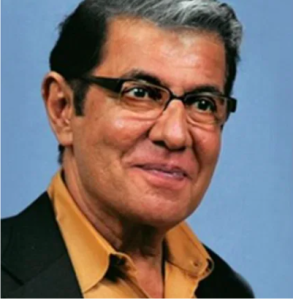
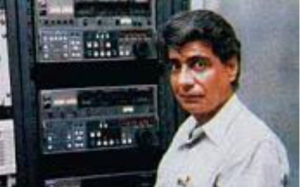
    Noshir Desai in his younger days

    Noshir built amazing relationships with regional clients like Tata and Titan, Brooke Bond and Lipton in Bengaluru, ITC and Philips in Kolkata, Kitply and Polar in Kolkata, Modi Xerox in Delhi.

    Noshir’s stint in MCM had made him understand how the creative output could radically improve in an agency. Kersy Katrak with Arun Kolhatkar and Kiran Nagarkar had set a pathbreaking trail in MCM and the likes of Christopher  Rozario, Viru Hiremath, Alok Nanda, Vikas Gaitonde, Kamlesh Pandey were making Trikaya and Rediffusion rock.

    Kersy’s advent in Lintas got Noshir excited to give shape to the dreams of Karishma the conflict agency of the Lintas Group. Kersy had broken down structures and formed art and copy partners using the MCM success model. In Lintas, Josy Paul and Neville D’Souza in special projects , Ryan Menezes and Sanjay Sippy in Lintas Bom 4. Agnello Dias and Mahendra Bhagat and Kiran Khalap  in Lintas Bom 3, and Adi Pocha in Bom 2 etc spurred Noshir to get in Quentin Coelho and make Karishma a creative boutique to target entrepreneurs and start-up businesses.

    Just round the time Noshir was consolidating Karishma, I had set up SSC&B Lintas at Lower Parel Phoenix which Alyque had fondly called Upper Worli to manage the drastic change from Express Towers in Nariman Point. At some point In the growth and development of Karishma, we had together found that the conflict management was the motivation.

    For, a second or third agency in the group was not being met. Noshir and I used to discuss this subject with great interest and depth with examples of Contract and HTA and Interface and FCB Ulka. Noshir loved the hyper-creative structure that  SSC&B Lintas had achieved with numerous International awards including India’s first ever Gold Lion at Cannes.

    Clients like Tata Safari, Sierra, Mercedes Benz, Smirnoff, Marico’s Parachute and later HUL’s Nihar, Kwality Walls Max made Noshir want to borrow a thing or two from the second agency culture.

    Noshir was the eternal optimist in all client relationships. He was the warm confiding friend or a patient problem-solver to others. He was passionate about building relationships most of which lasted a long time with many clients.

    His only mantra of management was to spread happiness and laughter round. Most meetings Noshir would gravitate  to end at the bar so that decisions could be taken! Noshir belonged to a breed of ad folks who have virtually vanished today though client pressures may have mounted up to more staggering levels.

    Keep smiling Noshir… you will always be fondly remembered in our hearts.


    Ajay Chandwani is a veteran strategic brand consultant. He was earlier Director on Lintas Mancom and President SSC&B Lintas


  • Dentsu Creative launches 2023 CMO Report

    By Our Staff


    Dentsu Creative’s 2023 Global CMO Report, ‘Creativity at a Crossroads’, reveals optimism from today’s marketing decision-makers in the face of change and challenge. Using data from a survey of 700 CMOs and senior marketers in the US, UK, Australia, Brazil, Canada, China, India, Italy, and Spain, the report has identified eight key themes which show that despite being an industry at a crossroads, it is one empowered by creativity and technology.


    Said Julie Scelzo, Global Clients Chief Creative Officer: “Creativity at a Crossroads dives deep into the hearts and minds of marketers today. From embracing the ‘Frenemy at the Gate’ that is AI, to their resolute belief that advertising can be a force for good, this report shows that CMOs remain both optimistic about the future and committed to the transformative power of creativity, with 85% believing that creativity is a catalyst for economic growth, rising to 94% in the US.”


    Amidst volatilities of the modern world, such as climate change, inflation, and geopolitical instability, CMOs are focusing on the things they can control. Their number one concern for 2023, and as they look ahead to 2030, is owning and connecting with their audience in a world where third parties often seem to hold the cards.


    Patricia McDonald, Dentsu Creative’s Chief Strategy Officer and lead author on the report observes, “To own the audience, we need to connect in the spaces and places that matter most to them. The challenge is that audiences are changing: they have new expectations, new behaviors, and new values shaped by a deeply connected world. Their expectations have soared while their attention has polarised-they can dive deeper than ever into the things they love and find it easier than ever to ignore the things they don’t. So, brands must be built in new ways through experiences, through culture, and through action. The choice is simple: engage or be ignored.”


    Amit Wadhwa, CEO, DENTSU CREATIVE India adds, “Today’s landscape demands that brands navigate a complex web of audience attention, technology advancements, and societal shifts. In the midst of these challenges, where change and challenge intersect, the ‘Creativity at a Crossroads’ report delves into marketing leaders who emphasize the integration of creativity and technology. Now, in a world where AI threatens to steal the spotlight from human creativity, it is reassuring to see that a massive 73% of India’s marketers firmly believe that Generative AI will never outshine the boundless brilliance of the human imagination. Frankly, I couldn’t agree more. The report underscores this crucial juncture where creativity, technology, and strategic insights blend – setting the stage for an exciting future in the world of marketing.”


    Written in collaboration with leaders across the Dentsu Creative global network, the report’s eight themes allow CMOs to benchmark their areas of focus against their peers, such as whether their investments in technologies and platforms are keeping pace with the industry, and whether they hold similar views on the fundamentals of marketing in 2023 and beyond.


    WINNING THE AUDIENCE

    In an era where social platforms, retailers, and technology partners are siphoning audience attention away from brands, and when consumer-brand interactions have become increasingly demanding and sophisticated, the single biggest concern for CMOs now and in the future is owning and connecting with a rapidly evolving audience. For 30% of respondents ‘owning the customer relationship’ has been their focus for 2023 and will continue to be as they look forward to 2030. Engaging with changing audiences, responding to changing consumer behavior, representing more diverse audiences, and understanding, and keeping up with new technology were a focus of 28% of CMOs respectively, with understanding Gen Z audiences still a challenge for nearly a quarter of respondents.


    AUGMENTED HUMANITY

    Today’s CMOs demand experiences that connect technology and humanity, 87% agree that brands today are built through experiences, and 88% agree that it is essential that the customer experience matches up to the brand promise. To achieve this, they are embracing new interfaces from voice to gesture, AR to AI, blurring the boundaries between on and offline, content and commerce, and enabling ideas that are distinctive, delightful, and disarmingly human.


    CULTURAL CAPITAL

    CMOs agree entertainment will be a key component of brand building and are looking to build their brands in the spaces and places that matter most, investing in platforms from podcasts to programming to engage audiences that are harder than ever to interrupt. 79% of CMOs agree with the statement, ‘In a world where advertising is easier to ignore’ and 80% agree that technologies such as live streaming are blurring the boundaries between content and commerce as never before. We also see that humor is making a comeback with 58% of marketers looking to create moments of joy during current difficult times and agreeing that today’s advertising today isn’t entertaining enough in a crowded sea of bold and bullish promotional messaging.


    PURPOSE GETS REAL

    The way marketers are approaching Purpose is shifting. 69% of those surveyed agreed that we have been so focused on purpose that we have forgotten how to sell. Moving beyond “purpose washing” campaigns it is felt that Purpose must evolve from a side project to an integral element of business strategy as there is no longer any disconnect between what is good for society and what is good for business, 78% of marketers believe that in a world where economic volatility is accelerated and exacerbated by climate volatility, renewed innovation and infrastructure is badly needed and only through the power of emotion can we impact this and affect lasting behavioural change.


    FUNDING FEARS

    Signifying a deepening awareness of the industry’s responsibility to balance purpose and profit, CMOs are concerned over the polarised, sometimes toxic, media landscape brands could be funding with their investments. 62% of CMOs are worried about the potential adverse consequences of their campaigns and investments on the environment and society, while 64% expressed concerns that their media spending may inadvertently contribute to political polarisation, raising questions about advertising’s role in shaping public discourse. In defiance, marketers remain convinced that advertising can be a force for good and 81% agree that brands can use their budgets to amplify independent and diverse voices.


    AI: FRENEMY AT THE GATE

    AI is cause for cautious excitement and 87% agree that it represents the future of advertising and marketing. CMOs welcome the efficiencies it allows and are keen to experiment, but doubt AI-generated content will ever truly move their customers, and 81% of respondents agree that customers will be prepared to pay a premium for human-created content. Despite over half of respondents questioning if Generative AI could take their jobs in the future, 75% believe that Generative AI will never fully replace the essence of human creativity.


    CONNECTED PEOPLE

    CMOs now demand flexibility and diversity from the people they work with. 86% want their agencies and partners to connect the right talent at the right moment, wherever it sits inside the network or beyond. 83% believe brands benefit from consolidating their efforts with one agency holding company, acknowledging the power of the network in a data and technology-driven world. However, 85% do value the diversity of thought that comes from partnering with multiple agencies, calling out the flexibility and agility of local partners. As such, the perfect team for today’s fast-changing and volatile world does not exist, and CMOs want the ease of one agency, with the power of many.  The businesses and brands that can connect the right talent at the right moment, or introduce unique perspectives to unlock new outcomes are those that will thrive.


    THRIVING IN A CONNECTED WORLD

    Responding to audiences with a heightened expectation of brand integrity and customer experience, and an increased tendency to completely avoid content that fails to engage or entertain, CMOs remain committed to the transformative power of creativity, and 85% view creativity as a catalyst for economic growth. Unlocking the creativity needed to thrive in today’s connected world sits firmly at the intersection of brand, experience, and culture and sweet spots are emerging for brands and businesses to connect with modern customers in the spaces and places that matter most.