
Category: ADVERTISING

  • Tinder swipes right for Leo Burnett

    By A Correspondent


    Tinder has appointed Leo Burnett as its creative agency. The business win happened after a multi-agency pitch, and Leo Burnett’s Mumbai office will head the business.


    Dheeraj Sinha

    Speaking about the win, Dheeraj Sinha, MD – India & Chief Strategy Officer, South Asia, Leo Burnett said: “Technology and social trends have transformed the way we meet and connect with people and in that purview Tinder has significantly changed the rules of social discovery for the new generation. This provides us the perfect platform to create the kind of new-age work which we believe will drive interesting and meaningful conversations around the brand and we are looking forward to this opportunity.”


    Rakesh Hinduja

    Added Rakesh Hinduja, COO, West, Leo Burnett India: “Consumer Tech is an exciting and challenging space and needs a Humankind driven approach to connect with people behaviour for this category. Wave 3 solutions comes naturally to the young brands and the target audience we are talking to and we look forward to creating some memorable and exciting work for Tinder.”


  • Road Safety World Series to be held in February 2020

    By A Correspondent


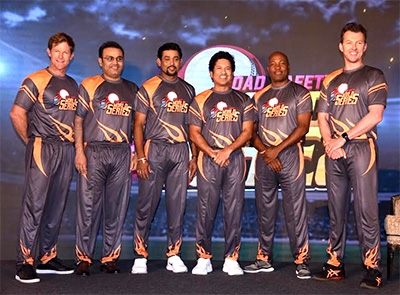
    Sachin Tendulkar, Virender Sehwag, Brian Lara, Bret Lee, Tillakaratne Dilshan and Jonty Rhodes, will lock horns for the Road Safety World Series scheduled to be held in India early next year.


    The Road Safety World Series will be an annual T20 cricket tournament between legends of five cricket playing nations—Australia, South Africa, Sri Lanka, West Indies and host India. Along with rivalry on the field, the cricketers will also spread the message of road safety during tournamenet. The tournament will be played from February 4 to 16, 2020, and will be hosted across premier venues in India.


    Viacom18’s Colors Cineplex is the broadcast partner while Voot and Jio are digital partners. Tik Tok is Online Community Partner of the League.


    Said Sudhanshu Vats, Group CEO and MD, Viacom18: “We have always believed that entertainment has the potential to bring about meaningful change and what better way of practising this philosophy than to bring cricketing legends in the popular T20 format to spread the message of road safety. An annual tourney spread over two weeks, I believe this league has the right balance of fandom, brevity and consumer connect to make this a viable long-term proposition – both in terms of sporting and business value. We are happy to partner with PMG and Road Safety Cell of Maharashtra Govt. to bring forth this cricketing tournament to viewers across the world.”


  • Digital Advertising’s Next Leg of Growth?


    By Brian Wieser

    Key takeaways:
    •  If small businesses have shifted most of their spend online and digital-first companies are beginning to mature, double digit digital advertising growth will depend on sustained expansion in digital business transformation from “traditional” marketers – brands whose businesses have historically existed offline primarily.
    •  Traditional marketers who anticipate that business transformation will meaningfully impact their category will benefit from investments in long-term relationships with media owners whom they expect will be important in years ahead
    •  All marketers should continually assess the optimal balance between investing in brand-building activities which provide long-term benefits and shorter-term transactions


    Some observers have claimed that the driver of digital advertising’s rapid pace of growth in recent years is small businesses, although this is doubtful.  While it may be true that some companies have benefitted from small business spending, it is not likely true for all of digital media.  For example, in the United States data from the IRS indicates that small businesses – which we define here as the nearly 6 million companies with less than $5 million in annual revenue – only spends around $30bn on advertising every year.   If digital advertising in its broadest definition is likely to be around $130bn in the US during 2019 vs. $107bn during 2018, even if small businesses increased spending from, say, $20bn to $30bn (an unlikely escalation in any one year) it wouldn’t even amount to half of the industry’s growth.


    Instead, as we have previously written, the more likely factor responsible for most of the growth in digital advertising is ad spending by the world’s largest digital companies, although this spending will slow.  Many companies whose histories began on the internet now among the world’s largest marketers with at least ten spending more than $1bn on advertising annually, dozens spending in the hundreds of millions and all of them collectively increasing their spending at a pace that is significantly faster than total industry-wide spending on digital advertising.   However, it would seem inevitable that as their businesses mature and begin to eventually grow in line with the industries in which they operate, these marketers’ growth rates will eventually decelerate and converge with industry averages.   Further, as these marketers mature, their media mixes shift to include other media (to point, at least some of the resilience of television and outdoor advertising is due to such shifts of spending).


    Will traditional large brands help digital advertising sustain its recent growth rates?  This leads to an interesting question regarding whether or not a third segment of marketers can pick up the potential “slack” and sustain rapid growth for digital advertising for years to come: traditional, large brands who are the incumbents in their industries.  Already we can see that the typical marketer of this nature is allocating around 40% of their advertising into digital media, with many well in excess of that figure. If their spending on digital is less than half today, on average, a digital media optimist could argue spending directed to digital media still has a significant amount of room to expand.   But is that realistic?


    The first consideration on further meaningful shifts of spending into digital media by traditional brands is whether or not digital media can better demonstrate its brand-building capabilities.   While a powerful brand idea executed well can always work in any given medium, so long as the marketer works to optimize a campaign for a given medium, on balance premium video (mostly still television) is likely going to be the environment that continues to support brand-building efforts for most marketers.  (A related consideration is the idea that traditional media owners are increasingly the beneficiaries of digital media spending, especially as their media brands are distributed via digital platforms.   Is this spending digital or non-digital?   Budgeting will be in the eye of the beholder.)

    As well, there are ongoing challenges to brands around digital media, including the increasingly “toxic” environments with platforms who do not curate content or other advertisers, with the widespread availability of inauthentic content (including fake ads) and other polarizing or extreme content.   Measurement remains as another problematic issue, as fragmented, incomplete and often low-quality sources of data make it difficult to assess the metrics that brand-focused marketers want to rely upon in order to manage their budgets well in digital environments.  Digital media’s brand-building capabilities are limited by these trends.    The big question is whether or not brand-building is the focus of brand owners into the future?   It may not be.


    Business transformation efforts from traditional brands will orient those companies’ media plans towards digital media.  As these companies increasingly invest in digital business strategies – business transformation for lack of a better term – including direct-to-consumer concepts, sales via third party e-commerce channels and focus on driving consumers to digital experiences (including marketers’ websites or branded content) more growth in spending on digital media will occur.   As of this point in time, most brands generate only a small percentage of their revenues e-commerce, but there are some brands pushing towards half or more of their revenues or consumer relationship activities from non-traditional environments, demonstrating possibilities yet to emerge.  Of course, some categories will never be meaningfully digital (gasoline for automobiles is one example), and growth trends will not be evenly distributed around the world, as some countries will widely adopt new business models sooner than others.


    What are the implications for marketers?  One’s view on the pace and potential scale of business transformation in a given country should inform one’s view on the future growth rate of digital advertising.   If business transformation will be slow – whether because of friction in a country’s labor laws, a lack of competition among companies in key sectors or limited broadband access – digital advertising growth will be relatively slower.  If business transformation is more rapid, growth in digital advertising will be more rapid.  Arguably, business models which might emerge because of faster and cheaper mobile broadband services will contribute to rapid digital advertising growth.   Where this is true, marketers will benefit from identifying preferred long-term media owner partners likely to have high quality digital media inventory over a multi-year time horizon, as the most premium inventory will become more scarce as time progresses.   On the other hand, in markets where business transformation is only going to move gradually – and where digital advertising growth is slower – securing long-term access to high quality inventory will be less important.

    More generally, given the nature of business transformation and the likelihood that marketing resource allocations will need to evolve at the same time, important questions should be studied to inform those allocations.  Towards those ends, marketers should continually assess the optimal balance between investing in brand-building activities (whether via media or without the use of media, and whether online or offline) which provide long-term benefits and shorter-term transactions.

    Brian Wieser is Global President, Business Intelligence GroupM. This article was first published at https://www.groupm.com/news/digital-advertisings-next-leg-growth

  • Shantanu and Nikhil goes for Bang in the Middle

    By A Correspondent


    Bang in the Middle has been appointed by shantanuandnikhil.com as its creative agency. The agency has been tasked to create the campaign for an upcoming new initiative from the brand.


    On appointment of the new Creative team, Shantanu Mehra of Shantanu and Nikhil said, “We are pleased to appoint Bang in the Middle as our creative partners. We are looking at expanding our range of offering through a new and differentiated line of offering and we would want Bang in the Middle to work closely in crafting this vision.”


    Naresh Gupta

    Speaking about the development, Naresh Gupta, Managing Partner, Bang in the Middle, added: “Shantanu and Nihil is an iconic fashion brand and the new task they have given us will make the brand even more desirable. We are delighted to be a part of the brand”


    Bang in the Middle has already started the work on the new brief and the work will span across mainline and digital mediums


  • ASCI acts upon multiple ad complaints for July 2019

    By A Correspondent


    The Advertising Standards Council of India (ASCI) has reported investigating complaints against 489 advertisements in July 2019,, of which 151 advertisements were promptly withdrawn by the advertisers on receipt of communication from ASCI. The independent Consumer Complaints Council (CCC) of ASCI evaluated 338 advertisements, of which complaints against 299 advertisements were upheld. Of these 299 advertisements, 201 belonged to the education sector, 59 belonged to the healthcare sector,  nine to personal care,  four to the food & beverages sector, and 26 were from the ‘others’ category.


    Over 200 advertisements belonged to the education sector with advertisers making unsubstantiated claims such as being No. 1, holding awards or providing ‘100% placement’ misleading students and parents. Few educational institutes were observed to downplay their status of being a “Deemed to be University” and presenting it in a misleading manner by overly emphasising the word “University”.


    Said Rohit Gupta, Chairman, ASCI: “We have seen an increasing trend by advertisers to use reference of “Awards and rankings” to make superiority or leadership claims in their advertisements. These claims may mislead the consumer by communicating that the advertised institute, product or service is recognised, esteemed or evaluated by experts or a large body of experts, whereas this may not be the case. There are also dubious cases where such awards are self-sponsored. Effective November 1, 2019, ASCI is rolling out ‘Guidelines for Usage of Awards/Rankings in Advertisements’. This would ensure that the awards and rankings claimed are authentic and credible.”


  • Ogilvy takes up the Plagiarism Mantle


    By Prabhakar Mundkur


    I believe the etymology of the word plagiarism comes from the Latin ‘plagiarius’ which means ‘kidnapper, seducer, plunderer’.  And for any creative and ideas person who has been the subject of plagiarism, the meaning runs true.  It actually does feel like your idea was kidnapped. The immense hurt and insult it metes out to the originator of an idea is unparalleled. Plagiarism has a long history and perhaps the first time the word was used was in the context of literature in 80 AD and with reference to the Roman poet Martial. Not surprising. Poetry, literature, music, the other arts and the whole history of man’s ideation is plagued by plagiarism. Roman architects I believe would present elaborate plans for aqueducts and bridges but decline to give the angle of the keystone involved for the arches because they were afraid of plagiarism.


    It was high time someone took up the mantle of protecting the advertising industry, and I can’t help feeling that Ogilvy as the industry leader has taken up this important cause. Unfortunately, I think the court has taken a weak stand already by allowing Vivo to continue with the advertising and by asking Vivo to deposit a crore with the court – that is just 2% of the reported spend on the campaign. If we are convinced that there was a striking similarity between the storyboard presented by Ogilvy and the final version produced by Dentsu, we need not go any further. Guilt is already established. The defence of simultaneous creative outputs being similar is a weak one in this case, while it is known to happen both in art and science, purely on probabilistic terms.  While it is remotely possible that Dentsu arrived at the same idea with amazingly striking similarities, one can’t forget that there is a referee who is in this case the client, who was examining both pieces of creative and obviously in great detail.  So that makes at least the client culpable!


    After all, what would the fair and ethical client do?  He would tell Dentsu that they already have a similar idea from a pitch Ogilvy made and ask them to work on an alternative idea.  There is one more reason why this sounds like a client led plagiarism.  If Vivo rejected Ogilvy’s idea of the script which was developed over a period of many months, how is it they approved a script from Dentsu which had striking similarities?  If the idea had no merit, the Dentsu script should have been rejected as well.


    Is it the first time this kind of plagiarism is happening from unethical clients?  Not at all.


    Just last year, I pitched for a very reputable Indian bank.  We were told that the selection process would take about a month.  Then a week later, my creative director opens his Facebook page and he finds the ad he had presented at the pitch staring at him in the face.  Personally, I believe that plagiarism has gone on for too long, and that agencies have been too weak in wanting to do anything about it.  So, kudos to Ogilvy for standing up!   Remember, it is only someone who is proud of their work who will stand up.


    Other cases of Plagiarism

    A few years ago in Malaysia Dentsu Otama was accused of plagiarizing the artwork of British designer Tom Anders unfortunately for the World Wildlife Fund which is such a well known brand.


    Tom claimed copyright infringement. His work was published on 27th April 2014, and the WWF ad appeared on 22nd July 2015.


    Do clients admit to Plagiarism?

    Oh yes they do. If they are honest and have a moral compass. Mcdonalds for example pulled their ad out of the media when they are supposed to have copied photographer Kristina Bakrevski that captures pictures of her friend David Sikorski staring lovingly at a burrito.

    In fact, Mcdonalds accepted the mistake with grace when they told Adweek, “This shouldn’t have happened, and, with our agency partner, we’re working to find out how it did. We’re reaching out to David Sikorski and Kristina Bakrevski. We apologise to them, their fans and ours.


    What is the way forward for agencies?

    Typically because of the nature of the industry, plagiarism happens during pitches. Pitches are for free and the ideas then remain with the client.  Often clients share their own information with great caution by asking the ad agency to sign a NDA so that their information is held in great confidentiality.

    For some reason the ad industry takes a servile position by not asking the client to sign a similar NDA for the work that they are likely to present to the client. After all most confidentiality and NDA Agreements start with the following statement “For all purposes of this agreement, the term “Confidential Information” shall collectively refer to all non-public information or material information or material disclosed or provided by one party to the other, either orally or in writing….”.


    It is high time the ad industry plugged loopholes to protect their intellectual property.


    And what will happen to the Ogilvy-Vivo case and what will the courts decide?


    Will Vivo have the same grace as Mcdonalds to admit that the two pieces of work which Ogilvy and Dentsu provided to them were strikingly similar and only they had the knowledge of the similarities?


    Not if they don’t have a moral compass.


    Prabhakar Mundkur is a veteran adperson and now a prolific commentator. His views here are personal


  • Is there a way to check Plagiarism in Advertising?


    By Sanjeev Kotnala


    Brand David (from the Ogilvy stable) took Dentsu to court for a claimed plagiarised creative (‘Light Up the Night’) for Vivo. It is a welcome act for the Indian advertising industry. Dentsu, as expected, has categorically denied the accusation. In an official statement, Dentsu said: “What we created is completely our original work, and we have always maintained this before the Hon’ble Court, as this is the fact”.

    No one other than Vivo, Ogilvy and Dentsu knows the facts. I am not raising an accusing finger on the Dentsu. However, this one seems a case of copying an idea completely. I am personally unable to explain it as ‘Creative Coincidence’. I find it impossible to give it the benefit of the doubt though I have no doubt on the integrity of people heading Dentsu.

    It was Ogilvy claiming it presented the idea to the client. There is a possibility that the idea came up in a discussion, and the client team pushed the agency to work on it. The agency may not be aware of Ogilvy presenting the script to Vivo. However, when Dentsu says it is an original work, there is no reference to the client being part of it as co-creator. With this, in a way, Dentsu exonerates Vivo of any misdoing.

    I expect that in the end such acts will be internally be tracked down to a few individuals with good intent and questionable motives. If it is a case of plagiarism, it can happen with and without the knowledge of management and individuals. Sometimes, people who know the history and remain silent, doing more damage to the industry.


    Creative Coincidence And Plagiarism

    Creativity is subjective. In the Indian advertising arena, it is loosely protected. Rules do exist, but rarely anyone has taken someone to task. It has helped the disease to spread.

    We have protected the acts of creative plagiarism under various excuses. Creative Coincidence, category insights, inspired by and obvious thinking has been some of the excuses we as an industry used to defend it.

    Plagiarism And Idea Shopping

    The concept of Idea Shopping and calling for pitches is not new. Unsolicited pitches with no obligations have further amplified the problem.

    May be it is time for the agencies to get the client to acknowledge the ideas presented. Or to create a service, where ideas presented can be date-marked and kept for future reference. Just like what is done for a novel or a film.

    No Excuse For Plagiarism

    No excuse is good for plagiarism. Client-agency relationship, timelines, conflict of business, cost consideration or any other reason is purely a post-rationalisation. It can never be acceptable for a client to get the idea executed by an agency, which is not the original creator of the idea unless it is done in mutual agreement.

    Creative Coincidence Does Exist

    Ones we agree that agencies can come out with the same consumer and category insights. We must agree that the summarisation of expression may use the same words. If we take it further, the execution can be the same.

    This defeats the argument that the executions need to be different. However, in this case of Ogilvy, Vivo and Dentsu, it goes to a frame-by-frame comparison. It makes ‘Creative Coincidence’ hard to believe

    Pitch Fee Is A No-No Solution

    Pitch fee is a non-starter. The industry has seen hungry agencies flocking to a pitch for a client based on a Facebook post.

    Some larger and smaller agencies do ask for the pitch fee. The result: they get invited to fewer pitches. No one wants to be in that situation. In this chaotic industry scenario, no one wants to not be considered for pitch.

    The pitch fee must be properly understood. It does not give the idea ownership to the client. It is for the effort made by the agency. In no way, is it a compensation for ideas.

    There is no point in asking agencies to state the idea fee openly. It will be wrong to expect agencies to pass the idea ownership to the client on payment of an idea fee. Creative ownership, passion and legacy come into play. If we give the client the freedom to execute it with a different agency, we will be weakening the very fundamental part of the business.

    Can Agencies Give Their Work A Certificate Of Original Work? 

    May be the clients and the celebrity or producers to protect their image can ask agencies to provide a certificate of ‘Original Work’ before the campaign is released or approved. That way, the onus will ultimately be on the agency.

    Ogilvy Case A Wake-Up Call For The Industry

    The Ogilvy case is a wake-up call for the industry. The advertising association and industry bodies need to come together on plagiarism. There is definitely a need to define the process, set rules and guidelines for pitching.

    Documented Cases Of Plagiarism

    Plagiarism was the reason for Malaysia 4As disqualifying two of Dentsu Utama Kancils winners many years back. Dentsu held its ground and in fact (not ascertained) resigned from the 4As.

    Manish Bhatt, Founder Director, Scarecrow Communications accused ‘Jai Jawan Tea ‘ to blatantly plagiarising the much appreciated ‘Bagh Bakri’ tea creative. He once again questioned the uncanny similarity of positioning ‘Go with the Flaw’ with Spykar ‘Flaunt your flaws’.

    ‘Bang In The Middle’ saw its Jabong positioning ‘Be You’ very similar to a UK-based fashion brand, Sainsbury’s Tu.

    Sunny Lite, complained to ASCI against the Aashirvaad Atta brand.

    In 2013, many entries in the biggest advertising award (Goafest )were accused of plagiarism.

    Plagiarism Raises More Questions.

    How do you safeguard your ideas in a pitch?

    Who defines what unintentional plagiarism is?

    At what level of similarity does plagiarism start?

    When along with constrained research methodologies, the agencies have similar consumer insight leading to obvious executions, who will decide if it was plagiarised or a mere creative coincidence?

    Is there any other way than the victim agency can seek legal options?

    Can industry bodies create an ecosystem where plagiarism is challenged at every stage?

    What punishment and sanctions can an industry body impose on erring member – non–member client or agency?

    In the past, Philippines’ Department of Tourism ended its partnership with McCann when there were complaints that the ad was similar to a South Africa tourism ad. And it was a rare action by the client.


    A Different Question?

    Who owns the creative? Most employee contracts give the agency the ownership for all work created and developed by the employee during his or her tenure with the agency belongs to the agency.

    What happens when the person moves from one agency to another? Is he or she not expected to use the accumulated expertise? Are they barred from benefiting from the ideas they generated during earlier engagements?

    How can you compartmentalis creative ideation?


    Industry Must Come Together Against Plagiarism

    To set an example, bigger agencies and like-minded organisations must come forward. It is a space where AAAI, IAA, ISA and ASCI could collaborate. The Indian advertising association and industry stalwarts must take a position now. It is not something that can be addressed on an individual agency or client level.


    Here Is An Idea Industry Can Support

    It is an attempt to create a data bank of presented creative that can be referred by the client, agencies, and if required help, decide the case legally.

    1. Advertisers and agencies enrol for the service.

    2. Every advertiser and agencies are given a unique code with double authentication.

    3. Every advertiser calling for a pitch informs this Idea cell of the pitch. This creates a link that the agencies later use to upload creative presented in the pitch.

    4. Advertisers sign an NDA with the pitching agencies. And call not more than five agencies for the pitch.

    5. Advertisers pledge not to go with the incumbent agency irrespective of the pitch result. This will ensure that pitch is only called when the client is sure they want to change the agency.

    6. Just like any other creative (songs, stories and films), the pitch creative is uploaded by the pitching agency.

    7. The client accesses and in a given timeframe certifies that it was the pitch presentation.

    8. The pitch presentations are then date-stamped. This date-stamp becomes the reference point for any dispute at a later day.

    9. The client pays a fixed fee for the service. The agency pays to keep creative protection alive.

    10. Agencies do not participate in a pitch until the client agrees to be part of this body.

    11. Only the agency has any future access to the creative.

    12. The date-mark creative are protected using Blockchain Technology. The creative with all details is made available in case of plagiarism issue.

    13. The agency removes the creative from the watch list whenever they want to do so.


    I would love to discuss possibilities with like-minded people and interested industry bodies.


  • APAC Effie Awards appoints David Porter as chairman

    By A Correspondent


    David Porter

    The Asia Pacific Effie Awards has announced David Porter, Vice President of Global Media at Unilever AAR (markets outside Europe and the Americas), as the Chairman for the 2020 edition of the Awards.


    Porter possesses more than 40 years of industry experience in both agency and in-house capacities. Prior to joining Unilever in 2010, Porter spent 25 years in UK agencies before a seven-year stay in Asia Pacific with Mindshare where he managed the agency’s multimarket relationship with Unilever.


    On his appointment, Porter said: “I feel deeply honoured to be the first brand marketer to chair this competition. The Effies are all about celebrating great results. Many brands have learned that purpose, insights and great creativity are the key ingredients of the secret sauce that creates effective campaigns, so I’m looking forward to seeing some amazing work from APAC when we get to judge the entries in March.”


    Commenting on Porter’s appointment, Chua Bee Hong, Managing Director of Effie Asia Pacific added: “This is the first time the APAC Effie Awards will be led by a client-side marketing professional.  David is a true advocate for marketing effectiveness and has been a juror for various Effie programmes globally.  We look forward to working with him to raise the bar and celebrate great ideas that work and inspire us.”


  • Global adspend to grow to $656bn in 2020

    By A Correspondent


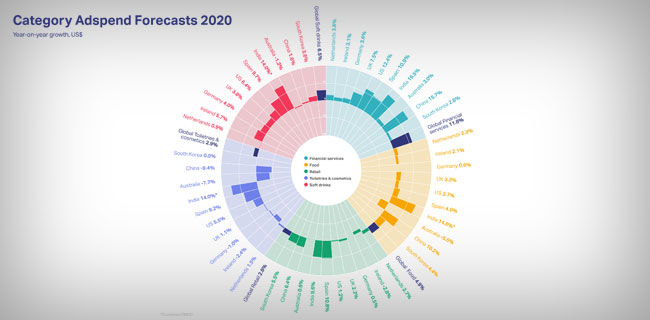
    WARC has found that advertising spend is set to rise next year across all 19 product categories monitored by WARC, culminating in global growth of 6.0 per cent to $656bn. This is a marked uptick from the 2.5per cent rise estimated for 2019 but is down on the 7.3per cent growth recorded last year.

    Eight product categories are set to increase advertising investment ahead of the global rate next year: financial services (+11.8per cent), household & domestic (+10.5per cent), transport & tourism (+9.0per cent), telecoms & utilities (+8.5per cent), technology & electronics (+8.4per cent), alcoholic drinks (+6.9per cent), automotive (+6.8per cent) and soft drinks (+6.5per cent). Internet is the fastest growing ad medium in each sector except technology & electronics, where out of home (OOH) is set to rise fastest at 11.4per cent.

    Globally, internet formats will account for over half of advertiser investment for the first time in 2020, with a combined value of $336bn. Investment in performance marketing, online video and social media is driving total market growth; advertiser investment excluding money spent on Facebook, Google and Amazon is flat or falling globally.

    The report states that Internet formats, combined, will account for over half of global ad investment for the first time in 2020, and social media, search and online video – the largest of these – are effectively shorthand for Facebook, Google and (Google-owned) YouTube. Google and Facebook, known as the ‘Duopoly’ drew two-thirds of online ad investment in 2018 before traffic acquisition costs (TAC) were paid out to Google’s partners, and WARC expects this share to rise closer to three quarters next year.

    Amazon is small by comparison but is becoming increasingly important to advertisers looking to connect with consumers close to the point of purchase. Amazon’s share of global ad investment is forecast to rise to 2.5per cent next year, Alphabet (Google and YouTube) 23.1per cent, and Facebook 12.9per cent (38.5per cent combined). The central role these three companies – known collectively as the ‘Triopoly’ – play in advertising is stark: advertiser investment beyond them has been flat since 2012.

    The report further states that growth in advertising investment is expected to be recorded within all 19 product categories monitored by WARC next year, although rates vary substantially.

    The financial services category leads with a projected 11.8per cent rise in spend to $53.4bn next year, as brands, particularly in the banking sector, are looking to connect with younger consumers on social media to inform often lifelong choices over their account provider. More than half of sector investment is directed towards online formats.

    The retail sector – the largest in this analysis – is expected to post the lowest growth next year, though a 2.6per cent rise would still be the strongest since 2013. Competition is fierce, from supermarkets to restaurants, and incremental dollars are mostly spent online, with TV, radio and print down over recent years.

    Said James McDonald, Managing Editor, WARC Data, and author of the research: “Weak macroeconomic indices, waning business confidence and rising geopolitical tensions have increased the possibility of a recession in 2020. Within this climate, our forecast of six percent growth in global advertising investment may seem optimistic, but these projections are in line with those from the IMF and Euromonitor for GDP and consumer spend, respectively,” adding:  “Incremental adspend during quadrennial events – the Tokyo Olympics and US presidential campaigns – may be muted next year but will still have a positive net contribution to global growth, as would a stronger yuan and a business-favourable ‘Brexit’. Advertisers also intend to increase spend on Google, Facebook and Amazon properties, with global media spend ultimately flat elsewhere.”


  • InMobi adds Microsoft Advtg platform for marketers

    By A Correspondent


    InMobi announced that it has extended its partnership with Microsoft by adding the Microsoft Advertising business to its current portfolio of offerings. InMobi will now be able to offer marketers an integrated solution to power their campaigns built on search capability of Microsoft Advertising and mobile capability of InMobi Marketing Cloud.


    Said Mark Richardson, VP of Global Corporate Sales at Microsoft: “We see an immense opportunity to grow the search and display market in India where digital is growing thirty percent year on year. Our relationship with InMobi, India’s first tech unicorn ,will enable Microsoft Advertising to leverage InMobi’s knowledge of the Indian mobile landscape and its go-to-market platform to grow the business further.”


    Added Vasuta Agarwal, MD, Asia Pacific at InMobi: “The extended partnership between Microsoft Advertising and the InMobi Marketing Cloud will enable marketers to deliver a unified brand experience to customers by bringing together the best of search and display platforms. Our deep appreciation of Indian marketers’ needs, a keen understanding of the Indian market and a customer-obsessed team, position us uniquely to bring Microsoft Advertising to marketers in India.”


  • FCB Ulka gets Project Streedhan to raise awareness on anaemia among women

    By A Correspondent


    A campaign that emanates out of the fact that India ranks the highest in world for prevalence of anaemia among its women, has been launched to capture a more startling fact – that more than 50 per cent of women in urban India are also anaemic.


    Creative agency FCB Ulka has conceptualised Project Streedhan equates the importance of purity of gold – a precious metal – with that of the iron count in a woman’s body – another precious metal, as it were. The launch of Project Streedhan has been strategically timed to coincide with the Dhanteras 2019 and exhorts women to invest in Iron and not only gold.


    Shedding light on the idea and premise of the campaign, Swati Bhattacharya, CCO, FCB Ulka said: “Iron deficiency has seen many awareness campaigns. Still 1 out of every 2 women suffer from iron deficiency. Sometimes it not what you say but how and where you say it, that creates the bigger impact. This Dhanteras, when women are thinking of investing in gold, the Streedhan campaign gets them to think of investing in another metal. Something that turns to gold inside them – iron. The real Streedhan is iron. Also, what’s so heartening is that so many jewellers across the country have come forward to support this message!”


    Discussing the digital footprint of this campaign, Chandni Shah, COO, Kinnect added: “Iron deficiency is more common than anyone might think, but a woman’s inclination to do something about it is not half as common. The power of using digital icons to drive awareness cannot be underestimated, and we are so proud to associate with socially-conscious celebrities like Radhika Apte and Soha Ali Khan to reach millions of women across India. Through digital, we have inspired women with an extremely relevant message and urged them to take a crucial step towards their health this festive season”.


  • Imagica unveils new brand positioning

    By A Correspondent


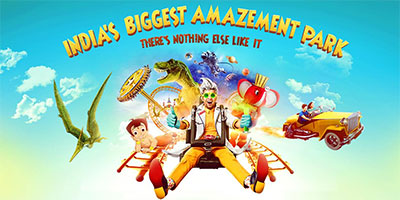
    Imagica has launched its new brand positioning in India as ‘India’s Biggest Amazement Park’.


    Said Raveendra Singh, Head of Marketing, Sales & Strategy, Adlabs Entertainment: “Imagica has been relentlessly pushing the envelope each year to pleasantly surprise guests with its unique offerings. This has translated into a strong intent to sustain as well as keep increasing the entertainment quotient that leaves guests with a sense of amazement. Decision to therefore embrace the new brand positioning as India’s Biggest Amazement Park, has been simple and effortless. From brand strategy standpoint, the campaign treatment approach applied is also truly innovative with the brand now having a voice of its own in the form of Dr.M.A.Zing. To take the amazement concept a step forward, we have also re-evaluated our pricing strategy. We are offering guests access to this unparalleled entertainment universe at charming pricing of INR 999 onwards every-day, all through the festive season.”


    Added Joy Ghosal, Co-Founder and Head – Creative Strategy, Marching Ants: “In today’s world where all parks are seen or treated equally, our objective was to create a superlative proposition deserving of Imagica’s scale, size and experiential superiority as a communication context to the consumer. The key proposition was articulated using the tangible superiorities of Imagica by coining a new term in the category. This was derived out of consumer speak who termed their experience at Imagica as always amazing. With this in mind we created the character Doc. M.A.Zing – a quirky ‘scientist of fun’. Through short films, this character narrates Imagica’s amazing story of largeness, fun and exhilaration and finally calls out the Rs 999 price point.”