Dentsu X India has been recognised in the Top 100 Fastest Growing Agencies’ global rankings by Adweek. The agency, notes a communique, has recorded good business growth over the past few years. Dentsu X India is the only agency from India to appear in the list of Top 100 global agencies.
Speaking on the occasion Divya Karani, Chief Executive Officer, Dentsu X India said, “We are simply delighted! This growth, these accolades bear testimony to our differential design thinking and the good work delivered to our clients. They also reflect our culture of partnering our clients every step of the way. This recognition is both gratifying and motivating for us to stay the course.”
According to the communique received, Dentsu X India has also been recognised as the ‘No.1 agency on the New Business Barometer 2018’ by COMvergence, an independent international report and RECMA.
Geometry Encompass secured five ‘Dragons’ under various categories at Dragons of Asia 2019. Its campaign, ‘Beginning of Togetherness’ for Brooke Bond Red Label dominated the awards by winning the best in India title – the Blue Dragon, along with a gold, silver and black Dragon.
Geometry Encompass also won a Bronze Dragon for their campaign, ‘The Mirror Image’. The winners were announced on 7th October 2019 in Kuala Lumpur, Malaysia.
Said Ranjit Raina, Chief Executive Officer, Geometry Encompass: “We’re thrilled to see that our hard work has been recognizsd by a body as prestigious as the Dragons of Asia. Arpan and his team have consistently delivered great work for our clients and it is this commitment that has shone through for us. This body of work is especially important as it demonstrates our creative strength across categories for HUL. The intense spirit of competition pushes us to perfection and keeps the industry dynamic and creative.”
Commenting on the victory, Roshan Abbas, Managing Director, Geometry Encompass, said: “This is a great achievement for us as we have won across a wide range of categories. This was made possible thanks to our hard-working team and our brave client partners. These awards are a testament to our dedication to create meaningful work that has an impact and pushes the envelope of creativity and effectiveness.”
We’ve been hearing these rumours for a few months now. But now it’s confirmed.
Anita NayyarMohit Joshi
Anita Nayyar, longstanding CEO of Havas Media India and Southeast Asia, has now moved out of her day-to-day operational role at Havas Media to a larger group-level assignment with Vivendi, the holding company of Havas, with reporting directly (and only) to Vishnu Mohan, Chairman & CEO, Havas India & South East Asia. Nayyar’s mandate includes working on inorganic growth, identifying new business opportunities and new revenue streams, and facilitate partnership.
Havas Media meanwhile is now being helmed by Managing Director Mohit Joshi who reports to Havas Group India CEO Rana Barua. According to information received by MxMIndia, things have changed since around a fortnight via communication sent out to all internal stakeholders by Mohan.
Nayyar joined Havas in 2007 as CEO of Havas Media India and save a few months when she moved to Bennett Coleman and Company Ltd (BCCL) as Head of Customer Strategy and joined back seven months later, she has been spearheading Havas Media. Joshi has also been working with the group since 2007.
Havas Media has bagged the digital duties of Piramal Enterprises Limited’s (PEL) Consumer Products Division. The pitch was jointly won along with Havas Group’s healthcare specialists, Havas Life Sorento.
The mandate includes social media, content, ORM, SEO and website duties for PEL’s Consumer Products Division comprising of 22 brands across categories such as skin care, vitamins and nutrition, antacids, analgesics, gastro-intestinal and baby-care. The account will be handled out of the agency’s Mumbai office.
Said Mohit Joshi, Managing Director, Havas Media Group: “We are delighted to be partnering with a renowned meaningful brand like Piramal that caters to the Indian self-care market with a purpose to improve people’s lives by offering products that address their routine-disruptors. Havas with its combined capabilities from creative, media and healthcare divisions, manifested in our ‘Village’ Together model, will aim to provide the best consumer-centric solutions to the client. Based on the philosophy of ‘Doing Well and Doing Good’, Piramal Group is known to create long-term value for its stakeholders and the community at large, and we are delighted to be their trusted torchbearers in this journey.”
India has jumped to seventh position in the Brand Finance Nation Brands 2019 ranking, up from ninth last year, after recording a 19 per cent growth in brand value to US$2.6 trillion, according to the latest report by Brand Finance, a leading independent brand valuation consultancy.
Other movers in the top 10 include: Japan and UK swapping places; Canada, dropping from 7th to 8th (down 2 per cent to US$2.2 trillion); Italy falling from 8th to 10th (down 5 per cent to US$2.1 trillion); and South Korea, which has inched up one place from 10th to 9th (up 7 per cent to US$2.1 trillion).
Looking beyond the top 10, the average year-on-year nation brand value growth among the developing economies stands at 13.9 per cent, compared to as little as 0.4 per cent for the developed economies included in the annual study into the world’s 100 most valuable nation brands. This means that – on average – the nation brands of developing economies have been growing at a pace 31.3 times faster than the developed ones.
Said David Haigh, CEO of Brand Finance: “With the Western world seeing a real crisis of leadership on both sides of the Atlantic, the developing world is catching up. Bolder, more agile, increasingly innovative African, Middle Eastern, Asian, and Latin American nation brands are racing ahead at breakneck speed, poised for further growth in the years to come.”
Although catching up, at US$37.8 trillion – the combined nation brand value of the 65 developing economies in the study remains far behind that of the 35 developed economies – which sits at US$60.3 trillion. Topping the ranking again this year, the nation brand value of the United States alone stands at US$27.8 trillion.
Claiming second position, China continues to grow at a very healthy rate, recording an impressive 40 per cent increase in brand value to US$19.5 trillion. Building on its solid performance in previous years, China is closing the gap behind long-standing leader the US, which has recorded a brand value growth of just 7 per cent over the past year. The difference in value between the two nation brands has dropped from US$12 trillion last year to just over US$8 trillion in 2019.
David Haigh, CEO of Brand Finance, commented: “China is undergoing a meteoric rise on the global stage, rivalling the traditional nation brand powerhouses in the West. Despite economic and political challenges, China’s nation brand value has grown by 40 per cent, consistently outpacing the US and other major economies.”
Earlier this week, Facebook India hosted its inaugural Thumbstoppers Summit, a platform in Asia for creativity in mobile video advertising.
The summit opened with a keynote by Ajit Mohan, MD and VP of Facebook India, talking about the future of video in India, and how Facebook and its family of apps are driving curated video experiences, and enabling social video in the country giving businesses and people a range of ways to create, express, and communicate.
Speaking about the initiative, Sandeep Bhushan, Director and Head, Global Marketing Solutions (GMS), Facebook India, said: “Video is central to our vision for India, and how we are building for people, communities, businesses in the country. From In-stream on Facebook to Stories on Instagram, there are multiple video ad formats on Facebook that can be used by both large and small businesses to reach their consumers, and drive the desired business results. Thumbstoppers is the most effective way to do storytelling for mobile video advertising, and it’s been heartening to see the marketing and advertising industry create and produce such inspiring Thumbstopping work in just five months.”
The Summit also served as the concluding event for Thumbstoppers Challenge, which had invited members of the creative and advertising community to submit their short-form video stories with the aim of inspiring creative professionals, brands, and agencies to build for mobile as a medium. The contest saw more than 3500 entries from across the country. Of these, 60 entries were from brands from across verticals and industries with six films from Dove, Sofy, Vodafone, Unilever Sustainability, and Royal Enfield making it to the top 16 films that were recognised and unveiled for the first time today. All 16 winning films have been directed by adfilm maker Prakash Verma and the top four winners stand a chance to travel to Cannes next year.
The top four winners include Rachita Kotwal from FoxyMoron in the category ‘Products We Love’ for the film ‘Fathers should be a part of their daughter’s menstrual journey’, Samriddhi Shah from Wunderman Thompson in the category ‘Breaking Stereotypes/Social Causes’ for the film ‘Just because home makers don’t earn, doesn’t mean they shouldn’t be respected’, Shib Nath Sen from Wunderman Thompson in the category ‘Start A Habit’ for the film ‘Peeing on roads!’ and Swati Subramanian from Leo Burnett in the category ‘Little Big Moments’ for the film ‘Divisive behaviour in our society towards people with different orientation/preferences’.
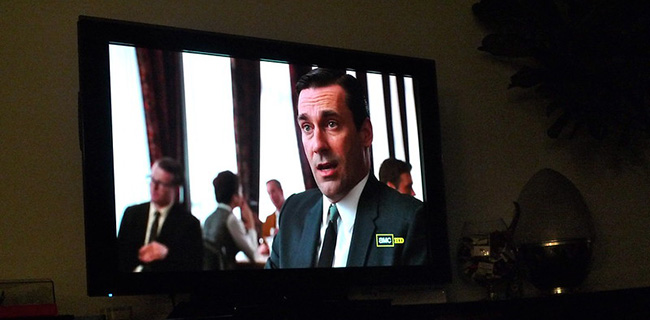
In the pilot episode of the television series Mad Men, which takes place in 1960, Don Draper, creative director of Sterling Cooper, meets with the fictitious owner of cigarette brand Lucky Strike to discuss how to proceed with their advertising efforts. The interaction shown on screen – a company owner or CEO meeting with their agency to discuss a marketing issue in some depth – was presented as a seemingly everyday affair. Such meetings probably were relatively common in that era as television advertising was newly ascendant in the United States; the impact of a single commercial or slogan had clear impact. Through the 1950s, broadcast television signals did not reach the entire population, and companies who used the medium to advertise could observe plainly that a brand’s sales jumped meaningfully in geographies where television was available, relative to geographies where it was not.
Over the course of the following decades, many dominant brands had become ubiquitous and television access became universal, often diminishing the observable incremental impact of advertising on business outcomes. Meanwhile, many brand owners were consolidated into larger entities that pursued synergies and cost savings by centralizing operations related to product development, manufacturing, sales and different aspects of marketing. Many marketing tactics came to be standardized, mostly improved on the margins.
Meanwhile, managers at the top of many organizations dependent on the strength of their brands did not always have a full appreciation of how brand-building – and perhaps marketing by extension – works. At least many of those managers are by now self-aware: illustrating the problem, a new survey published earlier this year by the UK-based IPA and The Financial Times indicated that “over half of business leaders rate their knowledge of brand-building as average to very poor.”
Marketers often sit in the middle of their organizations, removed from the top. By now, it is common that large companies have senior marketers who oversee what can be described as centers-of-excellence, responsible for functions such as consumer insights, relationships with external service providers agencies (including creative and media agencies) whose work is ultimately delivered to brand managers. But their role is often intended to support the application of best practices across brand managers’ business units rather than to lead them. Many of their activities are then heavily influenced by processes that procurement professionals deem necessary which, again, are focused more on cost management rather than the pursuit of growth. Few of those marketers report directly to the CEO of the company they work for, and many of their groups (perhaps the majority?) operate more as a cost center than anything else.
Organizationally, a large company’s reporting structure might look like this:
As for the agencies that work with brands, the individual client they most frequently interact with (the media director or creative director in our illustration here) may be far-removed from the brand owner, let alone the founder or CEO of the company that owns those brands. This can add another layer of complexity if the advice provided by agencies gets filtered on its way to ultimate decision-makers, a contrast with the Don Draper-Lucky Strike scenario.
In the above structure, it may be difficult to credit the marketing function or the agencies they work with for good outcomes, as brand owners or sales can be better positioned to take such credit – often appropriately so. Different approaches can be used to connect business results to marketing choices, but the outcomes following from related actions may be difficult to observe with the naked eye, leading to the use of attribution models that depend on a myriad of assumptions. Arguably, marketing that has meaningful long-term impact on a business should be observable without a model; however, if marketing is buried within a company it may be difficult for this function to drive the business choices that cause growth that everyone can plainly see.
And so we can have situations where companies that should want marketing to have the impact it had in Don Draper’s day posssess an organizational structure that might limit it. Under these circumstances, what is a marketer – or an agency who wants to help them – to do?
Marketing is a function which can drive business growth and should sit at the top of every organization as well as the brand-focused divisions within them. Every company and business unit has the potential to realize rapid growth, if only they have the ability to organize their people and assets to enable it. Marketing is one of the best ways to drive this growth for a simple reason: marketers are the individuals who should best be able to balance an understanding of what consumers will want with what is possible for a company to produce given all of the likely choices that competitors and supply chain partners may make. A CEO or brand leader may very well be a marketer at heart and can provide a company or business unit with marketing leadership, but often CEOs’ and divisional leaders’ experiences are rooted in sales, finance or a company’s product development efforts. If those leaders are not marketing-oriented, they need to have a senior marketer who reports directly to them, even if marketing is a relatively small share of a company’s expenses (and for the average company, marketing typically represents a low-single digit share of those costs).
Whomever the most senior marketing-focused executive in a company is should then continue to oversee the centralized functions referenced above as they provide scale to the marketing activities performed by individual brands. Centralized data management on consumer insights and commercial activity from across a business should live under those individuals as well.
From there, companies should embed as much marketing knowledge, experience and budget-setting capabilities for marketing as high as possible within brand-owning business units and consider dual reporting into global marketing organization as well, with shared KPIs (key performance indicators) driving managers’ bonuses. Although challenging, matrixed reporting between brand-owners and marketing can help support the application of superior marketing capabilities to individual business units. The deeper marketers reside within individual business units and the closer it is to the top of business units, the more likely those individuals can lead growth rather than merely manage costs or operations.
Of course, significant structural changes only rarely and gradually occur. For a marketer whose structures are sub-optimal and unlikely to change, what can be done? Continue to make the case for the benefits that marketing leadership can bring. In general, marketers and the agencies who work with them can help audit the processes companies use to make decisions related to marketing and identify best practices that lead to growth from across a range of industries. Agencies will have clients with a range of growth profiles and should be able to identify the factors that are likely to support long-term commercial outcomes. At the same time, central marketing groups should be well-positioned to gather data from across a marketer’s organization and will at least be able to identify the elements of marketing that have been successfully applied internally. Both efforts can help produce benchmarks around which brands are most successful in accomplishing their goals within a company and across a range of different kinds of companies.
Driving changes such as those mentioned here aren’t necessarily easy to make happen, and of course there are always trade-offs to consider. They will likely be worthwhile. The Don Drapers of today’s world have a broader range of tools at their disposal than they did in the 1950s and 1960s to help companies grow. Ensuring that marketing sits at the top of corporate hierarchies will be key to ensuring they and their day-to-day counterparts once again
Brian Wieser is Global President, Business Intelligence GroupM. This article was first published at https://www.groupm.com/news/digital-ads-targeting-and-least-bad-alternatives
WatConsult, under its market research division, Recogn has launched its latest report on Instagram in India from a user’s perspective. The report focuses on the user’s point of view on Instagram, highlighting usage patterns, content like ability, celebrity influence and what pushes them to shop on the platform. Interestingly, ads on Instagram that are perceived to be appealing lead users to search for more information for the said products or services, enabling users to shop.
More than 75 per cent of the shoppers have had a satisfactory experience while shopping from Instagram and a majority of them are likely to shop in the future as well. Instagram, which was perceived to be a discovery platform because of visual nature and stickiness, has over time transformed itself into a platform that induces discovery as well as an influence leading to a purchase decision.
Here are some key findings of the report:
Currently, Instagram has 117.1 million monthly active users and average time spent per user is 45 minutes
Instagrammers spend most of the time on the platform in the evening between 4-8 PM
For the users to be willing to purchase something on Instagram, they need to be made aware of the authenticity of the product. More than 75% of the shoppers have had a satisfactory experience while shopping from Instagram and a majority are likely to shop in the future
84% of the users are influenced by the platform resulting in likelihood to shop via Instagram
More than 50 per cent of the consumers have shopped using Instagram. Close to 75 per cent of the users from small metros and small towns have shopped using Instagram
51 per cent of the Instagrammers access it at least once a day with a large proportion of Instagram users accessing it multiple times in a day
Said Rajiv Dingra, Founder and CEO, WatConsult: “Instagram as a platform has grown tremendously in the last two years, and the user adaption rate is very quick. The app has a strong presence in the remotest of the city in our country. With this report, we are bringing forward to the industry, the behavioral patterns of the users, shopping habits and trends which can indeed add value to the brands in terms of shaping their marketing strategies.”
Harman Kardon International, which operates brands Infinity and JBL in India, has awarded its integrated communication mandate to Havas Creative India for its recently launched brand Infinity. The agency has been selected to handle both online and offline platforms and won the mandate on the back of a multi – agency pitch.
As part of the mandate, the agency will be responsible for creative strategy and execution. The business will be handled by the agency’s Delhi office.
Speaking on the win, Manas Lahiri, Managing Partner – North, Havas Gurgaon: “We are looking forward to work with leading global company like Harman Kardon. With our Havas’ integrated Village model, we will continue to provide clients with seamless and agile business solutions. The category is very competitive and dynamic, but with our “Better Together” strategy which offers integrated outcome-oriented strategy and results, we would be able to drive revenue growth and brand preference in India.”
Dentsu Aegis Network (DAN), the global media & marketing communications conglomerate, has appointed Asha Suvarna as its Chief Financial Officer (CFO), India. Prior to this, the role was held by erstwhile COO and CFO Anand Bhadkamkar who was promoted to lead the country operations as Chief Executive Officer (CEO) last month.
Armed with more than 20 years of experience in media and advertising, Suvarana is also a qualified Chartered Accountant (CA). She joins DAN India from GroupM where she held numerous roles over two decades, the last being Finance Director.
Suvarna take charge of her new office today (October 16). In her new role, she will report to Bhadkamkar and David Neal, CFO Greater South – Dentsu Aegis Network.
Anand Bhadkamkar
Commenting on Asha’s appointment, Bhadkamkar said: “I am pleased to announce Asha’s appointment as CFO of the Group in India. Asha brings with her considerable experience in our industry as well as a very strong understanding of our business. With her financial acumen and leadership capabilities, I am sure Asha will be a great addition to the DAN India executive team and a critical strategic business partner in these transformational times.”
Commenting on her new role, Suvarna added: “Home to 23 super-successful agency brands of the country, Dentsu Aegis Network today is undoubtedly the fastest growing network in India. I am extremely honoured and happy to take up this new role and now ready to embark upon this new challenge under DAN’s strong One P&L philosophy.”
Network Advertising has launched a campaign for homegrown lifestyle brand, Ellementry.
Said Shayondeep Pal – Chief Creative Officer, Network Advertising: “Ellementry gives you the opportunity to build a brand through good old days of print. With a core proposition of form marrying function, it creates a design genre that’s new to us. Never before we had mundane products that take aesthetics seriously. And that’s how we arrived at the idea of ‘everyday beautiful.’ To find beauty in everyday things. Like a rolling pin or a tea rest. From a creative point of view, there’s immense satisfaction in reviving the dying art of soft persuasion through headlines in the mad days of cluttered television.”
Added Ayush Baid, Founder, Ellementry.com: “Since our inception, we have focussed on creating products that are a balance of form and function. So much is our focus on this core proposition that if a product satisfies one but not the other we don’t launch it. When it comes to gifting, our research indicated that people often give beautiful useless gifts which just get passed on from one person to the other. To break this cycle, we created a range for gifting during this festive season. Our products are not only beautiful to look at but also thoughtfully designed. We strongly believe that consumers will want to keep and use our products rather than passing them forward. Our ‘Thoughtful and Beautiful gifts’ campaign is a natural progression of our previous campaign of ‘Everyday beautiful’.’
Veteran adperson Conrad Saldanha passed away in Auckland on Sunday evening. He was hospitalised with a brief illness. Rich tributes have been paid by industry persons, many of who owe their careers to Saldanha.
Vishnu Mohan, Chairman & CEO, Havas Group – India/South East Asia/North Asia:
There are very few people that spellbind you instantly with their radiance, charm and genuineness. Human, kind, sincere, caring – the list could go on and on. That was Conrad.
Such was his gravitation that I don’t know when and how a relationship that began 28 years ago as a management trainee turned into being and believing in him as a parent.
The 7pm whisky, the cricket we saw together, the laughs we shared, the immense love for my daughters, the reprimands and advice replay endlessly
He taught the world and me how to always stay young.
A loss for the industry, his friends and his colleagues.
For me, I lost my Dad
Harsha Bhogle, cricket commentator, consultant, former adperson:
When I joined Rediffusion, I was petrified of Conrad.
I thought he was stern and hard. I was to learn later what a facade that was! Conrad was kind, understanding and played a big part in making generations of entrants to Rediffusion feel comfortable.
He was as much a guide as a boss. Our WhatsApp group is in grief but also full of stories of his help, his support and his guidance.
He was, just simply, a good man
Ambba Kuthiala, General Manager APAC, Talenthouse:
There can be only one Conrad Saldanha (fondly known as Connie) in this world.
If you were tired he was your go to guy, If you are feeling low & lost at work? Connie was the man. Need advice? Need help? Or need a drink? Or need many drinks to cheer you up? Or just simply bored and lonely? Go to Connie. Everyone in the industry and our agency knew that you could find Connie at “Gallops” or “The Jewel of India” after six in case you needed a kind and a good listener. It did not matter if you were young or old, or if you were a client or a colleague……Connie was a ray of cheer for everyone
And this pattern continued even when Connie and Lynett visited me in Singapore. After a long stressful daym I would go home to find Connie at home fixing me a drink or russling up a meal or waiting with a goody bag to cheer me up. He was sent there as my guardian angel to help me settle in.
A man with many endearing names- “Papa bear” “Cuddly & warm” “Toughie with a heart of gold” “drinking buddy”…..
You touched everyone’s life in your special way…….
Cheers to you Connie wherever you go…… I am sure there will be many waiting to welcome you with a hearty drink and a warm smile.
The ad industry has truly lost its lustre with your precious loss.


 In the pilot episode of the television series Mad Men, which takes place in 1960, Don Draper, creative director of Sterling Cooper, meets with the fictitious owner of cigarette brand Lucky Strike to discuss how to proceed with their advertising efforts. The interaction shown on screen – a company owner or CEO meeting with their agency to discuss a marketing issue in some depth – was presented as a seemingly everyday affair. Such meetings probably were relatively common in that era as television advertising was newly ascendant in the United States; the impact of a single commercial or slogan had clear impact. Through the 1950s, broadcast television signals did not reach the entire population, and companies who used the medium to advertise could observe plainly that a brand’s sales jumped meaningfully in geographies where television was available, relative to geographies where it was not.


 Network Advertising has launched a campaign for homegrown lifestyle brand, Ellementry.
 Veteran adperson Conrad Saldanha passed away in Auckland on Sunday evening. He was hospitalised with a brief illness. Rich tributes have been paid by industry persons, many of who owe their careers to Saldanha.
 Harsha Bhogle, cricket commentator, consultant, former adperson: