Category: ADVERTISING

  • Rohit Gupta elected Chairman of ASCI

    By A Correspondent


    Rohit Gupta, President, Sony Pictures Networks was unanimously elected the Chairman of the Board of Governors of the Advertising Standards Counciil of India (ASCI) at the Board meeting following the 33rd Annual General Meeting of ASCI. Subhash Kamath, Managing Partner, BBH Communications India Pvt Ltd was elected the Vice-Chairman and Shashi Sinha, CEO, IPG Mediabrands was re-appointed Honorary Treasurer.


    Recalling his year at ASCI, the outgoing Chairman D Shivakumar, said: “ASCI is a voluntary job and a board led organisation. When I set out last year as the Chairman I had three objectives laid out. The first was to increase our membership base, the second to go digital and third to create awareness among consumers. Now thanks to the MIB directive our awareness has increased immensely, our WhatsApp number has seen a 3X increase in daily messages. We have increased our member base by 10%, our new members representing e-commerce, food & beverage, automotive sectors joining ASCI. ASCIs digital marketing campaigns would further boost awareness as well as compliance. I wish Rohit and the board the best for the year ahead.


    Added Gupta: “I am honoured to accept this role and look forward to the year ahead. With the inclusion of the internet into our everyday life and the constant evolution in the digital space, I feel that synchronizing ASCIs efforts in the Digital space will be our key focus for the year. The Council has covered a lot of ground in addressing the need for self-regulation in the digital medium and work is progressing rapidly to address that need. Additionally, we will continue our efforts to strengthen relationships with stakeholders in the year ahead.


  • Times Network & Stark Communications bag top honours at Big Bang Awards 2019

    By A Correspondent


    The Bangalore Ad Club’s Big Bang Awards 2019 held its 24th edition in Bengaluru last Friday.. Stark Communications won the maximum Gold and Silver awards totaling to eight, while Times Network won two Gold, four Silver and three Bronze and was declared the Client of The Year. Presto Advertising from Chennai won the maximum of Bronze totaling to seven awards this year. The event received entries from 73 agencies and seven clients, spread over 13 cities in India.


    The jury panel had over 20 leading professionals including Harish Bijoor, Sundar Madakshira, Chetan Asher, Ashok Lallla, etc. to judge the entries. Celebrated adfilm-maker Prasoon Pandey and Sachin Sharma, Director Sales, TikTok were also present at the event as chief guests to discuss/debate the future of advertising industry


    Said Laeeq Ali, President, The Advertising Club Bangalore: “As the Advertising Industry continues to grow, more and more new opportunities and newer challenges seems to be emerging. Our theme this year Breaking The Rules focused on recognizing the digital creative content that broke the conventional rules in order to capture the new age consumer,


    Added Malvika Harita, Chairperson of Big Bang Awards:, I have been involved with Big Bang Awards for the last 20 years. This year we saw a lot of emerging digital agencies and everything was quite exciting and we are hoping that Big Bang 2, coming up next, is even more exciting.”


  • New campaign reignites search for children with Progeria in India

    By A Correspondent


    Followers of Hindi cinema would know of Progeria as the rare disease afflicting actor Amitabh Bachchan in the film ‘Paa’.


    The Progeria Research Foundation (PRF; www.progeriaresearch.org) announced the launch of ‘Find the Children – 60 in India with Progeria’ campaign. The campaign is designed to create awareness among the general public and healthcare providers, in order to locate and assist children with this rare and fatal rapid aging condition. The India search calls for the public’s help in finding undiagnosed children with Progeria, so they can have access to treatment and healthcare guidelines that can give them longer, more active lives.


    Said Audrey Gordon, President and Executive Director of PRF: “In order to help the children, we have to find them. Locating and assisting them is the goal of our international ‘Find the Children’ campaign. Progeria is a very rare disease that many people don’t recognise. And in a vast, diverse, and multilingual country like India, many of these children come from smaller towns and remote villages; so this outreach is vital to finding them.”


    The Progeria Research Foundation has collaborated with MediaMedic Communications through its exclusive status as India partner in GlobalHealthPR. In the past, MediaMedic helped find Nihal Bitla from Bhivandi, Mumbai, and several others, including children from Chhattisgarh, Bihar, and Madhya Pradesh.


    Added Dr Leslie B. Gordon, Medical Director of PRF: “We have connected with over a dozen families of children with Progeria in India, and they have become part of the PRF International Progeria Registry, received treatment recommendations, and joined clinical treatment trials. Our goal is to provide these opportunities to every child with Progeria in India. Finding these children and their families is the essential first step to helping them/ All children with Progeria must have the opportunity to benefit from our efforts to find treatments and a cure, so please help us find children with Progeria in India.”


  • Rishabha Nayyar appointed National Strategy Lead of 82.5 Communications India

    By A Correspondent


    Rishabha Nayyar

    82.5 Communications has announced the appointment of Rishabha Nayyar as National Strategy Lead. Nayyar will have planning teams across Mumbai, Bengaluru and Delhi reporting to him. He will report to Kapil Arora, Co-Chairman & CEO.


    Said Kapil Arora, Co-Chairman & CEO: “Rishabha brings a depth of strategic thinking and grounded-ness that is rare to find today.  His experience and great work across big and small brands, legacy and new age businesses alike, will add not just the requisite strategic firepower for our clients, but also act as a force multiplier to our creative product.   Having been an entrepreneur early on in his career, Rishabha also shares the 82.5 gene of passion for the new.  We’re stoked to have him on board at this exciting phase of our growth journey.”


    Added Sumanto Chattopadhyay, Chairman & Chief Creative Officer: “With much of our senior management schooled at Ogilvy, I welcome the fresh perspective Rishabha brings in as an ‘outsider’.”


    Nayyar was Executive Director of Brand Strategy at Lowe Lintas, before moving over to 82.5 Communications.


  • Network Advertising unveils ad for Mahindra Lifespaces

    By A Correspondent


    Network Advertising has launched a campaign for Mahindra Lifespaces’ recently launched residential project ‘Vicino’, located in Andheri East, Mumbai. The campaign comprises a series of short, digital-first video ads that leverage humour to give a quirky twist to the high involvement activity of home-buying.


    Shayondeep Pal

    Said Shayondeep Pal – Chief Creative Officer, Network Advertising: “To own a home in the heart of Mumbai is to say you’ve arrived in life. Vicino by Mahindra Lifespaces is one such project in Andheri where everything is close by. So the team came up with the idea of highlighting the locational advantage through what we all love to watch on our social media feed – animal videos! The aim was to be disruptive in the category while communicating a strategic locational benefit in the shortest possible duration. In this context, I would like to thank Mahindra Lifespaces for buying into creatives that go beyond ‘safe’ in the traditional sense.”


    Added Sunil Sharma, Chief Customer Officer, Mahindra Lifespace Developers Limited: “Vicino is strategically located in Andheri East and meets the evolving needs of home buyers in Mumbai. In a cluttered real estate space, our focus was on ensuring crisp, engaging and hard-hitting films that would be entertaining while also effortlessly seeding our customer value proposition of Joyful Homecomings to well-connected homes at Vicino.”


  • Indian Terrain awards mandate to Brave New World

    By A Correspondent


    Brave New World will now lead the integrated communications mandate for retail clothing brand, Indian Terrain. The agency has been entrusted with creating an integrated brand presence across its mainline advertising, store communication, online presence and social media.


    Said Charath Narasimhan, CEO & MD, Indian Terrain: “With the company at its 20-year mark, we were on the lookout for a partner who could help us grow our foothold in the mens and boys segment while creating an engaged audience base on our social platforms. With rife competition from aggressive new players, the opportunity at hand is to keep our strong base of loyalists close while growing the demand from a new generation of people entering the workforce. The integrated team at Brave New World came across just as passionate about results as they did about creativity. We look forward to having their fresh thinking help us craft a refreshed go-to-market playbook for the brand.”


    Added Joono Simon – Founder and Chief Creative Officer of Brave New World: “The current e-comm clutter is causing a certain degree of commoditization of retail fashion, leaving many brands to look faceless and obtuse. As a result, most discerning customers are seeking out brands that are more meaningful and substantive. Indian terrain is a brand that has its feet rooted firmly on the ground and has nurtured a very loyal fanbase over the years. The name ‘Indian Terrain’ itself alludes to something bigger and intrinsic. We’re excited about unlocking the inherent potential it holds from a communication standpoint.”


  • Amazon v/s Flipkart: The Big Sale Fight


    By Sanjeev Kotnala


    In all likelihood, over the next few days, you will buy some item on the ‘Amazon Great Indian Festival Sale’ or the ‘Flipkart Billion Days Sale’. And at the end of the sale period, one of them will claim some astronomical figure of realised sales.
    Through the years, Amazon and Flipkart have successfully redefined ‘the biggest sale’ in Indian festival calendar. It is now nearer to Dassera than Diwali, an attempt to sweep the market before the traditional sale period.

    Sales in India on a single day are nowhere close to the eye-popping record $30.8 Billion ‘Single’s day’ sale of Alibaba, which was more than the ‘Black Friday’ and ‘Cyber Monday’ sales combined. But we are getting there with growing e-commerce, better logistics, infrastructure and some help the banks and payment gateways.


    STRAIGHT FIGHT BETWEEN AMAZON AND FLIPKART.

    Ladies and Gentleman, the man/woman with a high-end mobile and slow connection and the laptop babu with a fast connection. The fight is opening soon. Guaranteed you will benefit in this ‘diwalia hone ko tayyar‘ (Ready to get bankrupt) sentiment associated with such sales.

    In the red corner of this ring of festival annual sale fight is the Amazon Great Indian Festival Sale with its very cultural centric motif that is scheduled for September 29 to October 4. Amazon Prime members can try it out from September 28 itself.

    In the blue corner is Flipkart, which has mastered the art of sale throughout the year. Its Big Billion Days Sale will start on September and 29 and end on October 4.


    This is a straight fight no consumer worth his or her last spending INR wants to miss.

    The banks are joining the fun with further cash backs and easy EMIs. Somewhere there is a hint of cashback within 72 hours of sale! Additionally, to keep the excitement, there is a promise of new additions on hourly sale, which is expected to boost repeat logins. And the exchange offers are not missing from the sale. Don’t have money, well, there is some 1,00,000 credit possibility with Flipkart.

    Both Amazon and Flipkart want you to keep your wishlist ready. No doubt this is the best sale one can aim at. But as per the earlier pattern, one can see additional Dassera sale, Electronic sales, Diwali sale online and offline. Maybe the only issue is too much option for the consumer that may delay decision-making.


    CONNECTING WITH THE CONSUMER.

    Now both the e-commerce sites have upgraded their systems and made arrangement to smoothen the consumer experience. But the campaigns by Flipkart seem heavy and lacking conviction. There has been a Billion Day Sale for production and media. It is overloaded.

    Deviating from ‘children acting like adults (adult kid)’ theme that predominates Flipkart as a brand, it seems to have gone back to the safety of celebrity advertising. Flipkart has cornered and employed every possible top celebrity interested in selling the idea of getting ready for the sale. Virat as a Cop and Deepika as a Lawyer, Amitabh as a Godown owner and Alia as a newsreader. Regional skew and for every region worth as a priority market, they have a regional star selling the Big Billion Day sale. Don’t know if the celebrities came in some sale.

    Meanwhile, Flipkart continued with the strongly associated Adult Kid format borrowing the characters of Circuit and Munnabhai for its Rewards Programme.

    Amazon is playing on the brand pull and the past experience of the family as the purchasing unit. And whoever I have spoken with, seems to have a strong perception that the discounts- delivery- experience at Amazon is far better than at Flipkart.

    This, in fact, will be a more significant factor in deciding which way the match swings. Because, people know in India that sale and discount is one thing, delivery, service and protection is something totally different.


    THE COMMUNICATIONS.

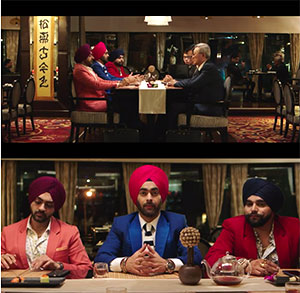
    AMAZON GREAT INDIAN FESTIVAL SALE


    FLIPKART BIG BILLION DAY SALE.


    In the past, Flipkart has used their strong Adult Kid format for the Big Billion Day Sale.. But for some reason, most likely it not giving then enough ROI, they have opted for the celebrity safety net.


    https://youtube.com/watch?v=FHD_yTkx9Dk

  • Mindshare & HUL bag big @ Smarties


    By A Correspondent


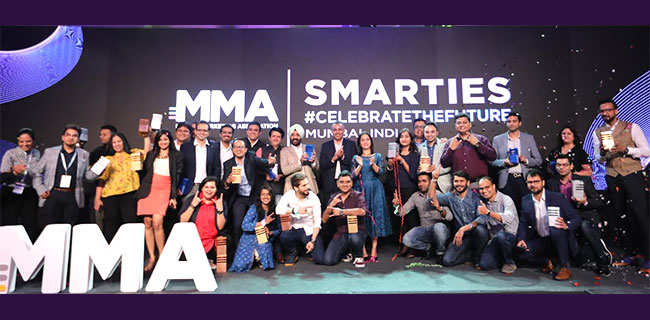
    The Mobile Marketing Association (MMA) presented the 2019 Smarties India Awards, in Mumbai last Friday. The annual awards saw a line-up of 52 award recipients in mobile marketing as well as industry-focused categories, celebrating creativity, success, business impact and outstanding achievements across the mobile ecosystem.


    Mindshare India and Madison Communications led the most wins, receiving 17 and 9 awards respectively across 26 categories, ranging from Brand Awareness, Most Engaging Mobile Creative and Social Impact/Not for Profit, amongst others. In the industry awards segment, Hotstar was awarded ‘Publisher of the Year’, Mindshare India was recognised as ‘Agency of the Year’ while Hindustan Unilever Limited was recognised as the ‘Marketer of the Year’, and ‘Affle’ was awarded ‘Enabling Technology Company of the Year’. Meesho clinched two awards for ‘Best in Show’ for the campaign ‘When Women Joined Hands to Break Social Shackles’ and as ‘Brand of The Year’.


    The MMA #BuildtheFuture Forum was held prior to the Awards ceremony, where topics revolving around the adoption and leverage of technology to better understand the mobile marketing landscape were discussed.  Marketing to Gen Z in an age of user generated content, the cross-media reach of OTT vs. other media, leveraging data for precision marketing and how to leverage Mobile Voice were some of the themes around which eminent panellists from the  marketing ecosystem shared their perspectives.


    Said Moneka Khurana, Country Head, MMA India: “The MMA Forum and Smarties have, over time, created an industry ecosystem that brings the greatest marketing minds to one platform to identify and celebrate plethora of emerging talent and opportunities in the industry. It is exciting to see that marketers are truly starting to leverage mobile’s interactive capabilities to deliver real business results for brands. This year the quality of the winning campaigns highlight the growing significance of mobile and carves a promising future for the mobile marketing industry.”


    Added Ravi Santhanam, Chief Marketing Officer, HDFC Bank, who was Jury Chair :, “Innovation is key in the delivery of good marketing campaigns, but with attention spans being under a second now, the marketer has to churn out more innovations in shorter periods. This year as a jury, we saw brands who showcased brilliant ideas which combined high impact execution and also led to real business ROI. It was a tough one to pick winners in every category, but one that the jury has thoroughly enjoyed and learnt from.”


    The winners were picked by a panel of judges who deliberated over the submissions across four main criteria – creativity, execution, strategy and most importantly, business impact. The jury comprised:


    :: Ravi Santhanam of HDFC Bank,

    :: Pawan Sarda of Future Group,

    :: Abhishek Desai of P&G,

    :: Amit Sethiya of Syska Group,

    :: Asha Kharga of Axis Bank,

    :: Deepali Naair of IBM India & South Asia,

    :: Gauravjeet Singh of Unilever,

    :: Jayraj Jadhav of TATA AIG,

    :: Neel Pandya of L’Oreal,

    :: Nipun Marya of Vivo,

    :: Punitha Arumugam of Hotstar,

    :: Ravi Desai of Amazon,

    :: Rohit Dadwal of MMA

    :: Sandeep Ranade of Kantar.


    Over 300 submissions were received for of which 99 shortlisted entries which set the bar for marketing strategy, innovation, creativity and use of technology in mobile marketing.

  • Gourmet Passport breaks stereotypes with ‘The Pursuit of Great Taste’ campaign

    By A Correspondent


    Gourmet Passport has announced the launch of its integrated digital video campaign that focuses on bringing alive the idea of ‘The Pursuit of Great Taste’.


    Sharing his thoughts on the digital campaign, Ankit Mehrotra, Co-founder & CEO, Dineout said: “With Gourmet Passport on board, we wish to expand our reach to include gourmet lovers who are always on the lookout for their next gastronomical adventure. The ad films are an attempt at building a connection with our audiences and to leave them with a chuckle while we call for gourmet connoisseurs to unite with in their pursuit of great taste! ”


    Conceptualised by Daiko FHO, the campaign aims to establish the essence of Gourmet Passport amongst consumers who are looking at elevating themselves to premium dining experiences. Said Rajesh Aggrawal, CEO – Daiko FHO: “In a market filled with players stuck in a ‘discounts & offers’ loop, Gourmet Passport stands apart with its unique experiential offering. The idea was to bring to life this philosophy by creating engaging stories using people with evolved tastes as protagonists. People from different walks of life who inspire everyone to join our Pursuit of Great Taste.”


  • CenturyPly is back with CenturyPly Heroes 2019

    By A Correspondent


    In a bid to reiterate the commitment towards excellence, CenturyPly is back with its annual campaign CenturyPly Heroes.


    Commenting on the launch of the campaign, Sanjay Agarwal, Managing Director of CenturyPly said: “We are extremely delighted to announce the advent of CenturyPly Heroes 2019. Continuing the tradition, this year also we aim to touch the lives and add warmth to the real heroes behind all the glitz and glitters of festivals. The carpenters’ are an integral part of our industry and they keep inspiring us with their strong inner self and mesmerize us with their artistic workmanship. We, at CenturyPly, being a part of the industry, feel responsible to highlight their unwavering and restless attitude. I hope that people from varied walks of life identify the messaging that we have intended to maintain throughout these years and able to connect with the craftsmanship of these carpenters better than before.”


  • Senco signs heptathlete Swapna Barman as brand ambassador

    By A Correspondent


    Senco Gold & Diamonds, eastern India’s largest jewellery retail chain signed 2018 Asian Games Gold Medalist and 2019 Arjun Awardee Swapna Barman as its new brand ambassador.  She will be promoting “Everlite” – the light-weight jewellery range from Senco.


    Meanwhile, jewellery chain also rolled out a new brand campaign on women empowerment “#DontTakeMeLightly” featuring Barman. In a new TVC for Everlite, the women’s jewellery collection from Senco Gold & Diamonds, she will be portraying the role of a woman who has overcome all physical challenges and hardships to emerge as winner.


    Speaking on the occasion, Suvankar Sen, Executive Director, Senco Gold & Diamonds, said: ‘It is an honour to have 2018 Asian Games Gold Medalist and 2019 Arjun Awardee Swapna Barman as our brand ambassador for our Everlite collection. Swapna embodies the spirit of overcoming hurdles in different spheres of life and beating physical challenges to emerge as a winner. Swapna is an icon of women empowerment and an example of what the country’s daughters can achieve. Swapna is equally versatile, excelling at whatever she does in her own unique style, with impeccable class and elegance. This is the spirit of ‘#DontTakeMeLightly,’ which celebrates the spirit of those indomitable and unstoppable daughters of the country.”


  • Digital Ads, Targeting and The Least Bad Alternatives


    By Brian Wieser


    Restrictions on data use in advertising, especially in digital media, are unambiguously increasing. Regulators in many territories have implemented or proposed laws restricting how data is collected, stored and used in advertising, with digital advertising most directly impacted. The EU’s General Data Protection Regulation (GDPR) and the pending California Consumer Privacy Act (CCPA) are the most prominent examples, and other jurisdictions will undoubtedly follow. Concurrently, the private companies who own the world’s dominant browsers have already restricted, or will soon do so, the data use in some of the environments they control.


    Changes in how data is used won’t necessarily impact spending choices or advertising investment growth. Considering how much advertisers and media owners alike have come to depend on and use data subject to future restrictions over the past two decades, how much concern should they have about these changes? Not as much as some might think.


    Data hasn’t always been all it was cracked up to be. Consider how data has been used in advertising in recent decades. Historically, large marketers with brand-building goals often chose, or requested from media owners, specific ad inventory based on an intuitive sense of their consumers’ preferences. They may also have prioritised requests for inventory that over-indexed against a general target and, therefore, found inventory that might have been the least expensive inventory for that target. Most of this was accomplished using small samples of consumer media consumption activities or with other low-fidelity data sources based upon surveys or other processes that identified relative affinities among certain audiences.


    As time progressed, and as digital media emerged, large brands increasingly bought ad inventory and targeted audience segments rather than content brands. In some media, such as print, this was intended to serve as a proxy for those segments. Marketers, media owners and third parties increasingly started collecting data of their own, or otherwise licensed or secured data, to create audience segments and lookalikes of audiences to help target or refrain from targeting narrowly defined groups. Meanwhile, a substantial volume of impressions purchased were never seen by humans; some impressions ran in environments where they were never completely viewed. Others were delivered while brands ran alongside content that was contrary to a brand’s position or otherwise “unsafe” for the brand. In other instances, ads reached a narrow group of humans much more often than was ever intended. Most marketers were clearly able to build value for their brands given all of these limitations, as they continually invested in digital media and found continually better ways to use the medium.


    For all of its flaws, by now there are many marketers whose businesses depend upon the extensive use of highly granular data in their advertising choices. This is especially true for marketers who maintain direct relationships with consumers, as in e-commerce, financial services, travel, modern-day direct to consumer brands and other “performance marketers.” Many small businesses also depend on highly detailed data, such as that which media owners aggregate to support targeting of narrow audience targets with limited available funds.


    How would marketers react to a world where historically relied-upon data disappeared? If marketers were restricted from using most of the data they have come to rely on in digital advertising in recent years, what would happen?

    First, marketers would probably invest more in better and bigger consumer panels. Next, they would take what signals they are legally allowed to collect and build data sets off of those figures. Lastly, they would probably find advantages in investing more heavily in their brands. This could build trust between consumers and brands and increase the likelihood that consumers will willingly share their data with that brand, at least to the extent they are allowed to do so.


    How would budgets for digital advertising be impacted? Not necessarily by much, if at all. While it is true that reduced availability of data can make it harder for marketers to identify the specific tactics that maximise the return on investment from historical spending choices, marketers could very well identify different tactics to produce similar or superior returns. More importantly, marketers are increasingly conscious of the need to focus on long-term return metrics, which can render short-term metrics somewhat meaningless. Further, many marketers are focused on omnichannel sales objectives, where a digital ad may be intended to tie to a product sale through a physical outlet, and where even the world’s best models are challenged to definitively connect cause and effect between ad spending and business outcomes.


    Budgeting allocations to different media are made for many reasons. In many instances, advertisers make their budgeting allocations to a given medium not because of the absolute effectiveness of a medium, but because of that medium’s relative actual or perceived effectiveness versus other media.  Choices are made by advertisers, not unlike people, because a choice is relatively better than any given alternative. All media have flaws and limitations, and marketers often need to prioritize the “least-bad” choice for a given set of goals. If digital advertising lost much of the data offered today, it would be a limitation, but hardly one that would cause a meaningful shift away from the medium given its other advantages.


    A wide range of factors explain why media budgets are allocated to specific media; data is only one factor. While it is possible that limitations on data in digital environments could lead to marketers finding ways to make non-digital media more effective against their goals, shifts of spending across media tend to be driven by many factors that do not necessarily depend on data restrictions now or in the future.

    Those factors include:

    :: Whether a marketer’s message or preferred tactics may be best amplified by the capabilities of a specific media platform or specific media owner. If the campaign is distinct enough, the medium best suited to support the campaign will likely drive business outcomes regardless of the data available.

    :: The relative reach of a given medium; digital will probably be superior relative to most media as time progresses.

    :: The relative ease with which the medium can be transacted – critical for small businesses – and the ease with which a wide range of budgets can be absorbed – again, beneficial for small businesses in particular.

    :: Tonnage of use – measured in time spent – is another factor that contributes toward marketer allocations to a given medium. Digital undoubtedly leads over time versus other media in most major advertising economies there as well.


    Not everyone in digital media will be impacted in the same way. It’s worth noting that the least-bad alternative maxim that helps explain why most marketers will keep their money in digital media also explains why certain media owners are the beneficiaries of budget allocations within a medium.

    Ultimately, media owners providing the campaign elements marketers want most relative to available alternatives will realise higher shares of spending from a given marketer’s budget. This means that when things change – regulatory policies or ad product features – one medium or media owner may look relatively better versus alternatives and their owners may benefit at the expense of others. Choices available to marketers may not always be perfect, but they can always look to assess whether the range of available choices can be improved. Over time, when spending shifts toward those improving alternatives, today’s least-bad choices will become increasingly better.


    Brian Wieser is Global President, Business Intelligence GroupM. This article was first published at https://www.groupm.com/news/digital-ads-targeting-and-least-bad-alternatives