Category: ADVERTISING

  • The Agency of the Future, Today


    By Brian Wieser


    There is no one “agency model of the future” just as there is no one agency model of the present. One of the most commonly asked questions in the advertising industry is “what does the agency model of the future look like?” There is no one answer to this question.

    A variety of agency offerings exist today, generally designed to map to the variety of structures that companies maintain for their marketing departments.  As long as marketers organize themselves in diverse ways, agencies will need flexible structures for their businesses while maintaining an ability to adapt to marketer needs as they evolve. However, agencies can improve their propositions to marketers by continuously finding new services to provide and by finding better ways to support integration across the services they provide.  We see something similar in the marketing technology sector, where companies developing these products must do the same thing with their software.

    Different marketers have differing needs. The fluid and gradually evolving nature of agencies is a function of providing services for a wide range of marketers who each have differing needs.  To understand why marketers are not – and likely never will be – homogenous, consider some of the following factors that could cause businesses to organize differently:

    :: Customers who are generally large or small

    :: B2B/enterprise-focused or consumer-focused

    :: High value or low value.

    :: Budgets to manage across multiple brands, categories and geographies, vs. a singular brand or a few brands within a single category and geography.

    :: Key performance indicators (KPIs) tightly integrated with sales or other marketing-related, consumer-facing functions versus complete segregation from these functions.


    Critically for agencies, each client organization will be differently oriented toward decision making based on knowable costs versus intangible values. Further, some clients may have business strategies which are highly dependent upon only a few kinds of marketing activities (shopper experience or creative strategy or brand awareness, for examples).  Conversely, they may be indifferent about how other activities are executed.

    All of these factors, among many others, influence how marketers are organized. All of them can impact their needs for agency partnerships. Agencies attempt to meet marketers’ needs by offering a wide range of service models, some focused on specific disciplines and others integrating multiple ones. Scale matters for some marketers in some areas, but not for all in all areas. Similarly, integration across adjacent functions matters. In all cases, agency offerings have to map to what marketer-clients demonstrate a willingness to pay for.

    The way in which marketing technology organizes solutions for marketers provides a mirror to our view on how agencies organize themselves. As the industry’s software layer underpinning its services, there are a similarly small number of massive companies whose products are centered around a range of related products (CRM, marketing automation, digital experience, e-commerce management and data management, among others) and thousands of smaller companies with individual “point” solutions. Software providers try to emphasize sales of “suites” (bundles of software products, ideally integrated with each other) to realize scale and pursue a larger “share of wallet” from their customers.

    Marketers have commonly selected Martech vendors by first looking for best-in-class solutions for strategically important products and will adopt software bundles, including less strategic products, when those bundles reduce prices or provide meaningful integration benefits. Otherwise they would rather oversee integration of software from different providers based on who is best-in-class for each point solution. Sometimes integration with one provider isn’t necessary as far as the marketer is concerned, especially if they operate in highly segregated silos. Alternatively, they may invest in a capability to integrate software from disparate providers internally or with the help of additional services providers. All of these attributes share commonalities with the organization of agency services.

    An expanding range of capabilities and ongoing integration improvements are most important for marketing technology much as it is (and will be) for agencies. For the largest Martech providers, future success will undoubtedly be from expanding capabilities (developed or acquired). They will also benefit from continuously adding or improving features on existing products while improving integration between them. The largest players with the biggest scale will off a portfolio of technologies that integrate; however, enterprising startups will continue to innovate and widen the range of providers in the Martech space.

    Similarly, there is unlikely to be one “agency model of the future” within or across disciplines. The most successful companies in the agency industry may continue to be the big holding companies that exist today, plus other large players in the consulting space – those which are able to offer a suite of services that integrate and scale. There will, of course, also continue to be smaller players who innovate and specialize services, thus broadening the array of capabilities and business models available to marketers. The dominant agencies, much like the dominant marketing technology companies, will benefit from enabling integration with best-in-class “point solutions” among independent service providers.

    It is unlikely that marketers will ever collectively standardize how they operate, and so service providers and software companies preparing for the future need to ensure they have flexible offerings. Over the past couple of decades, they have demonstrated an improving capacity to do so, and will undoubtedly continue to improve. To the extent they do, agencies can flourish with a diverse collection of point solutions and portfolio offers, becoming the “agency of the future” by always performing as the best possible agency of today.


    Brian Wieser is Global President, Business Intelligence GroupM. This article was first published at https://www.groupm.com/news/agency-future-today



  • Big Bang Awards to be hosted on September 20 in Bengaluru

    By A Correspondent


    The Advertising Club, Bangalore’s ‘Big Bang Awards 2019 for Excellence in Creative & Content’, have received entries from 73 agencies and 7 clients, spread over 13 cities in India. The Advertising Club has roped in over 20 prominent advertising professionals to judge the entries. The Awards will be held on  September 20 at The ITC Gardenia Hotel in Bangalore.


    Said Laeeq Ali, President of The Advertising Club Bangalore: “As the Advertising industry continues to grow, more and more new opportunities and newer challenges seems to be emerging. The advertising approaches of yesteryears are being challenged and there is a need to break a lot of the conventional rules in order to capture the new age consumer. We have therefore chosen our theme this year as ‘Breaking The Rules’.”


    Added Malavika Harita, Chairperson of Big Bang Awards: “We believe that the shine has gone out of traditional advertising and we want, in our small way, to try and bring it back, in spite of the sweeping changes wreaked by digital.  We are looking at a year-long campaign, starting with Big Bang, to celebrate some of the iconic work in the past, award the best current work and discuss and debate the future of our beloved industry,”.


    Said Arvind Kumar, Executive Director of The Advertising Club: “This year, the much celebrated ad film-maker Prasoon Pandey will be delivering the key-note address. Sachin Sharma of Tik-Tok Ads will also be making a small presentation on how platforms like theirs are helping brands win hearts.”


  • Aakash Edu Services promotes talent hunt in new ad

    By A Correspondent


    Aakash Educational Services has launched its new ad campaign on Aakash National Talent Hunt Exam (ANTHE 2019) across all major channels across languages in the country.


    Commenting on the launch of the ad campaign, Aakash Chaudhry, Co-Promoter and CEO of Aakash Educational Services Limited (AESL) and Founder & Trustee of Plaksha University, said: “The campaign will be aired on TV as well on digital channels, which will not only give it a mass outreach but will also help in engaging with students on the online platform. To add to the impact, the advertisement will also focus on breaking gender stereotypes, especially in villages and small towns where women education often gets hampered.”


  • Airtel adds Leo Burnett to its roster of agencies

    By A Correspondent


    Airtel has added Leo Burnett to the roaster of agencies. Leo Burnett will handle a host of B2B and B2C services across the businesses, including the BTL work and circle marketing campaigns. The mandate was awarded after a multi-agency pitch and will be handled by the Leo Burnett Delhi office.


    Shashwat Sharma

    Said Shashwat Sharma, Chief Marketing Officer, Bharti Airtel, India and South Asia: “Since Airtel’s launch 24 years ago, the brand has evolved to cater to changing consumer needs. As we move towards the era of digital transformation, we wanted to strengthen our equity amongst youth and as an innovation thought leader. We are confident that Leo Burnett with their new age thinking and strong execution excellence would help us to create a future ready brand.”


    Dheeraj Sinha

    Speaking about the win Dheeraj Sinha, Managing Director India & Chief Strategy Officer Leo Burnett, South Asia added: “This is a spectacular win for us and I am thankful to Airtel for the confidence they have reposed in our thinking, creative prowess and ability to deliver at scale. We believe in today’s times a brand needs to have multiple conversations with people across touchpoints. We look forward to building the future narrative for Airtel across the businesses.”


    Said Samir Gangahar President-North, Leo Burnett: “This is a milestone win for us and we are beyond thrilled that Airtel has decided to bring us on board. We are looking forward to working with the teams to create some distinctive and memorable work.”


  • What Marketers are Thinking About: Growth, Growth and More Growth


    By Brian Wieser


    We recently reviewed transcripts from earnings calls for the world’s largest marketers to identify the key topics of importance to senior management and the securities analysts who cover their stocks. To ensure we had a comprehensive group we chose 35 companies with more than $1.5bn in annual spending and that also allocated 4% or more of annual revenue to advertising. (Ad spend figures were based upon our analysis of ad spending from public filings or through estimates from Ad Age). We excluded companies that are major media owners to focus on broader marketing issues as well as private companies. From a data set of more than 300,000 words, we found those used most frequently. The output from this work is summarized in the following graphic.


    Top Topics on Earnings Call of World's Largest Markets

    Topics captured on these calls are not themselves surprising, but perhaps the relative emphasis is, with “growth” dominant. The word “grow” (along with “growing” and “growth”) was cited almost three times as often as any other. While it is unsurprising, it still bears repeating that growth is the primary topic of interest for the world’s largest marketers, whether referring to recent growth, future growth or plans to eventually achieve growth. This reflects the nature of going-concerns as management teams and investors tend to focus on ongoing efforts to expand.


    Consumers are the means to the end in combination with other tactics. The “consumer” (or “customer”) is, of course, the key to all forms of growth (and decline). Of course, consumers and customers are the indirect topic of discussion when marketers talk about growth, but this #2 ranking illustrates that there is less of a focus on consumers alone than on them in the context of mechanisms which support growth. This leads to the #3 ranking term, “market(s)/marketplace” referring to the environment around which a company’s customers exist and in which a marketer must sell (and indeed, “sales” ranked #4).


    One additional word more directly applicable to marketing – “brand” – was not far behind as the ninth most commonly used word, although others in the field were much further away. “Marketing” was #23, while “Channel” was #33, “Advertising” was #82 and “Media” #83 (although advertising and media combined would have been the fortieth most commonly used pair of words). Notably, technology-related terms were not cited with significant frequency among this group of companies. Digital was #28, “e-commerce” ranked #57 and “Technology” (or “Technologies”) ranked #69. The use of “Online” was #99.


    Financial metrics are less important than growth and consumer-related terms. A key financial metric, “margin” (or margins) followed in terms of its frequency of use, with a collection of terms including “price”, “price-mix” and “pricing” closely behind. Others, such as EBITDA, EBIT and EPS were used much less often (at #87, 93 and #55, respectively).


    Geographically, China and Europe appear to be the most commonly thought-about parts of earth for many of these companies, with both cited among the top 12 words or equivalents. Asia in general was #46 with Brazil #65, India #78, Mexico #84, Latin America #85 and Africa #91.

    Of course, what we can’t extrapolate with precision from this analysis is noteworthy: while “growth” probably represents marketers hopes and ambitions, it is harder to identify areas of concern, not least because companies and analysts who cover them tend to emphasize positive rather than negative elements on these calls.

    As a key takeaway – less for marketers and more for the media owners, technology providers and services providers who work with them – growth has always been a key agenda item which serves as a basis for any underlying engagement. However, as this data makes clear, it is not just a key agenda item, it is the primary agenda item. Everything else is a means to an end.


    Brian Wieser is Global President, Business Intelligence GroupM. This article was first published at https://www.groupm.com/news/agency-future-today
     

  • ScoopWhoop collaborates with Posterscope to celebrate Hindi Diwas

    By A Campaign


    To celebrate Hindi Diwas, ScoopWhoop Hindi decided to tackle a common problem faced by India’s millennial crowd – despite being a widely spoken language, there’s a large audience that have a hard time reciting the entire Hindi alphabet or varnmala.


    Inspired by conventional alphabet charts, ScoopWhoop Hindi has launched the Millennial Varnmala – a new alphabet chart that connects each Hindi letter with objects and experiences that resonate with the younger audience. Launched on ScoopWhoop Hindi’s Instagram, the chart was integrated into the platform’s 3×3 grid format.


    Sattvik Mishra

    Said Sattvik Mishra, CEO, ScoopWhoop:”Corporate etiquette and the pressure to be “cool” have turned many youngsters away from one of the world’s most fascinating languages. Everyone can recite A-Z in one breath but not many can do the same with Hindi. There couldn’t have been a better time to launch the Millennial Varnmala than on Hindi Diwas and we hope to see a shift in the tide very soon.”


    Haresh Nayak

    Added Haresh Nayak, Group Managing Director, Posterscope: “The overwhelming exposure to western pop culture makes a lot of youngsters consider Hindi to be a less fashionable language than English. A lot of people lose touch with the alphabet once they pass out of school. We wanted to make it easy for people to remember so we looked into their day-to-day communication and interest points.”


    Gurbaksh Singh

    Said Gurbaksh Singh, Chief Creative Technologist, Dentsu Webchutney: “Hindi is one of India’s oldest languages. Its popularity is immense but reciting the entire alphabet is a challenge for many. We decided to tap into what youngsters are comfortable with – their favourite colloquial terms on new age platforms like Instagram to refresh their memories with a fun and relatable method that will increase their affinity towards this beautiful language.”


  • AFAA & IAA host Fasttrack, a Leadership Development Programme

    By A Campaign


    The Asian Federation of Advertising Associations (AFAA) and the International Advertising Association (IAA) concluded the seventh edition of Fasttrack, a three-day leadership programme for young professionals in Kuala Lumpur from September 11 to 13 2019. The participants were from Malaysia, India, China, Taiwan , Nepal, Sri Lanka, Bangladesh and Indonesia.


    Said Pradeep Guha of the Advertising Council of India (ACI): “I am delighted that Fasttrack has come so far. The feedback from all our nominees from India has been superb. I am also happy to note that they are advancing steadily in their professional lives and contributing gainfully to our industry. The ACI, which has as its members the IAA (India Chapter), AAAI, Advertising Club and IBF has been sponsoring six delegates for an all-expenses-paid experience in the programme for the last several years. We believe it is our investment in our industry and the returns are showing now. We conduct a national search for these six delegates and this year the entire search and short-listing was handled by media veteran Paritosh Joshi. We are happy to continue backing Fasttrack and wish it spreads from Malaysia, where it is being run now, to India as well”.


    Added Bharat Avalani, Chief Knowledge Officer of the AFAA and the pioneer of the programme: “We are incredibly heartened by the breakthroughs. We continually receive positive feedback from the human resources department of the participants, and we are pleased to witness their ability to engage in higher-level conversations and take greater responsibility in their work. The advertising and marketing  industry is challenged like never before; trust and credibility is diminishing, therefore this is a critical time for us to raise leaders with the right attitudes to seek solutions,”.


  • Havas on shopping spree. Buys Langoor

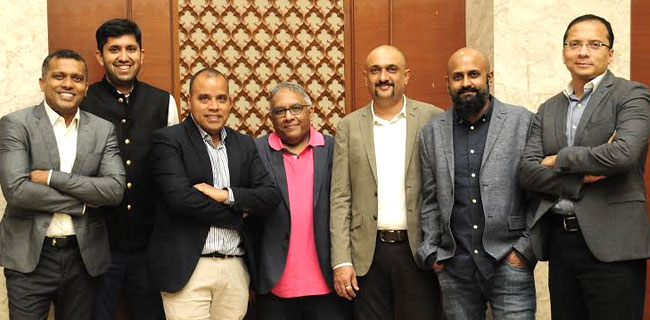
    L to R – Venugopal Ganganna, Chief Executive Officer, Langoor, Ruchir Punjabi, Founder & Chair, Langoor, Vishnu Mohan, Chairman & CEO, Havas India & South East Asia, Bobby Pawar, Chairman & CCO, Havas Group India, Girisha Gowda, Chief Operations Officer, Langoor, Kishore Karumbaiah, Chief Creative Officer, Langoor and Rana Barua, Group CEO, Havas Group India


    By A Correspondent


    When the Havas group announced the ‘acquisition’ of two veteran industry persons last year, it was clear that it had huge plans for India. After Rana Barua and later Bobby Pawar joined to helm the group in the country, the message sent out was that the advertising agency-led conglomerate is not going to sit pretty on its existing lines of business.


    If it were to match the big girls or boys in the business, it had to broadbase its line of businesses. The Dentsu Aegis Network (DAN) experiment in India had been a huge success. Acquire, Grow and Shine.


    In May this year, Havas gobbled up Think Design, a strong player in user experience and design advisory in India. And today (September 18), it announced the acquisition of Langoor, an eight-year-old tech-led independent agency with presence across India, the Middle East and Australia. The deal size has not been disclosed.


    With a team size of 170 people, Langoor has earned its stripes as an agency that’s not in the mould of a typical digital advertising agency. It’s driven by technology, and it’s hence different from many others.


    Langoor will be rebranded Langoor Havas and be led by its co-founder – Venugopal Ganganna – who will take on the newly-created position of Chief Digital Officer, Havas Group India, reporting to Barua who is Group CEO, Havas Group India. Langoor Havas will have three key focus areas – health, business and vernacular – and will expand these services to markets outside of India in the coming months. The deal itself took over a year to fructify and was inked earlier this month.


    The agency has been growing 30 per cent and some of its key clients include Unilever, Fossil, Wipro, Emami, Epson, Adobe, Infosys, Moneygram among others.


    While an exponential growh new business continues to be something that Havas in India is seeking to fructify, according to industry and Havas insiders, the inorganic DAN-like growth path is clearly on the agenda: there are many domains that are still need Havas’s presence. For instance, activations, public relations/communications and perhaps more in digital. The appetite is to acquire another four to five agencies, an executive told us requesting anonymity.


    To a pointed question from MxMIndia, a Havas spokesperson said: “Our acquisition approach is distinctively not a multiplier approach but one of relevant expertise building. You will be hearing from us soon on the acquisition front, in line with this approach.”


    A communique was issued by the group bearing the following statements:

    Yannick Bolloré, Chairman and CEO Havas Group: “Digital business is booming in India and bringing Langoor on board is an important new step to further strengthening our digital skills locally. Through their unique blend of data, creativity and technology, Langoor enables brands to engage their customers meaningfully and drive growth. Earlier this year, we acquired the leader in user experience and digital design in India, Think Design, making Langoor our second acquisition in the country in 2019. The combined expertise of Think Design and Langoor boost Havas’ digital offer in the world’s fastest growing ad market. India continues to be a priority for the Group, we aim to triple our presence there by the end of 2019 and have put in place a solid new management team to lead this expansion.”


    Vishnu Mohan, Chairman & CEO, Havas Group India & South East Asia: “The acquisition of Langoor complements our aggressive growth strategy that we started last year with the creation of Havas Village India that brought together different disciplines under a unified, client-centric leadership structure. Langoor adds an enviable strength to Havas Group with its distinctive approach of Creative Technologists who challenge marketing every day with their expertise in balancing, data, technology, strategic thinking and the power of creative.”


    Rana Barua, CEO, Havas Group India: “The Langoor acquisition also demonstrates Havas Group’s commitment to expand its scale and expertise in India with a focus on exponential growth, new business momentum, and building & leading future-ready teams. The acquisition will reinforce our integrated offering and digital expertise in India and complement our existing capabilities.”


    Ruchir Punjabi & Venu Ganganna, co-founders of Langoor: “We pride ourselves in having created an agency focused on digital brand thinking – which is the future. The integration with Havas Group will add scale to the depth of our services and help us to grow even further. This acquisition is an incredible opportunity for Langoor and the team and we are excited to be part of this new journey towards further success.”


  • Ad execs, third least trusted professionals, notes Ipsos survey. Journalists & TV News Readers 8th & 9th from the bottom

    By A Correspondent


    According to a new global survey by Ipsos, Armed Forces have been adjudged the most trustworthy profession by majority (71 per cent) of urban Indians. Second and third places of trustworthiness in professions have been bagged by scientists and teachers. The survey christened Global Trust in Professions asked global citizens to rank professions by trustworthiness and untrustworthiness.


    At least 59 per cent urban Indians rate politicians as the most untrustworthy profession, followed by government ministers (52 per cent) and advertising executives (41 per cent).


    Parijat Chakraborty, Country Service Line Group Leader, Public Affairs & Corporate Reputation,  Ipsos India feels, it boils down to transparency and nobility, adding:  “Armed Forces are perceived to be a dedicated force, who are defined by values of sacrifice, commitment, discipline etc. – they serve, like their motto of service before self; likewise scientists and teachers are seen as persevering professions, contributing to nation building. Politicians, despite their efforts to clean up the system, have not yet won the trust of most. Also, the advertising professional, writing interesting copies and creatives, highlighting merits of brands, is viewed with scepticism,” says Chakraborty.


  • Indian Society of Advertisers elects Sunil Kataria as Chairman

    By A Correspondent


    The newly elected Executive Council of the Indian Society of Advertisers (ISA) met on September 18, 2019 and re-elected Sunil Kataria, CEO, India and SAARC, Godrej Consumer Products Limited, as Chairman of the ISA. Kataria has led the Society over the past three years.


    On his election for fourth consecutive term as the Chairman of the ISA, Kataria said: “In our journey towards creating further value proposition for the ISA in the industry, the focus will be to make this unique body future-ready. We will work to support the advertisers in navigating the fast-evolving digital environment. Our endeavour this year would be take forward our efforts in the arena of digital measurement. We profusely acknowledge the support by fraternity organizations and endeavour to take such collaboration to newer heights in the industry in ultimate benefit for the ISA members. I look forward to having continuous support of all members towards adding value from all relevant perspectives”.


    Other members of the Executive Council are: Atul Agrawal, Senior Vice President – Corporate Brand and Marketing, Tata Services Limited; Abraham Mathew Alapatt, President & Group Head – Marketing, Service Quality, Value Added Services & Innovation, Thomas Cook (India) Limited; Narendra Ambwani, Director, Agro Tech Foods Limited; JC Chopra, Advisor, Anant Healthcare Technology Solutions (P) Ltd; Ravi A. Desai, Director, Mass & Brand Marketing International, Amazon Seller Services Pvt. Ltd; Paulomi Dhawan, Strategic Adviser, Raymond Limited; Abhishek Desai, Director Marketing, Procter & Gamble Hygiene and Health Care Limited; Chandru Kalro, Managing Director, TTK Prestige Limited; Sandeep Kaul, Divisional Chief Executive – India Tobacco Division, ITC Limited; Sandeep Kohli, Executive Director – Beauty & Personal Care, Hindustan Unilever Limited; Bharat V. Patel, Independent Director, Aditya Birla Sun Life AMC Ltd.; Anil Viswanathan, Director Marketing Chocolate, India, Mondelez India Foods Pvt. Ltd.; Ramakrishnan Ramamurthi, Chief Executive, Polycab India Ltd, Amit Tiwari, Vice President – Marketing, Havells India Ltd.; Subhadip Dutta Choudhury, Vice Chairman & CEO, Hawkins Cookers Limited; Shashwat Sharma, Chief Marketing Officer, Bharti Airtel Limited; Anuj Poddar, Executive Director, Bajaj Electricals Limited and Koshy George, Chief Marketing Officer, Marico Limited.

  • ‘If everyone profits, there will be no fatigue’


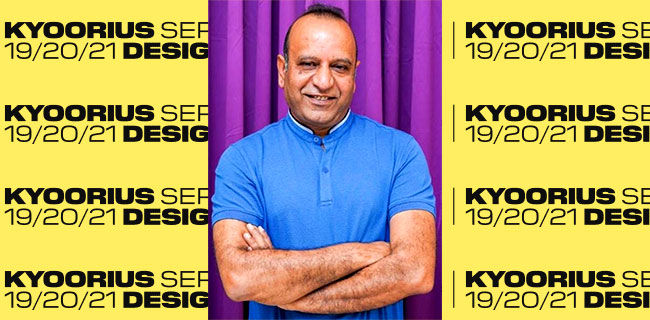
    Rajesh Kejriwal isn’t your typical advertising industry maven. He says he is a businessman first, but interesting in adding value to the fraternity’s lives. While he is a popular face in the trade thanks to his advertising awards and ZeeMelt conference, what earned him much respect and fame was the Kyoorius Designyatra, the annual design fest that he has been conducting for over a decade (14 years!). We caught up with him a few days before this year’s edition which starts today (Thursday, September 19) in Goa. Read on… 


    How’s this year Kyoorius Designyatra different the ones you’ve had thus far? 

    In terms of the curation and speakers, not much difference. It is the same as every year. We we research a diverse mix of speakers and we get them. The number of speakers is the same as earlier. But having seen the ground reality or the so-called sentiment or recession or market bloodbath as it is happening, we decided we will take two steps forward and see if we can save the delegates some money. So instead of starting in the morning at 9:30 as we do every day and every year, we are starting the first day at 5 pm, which reduces the cost of one day’s stay for people and saves them one working day. So, we start at 5 but the number of speakers are still the same … 23-24 or whatever we have every year. We end the first day late in the evening at 9 and then there is dinner etc. for everybody. And other than that, if you ask me what the difference is: well, we have a little less registrations than every year because every corporate has come back with lesser numbers than last year. The design community is the same, the student community is the same, the young blood community is the same. We filled those gaps but the corporate community number has dipped.


    So blame it on Narendra Modi?

    Ha Ha… Whatever


    But one thought the design folk wouldn’t be as impacted by the slowdown as, say, the advertisngwallahs,right?

    Design unlike advertising is more long term, so  there may be no short-term impact in design. Whatever is planned is planned for a longer term. So, impact-wise I don’t think designers lose too much of business. They may lose a bit of revenue because of the client bargaining a little more and cuts in budget. But I think real estate has been a bit of a dampener for the design community. Because, there was a huge amount of work happening out of real estate where they were paying a lot of money. That’s completely vanished.


    How many of the people you get at Designyatra are repeats? 

    Yes, about 50% of 12-1300.


    Has that changed at all?

    Quite a bit. For the first six years, we had 80-90% repeat. From 2011 till 2015 we had about 50%. Now it’s come down to about 30% repeat.


    Oh 

    Yes, 70% new.


    Does that indicate anything at all? 

    Well, I think there are two or three reasons. If you see every year we sponsor 300 students or subsidise 300 students heavily. The student community keeps changing so there is no repeat there. Most of the students are in their final year and after they graduate their company many not sponsor them. Also, earlier about 400-450 were from corporates, this year that number has fallen by 250. Only 200 are coming.


    No event organiser talks so openly about the downers. But you are pretty open about it?

    I don’t think it is negative news. It is market relevant. It’s relevant to the market today. I have never said I have 1000 people, I have never said I have 1500 people. If I have 1000,  I have that number. So be it. And if I’ve got less this time, I’ve got less. Big deal! It’s relevant to the context of today’s market scenario. The sentiments.


    Is that going to impact your bottomline significantly?

    Of course, the costs are the same. There is no change in our costs.


    So, reducing the time to half day hasn’t helped you very much?

    Has not helped me one bit in terms of costing. It’s the same number of speakers, same number of nights, same number of lunches, same number of dinners. No change.


    Interestingly, while in the rest of the A&M domain, there has been some fatigue in terms of attendance in conferences, this hasn’t impacted Kyoorius Designyatra. What do you think is the reason for this?

    I don’t think it is right to say there is a fatigue in media conferences. I think the fatigue is there where the events are not curated well, not researched well, not made relevant to the changing scenario every year. If you go back and see Designyatra…. Way back when we started, we just looked for legends globally and we brought the legends here. With the internet opening up, the legends were not that relevant as much as the people who were doing new work. Today if you see, we are getting some inventors who have at the age of 17 have done great work. There is one Indian at age 17 has invented two or three things which are truly groundbreaking. So, if you research well, curate well, have a diverse set of speakers and ensure that the people go back from the conference and have profited from being there year on year, I don’t think fatigue will set in. You look at it this way, there have to be three profits that event organiser has to look at. Most event organisers look at their own profit. But unless they look at profit for the organiser, which is correct….profit for the delegates, and profit for the speaker, there is no overall profit. You ensure that the speaker gets something out of coming to the event. Delegates come to Design Yatra and get profited by being there and the event organisers obviously profits from both revenue perspective and satisfaction perspective then I don’t think fatigue will set in anytime.


    There is a definite difference in the kind of audience which comes in  for Zee Melt.. there is hardly any one standing outside in the Designyatra

    There is a difference between Melt and Designyatra. Designyatra is a very linear conference… just one hall and every speaker speaks in that hall. There’s nowhere else for anybody to go. Also, the destination, it’s in Goa. So people have left whichever city they are in and they have come into there. There’s nothing much to do and they are there. And unless there is a speaker who is totally not relevant to them or etc, they may walk out but other than that there is nothing that’s not happening there that is not relevant to them. In Melt there are many disciplines… Designyatra addresses only design. And there are only people there who are interested in design. There is no grey area for anybody. But if you look at Melt there could be a big name speaker but speaking on measurement and measurement is not interesting for more than 100 people. Or there could be something on Ad Fraud. So there are multiple halls…multiple sessions on diversity etc etc…and there are some sessions which are relevant for only a few. I seriously believe that the world of advertising and marketing cannot have a linear conference. And all advertising and marketing conferences that are still being linear will face fatigue.


    And with Design Yatra it is a linear conference… although even design has changed considerably 

    Correct!


    So are you at any point of time looking at changing that also?

    Maybe. We are exploring how can we make it more experiential. We are not changing from linear to something else but we are looking at how can we make it more experiential. So, can I take another hall and do something more … there is one hall where the speaker comes and talks which also great for the students…. But can I take another hall and so something more for the students…. Can I take another hall and do something more for the young professionals between 23-28, whose learning curve is something different from that of the student. Likewise can I take another hall and do something for the age group of 35-45  who think they know it all but don’t know it all because they are not so used to technology as the youngsters are…. So they need to learn. There are 45 year old designers who don’t know what Instagram is. So there is something that I can do to help that curve. So these 3 buckets is something that we may change over the next 2 years.


    And do you follow the same rules that you don’t repeat people for 7 years.

    Yes. At least five years.


    And, how much time does the curation of Designyatra take?

    One full year. We have five speakers confirmed for next year. The work for the next year has already started. The dates for next year are already frozen. And you can’t….if you do that in two months time it can never happen.


    But it will be Goa? You want to stick to Goa?

    Next year is our 15th year so we are exploring different locations.


    You’ve done Jaipur in the past.

    I think Jaipur was not a wrong choice. Jaipur worked because Jaipur as a city has character and that’s great for designers.


  • Leo Burnett India strengthens creative team with new appointments

    By A Correspondent


    Leo Burnett has strengthened its creative team by bringing on board Mayuresh Dubhashi and Sonal Chhajerh as Executive Creative Directors. They will both be based out of Mumbai. In addition to this, Leo Burnett India has also elevated and announced five new Associate Executive Creative Directors – Archit Gadiyar (Mumbai), Vikrant Yadav (Mumbai), Pradeep Kumar (Mumbai), Ashish Sharma (Bengaluru) and Sudhir Das (Delhi).


    Dubhashi’s last stint was with Grey Worldwide where he was ECD whereas Chhajerh was with Publicis Singapore prior to Leo Burnett.


    Speaking on the appointments, Rajdeepak Das, Managing Director India and Chief Creative Officer Leo Burnett South Asia said: “Both Mayuresh and Sonal bring with them not only diverse experience but also a great creative vision which is new age and in line with the Leo Burnett’s Wave 3 philosophy. I am confident that they will help us create world class   creative work which will be impactful for businesses.”


    He further adds “The new team of the AECD’s are young, home-grown talents and since the past few years have contributed in producing some of the best works of the agency.  At Leo Burnett we believe in empowering our teams and giving them a platform to grow and we are confident they have the potential to become future leaders who will carry our Wave 3 vision forward.”