Category: ADVERTISING

  • Option Designs bags creative and digital duties for Trak N Tell

    By A Correspondent


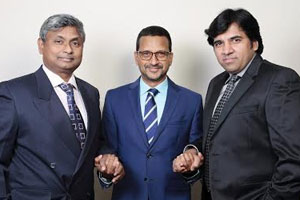
    Ad agency Option Designs has bagged the creative duties for Trak N Tell. Trak N Tell is a telematics solution provider and vehicle tracking device manufacturer which has introduced in India advanced telematics technology.


    As a part of the mandate, Option Design will be responsible for managing the creative and digital media planning activities for Trak N Tell and build a strong online brand. The agency will be working closely with the team at Trak N Tell to build and implement creative campaigns and innovative brand strategies for offline and online media as well as in the ATL and BTL marketing collaterals.


    Pranshu Gupta

    Pranshu Gupta, Founder and CEO Trak N Tell said, “We chose Option Designs because of their keen understanding of Trak N Tell’s business needs, additionally their passionate, irresistible energy and unconventional creative approach is noble. It’s a partnership of two companies with tremendous potential, and we are excited about the work to come. We believe that further with our association with them, Option Designs will create a better and stronger brand positioning via innovative solutions for both online and off line medium.”


    Japneet Singh

    On winning the account, Japneet Singh, M.D & CCO, Option Designs, said, “It’s an honor to work on Trak n Tell. We wish to see it as a blank canvas and a focused vision means that there is great scope for innovation, both in communication and in other aspects of brand building. We are also very excited to work for their online communication platform as it makes sense and generates harmony in communications.”


  • Suresh Balakrishna quits IPG, to join WPP’s Kinetic

    By A Correspondent


    Suresh Balakrishna, CEO of the IPG Mediabrands agency BPN (short for Brand Programming Network) who also led media agency Initiative’s non-global accounts as well as Rapport, the out-of-home agency of the group, has resigned. He is set to join WPP’s out-of-home agency Kinetic India as CEO South Asia and Middle East in January 2016. For Balakrishna, although it’s a shift from a manifaceted CEO of a media agency to an essentially outdoorsy company, the regional role is definitely a huge plus. Plus his reporting will be directly to Global CEO Mauricio Sabogal who was incidentally Global CEO of BPN before getting into Kinetic.


    Confirming the development, Shashi Sinha, CEO – India, IPG Mediabrands said: “I am sorry to see Suresh go. He’s been a great asset to the company and an excellent professional.”


    Said Balakrishna: “I have had four very exciting and fulfilling years here. Having said that I am looking forward to my new role. WPP is the world’s largest advertising group and Kinetic is India’s largest OOH company, so taking an established company to greater heights in the South Asia and Middle East region will be a challenge which I am looking forward to.”


    Balakrishna who has donned many hats in media and advertising has been with IPG since January 2012.He will be with IPG till December 31.


  • S Yesudas launches triggerbridge for ‘True Vertexing’

    By A Correspondent


    Until recently managing director – India of Vizeum, S Yesudas has announced the launch of his entrepreneurial venture, triggerbridge, the unagency, in partnership with Ajit Nair, MX Advertising and Amit Tripathi of IdeateLabs. In the adveritising and media business for over two decades this is Yesudas’s first independent enterprise.


    Commenting on the triggerbridge proposition, Yesu, as Yesudas is known in the industry, said:  “Disruption is the name of the game, not just in theory. But in everything we do, philosophy, product, process, people et al.  We are also building many aggregation and collaboration models. We believe the advertising agency model as it is practised today will cease to exist in the foreseeable future.  Global alignments, exclusive agency status will all fall by the way side. Clients will look for smarter brand solutions for making enduring and meaningful connections with their consumers and not super specialized silo solutions.   Media owners will be engaged with, directly by clients and the focus on computer algorithm-driven efficiency parameters will also disappear.   At triggerbridge,  our endeavor is to futureproof a disruptive model, True Vertexing,  that will be the need of the hour, now and then by clients and hence, the unagency. And interestingly this would be a virgin territory for us as agencies of today will only stay focused on the transactional mode of advertising as change for most them will be difficult considering their models and complicated structures”


    Commenting on the triggerbridge model, Nair said: “We have built our model around appropriate solutions for clients/brands at various life stages, be it a well-established brand or a brand which has already traversed some distance or a brand that needs to go digital from a business diversification perspective or even a client with a ready product and market but no marketing resources.  While funds are the solution for one, an e-commerce ecosystem will be for the other and incredible story telling, optimal content development and deployment, usage of data and technology will be the solutions for some others”


    Expanding on the proposition, Tripathi added: “True Vertexing is hand holding the brands in the journey to the highest peaks through true contributions by triggerbridge and through true expressions by the brands. In addition to the fundamental change in definition, our disruption also includes a series of products for the very first time, moving the business away from a pure service,one such is a digital platformthat aggregates story tellers and tech producers.  Many more are in the pipeline.  Our vision will be brought to life by brilliant minds. The overseeing creative board will include true storytellers like authors who have not been corrupted by 30 seconds TVCs and our business board will include members of other company boards as well as venture capitalists”


  • Bang in the Middle nets digital mandate of Mahindra Comviva

    By A Correspondent


    Bang in the Middle has been appointed by Mahindra Comviva, the global leaders in providing mobility solutions, to handle its digital presence.


    Bang in the Middle will lead the digital marketing program to elevate the brand image through an integrated marketing communications strategy, including digital, corporate, trade and consumer public relations, while driving reputation across the globe. Bang in the Middle will help the brand craft a distinct identity on the web for its audience across the globe.


    Rajat Dayal

    Rajat Dayal, Head of Marketing at Mahindra Comviva commented, “Mahindra Comviva is a recognized brand in the mobility space. As we continue to grow our business across the globe, it’s critical that we create a meaningful and relevant digital experience. Our offerings are focused to a global audience and this audience is digitally connected. Bang in the Middle is the perfect partner to help us become more relevant to our existing and prospect customers, and remain at the forefront of the digital ecosystem, across all channels.”


    Prathap Suthan

    Prathap Suthan, CCO and Managing Partner of Bang in the Middle said, “Mahindra Comviva is a global brand and we are delighted to partner them in their quest to expand globally. Building expertise of Mahindra Comviva is a key task and we are happy to partner them.”


  • Satbir Singh quits FCB Ulka

    By A Correspondent


    Satbir Singh has decided to move on after spending a year as Chief Creative Officer at FCB Ulka. During his stint, Singh led some memorable work across brands like Snapdeal, Tata Salt, Zee and such.


    On moving on, Singh said: “It has been a short but enjoyable stint with FCB Ulka. In this brief period I have been fortunate to have worked with some excellent people who created much-talked-about campaigns… From clients to brands to people, 2015 has been a good year.”


    According to an FCB Ulka client, Satbir Singh brought to the agency a degree of freshness which the agency will need to ensure is sustained.


    Meanwhile, Rohit Ohri is set to take charge at the agency next month. According to the grapevine, he is set to cause some disruption and is said to be keen in bringing in younger, top draw talent.


  • Executive summary of ZenithOptimedia Advertising Expenditure Forecasts Dec 2015

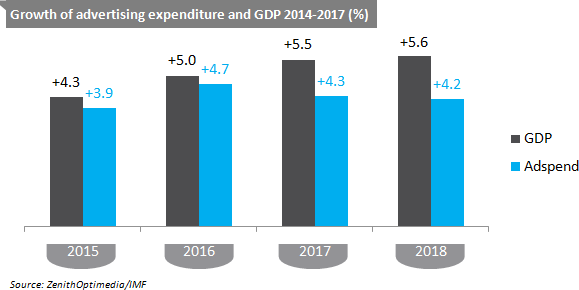
    ZenithOptimedia predicts global ad expenditure will grow 4.7% in 2016, reaching US$579 billion by the end of the year. This will be a 0.8 percentage point improvement on 2015: 2016 is a ‘quadrennial’ year, when ad expenditure is boosted by the Summer Olympics, the US presidential election and the UEFA football championship in Europe. The global ad market has enjoyed stable growth since 2011, with growth rates ranging between 4% and 5% a year, and we expect it to maintain this pace for the rest of the forecast period.
    Forecast by regional bloc

    Since the December 2012 edition of our forecasts we have looked at the growth rates of different regional blocs defined by the similarity of the performance of their ad markets as well as their geographical proximity. This captures the behaviour of different regional ad markets more effectively than looking at regions defined purely by geography, such as Western Europe, Central & Eastern Europe and Asia Pacific. See the end of the Executive Summary for a complete list of countries by bloc. At the end of last year we revised the definition of these blocs. We used to separate the Peripheral Eurozone (Portugal, Ireland, Italy, Greece and Spain) from Northern and Central Europe, because the periphery was substantially weaker. However, the performance of the two regions has now converged, and we have combined them into a single region called Western & Central Europe.

    Western & Central Europe

    For several years the ad markets at the periphery of the eurozone were by far the worst-performing in Europe, which was why we separated them out in a bloc called the Peripheral Eurozone. Between 2007 and 2013, adspend fell 29% in Italy, 38% in Ireland, 43% in Portugal, 47% in Spain and 62% in Greece. However, the last four began to make strong recoveries in 2014. Greece’s recovery went into reverse in early 2015 as the government geared up to confront its creditors, but over the rest of our forecast period we expect Ireland, Portugal and Spain to outperform the average rate for Western & Central Europe, admittedly from their much-reduced base levels. We forecast Ireland to grow at an average 7.6% a year between 2015 and 2018, while Portugal grows by 4.8% a year and Spain by 6.6% a year.

    Meanwhile, France is lagging behind with weak business confidence and household consumption. We forecast French adspend to grow only 0.5% a year on average between 2015 and 2018. This will be the slowest growth rate in the region, with the exception of Slovenia, where increased competition among television broadcasters is pushing down prices, and we expect no growth at all over the three year period. Other slow growth markets include Finland (0.9% growth a year to 2018), Norway (1.3%), Switzerland (1.3%), Austria (1.7%) Germany (1.8%), Italy (1.9%) and Greece (1.9%).

    Outside the eurozone, the stand-out ad market in Western & Central Europe is the UK, which is currently booming thanks to the rapid adoption of internet advertising. We predict UK adspend will grow 7.0% in 2015, and at an average of 6.3% a year to 2018.

    We expect growth in the UK and the peripheral eurozone markets to counterbalance the weaker markets, allowing Western & Central Europe to grow at an average of 3.3% a year between 2015 and 2018.

    Eastern Europe & Central Asia

    Eastern European advertising markets, such as Russia and Turkey, generally recovered quickly after the 2009 downturn and continued their healthy pace of growth, largely (though not entirely) unaffected by the problems in the eurozone for the next four years. Their near neighbours in Central Asia, such as Azerbaijan and Kazakhstan, have behaved very similarly, so we have gathered them together under the Eastern Europe & Central Asia bloc. This bloc grew 11.4% in 2013.

    The conflict in Ukraine severely disrupted the domestic ad market, while Russia has suffered from sanctions imposed by the US and the EU, the sanctions it imposed in response, and a withdrawal of international investment. These shocks have been exacerbated by a sharp drop in the price of oil – which accounted for 70% of Russia’s exports in 2014 – and devaluation of the Ukrainian and Russian currencies. These problems have since spread to Belarus, whose main trading partner is Russia by some distance. We forecast adspend in Ukraine to shrink 44.5% this year, on top of a 37.9% decline in 2014. We also forecast a 17.2% decline in adspend in Belarus this year, following 7.6% growth in 2014. Russian adspend grew just 4.3% in 2014, which was the first year of growth below double-digit rates since 2009, and we expect the market to shrink by 10.6% this year. This is an improvement on the 14.1% decline we forecast in September; Russia’s ad market has been more resilient than we feared, with a slowdown in decline in the second half of the year and recovery in prospect for 2016.

    Overall we expect adspend in Eastern Europe & Central Asia to shrink by 7.5% in 2015. In the past adspend in this region has been volatile, with large declines swiftly followed by rapid gains. In this case, we think the region will be slower to recover, and we forecast just 1.0% growth in 2016, followed by 6.8% in 2017 and 7.4% in 2018.

    Japan

    Japan behaves differently enough from other markets in Asia to be treated separately. Despite recent measures of economic stimulus, Japan remains stuck in its rut of persistent low growth. We forecast adspend growth of 2.7% a year between 2015 and 2018.

    Advanced Asia

    Apart from Japan, there are five countries in Asia with developed economies and advanced ad markets that we have placed in a group called Advanced Asia: Australia, New Zealand, Hong Kong, Singapore and South Korea. We estimate growth here at a disappointing 2.7% in 2015, as Singapore has continued to suffer from a weak property market, and slowdown in China and other emerging markets has hit exports from all markets. We expect growth in Advanced Asia to average 2.2% a year through to 2018.

    Fast-track Asia

    We characterise the rest of Asia as Fast-track Asia (China, India, Indonesia, Malaysia, Pakistan, Philippines, Taiwan, Thailand and Vietnam). These economies are growing extremely rapidly as they adopt Western technology and practices, while benefiting from the rapid inflow of funds from investors hoping to tap into this growth. Fast-track Asia barely noticed the 2009 downturn (ad expenditure grew by 7.9% that year) and since then has grown very strongly, ending 2014 up an estimated 10.7%. However, the Chinese economy – the main engine of growth in Fast-track Asia – is finally starting to slow after years of blistering growth, and the ad market is slowing down alongside it (although with an official target of 7.0% GDP growth in 2015, China’s growth rate remains one most markets will envy). China accounts for 74% of adspend in Fast-track Asia, so its slowdown naturally has a large effect on the region as a whole. We expect ad expenditure in Fast-track Asia to grow 8.9% in 2015, and at an average rate of 8.4% a year between 2015 and 2018, down from 14.7% a year between 2009 and 2014.

    We have not changed the definition of North America, Latin America or the Middle East & North Africa (MENA) in this analysis.

    North America

    North America was the first region to suffer the effects of the financial crisis, but it was also quick to recover, and adspend in North America has been more robust than in Western & Central Europe since 2012. Adspend growth was boosted to 4.7% in 2014 by the Winter Olympics and mid-term elections in the US; in their absence we expect growth to subside to 3.5% in 2015. In 2016 the market will benefit from the 2016 Summer Olympics and the US Presidential elections, but growth will be constrained by ongoing decline in network television adspend as ratings continue to slide. We forecast 3.8% growth in 2016, and an average of 3.4% a year to 2018.

    Latin America

    Latin America’s economies are more volatile than those of Fast-track Asia, but lately it has been restrained by low prices for oil and other export commodities, and recession in Brazil. We estimate that Latin American adspend will be up 6.0% in 2015, and will grow just 4.8% a year in 2016 despite the presence of the 2016 Summer Olympics, hosted by Brazil. Growth should average 4.0% a year to 2018.

    MENA

    For this edition we have thoroughly overhauled our historic advertising expenditure figures in MENA, based on new information on actual spending levels in comparison to monitored spending measured at ratecard. Our new forecasts are all based on these revised historic figures.

    The drop in oil prices in 2014 has had a severe effect on the economies in the region, and has prompted advertisers to cut back their budgets in anticipation of lower consumer demand. We forecast an 11.1% drop in adspend in MENA this year, followed by a further decline of 6.8% in 2016. We then predict a slow recovery with 1.5% growth in 2017 and 4.3% in 2018, averaging a 0.4% decline a year from 2015 to 2018.
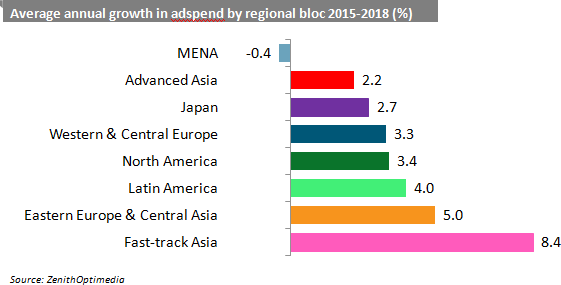
    It is not as easy as usual to divide the different blocs into groups with distinct growth rates. There are two stand out blocs: MENA at the bottom, with no growth between 2015 and 2018; and Fast-track Asia, with 8.4% annual growth. The other six vary fairly evenly from 2.2% annual growth to 5.0%.


    Forecast by leading advertising markets

    Despite the rapid growth of the Rising Markets*, the US is still the biggest contributor of new ad dollars to the global market. Between 2015 and 2018 we expect the global ad market to grow by US$77 billion. The US will contribute 26% of this extra ad expenditure, closely followed by China, which will contribute 24%. The UK comes third, contributing 7%, and Indonesia fourth, contributing 5%.

    Five of the ten largest contributors will be Rising Markets, and between them they will contribute 36% of new adspend over the next three years. Overall, we forecast Rising Markets to contribute 54% of additional ad expenditure between 2015 and 2018, and to increase their share of the global market from 37% to 39%.
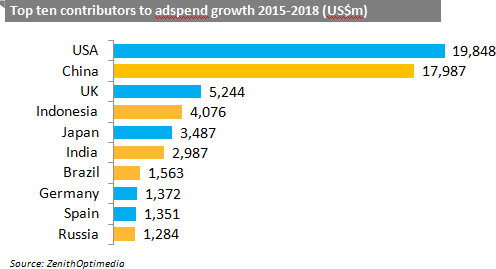
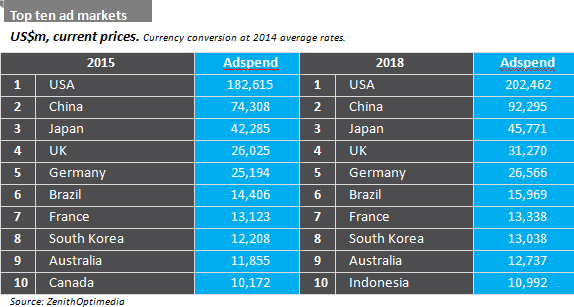
    The ranking of the world’s largest ad markets is currently very stable. The only change we expect between 2015 and 2018 is for Indonesia to displace Canada as the tenth-largest ad market.
    Global advertising expenditure by medium

    The internet is still the fastest growing medium by some distance. We forecast internet adspend will have grown 18% year on year by the end of 2015, and we forecast an average of 13% annual growth between 2015 and 2018. We estimate that the internet advertising will account for 29.0% of global ad expenditure across 2015, up from 25.5% in 2014. By 2018 we expect internet advertising to attract 36.6% of all global advertising, overtaking television for the first time to become the world’s largest advertising medium.

    Display is the fastest-growing internet sub-category, with 15% annual growth forecast to 2018. Here we include traditional display (such as banners), online video and social media. All three types of display have benefited from the transition to programmatic buying, which allows agencies to target audiences more efficiently and more effectively, with personalised creative. For traditional display this transition is slowing down, at least in the biggest markets, and we forecast average annual growth of 7% a year between 2015 and 2018. Online video and social media continue to grow much faster – we forecast annual growth of 20% and 22% respectively over the same period. The amount of time consumers spend watching online video is growing by 17% a year, and content producers are working hard to address the scarcity of premium content. Meanwhile social media is benefiting from its rapid transition to mobile and the introduction of new, engaging ad formats, such as Facebook’s full-screen Canvas ads.

    We expect paid search to grow at an average rate of 12% a year to 2018, driven by continued innovation from the search engines, such as personalising search results, automatically matching search terms to content available on advertiser websites, and enhancing local and real-time search. The latter including integrating advertiser data into search results to improve the customer experience – telling consumers how long it will take to walk to the advertiser’s stores, for example, and how long they can expect to wait to be served.

    Online classified has been subdued since the downturn in 2009; after the initial shift from print to digital, classified publishers have had to compete with new paid-for and free alternatives for matching buyers and sellers. We forecast average annual growth of 8% for the rest of our forecast period.

    Looking at internet adspend by device reveals the dramatic ascent of mobile advertising (by which we mean all internet ads delivered to smartphones and tablets, whether display, classified or search, and including in-app ads). We estimate mobile advertising will end 2015 up 71% year on year, and we forecast an average annual growth rate of 32% a year between 2015 and 2018, driven by the rapid spread of devices and improvements in user experiences. By contrast we forecast desktop internet advertising to grow at an average of just 1% a year.


    We estimate global expenditure on mobile advertising at US$50 billion in 2015, representing 31.5% of internet expenditure and 9.2% of total advertising expenditure (this total excludes a few markets where we don’t have a breakdown by medium). By 2018 we forecast mobile advertising to grow to US$114 billion, for the first time overtaking desktop, which will total US$113 billion. Mobile will account for 50.2% of internet expenditure and 18.4% of all expenditure.
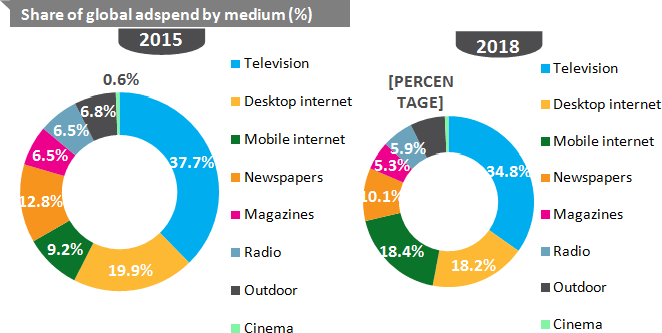
    Since it began in the mid-1990s, internet advertising (both desktop and mobile) has principally risen at the expense of print. Over the last ten years internet advertising has risen from 6% of total global spend in 2005 to 29% in 2015. Meanwhile newspapers’ share of global spend has fallen from 29% to 13%, while magazines’ has fallen from 13% to 7%. Print titles will continue to lose market share as their readership continues to decline, either move to online versions of print brands or other forms of information and entertainment entirely. We predict newspapers and magazines will continue to shrink, at average rates of 4% and 3% a year respectively, between 2015 and 2018, ending with respective 10% and 5% market shares.

    Note that our figures for newspapers and magazines include only advertising in printed editions of these publications, not on their websites, or in tablet editions or mobile apps, all of which are picked up in our internet category. The performance of print editions does not wholly describe the overall performance of newspaper and magazine publishers.

    Television is currently the dominant advertising medium, expected to attract 38% of total spend in 2015. As mentioned earlier, however, we now expect the internet to overtake television to become the largest medium in 2018. Looking at the ad market as a whole, including search and classified, we think television’s share peaked at 39.7% in 2012, estimate it at 37.7% in 2015, and expect it to fall back to 34.8% by 2018.

    However, one of the reasons for television’s loss of share is the rapid growth of paid search, which is essentially a direct response channel (together with classified), while television is the pre-eminent brand awareness channel. Television does not compete directly against search, and indeed the two can complement each other, for example by running paid search activity take advantage of the increase in searches driven by a television campaign. Taking internet classified and search out of the picture, television will remain the principal display medium for many years to come. We estimate television will account for 44.7% of display expenditure in 2015, and 42.9% in 2018.

    If we consider audiovisual advertising as a whole – television plus online video – we see that it is in fact gaining share of display advertising. Television offers unparalleled capacity to build reach, while online video offers pinpoint targeting and the potential for personalisation of marketing messages. Both are powerful tools for establishing brand awareness and associations. We estimate that audiovisual advertising will account for a record 48.4% of display advertising in 2015, up from 44.1% in 2010, and expect its share to reach 48.9% in 2018.

    Mobile is now the main driver of global adspend growth. We forecast mobile to contribute a full 87% of all the extra adspend between 2015 and 2018 (again excluding markets where we don’t have a breakdown by medium). Television and desktop internet will be the second and third-largest contributors respectively, accounting for 13% and 6% of new ad expenditure respectively. The gains made by outdoor, radio and cinema will be outweighed by the continued decline of newspapers and magazines, which we expect to shrink by a combined US$10 billion over the forecast period.


    Appendix


    List of countries included in the regional blocs

    North America: Canada, USA

    Western & Central Europe: Austria, Belgium, Bosnia & Herzegovina, Croatia, Czech Republic, Denmark, Finland, France, Germany, Greece, Hungary, Ireland, Italy, Netherlands, Norway, Poland, Portugal, Romania, Serbia, Slovakia, Slovenia, Spain, Sweden, Switzerland, UK

    Eastern Europe & Central Asia: Armenia, Azerbaijan, Belarus, Bulgaria, Estonia, Georgia, Kazakhstan, Latvia, Lithuania, Moldova, Russia, Turkey, Ukraine, Uzbekistan

    Japan

    Advanced Asia: Australia, Hong Kong, New Zealand, Singapore, South Korea

    Fast-track Asia: China, India, Indonesia, Malaysia, Pakistan, Philippines, Taiwan, Thailand, Vietnam

    Latin America: Argentina, Brazil, Chile, Colombia, Costa Rica, Ecuador, El Salvador, Mexico, Panama, Peru, Puerto Rico, Uruguay, Venezuela

    Middle East & North Africa: Bahrain, Egypt, Israel, Kuwait, Oman, Qatar, Saudi Arabia, UAE


    *We define Mature Markets as North America, Western Europe and Japan, and Rising Markets as everywhere else


    Advertising Expenditure Forecasts is published quarterly priced £495. It may be ordered in hard or soft copy from www.zenithoptimedia.com


     

  • Adspends in 2016 to grow 13%


    By A Correspondent


    Leading media agency network ZenithOptimedia says its growth forecast for advertising expenditure in India will be 13 percent for 2016.  Television largely fuels this at 15% and print – newspapers – at 10%. Digital is expected to grow upwards of 20% while all other media are expected to grow at 5-10%. E-commerce, telecom, mobile phones expected to have the maximum growth followed by automobiles and FMCGs.”


    ‘13% growth in adspends is a positive movement’


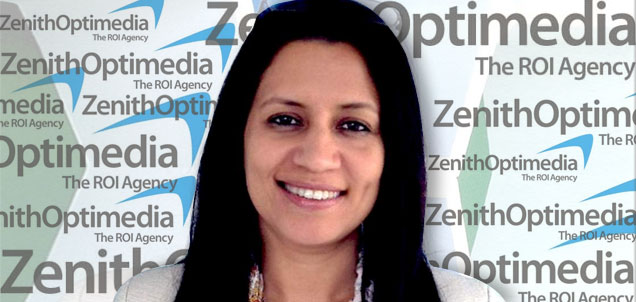
    Anupriya Acharya, Group CEO, ZenithOptimedia India on her agency network’s global spends forecast as she tells Pradyuman Maheshwari that the actual growth for 2015 will be at 13% as against 12% forecast last year, primarily driven by higher than expected growth on TV at 15%.


    You speak about rational optimism for the year ahead. But given your overall forecast for adspends as 13%, will you say that “achche din aanewaale hain” or would it be that “they could well have been ‘kharaab’, so be happy with this one”?

    The rational optimism is to contrast it with the irrational exuberance that was there last year this time given the new government. But to answer your question… I would say at 13% it’s a positive movement and if we have sustained momentum, it should go up further in the coming years.


    But even as forecast reports such as yours paint a rosy picture, friends in various media sales jobs rue that sales aren’t happening in right earnest…

    That’s right… at an informal level one can get different reports depending on who one is talking to. For example, most sellers will tell buyers that the market is booming and most buyers will tell sellers that it’s a tough market! :))


    Our report however is based on closely tracked data, including inventory sold, impact properties hitting media, annual reports of media companies, secondary research on economic parameters and key categories, actual movement on pricing coupled with market intelligence on key deals.


    Real estate for instance has taken a severe beating…

    That’s right… but actually sometimes that’s when it’s really advertised!


    Your forecast for 2015 was a 12% growth. How has it been in 2015 looking at actual spends. And what about specific sectors… the forecast % v/s actual?

    By the time we close 2015, it looks that the actual growth will be at 13%, primarily driven by higher than expected growth on TV at 15%.


    You’ve mentioned automobiles to see have a good growth, but we have seen modest rise there with very new brands too cutting price?

    Yes, as a category, AdEx on automobiles are quite volatile, say compared to FMCGs which are fairly stable in terms of growth/ degrowth. But this year we have seen a healthy 25% plus growth in automobile spends. New brands cutting price also need to advertise it!


    “In 2018 we expect the internet to overtake television to become the largest single advertising medium,” the report says. Would this apply to India too? And if not, by when do you think will the internet overtake television?

    It does not apply to India at this point in time. But if quite a few things kick in well and collectively like 4G, broadband highways, consumer’s earning and spending potential – and this coupled with the marketer-advertising fraternity accelerating their understanding of this space then it is not impossible to expect it in the next 7-8 years. I must also point out that interestingly, this is not because of slow growth of internet but because in India TV is also growing and far from saturation point!


    Lastly, given that we are the world’s largest democracy, second-most populous country… with a smart and creative advertising fraternity and have very active marketers, isn’t a matter of shame that we are sooooo far behind China?

    Well, China’s GDP is five times of India and their currency ten times stronger! We need to accelerate growth on all fronts in our country and media, marketing and advertising are a subset of it. Collectively, we can and we will 🙂


    ZenithOptimedia predicts global ad expenditure will grow 4.7% in 2016, reaching US$579 billion by the end of the year. This will be a 0.8 percentage point improvement on 2015: 2016 being a ‘quadrennial’ year, when ad expenditure is boosted by the Summer Olympics, the US presidential election and the UEFA football championship in Europe. “The global ad market has enjoyed stable growth since 2011, with growth rates ranging between 4% and 5% a year, and we expect it to maintain this pace for the rest of the forecast period,” the report adds


    Interestingly, while television is currently the dominant advertising medium with a 38% share of total adspend (in 2015), in 2018, ZenithOptimedia expects the internet to overtake television to become the largest single advertising medium. According to the report, one of the reasons for television’s loss of share is the rapid growth of paid search, which is essentially a direct response channel (together with classified), while television is the pre-eminent brand awareness channel – and we expect it to remain so for many years to come.


    Audiovisual advertising as a whole – television plus online video – is gaining its share of display advertising. Television offers unparalleled capacity to build reach, while online video offers pinpoint targeting and personalisation of marketing messages. Both are powerful tools for establishing brand awareness and associations. Audiovisual advertising will account for a record 48.4% of display advertising in 2015, up from 44.1% in 2010, and its share can be expected to reach 48.9% in 2018.


    Also, in 2018 mobile advertising will overtake desktop and account for 50.2% of all internet advertising. Programmatic advertising will account for more than half of digital display advertising (53%) for the first time this year, and will increase its share to 60% in 2016. “We expect programmatic advertising to grow another 34% in 2016 and 26% in 2017, at which point two thirds of global display will be programmatic,” the report adds.


    At regional  levels, Fast-track Asia economies (China, India, Indonesia, Malaysia, Pakistan, Philippines, Taiwan, Thailand and Vietnam) are growing extremely rapidly as they adopt western technology and practices, while benefiting from the rapid inflow of funds from investors hoping to tap into this growth. China accounts for 74% of adspend in Fast-track Asia, so its slowdown naturally has a large effect on the region as a whole. The expectation is for ad expenditure in Fast-track Asia to grow 8.9% in 2015, and at an average rate of 8.4% a year between 2015 and 2018, down from 14.7% a year between 2009 and 2014.


    Adspend growth is slowing down in three out of the four BRIC markets that were responsible for much of last decade’s ad market expansion. India – the only BRIC market – continues to combine rapid growth and large scale, making it a distinct hot-spot of adspend growth. The market is benefiting from sustained, healthy economic growth and strengthening personal consumption. With adspends growing at double-digit annual rates here, ZenithOptimedia expects the market to expand by US$3 bn between 2015 and 2018.


  • Amagi expands network to other continents

    By A Correspondent


    Amagi has announced the expansion of its India ad network to key international markets – North America, Canada, Africa, Australia and Asia. Amagi will now offer an advertising platform to Indian advertisers with B4U Network and Zee Bangla in these international markets. The company’s landmark move will now enable Indian advertisers to reach more than 200 million viewers onthese channels.


    Amagi’s global ad network allows advertisers to target audiences across regions, while optimizing ad budgets and increasing their return on investments. Advertisers can buy ad spots through Amagi across its international network and target consumers across markets.


    The company’sad network will now be extended to Zee Bangla and the entire B4U network including B4U Movies, B4U Music, B4U Plus and B4U Aflam. This opens up doors for several brands within India to expand their advertising footprint across the globe in markets of their choice. While this will instantly help in expanding the consumer base of Indian brands, television networks will also benefit from increased ad revenues.


    One of the first Asian channels to pioneer Bollywood entertainment worldwide, B4U Network caters to the Asian diaspora worldwide and covers some of the important markets including USA, Canada, Middle East, and North Africa. The network’s collaboration with Amagi will attract several Indian brands to its platform. Zee Bangla, the first Bengalisatellite channel, will also allow Indian advertisers to target the channel’s viewership base in Bangladesh through Amagi’s network.


    KA Srinivasan, co-founder and head of global operations at Amagi,said, “Our endeavor is to serve as a global TV ad platform for brands within India, helping them to penetrate and capture international markets essential for business growth; and collaborating with widespread networks like B4U and Zee Bangla, who are our long-standing partners, allows us to do just that. Indian advertisers, who were earlier restricted to Indian audiences alone can now advertise worldwide and reap the benefits of global exposure. Amagi hopes to see more such partnerships with TV channels and continue to bring more Indian brands on board for international advertising.”


  • DDB Mudra North and Patanjali create a campaign for Patanjali Ghee

    By A Correspondent


    Patanjali along with DDB Mudra North has created an engaging campaign featuring for the first time, acclaimed Indian Olympic freestyle wrestler- Sushil Kumar for their key product, Patanjali Ghee.


    The TVC has been ideated with an intent to highlight the health attributes of Patanjali Ghee and showcasing the goodness of nature with which the product is made. Starting off with a beautiful thought, ‘Rasoi mein sirf khana hi nahi banta, bante hain sapne’, the ad progresses; visually depicting the importance of Pure Ghee in gaining strength for being successful and becoming a champion. The storyboard has a parallel showcasing of the Sushil Kumar exercising hard towards becoming a champion and his mother, passionately cooking for him in the kitchen.


    The thought provoking background narrative of the ad draws a close relevance between home cooked food and success of a person, very rightly represented by Sushil Kumar. The ad signs off with the phrase ‘Champion Banney ki Taakat’


    Quoting on the campaign, Rakesh Sharma, VP-Marketing, Patanjali said, “Pure Ghee is an essential component of almost every Indian household. With Patanjali Ghee, we intend to provide an alternate to the consumers who seek purity and worth for their money with the product. Featuring Sushil Kumar for the ad has been great since he is the face of Indian wrestling today and epitomizes hard work and perseverance – an apt quotient for our product. We are glad to partner with DDB Mudra North in our journey to make Patanjali Ghee synonymous to home-made Ghee.”


    Sambit Mohanty

    Quoting on the campaign, Sambit Mohanty, Creative Head, DDB Mudra North said, “Pure Cow’s Desi Ghee is one of Patanjali’s best selling products. We wanted to give it back its rightful place in the kitchen by emphasising its benefits as a cooking medium. That’s how the thought of ‘Champion rasoi mein bante hain’ came about – it’s a great match with a brand ambassador like Sushil Kumar.”


  • LinTeractive bags digital mandate of Stuffcool; unveils brand campaign titled #LilThingsMatter

    By A Correspondent


    To further drive its message as being the leader in the space, accessories player Stuffcool has appointed LinTeractive, the digital agency of Mullen Lowe Lintas Group as its digital partner. LinTeractive would work towards positioning Stuffcool as the partner of choice for digital wares and also enhance its reach as a trustworthy player throughout India.


    Commenting on the appointment, Hemang Budhdeo – Director, Nissan Enterprises Ltd said: “The smartphone market in India is witnessing an unwavering growth which obviously spells more opportunities for us. We are glad to have LinTeractive partner us at this exciting phase as we look to expand our territories and further build up our customer base in India. We look forward to striking a meaningful relationship with the team and hope to chart out new frontiers in our quest of being the best in the space.”


    Vikas Mehta

    Part of Nissan Enterprises Limited, Stuffcool caters to those looking to source essential gear like mobile cases, screen protectors, cables, chargers, selfie-sticks and other enhancements for their smartphones. The firm is known to have cultivated the branded accessories market in India and pave the pathway for easy availability of quality accessories to end consumers.   Sharing his views on winning the business, Vikas Mehta, Group CMO | President, Group Marketing Services, Mullen Lowe Lintas Group said, “Devices are a bigger part of our lives today than most things we own. Stuffcool makes cool accessories for these devices, making it an inspiring brand to work with. The market is flooded with accessories but few great accessory brands. We are glad on the opportunity presented to LinTeractive to partner Stuffcool and hope to get the little things right for them.”


    Flagging off the partnership, LinTeractive has drawn up an extensive online campaign under the theme #LilThingsMatter. It has engaged in a whole lot of initiatives on and off line to drive home the core theme of #LilThingsMatter. Contests were run on social media – Facebook & Twitter where users were asked to share their experiences about the little things that make a difference to their lives, encourage discussions around the theme without revealing anything about the brand proposition. Following this, a brand film was launched along with a 5-day-contest on FB/Twitter where Stuffcool.comgot customers to engage with the brand over its online platform.


    Hemang Budhdeo

    Sharing his views on the integrated digital campaign that has been planned, Hemang Budhdeo said: “Our products play the role of a catalyst in the life of the consumer in a little way but have great impact. We approached LinTeractive with this brief, and they came up with #LilThingsMatter that says how little things (tech accessories) make a huge difference to the gadgets that people use and interspersed the same with life-situations around consumers. We are glad with the initial response that has been generated on the back of the new campaign.”


    The video campaign builds the brand philosophy through real life instances in a very artistic manner. Simple things like running out of battery, enjoying your time with friends while taking a selfie and other such nuances involving a mobile phone have been brought out in an imaginative manner. The background score in the campaign is a catchy one and has been incorporated to establish an emotional connect with the consumers. The film touches upon the values of love, care, friendship, trust while highlighting how products from Stuffcool help achieve little moments of joy.


    Commenting on the thought process behind the idea, Paul Dueman, Senior Vice President, LinTeractive said, “The campaign is our answer to differentiating Stuffcool from the other players in the accessories market. The strategy was to highlight instances, however small, that matter to consumers today and the positive impact it creates in their lives. We are confident that #LilThingsMatter as brand credo, backed with a series of creative narrations and engagements planned for 2016, will do well to connect with their consumers.”


  • Indian adspend to grow 15%: GroupM

    By A Correspondent


    GroupM forecasts adspends in India in 2016 to grow 15 percent. In February this year, GroupM had predicted Indian adspends would grow 12.6 percent. Like ZenithOptimedia and Magna Global, GroupM, has also issued its bi-annual global advertising expenditure forecast which predicts ad investment growth of 3.4 percent ($17bn incremental) in 2015 and 4.5 percent in 2016 ($22bn incremental).  These are slight downgrades from GroupM’s predictions at mid-year for 2015 and 2016 which were 4.0 percent and 4.8 percent respectively.  The detailed India numbers are set to be released by GroupM around end-January 2016.


    The forecast is published in GroupM’s biannual worldwide media and marketing forecast report, This Year, Next Year, available at www.groupmpublications.com. The intelligence is drawn from data supplied by WPP’s worldwide resources in advertising, public relations, market research and specialist communications by GroupM’s Futures Director, Adam Smith, who commented, “The outlook remains tough.  Marketers’ constrained pricing power in a deflationary world, a macro trend, prompts ongoing focus on cost control versus investment and this colors our outlook. Continued strength across the majority of the BRIC and Next 11 countries, notably mainland China, is a highlight of the forecast, but the Eurozone is still struggling to find traction.  While our outlook is overall positive, we recognize the downside risks of financial pressures in faster growth markets and the changing profile of China’s external demand.”


    Brazil, Russia China and India, GroupM believes will represent 23 percent of measured global ad investment in 2016, a proportion which has grown every year since they began measuring it in 2000, and GroupM continues adding a point a year for the BRICs in its modelled forecast through to 2020.


    Mainland China remains the largest contributor to global advertising growth, but GroupM has revised downward its 2015 forecast from 8.7 percent to 7.8 percent, and the 2016 forecast is also slightly reduced from 9.6 percent to 9.1 percent.  GroupM has observed that Chinese consumer demand remains strong, supported by wage growth, urbanisation, property wealth and supportive governmental policy. However, on the external side, less demand for primary resources, less foreign direct investment (FDI), less local tourism, and the impact of domestic goods and services replacing imports are among the top reasons for ad market slowdowns in Taiwan and Hong Kong.


    Elsewhere among the BRICS, GroupM predicts that India will be the fastest-growing economy in 2016, and the 2016 forecast is raised by two points to 15 percent.  India is a beneficiary of cheaper oil, as is neighbour Pakistan, which GroupM also upgraded in the forecast. Russia is at risk of another step down in the oil price, but absent another shock, a soft rouble and room to ease rates could assist quick recovery. GroupM expects a short, sharp ad recession of 13 percent in 2015 followed by 2 percent growth in 2016. And despite the Olympic summer, GroupM has revised Brazil’s 2016 down from 9 percent to 7 percent.  There, household spending continues to shrink as unemployment potentially reaches a ten-year high.


    The Eurozone now accounts for only 11 percent of global advertising, and Eurozone consumer price inflation remains near-zero; monetary policy is set to ease just as that of the US may tighten. Zero ad growth is forecast in France in 2016, and German and Italian annual ad growth for 2016 is anticipated to fall only between 1 and 2 percent.  Spain shows the Eurozone’s strongest recovery, but advertising investment in Spain will still be 55 percent smaller in real terms relative to its 2007 peak. In Europe, outside the Eurozone, high employment and other very positive trends make the United Kingdom the fastest-growing mature ad market in the world and the number three contributor to global ad growth in 2016 behind China and the U.S.


    In terms of investments across media types, the shift of advertiser investment to digital, of course, remains the biggest trend.  GroupM hasmaintained its midyear forecast and anticipates digital growth of 14 percent in 2016, commanding 31 percent of global ad budgets. This is a deceleration from the 17 percent growth predicted for 2015. The slower but ongoing strength of digital springs from many sources including organic take-up, technical innovation, advances in value, viewability and validation, automation and efficiency, better creative work, and the mastery of data.


    “Facebook is addressable and targeted at scale with requisite tools and automation that make it easy for advertisers to understand and use; so it is reaping advertising growth of 50 percent globally, including Instagram.  Organic Google website revenue is growing remarkably fast too at 25.5 percent, and they have streamlined YouTube into a complement to broadcaster VOD, even if it is not yet a real challenger on price or quality,” said Dominic Proctor, Global President, GroupM.  “We see that digital’s data and automation capabilities are inspiring the evolution of all media — in all markets across the globe — but digital will continue its powerful growth and market share gains.  This is despite the challenges in the digital space such as viewability, fraud, measurement and currency, all of which we expect to be solved by market forces.”


    According to a communique, GroupM believes 2015 will be the first year that absolute spend in traditional media went backwards in the ‘new world’ (Latin America, Central & Eastern Europe, and Southeast Asia). Only a half-point fall is predicted, but this marks rapid deceleration from the 17 percent growth recorded as recently as 2010. New world newspaper advertising first went negative for growth in 2012, followed by magazines in 2013. China’s advertiser exodus from TV to digital gave the extra push required to make 2015 a negative for traditional media in the new world. These trends are anticipated to ease slightly in 2016.


    Globally, print media’s share of advertising will stand at 18 percent in 2016, according to GroupM.  Print’s long-standing run-rate of annual loss is slowing from two points of share to one, but GroupM notes it is too soon to call it a stabilisation. The medium is embracing digital distribution, but only the strongest franchises are replicating their eminence in the digital domain. Common obstacles include fragmentation, chronic loss of reach, and lack of common standards in audience measurement and trading.


    Traditional TV continues to stand up well.  TV accounted for nearly 44 percent of global ad investment at its peak in 2012; since then it has shed about a point a year. China is responsible for most of this loss because TV advertising became more rationed and regulated while the digital ecosystem grew by leaps and bounds. The USA by contrast is perhaps the least-regulated and most competitive TV ad market, and its TV ad revenue share loss is less than the global average. It would look even healthier if its digital gains were properly consolidated with its traditional linear top line.


    “TV’s share is rising in almost as many countries as it is falling and contributors to the forecast identified three themes of untapped potential: relaxing regulation, improving the quantity and quality of VOD ad inventory, and format innovation. But every medium is in the midst of transformation; some to accelerate growth, others to decelerate share losses; and GroupM, as ever, plays a central role with the voice of the advertising customer to help shape the market to the advantage of our clients,” added Proctor.


    Most of the segment-specific forecast is global. The India numbers are set to be released by GroupM around end-January 2016.


  • Mayank Khattar is Milestone Brandcom NCD

    By A Correspondent


    Milestone Brandcom has appointed Mayank Khattar as National Creative Director. As part of his new mandate, Khattar will lead the creative duties in out-of-home and experiential for the company. With this appointment, Milestone Brandcom intends to leverage Khattar’s experience in creating and crafting great creative products andsolutions forits clients and their brands.   Prior to this, Khattar was Executive Creative Director at Bates Chi & Sercon. He led the Castrol Power Play campaign for the APAC region there, whichwent on to win various leading regional awards for its innovative and creative use of digital media in driving consumer engagement.


    Commenting on the appointment, Nabendu Bhattacharya,CEO & Managing Director Milestone Brandcom, said, “At Milestone, we strive to continually challenge the status quo of the communication paradigms in the region by offering disruptive, creative, innovative and relevant communication solutions. With Mayank’s experience and creative ideas, we are sure to further stretch the boundaries of disruptive creative communication, which in turn will lead us to great award winning work for the roaster of brands within our group portfolio.”


    Khattar has handled many brands across industries including Castrol, Seagrams, Colgate, Nirulas, HP, Clove Dental, Dell, EMC India and Singapore, Nokia, Oracle, DuPont, AaramShop, Sun Microsystem, Adobe, Autodesk, Olx and HDFC.He also has extensive experience in ad films and music videos wherein he handled brands such as Asahi glasses, LG, Dettol, Colgate, AajTak and Veedol to name a few.