Category: ADVERTISING

  • JWT Cal scripts a winning campaign for ATK

    By A Correspondent


    Post winning the creative mandate of Atletico de Kolkata (ATK), the Indian Super League (ISL) team from Kolkata in June this year, it was tasked on J. Walter Thompson to make ATK a leader on the pitch and also among its fans.


    In order to achieve this objective, the campaign had to forge an emotional bond between those with a Kolkata connect and ATK. The 360 degree campaign planned by J. Walter Thompson Kolkata aims at galvanizing fans and unify them in their support of ATK.


    The communication task was to strike a chord with all individuals who have a connection with Kolkata, regardless of where they are presently located. The campaign had to appeal not only to supporters of the local city clubs [Mohun Bagan & East Bengal] but also to those who follow the English Premier League and La Liga.


    As Arjun Mukherjee, VP & Sr. Creative Director, J. Walter Thompson Kolkata says, “Football fanaticism runs in the veins of every Kolkatan. While the supporters of the traditional football clubs are ferociously divided, the idea was to bring them together on a common platform at the new temple of soccer – Atletico de Kolkata.”


    “The campaign aimed to bring alive the feverish emotions and unflinching support. More than winning or losing, the idea was to instill a sense of immense pride and also to get the new generation back inside the stadium. Behind every great soccer club there’s always an army of die-hard supporters, and when there are fans backing you, every impossible goal becomes possible”, adds Arjun.


    The campaign line – Your Team. Your Dream – evokes intense emotions among fans, igniting their passion, helping them identify themselves with their team and become an inseparable part of ATK’s journey.


    ISL is an annual football tournament played between teams from eight cities between October and November. By virtue of winning the inaugural edition last year, ATK are the defending champions.


  • Havas Media awarded integrated mandate of Doctor 24×7

    By A Correspondent


    Havas Media Group India has been awarded the integrated media mandate of Doctor 24×7 which will involve traditional as well as digital and mobile duties. The account will be handled from the Havas Media Gurgaon office.


    Doctor 24×7 is a mobile phone based, pan India, tele-health service which instantly connects a subscriber to qualified and experienced Paediatricians, Gynaecologists and General Physicians – any time of night or day, including Sundays and public holidays. It is available on Android and iOS phones.


    Aloke Malik

    Speaking on the appointment, Aloke Malik, Founder and CEO, Doctor 24×7 said, “Customer care is our No.1 focus area. We found Havas Media to echo this philosophy and passion. Their experience and agility across media platforms, digital-mobile way forward and strategic bent makes them ideal partners in driving the long term growth of Doctor 24×7.”


    Anita Nayyar

    Anita Nayyar, CEO, Havas Media Group, India and South Asia said, “Doctor 24×7 has tremendous potential being akin to an essential service. It is a great win. We are delighted to be entrusted with the brand and look forward to partnering Doctor 24×7 become even more meaningful to its customers.”


    Mohit Joshi

    Mohit Joshi, Managing Director, Havas Media Group-India added, “This is yet another great win on the back of the recent BlueStone.com, HolidayIQ.com and Clovia.com wins. Healthcare will emerge at the forefront of the service industry. Our integrated media approach with digital-mobile focus, centred by the Havas Meaningful Brands framework – will map the Doctor 24×7 brand blueprint in India.”


  • Nielsen Digital Ad Ratings launched in India

    By A Correspondent


    Nielsen India announced the launch of its flagship digital advertising measurement solution – Nielsen Digital Ad Ratings – in a move that will advance digital advertising accountability in the country.


    Nielsen Digital Ad Ratings provides the media industry with a highly accurate method of measuring online advertising audiences, delivering reach, frequency and gross rating point (GRP) metrics as well as demographics such as age and gender to determine the effectiveness of digital advertising campaigns. The solution uses a patented process combining Nielsen’s online data with aggregated, anonymous demographic information from third-party data providers.


    Prashant Singh

    “Nielsen Digital Ad Ratings is a true industry game-changer,” said Prashant Singh, Managing Director, Nielsen India region. “Digital is fueling growth in brand advertising and Digital Ad Ratings stands to transform the advertising landscape by bringing standardization and accountability, and helping advertisers and agencies gauge return on investment for every rupee they spend online.”


    Currently, in markets where Digital Ad Ratings is not available, advertisers and agencies wanting to track the reach of their digital campaigns tend to use metrics such as click-through rates, conversion rates and cost per video views, all of which lack the people metric. Powered by database from Facebook, Nielsen Digital Ad Ratings will enable publishers to more accurately deliver advertising messages to audiences, helping advertisers to ensure their brand messages reach the right people to maximize ROI; and supports agencies in optimising campaigns in-flight to deliver peak efficiency and effectiveness.


    “Where advertisers, agencies and publishers stand to gain most from Digital Ad Ratings, is its ability to provide a true picture of your actual online audience – not just cookies and impressions. You can now analyse your brand’s online ad campaign just like you would for TV, and print,” says Dolly Jha, Executive Director, Nielsen India and Marketing Effectiveness practice area lead. “Moreover, Digital Ad Ratings allows for overnight measurement for campaigns that will make it possible for clients to apply in-flight changes to their media plan,” she added.


    Compared to all advertising mediums, digital is witnessing the fastest year-on-year growth of nearly 30 per cent. While there’re marketers who have allocated over 20 per cent of their marketing spend on digital, nearly all brand marketers are looking at spending more on digital, given the fast growing internet user base, creativity and innovation possible on the digital medium thanks to different ad formats, and finally the ability of this medium to better reach consumers.


    “It’s all about measuring people, not devices. Our integration with Facebook allows us to provide unique audience by counting people and not just the devices they consume content on. This provides the ecosystem with an accurate measurement of reach and frequency in the digital world, which was absent so far, added Prashant Singh.


    The benefits of Digital Ad Ratings are many – the main being that it enables agencies and marketers identify who it is they’re actually reaching online and also helps them evaluate unique reach and frequency across campaigns and within each publisher.


  • Partha Sinha quits Publicis to join McCann. Like Maggi 🙂

    By A Correspondent


    Partha Sinha

    Publicis Worldwide Managing Director Partha Sinha is moving on. To join McCann Worldgroup, reportedly as Vice Chairman and reporting in to Prasoon Joshi, CEO of McCann Worldgroup India and Chairman (Asia Pacific).


    Although Sinha said there was no such development when MxMIndia spoke to him last Friday, according to a senior McCann official, the news is confirmed.


    Interestingly, Sinha had just been made Managing Director of the Publicis Groupe agency in July this year two years after he and Bobby Pawar joined theagency. Earlier this year, there were murmurs that Pawar too was quitting, a move that was rubbished by all.


    As reported on Tuesday, McCann COO Govind Pandey has moved to TBWA India as CEO.


    According to the information received, the news of Sinha’s joining McCann will be made official later today or this week after some key clients of Publicis have been informed of the development.


    Interestingly, Maggi, the brand whose strategy Sinha would oversee at Publicis, has moved to McCann until further notice.


  • India Shining in in mobile ad $$s & traffic


    By A Correspondent


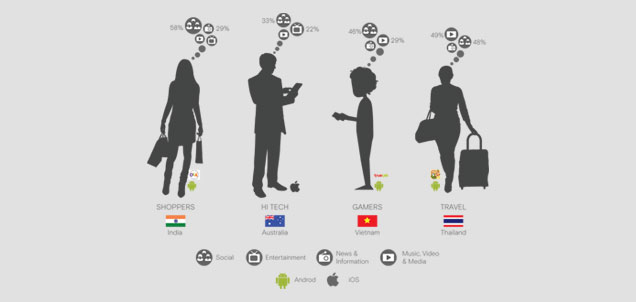
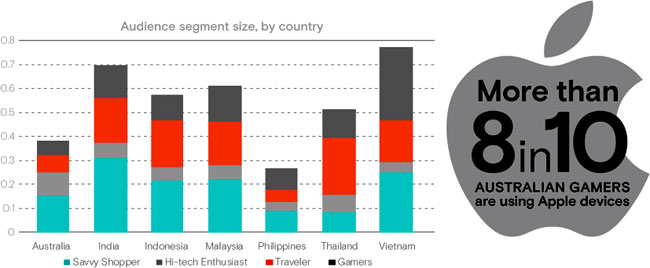
    Asia Pacific (APAC) and Oceania are showing a clear and rapid transition to smartphones, according to a Q3 State of Mobile Advertising study from Opera Mediaworks and the Mobile Marketing Association (MMA), released recently. In India, 75 per cent mobile users have smartphones. Even in markets where the transition from feature phones to smartphones has been slower (Vietnam, Indonesia and the Philippines), about half of the mobile user base has moved to smartphones.


    A study of mobile users on Opera’s global mobile-ad platform in six select APAC countries found that Android is the leading OS for smartphones, with 67.1 75 per cent of impressions being served to those mobile devices. India is the only country where platforms outside of Android and iOS support a relatively strong monetization model, with platforms other than Android and iOS having a share of revenue that is nearly twice their share of impressions.


    “The ability to serve high-impact – and therefore high-value – rich-media and video ads on smartphones is what is truly powering the monetization potential of the region,” observes Vikas Gulati, Managing Director for Asia, Opera Mediaworks. “These ad types are effective at attracting, engaging and ultimately converting mobile consumers. India leads in over all traffic and the top three categories for ad impressions are Mobile stores and career portals, social networking sites and apps, and sports.”


    Below are the key findings from the study of the APAC “P6” – India, Indonesia, Malaysia, the Philippines, Thailand and Vietnam – plus Australia.


    Key highlights from the APAC SMA Q3 report:


    Mobile-device market share and ad types:

    >> While Android market share in the P6 is similar to the global average (65.4 75 per cent), its share of revenue is higher – 54.9 75 per cent vs. 44.4 75 per cent globally. This is likely the result of Android being the go-to OS for smartphones and thus the chosen platform for high-value brand campaigns.

    >> India leads the region in overall revenue and traffic, accounting for more than half (53 75 per cent) of impressions. It falls lower, however, in terms of monetization potential, due to the relatively high (25 75 per cent) share of feature phones. Still, compared to other feature-phone-dominated markets, its share of revenue is equitable to that of impressions, indicating a relatively strong monetization model on “other” platforms.

    >> Mobile video ad formats command higher eCPMs than rich-media display and even native ads in nearly all of the countries in the study.


    Top publisher and mobile-app categories:

    Mapping content trends by country, Opera Mediaworks and the MMA found that while each country demonstrates a unique profile in terms of audience interests, there were some patterns:


    >> Mobile stores and carrier portals are the most popular category in most of the countries, the result of feature-phone owners needing to access content and apps through these channels. In fact, 88.5 75 per cent of unique users to mobile stores and carrier portals are visiting from feature phones.

    >> Social Networking is the most or second-most popular category for five of the seven countries. It is noticeably missing from the top three in Australia, which is instead dominated by Entertainment, Sports and News & Information.

    >> In three countries (India, the Philippines and Vietnam), nearly 8 in 10 impressions are served to the top three categories, indicating highly condensed interest areas. Malaysia and Thailand, on the other hand, show traffic going to a wider set of categories.


    “Asia Pacific is a truly diverse region, and the growth and maturity of mobile marketing has seen the region’s power markets grow from four to six,” says Rohit Dadwal, Managing Director, Mobile Marketing Association APAC. “Collaborating with Opera Mediaworks on this report allows us to make all this data available for marketers, advertisers and publishers and ensure that the industry can adapt and evolve to ensure the region continues to create industry-winning mobile campaigns.”


  • ASCI uphelds complaints against erring ads

    By A Correspondent


    In August 2015, ASCI’s Consumer Complaints Council (CCC) upheld complaints against 87 out of 117 advertisements. Out of 117 advertisements against which complaints were upheld, 37 belonged to the Personal and Healthcare category, followed by 41 advertisements in the Education category and 9 advertisements from other categories.


    In the Health & Personal Care category, the CCC found the following claims in health and personal care product or service advertisements of 37 advertisers to be either misleading or false or not adequately / scientifically substantiated and hence violating ASCI’s Code. Some of the health care products or services advertisements also contravened provisions of the Drug & Magic Remedies Act and Chapter 1.1 and III.4 of the ASCI Code. Some complaints that were upheld include:


    1. LG Electronics India Pvt. Ltd.  (LG Water Purifiers): The advertisement of LG Water Purifiers claims, “India’s only true water purifier” which was not adequately substantiated.


    2. Hindustan Unilever Ltd. (Pureit Ultima): The TVC of Pureit Ultima claims, “Pureit Ultima RO+UV. Sirf is mein hai Purity Indicator jo saaf saaf dikhata hai ki paani kitna pure hai”, which was false and misleading. Furthermore, the Print advertisement and Website claims, “Pureit Ultima with Purity Indicator. Purity you can see!” was misleading by implication.


    3. L’Oreal India Private Limited (L’Oreal Fall Repair):  The claims in the advertisement, “Its   triple action arginine nourishes hair from its roots, it reduces breakage, hair grow stronger” and “Save up to 2000 hair strands”, were inadequately substantiated and were misleading by ambiguity.


    4. Lotus Herbals Limited (Lotus Herbals Youth RX): The claims in the advertisement, “A firmer and younger skin in just seven days” and “In four weeks 96 percent of users have agreed that effects of ageing are almost gone”, were inadequately substantiated.


    5. VLCC Ltd Healthcare: The claims in the advertisement, “Listen to your DNA for weightloss. Presenting for the first time VLCC DNA Slim a scientific weight loss solution based on your DNA”, “Running 4KM daily helped your colleague Lose weight. But may only make you lose your cool” and “Lose four kilograms or get your money back”, were considered to be misleading by exaggeration and implication.


    6. Shree Baidyanath Ayurved Bhawan Pvt Ltd (Baidyanath Medohar Guggulu): The diagrammatic representations of before and after images shown in the advertisement and on the product pack were found to be misleading by exaggeration.


    7. Nityanand Herbals (Dia Nitya): The claims in the advertisement, “Miracle in the world Dia Nitya – For Diabetes – Instant relief – Made from traditional natural herbs – Helps in reactivating the beta cells – Helps in high consumption of glucose by cells – Works as insulin – No Side effects”,  “Our aim to make the world diabetes free”,  were not substantiated. Also, specific to the claims implying cure for Diabetes, the advertisement is in breach of the law as it violated The Drugs & Magic Remedies Act.


    8. Mardana Josh Range of Products: The advertisement’s claims, “Mardana Josh Herbal Majun & Capsule – Increases masculine energy, provides stoppage, increases stimulation and potential, stops premature ejaculation, successful in curing physical weakness”, were not substantiated.  Also, the advertisement claims read in conjunction with the advertisement visual implies that the product is meant for enhancement of sexual pleasure, which is in breach of the law as it violated The Drugs & Magic Remedies Act.


    9. Weitrex Forte Capsule & Drops: The claims in the advertisement, “Weitrex Forte Capsule & Drops – Reduce Obesity”, “No Dieting” and “No Side Effects with pure ayurvedic treatment”, were not substantiated.


    10. Claris Lifesciences limited: The claim in the advertisement, “Industry best in Healthcare” is false as it is ranked #2. The advertisement does not have a disclaimer qualifying the source and date of research for the claim made in the advertisement.


    11. Hindustan Unilever Ltd. (Fair & Lovely Men’s Fairness): The visual of “a model in the jeep without wearing seat belt” as depicted in the TVC of Fair and Lovely Men’s Fairness shows an unsafe practice.


    12. Johnson & Johnson Ltd (Aveeno Active Naturals): The claims mentioned on the pack and as cited in the complaint, state “Aveeno Active Naturals are ingredients derived from nature” for the declared active ingredient on the pack “Dimethicone” which is not considered to be natural was false and not substantiated.


    In the education category, the CCC found that claims in the advertisements by 41 advertisers were not substantiated and, thus, violated ASCI Guidelines for Advertising of Educational Institutions. Few complaints that were upheld include:

    1. Personaliteez: The advertisement’s claim, “Making 2 lakhs per weekend”, was not substantiated.

    2. Peoples Empowerment Group – ISB&M School of Technology: The claims in the advertisement, “100% Placement” and “ISB&M School of Technology Ranked 8th in Emerging Engineering Institutes in India”, were not substantiated.


    3. NIPS  School of Hotel Management: The claims in the advertisement,  “World Record Holder”,  “Ranked No. 1 Eastern India the Pioneer Newpaper 2014”,  “Best Placement Award- By South Asian Academy, New Delhi, 2012”,  “Ranked No. 2 Among India’s Private Hotel Management Institute – The Pioneer Newspaper – 2013”,  “Holder of Limca, Asia & India Books Of Records”,  were not adequately substantiated with evidence.


    4. The Mentor’s Academy: The claims in the advertisement stating, “Get a reputed Government job. Get Bank, Railway, Police etc. in just one day exam”, and “100% Money Back Guarantee”, were not substantiated.


    5. CL Educate Ltd (Career Launcher): The claims in the advertisement stating, “CAT Test Series – The No.1 CAT Test Series Program”, “Most recommended test series”, “Rated the best by students” and “True percentile predictor”, were not substantiated adequately.


    6. SCMS School of Engineering & Technology: The claim, “Kerala’s No. 1 Engineering College (SF) in quality and excellence”, was not substantiated with comparative data.. The claim, “SCMS is ranked No. 1 in all ranking surveys conducted by RECCA-NIT”, was not substantiated with supporting data and also the claim is misleading by omission of what the ranking was specific to.


    7. Invertis University: The advertisement claims, “National Education Award 2014 for Outstanding B-School & Engg. Univ. – ABP”, “4 Star Ranking – The Pioneer”, “Bharat Shiksh Ratan – Velidicted by GAF, Delhi” and “Best Emerging University Of North India – Indian Achievers Podium”, were not adequately substantiated and were misleading by omission of disclaimers.


    8. Career Institute for Commerce & Accounting: The claim in the Advertisement, “AIR-26, 30, 36, 37, 41, 42” as a declaration is considered to be fake and not substantiated with supporting data.


    Other ads that were upheld include:

    1. HSIL Limited (Hindware Ensemble Kitchen): The claim in the advertisement, “Air Flow–1200 m3/hr”, was not substantiated with supporting technical data.


    2. Bharti Airtel Ltd. (Airtel Broadband): The claim offer of “Airtel Broadband – 60 GB @ Rs.1099 with unlimited calls”, was not substantiated with evidence of the customers who have availed this scheme.


    3. Amazon Kindle: The advertisement claiming price off of Rs 1000/- from Rs. 5999 to Rs 4999 in large prominent font shown for an image of the product costing Rs.8999/-  is misleading by implication regardless of the disclaimer (in fine print), “Device shown in Image is Rs.8999/-”.


    4. Carlsberg India Limited (Tuborg Zero): The advertisement was a surrogate advertisement for a promotion of a liquor product – Tuborg Zero.  The advertiser did not provide the annual market sales data of the product/service advertised, thus the advertisement contravened Chapter III.6 (a) (b) of the ASCI Code and the Guidelines for Brand Extension product or service.


    5. 3M India Limited (3M Car Care): The advertisement visual showing a car splashing water filled on the road, encourages people to indulge in dangerous practices without justifiable reason.


    6. John Distilleries Pvt Ltd (Original Choice): The advertisement shows a bar situation with coloured liquid in bottles/glasses which appears to be a direct promotion of liquor product – Original Choice.  The advertisement is misleading by implication and contravened Chapters I.4 and  III.6(b) of the Code (“Whether there exists in the advertisement under complaint any direct or indirect clues or cues which could suggest to consumers that it is a direct or indirect advertisement for the product whose advertising is restricted or prohibited by this Code.”).  Also, the advertisement did not meet the requirements as per ASCI’s Guidelines for Qualification of Brand Extension Products and thereby contravened Chapter III.6 (a) of the ASCI Code.


    7. Manappuram Finance Limited: In absence of a disclaimer to indicate that the earlier scheme of 5% reduction in interest rate has been extended to other branches, the advertisement is misleading by omission.

  • Leo Burnett wins General Mills

    Leo Burnett has bagged the integrated communications mandate for the entire product portfolio of General Mills in a multi-agency pitch. Most top agencies participated in the process, notes a communique. BBDO India serviced the account until this development.


    It may be rememebered that Leo Burnett was instrumental in launching the Pillsbury brand in India. According to sources, with Pillsbury facing the heat in the market, there is need for a new creative thrust and hence the need to look at change of agency.


    On the decision to choose Leo Burnett as the creative partner, Salil Murthy, Marketing Director, General Mills India, has said officially: “Getting the right creative partners on board is an important first step in realising our growth potential in India. There is incredible opportunity for us as Indian consumers are increasingly opting for better quality food products that make their lives healthier, easier and richer. Our products across Pillsbury Atta, Cake Mixes, Chocolate Spreads and RTC food mixes deliver exceptionally well on providing great taste and convenience in cooking with our unique quick and easy to prepare food solutions. Looking ahead, we will expand our product portfolio and back that with strategic communication to truly win with consumers. Leo Burnett is best placed with capabilities across the communication spectrum to deliver that and we hope to see some exciting integrated work.”


    Said Saurabh Varma, CEO – South Asia, Leo Burnett, “In the era of changing consumer trends and lifestyles, we have a clear mandate to redefine the purpose for General Mills and boost consumer preference and loyalty for all their brands, namely – Pillsbury, Nature Valley, Betty Crocker and more.”


  • TBWA India CEO Vineet Bajpai launches ‘Talentrack’ for M&E hiring

    By A Correspondent


    Vineet Bajpai

    Founder of digital agency Magnon and former CEO of TBWA India Group, Vineet Bajpai has announced his new venture called talentrack, a hiring platform for all genres of media, entertainment, creative and art talent. It is a mobile + web model and has been funded by Unigrowth, a Canada-based early-stage investment fund.


    Speaking at the launch, Bajpai said, “India is the largest film industry and the third largest television industry in the world. It has a vibrant music sector, art &publishing industries and many more creative domains that are purely talent-driven. And yet, in such a vast and growing talent-dependent market – there is no online talent aggregator. This is a huge gap and a huge opportunity. talentrack envisions to fill this gap.”


    According to a communique, talentrack won the ‘Best Talent Platform for Media & Entertainment Award’ at the 8th Global Film Festival held at the Noida Film City on November 18-20 2015.


  • Tanushree Radhakrishnan appointed as SVP at ZenithOptimedia

    By A Correspondent


    Tanushree Radhakrishnan

    The ZenithOptimedia Group is expanding and consolidating its digital operations in India, and has made a key hire in the form of media veteran Tanushree Radhakrishnan. With experience of over twelve years across varied areas such as Display, Search, Social and Mobile, Radhakrishnan has joined the group in November 2015 as Senior Vice President and will drive its product standardization and programmatic agenda. Her last stint was with GroupM India where she was the digital head, MEC North.


    This is her second innings with the ZenithOptimedia Group. She was previously employed in the organisation between 2008-2013 and was instrumental in the phase when Resultrix was being integrated into the group. Radhakrishnan will report into Tanmay Mohanty, the Managing Director of ZenithOptimedia Group’s digital companies Performics and Resultrix.


    Mohanty says that Radhakrishnan will help the group deliver holistic value to the clients, and help develop a 360-degree offering basket in line with the Live ROI philosophy. “The group is witnessing unprecedented growth all around, whether it is increase in spends from existing clients, the rush of new business or talent. Be it the setup of a media technology division in Bangalore this year or the launch of Performics Mobile last year or the Centre of Excellence teams, there is a lot of vibrancy and energy flowing within, and I am sure that Radhakrishnan will now be a part of it. She has rich and varied experience across all key verticals of digital marketing and we are delighted to have her on board. Her real strength lies in delivering high ROI for clients.”


    Radhakrishnan is a Hons graduate of Indira Gandhi National Open University in Accounts and Economics, and has worked with companies such as Webchutney, Carat Media and ABN Amro.


    Radhakrishnan started her career in audit and planning at ABN Amro in 2001. After a 2yr run in finance she made a switch and pursued an MBA in Advertising & Communication from EMPI. In early 2005, she interned with Carat Media, after which she joined Webchutney in 2005 as SEM analyst. She joined Performics in 2008. She has been involved with performance campaigns for clients and maximizing return on interest (ROI) for them. She has worked with brands across categories, whether it is Makemytrip, Airtel, HP, Nestle, ICICI, Microsoft, Citibank and Aviva.


  • Havas powers FX India’s Doctor Who celebrations

    By A Correspondent


    FX India partnered with Havas Media India to engage Doctor Who audiences in India through November in an attempt to make Nov 23 a memorable day in their lives!

     

    Doctor Who, the world’s longest running sci-fi show which premiered on BBC, November 23, 1963 has Whovians (fans), across the globe. Every year, The Doctor’s birthday is celebrated as TARDIS Day named after his Time Machine/Spacecraft and is one of the biggest events of the year for every Whovian.


    The ball was set rolling by informing active fan clubs on Facebook that something big was coming their way. Keeping true to the show’s legacy they were informed of a chance of being a part of the next best thing to a ‘Companion’, a Doctor Who sidekick. This was done on Twitter as well.


    The celebrations saw #TARDISdayOnFXgather over 21.5 million impressions with over 7,000 tweets from 400+ contributors. As a special treat for the fans, TARDIS day wishes from The Doctor was shared via a video link https://www.facebook.com/FXIndia/videos/vb.117763098286699/1278489708880693/?type=2&theater


    While this was happening on digital, on-air#TARDISdayOnFXwas celebrated by airing The Doctor Series9 marathon.


  • Indrani Sen: Outreaching by Outdoor: From Static to Interactive

    By Indrani Sen


    Global Industry Analyst, Inc (GIA) in its report on “The Global Outdoor Advertising Market” in January 2015, talked about the growing popularity of digital platforms for out of home advertising. According to that report “Asia Pacific represents the largest market worldwide. The region is also forecast to emerge as the fastest growing market with a CAGR of 8.6% over the analysis period, led by the retail boom in countries such as China, Singapore, Malaysia, Thailand, Hong Kong and India.” (http://www.strategyr.com/MarketResearch/Outdoor_Advertising_Market_Trends.asp) In a press release dated February 10, 2015, GIA spoke about technology development and replacement of traditional static billboards and posters with digital signage as the prime drivers of the growth in outdoor industry and predicted rise in oversized digital billboards/ large screen digital displays.


    Compared to the global trend, how has our Outdoor Advertising Industry been faring over the recent years? FICCI-KPMG reports have been predicting healthy CAGRs over the last five years. In the last two reports, a CAGR of 9.2% over 2013-2018 was posted in 2014, followed by a marginally higher CAGR of 9.8% over 2014-2019 in 2015. We have also been talking about digital OOH driving the growth, but our usage of digital OOH have been limited to place-based networks in cafes, restaurants, health clubs, educational institutes, sports arenas, malls, some public spaces like airports. In spite of the predictions of the global industry experts, our use of DOOH (digital out of home) has been limited to small screens, interactive kiosks, jukeboxes and jumbotrons. Large standalone screens/ billboards with digital content which needs larger investment in the infrastructure have still not arrived in India.


    Annie Rickard, the Global CEO of Posterscope, spoke about pioneering dynamic real-time content on OOH screens and the challenge of implementing the same due to infrastructural constraints in an interview during her recent visit to India. Speaking about the relevance of outdoor medium in a digital world, she said: “The whole world of OOH has shifted. There was a time when OOH was only about awareness and impact. But now you can have a conversation with consumers.” She also pointed out the need for consolidation on the media owners’ side and the need for all players to work together backed by a valuable insight- “What we have seen everywhere else in the world is that when you have less players, the investment goes up. When you have lots of small players, they actually invest less collectively in the medium. You also get more collaboration when you have a smaller number of players.” (http://www.exchange4media.com/outofhome/our-focus-will-be-on-continued-investment-to-make-the-ooh–medium-accountableannie-rickard_62497).


    Is our outdoor industry ready for consolidation and collaboration? Apart from a few mergers and acquisitions at the top and networking and trading of sites across the width and breadth of the industry, there has not been any serious attempt at any consolidation. In August, 2015 AAAI (Advertising Agencies Association of India) and IOAA (Indian Outdoor Advertising Association) signed an agreement to better regulate outdoor advertising in India and there was no reference to consolidation in that agreement. Their focus will be on regulating and disciplining advertiser behaviour in matters concerning outdoor trade, agency remuneration, corporate governance and adherence to payment deadlines (http://www.campaignindia.in/Article/397183,aaai-and-ioaa-join-hands-to-channel-ooh-advertising-growth.aspx) Ideally it should have been a tri- party agreement between AAAI, IOAA and ISA (Indian Advertisers Association). The absence of ISA has raised some doubts about the long term success of the efforts.


    While making announcement about the joint agreement, N D Mehta, President of IOAA, mentioned about outdoor research and a census of billboards/ hoarding across all major cities. IOAA has been involved for a while in an ambitious project of conducting viewership research on OOH, starting with major cities. However, we do not have any indication regarding the timeline or progress of the research project. The first Indian Outdoor Survey (IOS) was spearheaded by MRUC (Market Research Users Council) and conducted by Hansa Research in Mumbai in 2008. The report was released in June 2009 by MRUC with a promise of extending the research to other cities. Due to lack of financial support from the outdoor Industry, MRUC had to abandon its plans. Since then, no syndicated research has been conducted in this space, though various outdoor advertising agencies have carried out their own research. Market research organizations like IMRB have developed outdoor research models which the advertisers can commission. Does IOAA have enough muscle power to bring outdoor industry under one umbrella for supporting syndicated research on outdoor on a regular basis? Can IOAA and AAAI generate the required funds of outdoor research without active support from ISA?


    The advertising Industry will welcome the move of conducting a census of 100% of sites and identifying them with unique ID number in major cities. But, the IOAA will have to conduct a health check of the sites first. A search on the IOAA site (http://www.ioaa.co.in/ news on facebook) shows various news items related to removal of illegal hoardings. A news item dated October 7, 2015 talks about a survey conducted by the Bruhat Bengaluru Mahanagara Palike (BBMP) ascertaining that out of 6,119 hoardings within city limits of Bengaluru, only around 2,000 had legal permissions! Paradoxically, the size of our country, which is the foundation of the structure of the current developments in our media industry, is the biggest roadblock for organised development of our outdoor industry.


    Outdoor regulations are mostly governed by the local authorities/ civic bodies and various state governments and there is a lack of uniform structure. Can the Ministry of Information & Broadcasting instruct TRAI to create a template for the outdoor rules and regulations which can be adopted locally in each state? It is probably wishful thinking as there are many political under currents when it comes to the relationship between Central Government and State Governments regarding formulation of rules and regulations related to matters under state control and jurisdiction. Alternatively, is it possible for IOAA to develop such a uniform guideline for outdoor rules and regulations and solicit for the support of all state governments?


    Indian advertisers have not yet come to grasp with the concept of interactive outdoor with real time content. Outdoor industry leaders need to resolve many issues before visualising a roadmap for evolving towards the digital future. In the meantime, shall we just sit back and watch the rest of the countries in the Asia Pacific region passing us by in the race towards the digital future? Can we create a model city where all outdoor sites will be legal with unique ID numbers, where a large number of static hoardings will be converted to oversized digital billboards with real-time content having conversations with consumers, where research will be measuring the impact of the new avatar of outdoor on a regular basis? Needless to mention, the model city experiment cannot be conducted in a metro where the scale of operation will be too huge. So, it will have to be a Tier-2 city with strong growth in retail sector. Outdoor Industry will need active support from the local government for conducting the experiment. If all the stakeholders in the industry join hands together to make such a plan successful, that example will automatically propel the growth of our outdoor industry into the digital future. Amen!


    Indrani Sen is a veteran media agency and marketing services professional. She is currently an Independent Consultant and Adjunct Faculty, Media Management at Symbiosis Institute of Media & Communication, Pune. This column MediaSENse will appear fortnightly. The views expressed here are her own.


  • Indrani Sen: Destroy the Demon

    By Indrani Sen


    Advertising Standards Council of India (ASCI) greeted the Indian Advertising Industry this year with ‪@#‎HappyDussehra  Destroy the demon of misleading ads! Dassera, the time when the entire country celebrates the triumph of good over evil, is probably the right time to introspect how we have fared in the area of self-regulations over the last 30 years.


    Founded in 1985 with support of three main constituents of our advertising industry, viz. advertisers, advertising agencies and media owners along with other professional /ancillary services connected with advertising practice, ASCI has come a long way in three decades. The Cable Television Network Rules 1994 included ASCI’s Code for Self-Regulation in Advertising in the Advertising Code under Cable TV Act’s Rules. The 2007 amendment of Cable and TV Network Rules reconfirmed it. For some time, ASCI have been taking part in all committees working on advertising content in every Ministry of the Government of India. Many misleading ads are short lived, thanks to ASCI’s rulings.


    Yet, we find that at times rulings by ASCI are not followed by the parties concerned. Last year, an advisory issued to all TV channels by the Ministry of Information & Broadcasting on August 21, 2014 spoke about violation of ASCI’s rulings by some TV channels and advised not to carry ads found ‘violative’ by ASCI. In 2014-15, 80% of the advertisers agreed to accept ASCI’s rulings and agreed to withdraw the misleading ads while 20% did not.  It is more common to find that advertisers, agencies drag their feet before they finally withdraw the offending ad from the market. The media houses very rarely take the onus on themselves and do not refuse any ad even when there is a clear ruling given by ASCI against it. So, the demon of misleading ads continues to haunt our advertising industry with many organisations turning a blind eye.


    Can we collectively take some steps to strengthen ASCI’s hands for destroying this demon? Can the various industry bodies like ISA, AAAI, IBF, INS etc. take some positive steps to ensure that all their members abide by ASCI’s rulings? Can our law-makers help ASCI by introducing specific penalty for violation of ASCI’s rulings? I would humbly like to propose a few suggestions to all concerned.


    Extend Membership of ASCI

    Currently, the membership of ASCI is voluntary and therefore optional. While ASCI cannot enforce the advertisers, agencies and media houses to become their members, the various industry associations can consider making it compulsory for all their members to become a member of ASCI. This would help to spread the awareness about ASCI which currently in many non-member organizations rest on the back burner.


    Support Funding of ASCI

    As an independent NGO funded by its members, ASCI is not very cash-rich. An extended membership pool will help to increase its resources. In this context, our industry and our law-makers may like to review the system of funding Advertising Standards Authority (ASA) in UK which is funded mostly by the advertisers through a remote control mechanism. There is a 0.1% levy on the cost of buying advertising space/time and the 0.2% levy on direct mail which are collected by the Advertising Standards Board of Finance (Asbof) and the Broadcast Advertising Standards Board of Finance (Basbof) for funding the ASA. Advertisers in UK can choose to pay the levy, but they cannot choose to comply with the Advertising Codes or the ASA’s rulings.


    Introduce Penalty for Disobeying ASCI’s Rulings

    The Advertising Standard Authority (ASA) in UK , which is a part of the European Advertising Standards Alliance (EASA), ensures primarily obedience by broadcasters to their rulings – “Broadcasters are obliged by a condition of their broadcast licences to enforce ASA rulings.  If they persistently run ads that breach the Codes broadcasters risk being referred by the ASA to Ofcom, which can impose fines and even withdraw their licence to broadcast.” (https://www.asa.org.uk/Industry-advertisers/Sanctions/Broadcast.aspx) ASCI have an associate membership of the European Advertising Standard Alliance, but the obligation to comply with ASCI’s rulings rest primarily with the advertisers and agencies in India. Would it be possible for our law-makers to impose fines and withdrawal of licences on Broadcasters/ Newspapers for disobeying the rulings of ASCI? Can IBF and INS who are very strict with advertisers and agencies when it comes to credit control, introduce some such disciplinary measures for their members for disobeying rulings of ASCI?


    Introduce Pre-clearance of Ads

    Currently, there is no system to ensure that no ad is misleading before it is released. “Some countries’ eg France have pre clearance of ad by self regulatory body requirement, UK TV channels also pre clear advertisements just like DD does it in India”(http://ascionline.org/index.php/faqs.html).The broadcasters in the UK have established and funded two pre-clearance centres: (i) Clearcast for television commercials and (ii) Radiocentre for radio ads. Considering that most of the ads that the consumers complain against in 2014-15 were from TV media, would it be possible for IBF to introduce a similar system of pre-clearance of all TV commercials in India?


    Make ASCI Certifications compulsory in Agencies

    ASCI’s new websites has introduced an E- Learning Portal offering 14 modules of self learning courses with certifications at a nominal cost. Agencies should make it compulsory for their creative people to take these courses. I am sure that ASCI would be willing to consider discounts against bulk enrolment, particularly from their member agencies.


    Promote ASCI through Corporate Social Responsibility Projects

    The aim of ASCI is to maintain and enhance the public’s confidence in advertising. Their mandate is that all advertising material must be truthful, legal and honest, decent and not objectify women, safe for consumers, especially children and last but not the least, fair to their competitors. In 2010, ASCI launched a national campaign against dishonest, misleading ads. Advertisers, who have to spend on Corporate Social Responsibility, may like to consider promoting the aims of ASCI through similar campaigns to public at large and through specific activities to various industry constituents.


    Let good sense prevail on each one of us in the industry! Let all of us join hands to support ASCI in destroying this demon of misleading ads!!