Category: ADVERTISING

  • ParentCircle ropes in Leo Burnett, MSL Group and Edelman

    By A Correspondent


    ParentCircle has roped in MSLGROUP, Leo Burnett and Edelman Digital in India to handle Communications, Brand strategy and Digital duties in anticipation of its upcoming release of new products and platform.


    Announcing the move, Nalina Ramalakshmi, Founder and Managing Director of ParentCircle says, “We were looking for strategic and integrated communications partners to enable us to convey our brand message in the most appropriate manner to the broader world. ParentCircle aims to be a household name both in the country and across the globe. We are extremely pleased to partner with MSLGROUP, Leo Burnett and Edelman Digital. We are excited to work with all of them. We are confident that our brand will be portrayed exactly the way we perceive it, with the help and support of our partner agencies.”


    MSLGROUP, India will develop a comprehensive communication strategy that will accentuate the brand value in the media and will create and build brand awareness in India with its communications and engagement campaigns.


    Leo Burnett is entrusted with the opportunity of playing a crucial role in the branding communication strategy of ParentCircle. Leo Burnett will craft and execute integrated campaigns for ParentCircle.


    Edelman Digital has been mandated to create and implement an integrated social and digital media strategy with a comprehensive, creative and content-driven solutions for ParentCircle.


    ParentCircle with its partners, plans to utilise all possible means of communication to reach out to its target audience.


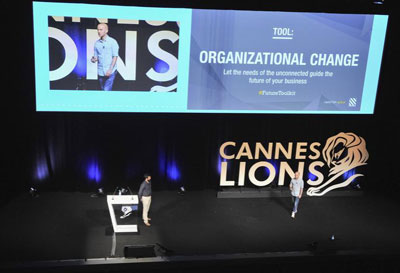
  • The Agency of the Future is an Algorithm: Razorfish-Contagious seminar @CannesLions2015

    By Dyanne Coelho


    There’s absolutely no point sticking to the rules anymore. The last decade has changed the way marketing works in our industry and the growth of the digital space has created more opportunities, more expectations and more solutions. But how prepared are we for what comes next? While we talk of the ever increasing pace of change, it’s clear that what matters is not so much what we know about the future, but how we adapt to it. A well-worded introduction, set the pace for the seminar entitled ‘Toolkit for Transformation’with Ray Velez, Chief Technology Officer, Razorfish Global and Will Sansom, Director, Content and Strategy, Contagious Communications.


    “Is it just us or have we reached a point where the industry has hit pause,” Sansom asked. “We carry devices in our pocket now that have more processing power than the super computers that put man on the moon. Statistics suggest, that young people switch media platforms over 25 times an hour,” he said.

    “Technology breeds technology, and innovation breeds innovation. Knowing about the future isn’t enough; you also need to plan on how to adapt to it,” Velez added.


    We think in the future, brand loyalty will become extinct, Sansom revealed. According to him, we’ve never been better enabled andequipped to switch between brands no matter the category. Research shows that there is about $6.2 trillion in revenue to be made from people switching loyalty from one brand to another. This is now being called the switching economy. This is proof that brand loyalty is becoming extinct, they discussed.


    We have more choice now. A lot of the new generation start-ups that are now huge global multibillion dollar companies are all about giving us more choice, Sansom explained. “We have more information at our disposal, comparison sites, reviews, social media, and from a trusted network we can tap into it any time we need it.”


    A major study that Razorfish conducted into cross-channel experiences and loyalty across four key markets – US, UK, Brazil and China, found that word of mouth and online reviews were the greatest influencers of purchase decisions. This led to the next point of ‘Considered Consumption’. This includes decisions consumers make based on how much they know about the brand, like their ethical practices, their carbon footprint etc. For example, the company Sir Richards is a new contraceptive company. For every condom that they sell in the Europe or US, they donate one condom to developing markets specifically those where sexually transmitted diseases are a vital problem. There are a lot of companies like this now, because consumerslike to spend money with good brands, but also like to spend money on brands that do good, they suggested.


    “In our opinion, one of the biggest contributors to brand loyaltyis the fact that we celebrate the self. And we live in an age where we’re equipped and encouraged particularly through social media to promote who we are as individuals. But brands are not treating us as individuals. For far too long brands are relying on flawed segmentation processes that market to demographics, but they don’t market to me,” Velez pointed out.


    Crucially customers increasingly want a relationship with a brand that feels more personal. Razorfish asked in a study how important is it that brands provide a product or service that feels like it was made just for you? Close to two-thirds of the respondents wanted just this. “It’s a challenge, but we believe the solution is in data. Data is how we listen to our customers. If we’re not using data, we’re in essence ignoring our customers. In the end data gives us that roadmap on how to reach customers on a one-to-one basis,” Velez added.


    The speakers divulged a few tools that are essential when dealing with the problem of a fading consumer loyalty. For one, design around them, not around your short-term sales targets. People are migrating towards brands that treat them like individuals, they said. Secondly as far as creativity is concerned, disrupt your business, not just your advertising and for organisational change, make a commitment to being in beta. In the future the unconnected world will need connecting, Sansom pointed out.


    A McKinsey study showed that even by 2017, close to 4.2 billion people will still be unconnected, or will remain offline; that’s roughly half the world’s population. Velez revealed. “For consumers, educate and enable before advertising,” he said.


    For creativity, think beyond browsers, for organisational change, let the needs of the unconnected guide the future of your business, Sansom suggests.


    “Great brands will liberate us from our screens. The connected today face a fatigue from being too connected to screens,” Velez explains. We ought to design for the human interface, not for the screen. The internet is not the screen, Sansom added.


    The agency of the future will be an algorithm, the speakers discussed. We’d be kidding ourselves if we thought that industries aren’t about efficiency, about making things better, faster, cheaper. Are we ever going to get to a point where an algorithm could create a whole piece of advertising from start to finish, by itself?


    “Imagine dealing with a creative director who is an algorithm. He literally knows all the answers,” Sansom said. But does that mean that we will be out of jobs? Not at all, he says, but what we do is going to change, and it will free us up of mundane tasks, it will be better.

     

  • Heathrow Express adops Tata Comm branding

    By A Correspondent


    Tata Communications’ branded Heathrow Express trains have rolled into service as part of a campaign that will see the company wrap Heathrow Express’s entire fleet of trains. Heathrow Express, London’s airport train service, carries 17,000 passengers a day between Paddington and Heathrow Airport. With a journey time of 15 minutes, it is the fastest way to get to central London from one of the world’s busiest air travel hubs.


    Tata Communications will also be using on-board digital screens and TV-spots alongside digital airport panels and cross track advertising to raise awareness of its role as a global connector of businesses through its global network, cloud enablement and mobility solutions.


    Heathrow Express operates 150 services a day between London and the airport. Building on the theme “We’re the connection,” the campaign will build on the shared role of Tata Communications and the Heathrow Express in connecting businesses and people around the world. The designs of the train wraps and advertising executions feature bold, colourful photography and surprising facts and statistics about Tata Communications’ capabilities, alongside the “We’re the connection” message, highlighting the scale and variety of the company’s global operations.


    Julie Woods-Moss, Chief Marketing Officer, Tata Communications, says, “For B2B brands like Tata Communications, it can be a challenge to find great brand platforms. The Heathrow Express is a great fit for us. The company seamlessly connects 17,000 business travellers a day between one of the busiest airports in the world and London – one of the greatest cities and a real gateway between the East and the West. The role of Heathrow Express matches our role as a connector of businesses and people globally. We bring cloud, mobile and network services to enterprises across 240 countries, at the highest speed possible.”


    Fraser Brown, Heathrow Express Director, says, “Connecting business travellers from around the world, at speed, is a goal we share with Tata Communications. Tata Communications’ ‘We’re the connection’ and ‘speed’ messaging naturally appeals to our customers. We are always looking to improve the customer experience at Heathrow Express. Speed is at the heart of our service, and that’s why business travellers continue to use our trains. With all this in mind, we’re delighted to have joined forces with Tata Communications.”


    Tata Communications’ portfolio of cloud enablement, collaboration and mobility services are underpinned by the company’s leading global network infrastructure. The company owns and operates the world’s largest and most advanced subsea fibre cable network, including the only wholly-owned fibre ring around the world. This network enables customers and partners to reach 99.7 per cent of the world’s GDP, with connectivity to over 240 countries and territories.


    This is the first UK advertising sponsorship deal for Tata Communications, the flagship communications arm of the $100 billion Tata group.


  • Lowe Lintas unveils new campaign for ‘Lal Hit’

    By A Correspondent


    Following on with its brand messaging of cockroaches spread diseases, Lowe Lintas Mumbai has unveiled a new campaign for its product LAL HIT. Taking a different approach this time around, the brand seeks to target women who depend on chalk and home remedies to solve the “roach” issue.


    Women today, are extremely particular about their housekeeping etiquettes. There is a serious and conscious effort to make sure that their family is protected from disease. While they are aware that the presence of cockroaches at home is not a healthy sign, their belief is that their current solution, i.e., chalk, boric powder, etc. is good enough to keep cockroaches at bay and hence she has no reason to opt for a change. However, cockroaches have their own hideouts and these solutions are ineffective in killing these cockroaches that often cause various illnesses.


    With this as the driving point, the new campaign gives the women a compelling reason for adopting LAL HIT, which with its unique seek-and-kill applicator reaches even the difficult and hard-to-reach corners and kills the hidden cockroaches.


    Sharing his thoughts on the new campaign, Ajay Dang, Head Marketing – Home Care, Godrej Consumer Products Limited said, “A mother always does her best to keep her family and child healthy. Through her regimen and choice of solutions she achieves this goal every day. Poor solutions and lack of information at times gives her a false sense of security.  And her effort fails despite her trying her best.


    The communication is simple and straight forward highlighting the fact that cockroaches spread diseases like food poisoning, diarrhea and dysentery. The key idea was to inform the mother on how solutions like chalks and home remedies are ineffective in killing hidden cockroaches and therefore put her family health at risk.”


    Elaborating on the creative approach that was followed for the campaign, Arun Iyer – National Creative Director, Lowe Lintas + Partners said, “While the brief was very direct and clear, the task to make people change their current regimen is always difficult, especially in a low involvement category. With our target group (mothers), we realized that it’s not just the kid’s health and wellbeing that is entrusted to her, but even the ill health of the child is something she is held responsible for. So our creative idea puts the mother at the center of the film and amplifies how she gets blamed for the child falling ill, whereas the real reason is not her but her reliance on ineffective cockroach solutions.”


    The campaign has just gone live and will be played across major entertainment, news and sports channels in India. The on-air campaign will be ably supported by a plethora of activities on other media platforms like print, radio, digital, etc soon.


  • Godrej Group moves PR mandate to Adfactors

    By A Correspondent


    The USD 4.5 billion Godrej Group has awarded its public relations mandate to Adfactors PR through a multi-consultancy pitch process.


    The responsibilities involve enhancing the Godrej Group’s corporate reputation and PR across  its business entities namely, Godrej Industries Limited, Godrej Consumer Products Limited, Godrej Properties Limited, Godrej Nature’s Basket, Godrej Appliances, Godrej Agrovet, Godrej Locking Solutions and Systems, Godrej Security Solutions, Godrej Interio and all the B2B SBU’s under Godrej and Boyce.


    Tanya Dubash, Chief Brand Officer, Godrej Group, said, “This is an important milestone in our communications journey. In line with our 2020 vision, we have laid down a significant foundation for growth across our businesses. I firmly believe PR and communications have a critical role to play in shaping an appropriate stakeholder perception that is conducive for us to achieve our business objectives. Adfactors PR’s ability to service large conglomerates, research orientation and diverse capabilities within the PR field was noteworthy and I look forward to some brilliant work together, going forward.”


    Sujit Patil, Vice President and Head Corporate Communications, Godrej Industries Limited and Associate Companies said, “Adfactors PR was selected through a robust multi-level, multi-consultancy pitch involving seven large firms. The selection panel drawn from across the Godrej businesses appreciated the firm’s understanding of our Group’s corporate reputation and PR needs. On the operations front, we were particularly impressed with the innovative servicing team structure recommended by Adfactors PR that includes specialists in account planning, research, analytics, as well as a national media relations coordinator. I feel this will ensure that our PR is more strategic and impactful.”


    Madan Bahal, Co-founder and Managing Director of Adfactors PR, said, “It is our privilege to work with a highly respected Indian conglomerate such as Godrej. Through its diverse offerings, the Group touches the lives of 600 million Indians every day and thereby presents unique communication opportunities. We are confident that we will deliver on the trust placed in us.”


    About Godrej Group

    Established in 1897, the Godrej Group has its roots in India’s Swadeshi movement. Our founder, Ardeshir Godrej, lawyer-turned-serial entrepreneur failed with a few businesses, before he struck gold with the locks business that you know today.  One of India’s most trusted brands, with revenues close to USD 4.5 billion, Godrej enjoys the patronage of over 600 million Indians across our consumer goods, real estate, appliances, agri and many other businesses. You think of Godrej as such an integral part of India that you may be surprised to know that over 25 per cent of our business is done overseas.


    We promise Godrejites a culture of tough love; take serious bets on them and differentiate basis performance. We also understand that our team members play multi-faceted roles and so, we strongly encourage them to explore their whole selves. Our canvas is growing. In fact, our Vision for 2020 is to be 10 times the size we were in 2010. We truly believe that while our amazing past distinguishes us, we are only as good as what we do next.


    About Adfactors

    Adfactors PR is India’s largest public relations firm. With a staff of over 500 professionals in four Asian countries, the firm serves more than 280 retained clients, including some of the largest corporations and financial institutions – both Indian and multinational.


    The firm has several market-leading practices such as corporate reputation, capital market communications, and issues and crisis. With 18 offices, Adfactors PR has the largest network of owned offices in India.


    It is a member of PROI Worldwide, the largest global partnership of independent public relations firms.


    For further information, please contact:

    Sujit Patil / Deepti Shetty

    Godrej Industries Limited and Associate Companies                                                    

    Mob: +91- 9930654976 / +91-9819836003

    Email: sujit.patil@godrejinds.com / Deepti.shetty@godrejinds.com


    Aditya Chatterjee

    Adfactors PR

    Mob: +91-9167008700

    Email: aditya.chatterjee@adfactorspr.com


  • No metals for Indian agencies on Day 4 of #CannesLions2015

    By Shephali Bhatt


    After winning 11 Lions and a Grand Prix, India had a gong-less night at the awards on the fourth day of Cannes Lions. Hungover from the Times of India party the previous night, Indian admen were seen entering the Palais well past lunch time.


    Some opted for a compensatory off from the fest for a day, remaining to the confines of their hotel rooms overlooking the magnificent and sparkling Promenade de la Croissette.


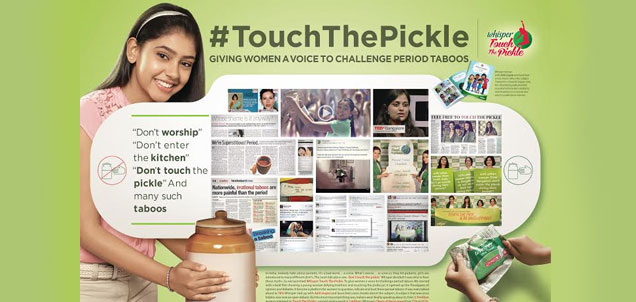
    After BBDO India’s clean sweep at the Glass Lions, a section of the Indian contingent busied itself in deducing how ‘Touch the Pickle’ campaign for P&G’s Whisper sanitary napkins — a piece that wasn’t too popular within the subcontinent — fetched a Grand Prix. While some concluded with the cliché about Cannes wins being “unpredictable”, the less charitable types claimed it was due to the South American lobbying skills of a prominent ad man from BBDO’s global network who was on the jury.


    We don’t know whether to be flattered or disappointed that no credit or blame was laid at the door of Tista Sen, national creative director at JWT who was the sole Indian on the Glass Lions jury. Clients emerged the happiest out of the whole episode with Dabur winning a silver metal. Given the FMCG major’s feeble enthusiasm for domestic awards, this counted as a big deal.


    On Creativeland Asia bagging a silver metal in Outdoor Lions, Sukhleen Aneja, category head at Durex India, said, “This outdoor campaign is a step in that direction and we are thrilled that it has been recognised as one of the best pieces of communication in the world at the Oscars of advertising.”


    Source:The Economic Times

    Copyright © 2015, Bennett, Coleman & Co. Ltd. All Rights Reserved

    Licensed to republish


  • BBDO India, Taproot get shortlisted in Film Lions on Day 5 at #CannesLions2015

    By Shephali Bhatt


    Only two days for the Cannes Lions festival to come to a close and still no sight of Indian admen, barring a few, anywhere close to the seminar halls. One would conclude the only Indians who are here to attend sessions are the Young Lions. Except we heard one of them say ‘Young Lions’ is just another way of getting an entry to the fest.


    Nothing is sacred anymore, we guess. But guess who arrived without notice right in the middle of the day to collect a Grand Prix Lion — BBDO India’s chairman and creative chief Josy Paul and chief executive Ajai Jhala.


    “We told Chris (Thomas) there’s no need to courier our Lions, the courier boys are here now,” he said. It’d seem that Paul got off the right side of the plane in the morning because BBDO India’s video for iCONGO titled ‘The World Wants More of A Good Thing’ got a shortlist in Film Lions.


    Also shortlisted is Taproot Dentsu’s film for Mumbai Mirror. The BBDO entry is particularly ironic though, considering its premise is to question the fake entries that win at global festivals such as Cannes.


    The video is addressed to Terry Savage, chairman of Cannes Lions, in fact. On hearing the news, Jeroninio Almeida, founder of iCONGO said: “I am sure very soon people in award ceremonies will also get conscientious about tracking the veracity of social campaigns created by advertising agencies. The process for change has begun and I am sure we will see impact on a bigger scale very soon. Though it’s ironic I am glad that people who had put in their efforts to help us raise this issue are getting their due recognition.”


    Source:The Economic Times

    Copyright © 2015, Bennett, Coleman & Co. Ltd. All Rights Reserved

    Licensed to republish


  • HUL plans to let other firms use its mobile marketing channel Kan Khajura Tesan

    By Delshad Irani


    One of the country’s biggest FMCG companies, Hindustan Unilever (HUL), plans to open its mobile-based marketing platform Kan Khajura Tesan (KKT) to external advertisers. KKT, the fully advertiser-funded, entertainment-on-demand initiative helps HUL brands like Lux and Fair & Lovely engage with rural consumers in media-dark areas.


    These are villages that cannot be reached via traditional media like TV, radio and print, but where at least one member of the household is a mobile phone owner. “These consumers are still significant (more than 200 million in total) contributors to the sales of FMCG brands. They also happen to be key growth markets for Unilever. Reaching out to these consumers with our brand communications and offerings remains a big challenge,” an HUL spokesperson said.


    The KKT initiative was first piloted in Bihar, followed by Jharkhand, Uttar Pradesh, Madhya Pradesh and Rajasthan. The mobile-radio channel, which is telecom-company agnostic, has since been extended across India.


    In fact, KKT is the most popular radio station in the northern state of Bihar. Here’s how it works. Callers give a missed call on 1800-30-000-123 (the call disconnects automatically after two rings) and in return the caller receives capsules of entertainment that includes primarily local and Bollywood music, with a strong preference for 90s movie hits, and comedy shows.


    Besides entertainment, HUL has also added a devotional section. Of course, item numbers and devotional content are interspersed with brand communication from HUL. In the coming months, however, the channel will also air brand messages from other advertisers. But the company is keeping under wraps advertiser profiles, the exact nature of media deals and just how it’ll affect programming, if at all, in the future.


    “In the journey of taking Kan Khajura Tesan forward as an ever growing marketing platform we are now opening it up for brands beyond HUL’s own. This will allow the platform to grow and help marketers reach out to media dark consumers who were difficult to reach before,” the company spokesperson said.


    “The nature of the tieups will be on a case-to-case basis as per the requirement of the partnering brands. We have had a similar approach internally through which we have helped our brands like Lux, Closeup, Fair & Lovely use Kan Khajura Tesan to connect with consumers and make a positive impact on their equity.”


    The campaign, if you can call a veritable radio channel that, was conceptualised and executed in collaboration with media agency PHD India and creative agency Lowe Lintas.


    KKT now has the capability to push personalised content as per the user preference in addition to voice recording and voice recognition technology. HUL’s decision to throw open up the marketing medium to brands other than its own could spell the beginning of a new era for the FMCG behemoth — one that takes it from big-ticket advertiser to a media owner.


    Source:The Economic Times

    Copyright © 2015, Bennett, Coleman & Co. Ltd. All Rights Reserved

    Licensed to republish


  • Saina Nehwal outpaces Sania Mirza & Mary Kom in top female sports endorser race

    By Ratna Bhushan


    Kellogg, the world’s largest breakfast cereal maker, has signed badminton player Saina Nehwal to an endorsement deal pegged at close to Rs 1.5 crore, two people aware of the development said.


    The two-year deal makes Nehwal – the world No. 2 in women’s singles — the highest paid female sports endorser in the country ahead of tennis player Sania Mirza and boxer Mary Kom.


    A Kellogg India spokesperson confirmed the association with Nehwal but declined to give details of the deal. Darshan Machdar, director at Spoment Ventures, the sports marketing firm that represents Nehwal, was unavailable for comment.


    “Kellogg is looking for a repositioning exercise with Saina… the advertising is likely to break next month,” one of the persons quoted earlier said.


    The 25-year-old already has endorsement deals for Yonex, Bajaj Nomarks cream, Iodex pain reliever, Indian Overseas Bank and the Sahara group, which, sources said, were signed for least 20% less.


    Vinit Karnik, national director, sports and live events at GroupM ESP, the sports marketing division of media buying group GroupM, said, “In the current scenario, Saina is the highest paid woman sportsperson in the country. Sania Mirza’s endorsement fee used to be the highest till about five years back. But Saina has been far more visible on the circuit, which is what brands look for.”


    Nehwal had topped the women’s world ranking list in March this year. Some talent managers, however, believe that Nehwal has remained under-marketed when it comes to endorsement fee. Also, the gap between what male and female sports persons earn outside of the sports arena remains wide.


    According to industry executives, cricket captain MS Dhoni charges upwards of Rs 10 crore for brand endorsement while Virat Kohli’s fee is Rs 5-6 crore. However, endorsement rates can vary as they depend, to a large extent, on the relationship the celebrity has with the brand.


    Talent management firm Kwan’s promoter Anirban Das said, “It’s a reflection of the popularity of the sport rather than a function of gender.


    The reach of cricket still hugely overshadows any other sport in India.” He pointed out that in Bollywood, the gap between what men and women earn has seen a lot of correction over the recent past. “Someone like Deepika Padukone earns a lot more than many other popular actors now,” he said.


    Source:The Economic Times

    Copyright © 2015, Bennett, Coleman & Co. Ltd. All Rights Reserved

    Licensed to republish


  • How Whisper sent a loud message via ‘Touch the Pickle’


    Whisper’s curiously-titled but hard-hitting campaign was awarded the Grand Prix in the newly-created Glass Lion category at Cannes Lions this year. The awards went to creative agency BBDO India. Spokespersons from the brand’s parent company, Procter & Gamble, responded to questions from Dyanne Coelho on why the movement, which aims to eradicate the taboos and age-old myths around menstruation, received an overwhelming response both at the international festival as well as back in India.


    How did the idea behind Whisper’s ‘Touch the Pickle’ campaign come about?

    Whisper’s brand purpose is to advocate for, and empower, women, to reach their fullest potential. The Touch the Pickle movement was conceived when we realised that a majority of Indian women feel restricted from achieving their dreams because of irrational taboos around menstruation. We believe women should not feel restricted on their period days, and an overwhelming number of women across the country responded to our campaign with their own stories of breaking taboos. A survey by market research firm Ipsos on understanding these taboos revealed that among urban women, 59 per cent still don’t touch pickle, and more than half prefer not to venture out of their homes, during their periods. In light of these findings, Whisper embarked upon the journey to launch a nationwide movement — across not just TV but also PR and digital. ‘Touch the Pickle’ was one of the most irrational taboos and was an apt metaphor for all the other irrational taboos that hold women back.


    Many argue that these so-called taboos have been passed down over years because they are healthy practices women should adhere to, during menstruation. And that it is only now that these practices are being labelled taboos. How would you respond to that?

    There are two kinds of taboos that Indian women follow. Irrational taboos, like not washing their hair, not touching the pickle, sleeping in areas away from the house, have no relevance to menstruation today and are age-old myths imposed by families that considered periods as impure. The other set, like not wearing whites, not leaving the house and not exercising, started at a time when good sanitary protection did not exist and women had to use cloth, rags or even sand or ash during periods. Today, when there is superior technology in terms of sanitary pads, women shouldn’t worry about following such unreasonable practices. About 99 per cent of gynaecologists believe sanitary napkins are the best form of protection during menstruation as per a national study by the Feminine and Infant Hygiene Association and Ipsos. In the 21st century, when there is a solution, there is no need for women to restrict themselves.


    Was the impact to the campaign different in Tier II and III cities from the metros?

    An eyeopener for us during the research conducted by Ipsos is that even in urban towns, most of these taboos are still observed. For example, 65 per cent of women from urban India perceive periods as an obstacle in achieving their full potential and some 54 per cent are not allowed to water plants at this time. Our focus has been to drive awareness of the irrelevance of these taboos and encourage consumers to help change the social behaviour and gender inequality that restricts them. We’ve done this in different ways via TV, PR and digital, but we’ve also focused on educating young women and their communities on menstrual hygiene. We’ve also pledged to educate 15 million girls by 2017 on menstrual hygiene, and saw this impact in the sudden surge of conversations, discussions and debates women across India were having around menstruation, where many of them were questioning the myths that were holding them back.


    The campaign received positive publicity elsewhere in the world, more than in India. What do you think the reason for that is?

    Touch the Pickle was an integrated movement not restricted only to television. Women Achievers like Aditi Gupta (founder of Menstrupedia), Ishita Malviya (India’s first female surfer), Nungshi and Tashi (the first twins to scale Mt Everest), anthropologist Suneela Garg and film personalities like Parineeti Chopra, Kalki Koechlin and Shradha Kapoor, all came together to support this movement to eradicate taboos. The winds of change are blowing through India and the world, and insights regarding taboos around menstruation resonated with global audiences because taboos related to periods are not an Indian phenomenon only.


    There are some who believe that while this campaign had a positive impact on many in India, it also paints a socially-regressive view of our society, when that is not the case.

    Although 65 per cent of Indian urban women observed these taboos, 82 per cent wanted to break free of them. Interestingly observing irrational taboos is not just an Indian thing. Across the world, women hide their sanitary pads. You will find it heartening to know that in the last year, a surge of Indian women have expressed how normal menstruation is, and how important it is to eradicate these taboos — whether it is the Jamia Millia university [campaign], the Rupi Kaur Instagram incident or even the Menstrupedia comic (which we partnered with) which educates women on menstruation. This means Indian women are empowered and unstoppable in leading this movement.


    Has the campaign resulted in a growth in sales for Whisper? If so, by how much?

    Touch the Pickle was an integrated movement across touchpoints, including PR, TV and digital, where the central idea was the consumers’ need to be empowered and lead this change. Consumers rewarded us by choosing Whisper, and we have seen our business grow in the last year.


    After the overwhelming response it got, are you thinking of running the campaign again?

    We are thankful to Cannes Lions International Festival of Creativity and Lean In for instituting this much-deserved award category, the Glass Lion, and awarding us a Grand Prix. We have our partner agencies BBDO, Madison PR, Mediacom, Quasar and Encompass to thank. This is an important movement and we’ll continue to stand for empowering women.


  • Ajay Kakar on 10 reasons why the ‘new-look’ Cannes Lions was a success (despite it being a forgettable year for India)

    By Ajay Kakar


    As the week-long Cannes Lions festival came to an end, here are some observations on the Good, the Bad and the Ugly at this year’s edition of the festival of creativity.


    1. ‎There is a magic about the Cannes Lions festival that you cannot deny. With the Palais as its epicentre, the entire city comes alive with the over 12,000 delegates who make Cannes their home for the entire week. Every corner of the city seems to exude excitement and inspiration.


    2. The Festival keeps evolving, and this year was no different. New awards, new categories and an entirely new focus. The introduction of the Glass Lion (to promote gender equality) and Innovation categories brought in newer and richer learnings. This year, the festival‎ dedicated itself to Innovation and Data x Tech x Ideas. So you were surrounded by young people and simple, new and innovative ideas that went beyond mere advertising or communications, and into the realm of product development.


    3. More clients and more about clients. The Unilevers and P&Gs have historically been associated with, and committed to, the festival.‎ But this year, you saw and heard many more clients. On one side you had names like Airbnb, Spotify‎ and Snapchat, while at the other end were the likes of Mars, Nestle, Pepsico, Heineken and Mondelez. And a window to hear three leading CMOs, every day, in a freewheeling discussion.


    4. The opportunity to hear industry giants and thought leaders like James Murdoch, Al Gore‎, Sir Martin Sorrell and Unilever CMO Keith Weed. And wonder how they manage to stay with their purpose and messaging, despite attempts to distract or provoke them.


    5. Monica Lewinsky was clearly the star speaker of the week. Not for reasons one would expect, though. She did share her story, honestly and sincerely. But contextualised it with a passionate plea about the ills of online shaming and cyber-bullying that have become a fact of life in our social discourse.


    6. Amir Kassaei, Chief Creative Officer, DDB Worldwide‎ made a strong case for embracing all that was new. But more importantly, to remember what must never be forgotten – ie, the purpose of our being is to build brands and businesses.‎


    7. The realisation that ideas can come from anyone and anywhere. Ad agencies that won PR awards. Communications partners that drove product innovation. Big countries that won small, and small countries that won big. It was inspiring to see the work and wins from unexpected countries like Switzerland, Spain, Sweden, Ecuador, Belgium, Colombia, UAE, Tunisia, Czech Republic, Turkey and Poland. And Egypt won its first Titanium Lion, the most coveted among the coveted.


    8. The power of simple ideas. And their ability to create a powerful impact. It is well worth the effort to view some of the campaigns that lived this thought, whether it was the ‘Lucky Iron Fish’ project; the Volvo ‘Life paint’ idea; Procter and Gamble’s ‘Like a Girl’ campaign or Vodafone’s ‘Red Light Application/Between Us’ initiative. Also on the list were the ‘Unskippable’ message by an insurance company and the ‘SOS SMS’ by the Mexican Red Cross and the icebucket challenge initiated as a global campaign to create awareness about ALS. Not surprisingly, all these were winners of one or more Lions.


    9. A ‎key gratification for the marketing and communications industry at the Cannes Lions festival is the tally of Lions won by agencies, networks and countries. Countries like Brazil take pride in the tally of Lions won by them, irrespective of which agency wins it. Their national pride shows, with the announcement of every win.


    10. While the good news is that India won a Grand Prix in the Glass Lion category in its maiden year, we do not have much to celebrate or be proud of, so far. Our tally of wins this year is far below what is expected from a country that is proud of its talent and work. This year is not one that India will celebrate or care to remember. Our focus has always been on the obvious categories, like Direct, Media, Cyber, Mobile and PR. While it’s curtains down Cannes 2015, let’s set our eyes and hearts on the festival next year, and hope to win some pride for our work and our country.


    Ajay Kakar is CMO – Financial Services at the Aditya Birla Group


  • Maxus unveils proprietary tool ‘Maxus T2D’

    By A Correspondent


    Maxus has announced the launch of a revolutionary tool—’T2D’, for planning excellence in e-commerce category. The tool has been developed keeping in mind the need for real time impact of TV on website traffic.


    Maxus T2D is a screen to screen predictor from television to digital. As television contributes to more than 70 per cent of spends in e-commerce category, the Maxus T2D tool offers an easy platform to optimize TV plans to build website traffic. This innovative tool would be able to deliver plans that closely impact platform level numbers and hence focus on direct impact.


    The highlight of the T2D Maxus tool is that it delivers sharper planning focus to drive traffic and predicts the lag effect of TV to the platform (website, app) traffic.


    Speaking about the relevant of this innovative tool in the contemporary e-commerce landscape, Kartik Sharma, Managing Director, Maxus said, “With the ever evolving market dynamics in the ecommerce sector, it is important to find innovative solutions to pressing business roadblocks. Our new offering T2D tool helps in leveraging the immense clout of the television medium to scale up website traffic. This tool has already found a great resonance with the e-commerce industry practitioners and it is going to be the next value addition in the sector that is always on the lookout for innovative approach to business challenges and changes.”


    Priti Murthy

    Priti Murthy, Chief Strategy Officer, Maxus, adds, “We are excited about our new product—the T2D Maxus tool that captures the power of the television medium for building website traffic. Given the reality and growing spurt of the e-commerce market, we firmly believe that the clients will benefit from this revolutionary tool to make better media decisions. Also, on a whole this will change the impact of television on website traffic.”