Category: ADVERTISING

  • AAAI does a lot more than just Goafest


    The common perception, that AAAI is only about organising events like Goafest is wrong. Veteran adperson and current President MG Parameswaran tells Pradyuman Maheshwari that there is a lot more that the apex advertising body does, from redressing disputes redressal to skill development. In this freewheeling interview, he also comments on the functioning of BARC, the fact that broadcasters have more stake than ad agencies and advertisers, on IRS, IAMAI and digital agencies and advertising education. Read on, but bring in a large coffee… this interview is some 4000 words long J


    Most people know it, but for the benefit of a large number of our readers who don’t: what is role of the Advertising Agencies Association of India (AAAI/3As of I) as the apex association of ad agencies in the country?

    AAAI is for the betterment of the advertising business. One avowed mission of AAAI is to improve professional standards in the industry, so we welcome anybody who is organising training, knowledge seminars and dissemination of information and knowledge to young people in the advertising industry. Whether it is Kyoorius, Afaqs, Exchange4media, Kulzy, MxM, Campaign India or IAA, all of them are welcome to provide affordable, valuable training for youngsters in advertising today. I’d say even older people in the industry need inputs; we don’t know everything.


    AAAI was also set up to look at issues cropping up between advertisers and media owners, and resolve them. Do you think that the perception of AAAI, as the organiser of Goafest, has become bigger than the rest of its functions?

    We do a lot of work which isn’t in the public domain, for obvious reasons — client agency disputes, issues agencies are having with the media etc. Unfortunately, what comes into the public domain at regular intervals is Goafest, which is organised by us. A lot of youngsters in advertising believe our job is to only organise Goafest, which of course isn’t true. We have a managing committee that meets every month for at least three or four hours, and Goafest takes up less than 10% of our time. About 80-90 per cent of the time is spent on other issues, a number of which also get tabled.


    In terms of revenue, how much does Goafest contribute?

    It’s significant.


    Is it more than 50%?

    Yes, about that much.


    So since it’s a significant contribution to the AAAI coffers, it makes sense for you to host Goafest…

    Yes, it gives us some surplus which we can then plough back into setting up a training centre, like we’ve done. The other thing is that it’s held in Goa, not in Mumbai, and people can fly in from all over the country to be here. Third, we do spend a lot of money to get good speakers, senior clients and to bring industries together. We’ve had to pay for some speakers, and some have requested that we contribute to a charity of their choice. We’ve done all that.


    Do you think it helps to have a single, private organisation hosting an event? Internationally, we’ve seen that something like a Cannes is more successful than what industry associations can put together…

    There are pros and cons. The private organization can charge whatever it wants to, and may be arbitrary about how much it charges people and how many free passes it distributes. As an industry body, we are audited. We have a 22-member managing committee that asks questions! Any event organised by an industry body has to go through a process of approvals, so we may not be agile when taking decisions, but we are transparent and fair. Second, the surplus we generate goes into the advertising association kitty and will get re-deployed into things for the industry.


    Since Goafest is such a large event, do you think–

    Are you going to talk only about Goafest?


    No, I’ll move to other things. But then it’s so big and prominent…

    It’s not. But it’s good if people think so…


    Back to my question. Since Goafest has become such a large event and the 3As of I makes good monies on it, do you think the planning must start much earlier?

    Last year, we started planning in October, which was early. I think it paid off and Nakul Chopra put his shoulder to the wheel to get the momentum going. In fact, he had finalised on the event agency in December. Obviously, you can plan even earlier. But having done this for many years, there will always be some last-minute cancellations and requests, so we have to juggle that.


    There are people whose calendars are planned well in advance.

    We’ve realised that sending a request in August for an event in April gets you no response. The right time to send a request probably is early December. Before people go off on their Christmas vacations. We’ve realised that sending requests in March is very late. Sending the requests in October is too early.


    All of you’ll have day jobs and their pressures are tremendous. Everybody has international networks to answer to. Hence, the thing of whether there is a need for appointing someone within your team or outside of it to look at Goafest affairs?

    I think there is a merit in bringing someone on board. Hopefully, we’ve got a very good event company on board this year. Hopefully, they’ll be able to add value next year as we go forward.


    You mentioned various educational activities of 3AS of I. I remember you conducted a very successful copywriting course. What are the other activities AAAI does?

    AAAI has four or five broad agendas. One is handling client agency issues, particularly to do with clients who don’t pay and run off to other agencies. A lot of our time goes in managing these disputes. We’re an industry body and 85 to 90 per cent of all advertising is through our members. So if a client parts ways with one agency and goes to another, we can put pressure to get the client to come to the table and talk. We spend a lot of time doing that.


    The other issue is between media agencies and print and TV organisations. We set up a good system to manage disputes between television channels and media agencies. Every month we have a committee meeting with the IBF. If the client hasn’t paid, they bring the client to the meeting. It has been working like clockwork. In case of print, we’re talking to the INS for setting up something like that.


    A lot of business now goes directly from clients. Even media companies deal with clients directly too.

    You’d be surprised! At least in the last 2, 3, 4 years where I’ve been seeing stuff… whichever agency brings a dispute to the 3S of I, we’re able to find a solution. Even big issues are being sorted out.


    In terms of media companies where they try to bypass the media agency… they go to get a client directly… that’s where a lot of disputes also exist. Right?

    Client-agency issue is one. The other issue is between our media agencies and the various media organizations which is print & TV. Actually, we’ve set up a pretty good system to manage disputes between television channels & media agencies. So every month we have a committee meeting with IBF. If the client hasn’t paid, they bring the client to the meeting. It has been working like clockwork. In case of INS, again we’re in dialogue with them for setting up something like that.


    INS is obviously a well oiled machinery.

    Yes, but even with them, there is a talk that we need to setup some process in place to handle wrong reporting, incorrect reporting etc. INS, of course, has a long history behind it. So, the issues with INS are different in nature. But, with IBF, we’ve covered a lot of ground. One is client-agency issues and 2nd is agency media issues. A lot of our time & effort goes in handling these things. It may look small to you… but these are money issues.


    That’s why people are members of 3S of I.

    They come to this body for that and that’s the role we have to play. In the last 3 years… AAAIis a body that’s involved with media research and in the last 2,3 years, we’re very heavily involved with BARC. Members of AAAIon the BARC board are adding value to BARC. The Comm chairman again a AAAInominee. Hopefully, BARC has started and it will be…


    Are you happy with the way BARC is performing?

    Yes, I think so.


    Do you think the fact that BARC is still 40% not 60% owned by broadcasters is a little flawed?

    Look at the economics of it. For every Rs 100 spent in media, over 85 goes to broadcasters. And if you look at the old rating system, more than 90% of the revenue from the old rating system went from broadcasters. In a sense, broadcasters having 60% equity is lower than what they actually pay, in terms of data. They pay for about 85 to 90% of the cost of data. It was set up as a joint industry body between IBF, ISA  and AAAI and I think we it worked out what I feel is a fair shareholding agreement which is 60-20-20 though the technical committee chairperson is from 3As of I.


    Will it always be so?

    As of now it is. The shareholders will take a call when the current chair’s term expires. I think ISA and AAAI would obviously want an AAAI nominee. But it’s up to the Board to decide finally who it will be.


    But conceptually, for the future health of the process, is it fair to let broadcasters have the upper hand?

    The board composition in 60-20-20 and any major decisions will have to go to the Board. In the Board, you need a 76% vote to pass anything. I think it’s a nice balance of power.


    In South Africa or some place there’s a small fee levied on all advertising spends that should go for research or measurement. Do you think that’s a better way to do it?

    Each country has it’s own system of managing it. There’s nothing like a perfect system. So, with BARC we’ve evolved a particular way of managing how IBF members, media agencies will pay. This system will get iterated because currently, we’re at 15,000 meters… it will go to 20,000… 25,000 in the next few months. It’s already at 17k I think, now. I think at the end of the day, all of us have been somewhat involved. I’ve only been involved for the last one year. But, people like Uday Shankar, Puneet Goenka, Shashi Sinha and Vikram Sakhuja before that have produced a great product. It’s a world class product. We keep discussing that can associations create products… do you need quick decision-making? But, in this case you’ll see actually three associations actively involved. Bharat Patel has been involved right through. It’s admirable they’ve created a world class product! Will there be some niggling problems? There will be. but, we’re committed we’ll ensure these problems will be solved.


    When the BARC report was out, everything appeared to be topsy turvy. For instance, Zee had been at No. 3 for long and suddenly was at No. 4 even though at primetime it was still in the Top 3. The reaction to it was dramatically different from what we saw last year in the IRS…

    I don’t think it’s fair to compare IRS with BARC. Maybe in the case of BARC, we had the power of hindsight. As a result, we put some precautions in place which helped us to avoid the pitfalls. Having said that, it’s still early days for BARC, and I believe the IRS will get it together. Because we need a good readership measurement system; 45% of advertising spends depend on old data.


    With growth of print going down, more than ever before, the industry needs a good readership study.

    Absolutely! Which is probably the reason we need to start putting it on the top of agenda soon.


    If a media agency comes to you and says ‘How do I take the right decision to advertise in print?’, will the AAAI do anything about it?”

    As of now, no media agency has approached us. If they do, we’ll discuss it and we’ll give them an answer. We won’t do anything proactively.


    What about digital? How many members of AAAI’s managing committee are active on digital?

    All the members have digital arms and the AAAI has an agreement with Internet and Mobile Association of India, and meets with them every quarter to discuss disputes. Unfortunately, the IAMAI doesn’t have full control over some of the big digital players. So we’ve been trying to persuade them that it’s in their interest to join the IAMAI and get into a dialogue with us. In a country like India, even the biggest of players will need an association [to support them].


    When I look at the managing committee of AAAI, you have agencies who have digital arms, but, there are no specialized digital folk there…

    This is why this year we’re in the business of setting up digital forums. One forum is the outdoor forum where we will get outdoor arms of all our key agencies to sit together and discuss issues. The next on the cards will be a digital forum where, to start with, we will have the digital arms of all the key agencies sit in. If you look at it, several large digital agencies today are part of a group. It could be IPG… they’re all part of the group. They’ll all start coming, attending and contributing.


    For instance a Leo Bennett or a Publicis have digital arms, but the digital guys don’t come and attend the meetings.

    Exactly, which is why the thought is you set up a digital forum, create a forum which meets once in two months to start with; purely digital people. You set up a forum of purely outdoor people who sit & discuss issues concerning outdoor agencies. So, only issues concerning digital agencies. What are the issues?


    Can digital outdoor agencies become a part of AAAI?

    We have three categories of members: Full service agencies, Creative agencies and Media agencies.

    Even creating these 3 categories took us a lot of time. For a lot of time, we were not sure who to let in & who not to.


    Is there a resistance, like the Rotary Club had towards women until the 1980s?

    The reason is simple. If you become a member of AAAI, a media member… you automatically get credit from IBF, you automatically start being eligible for some credit from IBF. Which is why, we have to be careful to not let in someone who will us the AAAI to run off big bills and tomorrow we’ll be held responsible.


    No, but for instance, I’m an advertising agency in digital.. can I become a member?

    You can become a creative member. Nothing stopping you from becoming a creative agency member.


    In the digital space, everyone is full-service

    That’s the thing. If we get an application from a pure digital agency, today we can admit them as a creative agency. We can’t admit them as a full-service agency because they won’t be able to get credit from IBF or IRS etc. etc. So, it’s a little complicated. I think, in the not-too-distant future, we’ll have to expand the member category and we’ll have to look at that. Maybe, in a year or so.


    The media landscape is changing rapidly…

    The fact is that so many creative agencies are being acquired as we speak. They’re all becoming a part of GroupM, IPG and Publicis.


    Given the fact that mobile has become the biggest media, it’s unfortunate IAMAI is unable to become as big as the IBF.

    That’s the problem. If IAMAI can bring all the digital, media, mobile vehicles under one roof, it’ll solve our problem.


    Like, for instance, as a digital publication, MxM isn’t a member. The fees are so high! Why should I pay Rs. 25,000 to IMAI where for my magazine activity I can become a member at just Rs 5,000-odd a year?

    But then tomorrow, if IAMAI tells you that you become a member and I’ll ensure agency money will come to you in 90 days or 120 days… won’t you? Why did IBF happen? There was a benefit for everyone concerned. That television channels bill correctly, on time… which helps agencies and as a flip agencies therefore tell their clients to pay in a particular time. It helps the whole ecosystem. You bill on time, bill accurately, you get paid on time. And everyone has to start doing that. Today, we are not.


    Obviously, I shouldn’t advise you what you should be doing… but, isn’t there a need for more aggression for making AAAI more inclusive and all of that?


    We are planning to do three or four things. One is will collaborate with the Subhash Ghoshal Foundation to have the Subhash Ghoshal memorial lecture every year. The other is, we’ll use the facility in our new office to start offering specific training useful for industries. For example, in June, we’ll conduct a one-day course, using international experts, in negotiation skills. We’re in talks with Rajan Nair to scale up his copywriting course. AAAI used to have a copywriting course run by Jameel Gulrays, Larry Grant and Neville Gomes. We wanted to convert it to an online course. The advantage is, you can be anywhere in India and participate in this course. This should, hopefully, help us create other online courses which we might seed-fund through scholarships.


    We want to create an ecosystem to bring in more talent to the industry. The advertising agency business in India is a 100 years old, and a lot of Indian industries which have come up later (like radio and TV), have borrowed much from it. The CEOs of most television and radio channels have an advertising background. Today, lot of new talent in Bollywood does too. Advertising is a great industry which grooms talent and, as an industry body, we will try to do whatever we can, to further that.


    When it comes to accepting agencies as members, we have certain criteria because we often take up for them in a dispute with clients. So we need to make sure the agency has a clean record. We insist on a lot of paperwork — balance sheets for three years, profit and loss statements, income tax returns, letters from clients and media etc. Unlike an Ad Club, which is an association of professionals and doesn’t mediate in industry-related disputes.


    Given that a lot of digital agencies are new, they can’t become AAAI members for a year?

    No agency can become our member in Year 1. We ask for 3 years balance sheet and profit & loss. We can let you in as a provisional member, but, we’ll watch you and make you a full member. We have to be very careful and sure about the person’s financial standings.


    I was there at an event two years back where some small agencies suggested an association or grouping of smaller ad agencies. It emerged from there that there is a sentiment among small agencies that AAAI is an agency for the big ‘agencywallahs’

    I think it’s a good point. We have small agency people. There is Vinod Nair. Every year we do one or two small agency meetings outside Mumbai because this year, we’ve done a meeting in Delhi. We’ll try and do meetings in Bengaluru. We’ll definitely do meetings in Delhi. I think we need toi make this more collective.


    You have such a terrific Ad Club in Chennai!

    Small agencies one day have to become big. Small agencies will only be able to solve small problems. If they want to solve big problems, they have to come and sit with them. It’ open! We write to our members every month asking them if they have any problem with any broadcast bill, any INS member. We’ll go to battle for you. Right now, we’re helping someone from Chennai who’s client has been playing truant, including confidentially talking to the VC firm which is funding the client. Sometimes, there are allegations that this is a big boys club! It’s not! There are 24 people.


    Isn’t there need to be more inclusive, for some amount of spreading of the message. Because, increasingly advertising is growing and new agencies are surfacing throughout the country. AAAI, it appears, doesn’t represent more 25% of ad agencies in the country?

    But our throughput is close to 80-85% of the total advertising spends. The largest amount spent is through AAAI agencies.


    There are a lot of clients and a lot of publications. INS and IBF members today are approaching clients directly. Given the economic conditions over the last few years, many agencies find they haven’t been paid. Do you talk to an ISA or clients to advise them to do business only through agencies, or is that not really your problem?

    Our stand is clear. We cannot stop any media owner from approaching a client. Our only directive to media owners is, please tell the client to route the business through the media agency. It’ll help them both, and we can ensure the money is paid up. But there are complexities in the media business, like barters which cause their own problems. It’s then left to individual media agencies to handle it with the individual clients.


    In case of sponsorships, the deals are done directly…That’s difficult to manage, right? It’s all directly done! Which is why, today as we’re seeing, the industry is getting more organized. Television is, print is, digital is a bit disparate, outdoor is a bit disparate, we expect outdoor to get organised in the next five years. We expect digital to get organised in the next five years. Hopefully, all these associations will become strong and therefore we’ll have a clear association-association understanding.


    Do you think five years is a decent window?

    I’d like it to happen in two years. Five years is a bit too long.


    What else do you plan to do with AAAI during your presidentship?

    I’d definitely like to give a thrust to skill development, which is why I’m trying to drive this negotiation skill and copywriting workshops. These are things I think the association should do on a regular basis.


    There’s not much research done in advertising. You’ve done a doctorate in marketing. Is there any encouragement from agencies to educational institutes on this… whether it’s the IIMs or or Symbiosis…

    NMIMS had started a two-year course which used the surplus from the AdAsia 1982 to fund that. But, they’ve collapsed that into their regular MBA programme. We haven’t done anything until now. Recently, someone sent me a proposal for a PhD on doing a comparison across multimedia, effective as a multimedia channel and they said, “Can AAAI partly fund it?” We haven’t looked at it, yet. Those are the kind of things we may… for example, create a best research award to people who do research in the area of advertising.


    Given the fact that advertising has been there for a long time… education in the field hasn’t really picked up very much across the country. There are various advertising schools and programmess but quality is very suspect.

    That’s why we’re trying this online experiment. If this succeeds, we’d probably like to do this more and more & you may be doing MBA from whichever business school in India, but you can go online and do this course on strategic planning, creative judgment or on media planning.


    Online is fine, but nothing to beat classroom teaching!

    Nothing to beat classroom, but, where is the faculty?


    From your own agency…

    Agency people are working very hard. The clients won’t let you go into such things. Online is one solution, that may not be the only one, but it’s a very powerful solution. We’re trying something. Let us see how it goes!


    One last question: when you move on from the AAAI President’s job, what would you like to be remembered as having achieved?

    That I gave a thrust to skill development. When I was in Ad Club, we had 10 programmes on Ideation, Strategic Planning. Marketing Research and other topics. I’d like to do that if possible in AAAI, through a mixed online, offline approach.


    A shorter version of this interview appeared in dna of brands dated June 1, 2015

     

  • MobiKwik ready with biggest ever brand campaign

    By A Correspondent


    Mobile Wallet player MobiKwik has recently launched their first integrated brand campaign. With an estimated annual media budget of Rs 100cr, this campaign is a key step towards MobiKwik’s growth plan of increasing its user base from 17 million to 100 million and its retailer base from 50,000 to 200,000 over the next 7 months. MobiKwik aims to create India’s largest payments network with 100M digitally paying users on one side and 200,000 retailers on the other side.


    The MobiKwik app enables users to do a plethora of transactions – from phone and DTH recharge, utility payments, money transfer, to shopping at over 50,000+ offline & online retailers such as Myntra, Jabong, BookMyShow, MakeMyTrip, Cleartrip, Yatra, Café Coffee Day, PVR, Domino’s, Pizza Hut, JustEat, eBay, ShopClues, Pepperfry, FashionAndYou, to name a few.


    The campaign, conceptualized by Bangalore based Happy Creative Services, comprises of four TV commercials highlighting some of the user cases of the MobiKwik. The TV campaign is being amplified across OOH, Radio & other online platforms… to drive home the brand’s promise of being ‘more than a wallet’.


    On the campaign, Saurabh Srivastava, Chief Marketing Officer of MobiKwik said, “With this 360 degree campaign, our goal is to take to the larger audience a product that has been successful for the last 6 years. The team has worked long and hard to bring to the market a lightweight mobile-wallet that works seamlessly to pay bills, recharge, shop, transfer money and more. The first campaigns are always memorable and with our series of 4 ads, we’re hoping to carve out a space for MobiKwik Wallet in the user’s mind.”


    Kartik Iyer

    Kartik Iyer, Chief Executive Office and Co-Founder of Happy Creative Services shared, “Thanks to technology, user behaviour is being altered on a daily basis. A product like MobiKwik has more than one dimension to it. And to be able to communicate that all under one umbrella was really the challenge. I think we have managed to charmingly communicate the different facets of how MobiKwik delivers on being more than a wallet. May the downloads begin.”


  • Genesis Burson-Marsteller announces launch of GBM Issues & Crisis Group and GBM Client Studio

    By A Correspondent


    Genesis Burson-Marsteller announced that it has carved out two Centres of Expertise – GBM Issues & Crisis Group and GBM Client Studio, with dedicated servicing teams comprising of senior counsellors, former journalists and digital specialists, for addressing client needs pertaining to these specialized areas.


    GBM Issues and Crisis Group offer a complete range of crisis readiness, response and recovery capabilities wherever needed, 24/7/365. The crisis preparedness and training programmes ensure that clients have the structures, tools and resources in place to prevent crises where possible and successfully navigate them, if they are unavoidable.


    GBM Client Studio trains corporate leaders, hones their skills and gives them coaching on specific communications needs. The GBM Client Studio digs into the decades of experience and proprietary knowledge that it has. It brings out concepts and insights to facilitate these training and further tailors them to meet specific needs of a client and trainee.


    Sheena Sharma heads both GBM Issues & Crisis Group and GBM Client Studio. With over 20 years of communication training and public relations experience, she has been instrumental in creating these two Centres of Expertise given her forte in areas such as messaging, media spokespeople training, issues & crises, online public relations, stakeholder engagement and presentation skills.


    Sheena Sharma said, “We understand messaging and the impact it has on stakeholders. In today’s overcrowded new media world the importance of a company’s corporate voice is more vital than ever. Companies need to directly engage with various audiences at a more personal level. The ‘word on the streets’ is the new corporate reputation. So not only must their messages be clear and well crafted, the messenger must be confident and persuasive. Both will be judged by a discerning public. GBM Issues & Crisis equips clients with an even higher level of planning, preparedness and training given the high stakes and GBM Client Studio through hands-on trainings and simulations enables delivery of messages across a gamut of channels – traditional and social.”


    Prema Sagar, Principal & Founder GBM said, “We continue to break new grounds in the Indian integrated communications space. The two expertise centers that we had pioneered have now grown to such a large scale that providing them their own identities has become an imperative. With their own visual language, both GBM Client Studio and Issues and Crisis Group can stake claim to prominence along with GBM Live! Newsroom, GBM Digital Studio, GBM Content & Design Bureau, as well as for our business divisions, Step Up and The Outstanding Speakers Bureau.”


  • HUL partners Star, YRF, Facebook, Google etc to weave its brands into their creations

    By Pritha Mitra Dasgupta & Sagar Malviya


    Toiletries-to-food giant Hindustan Unilever (HUL) is partnering over a dozen content creators — from Star Network and Yash Raj Films to Facebook and Google — to produce content across channels where HUL brands can participate, perhaps subtly, as part of the conversation.


    Last Friday, the maker of Dove and Rin invited 13 producers including broadcasters, radio channels, film producers and top-notch digital companies to its campus to ideate how they can seamlessly weave HUL brands in their content, messages and shows, instead of just product placement and brand plugs.


    “As media is changing, there is a skill that needs to get evolved — as content explodes, how to tell compelling brand stories and really cut through to consumers by making sure the brand is able to tell a story that consumer can relate to,” said Gaurav Jeet Singh, HUL’s head of media services in South Asia.


    While the latest move of HUL, the country’s largest advertiser, won’t replace advertisements, the company is trying to partner media channels beyond obvious marketing. “Through popular culture, how can we ride on content that is designed to entertain, engage and connect? Something that is not force fit. But something that naturally fits into the content and can carry the brand story seamlessly,” explained Singh.


    HUL’s media agency, Mindshare, is a partner in the initiative. “As the consumer’s media consumption habits change, we understand the need to create and curate differentiated communication platforms, to build lasting brands with an engaged audience,” said Prasanth Kumar, chief executive of Mindshare.


    “The consumer is no longer a passive viewer, but an active participant in the brand’s story-telling journey. Brand ideas and content that resonate with the audience are further seeded by them into their own circle of influence that has a far more powerful effect,” Kumar said.


    With over 35 brands across food, personal care and home care portfolios, cutting through structures and processes to execute an idea quickly becomes an issue. Hence, the company through ‘Content Day’ encourages brand team members to share ideas which can be approved or perfected quickly so as to become scalable.


    It wasn’t easy. In the last six months, HUL has been working on the novel concept — from identifying nearly a dozen brands to sending briefs to 35 content creators for ideas. The company that initially received around 300 ideas, narrowed it to 40 with 13 companies meeting individual brand teams on Content Day for possible brand integration.


    Two ideas from Star Network and one each from YRF and Disney made it to the top four, which were presented to the top management and the entire marketing team of HUL. “We want to create a strong ecosystem of for branded content as that is crucial to the future of marketing,” said Samir Singh, HUL’s executive director-personal care.


    Sample this. In the latest blockbuster Piku, while there were several brand integration, there were two that particularly stood out: Amul milk and Red Label tea. Both these products were placed on the dining table when the protagonists in the film were having breakfast and they effortlessly became part of the movie scene.


    “But they can be part of song lyrics, movie title, we can co-create product with the company and integrate the brand in several other ways depending on the marketing objective,”  said Ashish Patil, business & creative head and vice president at YRF. “The unique thing about Content Day is that it is not a random one off project, but HUL wants to make it an annual event. And, it’s a cultural shift for them. It is about looking at content differently, as an important marketing tool. And it is about infusing new thinking which they or their ad agency may not be geared to do,” he said.


    While executing ideas into branded content could be challenging, media partners are hopeful that HUL’s move will break the clutter. “There was no strict brief and it was unstructured and gave us a lot of freedom to do as we thought. It was a proactive and innovative idea. This is an opportunity that is more open about possibilities of collaborating across brands,” said Myleeta Aga Williams, MD of BBC Worldwide.


    Source:The Economic Times

    Copyright © 2015, Bennett, Coleman & Co. Ltd. All Rights Reserved

    Licensed to republish


  • Leo Burnett appoints Shiva Kumar as ECD in Delhi

    By A Correspondent


    Shiva Kumar

    Leo Burnett India has strengthened its creative team with the appointment of Shiva Kumar as Executive Creative Director. Shiva will be based out of Delhi office and will work closely with Raj Deepak Das. Shiva has joined Leo Burnett from Cheil India where he was the creative director for four years.


    Commenting on his appointment, Raj Deepak Das, Chief Creative Officer, Leo Burnett, said, “Shiva will take forward and sustain Leo Burnett’s way of producing disruptive and effective work for brands – based on our HumanKind Philosophy. A firm believer in the power of integration and innovation, Shiva will play a vital role in bringing human insights and technology together to create magic for brands.”


    Raj Deepak Das

    Shiva has more than 14 years of experience in advertising. Apart from Cheil India, he has worked with Saatchi & Saatchi, Dentsu Marcom, Everest Brand Solutions, Publicis India and Mudra. Some of the key brands he has worked on include Mitsubishi, Yamaha, Honda, Apollo Tyres, ABN AMRO Bank, Aviva Life Insurance, Electrolux, Nestle, Canon, Sony Ericsson, MTS, Samsung Mobiles and Samsung Consumer Electronics, Delhi Daredevils and Halonix.


  • ASCI launches mobile app to curb misleading advertisements

    By A Correspondent


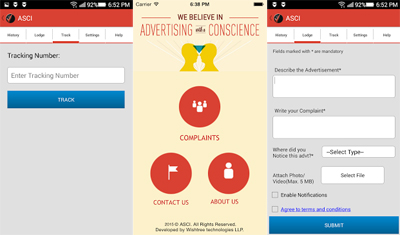
    Continuing with the mission to address misleading advertisements, Advertising Standard Council of India (ASCI) has launched India’s first consumer complaint mobile app – ASCIonline, to provide consumer complaint services on a mobile app besides providing the facility online. The mobile app is currently available on android and iOS platforms.
     

    Speaking on the occasion, Narendra Ambwani, ASCI Chairman added, “One of the goals of ASCI is to provide convenient access for lodging complaint and hence this launch of mobile app. Today mobiles devices are more widely used compared to desktops. With growing use of smart phones consumers want apps to put power of doing transactions in their pocket. ASCIonline Mobile App is consumer friendly and can be freely downloaded. It will be very useful as one can track the status of the complaints which he or she registered on our portal with the help of the App.”


  • Triple A Asset Awards confers recognition on DDB Mudra Group and Deutsche Bank

    By A Correspondent


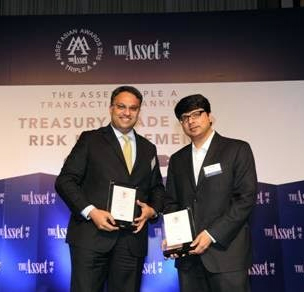
    In an award ceremony organized at Hong Kong, DDB Mudra Group and Deutsche Bank were awarded with Triple A Assets Awards by Asset Publishing and Research Ltd. for being the Best Cash Management Solution in India.



     

    The Asset Triple A Awards are Asia’s defining recognition for excellence in the financial industry. This reputation has been built upon the stringent methodology, combined with the rigorous approach to the selection of the winners of the coveted Triple A (Asset Asian Awards). The awards are adjudicated by The Asset’s Board of Editors who collectively have several decades’ worth of evaluating industry awards in Asia.


    The recognition was conferred on DDB Mudra Group and Deutsche Bank following a stringent awards process which involved a formal written submission, a half-day assessment meeting with the independent judging panel, and client interviews and feedback.


    The award winning entry by the agency and Deutsche Bank explained the initiatives undertaken by DDB Mudra Group to start a major integration project with Omnicom and how the agency reviewed its banking and cash management requirements to ensure it was positioned for growth and global performance. Deutsche Bank has been engaged with the group, locally over the last one and a half year advising them on their cash pool across multiple legal entities; this partnership was based on the Deutsche Bank’s in-depth understanding of this highly regulated subject. As a part of re-evaluation of its banking in 2014, the agency was looking to identify potential areas of efficiency based on automation, technology & improved risk controls. Deutsche Bank’s thorough understanding of the industry along with a detailed knowledge of the agency’s systems & processes was key in customizing solutions.


    Anurag Bansal

    On receiving the award, Anurag Bansal, Chief Financial Officer, DDB Mudra Group quoted, “It is our honor to receive the Triple A Assets Award for ‘Best Cash Management Solution in India’ by the Asset, which comes as a validation to the continuous innovation of our financial solutions that answers to our organization’s needs. We look forward to continuing in excelling in the development of our processes and methodology to what best fit the ever growing needs of our business. The Cash Pooling Mechanism and Virtual accounts ensure a dramatic shift from disjointed cash management activities to strategically aligned tangible outcomes.”


  • Mediaah! Why is ASCI mum on CNBCTV18-ET Now issue?

    By Pradyuman Maheshwari

    The stakes are high in the news television business. The winner – in this the leader of the pack – generally takes it all – and given that it’s not an easy business to run, there are just too many claims on counter-claims on which is the #1 channel.

    Earlier this month, ET Now released large ads in The Times of India claiming it’s the No 1.

    On Monday, June 15, we received a mail from a PR agency claiming to represent CNBC-TV18 that ASCI asks ET Now to withdraw the misleading ads.

    Quality journalism requires some no-brainer rigour. You don’t trust the source even it may otherwise be credible. If Company X says it has won a case in the courts, you want to see the Court Order. Ditto with an FIR with the cops.

    But for some, publishing is pure commerce. Like that phrase we’ve been hearing in the ongoing political drama: quid pro quo! This is not the time to shout out loud about the rigour we follow. On to the case…

    So I called the ASCI secretariat on Monday and asked if the advertising self-regulator ever gave out individual dispute orders. The person taking my call said “No”, and was surprised that the channel had done so because ASCI normally discourages the winning party from going to the media about winning a certain dispute.

    In fact the outcomes of each complaint is made public only after allowing enough time for a review request by the losing party.

    I thought it was fair.

    What this basically meant is that while CNBC-TV18 may have had its complaint upheld, the order was conveyed officially but privately to both parties (CNBC-TV18 and ET Now) and not expected to go public… ASCi would do that after two months (on June 2, we received info on upheld complaints of March 2015).

    I asked ASCI if it had indeed issued the order restraining ET Now. I got no comment. I could approach either CNBC TV18 or ET Now for more, I was told. I thought that it was a strange reaction, but then ASCI is esteemed Self-Regulator.

    We dug into ASCI’s CCC reports over the last six months and did not find any complaints against both channels.

    The story was simple until Tuesday evening. Yesterday, that’s Wednesday, June 17, The Times of India’s Mumbai edition had an ET Now ad under the paper’s masthead (on Page1) claiming the channel is #1. It was similar to the earlier one which was contested by ASCI. Now. while technically, ET Now is required to withdraw ads by June 22, the operative word is ‘by’ and not ‘after’.  In all fairness, after hearing of the ASCI order, it should have stopped carrying the dispute ad.

    My immediate response was to write to ASCI, the Advertising Standards Council of India.

    My questions:

    1. What steps does ASCI take if and when an advertiser violates its advisory and continues with its advertisements even after the advisory has been issued to the advertiser?

    2. Has ET Now contested the ASCI advisory/order on withdraw advertising that was found to be misleading.

    I waited all day only to be told by the Secretary General late evening by mail that I will not get the answers. The reason: “In our last conversation I have very clearly indicated that as a policy, ASCI does not comment on individual cases. Your query below not being generic, it would not be right to comment on the same. Our request would be to not quote ASCI since this news has not been issued by ASCI.”

    Needless to say, I was surprised with the ASCI response. At MxMIndia, our intent in approaching ASCI was simply this: “If CNBC-TV18 made a false claim on Monday, it must be exposed and if ET Now has mocked at an ASCI advisory and gone ahead with an ad, then it must be exposed too.”

    By not responding to our query, and possibly because it doesn’t want its name dragged into a controversy between two powerful media groups, we are being compelled to look at motives behind ASCI not being transparent on the incident, even if there aren’t any. As my namesake ACP Pradyuman would say in the serial CID: Kuchh toh gadbad hai!

    Also, clearly, ASCI – as a body needs to be vigilant in its attempt to lay standards in the business and craft of advertising. Perhaps it makes sense for ASCI to have in its fold some non-advertising/media industry biggies who would not be soft on erring members of the fraternity. And be strong and aggressive with advertisers who are incorrect and do not honour the ASCI code in letter and spirit.

    By not doing so, it’s only doing great disservice to the industry that has set it up.

    Remember, it was not very long ago that a minister of the central government had raised questions on ASCI’s efficacy. Some industry commentators had even raised questions about whether ASCI can deliver.

    We believe it can, but not if chooses to stay mum on key decisions such as these.


    Here’s the press release we received from a PR agency representing CNBC-TV18:

    ASCI asks ET NOW to withdraw misleading ads

    June 15, 2015, Mumbai:

    The Advertising Standards Council of India, (ASCI) has upheld CNBC-TV18’s complaints against the advertising campaign released by ET NOW news channel on May 31. ASCI has advised ET NOW to withdraw or modify appropriately the said ads by 22nd June 2015.

    Their campaign, launched on 31st May, 2015, was declared to be based on BARC data and their ‘internal data’.  In its ruling, ASCI made the following observations:

    On ET NOW’s claim – “India’s No. 1 Business Channel.”

    ASCI has upheld the complaint against this claim. Firstly, the data provided by the Advertiser is for leadership among English Business channels only and it does not consider the other regional business channels. Hence it was concluded that this declaration is misleading by omission on the advertiser’s part and contravenes Chapter I.4 of the ASCI Code.
    Secondly, the source quoted is of BARC covers only two weeks of data. It refers to TV audience in the 10 to 75 lakh town class and this does not constitute the whole of India and this contravened Chapters IV.1 (b) & (d) of the ASCI Code.
    On ET NOW’s claim – “Built on Expertise. Monthly Positive Stock Calls: ET Now – 1044 CNBC TV18 -326”

    ASCI has upheld the complaint against this claim. The proprietary data source quoted for the claim, “Monthly Positive Stock Calls: ET Now – 1044 CNBC TV18 -326” was “Research – Consult Kraft | Period: Nov ’14 to Apr ’15 | Based on Avg.  Monthly Positive Stocks recommendations All Market Days, 7:30am to 3:30pm. This data period does not overlap with the viewership data period referred to in the advertisement.  The data provided therefore, was likely to mislead by implication and ambiguity and this contravenes Chapter I.4 of the ASCI Code.
    On ET NOW’s claim – “Built on Speed. 6 out of 10 Business Stories Break on ET Now”
    ASCI has upheld the complaint against this claim. This claim was not substantiated with evidence to prove that the Advertiser was indeed able to break more stories / break stories faster than others and was therefore misleading. This contravened Chapters I.1 and I.4 of the ASCI Code.

  • DDB Mudra appoints Rajat Ray as Associate VP for South & East

    By A Correspondent


    Rajat Ray

    Senior advertising professional Rajat Ray has been roped in by DDB Mudra South and East as Associate Vice President, DDB Mudra South & East. Based out of the agency’s Bengaluru office, he would be reporting to Ranji Cherian, President, DDB Mudra South and East.


    Ray joins DDB Mudra, fresh from a five-year stint at Ogilvy & Mather, where he was last designated Client Services Director and led the Consolidated Advertising team on the IBM account. Before that, he was associated with prominent agencies like Euro RSCG, Ogilvy (earlier stint) and Fountainhead.


    Ranji Cherian

    Said Cherian: “I am happy to welcome Rajat to the DDB family. Rajat brings with him strong creative agency experience handling global brands & businesses. He is an excellent people’s person and demonstrates strong leadership skills.”


    Speaking on his appointment, Ray said, “I’m extremely excited about my new assignment at DDB Mudra and look forward to navigate through the unique opportunities and challenges that the alco-bev category presents.”


  • Elephant creates visual identity Eicher Polaris’ Multix

    By a Correspondent


    You’ve read about the Multix already, but here’s something that you possibly don’t know much about. But first: Eicher Polaris Pvt Ltd, a jv between Polaris Industries and Eicher Motors has unveiled the Multix, billed as India’s first personal utility vehicle.


    While developing the Multix, Eicher Polaris approached Elephant to create the visual identity, it’s 3D avatar and livery.


    Elephant has helped build two significant automobile brands in its 25 years of being in the business. The rebranding of Bajaj Auto and then a distinction of being the only design consultancy outside Germany to have created a new brand for Daimler Group called Bharat Benz for their India-centric trucks.


    Here’s an account of the work done, courtesy the Elephant Design website:


    As a ground-up innovation, Multix is designed as a concept that brings about a positive multiplier in the owner’s life, be it home, business or power.


    The Multix brand is inspired by the Indian concept of “zindagi multiplied” aesthetics. The badge has been designed as a perfect geometry, and has layers to discover and identify with. At the first glance it is a happy bloom in cheery yellow, which is also the primary brand colour. But if you look again, it is an elegant enclosure to the multiplier symbol, which really is the essence of this brand. Multix is designed to be an enabler for unlocking & multiplying potential opportunities resulting in prosperity.


    Typography is clean and contemporary, yet the lower case “m” starts the conversation on a friendly note with emphasis on technology and ending by reiterating the multiplier effect.


    Colour palette is largely built around bright colours evident everywhere in India.


  • Pratap Bose, 3 others launch The Social Street, a digitally driven ad conglomerate

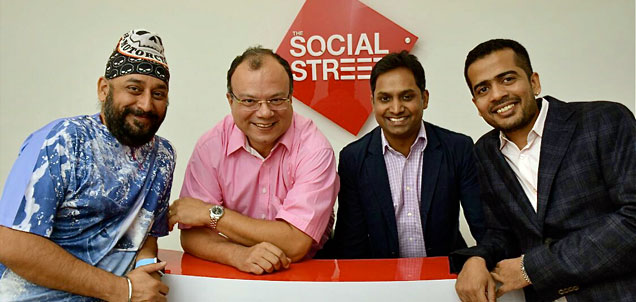
    L to R: Mandeep Malhotra, Pratap Bose Pradeep Uppalapati and Arjun Reddy


    By A Correspondent

    Former DDB Mudra group Chief Operating Officer Pratap Bose, Outdoor and experiential specialist Mandeep Malhotra, Arjun Reddy an entrepreneur with a diversified portfolio of businesses, and Pradeep Uppalapati, who was a Senior Director and India Lead for Accenture’s Global Corporate Development Team have teamed up to launch ‘The Social Street’, billed as India’s maiden advertising conglomerate.

    Positioned as a digitally driven agency, traditional creative advertising, digital and social media will be added on to the bouquet of offerings by the end of the financial year along with more offices across the country.


    Brand Manifesto
    Stories start on the street. They are inspired by the lives of consumers and the interesting mindspaces where they intersect with brands.We find, tell and amplify those stories, no matter what form they take. We make sure that they are powerfully rooted in an authentic brand truth or its point of view.


    Why? It’s simply because these narratives play well on the streets that matter most to your brand and you.


    The ones that people inhabit.


    It may be, the literal ones that they walk beside and drive on. Or the virtual highways that they surf. The verbal paths that connect mouths to ears.Sometimes all of the above. These are the streets that make brands social. And very few can help you navigate them as well as we can.


    Welcome to The Social Street !


    According to communiqué, for now, The Social Street embraces the best in technology processes and systems, across its service offerings which include branded content & entertainment, shopper marketing, media, out-of-home, retail, sports marketing, events and promotions, rural marketing, trade marketing and youth marketing, with operations in Mumbai, Delhi and Bengaluru.  The agency will be headquartered in Goregaon in North West Mumbai, within a stone’s throw from the offices of Ogilvy and GroupM.

    Interestingly, creative gurus Josy Paul, Chairman & CCO, BBDO India and Bobby Pawar, Director & CCO, Publicis South Asia have helped with the name and the brand identity respectively.

    The name ‘The Social Street’ springs from the thought that very brand’s story starts on the street. They are inspired by the lives of consumers. They are born on the crossroads, where the lives of consumers meet the purpose of the brand.

    On the launch of The Social Street, Pratap Bose, Managing Director and Chairman said, “Everybody today wants to start something they can call their own. Something they can create from scratch. And thankfully for me, this dream has come true. It’s been a year of hard work and patience, but the fruits of it have started to pay off. This wouldn’t have been possible without Mandeep, Arjun, Pradeep and all the employees who have put their faith and trust in me. Our aim at The Social Street is to find, tell and amplify the stories that are inspired by the lives of consumers and intersect them with brands. We are here to connect the streets that make brands social. And nobody will be able to navigate these streets as well as we can. Here’s to a crazy ride with The Social Street.”

    Said Mandeep Malhotra, who quit DDB Mudra last month: “I am very excited and am looking forward to being a part of this unique agency and hope to build The Social Street into one of the hottest agencies in the years to come ’’

    Added Pradeep Uppalapati: “Social Street is an agency that is capable of addressing the entire suite of client marketing requirements.  It is all about latest technologies and processes to offer our clients nothing but the best.  Our strong and diverse team is fully geared up with fresh and innovative ideas to serve our clients.  I am really looking forward and excited to be working with Pratap and the team.  This will be one of the most exciting journeys of my professional career so far”

    And this is what Arjun Reddy said in a communique: “ I am personally very excited about this venture and looking forward to the exciting times ahead of all of us. I am very confident that we will be creating immense value to our clients in this space”


  • Magnon eg+ appoints Ashutosh Negi as ECD

    By A Correspondent


    Magnon eg+, a brand implementation and creative production agency has announced the hiring of Ashutosh Negi as Executive Creative Director. Magnon eg+ is a part of eg+ worldwide, an Omnicom Group Company.


    Ashutosh comes with 17 years of experience in creativity from his first stint in Dhar & Hoon. During his tenure, has also worked with leading creative agencies like J Walter Thompson, Contract Advertising, Draft FCB Ulka, Law & Kenneth and Percept India. During this professional journey, he has worked with Indian and international clients like Hero Honda, LML Bikes and Scooters, Mini Cooper (car segment), Sony, Reckitt Benckiser, Apollo Tyres, ESPN Star Sports, Dabur, DLF, Unitech, Tropicana, Panasonic, Microsoft, Lays Chips to name a few. Ashutosh was also managing his own film production company in Mumbai.


    Speaking on the occasion, Vineet Bajpai, Group CEO, TBWA\ India, says, “We would like to extend a warm welcome to Ashutosh Negi in our journey towards innovation and creativity. As an organisation, we are growing with an incredible momentum and at this stage we look forward to Ashutosh boosting the creative output of the agency and lead the creative department.”


    Vivek Merani, Managing Director, Magnon eg+ added, “Marketing and consumer communication is pacing towards digital whereas digital and social strategies are getting increasingly dependent on creative branded content that needs to be produced. We look forward to Ashutosh’s experience in this space and believe he will lead the way for us.”


    Magnon eg+ client roster includes Panasonic  Smart Phones, Yashoda Hospital, HP, Le Passage To India, Excelity, etc to name a few.