Category: ADVERTISING

  • Ajay Kakar: 10 reasons Cannes is the place to be

    There are adfests and then there are adfests. But for everyone in the A&M ecosystem, undoubtedly the most prestigious event of the year are the Cannes Lions. Here are some compelling (and some fun) reasons for why you should be at this French Riviera town when the biggest awards ceremony kicks off this weekend.

     

    By Ajay Kakar


    1. Whether you represent an agency, media or client side of the Marketing Services fraternity, I believe that the Cannes Lions festival is a Mecca for you. It is the melting pot of learning and inspiration. Where else would you get to see, hear and experience the world’s most creative leaders, all under one roof, across all the disciplines of our ecosystem?


    2. The festival reflects and represents the ever-changing, ever-evolving times in which we live. It urges you, nudges you and provokes you to at least keep up with the times. And for the few who care or dare, it also inspires you to think ahead of the curve. A festival that, till yesterday, was synonymous with the world of creativity, merely in the context of advertising, today stands for creativity in the context of ideas, big ideas. This year, they have introduced the Innovation Lions, shifting the focus to creativity in innovative big ideas.


    3. People who have attended the festival over the years will vouch that this is where they saw and heard the future, first. Yesterday’s dreams, today’s reality. It is at the Cannes Lions that we first heard about what sounded like a make-believe world where — thanks to technology — man will no longer need a map to travel, a directory to search, an encyclopedia to learn and pen and paper to communicate. Today, these predictions have come true and taken for granted; a part of our routine life.


    4. Bill Clinton. Al Gore. Ben Affleck. Yoko Ono. Mark Zuckerberg. Sir Martin Sorrel. Freida Pinto. Maurice Levy — a motley of renowned achievers and renowned speakers from various walks of life. From across the world. All under one roof.


    5. Why attend? The numbers representing the converts and believers speak for themselves: Over 12,000 delegates, more than 4,000 companies from some 90-odd countries. Convinced yet?


    6. It’s not ‎just the agencies that attend. Adidas, Amazon, Audi, Bank of America, BMW, Citi, CNN, HSBC, Heineken, Ikea, ING, Kraft Foods, Levi’s, Nestle, Nike, P&G, Pepsico – the list goes on and on. These are just a few of the corporate giants whose CMOs and marketing teams attend the festival.


    7. Unilever and P&G‎. Coke and Pepsi. WPP and Publicis. Where else can you hear and learn from some of the biggest competitors/ business rivals across the world? Only at Cannes, of course.


    8. The most sought-after recognition in the world of marketing services is a Cannes Lion. But just winning is not enough to get you on the stage. Only work that earns a Silver or Gold-plus gets to take a bow on the stage. And attending the awards night is a treat. Every evening you can get a glimpse of the work that actually won a Gold, thanks to a two-minute clip for every win. Learnings from the best-of-the-best – work created over 12 months in more than 90 countries, all unfurling before your eyes.


    9. As a marketer, you get an opportunity to stand shoulder to shoulder with the people who created the magic. And thanks to the experience, whichever country, category or brand you represent, you go back humbled, realising that there is so much more that can and needs to be done.


    10. Whether you represent the agency, the media or the client; whether you are young or experienced, there is something for everyone. So much to choose from. Workshops, seminars, forums, masterclasses, displayed work and of course, networking opportunities, all happen simultaneously. You will always go back feeling unsatisfied‎. Wishing you had more time to imbibe things. And also hoping that you will have the opportunity to be back again, the following year.


    Ajay Kakar is CMO – Financial Services at the Aditya Birla Group

     

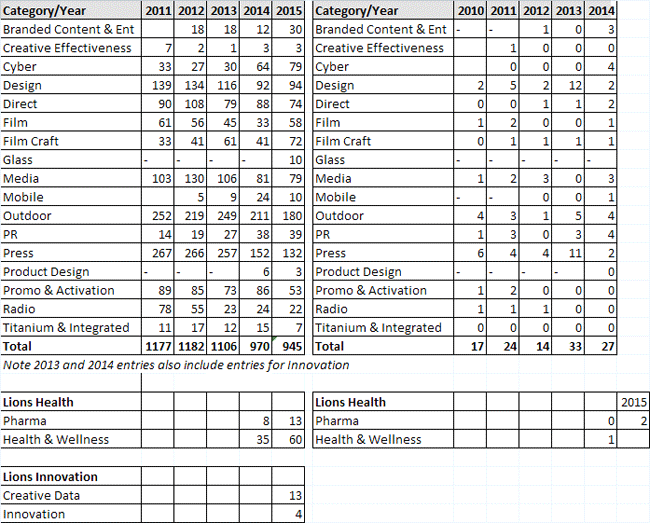
  • @CannesLions15: Indian entries & winnings over last 5 years

    Let the numbers do the talking. Presenting the number of entries Indian agencies have sent over the last five years and our winnings since 2010. Note these do not include entries sent by regional or worldwide offices of agencies – as is the case with Lowe Lintas which does not participate in creative awards.
     

  • @CannesLions15: Day 1 report: With 945 entries, India eyes bagful of Lions

    By Shephali Bhatt


    Delegates of the 62nd Cannes Lions International Festival of Creativity were yet to start making their plans for the day via the Cannes app when the awards committee announced shortlists for the Press, Mobile, Innovation, Direct and Promo & Activation categories.


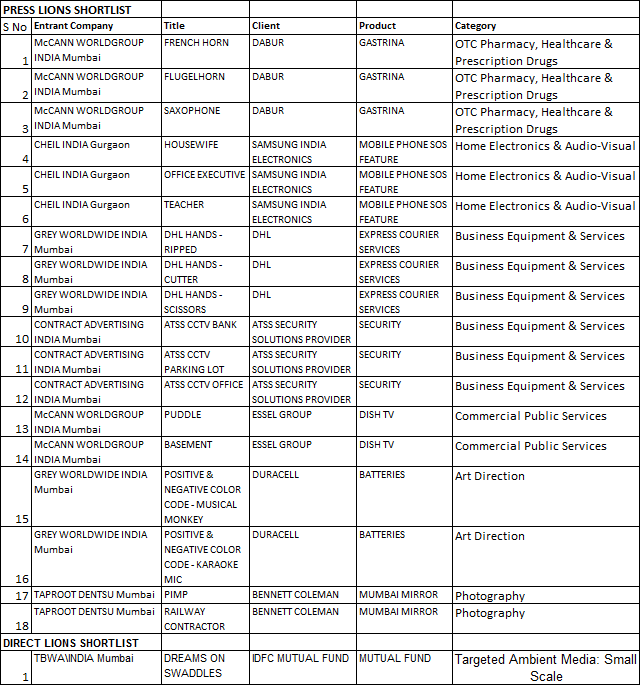
    No show from India on any of the categories, except Press — which fetched them 18 shortlists — and Direct, which got TBWA a shortlist.


    How many entered in the category? 132 and 74, respectively. A 13 per cent conversion rate in Press and 1.3 per cent in Direct but the percentage doesn’t matter as long as the shortlists go on to win big, says KV Sridhar, chief creative officer of SapientNitro. “People will remember that one great campaign that won across categories and not the number of entries you’d sent,” he adds, citing the example of Duracell’s positive negative stories campaign that won a handful of Lions last year.


    With mobile replacing digital in the ‘digital is the future’ prophecy, one would’ve expected some shortlists in the mobile category. “Maybe we are actually not doing enough exciting work in the space just yet. And perhaps rightly so,” says Sanjay Mehta, joint CEO of Social Wavelength and one of the Mobile jurors at the festival. “Whatever got shortlisted, I have truly not seen anything of that calibre in India,” he says.


    The total number of entries has also come down this year, marginally so, from 979 to 945. Sridhar, also one of the Press jurors for Cannes Lions this year, attributes this to the declining agency participation in domestic awards. “Only if I play well at domestic cricket do I stand a better chance at excelling at international cricket,” he says.


    Advertising isn’t very different in this regard. Agencies like Ogilvy and Lowe have started inhouse awards and Leo Burnett has stopped entering awards with the enthusiasm it used to. “All this comes through in the craft and quality of the work that’s entered at international awards,” he Sridhar. The pressure for validation isn’t the same anymore.


    “A lot of work entered to win at Cannes isn’t mainstream work anyway,” notes Grey’s Dheeraj Sinha. Only a matter of 24 hours (until the awards ceremony) before we find whether India is on its way to equalling or topping a great run last year.


    Source:The Economic Times

    Copyright © 2015, Bennett, Coleman & Co. Ltd. All Rights Reserved

    Licensed to republish


  • @CannesLions2015: India gets 3 Silvers & 1 Bronze on Day 2. 26 shortlists in Outdoor, Media & PR + Kan Khajura Tesan, but that credit will go to UK

    By Shephali Bhatt


    India’s award hunt at the 62nd Cannes Lions International Festival of Creativity is off to a promising if not a spectacular start. Of the 18 shortlisted entries in the Press category, Indian agencies romped home with three Silver Lions and a solitary Bronze Lion.


    Leading the pack was McCann Worldgroup with two silver metals for its campaigns for Dish TV and Dabur’s Gastrina. While Grey picked up a silver for its DHL Express campaign, the bronze went to Taproot Dentsu for Mumbai Mirror.


    The Grand Prix winning entry in the category was from The Community, Miami, for its work on the Buenos Aires Public Bike System.


    The solitary entry in Direct from TBWA failed to convert while India had a no show in other categories announced on Sunday like Promo & Activation, Innovation and Mobile Lions.


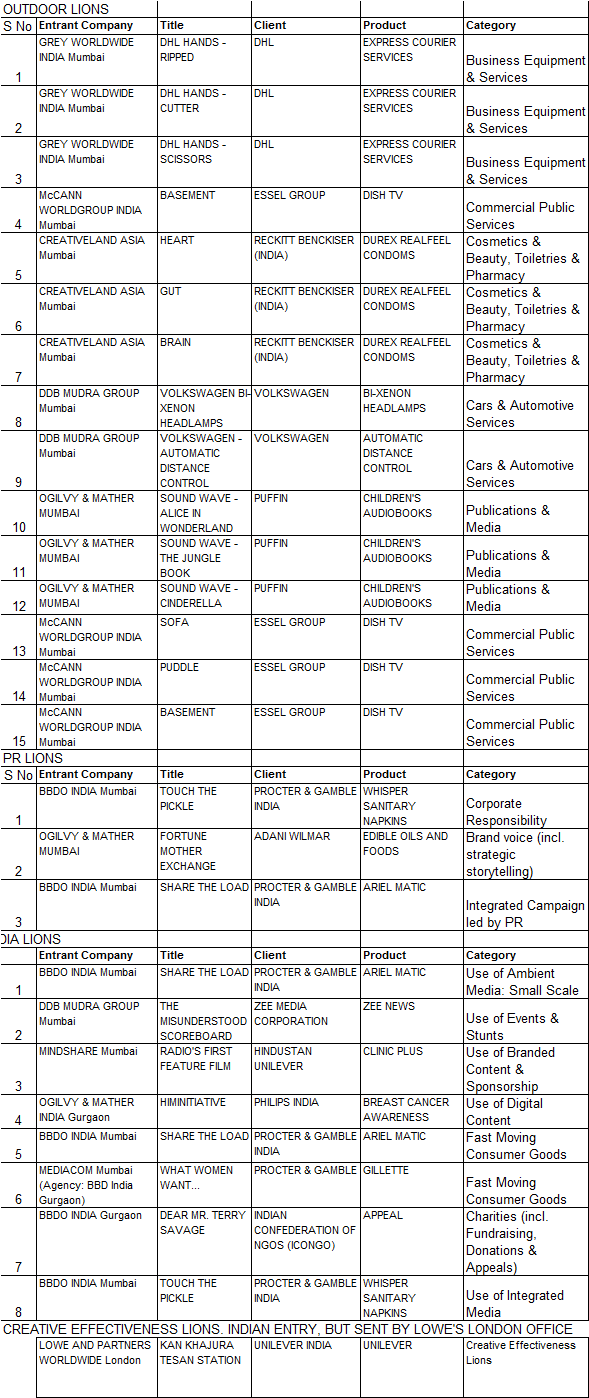
    The Indian contingent has reason to stay hopeful though. BBDO has two shortlists in PR for Ariel and Whisper and O&M has one for Fortune Oil.


    In the highly-prized Creative Effectiveness category, HUL’s mobile radio platform Kan Khajura Tesan has an entry submitted by Lowe & Partners Worldwide given the well-known antipathy of the agency’s Indian unit Lowe Lintas to awards.


    In Outdoor category, India has 15 shortlists from five agencies out of 469 total shortlisted entries. These include McCann Worldgroup for Dish TV, Creativeland Asia for Reckitt Benckiser, Grey Worldwide for DHL, O&M for Puffin and DDB Mudra for Volkswagen.


    In the Media Lions, India has eight of the 294 shortlisted entries. Interestingly enough, it’s not a media agency, but creative shop BBDO that leads the tally in this category with shortlists for its work on Ariel, Whisper and iCongo.


    DDB Mudra has a shortlist for Zee Media and O&M for Philips. Among the media agencies, the shortlists are Mindshare for Clinic Plus and Mediacom for Gillette. Jasmin Sohrabji, CEO of Southeast Asia at Omnicom Media Group and one of the Media jurors feels that the work is good but not consistent.


    “Most of the innovative work was not scalable. I think we need to add sustainability as a criteria along with idea, execution, strategy and results,” she says.


    Source:The Economic Times

    Copyright © 2015, Bennett, Coleman & Co. Ltd. All Rights Reserved

    Licensed to republish


  • Cheil India partners MDLab for offering brand experiences

    By A Correspondent


    What do you get when one of India’s top 5 agencies decides to associate with one of the most cutting-edge design houses in the world? That’s a question that Cheil India wants brands to consider as it prepares to hit the market with a unique offering.


    The Munich-based ‘Mind Design Laboratory’ is a specialist in creating integrated 360º brand experiences. They have put together some of the most awe-inspiring technology-enabled designs and spaces for brands across the world including at CES Las Vegas, MWC Barcelona, Photokina Cologne, IFA Berlin, Olympia Park Sochi, Westfield London and many others. Their project teams comprise of award-winning researchers, architects, artists, designers and engineers.


    Cheil India is also one of the largest and most experienced Events & Activations companies in the country that has conceptualised, designed and executed events and activations across India and internationally as well.


    This combined offering, which is being rolled out in time for Auto Expo 2015, will incorporate brand-strategy, audience-planning, interactive media, 3D design and world-class production management. It will offer brands the chance to stand out and make an impact at not only the Auto Expo but also at a number of other large events and expos such as the CeBIT, Aero India, etc.


    Navdeep Dhindsa

    Navdeep Dhindsa, Cheil India’s Head of Brand Activations & Event Marketing said, “We couldn’t have found better partners to collaborate with than MDLab. They have designed some truly awe-inspiring exhibitions and events as well as highly memorable brand experiences for retail environments and pop-up format spaces. The kinds of projects they have executed are the stuff of dreams.


    We are very confident that brands in India will be able to benefit hugely from our combined capabilities and really capitalise on all the exciting opportunities that exist in this vibrant market.”


  • New India. New Perspective. New Lens in TGI India


    By Deepa Mathew


    Deepa Mathew

    Target Group Index (TGI) is a single-source, global continuous database providing valuable and comparable consumer insights from over 60 countries across five continents. In addition to consumption behaviour and demographics, TGI also understands the consumers’ changing attitude, values, lifestyle, as well as media consumption, making it one of the most comprehensive encyclopedias to decode the urban Indian consumer.


    TGI India covers an annual sample size of 40,000 SEC ABC Urban Consumers across more than 190 towns. The comprehensive information coverage extends across 17 sectors, 400 product categories, 4,000 brands and 250 attitudinal statements.


    Hemant Mehta, Senior VP, IMRB International

    It took us time to establish Target Group Index. Fifteen years back, people were not ready for the product, and there were very few agencies and clients who were buying. Today, it has become an integral part of the marketing decision-making process. When we started, we used to do a study once every two years and today, we do a study twice a year. We started out by only measuring the key markets, which is one-lakh-plus towns. Today, we go all urban, so that shows that there is a need which the industry clearly has for the product, the fact that we’ve got clients who are using it and looking at updates twice a year, just speaks for itself. It’s come a long way, the country has changed and we have changed, but we try to keep pace with the expectations of clients, giving them more frequent information and larger-scope coverage. Today we cover about 42,000 consumers every year. Also, so far we had not been covering the North East, but now entering Assam. Not just Guwahati, but even the rest of the state.

     

    Between 2008 and 2014, household spends, that share of wallet itself, has changed. Today, we are mirroring a developed Western economy, where less than 40 per cent of the household budget is being spent on food and grocery, and 60 per cent on everything else, like commuting, education, children, services etc. That itself shows how much the country has changed. And keeping pace with that, in every round of TGI, there are additional requirements which are added. This year we’ve added six new categories. Even the way we are shopping has changed, and we’ve gone straight to online. The interesting thing is while some brands have not reached certain markets, consumers have reached out to those brands and e-commerce is playing a big role. Suddenly e-commerce is changing the expectations and behaviour which is going to have a profound impact on the way we distribute brands and make them available.


    Geoff Wicken, Head of TGI International, Kantar Media

    A lot depends depends on how companies organise themselves. And it’s really a question of how dynamic and big the businesses are in the local markets. In many cases, you’d say that international businesses have a certain amount of sizing the local markets; that’s how they became international. But generally speaking, with the exception of a small number of cases, international companies do tend to devote their decisions about research buying to local operations. The sheer speed with which things are changing [is remarkable]. If you can look at the GDP growth over the last 15 years and that plays through in TGI, for just about any product category, you see a higher percentage of growth, a more rapid growth in India than pretty much anywhere else. China is obviously a place that’s been growing fast as well.
     

    E-commerce is evolving in a different way here because of the difference in retail distribution. In more developed markets, it becomes an overlay on what’s already there. [In markets like India or in Africa] there hasn’t been an infrastructure of fixed telephony or even classic online internet access. What mobile brings, is the ability for people to leapfrog two levels.


    As told to Dyanne Coelho


    What’s New in TGI 2015

    • Aligning to the new 2011 Census definitions
    • First comprehensive understanding of North Eastern consumers with the additional inclusion of a 660-size sample
    • Reporting on the new SEC system
    • Coverage of new, emerging categories – Green tea, olive oil, anti-acne creams, CC/BB creams, lipcare, toners and astringents
    • Comprehensive coverage on the digital behavior of consumers, e-commerce, m-commerce and shopping behavior
    • Life-stage segmentation for efficient targeting


    New India. New Perspective. New Lens – Key Themes

    1. Geographic Redefinition

    With more towns acquiring the status of metros, population shifts in this strata have increased consumerism as well as diversities in consumption patterns. Each big city is now heterogeneous, owing to the multitude of markets and sub-cultures it houses. The phenomenon of cities within cities generates opportunities, as well as challenges for marketers to micro-target their offerings to distinct markets and sub-groups. Increase in Census towns, owing to proximity to big cities and a shift of industries to small towns, have led to a continuum of the urban and rural. Product adoption is equally fast in the rural areas as a result of this.


    2. Household Redefinition

    There has been a 22 per cent decrease in the number of households without elderly in the last nine years, giving rise to two new target groups: the empty nesters and households with less dependency. There is also an increase in dual-member earning households with a 30 per cent rise in working women in the last 15 years.


    The implications of this, therefore, are that there are new consumer classes with the power to spend on their distinct needs, women-centric products, products and services targeted towards the elderly, increasing spends on children, etc. Meanwhile, the share of expenditure on education has more than doubled in the last five years.


    3. Consumer Redefinition

    • Need for brands to be omnipresent online and offline, given the increasing power of the internet and social media??


    The consumer today is outdoors more often and offline for longer (40 per cent increase in time spent out of home and 12 hours of average internet usage per month) as compared to three hours in 2003). With the internet providing access to everything s/he needs — search, watch, transact, consumers are practically living in a home-away-from-home. Brands need to be present both offline as well as online, and always present; not just when there’s a campaign or when they have something to sell??.


    • Changing influencer profile again because of the power of social media

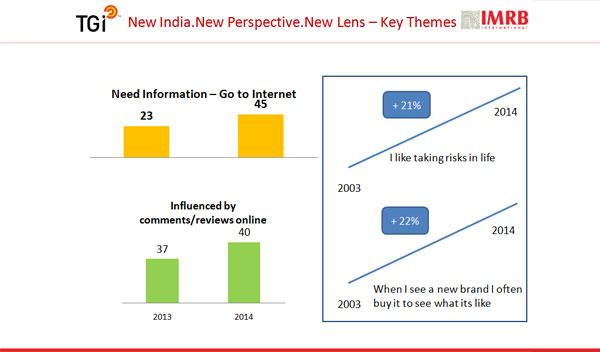
    There are shorter attention spans but increasing influence due to the power of social media. As many as 45 per cent [of consumers] turn to the internet when they need information on anything. They feel empowered when they are equipped with information and reviews from likeminded people. Hence, they are more likely to experiment and take calculated risks. There has been a 21 per cent increase in those who have claimed to take risks in the last 10-11 years. Brands and marketers should recognise the changing profile of influencers and advocators, and target their communication towards them. The messaging should be short and succinct, but have a ‘talkability’ element to last longer and spread wider


    • Affordable Luxury

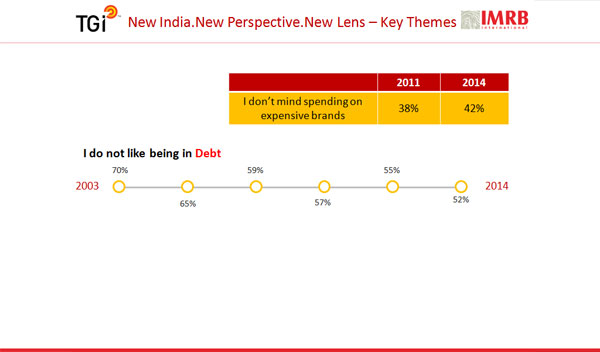
    With more disposable income and an increase in the power to spend and information available at one’s fingertips, aspirations are on the rise. Consumers today will go the extra mile to get what they want. Credit is no longer a dirty word, with the percentage of those who do not like being in debt declining from 70 per cent to 52 per cent in the last 10 years. Affordable luxury is the order of the day. For the marketer today, the thrust would be, not on creating products and services restricted by budgetary constraints, but that of making high-end premium products available to consumers through various options of packaging, financing etc.


    Category usage is not restricted to needs any more. Consumers today buy in to categories not because they need them, but because they want them. The other implication for a marketer would be to move from ‘need identification’ to ‘need creation’. ‘Tell me the reason why’ instead of ‘Tell me what to buy’ is the new-age consumer mantra


    4. Category Redefinition

    With the landscape changing, categories are also being replaced faster. Mobiles have replaced a lot of erstwhile categories like radio, camera, digital diary etc. On the other hand, a broad-based category gives way to multiple sub-categories with focused special benefits like face creams giving way to anti-ageing, anti-blemish and anti-acne lotions or creams. Watching out for category redundancies is something a marketer should be cognizant of in today’s changing times.


    The TGI studies sit at the forefront of the media and marketing industries, providing comprehensive insight into the online and offline behaviour of consumers. Today, TGI in India is more widely used than ever, to assist in the understanding of target markets and to aid marketing and advertising decisions.


    Deepa Mathew is Group Business Director, Media & Retail, IMRB International


  • How to Survive a Zombie Attack and more at @CannesLions2015

    By Dyanne Coelho


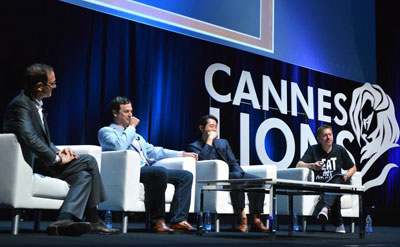
    Excitement loomed large at the Cannes Lions International Festival of Creativity, with the MediaCom-curated session on ‘How to Survive a Zombie Attack’ that focused on AMC’s ‘The Walking Dead’, a television drama that features zombies and portrays the life of humans in the aftermath of a zombie apocalypse. Jon Gittings, Global Business Development Strategy Officer, MediaCom, suggested that these stories ‘help us find solace and conquer our fear of extinction.’ The objective of the session was to highlight the consumer connect to content over the years and how brands can use these insights to market themselves effectively.


    Civilisations throughout time have always created these apocalypse myths, whether it’s the flood, or battles between man and God, Gittings pointed out. These are the stories humanity clings to, to collectively prepare for the threat of our extension. We turn to these stories to find solace and to help us conquer fear, he said.
     

    Gittings placed some interesting facts on the table. For one, Frankenstein was published in 1818 as a reaction to the 19th century’s fear of uncontrollable science. It’s no coincidence that Frankenstein was published the same year that the first successful human blood transfusion took place, he said.In the year 1954, Godzilla was conceived as a reaction to the terrifying, destructive power of the nuclear age. And zombies of course are a uniquely new-world myth, he added. “If apocalypse myths are a way of conquering fear, what exactly are we afraid of in the 21st century,” Gittings asked. “To try and answer that we pulled data on some of the established psychological explanations behind apocalypse myths, and then we correlated that with the viewing data of The Walking Dead. One of those explanations is the fear of how we abuse nature. It raises the question; are we scared of the zombies, or are we scared of becoming a zombie?”


    Said Dave Alpert, Executive Producer of the show, “We have one of the most engaged fan bases out there and it’s great because they let us know when they love something, they let us know when they really don’t like something. We have conversations with them both in person at conventions and online.”


    Josh Sapan, President and CEO, AMC Networks discussed that the elements that make the success of the show is the story, the characters and the craft. “The people behind the show didn’t just say let’s go do a show about this, they were deep into it. My observation even of the actors is that they didn’t find themselves there; they were there because of their origins.”


    Steven Yeun, who plays the character of Glenn Rhee on the show, shared his growth as a character on the show. “It’s great because as an actor you get to grow with the character, you get to change him, to mould him. It’s like a game you get to choose a character and follow him for six seasons. I think that’s what draws people and keeps them there,” he said.


    Gittings presented six dimensions that provide information about how brands and storytellers should communicate – hierarchy, individuality, masculinity, femininity, uncertainty, pragmatism and indulgence.Each of these was used in over a 100 countries to understand how each country’s culture works and how we as storytellers can use it to shape content and shape connections for brands. France to begin with was scored high on uncertainty. The uncertainty score shows how tolerant a society is towards ambiguity and whether or not they feel threatened by ambiguity. This means that France doesn’t like uncertainly, it is a society that shows emotions much more freely. It means they like rules but don’t like conflict. The first cluster, US, Canada and UK, was defined by high individuality and high indulgence whereas the second cluster of Turkey, Spain and Brazil, much like France was found to be high on uncertainty and low pragmatism, which means they have a short term culture, and they like yes or no questions. It means that they are quite conventional and don’t like change. The cluster one countries indicate societies that are highly competitive, the like to challenge and question things. In comparison cluster two countries indicate communication that flows like a pyramid in hierarchies.


    “By looking at The Walking Dead as a brand, we see how cultural dimensions can help us evolve across diverse geographies,” Gittings pointed out.“It helps us identify what markets can be clustered together, which part of the brand story we should focus on and how we should target it; should we be sensationalist or should we embrace disorder,” he said. Further, it can help us identify how brands should behave in channels and clears the doubt of whether we should ask questions or be more authoritative and issue statements, Gittings added.


    “If the apocalypse happened, never wear loose clothing, and get a haircut. That way you won’t be easily caught,” Jon Gittings humoured closing an engaging and informative discussion.


  • Seagull’s Polar Bear featured at ACT Responsible Expo at #CannesLions2015

    By A Correspondent


    Seagull Advertising’s work done for Thermax Profetherm is the only Indian work to be featured at the Cannes Lions’15 ACT Responsible – a platform that showcases outstanding work with an objective to remain responsible towards the planet.

     

    The ACT Expo at Cannes this year features over 110 pieces of good work from 88 countries and Seagull Advertising’s entry is the only Indian work to be featured in this. This is a showcase of work that is picked from the best around the world by ACT Responsible.


    In large enterprises and big office environments, employees are careless about using power judiciously. It’s a common sight to see ACs running in empty conference rooms, lights switched on in departments during off-­duty hours and so on. This irresponsible behaviour not only ends up as huge power bills but also contributes significantly towards global warming. The need thus was to address this issue and fix it. Thermax’s division ProfeTherm, being in the  business of helping its clients save energy and increase profitability, this was the perfect environment to begin the unplugging.


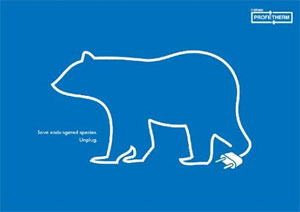
    The campaign started by promoting the Unplug message creating powerful creatives showcasing the Polar Bear and other endangered species. This was followed by an activation programme.


    A plug point when inverted, resembles a polar bear, one of the few endangered species that would suffer due to global warming. So Thermax ProfeTherm decided to unplug all of its systems and put up these polar bear stickers on existing plug points. Employees, when wanted to plug their computers and systems were flummoxed to see the plug points inverted, only to realise later that it’s actually a sticker. On lifting the sticker the reminder message of being responsible towards the environment got communicated. It was followed up with a message to follow a ’Green Hour’ as a way to pay back to the environment.


    As part of the Cannes ACT Expo showcase, Seagull Advertising hopes to contribute its mite in saving the planet by urging people to unplug and ACT responsibly.


  • Hip, Hip, Hurray! BBDO India bags first Grand Prix in six years on Day 3 at #CannesLions2015

    By Shephali Bhatt


    India bagged its first Grand Prix in six years with BBDO picking up the top honours in the newly-launched Glass Lion category for its ‘Touch the Pickle’ campaign for Whisper sanitary napkins. At the 62nd Cannes Lions International Festival of Creativity, the agency’s ‘Share The Load’ campaign for Ariel detergent also bagged a trophy in the Glass Lion category that focuses on work that implicitly or explicitly addresses issues of gender inequality or prejudice.


    While ‘Share the Load’ started a debate on how laundry was just not a woman’s job, ‘Touch the Pickle’ focused on breaking taboos — traditional and modern — that are imposed on a woman during her period. India’s last Grand Prix winner was Lead India for The Times of India which won in 2008.


    “What gives us immense joy is these are movement ideas that had a transformational impact on both brands. These ideas embraced socio-cultural tension points and found creative ways to resolve issues. They changed behaviour and drove a significant increase in sales. For us, this represents where advertising is going. We’ve got to really thank our clients who took risks every step of the way,” Josy Paul, chairman and chief creative officer, BBDO, said.


    The senior management of BBDO India gave the festival a miss and wasn’t available to collect the trophy — a rarity when it comes to Grand Prix. The win elated the Indian contingent at Cannes. Ashish Chakravarty, national creative director of Contract said: “It feels great to know our country has won a Grand Prix. Moreover, I’ve seen the work and know it’s real. It’s always better when a prestigious award is won on ‘real’ work.”


    There were murmurs about how the commercial was tackily made. To this Marcello Serpa, co-CEO and creative director at Almap/BBDO Brazil said the category wasn’t about craft.


    “There are several other categories to award that part of your work. This was purely about an idea whose execution led to a fundamental socio-cultural change.”


    McCann Worldgroup won 2 Silver Lions for its Dish TV campaign while Creativeland Asia won a silver metal for Reckitt Benckiser campaign. The category also yielded a Bronze gong each to Grey, DDB Mudra and Ogilvy & Mather for their work on DHL, Volkswagen and Puffin, respectively.


    In Media Lions, BBDO fetched India a bronze for ‘Touch The Pickle’ campaign. Meanwhile, Hindustan’s Unilever’s Kan Khajura Tesan won a bronze in Creative Effectiveness category. India’s performance is rounded out by a solitary shortlist in Design for McCann Worldgroup’s work on Dabur Gastrina.


    India failed to make even the first cut in Cyber, Product Design and Radio categories. Agencies had huge expectations of bagging a few Lions in Radio, but the results disappointed. “They weren’t good enough. Agencies need to stop entering their TVC’s audio tracks, to start with,” said Riya Mukherjee, radio and music consultant and one of the jurors in the category.


    Source:The Economic Times

    Copyright © 2015, Bennett, Coleman & Co. Ltd. All Rights Reserved

    Licensed to republish


  • Razorfish India appoints Bharatesh Salian as VP & Head of Strategy

    By A Correspondent


    Bharatesh Salian

    Razorfish has announced the appointment of Bharatesh Salian as Vice President and Head of Strategy, based out of Mumbai. Razorfish India is steadily bringing on board top digital talents in the country to join its already formidable team across Mumbai, Delhi and Bangalore.


    “With a strong technology background and in-depth understanding of brands and consumer behaviour to boot, it is a unique combination that is not easy to come by,” said Gaurav Pathak, COO Razorfish India. Adding further he said, “His 14+ years of rich experience in Mobile, Digital and Social media domains will be valuable for us to strengthen Razorfish’s capabilities in business transformation.”


    Prior to joining Razorfish, he was with VivaConnect as Chief Strategy Officer where he worked with clients like BJP, GSK, Google and Tata Motors.


    In his tenure at TechShastra, he has developed innovative solutions for Unilever, Pepsi, Nescafe, Zee TV and Network 18 amongst others.


    Charulata Ravi Kumar, CEO Razorfish India adds, “We are constantly seeking out the most curious and innovative minds with fire in the bellies! And of course those who are not bound by the past but creating new tomorrows.”