Category: ADVERTISING

  • Gerald Roche appointed as Senior VP at MudraMax

    By A Correspondent


    DDB MudraMax-Media has appointed Gerald Roche as Senior Vice President. Mr Roche has prior experience inmedia planning, buying and AOR management in his career spanning nearly two decades. In addition to specializing in digital strategy, he has also created several brand building innovations.


    Speaking at Gerald’s appointment, Sathyamurthy Namakkal, President, DDB MudraMax-Media and OOH said, “Gerald brings a set of skills to MudraMax; some that are unique and some that complement our current talent and philosophy. His leadership will benefit all our clients, team and media partners.”


    Mr Roche has worked in India and the Middle East with leading agencies like Carat, OMD, Madison Media and Starcom MediaVest. He has also had stints with television and outdoor media companies. His last assignment was with SMV as Vice President-Media Buying. Some of the clients he has worked for include Asian Paints, Aircel, Axis Bank, Britannia, Cadbury (Mondelez), Chrysler, Emirates, Marico, McDonalds, Ranbaxy/Sun Pharma and Tata Chemicals among others. His work with media innovations has won awards at Goafest and EMVIEs, including two Grand EMVIEs in 2008 and 2012.


  • Havas Media wins Integrated mandate of Arpita Agro

    By A Correspondent


    Havas Media announced the win of Arpita Agro Products (P) Ltd. The media mandate includes both traditional and digital duties. The account will be handled from the Kolkata office.


    Arpita Agro Products (P) Ltd. is a leading manufacturer and supplier of Herbal Neem Products which include popular brands such as Nimyle, Nimwash, Nimit, Nimglo Skincare, Nimglo Glycerine and Nimgreen. Viable Alternative Products forms the cornerstone of  Arpita Agro Products, which was conceived with the vision of providing herbal and organic alternatives to the chemical products available in the market that are toxic and harmful for consumers. The products are safe for use in homes, hospitals, schools and various other institutions, personal care and agricultural use.


    Speaking on the appointment, Arpita Majumdar, Head of Marketing, Arpita Agro Products Pvt. Ltd. said, “We are very passionate about the company we have built and our innovative natural product range. This is the same passion we found in Havas Media. We are looking to scale the brand further – Havas Media has the experience, understands the category and has shown us the strategic approach across media from our brand perspective. We see them as a long term partner.”


    Commenting on the win Anita Nayyar, CEO, Havas Media Group India and South Asia said, “It is a good win and the ‘natural’ focus of the products is important to customers today. We look forward to building another Meaningful Brand. It further consolidates our Kolkata operations.”

  • Dentsu Aegis Network expands its India Executive Council

    By A Correspondent


    Dentsu Aegis Network has announced the formation of an expanded Executive Council to drive the group’s business in India. The Executive Council comprise leaders of all the Dentsu Aegis Network companies and heads of key functions. This gives Dentsu Aegis Network in India an unparalleled advantage of being able to offer their clients world class specialist services under one umbrella.


    Chaired by Ashish Bhasin, Chairman & CEO South Asia, Dentsu Aegis Network, the Executive Council includes Anand Bhadkamkar (Group Finance), Dimple Maheshwary (HR), Divya Karani (Dentsu Media), Simi Sabhaney (Dentsu Communications), Makato Nakao (Japanese International Clients), Kartik Iyer (Carat), Haresh Nayak (Posterscope), Sidharth Rao (Dentsu Webchutney), Narayan Devanathan (Dentsu Creative Impact), Shamsuddin Jasani (Isobar), Vivek Bhargava (iProspect), Nabendu Bhattacharyya (Milestone Brandcom), Rajiv Dingra (WAT Consult), Umesh Shrikhande (Taproot Dentsu), S. Yesudas (Vizeum) and R. Ravishankar (psLIVE). C.P Arora will be a special invitee.


    “I am proud to say that we are the only media and advertising group in India to provide world-class specialist services with such depth under one umbrella,” said Ashish Bhasin, Chairman & CEO South Asia, Dentsu Aegis Network.


    “We want to offer our clients all the benefits of specialization without the hassles of silos and our unique One P&L structure enables us to do so. Consequently, the Executive Council has the important role of capitalizing on this advantage. Since we have been the fastest growing agency group for two years in a row, we are now amongst the top 3 groups in India. By Dec 2017 we aim to be the top 2, which will be a mandate for this Council,” he added.


    In order to effectively manage the group’s 1700 staff across 7 cities and 15 companies, the executive council members will be encouraged to think beyond their immediate roles for the larger benefit of Dentsu Aegis Network clients.


  • Everest gets Aradhana Bhushan to head Mumbai ops

    By A Correspondent


    Everest Brand Solutions has appointed Aradhana Bhushan as Vice President, Everest Mumbai. In her new role, she will be reporting to Dhunji S. Wadia, President Rediffusion Y & R and Everest Brand Solutions and add to the company’s leadership team.


    On her appointment Dhunji S.Wadia said, “I am very excited that Aradhana will now lead Everest, Mumbai. Her strong leadership skills will enhance the quality of work that we do for our clients and add value to their brands.”


    Aradhana has over two decades of industry experience and has played several roles in Marketing and Brand Management in client organisations. She has also led Client Management engagements in advertising. Over the years she has worked with JWT, HSBC, Hiranandani Group, Conscious Food and EKCO – most of them in leadership positions.


    In her vast experience, Aradhana has worked on several brands, across categories – Hindustan Unilever Limited-Sunsilk, Diamond Trading Company-DeBeers, Godrej Appliances, Halls, Listerine, to name a few.


    Aradhana is an MBA in Marketing from the Symbiosis Institute of Business Management, Pune.


  • Contract unveils brand campaign for Vectus

    By A Correspondent


    Contract Advertising has unveiled a new campaign for Vectus that promises to heat up the battle in the water storage tanks and plastic pipes industry.


    Talking about the brief, Ashish Baheti, Director, Vectus Industries Ltd. said, “The challenge for us was to leverage our legacy of 25 years in the industry to get a head start for our flagship brand, Vectus. We wanted Vectus to rise above product features and speak in the voice of a leader – a voice of authority, reason and foresight. We also wanted to reach out to home builders across age groups as well as those from the construction industry with a memorable message which keeps us on the top of their minds”.


    Shot on the parched terrain of Rann of Kutch in Gujarat by talented director Sainath Choudhary, the TVC is intense and a refreshing change from the clutter of product advertising today. The cinematography, the cast and the sound design come together to create the excitement of a western thriller, and the entry of the product leaves one nodding in agreement.


    “Tanks, pipes, drainage pipes aren’t exactly top of mind for people ever. What we’ve done here is to change the conversation of the category. We’ve taken the usual clichés of durability, longevity, strength etc. and represented them in a totally new and compelling way. The socially responsibleangle presents the case to the consumer in a manner they can’t ignore. It brings the category into the forefront and presents Vectus as a thought leader in it,”said Mayur Hola, Executive Creative Director, Contract Advertising New Delhi.


    Vectus Industries is one of India’s premier brand of water storage tanks and plastic piping solutions. Leveraging their massive pan-India retail presence in the water storage tanks domain, Vectus launched their comprehensive piping solutions range successfully, and has made huge strides in the past few years.


  • Nestle replaces Maggi ads with Nescafe & KitKat commercials, to lose about Rs 10 crore

    By Pritha Mitra Dasgupta & Shramana Ganguly


    Nestle India stands to lose advertising inventory of about  Rs 10 crore due to Maggi recall despite its move to air commercials of Nescafe or KitKat in all advertisement slots booked for the instant noodles brand, broadcasters and media planners say.


    “The channels have been told to subtly replace Maggi ads with Nescafe and KitKat commercials,” a senior media planner said. “But despite this attempt to recover as much inventory possible, Nestle will have to let go of advertising inventory worth  Rs 8-10 crore,” the person said on the condition of anonymity.


    On Saturday, Nestle notified broadcasters and other media houses in India to stop publishing Maggi ads from Sunday. While the Swiss company has stopped digital advertising for the brand as well, it is using various social media platforms liberally to sell its side of the story to Indian consumers.


    A Nestle India spokesperson said that while the firm has taken action to stop Maggi ads, “you may see a few since changing the programming pipeline could take a little longer”.


    Nestle is one of the biggest advertisers in India, spending over  Rs 400 crore on advertising a year. Its ad spend on Maggi brand alone is estimated at over Rs 150 crore, according to industry insiders.


    Publicis Worldwide is Maggi’s creative agency, while Zenith-Optimedia handles the brand’s media buying and selling activities. The digital mandate of Maggi is handled by GroupM’s Maxus. Sources in these agencies said that Nestle stopped airing Maggi Oat Masala noodle commercial featuring actor Madhuri Dixit right after the scandal broke.


    In February, Maggi had launched a campaign, ‘Khushiyon Ki Recipe’, which was on air till Saturday despite Food Safety and Standards Authority of India (FSSAI) dismissal of Nestle’s defence about the brand embroiled in controversy over excessive lead content and mislabelling on MSG.


    Nestle has now instructed channels to take these commercials off air.


    Meanwhile, Ahmedabad-based Consumer Education Research Centre (CERC) is contemplating legal action to push Nestle to do corrective advertising across print and television space.


    “Considering Nestle advertisements have been misleading the consumers, they ought to engage in corrective advertising to tell the consumer in as many words about what is factually correct,” said Pritee Shah, chief general manager at CERC and a member of an inter-ministerial monitoring committee for misleading advertisements under the ministry of consumer affairs.


    G Gurucharan, additional secretary (consumer affairs), too, had recently stated that Nestle could be asked to put out corrective advertisements.


    Shah said that considering Nestle has been misleading the consumer about the health aspect of Maggi, it should redo its commercials. In addition to lead and MSG, the firm needs to clarify that one helping of Maggi is not equivalent to three chapatis as claimed by one of its ads, he said.


    Source:The Economic Times

    Copyright © 2015, Bennett, Coleman & Co. Ltd. All Rights Reserved

    Licensed to republish


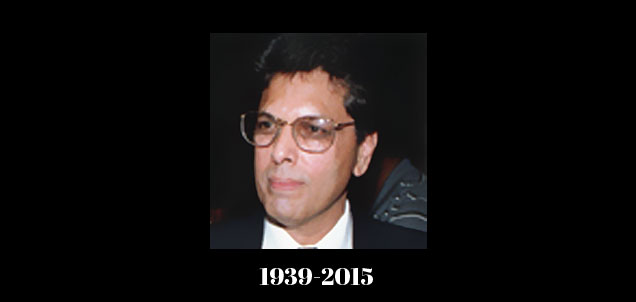
  • RIP, Mike Khanna. Chairman Emeritus,JWT


    A Correspondent


    To generations of advertising, marketing and media professionals in the country, Mike Khanna, short for Mahinder K Khanna has been an institution. Like the legendrary Subhas Ghoshal from whom he took over the reins of JWT (then HTA), Khanna was among the greats of Indian advertising who built their agency and the brands it nurtured to dizzying heights.


    Veteran adperson and Chairman Emeritus, JWT, Mike Khanna passed away late Saturday at age 76. He took over the reins of JWT (then HTA) from the legendary Subhas Ghoshal in 1984 and spent over 38 years with the agency before assuming the role of Chairman Emeritus in January 2004 when he passed the baton of the CEO on to Colvyn Harris.


    Khanna, always very proper and regarded as the man who ensured that HTA, and then JWT, emerged as the #1 agency in the country. Not just in size, but also in systems and processes.


    Speaking on his passing, Tarun Rai, CEO, JWT said: “J Walter Thompson owes so much to Mike. And many, like me, owe their careers to him.  He was a legend in Indian advertising and a great leader and motivator. For decades, he and HTA (and later JWT) were synonymous. His legacy is extraordinary. He will be missed.” Rai worked very closely with Khanna during his earlier tenure with JWT.


    Khanna, notes a JWT statement, built HTA into “not just the single largest agency in India but also one that was known to build some of the leading brands of the country”. He played an active role in industry affairs, such as the Advertising Agencies Association of India (AAAI) and the Advertising Standards Council of India (ASCI). Khanna started his professional life in market research with SSC&B, New York. An economics honours graduate, he obtained his MBA from New York University. He was awarded the Lifetime Achievement Award by the AAAI.


    There are several tributes via Twitter and Facebook, and we’d like to reproduce this by by Colvyn Harris in dna. Not only did Harris succeed him, he also worked with him closely and ensured the transition was smooth.

    By Colvyn Harris

    The legacy lives on Mike, in the stories we share about you. And in the  great institution you built. Many of us owe you for being mentor and guide in our professional and personal lives.

    How does one tell a story of the passing away of a true legend of our times, or words to express the impact Mike had on so many.

    We were blessed to have known him and his ideals and values, which still continue, and which have become the foundation of India’s finest advertising agency –  Hindustan Thompson Associates then, and now J Walter Thompson.

    His belief was best articulated in an oft-used phrase which summed up our purpose so appropriately: “to build the finest company, which would stand the test of time…”.

    Mike lived by human values of decency and grace, of professionalism and exactitude, and set the highest standards for us; so evident all across a company which thrives by those very values even today.

    In his footsteps, generations will follow, in our company and across the advertising industry where he played  such an invaluable role.

    Mike Khanna will be remembered for many aspects. The professional who was instrumental in the huge success of the company; the CEO who led us all to be what we are and what we achieved; for being the complete family man; and the charismatic and charming persona for the advertising fraternity given the man he was.

    For the advertising industry, his passing leaves a huge void, as many knew him as a friend having been the generation that together built our industry.

    For the professionals who walked the corridors of HTA and went on to greater success, their true inspiration was Mike.

    To sum it up in Nelson Mandela’s words:

    “when a man has done what he considers to be his duty…he can rest in peace”.

    You will be remembered Mike.  Always.

     Colvyn Harris is now Executive Director Global Growth & Client Development at JWT

    The funeral took place on Sunday afternoon in Mumbai.


  • Ivan Arthur on Mike Khanna. Wizard without a wand

    By Ivan Arthur


    The business world will toss numbers; will talk of the magical growth he showed in the time he led Hindustan Thompson, now JWT; first as head of the Delhi office, which bobbed up from No.7 in that city to No.1 in just one year of his taking over; he did the same with the Bombay office and finally as CEO of HTA, India, he walked the agency up a steep climb to the pinnacle; success following him like a poodle.


    And those who do not know him will have visions of a man like some others with similar achievements, men who draw attention to their success with big flourishes of the corporate wand and the abracadabra of individual style.


    With Mike there were no flourishes; no conjurer’s patter, no abracadabra showmanship. He almost seemed like a novice with a pack of cards, slowly dealing them out, stopping to spit-wet his fingers when suddenly you would notice: he has dealt you an ace. And then another and another. You looked in awe. And there he was, unimpressed with his own magic, intent on just dealing you those aces.


    But the aces we are talking about are not those numbers; of billings, growth, profit or industry ranking; facts and figures that even then placed him on the throne of the advertising industry. Oh there is much to be said about all that and the business world can talk about it at length. What ‘Thompsonites’ will talk about are other aces, their own personal ones, for which they will remember him most. From secretaries, studio artists and accountants to members of the executive committee, all have poignant stories to establish their personal relationship with Mike: of how on a bad day, he sat them down, got to the heart of the problem and sent them away with a new spring in their step; of how they came to him with clenched fists over an issue with a colleague and how a cuppa tea with him would end in handshakes all round. A creative director will tell you how, on the occasion of the global CEO’s visit, her presentation was delayed by an hour, and how Mike went up to her, put his hand on her shoulder and said, “Relax. This is not the end of the world.” “I could have kissed him then,” she said. “But I went about getting the job done.” An office manager narrates how on his wife’s birthday, he had invited Mike home for dinner, at which he demonstrated the five-finger-and-palm bhangra clap.


    His manner was calming. He broke down difficult and high tension situations with his quiet, unbeatable logic to resolve both business and even creative crises. his intuitive feel for the moment, touched with humaneness, his ability to get down to the root of the matter at hand to help you with a problem and above all, his sense of fairness were among the aces up his sleeve. These were the aces he dealt around.


    Early this morning, on the 7th of June, the mobile phones of those who worked with Mike were clogged with messages, all of them saying that they were still holding in their hand the aces that Mike had personally dealt them: the ‘can do’ spirit. The freedom to try and fail. A strong sense of self-worth. Fairness. Integrity. Leadership. Challenge. A sense of fun. Aces that they hold close to their chest. Aces that have led them to where they are today. Many are now happily retired and a good number are CEOs, chairmen of companies and leaders in their fields. They are all of them echoing one line,”I am what I am today because of Mike.”


    Ivan Arthur is former national creative director of JWT India where he spent 38 years in before retiring in 2002.He blogs at Excalibu (http://arthurivannoel.blogspot.in). Republished with permission from the writer. First posted at https://www.facebook.com/MikeKhannaTribute


  • Could Nestle have handled it better in a world of social media & 24×7 News TV?


    By Dyanne Coelho


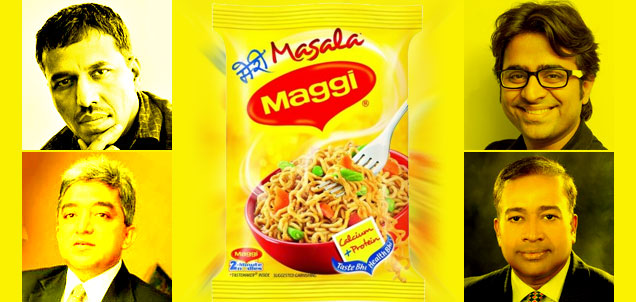
    The boycott, the pull-out of stocks and the subsequent bans have put the popular Maggi noodles in an avoidable mess. The brand has been brought under severe scrutiny for high content of lead; above the permissible limit as well as MSG; a taste enhancer. While at a press conference convened last Friday, Paul Bulcke, Global Chief Executive Nestle, defended the brand saying it is safe for consumption, regulators point out otherwise. The controversy has hit Nestle hard and communication with the consumers and others seems to have taken a backseat, causing distrust and confusion. MxMIndia spoke with senior marketing and media professionals (in alphabetical order of their last names) Manish Bhatt (Founder-Director, Scarecrow Communications), Harish Bijoor, Brand Advisor and Commentator, CEO, Harish Bijoor Consultants, Rajiv Dingra, Founder and CEO, WATConsult and Lloyd Mathias, Marketing Head, Hewlett-Packard India and requested them for some insights on what went wrong for Brand Maggi, how such a crisis ought to be handled in the age of the digital media and 24×7 news television and the role of celebrities as brand ambassadors.


    Would you say the controversy around Maggi has been badly handled in terms of the way the company has communicated with all stakeholders especially consumers?
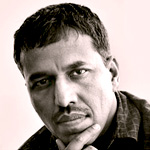
    Manish Bhatt: No, I would not say that. I would say that this happens. There must have been something that went wrong. This is a decision between the company and the food and drug authority. It’s a very scientific matter. It’s a scientific and chemical lab kind of matter. Marketing and communication is an absolutely different thing. We can’t command authority and say whether they are right or wrong, especially with a reputed company whose products we have grown up with. Now communication is a completely different ball game and this can happen to anybody.
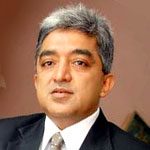
     

    Harish Bijoor: Most certainly yes. Each of the stakeholders need a different degree of communication. The regulator, the traditional media, social media and consumer communication needed to be quick, forever-on and active, more active than what was seen.



    Rajiv Dingra: The handling has been efficient but not effective. During crisis it’s not only important to clarify or state facts but it’s also important to come across empathetic and concerned for your consumers. Nestles responses have been defensive and at some point dismissive as well, which is why they have been ineffective even though they have been quick to react.
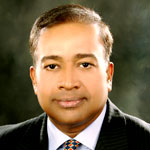


    Lloyd Mathias: I think Nestle could have been far more proactive when the issue first surfaced by directly communicating with stakeholders and clarifying issues.  Their initial silence – on both paid and unpaid media – has complicated matters and contributed to the issue spiralling out of control.


    Has the presence of a hyperactive news media – especially 24 x 7 news television and the social media make matters worse in handling crises?

    Manish Bhatt: Yes, but this can happen to the media also, some things can go wrong. Everyone wants information round the clock. Today news is not like a morning event, where the newspaper comes in the morning and you get your news. With social media, the news is not getting analysed by the right kind of people. It is done by anybody and everybody.


    Harish Bijoor: Absolutely. Today, brands cannot escape the scathe and scythe of television and social media.  If you are not agile, you need to pay the price. At times an unfair price of reputation erosion even. I do not believe Maggi deserves the kind of reputation-erosion it saw in the last week.


    Rajiv Dingra: The world has changed and the power is in consumers hands since the advent of social media. It only grows in their hands and brands need to embrace and not fight this reality.


    Lloyd Mathias: No. 24×7 news and social media is a reality and one must come to terms with it.  For corporations it means devising communication strategies and means to stay responsive to this medium. Consumers tend to air their grievances and concerns on social media and these need to be addressed effectively.


    Would you say that the social media and TV news media often becomes a mob and hence all consumer-facing organisations need to train themselves better to interact with both?

    Manish Bhatt: Today people get swayed by these things. But after sometime there will be more maturity and there will be more understanding and people won’t get affected by it. Today it becomes a mob and if any issue happens, people throng to social media, twitter, etc. It’s uninvited, but social media is at such a stage. But maybe after some time, it will mature and people will not get affected by these things. What happens on social media is really out of your hands. People also are 24×7 sitting at Ramlilamaidan, and if any issue happens they protest, it’s the same attitude on social media. It makes everybody nervous. I’ve worked with the present company, and they are pretty systematic and organised and very concerned and responsible. But what can one do in such a situation?


    Harish Bijoor: Absolutely. This is the new reality. No corporate and brand entity is perfect and infallible. You need to have the ability to manage the tender and weak-points of possibilities in this day and age.


    Rajiv Dingra: Mobs happen when you frustrate people by either not answering them or try to talk over them in a loud voice. People have busy lives no one wants to indulge in non-productive banter. But when products that concern them let them down they do speak up. Brands need to realise that consumers place their trust in them and hence when trust is broken there will be noise. Brands need to be more caring and humane in the era of social media.


    Lloyd Mathias: The viral effect of social media together with 24×7 news certainly tends to magnify issues – often unreasonably. Consumer facing organizations and indeed all businesses must devise strategies to address this. Keeping communication lines open, putting out clarifications, responding real time to social media posts, having spokespersons addressing live media – help considerably in crisis situations.


    Would you have advocated Nestle to be apologetic in their assertiveness about the safety standards as against being defensive and uncommunicative?

    Manish Bhatt: It is not right for us to comment on this. It is absolutely none of our business. As a consumer if it affects us, then yes, the sales would be affected, but I would not say that anybody is right or wrong right now. It’s like the law. You have to wait for the law to take its course now.


    Harish Bijoor: No. I do believe Nestle has handled that well. It has taken the high ground of quality and it has withdrawn packs occupying that high-ground.


    Rajiv Dingra: Maybe apologetic is too strong but certainly more empathetic and more concerned for consumer health. The war is not proving oneself right, it should be about ensuring consumer safety. A great way could have been to pause Maggi supply and redo packaging which reassured consumers and relaunch. They could also release videos on how Maggi is produced. Cadbury did that when worms were found years back. It showed commitment to consumers on ensuring they upped their safety and product standards.


    Lloyd Mathias: Being communicative always helps.  I think stating the facts clearly while highlighting safety standards the company adheres to both locally and globally would have helped.


    Do you think it is appropriate for celebrities endorsing brands to take the heat and while legally they may be protected, they must take the moral authority for the product’s attributes?

    Manish Bhatt: Whoever the celebrity may be, he/she is not a chemical engineer or anything. He can’t really check what is there in the product. Beyond a point, nobody can go into anything to that extent. You really can’t accuse them. They can’t check everything. This is the technical and moral responsibility of the company who produces it, or it is the duty of the governmental authorities to keep on checking things on time. You can’t accuse the endorsers.


    Harish Bijoor: No. Celebs are really indemnified. No celebrity can be 100% certain of everything about a brand.


    Rajiv Dingra: Consumers don’t think legally but logically. Logic is that if you endorse it and I eat it and I fall sick then I will hold you responsible.Consumers will always question celebrities on their actions because celebrities are there due to consumers love and fandom. Though it’s an opportunity for the celebrity brand too to take a higher moral ground and win more fans.


    Lloyd Mathias: I think celebrities must be selective and fair in their selection of products, as their endorsement often swings public opinion.  So, yes, they carry a moral responsibility. However, in specific instance of Maggi, I don’t think the brand ambassadors are to blame at all. Instant noodles are a relatively safe category and if the food safety authorities had cleared the product, the celebs would obviously believe them. Clearly the brand ambassadors can’t be expected to have independent labs checking on product safety beyond what food safety authorities do.


    And lastly: Do you think celebrities need to be more careful in their selection of products while signing up endorsement deals

    Manish Bhatt: They should have one more clause added in the agreement that says that they will not be responsible in such an event.


    Harish Bijoor: Yes, celebs need to be and will be more careful in the future.  And celebs will continue to take risks in the future as well. Let’s accept it. What one celeb refuses, another will pick with glee.


    Rajiv Dingra: Maggi is an iconic brand and no celebrity would be able to say no. What comes across from this incident though is that brand aside what’s the actual impact of products on consumer health is also to be considered. The future is one where the consumer is an evolving and educated being and his needs and reactions will be far more evolved than consumers of yesteryears. He will be more profound in his articulation of needs and wants and will also create more movements together due to social media. The powerful thinking and action oriented consumer is here. Brands need to be ready for him.


    Lloyd Mathias: Yes, they always need to be careful.  As I said above their endorsement is meant to swing public opinion, so they need to be very careful.

     

  • JWT tribute to Mike Khanna on Friday, June 12

    By A Correspondent


    Leading advertising agency network JWT is organising an industry tribute to veteran adperson and JWT Chairman Emeritus Mike Khanna who passed away on June 7. It will be held on Friday, June 12 from 4 to 6pm at the Hall of Culture on the Ground Floor of the Nehru Centre Discovery of India Building at Worli in Mumbai.


  • Winning it the Manthan way


    By Pradyuman Maheshwari


    Last fortnight, the London-headquartered D&AD announced the winners for its 2015 awards where McCann won six ‘Pencils’ (as the awards are called), including the coveted Yellow Pencil — the first time ever won by an Indian agency.


    Talking about the win, Prasoon Joshi. Chairman, Asia Pacific, CEO and Chief Creative Officer of McCann India, said: “I am extremely pleased with the outcome… D&AD is a prestigious award to win.” Earlier, the agency bagged four Golds and two Silvers at the One Show Awards.


    It may be his third job in the business, but Nikhil Waradkar has been in the McCann system for just three years. A student of the LS Raheja School of Arts in Mumbai, the edition of Manthan where the Yellow Pencil-winning Babol idea came up, was Waradkar’s first. “Babol is a Delhi-based account, but it was a fun working on it,” says Waradkar. Didn’t the original Babol team feel threatened that an ‘outsider’ who wasn’t a part of the team, cracked it? “On the contrary, they pushed it to the client? “says Waradkar. “That’s the Manthan format. It’s good for everyone.”


    For the India office of McCann Worldwide, it’s been a great showing at some of the top awards events internationally. Little wonder then, that in the Gunn Report ranking, McCann tops the India list for a second year in a row. The Gunn Report is a global index of creative excellence in advertising, and is collated from among the winners of the world’s leading and most important awards events.


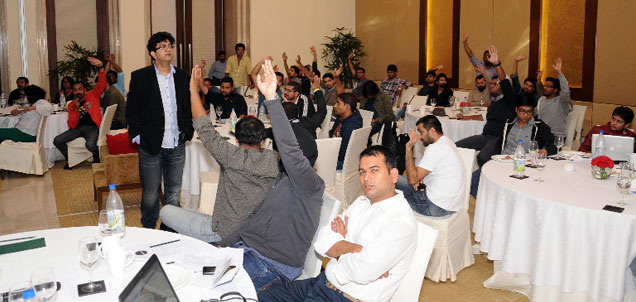
    Joshi attributes the successful showings to a concept called ‘Manthan’ that he initiated in the agency some five years ago. “It started as an experiment, but has matured over time,” he says. “We organise it at least three times a year, and it’s essentially a congregation of creative folk. So our Yellow Pencil-winning entry is for a client from the Delhi office, but the art and creative directs are from Mumbai. This is the way Manthan works.”


    It’s an offsite with Joshi leading the warm-ups. “I try and share some stuff with them to get the ball rolling. But later, we have everyone sharing things that have inspired them. It could be anything — advertising, art, music, poetry, literature.” Manthan, says Joshi, has had a significant impact over the last three years. “People are very excited about each other. It also helps them to interact with teams from elsewhere in the country,” he adds.


    Typically, while employees are aware of the various brands the agency is working on, a Delhi staffer doesn’t know what’s happening in the Mumbai office, and vice versa. The idea of Manthan is to provide a sort of ‘churn’, a regular engagement to keep everyone in the loop. “I often hear that people are constrained by every day work or have someone sitting on their heads, telling them what will or won’t work. Younger creative, in particular, wish they had a free hand to do things,” says Joshi.


    Manthan is for creatives at all levels – from Joshi and the National Creative Directors, to the fresher, and some 80 to 100 people travel to a destination within the country for this brainstorm. But even before they arrive at the designated venue for Manthan, all creative staff are sent an agenda, and they have to work on a presentation for a certain product or a service. “It also breaks the fact of ownership of clients. For example, there may be someone who may say ‘I will work only on this brand’,” says Joshi.


    But aren’t people possessive about their accounts? “Yes, and I don’t blame them. You nurture it, you understand it,” say Joshi. “But being a part of the creative world, you understand that it eventually boils down to ideas. There are some honest, creative people who, at times, come and tell me they are fatigued. They have a mental block about a certain brand. Similarly, clients sometimes ask if they can get a fresh team because the regular team [may have hit a roadblock] from being over-briefed and over-cautious”


    As ked if he faced any resistance to the initiative, Joshi said it was largely around people wanting to keep their cards close to the chest about their clients.  That’s when Joshi would point out to them that, the large number of brands he has nurtured, he should be the most “possessive” one of them all. “At McCann, right from the beginning, I have tried to bring the culture of less territory. While ownership is important and I want that, a turf war is harmful. And Manthan has helped clear that up,” says Joshi. But can a sweep of awards events be attributed to Manthan? According to Joshi, the initiative is an exercise in pushing the boundaries, and developing an attitude to do that. So while Manthan helps break the monotony of a daily grind, it also takes people back to the basics, by making them re-examine whey they got into advertising, in the first place. “At Manthan, the basic belief is do what you feel right. We do meet the management team and the planners later, and some of the work may get shot down, but the process does opens our minds up,” says Joshi.


    In fact, Joshi explains how the core ta working on an account has now begun to see interference and suggestions from others (sometimes rookies), not as an impediment, but as a way of finding solutions when you are stuck. Indeed, Manthan enables a cross-fertilisation of ideas much in the way that creative people, having a drink together, might sometimes come up with ideas on various brands. “I always wanted to do this for this particular category. That ‘wish’ gets fulfilled through the Manthan culture,” says Joshi.


    It also helps to figure out who is getting a little jaded. “I believe in self-realisation. McCann is a very non-judgmental organisation,” says Joshi. “I believe in people realising their limitations themselves. I feel the culture should be such that it makes you realise what you’re not doing right. When you see the quality of ideas coming out in front of you, you are [bound to wonder if this is] where I’m going.”


    On the more philosophical question of where the future of creativity is headed, Joshi says: “Creativity can’t be boxed. I think crowdsourcing will very much be a part of our offering, but deep-dive will reign supreme. A lot of time should be spent in briefing, which people don’t do. People feel client briefing, agency briefing and strategic planning are a waste of time. That’s the reason, Manthan is not about throwing a problem at you. You’ve already been given a brief about a brand which might not be a part of the brands that you’ve thought about.”


    A version of this appeared in dna of brands dated June 8, 2015


  • Collinson Group unveils interesting report on the affluent middle class

    By A Correspondent


    Economic growth and urbanisation are rapidly expanding the affluent middle class in India.  New global research from Collinson Group reveals distinct motivations and attitudes amongst this group which go beyond traditional demographic and geographical boundaries. Today’s affluent consumers place a higher priority on family, altruism and enriching experiences, ahead of luxury products and short-term satisfaction.


    Spending on grandchildren, children and partners is the main indulgence for Indian consumers when investing their money. Giving back to charity and the community, and protecting the environment also rate higher than buying leading brands and driving a luxury car. Affluent Indian consumers also expect banks to behave ethically much more than other nations (79 vs 68 per cent globally).


    Christopher Evans

    Christopher Evans, Director at Collinson Group says: “The quality of experience is increasingly the new currency for today’s affluent middle classes. Where previously the affluent middle class was more motivated by luxurious trappings, they now place a higher priority on family and life experiences such as travel, as well as experiences offered by the products and brands they choose. This is an important distinction for businesses trying to attract this growing and influential group. 


    Collinson Group commissioned research with 4,400 consumers within the top 10-15% of global income in Brazil, China, India, Italy, Singapore, the United Arab Emirates, the United Kingdom and the United States. The global research identifies four “tribes”, or groups of people, who share some common traits which cut across age, gender and international boundaries.


    Mid-Life Modernists are the most prominent tribe in India and are characterised by their enthusiasm for technology. Prudent Planners are motivated primarily by family and trying to help others.  The Stylish Spenders do still yearn for the finer things in life.  Finally, there are the Experientialists who put money-can’t buy experiences at the top of their priorities.