Category: ADVERTISING

  • Fogg clouds Axe effect, is new numero uno deo

    By Namrata Singh & Udit Prasanna Mukherji


    Where tales of giant killers like Nirma and Ghadi in the detergents space are part of the marketing folklore, a new David vs Goliath story is playing out in the FMCG market. This time it’s in the deodorant space. Fogg, a relatively new brand in the deodorant space from the homegrown Vini Cosmetics’ stable, has toppled Axe, a well-established global brand of Unilever, to become the market leader.


    Fogg has garnered an all-India (Nielsen) value share of about 13% as of October this year. The market share of Axe, which was the leader so far, is just about 8% now. A year ago, Axe commanded a higher share of about 18-19 % of this now highly fragmented market. It’s a case study in itself on how in certain fast-growing emerging categories the sweepstakes are so different that a younger brand bears the ability to overtake the market leader in a short span of time. Fogg is owned and marketed by Darshan Patel, the entrepreneur who, prior to setting up Vini Cosmetics, was the former promoter of Paras Pharma which was later acquired by Reckitt Benckiser.


    As part of the Paras team, Mr Patel successfully launched brands like Krack cream, Itchguard , Moov, Livon and Dermicool , which created a dissonance in the marketplace. Mr Patel appears to be following a similar strategy with Vini Cosmetics as well. Industry experts said Fogg’s unique proposition more sprays in a bottle – has helped the brand break through the clutter, considering that all brands are priced quite competitively.


    While Axe is among the first few brands which created the deodorant category in the country in 1999, Fogg was launched only two years back. Axe could not retain its leadership position in the category despite roping in celebrity Ranbir Kapoor in June this year. When contacted, an HUL spokesperson said: “As a policy we do not comment on market shares.”


    Darshan Patel, on the other hand, said Vini Cosmetics wants to increase its distribution reach which should augur well for Fogg and the other brands in its stable such as White Tone face powder, Glam-Up instant glow cream and Jinjola prickly heat powder. It was only recently that Vini Cosmetics raised Rs 110 crore from Sequoia Capital, a venture capital fund, to drive expansion.


    Interestingly, ITC’s Engage deodorant brand, which launched a range for both men and women in April this year is one of the youngest brands in the category. It too has managed to grab a chunky piece of the market pie. Engage has garnered a share of about 5-6 % in the Rs 2,100 crore deodorant market as of October this year. “ITC personal care’s entry into the deodorants market with Engage has received an extremely encouraging response ,” said Sandeep Kaul, divisional chief executive of ITC’s personal care products division.


    Source:The Economic Times

    Copyright © 2013, Bennett, Coleman & Co. Ltd. All Rights Reserved

    Licensed to republish


  • Envies 2013 | Industry’s Envy. Ogilvy’s Pride

    By A Correspondent


    When Ogilvy backed out of the Abby last year, the Oscars for the Indian advertising fraternity, the awards show had surely lost some sheen. But then Lowe, the agency headed by R Balki, had been skipping the Creative Abby for some years and the show had continued without a break.


    In June this year, Mr Balki held an internal awards called the True Show, celebrating 10 years of “not giving a damn about awards”. On Monday, Piyush Pandey and his core team of Abhijit Avasthi and Rajiv Rao played host to the Envies. Billed as Ogilvy’s finest, the entries were judged by a cross-section of industry seniors. The underlying message was clear: the winning commercials were not just the agency’s best, but also that of the entire Indian advertising industry.


    If Goafest had the seawaves, the Envies were held in a hotel overlooking the calm Powai Lake waters. The event started at 3pm and went on till past midnight. Adpersons-turned-artists Jiten and Sumer from the label ‘BoseDK’ showcase their works and rise to superstardom, followed by awardwinning journalist and radio storyteller Neelesh Mishra. There was fashion designer Sabyasachi Mukjerjee who was in his element in a Q&A. “Travel in the 3-tier compartment of a train to get a feel of India,” he said. Or this: “Convince large corporates to make Friday Dressing into wearing Indian woven clothes.” There was a stand-up comedy act by Tanmay Bhat and Rohan which had the audience in splits. After the bulk of the awards were done, Chief Guest Amitabh Bachchan made an appearance and was interviewed by former Storyboard anchor Anuradha Sengupta. Mr Bachchan was felicitated with a ‘Beyond Envies’ award.


    The Envies were internal awards of Ogilvy India, but the jury comprised biggies like DDB Mudra’s Sonal Dabral, BBDO’s Josy Paul, Taproot India’s Agnello Dias, CreativeLand Asia’s Sajan RaJ Kurup, Wieden+Kennedy’s V Sunil, McCann’s Akshay Kapnadak, Lowe Lintas’ Arun Iyer, Contract’s Ashish Chakravarty, Grey’s Malvika Mehra and Strawberry Frog’s Raj Kamble.


    Said Mr Pandey: ” I think Envies have to be interpreted in two different ways: the dictionary meaning of it is jealousy, which sounds a bit negative. In my mind, the Envies are about appreciating what others are doing and saying I wish I had done that kind of work.”


    And he added: “Normally in the industry awards you end up winning 60 or more trophies but at the Envies, we have confined  them to 25 per year. We are kind of being harsh on you but that is only to being in the spirit of self-improvement and raising our creative bar further.”  But this year, the organizers were more accommodative. Thirty-five awards awards were given away, but from next year, it will only be 25. The ceremony happened briskly, sans any speeches. Google’s Reunion ad won the Grand Prix or ‘Most Envied’ honour.


    The highlight of the evening was the presence of several industry veterans. When asked about internal versus external awards, Sam Balsara, CMD, Madison World said: “It’s a good thing to have them, but according to me it should not preclude them from participating in other industry awards.” Said Shashi Sinha, CEO, IPG Mediabrands: “They are not mutually exclusive. There is an internal awards that Group M does but they still participate in industry awards. So it’s an internal call but according to me they are two different things.” Sonal Dabral, Group CEO & MD, DDB Mudra too was of the view that external and internal awards are mutually exclusive. “Why an agency does not enter an external industry award is a decision that’s best taken by the agency itself.”


    When he announced Ogilvy’s decision to not participate in the Abby last year, Mr Avasthi, Ogilvy’s National Creative Director, had said the Abbys weren’t energizing his team as they would earlier.


    So does the conduct of the Envies mean that Ogilvy will not participate in the Abby at next year’s Goafest? Said Mr Avasthi: “There are certain changes that we are looking for at the Abbys and till the time they do not happen, we definitely would not be thinking about it.” And should the changes happen? “We will think about it then.”


  • My FM announces Season II of Jiyo Dil Se Awards

    By A Correspondent


    Riding high on the success of the Jiyo Dil Se Awards Season I, 94.3 My FM has announced the second season of the awards to recognize and acknowledge unsung heroes of society. A campaign will be rolled out in My FM markets covering the 7 states of Rajasthan, Punjab, Madhya Pradesh, Chhattisgarh, Maharashtra, Gujarat and Haryana.


    There will be nine award categories: Education, Environment Conservation, Health & Sanitation, Public Service, Culture & Art, Sports, Women Welfare & Empowerment, Child Care & Development and Economic Development.


    Harrish M Bhatia

    Ernst & Young will be the official tabulators for the Jiyo Dil Se Awards Season II. Speaking on the initiative, Harrish M Bhatia, CEO, 94.3 My FM, said: “We are proud to announce the Jiyo Dil Se Awards Season II as it takes further our brand’s belief that every individual, or entity should also give back to the society in which it dwells. The second season of Jiyo Dil Se Awards carries forward from Season 1, the effort to recognize the individual who has showcased immense dedication and passion for a cause brining about a difference and spreading happiness in peoples’ lives.”


    To apply for the award, people can log on to www.myfmindia.com and download the form. Selected top entries in each category will be put for public voting and jury and listeners’ votes will determine the winners.


  • And the Envies winners were…


    And these were the winning Envies ads:


  • Is it Goodbye Abby given internal & international awards?

    By Pritha Mitra Dasgupta & Shambhavi Anand


    What happens when an industry loses its faith in its own awards? In the case of Indian advertising, agencies seem to have found a solution by launching inhouse awards.


    While Lowe and Partners launched ‘The True Show’ a few years ago, Ogilvy & Mather just held its first internal award, the Envies.


    With other agencies too planning their own inhouse celebrations, does this mean that the days of the industry awards such as the Abby are numbered? “I don’t think so,” says Arvind Sharma, president of Advertising Agencies Association of India (AAAI) that organises Goafest where the Abby awards are conferred.


    “The last 25-30 years that I have seen, big agencies tend to pull out of award shows. In ad award shows big agencies don’t count.


    It is the creatively hottest agencies that matter. People have come and gone in Goafest. While that decision should be respected, it has no bearing at all on the future of the show. The show will go on.” But the advertising industry remains divided.


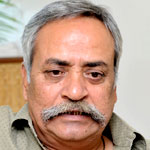
    Piyush Pandey

    Piyush Pandey, executive chairman and creative director at Ogilvy & Mather India and South Asia, says that his and other agencies are sending out a message to the organisers of industry award shows by holding their own in-house awards. “If the industry comes up with an award show which is believable and credible then we will participate,” he says.


    R Balakrishnan, chairman and chief creative officer of Lowe Lintas, says that message has been going out for a while, but the ad fraternity hasn’t got it yet.


    R Balakrishnan

    “Advertising has a purpose and how creative you are is that purpose. Who better than the agency that has created it to judge it,” he says, predicting that winning an Envie will make creatives at O&M happier than winning an industry award.


    Raj Kurup, founder and creative chairman of Creativelandasia, which pulled out of Goafest this year, has been vocal about scam ads in Goafest and how the event has lost its focus. “Whether it is an internal award or an industry award, I would welcome anything that celebrates fantastic real work that has made difference to the business,” he says.


    Sajan Raj Kurup

    Leo Burnett, which has a global assessment team and a unique scoring pattern that evaluates the agency’s internal work, has planned something special for its Indian winners in 2014.


    “We have very big plans for Cannes Lion 2014 and we are planning to send 25 people including creative, account management and planners.


    Saurabh Varma

    Teams that will score high in internal assessment will be a part of this, so will be the employee of the month and the previous Cannes Lion winners,” Saurabh Varma, CEO at Leo Burnett India, says.


    While a senior official in Leo Burnett says that the agency will not participate in Goafest 2014 because it has shifted its focus to Cannes Lion 2014, Mr Varma says, “We are still making up our mind on Goafest.”


    In fact, there are many in the industry who believe that while internal award shows of Lowe and O&M make a great statement, the industry award shows will co-exist. Josy Paul, chairman and chief creative officer at BBDO India, believes the two should not be combined.


    “This is O&M seeking external input and I think it’s gonna be respected for that. If more people do things like this, it just shows the industry is more united,” he says.


    Rohit Ohri, executive chairman at Dentsu India Group, says the Goafest is a larger forum for discussing industry issues.


    “So there is nothing like loosing sheen. But yes the competitive spirit that agencies like Ogilvy bring about will be missed,” he says. Agrees Vandana Das, president at DDB Mudra Group.


    “Old forums such as Goafest are places where great minds get together to celebrate great work. But it is not necessary that there will be only one such forum. There can be more,” she says. Like all other issues, the Indian advertising industry will remain divided on this one.


    But if there is one agenda where they unite, it is that the industry bodies should introspect the reason for the plight of the agencies from the award shows and try and bring them back.


    Source:The Economic Times

    Copyright © 2013, Bennett, Coleman & Co. Ltd. All Rights Reserved

    Licensed to republish


  • Impact of tech & techcos on consumer & advertiser behaviour: GroupM report


    Presenting extracts from GroupM’s observations of the impact of technology and technology companies on consumer and advertiser behaviour. This is a preview of the final report, which, complete with media investment data from around the world, will be published in the early part of 2014:


    This year twenty five years have passed since March 1989 when Sir Tim Berners-Lee, a Fellow at CERN, wrote a paper that proposed connecting ‘…the hypertext idea and connecting it to the transmission control protocol and domain name system ideas…’ The quote finishes ‘…ta da.’


    The ‘ta da’ became the World Wide Web. The rest, as they say, is history.To be clear the web created at CERN is not the web of today. For the first time tablet sales exceed PC sales and the sales of smartphones exceed both comfortably. Few of the next billion online users will use a PC-like object as the principal method of access. Additionally much of today’s digital experience is driven by the app universe in which the wire frame of the web is largely invisible. To paraphrase an Oldsmobile commercial of similar vintage, ‘This is not your father’s internet’.


    By some means of access or another it is estimated that one third of the world’s population is online. In August Mark Zuckerberg announced the foundation of Internet.org, a partnership between Facebook, Nokia, Samsung, Qualcomm, Ericsson, Opera and MediaTek to close that gap at a faster rate than the current annual growth rate of 9%.


    AdvertIsIng Was Broadcast

    Advertising as we understood it in 1989, and for at least another decade, was a function of the broadcast age. From the mid-1950s and the mass penetration of television and peaks in print circulation to the middle of the last decade when broadband became pervasive first to the PC and now to mobile devices advertisers had a reliable supply of large and mostly attentive audiences. Screen based entertainment with the exception of video games, was, in broad terms, a passive activity that became a key driver of popular culture and conversation. In this environment,marketers had few challenges in capturing the attention of audiences, which is not to say their efforts always provoked the desired action.


    In the broadcast age the short history of marketing from packaged goods to politicians was characterized by applying maximum pressure to as many people that funds and optimization allow, and pursuing share of voice which is hoped to translate over time to share of mind, wallet and,  ultimately, loyalty. The targeting of advertising used context, day-parts and geography as proxies for audiences, that everyone knew to be only modestly accurate.


    Advertisers have always built reach through the aggregation of audiences from multiple channels but this is far harder to do amid the precipitous decline in the reach of non-live individual units.


    The challenge is magnified by extreme fragmentation, ad avoidance (albeit often overstated); adblindness (often understated); time shifting; multi-tasking; active screen time and the increasing adoption of over-the-top and often ad-free or ad-light media.


    Less attention, fragmented audiences and even more fragmented channels create financial pressure on advertisers to deliver effectively in more places and on more platforms with little additional available resource.


    They are doing this by:

    # Aggregating ever more fractured audiences in an effort to recreate simultaneous and time-specific reach by matching time spent with media with the funds allocated


    # Leveraging more engagement from the premium reach they do invest in by activating against media properties in ways similar to sponsorship – this may not save money in the short term but might hedge against diminishing effectiveness


    # Rebalancing investments to increase the volume and value of owned assets (content and utilities) earning an organic dividend by successfully executing in the new stream or feed based marketing forms like Facebook and Twitter


    # Redefining audiences and realigning their planning around revenue events or proxies for them by applying better, faster, data to increase the precision of targeting and the value of outcomes


    All these strategies have two things in common. All require expertise in digital marketing and require deep data skills and both the ability and desire to leverage the creative application of technology to increase audience engagement. They also require proof that engagement pays as well as the old-fashioned, less surgical approach to advertising.


    Aggregation of audiences and Allocation of Budgets

    Mary Meeker, a partner at Kleiner Perkins Caulfield & Byers, has long been a leading commentator on the digital economy. She has been a consistent and persistent observer of the apparent disconnect between time spent with media and the allocation of marketing investment by channel.Her expectation is that eventually the eyeballs and the advertiser dollars reach parity. To a degree Ms Meeker’s view is coming true: the usage-to-spend ratio on online display, desktop and mobile, is increasingly proportionate to user time allocation. The falsehood inherent in this is that time spent is not an accurate proxy for utility nor the allocation of advertising dollars. Search is the highest utility activity but hardly the greatest consumer of time. Further, much online time is spent on activities in which advertising is either not permitted or is simply inappropriate.


    Ms Meeker also believes technology to be a catalyst of wholesale industrial disruption. This is certainly true of media. Around the world broadcast audiences are not so much in decline: rather, they are fragmenting at speed. Hours spent with traditional broadcast channels are in decline, yet linear TV hours as a whole are stable and total video consumption is rising. Last year we discussed in some detail the redistribution of long-form programing via full episode players and over-the-top TV including Netflix, Hulu and Amazon Prime, and the rise of YouTube and its global analogs. The growth of these channels continues and accelerates as the penetration of tablets, which outsold PCs in 2013, and video-capable smartphones become favored video consumption devices. 25% of YouTube’s views are to mobile devices, yet the idea of the  best available screen persists.


    As last year however a comparison with television offers useful perspective. According to Nielsen’s September US Q3 2013 Cross Platform Report 7% of all viewing is now online; the top quintile of internet video and streaming video users consume 25% of their video minutes online; and the second quintile 13%. These quintiles represent 23% of the US population. Incidentally the top quintile of all TV users is also the heaviest-consuming group of online video. The lean-back TV experience is very much alive, and often enhanced by a second screen, as we explored in this report last year. We now spend over a third of our waking time interacting with screens.


    Video usage is geographically inconsistent. Television supply is restricted in many markets and as we commented last year we expect to see viewing minutes by screen and by delivery mechanism vary significantly by market. Share of online tends to be higher where one finds ample bandwidth,device penetration and sensible ad loadings.


    The search for practical metrics between and across channels continues. Thus far, despite the progress made on viewability and cross-channel rating currencies the industry remains far from aligned. Nielsen OCR is a huge step forward but it requires all the owners of inventory to agree on the metric as a common and comparable currency.


    Click here to download complete report


  • Grey to acquire a majority stake in RC&M

    By A Correspondent


    WPP announces that its wholly owned operating company, Grey, the advertising network of Grey Group, has agreed to acquire a majority stake in RC&M, one of the country’s largest rural communications and marketing services firm.


    Founded in 1990, RC&M has been delivering integrated activation solutions, encompassing creative designing to production and implementation. With a formidable reach across 400,000 Indian villages and 5,000 towns, the company is a leader in the organized rural/semi-urban activation market. RC&M is headquartered in Delhi, with offices in Mumbai and Bengaluru. And its unaudited revenues for the year ending March 31, 2013 were approximately Rs 36 crore. The company employs more than 320 people and services clients in the automotive, industrial automation, FMCG and durable sectors.


    RC&M marks WPP’s 12th acquisition in India in the last nine years.


  • Ogilvy shows off its digital power with ‘Techtonic’

    By A Correspondent


    The agency’s dominance in the traditional creative advertising has been so major that one doesn’t really associated Ogilvy with the digital media.


    But over the past few years, OgilvyOne has grown to become India’s largest, most awarded full-service digital agency. But there is more to this story than just growth and fame. It’s built specialist capabilities, completed digital acquisitions and now has over 400 digital resources across Ogilvy India.


    On Thursday, the agency organized Ogilvy Techtonic in Mumbai with an attempt to bring to its clients a series of relevant, usable conversations around the shifting digital landscape. Perspectives from industry leaders from Facebook, Google, Myntra, social influencers Miss Malini and Gabbar Singh and Ogilvy’s own digital leaders from across the country. The venue was the Bluefrog nightspot in Central Mumbai… we aren’t like some of those newspapers which only carry the venue name if it’s paid for.


    Guest speakers included Kirthiga Reddy, Guneet Singh, Mukesh Bansal, Miss Malini and Gabbar Singh and the Ogilvy speakers were Abhijit Avasthi, Vikram Menon, Karthik Srinivasan, Sanjay Ramakrishnan, Shivakumar Viswanathan, Nalini Guhesh, Anand Morzaria, Upasana Roy, Dharam Valia and Kunal Jeswani. And we even spotted bossman Piyush Pandey also in the house.


  • He came, he met, he made no announcements


    By A Correspondent


    I have had no meetings with Sam Balsara,” said Maurice Levy, Chairman and Chief Executive Officer, Publicis Groupe, quashing all speculation of his media services conglomerate acquiring Madison World, Balsara’s homegrown and successful advertising behemoth. “I have a lot of regard for the work he has done,” Mr Levy said on Mr Balsara.


    Mr Levy is in India after a gap of two years, a period in which various entities of his group have made many acquisitions. While confirming that he is looking at more investments in the market by way of buying existing entities, he did not reveal any specifics. “India is a strategic market for us. We want to invest here and investing,” he said.


    In India, the Publicis group has varied interests in creative and media buying and planning agencies, public relations and a variety of marketing services interests.


    The France-based transnational group had announced its merger with the US-based conglomerate Omnicom. The merger has been cleared by the Competition Commission of India and is now awaiting similar clearances from the European Union, China and Columbia, Mr Levy said. He indicated that the merger should happen around the second quarter of 2014 and made light of the comments of arch rival and WPP CEO Sir Martin Sorrell on the merger as “part of his job”.


    When asked whether the Publicis group was on course of its target of doubling revenues by end-2014, Mr Levy said that post the merger with Omnicom, it will be more than a doubling.


    Mr Lévy joined Publicis in 1971 in charge of IT and In 1975 was appointed President of Publicis Conseil and took responsibility for the international development of the group from the early 1980s, piloting a series of important acquisitions as well as the Groupe’s pioneering strategic focus on digital. Mr Lévy has been Chairman and CEO of the Publicis Groupe since 1987.


    Amazed by the time Sir Sorrell is spending discussing the Publicis-Omnicom merger: Maurice Levy

    The Pubicis Groupe Chairman and CEO on how his group is doing in India, its investments in digital, the merger with Omnicom and WPP chief Sir Martin Sorrell


    By Amit Bapna & Pritha Mitra Dasgupta


    French advertising major Publicis Groupe plans to make some major investments in India, including acquisitions, right after its merger with Omnicom to create the world’s largest communication conglomerate is complete mid next year, its chief executive Maurice Levy said. Currently in India to review the operations of Publicis entities, Levy said that India is not growing fast enough due to a host of reasons, including political and infrastructural. Edited excerpts of an interview:


    Publicis Groups started investing heavily in digital much before many others. Yet in India it has had a relatively slow growth story.

    The Indian market is not a digital market. If we look at the Publicis Groupe as a whole, our journey so far has been excellent. I am not saying we cannot do better. Our position in this market is hampered by the fact that we have not yet offered the full range of services and we still need to make more investments. We need to strengthen some of our agencies. We have to develop some integrated services and we need to continue to invest in digital and mobility. And we are doing this irrespective of the merger. So I think the merger and the fusion will be complete by the second quarter (of 2014) and right after that we will make some investments in India – both organic and some acquisitions – to complete the frame.


    You have said in an interview that “the other emerging markets, with the exception of India, seem to be in very good health. India has a specific problem”. What is that problem?

    It has a specific problem due to the fact that it is not growing fast enough. This has to do with some political issues. It has also to do with the fact that India does not have the infrastructure that this market deserves. India also needs to open the market to some of the sectors like banking and insurance. And we expect that India will take some measures, which will be extremely positive for the growth of India.


    When can we see the benefits accruing out of POG (Publicis Omnicom Groupe)?

    We have got most of the authorisation and the ones that are still awaited are for Columbia, China and European Union, which should be coming soon. Then there are the stockmarket regulators in the Netherlands and France. We believe we will be done with all the authorisations on the merger by the second quarter. Then we will call the AGM, the stockholders vote and we will come to a final agreement and complete it by latest June 2014, that is my estimate. Only after the merger happens will we be able to sit down and decide what we are going to do in specific markets, how we can have better presence, how we can help clients better, etc. The merger is seen from two standpoints: one at the corporate level, for which we have almost clear idea of what we are going to do, and the second at what we call the work streams: we today have 70 work streams working on specific issues.


    Sir Martin Sorrell (WPP CEO) has gone on record saying the POG structure is “clunky” and that “strategically and structurally it does not make any sense at all” because both companies have been going in opposite directions. How do you react to these critiques?

    I am amazed by the time Sir Sorrell is spending discussing the Publicis-Omnicom merger. If it is so clunky and terrible and does not make sense, he should rejoice because we are going to make a big mistake, which will be good for him. I don’t understand his spending 2-3 hours a day just speaking about Publicis, and during that time we take care of his clients.


    There have been rumours that you are visiting the Law & Kenneth office while in Mumbai and that Saatchi India and Law & Kenneth might come together.

    I can neither confirm nor deny anything. I cannot say anything about acquisitions. Praveen Kenneth is somebody I know since many years; he is an ex-colleague at Publicis and I’m very pleased to see the success he has enjoyed. He had asked me to invest in Law & Kenneth even in the early days.


    What are your plans for the recently announced Project Blue? Do you plan to bring it to India as well?

    Yes, we have plans for it. But we expect to make it work first in Europe and in the US also, to make sure it’s working well, see the results in two years’ time and then decide (how we’ll take it to other markets). It just shows that besides the merger and acquisitions, we are also investing in start-ups. And besides the media business, Project Blue will also have other services.


    Can we specifically talk about the performance of Starcom MediaVest and ZenithOptimedia in India?

    There are some aspects that went extremely well and on some we had some issues. We lost some accounts and it is part of life. There is a bump and it is important to acknowledge that. What is interesting in our life and in advertising is that you can never rest. Simply because we are in people’s business, client relationship can be shaky, people can leave, which can disturb the course of action of an agency. In the media business, in a market where size matters, we don’t have the size that we should have. That’s clear and we have to build the size. We are building it and it will take time.


    Source:The Economic Times

    Copyright © 2013, Bennett, Coleman & Co. Ltd. All Rights Reserved

    Licensed to republish


  • IBS continues winning spree with Tata Docomo, wins Yahoo Big Idea Chair 2013

    By A Correspondent [updated]


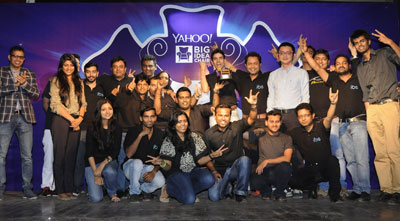
    The Blue Frog venue in central Mumbai played host to the fourth independently held Yahoo Big Idea Chair India Awards 2013. The flagship Big Idea Chair was awarded to IBS Unified for conceptualizing ‘Hyper Personalization – the world’s first CRM powered Display campaign’ for Tata Docomo. Meanwhile, GroupM agencies won the highest number of awards at the Yahoo! Big Chair Awards 2013.  The awards this year saw 426 entries from 61 agencies representing work for 137 brands and recognized creativity, innovation and imagination displayed in digital media.


    This year, the award invited entries across nine categories: Display Advertising, Online Video Advertising, Social Media, Technology (best use), Mobile Advertising, Search, Digital 360 degree, Content Marketing and the Flagship Yahoo Big Idea Chair.  A 11- member jury judged the entries that represented work for 137 brands


    On winning the award, Sabyasachi Mitter, Managing Director, IBS Unified said “We are absolutely delighted to have been awarded the prestigious Yahoo Big Idea Chair. Clearly, digital has tremendous potential for innovation, and we are excited about setting the bar high.”


    Nitin Mathur

    Nitin Mathur, Senior Director & Head of Marketing, India & South-east Asia, Yahoo said “Yahoo Big Idea Chair India Awards has become an important annual milestone for the industry. It always throws up highly creative and impactful work, where agencies and brands are breaking grounds with newer possibilities in digital advertising.”

    Speaking on the GroupM wins, Tushar Vyas, Managing Partner- South Asia, GroupM Interaction said, “Over the last year, the digital teams across the GroupM agencies have been winning an award every other day, a testament to the great work and innovations the teams are churning out for our clients. It is great to end the year with six more awards to add to our tally of 204.”

    GroupM Interaction won the Gold for Best Use of Technology for the Heineken Inner Voice Campaign.  Maxus India won four awards including three Silvers and one Bronze. The Silvers were won in the following categories, Best Content Marketing Award for the Mentos Riddle campaign, Best Use of Display for Mathrubhumi Printing and Publishing Co. Ltd and Best Use of Mobile Advertising for the Tata Sky campaign. MEC Global took home one Bronze for the Colgate Mahakumbh Mela activity.  Added Unny Radhakrishnan, Head of Digital, Maxus, “We are happy for the continuing recognition of our work  and also that these awards span different verticals in digital as well as a wide range of brands.”

    In other categories, Viacom 18 won the Digital 360 degree award for ‘MTV India Roadies X’ campaign; Ogilvy & Mather walked away with the Gold for their campaign ‘Blood Search Made Easy’ for Red Cross; PHD took home the Gold for Best Content Marketing for the ‘Ramp Ready Hair’ campaign for Hindustan Lever Limited while the Best Use of Mobile Advertising was clinched by Indigo Consulting & Leo Burnett  for the ‘Donate your Caller Tune’ campaign for World Health Organization; IBS won the Gold for Best Use of Display Advertising for ‘Hyper Personalization’ campaign for Tata Docomo; Ogilvy & Mather took home the Silver in Video Advertising Category for Cadbury Bourneville and IProspect Communicate2 walked away with the Gold for Best with Best Use of Search.


  • IPG Mediabrands’ Lodestar UM bags Samsung biz

    By A Correspondent


    The end-of-the-year has brought in glad tidings for the IPG Mediabrands media services conglomerate in India. Earlier this month, the group’s Initiative bagged the coveted Reckitt Benckiser account. And now comes the news that the Samsung Media Agency on Record will be Lodestar UM.


    Samsung has been with Starcom MediaVest Group, but a multi-agency pitch process saw Lodestar UM win the business. MxMIndia could not reach anyone at Samsung and Lodestar to get a confirmation on the development. IPG Mediabrands runs Lodestar UM, Initiative and BPN as its three media agency networks in India.


    Meanwhile, it is rumoured that IPG Mediabrands could well be earning itself yet another prized account before the year ends.


    Watch this space.


  • Boxing champ Mary Kom is Vodafone’s global brand ambassador

    By John Sarkar


    Beginning next year, Indian boxing champ Mary Kom will become the global brand ambassador for British multinational telecom company Vodafone.


    The London Olympic bronze medallist from Manipur has not only knocked out other Asian contenders for the role, but she has also dealt a severe body blow to the widespread Indian prejudice that fails to look beyond cricket for multi-crore celebrity-endorsements.


    According to people familiar with the development, the diminutive Kom, a five-time World Boxing champion and mother of two, has been shortlisted from a group of at least 25 other Asian athletes for Vodafone’s new social media-led brand engagement strategy ‘Vodafone Firsts’ that will be activated across up to 30 countries. When asked about the details of the relationship, a Vodafone spokeswoman from London refused to comment. “We will share more information closer to the launch,” she said.


    In what may come across as a strange turn of fate, Vodafone will activate its first ‘First’ services in London early next year, the city where Kom won her first Olympic medal. “At the launch, Vodafone will help create the world’s first multi-sensory fireworks display, in partnership with the mayor of London and food scientists Bompas & Parr,” the telecom giant said in a statement. “Meanwhile, a free Vodafone augmented reality smartphone app will enable millions more to join in the experience, wherever they are.”


    According to Vodafone Group brand director Barbara Haase, the ‘Firsts’ concept is simple. “We know that our technology can enable and inspire people to do something amazing for the first time, from making their first call to sharing their first video. Firsts is designed to reflect that sense of empowerment by using our technology and connectivity to enable a diverse range of people to achieve their remarkable ambitions.”


    “Vodafone has made a good choice. Many people, even those who don’t follow boxing, will identify with the Mary Kom story,” says Santosh Desai, brand expert and CEO & MD of Futurebrands India. “In a sport with no money, she has shown a lot of grit. Despite being a mother of two and coming from a so-called backward part of the country, she has shown class at the highest level.”


    Source:The Economic Times

    Copyright © 2013, Bennett, Coleman & Co. Ltd. All Rights Reserved

    Licensed to republish