Category: Media Agencies

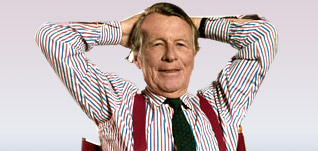
  • Raising the Bar: Colvyn on JWT with Bobby


    By Johnson Napier


    The last few days have witnessed media and advertising circles going gaga over news of a restructuring exercise at JWT and the surprise coronation of Bobby Pawar as the Chief Creative Officer & Managing Partner, alongside the elevation of three of its key ECDS to the post of NCD – Swati Bhattacharya, Tista Sen and Senthil Kumar. But what has kept the industry guessing is the swiftness with which this transformation has been carried about and who from JWT is responsible for this smooth makeover.


    MxM India meets the man who has effected the change – Colvyn J Harris, CEO, JWT India. In a detailed conversation, Mr Harris reveals the new creative direction that the agency will root for with the coming in of Bobby Pawar, the unmatched experience that would be delivered to clients and how he could get back to serving the industry with the easing of the creative function at JWT. Excerpts:


    Q: Apart from the CCO and NCD level restructuring exercise, have there been any other senior-level elevations at JWT?

    The restructuring exercise where creative is concerned is over. We have Bobby Pawar as Chief Creative Officer; he will be supported by three NCDs comprising Swati Bhattacharya in Delhi, Tista Sen in Mumbai and Senthil Kumar in the South. There are a set of ECDs who would work in partnership with the above team. There won’t be any replacements as such where the earlier ECD posts are concerned.


    Q: Were there any other candidates you considered other than Bobby Pawar, including any international contenders?

    We did consider international candidates but we were very clear that we needed somebody who had roots in India, who understands the country in which we operate – the nuances and sensibilities of India. As for Bobby, he has international experience, having worked in BBDO and Ogilvy in the US. So that’s the best of both the worlds that one could ask for.


    Q: Was it a long chase to get Bobby Pawar take up the offer at JWT?

    It was not a chase actually; it was fairly mutual. We felt that he had the right qualities to lead and help us deliver on a vision which is to be the very best in what we do.


    Q: Knowing Bobby’s liking towards working for an indigenously-run agency like Mudra (before Omnicom buying out a majority stake), what was the differentiating factor that convinced him to take up an offer at the WPP-run agency?

    I think where JWT is concerned, we may be global and affiliated to WPP but we are finally rooted in India. If you trace the lineage of JWT India, it is actually Hindustan Thompson Associates (HTA). We have not shed any of the institutional attributes that JWT or HTA was built on. So I think that foundation continues and we are as Indian or as global as a client would want us to be. For creativity to flourish and thrive and do well, you need a platform. JWT has some large and reputed clients. We work with the leaders in every category so the work you do is going to get visible. So it’s an opportunity that presents itself to all of us who work for JWT. And for talent, what more can you hope for other than the set of clients that we have? We work with the best known Indian clients and we work with the world’s most admired brands, whether it is Nike or Pepsi…


    Q: How has the industry reacted to the nomination of Bobby Pawar? Moreover, what has been Sir Martin Sorrell’s reaction to the appointment?

    Sir Martin Sorrell and Bob Jeffrey (Worldwide Chairman and CEO, JWT) are very happy with the decision. They realize that I also need a partner to carry forward this responsibility. JWT is a big ship, we have been suit-led for too long. So this gives us a nice balance.


    Q: Yes, don’t you think the agency has been suit-led for a while now?

    That’s not how you should look at it because we have eight ECDs, because our scale of operations is large – in Delhi we have around 380 people. So if you were to compare you’ll understand that wherever we operate we are completely full-service; all skills operate in all offices. We just didn’t have somebody to drive the creative agenda for us with a greater focus. That’s because when you run businesses or lead an agency on a management framework you take your eyes off the ball on a greater platform. So Bobby’s going to play that role.


    Q: Having being suit-led for some time, would you then agree that the agency did witness a creative slump post the going away of senior resources like Agnello Dias and Josy Paul?

    Not at all. Whatever talk you hear is all loose talk. When people don’t know then there is talk but finally the success of a company is derived by how our brands perform in the marketplace – which is a great success as all of them are leaders. The success of an agency is how our people perform – again, all of them have done extremely well, and finally, where success is concerned there are financial benchmarks and there are creative benchmarks and we have been very consistent in winning. Senthil is an international award winner, the Mumbai office is the most awarded agency… so you have got all the success stories that you need.


    Q: How would you also react to the claim that your former creative heads took along some clients with them after they quit JWT?

    They didn’t take clients as such; they took projects along with them. We still have over 200 clients; we can’t be a hundred percent of every client all the time. I am sure a client chose to exercise his judgment on an idea which will help his business. We definitely respect that and welcome it. In both cases, they got something good so I am happy.


    Q: Coming back to Bobby Pawar, what would be expected out of him? What’s his mandate as CCO?

    Firstly, he has a team – he has NCDs, ECDs and a team of about 300 people in creative. So he’s gonna have to set an agenda for creative. That means there will be a vision and a purpose that we want to go back to. And after that it is actually how do you achieve those objectives – how do you deliver on that vision, how do you execute that vision, how do you get the work to look better… So that’s the agenda that he would be riding on.


    Q: Do you expect Bobby to get his set of clients from Mudra to JWT or wish such a natural progression to occur given his stature at Mudra?

    We are not looking at that. In our gameplan, Bobby fits extremely well and our strategy is to improve the work, change the benchmark, create new standards…and that’s what we are doing.


    Q: So while Bobby gets to set a new creative agenda, do you see a creative shift coming about at JWT?

    As I said, our agency has been very successful. What we will do is that we will jointly set a vision, and as a team we will have to work jointly on delivering on that vision.


    Q: Would Bobby lend his expertise to other domains under JWT like digital, activation, public relations, direct marketing, etc…?

    Yes, of course. We talk about idea-centricity – the idea at the centre based on a brand and how you seamlessly use every touchpoint to the audiences identified. So it’s a one seamless idea which we will try and make it a big platform idea.


    Q: With Bobby at the helm, will the focus now be on reclaiming the ‘most awarded agency’ tag – that was his claim to fame at Mudra, making it the most awarded agency in recent years?

    If you look at our work, we are all over the place. Now with Bobby at the helm, we want to raise the bar and improve our standards. We want to be recognized firstly at an Indian platform, we want to be recognized globally and we definitely want to improve our body of work. But all said and done, it is not about winning awards; it is also important that the work we do for clients is effective and successful for them in the market. That’s priority No 1. If that work goes on to win awards then that’s fantastic. So it’s actually an and/and rather than an either/or.


    Q: Any new verticals being planned for take-off?

    Nothing as such. We have design, digital, Thomson Social, Encompass… so we are not looking at anything else right now. But digital is something that we are looking at going forward with and that’s why we have hired Max Hegerman.


    Q: Moving on to you, how would your responsibilities change, going forward? Is there anything that has been planned for you?

    I think my responsibilities will reduce, hopefully, because I have been on a treadmill and a rollercoaster at the same time last year. Hopefully this new change will give me some breathing time…


    Q:…It could also allow you to get back to serving the industry and catering to several issues like you did while you were the Chairperson of Goafest.

    I used to be involved on a big scale earlier but I have cut it down as it takes away a lot of your time, but it’s important for us industry leaders to be a part of the industry; to engage with people who make it what it is today so that this industry, firstly, is successful. On an overall basis, it’s industry definitely for me; it is what you give back as well. And also the network as well; we are a global company, and that is also equally important for me to look after.


    Q: Lastly, if you were to set a goalpost for JWT in 2012, what would that be?

    I think if by the end of 2012, we are able to do good work on our key clients and that is acknowledged by clients first, and then maybe awards as the second parameter, I think that will be a great step forward.


  • DLF brings Scarecrow Delhi to its roster

    By A Correspondent


    DLF has appointed Scarecrow Communications as its creative agency for some of its residential products across India. The agency was selected after a rigorous pitch process. The spends would be sizeable and could fall in the vicinity of Rs 15 crore Though exact figure could not be estimated, but knowing the way residential projects are advertised these days it will be significant.


    Commenting on the development, Mr Raghu Bhat, Founder Director, Scarecrow Communications, said, “This is a very important win for our Delhi office. DLF is the largest real estate brand in the country. They are looking for fresh thinking and this is a great opportunity for Anindya and the Delhi team to do some great work.’


    On the win, Mr Anindya Banerjee, ECD at Scarecrow Delhi, said, “It’s a privilege to be working on a brand like DLF. It is also a challenge to be working on a category that shows immediate results.”


    Mr Manish Bhatt, Founder Director, says Scarecrow Delhi has “big plans”. “This win gives us a lot of encouragement. DLF is an iconic brand and this gives excellent visibility especially in the print medium.”


    For the record, DLF is India’s largest real estate company. Founded in 1946 by Raghuvendra Singh, it has currently over 3000 acres of planned development in place. It is best known for having developed Gurgaon into a major international sub city. DLF is a well-diversified group and their interests span residential, commercial and retail segments.

  • We’ve bn inconsistent in r work: Sonal Dabral


    By Anil Thakraney


    Sonal Dabral’s career has been nothing short of fantastic. In the nineties he partnered Piyush Pandey and together they turned around the fortunes of O&M. He later flew to Malaysia and then Singapore, and did ditto with O&M’s offices there. A few years ago he took on another challenge: To recreate the magic at Bates, where he is Regional Creative Director, Asia Pacific & Chairman for their Indian operations. While he has been over-seeing India, Sonal physically moved here only a few months ago. And though a few cartons still remain to be unpacked, the man is very clear about the way forward for his agency.


    In a rare, frank and a very insightful interview, the 49-year-old reveals his ideologies, his plans for India and his opinions on the ad industry. We also take a trip down his memorable career journey.


    What struck me most is how clued in Sonal is about the key challenges that face brands in contemporary times. I don’t always find that in Indian ad agency leaders.


    Q: There’s a buzz about you joining Mudra.
    No truth in it at all. But I can understand why the rumours must have started. Balki is the face of Lowe, Prasoon is the face of McCann and Piyush, of course, is the face of O&M. So for somebody of stature to walk into a big agency like Mudra… that just leaves me.


    Q: But if they approached you, you would talk to them?
    I won’t be interested. Lots of things to be done out here at Bates.


    Q: What motivated you to shift to India after all these years?
    When I joined Bates about three years ago, the agenda as the regional creative head was to improve the creative health of the agency through the right kind of hiring, inspiration and hands-on involvement. Bates, historically, has had some big clients and pockets of excellence with sporadic good stuff coming out. But overall the network’s creative health has not been good. My additional role is that of Chairman, Bates India, and it was the duality of the role that attracted me to this job. Which is to get back in touch with India and yet have a bigger role than what I was doing at O&M Singapore. So my first job was to ensure that we had the right kind of creative leadership in every place. Once that got done in the last three years, we started looking at India as a very important market for us. And India is a place where I can make a visible difference because of my equity out here, because of all the years I have spent here. And that’s why I decided to locate here.


    Q: Cut to the past. Why did you leave India in the first place? You were Piyush’s blue-eyed boy at O&M. Doing phenomenally well in the agency.
    In the latter part of the nineties, Neil French had taken over as the regional creative director for Asia. On his first trip to India he saw some print work I had done for Cadbury Perk and he was pretty impressed. He cancelled a lunch meet with Ranjan Kapur and Piyush Pandey and took me out for lunch instead! (Smiles.) And he asked that I move to O&M Malaysia. The agency was going down, and they desperately needed a creative head to come and build the place.


    Q: Am sure Piyush must have been upset with your decision to move.
    Neil spoke to Piyush and Ranjan about this. And they called me for a morning cup of tea on a Sunday. They said Neil sees this as a good opportunity for me. They said they wouldn’t like me to go, but wouldn’t stand in the way either. I thought about it for a long time because I was heading O&M Bombay which was 50 percent of the agency’s business, we were riding high. Anyway, I did a recce trip to Malaysia, and the O&M office turned out to be a small one, though they gave me a red carpet welcome. I came back and thought I would never join such a small place. Then they started writing to me, saying they wanted me out there. You know Anil, I believe in destiny, I believe things happen for a reason. Also, the charm of the unknown has always enticed and fascinated me. The discomfort of going to a new place, that too to a place that has nothing to offer, appealed to me. The same thing happened when I left Lintas to join Ogilvy in 1991. Ogilvy was nothing at that time and the only remarkable thing they had done was the ‘Mile Sur’ film.


    Q: But then you eventually left Ogilvy and joined Bates.
    Again, for the same reasons. Helping a place to shape up has always excited me. Maybe it’s to do with a big creative ego, though otherwise I don’t have an ego at all.


    Q: The key difference between working in an international market and working in India…
    In India we work a lot on the individual, friendship level. It’s like if I know Thakraney really well, and he is the agency and I am Unilever, then Thakraney and Dabral will work together and create a campaign. Things happen on a very personal level here. In the international markets… and you can call it professionalism or stuck-up-ness… there are still a lot of procedures and processes that get followed. I prefer a combination of the two methods. We are a very chaotic, free-for-all nation and at times that free-for-all-ness helps creativity. But it also brings with it a sense of indiscipline. And this affects the execution of work, that’s where we fall flat. Obviously, in the last 12 years, I have learnt something that’s different from India. And I am trying to get some systems in place in the way we work out here at Bates.


    Q: When you first came to Bates India, the good and the bad things you noticed…
    (Thinks carefully.) Creatively we have not been consistent. There is potential but the realisation is not happening. We need to correct that so that our number of hits increases.


    Q: The significant changes you’ve made in the last few months.
    I want to make this an agency of people who are not just creative but are intelligent, aware and knowledgeable creative people. True creativity needs you to be curious. The curiosity bit I want to feed as much as possible. Last weekend I invited a film chief from the National Institute of Design to conduct a film appreciation workshop. And it had nothing to do with advertising. Sometime later we’ll have another kind of workshop. Basically, I want to tell people that advertising is the only profession where you don’t learn things from the inside, it will all come from the outside.


    Q: What do you look for when you hire creative people?
    Besides obviously the work, I look for a certain amount of authenticity. It might be difficult to get that in a meeting, but you do get a sense of it. It’s very important for any creative person to let his or her guard down.


    Q: As a client, why should I choose Bates?
    We are the ‘change’ agency. It’s about making strategies that are based on the shifts that are happening within the product category or within the target audiences. And based on the cultural shifts that are happening within the society. We call that positioning ‘Change Engage’. It means a changed thinking which leads to work that has a two-way communication with the consumers. For example, you saw what happened during the Anna Hazare movement. It was about the power of people coming together really fast and having an opinion about something. Or for example what happened with the Kolaveri video. It’s the power of tech that consumers now have. This means advertising has to change in the way we approach things. We need to make an impact on a consumer for him to start conversing or debating about our brands. The other thing is we are an Asia-only network, so we are still small when compared to a JWT or an Ogilvy. So there’s a certain amount of nimbleness and spontaneity that we have. Also, on a personal front, the wealth of experience I bring with my Indian and global experience.


    Q: Why hasn’t Bates really taken off in India?
    It’s to do with the fast changes that have taken place. It’s been only about four years since it has emerged as Bates. Before that all the mergers were taking place. First it was Enterprise, then came David. Also there have been personnel changes. Subhash Kamath left for BBH, I have come now, Sandeep Pathak has taken over as CEO. It’s been going through a churn. It’s only now that we have begun to feel settled.


    Q: What’s all this about Smashing Pumpkins and Cabbage Curry?
    Smashing Pumpkins is something I coined for our annual creative conference. We would smash pumpkins at the event. Bates’s earlier colour was pumpkin yellow. And I said we need to be doing smashing work, so that’s how it got coined. Cabbage Curry Fridays I had started in Malaysia and Singapore. Every Friday we would have a chat session or a presentation which had to do with the culture of curiosity I was talking about earlier. I want to tell people that if you don’t have a passion beyond advertising, then your mind will become like a cabbage. (Laughs.)


    Q: What’s happening on your movie script?
    There are a couple of ideas in my head. I have started working on it but it’s been going very slowly. I have a story in mind that’s solid and substantial. It will not be a time-pass flick.


    Q: I last met you in the late nineties when you were a young, happy creative director. I have a feeling you have become a tough guy since.
    I have changed over the years to an extent which is required to run a place. But otherwise I am not as tough as I should be. Laughter to me is the biggest asset an ad agency can have.


    Q: I think in India you’ll have to kick ass at times.
    I totally agree with you.


    Q: Would it be right to call Piyush Pandey your mentor?
    He is one of the people. There would be others too like Neil French.


    Q: Do you at times feel you should never have left India? Bates is a small player, and had you stuck on, you could have been the captain of a very large ship.
    Not at all. I am extremely happy and I feel very lucky. That I did go and work in Malaysia and Singapore. The exposure that gave me towards communications, advertising, work, etc, couldn’t have happened in India. Also when I was abroad there were offers to head a large organisation here, and those offers won’t run away anywhere. I totally believe in destiny, I wasn’t meant to be here for those 12 years.


    Q: One creative chief of a large Indian agency you most admire.
    (Thinks for a long time.) I like the way Aggie (Agnello Dias) and Padhi (Santosh Padhi) have gone about their work. The way they have approached business, the kind of work they are doing. Their small size has not held them back. In terms of the large agency Chairmen, is there anyone I envy or admire? Well, no, not really.

  • Social Media is here to stay: Jonathan Kopp

    Mr Jonathan Kopp, Partner & Global Director, Ketchum Digital was in India recently to launch its India division with Sampark. The company is betting big on Social Media. On the onset, Ketchum Sampark Digital (Sampark is the Indian affiliate of global communications network Ketchum Inc) will service its existing clients in India, offering digital media services of which social will be a big part.
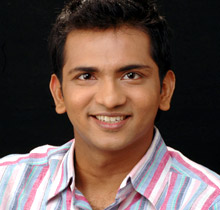
     

    MxM India’s Rishi Vora spoke to Mr Kopp on the Social Media scene in India. Excerpts:


    Q: What was the thought process behind launching a digital agency in India now? Have you entered the Indian marketplace a little late?

    I think the timing is perfect. Right now we’re in the era of the social web. There used to be a distinction between digital media and social networks, and now we are in a period where everything on the web is social. So if you have a web plan, or a digital plan, you’ve got to have a social plan as well. Pure play digital agencies are good in creating destinations, but that is not very relevant any more today. What matters the most is how you drive the conversations, what sort of content you require to drive conversations. These are areas which we specialize in. As for the timing of the launch, I think it’s just the right time to be here. Companies and brands are more than willing to go social.


    Q: Do you think Social Media has enough money to sustain itself as a profitable, longterm business?

    I think the growth of Social in India is going to be upward for a considerable period of time. If you think about the penetration of Digital – the numbers are good but percentages are small. So the opportunity is very much there. Whether you succeed as a brand in the social media space is a matter of how you present yourself in that space. Mobile is a potent medium in India. Combining that with video and social, it becomes so much more exciting for users; yet another reason why content should be taken so very seriously – how can you be more creative, more compelling and interesting enough to engage many users online, on to the social networks.


    Q: Is it a big challenge to sell social media to clients?

    There is not a single company in any industry that can afford not to be on the social web right now. So I’m a big believer in the power of social media. If you’re not on it, then you’re losing out a fantastic opportunity to speak with your customers. As a brand, it’s mighty important to be in the social environment because the consumers are out there.


    Q: But they’re not necessarily there to speak to brands.

    Yes, people are not interested in becoming friends or having a relationship with a brand. What they really want is to connect with the people behind the brand and so the personalisation of the brand, bringing forward the humanity – the faces, the voice, the personality – this is critical in the brand’s success in the social space. Authentic and transparent voices. Immediate response to consumers’ queries – things like these can only happen in social media.


    Q: What are the learnings from other markets that you bring to the table for Ketchum Sampark Digital?

    It’s an important question. We have invested an awful amount of lot of time and resources to build the Ketchum Global Digital Network of about 180 digital and social media experts around the world; expertise and case studies working together to really create a global perspective. One of the first things we need to do with our clients is help them understand the power of social media. So social media training is important for us to start, our clients need to understand it. It requires a lot of change – mindset change and structural change. Digital is blurring the lines across traditional communications disciplines. Digital and social media is also creating a potential clash of messages from the organisation to the public. So marketing, advertising and public relations, sales, customer service – are all entering the social space at the same time without coordinating with each other. So it’s a mess in a way. As a company, you may want to hire expertise on HR, Operations etc. Similarly, the time has come for companies to look for social media experts. I don’t think there is enough expertise on things like managing work flows in social media, guidelines, the right approach etc. These are things we have learnt by being in the business for several years internationally, and in India, it is time that we bring our expertise in the marketplace.


    Q: How do you, as a social media professional, handle negative publicity on brands?

    It’s a very good question. One of the ways to try and prevent damage in social space is be there first. You first need to be in the social media space, because when you’re in crisis, it’s not the time to be going around and looking for friends. So we have a base of constituents, a base of supporters going into the crisis and you already have an established network to tell your story. So it is important to be there first. Second, things happen. They happen in traditional media, they happen in the interactive space, they happen offline, events; so you need to respond to them. Where companies go wrong is when they are not direct and as transparent. And if the consumer figures that out quickly, the problem gets worse. So if you make a mistake, apologise and explain the situation, and do it quickly.


    Q: Do you agree that a social media campaign will have minimal impact on a brand’s profitability?

    No, I don’t agree with that. I think social media can be proven to drive revenues. Very tactical small example: Dell has sold laptops through Twitter. When there were discounts being offered, Dell tweeted about them and sold huge numbers of laptops. Social transaction as a trend is only going to grow in the coming years.


    Q: Most of what we’re seeing in social media in India is Facebook marketing. Do you see that changing?

    Facebook is an amazing company and a great platform. Over 800 million users worldwide. Those who use the mobile phone to access Facebook – there are as active as their desktop counterparts are. Facebook is a force to reckon with and it’s admirable and enviable in every regard. At the same time I also believe that it’s never been about the channel. It has always been about the conversation and the content. So yes, today it’s Facebook but it wasn’t that long ago that it was MySpace, and before that, it want too long that it was AOL.


    Q: Social media picked up when Facebook picked up.

    Absolutely. But the first mover is not always the last. So will Facebook continue to dominate? Maybe. But, my concern more as a social media professional is not to be too invested in any one channel; rather it should be driven by where the consumer is. Right now, conversation is being held on Facebook, so it would be absurd to ignore Facebook. We’re going to use Facebook, but there are many other channels that we need to watch and learn from. For example, if you’re looking at corporate communications and executive positioning, Facebook might be important but I would want to look at Slideshare because that’s a perfect platform for you to share thought leadership. Similarly, if your concern is employee recruitment or professional networking, LinkedIn is the place to be on. So it really depends on what the purpose is.


    Q: What do you think about Google Plus?

    Google Plus is a new entrant. It is directly connected to YouTube. If you’ve got video and video is the way you’re telling your stories, then you need to consider Google Plus and YouTube. Just like the numbers tell us India is an important market to be in, the numbers tell you that Facebook is an important platform to be on. But, our job is to look at all of the platforms and all of the technologies that’ll help our clients tell their stories on the social web.


    Q: Do you see Google Plus catching up with Facebook?

    Google takes a very different philosophical approach to social web than Facebook does. It’s just got launched and Facebook has been around for some time now. But I don’t think Google Plus is as important as a standalone social network as it is for its ability to connect content and people across the entire social web. Facebook is about the Facebook platform and selling advertisements on that platform and creating social commerce on Facebook. So I don’t see them competing with each other – they both have a different role to play in the social web.


    Q: Can Social Media be a primary medium of communication for brands?

    I think the way we are going to be moving forward is really about integrating communications. It’s not about social over others. It’s about a consistent message and consistent requirement of content across all the channels where we need to reach the audiences. Broadcasting, print – newspapers and magazines are doing social media but some campaigns are starting in the social space and moving out to traditional. Some are moving from traditional to social. We really need to be everywhere.


    Q: There is a feeling that the medium is not taken seriously. Marketers and advertising professionals are talking about it, but in a way, they are the ones who are not really putting in the time, money and effort vis-à-vis traditional modes of advertising. Is there anything that social media experts need to look into?

    Metrics and evaluation is going to play a big role. The way we evaluate social media today – there is no single measure. TV, there’s GRPs; in traditional PR, it’s impressions. What we are trying to measure in the social space is engagement, and it’s a fuzzy concept right now. Facebook, with its analytics has gone much closer to measuring engagement in a very important way… The analytics behind a Facebook page drives you to not just the number of fans or friends but really the active user and the talked-about and how content is moving and who are the people that are moving it. As that science continues to move forward, I think people are going to be able to put a specific value on social media. You can certainly measure direct ROI if you’re seeing sales through social commerce.

  • Chuckle-worthy ads from Ideas@work for BigRock

    By Shubhangi Mehta


    Big Rock.com,an internet business providing web-presence solutions, has launched its latest advertising campaign.


    The campaign consisting of three TVCs, created by Ideas@work promotes BigRock.com’s offer of having a complete website for Rs. 499. The idea, “Got a business, get a website”, is a continuation of the campaign BigRock had rolled out in January this year.


    ideas@work and Big Rock started working together in September 2010. They have worked on TVCs and a few print campaigns.


    The dead-pan humour has found likeability to a lot of people’s sense and sensibilities. The treatment of a depicting a real business for whacky/imaginary products and services evoked humor and also drove home the message, subliminally, no matter what your business is, getting a website is essential.


    There is a continuation down the path of highlighting unusual businesses in a humorous light and in a way that connects with Indians everywhere. The campaigns are being launched in 5 languages because BigRock is a well-regarded pan India brand. The communication campaign that comprises of TV commercials, and viral campaigns are being unveiled across tier I, II and III cities with the simple message – ‘Got a Business? Get a Website.’ The communication showcases small businesses that have benefited with a website from BigRock and inspires the business owner to think – ‘if they can have a website, so should I.’


    The research insight for the campaigns was that there are an estimated 100 million users of the internet in the country. India is projected to become the third largest globally in terms of internet users by 2013. To give perspective, the top country’s in terms of internet usage today – China and US – have an internet user population of 485+ million + and 480+ million +, respectively.


    The total number of domains registered in India is only about 3 million. The ratio of the total internet users to the total domains registered in the country thus is an abysmal 1:45. In a country such as the USA that number would be 1:5 – thus there is every indication that the headroom for growth in this industry is enormous.
    Bhavin Turakhia, Founder, BigRock, said, “The ad was communicating a brand and a message which the TV Viewer has never been exposed to. Hence we had to take utmost care of keeping the concepts simple, relatable and humorous.


    “If you see any of our TVCs, they have 3 stages. The first stage talks about the funny / imaginary business which then leads to the business owner’s website name and the message – Got a business? Get a website. The last part is the product offering / offer window.


    “In totality, we tell the TV viewers that there is a wacky/unbelievable business which has a website and that every business should have their website and finally finishing with the offer that at BigRock, you can get a complete .COM Website at just Rs. 499.”


    He adds, “If you were to compare the BigRock ads to any other .COM Company ad, you’ll notice that the treatment and the concepts used for BigRock are highly disruptive, simple to understand and have a clear call to action. The look and feel of the ad is also highly real. We believe that the brand is for everyone who has a business/ has thought of setting up a website. There is a definite risk that when the campaign is this catchy, the consumer gets more engrossed in the campaign rather than focusing on the product but if you’re not entertaining the TV viewer, there are more chances of your brand being forgotten. The balance between the story and the product window has to be optimized to drive home both, the brand name and the communication”.


    The campaigns will be a 3-3.5 week affair on TV, Digital Media and Print.
    Sharing his views on the campaign Amod Dani, ECD, Leo Burnett, said, “Some really interesting stuff here by bigrock.com. The campaign has humour nicely woven into it and the Savitri Bai and Rambo acting classes commercials are very well crafted and funny. The “Newspaper… Toilet paper” touch and “Mere ladke ko julab ho gaya hai” got me ROFL!


    BigRock really stands out thanks to some good honest and simple execution. Nice to see humour well done, after a long time. Though I feel all of them are not as funny as Savitri Bai and Rambo acting classes, but overall the work is far better than what we’re seeing on the idiot box. Give me also a two now!”

  • 4 Indian names on Young Guns shortlists for 2011 awards

    By Shubhangi Mehta


    The shortlists for Young Guns 2011 have been announced and this year India has four nominations on the shortlist; Leo Burnett with three and Ogilvy with one.
    Leo Burnett’s Amod Dani and Ganesh Nayak have three nominations. Two for Tide Fold A Stain in the Art direction and Print Crafts category and one for Heinz Sketchup in the Consumer magazine campaigns category.


    Ogilvy & Mather’s Anupama Sirsalewal has received one for Unbearably Sour, Gun, Snake, Gullotine in the Illustration Campaigns category.


    Speaking on the shortlists, Arvind Sharma, Chairman Leo Burnett said, “We always believe in giving responsibilities to young and upcoming talent. We shall continue to do the same. We are happy that Amod and Ganesh are shortlisted in three categories and glad that the world is also recognising their talent”.


    On being nominated Amod Dani, ECD, Leo Burnett India, said, “The Young Guns award is a very prestigious international award. It is an extreme honour to be shortlisted for our efforts. We hope to convert this into a metal and continue to pursue creative excellence. Leo Burnett has always been at the forefront of promoting young talent, and this honour speaks a lot about the same”.


    Anupama Sirsalewal, Copywriter, Ogilvy & Mather, on her nomination said, “It’s a great feeling to be nominated. Piyush Pandey is God for me and I have grown up watching his ads, and now working in Ogilvy is anyway an award for me. This year has been great for me, be it Cannes Lions or Abby’s. Hope this one falls into my kitty too but there is still a long way to go.”


    Young Guns International Advertising Award is the world’s first and only award forum that is specifically for 18-30 year olds.


    To be named “Young Gun of the Year” is to be named the best young creative under 30 in the world.


    The “Young Gun of the Year” gets invited to join next year’s Young Guns jury.

  • The Anchor: 7 reasons why taking risks in ideas works

    By Rahul Mathew


    #1 You already took a risk by being in this business of ideas. You could have been working fewer hours for a lot more money in some other job. So why stop now?


    #2 It’s not an idea to begin with if it’s not brave. And how can you be brave if you don’t have a penchant for risks?


    #3 Considering the only other risk you will be taking on a regular basis is eating the canteen food, you might as well get a little adventurous with your ideas.


    #4 If a risk pays off, you’re a radical thinker. If it doesn’t, you’re a reckless one. Both of which are often used to describe rock stars. Safe and dependable sounds good for a condom.


    #5 There’s nothing like that incredulous/stupid/shocked expression on the face of a tight-assed client/account management/boss when you present such an idea. It’s worth the effort.


    #6 A more practical reason: There are fewer risk takers in the industry today. And many who don’t take any. So, who do you think will be able to negotiate better?


    #7 Most importantly, the biggest risk you would be taking in this business would be not taking any. It’s the one thing that keeps you and your ideas from becoming wallpaper in today’s media space.


    Rahul Mathew is the Executive Creative Director, McCann Erickson Mumbai.

  • Remembering David Ogilvy

    By Sumit Roy


    As the Ogilvy India Alumni celebrates David Ogilvy’s 100th year at an event in Mumbai this evening, former Ogilvyian Sumit Roy pays a tribute to the Father of Advertising, and surely an inspiration for a million creative thinkers’. He shares with MxM India his experience of working with the ‘King of Madison Avenue’


    I have had the privilege of working with David Ogilvy when I joined Ogilvy & Mather as a copy trainee in the year 1973. This was my first job and what a training ground it proved to be! O&M is an institution which laid the foundation for my current avatar where I am the Founder Director of Univbrands showing people how to ride the brand communication motorcycle.


    It’s at Ogilvy I learnt about growing people who grow brands that is the driving philosophy behind Univbrands


    David Ogilvy’s relationship with his employees was just like that of a father with his children. Some of the lessons I have learnt from him have held me in good strength in my life and profession. One of my biggest learning is that he codified knowledge into slide and film presentations called Magic Lanterns which Ogilvy follows even now. It points out to things that works and not just idle words and the testimony to this lies in the outstanding works that Ogilvy does even today. He taught us that the consumer is not a moron; she is your wife thus teaching a huge lesson of valuing the consumer and not take him for granted. In fact, David Ogilvy used to often quote that Rules are for obedience of fools and the guidance of wise men (Douglas Bader).


    He also professed that one should always hire people who are better than you as it helps in the growth of the organization. Always look at qualities that are more than one had at a particular age and hire those people and we at Univbrands try to emulate this and have many talented people.


    I think being at Ogilvy at that time was like being at a University but the difference was that while you have to pay to get knowledge, here one earned knowledge. So the whole idea of earn as you learn that we at Univbrands profess has its genesis from David Ogilvy’s philosophy.


    I do endorse his saying that unless your ad is built around a big idea it will pass like a ship in the night. He also said that one should use their intellect to follow any principle and that would ensure that there is no repetition. Hence there should be a discipline of knowledge to the anarchy of ignorance. Another one his teaching that has stayed with me is that he professed that what we say is more important than how we say it. Somewhere today many are going wrong here as the focus is more on how you say it rather than what you say.


    David Ogilvy also said, We sell-or else and that is the foundation of advertising. It is not about the notion of reaching how many people but how much you spend for the prospect. That is the key of advertising which many tend to forget behind lofty ideas.


    I think every advertising professional should read his books as they are immensely relevant even in today’s world. While we may have progressed but the basics remain the same and that’s where David Ogilvy’s book come in useful. Every individual associated to advertising in some way must read his books which are treatise on advertising.


    David Ogilvy has been a great teacher and influencer and those who have not come in contact with him have missed a lot.


    Sumit Roy has spent 14 years at Ogilvy and is now Founder Director of Univbrands


    As told to Tuhina Anand

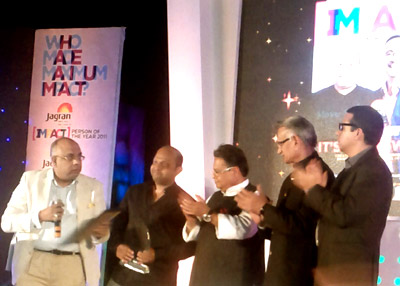
  • Mediaah!: Aggie – well-deserved Impact Person of the Year

    By Pradyuman Maheshwari


    So it’s Agnello Dias as Impact Person of the Year. For the first time in the seven-year history of Impact Person of the Year, an adperson has won the coveted accolade. Guess there have been times when people have come very close, but given the way the selection is done whoever is top of mind in the second half of the year, generally forges ahead (see disclosure).


    Deserving choice, and in every way echoes the sentiment of the industry. Aggie, with his Airtel ad, has been the toast of adland. I did a quick dipstick on Tuesday asking for names of the top creative folk in the country. The sample: 11 people from three metros. And this is what 90 per cent of the people said: Piyush Pandey, Prasoon Joshi and Agnello Dias.


    Feel sorry for the rest of the immense creative talent that India has, but guess these things happen and I don’t think anyone minds it. While Piyush is around, there is a laaarge creative pool at Ogilvy. Ditto in JWT, Mudra and the mom-and-pop shop based in Patna and Panjim.


    Should it have been one of the others?


    Haresh Chawla, outgoing Group CEO, Network18 and Viacom18

    Madhukar Kamath, MD & CEO, Mudra Group and Chairman, AdAsia

    Man Jit Singh, CEO, Multi Screen Media

    Rajiv Verma, CEO, Hindustan  Times

    Ronnie Screwvala, CEO and Founder Chairman, UTV

    Sandeep Goyal, Non-Executive Founder Chairman, Dentsu India

    Vineet Jain, Managing Director, Times Group


    Guess since it’s the fraternity who decides on who the award should go to, I think the question should be asked to each of us and not the exchange4media group management. For me, Agnello Dias represents the new face of Indian advertising. He is young, dynamic and has done some super work when with JWT and now as an entrepreneur running Taproot.


    What you can ask them (and the editorial team) is why they chose Haresh Chawla as Editorial Choice and not Vineet Jain, Sandeep Goel, Ronnie Screwvala, Man Jit Singh, Rajiv Verma and Madhukar Kamath? I think Haresh Chawla deserved it awesomely and since he’s moving out of the Network/Viacom/Web/etc 18 group, there can be no nasties like he was given the award to get more ads.


    So just as you may ask as to why cricketer x wasn’t selected for the Australia series, there will be questions asked as to why Haresh and why not Vineet Jain or Ronnie or Madhukar or Rajiv Verma or Sandeep Goel or Man Jit Singh?


    Pointless discussion. Many congratulations to Agnello Dias and Haresh Chawla.


    (Disclosure: I worked with the exchange4media group until May this year and ran the Impact Person of the Year for the last three years)

    Photograph: Bharat Kapadia


    The PR Channel

    Must mention here that I have been think of a specialised PR publication ever since Hanmer & PR founder-bossman Sunil Gautam asked me a question of whether it would work here in India. I didn’t think it would as a standalone, but in a broadbased site like MxMIndia, it should.


    SRK: India’s biggest endorser

    His Ra.One may not have worked as well as he would have, but the publicity around it was phenomenal. Clearly the biggest we’ve seen in India. Little wonder that an Economic Times report says that SRK emerged as the most visible celeb on TV followed by Katrina and Kareena. I missed reading it in the Mumbai edition of ET, but here’s a web link: http://economictimes.indiatimes.com/news/news-by-industry/services/advertising/shah-rukh-khan-fmcg-cos-lead-tv-advertising-charts/articleshow/11041079.cms


    Buzz me if you have a story to tell and gossip to share. Confidentiality assured. Andar ki baat will stay under. There are various ways you can reach me: pradyumanm[at]mxmindia.com, BBM @ 23050B5D, pradyumanm[at]gmail.com, @pmahesh, 98338 76278.


    Disclaimer: Although Pradyuman Maheshwari is CEO of MxMIndia other than being editor-in-chief, he chucks those hats while writing Mediaah! So, the views expressed here are entirely his own and not those of the website and the team that runs it (especially the National Sales Head!).

  • Keep those 3D glasses handy. TVCs set to add that extra dimension

    By Ameya Chumbhale


    Hollywood has mastered it. Bollywood swears by it. Now it’s the turn of advertisers to take to 3D and add a new dimension to marketing.


    So, if you watch Don 2 in 3D later this month, there are chances that besides the don, Zoozoos and Axe girls too may appear within touching distance. That’s because several marketers are working on 3D commercials to cash in on the technology’s increasing popularity.


    “Today, you name any brand that is advertising on TV and it’s asking for an additional 3D version for their commercial,” says Mr Bhaarath Sundar, visual effects CEO and advertising partner at Prime Focus India.


    An advertising official says Hindustan Unilever, GlaxoSmithkline, Vodafone and Tata Motors are all working on 3D commercials to be released shortly, but none of the companies confirmed this.


    Post-production companies such as Pixion, Maya Digital and Prime Focus said they are busy producing 3D commercials for Indian companies for release early next year, but refused to name any of their clients.


    Mr Rajesh Mishra, CEO (Indian operations) of digital film distribution company UFO Moviez, said 3D advertising will become big in the country within 6-8 months. “Producing 3D content is expensive but brands can afford it because commercials are shorter in duration, lasting anywhere between 10 seconds to one minute,” he said.


    The main driver for this rush for a third dimension is the popularity of 3D films. While at least one 3D film from Hollywood is hitting the screen every month, Indian filmmakers too are joining the rush with about 10 local language 3D films in various stages of production or post-production.


    Mr Merzin Tavaria, co-founder and chief creative director at Prime Focus, says, “As numbers of 3D films grow, so shall 3D advertising.” His firm has refurbished its facility at Khar in Mumbai to handle the growing 3D needs of the advertising sector.


    Of all the commercials shown during the screening of Ra.One the one that stood out the most was the 3D commercial for Google Chrome.


    Mr Harish Shriyan, managing partner of OMD India, a media buying arm of Omnicom Group, says greater recall value and greater connect are among the advantages of 3D advertising.


    Mr James Stewart, a 3D filmmaking pioneer and founder of Canada-based Geneva Film Co, recently quoted multiple studies by ESPN, Xpand and Texas Instrument to say 3D ads delivered 92% recall among viewers and viewer retention was on an average 15% higher than normal ads.


    But there is one overwhelming disadvantage: Cost. Post-production prices, or the cost of converting 2-D film into 3D, to create a regular 30-second commercial could be anywhere between 6-12 lakh. This would mean 50%-80% additional cost on a normal advertisement.


    That kind of extra expense only for exposure to cinema halls showing 3D films could make several marketers turn their backs on the idea at a precarious time when the economy is slowing.


    “I’m certain that a lot of people start with the idea of exploring 3D advertising for brands, but the idea is usually abandoned in the first few meetings with clients and production houses. The cost is substantially more than 2D,” says Mr Sajan Raj Kurup, founder and creative chairman of Creativeland Asia, which recently created a 3D campaign for Audi A8 luxury sedan. “The question to be asked is does the idea really warrant the extra dimension, and is the extra cost justified,” he says.


    Durables brands Whirlpool and Panasonic aired 3D commercials during the live 3D screening of the Indian Premier League twenty20 cricket tournament in April. “We were the first company to make a 3D ad in India,” says Mr Shantanu Dasgupta, VP, corporate affairs at Whirlpool India. He, however, says the company is not planning more 3D commercials because it’s focusing on TV as a mass medium. “You really cannot have a 3D ad on TV, at least today.”


    Experts expect most marketers to stay lukewarm about 3D commercials until 3D television catches up. But it may take years in a country where HDTV, a natural precursor of 3D television, is in a fledgling stage with only a few high-definition channels in the country.


    “There is still a lot of time for TV getting captured by 3D advertising,” says Mr Josy Paul, chairman and national creative director of advertising agency BBDO India. He says 3D advertising starts from outdoor before graduating to in-camera.


    Source:The Economic Times

    Copyright © 2011, Bennett, Coleman & Co. Ltd. All Rights Reserved

  • 10 years of ‘Naye India Ka Bazaar’

    Since heralding the birth of modern retail in India in 2001, Big Bazaar has adapted to varying consumption needs over the past decade. It has not only catered to the Indian consumer’s inherent search for value, but also attuned itself to his emerging aspirations. Big Bazaar’s offerings were amongst the first to address these dual needs.


    On the occasion of Big Bazaar’s 10th anniversary, the challenge was twofold. They had to narrate the brand journey and also recast Big Bazaar’s promise – “Iss se sasta or accha kahin nahin” with a new and relevant meaning. They  needed to craft a promise which would mark Big Bazaar’s commitment to continual evolution.


    India of today was different from that of 10 years ago, and so was Big Bazaar. There was an existing symbiotic relationship between the two, which became the inspiration for the new tagline and logo.The promise of continuously evolving and keeping pace with the consumers was captured through the new logo and tagline – “Naye India Ka Bazaar”. The word “Naya” connoted an embrace of modernity while “Bazaar” re-instated the brands belief in rootedness and Indian values


    The journey of Big Bazaar would then be captured in the same way.


    The reason is simple; they are changing with their consumers. And in this journey of 10 years they accept the mistakes of the past, because Big Bazaar believes, ‘only when we accept and acknowledge our mistakes’ can real improvement occur.


    They have expressed their willingness to evolve through one simple word – “sorry”. A bold stance for any advertiser. And they express our gratitude towards our consumers by saying – “Shukriya” – Thank You.


    Credits:

    Mudra India (West)

    Office Head: Arijit Ray

    CCO: Bobby Pawar

    Creative Copy: Anil Bhardwaj

    Creative Art: Vinayak Nayak, Ninad Gharat

    Films: Vishal Sane, Mahen Solanki

    Production House: Red Carpet Entertainment

    Director: Rajkumar Gupta

  • Salt Brand Solutions wins creative mandate for BSE

    By Shubhangi Mehta


    Small agencies are here to talk big, Salt Brand Solutions, the agency founded by adland stalwarts Mahesh Chauhan and Minakshi Achan earlier this, is proving the same. After winning the Kaya Skin Clinic biz earlier this year and the reality channel from RBNL and RTL more recently, it has now won the creative mandates for Bombay Stock Exchange (BSE).


    BSE Limited, the oldest stock exchange in Asia now popularly known as the BSE, was established as “The Native Share & Stock Brokers’ Association” in 1875. Over the past 135 years, BSE has facilitated the growth of the Indian corporate sector by providing it with an efficient capital raising platform.