Category: Media Agencies

  • Anil Thakraney’s Debrief: Senseless fun

    Mineral water brand Bisleri has released a brand new commercial. ‘Stay Protected’ is the message. While the message sounds all serious and professional, the commercial is a riot.

    Two chaps emerge out of a painting and decide to go on a boat yatra. The treatment is part animation and part live action. On the high seas, they run into a she-monster and her baby. The baby tries to gobble down one of the dudes on the boat, but he gets stuck in the baby monster’s mouth. Mommy monster grabs the Bisleri bottle from the other chap’s hand, and uses the water to help her baby swallow down the ‘meal’. The she-monster, in a gesture of gratitude, not only returns the Bisleri bottle to the lone survivor, it also spares his life.

    Haha, it’s both funny and corny. Kids will like this cartoon story. And I appreciate the effort to inject some fun into what’s just a brand of water. However, here’s a red flag: Mineral water is a very, very low involvement product category, and consumers don’t really suss the brand name before purchase. So while it’s great to do a fun story, should the focus not be on communication that tells us what makes Bisleri special and different from other brands in the category? So that I have a clear reason for demanding Bisleri from the grocer, rather just any mineral water. How can I ‘stay protected’ through a fairy tale involving sea monsters??

    Bottom line: I am all for mad. But madness with method. Not plain mad.

    Rating: (On a scale of 1-5): 2 (For the cute animation.)  

    Anil Thakraney’s ad review column DeBrief will appear twice a week – Tuesdays and Thursdays.

  • Ouch! Tobacco depiction rules effective today, to extend to print and OOH

    By A Correspondent

    It’s November 14, 2011, and along with Children’s Day and the celebration of Pandit Jawaharlal Nehru’s birth anniversary, it’s also the day when the health ministry restriction on depiction of tobacco in the media takes shape.

    While there’s been much awareness of how the new guidelines will impact the film and television trade, tucked away at the end of the amendment is something that the print media needs to also be careful about.

    The relevant ruling states:

    “Wherever brand names or logos of tobacco products form a part of the pictures to be printed in any form of print or outdoor media or footage to be aired through any form of electronic media, it shall be mandatory for the media to crop or mask the same to ensure that the brand names and logos of the tobacco products are not visible, except in case of live or deferred live telecast of sports, cultural and other events or activities held in other countries being aired on television in India.”

    As per the notificiation, all old movies and TV programmes, that is, produced before November 14 displaying tobacco products or its use shall have to mandatorily display:

    a. anti-tobacco health spots or messages of minimum thirty seconds duration each at the beginning and middle of the film or the television programme.

    b. anti-tobacco health warning as a prominent scroll at the bottom of the screen during the period of such display.

    And such programmes will be telecast at such timings that are likely to have least viewership of minors.

    For new films and TV programme, a strong editorial justification for display of tobacco products or their use shall be given to Central Board of Film Certification (CBFC)  along with UA certification, and it will be accompanied by the following:

    a. a disclaimer, of minimum twenty seconds duration, by the concerned actor regarding the ill effects of the use of such products, in the beginning and middle of the film or television programme;

    b. anti-tobacco health spots or messages, of minimum thirty-second duration each at the beginning and middle of the film or the television programme;

    c. anti-tobacco health warning as a prominent scroll at the bottom of the screen during the period of such display:

    There will be a representative of Ministry of Healthy and Family Welfare in the Censor Board (CBFC).

    In order to restrict display of tobacco brands in old films and TV programmes, these rules  make it mandatory to crop /mask display of brands of cigarettes or any other tobacco product or any forms of product placement, closeups  and for new films and TV programmes  such scenes shall be edited/blurred by the producer prior to screening. The ban on display of tobacco product or its usage also extends to promotional materials and posters as well.


    Ministry of Health and Family Welfare notification:

    http://pib.nic.in/archieve/others/2011/nov/d2011111102.pdf

  • Euro RSCG Design & Mosaik Communication join Havas Design+ community

    By Amit Bapna


    The global branding and design community HAVAS DESIGN+ is possibly the first of its kind that brings together a community of experts from different countries putting their competencies in common. It has recently announced addition of two new members to its portfolio – these include Euro RSCG Design, Brazil and Moroccan agency Mosaik Communication. These two new additions extend the Havas Design+ community’s reach into Africa for the first time and strengthen its position in South America.


    Design is increasingly becoming a strategic tool and is becoming the engine fuelling the creation of new businesses and changing the story of brands. Reiterating the importance of design in their region, Monique Elgrichi, General Director, Mosaik Communication says, “it has become fundamental for any brand willing to bring a homogeneous and consistent answer to its audiences, be it in its visual identity, its communication tools, online or on its sales locations. The context is thus very favourable in Morocco.


    “Companies are well aware of this and have started increasingly investing in the design discipline. Elaborating on their offerings, Mr Jose Melchert, Euro RSCG Design shares, “We will offer Branding & Design services – challenges ranging from the creation of new brands, repositioning and designing portfolios to introducing a brand at the point of sale – brochures, shelves, furniture.” With the globalization, international brands are making the choice in brand management to stay global or to develop local brands to adapt to their market, and therefore must rely on experts having the appropriate insights to do so, which is where such a group of experts under one umbrella can help the brands.


    For this international group of agencies that is dedicated to brands in the emergent countries and countries with quick economic growth, India is not too far in its expansion plans. Shares Mr Denis Gancel, co-founder and coordinator of Havas Design+, “Within this framework, India is one of our priorities. We are examining different opportunities that will add to our existing locations and the ones of the Havas group, already present in India.” The multicultural community now numbers 15 agencies across the world employing 500 branding and design experts.


    Source:The Economic Times

    Copyright © 2011, Bennett, Coleman & Co. Ltd. All Rights Reserved

  • Quadrant appliesTiger Balm, bags creative biz

    By Shubhangi Mehta

    The creative mandates for Tiger Balm have been won by Quadrant Communications, industry sources close to the development have confirmed the news to MxM India.

    The account size is estimated to be Rs 10 crore. This is the first time that Tiger Balm has appointed an agency to handle their creative mandates.

    Tiger Balm competes with the likes of Zandu Balm and Amrutanjan. Jagdish Saxena, chairman, Elder Group introduced the balm over 20 years ago. It initially imported the product from Singapore. Later on, Elder manufactured Tiger Balm Red and White at their Ponta Sahib factory in Himachal Pradesh.

    It may be noted that in July this year,BSE-listed Elder Healthcare, which was the exclusive marketer of Tiger Balm in India, parted ways with its long-term partner, Singapore-based Haw Par Healthcare .

    Quadrant Communications Ltd is a full-service advertising agency, providing clients with 360-degree marketing communications solutions.

  • Amod Dani is ECD, Leo Burnett

    By Shubhangi Mehta


    Leo Burnett India has promoted Amod Dani to Associate Executive Creative Director, Leo Burnett India. He will be based out of Delhi henceforth and will be directly reporting into K V ‘Pops’ Sridhar.

    Samir Gangahar, Executive Director, Leo Burnett, said, “Amod is one of the best talents of our country as well as a well awarded creative person. We are very excited to have him in the Delhi team and expect him to continue with the great work.”

    Mr Dani said, “The move is challenging, yet very humbling. It’s an absolute honour to be a part of Leo Burnett Delhi. Working with great people such as Nitish, Sam and Sai is truly exciting. Delhi is one of the fastest growing offices in the entire Burnett family. I hope to concentrate my efforts towards the upsurge and do justice to their faith in me”.

    Mr Dani has been in the industry for close to seven years. After completing his post-graduation from MICA, he joined Lowe, Doha as an intern. He then moved to Lowe, Mumbai, where he worked with Priti Nair for a year.

    He joined Leo Burnett in 2006, where he has worked on brands such as McDonald’s, Tata Capital and Reliance Mobile. The brands he handled at Lowe include Surf, Idea, Wheel and Liril.

  • Birla Sun Life Insurance: Realism works

    Birla Sun Life’s ‘Protection Solutions’ financial plan seems to be targetted at the reckless urban youngsters who don’t plan for their future. And prefer to live for the moment. The TVC tries to strike at this flippant, carefree attitude to life.


    The ad features a young couple walking in the rain, as they look for a cab. The girl cribs a bit, so the hubby reassures her he will soon buy a car, as his promotion is round the corner. Meanwhile she too has some good news to announce but no, it’s not what the excited chap thinks. A baby isn’t on the way yet, but she has got an increment in her salary. As this banter goes on, the man narrowly misses being run over by a speeding car, much to the relief of missus. The message: ‘Kahin aap apne sapno ko kismet par to nahi chhodh rahe?’


    [vimeo]http://vimeo.com/31714764[/vimeo]

    Well, there’s nothing new out here in terms of the strategy. Fear factor and human emotions as a route has been used ad nauseum in the insurance category. However, must say the execution is nicely done. The young couple looks like regular folks you’ll walk past on the streets, and their mannerisms/conversations are very real. Also, they act very naturally. The use of realism should work for the brand… middle class young Indians would empathise with the couple and the situation. A fine example of how good execution can lift an otherwise over-used approach.


    Rating: (On a scale of 1 to 5):  3. But full marks to the ad filmmaker. 

  • Elvis Sequeira quits Cheil

    By A Correspondent


    It is learnt that Elvis Sequeira, the National Creative Director at Cheil Worldwide Southwest Asia has quit the agency. Mr Sequeira had joined the agency just few months ago in March this year. The agency is learnt to be currently hunting for a replacement.

    Mr Sequeira is an advertising veteran and had moved to Cheil from Good Morning Films. He has worked with JWT Delhi as well as Lowe Lintas besides working at Clea, Mudra and Interact Vision.

    Though he could not be reached, a call to the Cheil office confirmed that he has moved out of the agency.

  • Is Bobby Pawar quitting Mudra?

    By Amit Bapna


    It seems more or less certain now – the first big exodus from the Mudra group after the Omnicom-buyout may soon happen with Chief Creative Officer Bobby Pawar likely to hang in his boots and move from the agency that he joined in 2007. The industry has been buzzing with his imminent move for some days now.


    His next destination, according to industry sources, is JWT, one of the two big agencies of the rival group WPP in India, where he could be donning the hat of the chief creative officer. To an ET email, Colvyn Harris, CEO of JWT India, replied , “It’s still a rumour. If it were to happen, we will send you a mail.” If he does join JWT, Pawar’s most important task could be to help the agency’s Delhi office regain some of its glory, which has been perceived to be losing on people and accounts in the past few months. When contacted, Pawar refused to comment. Sources also said that Mudra is trying to retain Pawar and has made a counter offer.


    This would not be his first stint with Sir Martin Sorrel’s global network, but it surely is likely to surprise many industry-guys, considering his stint at Mudra has been a fairly awarded and rewarded one. At Mudra, Pawar’s mandate has been overseeing the group’s creative product across all the four agencies (Mudra India, DDB Mudra, Mudra Max and Ignite Mudra). Prior to taking over Mudra’s national creative responsibilities, Pawar has had a varied creative stint.


    Source:The Economic Times

    Copyright © 2011, Bennett, Coleman & Co. Ltd. All Rights Reserved

  • All set for Effies on Dec 14

    By Tuhina Anand


    The Advertising Club Bombay is gearing up for the judging that is slated to take place this week for Effie 2011. The Effie awards recognize effective advertising is slated to take place on December 14, 2011 in Mumbai.


    Ajay Kakar, CMO – Financial Services, Aditya Birla Group and Chairman Effies Committee, Ad Club Bombay said, “As a Marketer I view the Effies as the most coveted awards platform, because it recognises work that works – for the brand and the business. It is also the only award that is given to both the agency and client. With regards to the format, this year we have given greater focus and recognition to a wider number of categories. Also, as a first – we are going to have the judging take place in Bombay and Delhi.”


    What is different this year that the Round One of judging which has traditionally taken place only in Mumbai will also be happening in Delhi this year. The Mumbai judging will take place on November 22 and 23 whereas the Delhi round will happen on November 29. The Round Two will only take place in Mumbai.


    Talking about the development, Bipin Pandit of The Ad Club Bombay said, “The Advertising Club Bombay is a national entity and not just Mumbai-centric. We want the club to spread its wings and believe that it should include players from the industry across.”


    This year almost 275 entries are expected and if the number seems low then one must understand that each entry costs Rs 21000 hence the quality of entries is highly superior. The awards will be given in 15 categories. “This year I do expect the number of entries to exceed the record of last year and I see the entries come from a wide spectrum of agencies and brands, across categories,” added Mr Kakar.


    The awards are the only ones that involve client as well as the agency and are given to advertising that has worked in the marketplace. The Effie Case studies are also most sought after and will be presented as part of the event. Besides, there is an impressive line of marketers and account planners on board who will be judging the awards.


    Times TV Network and Marico are the Associate Sponsor for Effie 2011 whereas Brand Equity is the Category Sponsor for Bravery Awards.

  • Bobby Pawar quits Mudra to join JWT as Chief Creative Officer & Managing Partner

    By A Correspondent

    It’s official. Mudra’s chief creative officer has moved. To JWT as chief creative officer and managing partner. Pawar has confirmed the development to MxMIndia.

    Pawar has been the creative force behind the agency’s several wins on the awards circuit over the last two years.

    Information on Bobby Pawar courtesy Mudra.com

    Bobby oversees the Mudra Groups creative product across all the four Agencies. Prior to taking over Mudra’s national creative responsibilities, Bobby had spent 7 years in the US market with BBDO Chicago and O&M New York.

    Bobby cut his teeth at Ogilvy and Mather India. He rose quickly from Senior Copywriter to Creative Director and worked on award winning campaigns for Tata Safari, Tata Sierra, Kelvinator, British Airways, etc.

    He is a two time copywriter of the year (Ad Club of Bombay – 1998, 2000). In 2000, he joined Ogilvy & Mather, New York as a Creative Director. There he worked on brands like Jaguar, American Express and Kodak. He helped pitch for AT&T Wireless and was asked to run the $600 million account when the agency won it.

    He re-launched AT&T Wireless with the much talked about mlife campaign. The launch spot ran on the 2002 Superbowl and ranked in the top three in the USA Today poll. Additionally, it was picked to be in the Museum of Modern Art. Moreover, one of the follow-up spots was spoofed by Jay Leno on his show.

    Bobby moved to BBDO, Chicago in 2004 as Group Creative Director. He worked with Marty Orzio, the CCO, to turn around an agency that wasn’t known for great work. He helped change the culture and the product. Now the shop is considered one of the hottest in the region.

    A stand up comedy buff, Bobby also loves photography and travelling.

  • JWT restructures to bring in 3 NCDs


    By Tuhina Anand & Shubhangi Mehta


    After roping in Bobby Pawar as its Chief Creative Officer and Managing Partner, JWT is now bringing in more changes in its team structure which Colvyn Harris its CEO dubs it as `transformational changes’.  It is learnt that JWT has brought in a three National Creative Director structure which includes Swati Bhattacharyya in Delhi, Tista Sen in Mumbai and Senthil Kumar down South. All three NCDs will have a team of ECDs under them and when Bobby Pawar joins which will probably be in March 2012 as the CCO , he will spearhead this structure.

    Ms Bhattacharya has been heading the GSK business at JWT while Ms Sen and Mr Kumar have been Executive Creative Directors at the agency.

    On the restructuring, Mr Harris said, “I cannot think of 3 more deserving and talented people who have imbibed the best of JWT values and who believe in the JWT Company. It has taken us some time to recognize that their current roles and responsibilities far exceed what national creative directors in other agencies are responsible for. Given the sheer scale of our operations, and our most admired line-up of India’s finest and the world’s most admired brands, it was imperative to recognize the creative leadership team with a designation based on their role.”

    “Given the exigencies of the market and the pressure which is being brought to bear on us to improve our creative work – especially from clients who are in the more competitive categories – we believe that the combined skills and talents of Swati,Tista and Senthil will be able to provide the best solutions for our clients, our brands, and our people, added Mr Harris.

    Talking to MxM India on the creative pillars that JWT is creating, Mr Harris said, “The roadmap that JWT has drawn of being a creative powerhouse and being creative led and creative driven organisation will be achieved by these changes. Bobby along with the team will help us in realizing this vision. In fact, people who are saying that the CCO position at JWT has been unstable should know that Adrian came as the Delhi office head so we didn’t really have anyone take the CCO position for long. Bobby’s position in that sense is of true CCO who will lead a team of around 300 creative people at JWT along with the newly restructured team.”

    It may be recalled that when Josy Paul had joined JWT as its NCD, Agnello Dias had also been promoted as NCD and the agency followed the dual NCD structure at the helm but no CCO. It was only later when Mr Paul quit that Mr Dias was made CCO, though he too quit soon after to start Taproot India.

    Mr Harris also said  that one should gear up to hear of some more announcements at JWT very soon. The agency has also recently roped in Max Hegerman as Senior VP and its Head to look after JWT’s Digital strategy.

    On his mandate at JWT, Mr Bobby Pawar said, “My job at JWT will be ensure we change our benchmarks and set new standards. Critical would be in setting a vision and then delivering on it. JWT will be the magnet for the best talent in the industry and offer the most creative solutions ever seen.”


    INTERVIEW

    Bobby Pawar, the guy who is taking over as Chief Creative Officer and Managing Partner of JWT, has been responsible for turning around the agencies which he has worked for. When he was at BBDO in Chicago he weaved his magic to make one of the hottest shop in the region. In India too, with Mudra as its Chief Creative Officer he has been instrumental in the agency winning awards and accolades on many international and desi platforms. The agency has done some high decibel advertising like the ones for Volkswagen launch in India and there after its variants that had caught eyes of many. With Mr Pawar’s next destination being JWT which has  seen causalities in quick succession including Bruce Matchett, Josy Paul, Agnello Dias and Adrian Miller. Looks like JWT is gearing up for combat and shut the wagging tongues of the industry. Here’s an interview with Bobby Pawar who sportingly answered our questions though he steered away from some specifics.


    Q: Omnicom as a parent, so many awards in the kitty all with your leadership… why then did someone like Bobby Pawar leave?

    I guess I am addicted to challenges and the task of polishing JWT’s creative luster and raising the game there was just too seductive to pass up.


    Q: What is the mandate at JWT, also we have seen the creative head at JWT being an unsteady wicket in last few years, should we expect a change now?

    Colvyn didn’t asked me to partner him on the mission of maintaining status quo. I would hardly be the right guy for that. Both of us want JWT to evolve, to build on the past, but look firmly at the future. The focus will be on the work and the people who do it. And that means the entire agency. We don’t just want a highly creative creative department, but a highly creative company. Everybody has a role to play in making sure the solutions we think up, sell, and execute are as great as the brands need them to be.


    Q: Was the Omnicom deal anything to do with your moving out?

    If anything the Omnicom deal almost kept me back. That is a great company and I have the highest regard for John Wren, Chuck Brymer, John Zeigler et all. They made me feel very welcome, but as they say a man’s got to do what a man’s got to do.


    Q: How would you sum up your stint at Mudra?

    I loved it. See, I’m not leaving because I am unhappy. When I started nobody gave us a chance. Four long and hard years later, our creative reputation is the opposite of what it was. We did pathbreaking work for Volkswagen, Big Cinemas (Silent National Anthem), 7-Up, Union bank Of India, Emirates, Philips, Economic Times, McDowell’s No. 1, etc. We were the winningest DDB agency at Cannes this year along with DDB Paris, 3rd in the agency of the year standings at Spikes and we had the most metals Abbys. Not too shabby, right?


    Q: What should we expect from Bobby Pawar in his JWT avatar?

    I believe that agencies don’t just need to create, they also need to invent. Why can’t we invent a whole new medium while we thinking of a campaign that runs on it? The future will be invented by those who ask the most interesting and unexpected questions.


    Photograph of JWT Mumbai courtesy JWT website. Images of Messrs Harris and Pawar from the JWT and Mudra sites respectively

  • Need to focus on consistency: Tom Doctoroff, JWT

    [youtube width=”300″ height=”250″]http://www.youtube.com/watch?v=6qvtd5T__QI[/youtube]

    By Tuhina Anand

    Video by Shruti Pushkarna

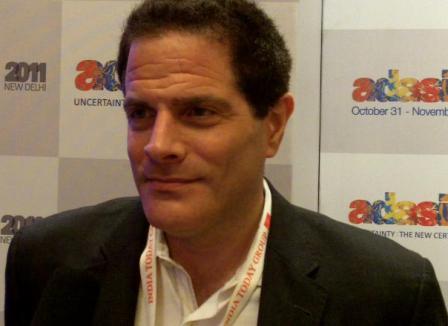
    Tom Doctoroff is a JWT man who has worked with the agency across geography. Having started his advertising career at Leo Burnett in Chicago he later moved to JWT. In 1994, he moved to Hong Kong as Regional Business Director for clients such as Pepsi, Philip Morris/Kraft and Citibank and then in ’98 to China as the Managing Director of JWT Shanghai. In 2002, he was appointed Northeast Asia Area Director (China, Taiwan, Hong Kong and Korea) and Greater China CEO. In 2008, he also assumed leadership of JWT Japan. Mr Doctoroff has played a key role in the growth of JWT in North Asia.


    Q: How do you see JWT based in the scheme of things in Asia today?

    I think that we have a lot to be proud of. JWT has an extremely cohesive management structure where all our goals and values are aligned, and I’m particularly proud of our creative community which is probably one of the jewels of our global network out here in Asia Pacific. I think we’ve got people who are proud of their own output in their own countries. One thing that I’ve always liked about JWT is that we are not cultural imperialists. I’ve never felt for example that because I’m in China, even 13 years ago, that I am on the other side of the world. We have a company culture that does respect individual idiosyncrasies and that’s very important to avoid this hegemonistic-macho advertising ethos. So, I am proud of JWT. We’ve certain things that we could do better, like digital where we’ve been a little bit slow, but I think we are catching up now. We are trying to bring into the agency an ethos of the need for digital to reinforce brand ideas. As for India, JWT in India is a powerhouse and it has a lot to be proud of. And I’m sure that it will overcome some of the frustrations of the past year because everybody knows it needs to be done.


    Q: How do you see JWT China in terms of creativity, going ahead?

    If this doesn’t get broadcast in China I’d be happy because I don’t want to appear arrogant where I live, but I think we set the standards of creativity in China. Honestly, we have a very stable management team and a very stable creative leadership team, and what that means is that we create an environment of safe self-expression within the agency as a whole. So we usually are the ones that are doing the firsts, we won the first Cannes Grand Prix, yes it was for print but it still didn’t happen by chance; it’s because we have a belief of what creativity is and how people work together in the agency and in collaboration with people outside the agency, even outside of China to develop engagement platforms. So I am very proud of our creative leadership. People call us the ‘temple of advertising’ and I think that’s because we’ve been so stable for such a long time. I’m not saying we don’t have weaknesses but creatively speaking, I think if you ask around, we tend to define a high ground to a certain extent.


    Q: What are the two things that you would advise to people in the industry which they could follow to get more ROIs?

    As soon as you bring in the ROIs, you bring in a different question altogether. So before we get to ROI, I think that one needs to always focus on consistency. A consistent brand idea, a consistent engagement idea that is genuinely media-neutral. I think the danger is that as we experiment with new forms of technologically-enabled engagement, we forget about the primacy of an idea. And if you start your media plan without having that idea clearly understood by all, then you have chaos. One thing that is critical in new markets is order, in consistency, in clarity of ideas or else people will tune you out. Nobody wants to figure out how the internet or how the digital app or the landing environment connects to the TV ad. So consistency is always key, and that will always require a high degree of conceptual craftsmanship. And the second thing about digital is that all digital is not the same. There is certain digital that is relevant to campaigns, there is certain digital that is relevant for customer relationship marketing, there is certain digital that is more transactional at the point of purchase; some of those belong inside the agency and then the big question is how you make sure that the entire agency is digital, but having a digital core centre of expertise as a heartbeat within the agency with some of that for outside the agency. So agencies need to know who they are first and then build their digital strategy based on that.


    Q: Talent is an issue; how much of an issue is it and how do you tackle it?

    It’s an issue at the most senior level. I find that the biggest issue for talent is that many senior people – and this is in China, I don’t think it’s the same in India – there is an abstract nature of advertising which makes people feel insecure. Chinese people want to have a sense of control over their destiny and they revere the concrete, and so what we often find happening is that people in their desire for control either start leading dysfunctional agencies, their own small agencies or they leave the industry altogether. So what we need to do is find ways to make a long-term career in advertising seem safe. Part of that is financial and frankly in China it’s not a problem, because once you get to be senior in China as a local person, the pay is quite respectable. But the real issue is making sure that you are providing a platform for senior management to stand up and feel confident on, and that requires a lot of persuasion and a lot of coaching as people come up to the ranks. On the junior level or the mid-level, it’s really a question of liberating their creative potential and making them feel that when they will open their mouth, they will be saying something that’ll be appreciated; and that gets into corporate culture and how you have an environment of dangerous silence, safe self-expression where proactivity is truly rewarded in a meritocratic sense. So advertising has to be very meritocratic and that’s something that’s not always compatible with traditional Chinese culture. But we make it quite meritocratic, so our attrition rate is much lower than the industry average is.


    Q: What do you think of Indian advertising in recent times; how do you think it has improved?

    I have been working with India tangentially for 17 years so there’s been huge progress. I think the progress first came on the production level. The change started around 10 or 12 years ago. I just noticed the ads didn’t look that cheap, the production values were pretty high. And now when I take a look at Indian advertising, I think that it is strong. It is very culturally rooted which is fine, as long as that culture is not gimmicky and it comes from cultural insight as opposed to just a celebration of anything Indian. So I personally think that strategically Indian advertising is very strong, execution has become better. I just think that the unfortunate thing is because of its proud confidence in the Indian identity, it’s not as accessible to many people around the world but it’s good, it’s made much progress.